I’m Butch, The HoseMaster is Alfalfa and You’re Darla

A note was passed to me yesterday during wine class—it was from Barbara, that pretty girl in the back with the Category Merchandiser nameplate on her pinafore.

The note said:

“I may not always get what you and The HoseMaster write (big words and satire and all that) but you both make me laugh.”

The Master of Hoses

The Master of Hoses

I must say, once the chicks start noticing the size of your words, you are that much  closer to performing an act of coitus satirarium, which is non-physical union with an already-married note-passer, which Barbara happens to be.

As such,  to a healthy, horny man-child, coitus satirarium is something of a floccinaucinihilipilification.  Even so, my response to Barbara is simple:

“My words are bigger than Hosemaster’s.” *

“Check out the size of my dic…
tionary.”

* Incidentally, guys who use small words are always relieved when babes who aren’t Babs assure them that ‘size doesn’t matter’, but as we well-endowed glossologists, lexicographists and philologing phoneticians know, it certainly does.  There are places in the female psyche that can only be truly satisfied by a throbbing, thrusting unit of language nicely hung with letters; if it’s ribbed with diacritical marks or lubricated with hyphens, so much the better.

If from time to time Brain Vaseline is required, I believe Daniel Webster makes a popular brand.

Satyricontroversy…

As for satire, the way to a woman’s heart is through her funny bone, and by heart, of course I mean something warm and squishy and deep inside and by satire I mean taking a generally stultifying subject and reducing it to a churning urn of self-important goo.

butch

Not kiddie porn

In this endeavor, me and The HoseMaster of Wine—who has a much more phallic name than me, I admit—have been vying for the attention of the prettiest perusers and the sexiest savants for quite a while now.

We are the Butch and Alfalfa of wine writing, eternally fighting over Darla in her tiny skirt and perky, turned-up nose.

We are Eric Clapton and George Harrison—you, the perpetually fickle Pattie Boyd.

tumblr_m6e0io3Ueq1rp4uy8o1_250We are John and Bobby Kennedy, and you, the irresistible Marilyn Monroe forever breathing in our eager ears, “Happy birthday, Mr. Wine Writer, happy birthday to you…”

Of course, along the way, we have puckered plumes and snuggled ‘neath the skins of scores of skivey skunks; HoseMaster Ron Washam most recently when he was threatened with a lawsuit from Riedel for daring to make merry over their major domo and his anal insistence that plonk actually tastes tastier in his overpriced hunks of potash and lead than in somebody else’s.

Kiddie porn

Kiddie porn

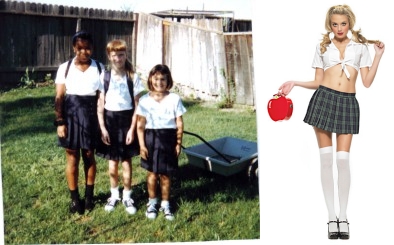
Impressive as that bit of notoriety is, I will nonetheless claim the prize for having confronted the most pin-dicked dickhead in all of Dickdom when I was accused of producing kiddie porn for having published the photo to the immediate right.  >

When the offended cock-smooch actually called the cops, my local police department paid me a visit (hand before God); we wound up top-popping one my illegal Mason jars of moonshine and blowing up a few neighborhood mailboxes.

And of course, there’s Sphincterina—a.k.a. Sarah May Glöckenspiel—who loudly proclaimed that she wouldn’t go to bed with one of my wine books if I was the last sleepy-time author on earth.

Satyriconsistency…

Although, dear readers, we are eternal rivals for your affections, I think the Mission Statement of both Ron and me has been pretty consistent from the gitty up:  If you take this stuff too seriously, you aren’t doing it right.

And by ‘stuff’, of course, I don’t paint a bull’s-eye on wine; I mean everyday everything that is rammed down our gullets hour after week after year.  We’re here for the short haul, kids and sometimes, our only defense against the shitstorm—as it is against jizz socks like Georg Riedel, Sarah Clark Griswold, the penile-pencil who called the cops on me and Butch himself when he became a bully in later episodes of Little Rascals—is to reduce them to drudges of derision.

Take that, Riedel.

Take that, Riedel.

Satire is the literary equivalent of the cock o’ the walk displaying puffed throat feathers and talon blades—satirists are the alpha and omega, and as Ron Washam and I jockey for those positions, we’re happy to let the other wine-scribbling Slim Shadys fill up the in-between spots.

As young Barbara learned early in life, any act of consensual text—with mutual respect between reader and writer—is blessed by both nature and Numen.

In the meantime, those impotent dinky-donged wankers we offend;  those super-fragile Cali dipshit ♥-Cialis douchebags?

I’ll have to think of a really big word to describe them.

Posted in GENERAL | Leave a comment

Left Coast Cellars: Mea Culpa Wine

When somebody says ‘Europe’ I don’t think of Russia.  When they mention the Eastern seaboard, my mind does not conjure up an image of Boca Raton.
Me, I’m from the Midwest.  The ‘mid’ part I get, but not the ‘west’: Detroit is five hundred miles from the Atlantic Ocean and twenty-five hundred miles from the Pacific.  In fact, I’m pretty sure the only reason they didn’t call us the Mideast is that it was already taken.

Luke McCollom

Luke McCollom

So, when I was asked to join Luke McCollom of Left Coast Cellars for a wine tasting, I presupposed (wrongly) that the Left Coast referred to California (and in particular, to liberal-leaning leftist locales therein) and experienced abject confusion when I read that Left Coast Cellars was in Willamette Valley, Oregon.

‘Willamette’ also confuses us Midwesterners when we learn that to correctly say it, you rhyme it with ‘damn it’, not ‘cigarette’.

But enough of that; that’s not  what my mea culpa was about anyway.  My  formal acknowledgment of personal fault involved a synaptical malfunction on the cellular level in my  hippocampus:

In short, I forgot about the tasting.

gents prefer blondesFortunately, the winery was accommodating enough to send me a trio of wines to review anyway—two representing Willamette’s Wonder Twins, Pinot Noir and Pinot Gris, and the third, the Carol ‘Gentlemen Prefer Blondes’ Channing of wine stylings, White Pinot Noir.

Now, that wine winds up being intriguing as Channing’s 2002 revelation that her grandfather was African American, although she was under no obligation—in 2002 or 1953—either to make the information known or keep it to herself.   As a matter of fact, neither was Left Coast Cellars—they could have easily called this wine something Latiny and poetic like Relicto Litore and no one would have been the wiser.

Because frankly, in a blind tasting, you wouldn’t have figured out this wine’s parentage in a billion flights.

Truth in Advertising

“White Pinot is our fasted growing SKU,” Luke McCollom said when I actually showed up for our next date—over the phone.  His use of the inventory management acronym betrays that he is the winery’s general manager as well as the chief bottle filler.  “As a wine style, it’s definitely trending.”

Pinot Gouges

Pinot Gouges

Some credit goes to Burgundian Henri Gouges, perhaps the most famous domaine in Nuits St. Georges, who had some Pinot Noir vines that actually mutated into white grapes.  Renamed Pinot Gouges, it winds up in the premier cru ‘Les Perrières’, which even the  Gouges web site describes as ‘disconcerting’.

In Willamette, the handful of producers now labeling a proprietary White Pinot Noir actually use red grapes and employ variety of techniques to eliminate any trace of pink from the juice—most involve speed, of course, since all the color in Pinot Noir (and in most red cultivars) is in the skins, so the quicker the flesh can be  separated from them, the whiter the juice ends up being.

Pinot Noir vines in Willamette

Pinot Noir vines in Willamette

As for the wine, not only was vintage 2014 sensational, it bore not the slightest resemblance to Pinot Noir in any permutation, leading me to conclude that not only is the color all in the skins, so is the very essence of the flavors we consider Pinot Noiry—cherry, cola, earth, truffle—all of which show up in some capacity in McCollom’s Cali’s Cuvée (red) Pinot Noir.

The white is full, rich, resplendent with tropical fruit notes and peach jam—I tasted undercurrents of mandarin orange and a steely acidity that binds it all together.

Had I not seen the label, I might have guessed that I was tasting Grenache Blanc, unoaked and grown in a cool climate.  Or I might have said Pinot Blanc.

I wouldn’t have said Pinot Gris, which, over the past half century, has become the principal white wine of Oregon; it excels in Willamette, and produces a flavor profile that is unique unto itself.

pinot grisLeft Coast Cellars ‘The Orchards’ Pinot Gris, 2014 (about $18) is a showcase of that style:  Clean and crisp from scent to swallow, it shows clear pear notes—ripe, juicy and from the tree.  Behind that is ripe kiwi fruit, flinty minerality and acids like shattering ice.

“We never treat our Gris as  secondary project,” McCollum told me.  “Same labor, same trellising system, everything fermented in small lots—often with different yeasts.  We prefer a ripe style meant to be at optimum about five years after bottling; thus, the alcohol may be a bit higher than some [14.2%], but the wine only adds layers of texture and complexity as it ages.”

Bob Pfaff

Bob Pfaff

I found McCollom’s Pinot Noir to be equally compelling, a reference standard for Willamette Valley Pinots in the mid-twenty dollar range.  Cali’s Cuvée was named after the daughter of Left Coast Cellar’s owner Bob Pfaff—even harder to pronounce that Willamette. It is  made from lots of Pinot drawn from several clones grown in various estate locations.  It’s both bright and brooding, filled with deep scents of mulberry, pomegranate and dusty chocolate; it opens fully on the palate with rich, spicy notes and pithy tannins that are assertive without overpowering.

By the way, my phoned-in tasting-missing grovel caught McCollom in the field, mid-harvest, which he claims is the best one he has seen in years.  As such, he was in fine spirits, and more than happy to bestow absolution upon yours truly—especially when I assured him, after my pathetic mea culpa, that I had enjoyed his wines to the maxima.

Posted in OREGON | Tagged , | Leave a comment

Foillard Morgon 2013—Lesson Learned: Renounce Tasting Notes Forever

Andy 'n' Bianca, sittin in a tree, t-a-s-t-i-n-g

Andy ‘n’ Bianca, sittin in a tree, t-a-s-t-i-n-g

A week ago, Decanter Magazine’s Andrew Jefford published a good column on tasting notes.  It shadowed Bianca Bosker’s July New Yorker article referring to the ‘state of modern winespeak’.  Hers was, in turn, a reaction to James Suckling’s stylistic evaluation evolution (if you can call it that) over twenty years of note taking.

Last year, Madeline Puckette broke down the art of taking wine notes into four steps, Look; Smell; Taste; Conclude—which was almost as remarkable as her two-step tutorial on ‘How To Produce a Literary Masterpiece’:  Think of a Really Complicated Story Involving a Whale; Write it.

Robert Parker’s notes have always seemed to me to be delightfully sensual and scholarly—brief when required and effusive otherwise, while Jancis Robinson ranks high among this peck of pickled poets for the sheer originality of her imagery.

However, praise,  introspection and lampoonery aside, an important point was overlooked in each of these wine-note-taking editorials:

Everybody Else is Wrong and I’m Right.

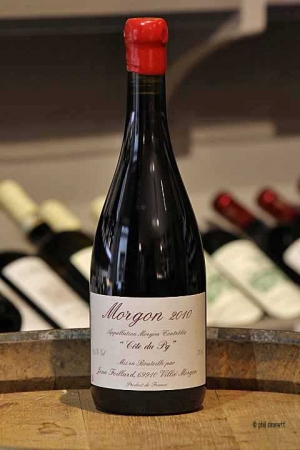
bottleI came to that requisite conclusion over a tumbler of Saturday afternoon Beaujolais—specifically, Jean Foillard Morgon from the Côte du Py vineyard, vintage 2013.  Morgon is a sturdy, Gamay-based wine, often compared to—and sometimes confused with—a Pinot Noir from nearby Burgundy.  Foillard is a legitimate luminary in Morgon, rounding out Kermit Lynch’s heralded ‘Gang of Four’ with Jean-Paul Thevenet, Marcel Lapierre and Guy Breton.

These wines, grown predominantly on granitic soils, can bring Gamay to strikingly full-bodied heights. In warm vintages like the exuberant 2009, the wine develops vibrant plum and cherry notes, displaying a meatiness and depth that is the dimensional opposite of typical non-Cru Beaujolais, which tend to be light, fruity and lyrical, but not particularly serious.

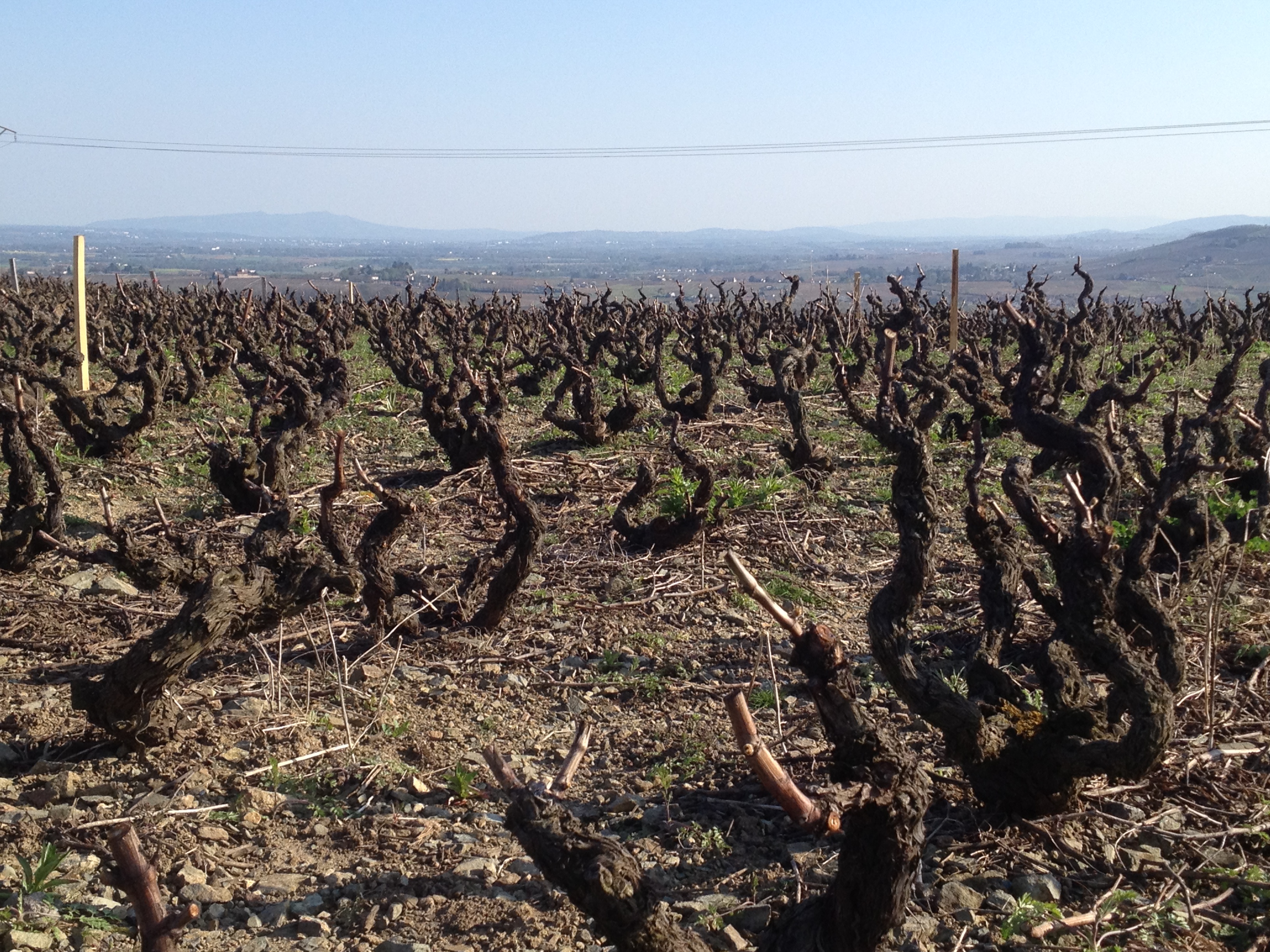
Côte du Py, a volcanic outcrop composed of blue slate—similar to the soils of the Middle Mosel—traditionally accentuates these ponderous positives, making a wine from this region, in a vintage like ’09 (or 2010; nearly as good) a remarkable experience.  These wines showcase a concentration that has been described as ‘Calvados-like’ and a spine of acidity and tannin that make them cellar gems for at least another few years.

Gamay pride

Gamay pride

The age-factor is often enhanced by Beaujolasians vinifying like the Burgundians do—avoiding the whole-cluster, semi-carbonic maceration techniques that produce simple, early-drinking Gamays.  The intention in treating the Gamay grape with the respect it is here due is to flip the fun and frolic for fortitude.

In lesser vintages, bets are off.  Gamay has been grown in Beaujolais since Black Plague days, and six centuries of practice may not have made perfect, but the varietal certainly shows better here than anywhere  else in the world.  When sun and rain cooperate, Cru vintages manage to salvage the region’s reputation from ravages wrought by Beaujolais Nouveau.

Gamay is thin-skinned like Pinot Noir, but unlike its apparent parent, it produces copiously while showing more resistance to botrytis.  That said, although Gamay has a tendency to ripen early, it still requires the basics to produce a top-drinking wine.

Côte du Py

Côte du Py

Beaujolais’  2013 season got off to a late start and suffered a couple of devastating later storms, including a ‘mini-tornado’ in August; overall, the weather was cool but sunny.  How these myriad factors combined on the south slop of Mt. Py to create Foillard’s submission to the year’s vintage valise I’ll leave to the experts, but what I tasted in the glass was less than blue-ribbon material.  It struck me as a thin, tired-out, leathery fluid with some earthy complexity on the nose, but no fruit, while on the palate it was simple, equally fruit-free and tainted with unripe grape tannins that produced an unpleasantly bitter finale.

Aftertasting Notes:

Which brings us around to the subject of el dia’s droning drivel:

Tasting notes.

Above are mine; nothing was technically flawed in the wine, but neither was there anything I considered the least bit ‘beguiling’.  I would add only that Foillard Morgon 2013 did not display the sort of essential structure, either in body or flavor, that I think could survive much time in the cellar—in fact, if anything, it was already a bit past its sell-by.

That’s merely my opinion, of course.  Yet, apparently, it is an opinion so inconsistent with other opinions that I—and you by default—must conclude that either me or they are batshite wackadoodle or desperately out of our tasting-skills element.

'Open your eyes, Joe. This is a red wine tasting.'

‘Open your eyes, Joe. This is a red wine tasting.’

For example, Joe Salamone of Crush calls Foillard 2013 a ‘magical Morgon’, gilding that silly lily with:  “…the snap and fresh transparency of vintages like 2010 and 2007, carrying Côte du Py’s wild cherry, mineral, and floral-tinged quality.”

SAQ says, “This dry and purplish red coloured red showcases a complex nose releasing spicy, floral, fruity, mineral and vegetal scents, revealing a slender texture, smooth tannins and a long finish.”

the grape storeJohn Lees of The Grape Store—who has a distinguished AIWS from the Institute of Wines and Spirits after his name but still can’t manage to spell ‘Morgon’—agrees:  “This is a fabulously pure, unfiltered and majestic example of Morgan at it’s very best. On the palate the wine is deep, full-bodied and wonderfully complex, with great structure, a rock solid core, ripe tannins and outstanding grip and focus on the very long and pure finish. This wine has a fine future ahead of it, but is equally beguiling now!”

Finally, Jamie Goode of wine anorak gushes, “I’m finding myself reaching for descriptors such as elegant and expressive; the soft texture is the best thing about this wine. It is fantastically drinkable.”

François-Marie Arouet,

François-Marie Arouet

Well, there’s a confounding conundrum, huh?  A fine kettle of fish; a pretty pot of poachable pollock.  Who you gonna trust?  An award-winning, frequently brilliant, occasionally acerbic, generally pristinely accurate wine critic?

Or me?

For my part, I will leave the summation to Monsieur Voltaire, who I believe is first credited with the phrase, “I do not agree with what you have to say, but I’ll defend to the death my right to go on an international internet forum and say that you don’t know what in the fcuk you’re talking about.”

Amen.  Upward and onward, droogies.

Posted in Beaujolais, FRANCE, Gamay | Tagged , , | 6 Comments

I am the Holy Troller and I Shall Lay my Vengeance Upon Thee

You burn, you learn.

You burn, you learn.

May I venture a guess?  If somebody told you that you were quoted in some wine article in The Atlantic, you’d probably light up like a Buddhist monk with a gas can and a Zippo, right? You’d look for bragging rights, resumé-padding, a shareable gem from your sparkling repertoire of wine words to Superglue to your status page.

Me, I’m not that guy—primarily because I don’t have that kind of positive effect on people.

I didn’t even have to look at the piece to know that it was going to be shitty.  And then when I saw the byline ‘Alex Mayyasi’—a guy I once mocked for saying ‘Wine is Bullshit’ and told him to kiss may assi—I knew it was going to be even worse than that.

logo-theatlanticYet, when I realized my name was not even in the piece, I figured that the dude who sent me the link had simply made a mistake, and I sighed:

Maybe I had dodged a bullshit.

But then he told me to take a closer look.  Turns out that there is a link to a column I wrote, but I am referred to, not by name, but somewhat randomly, as a ‘troller’.

I’m a Steam Troller, Baby, and I’m Gonna Troll All Over You…

To understand this bizarre exchange, you have to start at the beginning, 4th of July, 2013.  On this—America’s sacred bicenterceseptennial—I posted a column in which I took Mr. Mayyasi to gentle task for being the sort of stain on the wine writing mattress that shows up under a black light.

He had recently published a piece at http://priceonomics.com entitled ‘Is Wine Bullshit?’

scrapperBefore considering the intuitive repulsion behind clickbait headlines, let us first consider if Priceonomics is bullshit.  Their ‘about’ tab states:

‘At Priceonomics we crawl data, write about data, and sell data to business.’

In other words, they look for free stuff on the internet that they can sell to other people, sort of like scrappers cutting the water meter off your house and selling it to the junk yard for $20.

Yet, ‘bullshit’ is such an ugly world.  Let’s call Priceonomics vaca caca.

“Don’t even bite your fingernails, Jeff. That could be construed as cannibalism.”

If you want to gauge the down ‘n’ dirty on the original exchange you’ll have to crawl your own doo-doo data.  Suffice to say I found Mayyasi’s Priceonomics patter to be among the most wackadoodle bits of mental gymnastics composed since the Dred Scott decision.

With The Atlantic piece, he comes off a little less demented, but The Atlantic is a rag of considerably more repute, and people in that hallowed spotlight tend to be on better behavior: You’ll recall, Jeffrey Dahmer didn’t eat anyone during his trial either.

Key to Mayyasi’s sanity defense is found in his first Atlantic premise:

“As we wrote in a more recent post, wine is not bullshit…”

…although clearly, he still suffers from Dissociative Identity Disorder, causing him to refer to himself in the first person plural, although it is admittedly difficult to know if ‘Mayyasi’ is a singular noun to begin with, representative of more than one Mayyasus.

Trollbait

Trollbait

He then goes on to suggest that people who judge wine are often saddled with albatrossi of preconceptions around their plurality of necks, and this often leads even experts to misidentify expensive wines and enology students to misdescribe white wine  in terms used for red when Sauvignon Blanc is artificially dyed ( though, extra credit points go to the kid whose tasting notes read, ‘Hints of FD&C Red No. 40 , with striking overtones of Allura Red AC, C.I. 16035’).

In this, I agree.  The conclusion, as Mr. Mayyasi has since concluded, is that wine is not bullshit.  But maybe wine tasters are.

Not all of them, of course, and Mayyasi relies on a classic example to show that even the most distinguished doyen can be duped:

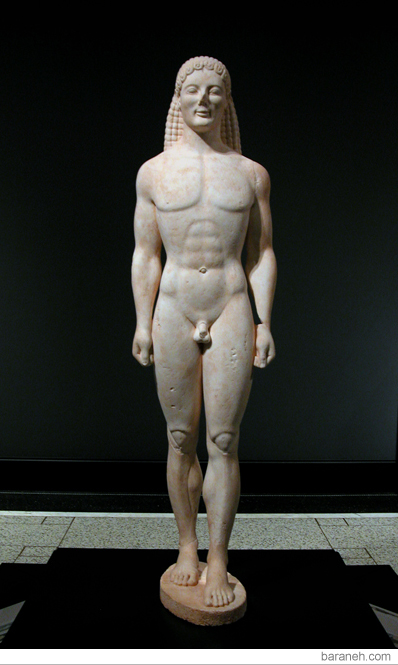
In 1983, an art dealer sold a Greek statue to the J. Paul Getty Museum for ten million dollars after various archaeologists and geologists had authenticated it.  Soon afterward, a handful of art historians expressed an instinctive sense, and not necessarily an articulable one, that something about the sculpture wasn’t copacetic.  It was, in due course, revealed to be a fake.

The historians could only identify an ‘intuitive repulsion’ when viewing the sculpture—the piece that Ph.Ds with high-resolution stereomicroscopes  insisted had already passed the smell test.

Ironically, in the wine analogy, it was the callow students who mis-smelled the Sauvignon Blanc that played the role of the bamboozled braniacs, which is why I am less in agreement with Mayyasi’s next premise:

That Master Sommeliers, ‘through years of obsessive study and practice, can identify glasses of wine with astonishing frequency.’

I taste wine with Master Sommeliers fairly often, and I have concluded—after years of obsessively studying them—that their capacity for fact retention and minutiae maceration is astonishing , but their palate fluency is no greater than anyone else who understands wine.

Clipboard madMy own go-to example comes from my favorite Master Sommelier, Madeline Triffon, who is too earthy an ally in this cynical world to mind me sharing the story:  One time, after poetically praising the precise lemon nuances in a Chardonnay, she discovered that the glasses had been washed in Lemon Ajax and then poorly rinsed.

Ah, life.  Although, don’t get me wrong—equally,  I am assuming that each of the enology students who judged a wine on color alone, and not on weight, flavor or aroma,  knows they have an awful lot of studenting ahead of them before they can join our club, whether we are Master Sommeliers, or everyday masters of detection and deception: Those who Mayyasi refers to as ‘lay people’.

Big Heel Keeps on Trolling…

Which brings us to my near-mention in The Atlantic.  Rather than making droll puns about my name, much as I make merry over his—which should be a quick enough study for any hack—I suspect that Mr. Mayyasi understood through intuitive repulsion that childish name-calling would never pass the magazine’s editorial smell test, and instead, simply referred to me as an unnamed ‘troller’.

Doh!!

Doh!!

Now, how that slipped by the editors must be akin to how the kourous statue slipped by the meathead museum curators or the white wine slipped by the dipshit docents, because even if it applied to me, the word is ‘troll’, not ‘troller’.

Years of obsessive study and practice with the Urban Dictionary has taught me that in cyber-slangese, a troll is someone who posts a deliberately provocative message on a message board with the intention of causing maximum disruption and argument.

Clipboard magooA Troller is a Brazilian Jeep.

But in either definition, simply identifying professional bullshittery as such does not make one a troll, a troller or a bipolar assholer, and Mr. Mayyasi, like Mr. Miyagi, must learn to renounce the negativity and make peace with me, or else I will change his pretentious ‘we’ into an I.

Which (having offended me) I will then pluck out and make him Mr. Magoo.

*

https://intoxreport.com/2013/07/04/is-wine-bullshit-or-would-that-be-alex-kiss-mayyasis-writing-skills/

http://www.theatlantic.com/business/archive/2013/09/the-science-of-snobbery-how-were-duped-into-thinking-fancy-things-are-better/279571/

Posted in GENERAL | Tagged , , , , , | Leave a comment

Long Live the Rothschildren: The Pink of Perfection

No serious debate that the first family of wine is Rothschild, at least from a historical perspective.  They are to wine what the Kennedys are to political dynasties, what the House of Medici is to art patronage, what the Simpsons are to adorably dysfunctional people with yellow skin.

Homer de Rothschild

Homer de Rothschild

Beginning in 1853, the Rothschild wine genealogy reads like Matthew 1 with all those ‘begats’—Nathaniel de Rothschild begat Château Brane-Mouton which begat Château Mouton Rothschild; James Mayer de Rothschild begat Château Lafite which begat Château Lafite Rothschild; various other Rothschildren begat Château Clarke, Château de Malengin, Château Clerc-Milon, Château d’Armailhac, Château Duhart-Milon, Château de Laversine, Château des Laurets, Château L’Évangile, Château Malmaison, Château de Montvillargenne, Château de la Muette, Château Rieussec and Château Rothschild d’Armainvilliers.  And that’s just Bordeaux—the family has estates all over the world.

They’re the Kochs, only without the psychological damage.

roth labelPeople who collect wine like to see the Rothschild name on a label—people who know wine care rather less.  Among the many bits of information that a wine offers prior to opening, the producer is among the least useful, at least compared to appellation, varietal and vintage.  There are names you trust, of course—names you buy because they’ve shored up their reputation over years and generations and, occasionally, centuries.  But in the end, familiar names are no more a guarantee of quality than the one on a film marquee.  Compare the addictively glorious Goodfellas to the interminably hackneyed Wolf of Wall Street.

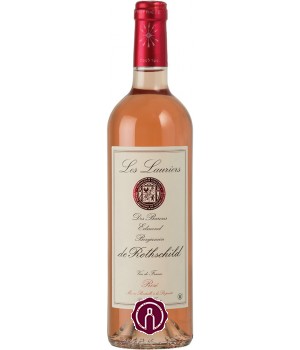
But, it can be said that when you see Scorsese listed in the IMDb filmography you are far more willing to toss caution to the wind than if you see, say, Kennen Wayons, and likewise, when I had a chance to try that rarest of birds, a Bordelaise rosé, I took the bait—primarily because the label was Barons de Rothschild ‘Les Lauriers’ from Montagne-Saint-Émilion.

To Begat or Not to Begat—Never a Question

Montagne-Saint-Émilion

Montagne-Saint-Émilion

Montagne-Saint-Émilion is a satellite appellation three miles northeast of the great Merlot utopia that has produced Château Angélus, Château Ausone and Château Cheval Blanc.  These sub-appellations likewise read like a list of ‘begats’—beside the vineyards of Montagne, Saint-Émilion begat Lussac-Saint-Émilion, Saint-Georges-Saint-Émilion and Puisseguin-Saint-Émilion.

The fact that the wine is rosé is intriguing because every reference I can find to this appellation specifies that the output is red: Infrared, baboon butt red, Red October red, menstrual maroon.  Of course, pink Bordeaux is more common in France than it is here, likely because not much of it is made in the first place, and the wine makes a rich alternative to Bordeaux whites which are, for the most part, forgettable.

The problem with rosé is that even the best are somewhat one-dimensional flavor-wise, regardless of varietal.  If you disagree, pull some random rosé tasting notes off the web, and send me a dollar for any of them that don’t include the descriptors ‘watermelon’, ‘strawberry’ or ‘rose-petals’ and I assure you, within ten minutes I’ll have the twenty-five bucks required to pick up a bottle of Rothschild ‘Les Lauriers’.

rothschild_rose_largeThe final begat in this story is Baron James Mayer de Rothschild’s  great great grandson Benjamin.  He was begatted by Edmond, who purchased two châteaux in Médoc and begat Compagnie Vinicole Baron Edmond de Rothschild. In 2003, after taking over the family business, Benjamin begat Château des Laurets, a property sitting on both Puisseguin-Saint-Émilion and Montagne-Saint-Émilion.

The wine displays a hallmark note of creamy lushness that is evidence of its own begattery: 70% merlot grown in the clay-rich soils; classic Right Bank terroirs of the Gironde Estuary.  This signature clay, made from degraded limestone, contains copious quantities of calcium and something known to chemists, geeks and Jeopardy champs as CEC—Cation exchange capacity.

caton exchangeCEC influences a soil’s ability to hold onto essential nutrients and provides a buffer against soil acidification.

This is, arguably, the single most essential element in making Right Bank Merlots the best in the world.

There are flavor fundamentals in the wine that I could certainly describe as watermelon and strawberry, but the overall depth brings out elements of ripe cantaloupe, ripe red pepper and a beguiling black cherry undercurrent that adds weight and complexity.

Errol de Rothschild

Errol de Rothschild

Speaking of beguiling, all this babble about beguiling begatting begats a brand new pick-up line:

“Beyond the beginning of the beguine, can we begin to begat?”

If she happens to be literate, I’m in like Flynn de Rothschild.


Posted in Bordeaux, FRANCE | Tagged , , , | Leave a comment

Anthony Road: Don’t Start The Revolution Without Me

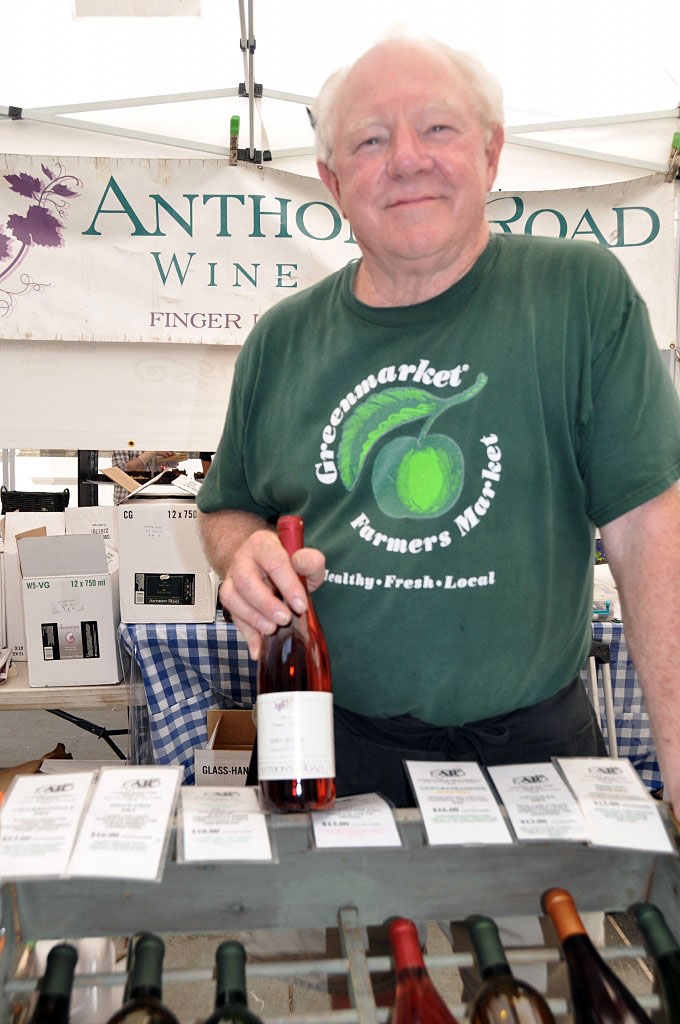
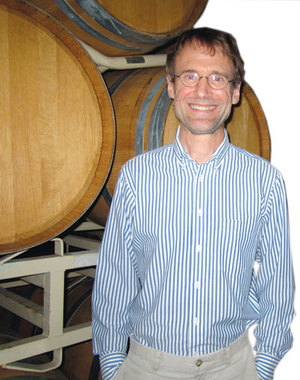
Talking to Peter Becraft is an unexpected treat—many winemakers express a sort of taciturn shyness and meet the media under duress—it’s part of the package deal of self-promotion. But Becraft is the opposite.  He’s gregarious, funny, charming and intense about his mission. But there was something about his looks and mannerism that I found confoundingly familiar.  In fact, it began to bug me to the point that I could not concentrate on the conversation, which was centering around NY 81, a Cayuga-Riesling clone that has made some waves among Finger Lakes growers for its hybrid character and delicate vinifera flavor profile.

Clipboard leninI know, right?  How could my attention have been diverted from such a stimulating exchange?  All’s well that ends well, though, and I snapped back to attention as soon as I had worked out who Peter Becraft reminds me of…

Vladimir Lenin, only with hair and a grin.

His resumé explains part of the personality: The pleasantly social part, not the toppling the Russian Empire part.  Becraft comes from a fashion photography background, with a degree in sculpture and a seven year stint with one of the busiest studios in New York.  He parlayed that into a career in retail wine sales, which got him closer to winemaking, perhaps, but it’s still a little like a used car salesman becoming a top designer at Ford.

In fairness to the vagaries of history,  Lenin was a paralegal before he invented the Soviet Union.

Cary Becraft of CaryMo Chocolate

Cary Becraft of CaryMo Chocolate

The trajectory that took Peter Becraft from a boutique wine shop in Manhattan’s Financial District to rural Yates County a is tinged with as much tragedy as triumph.  With his wife Cary, the decision to pull out of city life and move to land spreadin’ out so far and wide followed their experiences on 9/11, which they witnessed firsthand from SoHo.  Plenty of New Yorkers re-evaluated their lifestyles in the wake of that nightmare, but according to Becraft, “I had already begun that process.  I was working two jobs, full-time in the fashion industry and the other, my job of passion, part-time in wine.”

Cary—a pastry chef and chocolatier—had dreams of a work/live space in Finger Lakes wine country, where Peter was sure he could find a hands-on job in the industry, even if it was working in a tasting room.

In fact, it was a happenstance encounter in the Anthony Road tasting room that led to the Becraft family career change:  “It was the last stop on our wine tour—it was slow, and Cary convinced winemaker Johannes Reinhardt to give us a barrel tasting.  In the course of that, he mentioned that help was needed for the upcoming harvest, and that worked out perfectly for me.  I did the harvest, went to work in the cellar and took over full-time for Johannes in 2014.”

Reinhardt, one of the region’s most respected winemakers, remained as a consultant while devoting more time to his own venture, Kemmeter Wines.

Peter Becraft

Peter Becraft

Becraft’s first vintage was a test of skills honed as Reinhardt’s associate for six years, but the wines—true cold-climate exemplars with big racy acids and bright fruit flavors—prove out the balancing act that all grape masters in this fickle terroir must add to their bag of tricks.

Throughout the course of our conversation, we tasted through a lot of these 2014 wines—almost to a glass they showed a pedigree of purity—and that is a part of Reinhardt legacy that Becraft intends to maintain, even while putting his own stamp on the label.  “My goal is the same as Johannes’,” he says.  “To showcase the fruit we grow, not make it into something it shouldn’t be.”

To that, inevitably, he will add his flair for art, a term he does not mind applying to his craft.  He is a trained artist first and a winemaker second, at least in terms of chronology.

In fairness, I can’t contrast Becraft’s style with that of his predecessor, but those that I experienced showed delicacy and depth, the tension and symmetry that is the stylish signet that characterizes the best wines from Finger Lakes.  His 2014 Dry Riesling—the vintage that didn’t see acid levels drop until the was nearly curtain time—maintains a nice equilibrium with sugar content, showing an attractive citrus streak and a mineral core.  Unoaked Chardonnay from the same harvest is likewise crisp—a pH of 3.13 set against a residual sugar of 5.8 g/L (for geeks, a typical California Chardonnay would hit this sweetness with a pH of about 3.4).

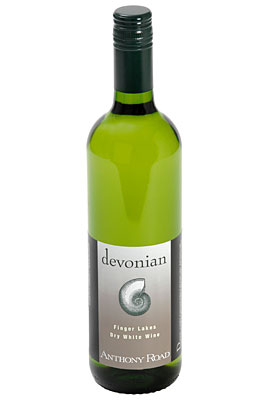
DevoWhiteThat is the character of the Finger Lakes breed, and it is lovely; the wine shows bruised apple richness and an undertow of grapefruit tartness.

I was equally charmed by Devonian White, a blend which I hadn’t before encountered—70% Riesling, 30% Pinot Gris.  At $13 a bottle, this is an entry-level table wine, but juicy and dry, loaded with Bosc pear, pineapple and a sprinkle of herbs.

Reds have typically been the challenge for the appellation—few dark-skinned varieties are willing to display peak performance in these terroirs.  Anthony Road has a counterpart to Devonian White, called (to no surprise) Devonian Red.  It’s a combination of early-ripening Cabernet franc and Lemberger—two grapes that seem to thrive here.  The former pick up deep blackberry and plum flavors while Lemberger, a.k.a. Blaufränkisch, develops into a brooking, mulberry-laced wine of considerable sophistication.  Neither display Cabernet sauvignon’s overarching tannins, which may act as a structural framework on which a wine can age, but often overpower the fruit in younger incarnations.

Anthony Road’s line-up also includes single varietal wines from each of these grapes and each proves out the stellar heights that ripe fruit can produce in Finger Lakes red wine.

Tsar Struck

John Martini

John Martini

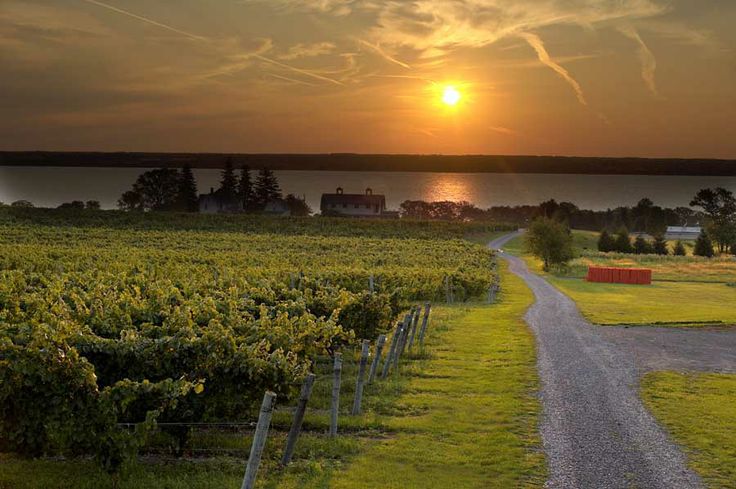
But, perhaps it’s time to shift focus from the whippersnapper in front of the camera to the man—and woman—behind the curtain.  Ann and John Martini are the Romanovs of this saga—the Mensheviks, the landed gentry, the ruling class.  In 1973, they purchased a hundred acres overlooking Seneca Lake in the 1970s and began to grow grapes for Taylor Wine Company—the clearinghouse for wine grapes among most of the farmers here.  At the time, John worked at the New York State Agricultural Experiment Station in nearby Geneva while Ann tended the vines along with their four kids.

Anthony Road Wine Co. was born in 1990; winemaker Johannes Reinhardt came aboard a decade later after debarking from Germany, where his family has been in the wine business since 1438—no, that’s not a typo.  He did the (evidently) requisite stint with Dr. Frank over on Keuka Lake, then joined the Martinis in 2000.  He has been instrumental in helping define not only the Anthony Road’s groove, but in ways, the direction the entire region has taken:  Largely unadorned wines that articulate purity in the fruit’s expression.  This seems like a fairly universal winemaker’s  end-game, but in truth, cooler climates tend to produce wines that ring with the sort vibrancy that actually shuns barrel fermentation or lees aging.

“Mother earth gives us this great beverage,” he say. “I believe in giving the wine a chance to express itself with a minimum of manipulation.”

Federweisser. last year

Federweisser. last year

In the opening of the piece, I mentioned NY 81, the interesting clone developed by the Cornell Cooperative Extension and growing on a couple of donated acres at Anthony Road.  Although they don’t produce a commercial product yet, Peter Becraft has words of praise for the fun, frothy fermenting fluid they pour during the wineries pre-harvest Federweisser—a festival featuring NY 81 grape juice in a fizzed up  formula, the ideal companion to the provided onion pie, brats and German potato salad.

This year’s festival, the fourteenth, will be held at the winery on September 12.

Another significant upcoming date is October 25, which will mark the 98th anniversary of Bolshevik Revolution.  The fact that I initially said that Peter Becraft had a Lenin-esque quality is not meant to be taken as anything more than the observation of a jaded journalist on his beat—but, let’s say it’s more than coincidence.  In that case, during any subsequent universal agricultural collectivizations, I want to be on the side of whoever ends up with Anthony Road Wine Company.

Posted in New York | Leave a comment

Participation Trophies at the 2015 Michigan Wine Competition

Over the past couple years, Michigan wine country has been whumped in the nads by Mother Nature, and it’s fair to say that deadbeat Father Nature has missed a few support payments too.
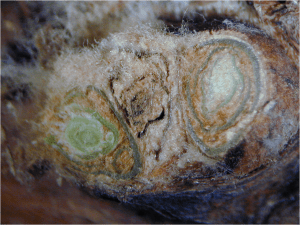
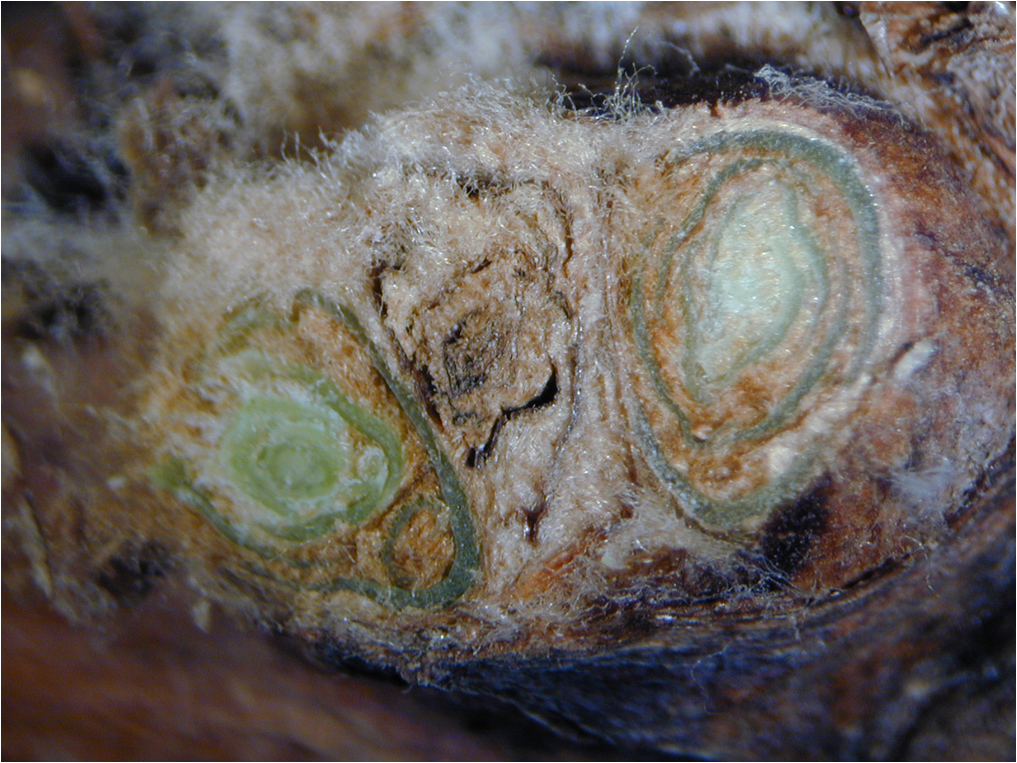
This icky thing is a dead primary bud

This icky thing is a dead primary bud

The winter of ’13-’14 was desperately long, idiotically cold and even the hardiest vines suffered primary bud damage.  This is the the most prolific part of the plant, formed in the autumn and subject to whatever indignities the winter brings.  Primary buds account for the bulk of the fruit in any given harvest, and in some areas, as many as 80% of them succumbed.  Not only that, but the clusters produced from the dormant secondary buds were unusually weak.

Hybrid varieties like Vignoles and Seyval blanc fared reasonably well, but our vinifera vines took a huge hit.

Last winter was a bit more forgiving (though not much), but a late-May frost hammered both Leelanau and Old Mission and, adding insult to injury, a freakish hail storm in early August picked off hybrids grapes as readily as vinifera.  Last I checked, full damage had not been entirely assessed.

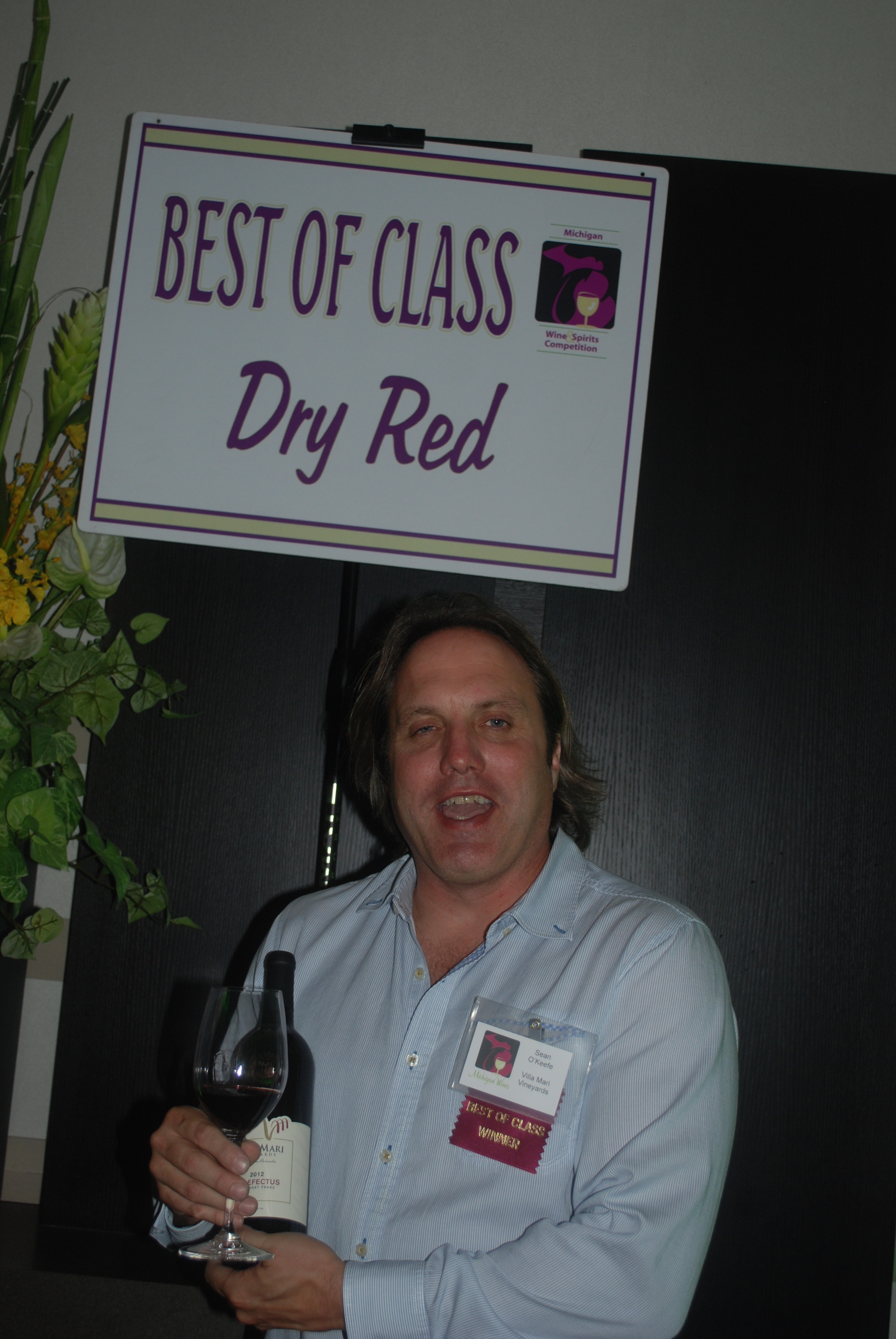
About half the wines entered in the 2015 Michigan Wine Competition, judged in Lansing on August 11,  were from the piss-poor 2014 vintage—the rest were either non-vintage, or draws from 2013.  A handful of older wines speckled the playing field, but mostly bottomed out, with the exception of the Best of Class winner in the dry red slot—arguably the best wine I tasted in any category—Mari Vineyards 2012 Praefectus (Cabernet Franc).

winnersIn fact, the other top dawgs represented an even mix, with two wines from 2013, three from 2014 and two showing no vintage.

Lesson learned:  The judges do not seem to distinguish between above-average and aggressively awful vintages, which could be viewed as a plus or a minus.  Either 2014 managed to produce a slew of decent wines after all, or the panel was handing out participation trophies.

First a word on participation trophies and second, a word on the judging parameters of the Michigan Wine Competition.

Harrison’s Horse Sense

James Harrison, the indomitable Steelers linebacker, made recent waves when he bombastically returned ‘participation trophies’ to his children’s grade school because he didn’t feel that the gridiron gamines deserved anything at all for simply trying their best.

In fact, he referred to participation trophies as ‘child abuse’.

L.: James R.: Jim

L.: James
R.: Jim

James Harrison is not to be confused with Michigan author Jim Harrison, who received a participation trophy in grade school for being the only kid in class able to watch the clock and the blackboard at the same time.  His wonk eye is the result of genuine child abuse, when, at age seven, somebody  jammed a broken bottle in his face.

I’m not sure how I feel about the whole participation trophy thing; that’s why I segued into a bad Jim Harrison joke.  Although I tend to believe that passing out awards where no awards are warranted is a little absurd, I’m also conscious that the number of grade school kids who will grow up to be NFL-quality linebackers like James Harrison is literally, one in a million.  Tossing Johnny Wimpbucket a chintzy plastic cup for not skedaddling after the first drop-and-give-me-fifty is okay by me.

Johnny Wimpbucket

Johnny Wimpbucket

And take it from somebody who was never the best player on any team ever:  Little Johnny Wimpbucket still knows exactly where he stands in term of competitive talent.

But, take it from me again, should he ever managed to lure a girl into his bedroom, the trophy will light up Johnny’s tchotchke shelf like a Roman candle, and likewise, any trophy bestowed for any reason puts a shine in any winery’s tasting room.

In fact, that’s the only reason that wine trophies exist.

Bell’s Curve

The reason I say that hearkens back to a statement made by Finger Lakes winemaker Peter Bell, who has worn a robe and banged a gavel at the Michigan Wine Competition for the last decade: He called this year’s event a ‘once in a lifetime experience’—pointing out that  every single wine in one flight of semi-dry white wines was awarded a gold medal by his panel.

five gold medalsNow, I love Peter Bell.  I love Bell’s bellwether wines, leading the flock in Seneca Lake, and I respect his palate immensely, so ultimately, before writing this, I tracked him down and held his feet to the ethanol-fueled coals.

I suggested to him that every wine in a flight taking home a gold medal is like every runner in the 100 meter race coming in first.  Not only is that not somatically possible, imagine an Olympic podium with no steps, but instead, fifteen identical blocks, each one reading ‘1’.

Those, my sardonic soulmates, are called ‘participation trophies’.

Peter Bell

Peter Bell

I won’t go into everything Bell said, but suffice to say that he had a lot of words to share about the nature of wine competitions themselves, the sort of wines that judges look for and the sorts of wines that are likely to win gold medals.  They are not necessarily the most enologically intriguing entries, they are frequently wines in blonde wigs and makeup.  When it’s medal time at the State Fair, subtle, remarkable, age-worthy wines are not necessary given the kudos that real wine folks think they’re worth.

Bell confirms that medals are often hung around wines with the broadest mass appeal, but having said that, he not only stands by his ‘once-in-a-lifetime’ declaration, he embellishes  it:

“In ten years of judging Michigan’s competition, I see improvements in every aspect of technique, style and quality.  This year was no exception.”

Sour Grapes? You Judge, Because I’m Not Allowed To…

Despite having written about Michigan wine for 25 years (mostly in glowing terms), despite having been the wine critic for Michigan’s largest newspaper, despite having published a book on Michigan wine last December and despite having judged many wine competitions in the past, I was not asked to be a part of this year’s Michigan Wine Competition’s judging panel.

Nor am I ever asked, nor am I ever likely to be.  Not only am I never the bride, I am never even the bridesmaid.  In fact, I’m lucky the Michigan Grape Council allows me to sweep up rice in the parking lot after the wedding.

Make of that what you will.

mich flagAs always, the following assessment of the Best of Class winners may be different than one that prevailed in the judge’s opinion, or in yours if you’ve tried them, but I promise, it is an honest impression of the state of the art from somebody with respect for the art of the state:

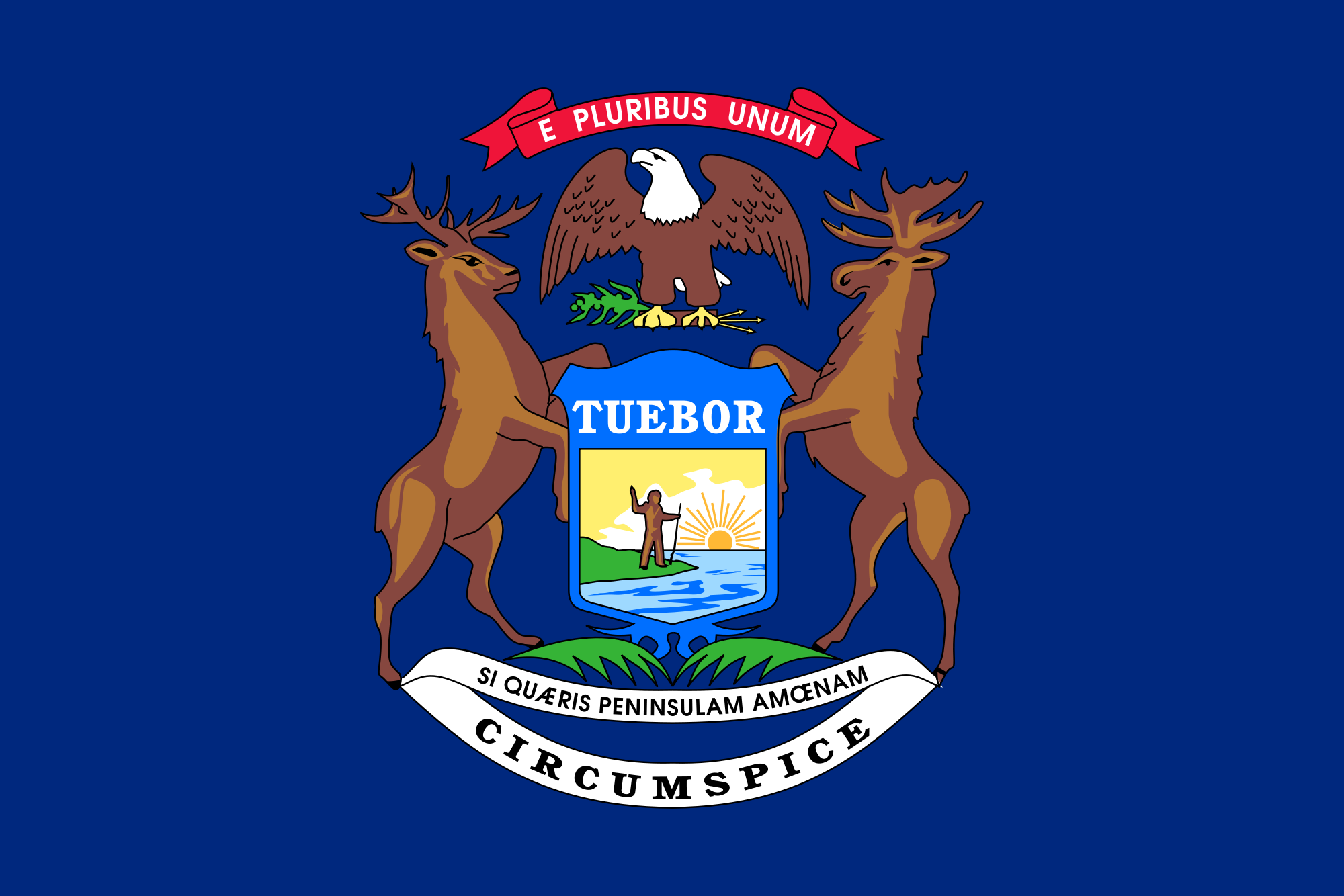
Even so, the flag I’m obliged to wave is not the go-team-go pennant with the bipedal elk and moose and the slogan, ‘Si Quæris Peninsulam Amœnam Circumspice’, but the one that says,

“If You Seek a Wine Professional Without an Agenda, Circumspice.”

Tradition_nextSparkling:  L. Mawby Tradition:  A no-brainer.  Larry Mawby knows more about producing sparkling wine in Northern Michigan than anyone else, which is why he makes most of them sold in everybody else’s winery.  Though they won’t necessarily advertise it on the label, a Michigan champenoise competition is usually Mawby against Mawby versus Mawby facing an opponent who used to work for Mawby.

His ‘Tradition’ is all of that—the classic Chardonnay cépage, whole-cluster pressed to produce a lighter must low in phenolics and given a dosage of 1%, putting it in the Brut category.

It is clean, precise and beautiful.
drydockDry White:  Boathouse Vineyards, ‘Dry Dock’ Riesling, 2013:  Not a bad Riesling, but not a dry one either.  I did no chemical analysis, but I’d be willing to bet beer money that this wine exceeds the sugar‐to‐acid ratio allowed for the category.

If so, is this cheating?  Of course it is, but it happens all the time in such competitions.  Most Rieslings in Northern Michigan have acid levels that can sear the epidermis off your epiglottis; when you pick below 20 brix, chaptalization is pretty much a given.  Unlike California, in Michigan adding sugar to less-than-optimally ripe grapes is not only allowed, it’s often required.

The wine is delicate, succulently sweet, but ultimately too simple to wear the top crown at this level.  Bryan Ulbrich’s runner-up (Double Gold), Left Foot Charley Pinot Blanc 2014, is a superior wine by any standard a serious student of wine could dream up.

Semi-Dry White: Boathouse Vineyards Semi-Sweet Riesling, 2014: This one owns its sugar content, but it still isn’t enough to counteract the acids, which remain high enough to throw the wine off balance.  Some peach and pleasant white grapefruit, but for the most part, too sharp to be really enjoyable.

My preference is Adam Satchwell’s Double Gold-winning  Coup de Blanc 2013, 100% Vignoles, with a healthy 5% residual sugar that I’d guess is twice the concentration upon which Boathouse floats and better suits to offset a scorchingly low pH.

ice wineDessert: 45 North Riesling Ice Wine, 2013:  For a hundred dollars per half bottle, you expect some superb things inside, and this wine certainly delivers.  The sheer nightmare—picking grapes in the middle of the night when it’s 9° outside—earns the winemaker combat pay.  And it’s hard to find something not to like in this, or any, ice wine: Less honey/linseed oil notes that may develop in botrytis-based dessert wine, more intense apricot, candied peach and allspice.

No issue with the choice, and I’m also a big fan of Lee Lute’s 2013 A Capella, also pure Riesling, from Black Star Farms.

Fruit:  Chateau de Leelanau Cherry Wine:  I wonder if this category throws members of the judging panel for a loop; a lot of them are from elsewhere, and fruit wine is largely a Midwestern—and specifically, a cold-climate—thing.

Not only that, but cherry wine in particular is Northern Michigan slam dunk, thanks not only to a century of tart cherry production but to the Balaton cherry, which is to cherry wine what Cabernet Sauvignon is to red wine.  And they don’t grow it everywhere.  That said, the best cherry wine in Northern Michigan is made by Charlie Edson at Bel Lago, no question about it—Edson’s wine has a depth of character and a complex, nuanced personality that comes, in part, from a number of rare cherries that his his wife, a professor of plant breeding, grows exclusively.  Bel Lago Cherry Wine really has no organoleptic rivals anywhere, but evidently, there are plenty of commercial rivals, and the fact that Charlie only took Silver for his au courant ambrosia leaves me with a sour taste in my mouth regarding the questionable taste in the judges’ mouths.

Semi-Dry Red: Karma Vista Vineyards, Devil’s Head Red, 2014:  Do we seriously need a non-serious category in a serious wine competition?  I mean, not only does nobody in Michigan make sweet red wine with the expectation of winning medals (I hope), but the ones that won medals here are so bad it’s embarrassing.

Second Best of Class tries harder

Second Best of Class tries harder

Case in point, gold medal recipient 12 Corners, Beach Cottage Red.  Hand before Gitchee Gumee, I have—in all candor—added Fleishmann’s Instant Yeast to Welch’s grape juice, let it sit for a month and come up with a better product.  Why?  Because my prison-house pruno was not loaded with bitter, unripe grape tannins.

That’s the thing about sweet red wine in general: It’s made with grapes that are not good enough to make into dry red wine.  Once you realize this, you can turn your substandard fruit into a respectable rosé, or you can go the passito route and raisinate the grapes to concentrate flavor and natural sugars, in which case you have to account for your time and labor and charge more for it.  Or, you can throw a bunch of cheap beet sugar into the cauldron and sell it to vacationers  for ten bucks.  Guess which route is taken here?

The ‘Best of Class’ is clumsy, cloying and bitter at the finish.  The rest are to the science of viniculture what a shirt made out of Danny DeVito’s back hair is to haute couture.

Too harsh?  Well, at least we have finally landed with the star of the show—and not a moment too soon:

Sean O'Keefe

Sean O’Keefe

Dry Red:  Mari Vineyards, ‘Praefectus’, 2012:  The silliness ends with the Gladiator-sounding name; this is an intense and elegant wine, one of the meatiest Cabernet Francs yet to emerge from Northern Michigan.   More than a feather in winemaker Sean O’Keefe’s cap, this is a pluma in his Spangenhelm—mulberry and cassis on a silken and perfumed nose, there are deep plum notes and hints of succulent spice and rose pastille shoring up a wine of impressive energy and balance.

*

A Final Cynical Note on the Judging Panel

In June, a letter went out from Michigan Wine Competition chairman Christopher Cook to all Michigan wineries, urging them to pony up $55 per wine to enter ‘the toughest competition you will ever enter because you’re being judged solely against your peers’.

But not by your peers.

In part, the letter read:

New to our judging panel this year:

Tony Aspler, wine writer for the Toronto Globe and Mail

John Buechsenstein, Culinary Institute of America in Napa, California

Ken Landis, consulting chef from California

Andrew Stover, Washington D.C.-based sommelier and wine writer

Returning:

Dan Berger, wine writer and director of the Riverside International Competition and the Long Beach Grand Cru

Doug Frost, MS, MW, a Kansas City wine figure and director of the Jefferson Cup Invitational Competition

Ellen Landis, certified sommelier and California wine writer

Linda Murphy, British wine author Jancis Robinson’s North American wine writing partner

Dr. Richard Peterson, a great figure in California wine and an early winemaker at Beaulieu Vineyards and others.

What do you notice about this hallowed checklist?  Exactomundo:  Not one of these judges is from Michigan.

It will always be a mystery to me why a competition that proudly seeks to showcase the very best of Michigan wines does not feel the need—even the obligation—to showcase the very best of Michigan wine talent.  I can name half a dozen local palates as good or better than any of the above who’d love to add this honor to their resumé, and I guarantee you, so can Chris Cook.

Le pissoir

Le pissoir

I understand the competition’s attempt to infuse ‘gravitas’ in the event by bringing in a bunch of nattering Napa nabobs, but in the end, golds and double golds and Best of Classes will be awarded, so ultimately, where exactly is the puffery and prestige when a highbrow wine whiz flown in from California determines that the best Riesling in Michigan is… a Riesling from Michigan?

Not that there are not Michigan judges on the panel. There are, and some kick-ass ones, too.  But in the Christopher Cook list, not one of them is highlighted.

In any case, that’s all for me.  After dribbling and draggling through three dozen wines, I’m off to the pissoir where I, at least, intend to be judged by a jury of peers.

Posted in Michigan | Tagged , , , | 2 Comments

Fox Run: For Whom the Bell Toils

Our paths first crossed between Michigan and New York; same latitude, same longitude, exact same moment, with a scant 30,000 feet between us.

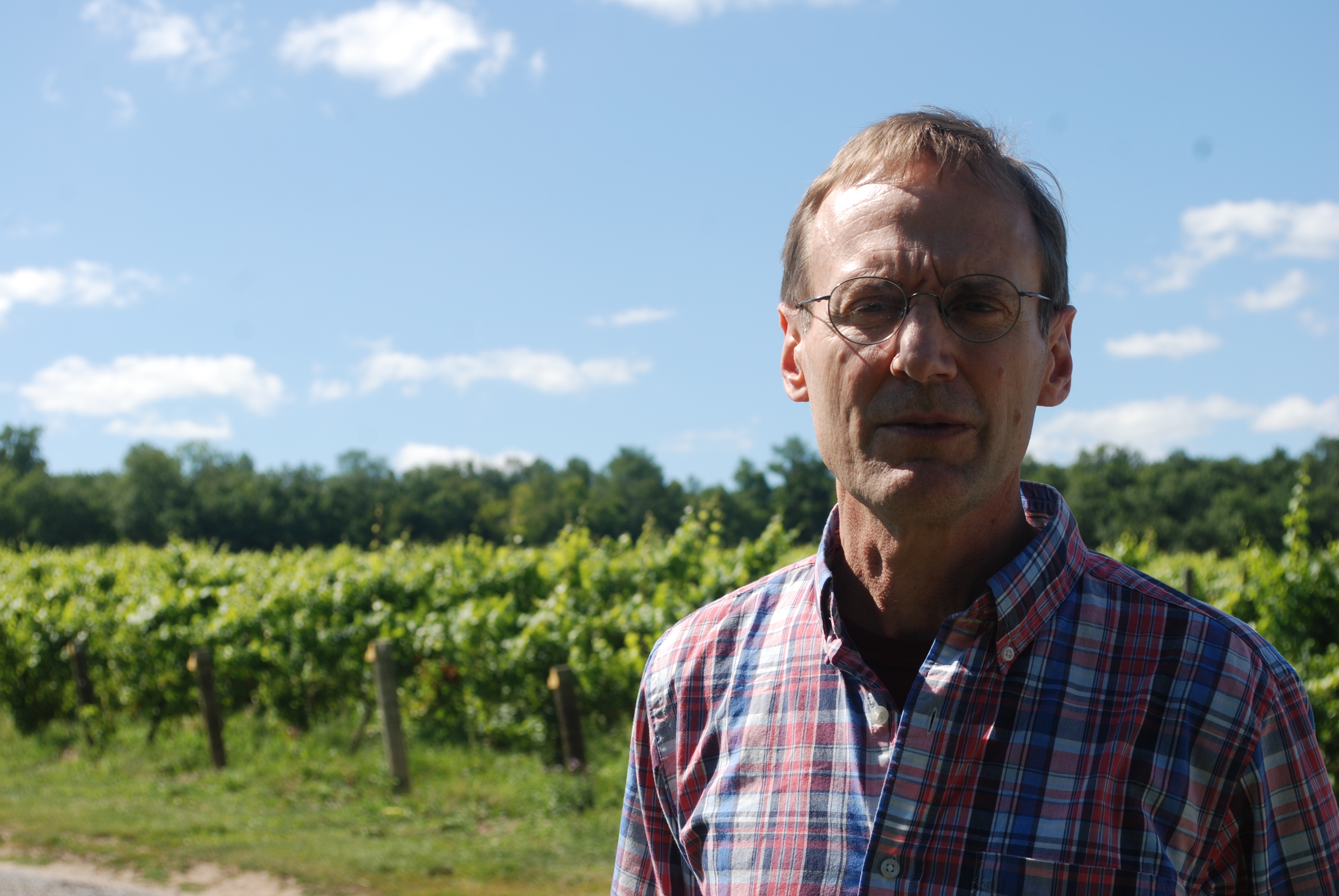
Peter Bell

Peter Bell

That’s because while I was driving to Finger Lakes to interview winemakers, Finger Lakes winemaker Peter Bell was flying to Lansing to judge the Michigan Wine & Spirits Competition. When a few days later we actually touched palms at sea level, Bell reported that the Michigan wines he judged were outstanding.  I reported that the Finger Lakes wines he makes were outstandinger.

Thus ended the circle jerk and we got down to business.

First, some history:

Fox Run is owned by Scott and Ruth Osborn (and family); Scott picked up his share from a fellow described as ‘a wealthy psychiatrist who’d fancied the life of a gentleman farmer’.  In the mid 1980s, the good doctor had purchased a dilapidated farm on Torrey Ridge overlooking Seneca Lake and hired a Barnum and Bailey-quality winemaker who promptly and completely FUBARed the operation.  The shrink’s investment value shrunk accordingly, so he put place up for sale.

Rather than being one, most folks considering buying a winery need a psychiatrist, but Scott came with a bag of tricks from Pindar Vineyards in Long Island, where he’d been the General Manager.  Part of his plan to bring Fox Run from bust to boom involved luring Peter Bell away from Dr. Frank, a locale to which Bell himself had been lured five years before.

More on that in a flash.

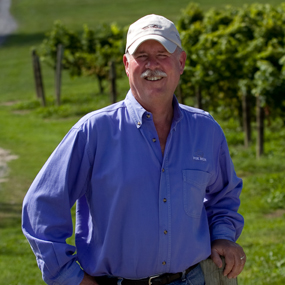
Scott Osborn

Scott Osborn

Part of the growing pains of any vineyard is determining the size that makes the most sense in terms of intent, both in aesthetic impact and financial reward.  On that front, the Osborns were burdened with a freewheeling legal albatross (the son of one of the original investors, who’d inherited 40% of the place) who neither understood nor cared to understand the wine business. It wasn’t until Osborn’s brother and sister-in-law bought out the playboy partner a few years ago that the Fox Run ship was truly set on the course toward the carefully measured success, both financially and aesthetically, that the winery enjoys today.

Incidentally, for Fox Run Vineyards, that ‘magic number’ wound up being around 15,000 cases annually.

“In the 25 years I’ve been in Finger Lakes, I’ve happily watched the ascendancy of Riesling,” Peter Bell says.  “When Scott Osborn first took over Fox Run, his primary focus was seeing these vineyards repaired so that Riesling’s true potential could be realized.  Winemaking here had been sketchy, canopy management lacking; the whole act had to be gotten together.”

Joetta Kirk

Joetta Kirk

Vineyard manager John inherited 25 acres of largely untended Chardonnay, Riesling, Pinot Noir, Gewürztraminer and Cabernet Sauvignon suffering from drought stress and an unsophisticated support system that consisted of a rudimentary three-wire system.  First order of business for John and Scott included attending a lecture on the Vertical Shoot Positioned trellis system touted by Joetta Kirk of Rhode Island’s Sakonnet Vineyard, then retrofitting Fox Run acres to take advantage of this revolutionary technique.

Combined with a proactive hedging, shoot tucking and a leaf removal program, the resulting Chardonnays, according to Peter Bell, showed “aromas of figs, peaches and tangerines with an intriguing spiciness that I’d never before seen in Finger Lakes fruit.”

*

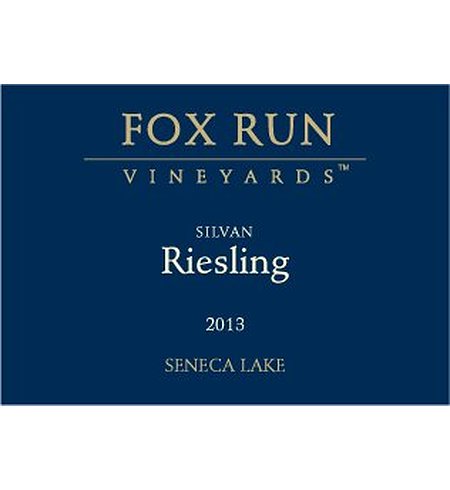
label silvanI like hanging out with Peter Bell.  He has a charming way of being simultaneously relaxed and hurried.  He’s on his way to this or that event or family responsibility and only has a minute; by the time that minute is up, he’s late and I’m out of questions.  Whether or not he knows it, his wines reflect that dual nature as well—tension with time to spare.  His 2013 Silvan Riesling is, perhaps, a paradigm of counterbalance, with zesty sweetness in point against taut acidity; an essential Finger Lakes minerality playing against an unusual touch of creaminess the wine develops with a barrel-age regimen.  Equally intriguing is what he does with Lemberger, another signature varietal—it exudes chocolate and spice, mulberry and smoke, everything sewn together in a package both taut and unconstrained.

Peter and some pet barrels

Peter and some pet barrels

Bell’s background has many dimensions as well.  He’s Canadian, but he learned winemaking in Australia and New Zealand, a nation of humans he refers to as ‘toxic’.  Desperate to get out, he talked to an American at Cloudy Bay who offered up some contact information from Finger Lakes, then (as now) a region with a vast and largely untapped potential in the viticultural landscape.

“I made two phone calls,” he says in a customary brew of hubris and humility:  “I got two job offers.”

His tenure in New York has raised the bar on a lot of the specialties of the local house; I was impressed with his 2014 Traminette—a cold-hardy scion of Gewürz that, if handled with care, can easily match (and often outstrip) its parent.  His 2011 Reserve Riesling has begun to take on characters of a classic Rheingau with a couple years under its belt; the lime zest has integrated with deeper notes of smoke and petrol and the acidity, which can be unpleasantly electric in younger Finger Lakes Rieslings, has been grounded with minerality.

“I’ve seen our wines improve at a steady, manageable pace,” he claims.  “The challenge we have tackled is making wine within the parameters appeal, but with individual character.  No robotics, no shortcuts.  We embrace wines that are subtle, nuanced, yet still easy to understand and appreciate.”

vinyards nightAcross the board, I find this to be an accurate summation of Fox Run’s portfolio.  Bell’s wines steadfastly avoid rough edges—he despises the sort of noisy wines—what he calls the ‘squeaky wheels’ that often command attention from critics.  His wines are exceedingly well crafted and essentially without flaws.

And I must say, rooting out life’s flaws is a task at which he remains ever-vigilant: In the course of our last interview, he pointed out a typographical error on my business card that neither I, nor anyone else in five full years, had noticed (!)

Thank you, sir.  Thus,  never send to ask for whom Pete Bell toils:

He toils for me.

Posted in Uncategorized | Tagged , | Leave a comment

The Munchkin of Ink Thinks I’m #Stupid. Read On.

Funny-Memes-about-Stupidity-71Old age may not guarantee wisdom, but it does encourage a bit of caution.  As a result, I’m wary of using the word ‘stupid’ to dismiss people I don’t know.   I roll my eyes at those memes that say ‘Stupidity is a Mortal Disease’ or ‘The Stupidity is Spreading’, being relatively certain that most people I think are stupid think the same thing about me.

I shake my head, but I do not suggest that the meme poster is stupid, because that would be stupid.

That’s why, when the Munchkin of Ink responded to a comment I made about the ethics of reviewing wines that compete against your own wine (he said, “Oooh I have a job so I should recuse myself from reviewing all wines in the world”),  I was initially going to let it slide—other than a friendly editorial note on his punctuation.

But then he capped the comment with a hashtag appendix:

#stupid

ky jellyReally?  Stupid?

<<<< ‘Oooh’ this, Ink Boy.

As you can imagine, I felt the kid gloves slide off as readily as if they’d been slathered with KY Jelly and, despite discretion being the better part of valor, I opted instead to perform a hashtag appendectomy upon the Munchkin of Ink, sans anesthesia.

Read on.

#doIreallystrikeyouassomeonewhowon’tgetacolumnoutofthis?

man curtainNormally, I don’t shy from naming names and t’ain’t a-bein coy about it now.  I just think it’s more fun to allow you, my astute and #nonstupid reader, to draw the drapes on the Man Behind the Curtain at your leisure.

Besides, but I don’t pretend to have much of a claim on journalistic ethics in the first place.  I switched Majors from Journalism to Anti-Journalism as soon as I realized that finding two sources willing to lie is nearly as easy to find as one source willing to lie, meanwhile discovering that although editors demand honesty, most will promptly edit out any real honesty.  That’s because everybody works for somebody, and everybody’s somebody is beholden to somebody else’s somebody.

Except, of course, for wine bloggers like me and the Munchkin of Ink.

Not on my shelf, damn it.

Not on my shelf, damn it.

Our ilk grovels to no editor, no editor’s somebody, no ultimate beholdenee.  That’s why I can use words like ‘beholdenee’ without fear of a proofreader’s dreaded circled ‘sp’ and why the Munchkin of Ink can judge high-end wines on a hundred-point scale without mentioning that his day job is ‘Director of Wine Communications’ at the toppest-selling producer of high-end wine in the United States—wines competing for customers and shelf space with the very ones about which he’s directing communications.

When I say ‘without mentioning’ his financial interests in his wine outselling the wines he reviews, true journalistic integrity dictates that I must state unequivocally that you can find this rather non-trivial bit of info in his biography link, although I can also state in true journalistic unequivocality that reading his stultifying 700 word biography is even more tedious than reading his ineffably boring 150 word wine reviews, and you have to get through 650 of those ineffable words before you get to the effable part that would suggest, to us stupid people, that there is a clear effing conflict of interest.

Please note that not only is my biography only 71 words long, I can easily find two sources to confirm that it’s bullshit.

#codeofcivilproceduresection170-170.9

Midsection of male judge striking gavel while holding scale with money in courtroom

During legal proceedings, a judge recuses him or herself from a case where personal financial gain might hinge on the outcome. Key to The Code is that not only should there not be any impropriety in a judge’s judgment,  but equally important, there should be no appearance of impropriety.

‘A justice shall disqualify himself or herself in any proceeding where the circumstances are such that a reasonable person aware of the facts would doubt the justice’s ability to be impartial.’

Fortunately, wine critics are not subject to California’s statutory judicial disqualification framework , unless their day job happens to be Director of Communications for the California Bar Association.

Nor, in fairness to the Munchmeister, could I be considered a reasonable person under the Code of the Hashtag-Stupid.

And I have no doubt that the Munchkin of Ink is perfectly capable of distancing himself from the forty or so wineries his boss owns when reviewing a wine some competitor sends him for free.  I believe him to be a man of honor, a man of integrity, a man of incorruptibility.

Of course, he thinks I’m stupid, so there you have the insurmountable paradox.

#maybeIAMstupid

One thing the Muncher of Twink did the other day in his wine column that struck me as patently #non-stupid—borderline genius—was title a column, ‘Not all small wineries are cool. Read on.’

proof marksIt all my years of columnry, it has never once occurred to me (or one of my beholden editors) to actually instruct the reader to continue reading—due to the riveting, albeit stupid nature of whatever I write, that was considered a given.  Plus, there are space and size requirements for headlines, and having two complete sentences—even if one is in the imperative Big Brother tense—means you have to resort to using periods, which is verboten under the Code of Headline Procedure, Section 170-170.9:

‘Headline punctuation is normal with a significant exception: Use periods for abbreviations only.’

Read my wine column

Read my wine column

Fortunately,  independent wine critics are not subject to the Code of Journalism regarding periods, even if they are simultaneously Director of Periods or if they happen to be on their period when they write stuff like #stupid.

But they are beholden to reader clicks, and if adding Svengali-like instructions to a headline is as effective a method of mind control as the ‘Do Not Feed The Flying Monkeys’ sign at the zoo or the ‘I’d Turn Back If I Were You’ sign in the Haunted Forest, more power to the Munchkins.

I represent

‘We represent The Family-Owned, Family-Run Winery Guild and we wish to welcome you to Munchkinland’.

In the end, I am humble enough to bow before the great and powerful Wizard of Ooohs, whether he is ooohing behind a curtain of Napa respectability and Spectator gravitas or dancing with three stooges from the Lollipop Guild.

Like the real Wizard pointed out about himself to Dorothy after she accused him of being a very bad man, I’m sure Munchkin of Ink is very good man.

He’s just a very bad journalist.

Posted in GENERAL | 11 Comments

Finger on the Pulse: Wine and Water

You may not know it, but the Ohio Turnpike comes with its own soundtrack.  It kicks in as soon as you leave the onramp and consists primarily of white Gospel music.

If you’re not familiar with that genre, let me point out in advance that white people cannot produce Gospel music with any shred of credibility.  The singers tend to be saccharine crooners like Pat Boone or holdovers from barbershop quartets.  They have voices that sound like angel food cake frosted with Crème Anglaise and soaked in Milk of Magnesia.  They slither from the radio in a glissade—from programs like Amen FM and Faith For Tomorrow—and the recurring theme of all the songs seems to be, ‘Jesus, I am  not worthy’ and ‘Lord, I am undeserving.’

In this, they are probably correct.

The Ohio Turnpike is largely hand=painted.

The Ohio Turnpike is largely hand-painted.

The Ohio Turnpike pokes through the plumpest agricultural portion of the Midwest, a milieu largely dominated by plump white  Christian people.  During summer’s apex, the stretch between Toledo and Pennsylvania portrays Flyover America as people in the Twentieth Century fantasized it was, but for the most part, wasn’t.  The corn is not only as high as an elephant’s eye, it’s thick as an elephant’s dick; there is no trash by the side of the road and the embankments look like somebody mowed them with a Norelco.  There are no dead trees among the verdant forests between the croplands and even the swamps look wholesome—like you could drink the water.  They don’t have truck stops, they have Service Plazas. There are towns called Elyria and Sugar Bush Knolls filled with Cracker Barrels and Hampton Inns and Farmer’s Insurance outlets.  There are rivers called the Vermilion.

Problem is, genuine foot-stomping, audience-testifying, melody-disjunct Gospel music doesn’t come from fat white people or rivers named the Vermillion; it comes from fat black people and creeks named Possum like the one Rosetta Tharpe grew up near.

But they don’t allow real Gospel on the Ohio Turnpike soundtrack; in fact, the only black people you hear at all on Amen FM at all are safe, well-behaved ones like Nat King Cole.

Still, the Turnpike I take, it being the shortest path between Point Michigan and Point Finger Lakes, among the most intriguing wine regions in the country—one that is currently battening down the hatches against a publicity shitstorm, largely self-orchestrated.

With this book, I am not only contributing to the hoopla, I’m the exact guy the Finger Lakes Tourism Alliance is targeting:  My last foray through Northern Michigan was a personal spotlight on wine country with similar terroir—combined climate and geography—nearly identical varietal focus and winemakers displaying  the same pioneering viticultural spirit.

Seneca Lake

Seneca Lake

I couldn’t help contrasting the two if I tried, and I have no wish to try.   There are 600 miles between Northern Michigan and New York’s Finger Lakes, roughly the distance between Traverse City and Des Moines, Iowa.  Consider that there are  millions of square miles of heartland between them—some of the most agriculturally-friendly turf on the planet.  What makes both Northern Michigan and Finger Lakes nearly perfect sanctuaries for specific vinifera grapes—Riesling , for example—without there being countless similar sanctuaries in between?

Or is it like the psychotropics in a bowl of marijuana?  Is there a potential buzz squirreled away in a million square miles of something else growing wild, only nobody ever thought to fire any up?  Are there plenty of Riesling resorts between Traverse City, MI and Ithaca, NY, but nobody ever thought to plant a vine?

Fred Frank

Fred Frank

That’s one of the things I hope to learn from the two hundred or so wineries striping the slopes of the  Finger Lakes, from the brain trust at Cornell University’s  Cornell-Geneva Grapevine Breeding and Genetics Program, from Fred Frank—grandson of the man who essentially jump-started the whole vinifera industry on the East Coast in 1957—a mission that Thomas Jefferson tried and failed at  two hundred years before.

But first I need to get there, and that requires a Norman Rockwell small-town criss-cross through Plumpland—plump fields, plump municipalities, plump cops in neat, Mayberry-esque trooper uniforms pulling over plump citizens who will now be ticketed in addition to paying to drive the turnpike.

Meanwhile, AMEN FM has switched format, and now, some born-again Evangelist named Todd is walking us through his personal journey to Christ—evidently, in his formative years he was addicted to (his words) ‘the lies of the Budweiser, the Playboy and the MTV’ which cost his brother Kip his life in a drunk driving accident.

Keuka Lake

Keuka Lake

Ever notice that plump white people in the Midwest name tend to name their plump white tykes Todd and Kip?  I have. Well, this would be a journey to see what a Ukrainian named Konstantin brought to Todd ‘n’ Kip Country in the middle of the last century when he came to the Finger Lakes and planted 60 vinifera varietals despite the naysayers and cynics and doubting Kip-Todds who said that it couldn’t be done.  If Konstantin Frank’s name appears with regularity in the following pages, it is because the whole Finger Lakes phenomenon  owes him its eternal fealty.

The rest is a hearty thumbs up from a diehard Michigan boy to the many faces and many digits of Finger Lakes.

Posted in Uncategorized | Tagged , , | Leave a comment