
The following column needs to be taken seriously. It was channeled via ‘psychography’, wherein the author falls into a trance-like state and is then possessed by some disembodied external force which composes a written prognostication without the subject’s conscious awareness.
The ‘nominal’ author, Christian Kassel, was given an extensive polygraph examination afterward, and the only question that drew an ‘inconclusive’ was when he was asked if the machine was actually plugged in.
* Note that before the autowriting began, Kassel had already typed the dateline as Dec. 31, 2012… As you can see, it was modified to ‘2013’ by whatever otherworldy haruspex had seized control of his phalanges, his soul and his personal computer.
Dec. 31st, 2013: The Wine Year In Review
I think we can all agree that the global vortex that spun the Planet of Plonk out of control and led to the downfall of the Obama administration can trace its origins to January 22, 2013—the day after the President’s second inauguration.

Malia, in a world where everyone is Aryan.
On that day, the First Family’s 14-year-old-daughter Malia was diagnosed with an extremely rare form of acne known as nodulocystic papuphilia, a skin disorder that impairs the body’s ability to coagulate pus.
So physically disgusting—and psychologically devastating—is this disease that teenagers are frequently placed in state-run sensory-deprivation chambers throughout the duration of puberty.
The Obamas opted to keep Malia at home, where, unfortunately, her condition deteriorated, and the President, with his international schedule, was forced to divide his time between her bedside and les affairs d’estat.
It was during this time that Michelle Obama grew increasingly desperate and Malia slipped into that mental state that our forefathers called ‘melancholia dramatica queenatosis’.
Meanwhile, as virtually every enophile on the planet knows, the 2nd term restructuring of the White House staff saw the dismissal of former State Dinner sommelier ‘Screwcap’ McKlittery and the instatement of the charismatic, Russian-born whizkid Grigori Schlongolov Jizmekuntovskovich, MS, MW, who was hailed throughout his native Siberia as a wine scholar, a wine whisperer, a wine mystic, a monk-confessor and occult healer.

George Wallace making a physical demonstration of his IQ.
Somewhat disheveled, bug-eyed and frenetic-looking, Jizmekuntovskovich could not have been a bigger contrast to his meticulous, prissy, homosexual predecessor. Among the most telling differences was the McKlittery had earned his nickname by his vocal advocacy of the new generation of wine closures, whereas the mussed-up Marxist mystic maintained munificently, like George Wallace discussing segregation, “Corks today, corks tomorrow, corks… fo’evah!!”
He had not been on duty three days when, having heard of Malia’s infirmity, he presented the First Lady with a traditional acne remedy from his hometown of Vulvavsk-Gleetskaya: Prikji Klapzú, a concentrated late-harvested Siberian dessert wine made from frozen Dykkälä Twatska grapes fortified with distilled yak milk and otherwise used only for pompous Kremlin gala dinners and to help preserve the corpse of Vladimir Lenin.
Jizmekuntovskovich applied the viscous vino to Malia’s zit-ravaged mug and within minutes, the seeping, evil-smelling rash began to clear up, and within an hour, her complexion was cleaner than a Vienna choirboy’s tighty-whities.
Thus, almost instantaneously, despite his dirty hair and Charlie Manson glare, the Soviet sommelier ingratiated himself into the inner circle of Michelle and Barack Obama. It is speculated that he may have tapped into the sort of ‘collective unconscious’ about which Jung postulated—some genetic memory incorporated into their genome based on the First Couple’s shared African ancestry and dating to the period where Dogon sorcerers and Zulu sangomas were exalted and venerated across the Dark Continent.
All attempts to discredit the mad, disheveled Siberian or to dissuade the Obamas from their growing reliance on his advice, spiritual guidance and aesculapian hoodoo fell on deaf ears and were chalked up by Barack and Michelle to jealousy and class prejudice.

Yak.
And, indeed, every time Jizmekuntovskovich left Malia’s bedside to perform an assigned wine duty, pustules popped afresh upon the pretty pariah’s puss and he’d have to rush back with his private stash of dessert wine/yak juice.
By mid-February, it became clear that Jizmekuntovskovich would serve the Obamas better as a metaphysical anchor rather than a wine steward, so—with some reluctance—they retrieved old ‘Screwcap’ from pasture, and set up the rumpled Rooskie in the Lincoln Bedroom so that he could be immediately available for any spiritual consultation, psychic mysticiszing or ritualized healing that might become necessary.

Nomadic horse-breeders.
By the beginning of March, Obamaclan had grown so emotionally attached to the former sommelier that it became quite impossible to hide it from the general public. Rush Limbaugh opined that the President was spending so much time in the private company of his Commie confidant that they were obviously lovers; Glenn Beck tried to dig up some dirt on Jizmekuntovskovich, but the only thing he could come up with was some minor incident in 2001 when a tribe of nomadic horse-breeders from the Dzhugdzhur Mountains all died after being treated by him with Scilla siberica, a common ingredient in rat poison, for what turned out to be nothing more than an outbreak of scabies. Beyond that, Beck had nothing.
And yet, by St. Patrick’s Day, even Vice President Biden grew concerned as the President began to refer to Jizmekuntovskovich as ‘The Holy Man’ or simply, ‘Our Friend’ to indicate how entirely he was bedecked with the First Family’s good will and trust.
On the surfact, neither the President nor his wife appeared to realize that the mystic Marxist moke had his own nefarious agenda to advance, and was slowly, methodically working their marionette strings…
But more will be revealed about this shortly.
The Plot Sickens

Know thy enemy
It began with the innocuous-sounding Embargo of Portuguese Pork Products (known in Portugal as ‘El Bloqueo’) signed into law on March 21, 2013 following a suspected outbreak of porcine spongifrom vaginal discharge syndrome and was intended to prevent the import of dry-cured presunto be Barosso ham, choriço and linguiça meat sausages. Unfortunately, as a public health emergency, the bill was passed so quickly that most Congressmen didn’t bother to read the fine print, which also restricted all travel by U.S. citizens to Portugal, froze all Portuguander assets in the United States and imposed heavy penalties on foreign companies who traded with Portugal—up to and including rescinding their right to do business in North America.
On April 1st, following an intensive one-on-one spiritual pow-wow at Camp David with Jizmekuntovskovic—who had recently named Special Advisor on Iberian Affairs—the President issued an Executive Order to widen the scope of the trade restrictions to include every single imported item from Portugal—including salted cod, Portuguese cigars, pickled castor beans, greater mouse-eared bat pelts, Vasco de Gama masks, Manueline wrought-iron balconies and gay fado troubadours.
There was, within the twenty-seven thousand four-hundred eight line items listed in the embargo, only one exception:
Wine corks.
Combined with the meteoric career path of the raunchy Russian rube and the fact that his beloved montado cork was spared the executive ax, the fear that his influence over President Obama was reaching pathological levels ratcheted upward across the nation. Further inflaming the general concensus was Jizmekuntovskovich receiving the blessing, encouragement and total endorsement of Michelle Obama and the whitehead-free Malia, who now referred to the Samoyedic slob as ‘The Holiest of Holies’ and was widely quoted in the press as saying, ‘You claim he pollutes us, but no… He purifies us…’
Even Barack Obama sensed that his advisor’s presence in the White House had grown politically inappropriate, so he formed a task force which he immediately sent to Portugal to monitor, inspect, verify and pursue suspected trade embargo violations.
The unit was hand-picked by Obama’s trusted Iberian advisor who, of course, led the mission.
WMD: Weapons of Mass Deflowerization
On April 29, 2013, what he and his team of lackeys claimedto have discovered in an abandoned geranium greenhouse near Vendas Novas was the catalyst which brought America to her collective, wine-stained knees.
Geranium-235: A Tutorial
In the waning days of the Cold War, florists working for the US Army Corps of Engineers discovered that there is a fissile isotope making up 0.73% of the stigmas of the endemic Iberian species Geranium azorica, used throughout as the base for Portuguese saffron—at the time, not only the world’s most expensive spice, but a key ingredient in the classic local dessert Bolo amarelo (Yellow cake).

Bolo amarelo
A primordial nuclide with a half-life of seven hundred billion years, when enriched in a gas centrifuge 235 G has an explosive geometry so devastating that even a small test bomb would wipe out all life on earth, and likely the race of Martians discovered by that uppity negro Neil deGrasse Tyson in January, 2013. Therefore, within moments of realizing the isotope’s solar-system-ending potential, all work ceased upon weapons grade Geranium-235 and it was forever banned from further development by the Comprehensive G-Bomb Non-Proliferation Treaty of 1968, ratified by every nation on earth—even those that no one gives a shit about like Liechtenstein and Malta.
So, Jizmekuntovskovich’s official report stating that Portugan nuclear horticulturists were literally hours away from perfecting a Geranium bomb caused an unfortunate knee-jerk reaction in Congress. Not only that, but in a rare non-consensus decision, the International Floral Energy Agency—an intergovernmental forum for scientific cooperation in the peaceful use of blossom technology and posy power—found Portugal in non-compliance with its Safeguards Agreement.
The response of the Portugalish parliament was immediate and consisted of desperate denials, to which the United Nations responded harshly:
‘We will not play cat and mouse games with a nation of cement-making, pig-farming, fandango-flitting terrorists who we previously considered too inebriated to understand floral technology—a mistake we will not make again.’
That evening, May 1, 2013—a date that will live in infamy—President Obama addressed the nation and cited The George W. Bush Pre-Emptive Strike Protocol of 2003, and explained that ‘a full hour’s worth of diplomacy has failed—and this, my fellow Americans, is an hour we shall never get back,’ and announced that that America’s ‘Army Of One’ would now become ‘A Coalition of One’ and that he intended to follow The Ronald Reagan ‘We Begin Bombing In Five Minutes’ Protocol of 1984 to forever rid the world of the threat of magnoliophytic militarism.
Dubbed Operation Bolo Amarelo, America’s subsequent, calamitous war of aggression against the puny, pathetic, piss-poor, pussified Portuguese people became the biggest mismatch since Superbowl XXIV when the Niners beat the Broncos 55 – 10.

Bye bye, Emeril
Worse, it wound up eroding U.S. power in dramatic and irreversible ways and will likely be remembered as the greatest strategic blunder in American history, not merely because of the collateral damage—a hundred thousand Portu-punks pushing up petunias within five months, the utter razing of Lisbon, Amadora and Braga, the establishment of black sites and unaccountable detention facilities, the symbolic toppling of the Emeril Legasse statue in the Algueirão-Mem Martins town square, the trial and subsequent execution of Portuguese President Eréctobal Çopulata Dildão—but because upon closer inspection, it was discovered that the so-called geranium-enrichment centrifuge that Jizmekuntovskovich claimed to have found in the abandoned greenhouse was nothing more than a 4000 liter, self-aerating Bio-Pure leaf composter.
America wanted answers, and they wanted them immediately. Obama was unable to provide anything satisfactory, and on October 10, 2013, he sputtered through the most disastrous television address of his career, later referred to by pundits and poltroons as his ‘Wha’ Happened?’ speech.
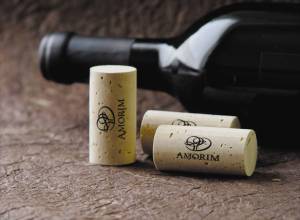 Well, it was clear what had happened, and even without the consipiracy nuts on overdrive, it soon became common knowledge that an outrageous law had passed virtually unnoticed amid the furore surrounding the hanging of the Portuguese President, giving American wine companies a massive share of Corticeira Amorim and, thus, ownership in the world’s largest cork reserves, meanwhile removing Portugal’s sovereign right to manage her own natural resources.
It shortly became obvious to the public that the real casus belli for the war had nothing to do with flower power, but with the vast Quercus suber forests of central Portugal.
‘To the victors, the bark’ was the rallying cry of the law’s sponsors.
A Brief Overview of American Dependence on Foreign Cork
The endless drumbeat that we’ve heard for decades—that America ‘must reduce her dependence on foreign cork’—has led to some devastating economic, political and alternative-closure choices. Given our nation’s infrastructure, alcohol addiction and general reluctance to embrace corkless wine stoppers, a logistics model was developed in 1992 to determine when the ‘peak’ requirement for imported cork usage would occur.
That year turned out to be 2013.
What Did They Know, And When Did They Know It?

Grigori Schlongolov Jizmekuntovskovich
On October 28, 2013, nearly 30,000 classified war-related documents were published on the Internet by WikiLeaks, proving what had long been suspected: That there was a clear connection between President Obama and Grigori Schlongolov Jizmekuntovskovich long before before the latter’s White House appointment; private messages between the two from 2009 were revealed in which they discussed CPEC’s threat to slash cork production, thus keeping profits high with winemakers increasingly switching to synthetics, Stelvins, Vino-Seals and Zorks.
Furthermore, voice-activated audio-recordings from the Oval Office, reviewed at length by Special Prosecutor Archibald ‘I Haven’t Got Any Pubes’ Cox, showed that the invasion of Portugal had been planned as early as 2011. The most damning revelation was Obama’s recorded phone call to Jizmekuntovskovich in November, 2011, when he said:
“What we are really after is a bark pipeline through Portugal to transport high-quality Iberian cork easily and cheaply. And so, I have promised Eréctobal Çopulata Dildão—that sheep-schtupping, cheese-chomping, fadisto-fellating Lisboner—that he has an opportunity, here: Either a carpet of gold or a carpet of bombs…”
That was that, of course.
Barack Obama’s final, wretched speech to the nation on November 5, 2012, was all of 57 words long. It is given here verbatim:
“This is the 37th time I have addressed you, but the first time without a teleprompter. To speak extemporaneously is abhorrent to every instinct in my body. But, let me say this, completely unrehearsed and off the cuff: I don’t believe that I oughta quit, because I’m not a quitte…
Hell, who am I kidding? I quit.”

President Joseph Biden jamming a phallic device in his ear.
An hour after Biden was sworn in on November 6, 2013—ironically, one year to the day after Obama’s landslide re-election victory—‘Screwcap’ McKlittery offered a noticeably shaken, and now unemployed Grigori Schlongolov Jizmekuntovskovich a large glass of 1997 Plumpjack Cabernet Sauvignon which had been heavily laced with cyanide, and then shot him at point blank range several times, then clubbed him over the head with an ice bucket. He then rolled the rigid Russian inside a Romanian ramskin rug and threw him into the icy Potomoc River where he drowned.
Thus, the were the American people able to move beyond Corkgate, and under President Biden, heal.
Epilogue
 It is not so easy to say what will happen to the wine industry in 2014, since the Portugualicans are in process of burning all their Quercus suber forests and replacing them with safe pastureland for McDonald’s beef cattle. Other cork producing nations like Morrocco, Algeria and Tunisia, fearful of similar shock ‘n’ awww treatment by cork-thirsty Americans, are doing the same.
What does this mean for the wine stopperage industry? President Biden’s first official act was to sign into law the American Recovery and Reinvestment Act, allocating $71 billion for efficient and renewable cork alternatives; it also includes $20 billion in tax incentives for such companies as would quickly rise to the challenge. Plug-in hybrid electric corks, although in their infancy, show the potential for drastic cuts in bark consumption, and several screwcap manufacturers are developing the next generation of threaded aluminum capsules.
Most innovative and perhaps most ironic of all is the work being done by Monsanto’s Molecular Breeding Technology team in St. Louis, MO. They have recently discovered a unique, sustainable, carbon-neutral method of compressing geranium stem fibers into convenient cork-shaped cylinders.
The claim is made that the radioactivity contained within these ‘gernorks’ (as the media has dubbed them) is less than you would receive with fifteen x-rays minus lead protection in a Chernobyl dental clinic, while your odds of contracting cancer from a gernork is about the same as your chance of being struck by lightning!*
*If you happen to be standing in a bucket of water on a very tall building during a severe thunderstorm holding a fifty-foot section of re-bar in the air.
It is so very American to rebound from national tragedy via defined steps: First, denial; then, anger; then, bargaining; then depression, and finally, forgetting about the whole thing and fucking everything up all over again.
Onward and upward, eno-weenies. Happy New Year, 2014!
 I discovered this last talent as a teenager, having found a magical ‘book’ in our den that foretold precisely where I would be and what I would be doing at, say, 12:00 PM the following Sunday—and it proved to be absolutely accurate. Of course, it was TV Guide and AMC was showing the entire remastered Godfather trilogy at noon, so this is probably not a really good example.
 Over the past week, dutch-courage diva and distillate dominatrix Natalie MacLean has found herself in some professional hot water. It began with the Palate Press’s tabloidesque rippage of her website’s use of unattributed wine reviews from other wine writers without their permission, and sometimes without their names, then charging money for a ‘Magnum Membership’ in which she reprints them.

 Anyway, the Big Mac’s hack attack has drawn hate mail equivalent to that received daily by the Westboro Baptist Church’s newsletter, ‘God Hates Stephen Ambrose, Not Because His Book ‘The Wild Blue: The Men and Boys Who Flew the B-24s Over Germany’ was plagiarized from Thomas Childers’ ‘Wings of Morning: The Story of the Last American Bomber Shot Down over Germany’ in World War II’ But Because He’s A Fag’.
 Lenn Thompson: ‘We’ve been down this road with Natalie before, haven’t we? Having ‘friends’ comment on her behalf, defending her?’
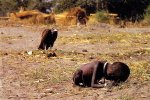 Why then the nuclear-level vitriol? I mean, it’s not as if she leaked documents threatening national security or outed a CIA operative; she didn’t pull a Maureen Dowd and copy paragraphs verbatim from Josh Marshall after having lambasted Joe Biden for stump-speech plagiarism and she didn’t accidentally use the word ‘pickaninny’ when describing Pulitzer Prize winning Kevin Carter’s photo of a vulture stalking a Sudanese kid. (Carter, incidentally, committed suicide in 1994; our girl Natalie is alive and kickin’)


 Nonetheless, something has to explain his morbid fixation with zeppelins and Elvis Presley. It is textbook OCD, and I understand this without need for a structured diagnostic interview. They appear in all aspects of his life, personal, public and professional, over and over and over…
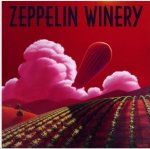 First, he seems driven to name all his wines after zeppelins—no surprise, but still… WTF? There’s Black Zeppelin, Pink Zeppelin, Red Zeppelin, and if he was able to ferment bell peppers, I’m sure there would be a Green Zeppelin.
 Go to the immediate right on that same page, and you’ll find—for sale—a poster called ‘Elvis Died For Your Sins’, of which the following delusional claim is made: ‘Steeped in Elvis history, lore and truthfulness’. The image appears to be the product of an extremely severe LSD flashback, painted by an artist who inherited all of the insanity of the masters Van Gogh, Munch and Dali, and none of their skill sets.
 Finally, like those Faces of Death flicks, if you are so mesmerized by this OCD winemaker that you want more, you are invited to access his personal web page at
  He does turn out a hell of a good fermented product, though—somehow, some way—and with the holidays around the corner, I recommend that you do your best to ignore the psychopathy behind the winemaker and buy for the pedigree of his winemaking skills.
 Zeppelin Winery, ‘Dry Pink Wine’, Paso Robles, 2012, about $20: 2011 ‘Dry Pink’, as covered in a March column, was grenache-based; this vintage winds up only 12% grenache with the volume made up by syrah (42%), mourvedre (38%) and cinsault (9%). And apparently it is just as well, since Stillman’s tasting notes refer to grenache-heavy Côtes du Rhône rosé as ethereal, flowery… and wimpy. His version is decidedly not wimpy, with great gams and plenty of oomph and color extraction to rival some pinot noirs. The flavors are robust as well, with pungent red berry and cherry on the nose followed by a fleshy, chewy, refreshing palate filled with orange rind, strawberry jam, a little smoke and a racy, clean finish.

 I torment Michael Broadbent for his cult-like obsession with Château Musar despite the fact that nine bottles out of ten taste like manure-flavored prune juice. I claim that Tim Atkin has a prose-style only slightly more fun than the time spent waiting for a glacier to calve. I call Oz Clarke a yellow-brick-road munchkin and Eric Asimov a space alien; I mock Jancis Robinson for totally misspelling her own name, and, rather than devouring the delightful, insightful wine wisdom of Karen MacNeil, I fantasize about what she looks like naked.
 …two decades ago, I was a boy with dreams. Big ones. The fire in my belly was more than the three shots 190-proof Everclear Grain Alcohol that I routinely have for breakfast.
 I won’t be there, and why should I be? The Slow Wine people have taken the remnant of my dream, mashed it up like an overripe banana and jammed it down the throat of a rabid macaque. They’ve hired Islamic sleeper-cell terrorists to wire a mobile phone-operated IED to my testicles, then paged me. In short, they’ve urinated ubiquitously and uncaringly upon my Über-ego.
 The symbols are as follows:
 The Wallaby With A Broadhead Stuck In Its Descending Colon: Signals a cellar that insists on foisting bulk garbage onto supermarket shelves with splashy labels, massive advertising campaigns, the useless caché of being ‘imported’ and a price point which, however low, is still way, way too high for what you wind up drinking.





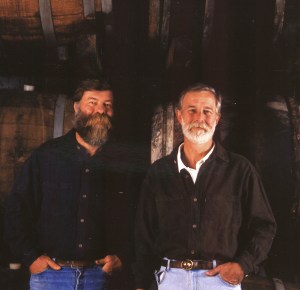

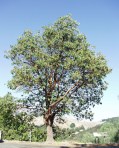
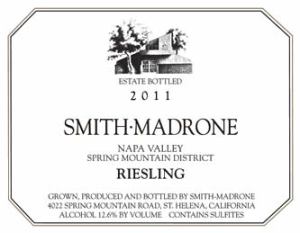 Smith-Arbutus Menziesii Pursh (has no particular ring to it, does it, Stu?) Riesling, Spring Mountain, 2011, about $25: As a viticultural area, California has not enjoyed much success with riesling, especially lately—a lot of the attitudes are hold-overs from the pre-chardonnay era, when Napa riesling, though widely available, was not particularly good. Formerly Napa Valley’s most widely planted varietal (five times as much as chardonnay), a lot of it was the wrong clone put in the wrong vineyard. Too much heat and insufficient drainage produces flabby, character-free riesling, and once the bar of wine-drinking sophistication was raised in this country, such rieslings were back-burnered by those few vintners who didn’t rip them out in favor of trendier grapes. Smith-Madrone has hung in there, and it shows: Among the best rieslings produced in the United States, and certainly in California, the complex, inviting, multi-layered depth of flavor is astonishing, with nuances of lemon zest, pear, honeyed apple, apricot and fresh pineapple laced with minerals. At 12.6%, the alcohol is high by riesling standards, but a subliminal amount of residual sugar (0.07%) keeps the wine on track alongside its bracing backbone of acidity. (Incidentally, ‘off-dry’ is another hyphenated label word that has no legal meaning).
 Smith-Madrone Cabernet Sauvignon, Spring Mountain, 2007, about $45: Grown at the very top of the mountain and on the steepest slopes, from harvest to Happy Hour, this is not a wine for the faint of heart. Nearly black in color, the nose is extracted and condensed with scents of warm berry cobbler, cassis, cedar, smoke and yes—Smith Brother’s Cherry Cough Drops. It had to be said. The mouthfeel is lovely—silken smooth, with a nice nip of tannin; there are layers of black currant, fresh tobacco, pie spice and a solid earthen core and a long, luxuriant finish. A worthy wine for the cellar, since I would be willing to bet my next court-ordered digression that it isn’t going anywhere bad any time soon.
 From time to time, I mock the French for some of their inexplicable cultural anomalies, such as eating bugs you can buy poison at English Gardens to kill and animals on which you can bet at Churchill Downs; for having had a First Lady who bragged about sleeping with both Mick Jagger and Donald Trump; for their inability to say ‘The thoughtful theropod thinks theology is thrilling’ and for having invented nothing of note but the useless hot air balloon and the equally useless metric system .


 And as such, they tend to carry higher price tags than straight-shooting Appellation Bordeaux Controlee, but in the grand scheme of this often over-priced region, not that much higher. If the ‘sweet spot’ for a balanced, drinkable, identifiably ‘characteristic’ Bordelaise wine is around $25, the following gang of five, imported by Planet Bordeaux, are all under $15.
 Château Couronneau Cuvée Pierre de Cartier, Bordeaux Supérieur, 2009, about $14: Fresh and fruit-focused with lots of smoky-sweet oak, spice and sandalwood beside the cassis and cherry. The 15th century estate is now fully organic, certified by Ecocert.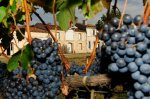
 And, so we’re clear, by ‘colleague’ I mean ‘someone who writes about wine like me, but actually takes it seriously’. Seriousity is an admirable trait that requires extensive knowledge of the subject and the ability to maintain a public face of decorum at tastings, winemaker dinners, competitions and speaking engagements.
 Me, I tend to fake my way through the written part and get sloppy silly plastered during the public part; I research not wines, but distributors, because I need a steady supply of ‘review samples’, and generally, once a rep and/or associated winery actually reads what I write about what they’ve sent, said rep is either fired or pretends it was all a big misunderstanding. That is likely because when I compile my ‘Tasting Notes’, I simply shake my Magic 8-Ball and use some variant of whatever comes up in the little window.
 Well, about that: For all my amateurish, self-obsessed, ill-conceived columnizing, which tends to view the wine world not so much as a specimen beneath a microscope, but as the fat chick on the carnival midway sitting above the Super Soaker dunk tank, I have scrupulously avoided following trends. Like, when critics started raving about Mendoza malbec, I was doing blogs on really cheap Argentinian vino de mesa made with criollo chica and Granadero Baigorria antifreeze. I used to like muscat, but now that every gangsta-rapper wanna-be from Bed-Stuy to Oakland is slamming the shit for breakfast, I’m touting muskrat wine from Turkmenistan. And when the conversation turns to ‘trendy blendies’ like sauvignon blanc and grechetto, merlot and garnacha, gewurtz and pinot gris, I’m all about a Fred Sanford blend of chardonnay and Ripple to make me some chardonipple.
 If you held my toes to the bunsen burner and forced me to tell you of my proudest accomplishment when I lived on the street, it would be convincing Night Train to release a Special Edition Night Train Single Vineyard Express Reserve, which I then got the Michigan Re-Education Foundation to subsidize as a way to transform homeless drug-addicted cretins into wage-earning employees of the wine industry.

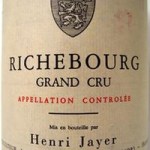 2) Henri Jayer Richebourg Grand Cru, Cote de Nuits, 1987, $8,726 (Available: Fine & Rare Wines, London):
  6) Chambertin, Grand Cru, Domaine A. Rousseau, 1962, $5,698 (Available: Vinum Petri, Germany):


 Alice Feiring, of course, formerly Time Magazine wine/travel writer, Louis Roederer’s ‘Online Wine Writer of the Year, 2011’, renowned Robert Parker Jr. hater and award-winning author of several wine books including ‘Ginger on the Gironde’, which bears the following back-cover endorsement from Carrot Top:
 I confess to a Y chromosome, so obviously I don’t understand much of the subtle side of the prejudice that women in the industry may have dealt with over the decades. Although, having taken my sommelier training from Madeline Triffon MS, I can say that a consideration of her gender never once occurred to me, then or now. Only her palate.
 Like, if I were to publish a list entitled 50 Most Influential African Americans Of All Time, I would expect a bit of gratitude and, the very least, respect from folks like Oprah Winfrey, Condoleezza Rice and that actor with the liver spots all over his face. I expressly would not expect excoriation from them—or the hoi polloi—simply because I chose to accompany the column with a picture of Buckwheat.





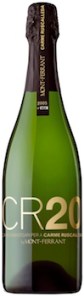 CR20 Extra Brut Gran Reserva, Penedès, 2008, around $30: It may be psychosomatic, but I swear this wine manages to incorporate a multitude of flavors from Barcelona bakeries and fruit stands: Yeasty upfront pan de leche, crisp green apples, dried pear, white peach and melon pierced by bubbles méthode champenoise—technology required to wear the Cava DO label. Something is up with the price, though—and if you are interested in that sort of thing, time to buy is now. According to winesearcher.com, since 2009, the cost of a bottle has dropped from $60 to it’s current retail of $30.


 intoxreport.com