Care And Feeding Of Your New Pet Peeve—Today’s Lesson: Booze

So, you woke up Christmas morning so excited that you soiled your jammies!  You ran out to check beneath the tree and found that Santa had left you a brand-new, snuggly-huggly, squeezable-pleasable Pet Peeve!  Good on ya, Junior!  But don’t assume that this cute li’l peeve will just take care of itself…  You’ll need to love and nurture it with all your heart, just like mommy and Uncle Dad do you when they aren’t snorting meth.  You’ll need to keep it warm so that it festers and swells, and you’ll have to choose a food specially formulated for baby peeves—I recommend Purina Kibbled Bile or Natural Balance Hi-Protein Venom with Extra Huff.

That way your tiny little peeve can grow strong and healthy to become genuine adult, blustery-flustery, compulsive-repulsive anger.

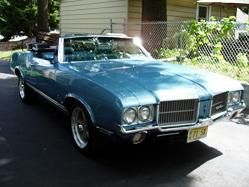
I received my very first Pet Peeve when I was sixteen years old and tried to buy a six-pack at Bill’s Party Store on Orchard Lake and Northwestern, only to be told by Bill—a semi-literate yokel who looked like a gene-splicing experiment gone horribly wrong—that I wasn’t ‘of age’.  Come again, sir?!  Hell, if I’m old enough to die in a head-on collision while driving my big-block V8 ’71 Olds without the lights on, shouldn’t I be old enough to slam a few beers?

Since then, I have become an AKC-Certified® breeder of purebred peeves, and I run the Detroit Peeve Kennel where I will board, train, walk and groom all your annoyances and vexations for a nominal fee.

Here are some of my ‘success stories’:


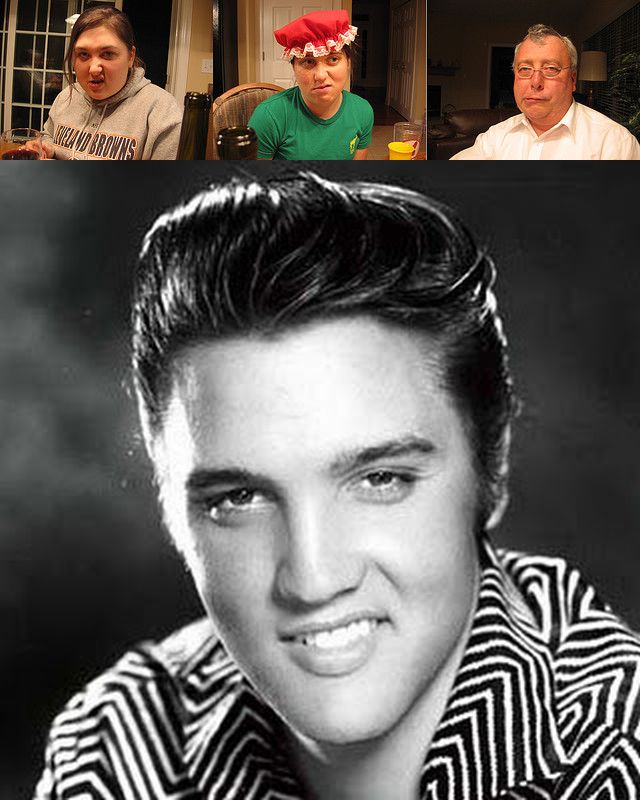
Pet Peeve # 1;  Drinking Age = 21:  The Chinese allow teenagers to drink and are rocketing ahead of us in every important aspect of international commerce, like direct investment, GDP surpluses, population control via baby formula, chopstick exporting and leaded plastic Barney toy manufacture—so why should we let them increase the trade gap by allowing them five extra years to market alcohol to children?

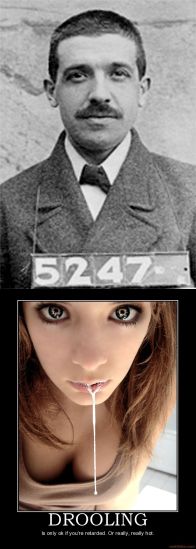
Top: Ponzi. Bottom: Drool.

Pet Peeve # 2;  ‘Meritage’:  Just as I despise songs with verses like ‘Don we now our gay apparel’ and ‘It’s summer and the darkies are gay,’ which take a perfectly good GLBT community word and attempt to change its meaning, likewise do I despise ‘Meritage’ and everything its near-fanatical cult of myrmidons stands for.  Not only is the word meaningless and unpronounceable, in order to label your wine thus you need to join the wine world’s answer to Heaven’s Gate and perform the ritual of sending them a dollar for every case of ‘Meritage’ you sell.

This is a scam that would doubtless have Mr. Ponzi drooling considering that you can call your wine ‘Claret’ or ‘Bordeaux Blend’ for free.

Pet Peeve # 3:  ‘Claret’ and ‘Bordeaux Blend’:  They may be interchangeable and free, but they’re still meaningless.

Ostensibly meant to label red wines made from some unspecified mix of cabernet sauvignon, merlot, cab franc, malbec and petite verdot, ‘Bordeaux Blend’ fails to account for the fact that virtually every one of Bordeaux’s 8000 producers use different proportions of different grapes in nearly every vintage—and that the AOC also produces white wine blends.  ‘Claret’, on the other hand, is a timeworn British term for dark red Bordeaux, but has origins in the wine called ‘Clairette’—a light rosé with its own appellation and a style that couldn’t be farther from The Médoc’s.

Settle down, Scalia

Pet Peeve # 4: No Liquor Sales on Christmas:  I know, I know; seven kids, parochial school, Mass every Sunday and an uncle in the priesthood—I may be a Catholic, but I’m still an atheist.  And an alcoholic.  Denying me liquor on Christmas will cause life-threatening detoxification tremens, and besides, it must violate some unalienable First Amendment right.  Word: If you’re a bored ACLU lawyer looking for a cause, give me a holler—I’d really like to discuss this with Antonin Scalia over a bottle of Brunello.

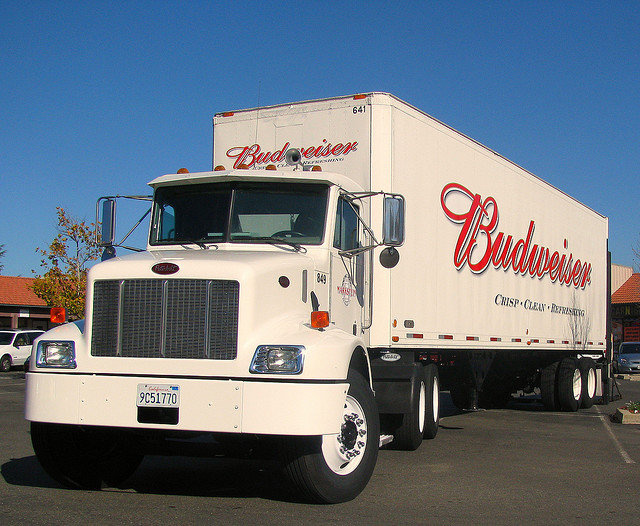
Pet Peeve # 5:  States With ‘Dry’ Counties.  Ditto on the church and state separation argument.  Last time I was in dry Fleming County, Kentucky, unable to legally buy homebred cheer, I saw a Budweiser truck and actually followed it for twenty miles until it came to its drop stop in ‘wet’ Mason County.  This is silly—extra mileage is bad for the atmosphere, bad for my car and bad for my general state of blissful slightly-buzzed equilibrium.

And here’s a question: If an airplane flies over a dry county, do the passengers have to put down their cocktails?

Clef du Palate

Pet Peeve # 6: Wine ‘Accessories’: I don’t advocate drinking and driving, but neither do I hypocrite much—I’ve done it, and you probably have too.  The most egregious experience I’ve had in this department was also the most creative: Stuck in a white-out blizzard on Woodward, I found myself with a bottle of wine and no corkscrew.  There was, however, a pencil in the glove box, and damn if I didn’t manage to get that sucker opened with a Ticonderoga #2.  Since then, wine keys have existed in my world only as a vague and ultimately superfluous convenience.  A different story is The Corksicle ($23)—a plastic tube filled with freeze gel that chills wine when you insert it obscenely through the bottle’s mouth; Clef du Vin, Pocket Model ($90) said to replicate the ‘wine aging process’ at a rate of one year for every second you submerge this dopey, icky thing in your glass;  Air Au Vin Wine Aerator ($58) which ‘bubbles air through wine’ to help it ‘breath’, which it probably doesn’t need to do anyway; and worst of all, the Pulltex Wine Aroma Kit ($159) which contains 24 vials filled with ‘essences’ that duplicate aromas you might find in your wine and not recognize.  Presumably, you are supposed to sniff through the lot until you can identify precisely what you just smelled in the wine, thus ruining the drinking experience for your date and causing great mirth among the restaurant staff.

Group hug time, schvuntzes??

Pet Peeve # 7: Wine Writers:  No kidding, I hate us.  All this silly esoteric nonsense about terroir and acescence and carbonic maceration; I swear to God, if I have to review one more cab and say it tastes like black fruit, leather, pipe tobacco and mocha I’m going to start taking hostages.  And what’s more, we all hate each other, too.  No?  Google Robert Parker, Jr., the world’s most influential wine critic and the man who single-handedly revolutionized the way the world thinks about wine, and nearly every post will be negative, calling him unethical, biased, one-dimensional and funny-looking.  Know-it-all wine journalist Elin Mccoy wrote a whole book on how much she hates him; Wine Library TV’s smart-ass host Gary Vaynerchuk made a video called ‘Is Robert Parker Jr. Bad For Wine?’ and filmmaker Ed Burley produced a self-described ‘epic’ called ‘Escaping Robert Parker’.

And, I have not the slightest doubt that Parker Jr. hates all four of these self-important schtikdreks.

*

Well, that’s about all for today’s lesson, kids.  It’s time for me to take my Pet Peeves in for their shots.  I’m going with my Star Trek usual—Beam, straight up—but the peeves are all opting for Jaegermeister slammers.

Posted in GENERAL | Tagged , , , | Leave a comment

Elvis And Wine: Red, White And Blue Suede Shoes

Of all High Holy Feast Days celebrated throughout the liturgical year of America’s one true religion—Orthodox Schlockologyism—today is the most sacred.

‘For the angel said unto them, ‘Fear not: for, behold, I bring you good tidings of great joy, which shall be to all people except for Leopold Stokowski and jealous Negroes.  For unto you is born this day in the city of Tupelo a Savior, who is Elvis Aron, the King.’ 

– Red West (King James version), 2:11

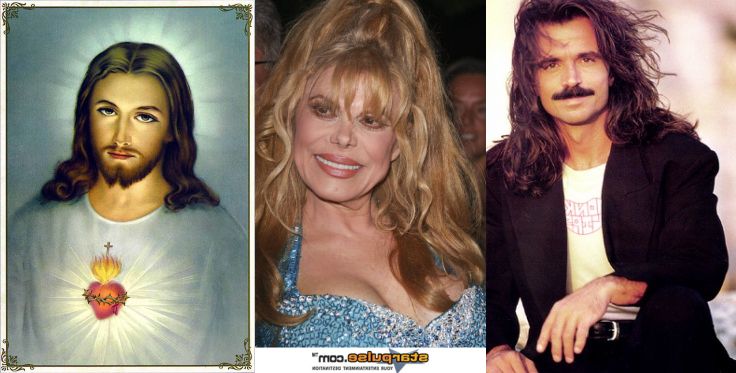
Indeed, between that glorious January day in 1935 until Kiester Sunday, 1977 when the King died on his throne while attempting to move mountains, no performer in history has so magnetized the Schlockologist laity.   Like Jesus, Charo and Yanni, so universally beloved is The Hillbilly Cat that no surname is required to bring instantly to mind an image of a shimmy-hipped, greasy-haired, curly-lipped country cracker fittin’ battles and knocking down the walls of every Jericho from London, England to Dickshooter, Idaho .

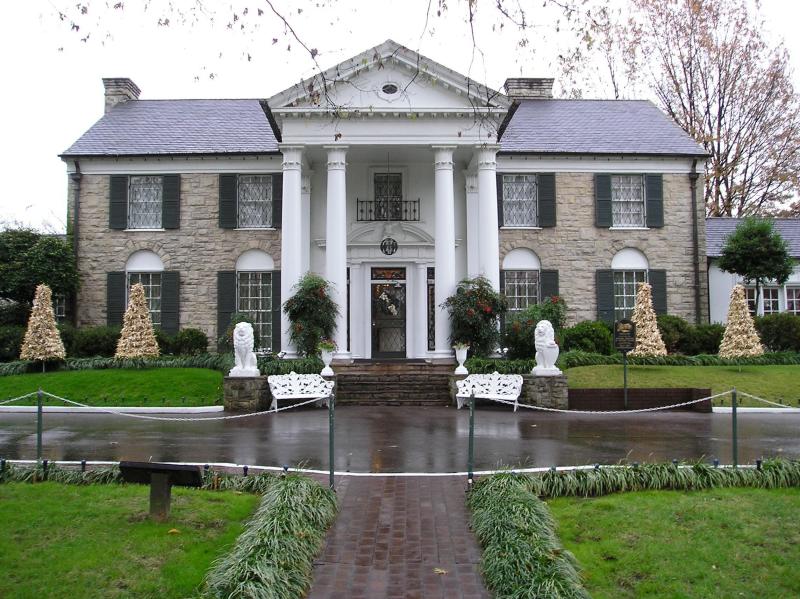
And if you have not yet had the spiritual Epiphany (a lesser Feast also being celebrated today) of visiting Graceland, do not forget that, like Muslims to Mecca, every Orthodox Schlockologist is required by Canon Law to make a pilgrimage to that sacred Memphis site once in their lifetime.

Mecca... Lecca hi, mecca hienie ho

Me, I’ve already been there twice; the first time in the eighties when I loudly demanded to see the Dumper of Death, only to be told tersely by the guide that the upstairs bathrooms were off-limits.  After the tour, a young lady asked me if I was traveling alone, and when I said ‘yes’ she replied in true awe, “Wow.  I’ve never heard of anyone who could be an asshole when they were by themselves.”

Live and learn, baby.

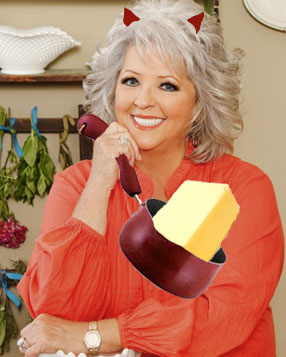
In any case, we all know that Mr. Hippie-Dippy Pretty Boy from Judah had a jones for wine—and when He ran low, He could whip it up easier than Paula Deen can make a butter-flavored lard cookie with possum-fat icing.

But what about Elvis?  

We all know that in a perfect world, his beverage-of-choice would have been Satnin Presley breast milk, but alas, the world ain’t perfect and that particular stash dried up in 1960.  So, with his vast fortune, sophisticated posse, and hopeless hankering for intoxibration, was he ever able to break from his Southern bevvie birthrights: Sweet tea, Dr Pepper, lemonade and Jack-and-Coke?

In a word, no.

2nd To Nun: Elvis Presley’s Greatest Hits (Off the Crappiest Bottles)

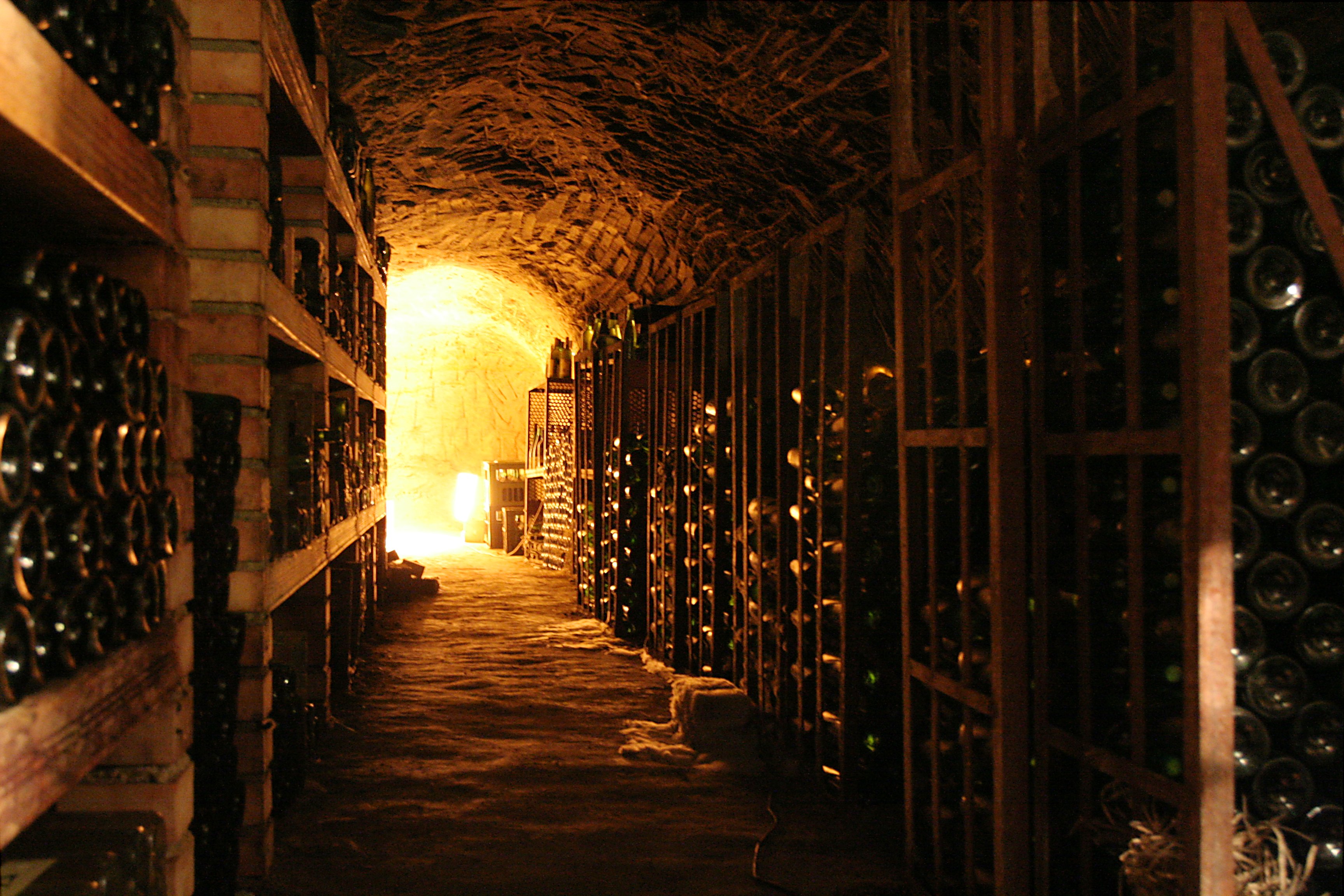
You know what I hate worse than rich people who can afford to build custom Balau Mahogany wine cellars with Tuscan arches and bluestone floors, then cram them with thousands of bottles of priceless collectables?  Those who can build them and don’t.

Elvis's hand-crafted drug cellar

Elvis was one of those.  To his credit, he did contract a thousand-square-foot Philippine Walnut barbiturate cellar with electronic humidity control, grilled glass front doors and double-deep pill cabinets, which he kept stocked with vintage Seconal, Amytal, Nembutal and Tuinal.  But when it came to wine, by all accounts, the Memphis Flash was strictly a Blue Nun kind of king.

Now, lissen Up, Sotheby’s:

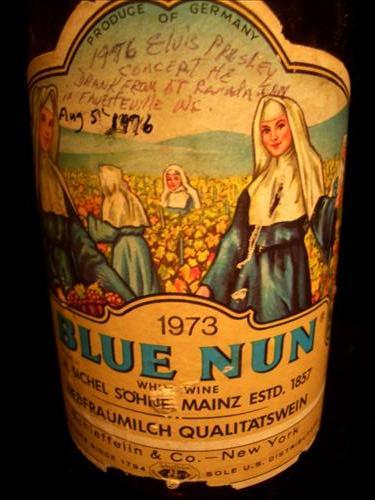
The accompanying photograph shows a bottle of Blue Nun from which Elvis actually guzzled before a concert on Aug. 5th, 1976—a police officer working security snagged the (unsigned) bottle and is now selling it on elvisowned.com for $900—roughly the same price you’ll pay for a 98 point (WS) 1982 Mouton-Rothschild.

So, having established that Elvis was not much of a wine whiz-bang, and in fact, preferred the plonky cheap crap, why would a company launch a wine line tagged Jailhouse Rock Merlot, Blue Suede Chardonnay and Blue Hawaii Riesling?  These names aren’t even charmingly kitschy dans le mode de Marilyn Merlot/Sauvignon Blonde, and in fact, they make no sense.

Navin R. Johnson, can you help us out here?  Ah, thanks; now I see…

It’s a profit deal.

Now, that makes sense.  The Elvis Presley Wine Cellars web site leaves us with a scrunchy look of puzzlement, however.  It states:

‘Inspired by Elvis’s undying spirit and appeal, our iconic, collectible King of Rock ‘N’ Roll™ Cabernet Sauvignon, Blue Suede™ Chardonnay, Jailhouse Rock™ Merlot and Blue Hawaii™ Riesling are always in good taste and evoke the incomparable charisma, sensuality and artistry Elvis brought to every performance.

So uncork your favorite Elvis tunes, swivel those lips and get ready to rock your palate with the incredible flavor of the King of Rock and Roll™.’

The sanctified 'lip curl' and three epic fails.

Uh, swivel those lips?  I think even those of you fallen-away Schlockologists who became weary of our clergy’s myriad sexual scandals, money handling issues and homage to false gods (Elvis Herselvis, The Flying Elvises and Elvis Costello) will recall that the ‘E’ swiveled his hips.  He curled his lips.

Now, I will not offer individual reviews of these stupid wines because I really don’t want you to buy them, drink them or even think about them.  They’re too schlocky-sounding even for Schlockologists.  But I will offer a schot at redemption for those of you who have wandered from the path of righteousness.

Here’s the type of letter I receive almost on a daily basis:

Dear Mr. Kassel,

I don’t know how or why I left the Church of Schlockology. There wasn’t really any one reason. Life moved on, and so did I. Career, relationships, other concerns… perhaps no one noticed I was gone. And maybe I wished someone would have come looking for me. But lately, I feel that Someone has—is it Elvis’s spirit within, calling me home? Where can I re-connect?

Sincerely,

Hillary Rodham Clinton

My response was immediate, succinct and (I presume) helpful.

Should be worth $9000 on elvisowned.com. Right?

Dear Hillary,

Yes, it is indeed the Spirit of Elvis that is calling you, and I can help you to become a Schlockology ‘revert’.  But, as evidence of worthiness, you must first perform an act of penance.  Travel to Memphis, break into Graceland, sneak upstairs and fetch me the toilet brush from the Dumpster of Death.  Liquidate anyone who tries to stop you.

Oh, and keep us the fuck out of Iran.  That should do it.

I Want You, I Need You, I Love You,

Chris Kassel

Posted in GENERAL | Tagged , | 2 Comments

Beat The Muddles: Drinks from the Beatnik Generation

January 6, 2012 would have marked the 77th birthday of John ‘The Hipster of Joy Street’ Wieners, an influential lyric poet who was one of the lesser known writers of the Beat Generation.

John Wieners. Photo: Allen Ginsburg

Like any self-respecting beatnik, Wieners was born on the East Coast but moved to San Francisco in his early twenties, published his first book of poetry in 1958 when he was 24, then was promptly committed to a mental hospital.  Upon his release, he moved to Manhattan’s Lower East Side where he hung out with Allen Ginsburg and died doing what he loved best… partying with his publisher.

I’m a bit young to have known any real beatniks—at least, of the stereotypical Maynard G. Krebs, bongo-banging, beret-and-black-turtleneck-wearing, goatee-growing, gibberish-muttering variety.  But my folks knew a few second-generation beatniks, and when they dropped by the house, their drink of choice was Mateus—and at eleven I recall thinking that Mateus must be the epitome of real gone cool.  It was fun to say ‘Mateus’—to be able to correctly pronounce it—and by the sultry jazz and steady stream of guffaws that came from the living room as I sat on the stair stoop and listened avidly, I figured it must be fun to drink.   

In fact, Mateus winds up being vaguely fizzy Drool-Aid, a diminutive, boppy Portuguese rosé made from a grape called ‘bastardo’.  When I was a kid, it cost $4 per weird-shaped bottle and it’s only $5.50 today.  These guys spinning Charlie Parker albums on the hi-fi didn’t drink as hep cats—they drank as cheapskates.

Anyway, since a number of hardcore Beat luminaries (notably Kerouac and Cassady) wound up dying of drink, I thought it would be a nice macabre nod to the whole wacky movement to consider some of pertinent potables that made these hokey, hedonistic hipsters howl.

Shaken, Not Stirred.  Or Vaporized During World War III.

L.: '55 Roadmaster. R.: Bridge abutment

First, an overview of why drink may have been even more important to the rank-and-file fifties than it is to us today.  Back then, there were none of these messianic neo-prohibitionists like MADD, the Temperance League of Kentucky or al-Qaeda—everybody consumed as much as they wanted, and if they wound up driving their Buick Roadmasters into concrete bridge abutments, so be it—Russia was going to blow us up anyway, and who wants to live forever?  America was still on a post-VE-Day high, and figured it could get even higher before the other shoe (read: nuclear bomb) dropped; hence, the surge of strange, exotic mixed drinks that were developed or popularized throughout the decade.

The Golden Age of Cocktails coincided with The Golden Age of Beatniks, roughly 1955 until the mid-sixties, when hippies took the torch.  Part of the mixed-drink craze can be accredited to that archetypal agent of espionage James Bond who, despite being at endless odds with the KGB, ordered vodka with confidence.  In 1953’s Casino Royale, Ian Fleming’s first Bond novel, 007 unabashedly orders a Vesper; a sort of nascent martini containing both gin and vodka along with ‘dry white wine’—and, inexplicably, Angostura Bitters.

But Back to the Beat.

Ernest Hemingway—one of Jack Kerouac’s biggest influences—spent most of the fifties either crashing planes or recuperating from injuries sustained in planes he’d crashed, meanwhile going ape over mojitos and daiquiris; Faulkner, another of Kerouac’s musey mentors, preferred mint juleps on the veranda.

Of course, the quintessential tipple of the quintessential beatnik was coffee, since they needed something to keep them awake during interminable readings of free-form poetry about the tragicomic plight of the individual in mass society.  The movement’s literary lights took a more pragmatic view of shit-facery, however—Burrough’s drink of choice was the no-frills Boilermaker (a shot and a beer) while Neal Cassady was even less picky, willing to guzzle Pine Brothers cough syrup, vanilla extract, feedstock Toluene or eau de cologne—unless, of course, he was desperate. Then it was Sterno strained through a sock mixed with Fruit Smack powder to make the classic hobo pick-me-up, Jungle Juice.  For honorary beatnik Hunter S. Thompson,  it was an upended Wild Turkey bottle with a scotch chaser.

Jack Kerouac's liver

Kerouac evidenced a bit more class.  Once he got out of his beer phase, he developed a taste for margaritas, although once he moved back with mommy on Long Island, he returned to cheap, sugary jug wine—likely from Taylor Wine Company.

“Don’t drink to get drunk,” the Dharma Bum said in a textbook case of ‘Do as I say, Not as I Do.’ “Drink to enjoy life.”

Kerouac died at 47 while enjoying life via a blend of malt liquor and whisky, his liver so damaged that his blood would no longer clot.

Gone but not forgotten, Kerouac has—like Rob Roy and Tom Collins before him—been immortalized in a bar drink.  Kevin Diedrich, who runs the bar program at Bourbon Steak in the Georgetown Four Seasons, has created the ‘Kerouac’, made with Partida Reposado tequila, Aperol, fresh grapefruit juice, Cointreau, fresh lemon juice, and agave nectar and garnished with a long, thin orange peel.

Whereas I’m sure Jack would not have turned down his eponymous elixir, he’d likely be more familiar with these classic ‘50’s cocktails, which saw their heyday about the same time he saw his:

Poetry courtesy John Joseph Wieners  (6 January 1934 – 1 March 2002)


Mojito

‘Pain and suffering. Give me the strength to bear it…’

  • 3 drops Angostura Bitters
  • 2 parts white rum
  • 1 part lime juice
  • Top up: Club soda
  • 1 teaspoon simple syrup

Muddle the mint leaves in a glass with the sugar and lime juice to extract the mint oils. Fill glass with crushed ice and add the rum and Angostura, then top up with soda water and stir.

*

Manhattan

‘… to enter those places where the great animals are caged. And we can live at peace by their side…’

  • 4 drops Angostura Bitters
  • 2 parts bourbon
  • 1 part sweet vermouth
  • ½ teaspoon Maraschino Cherries

Stir ingredients with ice and strain into glass; garnish with Maraschino cherry.

*

Mai Tai

‘… A bride to the burden that no god imposes but knows we have the means to sustain its force unto the end of our days.’

  • 2 parts dark rum
  • 1 drop Angostura Bitters
  • ½ part orange liqueur
  • ½ part apricot brandy
  • ½ part lime juice
  • ½ part pineapple juice

Shake all ingredients with ice and strain into a glass filled with crushed ice.

*

Lucien Sidecarr

For that is what we are made for; for that we are created…’

  • 1 part brandy
  • 2 parts Cointreau
  • ½ part lemon juice

Shake all the ingredients together with ice and strain into a chilled martini glass; garnish with lemon twist.

*

Tom Collins

‘…Until the dark hours are done.’

  • 2 drops Angostura Bitters
  • 2 parts gin
  • 1 part lemon juice
  • ½ part simple syrup
  • Top up: Club soda

Shake first three ingredients with ice and strain into an ice filled glass add Angostura Bitters and top up with soda water; garnish with lemon slice.

Posted in GENERAL, LIQUOR, Miscellaneous | Tagged , , , , , , , | Leave a comment

There’s School Smart, There’s Street Smart, There’s Book Smart And There’s Me

Hawking: 'Mmmffppmpff'. Computer translation: 'By God, Chris, you're a genius, just like me.

Isn’t it amazing how the creative mind works—the literary brain especially?  Isn’t it spectacular how journalists are able to compose column after column, day after day, year after year, on topics of  interest to every human alive, from slobbering pre-schoolers with dyslexia to the Dean of the Faculty of Arts and Humanities at Oxford University?  From Szilárd, the alcoholic Hungarian busboy working midnights at House of Hortobágyi to the Most Holy Pope in Rome?  From Jazmin in the Schult single-wide trailer wearing industrial-strength mascara and chain-smoking Newports to Stephen Hawking?

Isn’t it??

See, I have no idea; that’s why I’m asking.

Personally, after two decades of feature-forging, I struggle to compose a single further word on the subject of wine and find myself in endless life-and-death combats with a writer’s hereditary enemy: The Republic of Deadline.

Usually I dredge up something I wrote in 1996, flip-flop a couple of adjectives and change the title and the vintage date on the tasting notes, secure in the knowledge that my editor has a mild case of Downs and my Twitter ‘followers’ only last a week or two before they give up and subscribe to Wine Advocate.

But occasionally, something cattle-prods my snoring muses—which have been in a medically-induced coma since the mid-eighties—into near functionality.

Finkus Bripp, GC

Today it was my homeboy Finkus Bripp, who posted a YouTube vid about how books are physically assembled, from the paper-making to the typesetting to the spine-binding, adding as his subject line:

‘Books Can Be Just As Complex As Wine’.

Well, there’s a concept—and one that happens to coincide with the year-end release of World Library’s 100 Best Books of All Time and Wine Spectator’s Top 100 Wines of 2011.

Carpeing the Diem, I immediately set up a full-blown, hundred-flight vertical Book Tasting to test Mr. Bripp’s Complexity Theorem.  (A blind tasting would have been ideal, but it proved unworkable, even illogical, since blind people can’t read and when I asked for their input, the American Braille Foundation sent me a curt nasty-gram).

Screw ‘em, yo.

Meanwhile, I brought in a full complement of wine in order to establish a compendium of book and wine pairings, which I believe is the first of its kind in the Free World.  My goal was to match the acidity, structure, texture, pace, characterizations and dénouement of a given novel with a wine intended to enhance and compliment—but not overpower—the reading experience.

Book tasting notes follow, along with appropriate wine accompaniments:

Did Dill actually write this book?

To Kill A Mockingbird, Harper Lee, 1960, about $4.99 (paperback):  Bittersweet through the introductory pages, the book develops into a tight, yet very concentrated bildungsroman—notes of melodrama mix with delicacy and depth throughout the mid-chapters.  Shows wonderful class and a structure completely unlike any other book from the strong ‘60 vintage.  Sweet, yet utterly uncloying, the novel has shown an uncanny ability to age since its release; should continue to improve until the Second Coming of Christ.  Serve with: Morgan Creek Sweet Blueberry Wine, Harpersville (Alabama), n/v, around $20.

*

The first edition of Ulysses required two people to lift.

Ulysses, James Joyce, 1922, around $6.99 (paperback, good condition):  A non-traditional blend of more than 200,000 words, the book blooms with style and substance.  The most massive, concentrated, and (at first read) unstructured of Joyce’s works, Ulysses has attracted controversy and scrutiny from critics but remains a seamless summation of Modernist literature.  Shows formidable levels of enigma with multiple layers of conundrum and a bright perfume of puzzlement.  Best enjoyed throughout the day on June 16thServe with:  Dedalus Wines, La Puerta Alta Malbec, Mendoza, 2009, about $13.

*

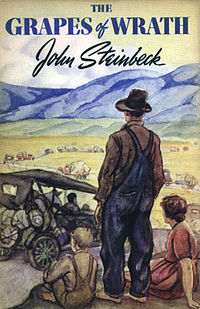
The Grapes of Wrath, John Steinbeck, 1939, around $25 (used hardcover):  Dusty and slightly astringent with weedpatch notes followed by freshly-picked peach, the book displays massive power and extract from its opening lines to the depressing end.  Shows all the characteristics of a classic Salinas Valley novel, finishing with aromas of Rose and breast milk.  Serve with: Wrath Vineyards, Pinot Noir, Lucia Highlands, 2009, about $49.

*

Ayn Rand

Atlas Shrugged, Ayn Rand, 1957, around $50 (35th Anniversary edition, hardcover):  The final release of this controversial writer’s fiction, the narrative remains intriguing and unapologetically elitist to this day, if rather thick, slow and dry.  It is, nonetheless, a full-bodied read, with hints of science fiction that are somewhat difficult to extract from the book’s exaggerated pro-Capitalism postulating.  A juicy integration of philosophy and dystopia leads into a solid core of super-ripe Objectivism, but there is a regrettable and  total collapse at the finish.  Serve with:  John Galt Proprietary Red Napa Valley, 2009, around $25.

*

Faulkner's editor, before and after reading 'Sound and the Fury'

The Sound And The Fury, William Faulkner, 1929, about $10 (Kindle edition): Praised to the rafters by critics, Faulkner’s rich, dark, stream-of-consciousness masterwork tends to taste flat to Jayden and Jasmine Junior in 11th Grade Lit.  Shows a nice balance of Northern industrial and Southern agrarian values; very fleshy and complex through the middle sections, especially Part Two: June 2, 1910; the finish is long (three appendices long), throwing off an enduring residue of despair.  Brawny and brilliant, saturated with adjectives and unannounced time-shifts, this modernist epic is difficult to ingest without serious decanting—Cliff’s Notes is recommended.  Serve with: Mississippi Mud (1 ½ oz. Kaluah, 1 ½ oz. Southern Comfort, 2 scoops vanilla ice cream; blend until smooth).

*

Lolita, Vladimir Nabokov, 1955, (unavailable; banned): Pure, but still forward and precocious, the novel appears to be older than its publishing date would suggest.  Sensuous tension and heady excitement animate the texture of the book, which retains a core of youthfulness while avoiding the austerity of classical literature. Very intense with tightly laced threads of Romantic irony and tongue-in-cheek eros.  Safer if allowed to age more than 12 years.  Serve with: Williams & Humbert Amontillado Sherry, 1972

Posted in GENERAL | Tagged , , , , | Leave a comment

I Drink, Therefore I Am: British Doctors Rail Against Abstinence

Sometimes, when the British are funny they know it—AbFab, Monty Python, Blackadder, Fawlty Towers.  And sometimes when they’re funny, they don’t—grownups who still have freckles, rich people with different accents than poor people, calling cigarettes ‘fags’,  chavs—especially those who incessantly say, ‘Ya wot??’, Lamb & Mint flavored potato chips…

…And The British Liver Trust.

Seriously, how funny a name is that?  A national charity that works to reduce the impact of liver disease in the UK, the British Liver Trust (ironically) recently re-printed an article by The Independent’s Lewis Smith suggesting that an alcohol-free January is not only medically futile, but actually dangerous.

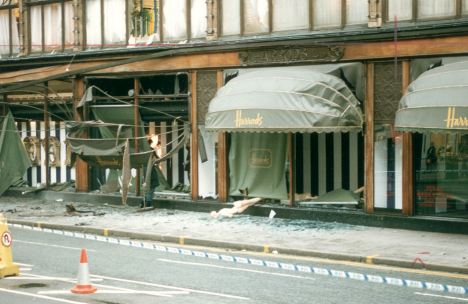
Now, in Britian, the average annual consumption of alcohol is 3.5 gallons compared to 2.5 gallons here in America and a mere tenth of a gallon in Pakistan—which means that the Islam Extremists who blew up the London Underground were likely sober.  This probably can’t be said for the IRA who pulled the same stunt at Harrods—Irish per capita spirit-scarfing checks in at a whopping 3.8 gallons.

Now we know why she wouldn’t go to rehab

As a result, a lot of British New Year’s resolutions involve teetotaling, at least for a period of time ranging from a few weeks to a few months.  Medically, this is referred to as ‘detoxification’ and tends to confuse the body, which has become quite used to its daily—or hourly—constitutionals.  In a quest for equilibrium, physiological processes are affected, and this is where the risk comes in.  I’d suggest you contact Amy Winehouse for further details, but of course you can’t—detox killed her.

The Smith article, however, maintains that the real threat of going cold turkey is the ‘false sense of security’ that cleaning up your act gives you.

I don’t know about that, Smitty.  Drinking tends to give me a false sense of security, while not drinking gives me a false sense of maturity.

‘Giving Up Alcohol For January? Your Liver May Not Thank You For It, Say Experts’  – Headline From The Independent

No worries, experts—me and my liver stopped talking in college.

Dr. Mark Wright

But you remind me of something else funny that Brits do.  They say ‘bloody’ when they’re not referring to intraventricular hemorrhages or ruptured brain aneurysms—all except Dr. Mark Wright, who is a consultant hepatologist at Southampton General Hospital.  He reserves the word ‘bloody’ for the condition his patients are in when he makes a house call.

No clue as to whether or not Dr. Wright is on the wagon, but he’s definitely on the bandwagon when it comes to that malarkey about false security.

He says: “Detoxing feeds the idea that you can abuse your liver as much as you like and then sort everything else with a quick fix.”

Eat toast; don’t make a toast

Echoing that is British Liver Trust’s CEO, Andrew Langford, who maintains, “It makes about as much sense as maxing out your credit cards and overdraft all year, then thinking you can fix it by just eating toast in January.”

I had to read that a few times.  Was old Andrew mixing metaphors along with his gin and tonics?  What does eating toast have to with credit cards?

I suppose he means that you’d live on the cheap in January and try to make up for your extravaganzas through the rest of the year.  Either way, it has no bearing on whether or not the British Liver Trust people are willing to trust my liver.

Abstinence Makes The Heart Grow Fonder, But Drinking Makes The Chick On The Next Bar Stool Grow Blonder

In any case, sobriety is an unnatural state for mankind to exist in.  If you have any doubts, consider cultures that eschew drink for moral, social or anal reasons and how they treat their women.   A good Irish Catholic boy will pound a few stouts, realize how attractive the girl next door is and marry her.  A staunch Kitab al-Kafi-fearing Muslim will come to the same conclusion, but being irrationally sober, he will force her to cover her pretty face with black cloth and stone her to death if she happens to prefer the company of females.  A Mormon will come to the same conclusion and marry her along with all of her sisters.  A Baptist will come to the same conclusion, but he avoids sex because it might lead to dancing.  The Hindus, meanwhile, just tack on a bunch of extra arms and call it a day.

I could go on, but why?  The only thing that cold turkey is good for is sandwiches and if you use its acronym, you’ll find that same holds true for the British Liver Trust.

Advice for Getting Sober

Posted in ENGLAND, GENERAL | Tagged | Leave a comment

Bordeaux Is Selling Out—Or At Least, It’s On The Market

‘Under-the-radar wine estate for sale, Saint-Caprais-de-Bordeaux, château-on-steroids, 20 hectares of vines that are firing on all cylinders.  Priced to sell, this turn-key opportunity is a win-win.’

In the business world, you call such a find ‘low-hanging fruit’ and then, you don’t apologize for the pun.  That’s because in the business world you never complain, never explain while you overuse this, along with fifty trillion other painfully idiotic buzz-phrases.  These I will do my best to avoid as I step up to the plate and take a proactive deep-dive into the next generation of right-sized Bordelaise wineries. Why?  Because, colleagues, I’m a team player, that’s why—and that is the bottom line.


An Olio of Orientals

Chinese People Need (Not?) Apply

Having been booted in the economic bollocks like the rest of us, Bordeaux is for sale—a third of it, anyway.  According to Philippe Laquêche, managing director of Yvon Mau—the century-old wine trading company, “People are retiring, and the younger generation in Bordeaux is more inclined to seek a career outside viticulture for a number of reasons, economic and social. Many Bordeaux estates would consider selling if they were offered a fair price.”

Over the past few years, such fair prices have primarily been offered to low-profile, non-tiered chateau outside the high-wire acts of the 1855 Classification; many vineyards being purchased are currently unprofitable and require an infusion of capital, and some, near urban areas, will likely see their fruit ripped out in favor of sprawl development.

But the trend that seems to be raising more hairs on the neck of traditionalists is the fact that French estate agents are receiving flurries of inquiries from foreigners, and, in fact, more than a dozen recent Bordeaux acquisitions have been made by Chinese investors.

The incomparably lovely Zhao Wei

For example, last April the nearly-defunct winery Chenu Lafitte was purchased by billionaire Cheng Qu and handed over to his 20-year-old son as a birthday present; Qu, who is now the largest landholder in the Sino-French cluster-bleep, plans to open a wine-based theme park.  Movie star Zhao Wei—China’s Scarlett Johansson—recently snapped up Château Monlot in Saint- Émilion for something around €4,000,000, while Château Barateaua (an 18th century left-bank vineyard in the Haut-Médoc) was purchased by the Hong Kong-based Marvelke Wine Group.

The French newspaper Sud Ouest reports that such purchases are gathering pace and recent Bordeaux sales to Chinese buyers include Château Latour Laguens, Château Richelieu, Château de Viaud and Château Laulan Ducos.

People, let’s meet in the War Room—we need to wrap our heads around this. After all, when you peel back the onion, you find you have to spend money to make money; otherwise you risk solutions where you over-promise and under-deliver.  No need to reinvent the wheel, is there? 

Chenu Lafitte

Whereas the notion of an Asian invasion may blow a few Gascon gaskets, not everybody views it as a bad thing.  France’s most extensive AOC (nearly twice as large as Burgundy), Bordeaux has 8000 producers and nearly 30,000 vine acres accounting for more than 700 million bottles of wine per year—overproduction plagues the region every time there’s a prolific vintage, and there have been a string of them so far this century.  Prices may remain somewhat consistent for the window-dressers, but prices tend to fall for the non-collectable wines. What we call bargains, estates may call losses, and without cash flow, winery upgrades simply don’t occur.

Alex Hall

Alex Hall, director of Bordeaux property at Vineyard Intelligence, claims, “[Foreign] owners are bringing in new markets. These guys are buying what other people wouldn’t be keen on buying; places where it is difficult to make money at a certain economy of scale because of distribution.”

He goes on to suggest that the love affair between China’s nouveau riche and Bordeaux is a phenomenon with no end in sight and that many of the new pied à terre honchos have extensive contacts in China’s hospitality industry.  They’re simply ensuring an exclusive supply.

Hall says, “Finding a market for their wines is the last thing they have to worry about.”

Flag of Bordeaux, circa 2050

I suppose I agree—a better-managed Bordeaux is in everybody’s interest, and if the Chinese (and Russians, and the Irish and the English—all of whom have bought land in the AOC) are able to energize this tired old terroir, the French will be forced to follow suit—or fold.

…Since this thing is gonna happen, I’ve slipped my business hat back on and come up with a customer-focused, directionally correct, high-performance, portfolio-contemporizing,  intelligently-engineered campaign slogan to kick off  ‘New Bordeaux’:

‘Better Red Than Dead’.

Hey, team—it is what it is.

Posted in Bordeaux, FRANCE | Tagged , , , , | 2 Comments

Inniskillin Sparkling Ice Wine: Tweaking the Tweaked Tweak

Maggie Trudeau, NSFFWC (Not Safe For a Family Wine Column)

I have not coveted my neighbor’s wife since the eighties, when Prime Minister Trudeau’s young bride Maggie—that vamping, voluptuous Vancouver vixen who, upon publishing her third book in 2010, became the only person in Canada to have written more books than she’d read—was photographed sans underwear.

Since then, I’ve restricted myself to coveting my neighbor’s wine, since as far as I know, my overbearing and super-bossy God has no strictures against that.

Here in Michigan, we produce some pretty killer ice wines ourselves—riesling-based A Capella from Black Star, Lawton Ridge’s Vidal Blanc Ice Wine, another vidal from Mackinaw Trail and Chateau Chantal’s version, made from a proprietary blend of estate-frozen grapes—but, I must confess, though each comes close, none are quite (yet) on a par with the nectar they’re extracting in Ontario.

Wonder Bra, also NSFFWC

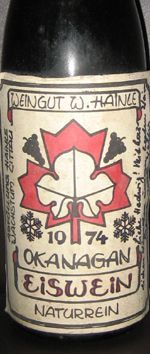
And that’s as it should be.  Those benumbed, benighted frost-backs in the Great White North haven’t invented much—canola oil, calcium carbide, the Wonder Bra and Canada Dry Ginger Ale pretty much sums it up—but we must give them their props when it comes to ice wine.  Though not technically invented in Canada (that’s a German distinction dating to 1830), the first bottle of ice wine to be made in North America came from Working Horse Winery in Okanagan, British Columbia in 1974.

And, for reasons known only to this refrigerated race of 34 million near-mortals—who manage to drink $18 billion worth of booze annually—the bottle still exists, unopened.

Many Are Cold, But Few Are Frozen

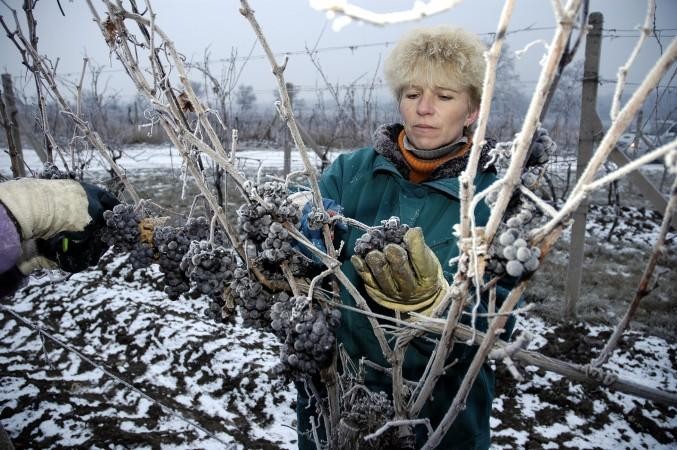
As a reminder to those who have forgotten how ice wine is made, a select number of grapes are allowed to remain on the vine beyond the normal harvest, and there they stay until there’s one or more hard-freezes—legally-mandated temperature requirements vary from country to country.  It’s a risky proposition, since too long a hang-time prior to freeze may cause the berries to rot, and too severe a freeze can (and does) result in breaking the pneumatic press equipment.

But in ideal vintages, when everything comes up Goldilocks’ porridge, the grapes dehydrate, and the little water that remains is crystallized as ice.  Grapes are hand-picked at the coldest part of the day—normally, the middle of the night—and pressed while still frozen.  The ice remains behind, and a minute ration of precious, super-concentrated juice is extracted—approximately one drop per grape.  To put it another way, a vine which may normally produce a bottle of ordinary wine will make but a single glass of ice wine.

How Randall Grahm will look if anybody ever cryoextracts him

There’s another, utterly abhorrent method for making ‘ice wine’ which I mention only through journalistic integrity—a term I once heard a college professor use. Cryoextraction is the process of mechanically freezing grapes in order to simulate the frost effect—a modus operandi that strikes me as non-green (freezers suck energy), crass (the process sucks the wind from a vineyard’s natural process),  and in a word, wrong (cryoextractionists just plain suck).  It cheapens the category and denigrates the prowess of those frostbitten winemakers willing to do it the right way.  Based on this bamboozle, you can now legally make ice wine in Spain’s Penedès, though it’s the only EU appellation that allows it.  Bonny Doon’s been at it for years with Vin de Glacière, and recently, Decanter Magazine awarded a trophy to a cryoextracted ice wine from New Zealand.  Shame on the lot of chiseling, cheating charlatans!

So, how cold does it need to be to make real ice wine?

Oldest ice wine in North America

Well, at temperatures which would have Buckeyes evacuating Columbus and at which even Swedish cars won’t start, Canadian Girl Scouts are just heading out to sell cookies: And it’s not nearly cold enough to make ice wine.  At temperatures where polar bears start complaining and atomic motion has dwindled to a snail’s pace, Canadians are still driving with their windows down:  And it’s not nearly cold enough to make ice wine.   No, to make ice wine, you need to wait until the mercury drops to the level at which microbial life cannot survive on earth and even Manitobans stop licking flag poles—then, and only then, can you pick your grapes.

Canada is the world’s largest exporter of ice wine, and Inniskillin is Canada’s largest ice wine producer for that market.  Located in Niagara-on-the-Lake, Ontario, the winery has a second location in operates a winery in Okanagan, British Columbia.  Although ice wine makes up only 10% of their total output, that’s the style with which the winery is best known—probably because it’s their only truly world-class wine.

Harvest

They’ve been tweaking the ice wine vines—primarily riesling and vidal, though they also make a cabernet franc ice wine—since 1984.  Further tweakage in the form of what Maria Moessner, Inniskillin’s Estate Sommelier refers to as ‘arduous fermentation’ results in a wine that is thick, honey-rich and perfectly balanced with a shivery undertow of acid.

Now they’ve even tweaked that, using the still wine as a cuvée to produce a product more rare than the already rare ice wine:

A sparkling version.

According to Moessner, “This very unique sparkling wine has been produced in the Charmat Method.  During fermentation, the naturally occurring carbon dioxide is trapped in the stainless steel tank, and dissolves into the wine.”

I’m too nice of a guy to point out to Ms. Moessner that there is no such thing as ‘very’ unique—unique is a word without qualifiers.  Instead, I will concur with her tasting notes:

Fine elegant bubbles with pure focused northern fruit aromas, of fresh apricot, nectarine and peach.’

…And add a few of my own:

Inniskillin, Sparkling Ice Wine, Niagara Peninsula VQA, about $70 (375 ml.):  Vanilla pastry on the nose with spuming, fine-grained effervescence, this labor-intensive wine is as luscious as it is lavish.  In Greek mythology, ambrosia was the drink of the gods, said to confer eternal youth on whoever consumed it.  Figure that if you could pick some up over-the-counter, it would probably be priced about like this.  The wine is redolent with honeysuckle, caramel and brioche; the flavors mingle and show the same, with some candied lime, unctuous marmalade and—unless it’s psychosomatic—some maple syrup.

Maria Moessner recommends pairing the wine with pan-seared foie gras or spicy Asian cuisine, but me, I will go out on a limb (no pun) and suggest that you serve it with:

Maggie Trudeau: Another wardrobe malfunction?

Fried Canadian Beaver

1 small beaver (20 lbs.), cleaned and skinned, cut into serving pieces, strips or cubes
6 slices bacon
1 tsp. hickory-smoked seasoning salt

Remove fat from beaver and soak overnight in cold water. Drain. Cook in small amount of water until tender, then fry with bacon and hickory-smoked seasoning salt.

Posted in CANADA, Niagara Peninsula, Onkanagan | Tagged , , , , , | 1 Comment

Iberian Intoxicants for New Year’s Day (And Beyond)

What’s the with-it Spaniard imbibing on this frosty January Sunday?  Something from Torres, no doubt.

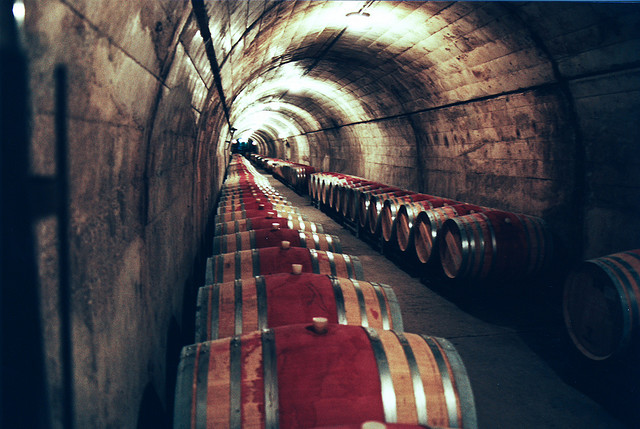
Wine cellar at Bodega Torres

Founded in 1870 by Jaime Torres, the family now controls the largest winery in Spain along with the most extensive vineyards in  Penedès and can lay claim to an annual production of nearly fifty million bottles.  Unlike Clan Mondavi, however, whose exponential growth led to a certain ‘dumbing down’ of product, the Torres family has used its mass-market triumph to fund upscale projects, revive nearly-extinct Spanish varietals and produce swank, single-vineyard revelation bottlings, like Conca de Barbera Grans Muralles and Mas La Plana Cabernet Sauvignon.

Falling between these deluxe gems and more accessibly-priced Sangre de Toro and Penedès Coronas is a pair of new releases—Celeste 2008 and  Salmos 2009.  Both bring to the table the usual wealth of Torres tradition, background noise and quality.

Celeste, Ribera del Duero, 2008, about $24:  Poindexters call Celeste a monovarietal, moderately bright wine people refer to it as a single-cultivar, and to everyone else, it’s an ‘only one kind of grape goes into the bottle’ wine—in this case, tempranillo.  Locally known as tinto fino, tempranillo is virtually the only grape grown in Ribera del Duero, a Denominación de Origen (DO) located in Spain’s northern plateau along the River Duero.  Winemaking in the region goes back two thousand years—before the Spanish, before the Moors, even before the Visigoths—so it stands to reason that they’ve nailed the process down.

Celeste—so named because its vineyards are half a mile above sea-level—a height at which, according to legend, you can almost touch the stars.  In fact, high-elevation wines tend to show certain superlative, down-to-earth qualities like thicker skins, more resveratrol (the heart-healthy French Paradox chemical), more ‘sweet’ tannins and less of the bitter monomerics and in general, better retention of all-important malic acid.

Opaquely purple with a tint of ruby, Celeste shows a scrumptious bouquet of tobacco, blackberry jam and coffee; in the mouth, there’s delightful depth with a bank of berries, black cherry, soft oak finishing with smooth and fluid tannins.

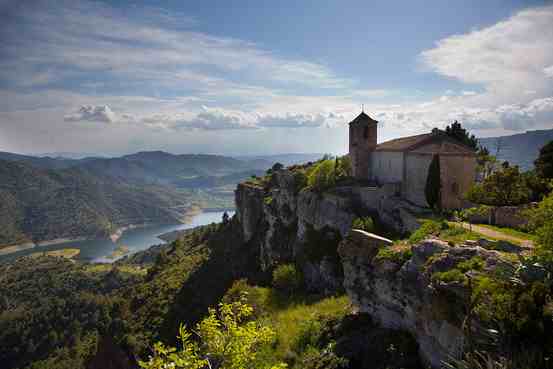
Priorat

Salmos, Qualificada Priorat, 2009, about $38:  Located southwest of Catalonia and covering eleven municipalities, Priorat only came into the mainstream wine lexicon during the nineties, when its intense, perfumed, mineral-heavy, garnacha-based reds were discovered by the world outside Spain.  The area—still referred to as ‘up-and-coming’ despite a viticultural history going back to the 12th century—has become a bit of a cult favorite, which (unfortunately) has resulted in price tags which do not always match wine worth.

Salmos is an exception.  Created to honor the Carthusian monks who first cultivated vines in Priorat, the wine does them proud.  Heady aromas of lavender and violet lead into flavors of candied cherries, with a full, meaty mid-palate; saturated and rich, the wine displays earth behind concentrated pepper, plum, raspberry and smoke.  Finish lasts nearly a minute, but the wine is still a little young for conclusive analysis.  I’d like to try it again in 2013.

Posted in Grenache, Penedès, Priorat, SPAIN | Tagged , , , | Leave a comment

Bubbles For New Year’s Eve—England ‘n’ France, Sparkles ‘n’ Spats

Little known Champagne fact:  Dom Perignon did not say, “I’m drinking stars,” he said, “I’m seeing stars” after being clubbed over the head by a British arquebus.

Verily, there’s been little love lost between France and England over the centuries, and the tale of two cities has been Hatfields and McCoys essentially since the Gauls were finger-painting bison on cave walls and the Anglos were dying their faces blue.

In point of fact, it’s been pretty one-sided.  Pepe LePew will always have his 1066, but since then, he’s lost every major war to John Bull, and the only reason the Brits haven’t yet forced The King’s Good English upon the French is that their accents wind up being more irritating than their language.  Clearly naval as well as martial superiors, the English condescended to build a tunnel linking the two countries only because they were sick of un-seaworthy French people vomiting up half-digested snails onto the deck of the Calais to Dover ferry.

The French have, however, maintained dominance in one vitally important aspect of life.  No, not cuisine.  Personally—and on any day of the week—I’ll take a snuggly, soul-salving Shepherd’s Pie over a slimy plate of Escoffier’s Les cuisses de nymphes aurores (frog legs) or the hors d’oeuvres version, frog arms.

No, it’s wine, of course—specifically and categorically, Champagne.

And since the seventeenth century, while the famous Benedictine monk Dom Perignon was still trying to RID wine of bubbles (which he viewed as a fault), the French have been schlepping frothy quantities upon the English, who developed a taste for the stuff long before they did.  In fact, it wasn’t until 1715, within the newly formed court of Philippe II, Duke of Orléans, that French nobility realized what a treasure they had in Champagne.

Champagne

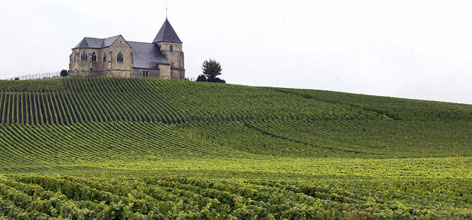
As in all great wine regions of the world, it’s a unique combination of soil, know-how and climate that allows Champagne—a small province 100 miles east of Paris—to produce sparkling wine of such magnificence that EU law, and the laws of most other countries, reserve the term exclusively for them.

And fittingly so.  Many—even Champagne houses who bought land elsewhere—have tried and failed to duplicate the nuance, subtlety and general  je ne sais quoi dissolved within the body and bubbles of Champagne.

The English are no exception.  Ever since Julius Caesar send over a boatload of vines around 55 BC, the Tommys and the Pommys have been trying to get proper Champagne grapes to grow in certain reasonably temperate pockets around Kent and the Sussexes, where the soil structure—Limey limestone—is just right.  Technically, everybody knew that it was at least possible—Champagne is near the northern limits of wine production, but from a crow’s viewpoint, there’s only a couple hundred miles between Rheims and English wine country.  And yet, as close as they came in certain excellent vintages—just as they found that neither could they really grow tobacco—it was no cigar.

Over the years, Americans have made it a point not to interfere with the bickering between France and England—possibly because deep in our patriotic hearts we understand that we owe the French a lifelong debt for having bailed out our sorry asses during the Revolutionary War.  Without them, the Redcoats would have prevailed and it would have been us that had the English language forced down our gullets.

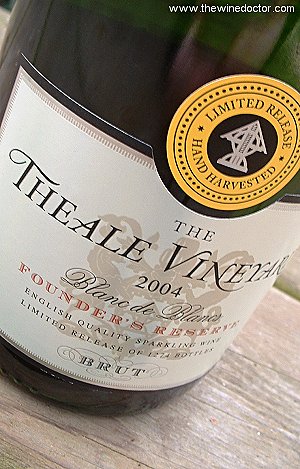
But, over the past half century or so, we have presented the English with a precious and un-repayable gift:  Global warming.  Our magnanimous, ultimately selfless gestures—refusing to drive less or cut back on fossil fuels or turn out the lights after we leave a room—has allowed the average temperature in Britain to rise to a point where the southern-slope microclimates of Kent are now nearly akin to those of Champagne.  Perhaps the pinnacle of proof happened during the Dijon-based sparkling wine competition Effervescents du Monde, 2007 when Theale Vineyard Sparkling Chardonnay from Berkshire beat out numerous high-end Champagnes to be named one of the world’s top ten sparkling wines.

It was, for the English, the equivalent of our Judgment of Paris, 1976.

What follows is a historical, cultural and enological synopsis of the rivalry between these two neighbors, who have essentially spent a millennium behaving like a pair of first-graders in the back seat of a station wagon.

NORMAN CONQUEST

Ever wonder why, when we eat cow, we call it beef?  Calf veal?  Pig pork?  Sheep mutton? Thank William, Duke of Normandy, whose successful invasion of England in 1066, culminating in a victory at Hastings in what is now Sussex wine country, led to a French-speaking monarchy and clerical hierarchy. Over the eighty-odd years that the Normans sat upon the English throne, words like boeuf, veau, porc and mouton sidled into our lexicon as easily as Barney Frank into a bar on Christopher Street. But, whereas we still use these French-inspired words in their original sense, somehow along the way the term ‘Norman’ ceased to refer to the hulking, über-mensch descendants of Viking warlords and became instead the kid with horned-rimmed glasses in a band uniform on the Robotics Team.

How the mighty have fallen!

Advantage: France

*

CUISINE, QUALITY

Alternately, her voice is as pure as chicken fat.

Most folks won’t even argue this one, citing Auguste Escoffier (fired from the Savoy for stealing wine), the Gascon influence (diseased goose liver), poultry from Bresse (known for its free-flowing fat—ick—and compared to the purity of Céline Dion’s voice—double ick), the black Périgord truffle (smells like pig gonads and costs $700 per lb.), Escargots à la Provence (frankly, I won’t eat anything that English Gardens sells products to kill) and general haute cuisine (literally ‘high food’, which to my generation means Taco Bell at three AM), while failing to mention french fries (tubers dipped in grease), french toast (bread dipped in eggs, then fried in grease) and the french dip sandwich (beef dipped in beef juice which contains grease).

Still, in a stand-off, the English have to answer for kidney pie (kidneys regulate the body’s urinary system), black pudding (black via curdled pig blood), lamb’s heart (do a people exist who could eat something that sounds so precious?), tripe (stomach lining), causing one to wonder if the Brits ever eat the outside of animals?

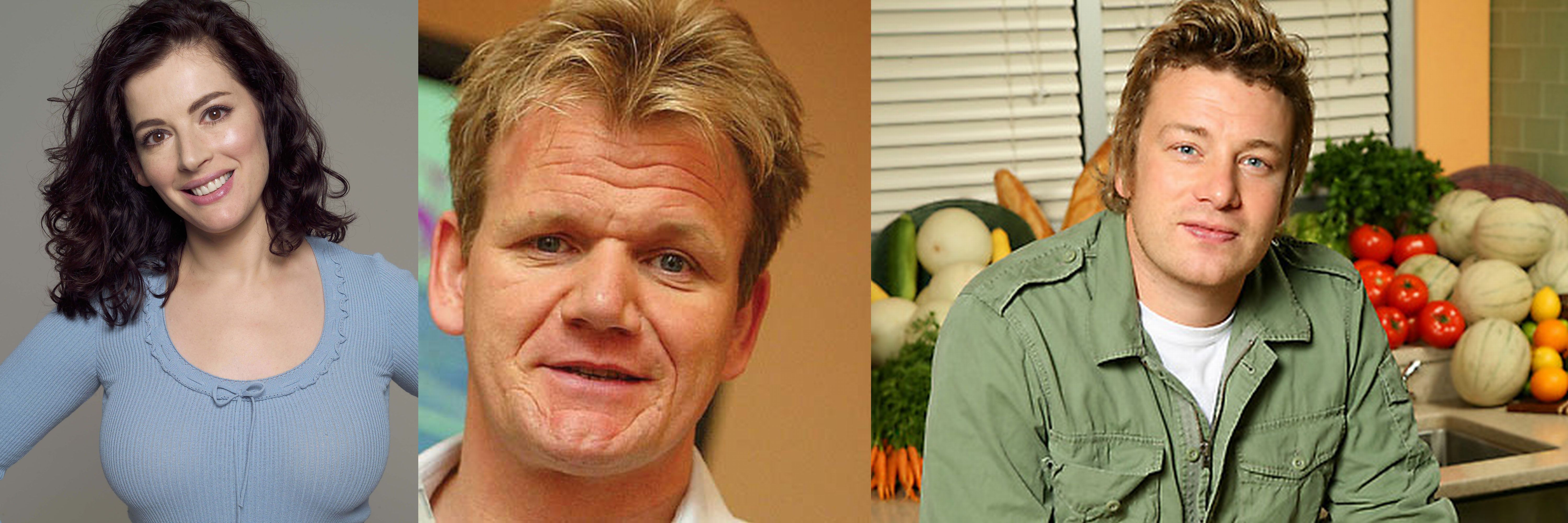
Worst of all, there’s Nigella (boring, spoiled and overbearing rich chick), Ramsay (drunk, convicted pervert who cheats on his wife) and Oliver (once slit the throat of a conscious lamb on national television)—not one of whom has ever struck me as particularly unstoppable in the kitchen.

Advantage: France

*

CUISINE, SEXUAL SOUNDING NAMES
Entries, France: Fondue Bourguignonne, Potée Auvergnate, Tomates à la Provençale, Cassoulet, Boeuf en Daube aux Pruneaux.

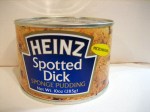
Entries, England:  Wet Nelly, Spotted Dick, Bangers, Fitless Cock, Faggots, Dean’s Cream, Neeps and Tatties, Toad In The Hole, Pretty Oggies, Hunter’s Buns.

Advantage: England

*

AGINCOURT

Pop quiz: How long did the Hundred Years’ War last?  Wrong, 116 years; 1337 to 1453.

Midway through it, in 1415, Charles VI—the nutcase French monarch who thought he was made out of glass regularly forgot his own name—was thoroughly trounced by a 5 – 1 outnumbered Henry V.   Hank Five himself participated in the hand-to-hand combat while Chucky Six skulked around Paris telling people his name was ‘George’.  Five years later, in 1420, Henry V was recognized as heir to the French throne, a regency he locked in by marrying Charles VI fifth, and presumably sane daughter.

Advantage: England

*
TOOTH DECAY

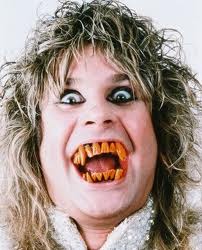
The Brits will grandly assert that their teeth are no worse than ours, just as they insist that Americans don’t take soccer seriously enough.  As a former soccer mom, I can assure my orally-challenged brethren across the pond that we take soccer very seriously—it’s that stupid, mind-numbingly dull game you call ‘football’, with final scores like ‘1 – 0’ or ‘0 – 0’, that we can’t stand.

As for your teeth, here’s food for thought that you will presumably not get caught between your crumbling bicuspids:

  1. Amid the NHS cluster-bleep, affordable English dentists are rare as hen’s teeth.
  2. Your carb-heavy diet is not particularly toothsome to begin with; supplementing it with with tons of refined sugar and tobacco is the kiss of death for that glittery Hollywood smile.
  3. You don’t fluoridate your water.  Come on, people.  Granted, it’s a Communist plot, but couldn’t you hold your collective, rank-smelling breaths for a sec and pretend it’s a Socialist plot?

On the other hand, a typical French mouth may be missing a few teeth, but those that exist tend to be speckless thanks to products like Antibactérien Eludril Rince-Bouche and Botot Pâté.  In fact, so dazzling are Gallic denticles that when foreign diplomats come to town, members of the Sénat are warned not to smile for fear their incandescent incisors will be mistaken for white flags and the visitors will naturally assume that the country just surrendered.

PRETTY WOMEN

Turns out that all really hot British women are Australian and all really hot French women are North African.

Advantage: Category Vacated

*

SEVEN YEARS WAR

Another pop quiz: How long did the Seven Years War last? Wrong again; nine years; 1754 – 1763, but historians had to think on their feet since the name ‘Nine Years War’ was already taken. Seriously.

Although the main antagonists were England and France, the war went global and drew in all the major superpowers of the time: Prussia and Hanover siding with Britain against the Spanish allies Austria, Sweden, Saxony, Russia and Spain.  Obviously, they should have called it World War I—a name which was still up for grabs.  The war was fought on two continents, beginning and ending in North America, resulting in a British victory that forced France to cede all of their holdings east and west of the Mississippi along with Canada.  In return, they were permitted to hang on to their Caribbean colonies, which is why they speak French in Haiti today.

Advantage: England

*

TRAFALGAR

Lord Nelson

Apparently, the Brits thrive on being outnumbered, and it must drive them up Hadrian’s Wall that each side must field the same number of  players during soccer snoozefests matches.  In 1805, Admiral Lord Nelson and his twenty-seven warships found himself in a bit of a misunderstanding with the French Empire under Napoleon, and off the coast of Spain, faced a 33 ship fleet commanded by Admiral Pierre-Charles Villeneuve.  Oddly, though Nelson destroyed 22 enemy vessels without losing a single one, he managed to get himself killed during the battle and so did not live to see Britain’s now-total worldwide naval supremacy.

Advantage: England

*

SPARKLING WINE, QUALITY

England is again outnumbered, this time by sparkling wine consumers, whose demand both domestically and abroad cannot be met by the 120 million bottles annually that England is capable of producing.  As a result, there’s current gold rush in English wine country, with vineyards being established at a rate which has quadrupled in the past five years.

In Champagne, by contrast, there’s simply no more land—short of window-boxes—left to plant.

But is the English wine worth it?  At least one French Champagne maker thinks so:  Vintner Didier Pierson-Whitaker is about to release several thousand bottles of Meonhill—a sparkling wine grown from French rootstock (chardonnay and pinot noir) in Hampshire, a place where the chalky subsoil duplicates the geology he farms in the Marne.

The rest of the world?  I think you’d have to be a certifiably-batty Anglophile with taste-buds on hiatus if you truly imagine that the nascent British bubble industry is anywhere close to being on par with the fizz finesse of Champagne—not yet, and, though we never say never, probably not ever.

Even Imogen Pierson-Whitaker, Didier’s English wife, admits,  “Truthfully, it’s been tough.  We don’t have a massive support system like in France. We planted in 2005 and the vines have been fabulous some years and there have been poor years….”

So far, Theale Vineyard’s award-winning wine is the exception, not the rule.  And obviously, only a fool discounts the éclat inherent in three hundred years of Champagne’s méthode champenoise experience, vineyard mastery, cellar skill and sheer old-guard reputation—and the world of chardonnay/pinot noir cultivation two hundred miles north of what was once considered feasible does not suffer fools gladly.

Imogen Pierson-Whitaker goes on to say, “The industry will obviously evolve, but the beginnings are tough, especially when you are using a new vineyard.”

Depending, perhaps, on how much carbon dioxide the rest of the developed world is willing to pump into the atmosphere, we may in our lifetime see how far that evolution can go.

Current Advantage: France

*

In this position, Cristal bubbles rarely cause hiccups.

SPARKLING WINE, HIP-HOP PRESTIGE

Entries, France: Cristal, Krug, Dom Perignon.

Entries, England:  Upperton, Bolney, Daws Hill.

Advantage: France

*

SPARKLING WINE, FUNNY NAMES

Entries, France: Billecart-Salmon.  That’s it.  Salmon is a fish name, and therefore, a funny name for wine.  And not even that funny.

Entries, England:  Breaky Bottom, Blackboys, Nutbourne on Gay Street, Ridgeview in Furzefield on Fragbarrow, Tickerage Blush, Plumpton on Ditchling, Biddenden in Little Whatmans on Gribble Bridge.

Advantage: England

*

In the final analysis, they’re not yet Bordeaux balmy, Rhône roasty or even Loire lukewarm, and the chief danger of all the new vineyards being planted in Southeast England is that these virgin vintners are underestimating the amount of capital required to produce world-class sparkling wine in a climate that may see five good vintages out of ten.  Before they go out of business (and they will), these wineries may foist upon the world an awful lot of substandard and reputation-ruining product.

Christopher Merret

That said, an interesting historical footnote concerns the real inventor of méthode champenoise, which, of course, was not Dom Perignon, the legendary Benedictine monk who actually thought that effervescence ruined wine.  In 1662, a scientist called Christopher Merret presented a paper detailing how sugar in wine caused the bubbles and that by adding sugar before bottling, nearly any wine could be made to sparkle.

Merret’s nationality?  British.  And thus, for the genuine global origins of the sparkling wine process…

Advantage: England

Posted in Champagne, ENGLAND, FRANCE, GENERAL | Tagged , , , , , , | 1 Comment

Vintage 2008: Donati Delivers A Digest of Doozies

It has been said (by Italians mostly) that there are only two kinds of people in the world: Italians and people who wish they were Italian.

Whether or not you accept this, the fact is, in terms of cool, Italians have somehow managed to win the immigrant lottery.  Of all the babbling minorities who arrived upon our shores seeking better lives, better opportunities and were immediately mocked, attacked, reviled and forced to clot together in poverty-stricken ghettos, it was the Italians alone who managed to upchuck such quintessentially cool characters as Rocky Balboa, Arthur Fonzarelli and Vinnie Barbarino.  Vito Corleone, Daniel LaRusso and Tony Soprano. Billy Batts, Lefty Ruggiero and Jake LaMotta (skinny version).  Tommy DeVito, Tony Manero and Luca Brasi (who is not sleeping with the fishes—he scared them all away).

Meanwhile, please note that the best icons you somewhat lesser nationalities could come up with were the Schmenge Brothers, Father Flanagan and the Festrunks—each of which represents the antithesis of cool.

Why should this be the case?  I submit, most humbly, a single shared experience among Italians which is unknown in Ireland, Czechoslovakia and Leutonia:

Wine in open barrels in the basement.

I know an Italian winemaker in Northern Michigan who I won’t identify other than to say that he has a daughter whose name rhymes with ‘Schmadonna’ and who tells a story of being a kid and checking on the cellar wine only to find a dead cat floating in it.  Instructions from his father?  ‘Take the damn thing out.’  The wine, of course, was bottled and consumed anyway—to a real Italian, wasting wine for any reason is blasphemy on par with gacking into Holy Water or falling asleep during Rigoletto.

So, in reading the history of the Donati clan, currently composed of patriarch Ron along with his sons Matt, Mark and Brad, discovering that homemade basement wine was mentioned as an impetus for going into the wine biz was almost a waste of ink.

Dan Marino

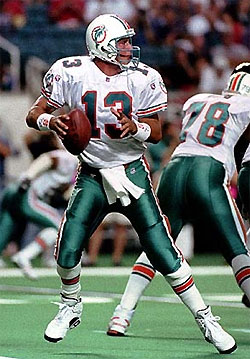
Anyway, winemaker is an expedient avocation for an Italian-American.  So is ward politician, Top Chef, NFL quarterback, orchestra conductor or bodyguard to ward politicians—in such roles, there are no surprises to upset the status quo of stereotypes.  Not so much: Proctologist, librarian or founder of a major corporation that produces multilayer printed circuit boards for original equipment manufacturers of data communication systems and personal computers.

And yet, it was the latter that ultimately funded Donati Family Vineyards in Paso Robles.

According to his bio, Ron Donati built Zycon Corporation from the ground up over two decades, then sold it to Hadco in 1997 at what we can only assume was a pretty penny.  A whole lot of pretty pennies, in fact.  Rather than rest on his laurels, Donati—with the innate restlessness of an entrepreneur—launched Career II in one of California’s lesser known appellations, Paicines.

Paicines

The community of Paicines has an odd history.  It was originally located five miles north of Tres Pinos, while today it is located five miles south of Tres Pinos.  Granted, both towns sit on the San Andreas Fault, but neither continental drift nor earthquakes had anything to do with the weird switcheroo.  In 1873, the Southern Pacific railroad, which had made a commitment to build a line all the way to Tres Pinos, decided they had better things to do, and so, stopped at Paicines.  In order to fulfill their contract, they somehow convinced the two towns to switch names.  Sounds like somebody made somebody an offer they couldn’t refuse—a trick only an Italian American could pull off.

Anyway, as an AVA, Paicines is a part of San Benito, and in general is warmer than most of San Benito, but cooler than the rest of the Central Coast.  Wine people know what this means without reading further: Bordeaux varietals.

And in fact, that has been the Donati direction since the winery launched in 1998.  The core of the portfolio is red—chiefly blends based on cabernet sauvignon and merlot.  The vineyard also produces the other Bordeaux ‘allowables’, cabernet franc, petit verdot, malbec, and select amounts of chardonnay, pinot blanc, pinot grigio and a pair of Rhône rheds, syrah and grenache.

The original plan was merely to grow and sell grapes, but once Ron realized how high the quality of Paicines fruit could be, he decided to put the other oar in the must.  From that point forward, it was a matter of mastering the art of turning grapes into Donati’s dream.
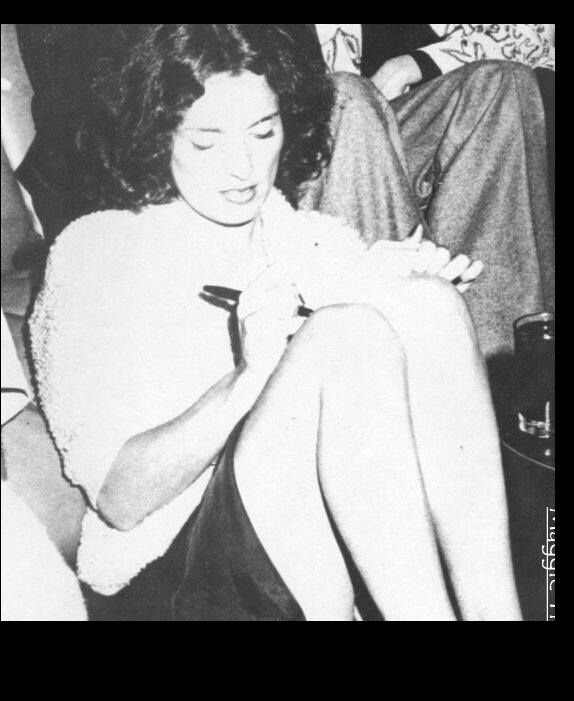
Ron Donati

According to Ron, “Successful winemaking must be a cooperative effort on behalf of our vineyard and winemaker. Overall, the winemaking team brings hands-on experience, analytic knowledge and a strong dedication to the industry. We are here to make the best wines possible.”

Apparently, in 2008 they did.  Winemaker Ian Hudson describes the vintage:

“The growing season started with bud break in mid-March after a cold, dry winter.  With the lack of rainfall, vine canopies were below normal vigor which produced small clusters with tiny berries.  Temperatures were very calm and consistent making it possible to harvest at the optimum maturity, producing our best vintage yet.”

Among the top wines to emerge from that vintage is a paean to Ron’s late father Ezio—the first of the Donati family to be born in the New World.  Blended from the Bordeaux Big Five, the recently released 2008 vintage had been hanging around in oak for three years, and was bottled this past July.  It sells for around $50 and offers up sensationally intense aromas of plums, cherries, mocha and Asian spices; the wine is unctuous and full, and a little aeration reveals undercurrents of licorice and leather.  Given the additional extraction of the fabulous 2008 vintage, this is a wine that should age with grace for another decade or more.

‘Claret’ 2008 is another recent release from Donati; a Right Bank-styled blend of 44% merlot, 34% cabernet sauvignon and 14% cabernet franc along with mélange of other reds.  The wine is baked-fruit sweet with melted licorice, mineral and an easygoing, but generous mouthfeel; an up-front wine with decent concentration; plump and stylish with a spicy, harmonious finish.  About $17.

Donati’s 2008 Cabernet Sauvignon (14% merlot, 2% cab franc) is flamboyant and bright; fragrant with chocolate, espresso, barbecue smoke,  cedar, cassis and a wealth of spices—sweet pepper, cinnamon, even bit of cardamom.  The wine shows great equilibrium and a potential to age and develop into something even more complex. About $20.

True, perhaps, to rustic Italian roots, Donati also makes a 2008 jug wine—the 64 oz. (2 ½ bottles) ‘Naughty’ featuring a big, Lanny McDonald-like red handlebar moustache on the label.  Not sure why they call it ‘Naughty’ other than it vaguely rhymes with ‘Donati’, but the press copy reads: ‘Feeling a little Naughty?  Bring a pair of sweet jugs to your next party!’

Get it?  A pair of jugs?  Of course you get it.  That’s because for all their slick Latin cool, their intimidating and unrefusable offers, their graceful musicianship, their feverish disco dance floor moves, their ability not only to sit through all four acts of La bohème but to actually enjoy them, in general, Italians—with the possible exception of Guido Sarducci—are not a funny race

Take the catchphrase that appears on the Donati website:

‘Mangiare, bere e godersi la vita.’

Which translates:

‘No Italian can ever refuse a favor on the occasion of his daughter’s wedding or a positive wine review.’

Okay, then.  As a native Detroiter, I am well aware of the national rap that our city takes, and I have been lobbying for years to get Chicago to switch names with us.  Consider this an official shout-out to the Donati family to use their ‘influence’ to help get this accomplished.

Posted in Cab/Merlot, Paicines | Tagged , , , , | 1 Comment