Morning Wood vs. Evening Wood: Ravenswood For Halloween

Yuck

In the past. I have joined the onslaught of wine writers who come up with something cutesy, silly and obvious to recommend for Halloween—something like Poizon (a wine to ‘die for’), EVIL (upside down label—either that or you’re supposed to store it like ketchup) or Vampire Merlot.  It’s de rigueur to refer to such wines as ‘hauntingly delicious’ or ‘spookily scrumptious’ and in general assumes—not incorrectly—that we’re more interested in appropriate Halloween puns than appropriate Halloween wine.   Hence, Re:Source Media’s recommendation of pairing Witches Falls riesling with dark chocolate, one of the worst match-ups in the history of humanity.

Anyway, in my household—at least when the kids were young enough to require adult supervision on their neighborhood rounds—it was much more apropos to fill a thermos with Jim Beam than to carry around a wine bottle—although I stopped the thermos trick when the seven-year-old next door said to me, ‘You smell like Daddy does right before he gets in a fight.’

So, if my gonads were to be held to the embers by overzealous Army reservists in a Baghdad prison and I was forced to name a wine for Halloween, I would, between Janet Leigh screams, give a shout-out to Joel Peterson’s California classic Ravenswood—and not just because Abu Ghraib translates to ‘Place of Ravens’.

Joel Peterson

I’ve interviewed Peterson in the past, and he is a clever cookie, no question.  I’d love to share the fact that he was raised by bats or wolves, but in fact, he was raised by braniacs who could easily have slipped over to the dark side and performed bizarre experiments in castle laboratories.  Instead, his father worked with high-temperature lubricants and his mother worked on Big Bang theoretics via the Manhattan Project while Joel himself has a degree in microbiology from Oregon State.

I know, I know:  With all this scientific sapience in the genes, Peterson could have been reanimating corpses instead of taking the path of lesser resistance: Winemaking.  But, just as fellow chemist Victor Frankenstein dreamed of becoming the Modern Prometheus as a boy, the Joel Peterson dreamed of becoming the Modern Pierre Pérignon, in part thanks to his father’s wine club—which he joined at the age of ten.

Shut Up And Spit!

Halloween costume ideas: ‘Dude standing on box’

According to legend, Joel’s pre-teen education was in the chemistry of wine: The phenolic acids, stilbenoids, flavonols, dihydroflavonols and anthocyanins that make up flavor perception.  His father, despite his obsession with lubricants, was not interested in a lubricated son and uttered the infamous invective, ‘Shut up and spit!’ when the young whizbang decided to be heard and not seen.

The silent phase did not last long, and his bio suggests that by his mid-teens, he not only had a ‘working knowledge of European vineyards and vintages’, but, to the ‘delight and consternation of everyone who has met him since, he talks about it’.

Halloween costume ideas: ‘Naked dog on leash’

I interviewed him last year and found him to be delightfully urbane, frightfully bright, and yes, talkative.  I’d say that the chemistry was perfect if I wanted to pull another stint in Ravensville, Iraq and have my funny bone tossed to the rottweilers.

Now, the thing about chemists is that they specialize.  For Peterson’s father, it was grease, for his mother, U-235.   In his day job, Joel pursued immunology, and when it came to vinology, he settled on a most un-European grape, at least in popular parlance: Zinfandel.

Halloween costume ideas: ‘Megan Ambuhl’

Of zin he claims: “There are three sins: Too much sugar, too much alcohol and too much wood.  With some of the earlier missteps, bogged down by enough oak to built a house, I’ve learned that with a grape this big, you use some restraint.  Ultimately, I make wine that please me.”

Well, I’d be able to comment intelligently on all the wood talk if in high school I had taken chemistry more seriously—and later in the day.  Unfortunately, instead of paying attention, I fantasized my way through 1st hour Introduction to Chemical Engineering since I sat behind Lisa Di Alberto, whose visible bra strap caused what scientists call, in their popular parlance, ‘auroral tumescence’, and what we called in our popular parlance (and still do), ‘morning wood’.

I took shop 2nd hour, but it turns out that even if there was a carry-over effect, the wood was still useless.

So, I will wait until the 31st and sample some Joelwood: I picked up a pair of samples, Sonoma Old Vine and Napa Old Vine.  They are—as fits the season—brooding, mysterious, swarthy and big.

But even without the wine, the name ‘Ravenswood’ chills me to the evening bone: Is this not a name suited for Halloween?  Does it not conjure up everything that ever went bump in the night—moldering crypts of the Stygian undead; the great wastes of Dartmoor where the howls of the wolves seize in your throat like the mists; the house standing against the hills for eighty years, not sane, holding darkness within…

Oh, and that goddamned Place of Ravens fright factory in downtown Baghdad—but you can hardly blame Joel Peterson for that.

Tasting Notes:*

* (Note on Notes: Ravenswood covers many strata of zinfandel: Those reviewed below at the lower end and others climbing price-wise, up into the upper levels of the zinfosphere; the $75 Icon… but I never get sent samples of those.

You don’t suppose it has anything to do with me mentioning my teenage membrum virīle and military human rights atrocities in Iraq in the same breath as their product, do you?)
Ravenswood Zinfandel, Sonoma County, 2009, about $16:  Beautiful ruby color with a touch of burnt orange at the rim; this wine remains bright with cherry and cranberry notes on the nose with a distinct floral background.  The mouthfeel is silken and smooth; flavors include cedar, graphite, cassis and raspberry with an edge of sweet spice—cinnamon and brown sugar especially.
Ravenswood Zinfandel, Napa Valley, 2010, around $16: Full-bodied and colored a deep garnet, the 2010 Napa shows unadulterated loyalty to the varietal  It’s balanced and softly rounded with cool blackberry, brambly wild raspberry, cocoa and coffee swirling through a lissome texture.  A lovely accompaniment to an upscale Halloween barbecue.

Posted in CALIFORNIA, Zinfandel | Tagged , , | 4 Comments

Predicted 2013 Wine Shortage To Affect Only The Lazy, The Weak And The Politically Disenfranchised

First, the bad news:  Thanks to piss-poor performances by our lollygagging allies in everything alcohol, 2011 output is down in Europe’s top three wine producing countries, Spain, France and Italy.

According to an October 18 report in Bloomberg News, the shortfall is predicted to be in the neighborhood of 1.3 billion bottles.

Drought leaf, France

The reasons for the slump are complex, and this is a column which prefers to view the world with effortless, child-like simplicity.  But in brief, lousy weather in 2011 damaged vines in southern Europe, leading to depletions of storehouse hoards and leaving no inventory to fill the pipeline. Between a winter drought, a cold start to the season, hailstorms and a summer heat wave, this year’s European wine production is forecast to tumble by as much as 500 million gallons.

‘Wine-Free Weekend At Bertie’s’

That’s an awful lot of rotgut for the rabble to relinquish.

“It’s historic!” cries Bertrand Girard, chief executive officer of Groupe Val d’Orbieu. “We’re short of wine. We’ve never seen that in three or four decades. Spain has zero stocks!  Italy has zero stocks! We no longer have stocks to bridge the gap. We have no more entry-level wine.”

Sucks To Be You, Bertie

Now, the good news:  Some of us have been preparing for such a crisis since the 1960’s, when we realized that the ‘Red Menace’ was more about cabernet than Communists.

Our wine shelter with the Bordeaux purposely mis-labeled so the neighbors wouldn’t steal it.

In fact, as a child, I helped my father construct a wine shelter in our backyard—a reinforced bunker with steel beams across the wall and a concrete roof.  We stocked it with vintage Bordeaux and Burgundy, leaving only enough space for us kids to camp out there—truth be told, when two of my buddies suffocated, we added ventilation holes at the base of one of the walls.

That shelter remains intact to this day, and by now some of those wines—1947 Château Smith Haut Lafitte, 1953 Château Haut-Brion, 1959 Domaine de la Romanée-Conti Grands-Echezeaux and of course, our entire stock of 1961s, should be quite stunning come further wine shortages or a zombie apocalypse.

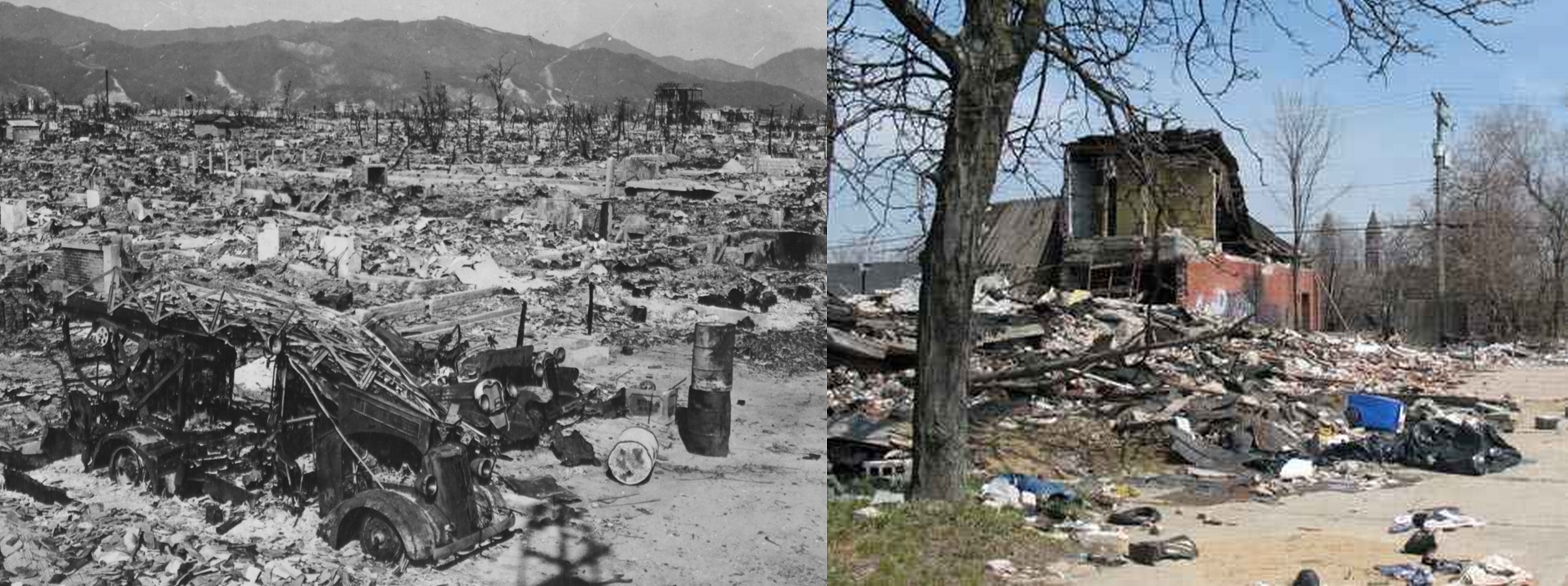
L.: Hiroshima. R.: Detroit.

See, we were smart.  We knew that ultimately, we would not need a bunch of 21st century bollock-free, socialism-loving Eurotrolls making our wines for us.  These were, of course, the days before California began making wine that was actually consumable by people not on welfare, but it made no ultimate difference: If the atomic bomb had been dropped on Detroit—as our teachers kept telling us that it would be since our automotive plants were easily revamped to produce war weapons—we still wouldn’t have missed a hangover.

Why is That?

Because we can make wine out of anything, that’s why.  We can make it out of lawn clippings, dried-up leaves from the maple tree, grapefruit rinds, chicken bones or coffee grounds—and, in a pinch, we can raid the rooms of our teenagers until we find a stash of reefer and make wine out of that.

It is simply the nature of the beast.

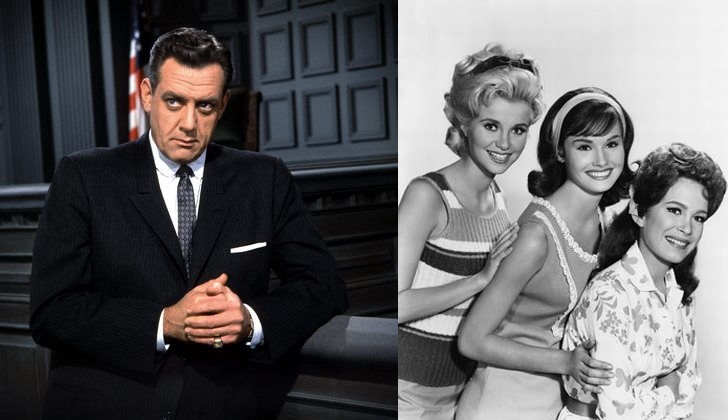
Therefore, for those of you who lacked the prescience, prudence, perception and perspicuity in between episodes of Perry Mason and Petticoat Junction to prepare, no worries.  Here are a handful of recipes to prove that for real Americans, a doctrine of unilateral, isolationist laissez-faire alcoholism is the only way to go—so long as wine can be made from stuff you have lying around the suburban split-level.

MUSHROOM WINE

  • ½  cup dried golden chanterelle mushrooms
  • ½  cup dried psilocybin (optional)
  • 1 ½ lbs. sugar.
  • 24 oz. jar canned mackerel heads in syrup
  • 11.5 oz can Welch’s 100% White Grape Juice frozen concentrate
  • 2 tsp. acid blend
  • ½  tsp. grape tannin
  • 3 ½ qts. water
  • 1 packet Champagne yeast

Boil everything, cool to blood temperature, add yeast, wait three weeks and feed to cat.

BANANA WINE

  • 10 oz. dried bananas
  • 1 can concentrated gorilla urine
  • 1 gallon warm water
  • 2 lbs. sugar (this will vary, SG should be 93-95)
  • 1 crushed Campden tablet
  • ½  level teaspoon yeast nutrient
  • 3 level teaspoons acid blend
  • 1 packet Montrachet yeast

Boil everything, cool to blood temperature, add yeast, wait three weeks and feed to monkey.

COFFEE WINE

  • ½ lb. freshly ground coffee
  • 2½ lbs. dark brown sugar
  • 1½ tsp. blotter acid
  • ¼ tsp. tannin
  • 7½ pts. water
  • 1 tsp. yeast nutrient
  • 1 packet yeast infection

Boil everything, cool to blood temperature, add yeast, wait three weeks and feed to overachieving yuppie.

PESTICIDE WINE

  • 2 ½ gallons Monsanto ‘Liquid Concentrate’ Round-Up
  • 3 lbs. organic evaporated cane sugar (preferably Whole Foods brand)
  • 1½ tsp. citric acid
  • 1 tsp. yeast nutrient
  • 1 packet genetically-modified imidacloprid-resistant Brewer’s yeast

Boil everything, cool to blood temperature, add yeast, wait three weeks and feed to Republicans.

Posted in GENERAL | Tagged , | Leave a comment

What Alcohol Really TRULY Does To Your Brain

Earlier this week—on October 16, to be precise—Forbes Magazine published a column by David DiSalvo called ‘What Alcohol Really Does To Your Brain’.

David DiSalvo

Well, my friends, I read it and it is complete plonk.  Mixed with hogwash.  Sprinkled with poppycock, piffle and hooey and stirred with fiddlesticks.

But, if you also read it, you already know that since it was written by a fellow who lists as his literary raison d’être  ‘…Writing about science, technology and the cultural ripples of both.’

Ripple ‘n’ Me

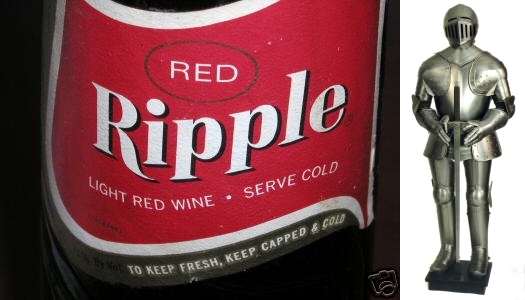
Now, as a world-renowned, Oxford-educated enological whiz-bang who has won the Nobel Prize in Shiterature every year since dynamite was invented, I must say that anyone who mentions Ripple in his wine bio has lost my professional respect before he begins.

So, old and exhausted as I may be, I suppose I will now have to pull on my medieval body armor, my pauldrons and gorget, my chain-mail and boar’s tusk helmet and toss a salvo back at DiSalvo.

First, Let Us Examine His ‘Premises’: 

1.  Why drinking makes you less inhibited…

DiSalvo sputters out some unconvincing claptrap about booze ‘depressing the cerebral cortex’s behavioral inhibitory centers’, as though our brains are filled with little suburban shopping plazas where teenager-like neurotransmitters spend daddy’s paycheck on Hollister glutamates and Abercrombie & Fitch intracellular dopamine.

Yeah, right.

Presto change-o

What actually happens is that after a couple Jaeger Bombs your circadian photoentrainment circuits (vision) improves exponentially, and as a result, not only do you recognize the true depth of your manly machosity in the Men’s Room mirror, you also realize that the ‘7’ in the corner booth with the tattooed bodybuilding biker boyfriend has become a ‘9.5’ in a corner booth with Seymour Krelborn from ‘Little Shop of Horrors’ as her date—and that the angry sneer she’s been casting your direction is actually a ‘come hither’ pout of sexual interest.

The fact that you awaken in the post-op ward at Beaumont Hospital with tubes in your nose leads to DiSalvo’s second postulation:

2.  Why drinking makes you clumsy…

David DiSalvo blames the cerebellum.  Again with the big words, David?

Turned down ‘Desperately Seeking Susan’

I thought ‘cerebellum’ had to do with Sarah Bernhard’s acting career before the Civil War, but it turns out to be a swamp-colored, crumbled-up knob of fleshy tissue at the base of the brain which—according to Wikipedia—is responsible for ‘motor control’.

Okay, then, Mr. Smarty-Pants: I was taken to the hospital via ambulance and did not—repeat, did not—have to control any motors.  I lost that fight because I got sucker-punched by a nerdy florist while staring at the fleshy tissues of the booth girl and not because of any malfunction in my metencephalon, which is the upper part of the rhombencephalon within the medulla oblongata.  Duh.

Man, do I hate DiSalvo-esque know-it-alls—don’t you?

3.  Why drinking increases sexual urges but decreases sexual performance…

This one doesn’t pass the very first smell test.

Obviously, any mention of two of the squishiest, repulsivist, most non-sexiest parts of the human anatomy—the hypothalamus and pituitary—have no place in a mature discussion of sexual arousal and subsequent Sting-quality tantric performance, or lack thereof.

Bones do.  So, the reason that you suddenly want to jump the bones of the cocktail waitress, who is not only your best friend’s wife but also your younger sister—has nothing to do with any icky secretions of thyrotropin hormones or serum concentrations of androstenedione.  Far from it.

Still-cute heyday

You see, David, Knob Hill 101° stimulates the heart, not the brain—specifically, that section of the right artrioventricular orifice which controls bonhomie, philanthropy, charity toward ugly chicks and the sincere magnanimous conviction that all women, no matter how deformed, overweight, annoying or retarded, deserve the same sort of sexual gratification as Madonna received during her still-cute heyday.

And if any erectile dysfunction on the part of this drunken man should follow, be assured that it is not the result of bourbon-induced nerve-impulse blockage or constricted blood vessels in the ol’ meat thermometer, but rather my firm, unwavering ideology that all women—even big-tissued mini-skirted bar chicks—are not to be objectified, considered a commodity or put to ‘use’ without regard for their personality or sentience.

Quite simply, Mr. DiSalvo, I am a 21st century ‘good guy’.

And lastly…

4.  Why drinking makes you sleepy…

They just don’t mix well.

Clearly, David DiSalvo has never been on a week-long bender, and that is perfectly understandable.  Working for a dead multi-trillionaire like Malcolm Forbes probably prohibits long stretches of unaccounted-for absence followed by phone calls to Human Resources by a warden, a doctor, a coroner or a cop.

But I can assure you, once you are firmly in that Sazerac saddle, you do not fall off it easily.  You don’t work, play, procreate, write, sing, invent game-changing alternatives to nuclear energy, discover cures for  Creutzfeldt-Jakob Disease, find prime numbers in the Catalan–Mersenne number conjecture or eat.  You drink.

Most assuredly you don’t sleep, because you understand instinctively that sleeping interferes with precious drinking time.

Now, I know what you’re going to say: Since I can’t remember ninety percent of what happens during lost weeks, perhaps I do sleep and just forget.  Well, I say to you, ‘If you are going to play by your rules instead of mine, I’m taking my wine column and going home.’  Capicé?

Anyway, people, there you have it—and my advice to you is elementary, mandatory and easier to digest than milk toast over a three-minute egg:

In the future, if you want to know about spatiotemporal economics as described by morphological syntax and how it specifically relates to the collapse of Lehman Brothers and Bear Stearns, read Forbes Magazine.

If you want to know how alcohol affects the brain, read someone who knows whereof he speaks.  Like me.

Alcohol Abuse Forum

Posted in GENERAL | Tagged , , | Leave a comment

Concept Wines: What A Concept

‘Science takes a giant leap… backward.’

That was a line from some old television commercial that aired when I was a kid; I can’t remember the product, but I do remember the tag line, which probably doesn’t say much for the ad agency that came up with it since their only justification on earth is to make twits like me remember to buy anything that the jingle tells me to.

1938 Phaeton

Anyway, it seems like every time I attend Detroit’s International Auto Show, which is every year they have one, which is every single year since I was watching black and white commercials on an RCA console, the crowd-pleasing concept cars just keep getting uglier and uglier—and I can’t figure out why.

2001 Scion Hako

I can figure out why, say, in 2012, every American small town is hideous to drive through, when—back in the Golden Age of concept cars; ‘40’s and ’50’s—they were quaint, lovely places where you wanted to move, marry a blonde calico-skirted virgin and raise kids named Buddy and Sis, but today, thanks to McDonalds, Taco Bell, Dollar General and Rite Aid, every small town in the United States looks like Dante’s Vestibule of Hell as you enter and a cross between Mordor and Malebolge as you exit, and worse, like they’re all made of ticky-tacky and were squeezed out of a giant municipal Play-Doh extrusion press.  But that’s cash-flow, tax revenue and for-a-few-cents-cheaper-than-Mom-and-Pop-can-do-it—nothing more.

1938 Lincoln Zephyr

But automotive design?  Why should it cost any more or less to design something sublime, cool, transcendent and beautiful than something atrocious, graceless, clumsy and crude?

That’s just it: It shouldn’t and it doesn’t.

Toyota HI-CT

So, even though this is a column about wine, the photos accompanying it will all be concept cars, some built, others not—the ones on the left from the previous century, the ones on the right from the 2000’s.

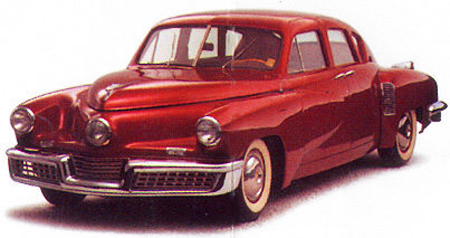
1948 Tucker Torpedo

You tell me if I’m off base here or if our favorite car companies would be better served hiring designers that can exercise that side of their brains dedicated to poetry, style and macho posturing rather than that the side of the brain dedicated to conceptualizing clunky earth-first dorkmobiles aimed at tasteless vegans.

But anyway, about that wine:

Conceptual Healing

Renault Espace FI

Volk’s Wagonload of Concept:  The fact that by his own admission the varietals he produces are ‘hand-sell marketing burdens in most channels’ doesn’t stop Kenneth Volk of Lodi’s Silvaspoons Vineyards (formerly of Wild Horse Winery) from barreling forward with such outré oeno offerings as torrontés, negrette and trousseau, which he further describes as ‘under-appreciated heirloom varietals’.  He reminds us, however, that he may in fact be a vino visionary since wines like viognier and syrah did not take off for a long time, and now are some of the most sought after new-wave wines in California.

1954 Mercury XM 800

You Can’t Quite Get a Handle on Randall:  Grahm’s cracker wines include the inimitable Le Cigare Volant and multi-grape Contra—which the Bonny Doon web site dutifully explains is pronounced ‘kon-truh’ for those of you who would otherwise pronounce it ‘schik-uhl-groo-buhr’—but none of his wines are so odd in concept as ‘DEWN’.  Referred to as a ‘Viognier Port’—even though international convention discourages using the word ‘Port’ on a wine not from Douro, Portugal, the world’s oldest regulated and demarcated wine region—Grahm does it anyway.  He pulls viognier from the Chequera Vineyard in Paso Robles, then halts fermentation with strawberry and peach eau-de-vie along with a little neutral brandy, and produces a toasty, nutty, hauntingly lovely cordial that weighs in at 8% residual sugar.

2003 Eliica

ASPCA—The American Society to Profit from Cruelty to Animals: You can sleep easily in the knowledge that $29 of every $30 you spend on Frenchie Napoleon wine will not be going to aid abused and unwanted pets, and that the buck that will go to the ASPCA is a highly promoted PR stunt.  Named for the bulldog owned by Frenchie Winery proprietor Jean-Charles Boisset, the Frenchie Napoleon label depicts said mutt dressed not as Napoleon from Animal Farm (known for his demagogical cruelty toward livestock), but as Emperor Napoleon Bonaparte, who suffered famously from ailurophobia—an irrational fear of felines—and is reported to have stabbed a stray one to death in his tent following the Battle of Wagram.

1969 Toyota EX-III

‘Fess up Parker: What’s In There?:  When the final sun sets upon the penultimate horizon—as it did for Daniel Boone in 1820, Davy Crockett in 1838 and Fess Parker in 2010—I think the wine gods will agree that a $14 blend of syrah, grenache, petite sirah, mourvedre, cinsault and carignane in which the winemaker Blair Fox refuses to divulge vintages is what we call, in technical jargon, ‘leftovers’.  Crazy like a fox, that Fox.

2001 Pontiac Aztek

Lose/Lose Wincarnis:  This odd ‘tonic’ wine, first produced in 1887, blends wine and malt extract with therapeutic botanicals like gentian root, mugwort, angelica root, balm mint, fennel, coriander, peppermint leaves, cardamom seeds and cassia bark.  It’s often mixed with gin to make a cocktail called a ‘Gin and Win’ and is hugely popular in Jamaica, home to another popular therapeutic botanical.

Exception to prove the rule: Loathsome 1920 Audi

When is a Pinot Noir not a Pinot Noir?  When it’s 24% mondeuse, apparently—just ask Jim Clendenen of Au Bon Climat, who responded to the clarion call for an under $20 California pinot with his Santa Barbara County Pinot Noir.  Now, I thought that for an appellation wine to carry a varietal name on the label, it had to be 85% that varietal, but evidentially Santa Barbara County—listed as an appellation in Appellations America—gets a pass.  In any case, whereas he has indeed kept his pinot beneath the ceiling price, he may have missed our point: The wine is supposed to taste like a pinot noir, too.  Mondeuse is an interesting enough grape, believed by some to be a genetic parent of syrah, but one thing is clear: There’s a sound viticultural principal behind its usual blending companions, shiraz and cabernet.  That is, it tends to be big and brambly and can—and in this case does—overwhelm the subtle majesty that true pinot-philes crave.

Exception to prove the rule:  Savagely cool 2006 Daedelus

Louisiana Wine:  The quaint, oft-repeated fact that ‘wine is now produced in all fifty states’ fails to take heed of another important fact: Just because it can be produced everywhere doesn’t mean it should be.  Take the Bayou State.  Yeah, yeah, I know—Louisiana has historic cultural ties to France and Spain and is the gastronomic capital of the bloody galaxy, but dudes, Louisiana is a big humid swamp where even the heartiest hybrid and most long-suffering labrusca grape comes down with downy mildew and Pierce’s Disease quicker than a Lance Armstrong doping denial.  Four commercial Louisiana wineries are now producing about 20,000 gallons of AVA wine per year, mostly from the unremarkable cynthiana, muscadine and blanc du bois varietals, but fortunately, that quantity barely satiates Mardi Gras reveler for twenty-four hours, so none is left to foist upon the rest of us.

Posted in GENERAL | Tagged , , , | 14 Comments

Charbono: a.k.a. Douce Noir: a.k.a. Bonarda: a.k.a. Cheryl Sarkisian

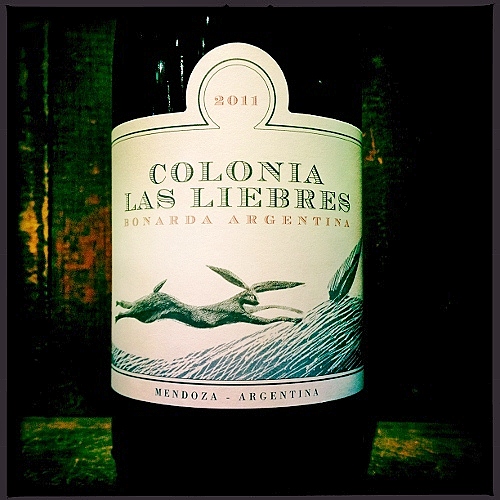
It’s always a bubble to discover a new (ish) varietal, and a double bubble when it turns out to be a scrumptious steal.  Yesterday, someone handed me a bottle of Colonia Las Liebres Bonarda, 2011—an $8 Mendoza red that further proves the Argentinian talent for taking vapid varietals and turning them into va-va-voom varietals.

A Boner For Bonarda

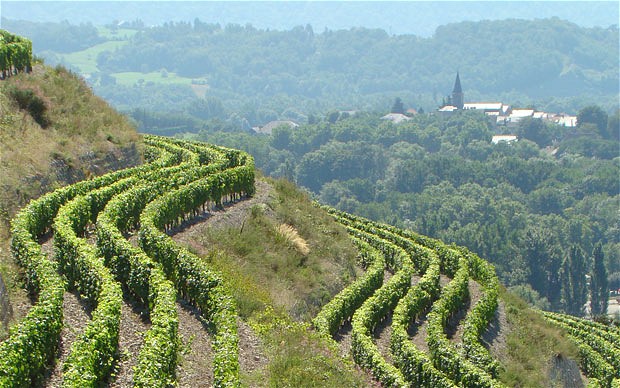
Hillside vines in Savoie

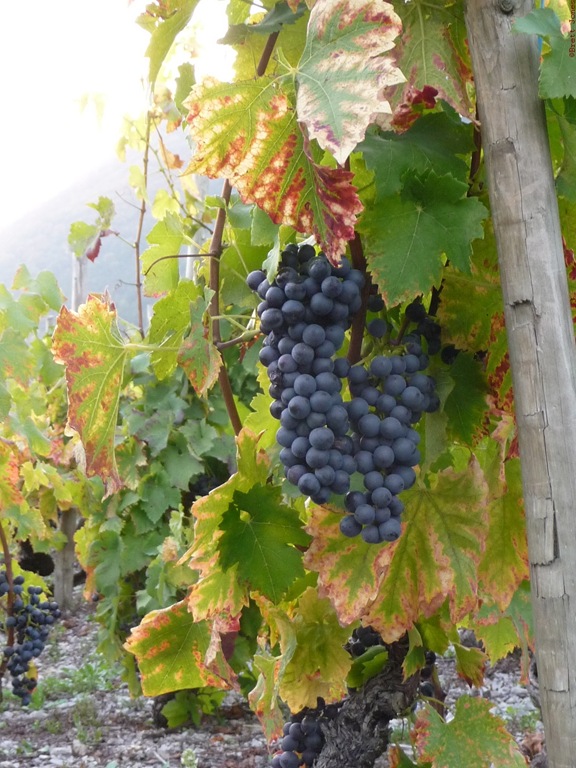
Having  by all accounts been born in Savoie, France—that fragmented alpine appellation known for Germanesque vineyards that cling to sunny plots of slope—Bonarda, locally called ‘Douce Noir’ (‘little sweet’), joins a roster of unusual Savoie varietals: Chignin Bergeron, Jacquère, Altesse, Mondeuse Blanche and Mondeuse d’Arbin.

These are cultivars not widely grown outside this small pocket of southeast France and produce crisp whites and fruity, acidic reds; the climate prohibits aggressive ripening.

Bonarda in Mendoza

In Argentina, however—like Malbec and Torrontés—Bonarda finds ideal digs, especially in Mendoza’s rain shadow, where it enjoys its preferred high altitudes (most Mendoza vineyards are planted at between 1500 and 3000 feet ASL) with a firm footing in sand-over-clay, low-salinity soil.

In fact, after Malbec, Bonarda is the most widely planted red wine grape in the region.

That’s a remarkable statistic when you consider that Mendoza alone produces two-thirds of Argentina’s wine, and the acreage-to-vineyard ratio, though down from its highest levels in the 1980’s, still represents more than those of Australia and New Zealand combined—and about half of the planted vine acres in the entire United States.

That translates into an awful lot of Bonarda—a wine that most Americans have never heard of.

Well, You Have Now, Damn It!

Top: Honey Boo Boo. Bottom: Rossi’s Boo Boo.

One reason why the name ‘Bonarda’ does not instantly spring from the lips of Mendoza’s wine fans here in the States is that, until recently, it was rarely released as a stand-alone (by Argentina wine law, 80% of a varietally-named wine must be that grape), but instead was used as a bulk-blend addition to Argentina’s equivalent of Carlo Rossi’s Paisano.  And, in fact, given a lice-picking, nose-thumbingly dysfunctional Honey Boo Boo upbringing, Bonarda produces primitive, low acid plonk that deserves the sort of handled wine bottle that you’d store under your sink.

The times, they are a-changin’, though: According to Leticia Blanco of Luigi Bosca, a major winery in the Lujan de Cuyo region of Mendoza, ‘Bonarda has taken a beating as a trash grape.  It’s been alienated for years as a jug wine, but it’s finally getting its reputation back.’

Recently—at least to those of us north-of-the-border—an upsurge of concentrated Bonarda from older vines has become available, and this stuff can be remarkable.  The identical terroir phenomenon that occurs with Torrontés—wherein a reasonably drinkable Spanish white develops all sorts of intriguing and newfangled nuances in the dry South American air—happens to Bonarda.  Nothing too mysterious about it; bonarda is a late-ripening grape, and in fact is one of the last varietal to be picked in Argentina.  The beauty part of growing vines in even-climate, desert-like conditions comes with irrigation, where harvest can be based solely on ripeness.  This is a luxury that France cannot offer.

The other advantage to irrigation farming is that you can produce huge quantities of grapes, and as a result, in general, wines tend to be priced to move.  Such appears to be the case with old vine Bonarda, which peaks at about $15 a bottle.

Colonia Las Liebres Bonarda, 2011

Hauling down 87 points, CLL Bonarda, 2010—the wine with the elongated rabbit on the label—was Wine Spectator’s Wine of the Week on July 2 of this year.  Never got a chance to sample that vintage, but based on the description given by WS critic Nathan Wesley, the profile is similar—and no wonder: A third advantage to the drip-irrigation method * is that vintages remain somewhat identical.

*It should be pointed out that there are plenty of fault-finding folks who fooey this method of watering, since, if misused to increase yields, it can result in overly-manipulated, terroir-free, characterless wines.  In fact, EU wines laws have utterly forbidden irrigation until fairly recently.  Still, plenty of viticultural areas which produce world-class wines would be unable to even grow Rossi Paisano quality product without real-time monitoring of soil and vine moisture—and that includes Washington, Australia, Lebanon and much of California.

In any case, so long as irrigation is well-managed and kept to the minimum level required to promote development while staving off water stress, there is no reason why it should not be an effective tool in producing deep, complex wines.

And is:

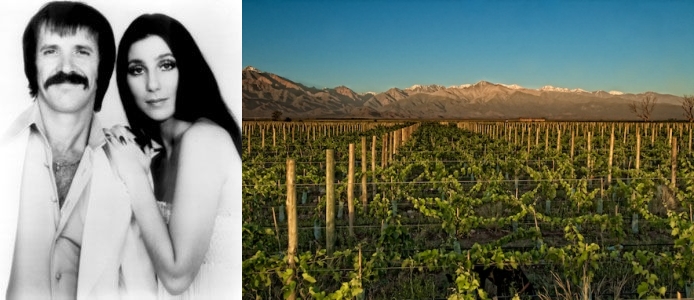
L.: Sonny and Cher Bono. R.: Sunny Napa charbono.

For my money (little as it ultimately proves to be), Colonia Las Liebres Bonarda is one such example.  Fruity, dense and tannic, the wine shows a spicy, mineral nose backed by tarry plum and licorice.  A bit restrained upon opening, it should wake up within fifteen minutes and become rather effusive—juicy raspberry, blackberry and more of that fleeting licorice flavor which often comes from the barrel, but which I believe in this case is a component of the grape itself, like the sweet tannins.  There’s also an interesting, unmistakable tone of Junior Mint and cherry Jolly Rancher, making this a wine for the whole fam damnly.

…Making it ideal for Honey Boo Boo night on TLCThe Lard-Lover’s Channel (fortunately, Bonarda goes well with crackers)—or at very least, for reruns of The Cher Show, starring the grape’s true namesake, Cher Bono.

Posted in Bonarda | Tagged , , , | 4 Comments

Symbiotic Synergies And Subsequent ‘Sins Of The Sommelier’

It may come as a surprise to the nine or ten regular ‘followers’ of this column, but I hate big words.

‘Dick’s too short a word for my dick; Get off my antidisestablishmentarianism, you prick.’  –  Eminem, ‘Almost Famous’

I’m not really all that big on small words either—I find that they are constantly getting in my way when I’m trying to say something—but the impenetrably convoluted, brobdingnagian, multisyllabic ones?  The kind that intellectual-thug rappers like Eminem and Jay-Z use?  The words you have to Google to get from one paragraph to the next?

Hate ‘em, hate ‘em, hate ‘em—and if you wonder why I’m always using them, it’s to prove that I can combine cerebral street alcoholism with sophisticated, literary, B-Boy posturing.

I’m kidding, of course.  I use them because I am making a joke at the expense of long-suffering readers who feel silly if they don’t know the definition of a word that I don’t know the definition of either.

Google on, suckers!!!

This is the kind of stuff that amuses me—and we adults have a sho’ nuff obligation to keep ourselves amused.

Anyway, Who Is François Chartier And Why Does His ç Have A Proximal Diacritic Appendage?

‘I’m not shoplifting, I’m annexing, like Napoleon did to Spanish Flanders.’

He’s a Canadian—specifically, a Québécois—so further analysis of things about him that make no sense is futile.

Futile, but fun nonetheless, n’est pas?  Chartier is a former sommelier who has (according to his web site) ‘transcended the world of wine’ and… in June, 2009… (To quote http://francoischartier.ca verbatim):

‘ François Chartier published the first results of its scientific research harmonies and molecular sommelier in a book entitled papillae and Molecules’

Something else that amuses me, and probably you to, is to read direct something-to-English translations done by people who should probably not be translating things.  Chinese translations are particularly funny, but French runs a close second—mostly because French-speakers are somewhat, shall we say, ‘condescending’ to people who hail from English-speaking countries, particularly when it comes to matters involving wine.

And in fact, it’s a wine book that Chartier has written, and is apparently also the best cookbook in the world (innovation category) according Paris Gourmand World Cookbook Awards.

As is Chartier the Paris Grand Prix Sopexa International’s Best Sommelier in the World, even though he is retired.

But, papillae?

It’s not necessarily a big word, but I had to Google it anyway, like I had to Google Paris Gourmand World Cookbook Awards and the Paris Grand Prix Sopexa to find out who in Light City should be getting a room with this geeky garçon Chartier since they seem to love him so much.

It turns out that in the context of his book title, papillae means ‘tastebuds’.

A soupçon (yet another cédille—a word which should, but doesn’t have a cédille) of further research indicates that, translated as ‘Tastebuds and Molecules’, the 2012 edition of Chartier’s book purports to be a scientific smorgasbord of flavor fraternities—tastes that have a non-subjective basis for mixing well together.  He claims to have spent two decades of ‘passionate study’ identifying secret relationships between pineapples and strawberries, mint and sauvignon blanc, thyme and lamb, rosemary and riesling and other comestibles.

It’s a fascinating study, actually, although a laboratorial approach to flavor compounds as they relate to each other—and wine—is hardly a unique one, and an Amazon search for ‘Tastebuds and Molecules’ lists the inevitable category ‘Customers Who Bought This Item Also Bought…’ and recommends at least a half-dozen books on the identical subject, including Harold McGee’s On Food and Cooking: The Science and Lore of the Kitchenand Andrew Dornenburg’s ‘What To Drink With What You EatBased on Expert Advice from America’s Best Sommeliers’

The PR sheet claiming that the book is ‘cutting-edge’ may be a bit of a façade, but evidently, Chartier’s project has been well received by dispatches dear to our drink-drowned hearts.

I turn once more to Monsieur’s web page and a [sic]-literatim pericope:

‘François Chartier has exceeded the mere instinct harmonies food and wine. Its rigorous research has given her the keys to achieving harmony always successful.’

– Harvey Steiman, WINE STPECTATOR

L.: Spectator’s Steiman. R. Stpectaor’s Steiman

We will assume for argument’s sake that WINE STPECTATOR is the Québec edition of Wine Spectator and that the Harvey Steiman quoted is a vernacular-challenged doppelganger of WS’s San Francisco Editor-At-Large Harvey Steiman, whose ‘tasting beat’ covers Australia, Oregon and Washington and not Quebec, and whose grasp of punctuation and the syntactic constituents of the King’s Good Ebonics is beyond reproach.

Meanwhile, Chartier’s book—among other interesting notes—offers practical advice to sommeliers who in the past have dared to make pairing suggestions based on instinct, experience and tradition.  Now—as Chartier’s peer Anne Desjardins of The Sun—points out, thanks to ‘Tastebuds and Molecules’:

‘The magic of food and wine pairing successful can rest, not on empirical perceptions and tastes, but on sound science’.

Well, mon Dieu and sacré bleu, thank goodness for that, Anne, because I can define ‘science’, but might have to Google ‘empirical perceptions’.

But, Back To Phun With Phrench Phonetics

However integral a role gastronomical science may play in advising sommeliers that, up to this point, their empirical perception methodology has been a osti d’kalisse de pourris (Français québécois—Google it if you must), science is as boring in 2012 as it was in Brother Burçet’s 10th grade Physics class.

Far more salient to today’s humor-impaired world is the simple, soul-satisfying, heart-warming science—art, really—of making fun of French people trying to speak English.

Ergo, for your viewing pleasure, are some further faithfully duplicated word-for-word quotes from http://francoischartier.ca:

  • This unique experience* allows him to draw her again TOP 100 CHARTIER vintages time to buy with your eyes closed! 
  • This year, 175 new wines are discussed in the next premiere arrivals from the SAQ, all listed in a sensible and practical calendar of future arrivals 2011/2012. 
  • now can also listen to his chronic food and wine to the cooking show curious Bégin. personality only wine in Quebec have received the National Order of Quebec (2008), the highest distinction awarded by the Government of Quebec.

*Please note, the longest word on Chartier’s entire web site is the ten-letter word ‘expérience’, for which we big-word haters can be grateful, since it could have been worse:  The longest word in the French language contains 189,819 letters and is the scientific name for ‘titin’.

(If you, like me, misread this to say ‘the scientific name for Tintin’, rest assured that the scientific name for that dull and rambling Belgique snorefest contains only four letters: ‘yuck’).

Chelle Roberts indicates with her index fingers the ideal number of letters in a word.

Meanwhile, speaking of scientific names, Brisbane buddy and fellow big-word hater Chelle Roberts informs me that the etymological term for people suffering from this affliction is ‘hippopotomonstrosesquipedaliophobia’.

So now you know.

What I don’t know, and fully intend to ask François Chartier if ever I find a need to leave cold, dull, drab, wet Detroit and travel to colder, drabber, wetter Quebec is this:

Is it gastronomically appropriate to serve English wine with pidgin?

Posted in GENERAL, PAIRING WINE AND FOOD | Tagged , , , , | 2 Comments

What Is The TRUE Meaning Of Oktoberfest, Charlie Brown?

As mid-autumn in the Midwest moves musty mounds of maple matter to our midden-heaps, München remains but a memory and Frankenmuth, a mere flashback.

But Oktoberfest should live year round in our hearts and steins, our souls and our livers.

Yet for many, the entire Oktoberfest season is overly rife with stress; the need to ‘out-drink’ last year even when it’s financially and physiologically impractical; the pressures generated by the volume of cynical commercialization spewing forth from every mall, every town square, every television station in the cableverse… and this, at a time when we should be less concerned with frenetic ‘last-minute’ beer runs, and more with quietly remembering those we love; to wit., our pint-pullers, our bartenders and our Heineken distributors.

Slightly less so, Oktoberfest is a time for family—provided your family is composed of raging alcoholics—and an opportunity for each and every one of us to pause and take stock, preferably stock from the beer store.

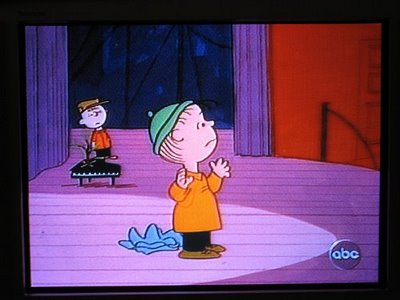
And—correct me if I’m wrong—nowhere is this sentiment more simply and beautifully portrayed than in that gentle animated gem, A Charlie Brown Oktoberfest.

Anyone from my generation can surely recall those windy autumn evenings when us kids—clad in pjs, clutching bowls of Beer Nuts, keg-shaped cookies, pickled eggs and plastic tumblers of Hacker-Pschorr—perched in front of the 10” Admiral television set—the one with the rabbit-ears and black Bakelite top—waiting for those first magical, mesmerizing tuba blats from Vince Guaraldi’s oompah band to signal that the long-awaited cartoon was about to begin.

‘Dunno about you, Linus, but I could murder a Dortmunder about now.’

Originally sponsored by Miller High Life, the special first aired on CBS in 1915, and has been shown during the Oktoberfest season every year since.  We still watch, don’t we (?), reveling in the nostalgia that our favorite characters—Lucy, Linus, Charlie Nut Brown Ale and of course, everybody’s favorite Dussel-Köter,  Der Snoopy—allows us.

To be sure, we force our children watch, too, and punish them severely if they don’t adore it.

But, if we’re honest, watching the show is really unnecessary.  Like the earworm that causes us to replay ‘La Bamba’ fifty trillion times in our heads, we can pretty much recite the cartoon verbatim by now; am I wrong?

The ‘gang’ and Susan Smith–as portrayed my Charles M. Schultz

We each have our favorite ‘sequence’, too.  For some, it is the moment when Charlie Brown ‘thanks’ Violet for the Oktoberfest card she never sent him (!); for others, it is the gut-busting effort that Snoopy goes through to decorate his dog house like the Schützen-Festhalle Armbrustschützenzelt tent, outfitted with a Sekt bar and Maß of Weißbier and festooned with the distinctive colors and coats of arms of Derbeaglenverbindungen—the Austro-Bavarian dog fraternity.  For still others, it’s the prophetic segment where—screaming “O’ zapft is!”—Susan Smith drives her 1912 Mazda Protegé into the partially-frozen pond where the ‘gang’ are trying to ice skate, followed by the heroic effort of Pigpen to rescue her from the submerged vehicle—although, alas, her two children do not re-appear until a 1965 episode of Casper The Friendly Ghost.

But, certainly, the one scene that remains close to each of us, no matter how many times we see it, is when Charlie Brown, frustrated by the immoral excesses of the largest Volksfest (People’s Fair) on the planet even while second guessing himself, cries out in despair:

“Isn’t there anyone who knows what Oktoberfest is all about??”

‘For today, in the Jewish quarter of Leipzig, was born an Übermensch.’

And, of course, up struts young Linus, still sucking his thumb, wetting his bed, playing with his penis in church and puking up his brussels sprouts, to quip the incorruptible, sempiternal lines which remains fresh and vital to this day:

“Sure, Charlie Brown.  I can tell you what Oktoberfest is all about:

‘Nathless the brisk Burgonden all on their way did go,

Then rose the country over a nickel dole and woe ;

The Nibelungen Recken did march with them as well.

In a thousand glittering hauberks. Who at home had ta’en farewell

Of many a fair woman should see them never more :

The wound of her brave Siegfried did grieve Chriemhilde sore.’

A controversial PETA ad that ran during this year’s airing.

In the original un-cut, 1915 version, Linus goes on for six-and-a-half days, but—believing this excessive for today’s ‘short-attention-span’ generation—current sponsor PETA has seen the speech condensed into about fourteen hours.  Gratefully, none of the simplicity, the sincerity and the sheer jubilation of Linus’s message has been lost, and today, when the spotlight finally fades on that school auditorium stage, there is not a dry eye in this house, thank you very much.

So, as we go through our hectic, workaday lives, we would do well to remember the spirit of drunken Teutonic camaraderie of which young Linus and Siegfried so eloquently remind us and which so warms our hearts; and, having once again taken the time from our tumultuous, nerve-racking schedule to watch A Charlie Brown Oktoberfest, we can, perhaps, contemplate the true meaning of Oktoberfest—an all-too-rare experience during the rest of the year.

That’s reason enough to celebrate, is it not?

And by the way, it’s your round, dickface.

Posted in BEER | Tagged , , , | Leave a comment

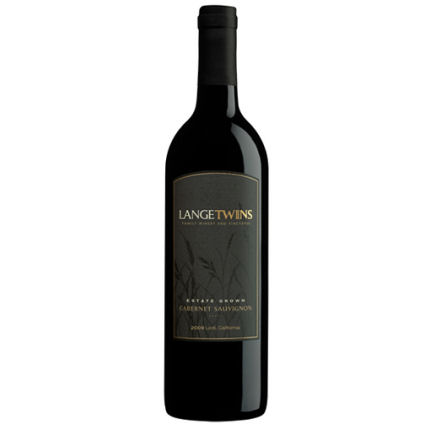
Auld Lange’s Wyne

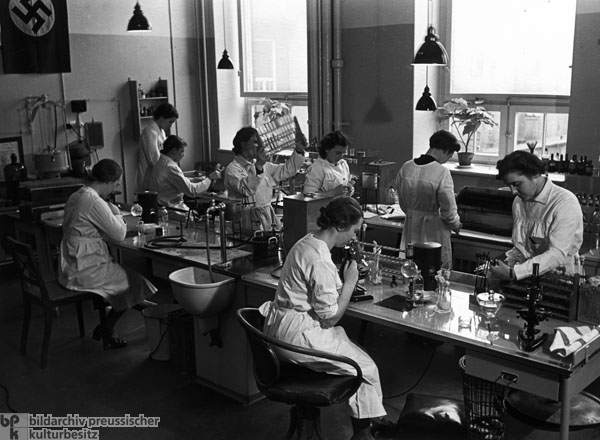
My writing laboratory is loaded with Aryan research assistants.

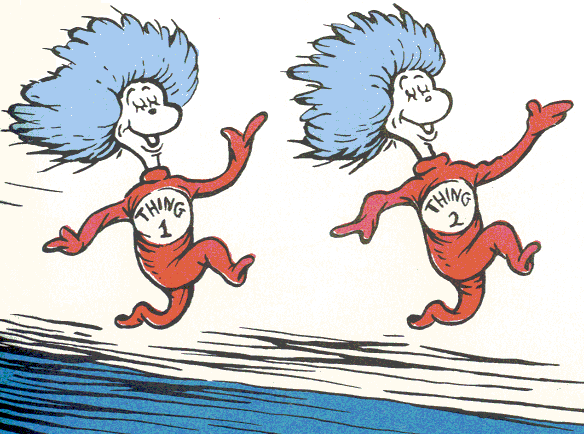
I have a nearly unhealthy fascination with twins; one I believe may rival that of Josef Mengele.  I’ll explain, but first, while the implication settles—a wine writer beginning any column, at any time, anywhere, with a direct reference to a Nazi war criminal—let me say in my Nuremburg-quality defense that I am a wine writer by default alone.

My medical career was short, but Mattel made a doll of me anyway.

In point of fact, my real goal in life was to become an alcoholic stand-up comedian, or barring that, an alcoholic brain surgeon.

Unfortunately, I freeze in front of crowds to the point where I can’t even address my kids at the dinner table; also my hands shake uncontrollably whenever I ‘tense up’ which is whenever I see the slightest drop of blood.

As a result, ‘wine writing’ became my career goal Chapter 11.

So—before I get into the meat and potatoes of this piece, rather than performing a vicarious endovascular coiling on your groin,  I’ll tell you a little joke instead:

Guy walks into a bar.  Bartender says, ‘What’ll you have?”

“Bourbon, straight up,”  the guy answers.  But when the bartender hands him a tab, the fellow says, ‘Hang on.  You said ‘What’ll you have?’.  That legally constitutes a free exchange.  I’m a lawyer; I know.”

Understandably pissed, the bartender says, “Okay, but finish up quick and get the hell out and never come back.  You’re barred permanently.”

Next day, the same guy shows up.  Bartender says, “WTF? I told you never to come back in here.” 

Dude responds, “What are you talking about?  I’ve never been in this place before in my life.”

“No?” says the bartender.  “Well, in that case, you must have a double.”

“Thanks,” says the guy.  “Bourbon, straight up.”


Twin Peeks

Have you ever learned that somebody you’ve known peripherally for a long time, through work or somewhere, has a twin?  And had trouble wrapping your head around the idea?  I’m sure it’s a commonly shared experience.

This one, I figure, is not: On three separate occasions during my life, I have had the above random conversation with folks who have responded, ‘’Well, I have a twin.’

So the whole twin thing has become sort of inexplicably Twilight Zone eerie to me and I now look upon twins with a certain vigilant askance—which, for those who now suspect me of being a Nazi sympathizer, means ‘sideways’–a hip wine reference.  It does not mean that I care what color the Lange twins’ eyes are, nor how they got that way.

A Lange Harangue About How They Hang

How precious is it when mom dresses the twins EXACTLY ALIKE!

For the record, the Lange twins are a pair of Hollywood-handsome, distinguished-looking winery owners who are scions of a gang of mostly non-twins who have been growing grapes in  Lodi for five generations.  As vintners, they produce a dozen wines, including unique lots like musque-clone sauvignon blanc and effervescent Muscat Frizzante.

The Lange fame claim is a vigorous adherence to practices of sustainable agriculture—an ‘ecosystem’ approach which you would think by now would be table stakes for the highly competitive California grape growing industry, but which apparently is not.

Why?  Probably because it isn’t necessarily cheap, and requires a lot of dedication to  interests beyond your immediate crop.

Lange One (Randy) writes in his ‘blogpost’:   “Sustainable winegrowing is all encompassing in its approach, and unlike other farming practices, it requires concern for all surrounding environments, not just with the winegrapes* that are grown.”

* The winery is named LangeTwins, with no space between the two words.  Apparently, this quaint quirk carries through to ‘winegrapes’ and ‘blogpost’ as well—words which become, under deft Lange manipulation, Siamese twins.

Lange Two (Brad) agrees: “It is the balance of environmental health, economic profitability, and social equity. From generating clean energy with solar panels to restoring native habitat areas among our vineyards, we are committed to improve our environmental practices. Ultimately, each element plays a vital role in the integrity and quality of our wine.”

Another element which plays a vital role in the integrity and quality of Langewine is David Akiyoshi, a second generation winemaker who is not only not a twin, but has a legitimate, sustainable space between his two names.  He boarded the Twin train in 2005 after 25 years at Robert Mondavi’s Woodbridge, and raves about Lodi’s capacity as a host planet for zinfandel:  “Long before there were AVAs,” he says, “and 100 point scores, European immigrants who settled in Lodi began planting zinfandel because the grape—and the land—reminded them of what they left behind in Europe, even though zinfandel was never an important grape over there.”

Alas, the munificent gods of free samples opted to skip the zin in favor of the chardonnay and cabernet, upon which I will perform unnaturally diabolical experiments of brain dissection below…

But First, a Healthy Shot of Huh (?) Regarding the LangeTwins ‘Blogpost’:

For absolutely no discernible reason that I can surmise, the above quoted blogpost entitled ‘A Slice of Lodi’s Zinfandel Past’ leads with the following:

‘Elvis was always a dutiful child, and here everybody was thinking he’s wild…’

Jesse Winchester (Just Like New)

L.: Elvis Aaron Presley R. Jesse Garon Presley

Is this because Elvis, as many of us realize, was a twin?

It’s possible, I suppose.  We can, perhaps, look forward to future quotes regarding the following, all also, surprisingly (to me) twins:

Vin Diesel, Scarlett Johansson, Ashton Kutcher, John Elway, Jerry Falwell, William Randolph Hearst, Liberace, Alanis Morissette, Kiefer Sutherland and Ed Sullivan.

Tasting Notes:

LangeTwins Chardonnay, Clarksburg AVA, 2010, about $15:  This is a luscious and lively chardonnay, but damn if it doesn’t have a sauvignon blanc nose.  In a blind tasting, I would have bet the lower forty on it.  One of California’s least known appellations, Clarksburg sits just beneath Sacramento and produces wine of solid, but mid-level quality.  This is a nice one, no doubt, once you rationalize away the grapefruit nose as being a potential blend of key lime and pineapple aromas.  Creamy in the mouth due in part to barrel fermentation, shows an edge of almond and tangerine, giving it a unique slant.  Serve with a pair of cornish game hens.

LangeTwins Cabernet Sauvignon, Lodi, 2009, around $15: Supple, soft, spicy and sweet, this is a ‘drink tonight’ cab with dried cranberry on the palate along with black cherry, cedar, cassis and chocolate. Youthful and deep, this is a wine to tuck into rather than tuck away; the growing season was somewhat challenged, and big harvest-time rains diluted the product a bit.  Fine to drink now, but I’d be cautious about holding on to it long.  Serve with a brace of roasted round eye rounds.

Posted in Cab/Merlot, CALIFORNIA, Chardonnay | Tagged , , | Leave a comment

What Do Women Want? Phenylethylamine, Mr. Freud—Not a Scrotum

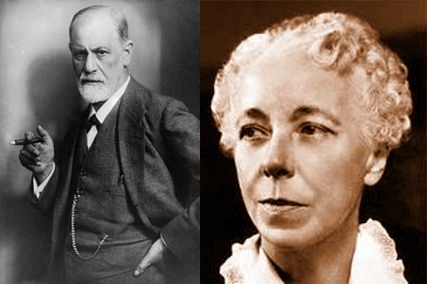
Sigmund Freud, The Psychical Consequences of the Anatomic Distinction Between the Sexes, 1925:

“The great question which I have not yet been able to answer despite my thirty years of research into the feminine soul, is:

‘What does a woman want?'”

Well, certainly not the shriveled baloney pony of a dead, dated and démodé doctor, whose views on women were exploitative anachronisms even when he wrote them.  By 1925, suffragists—women and men, conservative and radical—had already slam-dunked it: The Nineteenth Amendment, which prohibited state or federal sex-based restrictions on voting, was ratified in 1920.

When a cigar is not just a cigar.

Meanwhile, Freud considered his wife to be a good little hausfrau, and in one distorted and condescending bout of horn-fellating, claimed that his greatest discoveries were 1) the Oedipal Complex—the notion that somewhere between the ages of three and five, a boy decides that he wants to dispatch daddy and make whoopee with mommy—and 2) Penis Envy:  Freud’s conviction that every woman has a lifelong obsession with her schlonglessness.

‘Do I make you Horney, baby?’

The latter theory was ripped to shreds by contemporary psychoanalyst Karen Horney (perfect name, huh?) who believed instead that us boys have ‘womb envy’ because we can’t have babies—a fancy that Freud pooh-poohed as being the result of Horney’s penis envy.

Personally I think they sound like a couple of pre-schoolers playing doctor with their nay-nays and as far as I’m concerned, they can both go blow a bowl of Belyando spruce.

So, If Not a Tallywhacker, an Alabama Black Snake or a Purple-Headed Pork Sword, What DO Women Want??!

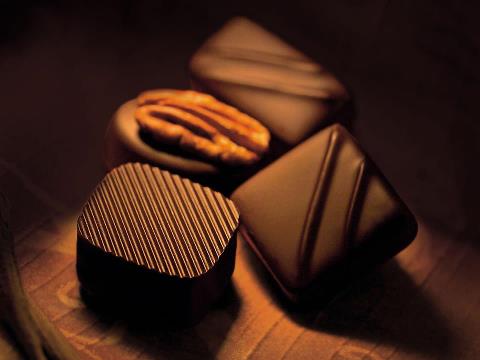
Chocolate, baby, chocolate.

If you are, in fact, a woman and happen to be anywhere near Navy Pier, Chicago November 16-18, there’s this thing happening that is a lot like what happened beneath that mashed-potato-shaped laccolith at the end of Close Encounters Of The Third Kind: A convergence of benighted, wandering souls suffering from OCD—Obsessive Chocolate Disorder, the discovery of which happens to be Karen Horney’s greatest contribution to Cuckoo-For-Cocoa-Puffology.

Over that November weekend, the trade-focused National Chocolate Show runs in conjunction with the consumer-focused Chicago Fine Chocolate Show and promises to be nothing short of a phenomenal female-filled phenylethylamine fan festival—to true chocoholics what Mardi Gras is to overweight, drunk crackerhonkies who haven’t seen a living tit since 1995.

No photo available of Mario Pi. So, here’s Mario Cake.

According to National Chocolate Show founder Mario Pi (another rockin’ moniker—is his middle name Chocolate Cream?),  “We wanted to create a forum for the advancement of the chocolate industry through taste journeys and empowering conference programming on cocoa farming sustainability, trend spotting, fine flavor exploration, new product development, business insights, and more.”

More on that orchestrated pile of steaming PR cacahuatl in a sec.  First—now that we have firmly demonstrated what women actually want—it’s time to address a follow-up question:

Why do women want what women want?


Because Women Are From MARS® and Men Are From Venus Envy

In fact, a recent report by the The Diabetes Association claims that, whereas only 15%  of males crave chocolate, 40% of women do, with three-quarters of those stating that absolutely nothing other than chocolate will satisfy their cocoa concupiscence.

What men want

And—psychologically and physiologically—the reasons are indeed gender specific.

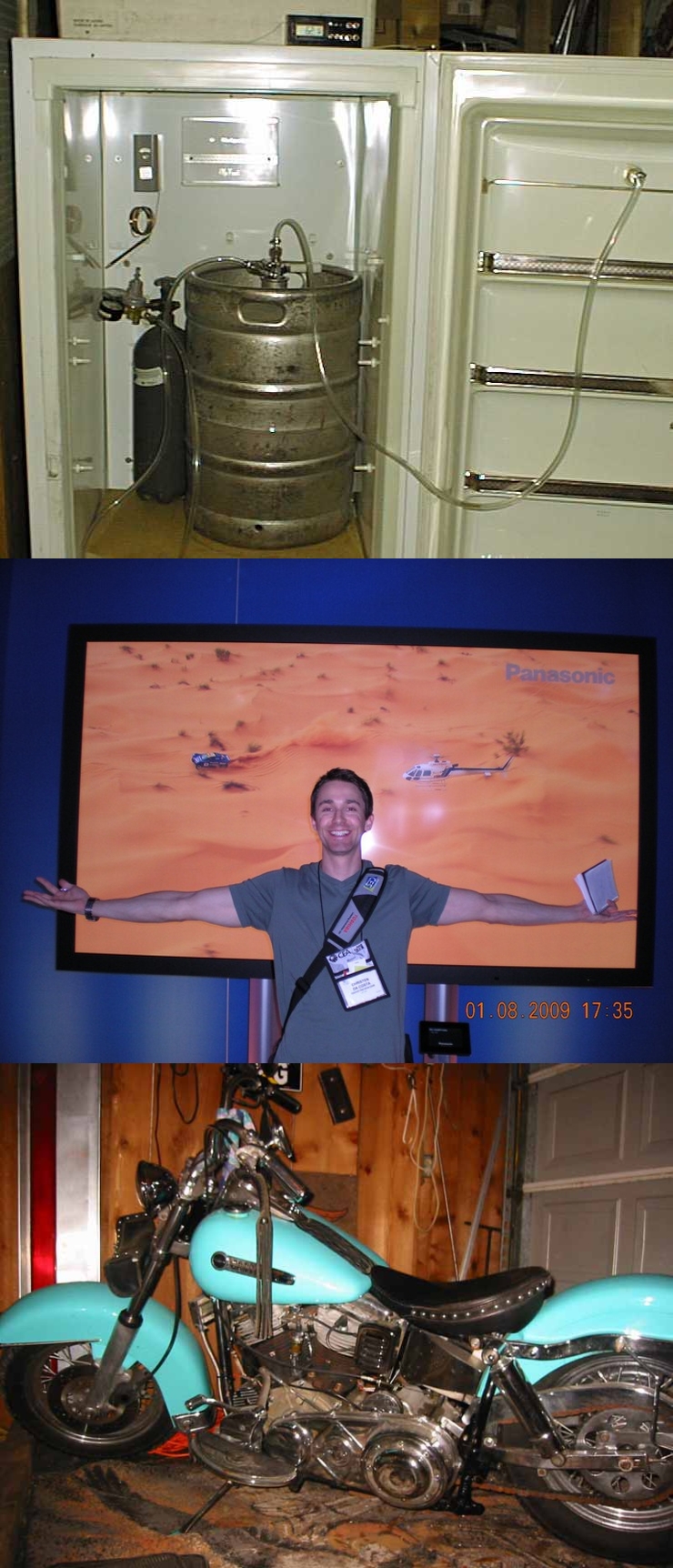
The aforementioned phenylethylamine is a psychoactive drug whose effects may produce sensations of giddiness, attraction, euphoria and excitement—emotions that men produce via kegerators, 103 inch flat-screen TVs and partially-restored 1950 Harley Panheads.  A book released in the 1980’s—that era of effusive, bizarre and generally incorrect self-help theories—opined that chocolate releases mesolimbic dopamine in the pleasure centers of the brain and they are similar to orgasm—which may be why six in ten women report preferring chocolate to sex.

It’s pretty blatant, too: With chocolate, you don’t have to make small talk, act interested or look your best.

And yet, it has been subsequently shown that nearly all ingested phenylethylamine is broken down long before it reaches the brain.  Still,  this has not stopped an entire generation from referring to the ‘chocolate theory of love’.

A more arguable notion is that chocolate contains relatively high levels of magnesium—a chemical that is depleted in women during menstruation.  The idea is that women undergoing PMS (Pre-Mocha Syndrome) begin to lust after chocolate as a way to top up the tank.  The fact that magnesium is the ninth most common element in the universe and is contained in thousands of non-craved foods is pretty much swept under the rug by magnesiumists.

Debra Zellner, Ph.D

Debra Zellner, Ph.D, a professor at Shippensburg University, believes that chocoholism is in the mind, not the brain, and maintains that woman want chocolate primarily because it is a cultural taboo loaded with sugar and spice and everything goes-directly-to-the-hips nice, and that the pre-menstrual, down-in-the-dumps yen is more a psychological desire for comfort food than a physical need to replenish body stores.

No matter the reason, the stats are undeniable: The most widely and frequently craved foods by men are, in descending order, buffalo wings, bratwurst with yellow mustard, meat-lovers pizza and beersicles.

With women, hands down and by a huge margin, it’s chocolate.

That’s What Grown-Up Women Want.  What Does Li’l G’boto Chukwuemeka, Age 8, Want?

Give li’l G’boto Chukwuemeka a beersicle.  For Old Glory.

A day off.  A couple of bucks for her fourteen hour shift.  A singing pink pony that she can eat between choruses.  Or, barring that, a beersicle and a bucket of Buffalo Wild Wings.

The one thing she doesn’t want?  Any more chocolate.

Earlier, I quoted a statement made by Mario Pi-In-The-Sky regarding the National Chocolate Show’s mission to ‘empower conference programming on cocoa farming sustainability, trend spotting, fine flavor exploration—and did I mention ‘blah, blah, blah,’ and ‘shut the f**k up already, Mario?’

Trend spotting?  What about at least a cursory mention of the ongoing trend of child bondage throughout the Ivory Coast chocolate industry?

A recent study from the US government reports that there are nearly two million underage workers in the chocolate industry throughout western Africa, with nearly 800,000 of those in the Ivory Coast, which alone accounts for more than half the world’s supply of cocoa.

That beloved nation, you’ll recall, bore the primary burden of supplying the antebellum American slave trade with unwilling fodder for the auction block, and despite the Emancipation Proclamation, does not seem to have missed a beat.

Scars on a chocolate plantation worker

The technique of removing the prized beans from a cocoa pod involves whacking it with a giant cleaver, and trafficked children working the plantations are routinely photographed with machete scars on their arms, legs and faces.  Not only that, but these children work daily with pesticides and herbicides without protective gear.

Suffice to say that they are paid atrociously, too.  But when prices are low—cocoa futures dipped to historic lows in May, 2012—they’re often not paid at all.

Awareness Level Among Butter Fat Fat Cats?

Joanna Scott speaking on behalf of the chocolate industry. Clearly a lover of the product, too.

Not surprisingly, industry officials refuse to comment, referring inquiries to public relations consultants like Joanna Scott, who maintains, “We are totally committed to working with others in resolving the situation.”

Evidently, this involves building a school in Campement Paul near San Pedro, which is able accommodate about a quarter of the community’s 500 children and for which the village—already subsisting at bare poverty level—was charged half of the $20,000 construction fees.

Meanwhile, the cocoa industry is worth an annual $90 billion.

S’funny, Ms. Scott:  When I am ‘totally committed’ to a moral obligation, I—like most people—don’t look for ways to stick poor people for half the cash.

And that’s not even the kicker: The kicker is something that needs to be read, probably more than once, to be believed:

Confronted again and again with irrefutable evidence of child labor, human trafficking and unapologetic slavery in West Africa and other chocolate producing regions, the industry’s biggest players, including Hershey’s, Kraft-Cadbury, Mars, Nestlé and Blommer, have signed agreement—under pressure—to cut by 70% the number of children working in dangerous conditions by 2020.

By 2020.  This is not a typo, chocolatiers.

What Do Real Women Want?

The same thing that real men want: That this idiotic timetable be withdrawn and words like ‘by 2020’ be replaced with ‘by 2:20 this fucking afternoon, people’.

And, that anything calling itself The National Chocolate Show make this subject not merely a talking point, not only a seminar title, not part of an ‘empowered conference programming’, but the entire focus of the entire three-day get-together.

And if they refuse, we should all agree to throw en masse machete-flavored pies at the event’s nom approprié founder Mario Pi until he gets his Hershey’s Squirts together.

Meanwhile, at very least, if nothing else and once and for all, we have laid to rest Sigmund Freud’s flawed penis postulation:

Li’l G’boto Chukwuemeka does not want a dick.  She works in an industry that’s overflowing with them.

Posted in GENERAL | Tagged , , , , | 3 Comments

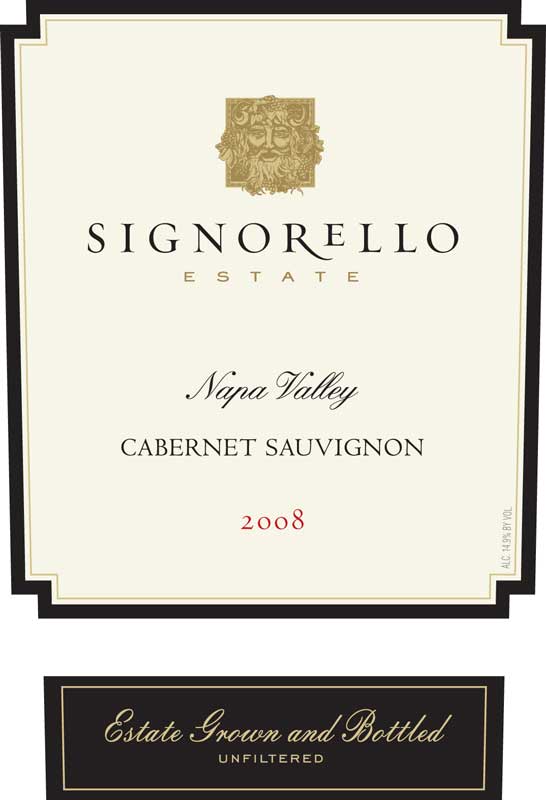
Signorello Trims The Edge Of The Fuse

When does ‘cutting edge’ become ‘trimming edge’?  When Ray Signorello, Jr. gets into the game.

I’m not sure if there is a direct translation of ‘signorello’ from Italian into English, but the Latin etymology is all about refinement, gentlemanliness and class.  Indeed, this estate—which has been producing top quality Napa grapes since the mid-1970’s—wears an aura of gravitas in its history, mission, quality and focus—even in the style and font of its labels.

Gravitas, which also has no direct English translation, means (in various measures) weight, seriousness and prestige, and connotes both substance and depth of character.  It is a word perfectly suited to the Signorello family and their extended ventures: It was one of the ancient Roman virtues along with pietas, dignitas and virtus—devotion, dignity and excellence.

To a profound extent, all of the classic Roman virtues fit the Signorello Estate bill.

Clever Pater

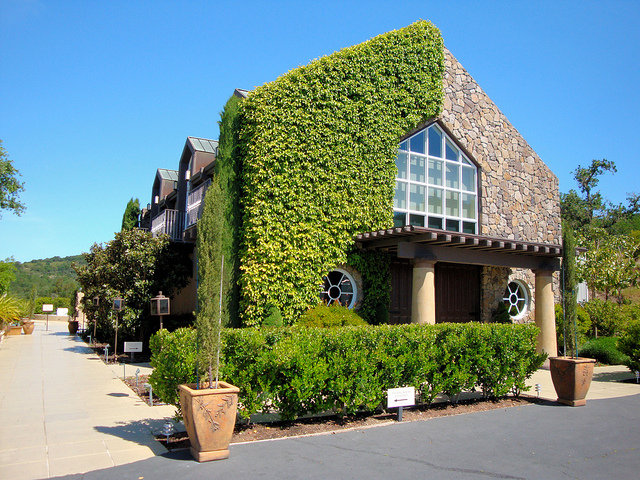
Signorello Estate

Wistful venture capitalists in the field of electronics may look back upon Silicon Valley in the mid-Seventies and sigh; those into wine speculation have an identical reaction when they consider Napa wine country during those same years, when an acre of premium property (now selling for more than a quarter million dollars) could be had for the equivalent cost of a mid-level Chrysler.

One visionary turned do-inary was Ray Signorello, Sr., who had the insight to pick up 100 acres of prime vineyard along the Silverado Trail with a plan to be a grower rather than a vintner—then as now, virtually all top estates purchase some quantity of grapes from independent farmers.  But, with Ray Jr. in the picture and the legendary abundance of 1985’s harvest, the family began to custom-crush excess fruit and a whole new phase of Signorello diversification was born.

The following year, work began on a winery, and by the end of the decade, the Signarellos had been more than ‘bit’ by the winemaking bug—they’d been pretty much devoured.

Since then, with Ray Jr. tag-teaming the leadership role until his father’s passing in 1998, Signorello Estate has produced some of the Valley’s most noteworthy Burgundian varietals, with the chardonnay bursting from thirty-year-old vines full of righteous clout, culminating in style and elegance with the night-harvested, unfined, unfiltered Hope’s Cuvée—named in honor of the family matriarch, Ray Jr.’s mother Hope.

Pinot noir, which appears to last have been vinified in 2005, was a product of Carneros and has been likened to Domaine de la Romanée-Conti; it saw lees contact throughout 17 months of French oak aging.

How Red Was My Valley

Winemaker Pierre Birebent with Ray Signorello, Jr.

Beginning in 1990, the Estate began to concentrate on red Bordeaux varietals, with a couple of acres of syrah planted to spice up the mix.  The vineyards currently include two acres of semillon and a micro-plot of sauvignon blanc which is used to produce the lustrous, barrel-fermented Seta—a wine with the depth and complexity of a top estate Pouilly Fumé.

Cabernet sauvignon makes up the bulk of the Signorello plantings; 24 acres in all, most of which is blended with estate-grown merlot and cabernet franc.  Winemaker Pierre Birebent, a graduate of Lycee Agricole Macon-Davaye in Burgundy, translates more French into his technique than merely the blends: His cabernet sauvignon sees extended maceration and frequent pump-overs followed by 20 months on Troncais, Nevers and Alliers oak made into barrels by companies he refers to as tonnelleries rather than ‘cooperages’—even when they don’t.

Crown Jewel

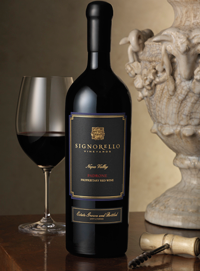
Without question, the Signorello flagship is an homage to Ray Signorello, Sr. in the limited-bottling of ‘Padrone’—a wine which Ray Jr. says, “…expresses the utmost quality of the Estate.”

Culled from two low-yielding (1.3 acres/ton) and rocky corners of the property, the concentrated and superbly-crafted cabernet/merlot blend erupts with huge, berry-saturated fruit underscored with the sort of exotic subtlety that only shows up in these brooding reds: Sandalwood, marzipan, eucalyptus.  At $135, the 2008 is neither for the faint of heart nor the faint of budget.

Now, just as we’ve pigeonholed Signorello as an opulent jewel in the heart of Napa whose wines, though exquisitely balanced and fiercely forward, can hit tariffs to make it a ‘special occasion’ choice alone, along comes a trio of smart, sassily named blends—mostly cab, but all three with a percentage of syrah—that retail for less than thirty dollars, and one, for under twelve.

Promises Ray Signorello, Jr.:   “These wines have my personal stamp of quality, providing cabernet sauvignon with integrity at affordable prices.”

Trust the man?

By now, you should; he’s hit the quarter-century pedigree of gravitas, pietas, dignitas and virtus, which means he’s earned it.

Tasting Notes:

Trim (Signorello Estates), California, 2010, about $12: Following a relatively cool, acid-reserving growing season, nature got a little cocky late in the day, tossing a heat spike at vineyards which brought the fruit to quick ripeness.  This wine is a notable $12 value, showing a lovely nose of plummy summer fruit, appealing sweetness and clarity, but with a touch of spice and earth to display more breeding than you’re used to finding at this price point.

Edge (Signorello Estates), North Coast, 2010, around $20:  A firm cab with discreet but scrumptious oak notes—the result of fifteen months of barrel age—wrapped around a core of current, blackberry, cedar and herbs.  The finish is long and touched with a twinge of coconut.

Fuse (Signorello Estates) Cabernet Sauvignon, Napa Valley, 2010, about $28: Beautiful, dense, and percolating with cola, black fruit, black cherries and a complex floral/mineral lift. Ripe, yet fresh, the wine is dense and structured; there’s an intriguing impact of oak spice submerged with a stylish, earthy palate.

Posted in Cab/Merlot, Napa | Tagged , , , , , | Leave a comment