The Gindenburg: ‘Oh, The Ginanity’

It’s six in the morning and shortly, Hendrick’s Gin wants to get me up inside a giant flying pickle.  Technically, it’s a flying cucumber, but technically again,  a pickle is merely a cucumber that feels like I do at 6 AM.

open shotTo get even more high tech, Hendrick’s wants me to get inside a blimp disguised a cucumber, which it looked like even before Hendrick’s Gin put cucumber-colored decals all over the fuselage. Which is technically called an ‘envelope’, but I’m getting sick of all this tech talk, aren’t you?  Bring on the penis jokes.

And don’t think the phallic connotation is lost on the Hendrick’s Gin crew, though this is something you won’t read about in stories filed by the other journalists who went up in the hovering hockey cocky—they are family-type people who write for family-type publications like the Ann Arbor News and MLive.  My readership family is more like the Mansons or the Duggars, where penis jokes are not only tolerated, they’re compulsory.

poleBut the press sheet given to me at the blimp dock—a big barbershop pole set in the middle of a rural Washtenaw County field—informs that cucumbers were once planted exclusively by naked men, and that the size of the fruit depended on the ‘visible virility’ of the planter.

Alrighty, then.

Size Matters?

At least from a marketing perspective, Hendrick’s Gin is dedicated to the proposition that the world is a big and peculiar place filled with guffaws  and har-de-har-hars, and doing stuff like leasing a 130-foot helium-filled, cucumber-coiffed dirigible and flying it around the country is one of their ways of walking the walk.  Or floating the float.  Another campaign involved creating an entire curiosity shop in Boston with a secret passage, where invitees hobnobbed with a custom limerick writer, a tightrope walker tiptoeing across a row of Hendrick’s bottles, and in a pinch, with each other.

The Mother of Ginvention

Lesley Gracie

Lesley Gracie

The Scotland-based distillery, on the cutting edge of the growing craft cocktail fad, relies on the output of an rare Carter-Head still (with a ‘vapor-driven flavor basket) and the input of Lesley Gracie, a Master Distiller with a botanical obsession.  The particular, unusually recipe which drives Hendrick’s brand loyalty includes a closely-guarded panoply of herbs and spices along with an infusion of cucumber and rose petals.

And it happens to be really delicious.
Shades of Terry Gilliam

Shades of Terry Gilliam

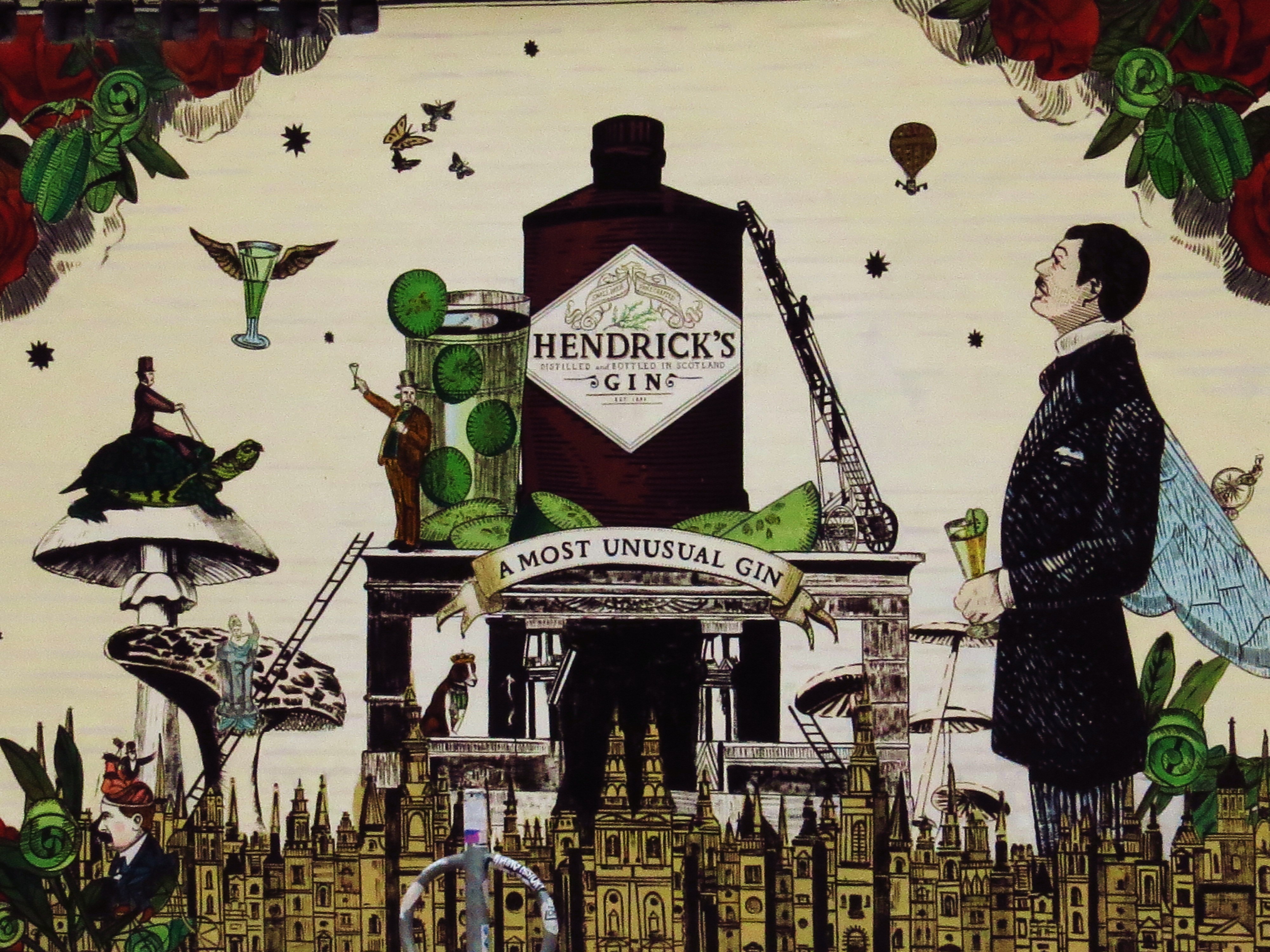
Which is why Hendrick’s is targeting a burgeoning demographic: Hootch-happy hipsters who are rediscovering classic cocktails and inventing new twists on the same. In urban areas, particularly, a lot of these have taken on a Victorian Era aura—suitable, perhaps, to the Golden Age of Cocktails, which began with the 1862 publication of ‘How to Mix Drinks; or, The Bon Vivant’s Companion’ by Professor Jerry Thomas.

Hendrick’s, with their steampunk logo, Monty Python-esque motif and apothecary-sign font, is positioned perfectly to step into the competitive designer liquor fray and wail on some hipster ass.

Inginuous Marketing

But the blimp campaign, I must say, is a PR masterstroke.  The airship—dubbed The Flying Cucumber—tours from city to city across the United States on its own power with a crew of professionals in vans traveling below.  At an average speed of 35 miles an hour, the journey from Texas to Michigan took ten days.  And talk about being a Top Gun, my pilot (Caesar) told me that there only about twenty licensed blimp operators in the country.  In contrast, the Air Force has about three thousand fighter pilots.

stadiumCaesar also informed me that weather conditions on the morning of the flight were such that only one passenger at a time could be airlifted; thus, when my turn came around and the ship did a circuit around Michigan Stadium at around a thousand feet, it was nobody but me and him in the wild maize ‘n’ blue yonder; him revving twin Volkswagen-sized engines (which use less fuel in two weeks than a 747 does taxing down the runway to prepare for takeoff), manipulating foot pedals and a wheelchair-wheel-looking steering mechanism,  with me sitting there doing nothing—serving less purpose than, say, Amelia Earhart’s  Maxi-Pad—except perhaps as resident nitpicker:

'Don't call me a cockpit.'

‘Don’t call me a cockpit.’

Why, when the aforementioned phallic references fly as easily with Hendrick’s Gin as their blimp does above Ann Arbor, does Caesar insist on referring to the gondola as such, and not as a cockpit?

Anyway, the strategy worked on me exactly as intended; I loved it and count myself among the throng of Hendrick’s fans eagerly awaiting all future  PR gimmicks, whatever they may be; although, word to to the wise, this will be a tough act to follow.

Understanding, of course, that as a encore to the Hindenburg, Germany’s next trick was invading Poland.

In any case, it’s interesting to note that the reason that big bloated blimp blew is that it was loaded with highly flammable hydrogen.   The Flying Cucumber gets its buoyancy from helium, which is not only non-flammable, it’s actually a fire retardant, and as an added plus, it makes Paul Robeson sing like Minnie Mouse.

hindenburgHas history every produced a bigger ‘doh!’ moment?  Had the Jerries just gone with the helium option, the entire Hindenburg episode might have turned into a giant, funny-voice, laff-a-minute, transatlantic yuk-fest instead of a disaster. World War II might have been averted and Herbert Morrison’s scream, still echoing through the vaults of eternity, might instead have been, “Oh, the inanity!”

Say, there’s an idea for the Hendrick’s Gin creative team’s drawing-board.  Expand on that, Mad Men; run with it!

Onward and upward, then—literally.

Posted in Gin, LIQUOR | Tagged , , , | Leave a comment

Is ‘Omerta’ an Indian Word?

People are generally a bit surprised to find out that there is a Canadian Mafia, primarily because* the two concepts seem so incompatible.

* (I was going to say ‘chiefly’ because, but in the wake of Washington Redskins Name-Scandalgate, I thought better of invoking any word that has a negative association with Indians—except for the word ‘Indians’.  I used to be all politically correct and call them stuff like ‘Aboriginal First Nation Native North Americans’ until one time an actual Indian told me that Indians prefer ‘Indians’, and unless he spoke with forked tongue, I have to respect that.)

Anyway, back to the incompatibility of ‘La Cosa Nostra’ and ‘La Notre Truc’:

Clipboard mafiaYou have to admit that the things Americans most associate with the Mafia are Italian restaurants, cement shoes, hot goomars, calling gay men ‘fanook’ and Don Corleone.  The things Americans most associate with Canada are Tim Horton’s, mucklucks, un-hot women, calling Aboriginal First Nation Native North Americans ‘Nanook’ and Don Cherry.

So, on paper, never the twain shall meet unless it is Shania Twain singing soprano at First Nations PowWow, 1995.

Montreal

Montreal

But, as it happens—in part the result of the crackdown on the Mafia in the United States and Sicily, organized crime in Canada is now more clearly defined than ever before.  Since 2000, new N’drangheta cells of the Calabrian Mafia have emigrated to Canada after coming under intense pressure by Italian authorities and the Rizzuto family of Montréal is a branch of New York’s infamous Bonnano crime family.

Stir in a bunch of Mohawk Indians and a big communal pot of imported wine, and you have (in my opinion) the sort of circumscribed clusterbleep that is this column’s lifeblood.

Montréal, Mounties, Mohawks, Mafiosi and Malbec…

…and how these five disparate entities have magically come together for our personal ripping and reading pleasure.

Early last month, the Montréal police announced that a sting operation called ‘Operation Malbec’ had uncovered a bizarre tax-evasion scheme being carried out at First Nations Winery, a ‘wine manufacturer’ located in the Kahnawake Mohawk Territory in southern Quebec.  According to ‘Find The Company-dot-com’, First Nation Winery was founded in 2006 and has a single employee—one Floyd Lahache, a Canadian junior league hockey player who never quite made it to the NHL—and apparently, ‘manufacture’ wine is precisely what he did.

Saq_liquor_store2The way the scam worked was this:  Tens of thousands of gallons of cheap Italian plonk was shipped into Canada, sent to the Kahnawake reservation and ‘adulterated’ with some sort of flavoring agent, specifics unknown, then passed off as Canadian-made wine under  twenty popular brand labels.  These counterfeit wines were available through the SAQ—the Société des alcools du Québec, a government-run liquor chain that is, for the most part, the only place you can get booze in Canada.

As a domestic product, the wine was subject to much less taxation than the imported product it actually was.

150,000 cases were involved and the total amount of the tax fraud seems to have around $14 million loonies—maybe $11 million USD.

Clearly, within a $5 billion Canadian wine industry, that’s but a wee wad of wampum.  To me, the real value in this story may be gauged when it is translated into humor dollars, estimated—according to Bank of Canada’s online Cash to Cachinnations Converter—in the low trillions.

Floyd Lahache

Floyd Lahache

Because there is nothing funnier than people who cannot laugh at themselves. And if one were asked to pick the four most humor-impaired ethno-socio groups in the world, I believe they would be, in order: Sicilian gangsters, the Québécois, failed hockey players and Aboriginal First Nation Native North American Indian winemakers.

Add to that the mental image of some puck-munching loser stirring Malbec-flavored fairy dust into the Riunite, and you have the making of a sho’ nuff comedic Defcon 1.

As your humble narrator, I promise to keep you apprised of any breaking developments in this train-wreck of a story, although it is hard to see how it could get weirder than it already is.  I suppose there could be some input from earth’s fifth most unfunny faction, Belgian public accountants with leprosy, or some quip from Maggie Trudeau regarding endangered Canadian beavers, but otherwise, we’ll have to allow it play out.

John Fire Lame Deer

John Fire Lame Deer

I’ll leave you with an inspiring quote about life among the ofays from John Fire Lame Deer of the Sioux Lakota, 1903-1976:

“Before our white brothers arrived to make us civilized men, we didn’t have any kind of prison. Because of this, we had no delinquents. Without a prison, there can be no delinquents. We had no locks nor keys and therefore among us there were no thieves.”

First, I had to rely on Google to find out if Sicilians actually count as honkies, but apparently they skated by on a technicality.  Thus, we may add a new exhibit to the Caucasian Hall of Shame—our corrosively civilizing influence among people who not only had no thieves, but no wiseguys, no tax codes, no SAQ, no Quebec Major Junior Hockey League and—Gitchi Gumee be praised—no wine.

Put that group of ne’er-do-wells together and brother, you’re just asking for trouble.

Posted in GENERAL | Leave a comment

Date Cristal; Marry Cava

Clipboard pamDuring our formative years—that callow and malleable era when we still thought Keith Richards was a good guitar player and PETA was a righteous organization and God was actually seated in His heaven—we came to the conclusion that there were girls we wanted to date and girls we wanted to marry.  And, whereas we suspected that the categories would ultimately overlap, in the meantime we placed a lot of girls on pedestals for no real reason other than to look up their skirts.

I’ll give you an example from my own salad days.

Pam Anderson—Baywatch’s air-pump-inflated air-head who struck us as having the IQ of a sock puppet…  She’d be a dater.  Michelle Pfeiffer, totally boffalicious in her own right, possessed the certain je ne sais quois of wholesomeness that underscored the pedestal peeks—you’d take her home to meet your mother, then make her your children’s mother, then expect her to mother you in your middle-age.

Clipboard ugbrødWant more?  Phoebe Cates was a date; Jennifer Love Hewitt was a destiny.  You’d take Mila Kunis to Luksus and wow her with your ability to pronounce rugbrød; you’d take Scarlett Johannsen to your apartment, impress her with your homemade-from-scratch rugbrød, then propose a life of mortgages and laundry and a playroom full of rugrøts.

You get the picture.

Cava Cava Cava Chameleon

Clipboard frogI found these quaint cranial captures compelling enough to consider based on that pétillant potable Cava, Spain’s answer to Champagne. Cava used to be called Champagne until the petulant French decided it couldn’t be, so they switched over to Cava, although in rural Spain the local froth is still referred to as champaña,  unless you happened to be from Penedès (where nearly all Cava is born), in which case you say ‘xampany’, because in Catalonia the Spanish ‘ch’ turns into a Catalan ‘x’, just as a chameleon steps from a twig to a leaf and turns from brown to green.

In either case, the colloquial Catalonian insistence on calling their sparkling wine ‘Champagne’ despite European Union law is the linguistic equivalent of big chameleon feeding on a tiny frog.

Vall Dolina 2012

vall-dolina-reserva-264474_pThe Cava that set the bed vs. wed conversation in motion was Vall Dolina 2012, an interesting wine that missed Gran Reserva criteria by a scant four months, being 26 months on lees whereas the Cava regulatory board requires thirty.  At first it seemes silly that Vall Dolina settled for mere ‘Reserva’ status, whose minimum age requirement (15 months) it still exceeded by a full eleven months, when a scant sixteen more weeks would have resulted in a seal making the wine worth twice as much.

It’s like if Elvis had kept underage Priscilla in the Graceland wings for years and years, then dumped her for Ann Margret four months shy of her eighteenth birthday.  It’s like dealing with four years of undergraduate work, four years of medical school, then dropping medicine with four months left in your residency.

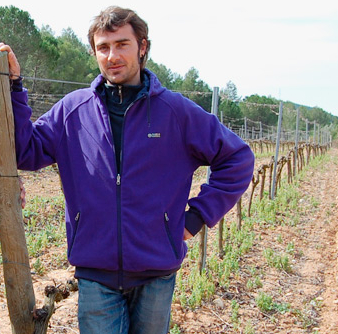
Raimon Badell

Raimon Badell

Then came my first sensational sip of Vall Dolina, and at least a cursory understanding of what winemaker Raimon Badell is hinting at.  The wine seems to be hovering at an ideal age, Peter Pan approved, somewhere between innocence and experience.  It’s delightfully fresh and intriguingly mature in equal measures, with honeyed apple in the nose, rich roasted almonds and white pepper on the mid-palate and a brisk, leesy finish that’s dry and refreshing.  A usual lineup of suspects, the blend here is 37% Xarel-lo, 32% Macabeu, and 24% Parellada and the result is an impressive eighteen dollar bottle of bubbles that made my host remark, “If I was out, I’d order this over a hundred dollar bottle of Roederer Brut every time.”

But would you?

No, you wouldn’t.  Not every time. It would depend on the circumstance.  Your M.O. Your malice aforethought.  It would depend on your date.  No question that Phoebe Cates gets the overpriced French label from the reserve wine list to wash down the Peter Pan pill (consensually, natch) so that she remains an eternal nineteen-year-old dropping that red bikini in an endless loop, auspiciously, propitiously, deliciously, lasciviously—albeit fictitiously.

Clipboard emmaBut, consider Emma Watson… A different caldero of seafood altogether; she’s got long-term written all over her.  And doesn’t it seem like the well-spoken Oxford grad might prefer a stroll through the rustic cultural tapestry of the Grand Massif instead of being dunked in a tank of ultra-premium Veblen Goods like her li’l hooded nub was nothing but a bull’s-eye you were firing Champagne corks at?

She gets the Cava.

Clipboard wineNot from me, of course—my years of callow have grown pretty fallow and my current formative era is more about calcium deposits than unrequited crushes on ingénues.  But the truth that remains is that there are those who, by their siren-esque sizzle and DNA-defying corpora delicti are banner ads for one-night-stands; there are others you sense from the outset are a little more content driven.

Most of the former tend to be a bit out of our league anyway, and gratefully so: The Cava co-minglers offer a lifetime worth of one-nighters, and the sooner we figure that out in our struggle through this veil of sin, the less compelling either Cristal or Kim Kardashian seem.

Posted in Penedès, SPAIN | Tagged | 1 Comment

Whip: It Good

devoSome of the world’s greatest wines are single varietal.  There are the towering Chardonnays of Montrachet, the suave and potent Pinot Noirs of Romanée-Conti, the hedonistic Rieslings of the Rheingau and the pure-Furmint Tokajis of Hungary. You’ll run into some impressive unblended Cabernet Sauvignons in Napa pockets, while Brunello di Montalcino remains one of the few places in Chianti that sings Sangiovese’s psalm solo.

After that, the list sort of thins out.

That’s because, for the most part, blended wine is better wine.  Of, say, ten thousand wine grape varieties, only a handful are really so balanced and distinct that they make truly world-class wine by themselves, and even then only in outstanding vintages and in certain utopian terroirs.  Otherwise, each tends to lack some critical balance factor—color, acidity, texture or sweetness—that can be compensated by adding a grape that lists the missing quality on its resumé.

The result, in theory, is supposed to be greater than the sum of its parts—like how alone, oxygen turns the Golden Gate Bridge to rust and hydrogen blows up Bikini Atoll, but combined, they fall gently from the empyrean to make our happy wine grapes grow.

Clipboard bridge

Of course, for every blend wherein magical balance is achieved by brute force (or dumb luck), there are ten that go wrong.  The art of blending is key to Bordeaux, Champagne, Rioja, Port and any of a thousand wine regions and so, being that the world is overloaded with artless people, most of these wines can be classified under the anti-appellation label ‘forgettable’.

My Whipping Post…

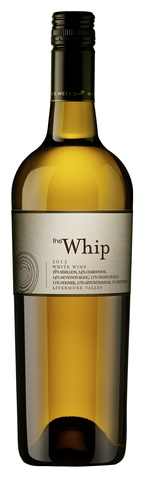
2013_the_whipThat was a roundabout way of getting to the subject, a memorable blend of white grapes from Murrieta’s Well whose varietal-listing on the label makes it look like a recipe for stone soup—like they tossed every item on the all-you-can eat buffet line into the stainless tank simply to see what would come out the other end.

If ever there was a blend that looks on paper like winemaker Robbie Meyer grabbed the third rail of blendology, like he threw darts at the Wheel of Varietals and ran with the results, it’s ‘The Whip’—a witch’s brew of (in descending order of proportion) Semillon, Chardonnay, Sauvignon blanc, Orange Muscat, Viognier, Gewurztraminer and Riesling.

Ick, right?  Where’s the Thompson seedless, right?

And yet, it is scrumptious.  No equivocation.  Sort of like how The Monkees were supposed to be a big joke, sewed together like a pop rock Frankenstein with spare parts laying around the Screen Gems work pool and wound up writing some of the bands catchiest hits.

Murrieta’s Well, ‘The Spur’,  Livermore Valley, 2013, around $21

Robbie Meyer

Robbie Meyer

I expected a nasal assault, but the aroma is quite refined and elegant; there’s honeycomb up front, which I might associate with the Orange Muscat; also, a nice sweet undertow with sappy spring blossoms and peach syrup, creamy but bright, everything settled into its own dimension.  The wine comes off as big—rich, almost unctuous, but with sufficient acidity to stand up—the wine is fruit-focused with peach, green apple and appealing grapefruit pithiness that does not become bitter.  I believe I can isolate characteristics from each of the players, but it’s pure speculation—the climate enhances nuances in each that may overlap on the palate.

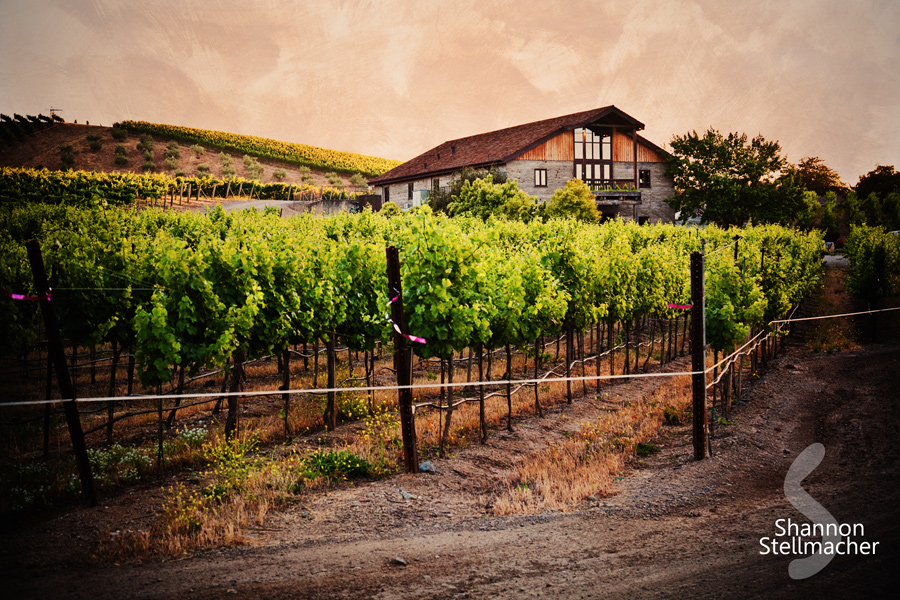
Murietta's Well looking very well.

Murietta’s Well looking very well.

Murrieta’s Well—the estate from which The Whip draws its fruit—is in Livermore, 30 miles east of San Francisco, part of the larger Central Coast appellation.  It’s one of California’s original historic estates, controlled by Wente, which is California’s original continuously-operating family-owned winery.  A recent press release announced that Robbie Meyer, formally of Peter Michael, Lewis Cellars and Jericho Canyon had been hired to oversee the estate, presumably to crack the whip and whip it into shape.

Murrieta’s Well also produces a proprietary red called ‘The Spur’, and it’s similarly hodgepodgey mishmash of Petite Sirah, Cabernet Sauvignon, Petite Verdot, Malbec and Merlot upon which I will report out once a Google search for sufficient idioms and shitty puns using the word ‘spur’ is able to spur me on.

Posted in CALIFORNIA, Central Coast | Tagged , , , | 1 Comment

Robert Parker Wants Make-Up Sex, That’s All

It’s a mixed-up, jumbled-up, webbed-up world, kids, and what you just read is known as ‘clickbait’—a provocative headline designed to generate reader hits.

And you bit, suckers.

First, let me apologize for baiting your click then calling you suckers: “I am sowwy”.

There are always regrets, and I think the biggest mistake I make is being too belligerent and aggressive with readers; I step on too many toes.  Or fingers, if that happens to be the phalanges with which you click.

RobertParkerBut, my intentions are well.  Or good; or whatever.  I am well-intentioned.  And in commiseration, please note that I also succumbed to the carrot dangled by db (a.k.a. The Drinks Business) when I read the headline ‘Robert Parker Says Sorry To Burgundy’.

The gist of the db piece is that in ‘an exclusive interview’ (ooooh!), the much-criticized critic—the Kanye West of the wine terrene—made a conciliatory remark to French people about his attitude toward Burgundy during his glory years, 1978 – 1993.

Parker said, “Sure, there are always regrets, and I think the biggest mistake was when I was younger and doing Burgundy that I was too belligerent and aggressive with the Burgundians; I stepped on too many toes. I wasn’t trying to get them to change the way they made wine but to recognize some of the issues with their wines once they left Burgundy.  I’ve learned through age that we all can make those points much more diplomatically. I made them way too bluntly, aggressively, and was often probably rude.”

“Zees man, he—how you say?—sound like ze douchebag.”

“Zees man, he—how you say?—sound like ze douchebag.”

At the time, he claims, he overly-couched his conclusions in pidgin: “I think part of the problem was that my French – which is very good now – at that time was sort of basic travel French, and I think when you talk to someone with just an elementary knowledge of a language then you can’t express subtleties or nuances.”

This is the journalistic equivalent of calling someone a felch-faced turd-burglar, then saying, “Pardon my French”.

I had a similar experience when I lived in Mexico, mentioning to some people who had invited me to their house that their six-year-old daughter—yawning and rubbing her eyes—looked ‘ready for bed’.  Only I inadvertently used a bawdy colloquialism that meant that the kid looked ‘old enough to have sex.’

‘Pardon my Spanish’ didn’t really cut it.

Frankie F.

Frankie F.

Likewise, when Parker wrote that the wines of Domaine Faiveley taste different after being shipped than they taste in the winery’s cellar, François Faiveley wasn’t having any of this ‘something got lost in the translation’ bull-derdash: He sued.  And it was a weird lawsuit, especially to bring against Parker—who is a lawyer—because nobody expects a barrel sample to taste exactly like a bottled wine shipped across the Atlantic, not even the winemaker.

In any case, Frankie F’s suit was settled, which may have simply been a matter of Parker saying, “I am sowwy”.

Côte-d’Orgasm

At the risk of being sued by men everywhere, including Parker and Faiveley, let me point out that the only circumstances under which men apologize is when they have been soundly defeated in a World War they started, or when they are trying to avoid the death penalty for a murder they committed or when they are trying to get laid.

“I am sowwy.”

That’s all, folks.  End of list. And although the efflorescence of the apology lingo is generally proportionate to the apologizer’s desperation to benefit from it, I think we can agree that his overall sincerity tends to be pretty shallow regardless.

If your goal is to have the victors rebuild (at their expense) the country they destroyed in order to teach you a lesson (thus presumably teaching them a lesson) your apology may include what the Germans call Vergangenheitsbewältigung, which in basic travel Deutsch means ‘coming to terms with the Holocaust’.

“I am sowwy.”

If your goal is a sentence commutation, the words you choose may be similar to those of serial killer Angel Maturino Resendiz: “I just ask you to forgive me and ask the Lord to forgive me for allowing the devil to deceive me,” which is basically apologizing on behalf of Satan instead of yourself—rather specious considering there is no Satan—and Resendiz was executed on June 26, 2006.

However, if your goal is make-up sex, the rules of engagement change.  In the first place, you aren’t really sorry, you are horny, and so you will wordsmith your mea culpa with maxima ‘diminished responsibility’.

You may, for example, say, “I think my biggest mistake was when I was younger and doing [you] is that I was too belligerent and aggressive…”

“I’m not sorry.”

This means: “But you loved it, baby.  I’m a beast.  Let me King Kong your Fay Wray and tie you to the bedpost.”

You might say: “I may have stepped on your toes.”  This means, “Let me kiss them and make them better.”

You may say: “I wasn’t trying to get you to change the way you [dress] but to recognize some of the issues with [granny panties].  You mean, “Let’s open a bottle of Burgundy, climb into the sack and look at this Victoria’s Secret catalog together.”

“I’ll make you sorry.”

When you say, “I’ve learned through age that we all can make those points much more diplomatically,” you mean:  “When I said you have a big ass, I meant that skirt makes you look like you have a big ass.”

And finally, when you say, “I said some things way too bluntly, aggressively, and was often probably rude,” you mean, “I have been a bad boy and deserve punishment.  Why don’t you slip into this rude little black-leather teddy and S&M boots and aggressively blunt the fuck out of me.”

But, Hold on a Sec…

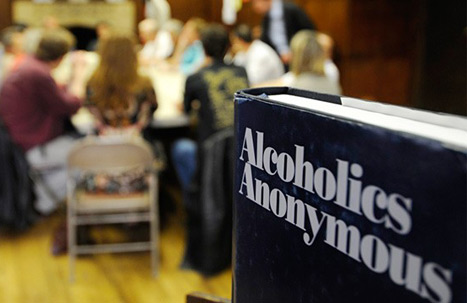
… I have just realized that there is a fourth reason that men apologize, and it may be the snivelingest, demeaningest, sowwiest one of all: When an AA member agrees to the 12 Step Program, he is required to say “I am sowwy” to every single person he ever offended in a drunken stupor at any point during his long, debauched career, most of which he cannot even remember.  According to Hazelton Betty Ford Clinic, Step Eight is: ‘Make a list of all persons we have harmed and become willing to make amends to them all’.

Love him or hate him, I think we all hope that Mr. Parker has not climbed aboard the temperance wagon or signed any pledges and is apologizing to Burgundy to move on to Step 11:  ‘Seek through prayer and meditation to improve our conscious contact with God.’

aa-meeting2

Collectively, we are sowwy.

Because that would be as specious as Resendiz involving Satan, wouldn’t it?

No, I think the clickbait headline was just that, and Parker isn’t really sorry about anything, and Alcoholics Anonymous’ Twelve Commandments are, like every other Act of Contrition, hooey for the hoe and nothing more than an excuse to get back inside her granny thongs.

As for Alcoholics Anonymous, on Parker’s rating scale I give the 12 Step Program a 69—no pun intended.

Posted in GENERAL | Tagged , | 2 Comments

Dishonest Non-Fiction is an Oxymoron

Gather ‘round, wiglets—let me tell you an honest story:

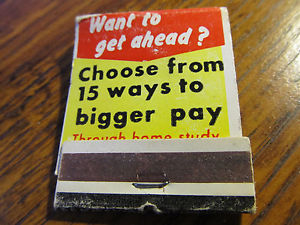
So sue me; I thought it said 'Want to get some head'.

So sue me; I thought it said ‘Want to get some head’.

Since accidentally checking ‘Wine Writer’ instead of ‘Unemployed Drunk’ on the back of the career-path matchbook, I have discovered that the two pastimes are interchangeable.

Well, that’s not completely honest.  Actually, I wanted to go into internal medicine and I meant to check ‘Diseases of the Rich’ on the matchbook.  At that point, not only was I already an unemployed drunk, I was offering extension classes in it at the local library.

The late Ruth Coughlin.  Sorry about that chief.

The late Ruth Coughlin. Sorry about that,  chief.

Okay, so here’s another honest story, and this one is true without the asterisk:  I used to write book reviews for the Detroit News, and one week I panned a book by an author that happened to be my editor’s best friend; she refused to print the piece, accusing me of being ‘too honest’.  I told her that I was the critic, she was the editor; as such, it was her job to edit out my honesty.

As a matter of fact, that’s precisely how I became an unemployed drunk in the first place.

I bring this up because last year about this time I wrote about running into a dude named Stuart Pigott, author of ‘The Best White Wine on Earth: The Riesling Story’ at Horizon Books in Traverse City.  Although this is not necessarily an honest book—Riesling is not the best white wine on earth—it is still pretty good wine book even if you are not obsessive/compulsive about one grape to the exclusions of all others.

“I am a wild and crazy wine writer.”

In any case, at our Horizon Books encounter Stuart was hunched behind a card table, doing one of those dreadfully obligatory author appearances, hard-selling his hardcovers.

Having been there/done that, I can assure you that the loneliness of a long distance runner is nothing compared to the desolation of a writer at a book signing—it is even more demoralizing than ringing a bell in front of Walmart in December wearing a fake beard.  Because at least then, when people avoid making eye contact with you and act like they’re reading a text or try to find a different entrance, you can blame the Scrooge syndrome.  When you are in the bull’s eye at a book signing, it’s your hairy, homologous nards on public display, not Santa’s, so the total lack of interest can be laid at nobody’s doorstep but your own.

book coverWell, as it happened, I spent a week one recent afternoon inside the very same bookstore, sitting at the very same card table, doing the very same soft-soap on my own softcovers.  In this case it was that lie-free lexicon of local lore, ‘Heart and Soil—Northern Michigan Wine Country.’

I emphasize the book’s somewhat excruciating honesty only because it’s key to what happens later in the story.

But first, let’s say that unless you’re in a literary pay-grade considerably above my own, the foundational understanding of any book signing is that it will be a humbling experience.  The grail is to keep it from being a humiliating experience.  And that can be gauged solely by the number of books you sell, since if you really wanted to make new friends and socialize with Northern Michigan wine people you’d go to tasting room or bar where at least you could drink and get loud.

Card-table duty is to peddle paperbacks, nothing more, and twenty books or more over the course of a couple of hours is incredible (in the honest sense of the word— ‘not credible’);  fifteen is commendable, ten is average, eight is humbling, five is humiliating.

I sold four.

Poor, Poor Pitiful Me

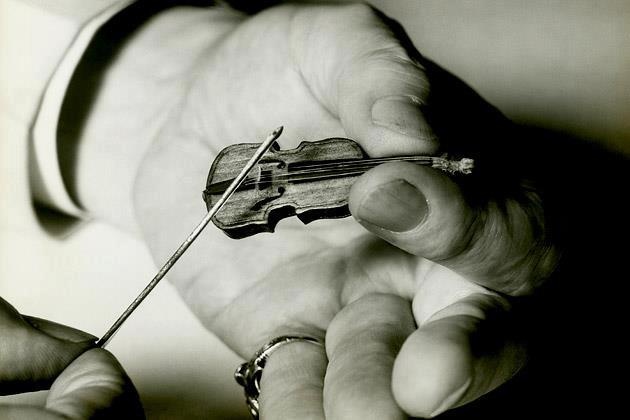
pity violinsI know, I know; I can hear the violin concerto from here—your D is flat, by the way. But the sharpest craw-sticker, I suppose—the serpent’s tooth—was the conspicuous invisibility of the very people the book is about.  Every winery profiled in Heart and Soil is within ten miles of Horizon Books; every one of them knew about the signing, and not so much as one poked a head in or raised an upright fist of solidarność—either for me writing books about them or for Horizon featuring books written about them.

And I can say (in honesty) that I have heard ad nauseum Northern Michigan wine makers whine about the lack of Michigan support for Michigan wineries—not unlike the way I am whining like an entitled little bitch right now.

So, at what point does refusing to support the very support you feel is your birthright become somewhat self-defeating?

At some point, isn’t the circle of the circle jerk supposed to close, so that we can all wash our hands and go home?

Does Heart and Soil Suck? 

Well, for Christ’s sake—maybe.  I have to own that potentiality, although, even if that’s the case, I know plenty of people who have their social media pages plastered with pictures of themselves that were not exactly taken by Richard Avedon.  What they have in common, of course, is that the posters like these portraits—they believe they depict the light under which they think they deserve to be seen—generally blemish free and as pretty as DNA has sought fit to make them.

And I totally get that.  And respect it.

Unfortunately, that wasn’t Heart and Soil’s driving animus any more than it’s been the goal of anything I’ve ever published, and if one of the incoming torpedoes winds up being a nepotistic editor, I have taken the career hits like a man—a whiney little bitch of man notwithstanding.

I don’t find puff-pieces intended to nothing but glorify the interviewee to be any more fun to write than I do to read.

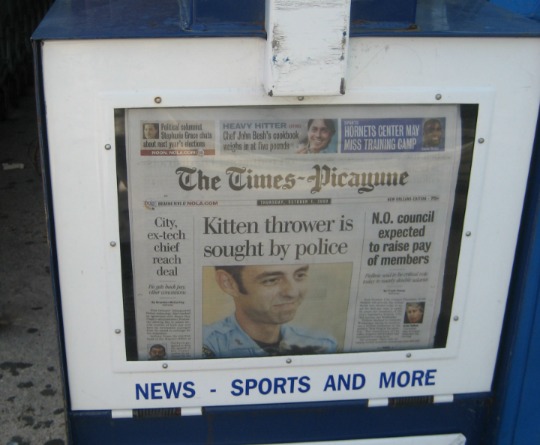
Times-Picayune540I’m not an advertising insert in the Sunday Picayune: I try to write honest profiles of wine people at frozen moments in their personal history and let the chumps fall where they may.  If someone feels ill-used, perhaps they are (although inadvertently), but more than likely, that’s the Klieg light under which they performed, and right or wrong, my interpretation therein. If they subsequently don’t want to put the book on their tasting room bookshelves, I can utterly understand them and there’s no hard feelings.

Dan Matthies

Dan Matthies

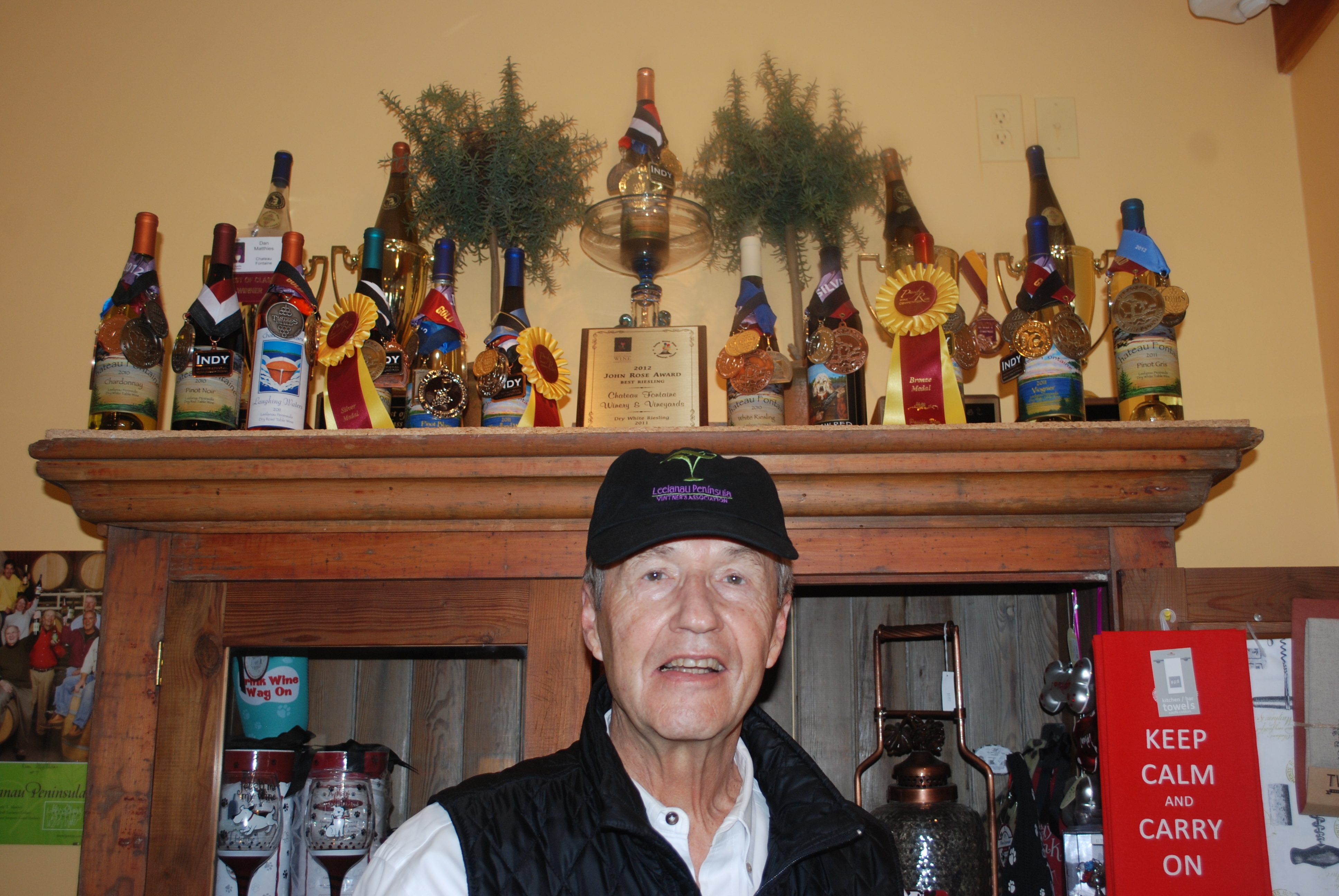
Take Dan Matthies, one of the hallowed figures in the Northern Michigan Hall of Fame—a founding father in the region, proprietor at Chateau Fontaine and a successful entrepreneur across the region.  Yet after agreeing to be interviewed, he either dodged every one I tried to arrange or else we had twin, amazingly consistent bad luck never to find a time that worked; instead, he provided me with reams of feel-good, saccharine interviews already published about him and told me to pull my info from them.  Alas, that’s not my M.O. and I made that rather caustically clear in my Matthies profile.  His unwillingness to carry the book in his little gift shop is completely justified.  In fact, I’d be offended otherwise—it would mean that he didn’t read it.

John Crampton next to his stack of wine books.

John Crampton next to his stack of wine books.

John Crampton at Willow makes slightly less sense to me.  Here’s a guy who solicited me to write a chapter on him, promised to carry the book in his tasting room, allowed me the luxury of driving four hours north in a rented car specifically to interview him on site, then hemmed and hawed so much when it came time to actually picking up a handful of copies to sell—on consignment and at a profit to him, mind you—that I finally shrugged it off and moved on.

Although trust me, his chapter is as glowing an overview of both him and his winemaker as I could write, because I actually thought both of them deserved it.

I conclude that the Leelanau Cosa Nostra and Old Mission’s one-for-all-and-all-for one Musketeers is so tight that any book that does not paint Rembrandts of them all, but tosses in a couple of Goyas and Boschs, is unfit for consumption.

Or maybe not.  I really don’t know.  What I do know is that out of twenty wineries covered, nearly all with favorable reviews, the total number (each of whom has a retail outlet on premise) that have carried through on offers to sell Heart and Soil is, to date,  four less than the number of books I sold at Horizon.

In other words, naught, zippo, nada, zilch.  Some support, huh?

One final honest story before I ride into the sunset:  In a life that even pre-existed critiquing books, I was an illustrator, and I was once commissioned to do a portrait of a dude for an album cover.  He was extremely handsome in a quirky kind of way, and I did my best to capture his remarkable physical reality.  I think I did, too, and he hated it.  So I re-did it so that he appeared extremely handsome in a non-quirky way and he loved it.

Suffice to say, that was the last time I compromised what my senses saw, heard, touched, smelled or tasted simply to turn a buck in the creative arts.  I could—and have—lived with myself easier as a panhandling alcoholic.

Onward and upward, then.

I’d say ‘live and learn’, but  I suppose I learned that lesson when I was twenty-one—and have soundly chosen to ignore it.

Posted in Michigan | Tagged | Leave a comment

Wine, Winchesters and the Same Old Song ‘n’ Dance

We all know the futility of arguing on the internet, but I believe I have elevated argumentum  inutilis to a fine art by getting into a debate with a pair of British wine experts about American gun laws.

winchesterThe kerfuffle was instigated by my network buddy Robert Joseph, who is a Master of Wine consultant, also an award-winning wine critic, also editor-at-large at Meinger’s Wine Business International, also a visiting professor at the Burgundy Business School, but who finds time in his busy, wine-soused schedule to scratch his salt ‘n’ pepper Caesar over American attitudes toward gun ownership.

Mid-discussion, his compatriot Nick Oakley chimed in with similar discombobulation; Nick is a Master of Wine candidate (as I am a prospective billionaire) who owns Oakley Wine Agencies in Colchester, England.

L.: Robert Joseph R. Nick Oakley

L.: Robert Joseph
R. Nick Oakley

Both of these gentlemen, ensconced within their distant shires, display a certain naïve sense of confusion as to why the United States doesn’t simply amend the 2nd Amendment.  As if that is such a logical, no-brainer solution to gun violence that they can’t understand why we don’t cream all over it.

In any case, as always, I am deeply touched when foreigners are so concerned about our cultural idiosyncrasies that they work themselves into a social media lather over them.  That goes double when they are from a country that is solely responsible for our gun laws.

How so?

See, we used to be proudly British.  Chuffed, as we would have said had we not bounced Robert and Nick’s forefathers back across the Atlantic because King George III insisted on paying off debts via a series of unreasonable taxes imposed on us without our consent.

bill-of-rightsSo we lobbed a little Lipton into the lagoon, and didn’t that piss off old Georgie Trey?  The whiny bitch sent over his goon squad and the rest is history.  American history.  And my favorite chapter in American history; the one in which we boot out the bad guys and become the Alpha Thugs in our vast and profitable playground, ready, willing and able to make up our own set of rules.

We call those ‘The Bill of Rights’.

At this point, Nick Oakley dropped in to remind me that Americans ‘really don’t consider the Bill of Rights amendments at all. Rather as refinements that defined the exact structure of the Constitution.’

Huh?  I wasn’t there at the signing, granted, but I can’t imagine that that the framers of the Constitution would have named them ‘Amendments’ and given them individual Amendment numbers if they didn’t consider them Amendments. But who knows?  They also claimed to believe that all men are created equal while maintaining an economy under which millions of men were not equal; as for women, based on plenty of criteria, equality doesn’t apply to them even today.

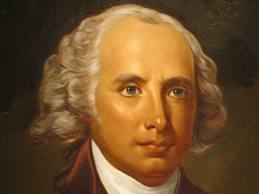
Jimmy 'Mad Dog' Madison

Jimmy ‘Mad Dog’ Madison

Of course, the Bill of Rights are attached as Articles and not part of the original document because that was initially deemed unnecessary—not because these rights didn’t exist earlier, but because the federal government was supposed to be imbued with such limited authority that a catalogue of specific rights was superfluous.  It was all good.

James Madison wrote the Bill in response to Anti-Federalist concerns that a select few liberties needed to safeguarded explicitly: The right to free speech, for example; the freedom to practice religion, the freedom to assemble peacefully, the freedom to own guns.

In any event, the 27 Amendments are meant to expand our freedom, not limit it.

And despite the name, they are not (as Nick and Robert seem to think) a  list of afterthoughts—in fact, as rights, they were and are inalienable.  Can neither be granted nor taken away so long as the rightee remains within the bounds of law.

The Amendments, therefore, do not exist to tabulate pre-existing rights; they exist specifically to prohibit the government from infringing upon them.

verbiage.Thus, the 2nd Amendment and its vague verbiage about securing states and training militias and bearing arms has no real relevancy in a discussion about my ‘right’ to own a Winchester XPR Bolt Action rifle, because the overall tenor of the entire Constitution is quite unambiguous:

It’s not so much that I have a ‘right’ to my own possessions so long as I use them safely and responsibly; that truth is held to be self-evident.  The Constitution and the attending Amendments merely exist to remind Uncle Sam, Uncle Obama, Aunt Hillary (and Cousins Nick and  Robert) to keep their hands off my stack.

That holds equally true for my X-Box Console, my refrigerator, my Winchester Bolt Action, my Ford 150 and my jeroboam of Beaucastel.

And you doubted that I would bring the chat back around to wine? (!)

Well, Now I Am Going to Make It Exclusively About Wine

To my friends across the pond, be advised that Americans are just as concerned about firearm deaths as you are.  Imagine that! And automobile accident deaths, too—keeping in mind that according to the state, nobody has a ‘right’ to drive—that is a state-controlled privilege.

crime-tape-police-line-Flickr-640x480There were about 33,000 deaths from firearms last year; homicides, suicides and accidental deaths combined.  That is a horrific number; no argument here.  But, if we are running with statistics, you’d also have to point out that there are over 300 million guns in this country, which means that of privately held weapons, only one in ten thousand caused the death of another human being.

Now, if (as is postulated by anti-gun folks) guns are ‘designed to kill’, that either makes them among the most poorly designed gadgets in the history of engineering, or it means that 99.99% of gun owners use them for something other than that for which they were designed.  Or it means that killing other people was not necessarily their purpose in the first place.

Take your pick; I’m easy.

But, as is also postulated, whatever their purpose through intent or execution, guns are unnecessary, and that I will concede.  Mankind made it a whole lot of years before the invention of gunpowder and in the meantime figured out all sorts of creative ways to hunt, murder, wage war, kill themselves and otherwise snuff out life.  And shoot at road signs too, more than likely.

Even So, Drinking Far Out-Paces Shooting as a Leading Preventable Cause of Death in the United States

Approximately 90,000 Americans every year die from alcohol abuse—according to the CDC, excessive drinking was responsible for 1 in 10 deaths among working-age adults.

That makes alcohol—the very substance upon which Robert Joseph and Nick Oakley have built their careers—three times as deadly to Americans as the firearms they so despise.

nhsAnd what’s more, within their own bailiwick, it’s even worse.  World Health Organization claims that 28% of Britons are binge drinkers, almost twice as many as the global average. Further, the NHS estimates that in the UK, 9% of men and 4% of women show signs of alcohol dependence, leading to about 33,000 deaths a year—a figure nearly identical to American firearm deaths per year in a country with less than a quarter of our population.

But, of course, like firearms, drinking is not necessary to anybody’s lifestyle, except those who profit from it.  Those who make it their vocation, their area of expertise, the focus of their studies, the raison d’être for their paychecks.

glass palaceThe Crystal Palace was a British plate-glass building originally erected in Hyde Park to house the Great Exhibition of 1851; the name was later used to denote an area of south London and the park that surrounds the site, home of the Crystal Palace National Sports Centre as well as Crystal Palace F.C.

What does that have to do with anything?

Nothing beyond a gentle reminder of an old saying:  What are people in glass houses not supposed to throw?

winchester cathedralHere’s another old saying, Robert, Nick and any other Brit that wants to chime in on our gun laws:  ‘Amendments are written by the victors’.

Or something like that.  Doesn’t matter; we won, boys.  We are the victors.  Just be glad we didn’t decide to rename it Winchester XPR Bolt Action Cathedral.

Posted in GENERAL | Tagged , , , | 3 Comments

Artuke Rioja: The Name in Spain Stays Mainly in the Brain

Clipboard r2‘Artuke’ rhymes with Y2K and is pronounced like R2D2’s  brother, both of which are better names than the one sported by the guy who owns Artuke Bodega (Kike Blanco), who is grateful for his own brother Arturo.  Because without the portmanteau of their two names, he’d be enologo at Kike Bodega, and this would be a whole different column.

As it is, it’s a tale of two Riojas, referred to by the brothers as ‘new’ Riojas, one of which wound up being an old Rioja style rediscovered.

But I’ll get to that.

Provmap-alava

Basque province of Álava

First, Artuke is located in the Basque province of Álava, and the de Miguel Blanco family has been cultivating wine grapes here for well over a century.  This territory is not a part of the Autonomous Community of La Rioja, but one of the two satellite provinces that encompass the growing region of Spain’s most famous AOC; the other is Navarre.  Primary grapes are Tempranillo, Garnacha (Grenache), Graciano and Mazuelo (Carignan) for the stylish reds and Viura and Garnacha Blanca for the sharp, fruity whites.

Like most Old World wine regions, Rioja has been working overtime to maintain a predominant position the world’s wine stage, and part of the reinvention process has been a re-think of style, at least for the export market.  Traditionally, a red Rioja was something that looked, smelled, tasted—and as overall organoleptic ordeal—simply ‘felt’ old.  It was a leathery interplay of wood, grape and oxygen; the best were remarkably subtle, often elegant, but a working man’s Rioja could come across as thin and oxidized—like acidity interred within an oak sarcophagus.  They were, of course, intended to be food wines, made for a food culture, and even today, 70% of Rioja is consumed within Spain and three-quarters of that inside restaurants.

San Sebastián pintxos

San Sebastián pintxos

But as beloved as the old style was in the pintxos cafés of San Sebastián, the enotecas of Barcelona and the designer restaurants of Madrid, the world evolves as it revolves and in recent years, global tastes have moved to a somewhat opposite style of red wine—one that is fruit-sweet, dense and delovely, often high in alcohol and hugely extracted, wines with less barrel and more fun.

And a gradual change began to take hold in Rioja.  Step by step, mote by mote; nothing too noticeable, nothing to put the jende zahar off their Gran Riserva.  Old casks were replaced with new, and the time the wines hibernated within them lessened.  Bottles were held back for shorter periods.  At La Rioja Alta, the progression went from 20-year-old barrels to eight; from six years in barrel / six in bottle for 904 Gran Reserva to 5/5, then 4/4.

López de Heredia

López de Heredia

Even the most die-hard traditionalists have altered the company line a bit:  At the bullheaded bastion of beaten boulevards, López de Heredia bodega, the ‘Philosophy’ tab on their website has been revised to say, “Our daily tasks are rooted in tradition, yet at the same time based on our deep belief in the validity and modernity of our methods.  By ‘tradition’, we do not mean immobility and opposition to change; rather a dynamic and aesthetic concept in maintaining eternal principles and criteria.”

In other words, “If you want fruit bombs, we’ll give it a go.”

At Artuke, the Hermanos Blanco have tacked direction, focusing the winery on small vineyard plots near their village of Abalos in the high elevation foothills of the Cantabrian Mountains.  This is high Basque country, where the cuisine, the culture and even the language is distinctly un-Spanish.

The two Artuke wines I tried were twin interpretations of the ‘new’ Rioja, both different from each other and both different from the classically-styled Riojas that were status quo when their grandfather worked the land.

The de Miguel Blancos

The de Miguel Blancos

Earlier, I referred to the entry-level Artuke (around $12) as an ‘old Rioja style rediscovered’, and that’s because at first whiff, the fact that it is produced in using the Beaujolais-favored technique of whole-cluster carbonic maceration, is obvious:  The wine is bombastically fruity, with fresh, confected notes of ripe plum, concord grape and concentrated rose water—the result of being made in concrete tanks under the influence of carbon dioxide, which allows for the extraction of more fruit flavors and less tannin.  The wine is, as a result, refreshing and rather simple, finishing mid-palate as though it took a swing from Lizzie Borden’s axe.  All of which are (I imagined) anti-Rioja trademarks.  But as it happens, I imagined wrong: This is the original Rioja, before crianza and Gran Reserva came into vogue.  This is, I was told, the sort of wine that the Blanco’s grandfather Miguel would have made.

pies labelPies Negro 2011  leapfrogs the generations.  Produced from Tempranillo (90%) and Graciano from vines nearly a century old, the wine is aged for fourteen months in a combination of new and old oak tinas, bringing out some of Rioja’s prototypical earthiness and dried-herbal-ness, but under a blanket of black cherry and cassis.  I thought the wine showed a bit too much bitter tannin at the finish, enlivened by a bright acidity, but still appearing as a non-integrated crate.

Time—as it does in all things ‘Rioja’—will tell.

Meanwhile, ‘Pies Negro’ may translate to ‘Black Feet’—an homage to the método tradicional of crushing grapes by foot—but somebody should clue in the Brothers White to the American tradition of not advertising Negro wine made by a Kike.


Posted in Rioja, SPAIN | Tagged , , | 2 Comments

Sultanas, White Chocolate, Eminem and Beaujolais Blanc

Q:  Why can’t pilots take Viagra?

A:  I know you thought that was a lead-in to a punch line, but the fact is, pilots are forbidden to fly within six hours of taking a boner bolus because it may affect their ability to recognize certain colors, important for seeing runway lights and instrument panel identifications.  Also, it may cause them to grab for the wrong joystick.  (There’s your punchline).

bottleSo the other day, when a wine compatriot poured a glass of white wine and said, “Try this Beaujolais,” I naturally assumed that at breakfast I had accidentally grabbed for the little blue pills instead of the Methaqualone.

But now he tells me that, like albino blues players, blonde gorillas and white guys named Jamal, Beaujolais Blanc is a real thing.  Whether or not it’s is a real good thing may be a matter of opinion, recalling that there are people who actually bought Pat Boone’s heavy metal album.

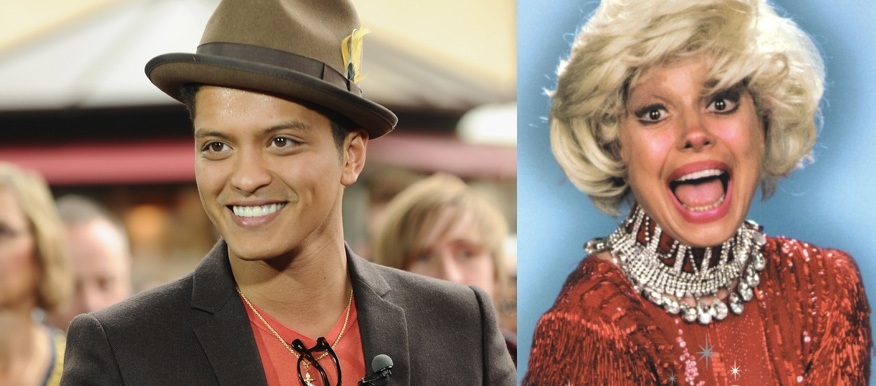
ClipboardI think we all know where we were and what we were doing the moment we learned that Alpha Negress Rachel Dolezal was actually a crackerhonky Swede from Montana; I think we also have WTF? scars on our brain stems from learning that Bruno Mars is not black, but Carol Channing is.

We’re weird people that way.

So, I will recall until the sound of my own eulogy echoes through the halls of the debtor prison that on Saturday, June 27, at 3:15 PM, at Elie Boudt’s wine store in Birmingham,  I learned not only that Beaujolais makes white wine, but that it is, in ways, even more stringently regulated than the famous reds.

First, Beaujolais is a French appellation just south of Burgundy which, in excellent vintages, may out produce neighboring Côte d’Or, Côte Chalonnaise and Mâconnais combined.  That’s in part because Gamay—the grape that is both Beaujolais’ workhorse and her show pony—produces fruit in abundance while Pinot noir, the red wine grape that defines Burgundy, does not.

Phillipe the Bold, recent photo

Phillipe the Bold, recent photo

You can thank Duke Philippe the Bold for this state of affairs; in 1395, he outlawed the cultivation of Gamay in Burgundy, which he regarded as ‘disloyal’.

99% of the wine produced in Beaujolais is red, and there’s a lot of it: Last year, the AOC produced a bottle of wine for every man, woman and child on the East Coast of the United States.  But although it is predominately made from Gamay, the appellation law allows the blending in of several white grapes, including the forgettable Melon de Bourgogne (bland outside Muscadet) and Aligoté, which tends to improve when blended with crème de cassis, not Brouilly.
Yet Beaujolais Blanc—making up less than 1% of the appellation’s wine (there’s also a rosé) is legally mandated to be a product of Chardonnay alone.  It seems curious that an afterthought wine is offered no leeway in varietal choice, but since the limestone soils of Northern Beaujolais make it a continuation of the Mâconnais, if vignerons  are to achieve any notoriety with their whites, they understandably need to work with the best of what they’ve got.  And like the wines of Mâcon—Pouilly-Fuissé and Saint-Véran are among them—that’s Chardonnay.

Jean Paul Brun

Jean Paul Brun

The wine poured was Terres Doreés from Charnay, a village just north of Lyons known as ‘Land of the Golden Stones’. Owner/winemaker Jean Paul Brun farms 45 acres of vines on limestone, fifteen of which are in Southern Beaujolais surrounded by Côte de Brouilly, Morgon, Moulin a Vent and Fleurie, all of which sit on granitic soils.

Brun says, “I started Terres Dorées in 1979 with 4 hectares of vines; we’re currently at about 30 hectares. The first wine we ever made was our Beaujolais Blanc from Chardonnay and today, 8 hectares are dedicated to it.”

The 2013 Beaujolais Blanc opened with a whiff of pineapple and slight overtones sulphur; the nose expanded to encompass honeydew melon and peach.  Whereas the bouquet suggested nothing but unoaked chardonnay, the palate became a bit more exotic and layered, offering scents of creamy apple compote and a distinct grapefruit finish.

The wine was competent, refreshing, interesting, but by no means a Cru-level wine.

Hand gestures means,

Hand gesture that means, “I’m an ofay, beeotches.”

Still, the chance to try it was a chance to read up on Jean Paul Brun, an iconoclast in Beaujolais, who foregoes traditional whole cluster, semi-carbonic wines and opt for a more Burgundian style suitable for aging.  Unlike other winemakers of the area, who make wines to be released early and consumed young, Brun prefers to give his wines at least a year and half of cellar time to soften the tannins.

When asked if his unique approach posed any problems with the AOC, in particular because of his refusal to work with legally-mandated whole clusters, he replied, “Well, I’m not in jail yet.”

Good one, Jean Paul!  Last we checked, neither is Rachel Dolezal.

Posted in Beaujolais, FRANCE | Tagged , , , | 2 Comments

Rebel With a Clause

(On Sept. 15, 2015, at precisely 3:17:23 PM EST, this column will return to wine, but will only be visible in the Northern Hemisphere and parts of Kenya.)

rebel flagThe other night in a candid interview about gun violence and race, President Obama dropped the N-bomb, and it made everybody uncomfortable.  Not because the word ‘nigger’ is of itself uncomfortable (like a flag, a word is inanimate, incapable of human emotions) but because we have been programmed to find the sound it makes whilst slipping from a pair of human lips an abomination upon our senses.

For the most part.

In recent years, we have been re-programmed to find the word less offensive if a black man—especially a para-thug gangsta rapper—says it in a non-derogatory way while singing about killing cops and beating women, and more offensive if a white man—especially a knuckle-dragging cretin from a former slave state—says it in a derogatory way.

Obama2Thus, when the most powerful man in the world, who is both a white man and a black man and from a state that wasn’t even a state until a century after the Civil War, uses it in the context of a derogatory word, but not in a derogatory manner, we are all made so confused and uncomfortable that people with weak capillaries risk an aneurism.

This is not necessarily a bad thing.

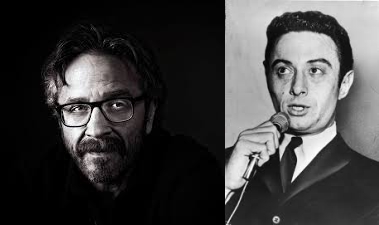
Marc and Lenny

Marc and Lenny

However, that Obama used the word while being interviewed by a comedian instead of a reporter is being overlooked by nearly every confused, uncomfortable podcast listener, despite the fact that it’s the single most salient point surrounding his N-bomb droppery.

Why?   Because said comic is Marc Maron, and like every other edgy, snarky, neo-Borscht-belt comic, he owes his career to edgy, snarky, Borscht belt comic Lenny Bruce, who in 1961 uttered a summation of this potent word unrivaled by anybody ever, before or since, white or black:

“If President Kennedy would just go on television, and say, ‘I would like to introduce you to all the niggers in my cabinet,’  and if he’d just say ‘nigger nigger nigger nigger nigger’ to every nigger he saw, ‘boogie boogie boogie boogie boogie,’ ‘nigger nigger nigger nigger nigger,’ ’til nigger didn’t mean anything anymore, then you could never make some six-year-old black kid cry because somebody called him a nigger at school.”

Lenny Bruce was ahead of his time, evidenced both by this routine and by his death from a heroin overdose a half dozen years before it became fashionable to do so.

Three Jeers for the Red, White and Blue

No, silly—not that red, white and blue—that’s Old Glory, whose trifecta of polychromasia is inviolable.  The other red, white and blue.  No, not that one either, that one’s French.

Work with me here…

walN-Bomb-gate came during the same week that, in response to the murders of nine African Americans by a deranged white supremacist with a gun, upright folks demanded the removal of a Confederate flag from a war memorial in South Carolina.  In a cheap bid to be the first capitalist to overreact, Walmart—quickly followed by Amazon, eBay and Sears—announced bans on the sale of Confederate flag merchandise.

A collective victory cheer went up from the righteous, most of whom I suspect were white liberal Northerners, and their smug triumphery would have made perfect sense had Dylann Roof smothered his victims to death with a Confederate flag.  But he didn’t—and Walmart, Amazon, eBay and Sears still do a brisk business in the sale of firearms and firearm accessories.

See what they did to you, there?

flagNow, as a white liberal Northerner, I’m begging you in advance: Don’t start.  I get that the Confederate flag is viewed as a symbol of racism by many, even most, despite its having flown above a slave nation for a scant four years compared to ninety years for the Stars ‘n’ Stripes. Unless you count the Civil Rights Act of 1964 as a vital chapter in the story of Black freedom in America, in which case, it’s more like 188 years.

Or, if you maintain that African Americans are not treated as equals by their white compatriots to this day, and point out the demographics of our prison population as an example, you may find as much entrenched racism represented in the flag that flies over the US Capitol Building as the one waving in front of the State House in Columbia, SC.

Symbolism, as far as I can tell, is what you choose to make of it.

Now, I am presuming that nobody with an IQ into three digits actually believes that government officials in the South are pining for the return of slavery.  What the flag in South Carolina actually symbolizes to them (I’m willing to bet) is the titanium testicles of their seceding forefathers who stood up for a cause and damn the torpedoes.

The fact that it was a losing cause, an immoral cause, an antediluvian cause, an abominable cause, doesn’t much concern them: It was the Rebel Cause, and it was their very own.  You get a bunch of good ol’ boys around a testosterone-stoked legislative table reminiscing about good ol’ days, and chances are it won’t be about the time they slunk into Appomattox Court House with their tail between their legs.

But—as they are wont to do—in the past week the political pressure-police have pushed their pusillanimous program pitilessly, and lo and behold, South Carolina Governor Nikki R. Haley has caved in to their compulsive finger-wagging.  She now claims to support the removal of the Confederate flag from the State House, although in the same breath, she passes the buck (not in the derogatory sense of a black male) to the state’s General Assembly to make the final decision.

Win/win for her, and titanium ladyparts need not apply.
Gov. Robert Bentley

Gov. Robert Bentley

Alabama Gov. Robert Bentley has already mothballed his Bars ‘n’ Stars, which, had it come before the public outcry, might have been seen as courageous and noble, but now appears nothing more than a kow-tow to the pow-wow, as if some PETA-approved veterinarian was brought in to remove his mothballs.

Coupled with the excruciatingly hypocritical decision by the Waltons of Arkansas, et. al, it appears that the Confederate flag has been bleached a whiter shade of pale and razed, not raised, from the yard arm.

Well, by God, if they don’t want that goddamn symbol any more, I do.

buddha

Mr. Lard-Ass: Tear down this Buddha

And I’m serious.  If the flag is burned, buried, shredded and otherwise exorcised from the American public’s outraged but virtuous conscience, doesn’t that mean that the South has surrendered once again?  Phhhhht.  And at some point, shouldn’t the flag become fair game for those of us who would exhume it as a symbol of our own rebellion, of our individual and hallowed right to be controversial, our sacred authority to hoist any flag we choose regardless of whether or not your offense-o-meter is on overdrive?  And have it mean… nothing more sinister than that?

And yeah, I’m Rebel with a Clause:

Racism, sexism, homophobia-ism and I-Hate-Southern-White-People-ism are all shitty human conceits from the outset, and anybody who looks at my new Rebel flag and suggests that I support any of them is a shitty human being.  In fact, you qualify the very smegmata that I rebel against.

It’s my flag now, and I decide what it symbolizes, not you.  I would have made a lousy slave-owner anyway—I can’t even tell my kids to clean their rooms without feeling guilty.

leicaFret not, those who disagree. Now that the Confederate flags are down in Dixie, here are some new causes for you to embrace and Tweet about: Lieca uses a Japanese Imperial flag as it’s logo, Buddha is plastered with swastikas, Macy’s usurped the red star of Commie Russia to sell Calvin Klein dress suits.

Meanwhile, Michelangelo’s David has his wee-wee waving in the wind and the word ‘nigger’ appears 219 times in The Adventures of Huckleberry Finn, Twain’s anti-slavery masterpiece.

Clipboard starLenny Bruce did not get his wish; Kennedy never dropped the N-bomb, at least in public.  It would probably have seemed crude and un-Presidential to the man who campaigned as an anti-segregationist and made a famous 1960 phone call to Coretta Scott King in support of her husband, then forced Mimi Alford to perform oral sex on one of his aides as he watched.

But fifty years later, the great Barack Obama has finally obliged the great Mr. Bruce, mainstreaming at least the idea that a President can contextualize the word ‘nigger’ and speak it out loud without a bolt of PC lightning striking him in the forehead.

He encourages me.

toy car… And so, my fellow Americans, if every supporter of the First Amendment would just go on television and say, ‘I would like to introduce you to my new Rebel flag’, and then fly that flag from the Flagpole of Freedom, flag, flag, flag, flag, flagpole, flagpole, flagpole, flagpole, ’til the Rebel flag didn’t mean anything anymore, then you could never make some six-year-old kid cry because some anal-retentative Yank with an iPhone and a Twitter account took away his 1:18 scale Dukes of Hazzard General Lee toy car.

Posted in GENERAL | Tagged | 1 Comment