Chateau Chantal Releases Some Dandy Post-Prandy Brandy

Brian Hosmer and heir apparent

Why the amazing Chateau Chantal always sort of hangs around the periphery of my Michigan wine conscience instead of barreling to the forefront is truly one of God’s mysteries.  I’ve met winemaker Brian Hosmer many times over the years—a bright, engaging fellow with a Christ-like tonsure and an affinity for big words—and have sampled his wares, which are likewise bright and engaging.  I’ve read with near-voyeuristic fascination the story of the winery’s founders, Robert and Nadine Begin—a former diocesan priest and a former Felician sister who abdicated the Calling and got married in 1974, thus producing the gorgeous Marie-Chantal Dalese.  I’ve even drooled over the East Arm of the Grand Traverse Bay-view from the twenty-thousand square foot B&B that forms the architectural centerpiece of the 65 acre Chateau Chantal estate.

I’ve just never gotten around to writing about them.

The money shot.

Anyway, based on their latest press release, all that changes:  Seems that up there on Old Mission Peninsula they’ve been busier than a set of jumper cables at a redneck funeral and in fact, do more before nine AM than the Marines do all day.  What they’ve already accomplished is staggering—beside the eleven unit bed and breakfast—named one of 2010’s top ten country inns by Gayot—the vineyard, the six private home sites, the cooking classes, the wine seminars and the Tapas Tours, the Chantal concern (the winery is public, with multiple shareholders and a nine-member Board) also owns 55 acres of vines in Mendoza which produce more than two thousand cases of malbec per year—which I’ll also write about if I ever get a chance to try any.

But there’s more:  Chateau Chantal has just announced an inaugural release of Cinq à Sept, an oak-aged (five years) brandy made entirely of Northern Michigan grapes.

Brandy is, of course, a distillate of wine, and as sugar cane is to rum, as barley mash is to scotch and as corn is to bourbon, grapes are to brandy.  Cognac is the world’s priciest, most famous version—it’s named after a specific region in Southwest France and must adhere to certain production laws in order to flash the Cognac crest.   But, simply to give you an idea of what Cinq à Sept’s five years of barrel aging signifies in Cognac terms, a V.S. Cognac requires a minimum of two years in barriques, V.S.O.P. four, while an X.O. designates a blend in which the youngest brandy is six years old.

With Cinq à Sept, we are clearly dealing with some serious sippage.

And why ‘Cinq à Sept’?
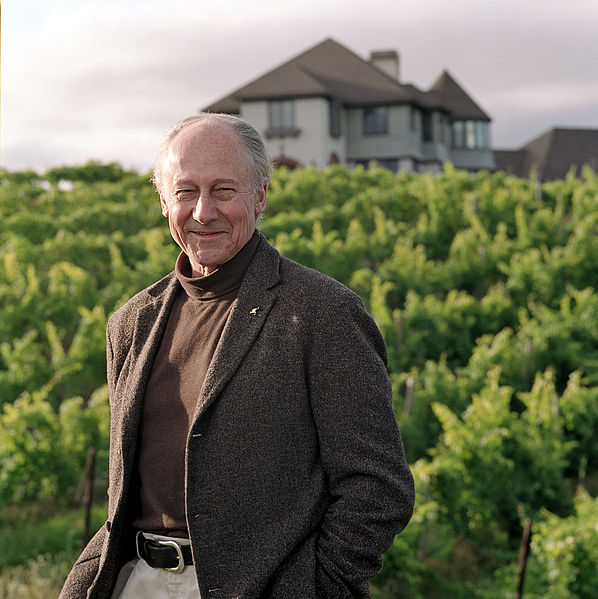
Robert Begin

According to Robert Begin, “Literally, Cinq à Sept means ‘five to seven’; it’s a French Canadian term for Happy Hour.  In France, the phrase was originally used as a description of the time of day a Frenchman would visit his mistress, perhaps with a gift of brandy in tow…”

Cinq à Sept is bright mahogany in color, soft and silken on the palate with citrus, sweet fruit, oak-honey and butterscotch; there are light tobacco aromas present along with toasted gingerbread spice, it finishes creamy with a touch of mint and dried herbs.  At $40 a fifth, it’s priced as a rough equivalent to Martell or Courvoisier V.S.O.P.

Suddenly a benchmark among Michigan eau-de-vie, Cinq à Sept joins the Chantal family of distilled fruit juices which includes Cherry Eau-de-Vie, ‘Entice’ Brandy with Ice Wine, ‘Cerise Noir’—cherry brandy with red wine, and ‘Cerise’—a blend of cherry brandy and cherry wine.

Currently, these are available only via shipping from the Chantal internet store, and fortunately for those of you who find yourselves unable to work your new mail-order brandies once they arrive, they come with full instructions:

‘The typical serving size is 1–2 ounces, owing to the high alcohol content of the spirit…’

And:

‘Usually served as a digestif—a post-prandial alcoholic drink that aids digestion.’

Post-prandial is one of Hosmer’s big words, and I had to look it up, because I thought it meant ‘after the physical act of love with one’s Parisian mistress with whom one has had a tête-à-tête being that it is five o’clock’, and yet I assumed that even a randy ex-priest, who must answer to a Board of Directors, would not link his new brandy to such illicit pleasures of the flesh.

And in fact, it turns out that ‘post-prandial’ actually means ‘after dinner’, and fittingly, Wiktionary offers as an example: ‘A post-prandial brandy’.

But iconoclasts may take heart.  After extensive sampling through all the hours day and night that the good Lord sends us, I have concluded that the entire Chantal line-up—grape wine, fruit wine, sparkling fruit wine, booze, wine and booze mixed together—(can beer be far behind?)—work equally well as pre-prandial ingurgitatables.

‘Ingurgitatable’ is a big word that you may indeed borrow, Brian.

Meanwhile:

Enchantal!

*

Entice, Cerise Noir, and Cerise are available for shipping within Michigan and select states at http://store.chateauchantal.com/.
Posted in BRANDY, TEXAS, Uncategorized, URUGUAY | Tagged , , , , , | 1 Comment

Wine Is For Rich People

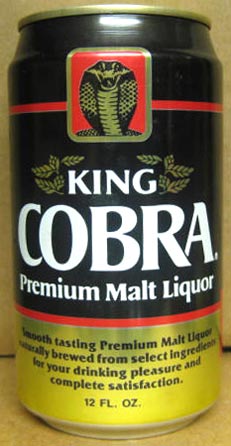
Ever heard the old expression ‘Put your money where your mouth is’?  Apparently—according to Sotheby’s auction house—this does not refer to forty-ouncers of King Cobra.

Wine writers tend to talk in some pretty tight aphorisms too:

‘Wine should be accessible to people as an everyday beverage,’ ‘Wine should not be intimidating to ordinary folks,’ and ‘Expensive wine is not necessarily better than inexpensive wine…’

Yet in our hearts, our minds—in our very swill-sopped souls—we all know what a load of crap that is.

Let me put it another way.  Nobody likes to be laughed at, right?  It’s human nature.  So consider this:

  • Redneck jokes are funny.  Hereditary fortune jokes are not.
  • Guzzling Colt 45 on a ghetto porch step is funny.  Sipping 2005 Domaine Leroy Chambertin in a Bloomfield Hills dining room is not.
  • Getting shitfaced on green beer on St. Patrick’s Day is funny.  Getting slightly tipsy on Patricia Green Pinot Noir on Christmas Eve is not.
  • At a restaurant, a beer steward is funny.  A wine steward is not.

I could go on, but let me change tack.  When was the last time you heard of anyone spending twenty thousand dollars installing a beer cellar?  Why do you suppose there’s a Hospice de Beaune, a Hospice du Rhône, but no Hospice du Milwaukee?  The number one beverage during the Revolutionary War was ale, and yet Jefferson is known for what kind of collection?

If I was to break with journalistic tradition and personal precedent and tell the truth, I’d have to say something that we all secretly understand:

Wine is for rich people.

Bernie and Mikey, sittin’ in a tree…

This is not a bad thing—America likes rich people.  Michael Moore makes movies about hating them for the sole purpose of becoming one.  What percentage of the American workforce seriously believes they’re overpaid?  And who can revile Bernie Madoff without harboring a private little ‘Wow!  You certainly ‘made off’, dude!!’?

Take you, for example.  Do you fantasize about owning a Lamborghini or a K Car?  A Ducati or a moped?  Do you show off your Mont Blanc or your Bic?  Your Rolex or your Timex?

Stop feigning humility already.

Workaday Willie

And don’t get me wrong—wine writers are among the worst offenders.  We pretend to be proletariat non-snobs, but of course, if we really wanted wine to become the sort of plebian plonk that the average wanker drinks in Europe, we’d also have to admit that Workaday Willie in Waukesha, Wisconsin couldn’t care less about all the esoteric enological knowledge we’ve spend years absorbing and millions of words expounding upon.

You know who likes that kind of stuff?  Rich people, that’s who.  Being able to rattle off the six allowable red wine grapes of Bordeaux or the ten Crus of Beaujolais does Willie scant good during Happy Hour, and may in fact get him beat up.  But for rich people at the tony country club or some Ivy League benefit dinner, this shit is golden.  Not only does it allow a rich person to feel even more swank and superior, it actually allows him or her to make informed decisions as they drop tens of thousands of dollars at wine auctions.

I will be sued for using this picture and Sotheby’s will get even richer

Which brings us around, full-circle, to Sotheby’s.

In 2011, Sotheby’s wine auctions brought in $85.5 million dollars, the second highest total in the company’s forty-one years of hooch hawkery.

Said Serena Sutcliffe MW (Mistress of Wine) and Worldwide Head of Wine at Sotheby’s:  “This is a great worldwide result, and for London sales, the highest total ever achieved since the start of the department in 1970. We had some tremendous single owner collections in London and Hong Kong and we continue to find remarkable collections with perfect provenance.”

If somebody has the wherewithal to drop me a quick email and explain what ‘perfect provenance’ is, I’d appreciate it; it might help me find placement for the collection of empty 211 Steel Reserve cans in the trunk of my K Car.

Meanwhile, among the ‘remarkable collections’ auctioned off in Hong Kong was the Andrew Lloyd Webber Wine Collection, fetching $5.6 million—which should buy an awful lot of cat chow.  A two-day April sale of The Ultimate Cellar brought in more than $12 million, while a single bottle (albeit a big one) of Château Cheval Blanc 1995 sold for $45 k.  The lucky bidder was an unnamed private collector from South America, who will presumably cellar the wine in the vicinity of the dead bodies that I guarantee he’s got stashed down there.

Serena Sutcliffe, Masterette of Wine

Incidentally, beside the 13 Sotheby auctions held in London in 2011, and the six in Hong Kong, there were also four held in New York.  Repeated and harassing phone calls to Ms. Sutcliffe went unanswered, but private research has revealed that Sotheby auctioneers pretty much ignored the site-potential of Waukesha.

Sutcliffe may or may not be a rich person, but she certainly understands the ultimate truth behind the ultimate beverage or else she wouldn’t keep bragging about the figures she gives above.  Somebody somewhere is keeping precise tabs on sales of Piggly Wiggly shelf stuffers, but not our friends at Sotheby.  They don’t have to: They’re rich people.

If, in the end, there’s any consolation for us poor schmucks trying to schlepp our way through our daily schtick, it requires that we keep in mind another timeworn adage:

The rich may be different, but they’re still drunks.

P.S.: Two Buck Chuck is funny.  Two Thousand Buck Château d’Yquem is not.

Posted in GENERAL | Tagged , , | Leave a comment

Christmas Wines: Walking In A Vintner Wonderland

On a clear day, you can almost see Windsor

Every year for the last decade or so I’ve struggled to come up with a unique and innovative approach to Christmas wines.  I’ve perpended, puzzled and pondered. And after countless sleepless nights, endless brainstorming sessions with Jack (Daniels) and Jim (Beam) and long walks along the incomparably beautiful banks of the Detroit River, I’ve invariably reached a eureka moment:

Fuck it.

This exquisite salt mine carving has nothing to do with Detroit. It's in Poland.

Christmas is about tradition, memories and consistency, right?  So like every other year, I will resist the temptation to do what everybody else does—i.e., The 12 Wines of Christmas, Wines With Reindeer On The Label, Hot Mulled Wine Recipes, Wines of the North Pole, yadda yadda, and simply make a list—which I will check twice—of some savory and serendipitous swig suggestions for this Holiday Weekend—any and all of which you can take with a grain of salt from the incomparably beautiful mines below Delray.

To start with, aren’t there some Christmas colors again?  Oh yeah.

RED

The Ghosn brothers

Massaya Gold Reserve, Bekaa Valley (Lebanon), 2007, around $35: Produced by the Ghosn brothers, Pixie and Dixie—actually, it’s Sami and Ramzi—this bountiful blend of cabernet sauvignon, mourvedre and syrah is massive and chewy with characteristic spice notes, dried thyme and new-oak vanilla behind smoky blackberry, kirsch and a striking, very Baby Jesus-like scent of frankincense.  Besides, you would seriously make it through the season and not drink a wine called ‘Massaya’?

The château's last hurrah

Clos Saint-Jean Châteauneuf-du-Pape, Vieilles Vignes, 2009, around $40:  In 1308, Pope Clemens V decided to relocate the papacy to Avignon, and the château he built became known as ‘the Pope’s new mansion’, or, ‘Châteauneuf du Pape’.  Today, about as much remains of the castle as does of Clemens himself, but the legacy that he—and subsequent Avignon Popes—passed to us as Côtes du Rhône is alive and kicking.  The most famous CdR, fittingly, is Châteauneuf-du-Pape; a rich, potent, ineffably complex thing—quite Popish, in fact. Clos Saint-Jean’s 2009 version is young but brimming with potential.  It boasts all the appellation hallmarks, including satiny smoke, pomegranate, cedar, strawberry, licorice and leather—and, of course, like any good CdP, especially one for Christmas, it smells like a manger.

Golan Heights Winery, Cabernet Sauvignon, Galilee, 2005, about $30:  Credited with kick-starting the recent quality revolution among Israeli wines, Golan Heights Winery is built on the site of an ancient agricultural village that has been producing wine grapes since the 1st Century CE.  Man from Galilee approved, the ’05 cabernet is vibrant violet in color and filled with complex aromas of black currant suffused with truffle, chocolate, pipe tobacco and toasted walnut.

'You know I don't like that dry stuff, honey. Can you make me a little white zinfandel?'

Tamayo Family Vineyards, Cana Proprietary Estate Blend, Contra Costa County, 2007, about $30:  Cana, of course, was the site of the wedding at which Jesus inaugurated His Heavenly hocus-pocus—water into wine.  Vintners, many of whom believe that they are God, have been attempting to duplicate the feat ever since, but most have found that they need to start with grapes.  This particular blend—petite sirah, syrah, mourvedre, malbec, carignane, alicante bouschet, tinta cao and viognier—displays gorgeous girth and richness, with ripe red fruit (notably, raspberry and Bing cherry), white chocolate, cassis, graphite and light tea notes.  The tannins are big, but integrated, and the wine requires only modest cellaring to fully unwind.

GREEN

Taylors St. Andrews, Riesling, Clare Valley, 2010, around $30:  How green is this Aussie ?  They claim to be the only winery in the world to make a 100% carbon-neutral wine based on lifecycle management beginning in the vineyard before harvesting and ending with consumption, disposal and recycling of the finished packaging.  So, if you care about that sort of thing, here’s your riesling.  It’s a pretty wine, too, filled with pine, apple and citrus notes.  Plenty of slate in the mid-palate with apricot on the finish.

Portal do Fidalgo Alvarinho, Vinho Verde (Portugal), 2009, about $20:  Vinho Verde, meaning ‘green wine’, is an acknowledgment of a wine’s youth, not its color, since these wines can be red, white or pink.  This one is lovely, light and lyrical, with a slight spritz.  Much as I’d like to go on describing this delicious wine, I cannot compete with the Do Not Pass Go, direct-to-English translation on the web site, which I give verbatim:

‘Limpid aspect, citrine-colored, neat aroma, suave taste, full-bodied, persistent at the end, typicity of the Alvarinho cast.’

And how to store?

‘The storing should not be done in places where there is sun exposition, or under a roof of easy warmness.’

Could not agree more.

Threefold vines.

Threefold Vineyards Wassail, Garden Peninsula (Michigan):  It isn’t easy being green, especially when you’re a winemaker relying on the Upper Peninsula’s lone production vineyard for your raw product.  My man Andy Green and his wife Janice eke what they can out of land that, even for the U.P., sucks—shallow (mere inches) of soil over fragmented limestone.  Yet, with the pluck and persistence of pilgrims, they manage.  Their wassail—a Christmas blend of wine, cider, spices and sugar—actually took a silver medal at the 2008 Florida State Fair Wine and Grape Juice Competition; a huge accomplishment.  They don’t make much wassail, and I’m not even sure if there’s any left.  So why bring it up?  Because, damn it, these folks—pioneering wine techniques as diligently as the first California missionaries—deserve to be brought up.

Patricia Green Cellars, Four Winds Pinot Noir, Willamette Valley, 2008, around $36: Oregon has risen to the forefront of American pinot noir territory (specifically in Willamette Valley), and I want no guff from Carneros, Russian River or Santa Cruz Mountains, either.  Patty Green opened shop in 2000 along with Jim Anderson and has gradually but unwaveringly become synonymous with superb pinot noir.  This one is among the top vintages ever, and is juicy with sweet candied cherries, cedar, clove and raspberry all bundled in an elegant and supple and silky-textured package.  All you need is a bow, and under ol’ tennenbaum a bottle could go.

*

Whether you pull out the stops and roast a boar’s head or rely upon Uncle Weezer’s sweet potato casserole with marshmallows, the multiple flavors that enliven most Christmas feasts make an across-the-board wine choice that covers all bases nearly impossible to find.

Still, the venerable saying ‘Drink what you like’ is advice with which I totally disagree.

Drink what I like.  Otherwise, I’m sort of wasting my time with this column, aren’t I?

Two or three from the above list should walk you through most courses, including Aunt Gwembeshe’s green bean and canned fried onion casserole.

Anyway, they’re just suggestions and if you don’t like them, feel free to throw them into the polluted, if spiritually regenerative waters of the Detroit River.

Posted in GENERAL | Tagged , | Leave a comment

Michigan vs. Ohio: No Contest, Or ‘Michigan By A Nose’?

‘Thou shalt not cover thy neighbor’s wine’ is a Commandment that is often transcribed incorrectly using ‘covet’ and ‘wife’, but it doesn’t matter, because Commandment-breaking is the journalistic cornerstone upon which this column has established preeminence in the American Academia of letters.

'Go, Blue'

Likewise, and nearly as prominent, is ‘The Game’.

Why somebody from Toad Suck, Arkansas (35° 4′ 32″ N, 92° 33′ 36″ W) really cares who wins the 2011 U of M/ Ohio State NCAA matchup, set for November 26, is a Sphinx-level mystery—especially considering that this year, all of the traditional pomp and circumcision will be a no-show:

Luke Fickell

1) The game will not determine the Big Ten Conference title, and the only way either of these teams will see Pasadena is on the TV screen-a.

2) There is no legitimate rivalry—nor will there ever be—between lame duck OSU coach Luke Fickell and newbie Michigan coach Brady ‘Les Miles Said No’ Hoke.  Hoke’s from Ohio, anyway, and Fickell is from Toad Lick, Arkansas, or somewhere like that.

3) Anyway, the clash, now in its 108th year, has had nearly all its polish tarnished.  As you’ll recall, the now identity-free, 6-5 Buckeyes vacated their entire 2010 season (including a 37-7 rout of Michigan) thanks to corrupt everybody, from Coach Jim ‘Call Me, Jerry Sandusky; Let’s Have A Drink Some Time’ Tressel to a gang of local, memorabilia-crazed tattooists.

Nonetheless, on Saturday, the regular season finale will be televised nationally by ABC and promises as always to be among the most watched broadcasts of the year.

Note that if you want to actually attend the game, and are willing to settle for the 70th row in an end zone, StubHub! has tickets available for $2,250.

Toad Lickers, Why?

'Drive, drive on down the field, Men of the Scarlet and Gray'

I’m from Michigan, so I care.  Not just because U of M tends to produce luminaries like Nobel Laureate Stanley Cohen, rocket scientist Claudia Alexander and King Fahd University for Petroleum rector Khaled S. Al-Sultan, while those OSU alumni who have not yet traded their sisters for Justin Timberlake tattoos include Gamblers Anonymous candidate Mike Sexton and serial killer Jeffrey Dahmer.

And not because of any  lingering resentment over those south-of-the-border troglodytes who dared challenge us during the War of 1835—unlike the South, I know how to get over a border dispute. Plus, as as a result of that near-nuclear conflict, Congress awarded Michigan the Upper Peninsula while Ohio wound up with Toledo.  Stop by that humid, industrial dump some time and tell me who won…

No, it’s because I dislike neighbors—including those frostback syrup schleppers from Windsor and that shmendrik three doors down whose friggin dog will not shut up—on principle.

If I was, in fact, a sports scribe instead of a plonk pundit, I would go on.

I’m not, so I’ll change the subject.

Ohio vs. Michigan Wine Clash 2011

Andrew Hall

Andrew Hall is a friend from Columbus who will doubtless become an enemy from Columbus after he reads this—even though I will state uncategorically and up front that despite his alma mater he is neither a home-wrecking gambler nor a mass murderer. He is, however, a cheerleader for the wines of the Midwest and he first organized a Ohio wine versus Michigan wine taste-off in 2008, intending it to be a yearly event roughly coinciding with ‘The Game’.

I think that it’s a dastardly clever notion, which is why I am delighted to be a part of it.

Unlike the football rivalry, which takes place either in The Horseshoe or The Big House depending on the NCAA schedule, Hall takes his clash to both Ann Arbor (Vinology) and Columbus (The Twisted Vine).  I was an A-squared judge, primarily because I do not trust non-macho Columbian sommeliers to keep my Michigan license-plated car from getting upended and set on fire.

The contest is patently unrigged, but it is a blind tasting, which sort of gives Michigan the edge because Ohio has no famous blind people and we have Stevie Wonder.  In any case, Hall insists that the competing wines be grown exclusively in their respective states and can show proven track records via wine reviews and other competitions. There are no industry or government sponsorships, and naturally, Hall is way too cheap to offer financial remuneration to us panel of accredited wine professionals willing to sacrifice an evening of wine-drinking to drive to Ann Arbor to drink wine.

Categories were pretty informal: Sparkling, white and red, with grape varietal less a concern than wine weight and flavor profile—an unusual approach.  Thus, Norton (a vitis aestivalis scion little known outside Missouri) and pinot noir went head-to-head; riesling faced grüner veltliner; and strangest of all, a sweet, sparkling chamborcin was pitted against a brut sparkler made mainly from vignoles.

My tasting notes are followed by the contest winners as determined by adding the scores of the vast Army of the North and those of the heavily-tattooed  Pee-Wee League of the South:

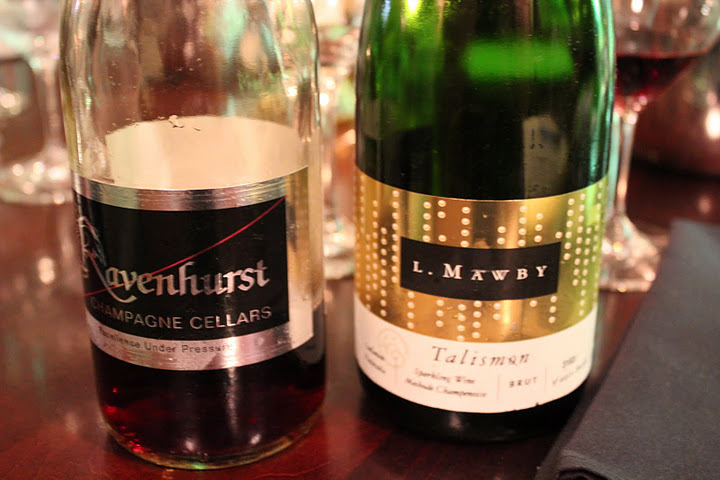
Ravenhurst Champagne Cellars Brut Noir, Ohio, NV: Fizzy and fruity if somewhat facile, this red sparkler threw me when I tried to identify the varietal.  With heady notes of violets, brambly blackberry and a bit of mocha, I might have said zinfandel but for a slight—and pleasant—foxiness. But chambourcin it was.

L. Mawby Talismon, Leelanau Peninsula, NV:  Even though I recognized Larry Mawby’s signature yeasty-dry méthode champenoise, I still would have given Talismon the nod in this bubble-off.  Creamy, frothy, dry and delightful, the wine shows brioche, light melon and citrus and a quick crisp finish.

Kassel Advantage: Michigan

Team Advantage: Michigan

*

Black Star Farms Pinot Gris, Michigan, 2010:  I recognized this one, too, primarily because Lee Lutes’ pinot gris is so true to this varietal that it would be hard not to.  Luscious Bosc pear dominates the nose and character-laden palate, with green apple in the center and grapefruit on the finish.

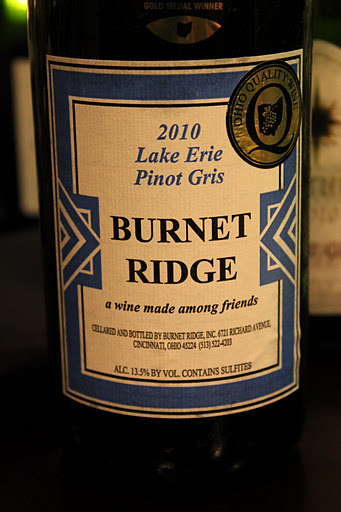
Burnet Ridge Pinot Gris, Lake Erie (OH), 2010:  Pear is there, but the wine relies heavily on the grapefruit angle.  Gardenia and honey in the middle palate make for full flavors, along with melon and pineapple on the finish.

Kassel Advantage: Michigan

Team Advantage: Ohio

*

Debonné Vineyards Riesling Reserve Lot 907 2009 Grand River Valley (OH), 2009:  A lovely and easy-going riesling from Northeast Ohio, the wine is juicy with peach, apricot, honey and flint; it’s satiny cream and shivery crispiness are in balance, and the stone and fruit carry though to the end.

Chateau Grand Traverse ‘Laika’, Grüner Veltliner, Old Mission Peninsula (MI), 2009: Bonus points for giving this varietal a shot; grüner veltliner should be a natural grape for Northern Michigan, but wineries need to sell wine, and a lot of people don’t know from Austria.   Spicy and laden with grapefruit, the wine seems to fade fairly quickly (youth of vines?) but leaves a refreshing acidity behind.

Kassel Advantage: Ohio

Team Advantage: Ohio

*

Ferrante ‘Golden Bunches’ Riesling , Grand River Valley, (OH) 2010:  Striking gunflint notes on the nose with tangy, lime-soaked stones in the palate.  A spicy undertone throughout, but in general, the wine struck me as a bit thin.

Left Foot Charley Riesling, ‘Seventh Hill Farm,  2010 (Old Mission Peninsula (MI):  Dissention among the ranks!  I clearly picked up nose notes of gasoline (odd that this is a positive, but in a riesling it can be—and in this case, it was), but my esteemed colleague David Creighton picked these aromas so noticeably in the Ferrante (I didn’t) that I thought someone had done one of those shell-game scams on my wine glasses.  So I re-poured and stuck with my original opinion.  Wonderful wine; behind Gasoline Alley was candied lemons and a remarkable clarity of stone fruit flavors.

Kassel Advantage: Michigan

Team Advantage: Michigan

*

Not

Meranda-Nixon Norton, Ohio River Valley, 2010: Here’s an odd one: Nixon does Norton.  But it’s neither Richard Millhouse nor Ed, it’s Tina, wife of Seth Meranda, and a remarkable little berry that most folks have never heard of, despite its role as the only native American grape with sufficient natural sugar to make a decent table wine—and certainly the only one that Riedel makes a glass specifically for.  Norton’s gamut of gusto covers blueberries, huckleberries, black cherries, with some mint and coffee in the background.

Old Shore Vineyards Pinot Noir, ‘Tree Line’, Lake Michigan Shore (MI), 2010:  Michigan’s Krugerrand king Cornel Olivier teams up with David and Dannielle Maki to produce primarily pinot gris and pinot noir in the bucolic bailiwick of Buchanan.  The first bottle we opened was corked, so the contest was officially scratched—but the second bottle was splendid, opening up to reveal a rich and detailed personality ripe with kirsch, violets, crushed stone and spice.

Sudden Death Overtime Advantage: Michigan

*

The Capitulation

Let’s be adult about these results, shall we?  The ruling on the field stands.  We were unable to come up with a replica of the Appomattox Courthouse in which to accept Ohio’s unconditional surrender,  but we fully expect to be offered a fifteeen year occupation of Toledo—which as a health concern we will graciously decline.  We will, however, accept the Rock and Roll Hall of Fame, which really should be ours anyway.

According to Hall, Selection alone for this competition is recognition of merit.”

Which, dear boy, also holds true for wearing a football letter and will presumably be of some consolation to you when, on Saturday, we wipe the field with your Buckeyes.

Posted in Michigan, MIDWEST, Ohio | Tagged , , , | Leave a comment

Planet Bordeaux: Bord In The U.S.A

Time was, the vignerons of Bordeaux thought that the wine world revolved around them.  Is this where Planet Bordeaux is coming from?

Granted, they are in the market to push the Département Gironde, and their splashy and convivial website (planet-bordeaux.com) maintains that its  raison d’être  is to help American consumers ‘interact with the wines and lifestyle that ‘make Bordeaux the world’s wine capital’.

Is Bordeaux, in fact, the world’s wine capital?  They certainly bear the weight of history along with the encumbrance of ego, but I can say that the title has been used at various times by Napa, Christchurch, Capetown, Florence and Mendoza.

So, just to make sure we are all singing from the same hymnal, let’s run down the pros and cons of Bordeaux:

Burgundy Brixx: Neither Premiere Cru nor sugar level

BORDEAUX PRO:

  • Bordeaux is France’s largest fine wine region in both production and vineyard acreage.
  • Bordeaux has more than 9,000 wine producers, 60% of whom make the wine on their own premises.
  • Bordeaux wine has been produced in the region since the 8th century and today, the wine economy is worth 14.5 billion euros every year.
  • Unlike Burgundy, the name ‘Bordeaux’ will never be associated with strippers, wallpaper color or cheap jug wine from the Central Valley.

Street scene, Bordeaux


BORDEAUX CON:

  • Bordeaux is literally overrun by French people.


Okay, so you decide.  Moi, I will move on to a topic closer to my liver: Planet Bordeaux’s mission to promote the region via accessibly priced selections from Bordeaux AOC and Bordeaux Supérieur.

Bordeaux

Both of these appellations cover the same geographical area (all of Bordeaux) and differ only in the age of production vines and requisite aging time prior to release, which even for Supérieur is less than a year after harvest.  Slightly less ‘base yield’ is permitted (50hl/ha compared to 55) at Supérieur harvest, and the wines themselves must have a minimum alcohol content of 10.5% (as opposed to 10% for basic Bordeaux Rouge).  Otherwise, there is not a massive amount of difference between Supérieur and inférieur; neither provides massive flash or structure, but both should be fruity, approachably acidic and only superficially influenced by oak.  They are not ageworthy, but should still possess true Bordeaux character—albeit in a Roloff-sized package.  (What true Bordeaux character means is a topic for  hours of debate, but essentially, you should expect an earthy wine with plum, blackberry, cedar and stone on the nose and palate.)

Approximately four times as much Bordeaux Rouge is made than Supérieur, and the total of both winds up as 55% of the entire output of Bordeaux—equating to a worldwide consumption rate of (this is not a typo) fourteen bottles per second.

Four of those bottles recently went down my gullet thanks to the kind folks at Balzac Communications, who inexplicably continue to send me samples despite the fact that I make fun of their name every time they do.   (I did promise to  stop once I hit puberty).

Anyway, these wines, ranging in price from $10 to $14, have a combined value of $47, and it begs the question: If Planet Bordeaux’s mission is to showcase the terroir of Bordeaux, thus gaining converts from around the world, would they be better off suggesting a single, excellent wine for $47 (for example, Château Beau-Séjour Bécot, Saint-Émilion 2008, rated 90 + by each of the ‘big three’, Wine Spectator, Wine Enthusiast and Wine Advocate) rather than four middle-road, somewhat homogeneous value wines?

Maybe not.  One thing you would not gain from traveling the former route is an understanding of how vital vintage is in Bordeaux.  The four bottles I sampled came from three different harvests: 2007, 2008 and 2009;  all were drastically different:

2007 was a dull, drizzly season in Bordeaux, with a condition known as ‘shatter’ or coulure affecting the flowering.  Spring was followed by an equally dismal summer, and a rainy August so affected futures that many high-ticket speculators didn’t even bother to attend the en primeur barrel tastings.  Top estates produced fair, early-drinking wines without a lot of ‘wow, but the broader AOCs were thin, green and herbaceous—likely the worst vintage since ’98.

2008 started off on a downhill note; like ’07, the Spring was cool and damp, but in July, it brightened up considerably.  More rain in August had vintners holding their breaths, then sniffing for mildew, but the vintage was saved by a prolonged heat wave in September.  The wines, for the most part, wound up ripe, perfumed and complex.

Initially, 2009 was almost universally considered to be a stellar vintage; possibly the best in decades.  Prices rose accordingly.  Not all are aging quite as predicted, but clearly, this would be a vintage with which to stock up if you could afford to.  The best, from top estates, were beautifully balanced and integrated with tannin, fruit and acidity; the worst were a bit dilute, but still lovely.

Tasting Notes:

Château Majoureau Hyppos, Bordeaux Supérieur Rouge, 2008, about $10:  At 14 bottles a second, the world would consume the entire output of this petit château within about twenty minutes.  The hundred acres are planted to all the classic Bordeaux varietals, white and red.   Hyppos is primarily merlot spiced up with 30% cab franc, the wine shows a bright, meaty side that’s touched with bell pepper, graphite, clay and tobacco leaf. You feed the hungry, hungry Hyppos and I’ll save this for the thirsty, thirsty ones.

Château de Lugagnac

Château de Lugagnac, Bordeaux Rouge, 2008, around $10: A beauteous bargain basement Bordeaux, structured and fleshy.  Nose notes include with currant, plum and pipe tobacco;  the tongue tang is ripe and fruity and the finish longer than you have any right to expect at the price point.  The delight’s in the detail, of course— de Lugagnac sits on an ancient shelf of iron and chalk from which it picks up many subtle flavor nuances.

Maison Sichel Sirius, Bordeaux Supérieur Rouge, 2009, about $13:  The forty fingerprints that are all over this luscious red belong to Allen, James, David and Benjamine, the Sichel brothers who produce it.  Although their printed hype refers to its namesake, Sirius, as ‘the brightest star in the solar system’, I will leave it to you poindexter types to explain to the brothers what’s wrong with that picture—me, I’ll sit down to another glass of this impressively endowed, concentrated wine, whose terroir—centered on the clay-limestone soils of the Garonne river bank—lend notes of smoke, cassis, mocha and slate.  Still a bit closed, but drinkable.

Château d’Argadens, Bordeaux Supérieur Rouge, 2007, around $14: The priciest wine of the quartet comes from the most challenged vintage; perhaps due to the Sichel name associated with it.  In fact, the property fared better than most of its brethren as it sits upon one of the highest hills in the Entre-Deux-Mers between the Garonne and Dordogne, and the soils are well-drained and nicely exposed to the sun.  The fruit has begun to fade already; what’s left is black cherry and cranberry; it’s been replaced with leather and light hints of chocolate and coffee.  Since ‘drink yesterday’ doesn’t fly in this particular continuum, let’s call it a ‘tonighter’.

Posted in Bordeaux, Cab/Merlot, FRANCE | Tagged , , | 1 Comment

Wine, Women and Just Plain Wrong

I recently read a post by Huffington reporter Brooke Carey in which she got all full of herself because her boyfriend called her ‘more of a man than him’ when she ordered whiskey instead of what he’d asked for: Bud Lite.

She claims, ‘Women who embrace masculine interests are often considered smarter, more laid back, and more fun to be around than their prissier sisters’.

It’s food for thought—or drink, anyway.  And indeed, it got me thinking:  How drastically do whiskey ads, which have, throughout history, been overwhelming male-oriented and male-directed—affect a woman’s impulse buy at the bar?

First, though, I need to dispel some of the absurdities inherent in Ms. Carey’s quote.

‘Women who embrace masculine interests are often considered smarter…’  Considered smarter by whom? Other women?  Oh, by men!!  That’s because we can’t be expected to have meaningful conversations about 17” chrome Momo rims, public flatulence, fantasy football, running people over on Grand Theft Auto or titty bars when speaking to some dumb broad sipping Pol Roger.

‘…more laid back…’  What kind of laid back?  There’s dry, sarcastic, Daria from Beavis and Butthead laid back; there’s sultry, dextromethorphan-diva Sade Adu laid back;and then there’s porn star Sasha Grey literally laid back.  Say, Brooke—guess which one most appeals to the embrace of ‘masculine interests’?

‘…more fun to be around than their prissier sisters.’  Again, alas, I will respectfully object.  Prissy boys, like those who drink Bud Lite and date rye-chuggin’ women, are not particularly fun for us testosterone-oozing boys to be around, but I sort of dig their prissier sisters.  You think you can’t get prissy chicks hammered on Grand Cru Burgundy as effectively as on Bushmill’s?

Show some backbone, brother—it takes longer, that’s all.

But anyway, this piece was about marketing, so let’s take a chronological walk down memory lane with some classic whiskey ads accompanied by a handful of semi-literate observations.

(Click on ad images to enlarge them).

While celebrating their humiliating defeat at Gettysburg, rebel soldiers who were nearly dead from alcohol withdrawal syndrome (AWS) apparently received succor from front-line nurses carrying full cases of Deep Spring Whisky directly on to the battlefield.  Thanks to the courage of such brave and brassy belles—the cream of Rebel womanhood, who Brooke Carey would not dare call ‘prissy’—many soldiers who would have otherwise perished survived to become fully-functional alcoholics.

*

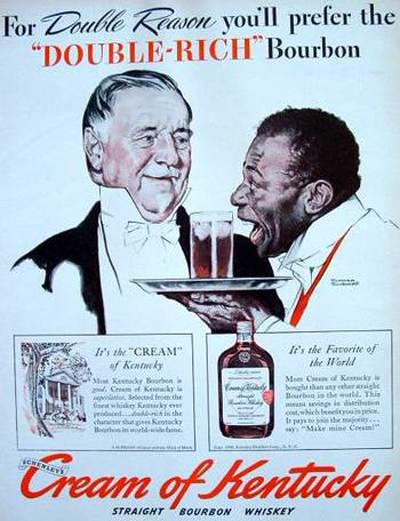
Post-Appomattox, when the demure damsels of Dixie had returned to their burned-down plantations to drink mint juleps on their pillaged verandas, a new breed of whiskey-provider arose: The Negro.  Ever eager to please aristocratic white employers, servants like the gap-jawed Uncle Tom portrayed in this Norman Rockwell-esque ad loved to recommend ‘double rich’ bourbon to double-rich bosses.  Although it is not depicted here, the blue blood in the ad replies, “Why, Beauregard, what in the world will ah do when those Yankee reconstructionist bastards pass that blasted Civil Rights initiative?’ to which Beauregard answers, ‘Doan’ worry, suh— by den, dey’ll be plenny o’ illegal wetbacks to take mah place.’

*

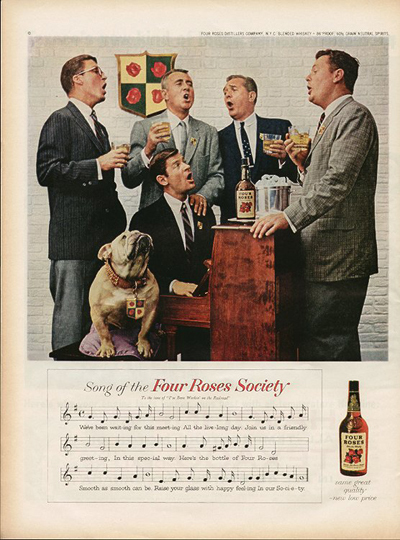
During the height of the misogynistic, women-free Golden Age of Whiskey, the family bulldog had more business fraternizing,  harmonizing and guzzlizing with the boys than did the little missus.  The mindless ditty below these wasted warblers is sung to the tune of ‘I’ve Been Workin’ On The Railroad’, though the only individual in this squeaky-clean sextet who looks like he’s ever been anywhere near the workin’ end of the railroad business is the mutt.

*

The Sixties were rife with racial tension and necessarily saw The Negro again supplanted by The Woman as resident firewater fetcher.  Although ‘Darling’ is not officially shown in the ad, this literary-looking layabout, obviously too busy writing 45° incline beatnik poetry to walk to the wetbar, says: ‘Why can’t you have one too?’ rather than magnanimously suggesting that, in fact, she should have one too.

Off-stage, ‘Darling’ replies: “Seriously, Shakespeare? I’ve been hitting that fucking fifth of Grant’s since before ‘As The World Turns’ started.”

*

You can blame cheap third world labor, commercial banks refusing to lend Mom ‘n’ Pop a buck, an underwater housing market or Wall Street greed, but as ‘Mad Men’ succinctly points out, the real reason why our economy is in the toilet is because during its formative years, businessmen made decisions while shit-faced, and now we, their grandchildren, are paying the price.  Hip flasks like the one in this ad are now considered museum-worthy objets d’art, which is an aesthetic way of hiding the fact that our forefathers couldn’t get from one bar to the next without taking a little nip from the trench coat pocket.

(Note that the ad touts half-pints at ‘no extra cost’, when in fact you might expect it to say, ‘Since you’re only getting half the liquor, half-pints are actually cheaper…’)

*

One of the first stabs at marketing whiskey to women.  And yet, it really isn’t, is it?  Even in the Seventies this notion was so controversial that ad agencies drenched it in sexuality really meant to appeal to dudes.  Notice the spread-legged, subservient-on-the-floor posture of the photo’s model and her come-hither comment, “I never say no to Catto’s”—which we troglodytes totally understand to mean, “I never say no to a one-night stand after getting obliterated on Catto’s”.  And even so, lest we worry that this girl-who-can’t-say-no threaten our fragile masculinity like Brooke Carey did to her boyfriend, the copy reassures us that other scotches are either too heavy or too light, not ‘just right’,  thus reducing her to the status of a diminutive, iconographic Goldilocks.

*

Finally, an Eighties ad featuring zero well-groomed businessmen, zero baying bulldogs and zero groveling black people, but rather, focusing upon two healthy, active women obviously self-confident about their intelligence and athletic prowess!

But hang on a sec—it’s just a joke, isn’t it?  Every healthy horndog on the planet will initially miss the tagline while honing in on the twin, well-defined gluteus maximi, possibly imagining such debaucheries as might nestle therein.  Then, he reads the quote and chuckles to himself, ‘Right.  It’s all about your mind.

Rest assured, Alley Oop, Johnny Walker is chuckling right along with you.

*

Thus, you’d expect an enlightened generation of politically correct, twenty-first century whiskey ads.

And yet, Maker’s Mark attempt at ironic humor leaves our face all scrunched-up with looks of puzzlement.  ‘Your bourbon has a great body and fine character; too bad my girlfriend doesn’t.’ 

Who is this phantom man talking to anyway?  His buddy?  The bartender?  The Maker’s Mark company itself?  And if it was any of the above, he’s obviously not drinking Maker’s Mark at the time or else he’d say, “My bourbon.”  Or, ‘This bourbon.”  We feel bad for the whining loser, of course, because we sense that he’s probably not worth a smokin’ babe of fine character, nor maybe even expensive small-batch bourbons, but the moment becomes  instantly awkward (bad idea, ad people) and makes us want to respond, “Well then why don’t you get off your drunken ass and go to the gym with her, maybe make something healthy for dinner, or worse case scenario, dump her and try to find somebody more worthy of your hyper-selective tastes?

What’s that??  Oh, another round instead…?”

You’ve come a long way, baby.  Too bad Madison Avenue hasn’t.

Posted in Bourbon, GENERAL, LIQUOR | Tagged , , | Leave a comment

Warren Winiarski’s Stag’s Leap of Faith

Within vino’s voluminous vale, the story of Stag’s Leap Wine Cellars is the story of Napa.  At least, it’s a microcosm of Napa’s rise from a fiefdom of meh to a kingdom of quality—and that’s a crown that Warren Winiarski can make a legitimate claim to owning.

None of the contestants were asked why a fifth of Americans can't locate the USA on a world map.

This is not to steal thunder from the Krugs, the Schrambergs or the Beringers—all of whom established Napa wineries a century before Winiarski skittered onto the scene.  To understand Winiarski’s position on the throne requires a review of the momentous Judgment of Paris, which caused France—then considered by the world (and especially, by themselves) to be peerless producers of cabernet sauvignon and chardonnay—to utterly lose its equilibrium.

In 1976, British wine merchant Steven Spurrier organized a gimmicky competition wherein he pitted California cabs and chardonnays against Bordeaux and Burgundies; ten wines in each category.

Spurious Spurrier spouted some sputum

Since Spurrier was a purveyor of French wines exclusively, his self-confessed goal was to prove that California wines were inferior to French; the fact that the competition would take place during America’s bicentennial insured that PR machines would be operating at full steam.  Thinking to ensure victory for his portfolio of Old World classics, he stacked the pool with French judges—(of the eleven, only one was American)—including such luminaries as Pierre Brejoux, Inspector General of the Institut National des Appellation d’Origine Contrôlée, Michel Dovaz of the Institut Oenologique de France and  Odette Kahn, director of the prestigious Revue du Vin de France.

Subsequently, Spurrier confessed, “I thought I had it rigged for the French wines to win.”


“My Wine Has No Nose.”  “Then How Does it Smell?”  “Awful.”

Epic fail; worse than Waterloo. Among the recorded comments of the judges were, “Ah, back to France,” upon sampling a Napa chardonnay, and, “This one is definitely a California—it has no nose, “ after sipping a Bâtard-Montrachet.

In retrospect, Spurrier’s biggest mistake was making it a blind competition.  At very least, he could have coughed every time the judges tried a French wine.  As you no doubt know, in the end, California not only won top honors in both categories, but literally dominated the debacle.  As one observer noted, “It was so utterly improbable that skilled French tasters, suckled on Bordeaux red and white Burgundies, should not only fail to recognize their own wines, but actually express so strong and concerted a preference for those of the New World.”

Nelson Muntz, hallowed bully at Springfield Elementary School, phrased it succinctly, and far better than moi:  “Ha, ha!”

And, beating Château Mouton-Rothschild, Château Montrose, Château Haut-Brion and Château Leoville Las Cases?  Warren Winiarski’s 1973 Stag’s Leap Wine Cellars Cabernet Sauvignon, which was a full three years younger than the first, second and third runners up.

To say that the French were incensed is understated; they hadn’t been this pissed off since that Austrian chick told them to eat cake.  They gave Spurrier the silent treatment for a year, making him sit in the corner with a conical hat and banning him from prestige wine-tasting tours.  He might have counted his lucky stars, too—in 1976, believe it or not, they were still guillotining people in France.

How You Gonna Keep ‘Em Down On The Farm After They’ve Seen Pa-ree?

Separated at birth? L.: Winemaker Winiarski. R.: Widow-maker Madoff.

Meanwhile, prestige in hand, Warren went back to growing grapes, which is all he really wanted to do anyway.   Part of a new wave of 1960’s prospectors, he’d left an academic career in Chicago to go west.   He established himself as a winemaker wannabe in Napa, and moved up the ladder rungs as as an apprentice with Lee Stewart at Souverain Cellars and then, as assistant winemaker at the newly created Robert Mondavi Winery.  Once his hands were stained sufficiently purple, he began to search for his own vineyard, finally finding one in the Stag’s Leap District, which he purchased from Napa pioneer Nathan Fay.

Stags Leap District, incidentally, was the first appellation in Napa to be designated an AVA (1989) based on its terroir. The soil is composed of loam and clay from the nearby river along with volcanic deposits from ancient eruptions in the Vaca Mountains.  Nathan Fay first recognized the suitability of this district for growing Bordeaux varietals, and planted the area’s first cabernet sauvignon in 1961, but it was Winiarski who dared to bottle merlot—then woefully under-represented in California—as a stand-alone varietal.

Can you tell which 'R.P.' is which?

A decade after the Judgment of Paris, Winiarski had perfected his wine to the point where 1985’s Cask 23, commanded the highest release price ($75) in Napa history.  It was referred to as “Truly sublime and perhaps perfect…” by a certain critic who shall remain unnamed, although his initials, ‘R.P.’, may as well stand for ‘Really Picky’.

Winiarski continuted to expand, buying more property, building new facilities, forming conservation easements with the Napa County Land Trust (legalese for ‘no Wal-Marts’) and a state-of-the-art multi-tunneled cave for barrel aging red wine.

The culmination of all this activity, award-winning and aggressive accretion occurred in 2007, when Winiarski turned over the Stag’s Leap stewardship (read: sold for a boatload of cash) to a joint venture between Piero Antinori and Chateau Ste. Michelle.

It’s fair to say that this sale was almost as earth-shattering to wine cognoscenti as was the Judgment of Paris, and more than a few eyebrows were elevated at the notion that this near-sacred winery could prosper under the umbrella of a 600,000-case-a-year Washington conglomerate primarily known for middle-road rieslings, but Winiarski has done his best to reassure his constituency:

“I’ll need to teach them about the terroir that I learned over 40 years,” he said.  “I’ll be here at the winery part-time. It’s not like I’m turning out lights.”

He’s proven himself true to his word, too.  After all, you can take the winemaker out of the vineyards, but you can’t so easily unload your DNA: ‘Winiarski’ is Polish for ‘Son of a Winemaker.’

Tasting Notes:

Stag’s Leap Wine Cellars Chardonnay, Karia, Napa Valley, 2009, around $35:   Classic Napa style with creaminess and crispiness as counterpoints.  Primary aromas are apple pie, lemon zest and pear, with some green apple and French vanilla on the mid-palate.  A vibrant wine that’s built in the vineyard, having kept acidic and refreshing by twilight breezes from San Pablo Bay.  The wine finishes sharp and clean with a bit of custard and oak.

Stag’s Leap Wine Cellars Cabernet Sauvignon, Artemis, Napa Valley, 2008, about $55:  Nicki Pruss, Stag’s Leap’s winemaker, describes vintage 2008 as ‘a scary movie with a happy ending’.  Though yields were compromised due to early-season frost, the wine winds up being a signature Stag’s Leap red brimming with juicy Bing cherry, fennel, violets, star anise and dried sweet herbs—notably, lavender.  Cassis, baking chocolate and smoke dominate a silken mouthfeel with a long, mineral-tinged, mocha finish.

Posted in Cab/Merlot, CALIFORNIA, Chardonnay, Stag's Leap | Tagged , , , | Leave a comment

e-Cigs®: ‘E’ Is For ‘Eeeeeeew’

I have about as much business writing about electronic cigarettes as I do writing about inflatable sex dolls, but I can’t help noticing that they are being marketed in a manner that might be charitably referred to as ‘identical’.

Here are some advertising points that were presented to me in a recent email urging me to give e-Cigs® a try; below, I have merely substituted italicized sex-doll words for the word ‘cigarette’.

  • Looks and feels like a real… (woman?).
  • Cheaper than real…  (women?).
  • Freedom to…  (diddle?) anywhere.
  • No offensive… (girly?) odors.
  • Reduce health risks… (STDs?)

Hon Lik

You will no doubt find this analogy distasteful, childish and utterly facetious—until you reference ‘electronic cigarettes’ on Wikipedia and discover that they were invented in 2003 by a pharmacist named Hon Lik.

Yeah, that’s not a typo. Hon Lik. Just saying is all.

Personally, I never developed a taste for medical-grade silica and I haven’t taken so much as a hit off a cigarette since I was twenty-two, so I am conspicuously unqualified to review either one. I will, therefore, restrict my comments to the mundane, the ludicrous and the snide.

First, electronic cigarettes are cylindrical, ultrasonic cartridges through which the user inhales a propylene glycerin-based liquid that apparently contains cancer-causing nitrosamines which have been zapped into an aereosol mist by an atomizer.

Now, does that sound like a perfectly safe way to cut back on smoking or doesn’t it?  Nevertheless, our Big Brother FDA has seen fit to actually test electronic cigarettes, and has found traces of nicotine in some cartridges claiming to be nicotine-free.  Hence, in July 2009, they issued a press release discouraging the use of electronic cigarettes.

As might be supposed, that decision had the Electronic Cigarette Association® fuming; they insisted that the tests were ‘too narrow to reach any valid and reliable conclusion’.

Even so, ignoring  such a well-composed and doubtlessly unbiased diatribe, Health Canada also issued an advisory against electronic cigarettes.

Leave it to the American Association of Public Health Physicians—whoever they are—to breath some fresh air into this smoky debate. They maintain that that the effects of second-hand smoke will be significantly decreased by using electronic cigarettes.  Well, AAPHP; considering that the smoke that e-Cigs® users exhale is merely ‘simulated’ rather than real, I’d say that you’ve reached a pretty sound conclusion.

Smoke on, buddy. Smoke on.

What Do You Think About What I Think About What I Just Said?

I’m glad you asked.  Quite frankly, I’m not particularly concerned with the health effects of either e-Cigs® or Marlboro Golds®, and in fact, encourage inveterate smokers to continue down their road to personal extinction.  Perché?  Because I bask in the sense of superiority I derive from having given up a pack-a-day habit two decades ago and having never suffered a single relapse.  To me, this means that I am smarter, more disciplined and healthier than you—never mind that I substituted many even more self-destructive habits (some of which are legal) to replace my cigarette jones.

If you die, I will just have to find some other sap to feel superior to.

At least, I am smart enough not to fall for the small-print scam that the e-Cigs® email is attempting to foist upon me.  Although the sample pack that the company promised me is free, I have to pay ten bucks for shipping and handling—most of which I am guessing goes to handling since the whole package is designed to fit in your vest pocket.  So confident are the e-Cigs®  folks of my complete satisfaction that I need do no more.  On the 15th of every month, unordered,  e-Cigs® will send me refills for which I will be charged $100 on my VISA—plus shipping and handling.

This is the same kind of crap that Publisher’s Clearinghouse used to pull on me when I was a kid, where I could order twenty albums for a nickel, then, every few weeks, they would send me a box of records I didn’t order, for which I’d then be billed.  I remember shoring up my album collection for about a year before I sent them a letter saying, ‘I’m a minor, so good luck trying to collect.  BTW, thanks for the free boxed-set of The Statler Brothers Greatest Hits, who I can’t even stand.’

Unfortunately, I had to click an ‘Over 21’ box before I could order the e-Cigs®, so there goes that ploy.

Let’s Talk About Sex Simulacrummery Instead…

As it turns out, there is not much available at my local branch of the Detroit Public Library® regarding inflatable sex toys (other than the odd fact that Hitler issued them to his troops to guard against syphilis)—that, or the librarian just wasn’t with the program when I asked her for reference books.

Gypsy sex doll

Next, I did some online research and found the following spec sheet for a ‘semi-solid inflatable Size 1:1 human Gypsy Erotic Doll with high, feel good, real skin’ from Guangdong, China.

(Some of the selling points appear to have been translated into English more or less correctly:  ‘She is the privacy of your most faithful lover,’ which must be a relief to those gentlemen living in fear that their sex doll has a wandering eye.

But some of the other ad bullets are harder to grasp, so I will attach them verbatim and leave them to you to work out:)

  • Water: All models are solidly insoluble in water
  • Pollution: That nothing can stick to doll body.
  • Realistic: In strict accordance with the proportion of correct human.
  • Flexibility: The interface has a wide range of activities at the regional points.
  • Security: On the human body is absolutely safe, no odor.
  • Easy: Ready available, the total mind and body can give you the highest level of enjoyment.
  • Temperature: Able to withstand any temperature below 300 degrees.

It would seem that even in Catonese pidgin, every possible contingency—including doll-play on Mars, where the temperature is, in fact, below 300 degrees—has been anticipated, engineered and perfected by those horny, chicken-feet-eating, warm-water-drinking, ‘Hello Kitty’-watching, sleeve-protector-wearing, noodle-slurping Chinese.

I may not know art, but I know what I like to wear to PTA meetings…

Or Has It…?  

Apparently not, or at least according to Dutch ‘artist’ Sander Reijgers, who has released a line of NSFW couture made from recycled sex dolls.

He snorts: “These raunchy, waterproof windbreakers and tracksuits are not for the prudish, but if you’re looking to make waves at your local Starbucks or, better yet, next PTA meeting, sporting one of these should draw some stares…”

Stares and waves, indeed, Sander.  But I will go you one better, you red-pants-wearing, gezellig-saying, raw-herring-eating Dutchman.  Since the doll’s ‘anatomically correct’ bits are intact on the windbreaker’s hood, I intend to adorn the ‘orifice most associated with Linda Lovelace® on mine with an e-Cigs® cartridge, fully atomized and leaking simulated smoke.

That ought to make the Harper Valley PTA sit up and bark, ought it not?

*

But, Don’t Take My Word For It!

Slightly Modified e-Cigs® Testimonials:

Rüdiger K.

Rüdiger K., Schutzstaffel officer, Einsatzgruppen, Russian Front:

“I received my (Eva Braun-shaped sex doll) just a few days after my order and I’m more than impressed by the solid feel.  It certainly feels like some time went into the design.  It’s almost like a high-end (hooker).

Diatronia M.

Diatronia M., Medical Lab Technician:

“These (George Clooney-shaped sex dolls) are amazing. I love being able to (cop a quick schtupp) anywhere, even my own home, without worrying about the (really bad example) I would pass on to my children.

Posted in GENERAL | Tagged , , | 1 Comment

Beaujolais Nouveau Est Blasé! But Still Okay…

Forget that it’s essentially grape-flavored alcohol juice.  Ignore the ten crus in the appellation that are by far superior.  Disregard the fact that it occupies lowest rung on the Burgundy ladder.  It’s time to pull out the stops along with the corks…

Beaujolais Nouveau est arrivé!

Rachael Ray is on the left.

We Americans have a soft spot for mediocrity, don’t we?  We celebrate the world of average with an almost cult-like sincerity.  Rachael Ray.  Steve Carell.  Rick Perry.  And why not?  This country wasn’t built by monarchs on thrones but by rubes on tractors.  We’re more about septic tanks than scepters.  So it’s fitting that while wine cognoscenti snicker and roll their eyes, we plebian plonk partakers make a big deal every third Thursday in November over a product that is barely ready to consume.

Beaujolais Nouveau may be to the wine world what pizza dough is to Herman Cain, but any chance to celebrate anything over a snooker of red seems to me an idea worthy of participation.  So the stuff isn’t Concours Mondial material; at around ten bucks a bottle, neither are you risking the rent.  Drinkable?  Duh.  The point of Beaujolais Nouveau is to have something inexpensive and unremarkable to gargle the moment it’s done fermenting—staring at a bottle for two years waiting for the phenolic compounds to link up works for everyone except the tangentially thirsty.

Beaujolais, which from the outset (compared to big bro Burgundy) didn’t have a lot to work with, has made a cash cow out of a quaint bistro tradition.  In days of yore, vintners used to ox-cart barrels of baby wine—six weeks old—to various watering holes and hawk it under banners boasting  Beaujolais Nouveau Est Arrivé!  The other reds of Beaujolais, made with the thin-skinned, tannin-challenged gamay grape, require a bit more aging to reach their prime, but compared to the muscular cabernets of Bordeaux or the regal pinots of Côte de Nuits, not much.  Even top cru Beaujolais are prized for their deep-purple fruitiness—the result of a technique called carbonic maceration during which gamay grapes ferment inside their skins.  Even so, in 2011, nearly half of all wine production in Beaujolais will be sold as Nouveau, equating to 65 million bottles.

Where’s Dubouef…?

In Beaujolais, just about everywhere.

So how did Americans get so tied to the BN phenomenon?  The cynics among you claim the ‘M’ word: Marketing.  Georges Dubouef, uncrowned caliph of Beaujolais and Mâconnais, is credited with kick starting the frenzy a few decades back with splashy labels, blitzkrieg campaigning and low pricing.

All well and good, but a kinder, gentler reason may be the uniquely American tradition of roasting a turkey exactly one week after the release of Beaujolais Nouveau.  BN is a refreshing food wine, and it pairs remarkably well with the myriad flavors of Thanksgiving.

Perry as convention keynote speaker: “So, a retard walks into a bar. He says, ‘OUCH.’”

So quaff on and never mind the naysayers, who should get their noses out of the air and back into the wine glass where they belong.  You don’t buy a Corolla expecting an Avalon and neither should you pick up a bottle of Beaujolais Nouveau looking for a Château des Jacques Moulin-à-Vent.

For what it’s worth, according to some Beaujolais vignerons, 2011 is a grande année, one of the best vintages in fifty years.

Which may be a bit like Rick Perry claiming to be the brightest guy at a Down Syndrome convention.

Tasting Notes:

BN won’t be released until 12:01 on Thursday, so I haven’t seen any yet.  But I bet I can come close:

Electric purple in color, the wine is a confected cornucopia of concord grapes, ripe apples, strawberry and watermelon on both nose and palate.  Flavors are fresh, simple and juicy; appealing in the fashion of a guilty pleasure. There’s a bit of violet and licorice behind the fruit, and pure, silky grape tannins to provide a short but puckery finish.

Duboeuf family portrait

Defamatory Notes:

A couple of years ago, I wrote a column about a scandal involving a Georges Dubouef production manager who was caught adding cheaper wines to Cru Beaujolais in order to stretch out the vintage and volume.  Immediately thereafter, I received a nasty-gram from DuBouef’s press people, forcing me to issue an apology.

But, I noted that they were unable address my other, far more serious assertion: that Georges Dubouef has attempted to stretch out his name by adding cheaper letters.

To wit: ‘George’ clearly does not need an ‘s’, which according to Scrabble International is worth an extra point.  And Dubouef is the only surname on the planet where ‘o’, ‘u’ and ‘e’ (one point each) all appear together in a row… an incomprehensible violation of time-honored spelling laws clearly intended to secure him a higher score.

Posted in Beaujolais, FRANCE, Gamay, Gamay | Tagged , , | Leave a comment

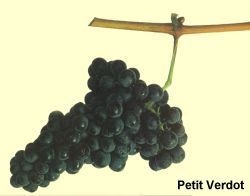
Petit Verdot Goes Gangbusters in Ripley, Ohio—Believe It Or Not

The jury is hereby ordered to disregard the headline and answer the following question:

If you were going to purchase a ton of wine grapes from California, which varietal do you suppose would set you back the most?  Nope, not cabernet sauvignon, whose culty catechumens are willing to spend thousands per bottle; not low-yield viognier, which is unforgiving even in idyllic seasons; not even trendy malbec, which has recently had Argentina crying for Argentina as Left Coast versions win top spots at competitions.

Bailiff, can you read the verdict?  It’s Petit Verdot.

Generally used as a blending grape, petit verdot’s saturated color, hefty structure and exotic bouquet—often reminiscent of peach blossoms, violets and lavender—adds immeasurably to Bordeaux-style wines, and a little goes a long way.  Typically, less than 3% petit verdot is required to lend a noticeable spice to merlot and floral shades to cabernet sauvignon.  Hence, small quantities of the grape are extremely desirable to Meritage masons, and as John Locke pointed out in 1691, ‘The price of any commodity rises or falls by the proportion of the number of buyer and sellers’.

To put this into perspective, in 2008, grape producers in Napa were paid an average of $3,300 per ton for their grapes—(about $2,700 less than it costs to produce them, but that’s a different column).  At $2,100, pinot gris pricing was balanced a bit by cabernet sauvignon at  $4,700.  In 2008, Merlot fell to $2,600, with spot market buyers able to pay as little as $500 for ‘homeless’ fruit at the end of the season.  Other Bordeaux varietals like malbec and cabernet franc sold for around $4,400 per ton, while viognier—which you’d guess would be a top-earner based on Locke’s supply and demand maxim, took home a scant $2,700.

By contrast, a ton of petit verdot sold for $5,600.

So a non-farmer might naturally ask, ‘Why don’t wine growers just rip out the pinot gris and plant petit verdot?  Of course, it’s because prices fluctuate, and in the five to seven years that it would take for your new grape vines to reach full productivity, trends, tastes and prices would have changed (but Murphy’s Law wouldn’t), so you’d likely find that your petit verdot is worth less than your pinot gris would have fetched had you left well enough alone.

Life’s a bitch, and then you farm.

The fact that petit verdot (a somewhat sissified varietal) is difficult to ripen and tends to go all PMSsy during late-Autumn rain plays into the equation as well, which is why it is now almost extinct in its hometown of Médoc.

New Red In Oh-Hi-Oh

Vinifera Relocation Program?  Somehow, some way, petit verdot has found a comfortable landing zone in Ripley, OhioKinkead Ridge—owned by Ron Barrett and managed by partner Nancy Bentley—was first planted to the French ex-pat in 2001.  Prior to that, Ron and Nancy had been involved in wine operations in the Pacific Northwest, but they were ready for purpler pastures, and began a nation-wide search for potential new vineyard  sites.  As a native of Columbus, Ohio, Ron probably got a little syrupy when he discovered that the Ohio River Valley was perfectly suited for the ambitious game plan they had in mind: Planting glamorous grapes from Bordeaux and Rhône while establishing an experimental plot to test even more extrinsic rootstocks and scion woods.

A word on the Ohio River Valley AVA, and a couple of facts you may not know about it (I didn’t):  First, it’s the second largest AVA in America, and second, it is the birthplace of American viticulture, having first produced wine in 1823.  By the time of the Civil War, Ohio was by far the largest wine producing state in the nation.  Its current obscurity is likely because the primary varietals grown there are baco noir, marechal foch, seyval blanc and vidal—hybrids not likely to make anybody’s Top 100 list.

According to Ron, “With few exceptions, these wines match up poorly with suitable vinifera grown on a good site.  In the case of red wine, the contrast is stark.  With the possible exception of Norton (Cynthiana), I know of no hybrid red varieties which rise above the level of California jug wine in quality.”

Ron Barrett and Nancy Bentley

Yet Ron and Nancy recognized that the Ohio River Valley’s unglaciated limestone ridges, rife with wild vitis labrusca, could likely as readily support the noble varieties of southern France.  Beside petit verdot, they have acreage planted to viognier, rousanne, riesling, cabernet sauvignon, cab franc, syrah, and have taken honors at numerous competitions, winning gold at the Finger Lakes International for 2008 Cabernet Sauvignon and the Jefferson Cup for their ’08 Cabernet Franc.

The competition salutes you...

These are worthy laurels to rest on, and indeed, The Kinkead web site indicates that Ron and Nancy are on the cusp of retiring to North Carolina, and includes a for-sale link to the winery.  Ron indicates that in specific, he’s looking for an Italian millionaire—and fair warning, Silvio Belusconi is looking for something to do these days—but, should you make a fair enough offer (based on California grape futures), I guarantee you’ll be in the petit verdot business by this time next year.


Tasting Notes:

Kinkead Ridge Petit Verdot, Ohio River Valley, 2008, about $20:  Get the 2008 and get it now—only 76 cases were made and 2009 was a total climactic blow-out during which none was produced.  (Like dutiful jurors, potential buyers are ordered to ignore this testimony and may not use it in deliberations over the purchase of Kincead).

The world's smallest vigneron is no bigger than a grape... Believe It or Not

Technically, the French would call it a monocépage (100% single varietal) and colloquially, le zèbre (an oddball) since I don’t think a single one of them makes—or would consider making—an unadulterated petit verdot.  It must be a weather thing, since Kinkead’s offering is a fascinating textural smorgasbord, sweet and savory, dense with brambly blackberry, earthy mushroom, graphite, pipe tobacco and plum.  Whether it shows varietal integrity is not in my place to call since I’ve never tried a pure one before; but I can speak to its big tannins, spicy perfume and extracted color.  I found it a bit harsh on the finish; alcohol warm (it’s over 15%) and still clinging to new oak woodiness.

If these characteristics fade—as they should with a few more cellar years—and the wine holds its fruit, you’ve got a home run, not only for the winery, but for the AVA.

Posted in Ohio, Ohio River Valley, Petit Verdot | Tagged , , , , , | 3 Comments