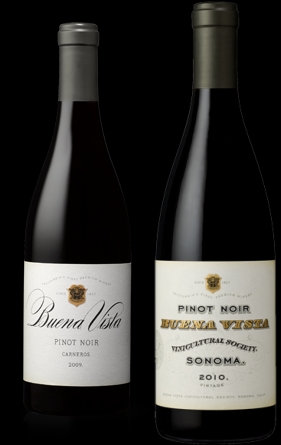
This Beck Is No Loser, Baby—So Why Don’t You Refill Me?

Here comes Santa Claus!

Here comes Santa Claus!

Nothing quite says Christmas like blooming crocuses, picnics on grassy swards with lambs gaily cavorting about and the air filled with soft downy fluff from newly hatched ducklings.  Am I right, or am I right?

I mean, if you’re from South Africa and all.

Detroit Edumacation At Its Finest:

Cass Tech High, where my father taught for two decades.

Cass Tech High School, where my father taught for more than two decades.

I remember a survey once where they asked Detroit high schoolers to find South Africa on a map, and less than 2% were able to do it.  This fact is made even more pathetic when you consider that very few countries actually list their location in their names.

But, whatever.  Our drop-out rate is 75%, and a Detroit high school student has a better chance of going to prison than graduating.  Meanwhile, a 2011 report from the National Institute for Literacy indicates that nearly half of the city is unable to read.

Apologies: As I am wont to do, I have digressed.

Back To Christmas Below The Equator

Das what I'm talkin bout, fool.

Da’s what I’m talkin bout, fool.

I can’t say why exactly, but I don’t buy into this whole Southern Hemisphere theory.  Within this shrinking global network, it makes no sense that Christmas anywhere is not accompanied by snow drifting, yule logs burning, sleigh bells tinkling, pneumonia spreading and ice skaters busting ankles.

Between you, me and the wall, I really don’t believe in Florida either.

Anyway, I have read my history, and I know perfectly well than before Nelson Mandela came along, South Africa was known internationally for its white Christmases.

carte blanceRegardless, there is one thing that we can all agree upon, north and south:  ‘Tis the season for a bit of extravagant tippling, which by most standards includes small ‘c’ champagne.

At least it did for that ultimate authority on classy consumption, James Bond, who in Carte Blanche has traded his gauche martini for top-line Cuvee Clive from South Africa’s most respected producer of sparkling wine, Graham Beck.

Bonds.  Bill Bonds.

“Bonds. Bill Bonds.”

Of course—despite the fact than 96% of un-incarcerated Detroit students think that James Bond is either a genuine historical figure or an alcoholic local news anchor—he is in fact nothing more than a fictional character.  So Carte Blanche author Jeffery Deaver could have had him swigging sulfuric acid from a bleach bottle while mainlining ebola cultures if he had so chosen.

Not so Barack Obama and the aforementioned Nelson Mandela, both of whom are not only real people, but real people who enjoyed Graham Beck Brut NV at their respective inaugural parties.

Gots My Beck, Homie?

Not yet discovered by America’s Champagne-chugging hip-hop home dawgs, who prefer to drink for silly price tags—stuff like Louis Roederer Cristal Brut for $200 a bottle or Brignac Ace of Spades at $300—and not for common sense.  Bond’s beloved Cuvee Clive can be had for around $50.  Let’s keep it our little secret, shall we?

A Little Beckground Info:

Graham Beck, 1929 - 2010

Graham Beck, 1929 – 2010

Considering that many of the most recognized Champagne houses have pedigrees dating back centuries, Graham Beck Wines is not a new kid on the block—it’s a mewling infant still in diapers.  It was first released in 1991 under the directional auspice of billionaire mining maverick Graham Beck, who passed away at age 80 in 2010.

Beck discovered a passion for wine fairly late in life, but instantly dove into it with the same pioneering mania that he brought to Highlands—South Africa’s leading thoroughbred breeding farm—and a property development company in Israel; Beck, a Jew, is buried in Jerusalem.

The eponymous winery has sizeable estates in Stellenbosch and Robertson in the Western Cape—Detroit scholars, listen up: That’s the side that’s not the Eastern Cape.

The Robertson holding is called Madeba and focuses on minimal intervention in méthode champenoise wines, looking for the specific terroir that the rich limestone soils produce.

Erika Obermeyer

The fantabulous, talented, beautiful, outspoken, creative Erika Obermeyer

Stellenbosch’s proximity to the sea and granitic subsoils offer ideal climatic conditions for a multitude of earthy but elegant varietals.  Of the Stellenbosch plantings, cellarmaster Erika Obermeyer, Landbouweekblad South African Woman Winemaker of the Year—a woman with as many adjectives as fans—says:

“I’m extremely excited about the fantastic quality we’re seeing from these unbelievable vineyards.”

South Africa produces a lot of wine that, for those of us whose moon is the right side up, who celebrate Christmas in the winter like God intended us to and whose toilets flush in the proper direction, are acquired tastes.

Frothy, fragrant refreshers like Graham Beck’s outstanding line of fizz may be no exception, but it’s a taste that’s acquired in utero.

I do have it on 007’s authority, however, that they are best neither shaken or stirred.

(It had to be said, did it not?)

Tasting Notes:

Graham Beck Wines, Brut, NV, around $15:  Light on the nose, with apple, pear and biscuit evident; round in the mouth with the cream and acid harmonizing, not sparring.  Short, crisp finish.

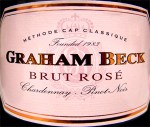
graham_beck_brut_rosenvGraham Beck Wines, Brut Rosé, NV, around $18:  Aromatic fresh strawberry scents open this sensationally priced, salmon-colored rosé and carry through as crème de framboise in the flavor profile along with red apple, citrus, yeast and rose.  Quite an achievement for under $20.

blanc de blancGraham Beck Wines, Bliss Demi Sec, NV, around $20:  Unabashedly sweet, but with acidity and dosage in balance. A honeycomb bouquet with whiffs of lime and melon; abundant mousse and a sweet, gingery body extending into a clean, layered finish.

Graham Beck Wines, Blanc de Blanc, 2008, around $25: Tasty and distinguished from fragrance to finale; nice mineral undertones and a touch of smoke on the nose; brisk and creamy with incisive, almost tropical fruit notes through the mid-palate and a acid-gripping finish.

Posted in SOUTH AFRICA | Tagged , , , , , | 2 Comments

Two For Tea Is Groovy—So Long As One Of ‘Em Ain’t Me

L: Yuck. R: Yum

L: Yuck. R: Yum

Don’t get me wrong—I’m not trying to make fun of herbal tea drinkers here.  They are a close-knit, close-to-the earth community who see the natural non-caffeinated decoction of plant material as inherently superior to overly-caloric, overly-expensive and overly-hyped Starbucks coffee.

On second thought, yes, I totally am making fun of them.  I had tea once, and you know what it tastes like?  A bunch of dried-up leaves somebody poured boiling water over.  Make mine a double, s’il vous plaît.

AA_Medallion_1_1yrAt least black tea offers a smidgen of caffeine—its only plausible plus.  However, any tea that touts ‘caffeine free’ as being an ‘advantage’ leaves me palpably baffled.  See, you have your Alcoholics Anonymous, your Narcotics Anonymous, even your Gamblers Anonymous—human cravings that need anonymouses.

On the other hand, note that there is no Milk ‘n’ Cookies Anonymous, no Buttered Corn-On-The Cob Anonymous, and pointedly, no Caffeine Anonymous.  And for a perfectly good reason: It doesn’t need one.  Walk into any AA meeting, and you’ll see legions of poor teetotaling saps guzzling cup after cup after cup of coffee, and not a single sponsor making tsk tsk snorts of disapproval or mentioning this blatant evidence of out-of-control addiction.

So Sue Me:  I Am Suspicious of Any Herb That Is Legal

L.: God. R.:Xenu

L.:  God. R.: Xenu

Now, I tend to be a live-and-let-live sort of fellow, and if Tom Cruise wants to believe in a Galactic Confederacy and thetans and teegeeacks, I say, God bless him.

Or Xenu bless him, or whoever Cruise thinks is in charge here.

And if someone wants to slog down an ocean of something called Coco-Caramel Sea Salt Herbal, or Traditional Medicinals Caffeine Free Organic Mother’s Milk, I say, have at!

I do, however, reserve the right to snicker my tuchis off either way.

To wit:

On tea-oriented Steepsteer’s website, tea blogger Claire writes:

‘I have a confession: I totally dumped out my cup of Rishi pu’erh and made a cup of Imperial Green Oolong instead.’

What the bloody f**k?

And How Strange Does It Get From Here?

Scientology strange.

Twinlab's CEO

Twinlab’s CEO

Yesterday, I received a press release from Twinlab Corporation titled Top Five Herbal Teas to Prepare You for the Winter Months Ahead.

Far be it from to second guess an ominous-sounding corporation like Twinlab—a name that Josef Mengele would have creamed all over—but, nigga please.

To prepare for winter, of which we Michiganders know a bit, I assure you that you will be far better off stocking your larders with (in this order): Jack Daniels, Tullamore Dew, single malt scotch, Châteauneuf-du-Pape, Angel’s Envy, Rioja, Barolo, Vintage Port and more Jack Daniels.

And not Earth Mama Angel Baby Organic Herbal Tea for Breastfeeding Mothers.

But I suppose, when in Rome; right?  So, what follows are Twinlab’s top five recommended herbal teas followed by my own customary mean-spirited, Scrooge-like commentary:

horny goat weedHoly Basil Tea:  Referred to by Wiki as ‘an escaped weed’, holy basil has apparently been used for centuries as an insect repellent.  Now, since Twinlab is also into aphrodisiacs and male sexual enhancements—hand before Xenu, they produce a pill called ‘Horny Goat Weed’—it seems fitting that the same Wiki article describes holy basil as ‘ovate and erect with a hairy stem’.

In all, I think I’d prefer tea made with the dehydrated gonads of endangered white tigers.

Elderflower Tea:  Traditionally used to elevate the rate of urination while reducing snot, elderflowers go by the most unpolitically correct name of Sambucus nigra. Figuring that you can get the same effects by slamming copious amounts of Sambuca, which is also make from elderflowers, I think that the choice is pretty obvious.

Ginger Tea:  The press release recommends Twinlab’s Ginger Tea because it reduces flatulence.  Whatever.

Long-beakedEchidnaEchinacea Tea:  At first I thought this tea was made with those cute li’l spiny egg-laying anteaters from Australia, but someone dear to me pointed out that Echinacea and echidnas are not the same thing.  The former is widely used by millions to prevent or reduce instances of the common cold.  As someone who promotes buzz-causing substances, it is somehow unholy for me to become the buzz-killer, but nonetheless, a 2003 controlled double-blind study from the University of Virginia School of Medicine and documented in the New England Journal of Medicine stated that Echinacea extracts have no clinically significant effects on rates of infection or duration or intensity of symptoms.

And finally:

St. John's left eyelid

St. John’s left eyelid

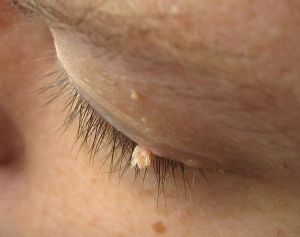
St. John’s Wort Tea:  If I was going to drink tea made from any part of St. John, I don’t think my first choice would be something gross and contagious caused by a viral infection, but that’s just me.  Anyway, the release claims that this tea relieves holiday stress while lightening one’s mood.  Strangely, a study conducted in 2009 concluded that St. John’s Wort is effective as an antidepressant—but only if you’re German.  Of eleven German trials, eight found that St. John’s Wort was significantly better than placebo and the other three were very close. Meanwhile, of the eight non-Germanic trials, not a single one found it to be effective.

Dr. Mengele, take note.

In Conclusion, Class:

Twinlab's R&D facility.  In English, sign reads 'Always Environmentally Friendly'

Twinlab’s Grand Rapids R&D facility. In English, sign reads ‘Always Environmentally Friendly’

Twinlab Corporation has an R&D center in Grand Rapids, Michigan, which is good for our economy, of course, but begs the question:  After reading the above, why in the world would Twinlab need a Research and Development facility?

Based on the press release (and ever the businessman), I can offer Twinlab some elementary budget-slashing tips:

Research:  Wander out into any field anywhere on the planet and rip out anything you find.  Go home, look it up, name your next tea after it.

360_ron_jeremy_0825Development:  Convince the herbal tea community that it cures cancer, prevents Alzheimer’s, reduces the symptoms of any random disease you choose, meanwhile knocking your holiday blues on its kiester and improving your sexual prowess to that of a 1970’s porn star.

Voilà, Twinlab: You can close the building now.

*

After that—if I have indeed sold you—all of the herbal teas listed above are available online via Twinlab’s Alvita® Teas.

http://www.alvitatea.net/

Posted in GENERAL | Tagged | 2 Comments

A Down Under, Down Home, Get Down Thanksgiving

Ode To Katerina B.:

To me, the weirdest thing about Australians—and they are legion—is that they speak English.  That is, if you can process words like chinwag, bodgy, dinkum and crack-a-fruity through your Funk & Wagnalls and still come up with English.

It’s weird because Australia is so far away from anything that could vaguely be considered reality that even their moon is upside down.  They celebrate Christmas in the summer and Easter in the fall; they have mammals who lay eggs, birds with fur instead of feathers; they count among their citizens the world’s most deadly spider, the world’s most deadly snake and the world’s most deadly jellyfish.  With twice as many kangaroos as people and twice as many sheep as kangaroos, it’s not really a ‘human’ continent, is it?

Hawke and Holt

But, they do drink, I will give them that.  It is an established fact that the first Australian settlers—convicted criminals from England whose arrival on January 26, 1788, is celebrated, bizarrely, as ‘Australia Day’—drank more alcohol per capita than any other homo sapien community in the history of earth.  In fact, Bob Hawke appears in the Guinness Book of World Records for having sculled two-and-a-half pints of beer in eleven seconds; in 1983, he became Australia’s Prime Minister.  Another Prime Minister, Harold Holt, simply vanished off the face of the map: Talk about your ‘lost weekend’, jeez louise…

The Aussies may not know where Harold Holt went, but by golly, they know their beer.  And they know their wine.  And I’d be willing to bet my last gold mohur that, while pissing the night away like in that Chumbawamba tune, they know their whiskey, too.

…But They Are Suddenly Experts on Thanksgiving??

So, I get this form letter—in English—from Matt Koch, Rosemount Estate’s senior winemaker, beginning with that odious phrase ‘G’day’—the salutary equivalent of jamming a lit cherry bomb in somebody’s ear—wishing me a Happy Thanksgiving while taking the convenient opportunity to sell me some luscious, fragrant Rosemount Moscato, 2012 as the wine with which to win friends and influence people at the turkey table.

That’s another weird thing about Australians: They release their 2012s before Georges Dubouef releases his Nouveau.

But anyway, this wine is a non-trend-bucker if ever there was one, and frankly, I’m bringing something with a little more oomph to dinner today.  Nonetheless, moscato remains Grape of the Year, and everybody is looking for a slice of the action.  The formula is basic, too: Lightly sweet, priced to move, outrageously aromatic and low in alcohol…  In other words, a wine for people who previously didn’t like wine.

Rosemount Reels it In

Oatley sowing his oats.

As a concept, Rosemount Estates has always been a conundrum—and not in a Wagnerian or Caymussy sort of a way.  Purchased in 1969 by Robert Oatley—Grand Master of Mudgee—the company pretty much put Australian wine on the world map simply by back-blending all the right juice: Price, quality, volume—even stylish packaging.  South-Eastern Australia, the source of most Rosemount grapes, is so massive that it isn’t even referred to as a wine region, but as a ‘viticulture super-zone’, and from the outset, Oatley’s wines were in-your-face approachable.  A scant decade after production began, 1980 Rosemount Estate Show Reserve Chardonnay became the first Australian wine to win Double Gold at the International Wine and Spirit Competition.

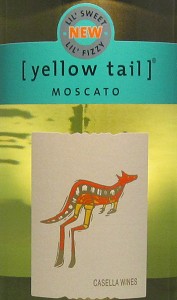
It would be fair to say the continent, having produced wine since the first shipload of crooks arrived in 1788, has begun to lean heavily toward the Rosemount-invented bulk-sales matrix.  Penfolds Grange notwithstanding (which Hugh Johnson called ‘the only First Growth of the Southern Hemisphere’), thanks to supermarket producers like wallaby-labeled [yellow tail], scores of copycat ‘critter’ brands and what Australians call ‘cleanskins’—wines that list varietal but no winery—much of the world has formed an impression of Australian wines as being cheap, chuggable and generic-flavored.

Thus, rather than pushing envelopes in the Oatley tradition, Rosemount Moscato is exactly what you’d expect a $7 bottle of pumped-onto-the-market moscato to be: innocuously light, sherbet-sweet, otherwise rather colorless and bland.

Matt Koch

I must assume that Matt Koch, who has been with Rosemount since 1995, signed the letter under some duress from his directors, since this is the time when Australia is trying to regain some of the premium market share that the bulk boys like Lindeman’s and [yellow tail] ruined.

Says California retail buyer Chuck Hayward, “It’s been a perfect storm of laziness.  People were making so much money they didn’t think they needed to do any work.”

Well, now that the work has begun, the overall Australian strategy seems to be a near-desperate drive to familiarize Americans with a broader array of Australian styles, brands and appellations, especially those wines that command higher prices.

Rosemount Moscato 2012 is the direct antithesis of this all-important roadmap, and I suspect that a canny winemaker like Koch is aware it.

Besides, it is very much a summer wine, rather unsuited for a chilly, cloudy Thanksgiving afternoon.  I know, I know, it is summer down under—just another one of the Southern Hemisphere’s inexplicable anomalies—but they don’t celebrate Thanksgiving, either.

In any case, I still intend to pay homage to my buddy Katerina B. from Sydney:  I have a rockin bottle of Cooralook Pinot Noir ’09 from the Mornington Peninsula—and that’s what I’ll be cracking open—around the same time as the Detroit Lions start cracking open some Texas head.

Posted in AUSTRALIA, Moscato | Tagged , , | Leave a comment

How Hot Is Tin Roof?

Kirkland Signature embossed toilet paper hot.  SKU #31680 12” x 1000’ Foodservice Tinfoil hot.  As hot as Depend® Extra Large Protective Underwear for Men—a 16 pack for $19.99.

By which I mean, Tin Roof is Costco hot.

*

Learning Wine Savvy Via Carburetor Rebuild Kits

I am going to bet that you’ve never heard of the individual who buys and sells more wine than anyone else in the world.  Which is perfectly fitting, because before she started buying and selling more wine than anyone else in the world, she had never heard of wine.

I am referring, of course, to Annette Alvarez-Peters, wine hustler supreme for Costco, who along with a team of underlings is responsible for the annual purchase of nearly one billion dollars worth of wine, stocking the shelves of 337 Costco outlets in 34 states.

In case you’ve never been inside a Costco, this is the retailer that hires people to stand at the entrance to make sure you are a Costco member—even though you have to be a Costco member to buy anything—and then hires more people to stand at the exit to check your receipt against your purchases, which they never do—but is still too cheap to give you a half-cent plastic grocery bag with whatever you just bought.

For my $40 annual ‘fee’, that means that even if I absconded with 8000 grocery bags over the course of a year, they’d still break even.

Annette Alvarez-Peters and Carl Quintilla are still on speaking terms after interview.

Anyway, Annette made wine world waves in a CNBC interview earlier this year when she was asked by anchor Carl Quintilla if she thought wine was more important than toilet paper, underwear or tinfoil.

Her response was, ‘Why?’

When Quintilla pressed her, saying, ‘Because it’s personal,’ Alvarez-Peters replied, ‘If you want to think of it like that.  But at the end of the day, it’s just a beverage.’

Just a beverage, Annette?  Just a beverage??  To quote the immortal Arthur Fonzarelli: ‘And I suppose your mother is just a mother?’

Now, I am not at all sure that wine is, in fact, more ‘personal’ than toilet paper or absorbent underwear, which are far more embarrassing to buy than merlot, especially if the checkout chick is cute and it isn’t eight o’clock in the morning.  But what really stuck in the craw of wine people was that Annette rose to this exalted and powerful position without the slightest knowledge of or interest in wine; previously, she’d been employed by Costco’s auto parts division and had zero training in the wine business.

Name your Napa

People who have slaved in this difficult trade for their entire careers don’t like it when someone who instantly free associates ‘Napa’ with  Sensa-Trac Front Shock Absorbers suddenly hawks more hooch in an hour than they will in a lifetime.

The late Robert Berning, the ‘big daddy’ of wine buying.

Plus, she’s young and smokin’ hot—cuter than any Costco checkout chiquita I’ve ever seen—and that’s also sort of verboten to the textbook vinophile.  A wine buyer should be old, wise and curmudgeonly like the late buyer for Trader Joe’s, who may not have been smokin’ but who sure was Berning.

The thing is, ye splenetic sauvignon snobs, Costco doesn’t aspire to be a hand-sell boutique bottle shop where geeky, passionate clerks like you can turn customers on to sensational wines from unheard-of appellations in remote hinterlands.

Quite simply, Costco wants to be a gigantic wholesale warehouse that sells more wine than Sam’s Club.  And, by being hyper trend-conscious, keeping their inventory under 200 labels (Wal-Mart carries five hundred), and focusing on top-tier wines—Costco sells Châteaux Margaux, Lynch-Bages, Latour and d’Yquem from decent vintages and at fair prices—as well as well as bargain-basement closeouts, they do.

Former Costco wine director David Andrews

There is, in fact, a policy within the chain to keep markups of non-Kirkwood products under 13%.   As a result, when former wine director David Andrew left in 2003, Costco wanted to hire from within—preferably someone who understood Costco culture first, volume discount business strategy second and third, wine as a commodity, since with a small army of tasters having his/her back, the new wine czar wouldn’t need to be a Master Sommelier to succeed.

Smokin’ Annette Alvarez-Peters

In fact, it has been suggested that with an overly anal obsession with the small picture instead of the big, failure would be expected.

So, when Annette Alvarez-Peters was caught on the CNBC video writing ‘Delicious’ in her wine descriptor notes, it caused great mirth among wine writers, who themselves—they figure—would have come up with something a little deeper for the cameras, like ‘Hedonistic with dusty minerals, a hint of clean earth and melted asphalt.’

Rest assured, poets: Annette, Costco and fifty million club members are laughing right along with you—all the way to the Left Bank.

What Does This Have To Do With The Cats at Tin Roof…?

Only this: Before I cover any ‘review’ wine I’m sent with which I am not particularly familiar (like Tin Roof), I tend to nose around the net to see if I can find enough digital fodder to fill a column without totally inventing more than a couple of paragraphs—and to make sure that no blogger dared describe a wine as ‘delicious’ in their tasting notes.  We can’t have any of that.

The Frugal Tasters enjoy a cocktail.

With Tin Roof, I found a piece written by The Frugal Tasters covering a bottle of Tin Roof merlot they had picked up at Costco for around eight bucks—a price which, however commendable, is part of any big-box’s table stakes.

It was the fact that it appeared on the Costco manifest to begin with that impressed me—with only two hundred SKUs, it is the winemaker’s equivalent to an author getting Oprah to list their book.

Unfortunately, when it all plays out, there isn’t a whole lot I can say about the winery since the web site is loaded with press release provender like ‘a new adventure in taste’ and ‘wines to share with friends’ and ‘both a collection of wine and a state of mind’—stuff to gag on, but not to sink your teeth into.

Without doubt, the grapes are not home-grown, but purchased from vineyards in the four million acre Central Coast and the three million acre North Coast—both AVAs with prodigious output.  Prices are kept low by stainless steel fermentation of all varietals, and to maintain a presence on the ever-changing Costco list, they must make a boatload of the stuff and have plenty of repeat customers.

No winemaker is mentioned anywhere on the site, nor is any Big Mama architect/provider, but I am assuming that both must exist.  Even the ‘Press’ tab contains nothing usable for the press except for a list of awards that Tin Roof has picked up, and nothing since 2009.

So, having exhausted all avenues by which I might find someone else to do my work for me, I am left with the task of actually sampling the wines and writing about them.

They are, to a bottle, solid 86 pointers, which, by the 100 point scale standards of the big boys—Wine Spectator, Wine Enthusiast, Wine Advocate and Wine & Spirits—indicate recommended wines, high on value and displaying finesse, character, varietal flavor and no obvious flaws.

…And some that you may even find delicious.

Tasting Notes:

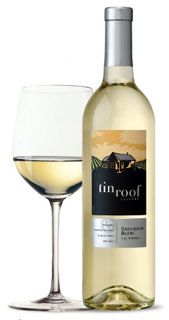
Tin Roof Cellars Sauvignon Blanc, California, 2011, about $8:  Not a super-chiseled or mineral-driven sauvignon blanc, the wine shows a grassy character with lime peel, peach, grapefruit and a pointed finish with enough acidity to keep things interesting.

Tin Roof Cellars Chardonnay, California, 2011, about $8:  Soft on the palate, vaguely leesy and slightly sweet; the nose is floral, the palate touched with apple peel, grilled pineapple and creamy vanilla to finish.

Tin Roof Cellars Red Blend, California, 2011, about $8:  Zinfandel, petite syrah and merlot, the wine is quite well done in the genre: An explosive jam bomb filled with stewed fruits, brown sugar, black pepper and big billows of cooked plum with cinnamon.

Tin Roof Cellars Merlot, California, 2009, about $8:  The only older vintage in the bunch, the merlot—the most popular Tin Roof wine I am guessing from Google search results.  It is plush and intricate, with layers of black cherry, cassis and wild berry framed by spice and delicate tannins.

Tin Roof Cellars Cabernet Sauvignon, California, 2011, about $8:  Supple and nicely rounded, aromas of blackberry, coffee and cedar draw you in; the mouth-filling, fruit-forward palate keeps you there.  Tannins are gripping, but integrated.  A nice choice, remarkable at the price.

Tin Roof Cellars Zinfandel, California, 2011, about $8: Zesty and surprisingly grandiose: Lots of smoky forest fruits like raspberry and blackberry, well balanced by spice, mocha and bright acidity.  A great accompaniment for BBQ.

Posted in GENERAL | Tagged , , , | 1 Comment

Wine World Wins And Woes: The Rich Get Richer And The Poor Get Boutiquier

Let me toss out the seemingly random figure of ten million dollars and ask you what you think it represents:

1.  The purchase price of immaculate turn-key San Marcos Creek Vineyard in Paso Robles, including custom home, a luxurious bed and breakfast, a tasting room and a classically styled winery surrounded by 42 acres of vineyard and another 50 acres of private natural landscapes.  Based on yields kept intentionally low, San Marcos Creek is capable of producing about 5000 cases of premium wine per year, making it the quintessential business model for a boutique winery.

2.  The amount of money Constellation Brands spends per year on digital marketing alone.

The answer, of course, is both.

If Corporations Are People, Then I Am an Egyptian Burrowing Dung Beetle

Having spent the bulk of my career working for successively larger corporations,  culminating in a number of years at a $20 billion Fortune 500 automotive supplier, I can say without hesitation that corporations, within the very nucleobase of their soul-less DNA, are far worse than anything forged in Gehenna’s pits.  One presumes that Satan operates from the perspective of solid, old-school malevolence with which anyone who has ever wasted an afternoon at the Secretary of State trying to renew a driver’s license can commiserate.  Corporations feel no such malice—they destroy with disaffection, ravish with impunity, downsize without regard for those they displace and gobble up competing concerns regardless of whether or not they’re hungry.

My groupies.

‘Hostile’ takeover is a misnomer, of course: Hostility has nothing to do with it—that’s too human an emotion.  Corporate growth is fueled by perfunctory opportunism that’s duplicated in the natural world everywhere you look—from the SARS virus to cellular parasites to galaxies devouring one another in distant space.

And as you know, public corporations are beholden to their shareholders, and must by law put profit ahead of every other interest—including those of humanity.

Hence, Monsanto, Peabody Energy, ConAgra Foods and Archer Daniels Midland.

Speaking of the Wine Industry Financial Symposium 2012…

Said symposium was held Sept 24 and 25 in Napa, and from what I can tell from written accounts, it was two days of masturbatory, self-congratulatory back-pats due to what Wine & Vines magazine refers to as ‘the recovering health of the wine industry.’

Wine & Vines—a monthly directory and news magazine founded in 1919—goes on to suggest that symposium participation itself is indicative of the upturn in the eno economy, with 330 lenders, growers, wine companies and suppliers in attendance—up from 260 last year.

In fact, W & V expresses surprise that more wine executives didn’t attend ‘to gain valuable insights and rub elbows with bankers and other lenders who could make the difference between success and distress sales of their businesses’.

Well, like you, I’ve known my share of bankers, and from what I remember, if you need a quick cash infusion to save an already-failing business, it isn’t their shoulders that you’re gonna have to rub.

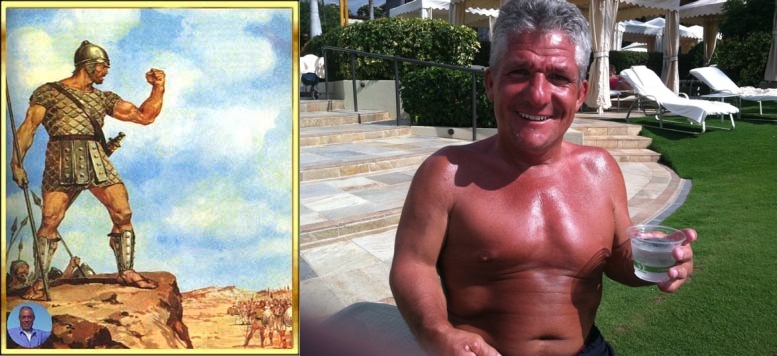
David is Goliath

But, symposium founder David Freed is canny enough to know this.  He refers to himself a ‘vineyard executive’—an oxymoronic-sounding title if ever there was one—and has been running this show for 21 years: In drinking terms, that means that 2012 is the year it finally comes of age.

All the feel-good chuffery oozing through the room was consolidated into concise sound-bite sludge by Robert Smiley from the University of California, Davis, Graduate School of Management, who said, “These are the most positive results I’ve seen for years!”

Resorting to Nadsat, our lingua futura, those double-plus ultra-horrorshow results were summarized in part by John Gillespie of Wine Opinions, whose research has found that in 2012,  25% of adult consumers in the United States are ‘core’ wine drinkers and 19% are marginal wine drinkers.

‘Core’ wine consumers account for 91% of wine sales, and include high-frequency drinkers, high-end buyers who tend to spend between $1000 and $5000 on wine annually, with a smaller percentage (7%) spending more than ten thousand dollars on wine every year.

Headwinds, Tailwinds and Windbags

Danny Brager of the Nielsen Co.

Whenever you get a bunch of financial people together to shoot the breeze, plenty of hot air there tends to be.  And you know that in the course of the blabberation, buzzwords will fly even thicker than horsepucky:  Brand momentum, seamless integration, rightshoring, yadda, yadda, yadda…

And indeed, the focus of the presentation made by Danny Brager of Nielsen Company, that revered information/measurement company who knows more about you than your mother does, was the ‘headwinds’ and ‘tailwinds’ that the wine business faces in upcoming months.

For those unused to the clutter of corporate cackle, ‘headwinds’ are industry obstacles (‘opportunities’, please!) while ‘tailwinds’ are the economic indicators that promise to push sales up to the next dollarsphere.  Examples of the former were given by Mr. Brager as ‘fragile consumer confidence’, margin erosion with rising costs and stagnant prices—the usual bear market bugbears.  Tailwinds, however, received more upbeat lip service: Growing on-premise sales, the impact of millennials, who have apparently traded in Snooki for Sonoma and e-commerce, reporting direct-to-consumer shipments of $1.4 billion last year, up 10% from the year before.

In the main, pretty good news for folks in the wine biz, right?

And Now For The Bad News…

So, let’s suppose that this upcoming Black Friday is the single biggest day for retail sales in the history of man’s reign on earth; that every record ever set will henceforth be smashed to smithereens.  You’ll be dancing in the streets, right?  Celebrating the revived economy?

Then suppose you read that  most of this hard-earned, easily spent cash went not necessarily to strengthen Middle America, but to further line the already silk-skirted pockets of the Walton clan—heirs to that Baal-busting, big-box behemoth who have a combined net worth of $102 billion, more than that of the bottom 30% of all American families combined.  Which it probably will.  Then, not so much street-level jubilation perhaps?  I mean, as mom ‘n’ pop—your mom ‘n’ pop possibly, continue to shutter up their shops by the tens of thousands, unable to compete with the avaricious archfiend from Arkansas?

Diablo in a Double Magnum?

L. to R.: Gallo, TWG, Constellation

Now, I would not dare compare the genuine winners celebrated at the Wine Industry Financial Symposium 2012 with Diabolus, King of Hell or Mephistopheles, Prince of Darkness—that would be inaccurate, unprofessional and rude.

More like Cerberus, the three-headed dog who guards the gates to the Underworld.

Because, on a massive base of 100 million cases, half of the wine industry’s growth last year was divided between three distribution companies:  Gallo, The Wine Group and Constellation.

Figure that another 50 million cases wound up billowing the billfolds of the next five biggest industry players—Trinchero, Bronco, Treasury, Delicato and Kendall-Jackson—with a 3.5% sales growth, and third-tier biggies Don Sebastiani, J. Lohr, Bogle, Charles Krug, Diageo’s Beaulieu and Sterling, Korbel and Fetzer picking up most of the rest.

Not much gravy left to slather over the small guys, is there?

…Though during his speech before the symposium, David Freed—a former tax attorney who currently chairs the vineyard investment trust Silverado Properties Partners—sort of sounds that your average boutique winery should be groveling, groupie-like and grateful for whatever crumbs they are able to extract from the sweepings:

“Domestic wine producers are increasingly splitting into two segments: the top 16 to 20 who are good at building brands and producing efficiently in volume, and the rest, who exist in the luxury space…”

Luxury space?  Maybe I am misreading his sentiment; if so, I would be groveling, groupie-like and grateful if somebody would explain to me what he does mean.

The Big Three: Building Brands and Producing Great Pustulating Wads of Cash…

Constellation’s compendium of class ‘n’ crap.

Let you think otherwise, I am not suggesting that a comparison between, say, Constellation and Wal-Mart is in order.  The Victor, New York-based Constellation may have a thirst for profit as unquenchable as the most out-of-control street dypso has for Wild Irish Rose or MD2020—Constellation’s pair of fountainhead brands—but as far as I know, they have not single-handedly undermined the American middle class nor driven a growing share of the labor force into working poverty.

That’s Wal-Mart territory.

The Constellation Vision Statement is: ‘To elevate life with every glass raised,’ and although we all know that ‘life’ is a tongue-in-cheek euphemism for ‘the bottom line’, it beats the hell out of Wal-Mart’s Vision Statement:  ‘To eviscerate the traditions of rank-and-file labor—especially union wage workers—with every cheap Guangdong gee-gaw commissioned.’

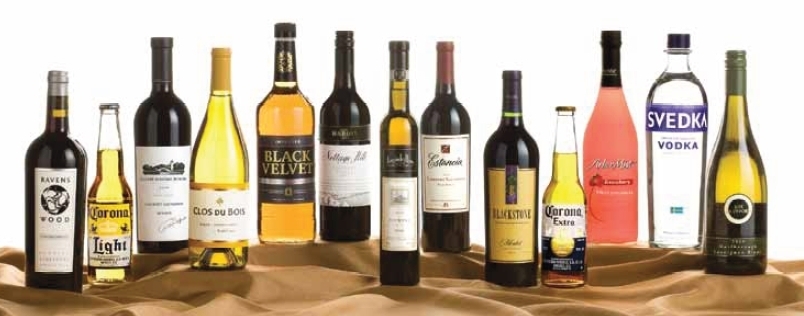
However, Constellation, whose premium brands include Inniskillin, Mt. Veeder Winery, Ravenswood and Hogue (along with bulk production cash cows Cribari and Vendange) has, since its founding in 1945, moved like a humongous Hoover through the corkscrew cosmos, inhaling winery after winery until they became the world’s largest wine company, owning—in the United States alone—a quarter of the top selling wine brands.  Stir in Constellation’s equally edacious diversification into booze (Black Velvet, McMaster’s) and beer (July’s $1.85 billion purchase of Crown) and to the 6000 or so boutique Davids in America trying to outrun distribution regulations, fruit shortages, cash flow nightmares and licensing hiccups and the conglomerate must make Goliath look like Matt Roloff on Oxycontin.

That’s not meant to be a burn on Constellation’s all-American acquisition acumen, either:  The Wine Group is just as bad.  Borne upon the wings of Franzia—those bag-in-the-box buffoons whose 5 liter sacks-o’-spume play a key role in college drinking games like ‘Slap The Baby’ and ‘Tour de Franzia’ and, of course, infamous, not-soon-to-become-an-Olympic-sport ‘Butt-Chugging’ (the rules are self-explanatory), which in September, at the University of Tennessee, saw Pi Kappa Alpha member Alexander P. Broughton hospitalized with a blood alcohol level of 0.45%.

The Wine Group has not been as diligent as Constellation in balancing their wine portfolio between crackerjack and crapola products, choosing to focus more heavily on Piggly Wiggly profit procreating plonk like Corbett Canyon, Paul Masson, Mogen David and Almaden.  And of course there is Cupcake, the multi-national winery which intends to be all things to all people—except those who know wine from bulk-produced, personality-free, alcohol-flavored grape juice.

Hallowed Gallo

Wedged between Constellation and TWG is E.&J. Gallo, the most recognized wine producer in the country—it has seen its share of troubled times, of course, but tends to emerge victorious, having captured adult America’s heart as the wine of their youth:  Boone’s Farm, Night Train, Thunderbird, and for very special occasions, André peach-flavored California champagne.

Despite the fact that Ernest and Julio sued their own brother for trademark disputes in 1986, and then pulled a cease-and-desist order on some other Gallos for selling ‘Gallo Pasta’ in the United States even though that was their name, the company website creams all over the ‘family’ angle, claiming, like good Italians everywhere, that family is the cornerstone to continued worldwide success.

And when you consider it, Michael Corleone did take his big brother fishing before having him shot.

Which probably explains why they rejected my non-family-friendly entry to the ‘Find Gallo A New Slogan’ contest earlier this year:

‘Gallows are for hanging.  Gallo is for hanging out.’

And That’s the Way It Is…

Apologies if I am coming across as hysterical mass media left-wing hippie who hates capitalism, hates profit, hates America.  Not so.  Actually, it wouldn’t occur to me to say that bloated corporate moguls like Robert Sands (Constellation), David Kent (The Wine Group) and Joseph Gallo haven’t earned every nickel they have through hard work, superior insights and innovative business practices.

I might think it, but I would never say it.

After all, it’s no real secret that 60% of the income listed in the Forbes 400 comes from capital gains, and a lot more of it comes from other forms of deregulatory subterfuge.  Even so, even if wine’s Big Three maintain the highest standards imposed by a free market, their avarice—perfectly legal, however distasteful—remains unabated, unsurfeited, unsatisfiable. The overriding theory, of course, as taught by classical school markets in the 18th century, is that growth is the one and only business imperative; growth is evolution and forward momentum can absorb financial setbacks, keep brands vital and force companies to properly manage product portfolios.

At the wine symposium, Constellation CEO David Kent announced that his conglomerate was currently in the process of launching fifty new brands.  That’s five zero, droogies.

Now, I think you can assume with some certainty that in the midst of unsound financial times, even with banks—having learned the downside of foreclosures—trying to work with struggling wineries, that in the time required for Constellation to choose, purchase, insufflate and wrap up their brand-new brands with an economies-of-scale ribbon, fifty boutique wineries will have been put on the market like San Marcos Creek Vineyard, or simply gone belly up.  And, without question, a lot of the failures are self-perpetuating: The wine business is tough, and the dreams and romance of owning a vineyard is frequently unaccompanied by carefully considered and implemented business strategies.

Welcome to the jungle, kids.

Corporations Are People, Alright—And I’m Looking For a Pile of Shit to Live In…

Mitt Romney

Since 1819, in the case of Trustees of Dartmouth College v. Woodward – 17 U.S. 518, the U.S. Supreme Court has recognized corporations as having the same rights as natural persons to contract and to enforce contracts.  Like people, they can sue and be sued.

All this ‘corporate personhood’ balderdash didn’t start with Mitt Romney, you know.

So sayeth the Chief Justices of the United States:  Corporations are people.

Unfortunately, a lot of these people are named Gordon Gekko.

Posted in GENERAL | Tagged , , , , | 1 Comment

Hittite Me With Your Best Shot, Turkey

According to Robert McIntosh, owner of the trendy European wine marketing agency Vrazon, we owe a debt of gratitude to the Hittites for the very existence of wine.

And I intend to thank them.

Robert McIntosh of Vrazon

In person, of course, because texting one’s lifelong gratitude to a Bronze Age Anatolian is not only maximum crass, but hittite-and-miss with the spotty Turkcell service in the Kaçkar Mountains.  By the way, no crap about the potential ‘non-existence’ of mobile phones in 2000 BC—any race that could invent wine should have had no problem with a couple of Smartphone microchips and a bunch of silly little circuits.

But before I yank on my bashlyk and saddle up my Akhal-Teke and head out into the Turkish sunrise, a word on those Hittites and why McIntosh figures we owe them Prosecco props and Dolcetto daps:

Hittiting Pay Dirt

It turns out that Vitis vinifera, the source of most of the world’s wine, had its origins in northeast Turkey, near the Black Sea.  When the Hittites rolled into town around the 18th century BC, they found such an abundance of vinifera vines that not only did wine become central to their economy, but they named the new land ‘Wiana’, meaning vineyards.

Wiana, in fact, is where our word ‘wine’ comes from—so at the very least, McIntosh scores etymology points for calling in our debt to the Hittites for the existence of ‘wine’.

Akkadian Fire

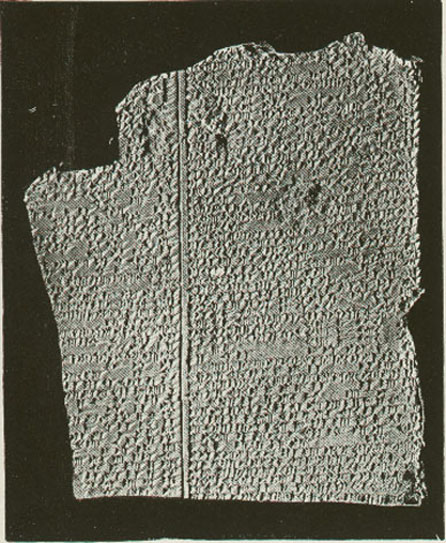
If you were force-fed Gilgamesh in school, you may recall the following stanza from that interminably convoluted Sumerian snooze-fest even if you nodded out almost instantly—it appears on the very first page:

‘But Gilgamesh, hearing the sound of the bolt,
Threw up his head and lodged his foot in the gate;
He called to her, ‘Young woman, maker of wine,
Why do you bolt your door?’

Significant because this is the first time in history that the word ‘wine’ appears in written form—and, since Gilgamesh was written 4500 years ago in Akkadian—the lingua franca of Mesopotamia—etched in clay using wedge-shaped cuneiform, it’s the first time anything appeared in written form.

My 11th grade Comparative Lit textbook.

Once they got started, these bodacious bards just couldn’t stop—the entire epic is rife with talk of vines, vineyards and goddesses of wine-making; everyone is either buzzed on wine, thinking about getting buzzed on wine, or doing heroic things which would allow them to celebrate by getting buzzed on wine.

One such bout of valor was undertaken by Gilgamesh’s mentor in immortality, Utnapishtim, who relates a story in which the god Ea warns him of an impending flood and commands him to build a massive boat in which to preserve ‘all living things’.  Utnapishtim obeys, and following the flood, with his boat lodged on a mountain, he finds that everyone else on earth is dead.

Sound familiar?

Noah Moah For Me, Thanks

Every simpering Sunday school sap or kid cursed with a Christian pre-school education knows that God told Noah to build an arky, arky and to make it out of gopher barky, barky; the animals came in by twosies, twosies, including elephants and kangaroosies, roosies.

What they don’t know—and what most adults don’t know either—is that as soon as the sun dried up the landy, landy and everything was fine and dandy, dandy, the very first thing Noah did was to plant a vineyard.

And everything would have been hunky dory, dory, too—except that’s not the end of the story, story:

Noah’s nads

Genesis 9: 21-23 (King James Version)

21. And Noah drank of the wine, and was drunken; and he was uncovered within his tent.

22. And Ham saw the nakedness of his father, and told his two brethren without.

23. And Shem and Japheth took a garment, and laid it upon both their shoulders, and went backward, and covered the nakedness of their father; and their faces were backward, and they saw not their father’s nakedness.

Alternately:

Genesis 9:21-23 (LeBron James Version)

Yo, Noah gots fucked-up an’ sho nuff crunked out in his birfday suit;  homies like Ham-Dog try ta cover him up widout peepin his johnson, know what ah’m sayin?

The pickle-bender did not seem to have left Noah any worse for the wear, however: He survived another 350 years, dying at the laudable age of 950.

Parallel Universe

Noah, of course, is an apocryphal figure—nobody lives to be 950 except Larry King and Hugh Hefner.  Ironically, Gilgamesh was a real person, the Sumerian King of Uruk, c. 2600 BC, although the claim that he was two-thirds god and also a giant may be a bit hyperbolic.  I mean, it’s not like we’re talking about LeBron James, is it?

Either way, Mt. Ararat—the supposed clog-site of Noah’s Ark—is a real mountain in eastern Turkey, smack dab in the middle of Anatolia.  Therefore, since nothing in the Bible suggests that Noah suffered any wanderlust after debarking, we must assume that the pixilated, pecker-parading Patriarch was flashing his six hundred year old assets  to hellabitchin Hittites as well as Ham.

And with a hangover the size of Hagia Sophia?

I’m sure that Ark-boy was not yet ready to thank them for the existence of wine.

But, Kassel: You Said Cavemen Drank Wine…

‘Make it a double, numb nuts.  And quick!

Well, considering that animals are known to knock the odd one back with the help of naturally-fermented fruit—notably Swedish moose, who go for late-harvest apples, fruit bats who have access to any number of botanical bars, rhesus macaques who drink until their blood alcohol reaches .08% (the legal limit in most states) and of course, the Monarch of Marinated Mammals, the pen-tailed treeshrew of Malaysia who drinks fermented bertam palm sap and whose tolerance for alcohol  is even higher than our own—I’m sure they did.

The Hittites, however, made wine into an industry, an essential part of the social flow and indispensable to the daily diet—in other words, instead of waiting to trip over a fermenting batch of marula fruit out in the boondocks, the Hittites treated their bounty of vinifera vines as a commodity to be controlled, manipulated and profited from, both in a Noah kind of way and a Constellation Brands kind of way.

Like us.

My new fez has made me the talk of Istanbul!

And perhaps within that outrageous notion is where our true debt of gratitude to the Hittites lies.

Anyway, if I was really going to thank anyone for the existence of wine, it would have to be Mr. Kloeckera, Mr. Candida, Mr. Pichia—strains of wild yeast that were fundamental to the Hittite’s nascent fermentation experiments.

But I’m not going to grovel before Saccharomyces cerevisiae.  We have nothing if not our pride.  Instead, I’m going with McIntosh’s suggestion:  I’m going to Turkey to find a real live Hittite and thank him in person for whatever the hell it is he did for us.

I mean, where else am I going to wear my brand new fuchsia fez??

Posted in GENERAL | Tagged , , , , | 2 Comments

How To Hold A Wine Glass Wrong And Ruin Everybody’s Holiday Season

The gulags are filled with people who didn’t know how to hold a wine glass, bobeshi.

Russian wine may suck, but it beats this

Stateside, of course, we are a bit more lenient with such breeches of etiquette, but still, you may be as shocked as I was to learn that in polls leading up to the 2012 Presidential elections, the top five issues that most inflamed Americans were:

  • Ignoring allies while pursuing our strategy of killing civilians in the Middle East.
  • Waning primacy for angry, underemployed white men.
  • The intransigent frame surrounding public education policies on the state and federal level.
  • Policemen who won’t accept football tickets to make speeding tickets go away.
  • Stemware issues.

The alpha and the omega

That’s right: Stemware issues.  And in subsequent tracking polls, a representative sample of the American population claimed that their number one stemware peeve is ‘an improperly held wine glass.’

Now, for an anemic jackhole such as I, whose sole value to the universe is dispensing handy drinking tips to alcoholics whose chug of choice is wine (so long as I can catch them between their first sip of white zinfandel and their final swig of Scorpio), you would think that I’d seize upon this opportunity to educate that annoying slice of society who insist upon pawing and clutching and fondling their flute or their tulip or their lead crystal flared-bowl balloon whatever-it’s-called, bringing upon themselves the same sort of career-annihilating ignominy that befell our beloved Mitt Romney during the third debate when he slipped and accidentally called Mr. Obama ‘boy’.

You’d think I would, but you’d think wrong.

We Need To Talk…

That’s because—and there is no easy way to say this—despite my wine pedigree which includes over twenty consecutive minutes spent inside Mapleview Party Store five or six times a week, I don’t have the slightest idea of how to hold a wine glass!

I know, right?

We get the moustache deal, Stacy

But the reason is simple.  In part it’s because at the close of the day I really don’t know what I’m talking about, but even more than that, I haven’t used stemware since 2004—and then only because I had run out of 16 oz. Dixie cups and I had so severely chipped the wine bottle that had I drunk directly from it, I would have awoken the following morning looking like Stacy Keach before hairlip surgery.

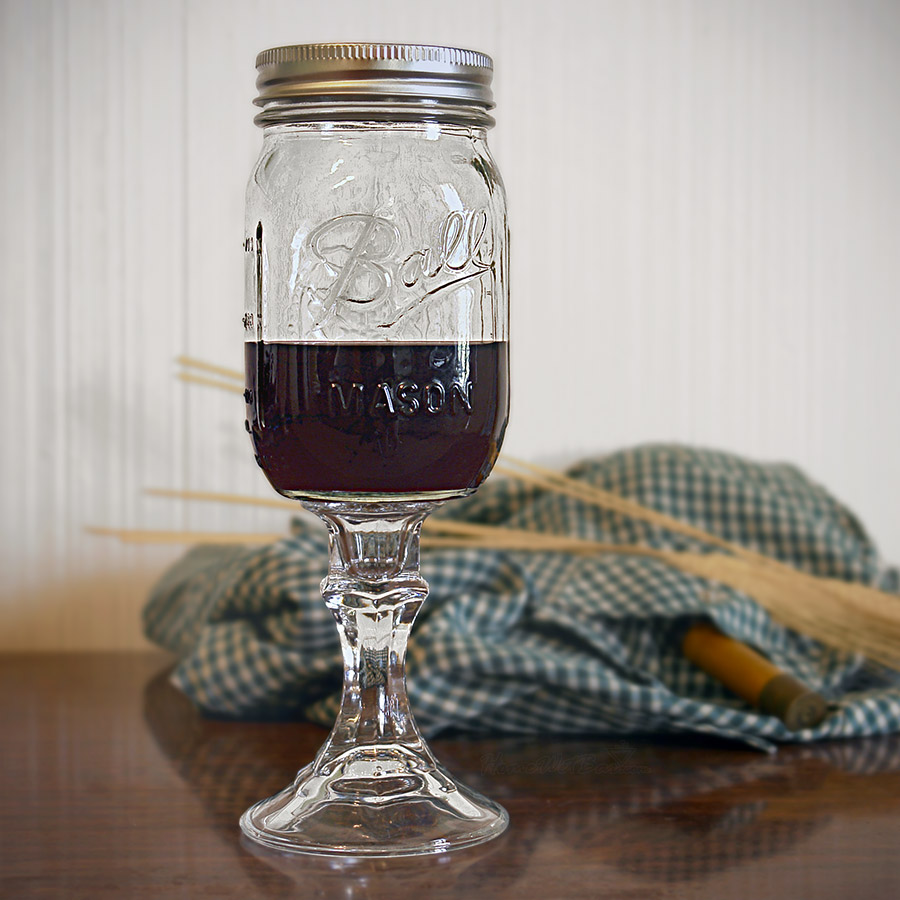
Seriously, even when I attended the March 14, 2012 state dinner that President Romney Obama (sorry, I keep doing that) held for bundlers, Supreme Court Justices, Downton Abbey stars and D-list wine writers, I refused to use the Riedel Vinum glasses provided, and instead pulled a Mason jelly jar from my rented tux—startling the secret service, who nearly shot me.

When the looks of horror and judgmental snickers had subsided, I rose with my customary grandiloquence and made the following speech:

“Ladies and gentlemen, my father fought proudly for the 10th Regiment of the 5th Infantry Division—the Red Devils—of General George S. Patton’s 3rd Army during the Second World War, and if you think for a cocaine heartbeat I intend to sit here in the headquarters of the Commander in Chief of the United States military and drink out of goddamn Nazi stemware…  Well, sir, better I should become a syphilitic transsexual hooker offering handjobs on the corner of Cass and Sibley.”

Before the shocked silence faded, I was able to slip in: “Mason jars are made in Philadelphia.  We won that one, too.”

Unfortunately, the explosion of patriotic applause was interrupted by the supercilious, thumb-up-his-kiester ‘official’ state dinner sommelier who rained on my parade by loudly letting everybody know that Riedel is actually made in Austria, not Germany.

But, as my ability to think on my feet grows exponentially with the number of pre-dinner cocktails I consume, my quick response was to remind everyone where Adolf Hitler was ‘made’.

It brought down the house and sealed the deal:  Mason Jars are now the official stemlessware of White House state dinners.

That’s all well and good, but it hardly addresses the issue at hand:

‘How to hold a wine glass’.  For that it will be…

Corkcicle To the Rescue!

If I may digress briefly once again—and I may, since it’s my column—let me say a word about ‘marketing’, that satanic communication tool which is defined as ‘the overall strategy and function of promoting a product or service to the customer’ which may be refined to ‘selling shit to people they don’t need, don’t want and can’t afford’.

Having spent several repulsively corrupt years in that very profession, I know whereof I speak.

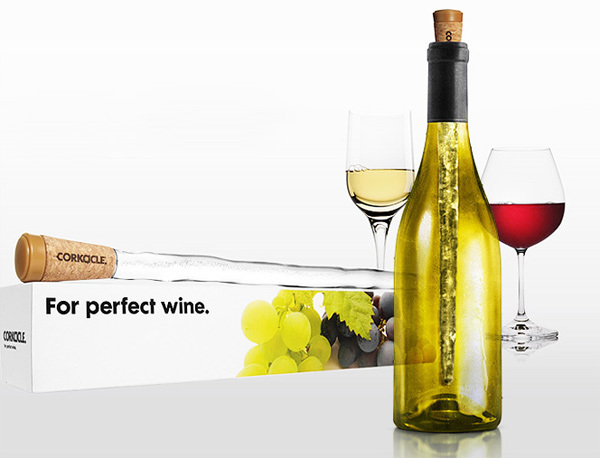
Anyway, Corkcicle is this bizarre product which is essentially a plastic pouch of freezable gel attached to a cork that you are supposed to stick in a room temperature bottle of wine in order to chill it ‘from the inside out’.

I have two words to say about that: Ickity ick.

But, for $25, it is probably ideal for people without access to an ice bucket or a refrigerator—although, hang on—if you don’t freeze the Corkcicle first, it’s worthless, so what point am I missing?

None.

Corkcicle’s Ben Hewitt accepts his Stevie award

Which is precisely why Corkcicle won the coveted (by slimebuckets) ‘Stevie Award’ as Best New Company of the Year at the 10th Annual American Business Awards earlier this year.  Of course, they are not the best company of this, or any year, but they may well be the chutzpahiest, which is really what this silly award is all about.  I mean, consider the company statement in the June 19 edition of The Upstart Business Journal in which Corkcicle offers the following as their raison d’être:

‘Ice buckets tend to make white wine too cold, which ruins the taste.’

What is the proper reaction to such a comment?  Seriously.  To allow your jaw to drop knowingly as you reach for your VISA card?  Or to respond, “Well, why not just take the goddamn bottle out of the goddamn bucket before it gets too goddamn cold?”

Corkcicle is counting on the fact that you, the intended victim customer, are too blind to know the correct answer, which makes me think that the Stevie award might be named for Mr. Wonder.

We Come Full Corkcircle…

So, what this whole thing has been about is a recent new marketing (that word again) campaign by Corkcicle, who has probably already sold all the product they can by conventional means.  There may be a sucker born every minute, but you have to wait 21 years until they’re old enough to drink.

You can peruse the attached advertising poster—purporting to instruct you how to hold a wine glass—to your heart’s content if it so floats your boat.  But I can summarize it for you if that’s easier: You hold a wine glass exactly like you think you’d hold a wine glass.

I will leave you with but a single thought, but then, my smarm level will have fallen below critical mass and I must go fortify myself with the bottle of Grey Goose I keep in the spot in the freezer where my Corkcicle could be, but won’t be.

Michael Greenlee—a self-described ‘wine professional’ is quoted at the top of the poster as saying, “The most common mistake I see at dinner parties is people holding a wine glass by the bowl.”

Really, Michael.  The most common?  Hell, I was a sommelier for ten years and half the time, I served the wine while holding the glass by the bowl.

Anyway, I wonder if there was a bidding war between Corkcicle and Riedel for Michael’s obviously concocted, bought-and-paid-for statement, because he knows perfectly well that one of the best selling shapes for wine glasses in 2012 is the… wait for it…

Stemless.

* I will, however, offer Corkcicle, free of charge, a tagline for their next advertising campaign: 

‘What do you give to a guy who has everything… Except a friggin brain?’

Posted in GENERAL | Tagged , | 2 Comments

Just Say Yes To Hess

You go, girl! And by ‘go’, of course, I mean ‘go away’

I came of age in an era that had Ronald Reagan scaring us with Cold War rhetoric while his wife was scaring us with Drug War rhetoric.  Her banshee yelp, ‘Just Say No’ saved many a naïve youth from that inexorable descent from a toke between class to death from a speedball overdose.

Me, a dutiful Catholic school boy, followed the First Lady’s exhortation, although I ‘Just Said Nope’, because the dealers usually thought I said ‘dope’ and I scored anyway.

Wine is not an illegal drug—although it was, of course, for a lot of years in the Roaring Twenties—but it’s a drug nonetheless.  However, thanks to the leap of logic shown by the great states of  Washington and Colorado, we can finally, without guilt, stuff a sock into Ms. Reagan’s yapper and start saying ‘yes’.

Especially With Hess

Beautiful Berne

Being half-Swiss, anything and everything Swiss not involved with Nazi gold or suspiciously dormant bank accounts sort of turns me on.  And that includes the great house of Hess Family Estates, founded in Berne as a brewery in 1844.

For the next century, beer was the cornerstone of Hess prosperity, but in the 1960s, having taken the reins of the company following the death of his father Hektor Albert, fourth generation Hess, Donald, made the ballsy leap into bottled water, creating Valser Water—now Switzerland’s top mineral water company.

Having nailed down beer and water, you’d assume that the need for further diversification might be a bit over the top.  But in the world of entrepreneurship, over the top is the only eyrie worth sitting upon, and between 1978 and 1982, Donald Hess purchased 900 acres at the same lofty altitude as his dreams: 2000 feet above Napa Valley on Mt. Vedeer.

You Can’t Get Much Higher Than That, Can You Ms. Reagan?

Colomé is so far above sea level that the vineyard workers have to wear oxygen masks.

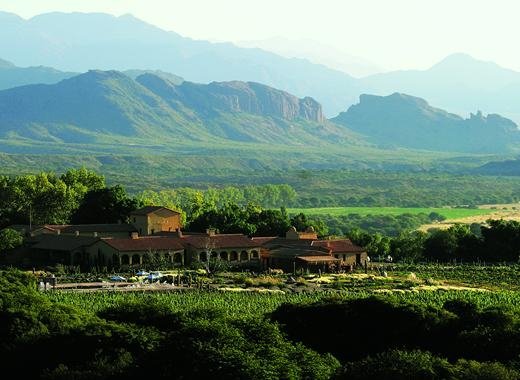
Think on.  Following a three-year quest to locate the source of an exceptional high-altitude malbec he’d chanced upon at a tiny bodega in Salta, Hess discovered Bodega Colomé—a winery even older than Hess Family Estates, having been founded in 1831.  That winery, now part of the Hess spectrum of properties and sits at 10,000 feet, making it the highest vineyard in the world.  Icing on the cake is the fact that some of the Colomé vines are 160 years old—making even the most senior old vine California zinfandel seem like a whippersnapper still wet behind the spurs.

While establishing other vineyards throughout California, in Argentina’s Northern Calchaqui Valley, South Africa’s Paarl Valley and noteably, Tanunda, in the heart of the Barossa Valley (Peter Lehmann Wines are among Australia’s most respected wineries), Donald Hess was also building a reputation as (according to ARTnews magazine) one of the world’s top art collectors—a position he’s held held for two decades.

With that aesthetic drive and—let’s be honest—the scoot to back it up, he built The Hess Art Collection where he shows the work of twenty living artists whose work and vision he supports through the long haul.

The presumption is, of course, that a man of Mr. Hess’s laudable altruism and farsighted appreciation of life’s finer things will soon be forming the Hess Wine Critic’s Collection—and blood, let me tell you, I check the mail daily for my application.

Art For Artezin’s Sake

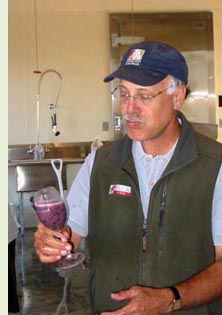
Randle Johnson decides that this wine is too young for release

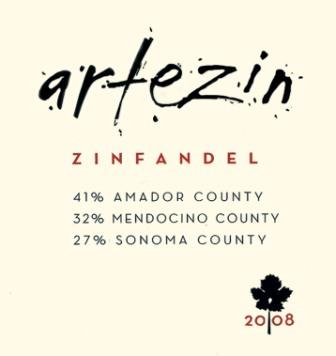
Speaking of art and old vine zinfandel, one of the coolest projects in the Hess congregation is Artezin, a Napa winery specializing in zinfandel, with the odd tot of petite sirah and carignan tossed into the mix.

The mind behind the wine is crammed into the cranium of Randle Johnson, a vintner with a long love affair with the varietals of Northern California.  Having produced award-winning cabernet at Hess Collection for twenty years, he now focuses on Mendocino and Dry Creek zinfandel.

As hands-on as they make ‘em, Johnson says, “An old mentor of mine told me that to capture true varietal integrity—raspberry, boysenberry and that unique zinfandel spice and pepper, you need to pitch your tent in the vineyard and check the fruit every day.  And that’s exactly what I do.”

And he doesn’t compromise those flavors, either—picked at optimal ripeness over a period that may exceed two weeks, he crushes conventionally, then places the juice in used French barrels, where it only remains for a short while before bottling—and then stays in the bottle for a mere two months before release, ensuring that the freshness he so enjoys does not fade before the consumer (i.e., ‘you and me’) has a chance to get at it.

Johnson explains, “We want only a hint of oak, nothing to interfere with the bright fruit aromas,” and his wines are all of that, too: Nicely structured, fruity zins with classic black pepper spice above loganberry, blackberry and brambly, summery raspberry.

But best of all is the Randle Johnson zinfandel je ne sais quoi; something shows up in this vigorous, prolific, early-ripening grape—grown in fully 10% of California vineyards—with surprising rarity.

It calls for someone who is willing to live and breathe the varietal, literally—someone with a keen understanding of sites, vineyards and a willingness to work with the needs of dedicated growers.  It calls for someone who understands what zinfandel, in its finest expression, can do.

But, above all, to produce what Randle Johnson calls ‘zinny zins’, it requires a winemaker with such a neurotic, compulsive, stalking love of the grape that, were it transferred to a human being, would likely wind up in court with a restraining order.

Meanwhile, Back at the Ranch

So, with valley vineyards and mountain vineyards and the Su’skol, planted at a mere 50 foot elevation near San Francisco Bay, The Hess Collection is obviously comfortable with a tier system.  As indeed, is the cornerstone of their portfolio set-up:

Hess Collection Mount Veeder Estate:  From among the highest-altitude and most climatically interesting (coolest growing season) and most unique soil structures in Napa (formed by ancient uplifts of oceanic crust) ‘Collection’ wines are intense, multi-layered, generous and pure; they tend to reflect ‘sense of place’ on a scale that often exceeds Mt. Veeder’s other 15 world-class wineries.

Hess Napa Valley:  Sharp Hess eyes, snouts and palates traversed vineyards throughout Napa Valley in search of the precision balance: soil, topography and climate.  Each Hess Napa Valley wine is from a single, designated vineyard—including a remarkable Su’skol Late Harvest Chardonnay.

Hess Select: The trio of varietals, cabernet sauvignon, chardonnay and sauvignon blanc are sourced from family vineyards and trusted growers, who have always been a cornerstone of many Hess operations.  These wines are affordable, amazingly affable and awfully appealing.

Whichever tier suits your buds and budget, you can pretty much be assured that the grapes were grown under standards of sustainable, environmentally-friendly agriculture—a philosophy that Donald Hess has fully embraced since one of his starving pet artists decided against selling him paintings because of some unnamed failing in biodiversity and greenery in his vineyard.  It caused Hess to rethink many of his business practices.

Now, personally, I think that showed remarkable, commendable, almost zen-like restraint on Hess’s behalf, because I believe that if it had been me, I’d have taken that pot-smoking, Just-Can’t-Say-No-saying, sniveling little ingrate behind the woodshed, which would have been damaging to the hippie hambone, myself, and possibly the woodshed.

In any case, you will find that 85 of the estate’s 310 already sustainably-farmed acres of vineyards are organically farmed as well; and Hess is in the process of converting the remainder to organic farming.

Donald’s overriding philosophy is ‘Nurture the land, give back what you take.’

I don’t know about you, but I like a rich guy who thinks about nature in a way that doesn’t include razing it, strip-mining it, polluting it or ripping it out to put up superstructures; who is less concerned with controlling nature than in appreciating her sacredness.  I like a company leader who wants to give back without looking for a tax write-off; I like a businessman who treats art not as a commodity, not as an investment or a status symbol, but as a gift from some higher plateau of sensory/emotional values.

And, hey, if he happens to be Swiss?  Gravy.

Tasting Notes:

A couple new Hess Select wines just arrived, so I will give you the sommelier skinny below:

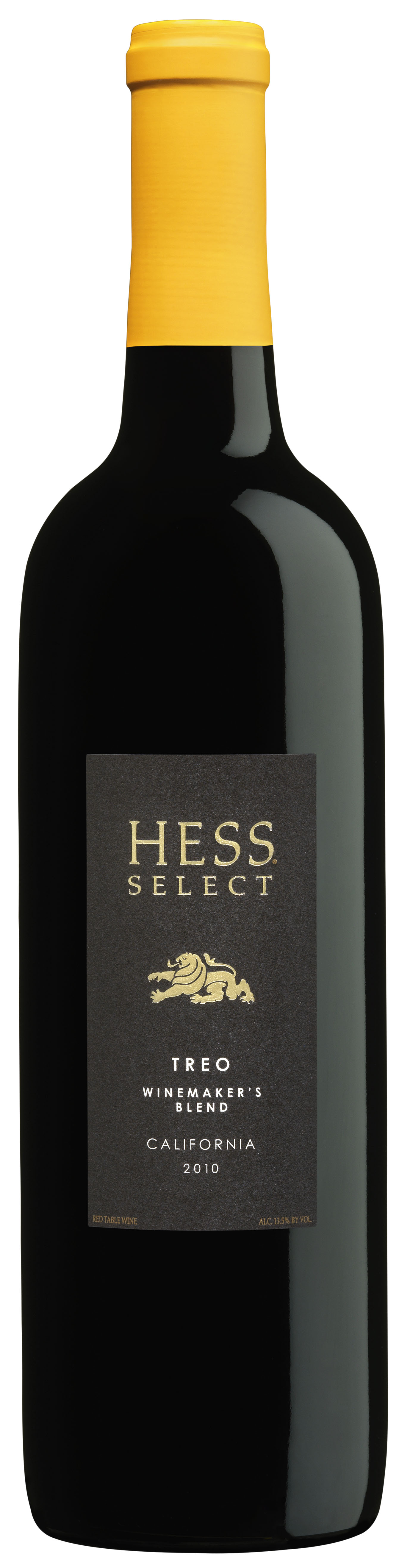
Hess Select Treo Red, California, 2010, around $16:  A blend of merlot, syrah and petite syrah shows bright red cherry, honeysuckle, vanilla, and clean plum juiciness.  The wine’s inherent freshness may be a good sign for the trio that Treo symbolizes: Donald Hess and his sons-in-law Timothy Persson and Christoph Ehrbar, who together will lead the company into a brave new future.

Hess Select Pinot Noir, Central Coast, 2010, around $16:  A decent under-$20 pinot is as elusive as a Banded Columbian Ground Cuckoo—which, you’ll just have to take my word for, is elusive.  Here you’ll find one: Surprisingly rich and complex, with silky black cherry, a bit of mushroom, lavendar, pie spice and sedate tannins.

(I must say here that the Select Treo showed up decked in SF Giants livery; and as a Detroiter swept in the Series, this was the enological equivalent of  finding a dead fish in front of the Corleone door.  However, that said, I will display Donald Hess’s zen-like restraint and leave the woodshed to the wood mites.  Plus, my buddy Jim Caudill is bigger than me.)

Posted in CALIFORNIA, Mt. Veeder, Napa | Tagged , , , | 1 Comment

Pumpkin Ale: For The Mind, Ichabody And Soul

If I said that most pumpkin ales don’t contain pumpkin, you’d say I was nuts.

On the other hand, if I served you a piece of pumpkin pie without any sugar and spice, you’d also say I was nuts. That’s because, all things being equal, pumpkin is a colorful but tasteless gourd that, should it come to the Halloween party, won’t bring much to it unless it’s dressed up in a clove cloak and a cinnamon façade.

So I won’t go there.

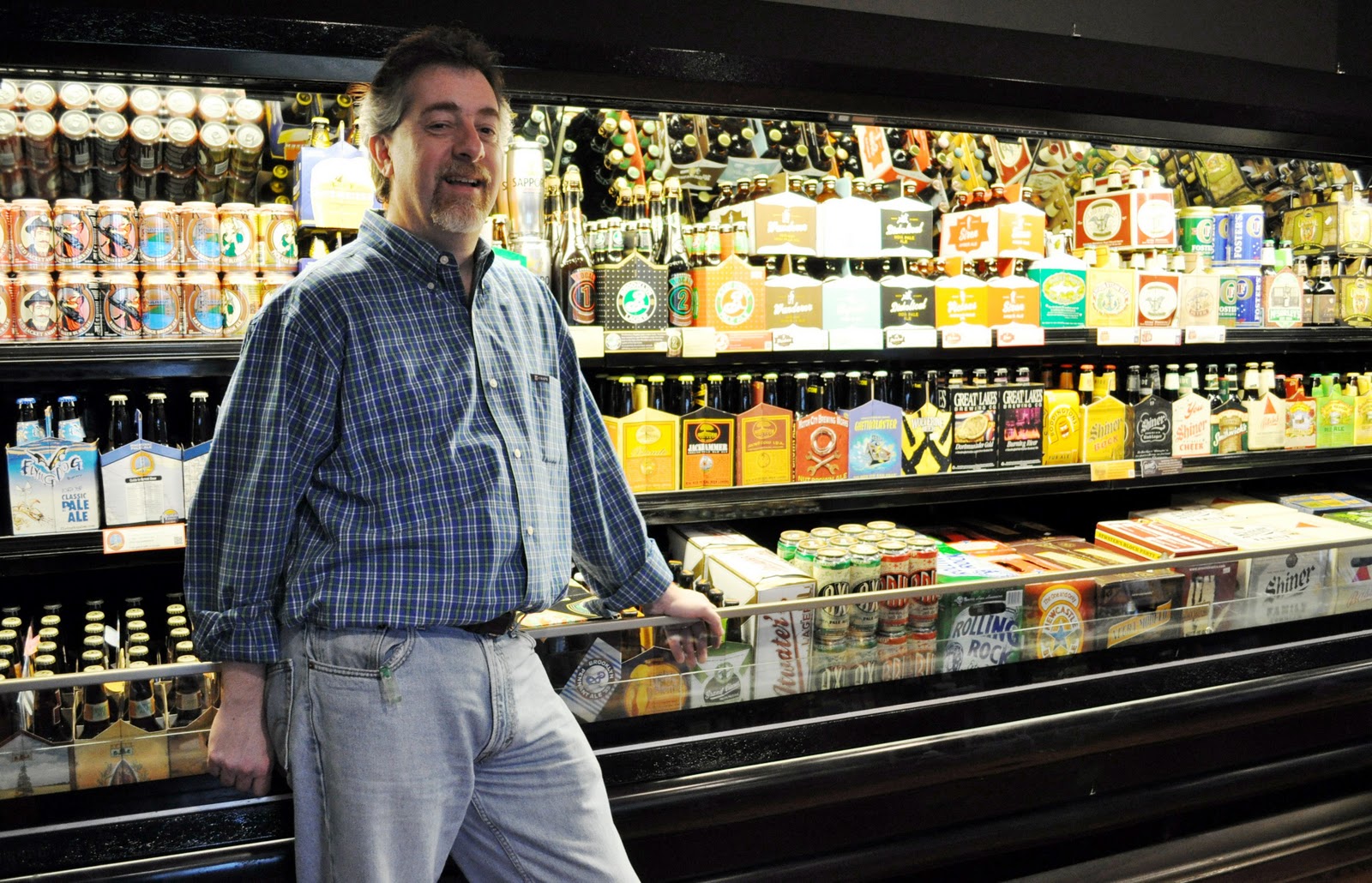
Drink everything you see behind Tim Costello and I guarantee you’ll find him funny.

Instead, I’ll go to Plato Beer Company over on Nine Mile and discuss this odd seasonal sup with Tim Costello, a YouTube-able stand-up comic who opened a Ferndale beer shop as an extension of the ‘Tenny Street Boyz Club’.

According to the dreggy drecks of his dramatic diary, Tim and his buddies used to get together for weekly garage ‘beer exchanges’, wherein he’d bring brews he’d collected during cross-country yuk-club tours and flip them for some local stuff.  So, I flipped him some dough for some pumpkin beers, and he did not steer me wrong.

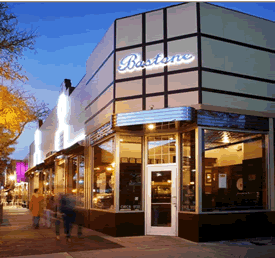
Speaking of ‘Nuts!’: Bastone

Here’s a cool Bastogne reference, for which, if you understand without Google, you get a free bag of pumpkin gook.

If not, here it is in a nutshell: In December, 1944, during the Battle of the Bulge in the town of Bastogne, Belgium, General McAuliffe received a German surrender ultimatum and his first understanding was that the Germans wanted to surrender to us.   Apparently, it was the other way around, and when McAuliffe worked this out, he sent his official response:

Us surrender? Aw, nuts!’

The best part of the story was that Nazi command, without knowledge of American vernacular, thought at first that we had surrendered.

Rockny Horror Pitcher Show

Despite appearances, Rockny Van Meter was not on ‘Survivor’, although he looks like he would have won it if he was.

So, what that vignette has to do with pumpkin ale involves a cool little Royal Oak brewery called Bastone.  Although the menu contains traditional Flemish recipes and the brewer—Rockny Van Meter—is of Flemish background, the owners may have figured that dropping the ‘g’ in Bastogne simply made the place easier to pronounce.  Or maybe not—nobody has ever told me either way.

In a recent interview, Van Meter—who is more Flint than Flanders—offered me a sampling of his both his brew and his brewing philosophy.  And his it is—he was not trained by anyone but himself, in his basement.   His transition from home brewer to pro began after he (like many of us) fell in love with Kalamazoo’s Bell’s Brewery and realized that people will not only buy—but actually queue up for quality beer.

“I made it my business to know my business,” he says.

Having learned to command various beer styles one by one, Van Meter’s primary goal has been to mimic styles identical to the prototype, believing that beer which is ‘not correct’ is something the world needs less of.  He also insists on ‘packing as much flavor as possible into a snifter’—his preferred beer stemware.

Van Meter’s pumpkin porter is deliciously wicked with all those nice spicy pie notes: Clove, cinnamon, nutmeg and hemlock.

A dude who loves to cook (he would have pursued a career as a chef, but brewer hours are better and likely, more fun), Van Meter thinks of beer as food, and as a result, his stouts show chocolate and his ales citrus.   Not only that, but he ‘s distanced himself from being overly concerned with the ABV of his brews, claiming to personally sort of dislike it as a component of the stuff:

“Alcohol keeps me from having more beer, so I’m not crazy about it being there” he explains, then laughs, “See that; since I started making beer at home, I’ve come full circle.

The Lotus Blooms But Twice—In This Column Anyway

In March of this year, I covered a Clawson microbrewery called Black Lotus owned by brothers-in-law  Mark Harper and Michael Allan, raving about the Oatmeal Stout, mostly because I’d been looking for a beer I could drink for breakfast without shame.  As you can imagine, I am really looking forward to the release of their Bacon and Eggs With Toast and Orange Juice Amber Ale.

Opened in 2006, Black Lotus loudly banners their motto:  ‘Think Global, Drink Local’.  I don’t know who thunk that one up, but I like it—the more so when I found out that not only do they walk the walk, they drink the drink, using as many Michigan products as they can find.

Beer, ale, stout, porter and lager—and all styles in between—are handmade by Mark, while Michael is the front-of-the-house guy.  Good think that Michael is articulate and informative, because scoring an interview with Mark is tougher than getting a Papal audience: Between his brewing and his Detroit band (Listen Local) Zap Toro, there just aren’t enough hours in the day.

But that’s okay; I’m sure Mark would prefer that his brews speak for themselves, and they do.  I could go on about Detroit Hip Hops, Funkin A Apricot and Red Tao Amber, but since this is a column about pumpkin ale, I’ll stick to that:

L. Monster Mash. R. Monster Mash mash

Monster Mash (as bad and clever a pun as I’ve ever come up with) is aromatic, lightly sour and dusted with the same spices mentioned above, so I won’t repeat them.  Though you can add a touch of brown sugar to the flavor profile.

Sadly, died of the Hong Kung Flu

And so, Grasshopper, the lotus blooms but twice and the ale contains no gourd, but there is really no need to dwell upon it.  Although remember: After a couple of them, snatching this pebble from my hand is gonna be a real bitch.

And anyway, there’s no rabbit, welsh or otherwise, in Welsh Rabbit, egg cream is not made with eggs or cream and Grape-nuts contains neither grapes nor General McAuliffe-approved nuts.

P.S.: If you get the cool ‘Ichabody’ reference in this column’s title without Google, you get a free bag of pumpkin skin.

Tasting Notes:

(Since most pumpkin ales taste pretty much the same, instead of belaboring the patience of the reader by repeating the same five spices six times, I’ll simply list a half dozen of the best ones out there along with an approximate single-bottle price.)

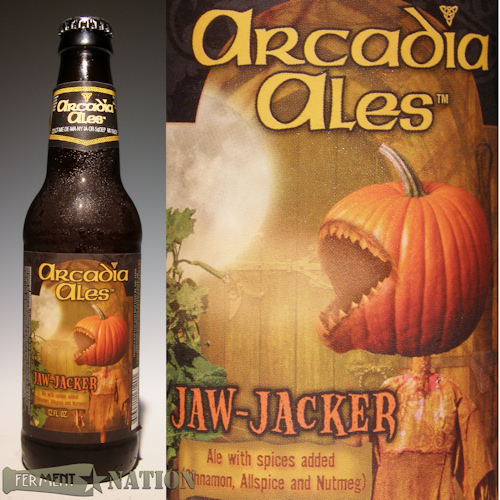
  • Jaw-Jacker Ale (Arcadia Brewing, Battle Creek, MI), about $2
  • Jolly Pumpkin (Jolly Pumpkin Brewing Co., Dexter MI), around $2
  • Hooligan Hoppy Pumpkin Ale (North Peak, Traverse City, MI), around $2.30

Non-Michigan:

  • Small Patch Pumpkin Harvest Ale (Tommyknocker Brewery, Idaho Springs, CO), about $2.50
  • Pumpkinhead (Shipyard Brewing Co., Portland, ME), about $2
  • Ace Hard Pumpkin Cider (California Cider Company, Sonoma, CA), around $2
Posted in BEER | Tagged , , , , | Leave a comment

Digging A Re-Invented View Of Buena Vista Winery

There’s an adage in the wine business, on-premise and off:

‘Spend more than $100 for a bottle and you are starting to pay for the label’.

What that means, of course, is that a lot of folks suffer from Veblen Goods Syndrome, wherein they believe in an immutable ‘price = quality’ dogma which causes them to gladly shell out ridiculous amounts of money for Château Mouton Rothschild ($600), Salon Champagne ($300), Jasper Hill ‘Emily’s Paddock’ Shiraz ($125), Didier Dagueneau Silex ($120), Egon Müller Scharzhofberger Spätlese ($115)…

The syndrome, incidentally, is named for Thorstein Veblen; the first economist to write about the concept of seeking status through conspicuous consumption.

A brief breakdown of Veblen people who pay for the label in wines over $100:

Thug Nation homies who’ve cashed in on rap; nouveau-riche Chinese busino-weenies who can’t even pronounce the names of the wineries they buy; wealthy litigation attorneys who can rattle off all five Bordeaux Premiers Crus, weather patterns each Medoc vintage since Reagan was in office, every five-star Parisian hotel with a helipad—but who look surprised when you mention that New Zealand has a wine industry.

A brief breakdown of people who pay for the label in wines under $16: 

Me.

A Round-About Path To Buena Vista’s Rockin’ New Label?

Yes.  And we aren’t there yet.

First, let’s talk about the psychological phenomenon known as ‘re-invention of the self’, especially as it relates to the above examples of Veblenites and Buena Vista winery.

Joe Dispenza and his dispensable brain.

In his bestselling self-help book  ‘A Guide To Changing Yourself From The Inside Out’, the great chiropractor Dr. Joe Dispenza—erstwhile creator of those plastic cartoon-character Pez delivery conduits—discusses the emotional blocks of ‘vision creation’, methods of choosing courage over fear, the value of performing neuroscience experiments on marmosets instead of rats, and how such  techniques proved indispensable in the ‘self-reinvention’ of Calvin Cordozar Broadus, Jr.—former Baptist balladeer who became a coke-head crooner named Snoop Doggy Dogg, then a murdering minstrel (acquitted on both counts) named Snoop Lion, and currently, a disfigured has-been named DJ Snoopadelic.

Dispenza also has the strength of character to call a spade a spade, or in this case, a left-handed bowler who uses a wrist spin action—a.k.a., a  ‘chinaman’—a Chinaman: Hong Kong billionaire Zhang Zhirong who was born into degrading poverty and as an adult, reinvented himself  via the perspiration of thousands of others who came from—and remain in—degrading poverty.

And don’t get me started on the litigation attorneys with the wine cellars.  What statistic is more obscene to you?  That the United States, with 5% of the world’s population, uses 25% of her energy—or that we have 50% of her lawyers?

Mid-Life Crisis Cited As ‘Number One Reason’ For Personal Reinventions:

Lookin’ gorgeous, Gorgeous!

Madonna, for example, has had many such ego implosions: Boy Toy at 25, Marilyn Monroe at 30, Evita at 40, Disco Maven at 50, and now, at 87, Skeletor.

Jefferson Airplane, performers of such marvy 60’s classics as ‘White Rabbit’ and ‘Somebody To Love’ was reborn after a psychedelic, drug-filled decade as Jefferson Starship, who promptly began releasing puerile, unlistenable crap like ‘Sara’ and ‘We Built This City’. 

Cassius Clay became Muhammed Ali at the age of 22, which is a bit young for a mid-life crisis, but repeated blows to the head caused him to age faster than the rest of us.

Chastity Bono treated herself to a boner at the age of 40 while her father Sonny,  a staunch conservative, became a tree-hugger at 62.

The Oldest Commercial Winery in Caifornia Comes of Age, And It’s High Time…

Hefner: ‘You’re never too old to marry a fetus.’

So, having celebrated its 156th birthday—the same age that Hugh Hefner was when he decided to resurrect his living corpse by marrying a girl in her twenties—it is no real surprise that Buena Vista Winery in Carneros was primed for a makeover.  Having seen six owners since 2000, with production drops and issues with infrastructure integrity, long-time employee Fred Unsworth maintains, “When I first saw the winery it was old and being kept together by chewing gum.  To those that have been here a long time, [the new owners] are a revelation, something that should have happened years ago and didn’t.”

Jean-Charles Boisset

Dudley Do-Right appeared at the opportune moment to save Nell Fenwick from Sonoma’s Northern Railway spur in the form of a Frenchman, Jean-Charles Boisset, who first saw the winery at the age of 11 on a trip to Sonoma with his grandparents.

Now the president of Boisset Family Estates, Jean-Charles reminsices about the ‘love at first sight’ swoon that fell over him during that first encounter and which he cherishes to this day:

“Love not only for the wines,” he gushes, “but as well for the buildings, for the style of the buildings and the energy of the place,” he said. “I never fathomed that such historical buildings were in place in California.  I fell in love with it.”

Somebody must have said, “Dude, get a room already,” because that’s what he did: In May, 2011, Boisset Family Estates purchased the brand, the inventory, and the California Historical Landmark tasting room—formerly a production facility—and immediately began a restoration effort.

“The wines are great,” Boisset explains, “but we can explain to people what a great region it is through its long-lost heritage. I envision Buena Vista to have a very strong future. The future is its past.”

About That Past…

“I gotta be me…”  That, or someone else.

Back in the 1840’s, a bombastic Hungarian braggadocio called Agoston Haraszthy de Mokesa decided to sail to America and reinvent himself in Wisconsin, which he quickly found to be too cold for winemaking—his family’s business.  So, along with the thousands of Forty-Niners wagon trains, he made for California in search of the kind of agricultural gold that sprang from the soil, not the mountains.  He dubbed himself ‘The Count of Buena Vista’—the sort of prerequisite name-change needed in personal reinventions—the same stunt pulled by The Artist Formerly Known As Prince and Slim Shady.

The Count of Buena Vista

One of the beauties of antebellum California was that you could tell people you were a Hungarian Count without having to prove it.  Growing wine grapes was a different story.   In that pursuit, you had to put your talent where your mouth was, and it proved trial-and-error for the Hunky homeboy, who first set up vineyards in San Diego (too dry), San Francisco (too wet) and San Mateo County (too foggy).

It wasn’t until 1857 that he discovered struck vinous gold in Sonoma, and established a winery based on the science of agriculture—something rare at the time, and something that only a fellow with deep pockets could hope to undertake.  Indeed, he went on a European perigrination just prior to the Civil War, and returned with five hundred cuttings from Europe’s top wine-producing countries.

The Count hoped that his true contribution to California winemaking would be his demonstration of modern methods of viticulture and premium varietal choices, which he was convinced would make the fledgling state a world-class vintner, writing, ‘…wine-growing in this State will, before long, exceed in value the amount of gold exported.’

History has proven out this odd, committed visionary many times over.

It’s Label Time, Kids!

Ugly old label on left; classy new label on right

So, I began this War ‘n’ Peace length jeremiad spewing jealous pique righteous indignation over those who can afford to spend money on wines with famous names on their labels while I have to wait for free samples to arrive by UPS.

But the new/old label on Buena Vista’s latest releases caught me pleasantly off-guard with retro nineteenth century fonts and an old-school new name: Buena Vista Vinicultural Society.

As to the quality of the product, those reviews appear below.  But I must say, when Jean-Charles—the new ‘Count of Buena Vista’—decided to get a room with the old one, I’m glad he chose a room with a view.


Buena Vista

Tasting Notes:

As consistent and predictable a package as you might expect from a winery’s first (and 157th) release, Buena Vista’s varietals are the usual suspects, the vintages what you’d imagine them to be and the price identical—$16—for each one.

Buena Vista Vinicultural Society Zinfandel, Sonoma, 2010, about $16: An easy, early-drinking version of this archetypal Sonoma varietal, gorged with sweet tannins, jammy plum, briery blackberry and numerous savory spices including cinnamon, nutmeg and mint.  A serious zinfandel with a chewy profile—some smoke, but no mirrors.

Buena Vista Vinicultural Society Cabernet Sauvignon , Sonoma, 2010, about $16:  A sweet, generous approach to Carneros cabernet; dusky, musky and rich with pie cherries, creamy blueberry, chocolate and a touch of loam, leather and clove behind the lurking oak.

Will the REAL Jean-Charles please stand up? (Shut your eyes and pretend that the barrel says ‘Buena Vista’.

Buena Vista Vinicultural Society Merlot, Sonoma, 2010, around $16:  Medium-bodied with stereotypical Sonoma merlot suppleness; the aroma is all over the mixed-fruit map and includes blackberry, huckleberry and velvety cherry jam.  Mildly-oaked, showing a bit of spice and vanilla throughout the palate, with a quick, but satisfying finish.

Buena Vista Vinicultural Society Pinot Noir, Sonoma, 2010, about $16:  Nicely balanced with cedar, black cherry and caramelized brown sugar up front, emphazing a spectrum of spicy, foresty flavors, even-tempered tannins and a solid core of violets, cranberry, hazelnuts and bay rum.

Buena Vista Vinicultural Society Chardonnay, Sonoma, 2011, around $16:  A gold-hued (49ers-approved) wine with green apples, nutmeg and lime on the nose, honey and pineapple in the mouth and a discreet butterscotch finish.  Not over-the-top massive, but restained and classy.

Buena Vista Vinicultural Society Sauvignon Blanc, Sonoma, 2011, about $16:  Focusing on the citrus side of the varietal, the wine displays a nice soul of lime and grapefruit; the slight grassiness is mostly fresh-smelling and gentle.  Crisp acidity enlivens the palate, with exuberant notes of melon, candied lemon and pear.  I also picked up a distinct note of cardamom—but I’d already cheated and read the winemaker notes who said that I’m supposed to.  Maybe it’s psychosomatic—among the various psycho things I confess to.

Posted in CALIFORNIA, Sonoma | Tagged , , | 3 Comments