Michigan By The Bottle By The Glass

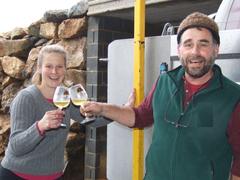
Shannon and Cortney Casey—a couple of local wine kids who are indeed technically young enough to be my kids—have come up with a bad-ass way of promoting Michigan wines.

Two ways, actually.

Shannon and Cortney

Shannon and Cortney, sittin in a tree…

The first time I encountered them was via their video/podcast website, Michigan By The Bottle.  Established in 2009, MBTB is dedicated entirely to wines from Michigan, which the Caseys rightly believe are both under-represented on the national scene and under-appreciated here at home.  Their videos feature winemaker interviews, travel diaries and visual tasting notes and are meant to target what Cortney and Shannon consider an untapped, state-wide wealth of potential fans of decent Michigan wines.

Naturally, they have their work cut out for them considering that Michigan is, for the most part, composed of farmers and homeboys and factory workers who have not yet really begun to smoke-out the pleasures of sophisticated wine.

If they never do, it won’t be for MBTB’s lack of a full-court press.

The Tasting Room
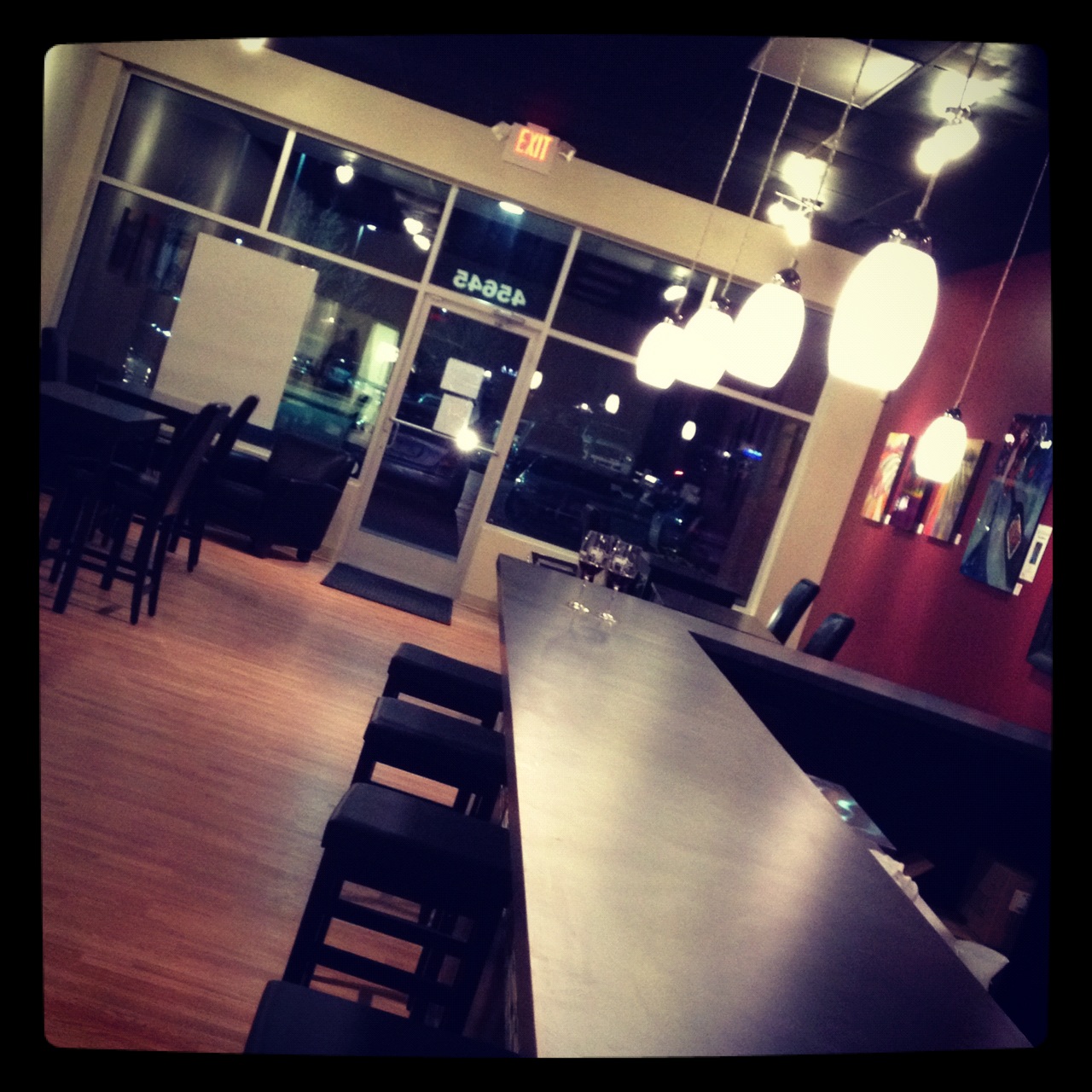
sneakpeekSo, in December, 2012, they opened a unique tasting room in Shelby Township, joining forces with six high-profile Michigan wineries: Chateau Aeronautique (Jackson); Chateau de Leelanau (Suttons Bay); Domaine Berrien Cellars (Berrien Springs); Gill’s Pier Vineyard & Winery (Northport); Peninsula Cellars (Traverse City); Sandhill Crane Vineyards (Jackson).

By the cities noted, folks who understand the various Michigan microclimates will recognize that all four major Michigan wine trails, Lake Michigan Shore Wine Trail, Leelanau Peninsula, Old Mission Peninsula and Southeast Michigan Pioneer Wine Trail, are represented.

Likewise, all six wineries are family-run, which, to the Caseys, was an important factor in forming the partnerships.

The Players

For background, Cortney is a lithe, athletic young woman—evidence of her obsession with distance running—and also a hell of a good writer.  In fact, prior to opening the tasting room, she was a reporter for C & G Newspapers, covering Sterling Heights and Macomb County.  The articles on the MBTB website are not only well written, but a tad more professional than those you might find on this one.

Shannon in typical work outfit

Shannon in typical work outfit

Her husband Shannon is a big, intense fellow; I’m not sure if he can act, but if he can, I’d cast him as Falstaff in Henry IV in a cocaine heartbeat.  By day he is sales director at BBC Title Agency in Royal Oak; by night, he can be found pouring wine at the tasting room.  It must be said, Shannon: Such a burning-the-candle-at-both-ends work ethic is most un-Falstaffian of you.

The room itself is slick, clean and personal, with a long, wooden, L-shaped bar, small tables for those who prefer not to belly up, and one wall lined with hundreds of wine bottles from the winery consorts, available for prices—like those attached to most Michigan wines, which are pretty close to phenomenal.

The only personal issue I have with the place is that it is on the opposite side of town from me; I’d love to hang out there more often.

The Tasting Menu

Michigan By The Bottles’ tasting menu options are somewhat unusual too, however delightful.  Full Flights come with five 2 oz. samples, plus Flight Bites (small plates of cheese and chocolate). Mini Flights are available as three 2 oz. samples; you can add Flight Bites for a nominal charge.

The night I showed up, I tucked into the following:

2008 Manigold Vineyard Gewurztraminer from Peninsula Cellars:  I figured that if they had the stones to list an ’08 gewurtz, I had the stones to give it a shot.  For most wineries outside of Alsace, of course, a five-year-old gewürztraminer would be seriously beyond its shelf life, but this one remained solid and complex with no real sign of fading.  Pretty floral perfumes on the nose and dry, full-bodied notes of peach and melon on the palate.

marsanne2011 Marsanne from Berrien Cellars:  I love this winery, which I actually tripped over for the first time when completely lost and wandering around Berrien Springs in a foul mood.  They love unusual (for Michigan) varietals like roussanne, lemberger and marsanne.  This one showed citrus, stone fruit, honey, green apple and a hint of almond.

2011 Pinot Noir from Chateau de Leelanau: This tough-to-grow, often fickle varietal has made remarkable strides in Michigan, especially as vines age and vinification technique improves.  Chateau de Leelanau’s version covers all the expected notes of pinot with integrity: Sweet currant and black cherry flavors nestling in a leathery backbone.
Chateau Aeronautique

Chateau Aeronautique

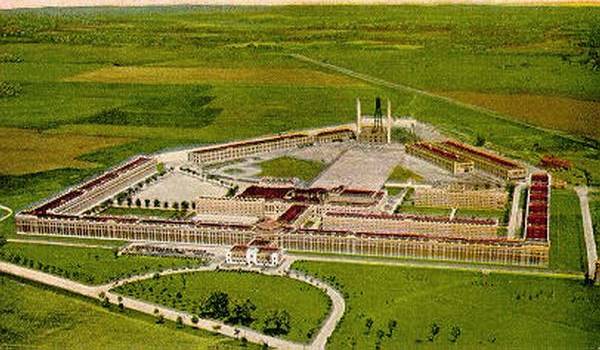
2011 Pinot Gris from Chateau Aeronautique:  I was surprised to learn that they could grow anything in Jackson besides felons and Republicans, let alone pinot gris.  This one proved impressive; slightly sweet with complex aromas of honeysuckle and pear and a palate which includes pear, apple, nectarine and a bit of caramel on the finish.  The wine was a revelation—now I wish they’d reveal the origin of their odd moniker.

Kris and Ryan of Gill's Pier

Kris and Ryan of Gill’s Pier

2011 Riesling from Gills’ Pier:  Had to go with this one since riesling is among Gill’s Pier’s main raisons d’être.  I like theirs especially because, for some strange viticultural reason, they always seem to show several nuance notes unusual for riesling.  2011 is no exception, leading with honey, pineapple and creamed peach on the nose followed by somewhat more predictable flavors of evergreen, apple and the elusive, but desirable petrol that a lot of Michigan rieslings can’t seem to locate.

In all, a cool east side destination joint run by a rockin couple who are obviously very much in love—that’s why I figured that Valentine’s Day would be a good one to give them and Michigan By The Bottle Tasting Room a well-earned plug.

*

MichiganByTheBottle.com

Twitter: @michbythebottle

Facebook: michbythebottle

Supporting the state with every sip!
Michigan By The Bottle Tasting Room

45645 Hayes, Shelby Township

MBTBTasting.com

Posted in Michigan, MIDWEST | Tagged , , , | 2 Comments

Man To Man, The Best Sparkling Wine For Valentine’s Day?

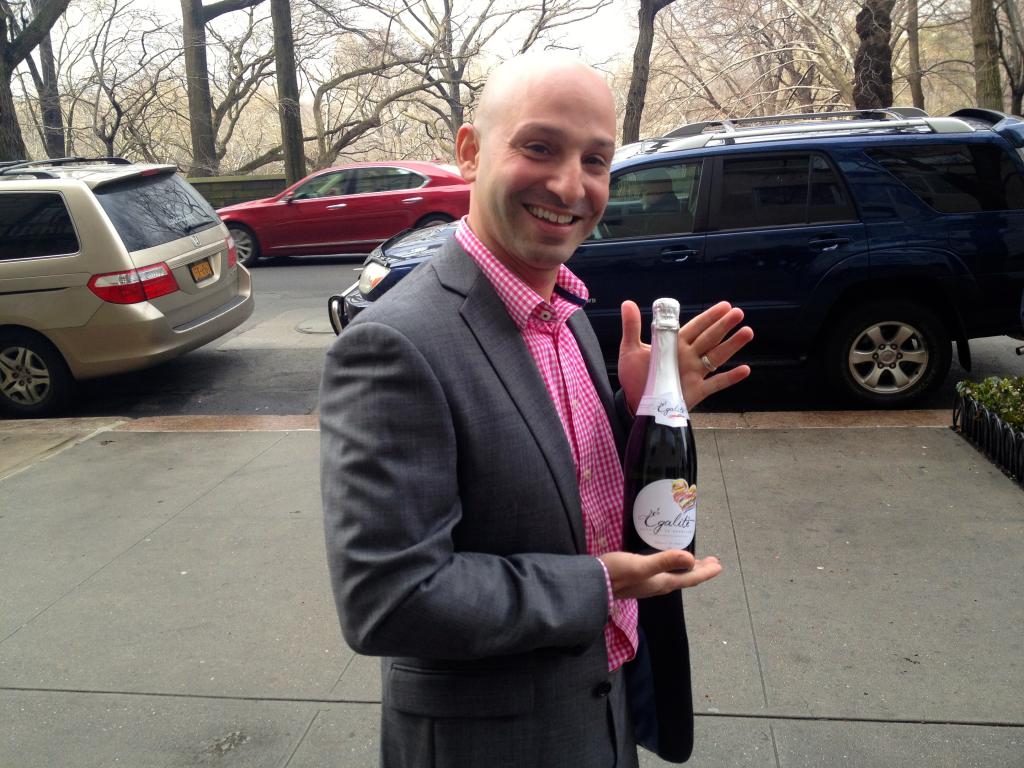
Biagio Cru & Estate Wines, a vegan-friendly wine distributor based in  Roslyn Heights, NY, has announced the release of Égalité—the first wine ever created to support equal rights for words whose first and last letters both contain an accent aigu.

Donald Watson's mummy

Donald Watson’s mummy

Now, here please note that the French have taken a perfectly good word like ‘ague’—meaning malaria—and made it all Frenchy-sounding and italicky.

Just as, in 1935, Donald Watson—a mummified Englishman who looks like he should be in a sarcophagus in the Ancient Egypt wing of the British Museum—decided he could start making up words like ‘vegan’ to replace the perfectly serviceable and easy to understand term ‘non-dairy vegetarian’.

The Biagio Cru & Estate Wines Slogan is:  ‘No animal derivatives are used in the wines that we produce for Biagio Cru’

How funny is that?  A Mission Statement bragging that your wine contains no shrew entrails, cat sphincters or antelope gonads?

Well, it gets funnier—part of the inevitable stumble into bullshit  hypocrisy that trips up your garden-variety vegan every time.

Biago’s web site contains detailed descriptions of each wine in its vast vegan portfolio, and yet,  here are verbatim excerpts from a few, hand before God:

Ribeye Red

Ribeye Red

Biagio Chianti Riserva:  ‘…Pairs well with grilled meats… Also great with tuna steaks.’

Biagio Prosecco:  ‘…perfect as an aperitif and also paired with fish…’

Biagio Moscato Torrontés: ‘…It’s great poured over vanilla ice cream…’

And perhaps—nay doubtless—this is the classic:

Biagio Ribeye Red:  ‘…compliments your favorite cuts of steak…’

Not sure whether to be more amused or confused.

Anyway, About That Égalité:

In fact, having just re-read my first sentence, I realized that I made a horrible syntactic error in my transcription of the opening lines of the Égalité press release.  It should have read:

‘Please see below news release about the launch of Égalité sparkling wine—the first wine created in support of equality for gay Americans.’

Darren Restivo

Darren Restivo

Darren Restivo, a Biagio principal, maintains:

“With same-sex marriage now legal in states from Maine to New York and Iowa to Washington, this is a time to recognize the hard-earned progress that has been made in pursuit of equality. There is no better way to celebrate love, marriage and now equality than with this spectacular sparkling wine.”

Death poor, anyone?

Death Pool, anyone?

Here is the point where I lay off the jokes and raise a glass of Égalité for their support of gay marriage, which gratefully, is finally getting the attention and respect it deserves.  And when a couple of the conservative old fucks on the Supreme Court like Justice Anthony Kennedy decide to die off, there may be a real chance of overturning that antiquated, homophobic, insane DOMA—the federal Defense of Marriage Act.

And obviously, for couples, straight or gay, who support that cause, there could be no better wine to drink with your lover on Valentine’s Day.

Now, It Suddenly Gets Funny Again

Of course, precisely why—other than the name—Égalité should be a particularly gay-friendly wine is hard to understand, but Biagio goes to great lengths to try to make me understand it.

Typical focus group

Typical focus group

The claim is made that the wine was only produced after ‘exhaustive research by a focus group that brought together gay and straight participants with diverse backgrounds, including leaders in the fight for same-sex marriage…’

Don’t know about you, but a single focus group does not sound too exhaustive to me, though more to the point, it sounds like Biagio got together a bunch of people based on their sexual orientation—who may or may not know the first thing about wine—and asked them to define their wine.

.

Who Knows? 

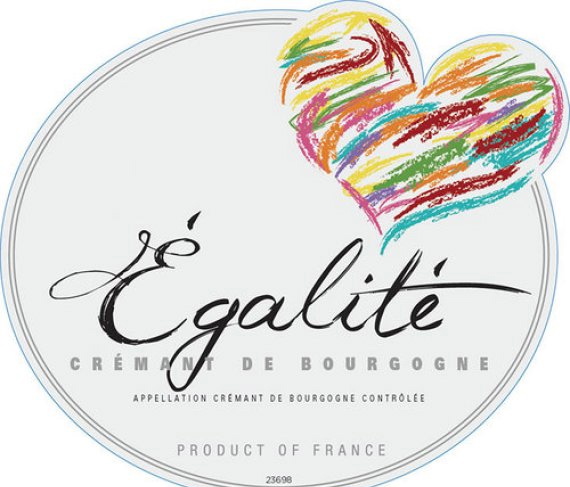
labelWhat I do know that I really appreciated Biago’s claim that ‘Égalité is the perfect touch for galas…’ 

Way to drop in the double-éntendré, Biagio.

In any case, Égalité is a dry, single accent aigu Crémant from Burgundy; nicely aromatic with overtones of peach blossoms;  lively bubbles explode and toasty hazel nuts and crisp citrus flavors show considerable complexity, in part due to the Burgundian requirement that a Crémant remain on the lees for nine months.

It retails for around $23.

ali forney centerAs further incentive to travel down this humanitarian road on Valentine’s Day, Biagio will make a contribution of $1000 each to The Trevor Project, The Ali Forney Center, Equality Maine, Center on Halsted and the GLSEN. Additionally, for every bottle of Égalité sold, a portion of the proceeds will be donated to organizations dedicated to helping LGBTQ youth conquer life’s challenges.

So, again, jokes aside:  Three cheers for the végans, the Frénch and the légalité of same-sex marriage.

Posted in Burgundy, FRANCE | Tagged , , , , | Leave a comment

Yes, Virginia; There Is A Wine Industry

I’m shocked at people who are shocked to learn that states beyond California, Washington and New York produce excellent wines, and I am shocked at myself for not knowing that Virginia was one of them.

Jefferson's wine cellar

Jefferson’s wine cellar

Because, in the aggregate, wouldn’t you simply assume that a drink-sodden Virginia tinkerer like Thomas Jefferson planted wine grapes?  And indeed, he did—two vineyards, in fact, which still line his garden wall at Monticello.  But by all accounts, they flopped, likely to due to Jefferson’s impatience and OCD—invaluable traits, perhaps, for establishing a nation, but less so for establishing a vineyard.  He was not pleased with the results of his vitis labrusca plantings—native American grapes—but even less so with his European vinifera experiments.  In all, he planted 25,000 square feet of vines; 24 European varietals which in Virginia’s steamy climate, pre-pesticides, couldn’t stand up to black rot and root louse.  Jefferson vacillated between non-native and native experiments for twenty years and died in 1826 without having made up his mind.

By all accounts, the ‘Sage of Monticello’ never bottled a single Monticello wine.

Gabriele Rausse

Gabriele Rausse

But modernity saves the day: Jefferson’s vineyards have been replanted with European grape types that he documented in his notes, but these have been grafted on to heartier American root stock.  Gabriele Rausse, one of the founders of the modern Virginia grape industry, oversees vineyard care and wine production—several hundred cases a year.

The Virginia Monologues

I told Carrie to steer clear of the red wine.

I told Carrie to steer clear of the red wine.

As a viticultural state, Virginia ranks eighth in vine acreage and grape production, much of it centered in Albemarle County (home to a lopsided list of luminaries like Sissy Spacek, Howie Long, Dave Matthews and John Grisham).

The state is divided into nine wine regions, from west to east:

Heart of Appalachia: Mountainous, temperate and rural, this remote corner of Virginia supports far more varietals than it does wineries.  Ideal for rich reds—cabernet franc does particularly well here, as does the hybrid grape chambourcin and, oddly, the low-yield tinta cão, which is nearly extinct in Portugal.  Only two wineries show up in a search, MountainRose and Vincent’s Vineyard.

Villa Appalacia

Villa Appalacia

Blue Ridge:  Plenty of wineries here, thanks to deep loamy soil and gravel at ideal elevations.  Most are tiny, like the ten acres of vineyards at Abingdon,  Attimo and Stanburn; many have non-grape specialties, like Blacksnake Meadery and Foggy Ridge Cider.  Classic French cultivars do well, but one interesting winery is Villa Appalaccia, which grows only Italian varietals like sangiovese, malvasia, aglianico, corvina and montepulciano.

3 sistersThe Southern Virginia region runs along the North Carolina border, where the landscape turns from mountainous to rolling hill country.  Not all of it is suited for viticulture, but those areas that are produce cabernet sauvignon, chardonnay, merlot, syrah—with some vidal blanc tossed in for good measure, and, in the case of Three Sisters Of Shiney Rock, muscadine and scuppernong, those quintessential southern grapes than are neither labrusca nor vinifera, but rather, a new beast:  Vitis rotundifolia.  Other vineyards of note are Hunting Creek, Molliver, Bright Meadows and Annefield.

Hampton Roads is as steeped in American history as any wine region in the country.  Historic Jamestown, Colonial Williamsburg, Yorktown, and the first battle between two ironclads, the Monitor and CSS Virginia are all part of the heritage that serves as a backdrop to the wine country.  Among the wineries, New Kent produces an interesting rosé from the native norton grape, and Pungo Ridge specializes in fruit wines made from local berries.  Williamsburg is the largest winery in Virginia, producing over 50,000 cases annually.

WHBlush_final back2It’s no wonder that Thomas Jefferson figured he could grow grapes in the massive Central region; the eastern slopes of the Blue Ridge mountains offer ideal topography, granitic soil and a two-hundred day growing season.  Jefferson was, alas, a few scientific innovations away from overcoming Virginia’s humidity, but these days, there are over seventy vineyards clustered around Charlottesville in the Monticello AVA.  Among the best are King Family Vineyards, Keswick and Barboursville. 

And far be it from me to leave out a winery called Well Hung Vineyards.

Arguably the prettiest wineland around, Shenandoah Valley snakes from Roanoke to Winchester and is dotted with wineries at numerous points between.  One of the few wine regions outside California that has a handle on zinfandel, area winemakers also grow the unusual red lemberger and many rely on touriga—a staple in Portugal.  A handful of top wineries include Ox-Eye, Shenandoah Vineyards, Wisteria Farm and Valerie Hill.

Chesapeake Bay is both verdant and coastal; here is where John Smith spent the winter of 1607, where he met Pocahontas.  Washington was born here, as was Monroe and Madison as well as General Robert E. Lee.  Look for wines reflecting a unique Tidewater personality—sprawling, three thousand acre Ingleside, for example, produces the shellfish-friendly Blue Crab White and The Hague also targets the local catch with citrus-driven chardonel.  The Dog and Oyster Vineyard, though limited in scope, is attached to The Hope and Glory Inn—named among the top four country  inns in America several years running.

Eastern Shore: A scenic peninsula about which Captain John Smith said, ‘… Heaven and earth never agreed better to frame a place for man’s habitation.’   Beautiful it may be, but only three wineries call it home: Bloxom, Holly Grove and Chatham.

govcup_logoNorthern Virginia is Civil War country, with Harper’s Ferry, Manassas and the Fredericksburg and Spotsylvania National Military Park all within a short skip from the eighty wineries that find the decayed sandstone and granite soils along with the general elevation ideal for grape growing.  Fox Meadow took a prestigious Governor’s Cup in 2011 for their ’08 Le Renard Rouge; Rappahannock Cellars did the same thing in 2006 for their ’05 Viognier—another interesting Rhône varietal that does particularly well in Virginia.

Barrel Oak Winery: Heart and Harvests

Nicknamed ‘BOW’—both because of the winery’s initials and as a a nod to the 70-acre, dog-friendly estate, where four canine co-stars compliment a nestle in the bucolic heart of Piedmont Hunt Country—Northern Virginia’s Barrel Oak is one of the emerging supernovas of Northern Virginia.  Even before they designed it, owners Brian and Sharon Roeder knew that they did not want to simply sell wine, but ‘to create a place of community.’

Brian and Sharon Roeder

Brian and Sharon Roeder

As indeed, they have:  Barrel Oak is known throughout Virginia as kid-friendly and pet-friendly destination, and a good deal of its charm is that the Roeders have worked as hard to make the winery a family harbor—a happy place.

And a charitable one, too.  The Roeders are proud and pleased to donate a dime from every bottle sold to one of the numerous organizations they support, including Fisher House, which offers rooms to families with injured soldiers at nearby Walter Reed Medical Center.

Sharon R. and Rick Tagg

Sharon R. and Rick Tagg

Meanwhile, winemakers Sharon Roeder and Rick Tagg have an amazing variety of cultivars to work with:  Vinifera and American and French hybrids are all represented and pressed into 24,000 gallons of wine annually.

Barrel Oak was my first opportunity to try to wrap my head around what they are doing down there in Old Dominion, a state which, like Michigan—despite having a long tradition of winemaking—is still finding a brightly lit path to illuminate the competitive, ever-changing and often fickle world of consumer tastes.

Did I throw a dart and hit a bull’s eye, or is everybody in Virginia kicking some serious posterior with these grapes?  It’s too early to judge, but for now, at least, I can say BOW,  wow!

Tasting Notes:

Barrel Oak, Petit Manseng, Virginia, 2011, around $28:  A grape generally associated with dessert wines of the Jurançon in the foothills of the French Pyrénées, where it is so prized that it was used to baptize Henry IV.  Though vinified dry, BOW’s manseng maintains most of the nuances of the sweeter version, especially the perfumed tropical notes of pineapple and mango behind honeyed butterscotch and apple peel.  A beautifully balanced wine from beginning to end, it is among the nicest incarnations of this varietal I have found outside of France.

chardBarrel Oak Reserve Chardonnay, Virginia, 2010, around $38:  Simultaneously crisp and creamy, the site likens this stainless-fermented chardonnay to a Pouilly-Fuissé, but I find a cleaner, sharper nose in the Chablis style—agreeably fresh, with white flowers and lemon.  It’s a palate-coater, with a soft malolactic wash of butterfat just underneath peach and pear leading to a quick, clean, if slightly abrupt finish.

Barrel Oak, Norton, Virginia, 2011 around $30:  Not only a true American wine, but a true Virginia wine: Norton was first cultivated in Richmond.  One of the few native grapes to vinify without ‘foxiness’, it can be as dark and brooding as a Cahors malbec.  It also contains about twice the resveratrol as cabernet sauvignon if you care about that sort of thing.  BOW’s norton shows inky purple with blue reflexes; the nose is cocoa, chalk and vanilla with plenty of earthy concentration on the palate.  A mineral-driven wine, there is silken smoke, roasted coffee beans and dried plum and current running throughout.

*

http://www.barreloak.com/explore-barrel-oak-winery

Posted in VIRGINIA | Tagged , , , , | 2 Comments

Obama/French Force One More Wine/Whine Pun

vertigo3What’s wrong with the French anyway?  They cling to the word ‘Champagne’  like Jimmy Stewart clung to that red-tile rooftop in the beginning of Vertigo.

Well, of course, that question is purely rhetorical.  I’ll tell you what’s wrong with the French, shall I?

Algeria, That’s What…

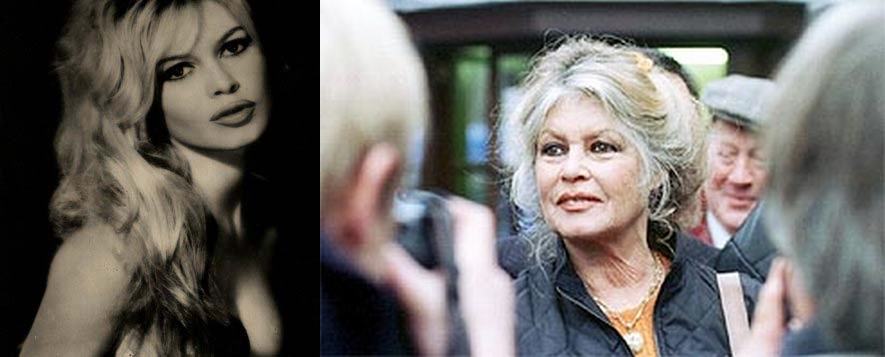
Clipboard brigDo you remember Brigitte Bardot and how she used to be the freshest fritter in the Franco-fryer, and how she’s now old and cranky and unable to face the reality of her own lost luster and the world’s re-channeled lust?

Well, she’s a metaphor for her motherland.

You see, back in the 17th century, France was (for a while) the world’s largest superpower, and, following the Napoleonic Wars (1803 – 1815), when Britain restored much of the territory it had won from her, the Second French Colonial Empire was launched.

Even as recently as 1934—the same year that Brigitte Bardot was born—France’s land mass, including colonies, protectorates and mandates, was over five million square miles in size: A tenth of the world’s solid surface and considerably larger than the United States.

'Cool burns, Jules!  Not.'

‘Cool burns, Jules! Not.’

But, as always, here comes France being France:  In 1886,  Jules François Camille Ferry, a statesman from Saint-Dié, proclaimed, ‘The higher races have a right over the lower races; they have a duty to civilize the inferior races.’

Bad career move, Jules, especially among races who do not consider themselves ‘lower’—and certainly not inferior to the ‘Here’s the key to the Kingdom, Mr. Hitler; please don’t kill me’ French.

During the Second World War, French decolonization began in earnest as various foreign countries—including the United States—began to occupy former French territories like Syria, Madagascar, Indochina and Tunisia, while after the war, Carpeing the diem, Ho Chi Minh in Vietnam and Ruben Um Nyobé in Cameroon said, ‘No more, Frère Jacque-strap,’ and the French suddenly found their dynasty as out-of-date as Aaron Spelling’s Dynasty.

Algeria was, in many ways, the last straw, and no jokes about camels and backs; promise. Beginning in 1954, France fought with bitter, skin-of-their-teeth desperation to cling to one of their last zones of global influence.

And, as usual, lost:  Algeria was granted full independence in 1962.

Clipboard wineSo, now the mighty have fallen and France has shrunk to the size of Napoleon—about a quarter million square miles:  The same as Texas.

And, peeved, petulant, pissed and licking their wounds—with Chablis and Burgundy having already declared independence via Carlo Rossi jug wine—the French seem determined to pull another Françafrique Last Stand when it comes to Americans calling their sparkling spume ‘Champagne’.

‘Il est à nous, il a toujours été à nous, il sera toujours à nous’.

Let the eye-rolling begin.

What Do Schramsberg, Roederer Estate, Iron Horse and Domaine Chandon Have in Common?

They aren’t Korbel. 

AAAAAAIn fact, if there was going to be a widely-publicized scandal involving the bubbly chosen for Barack Obama’s 2013 Inaugural Luncheon, you would think that it would be that one of the above, genuinely world-class California sparkling wines did not pass the sommelier’s audition, while Korbel—a bulk-method fascicle of foam that sells at my local Marathon station for ten dollars—did.

Granted, it is something called Korbel Natural, Special Inaugural Cuvée, which—having never been invited to an inaugural luncheon—I have not had the opportunity to sample.  Even so, if E&J released a Boone’s Farm Sparkling Reserve Inaugural Malt-Based Apple Cuvée and it wound up on the White House menu, I’d pink-slip the entire Joint Congressional Committee on Inaugural Ceremonies within the four minutes it took for the wine to go flat.

Wouldn’t you?

Way To Totally Miss The Significance of the Event, France

But that’s not even the issue.  The issue, apparently, is that the White House press release announced the lunch’s dessert wine as being ‘Champagne, California’ instead of ‘California Champagne’ and apparently, the juxtapositioning of words got the French wine lobby’s pretty pink culottes all in a horrid twist.

Now, excuse me:  Why does France have a lobbying ‘Champagne Bureau’ in Washington to begin with, and why would they be invited to an Inaugural Luncheon instead of yours truly—a red-blooded, flag-waving, all-American, Obama-supporting-except-for-abortion wine pro like me?

I suppose that is fodder for a different column.

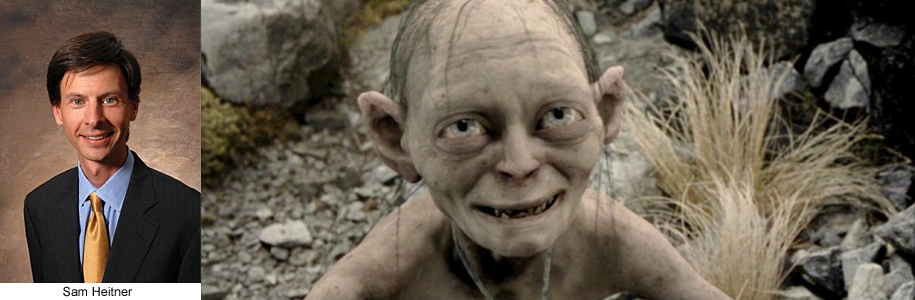
Clipboard samBut the menu’s silly little oversight inspired Champagne Bureau director Sam Heitner to whine, “Champagne only comes from Champagne, France!” before ‘vowing’ to write the committee to set it straight.

Clipboard pepeHeitner—though he looks a bit like Gollum—is, by all accounts, an American, so why he chose to vent his vitriol in the sort of acute-sinusitis French accent usually associated with Inspector Clouseau or Pepé Le Pew is anybody’s guess.  What I do know is that Matt House, spokesman for the Joint Congressional Committee on Inaugural Ceremonies, was able to deflect the agita with a wee quip:

“The Champagne Lobby should have a glass of their own product and relax,” which is cute, but which would have been cuter still had he also recommended relaxing with a joint—which his Joint Committee almost certainly represents or else why would they call themselves that?

Way To Make It All About You, France

So Matt House is a jokester.  But if I’m Obama, I’m ticked off.  If I’m the President, my thinking goes like this:  “It’s my day to reaffirm my position as the most powerful political leader on the planet, and here comes some second-rate, washed-up, slug-eating nation trying to urinate on my parade simply because my chef transposed ‘California’ and ‘Champagne’??!”

statue-of-liberty-statue-of-liberty-32355486-400-600Then I get serious.  First, I call that name-glutton François Gérard Georges Nicolas Hollande and say, “So we have upset you by accidentally ‘switching around a couple of words’ on our menu, huh?  Well, not for nothing, Franky, but even though you may have made the Statue of Liberty, you gave the stupid green monstrosity to us, and we Americans really don’t appreciate you continuing to call it ‘Liberté éclairant le monde’ where the ‘Liberty’ comes first.  Yeah?  ‘Statue’ first and whatever the rest of that crap means second.  Not hard.

And while we’re at it, stop calling us Etats-Unis, because we are not the ‘States United’—Google the bitch if you need to.  No little gay dash between the words, either.  And not only that, but it is the ‘Eiffel friggin Tower’ not the ‘Tour friggin Eiffel’”

Then, just as soon as I up-end that last methuselah of Korbel Champagne, California and have repeated all that garbage about executions and solemn swear words to Chief Justice John G. Roberts, Jr., my first official act as 2nd term President is to make Paris, Texas the new capital of the United States, to rename North Dakota ‘Bordeaux’ and send their awful wines to China with Château Lafite Rothschild as a fake return address, make French kissing a federal crime and French toast a controlled substance and finally, send drones into New Orleans’s French Quarter, blow it away, and blame the damage on Katrina, like anyone would notice in the first place.

go-champaleBut that won’t happen, will it?  How much of a diplomat is that wussy Obama, anyway?

Another rhetorical question.  I’ll tell you what kind of diplomat the wuss is, shall I?

He and Michelle have announced that in order to avoid any lingering sparkling wine ill-will between us and France, throughout the 2013 Inaugural Luncheon, the First Couple will be sticking with Champale.

Posted in CALIFORNIA, GENERAL | Tagged , , | 2 Comments

Marketing To Minors: P. Diddy’s Hand Cîrocs My Cradle

First—with the exception of a couple of my kids who may tune in to see if their names get mentioned—we’re all adults here, so let’s suffer no fools and yank no chains:  We all know how the merry mass-mockery of marketing works.

thai massageWhen you see ‘Escort Service’ in an ad, you think ‘hooker’; when you see ‘Thai Massage’ on a billboard you think ‘hooker’; when you see ‘safety, discretion and confidentiality’ in an ‘in-call specials’ cut on the back of Metro Times you think ‘hooker with an AIDS test’ and when you see a wealthy old cock-o’-the-walk with a trophy wife you think ‘hooker willing to work for Armani Privé couture instead of cash’. 

That’s just the way the game is played.  craigslist, for example, is not allowed to promote prostitution, but what do you wanna bet we can track a few down skulking among the listing weeds?

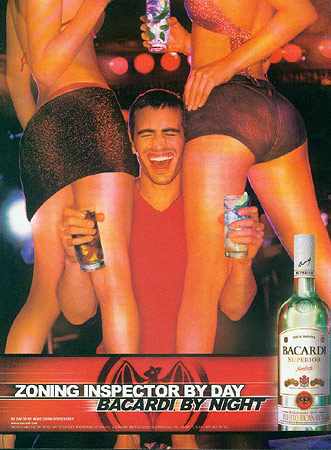
bacardi adBooze, where competition through advertising instead of price is the preferred strategy, is hardly exempt from such subliminal doublespeak.  And why should it be?  If I fall for ‘brand capital’—the collective positive association that people have for a specific product—and think that Coors beer will  convert my drunken old body to an energy pattern and beam it to Telluride with a 20-year-old ski instructor, or that with another snort of Bacardi I will find my arms between the thighs of prime feminine real estate, that’s my problem.

Still, my problem is not the problem.

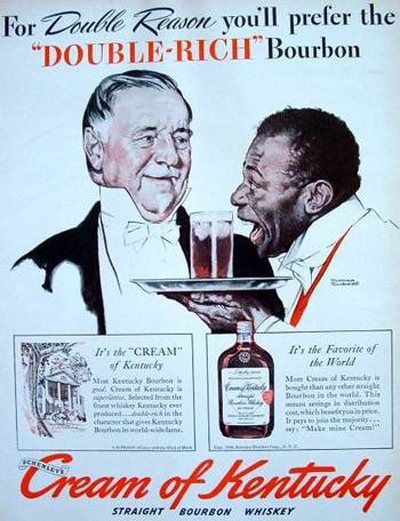
black guy whiskyOver time, of course, brand capital depreciates.  Look at the bourbon ad to the right and tell me if your current bucket list includes becoming an obese plantation owner being served by a shuckin’, jivin’, gape-jawed skivvy.  So, the Great White sharks of Madison Avenue, who need to keep moving forward in order to survive, are constantly on the look-out new ways to segment markets, new images to create ‘personality’ for a brand (and hence, the brand user) and—perhaps most aggressively—new designer drinks that can be sweet-talked down gullible gullets and thirsty throats, especially, those of younger drinkers.

Why younger drinkers, who likely have less disposable income than their parents?  Because, like cigarettes, the younger you can hook a potential junkie with a caché flavor, symbol or promised personality reinvention,  the sooner you can reel them in and ice them. Thus, in the future, the less ‘individualized’ advertising expenditure said junkie will require.

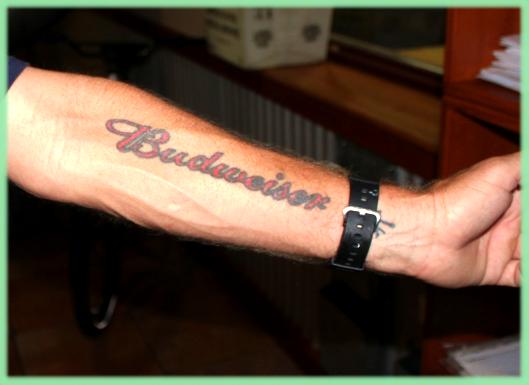
ReverendLovebrew.com - Beer Tattoo BudweiserIn other words, brand loyalty is formed very early in a drinker’s consumption cycle, and if you’re able to tattoo ‘Budweiser’ on his/her wrist like a concentration camp victim’s while they are still in the blush of youth, you have them for life.

That’s the goal of successful marketers, and anyone who disagrees should call my suspension bridge broker for the latest listings.

Denial is Futile: Own It, Translation Advertising (Anheuser-Busch’s Agency)

baby-with-a-bottleSo—like the ‘One-hour therapeutic massage by Oriental twins Cinnamon and Serenity’ found in the ‘services’ section of craigslist, where amenities are available for a nudge and a wink—colorful packaging and splashy alcohol campaigns suggest to young people that they can tap into a fantasy lifestyle for a minimal outlay of cash.  Use of well-informed, precisely-targeted, youth-centered advertising vehicles like e-marketing, online ads, cable tv, even brick-and-mortar theme pubs and club bars, make sure that the message is hand-delivered to the young consumer.

And how young is young?  Consider this staggering stat:

11% of the alcohol in the United States is consumed by underage drinkers.

Even if the ads are ‘designed’ for legal drinkers (another nudge and wink), the idea that adolescents are not responding with the identical Pavlovian goose-step is criminally stupid.

Hitting Cîroc Bottom

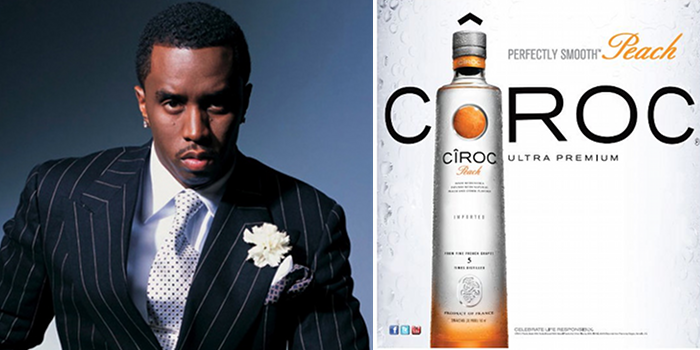
Diddy's drug-of-choice.

Diddy’s drug-of-choice.

One of the latest groupie growlers to enliven the teenage night life is Cîroc, a fake ‘vodka’ that is essentially unaged brandy distilled from mediocre ugni blanc and mauzac blanc grapes from Gaillac and often blended with fake Skittles-ish flavors like berry and coconut which dilute it to a mother-approved 35% alcohol.

Such grape-based spirits have drawn the ire of European Vodka Belt countries (Poland, Finland, Lithuania, and Sweden) who petitioned the EU Parliament to categorize vodka’s standard-of-identity as being ‘made from grain or potatoes’ only.  As a wuss-wipe concession, since 2007, ‘grape vodka’ is required to state those words on the label, which is, of course, as absurd and confusing as ‘grape Scotch’.

Diddy being all swagger on the Diageo roof

Diddy being all swagger on the Diageo roof

Anyway, the same year that the Europarl was gacking down grape Koolaid, P. Diddy—our favorite pistol-packing, swagger-swinking, stampede-stimulating entrepreneur, who rose from from the gutters of Harlem to the glitter of Fifth Avenue—signed one of his numberless names (Sean Combes, Puff Daddy, Diddy, P. Diddy, Peckerhead Diddy) to a ‘groundbreaking strategic alliance’ with Diageo to oversee and manage all branding and marketing initiatives for then-struggling Cîroc.

For his contribution of name recognition and street cred, Penischnitzel Diddy would receive from Diageo a 50-50 profit split.  It promised to be a move of Mephistophelean genius, because, as Pricktard Diddy modestly reminds us,

‘I’m not just a celebrity endorser, I’m a brand builder. I’m a luxury brand builder…’

At fifty dollars a fifth, Cîroc—now the second best-selling ultra-premium vodka in the world—has undeniably found its niche among a hopper generation without much interest in the company’s touted ‘four distillations in column stills and a fifth in a traditional Armagnac-style copper pot still’, but rather in the fact that that five distillations produce a product so smooth that you can do shot after shot after shot as easily as slamming Nantucket Kiwi-Berry Nectar.

With a slightly different end game.

In 2011, Diageo Brand Ambassador, again re-naming himself (this time, ‘Cîroc Obama’), Pusswad Diddy introduced Cîroc Peach to his mesmerized minions of mostly minors, and it wound up being the most successful North American Diageo product launch ever.  With his endorsement, Cîroc sales leaped from 40,000 cases pre-Diddy to a current high of 2.1 million cases of Cîroc sold as of December, 2012.

Of course!  Ads for the product are offering an unspoken, unwritten and undeniable covenant:

Drink me and you will become like Sean Combes, whose drug-dealing father was shot to death outside the public housing project where Sean grew up and who is now worth (according to Forbes) $550 million.

Punk Diddy

Punk Diddy

However… consider the precise demographic that a guarantee of gangsta credibility appeals to.  I mean, not many gangs are recruiting new members among twenty or thirty-somethings, are they?

And—in no small measure the result of such an in-your-face media blitzkrieg—the sugary, sweet-tooth, childlike drink with grown-up consequences has been an unprecedented market success; my local liquor store tells me that they are selling a case per day.

P. Dickcheese, according the Cîroc website,  ‘…has heavily contributed to make this brand a household name…’

He Has Certainly Succeeded In This Household

On Friday night, my fourteen-year-old daughter Julia and a couple of her airheaded, if A-student friends, got ahold of a bottle of Cîroc Peach from one of their equally brain-dysfunctional ninth-grade buddies and proceeded to down the entire thing in the course of an hour.

The parents at home in the house where this took place were apparently as clueless as me, and by the time I even suspected anything was up, Julia was pretty much puked-out and passed-out.

She’s fine, which I am sure will help Mr. Diddy slip a bit more effortlessly into Slumberland tonight considering that it could have been worse: According to The National Institute on Alcohol Abuse and Alcoholism, around five thousand minors die from alcohol-related issues each year (several hundred from overdose), and every day, approximately 13,000 unentitled drinkers between the ages 12 and 20 take their first drink anyway.

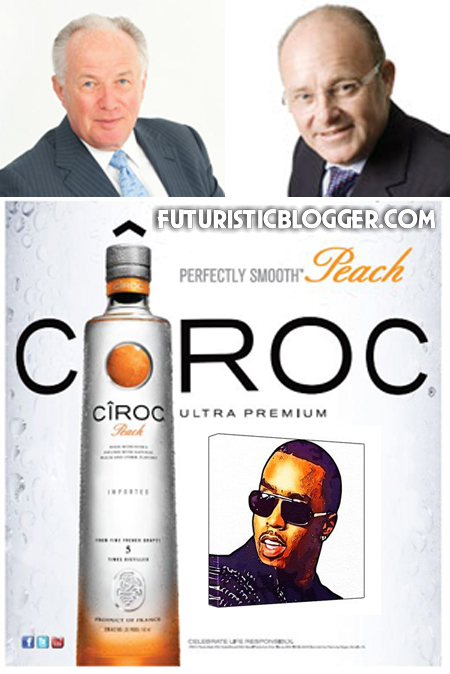
Fat, old, bald Diageo execs (top)

Fat, old, bald, white  Diageo execs (top)

Do I blame P. Diddy?  Or the fact that 48% of rap tunes mention the glories of alcohol?  Or the fat old bald white fucks running Diageo who couldn’t care less about my daughter so long as their bottom line remains solid?  Or the absurd ‘Downplay Reality’ tab on the Cîroc website (actually titled ‘The Century Council’) that goes to shamefully and seriously ludicrous lengths to show that teenage drinking is on the dramatic decline?

Or do I blame myself, earning a living spouting a very lax and lenient attitude toward alcohol while making endless jokes about the subject of overdoing it—of which Julia is doubtlessly aware?

Obviously much more the latter than the series of formers.  Which for me is drink—if not food—for thought.

And which, in the meantime, leaves me between Cîroc and a hard place.

Posted in LIQUOR, Vodka | Tagged , , , | 5 Comments

Veni, Midi, Vici: ‘I Came, I Drank Malbec, No Concord’

If you have to use ‘Wine X’ magazine as a reference for a column, chances are the inmates have taken over the asylum.

viniAlthough I do get a kick out of the fact that said publication, once purporting to target culturally literate, street-savvy Gen Y wine drinkers, missed this demographic entirely—in part because most of the writing staff was considerably older.  Trying to jive-up your voice to appeal to someone fifteen years your junior is at best lame—Millennial for ‘disingenuous’—and at worst, the mom in the SkinnyJeans and the dad with the pony tail, both confused at the smirks their kids give them, making them shrug their shoulders and go, ‘What…?’

Clipboard JasonPlus, the masthead reads ‘Executive Producer: Jason Priestly’—the washed-up 43-year-old former toy boy of Beverly Hills, 90210—which may have been borderline name-droppy in 1997 when the magazine was founded, but today looks almost sad, like the byline is doing more for his career than for Wine X’s.

Generation Y The F**k Not?

wine xIn any case, for whatever reason, Wine X reared up its head immediately when I ran the usual Google search for today’s topic of titillation, southern France’s Midi-Pyrénées; this surprised me, because I thought the mag folded in 2008 and really, the Wine X article offered nothing of value about the region.

But then it occurred to me that actually, Midi-Pyrénées just the sort of indie Echo Boomer appellation that should excite this sprawling, multi-faced generation:

  • Like them, it is massive (at 17,500 square miles, Midi-Pyrénées is the largest wine region in France—larger, in fact, than eight of the EU countries) while 80 million Millennials make up 30% of the U.S. population.
  • Like them, it is young, having likewise been born in the last part of the twentieth century.
  • Like them, it refuses to be pigeonholed, and shows as many sides as there are AOCs contained within.
  • Like them, it is in-your-face aggressive, self-centered, flying-by-the-seat-of-its-pants and as eager to find an identity separate from nearby Bordeaux as Generation Y is to make a rep for themselves removed from that sported by the Baby Busters of Gen X.

In short, if I was going to target this demographic with a wine magazine, this is exactly the sort of off-the-beaten-path location I’d be covering.

Born Toulouse

born to loseThe history of the Midi-Pyrénées—which only became a defined bureaucratic entity in the 1970’s—can be seen as a series of border tiffs, with the French generally coming up with the end of the stick you wouldn’t lick.  It began in the Bronze Age—as seen through artifacts, not written history—but it was the Roman conquest in 200 BCE that was most significant.  Then, as now, the capital of the territory was Toulouse (called Palladia Tolosa); it  became one of the major cities in the Empire, mainly because its position on the a strategic place on the Garonne was among the most advantageous river crossings in southern France.

That all ended in the 5th century AD when the Rhine was breached and the barbarians  poured in; they sacked Rome and three years later showed up in Toulouse—which, for the same reason the Romans liked it, became the capital of the Visigoth kingdom.

How the hell did this happen, people?

How the hell did this happen, people?

Ultimately, around 800 AD, Charlemagne saved the day, but not after a series of invasions by the Alemanni, the Vandals and then the Visigoths again.  The only other hiccup happened with those uppity gnostics, the Cathars—a strange, generally despised sect of extremist Catholicism with origins in Languedoc; the Cathars were finally put in their place by the Albigensian Crusade (1209–1229) with a bit of mopping up by the Inquisition.

Other than that, it’s just been a bunch of French people wandering around with pitchforks.

What Changed With the Midi-Pyrénées Classification?

Sort of like OPEC, where a number of disparate countries realized that their individual interests were best safeguarded through solidarity, so did the various communes in the south of France come to see that collectively, they would have more national clout.  So, to serve as a zone of influence for Toulouse, eight former provinces fused together as a single entity—one without historical, cultural or, in the case of Gascony, even linguistic unity.

Of the newly formed ensemble:

Madiran vineyard

Madiran vineyard

24% is Gascony.  This history-soaked region has long been associated with the Basques of northern Spain, and in fact the traditional language of Gascony is very similar to Basque. The sub-region’s AOC that is most familiar to Americans is probably Madiran, which is divided into two smaller white wine AOCs—Pacherenc du Vic-Bilh and Pacherenc du Vic-Bilh Sec.  Grape of choice for Madiran reds is the big, brutal tannat, which finds itself suited to the climate, but still requires several years of aging to soften up, even when blended with cabernet franc.  Look for the wines of Alain Brumont; especially those from Château Bouscassé and Château Montus.

Madiran whites cover the spectrum of dry, sweet and sparkling, in the main composed of courbu and petit manseng.  The sweet wines are, perhaps, undiscovered gems among late-harvested ‘dessert’ wines; they generally don’t undergo the botrytis infection of nearby Sauternes and can be had for a fraction of the cost.  Château Barrejat, for example, runs about $13 for a full fifth.

Carbonic Masturbation: Onan meets 0 ²

Carbonic Masturbation: Onan meets 0²

23% is Languedoc: How important is this region to French wine production—particularly to the surplus EU supply known as the ‘wine lake’?  Figure that Languedoc grows a third of all grapes in France, primarily the traditional Rhône varietals carignan, mourvedre, grenache, syrah and viognier, with a spate of new investors planting higher-demand merlot, chardonnay and cabernet sauvignon.  As befits the quantity, the quality of Languedoc wines is pretty much across the board;  red styles range from thick and clumsy to pretty and multi-layered—even soft where the Beaujolais technique of carbonic maceration is employed.  Try Grange des Pères on the pricier end of the Languedoc scale and Ermitage du Pic Saint Loup on the other.

White Languedoc wines are equally diverse, and the mouthful of varietals—the Rhône classics plus the late ripening vermentino and maccabéo in Languedoc-Roussillon—produce bright, floral wines with fruit reminiscent of cantaloupe, green apples and Key lime.

20% is Rouergue: Despite a land mass of 3,400 square miles and a population of a quarter million, I can’t find much dope on the wines of this area other than the fact that among the vast vineyard holdings of centuries past, not many remain. Why?  I can’t say.

Wine X:  Li’l help?

Different Lourdes, bonehead

Different Lourdes, bonehead

17% is a pack of Pyrenean provinces from County of Foix in the east spreading out to Bigorre in the west, near Lourdes where the water is said to be so healing that it could actually revive Jason Priestley’s career.  The wines cover most of the varietals grown successfully in southwest Franc—tannat, cab franc, petit verdot, sauvignon blanc, gros manseng, etc.

Mrs. Lot

Mrs. Lot

15% is Quercy: The traditional capital Cahors is now the préfecture of the Lot département; ‘Cahors’ is another name that jumps out at wine people as familiar, just as ‘Lot’ may to salt fans.  The fabled ‘Black Wine of Cahors’ is mostly malbec, and like Madiran, can bash you in the skull with an oak log when in its youth—it’s certainly not to be confused with the lyrical, fruit-driven malbecs of Mendoza.  Among the best are Clos Bican-Ségur, Les Hauts de Saint-Georges and Point de vente Côtes d’Olt.

Coteaux de Quercy is another important appellation in Lot.  Situated between Gaillac and Cahors, the wines here are predominantly cabernet franc.  The wines of the Gaillac, established even before the Roman occupation, may be red, white, still or sparkling and still wear the Gaillac AOC.

To the extreme west of Tarn-et-Garonne and south of Périgord (known, of course, for its foie gras and truffles) is Agenais, extending over the Aquitaine region and making up about 1/2 % of Midi-Pyrénées’ area.  Notable among the usual suspects—cab franc, tannat and malbec—is the use of gamay to soften the harsh tannins of young reds and make them accessible earlier.

Whew…

I remember when Jennie Garth had her own teeth.  You?

I remember when Jennie Garth had her own teeth. You?

With that kind of kaleidoscopic smorgasbord of omnifarious scrumptosities, I certainly believe that there is a niche market for a brand-new magazine, this one targeting… what are we on now, Generation Z…?  Or is it a flip-around to Gen A again—you know it has to happen considering the imbeciles started Genning so goddamn far down the alphabet…

Anyway, I’m proposing a Gen Whatever magazine, all Midi-Pyrénées all the time, specifically targeting fetuses who will just be coming of age when the first bottle of Madiran 2013 becomes drinkable.

Maybe I’ll see if Jennie Garth can come up the seed money

Posted in Costières de Nîmes, FRANCE, Gascony, Languedoc-Roussillon, Rhône | Tagged , , , | 1 Comment

‘Is The Wine Writing World Out Of Touch?’ Touch THIS, Tree Boy…

Whenever I am introduced to a black person, the first thing I say is, “What are you people calling yourselves these days?  Because I don’t want to say anything socially awkward.”

But Seriously, Folks: 

'That's Mr. Nigga to you.'

‘That’s Mr. Nigga to you.’

Like most semi-literate, semi-alert crackerhonkies, I rankle whenever I hear a black street punk call another black street punk ‘nigger’ because I was taught to despise that word above all others—but I always feel strange in the midst of my ranklement, because I am white and do not even pretend to understand the psychological implications of that loaded word, which has—mostly by a hostile pale-faced majority, of course—been infused into the black vocabulary over many centuries.  Is it an ironic label? A sign of brotherhood and a frank admission of dude’s inhumanity to dude?  Even a form of self-flagellation?

Or possibly, a warning to us Caucasians that the word is no longer ours to use and abuse?

Well, now I’m one step closer to understanding: I’ve been niggered by a tree.

But Seriously, Folks: 

Alder: a tree name of Vinography: a wine blog is a patronizing peckerhead.

Seriously, folks.

‘Is The Wine Writing World Out Of Touch?’: Vinography, 1/8/13 

Prof. Howard

Prof. Howard

Background:  In 2012, a team of Michigan State University researchers led by Associate Professor Philip Howard conducted on-site wine inventories of twenty Michigan retailers and concluded that of the 3,600 unique wines carried, affiliated with 1000 firms, more than half were owned by just three corporations; the same three that account for 51.5% of U.S. wine sales:  E & J Gallo (22.8%), The Wine Group (15.9%) and Constellation Brands (12.8%).

Alder

Alder

Apparently, an avalanche of awestruck and appalled articles appeared anon—bloggers and wine writers who, in the opinion of Tree Boy, should have already had this information at their fingertips.

He claims frank non-plussment at how ‘out of touch’ those whose ‘self-appointed role involves communicating about wine’ are, claiming that there is ‘no excuse’ for such lapses of genuine industry understanding.

How Do You Say ‘Blow Me’ in Entish?

Chris Kssel

Chris Kassel

You see, I was one of those flatliners who did not quite live up to the Vinography Excusability Standard to which all wine writers should adhere; and in fact, should have posted above their Asus monitors.  In my column of November 18, 2012, I approach the subject with total out-of-touch awestruckity and appalledness for which I am now ashamed:

https://intoxreport.com/2012/11/18/wine-world-wins-and-woes-the-rich-get-richer-and-the-poor-get-boutiquier/

I was indeed appallstruck to discover the obscene level of market penetration that the ‘Big Three’ had and will, therefore, resign my undeserved self-appointment.

But, Back To Is The Wine Writing World Out Of Touch?’…

Alder

Alder

Honestly, I couldn’t even get past the wrist-slapping opening sentence of this testy tome without gacking up an ounce of last night’s Vietnamese snake wine.  In it, the Putzel of Pulp postulates peevishly upon my personal domestic situation:

‘So where have all these wine bloggers and writers been living for the past 10 years? Under a rock?’

Just call me Rock Boy, sir.  But, according to the rules, rock sits on paper—and if you don’t know where paper comes from, I will be frankly nonplussed.

Too good for this? Oooooh!

Too good for this? Oooooh!

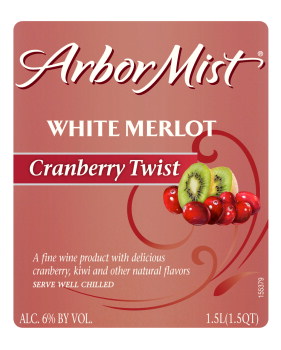
He goes on to toot his own tin whistle—ironically, right after suggesting that I (generically) may be a trifle tactically challenged when it comes to grokking the tastes of Tom and Trisha Temecula or Tucson or Toledo or whatever typical, ticky-tacky town is snarfing up all the Arbor Mist White Merlot Cranberry Twist—Middle America’s beverage of choice, according to Vinography’s accompanying illustration.

Alder, on the other hand—or limb or branch or whatever—understands instinctively how the riff-raff rolls, despite the fact that he would not dream of debasing his pompous papillae with such plebian plonk, pointedly preferring:

‘…the expensive stuff with hard to pronounce names.’

Jesus, Mary and Joseph; wine people like this make me want to go skydiving without a parachute.  I have a hard-to-pronounce name for you, Timbertoes:  Supercalifragilisticexpialadouchebag.


Not Only Are We Out of Touch, We’re Also Thieves…

Chris Kssel

Chris Kassel

So, in the Vinography article, right above the reprinted Wine Market Share 2011 graphic from Professor Howard’s study,  our favorite denizen of the Forest of Cheem accuses bloggers of ‘stealing’ the Wine Market Share 2011 graphic from Professor Howard’s study, adding in parentheses: (usually with proper credit given to the professor) which makes no bloody sense unless he means ‘without proper credit’—even though the Prof’s name is stuck to the bottom of the graph as if with Gorilla Wood Glue.

He then slides into a bizarre segue comparing wine writers who should ‘spend a little more time in the wine aisle at the biggest supermarket they can find’ to ‘a politician who fails to recognize that the health care benefits and retirement plan that comes with his job in Washington bears no resemblance to what the average American can afford.’

C'mon, Daddy, cough it up.

C’mon, Daddy, cough it up.

Huh?? All I get out of that is that Alder can afford to drink better wine than me, an average American—who has in fact gotten shit-faced more times than he can remember on the kind stuff that Mr. Monoecious proudly ‘spits into the sink, followed by the rest of the bottle’, apparently gloating over the fact that he can also afford to waste worser wine than the average American.  Oooooh!  By golly, Daddy Warbucks, if you are so friggin well off and want to rub my face in something, can’t it at least be a ball of 90% Peruvian Flake?

Who Is This Guy Anyway?

Alder

Alder

Why, he’s the guy that all his friends go to for advice, at least according to Vinography’s ‘About The Editor’ tab.  He’s ‘The Wine World’s Brightest Cyberstar’ (same source).  He’s a ‘graduate of Stanford University with time spent at Oxford University’.  Ooooooh!  (same source).

He’s easy enough to track down if you are all that interested: Start with Oxford Book of Trees, A. R. Clapham; Littlehampton Book Services Ltd; new edition (Jan 1986).

If nothing else, it will explain what he was doing at Oxford.

Actually, the guy knows his stuff, no question about it, and is indeed well respected throughout the wine world.  As a general rule, however, I would be a lot more eager to read his shit if he’d grow a sense of humor and get his nose out of the air and back into the wine glass where it belongs.

Epidermodysplasia verruciformis.

Epidermodysplasia verruciformis.

He can call me, as a ‘fellow pundit’, the ‘n’ word in spirit as much as he wants, and he’s probably right.  Literarily, I am a Lugz-wearin, Lando-lovin, Latifah-listenin lawn jockey.  Plus, he knows that I will not dare to strike back with any snideries about why a poindexter from Stanford allows so many typos to slide by on Vinography, because for all I know, the guy is dyslexic, and far be it from me to make light of any affliction that plagues the human condition.

Except, perhaps, Epidermodysplasia verruciformis.

*

http://www.vinography.com/archives/2013/01/the_wine_writing_world_is_out.html

Posted in GENERAL | Tagged , , | 12 Comments

Creature From The White Laguna

Creature From The Black Lagoon, Universal Studios, 1954

Plot Summary:

A geology expedition in the Amazon uncovers a fossilized hand from the Devonian period; Dr. David Reed (Richard Carlson), an ichthyologist who works at a marine biology institute, returns to the Amazon to look for the remainder of the skeleton.

L.: Piscine amphibious humanoid.  R.: Feline screamious chickapoid

L.: Piscine amphibious humanoid. R.: Feline screamious chickapoid

When he arrives at camp, he finds everyone dead, attacked by a piscine amphibious humanoid.

Encounters with the Gill-man claim the lives of two of Lucas’s (Nestor Paiva) crew members before the Gill-man is captured and locked in a cage. It escapes and attacks Edwin (Whit Bissell) who was guarding it. Following this incident, David decides they should return to civilization, but as they try to leave, they find the entrance blocked by fallen logs, courtesy of the escaped Gill-man.

Richard Calrson before and after sex change

Richard Carlson before and after sex change

While the others attempt to remove the logs, Mark (Richard Denning)  is mauled to death trying to capture the creature single-handedly underwater. The creature then abducts Kay (Julie Adams) and takes her to his cavern lair. Kay is rescued and the creature is riddled with bullets before he retreats to the lagoon where his body sinks in the watery depths, presumably dead.

*

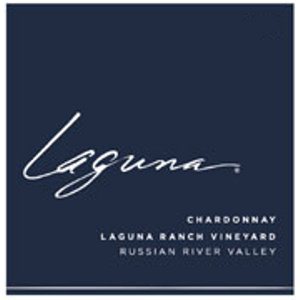
Laguna Ranch Vineyards, Chardonnay, Russian Rivers, 2010

Plot Summary:

Jean-Charles-Boisset before sex change

Jean-Charles-Boisset before sex change

A geology expedition in Russian Rivers uncovers soil known as Goldridge which is composed of loam with concentrations of volcanic ash; Cecil DeLoach (Cecil DeLoach), a former fireman who worked in San Francisco, plants vines in the valley in 1973 in search of his pot of Sonoma gold.

When Jean-Charles Boisset (Jean-Charles Boisset) arrives in Russian Rivers in 2003, he finds all the vineyards un-biodynamic, planted by unprogressive non-organic humanoids.

Encounters with Botoxy, butter-drooling, oak-obese chardonnays of the 1980s claim the palates of many wine drinkers before that particular style is locked in a cage. It escapes and attacks Ric Forman (Ric Forman) who was guarding it.  Following this incident, Russian River chardologists at newly-planted Laguna Ranch Vineyards (Laguna Ranch Vineyards) decide they should return to civilized, mineral and apple/citrus focused chardonnay, but as they try to enter the wine cellars of chardonnay fans, they find the entrance blocked by big, fat, old school wines, courtesy of wineries like Rombauer Vineyards (Rombauer Vineyards) and Fisher Coach Insignia (Fisher Coach Insignia).

laquna-chardonnay-20081While others like Stony Hill (Stony Hill) and Hanzell (Hanzell) attempt to remove the log-flavored wines, a few progressive wineries are mauled to death trying to capture the creature single-handedly. The creature then abducts Far Niente (Far Niente), and takes the winery to his new French oak lair. Far Niente is rescued and the creature is riddled with reviews calling him déclassé and ‘so ten minutes ago’ before he retreats to La Crema Lagoon where his body sinks in the malolactic depths, presumably dead.

*

Oh, the wine?  Good shit and about $35.

Posted in CALIFORNIA, Russian Rivers, Sonoma | Tagged , | 1 Comment

MacLean Gets MacDirtier—The Column I Swore I Wouldn’t Write

People always ask why I never post my own photo. Happy now?

People always ask why I never post my own photo.  Happy now??

I’m the idea guy, dig?  You know my type—the egghead braniac that anal, sociopathic CEOs turn to in times of corporate crisis, trusting that I—and only I—will manage to find quick, creative, brilliant, (though generally expensive and impractical) solutions to any problem set before me.

Of course, I leave the actual execution of my brainstorms to the pitiable proletariat; ‘pounding out the code’ is really sort of beneath me.

Love a happy ending

Love a happy ending

The only ‘blemish’ upon my skill set—if it can indeed be considered thus—is that so many ideas of such sheer mesmerizing brilliance blow through my head each hour that the very idea (see!?) that I would want to ‘revisit’ an older idea (hah!) is, to me, as absurd an idea (there I go again!) as Nancy Reagan accompanying John Hinckley Jr. to his 40th High School Reunion as his date.

PP meets Poo-Poo: The Doody Gets Deeper in Downtown Diva-ville

Nat pretends this piece of cheddar is David Honig

Nat pretends this piece of cheddar is David Honig’s aorta.

So, when repeat-offender Natalie MacLean was recently re-busted by Palate Press for requiring that certain wineries buy subscriptions to her newsletter before she’d even condescend to taste their wines (even those she solicited), I was all like ‘Whatev, ese…’  since she’d been pre-busted by Palate Press for being a copycat on her 150,000 member website, using other people’s reviews without proper attribution.

And that blighting breach of journalistic ethics I covered a couple of weeks ago at https://intoxreport.com/2012/12/23/maclean-is-macdirty-i-have-your-hack-back-natalie/

Erika prays before the match

Erika prays before the match

I figured that unless the drinks business announces a nude, sudden-death mud-wrestling match between Nat and one of her Palate Press nemeses like Contributing Editor Erika Szymanski, there’s no reason for me—a genuine bastion of journalistic ethics—to rejoin the fray.

I mean seriously, folks; it’s not as if an idea guy needs to root out stories from Palate Press like some horny boar-struck truffle sow is it?—more like the other way around.

retroverted uterus 3Personally, I’m better off sticking to my own endless whizbangeries, like last week’s exposé of fabled French Château de Minge-le-Vulvaux, where I discovered they’d been using not the dried bladders of Beluga sturgeon to fine their wine, but the retroverted uteruses of Seine-et-Marne virgins.

And then there was the profile of up-and-coming wine regions like Cambodia’s Khmer Rouge et Blanc Winery, with vines planted directly above the killing fields of Choeung Ek, where decaying human skulls are said to give the wines the identical savor as the shells of extinct marine organisms give to Champagne.

360_mj_beatles_0701Either of these stories, of course, could have been had by Palate Press for a song—preferably one from Michael Jackson’s Beatles catalogue.

But, Back To Ratting Out Nat’s Scat…

candian scotAs I said, I had no intention of giving this silly story the time of day—I mean, what do you expect from a Canadian of Scottish descent, uniting the two cheapest nations on the planet—Bill and Melinda Gates altruism?  So, the chick took a little payola in exchange for a little playola—she didn’t exactly undercut a presumption of objective impartiality in the reviews of those wineries desperate enough to ante up.

She pretty much did, but not ‘exactly’.

But then I read the ‘comments’ section, and decided to weigh in, having been tickled rosé to see 90 crazed and corybantic cries from the boscage (I didn’t count my comment, because I refuse to give me permission to reprint it or attribute it)—nearly all packed with bleeding anti-MacLeanisms:  Verbal venom like ‘…an utter imbecile of a taster and writer…’ and ‘…imparts a black cloud over all wine writers…’ *

* I, for one, can assure you that the black cloud over me has nothing to do with Fatcat Nat, but with that last bowl of Afghani Dream Stick opium.

There were a few—a very few (less than the number of people who voted for Ron Paul, actually)—exceptions; one, surprisingly, from Jancis Robinson toy boy Alder Yarrow, who wrote:

‘…In point of fact there’s nothing wrong with this practice…’

…and:

‘…there’s no reason that someone (such as Sam Kim, who I reference above, or Natalie) can’t try to make a business out of charging for reviews…’

Well, I never pegged Yarrow as much of a wanker, even though he named his beautiful daughter ‘Sparrow’—which is like MacLean naming her Canadianish kid ‘SpacLean’—but come on, Alder:  Maybe not ‘can’t, but the entire friggin article is not about ‘can’t’; it’s about why she shouldn’t.

Karen MacNeil

Karen MacNeil

And as to what’s ‘wrong’ with the practice, lest we work terms like ‘journalistic ethics’ and ‘personal integrity’ to death, there’s this cute white angel sitting upon all our shoulders whispering, ‘career suicide’.

No?  Ask a thousand global wine-savvy schmucks, ‘Who is the biggest douchebaguette in the wine industry today?’ and I guarantee you that not one is going to come up with hot, wholesome, all-American Karen MacNeil, even by mistake.

Chris in his studio.

Chris in his studio.

And just so there is no question as to my own personal adherence to honor, ethos, legal standards and moral code, Palate Press may freely ask my little white angel (though enshrouded in black smoke) if Chris Kassel has ever charged for an opium review.

Posted in GENERAL | Tagged , , , , | 3 Comments

A Thorny Rose By Any Other Name…

There are many reasons why we underrated, underpaid, under-appreciated and under-the-bus thrown wine writers choose a particular wine to cover.

grad_sueannIt may be unrequited lust for the winemaker, like mine for Ontario’s Sue-Ann Staff.

It may be a passive-aggressive need to mock and disparage a celebrity wine, even if it’s really, really good.

It may be pay-for-play, like Natalie MacLean’s latest scandal, wherein it is alleged that she makes wineries buy a subscription order to have their wine reviewed.

It may even be because the winery puts out a decent product.  Yeah, right.

But here’s a new one on me, so probably you too:  The sole reason I am writing this review is because I think that the marketing rep who contacted me has a very cool name.

LAForceStevensSo when Capel Kane of Laforce + Stevens in New York suggested that I  review Thorny Rose Wines, I did not hesitate to agree—even though I sort of expected the Constellation brand, low-end, appeal-to-younger-drinkers to be somewhat forgettable.

Which it is—but to my surprise, remarkably drinkable, refreshing and recommended prior to the onset of my memory loss.

It seems likely that Thorny Rose is a sort of corporate effort using purchased grapes, mostly from Washington, and one—sauvignon blanc—from New Zealand.  Both places turn out some scrumptious products.

I’d tell you more about the winery, the winemaker—and especially, about whether or not there actually is a winery and winemaker rather than somebody just bottling wine already made and labeling it—but I can’t.

Aye, There’s the Rub…

Why?  Because I can’t figure out how to navigate their goddamn web page, that’s why.

Typical murder kit ala Ted Bundy

Typical murder kit ala Ted Bundy

Now, I’m not claiming to be the sharpest shiv in the murder kit, but I look at dozens of winery web sites every week, and when I want to know about the winery, I go to the tab labeled ‘About’.  If I want to know who makes the wine, the ‘Who We Are’ or ‘Winemaking Team’ tabs are the usual ticket.

I challenge you to go to http://thornyrosewines.com/ and tell me what is going on in this clusterbleep of a site, and if you can, I will send you a ski mask and a free roll of duct tape as a reward.

My kinda spare room

My kinda spare room

What little I can find out about Thorny Rose comes from a Société Perrier article about the wine’s launch party at Hollywood’s ritzy Spare Room bar; that’s about all I could locate on line that was comprehensible.

And even that is a little suspect.  Here’s the opening line, by Romina Rosenow:

 ‘You may be used to sipping wine from Napa, France or maybe Argentina if you’re daring, but there’s a new kind of wine in town: They’re here to say that Washington can grow good grapes too, damn it!’

If I’m an editor reading this, my first comment is, ‘Romina, dahlink—even if you are not aware that Washington is the largest wine producing state after California and New York and chunk out 24 million gallons a year—chances are that your readers will.  Maybe revise?’

Then I might add, ‘BTW, Romina, baby—also, perhaps, toss in something about why Thorny Rose, if they are so intent on ballyhooing Washington, held their launch party in California.’

Romina

Romina

But then I Googled Romina Rosenow and damn if she isn’t as lustworthy as Sue-Ann Staff, so if she wants to not know about Leonetti, Betz, Quilceda Creek or Cayuse Cailloux, power to the p-word.

Capel

Capel

But that’s rude and infantile and offensive, and likely one of the reasons I find myself so underpaid and under-appreciated.

So, before I dig my grave deeper with the requisite murder kit shovel, I will sign off by saying that I did, in fact, find the wines fun, flavorful and fittingly frivolous, and appreciate the column idea from the gnarly-gnamed Capel Kane (cool initials, too, but I’m a bit biased there), who I also Google Imaged, and the photo on the left came up.

Holy Christ, People… Homina³

I’d thereupon henceforth mention Capel in the same breath as Sue-Ann and Romina, but I figure if I use the word ‘lust’ three times in the same column where I mention murder kits, somebody might begin to get the impression that I’m a bit creepy.

Tasting Notes:

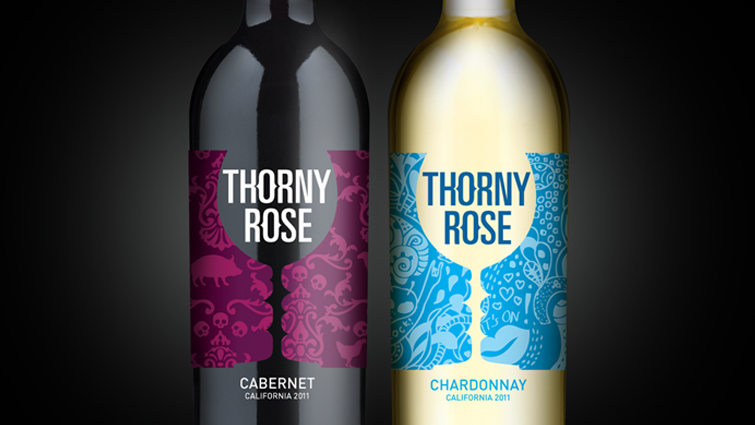
thorny roseThorny Rose Wines, Chardonnay, Columbia Valley, 2011, about $8.50:  Sweet, with a solid apple-driven focus; also nuances of pear and citrus folded into a creamy mouthfeel.

Thorny Rose Wines, Cabernet Sauvignon, Columbia Valley, 2011, around $8.50:  Big bright fruit type cab—plum, cherry, dark berry—and surprisingly vivid at the price point.

Lahma Bi Ajeen

Lahma Bi Ajeen

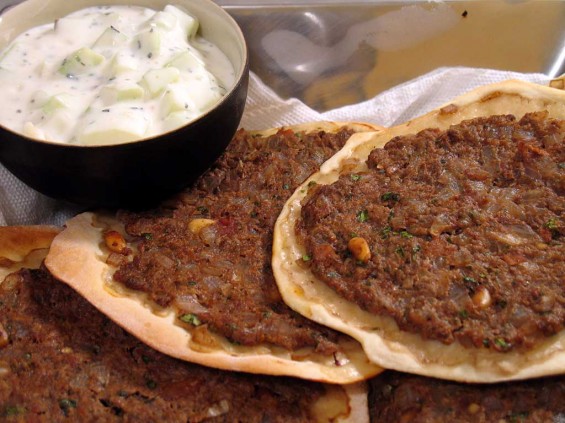
Thorny Rose Wines, Red Blend, Columbia Valley, 2011, about $8.50:  Rare the red blend with a vintage on the label?  Like the cab, the wine relies on fresh fruit, with cranberry and black cherry at the forefront.  If I hear this kind of wine described as ‘pizza-friendly’ one more time, I’m gonna start taking hostages—oops, not going there.  Figure it pairs well with Lahma Bi Ajeen.

Posted in Columbia Valley, WASHINGTON | Tagged , , | Leave a comment