The Brine In Wine Is Mainly In The Mind

Or so the scholars tell me.  But I’m not buying it—not for a second.

ear to conchOn the other hand, whenever I listen to a conch (which rhymes with ‘ponch’, not ‘honk’, damn it) I believe I’m actually hearing the ocean, not some poindexter Stephen Hawking phenomenon where the noise of the surrounding environment resonates within the shell.

Which brings us to brine in wine: Sometimes, tasting notes are about suspending didactics and embracing phantasmagoria.

When snorting and scribbling, the primordial challenge is to find esoteric—but nonetheless accurate—nuances in wine; it’s fun, serves as a sort of mnemonic device for remembering each one and, above all, keeps us from sounding like derivative saps when the words pass to readers.
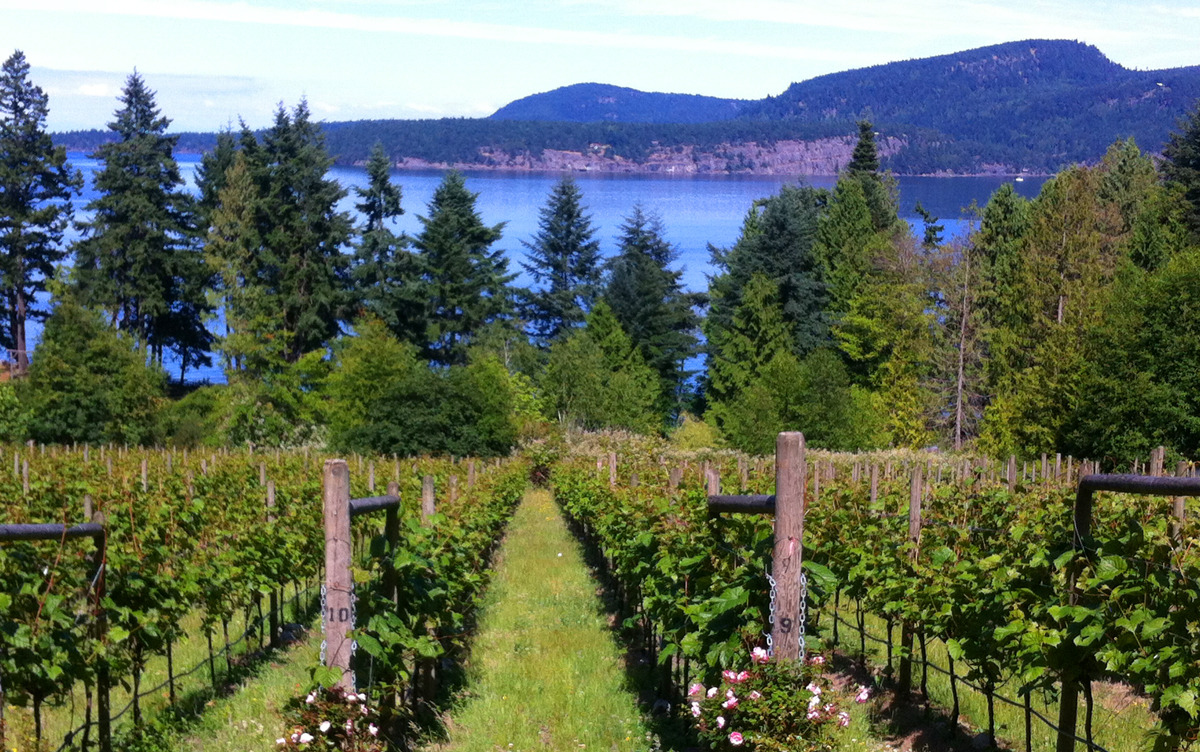
Beachfront vineyard

Beachfront vineyard

Over the years, I’ve noticed—as you’ve no doubt noticed—that certain white wines display marked, if generally subtle, scents of sea water.  Most susceptible to these notes seem to be Albariño, especially from Rías Baixas, Melon de Bourgogne (Muscadet’s mother grape) and Santorini Assyrtiko.

‘Salinity’ appears in tasting notes of Catalina Sounds Pinot noir, a red from New Zealand’s South Island.

What do all these wines have in common?  Bingo: They’re from vineyards that rely on the meliorating effects of salty ocean breezes.

It becomes easy enough to make the physiological connection:  Why shouldn’t grapes grown in these vineyards pick up the same flavors that we can smell while standing in them?  Couldn’t some of the volatile compounds that make up sea smells wind up in the finished product?  Shouldn’t these chemical compounds be in seaside soils simply by proximity, and thus, end up osmosisifying a path into the wine?

Smart People Say No, and Who Am I to Argue with Smart People? 

Beachfront Jamie

Beachfront Jamie

According to smartypants wine writer/plant doctor Jamie Goode: “…the source of matchstick/mineral character is most likely a volatile sulfur compound produced during fermentation by yeasts. Volatile sulfur compounds are responsible for the wine fault known as ‘reduction’, and what we have here is a classic example of a compound that at one level is complexing and another is a fault.”

hai karateNot sure I can define ‘complexing’, but guess what ends up being the primary aroma in ocean smell?  Dimethyl sulfide—a volatile sulphur compound—produced in large part by bacteria that eat dying plankton.  And the next most common ‘beach odor’ is caused by seaweed pheromones.  Hand before God; when we sniff at a bracing wind blowing in off the surf, we’re smelling kelp Hai Karate.

The third identifiable, isolatable smell you detect when you put a conch shell filled with sea water up to your nose comes from bromophenols—a class of organic compounds produced by marine algae.  In small doses, they smell like oyster shells and when concentrated, like iodine.

Both of these scents appear may appear in wine, but, like the sulfides, they are not the result of a maritime climate.  According to Ribéreau-Gayon’s 1982 tome ‘The Handbook of Wine: The Chemistry of Wine Stabilization and Treatment’, the fungus Apergillis niger may affect grapes during damp seasons and cause skin phenolic transformations that impart the distinct tang of iodine to the wine. Other winemakers blame iodine-based sterilizer that may not have been completely rinsed from wine processing equipment.

Salt-Of-The-Earth Opinions…

And in any case, the brine smells I pick up from certain white wines  come across more mineral than plant or animal; they are distinctly reminiscent of the saltiness in the air when you stand by the shore.

But again my senses seem to be thwarted by science: Beside the fact that even if vine roots could pick up sodium chloride ions, salt in the soil dooms the productivity of a vineyard and great lengths are taken to avoid it or flush it out

Olivier Humbrecht Michel Bettane

Olivier Humbrecht
Michel Bettane

According to Olivier Humbrecht—winemaker of the great land-locked estate in Alsace—what I’m noting is not saltiness at all.  He says, “It is the fraction on the palate that makes the wine taste more saline or salty. High acids or high tannins do not mean that the wine has lots of minerality.”

File ‘fraction on the palate’ with ‘complexing’ in WTF? wine-writer lexiconology, but French critic Michel Bettane seems to echo the salt-free sentiment: “A wine marked by salty undertones often are white wines rich in calcium and magnesium, as many mineral waters are.”

Domaine Comte Abbatucci Il Cavaliere Diplomate d’Empire, Ajaccio, Corsica, 2010, around $99.

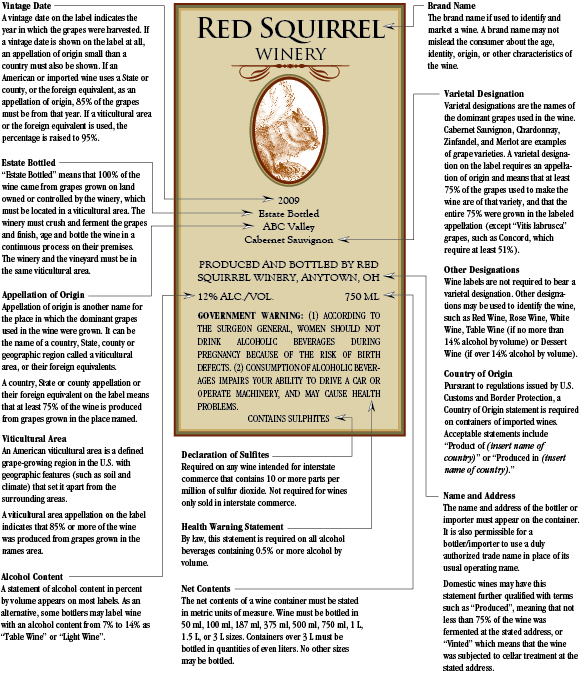
labelThe wine that in this case launched a thousand words was a field blend from the highly regarded Corsican domaine of Comte Abbatucci; it is made from Vermentino, Biancu gentile, Brustiano, Benovese and Rossala bianca.  Reviews of the vintage from my esteemed colleagues describe it as ‘fresh, pretty wine with wet-rock minerality from the granite soil’ and ‘aromas of ripened yellow and exotic fruits with a touch of maquis fragrances’.

Not sure what ‘maquis fragrances’ are, but I’m sure they are quite complexing to the palate fractions.

usa-shipwreck-wine-1Well, what I smelled was good ol’ blow-the-man-down, yo-ho-ho, Neptune-approved ocean spray, more strongly that I recall having snorted out of any tulip or conch shell ever.  It was like nosing a fresh oyster, which is a fine thing in a freshly shucked Wellfleet, but  sort of head-scratching in a Vermentino.

But, better palates that mine found maquis and exotic fruits in the pricey potable, so the lesson learned here is simple, my droogies:

Take my tasting notes with a grain of salt.

Or bromophenols or dimethyl sulfide or maquises or whatever.


Posted in GENERAL | Tagged | 3 Comments

Word, Wine Wimps: A Real Man Can Handle His Arsenic

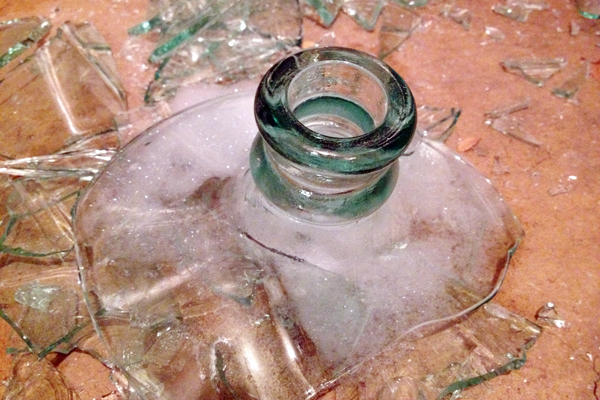
broken_glass_carboyThe line between macho and third stage alcoholism may be a fine one, but here’s a true story: Two years ago I managed to break a carboy filled with dago red and I spent the rest of the afternoon not mopping it up, but sucking it up from the basement floor.

This is not to suggest that my descending colon is holier than thine (I imbibed through clenched teeth to avoid such an eventuality) but merely to say that real wine drinkers on a buzz-prowl don’t worry about two decades worth of rat droppings, waxy buildup or feet that have tracked in toxic chemicals from the garage.

When we drink wine, prone or upright, we do it with a sense of abandon, and if that occasionally requires that we abandon our health, our families and our jobs, it is a small enough price to pay:

We’re wine drinkers.

Enology’s Answer to Benghazi

mogendavidStories of arsenic in wine have made their requisite rounds recently, replayed ad nauseum (pun intended) by people bored with the Kardashians and unable to watch their neighbors drop dead of ebola because an ebola epidemic was never a threat to begin with. To them, the idea that cheap wines like Franzia, Mogen David and Almaden contain measurable levels of chemical element number 33 (which is the pet poison of most fictional murderers by the way, and thus, is literary) is less an excuse to panic than to brag that they are not in danger because they don’t drink such plonk.

And to them I say:  You are not a real wine drinker.

Top Of The Pontch: "Poisoning or non-poisoning section tonight?"

Top Of The Pontch: “Poisoning or non-poisoning section tonight?”

You see, to real wine drinkers, there are many categories of wine: There are wines one drinks with panache, wines one drinks at Top of the Pontch, wines one drinks to get punch-drunk and wines one drinks in a balls-out, cupboard-is-bare pinch.  All are equal under Bacchus and all are dependent on circumstance; thus, wines that contain  substances incompatible with life may be reserved for—and are often indispensible to—special occasions such as signing do-not-resuscitate orders, Truth or Dare drinking games and performing as the ultimate Janis Joplin impersonator.  And as ultimate Jimi Hendrix impersonators are fond of reminding us, you can choke to death as effectively on any wine, whether it contains arsenic or not.

One Man’s Mead is Another Man’s Poison

Thursday’s class-action lawsuit brought by a quartet of Californians merely puts a spotlight on the wussiness inherent in the worldview of modern wine consumers. Real wine drinkers owe a certain debt of gratitude to California, granted, but suing Mogen David because they use non-Kosher arsenic to poison customers?

That’s taking milktoast macholessness to the next level.

And in any case, when you actually read the report, we’re not talking much vino venom in the first place—around twenty parts per billion.

metrosexualLet me break that number down for you:  If only twenty men per billion exfoliated their skin, wore hair gel, got pedicures, gave a rat’s ass about fashion and whitened their teeth while sipping arsenic-free Moscato, there would not be much outcry about the emasculation of the American male, would there? In fact, the number of such tweety-birds is legion, and growing as aggressively as ebola virus in a Petri dish.  And where is ground zero for male-targeted grooming products, washboard abs, chest shaving and suing people because there’s D-Con in the Dolcetto?

Again, with Cali-debt acknowledged, it ain’t one of the post-industrial apocalyptic flyover states where I live.

waybackAllow me to dial the Wayback Machine to 1985 and the diethylene glycol ‘scare’ in which it was revealed that a number of Austrian winemakers had pumped up sweetness levels in their juice by using antifreeze. Although the result was the complete collapse of the Austrian wine industry, I am (as I may have mentioned) a real man, thus, I purchased 500 cases of said wine for a penny on the Euro.  Not only can I store it in my walk-in freezer, I was also able to convince colleagues that it was a brand new Austrian classification known as Prëstonekat and sold it to them for a dollar on the Euro.

1st Annual Agatha Christie Wine Pairing Dinner

And I have done likewise with all the tainted Two Buck, the corrupted Cupcake, the polluted Pomelo and the festering Fetzer I could lay my hands on.

"I detect traces of Corbett Canyon in his system, Sir Henry..."

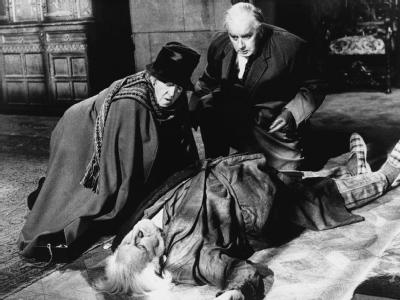
“I detect traces of Corbett Canyon in his system, Sir Henry.”

Now, I formally invite all you real men to attend my first annual Agatha Christie Wine Pairing Dinner, where we will match arsenic-blemished wine with savory courses made from foodstuffs that Environmental Protection Agency also says contain toxic contaminants: Brussels sprouts, kale, dark-meat fish, rice, chicken and Round-Up.

As for anyone else, I challenge the most effeminate, clean-shaven, Renault-driving, Alfani-Spectrum-Slim-Fit-dress-shirt-wearing metrosexual among you to deny that (although you may may turn your sculpted noses up at Almaden Heritage White Zinfandel) you in fact cream all over brussels sprouts and kale, and in a completely Biblical sense.

Again, to you I say: You only live once:

Bottom’s up, bitches.

Posted in GENERAL | Tagged | Leave a comment

Springtime Balancing Act: La Flor y La Abeja

For a wine person, I spend more time mocking wine conventions than I do attending them, but one of life’s primary sanity lessons is that sarcasm is free while a lecture on whether or not to de-stem grapes prior to crushing costs $115.

devils towerThat riveting conundrum will be addressed next week in Houston at the ‘In Pursuit of Balance’ festival, which co-founder Jasmine Hirsch describes in terms purloined from those Close Encounters masses huddled beneath Devil’s Tower:

“We are a gathering of believers.”

IPOB logoWhat ‘In Pursuit of Balance’ and its 33 member wineries believe—other than the pursuit of selling expensive tickets and pissing off Robert Parker Jr.—is not hard to determine since they’ve issued a Unabomber-like manifesto.  In brief, IPOB (as they prefer to be known) maintains that ‘balance’ is the foundation of fine wine and that California’s foray into the ocean of potables have produced too many big, full-bodied and high-alcohol entries at the expense of poise and finesse.  Focusing on California Pinot noirs and Chardonnays, the group’s avowed purpose is not to await some mothership filled with skinny aliens who prefer Burgundy, but to ‘lay the groundwork for discussion’.

Clipboard mashIt’s not the mission I object to, of course, but the price tag.  Thus, as IPOB wannabes, feel free to discuss balance on this site, free of charge, and if you need a photo of my house and two pounds of mashed potatoes to get you here, message me.

Putting the ‘Bee’ in Balance

In any case, discussions about balance come up frequently during wine tastings, and indeed, it’s sort of our Groupie Grail.  When a single element in a wine overshadows the others (loudmouth acidity or vice-grip tannins, for example) the sensory experience is proportionately diminished.  Balance has beginnings long before the grapes hit the crusher; ripeness of the fruit and concentration of the juice all play  roles; chemical manipulation by winemakers may adjust some of the elements that are out of whack, but (like chaptalization) artificial addendums to correct natural flaws must always be viewed with a certain begrudging skepticism.

Nik Wallenda, following in his father's footsteps?

Nik Wallenda, following in his father’s footsteps?

Tucking into a couple of wines from the Ribeiro region of Southern Galicia yesterday, I had sort of a eureka moment about the whole notion of balance.  One thing I’ve noticed over the years, (and no doubt you have to) is that frequently, otherwise wonderful wines show a weighted dominance in either nose or palate.  In other words, a wine which displays remarkably deep aromatic layers may show up somewhat one dimensional in the mouth, while a luscious mouthfeel may be restrained in the bouquet.  Traditionally, I’ve attributed the phenomenon to bottle shock, wine served at the wrong temperature or wine that has been open too long or too briefly, but ultimately, all are excuses meant to cover a wine’s imbalance, which may or may not be innate.  What this indicates is that whoever is responsible for serving a wine plays as a vital role in showcasing its proper profile as the winemaker.

labelAnd the reason this came up is that the wine, La Flor y La Abeja 2013 ($22)—an overwhelmingly approachable wine from Coto de Gomariz made with the local white varietal Treixadura—displayed a weight equilibrium between nose and tongue that proved noteworthy enough to drive an entire column.

All the other components in the wine happen to be in synch as well—the nose is filled with floral bravado, with peach and mint behind the brine scents that sometimes appears in coastal wines, reflected again in  the lemony, peachy, mineral-rich palate.

For those unfamiliar with Ribeiro, it’s a tiny D.O. (11 square miles) in western Spain; it lies in a valley intersected by four rivers Miño, Arnoia, Avia and Barbantiño. The climate tends to be wet and humid, but the soils are primarily sandy and drain well; vines can be found on the valley floor and on slope-side terraces known as socalcos. Treixadura is primarily a blending grape, but when vinified alone displays a marvelous palette of fruit, flowers and stone.

Xosé Lois Sebio’

Xosé Lois Sebio

If anything, the racy red-wine grape Sousón is even less known outside the appellation than Treixadura, and Coto de Gomariz vinifies a miniscule amount under the La Flor y La Abeja label.  In it, bright cranberry flavors, black pepper, rhubarb and cassis play against the traction of tartness; there’s a palpable whiff of iodine in the bouquet, perhaps a ruby-red response to the brine scents in the white.  Although not as massive as the white, winemaker Xosé Lois Sebio’s interpretation of Sousón (like his Treixadura) highlights the exotic subtleties that often appear in indigenous varietals, particularly in the Iberian peninsula.

Both are metaphorically perfect as Springtime sippers—blossom-fresh, cool and succulent, bright with promise. And in a column about balance, both are ideal accompaniments to the Equinox.

Posted in SPAIN | Tagged , , | 1 Comment

I Pledge Allergic To The Flag

I own up: I’m too big a pussy to join the Marines, I can’t remember the words to the National Anthem (nor could I hit the high ‘f’ if I did); I turn the thermostat to 90° in the winter and damn climate change; I eat five thousand calories of saturated fat a day and my voter turnout record is about the same as my attendance record at Taylor Swift concerts. I talk a good game, but I spend more time watching Sopranos reruns than I do reading smart-people books and I couldn’t name my Congressional representatives if you held one of my numerous loaded weapons to my head.

In short, I am a typical American, just like all y’all.

kidsAnd I grew up reciting the Pledge of Allegiance in school, hand dutifully clutching my left pectoral, solemn as an undertaker. But if they were waiting for me to turn into a raging patriot or a humble servant of He-Whose-Name-Must-Not-Be-Invoked-In-Public-Schools, neither contagion has yet taken hold.

I had no major objections when my own kids were put through the same time-wasting regimen at their schools, although I did tell them it was okay to finish the Pledge of Allegiance with the assertion “Hell no, we won’t go; we won’t die for Mon-san-to.”

It doesn’t hurt to remind the New Boss that some of us won’t get fooled again.

I'll take curtain number one.

‘I’ll take curtain number one.’

As for loving my country, that’s a pretty abstract concept.  I’m glad I live here (if that’s what it means) as opposed to living in some flyblown, ebola-ridden dung hut in Equatorial Congo, but if you really expect me to die for America, at least do me the solid of not making me pay taxes in the meantime.  Otherwise, the proposition strikes me as pretty lose/lose.

I respect, and in some bizarre, head-shaking way, admire those of my contemporaries who performed military service.  As much as I bleed for the families of those who didn’t return, I can’t imagine the scant comfort they must take when informed that their loved ones died ‘protecting American freedoms’.

Because, of course—cutting through Uncle Sam’s rhetoric—there hasn’t been a single war my lifetime waged to protect what I—a workaday pogue from Detroit—recognize as ‘my freedoms’.

And I suspect, through their tears, that most of the parents and wives and children of those brave fallen soldiers realize it too.

nurseWith my father’s generation, it was a different story, and I have little genuine doubt that the flag-allegiance-spouting patriotism and the ‘Freedom Isn’t Free’ jingoism under which we’ve labored as a nation since V-E Day is very similar to what junkies call ‘chasing the dragon’.  That is, a fruitless and feverish quest for the original, Aristotelian-paradigm buzz which we never, ever find.  It’s not until the addict’s mind truly grasps the idiotic impossibility of pursuing such a dream that recovery can begin.

Maybe the same holds true for our collective search for another nurse to kiss.

Sommeliers Who Make You Go ‘Huh?’

I mention the Pledge only because, in 2015, when anybody else mentions the Pledge, it never seems to be in an entirely sane context.

Jillian Dowler

Jillian Dowler

For example, a broad proclamation made yesterday on social media by Jillian Dowler beneath the text of the Pledge read: “I say this at the beginning of my meetings. How about you?”

Hang on, Jill: According to your resume, you’re a sommelier at JD La Vie Specialty Wines.

Thinking out loud, I recall many meetings I held with staff during my decade as a sommelier, and I assume that had I ever started any of them (let alone all of them) with a mandatory declaration of loyalty to Big Brother in Washington DC, I would have been asked to sign a different pledge; the one with the twelve steps.

Ain’t No Cure For the Red, White and Blues…

My message to my kids is clear enough:

If you want to enlist, I have no choice but to support you.  But don’t let anyone in authority bullshit you into thinking that stepping on an IED in Mosul is an act of tangible patriotism or that by doing so, you are defending anybody who lives in your house, on your block or in your community, or, for that matter, anyone outside your immediate military unit.

samAs a teenager you are susceptible to the psychological mandates of doing stupid, dangerous things: You want to fit in with the crowd, you have a false sense of invincibility and a genetic need to show off your titanium, bad-ass balls.  These are, quite diabolically, the very traits that recruiting sergeants love to exploit.

Take it to the bank, kids: Guys my age aren’t 4-F because we’re too old, we’re 4-F because we’re too pragmatic: It can happen to you and the crowd’s well-meaning members are as deluded as you are.

If you are really concerned with defending America and her freedoms,  I recommend instead that you get a degree and set up a medical clinic on Wyoming and Orangelawn in Detroit.  Open a law office in downtown Camden or Chicago or New Orleans or Oakland and cater to people who need representation of a quality they can’t afford.  Learn to hammer a nail and build HUD houses.  Volunteer at a soup kitchen.  Tutor inner city kids in English and math.

arlingtonIf you want to pledge allegiance to anything, pledge it to your family, your neighborhood and your future:

And in return, I pledge to you that as a nation, we will be better served than if you become another name on another slab in Arlington.

Posted in GENERAL | Leave a comment

I Came, I Wente, I Conquered

Vini, Vidi, Vente.  That’s Latin, baby.

Wente vineyards

Wente vineyards

Wente Vineyards makes this claim without braggadocio: They are the oldest, continually-operating family-owned winery in California. As, their scrapbook must look like the walls of Harvard School of Law’s graduating class—generation after generation of star-studded pros.

The family tree spread branches and roots into many firsts, including pioneering mechanical harvesting after dark and, in 1935, introducing California’s first varietally-labeled wine.  The fact that it was Sauvignon blanc, in which the state has hardly excelled, is fodder for a different philippic.  For today, the strata of savvy that the family has built since establishing Wente Vineyards in 1883 (virtually putting Livermore on the California wine map) has funneled itself into two outstanding selections, a Chardonnay from Arroyo Seco—of which Wente farms 700 acres—the second, Pinot noir from the Riva Ranch in the same appellation.

"One more time, George; tell me about the Chardonnay again..."

“One more time, George; tell me about the Chardonnay again…”

Dab in the center of the incredibly productive Salinas Valley (Of Mice And Men country), Arroyo Seco contains, in various vineyards, the ideal climate for Burgundian varietals—warm, sun-soaked days moderated by afternoon winds from the Monterey Bay; meanwhile, a surface scattering of Greenfield pebbles hold the heat throughout the night’s chill while the grapes’ vital acids are preserved overhead.  Further west in the AVA, Rhône varietals flourish, but in the east, where Riva Ranch is located, the climate accounts for some of the most balanced Chardonnays in California.  And, from the original cuttings brought from University of Montpellier viticultural nursery in France, that’s been Wente’s stock-in-trade.

Karl Wente

Karl Wente

Under the winemaking prowess of fifth-generation vintner Karl D. Wente, the intention today is to stay the course—an excellent game-plan for a family that came to Livermore 130 years ago, saw the potential and conquered.

Wente Vineyards ‘Riva Ranch’ Chardonnay, Arroyo Seco, 2013, around $22:

chardThe year after Wente released the first varietal labeled wine in the United States, they let fly the second: Chardonnay.  The trajectory was onward and upward, and the Wente’s are rightfully referred to as ‘California’s First Family of Chardonnay’.  The Old Wente Clone was a standard in much of the area from the outset; it produces wine with considerable character and complexity.

But, that’s a truth we hold to be self-evident:

The bouquet shows lemon curd, bright flashes of frankincense (which may likewise be translated as a light minerally spritz) and banana cream offer a promise of richness—this is a high point of California Chardonnay as long as it is braced by acidity.  And it is.  The palate is silky and sweet with peach and honey, but shivers with tart citrus beneath offering a wine with superb equilibrium.

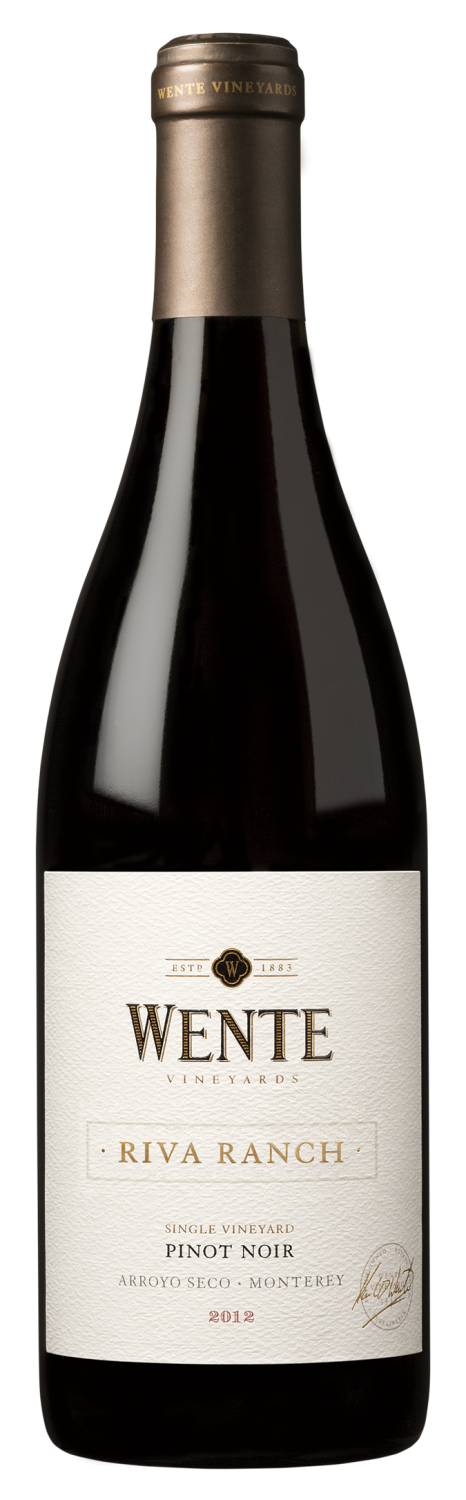
Wente Vineyards ‘Riva Ranch’ Pinot Nor, Arroyo Seco, 2012, around $30:

2012_Riva_Pinot_Noir_DOBS_150dpiSoils in Riva Ranch vineyard are rich with shale and limestone, well-drained in wet weather and (due to calcium’s ability to retain moisture as well) resistent to drought. Burgundy is loaded with limestone—so is the Loire and southern Rhône.  But in California, other than a crescent of land in the Central Coast, limestone soils are somewhat rare, and where they are coupled with long growing seasons and cool nights, Pinot noir has what it needs to thrive.  Of the eight Pinot clones Wente relies upon, 2013 is heavily weighted with Pommard and Martini.  The former can produce earthy wines with deep, dark fruit; the latter shows more brightness and elegance.  Obviously, a wine that can encompass both dimensions is ideal.

The nose is dominated by darkness; black cherries dipped in chocolate with distinctly New World Coca-Cola undertones; like the Chardonnay, the wine is a full-bodied expression of fruit, powerful and with sparks of sweetness behind a slightly brooding middle palate.  There’s subtle mocha, spice and earth interwoven with ripe plum and underscored with bright acid and respectable palate length.

Posted in Arroyo Seco, CALIFORNIA | Tagged | Leave a comment

Right vs. Left: Banking on Bordeaux, 2010

Clipboard sonnyWhen Sonny Bono died in 1998, the public pointed to an old superstition: Celebrities tend to die in trees.  Gratefully, Harrison Ford survived; otherwise we’d have to hear them go on about how celebrities tend to die in fores.

In any case, the idea that excellent Bordeaux vintages tend to come in twos is not superstition. For those old enough and rich enough to have contrasted 1928 and 1929 Bordeaux, the claim is made that the former was rich and resplendent while the latter was supple and sensational.  Later in the century, ’85 and ’86 were standout; so were 1989 and 1990.  2004 was superb, if inconsistent, but 2005 rang all the bells.  Parker Jr. called ’05—along with 2009 and 2010  “the three best vintages three greatest Bordeaux vintages I have tasted in my career.”

2009 pricingIndeed, Bordeaux’s 2009 was as close to weather-perfect as  any wine growing region gets.  Ripening progressed steadily and unremittingly through autumn, producing supple wines that were concentrated and potent—so much so that they resulted in a sort of conundrum for collectors.  It was one of the few vintages released at such a high initial post-en-primeur offering (well into five digits for cases of First Growths) that the prices declined, rather than rose, in the aftermath.

Mathieu Chadronnier

Mathieu Chadronnier

2010 was far more irregular and owes its concentration to a climate blitzkrieg rather than a steady summer, and the wines offer a sort of aggressive sensory assault.  Bordeaux suffered a period of drought followed by a cool early autumn which focused the flavors and preserved the acids.  According to Mathieu Chadronnier, Directeur General of the Bordeaux powerhouse CVBG, “The 2010 vintage is the most concentrated vintage ever made in Bordeaux. Everybody waited to pick because they could, which meant the grapes shrank. There was less juice, and more skin equals more tannin.”

2010, therefore, is more along the lines of a ‘classic’ Bordeaux: Dense, firm, austere and acidic with an aging potential that may be measured in decades rather than years.  Although both sides of the the Garonne River enjoyed similar conditions, it’s said that that the Cabernet-based wines of the Médoc and Pessac-Léognan (Right Bank) fared slightly better than the Merlot-based Right Bank wines.

1d13311f-c621-4c70-8e76-93ef123bad04So I put five to the test.  Of course, being an Everyman’s type of eno-scribologist, I restricted myself to Bordeaux under $60, which is harder to find than Harrison Ford’s parachute.  It means taking a hit of the top AOCs like Pauillac and Pomerol, where 2010s are going for upper hundreds to low thousands, but I found some beautiful wines, if not heart-arresting, rafter-ringing, town-painting red wines, in my price range.

(I normally wouldn’t bother with the cépage, but in this case, I think it’s interesting to note how the Merlot-heavy Right Bank wines compare to the Cab commandos from the other side of the creek.)

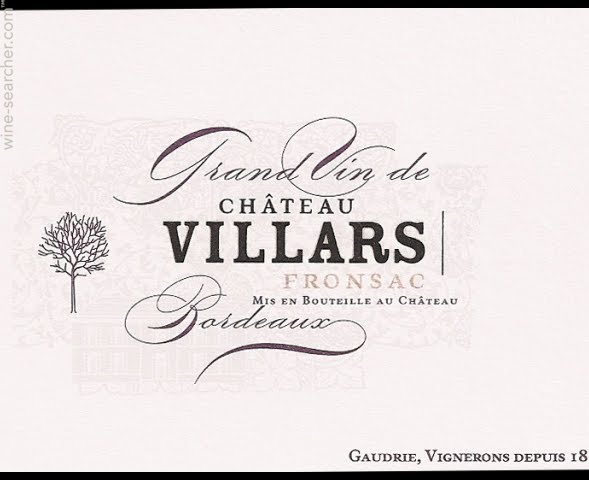
fronsac labelChâteau Villars, Fronsac, (83% Merlot, 14% Cab franc, 3% CS) about $25:  A warm, brambly, discreet nose of black raspberry and cassis gives over to a reasonably full-bodied, rounded wine with herbal notes behind the fruit, immature tannins and a fairly quick drop-off point.  Soils tend to be poor in Fronsac, composed of more sandstone than clay, and although this makes the grapes more resistent to the heat which often narrows a focus on this small appellation overlooking the River Isle valley, but also affects (negatively) some of Merlot’s characteristic  velvet and softness.

courlotChâteau du Courlat ‘Jean-Baptiste, Lussac-Saint-Émilion (100% Merlot), around $30:  Rare it is to find an unblended wine in Bordeaux—it’s believed that even Pétrus, Merlot’s heavyweight champion of the world, contains some Cabernet franc.  Lussac, a satellite appellation of medieval village of Saint-Émilion, is known for a diversity in soils and terroir quite similar to those of the great estates of the mothership.  This wine opened with a tremendous blast of juicy plum and blackberry—a bouquet to make the most cynical Merlot-hater swoon.  But the palate does not echo the succulence of the nose, but comes across as a welterweight; disappointingly tannic and tough—a rather hard wine that may not be able to outlive it’s woodiness.

Cchateau-caronne_label_smallhâteau Caronne Ste Gemme, Haut-Médoc (65% Cabernet sauvignon, 30% Merlot, 5% Petit verdot), around $29:  Located on the southwest corner of St. Julien, on soils that are predominately  built on ancient gravel called günzienne; the château, not quite as old as the terroir, has still been producing wine since the sixteenth century.  The wine is explosively earthy with rich black truffles, wood smoke and a bacon-like aroma that I couldn’t quite nail down until a fellow taster (Nick the Brit Rowley) identified it undeniably as ‘baked beans’.  Thence, that’s all I could smell. The palate showed acidic cranberry, a satisfying rustic depth of earth and sweetness and well-integrated tannins.

Denis Durantou

Denis Durantou

Château Montriandrie, Castillon (75% Merlot, 25% Cab franc), about $45:  Castillon is a fairly large commune in the far east of Bordeaux— due east of Saint-Émilion and south of Fronsac.  Top terroirs are located on the The finest terroir is located on the plateau above the appellation, where large deposits of limestone and clay soils dominate; the slopes contain more gravel and sand.  The wine is particularly well balanced; not huge in scent or flavor, but bright and juicy.  A slight sense of wateriness made me wonder if the vineyard was hit with a late rain—it seemed oddly (slightly) diluted, although still finely structured and tasty.  The skill of the winemaker Denis Durantou is on full display; I’m curious about the fruit.

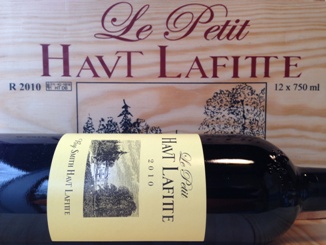
Petit_Haut_LafitteLe Petit Haut Lafitte, Pessac-Léognan (55% Cabernet sauvignon, 45% Merlot), around $59:  The first wine of the Château, Smith Haut Lafitte, sells for more than twice this price, and Le Petit is actually a better deal at $60 than du Courlat is at $30.  A spicy, white-pepper intensity rises from the glass, filled with layers of red fruit complemented by chocolate, licorice and roasted espresso beans.  The wine is supple and full, rich with sweet plum and opulent black cherry.  Tannins remain a bit tight, but with this depth of fruit behind them, it’s the sort of wine made for laying down until the components mingle, marry and mature.

Posted in Bordeaux, FRANCE | 1 Comment

Blending: A Tightrope For The Vinologically Dexterous

Single-variety wines may make for some small talk, but in most cases, blended wines are better.  Which is why, nearly everywhere, for a wine to label itself using the name of a grape—Chardonnay, Syrah, et. al—appellation laws generally allow some blending.  In California, up to 25% of the label grape doesn’t have to be the label grape and even in beloved Burgundy, regional to Grand Cru levels, not only can 15% of a red wine be something other than Pinot noir, it doesn’t even have to be a red wine grape—Chardonnay, Pinot blanc and Pinot gris are all permitted.

msgNow, they’ll all claim they don’t do it, and maybe they don’t.  But I am reminded of a marathon drinking session with the owner of a local Chinese restaurant in which he confessed his guiltiest secret:  A lot of Chinese restaurants (including his) claim that they don’t use MSG, but everybody does.

Speaking of MSG…

Mourvedre/Syrah/Grenache is sometimes called the Holy Trinity of blends; in Southern Rhone’s Châteauneuf-du-Pape it is the foundational trio, but since it’s the Pope’s new castle, we’ll avoid the blasphemous nickname and refer to the threesome instead as the Mack Daddy of blends.  With exceptions, of course, Syrah contributes spice and dark fruit; Grenache potency and red fruit and Mourvedre tannin and length. The famed AOL can legally use up to ten other grapes in the blend, but it is fair to say than for the most part, they are also-rans.

grenache---mourvedre---syrah-577-1-1Every year, the blend is slightly different, as it is in Bordeaux—another place where the synergistic sum is considered better than the parts.

The idea is that wine, for the most part, is a big pot luck dinner where every variety of grape brings something to the part.  The art of blending is to lessen the need for luck in the pot.

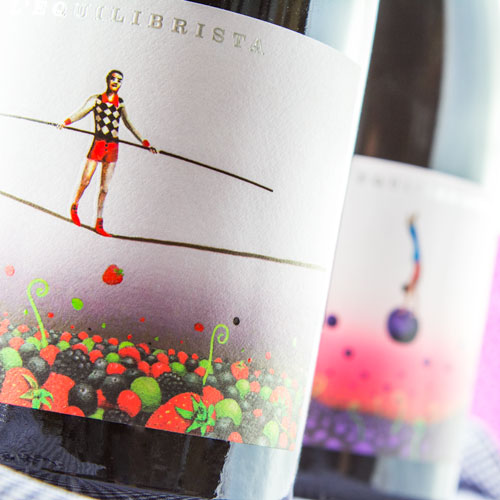
Ca n’Estruc L’Equilibrista, Catalunya, 2010

Montserrat

Montserrat

Francisco Martí Badía knows the precarious act of balancing from both sides of the shop aisle.  Co-owner of Vila Viniteca—perhaps the most renowned of Spanish wine distributors as well as a delicatessen and retail wine outlet—the Barcelona-based Martí also cultivates 60 sunny acres on the slopes of Montserrat.  There, his vines (some more than eighty years old) produce an emblematic Catalunyan blend of Syrah, Garnatxa Negra, and Carinyena; proportions change with the vintage, and as a result, the tightrope he walks to produce a consistent and top-shelf wine.

l'equilibrista-500x500To my palate, the bright, aggressively youthful-tasting wines of Catalunya have a tendency to carry off the balance blend better than the wines of Southern Rhone.  Where the latter can be rough and tumble, raw and restrained in youth and leathery-rich with age, similar blends from Northern Spain come across a vibrant and eager throughout a good portion of their lives.  This is a biased and possibly silly statement, granted; just a trend that I have noticed at a number of tastings over the past few years.

Equilibrista is Catalan for ‘tightrope walker’, and the label depicts a colorful one on a sagging high wire above a safety net of fruits.  Indeed, the bounty of fruits are reliable for this wine; a juicy cornucopia of taut, tarry plum, blackberry and raspberry with a slightly herbal edge; fennel in particular.  Structure is firm, tannins are spicy, mouthfeel is electric—above all, despite five years having passed since vintage, the wine remains youthful and spry.

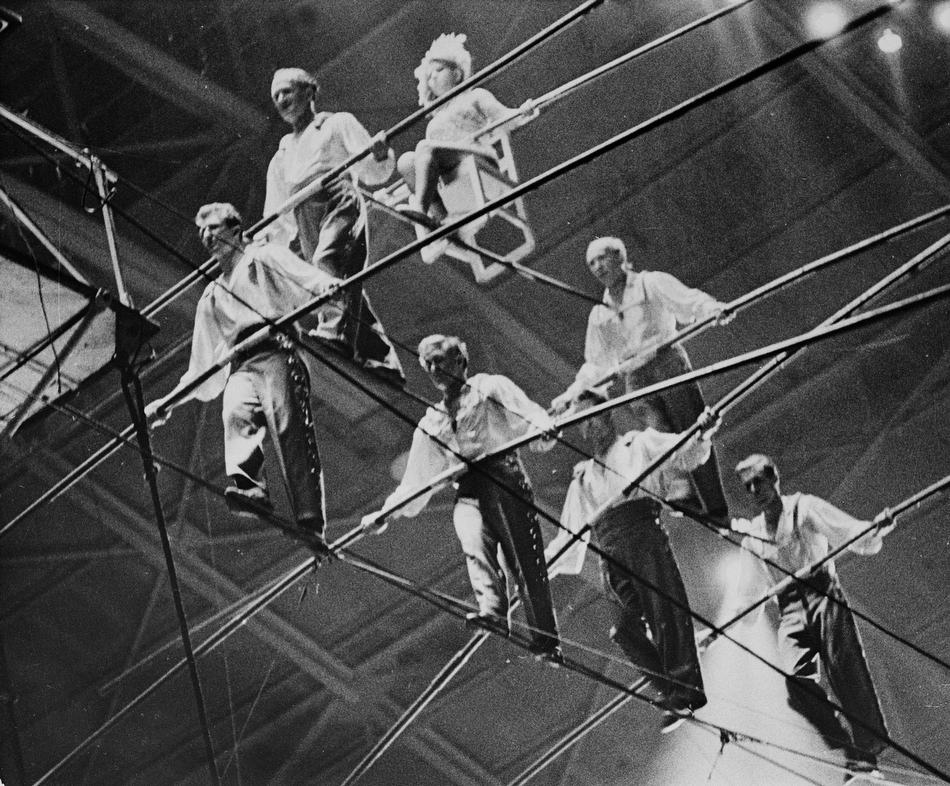
WallendaWine has been made in the shadow of Montserrat for nearly five hundred years; that’s many generations of winemakers on the tightrope of balance who have followed in their father’s footsteps.

Here’s a toast to it having worked out better for them than it did for the Wallendas.

Posted in Calatayud, SPAIN | Tagged | 1 Comment

What Country Has The REAL Bourbon Dynasty Again?

Those French.  Ah ha ha ha ha ha ha ha ha ha ha ha ha ha ha ha

Those French. Ah ha ha ha ha ha ha ha ha ha ha ha ha ha ha ha

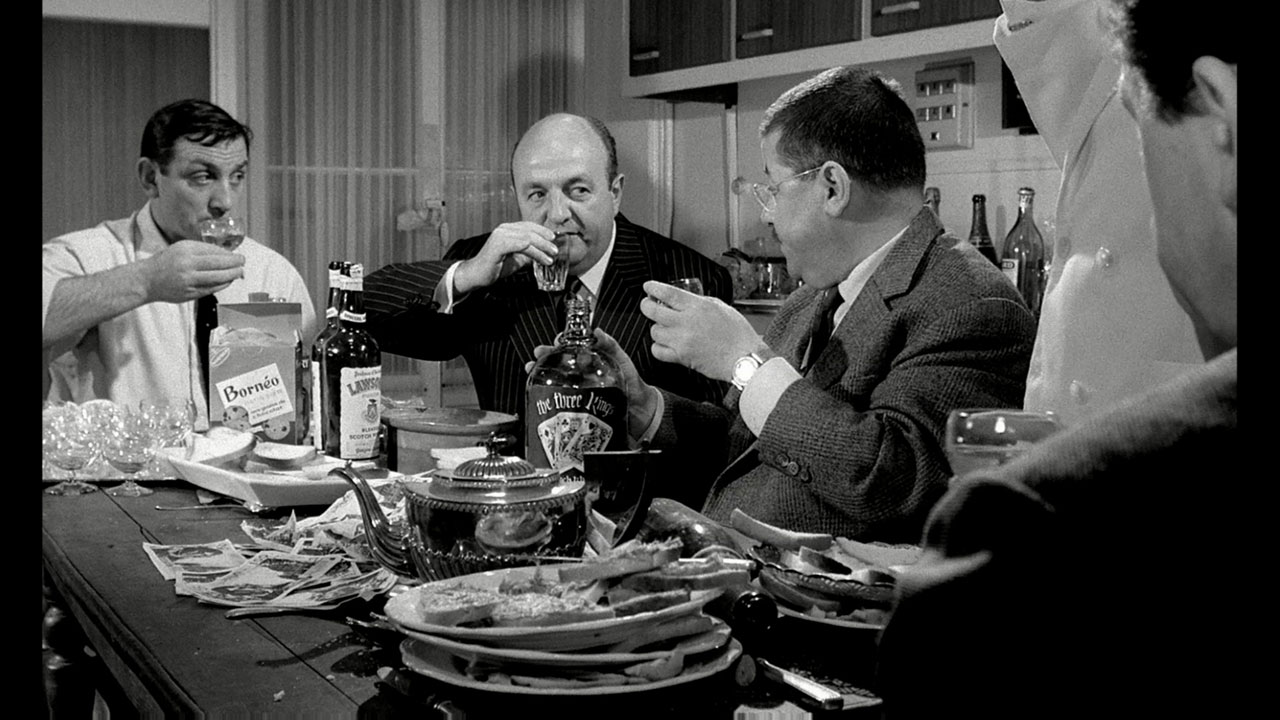
Oh, those wacky, laugh-a-minute French.  What with their Jerry Lewis Fan Clubs, socially-constipated mimes, Charlie Hebdo (Mad Magazine for Islamophobes) and Les Tontons Flingueurs quoting, it’s a wonder they have any time to lose wars.

But, giving the French space to be French in a world that has passed them by economically, artistically and philosophically is one thing; it’s the magnanimous and condescendingly American thing to do.

Allowing them to dis good ol’ Kentucky bourbon is quite another.

cognac-expert-logoAnd yet, they have chosen risk the ire of the only superpower left on earth by publishing an article in Cognac Expert entitled

‘10 Reasons why Cognac is Better than Whiskey’.

And I shall now, like a surgical strike from an Lockheed Martin F-22 Raptor on a stealth mission, terminate the article with extreme prejudice.

  1. Cognac is the most complex spirit in the world to make. It takes the longest time to produce.
Alembic still

Alembic still

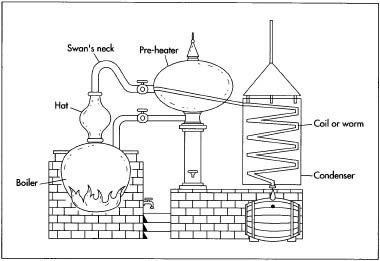
Cognac, as we all know but don’t care, is brandy that comes from a specific area in the French Départements of Charente and Charente-Maritime.  Many boring laws (grape variety, etc.) are associated with Cognac, but as far as the actual production, only two really apply to the ‘complexity’ of the makeage:  The fermented juice must be distilled twice in alembic pot stills and the resulting eau de vie aged in oak for a minimum of two years.

So let’s look at single-malt Scotch whisky (in contrast):  Although it is also distilled twice in pot stills, the law requires all malt Scotch to be aged for a minimum of three years in oak casks.

Winner, Complexity Level: Whisky.

  1. Cognac is made of grapes, whisky is made of grains. Therefore Cognac can develop a variety of fruitful aromas, which whisky cannot.

‘Cannot’ is such a final-sounding word, isn’t it, French people?  Let’s gander at some verbatim Bourbon tasting notes from the excellent Bourbon of the Day blog:

angelsenvycaskRidgemont Reserve 1792:  This bourbon is true to its nose. All the fruit (citrus, banana, apple) come forward in the middle and back end of the tasting.

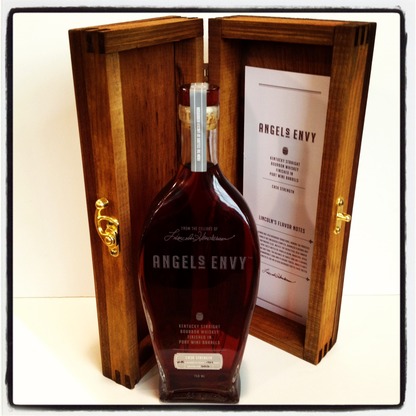
Angel’s Envy Cask-Strength: The finish is long and pleasant, and strangely reminiscent of blackberries.

Kentucky Tavern Straight: What is somewhat notable is the fruit in the finish: really fresh pear apricot and cherry.

And now, let’s peruse some descriptatory verbiage by the Cognac cognoscenti at the mediocre Cognac Expert blog.

conjureA De Fussigny VSOP Superieur Cognac: Aromas of dried rose flower, hazelnut note. Roundness with a subtle buttery and smoky notes.

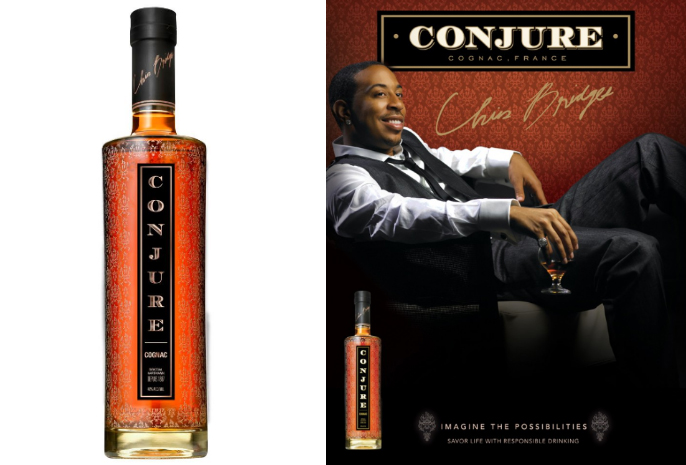
Conjure Cognac:  Mahogany, with a nose of oak, cocoa, hazelnut spice and leather.

Paul Beau Hors d’Age, Tres Vieille Grande Champagne: Entry is fully integrated, resiny/woody and dry; midpalate is peppery, meaty, charred, maple-like and piney.

Winner, Developing a variety of fruitful aromas: Bourbon.

  1. Cognac is French. The French know how to make good food. They also know how to make great wine, everyone knows that. So anything that derives from wine AND originates from France—as Cognac does—must be the best.

SP 135529 DIEZ FRIED FLO 1/2The French eat garden slugs in melted, coagulated fatty acids.  The French eat fungus that smells to female pigs like boar testicles and  California beat the chaussettes off these beret-wearing fools in Paris Wine Tasting of 1976.

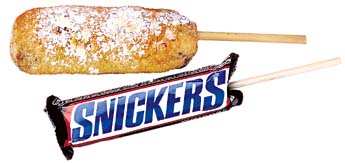
America, on the other hand, is the home of hedonistically glorious grits ‘n’ gravy, deep-fried Snickers bars, truck stop meat loaf, Pringles, Manwiches and Velveeta Cheese melted on stuff.  Our wine was rated better at the Judgment of Paris, and as far as us Americans are concerned, that is the end of the story.

Winner,  Good food and wine: America, home of American whiskey.

  1. Cognac-making underlies extremely strict regulations. For example, Cognac can only be produced in the region of Cognac, while whiskey can be produced anywhere in the world.
Miss March, 'Babes of Cognac' calendar

Miss March, ‘Babes of Cognac’ calendar

So bleepin’ what?  What’s wrong with the rest of the world, you provincial twerps?  Hasn’t Bruno Mars assured you that there are really beautiful babes from everywhere, even Mars, even places we would not associate with hot chicks, like Romania or the Canary Islands or Omaha?  You know what Cognac has?  A bunch of stumpy, dumpy chain-smoking peasantettes who wear overalls and big rubber boots.

You know what Bourbon country has?  Elly May Clampett and Daisy Duke.

Winner, Hot Chicks: Bourbon.

  1. Rap. Cognac has Jay-Z, Ludacris, Snoop Dogg and many other rappers ‘bigging up’ the drink – in their music and their personal life. Whiskey does not have such cool ambassadors.
snoop dogg

Snoop Dogg

Oh, please.  How lame can you get?  Snoop Dogg cool?  Dude looks like a skeleton wrapped in electric tape with pig tails.  Here’s a sample of how the atrophied brains of Cognac’s ambassadors work:

Jay-Z: “You shoot my dog, I’ma kill your cat.”

Ludacris: “Read your whore-o-scope and eat your whore d’oeuvres.”

Snoop Dogg: “Bikinis, zucchinis, martinis, no weenies.”

By contrast, let’s take let’s listen in on some of whiskey’s ambassadors:

humphrey-bogart-03Mark Twain: “Too much of anything is bad, but too much good whiskey is barely enough.”

Errol Flynn:  “I like my whiskey old and my women young.”

Raymond Chandler: “There is no bad whiskey. There are only some whiskeys that aren’t as good as others.”

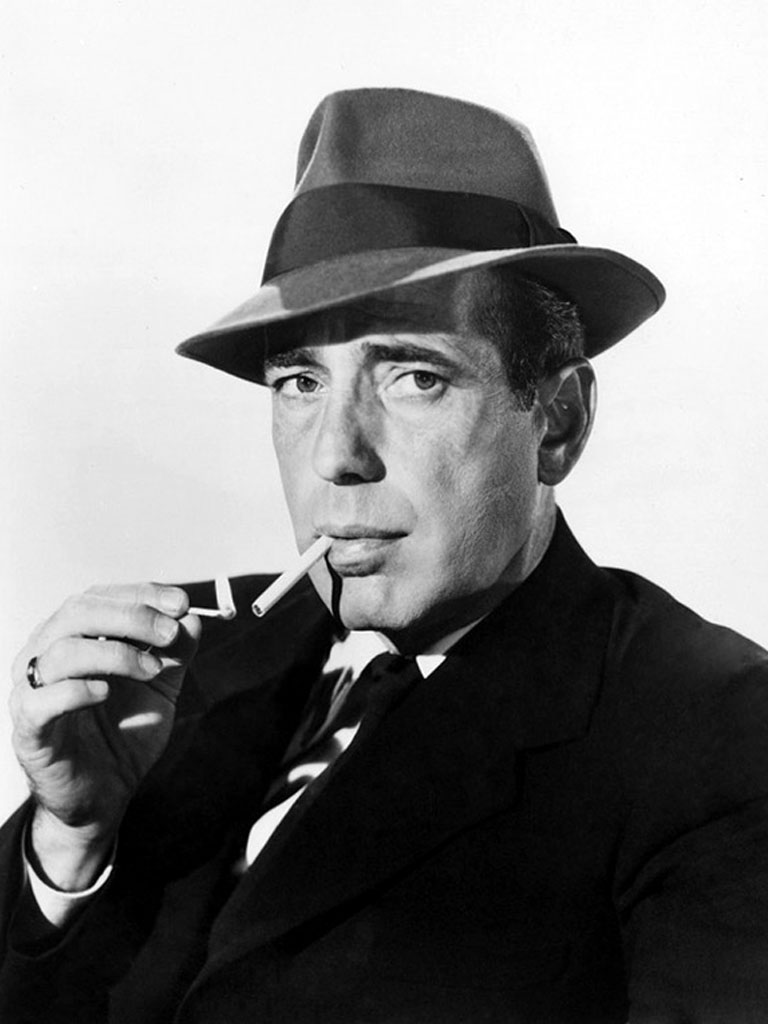
Humphrey Bogart: “I should never have switched from Scotch to Martinis.”

Winner, Cool ambassadors: Whiskey.

  1. Cognac is fashionable; a color in fashion is actually named after it: “Have you seen those beautiful cognac-colored boots of the fall collection?”

hitler-brown-shirtsFrankly, I have never heard ‘cognac’ used as a boot color, but if it was, I would presume it might fall somewhere between Fecal Fulvous and Septic Sienna.  As in, “Have you seen all those smart-looking Sturmabteilung marching through Paris in their beautiful cognac-colored shirts?”

Winner, Least offensive fashion statement: Whiskey

  1. Cognac is the oldest and most traditional cocktail ingredient: Long before Whisky, Brandy was used in cocktails and long drinks.

Of course, other than the fact that Cognac-heads are fond of saying ‘All Cognac is brandy, but not all brandy is Cognac’, the history is simply wrong.  The first use of the word ‘cocktail’ appeared in the May 13, 1806, edition of The Balance and Columbian Repository under the following definition: ‘Cock-tail is a stimulating liquor, composed of spirits of any kind, sugar, water, and bitters—it is vulgarly called bittered sling…’

1862’s ‘The Bon Vivant’s Companion’ by Jerry Thomas, the first book of drink recipes, contains ten ‘cocktail’ recipes, of which four contain brandy and four whiskey.

So, this one is a tie.

  1. Cognac gives you no headache. It is very rare to get a headache after drinking Cognac.
Sam Greenspan

Sam Greenspan

Hang on, hangover.  # 8 contains two sentences which are directly contradictory.  If Cognac ‘gives you no headache’, then how does it follow, in the very next grammatically-linked linguistic unit, that Cognac gives you headaches ‘on rare occasions’?  Trying to wrap my headache around that dichotomy is giving me a migraine.
Meanwhile, according to ‘11 Alcoholic Drinks, Ranked By Hangover Severity’ by the highly-trained alcoholic writer Sam Greenspan, ‘Whiskey’ ranks number five, while coming in at an undisputed #1?

I quote:

“Brandy – The rest of the drinks on this list almost give you hangovers as bad as brandy… but with brandy, ‘almost’ doesn’t count.”

Winner, Lesser hangover: Whiskey

  1. Cognac has much better story telling: For example, the Great French Emperor Napoléon used to order barrels of fine Cognac to the island of St Helena.

napoleion retreat]Why is that a good story?  Napoléon freezing his nuts off in the Russian permafrost with the Grande Armée eating the cavalry’s horses and drinking their own urine?  Now, that’s a good story.

But still not as good as John Entwistle’s song about an insane man conversing with an imaginary companion: “Whiskey man’s my friend; He’s with me nearly all the time; He always joins me when I drink; And we get on just fine.”

zz topOr George Thorogood’s song about a man who just lost his job, his girl and his apartment and stops by the local speakeasy and ordering multiple rounds of ‘One Bourbon, One Scotch, One Beer’

Or ZZ Top shrieking through those whiskey-straining whiskers, “I should have known better than to fool with a whiskey’n mama.”

Or Alice Cooper’s ‘Lace and Whiskey’.

Or, and so on…

Winner, Best Stories:  Whiskey

  1. Cognac is a region, a town, AND a spirit. That is indeed very hard to beat.

bourbon cityHard to beat, French people.  But not impossible.  You see, ‘Bourbon’ is also a region; part of the Lexington–Fayette, KY Metropolitan Statistical Area: 38° 12′ 0″ N, 84° 12′ 36″ W 38.2, -84.21.

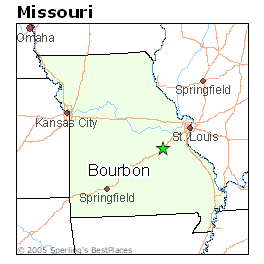
And a town: 38° 9′ 6″ N, 91° 14′ 51″ W 38.151667, -91.2475

And the best goddamn spirit from here to Paris.  Paris, Kentucky, that is (the seat of Bourbon County) or, for that matter any other city who stole their name in order to reflect in the glory that is rural Bluegrass banjo and Beam country.

Winner, Supercluster, Milky Way Galactic Arm, Solar System, Earth, Region, Town and Spirit:

Bourbon.

Posted in GENERAL | 3 Comments

Chassagne-Montrachet And Hyphen-Mania

hyphen keyboardIn Burgundy’s Côte d’Or, attaching a big, famous name to your own plebian, obscure name has been an effective technique in the never-ending wine hustle.  So much so, in fact, that négociants often purchase the local hyphen supply en primeur, two years before they are released to the general public, while they are still in the callow ‘dash’ phase.

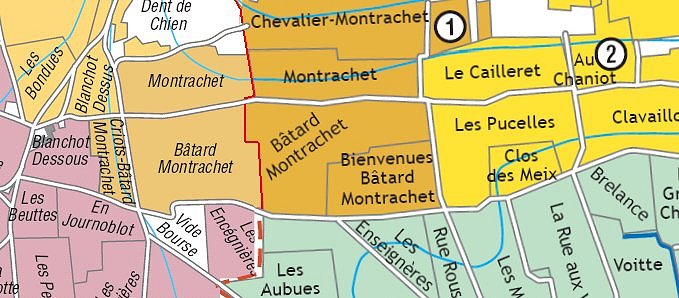
Hyphen-mania was formalized in the 1870s in order to add a note of legality to the centuries-old, somewhat odious practice of usurping the names of superb, but tiny plots of real estate to sell wines of somewhat lesser quality.  Indeed, as in the case of Bâtard-Montrachet—which at least has enough class to call the wine a ‘bastard’ Montrachet—the distance between vineyards may be no more than a hyphen’s length.

gevrey_chambertinFor the most part, it was nearby communes rather than nearby acres that found the most commercial value in tacking on the prestige names: Thus, the wine village of Gevrey, which contains the fabled Chambertin vineyard, becomes ‘Gevrey-Chambertin’, while several nearby vineyards (despite have unique AOLs) hoist the Chambertin moniker upon their backs via the Superglue of hyphenation.  There’s Chapelle-Chambertin; there’s Griotte-Chambertin and Charmes-Chambertin; there’s Latricières-Chambertin and there’s four more which hyphen-conservation precludes mentioning.

Likewise is the case with Le Montrachet, arguably the finest white-wine-growing dirt on the planet.  The whole kaboodle is less than twenty acres; add on the kit that is Bâtard-Montrachet and you have another thirty, making the total output of both, on an average year, around 100,000 bottles—eight thousand cases, or roughly that of a California boutique winery.

In 1879, engaging in one of the most peculiar cases of legalized identity fraud in wine history, the village of Puligny in the Côte-d’Or département of eastern France, decided to change their name to Puligny-Montrachet—and with a single flourish of the mayoral plume, every second-rate wine from that village became, by default, a Montrachet.

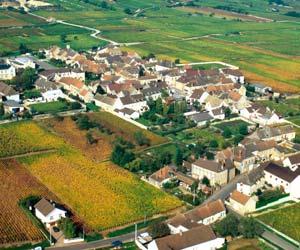
montrachet mapYet, lest that sound too dismissive, consider that second-rate is pretty damned remarkable when ‘first-rate’—true Le Montrachet—rings the cash register at over a thousand dollars for an average vintage; top producers in top harvests may command five times as much.  Granted, nobody is sponsoring a television series call Beverly Hills, 90211, but tasting wine from the hood costing a twentieth as much is a worthwhile experience: It gives you a shade of grandeur, an idea of the stylistic differences between Chardonnay produced from the thin limestone soils on the southern apex of the Mont-Rachet hill and Chardonnay made anywhere (and everywhere) else.

Beverly-Hills-90210-S01-jennie-garth-and-kelly-taylor-fans-3674117-616-464It may not be quite as potent an encounter as with a Mason jar filled with Le Montrachet Grand Cru DRC 2007, but you can certainly suppose that you’ve tasted a shadow of the great appellation—a whisper of transcendency.

In other words, it’s sort of like dating Jennie Garth’s sister.
An example of what I’m rambling on about can be seen in Bachelet-Ramonet Chassagne-Montrachet 2012, retailing for around $60.  Perhaps mindful of the commercial potential of hyphens, the estate of Bachelet-Ramonet saw no harm in adding one to their name—in fact, it’s run by a Bachelet son-in-law named Bonnefoy, so it is not out of the question that a further dip into the dash-stash may be in the offing.

Puligny-Montrachet

Puligny-Montrachet

Père Ramonet, who died in 1994 at the age of 88, was a legend in Chassagne—grandson of the original vintner, he is credited with single-handedly raising the individuality bar on local Chardonnay, and even today it is claimed that a Ramonet wine is a Ramonet wine before it is a Chassagne, or a Bienvenue, or a Bâtard… or a Montrachet.  Part of the technique still at use in the cellar is a specific style of bâtonnage—the stirring in of dead yeast cells and other organic particulates while the wine ages: The fermenting mass is stirred only four times over as many months.  The theory is that some of these ‘gross’ lees, while offering subtle but distinct augmentation to the flavor, need do so with as little disturbance as possible. The must is only lightly fined and filtered before bottling, which results in a discreetly powerful wine with many layers of complexity.

Alain and Marie-Paule Bonnefoy

Alain and Marie-Paule Bonnefoy

2012 was another tough, short-crop vendange, and Bachelet-Ramonet’s Chassagne-Montrachet shows clean, but pronounced acidity.  I have no idea if it is chaptalized or not, but if so, Bonnefoy was hardly alone throughout the region. The wine is lean and unforced, fine-boned rather than opulent; it opens with a strong slate-like stoniness fading to white peach, honey and light, sweet flowers.  There’s some lime on the palate to compliment the peach notes echoed there, and the wine offers a medium long finish with the slightest tang of tannin.  Overall, it’s an understated Chardonnay, less fat than many a Chassagne-Montrachet, but made in a austere, Burgundian, mineral-driven style that the New World—whether by nurture or nature—just doesn’t emulate.

Meanwhile, keep the hyphens coming.  They alert us to intentions not always reveled in execution, and we won’t worry if hyphen-wines bask in a little reflected glory: Montrachet has enough to spare.

Sincerely,

Chris-Robert Kassel-Parker Jr.
Posted in Burgundy, FRANCE | Tagged | Leave a comment

I Am The Joan Rivers Of The Wine-Blog Oscars

joanTruly, I am.  Like Bon Jovi and the Rock & Roll Hall of Fame; Nabokov without an aurelian badge from Nobel; Chita Rivera, the firebrand Latina unable to sing her way into a Tony.

That’s me: Never the bridesmaid let alone the bride.  Hell, I can’t even get an illegal-immigrant gig picking up rice off the concrete after the blankity-blank wedding.  It can’t get any worse than that.

Or Can It…?

Orbit_Cover_0When I reviewed restaurants for Orbit, a great metropolitan newspaper, I used to compile mandatory ‘lists’ concerning the local dining scene.  ‘Restaurant of the Year’, ‘Detroit’s Top Ten’, ‘Top One Hundred’, etc.  The fact that ‘The Ten Shittiest Bathrooms in the Ten Most Ghetto Clubs’ was the only article anyone ever read is immaterial—the point is, mustering a ‘top ten’ list was painless, because if you were one of the ten best restaurants in Detroit, you knew it, and if you weren’t you knew it, and nobody who didn’t make the cut was particularly offended, nor was anyone who made the list particularly impressed. I made far more mortal enemies—people from whom I still have to hide, like Salman Rushdie—doing a ‘Top 100’ list, because everybody with a Class C license and a Schoolcraft-trained griddle jockey figured they should be on that one.

And yet, my straits today manage to be even more dire than that.

Steve McConnell

Steve McConnell

The other day, Paso playmate Steve McConnell sent me a link to a wine blog called ‘Wine Turtle’, a ‘newish’ snore-fest that not only confesses an urgency-free, immediacy-lacking approach to the science of wine writery, but counsels those of us who believe in getting to the point that this is not the way it’s ‘supposed to be done’.

Fair enough. The Turtle blog is written by a couple of chuffed chelonians from parts unknown; one claims no formal wine training whatsoever while the other calls herself a professional sommelier, which is better than being what I am—an unprofessional sommelier.

Not that ‘training’ is a required—or even a desirable—laurel for a wine writer to rest upon.

What's so hard about this?

What’s so hard about this?

So far, along their wondrous, turtle-paced odyssey though Oenotopia, the reptilian pair have (true to their admonition about pacing) managed to publish a total of fifteen articles.  Or, in mathematical terms, seven-and-a-half columns each.  These include ‘How To Read a Wine Label for Beginners’, which I would have written except that when I asked my bodega clerk if he had any wine with labels for beginners, he assured me that his labels were for more advanced readers.

Bartles_&_Jaymes_original_flavorAnd there is ‘What’s The Best Wine Cooler?’ which mentions Eurocave and the Haier 6-bottle but totally leaves out Bartles & Jaymes Country Kwencher.  Must have been the non-professional partner that pulled that boner.

And then, dearest, loyal, beautiful-if-challenged reader, there is the feature that has so tattered the mainsail of my ego:

‘The 103 Best Wine Blogs That You Can’t Miss’

Sha’Niquakisha’s Offal & Ovaltine Emporium

Open air kitchen in Sha’Niquanisha’s Offal & Ovaltine Emporium

And yes, you guessed it: Like my top hundred restaurant list and Sha’Niquanisha’s Offal & Ovaltine Emporium over on West Vernor, Intoxicology Report failed to measure up.

How sharper than a serpent’s tooth is the fact that had it been a strict top-hundred list, I might have figured that my years of toil and endeavor had come ‘close’ in the estimation of this strange turtleian race, but that they found themselves beholden to a captious, anal, overweening (if self-imposed) blog-limit?

And yet, these plodding, hard-shelled swamp creatures actually elevated three additional blogerinos into their hallowed fucking so-called pantheon, capping the list at 103.

Meaning that I could have secured slot number 104 and no numerical restrictions could have kept me out, but for the glaring reality…

I’m just… not… good enough!

“Chin Up and Never Say Die, Chrissy! Reach for the Moon ‘Cause the Sky’s the Limit, So Pull Out the Stops and Punch Above Your Weight, Tiger!”

There, I feel better now.  A few words of encouragement from Inner Me; the dashing, hung-like-a-Kowalski-Smoked-Kielbasa with the hot girlfriend and access to really good cocaine me.

bon joviI’m reminded that, eulogy or no eulogy, Joan Rivers made that Academy Award carpet red, blushing as it did from her acerbic barbs. Nabokov’s Nobel snub—even if it prevented him from becoming Gary Glitter’s biographer—was the result of two committee judges winning in his place; nothing suspicious there, huh?  And Bon Jovi, let’s be honest—we all know that Jon Bon Jovi is too fucking handsome to be inducted into any ‘Hall of Fame’.  That architectural monstrosity, hovering above the stinking shores of Lake Erie like a housefly over a corpse, is filled with ugly people like Lou Reed and Leonard Cohen and Billy Joel. Clearly, the inductors are just jealous.

And guess what?  Know who else is jealous? These teenage mutant ninja herpetologist-humpers are jealous, that’s who.  Jealous of… Well, maybe not Old Me.  But definitely jealous of Renaissance Me, the reborn me, the me with war-paint, berserker pre-battle chants and a savage new nom de guerre:

Phantom 104’.

scarlettLike Gloria Gaynor, I will survive; like Pete Seeger in blackface, I shall overcome.  Like Scarlett, as God is my witness, they’re not going to lick me; I’m going to live through this and when it’s all over, I’ll never be hungry again.

As proof, here’s my new favorite recipe:

http://www.foodnetwork.com/recipes/turtle-soup-recipe2.html

wine turtle

Posted in GENERAL | 4 Comments