Calçada Vinho Verde: Perfectly Imperfect

André Estácio Pinto poured a glass of miniscule-production Vinho Verde from Calçada, made from some of the oldest vines in the Minho, and loosed a disclaimer: “It’s not a perfect wine.”

“No problem,” I answered. “I’m not a perfect wine writer.”

W. Gillett Johnson

W. Gillett Johnson

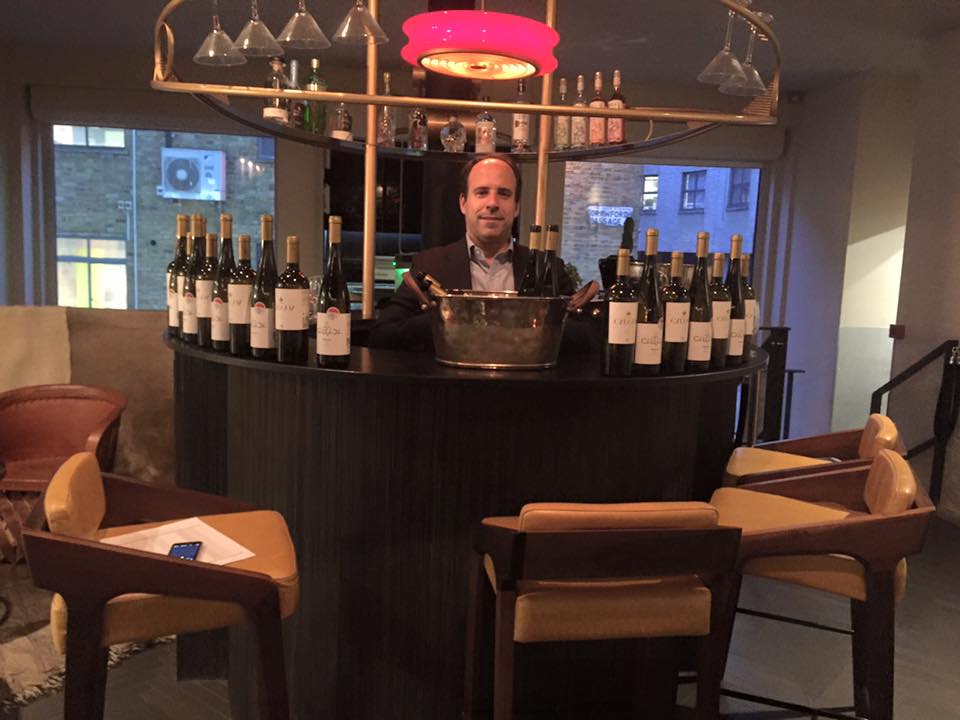
Whereupon, André and I reveled in our combined humility over a plate of Indian Brook Rainbow Trout at Café ML on Maple and Lahser, hosted by W. Gillett Johnson, the large, self-confident and buff importer of Calçada.

Turns out there was far more flavor than flaws in Pinto’s spectacular Vinho Verde—a concentrated, rich wine with a strong mineral and citrus tang—and I suspect that what he meant by ‘not perfect’ had more to do with it being a purely natural wine, made from some of the oldest vines in Vinho Verde, the largest DOP (Protected Designation of Origin) region in Portugal. It expresses only what the land wants it to express, not some contrived set of ‘improvements’ a winemaker might be going for.

Perfection, in these circumstances, is not necessarily a consummation to be wished.

André Pinto

André Pinto

Not that anything was lost in André Estácio Pinto’s translation; he’s an intense, focused Portuguese gentleman, whose English (like his old-vine VV ) does not strive for perfection, only expression.  I’m not sure the same holds true for Bartholomew Broadbent, Esq., the Virginia-based wine importer who suggests that this wine—or at least, wines of its ilk—should not be called ‘Vinho Verde’ at all.  A pusher of fizzy, inexpensive, meh Vinhos, Broadbent declares, “These are Portuguese table wines from Vinho Verde. They’re serious wines, but they are not Vinho Verde.”

Interesting point, except that it’s wrong.  The only criterion set for the legal use of the label-brightener ‘Vinho Verde’ is geographic, and Calçada qualifies. Style and price point are irrelevant, much as Broadbent—former head of Christie’s wine department and importer of non-serious, eight dollar Vinhos—might prefer it otherwise.

A better quote about the subject came from André Pinto when Café ML’s sommelier fell in love with the wine and asked about the price.

“I have no idea,” he responded. “We make so little of it, we’ve never sold a bottle.”

Beautiful shot, which I totally stole

Beautiful shot, which I totally stole

This exclusive sip is not the only Vinho Verde produced by Calçada, obviously; Detroit was a whistle stop on a multi-city promotional tour for the rest of the stock—the presentation of bottle was a special favor done for me (and the sommelier) by W. Gillett Johnson and company, and it was well appreciated.  Among Johnson’s talents (and passions) is finding rare but representative wines from regions whose reputations (in the United States, anyway) are often forged from available imports.  The better wines from these appellations may never even make it to our shores, and this was an example. W. Gillett Johnson loves nothing more than turning on wine writers to some unexpected nonpareil from a familiar region, and turning preconceptions upside down.

He and I had a similar conversation about Marlborough Sauvignon Blanc. Those available to most Americans are overtly grass-gorged, grapefruit-glutted blockbusters that miss the subtle majesty of the best versions, which are as complex and pure of Sauvignon Blanc articulation as any top Sancerre.

The focus of our confabulation this evening remained on the Minho, however; the damp, delightfully dramatic province that surrounds the Vinho Verde demarcation. In fact, so wet is Minho that it’s greener than Ireland, and that’s said to be the origin of the ‘verde’, the green.

Certainly the wine isn’t; it can be white, pink or red.

abThe Calçada label is owned by Adega do Salvador in association with the Agrimota-Sociedade Agrícola e Florestal; Adega is owned by the Mota Family; Pinto is the chief executive, but only in the way that an Iberian CEO could be: Food and drink occupy the central role in his conversations, not business. The society has the capacity to produce  a million liters of wine a year, but Pinto would rather tarry over the intricacies of preparing Rojões à Moda do Minho, a local specialty made with boneless pork marinated in Vinho Verde, lightly seared and stewed with potatoes and chestnuts and—a key ingredient for the signature taste—pig’s blood.

Had Rojões appeared on the the Café ML menu, Pinto might have paired with Lago Cerqueira, also produced by  Adega do Salvador in Vinho Verde—it’s a blend of regional varietals, Tinta Roriz, Touriga Nacional, Touriga Franca and Tinta Barroca, and offers a forward, peppery, smoky profile, juicy and grapey, made in the simple, acidic style of Minho reds.

Bartholomew approves

Bartholomew approves

Pinto also poured his mainstream white Vinho Verde, lemony and bright with a slight tongue-prickle and an undertone of peach—the kind of VV that apparently floats Broadbent’s boat.  At around $10 a bottle, it is Portal da Calçada’s entry-level Vinho Verde; clean, fragrant, acidic and unabashedly friendly.

Incidentally, the list of allowable grapes in Vinho Verde white may be better left to the theory section of the Master Sommelier exam, but for the record they are legion, with Alvarinho, Arinto, Avesso, Azal, Batoca, Loureiro, and Trajadura the leaders in a much larger legal pack.

Queijo Serra da Estrela

Queijo Serra da Estrela

Calçada white’s partner in pink is sheer delight; a rosé with all the verve and moxie of a top Tavel, a premiere Provençal, the best of Bandol.  Luscious with honey, sweet with strawberry and watermelon and bubblegum pink, the wine is make from a single varietal, Vinhão.  One of the favored Port varietals (often known as Souzão), Vinhão is a deeply colored, acidic grape that can produce as sensational a natural blush as it can a fortified blockbuster.

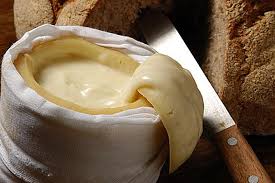
Both of these wines make excellent foils to the local mountain cheese called Queijo Serra da Estrela; originating in the highest point in continental Portugal, the cheese is flavored with the cardoon flowers found only at this altitude.

Cafe ML

Cafe ML

André Estácio Pinto speaks with eloquence and authority about Portuguese cuisine in general, and regional specialties of the northwest in particular, so it’s no wonder the restaurant at Casa da Calçada, Largo do Paço restaurant, boasts a coveted Michelin star—an honor bestowed so rarely that Chef Paul Bocuse—who, arguably, created the concept of nouvelle cuisine—said, “Michelin is the only guide that counts.”

Alas, we must report that thus far, a Michelin star has eluded Café ML, but by virtue of their pouring Calçada, a strikingly delicious taste of rural Portugal in urban Birmingham, I suppose we could award them an honorary galaxy and not be far off the mark, at least in an imperfectly perfect universe.


Posted in PORTUGAL | Tagged , , , | Leave a comment

Regina Gaines: Pure Vinspiration

Cheers_cast_1991If you are old enough to remember the sitcom ‘Cheers’, you’ll recall it as a neighborhood bar where everybody knew your name.  Then as now, that seemed like a cool little destination joint to have in your hip pocket when (as the theme song went), your coffee maker breaks, your daughter hangs the cat up by the tail, your shrink moves to Europe and your husband wants to be a girl. Although, considering that most of Cheers’ regulars were straight men, that last one was a rather perplexing line.

In any case, I walked into House of Pure Vin for the first time on Thursday afternoon and immediately found people who knew my name. Granted, some of them greeted it with a passing shudder, others would have been willing and able to pick me out of a police lineup, but at least they knew who I was, and these days, that’s worth a lot.

Claudia Tyagi, MS

Claudia Tyagi, MS

One of the HoPV gang—someone before whom I would plead the fifth rather than identify in a court of law—is consultant Master Sommelier Claudia Tyagi.  She’s the one who alerted me to the existence of this spacious, extraordinarily elegant eno-emporium, recently opened on the strip of Woodward below Grand Circus Park that’s in the process of realizing every Detroit developer’s dream: It’s coming back to life.  Streets are vital and simmering with traffic; the new, high-profile Nike store is a block away, Foxtown is a 2-iron drive away. On the afternoon I visited, the foot traffic between Clifford and Grand River seemed both relaxed and focused, and the security people who were meandering through the crowd, conspicuous and camouflaged, reminded me that although these venues have had their ups and downs, there are now puzzle pieces in place to keep it real: Real inviting and real safe.

House of Pure Vin cast

House of Pure Vin cast

The most remarkable thing about House of True Vin is that owners  Regina Gaines, Terry Mullins and Andrea Dunbar—in the paradigm of entrepreneurial gumption—identified and filled a niche that I didn’t even realized existed, but now that I see it, seems obvious.  This is a sign of true business acumen.  Catering to a crowd that so far seems primarily city, HoPV offers a Michigan-heavy selection of quality wines with a staff that can hand sell them to customers who may only have a vague understanding that their home state even produces wine.

And that, sadly, is because Detroit, for good or ill, has developed such a unique urban persona that folks—Detroiters especially—tend to forget that it is part of a sprawling, largely rural agricultural state.  The niche discovered by the trio mentioned above is an attempt to fuse the city with the sylvan, the metropolitan with the outland, the steel with the vine, bridging the comma in the words ‘Detroit, Michigan’.

Their name represents that; ‘House of Pure Vin’ seems to borrow a mind-association from the most successful ad campaign our tourist board ever concocted: ‘Pure Michigan!’

Regina Gaines

Regina Gaines

I spoke with Regina Gaines at length about the store’s raison d’être and her roadmap for getting their; all fair questions since the walk-in trade I saw seemed more curious than anything else.  She’s honest about a business plan that will require a lot of hand-selling, and she’s also the ideal individual to take on the task.  A business major who worked for Moët Hennessy as a strategic marketing consultant, she’s not only at ease discussing wine’s finer points, but has a knack for finding the precise bottle for a customer who may not be particularly interested in discussing the finer points.  In fact, her own marketing mantra in stocking the shelves—or, technically, terra-cotta tubes—has less to do with branding and more to do with drinking.

“I only carry wines that I like; that becomes the key to selling them.  Representing products you don’t believe in is never a formula for success.”

signShe brings the most professional beverage experience to the trio of partners—Terry Mullins is a district manager for Sanofi Pasteur Pharmaceuticals and Dr. Andrea Dunbar is a program coordinator at John Hopkins University. Wine is the sticky stuff that binds their passions.

According to Regina, Claudia Tyagi, MS has been indispensible to the marketing of the passions.  Tyagi was engaged as a wine consultant, as she has been at some of Detroit’s top restaurants—Rattlesnake Club, Joe Muer Seafood and The Whitney among them.

“From a business standpoint,” Gaines says, “We knew we needed somebody on our staff who was a Master.”

Besides having been instrumental in suggesting House of Pure Vin selections—each one approved by Gaines, of course—Tyagi will continue to hang around to train novice staff while establishing the most comprehensive collection of Michigan wines in the city.

As intended, the vibe inside the storefront is comfortable and fun, and there is zero intimidation factor—a vital concession for the HoPV  mission statement.

interiorI must briefly return to the environment, the store’s interior design, by Detroit-based studio M1/DTW. It is beautifully functional, minimalist and clean, filled with utilitarian spaces, while large windows embrace the streetscape. Thursday afternoon, a tasting of Spanish wines from Ramón Bilbao was happening inside a well-appointed alcove near the Champagne fridge—perfectly chilled Champagne was a must, based in no small measure on Regina Gaines’ Moët memories.

Savannah Blue

Savannah Blue

But of the dozen tasters in attendance, mine was one of only two white faces; the rest were African American.  This is immeasurably relevant, because many of the Detroit revival retail spots seem to cater primarily to white suburbanites or that nouveau-urban crowd called (with varying degrees of affection) hipsters, who are primarily Caucasian.  I spoke about this phenomenon to a local restaurateur who is black, and whose nearby Southern food spot, Savannah Blue, also shows a marked demographic shift toward black patrons.  I happen to think that any business that seeks to be on the forefront of redeveloped downtown, yet can’t seem to appeal to 85% of Detroit’s population, is being socially dishonest.

Not so House of Pure Vin.  The trio of partners, all African American, and Claudia Tyagi, a white girl from the ‘burbs, understand that for a comfortable fusion of Detroit and the rest of Michigan to be germane and to have a rational shot at long-term success , there has to a balance of attitudes and attributes among incoming patrons.

That’s why I give HoPV a full-bore Michigan thumbs up.  And I’m proud to say that they’re as good at walking the ‘Promote Michigan’ walk as talking it; as such, my last wine book, Heart & Soil: Northern Michigan Wine Country now sits on the House of Pure Vin vital accessories shelf, right next to the corkscrews.

It is now my favorite neighborhood wine shop—the place where everybody knows my byline.

*

http://www.houseofpurevin.com/

TASTING ROOM  | CHAMPAGNE ROOM
1433 WOODWARD AVENUE  |  DOWNTOWN DETROIT | (313)638-2501

Posted in Michigan | Tagged , , , | Leave a comment

Chardonnay Day: Jimmy Kimmel Live!

Here’s how this should go:

Not

Not

I say, “Just got off the phone with Jimmy Kimmel, and we shot the breeze for an hour and he invited me to the guest house he’s renovating in Northern California.”

You say, “Whoa!  THE Jimmy Kimmel?”

And I say, “Sure, the one who owns a winery in Mendocino; duh.  Who did you think I meant?”

The real deal.  Other Slim Shadys, please sit down.

The real deal. Other Slim Shadys, please sit down.

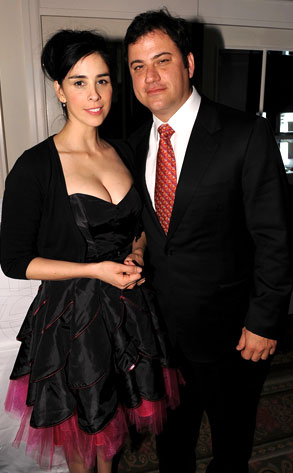
Then we laugh and laugh, and drink and maybe drop some blotter tabs, and I tell you that the first question I asked him—the one that almost cost me the interview—was, “So how Jewish is Sarah Silverman in the sack?”

…The only reason it didn’t cost me the interview is that it turns out that not only does Mendocino Kimmel have a sense of humor, he actually knows Hollywood Jimmy, and exchanges emails with him about fly fishing and wine and the price of tea in China.

Neither seems to be unsettled by the nominal coincidence, and that’s because they are both emotionally healthy gentlemen.  Personally, I avoid Googling my name because I find it disturbing to know that I am not the Chris Kassel, I am merely a Chris Kassel.

Chardonnay Day… It Rhymes!

The reason I went through all this convoluted psycho-drama in the first place is because today is Chardonnay Day, which normally wouldn’t give me much cause to break out the ticker tape and titanium pyrotechnics, but Kimmel Vineyards sent me a bottle of 2012 Mendocino Chardonnay, and I wound up loving everything surrounding it, accounting for it, engulfing it—I loved the Kimmel konnection, the Mendocino appellation, the winemaker and above all, the wine.

bottleErgo, my contribution to the plethora of Chardonnay stories that will appear on today’s newsfeed.

Mendocino is the kind of appellation that fans of California Esoteric are drawn to, primarily because it isn’t Napa or Sonoma.  Said Kimmel (once our conversation found less obnoxious ground): “I considered buying property in Napa or Sonoma, but ultimately, I could never be happy there.  Or, I think, anywhere outside Mendocino.”

And who can blame him? Mendocino County is gorgeous; not only is it perched on the foggy, moody, picturesque North coast, it is tree country long before it is grape country.  Contained within the quarter million acres are the largest redwoods in the world; more than 60% of the AVA is forest.

Winemakers have known since the 1850s that the rest is prime wine country, with the requisite diurnal temperature shifts to preserve acids at night while packing in sugars during the day.  In my estimation, it’s prettier than Napa at a fraction of the real estate price, so the wines—with the potential to be phenomenal—have a much more favorable value/quality ratio.

And so do the wine tours.

Extended Kimmel klan

Extended Kimmel klan

Kimmel Vineyards is thirty-seven miles from the Pacific Ocean, and the accommodating winds play well against the North Coast heat.  It is typical of a top wine estate in both product and posterity; at the helm sits 91-year-old Lillian Kimmel, who (along with her late husband) purchased the 1100 acre ranch in 1963 and set out to raise cattle, not Chardonnay.

“In high school, I used to fix fences and haul in cows that escaped,” Kimmel tells me.  “By 1986, the family took a look around at the Trincheros and Kendall-Jackson and realized it might make more sense to raise something that stayed put at night.”

By that point, the Kimmel family had a lot of connections in the area, and found a ready market for their produce.  It was high quality, and planted with circumspection and a sophistication understanding of vine placement. But the grape market fluctuates, and by 2007, they couldn’t recoup costs based on what local people were willing to pay—again, this isn’t Napa, where a ton of grapes averages $4000; they were lucky to command a quarter of that.  So, they started crushing their own.  They hired Bruce Regalia (from Madrigal) to make the wine—he was a longtime Mendocino resident and understood the place, then as now.  Today, he works closely with Mark Welch, the vineyard manager, to sop the most out of the AVA.

The Chardonnay that Jim Kimmel sent my way is bright, balanced and buttery; it shows the keen acidity that is the cornerstone of the climate’s contribution, and is the foundation of what Kimmel describes as ‘food wine’; I drank the 2012—he told me the 2013 vintage is even crisper.  Adjusting acids is not part of the Kimmel wine program, and the wines remain true to what the terroir allows.

sarah mattSolid as the product is, Kimmel claims that his Merlot is the real show-stopper: “Taste it blind with all the biggest names in California Merlot—Duckhorn, Venge, Twomey, etc.—and I can almost guarantee it’s in the top five.”

That’s the kind of self-confidence and self-promotion that Mendocino needs; the sort of self-promotion that occasionally lands one a late night variety show.   I vow to do my part.  I promised Jimmy Kimmel that I would to set up a blind tasting with the very lineup he suggested in honor of Merlot Day 2016 (November 7) and he, in turn, promised me sloppy seconds with Sarah Silverman. Come November, we’ll see who delivers.

Meanwhile, will somebody please tell Matt Damon we ran out of time?


Posted in CALIFORNIA, Chardonnay | Tagged , , , | Leave a comment

Larzac: The New Kid on the ‘Doc

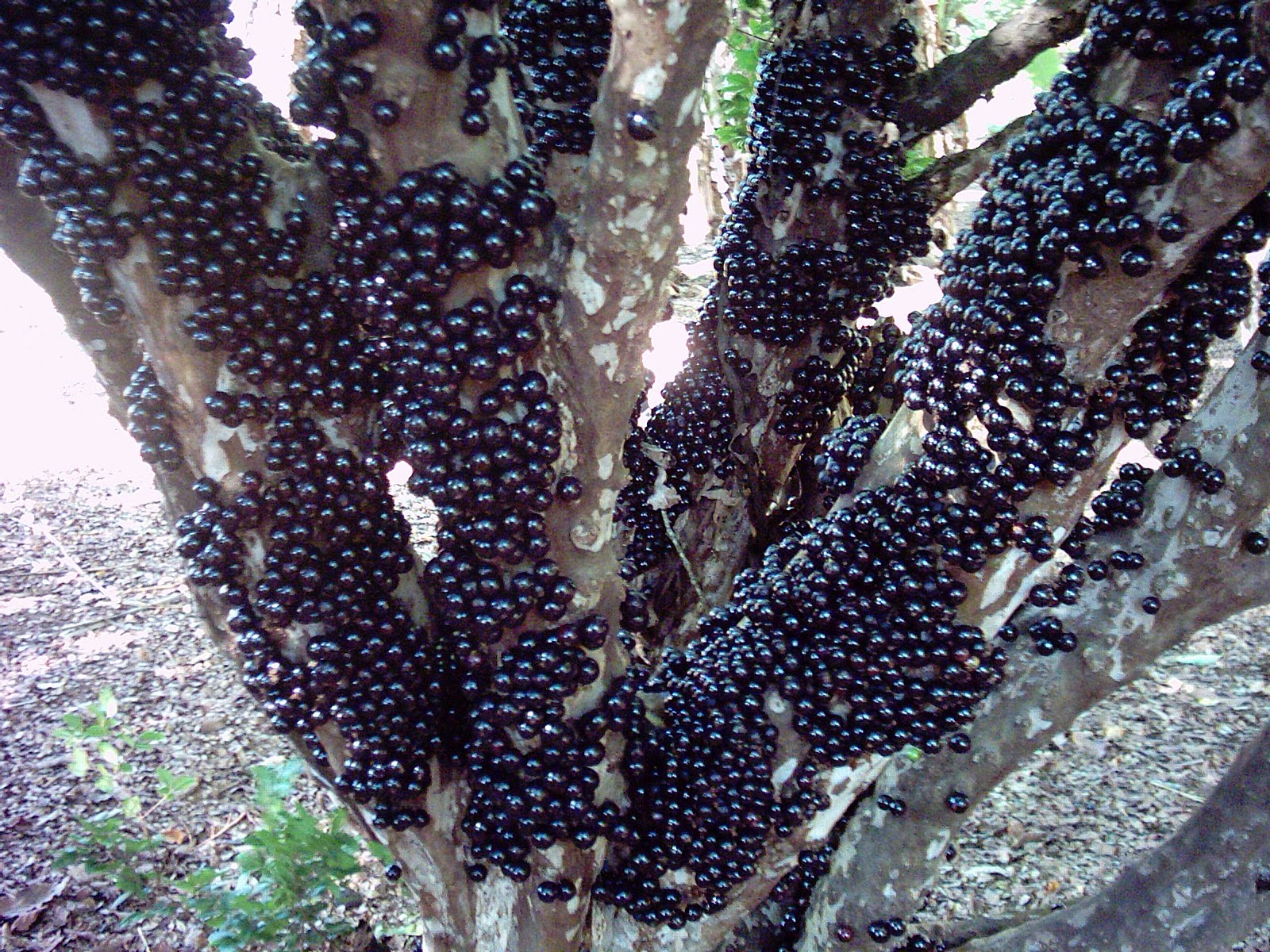
Jaboticaba

Jaboticaba

A few years ago, on my one-and-only trip  to Australia, I remember being blown away by an array of fruits I never before knew existed.  Custard apple, black sapote, jaboticaba, sapodilla—but a handful of an array of distinct, unique sensations, maltol and furanones, new descriptors, new words with ‘ate’ or ‘hyde’ at the end—Ethyl propionate, Methyl anthranilate, Benzaldehyde.

The same sort of thrill happens when a cork dork discovers a new appellation; the expectation is that there will be new vista of sui generis sensations and singular tastes to be uncovered.

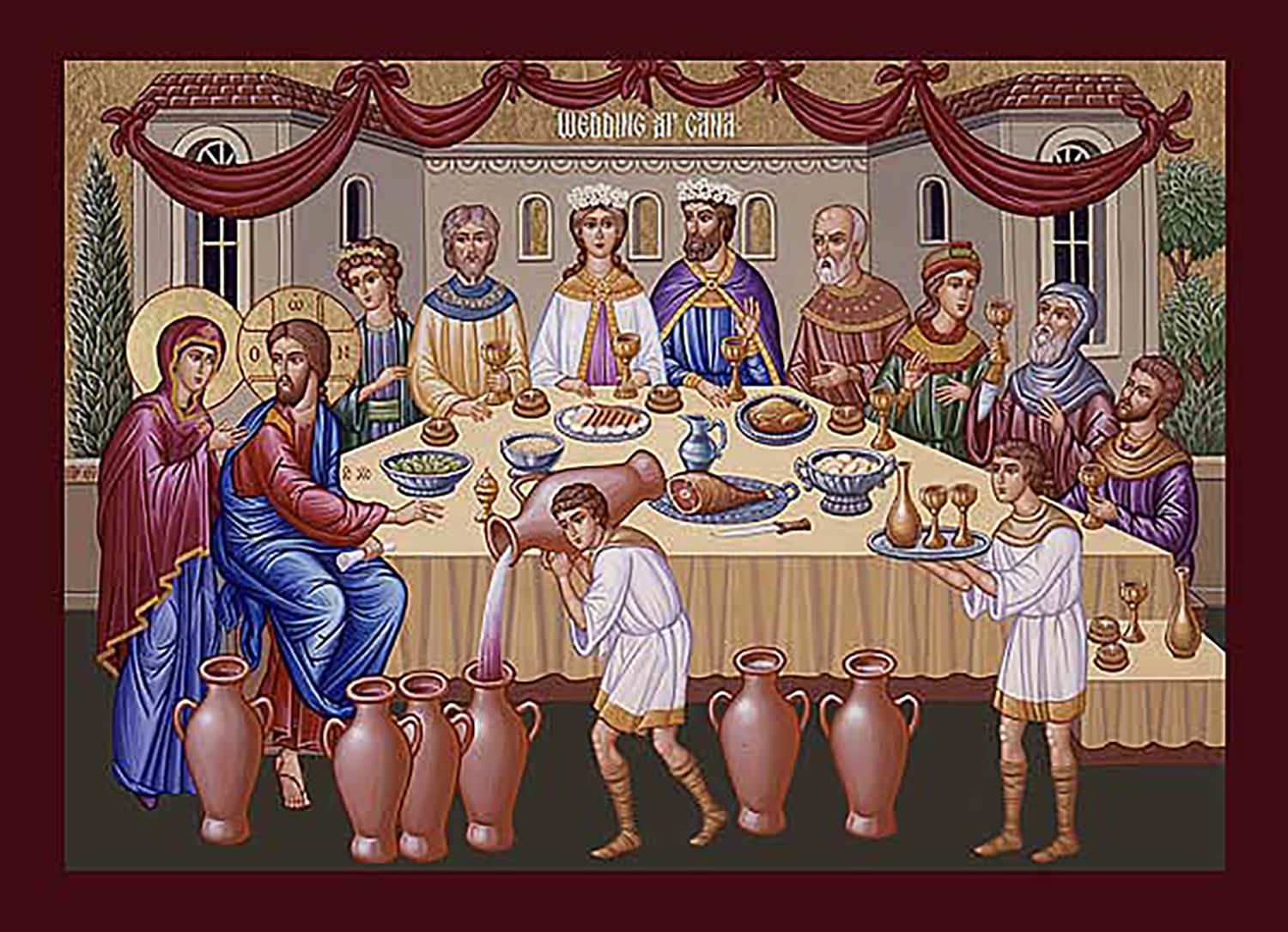
bible wineAnd that’s because, for the most part, we trust our appellation meisters.  As overlords, they have been cutting and dicing and spicing plots of terroir through more generations than are listed in Matthew 1; a fitting homology since the appellation concept is Biblical, with the wines of Samaria, Carmel, Jezreel and Helbon winning the New Testament’s equivalent of an Enthusiast’s Wine Star Award.  Then as now, the theory behind designating plots of land is that with officially sanctioned rules, including varietal and yields, the wines from a specified location can be so distinctive that no other wine grown anywhere can be considered identical.

In a perfect world, an appellation designation begins with soil and climate and ends with a studied consensus deciding what grapes grow best there and setting limits on production.

As in the Freudian sense, size doesn’t matter: When bestowed correctly, an appellation can be as large as a continent or as small as a vineyard.

LarzacThere are currently more than two thousand recognized appellations across the globe, so finding new ones is not particularly difficult.  Even the most geeky sommelier might have a hard time placing Henty or Trás-os-Montes, so the endorphin rush that accompanies a eureka find is largely a personal one.  In my case, the discovery was Larzac, a very new appellation (2005) in the Côteaux du Languedoc of Southern France.

This AOC, officially named Terrasses du Larzac, contains some of the highest vineyards in the Languedoc, and these plots—along the Cévennes mountain range—produce wines that are noteably distinct from its nearest neighbors, including those from the oldest appellation in France, Roquefort, which in part, Larzac intersects.  As in any appellation, the triad of requirements (location, location, location) take advantage of Larzac’s elevation, horizontal layers of limestone and terraced shingles and unique position between the mountains and the sea, which allow the fruit to ripen slowly.

Olivier Julien

Olivier Julien

Among the early pioneers of modern Larzac (not necessarily an oxymoron) is Olivier Julien: His forty terraced acres, with two distinct soil types—calcaire and argilles—was established in 1985, and his domaine, Mas Jullien, is a paradigm of the region.

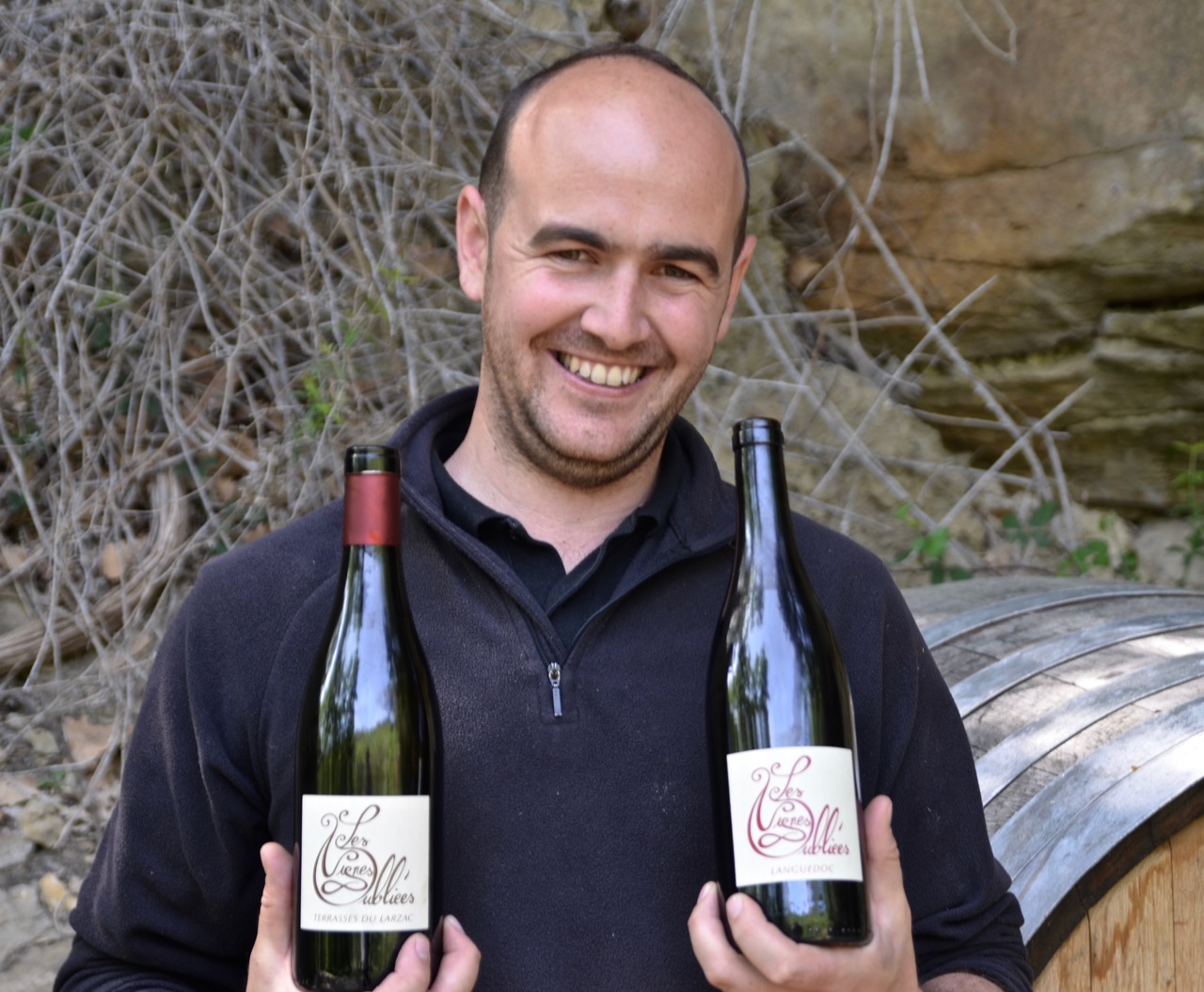
But that’s not who this piece is about.  Rather, the story here concerns one of Julien’s protégés, Jean-Baptiste Granier.  The two met when Granier was given an internship at Julien’s winery as part of his viticulture-enology degree from Montpellier SupAgro, and in the course of that internship, the pair went for rubbernecking cruises through the rolling communes of Languedoc, taking particular interest in the quality of the fruit grown at around the ancient village of Saint-Privat.

Jean-Baptiste Granier

Jean-Baptiste Granier

Those luscious bunches of Grenache, Syrah and Carignan, tended in sandy shale by a quartet of vignerons on 15 acres, proved the inspiration for ‘Les Vignes Oubliées’—‘The Forgotten Vines’.

‘Les Vignes Oubliées’ began as a joint venture between Julien and Granier, and the collaboration culminated in a ‘test vintage’ of 2007, and lasted through the 2011 vintage.

The name he chose, according to Granier references the fact that despite their phenomenal output, both Julien and he suspected that these 40-year-old Grenache, Syrah and Carignan vines were on their way to extinction:

“They were little by little being left by the wayside,” he says. “They no longer corresponded to the culture of cooperative production. We decided to adapt ourselves to the yields and work required by the vines and ensured that everyone was satisfied: the growers, the consumers and ourselves. Hence as long as the name exists on our bottles, the vines will not be forgotten.”

bottleAdmittedly, there are not many bottles so named—annual production of Les Vignes Oubliées is around 2000 cases—but I was fortunate enough to land a bottle of the 2014 vintage.  As hoped, the wine is imbued with the distinct characteristics of the terroir, both elevation and proximity to the sea. The former lends jazzy, quantifiably ‘red’ sort of bravura to the fruit—cherries, raspberries and red currants—while the latter offers the peculiar herbal-ness that the French call ‘garrigue’—it covers an array of resinous, lime-tolerant shrubs that grow along the seacoast, including lavender, thyme and rosemary.  The tannins are still pronounced, and roll around the edges of the palate, but will likely settle in for the long haul, and for now, the wine shows itself as gentle and luscious, but tinged with crisp acidity and a bit of tannic bitterness in the finish.

Postscript

The Greens in front of Threefold

The Greens in front of Threefold

Having discovered Oz’s fruitopia a decade ago, I thought it was worth noting that on a recent trip to my personal hinterlands, Michigan’s Upper Peninsula, I stopped  at Threefold Vine Winery, at the time, the only winery in this northern wilderness that actually grew their own fruit.  Grapes notwithstanding, the Threefold property had a long fence running through it, and along it was growing several shrubs of small, darkish berries, smaller and flatter than raspberries but with a similar taste.  Turns out they were thimbleberries; they have very short shelf lives, and as such—although sensationally scrumptious in their proper season—they aren’t raised commercially.  And as such, I never realized they existed.

ensembleAs Frank L. Baum recommends in The Wizard of [The Original] Oz, “If ever I go looking for my heart’s desire again, I won’t look farther than my own backyard…”

Thimbleberry yields are so small that Threefold owners Andrew and Janice Green freeze each year’s harvest and only make use of it after a sufficient quantity is obtained, usually around three seasons.  What do they do with it?

This glass of thimbleberry wine’s for you, Dorothy.

Posted in Uncategorized | Tagged , , , | 1 Comment

Woman-ness in Wine

Throughout my quarter century of writing about wine I’ve tried to avoid controversial topics, because frankly, who needs the grief?

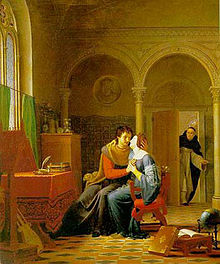
Abélard et Héloïse

Abélard et Héloïse

Well, I suppose that’s not strictly true.  In fact, it’s not even vaguely true.  In my twenty-five years of wine writing I’ve courted grief like Abélard did Héloïse; I’ve built grief shrines and set up air-conditioned tents so that haters can be comfortable when they make pilgrimages to trash me.

But this isn’t one of those pieces.  This is a concept column; this is curmudgeonly consideration of a conceit that I recall encountering initially when I was fourteen year old and reading the only comprehensive wine book my folks owned, The World Atlas of Wine by Hugh Johnson.  As I remember, Johnson described Burgundy as a female trope, calling her Queen, while Bordeaux was given primacy as King.  Their individual vessels reflect that to this day; Burgundian bottles are sloping and gentle from lip to base whereas Bordeaux bottles are firm-shouldered and tall, angular and fierce.

wine-atlas-blog_585x0These were days when the hangover of bedtime fairy tales was still sharp in my awareness, and the Platonic paradigm of a queen had specific implications: I saw lyrical lightness behind the bold reign of Burgundy even without tasting it.  Bordeaux, I envisioned as Napoleon on a knightly nag, lopping off heads and conquering Europe.

You can suggest that such images are sexist and dismissive, and I won’t argue.  Demanding that we accept equality between the genders is fair and requisite, but denying that there are demonstrable, useful and poetic differences, physically and emotionally, is something that I hope nobody believes on their most psychotic PC day ever.

Some stereotypes we should fight with all our strength, and some inherent truths we should embrace with all our hearts. These transcend sex and desire; they surmount humanistic value and hierarchy; they are about foundational mythology that are integral to our understanding of culture and interrelated ambiguities of perception. The root of sexism is the belief that one gender is superior to the other, not that one gender is different from the other.

As the French have quipped, both in support of the notion and occasionally, to corrupt it:

‘Vive la différence.’

Not Girly Art, Womanly Art

Ship of Dicks

Ship of Dicks

In that same malleable mind frame, I recall reading novels when I was fourteen that moved me beyond reason, and a lot of them were written by women: Katherine Ann Porter, Dorris Lessing, Zoe Oldenbourg, Joyce Carol Oates.  It’s not to say that I didn’t worship plenty of boy books as well, but I don’t think women would have written them: Trap a clot of dysfunctional whizbangs aboard a ship in a woman’s novel and you wind up with Ship of Fools, not Moby Dick.

Of course, Frankenstein is the exception to prove the rule, and not only that, but when Mary Shelley wrote it, she wasn’t much older than I was when I read it.

I can admire these works; I can envy the literary range and female expressivity that addresses (to my mind) the broader experience of woman-ness, but I can never emulate it.  Just as I am certain that none of them sat down and said, “I think I’ll write a novel like a woman,” I don’t consciously try to write like a man.  Male or female, what emerges from the business end of a pen should be innate, essential and intuitive.  If our life experience appears as notations in the sum, it will reflect who we are, how we see the world and how the world sees us; if it doesn’t, we probably shouldn’t be writing in the first place.

Bertagna Chambolle-Musigny, 2012

bottleThe wine that propelled this convoluted muse was Domaine Bertagna Chambolle-Musigny, a Villages wine from a single acre of old vines overlooking the town of Vougeot in the northern half of the Côte-d’Or.  This is solidly red wine country, and the appellation d’origine contrôlée ‘Chambolle-Musigny’ is only used for wines made from Pinot noir.

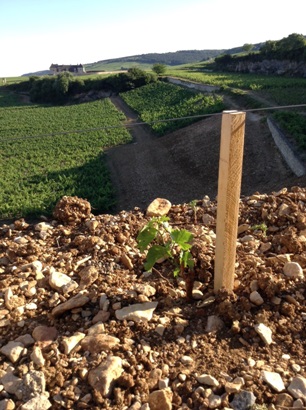
The Bertagna acre is situated on red, calcareous, well-drained soil heavy with nutrients from the fossils of shellfish that lived here eons before there were such thing as masculine and feminine people much less wines.  Yet from the outset, surrounded by the more muscular, earthier Pinot noirs of Clos Vougeot and Clos Saint-Denis, the wines of Chambolle-Musigny have been described using a term that draws ire from feminists and irk from literalists, a word over which Wine Enthusiast begs us not to ‘bristle’ while Erika Szymanski of Wineoscope bristles anyway:

“Stereotyping is bad because it limits individual’s [sic] identities in terms of who they feel they can be and in terms of who other people allow them to be, because it let’s [sic] us treat others as something less than human — because when we label them with a stereotype we apply and expect the contents of that category to how we see them and stop seeing them in their fullness as people…”

Andrew Dice Limbaugh

Andrew Dice Limbaugh

The offending word, of course, is  ‘Feminine’.

And yet, leaving aside the obvious ‘huh?’ (why a woman should be insulted by use of a complimentary term used to describe a wine she hasn’t even tried), unless the tasting note was written by Rush Limbaugh or Andrew Dice Clay, I assume it was used as a compliment and by somebody who, more than likely, admires, appreciates and respects women.

I know I do.  My mother was one.  My wife was one.  My five daughters are ones, and hella strong ones at that.  I dig them on every level on consciousness, and why not?  You can assume that if I tell one of my daughters she’s pretty (which I don’t tell my sons—am I sexist?) I am not attempting to ‘limit her identity in terms of who she feels she can be and who other people allow her to be’.  I’m certainly not trying to treat her as something less than human.  In fact, since I don’t find paramecia to be particularly pretty, I’m doing the precise opposite: I am assigning to her terminology that I find to be intrinsically human.

That said, with no preconceived ideas, I noted many qualities in Domaine Bertagna Chambolle-Musigny that in the purest of psychological concepts I also associate with high-power, high-caliber, infinitely attractive women.

I’ll dodge the offending terminology and lay it out in winespeak, and you tell me—honestly—if you think I’m off-base for suggesting that it might symbolize  a ridiculous  ‘w’ word I just made up to replace it:  Womanity.

To my palate Bertagna Chambolle-Musigny, 2012 is “sensationally nuanced with vibrant, living, luminous contrasts playing across the spectrum: There are notes of spice and smoke and violets; there is a rich earthiness balanced by an elevated, floral fragrance and a rich undercurrent of cherries.  The wine has the sinew and elegance of a dancer; it is concentrated, yet the palate remains nimble.”

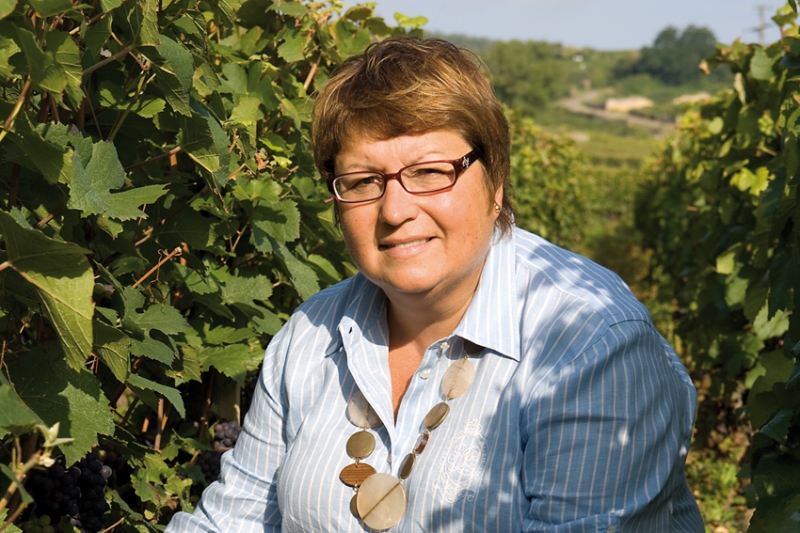
Eva Reh-Siddle

Eva Reh-Siddle

Eva Reh-Siddle

When I found out that this womanish wine from an appellation known for womanly wines was produced under the direction of a woman, it seemed like an ideal chance to discuss the subtle side of sexualizing wine, and at the source.

Discuss it we did, ultimately, after breaking the language barrier—Eva Reh-Siddle is German by birth and a femme française by trade, and although reasonably versed in English, my half-ass Panasonic desk phone ate a lot of our conversation alive.  Initially, when I asked her about the term ‘feminine’ as used to describe Chambolle-Musigny, she thought I was asking her about her experiences as a woman in the male-heavy world of the Côte-d’Or.

Which was equally intriguing, of course:

“Thirty years ago when I arrived, it’s true that there were few woman at the head of estates; Lalou Bize-Leroy [Domaine de la Romanée-Conti] was the most famous exception.  For the most part, women who wanted to get ahead in a family wine business ran into trouble with their fathers.  There was even a superstition that women in the cellars might make a wine spoil.”

Anne Parent

Anne Parent

In fact, in 2000, when Anne Parent (of Domaine Anne et Catherine Parent) launched Femmes & Vins de Bourgogne, out of nearly 5000 domaines in Burgundy, only six had women winemakers. Today, the number is closer to 50, but clearly, wrenching Burgundy from its patriarchy has been harder than storming the Bastille—a soiree which Anne Parent’s kin may well have attended:

“My family has been in wine production since the middle of the 17th century,” she says. “that makes me 12th generation, yet only the first generation of woman winemakers. It is the second French revolution.”

Domaine Bertagna

Domaine Bertagna

According to Eva, a third revolution began not after she took over Bertagna in 1988; this one stormed the gates of style.  Burgundy fans began to look beyond rustic reds with oaky profiles and seek sleeker, more elegant wines.  That was a fortress her estate had occupied since the 13th century, and in the role of Propriétaire, she maintained a Chambolle-Musigny tradition of whole cluster fermentations, one of the key antecedents, she insists, to the lovely, lyrical, don’t-say-the-‘f’-word quality in her ‘Le Villages’.  When coupled with another mandate—cool primary fermentation—whole bunch fermentation, wherein the clusters are not destemmed,  offers greater complexity and silkier tannins.  In, cool, high acid vintages, there’s a mellowing effect and and in warmer years, a certain unique freshness arises in the wine.  The fact that the vines are approaching a century in age is a plus, she says.  “The clusters are smaller and the stems are cleaner and richer in character.”

The interplay of weightless potency, fecundity and a willowy sort of strength that seemed a metaphor for all things floral, from earth to petal, are here expressed in pretty words, and when I offered them to  Eva Reh-Siddle, she not only agreed, she was flattered.

The wine is, to her palate, to her eternal delight and to her precise specification, feminine.

Erika Szymanski

Erika Szymanski

I said it and Eva heartily agreed.  If terroir reflects a sense of place, and if that place is managed by someone who don’t need no stinkin’ Y chromosomes, I see plenty of reason to glorify the sheer woman-ness of the product, and none at all to worry that Erika Szymanski might not like it if I do.

Frankly, she also might not like it if I point out that her last name ends in ‘ski’, which is a masculine morpheme derived from the personal name Szymon. With the characteristic suffix, the name Szymański means ‘son of Szymon’.

Of course, in order to avoid a woman bearing a masculine surname, thus limiting her individual identity in terms of who she feels she can be and in terms of who other people allow her to be, the Poles have a simple solution to the dilemma:

A woman bearing that last name calls herself ‘Szymańska’.

For whatever, reason, Erika has chosen to avoid that convention, and I celebrate her decision as heartily as I celebrate my new-found freedom to refer to wines as feminine.

What do you say, Erika: Isn’t it about time we all woman up when dealing with these sorts of semantics?

Posted in Burgundy, FRANCE | Tagged , | Leave a comment

Introducing the Infinite Point Wine Scale

‘Just when I thought I was out, they pull me back in.’

pacinoNo, not the Mafia, silly.  I tried to join that once and during the initiation ceremony they found out I was afraid to kill spiders, so that didn’t end well.

I’m talking about the idiotic point-scale scoring system for wine, where whizbangs are always trying to invent a better mousetrap.  But we don’t need a better mousetrap, do we, kids? We need to adopt a more Jainist ethos and embrace mice as our furry brethren capable of curing cancer and urinating rainbows.

Scoring systems, particularly scales, are meaningless to people who really understand and love wine. That’s because we recognize art inherent in a bottle of, say, Clos de Vougeot, and just as we would not place a numerical score on Michelangelo’s Pietà, we would become righteously indignant at the suggestion that we need point assignation as a tool to appreciate it.  Imagine walking through the Louvre and finding a tag on The Fall of Phaeton saying, ‘ 91 points:  Angular with undercurrents of lushness and nice contrast between the lights and shadows, but best if viewed before 2020.’

A Thousand Points of Blight

Hot damn.  Wonder if Lister has a sister.

Hot damn. Wonder if Lister has a sister.

And yet, with great fanfare, Ella Lister—who must be genetically predisposed by her last name to classify shit—has announced the unveiling of a ‘1000 Point Wine Scale’.

And by ‘great fanfare’, of course I mean a single article in the drinks business webzine which is so desperate for content fodder that I have no doubt they will one day be reduced to writing about the frequency with which Intoxicology Report mocks them when I’m desperate for content fodder—it’s a big incestuous cluster-copulation, after all.

Anyway, I’m in the parody biz, yet I could not compose a parody of the Wine Lister mission statement that would out-parody the self-styled ‘new standard in wine rating’ itself for sheer pompous pretense, so I offer it verbatim:

‘The system is data and technology-driven and aims to give a truer holistic assessment of each wine based on aggregated scores from eminent critics as well as its brand strength, liquidity and price.’

To avoid giving a truer assholistic assessment of the assessment, let’s say, for the sake of argument, that I have no issues with technology, data or even, to some extent, eminent critics.  We might disagree on the criterion for eminence when it comes to critics, but certainly not on the notion that some wine writers are more eminency than others.

On we go:

‘The brainchild of wine writer Ella Lister, the system has apparently been four years in the making, including long interviews with ‘key players’ in the fine wine world.’

wine lister logoWe may also disagree on what constitutes ‘key players’.  For my brainchildren, which are rarely more than four minutes in the making, ‘key players’ include anybody willing to return my calls.  Ella insists that her scale analyses and aggregates ‘all the facts that count’, by which she undoubtedly means all the facts that count in her purely subjective opinion.  For example, she didn’t ask me for my input, and unless I simply missed her request that I return her calls, I conclude that she doesn’t think my opinion counts.

Ha.

Well, Here it is Anyway:

Henry Woodsend

Henry Woodsend

Wine Lister’s director of technology, Henry Woodsend, explains: “We have such extensive data, across so many criteria, that we can actually differentiate to this level of precision [1000 points]. We felt that the more traditional 100-point scale, whereby only the top 20% is actually used, would undo the nuance and meticulousness of the exercise.”

Other than the subjective fact that having a ‘Director of Technology’ for a wine blog is so ludicrous that it makes my head explode like in a David Cronenberg film, the comment itself is head-shaker whether it explodes or not:

If you decide to tack an additional nine hundred points onto a given scale, how is your justification that they only use 20% of the original scale?  If the issue is that my child is not finishing her lima beans, the solution is probably not to pile her plate up with ten times as many lima beans; it’s to give her less lima beans to work with in the first place.

Me

Me

Make no mistake, I grok the concept—using a bunch of objective info bits, including (in this case) charts from Wine-Searcher, auction data from Wine Market Journal and market-level pricing from Wine Owners, the web site will correlate ‘relevant criteria and parameters’ and spit out a four digit score.

As a part of Wine Lister’s targeted demographic (someone who ‘is interested in, works in, or is otherwise implicated in the world of fine wine’) I wonder why nobody ever before realized that giving a wine a score of 921 is significantly more useful than someone giving it a 92.  Or that a wine with a score of 922 is a better personal bet for me than either one.

And since Mr. Woodsend faults the fact that the 100 point never rates wines below 80, effectively reducing it to a 20 point scale, it is to be assumed that Wine Lister will have wines covering all strata of the spectrum—20 out of 1000, or even two out of a thousand—because if not, that is not 100% usage of the new system and yet another new system will have to be invented.

And it also means that getting 100 points on the Wine Lister scale means your wine really, really sucks, but not quite as bad as a 99 point wine.  Try to explain that the Mr. Ye Olde Wine Shoppe owner when he’s hanging up point-of-sales stickers.

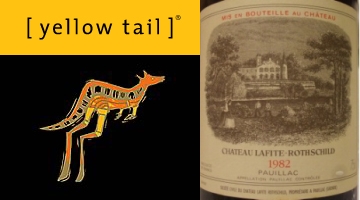
Clipboard labelOf course, since Lister lists ‘brand strength’ as a score-determining factor, the presumption is that brand leaders like [yellow tail]—an undeniable benchmark for the rise of Australian wines in the global market—would score more ‘objective’ points than, say, Live-Ex’s fifty Bordeaux ‘legends’ (including 1982 Lafite or 1961 Mouton) because the latter category has lost 17% of its market share over the past five years.

Also, higher scores apparently go to wines with greater ‘liquidity’, and since we can figure that Wine Lister is not talking about winesicles or powdered wine, but the business definition of liquidity—a measure of a company’s ability to pay its bills through cash or assets that can be turned into cash very quickly—again, [yellow tail], with half a billion in annual sales would probably score higher than the 28% of Oregon wine producers surveyed by Silicon Valley Bank who said they were in poor financial health.  Even though for-sale wineries like Alpine Vineyard score consistently in the 90s by Wine Advocate while [yellow tail] fails to chart.

Despite the gushy PR from the drinks business, the Lister 1000 point scale remains on the drawing board for now—the website claims it is ‘under fermentation’ and isn’t quite ready for prime time.

So, like my hard drive and my iPhone, I see no reason to avoid making it obsolete before it even has a chance to go live.  How?  By introducing the ne plus ultra quintessential zenith high-water-mark of all mouse traps, of course:

The Infinite Point Wine Scale: ‘The Newer Standard in Wine Rating’

Get a thousand points from Wine Lister, you may consider yourself the cat’s knees, the bee’s meow, the dog’s bollocks—all that and a bag of chips.  On Kassel’s Infinite Point Wine Scale, you are botfly excrement.

RIP Director of Tech

RIP Director of Tech

I calculate my scores without so much as a datum; nary an analysis, a consensus, an aggregate or a key player.  There are no parameters or criteria, relevant or otherwise; I seek neither transparency nor objectivity; I drink the all the liquidity and dance naked on the Studebaker; I rely on no eminentees, and although I’ll deny it in a court of law, I already dismembered my Director of Technology and buried him in my parents’ crawlspace.

This is black holistics, baby:  I simply taste a wine and start writing numbers and continue to write them with my left hand while I type wine columns with my right hand.  In fact, I’m scoring wines right now, as you read this.

My score for 2014 [yellow tail] Shiraz

My score for 2014 [yellow tail] Shiraz

I’m at twelve million points and going strong.

You can never come up with a more exacting, more precise, more detailed, more encompassing wine scale, because even if you tried, I have an insurmountable head start in writing down numbers and I will always be a few decimal points ahead of you.  It’s like a race to see who can recite pi to the highest digit, only you got stuck in traffic on the ride over and I already started and the best thing you can possibly do for yourself now is dismember me and bury me in the crawl space next to Poindexter the Tech Director and even then, I’ll die knowing you know that I know that you know that I won.

Now, here’s hoping this puts the whole silly Waste-of-Space Race to bed with a stocking cap and a handful of Nembutal, Marilyn Monroe style.

Onward and upward, droogies.

Posted in GENERAL | Tagged , , | 6 Comments

Markus Niggli: Nouveau Niche

Final online installment of sample chapters from ‘Starstruck in Lodi Again’.  Book’s pretty much in the can and will be released by June 1, 2016.


A tall, buff, Teutonic, well-spoken European wine pro in his early forties? Making unique wines that can, in ways, re-define his appellation?  Put this dude in any tasting room in any wine country in the world and you’d assume the lines would be out the door.  Yet when I asked Markus Niggli how many customers Borra Vineyards drew last weekend?

“Seven or eight.”

Marcus Niggli

Marcus Niggli

That figure does not have a couple of zeros after it in case you are reading it as a typo—leading one to all sorts of bizarre conclusions, none of them accurate. In fact, the tasting room is out of the way, and it’s not huge; Niggli’s personal brand is something of a Borra Vineyards afterthought and I did not ask the question during ‘the Lodi tourist season’ such as it may or may not exist.

Like the locale, some of Niggli’s varietal choices are a bit off the beaten wine trail path.  Kerner, for example.  Or Bacchus.  How do you lure non-geeks like me into your tasting room, right in the middle of Old Vine Zintopia, with obscure Swiss and German white wines?

Apparently, that remains an open question.

Kerner and Bacchus are cold-climate grapes developed during the last century and they are well suited to the winter wonderland of Germany, Austria and Alto Adige in Northern Italy.  They are a strange, but ultimately functional choice for the Mediterranean climate of Lodi.  Kern is a cross between Riesling and a red varietal called Trolligner; Bacchus was a hybrid created by viticulturalist Peter Morio at the Geilweilerhof Institute for Grape Breeding in the Palatinate, a three-way blend of a Sylvaner, Riesling and Müller-Thurgau.  Neither offers any genuine synergy with Riesling—that is, a sum greater than the whole of their parts—and likely couldn’t: Riesling is, without question, the most versatile grape in the world.  The crossbreeds were an attempt to ‘fix’ some of the limitations of the parent grapes.  Bacchus, for example, has a high must weight and can ripen in climates where Riesling struggles. Kerner, which at one time was Germany’s 3rd most planted grape, offers resistance to downy mildew, powdery mildew and botrytis and it produces an abundent crop.  It has been used as a sort of the poor volk’s Riesling, Kerner as the poor volk’s  Müller-Thurgau, with Bacchus more or less bringing up the rear.

nimmoBut these grapes can at least bright and crisp and unique and Aryan, so along with Gewürztraminer and Riesling, they held immense appeal to winemaker Markus Niggli:

“I’m from Switzerland,” he told me over a glass of ‘Nimmo’—a blend of Kerner, Gewürztraminer, Riesling and Bacchus—“These are grapes I grew up with, grapes I identify with.”

It probably helped that he could identify them—there aren’t many grown in California, obviously, and across the state, all four Nimmo grapes combined probably represent less than ten thousand acres, and most of that is planted to the sort of perenniel Pacific pet-project, Riesling.

Bob and Mary Lou Koth

pullthatcork wants credit for this photo.  Revel in it!

Eight of those acres—the ones key to Niggli’s story—were planted in  by  Bob and Mary Lou Koth, about a quarter of the 26 acres that had been in their family since the early 1960s. They had been primarily Chardonnay and Zinfandel growers until their daughter daughter Ann-Marie, now a German language teacher at Lodi High School, returned from a Fulbright scholarship in Germany with a roster of new favorite wines.  In 1994, they planted an experimental ‘German Collection’ that included, along with the Nimmo quartet, Rieslaner, Schonberger, Ehrenfelser, Kanzler and Oraniensteiner and Weisser Burgunder.  There are also some red varietals planted: Blaufränkisch *, Zweigelt, Dornfelder and Spätburgunder—a German clone of Pinot Noir.

* As a brief digression, if I suggested that Blaufränkisch is the single most expensive varietal currently produced in California, you might think it was another typo, but according to the annual Grape Crush Report released by the USDA, Blaufränkisch went for $3,400 a ton—the only red grape to break the $3 k ceiling.

Niggli’s winemaking story didn’t begin until he was thirty; he  has a business degree in tourism and marketing, which may in fact make the relative scarcity of tasting room patrons even more ironic.  He worked for Swiss Railway and American Airlines, and in the course of his world travels—a perk of the position—he began to explore wine regions and learn what people were trying to express in their wines through regional traditions, indigenous grapes and personal imperatives.  In 2004, he decided he wanted to learn not only what winemakers did, but how they did it, and without having banked the quarter million dollars it takes to get an enology degree at UC Davis, he headed to Perth, Australia, where he spend a year studying viticulture until the money he did have ran out, then headed to Napa to look for work… any work.

“I couldn’t find anything for a long time, even though I’d just come from Swan Valley where I worked tasting rooms days and studied viticulture nights.  Apparently I still wasn’t qualified for a $10 per hour job changing hoses.”

insiemeUltimately, he fell into a consulting gig in which he was responsible of shipping grapes to the East Coast, and in that role, met a few of the winemakers out there that remain part of his winemaking program today.  His private label  ‘Markus Joey Insieme’ (2014) is a blend of California Torrontés and North Carolina Riesling.  ‘Insieme’ means ‘together’ in Italian and ‘Joey’ means Joey Medaloni, a former nightclub owner who, like Niggli, began making wine in his thirties.  The spec sheet refers to Insieme as ‘a worthy substitute for a morning Bloody Mary’, which must be unique in the annals of wine tasting notes.

Unique is the name of the game, of course, and the wash of wine that I sampled with Markus that lonely afternoon in the tasting room reflected every bit of that, some with more success than others.  The problem with Kerner is that it can produce wines so sharp you can clean your teeth with it, and often does not provide sufficient fruit to sufficiently liven up the party.  Kerner-heavy wines tend to be high in minerality, austere and frosty, often strikingly acidic and Niggli’s tendency to pick grapes early, sometimes at 21° Brix, amplifies this.  Despite the use of native yeasts in his fermentation tanks, these wines are hightly stylized works of contemporary art.  The labels themselves are as well, having been designed by students at the University of the Pacific in Stockton—students who, Niggli says, “…have their passions in the right place.”

markus grapesAt my request, Markus walked me through a year-by-year overview of Lodi’s changing terroir, which he has followed with the keen sense of a climatologist.  The rap offered insight not only into some of the unusual flavors he seeks and elicits, but why, of all the terroirs in all the gin joints in all the world, he settled down in this one.

Since he began making wine at Borra in 2006,  Niggli has kept obsessive records of horticultural events at the vineyards he relies upon, and he sees patterns that show some drastic shifts in climate—tangible stuff, tasteable stuff, not charts from a NASA site.  All vineyard managers have noticed a red shift in the growing season; bud break occurring earlier and earlier, flowering following suit at aquickened pace, and grapes that may reach optimum ripeness as much as a month earlier today than they did twenty years ago.

“And it’s not just here,” Niggli points out.  “Look at the changing face of Spanish red wines.  Garnacha—today, it’s fruit forward, high acid, less hang time. Here, in 2013, we started picking Zinfandel at the beginning of September rather than the end, and in 2014, when we had a warm winter and a dry, hot summer, we brought in the first trucks of Zinfandel on August 20.   In 2015, we actually began to harvest Syrah before the white grapes.”

He further describes 2015 as an early bloom, with a cold snap during flowering leading to an initial loss of crop of around 20%.  Then the drought kicked in, and the season progressed well with great flavor intensity.  But, Niggli notes, a significant downside to warmer winters is that many insects that normally would have perished now survive and eradication programs are becoming progressively less effective.  The drive toward organic production limits the pesticides that can be used, and many of the natural ones are not potent enough to get the job done.

A bug boom and the resultant explosion of insect-borne is a reality which those who enjoy the benefits of a milder climate will need to contend.

Borra, Borra, Borra

Steve Borra

Steve Borra

A ‘niche’ may be literally defined as one of two things: An ornamental recess or a distinct segment of a given market.  In this case, during my visit,  the tasting room at Borra was both.  Sort of cluttered, but not with patrons—with cases and knick-knacks and awards; it’s cozy like a Swiss chalet.

Outside, Borra sprawls across two vineyards and many decades, with origins spanning back to Benevagiena in the Italian Piedmont.  That was the home of Stephen Borra’s maternal grandfather Giuseppe Manassero who emigrated to Lodi over a century ago and set up shop on Armstrong Road, where the winery sits today.

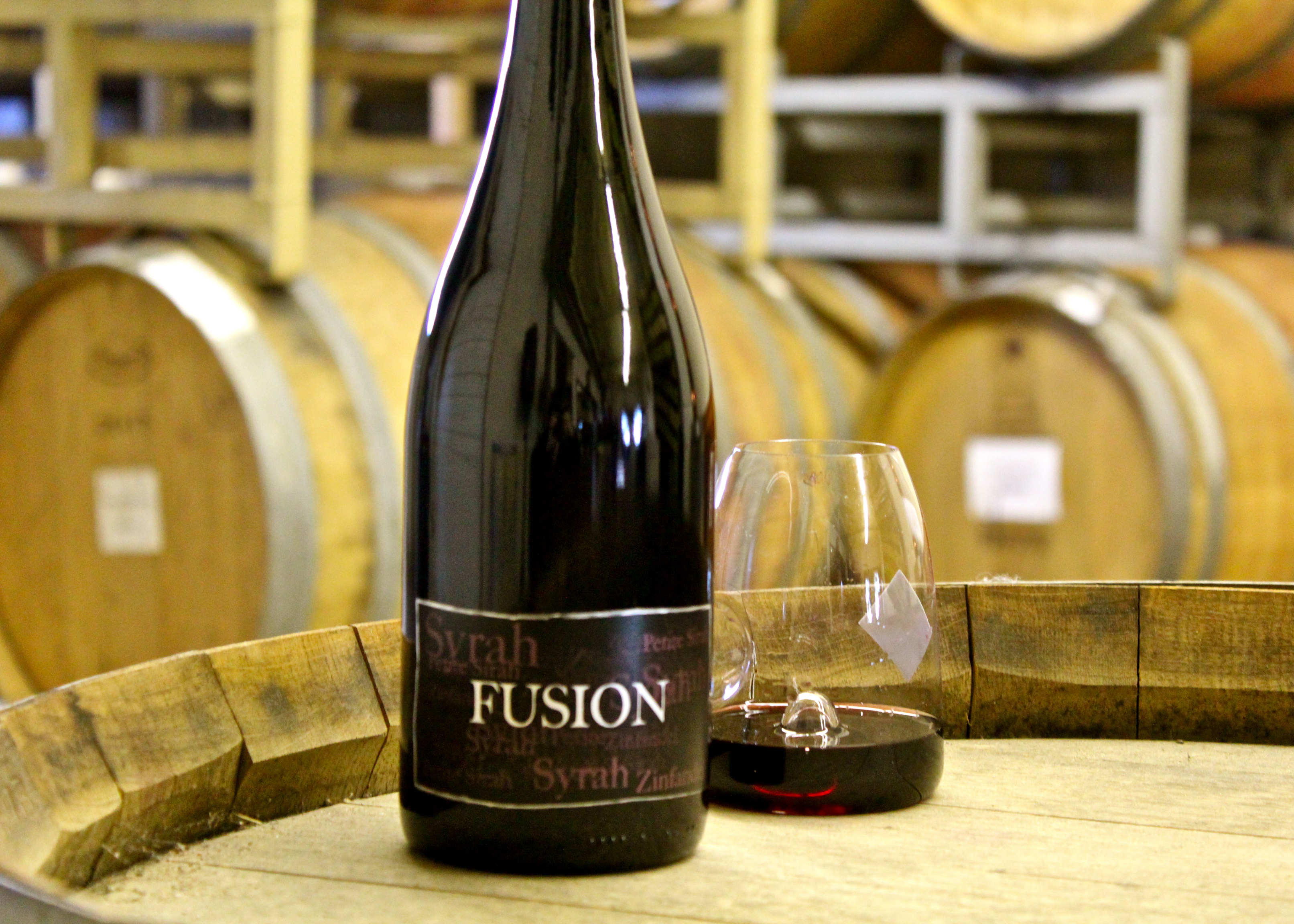
Stephen has owned the place since 1966, and prior to hiring winemaker Markus Niggli in 2006, the family focused on Barbera and Carignane and, in 1992, after purchasing an additional 200 acres planted to Old Vine Zinfandel and Chardonnay, further expanded into fusion 2009Merlot, Viognier, Cabernet Sauvignon and Syrah.  These remain the core varietals at Borra and as it happens, Niggli excels In producing them.  His Fusion Red 2009—a proprietary blend of Syrah, Petite Syrah, Zinfandel and Alicante Bouchet took home double gold at the 2012 San Francisco Chronicle Wine Competition; 2008 Fusion Red also found a spot on the Wall Street Journal’s Annual Dozen top wines, although ironically, the accompanying blurb mentions that the wine ‘regularly fills the tasting room’ (!)  Apparently, either they are sold out of the ‘08 or I caught the crew on the wrong day.

Either way, recombinant, Borra and Niggli are steeped in tradition while embracing the changes in climate and tastes, terroir and fashion, style and substance.

Niggli’s personal portfolio, produced by under the ‘Markus’ label, have been described as ‘feminine’, but I don’t see it—I see, perhaps, the opposite:  These wines are intense and angular, cool and daring…  just like the winemaker.

Posted in Lodi | Tagged , , | 1 Comment

Concentrate, Cogitate and Cultivate: The Alexanders and the Reincarnation of Pythagoras

Dennis Alexander is not only highly mathematical and highly Greek, he is the physical reincarnation of the great Ionian philosopher Pythagoras.

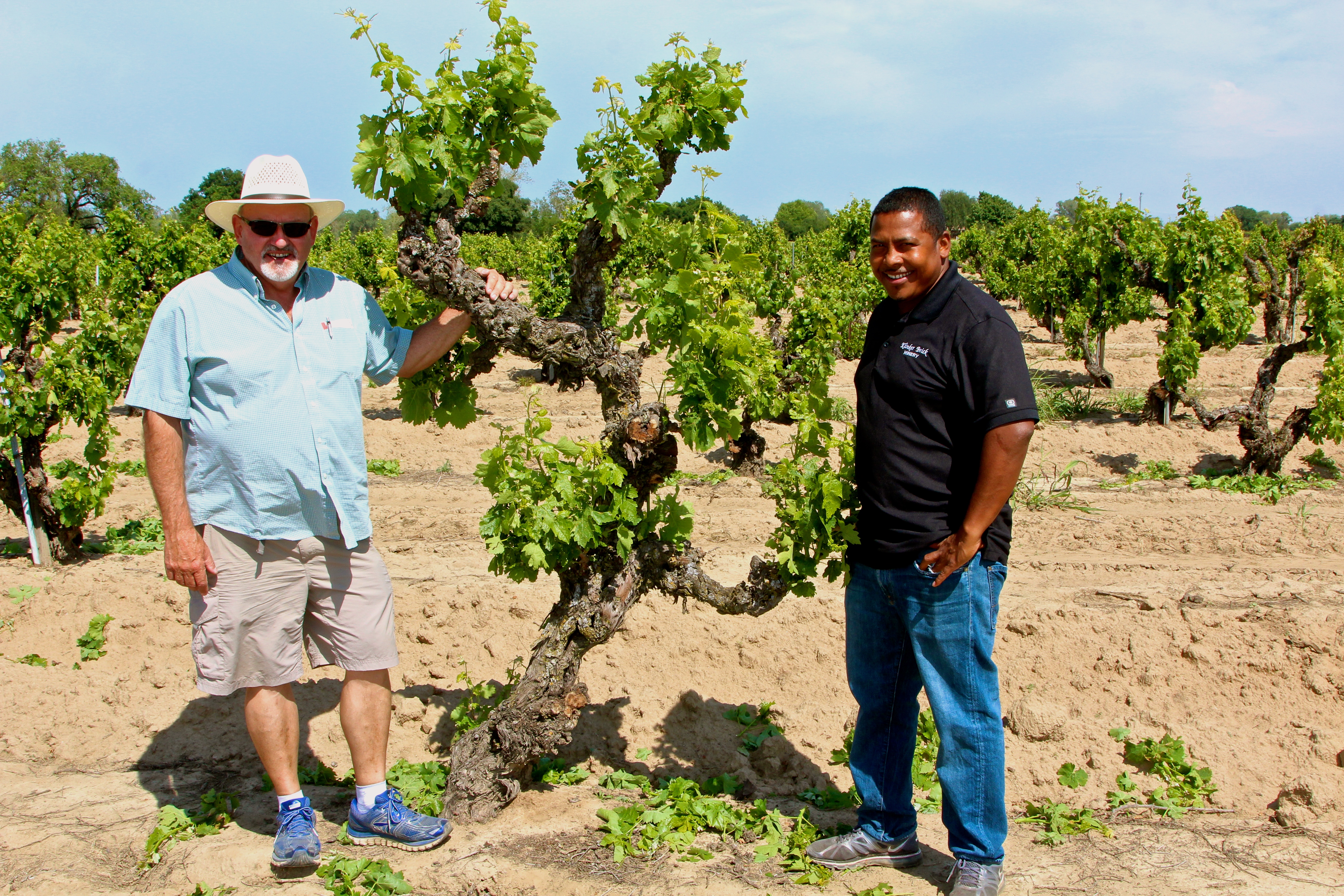
Dennis/Pythagoras

Dennis/Pythagoras

This is not my assessment; I’m not much for Euclidean geometry, and the only thing I remember about Pythagoras beside a2 + b2 = cis a quote describing the relationship of patterns in nature, whether inanimate or lyrical: “A stone is frozen music.”

‘A reincarnation of Pythagoras’ is Dennis Alexander’s own assessment—and he is a man of such mystery and depth that it’s hard to find reason to argue.

It is also hard to hold a conversation at all—Dennis is old enough to have known a couple of Pythagoras’ contemporaries and he is suffering from what appears to be a debilitating malady of the mind that causes him to lose track of what he is saying mid-sentence and go blank from time to time.

And do not get me wrong:  That’s fine since his lucid moments sparkle with such wit and wisdom that the lag times seem irrelevant.

Among a volume of intriguing characters in Lodi, I met this particularly intriguing one over the worst BLT on the planet.  I won’t say the name of the diner that served it, but I will suggest that when your sandwich has only three ingredients, it should be possible to nail down a minimum of one of them.  Fail on a level of epic-ness to rival Odysseus.  But the meeting was arranged by Anthony Scotto 2 and his son Anthony Scotto 3, and they sat in on the conversation and revealed a lot about themselves as well: Namely, that if they are themselves reincarnations of anyone, it’s Job.

Odysseus

Odysseus

Because, alas, that’s the level of patience required to provide Alexander the space to share his story; but it is bestowed upon him with deference and pride.  Alexander’s life has been filled to the brim with introspection and innovation and as far as the Scottos are concerned, a little incoherence toward the end makes him that much more endearing.

A2 and A3 could have prepared me, but the respect they feel for old Dennis is such that they trusted me to level-set my own expectations and adjust my interview accordingly, no questions asked.

And so I did.

The three of us sat stoically, silently, supportively, and for a long time, too. But, although interviewing Dennis Alexander was my morning’s raison d’être, for Scottos it was not.  They are busy fellows who generally operate on overdrive—they may have viewed the interlude as down-time, but I don’t think so, because I have seen them defer to men who they admire many times, for as long as it takes, offering them whatever time and space required to  be the sort of men that the hourglass has dictated that they must be.
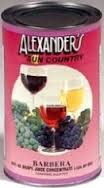
can concentrateLike mathematics in Greece, Dennis Alexander’s story runs back through essential Lodi history to nearly the beginning; he started out with a small home-winemaking retail business in the ‘60s, and, along with his brother George and a couple partners, began importing canned grape concentrate from Spain.

Grape concentrate is exactly what you think it is—pressed juice with some of the water removed, then pasteurized.  Grapes are picked, on average, at a sugar level of about 24° Brix—after concentration, it is around 68 ° Brix.  Grape concentrate was (and is) a staple in home winemaking kits along with pre-measured portions of yeast, sterilizer, nutrients and everything else you’d need to make a bottle of drinkable wine in your cellar.  You didn’t wind up with Château Le Snoot, but the system made winemaking mistakes difficult and the end result was the equivalent of a mid-priced grocery store wine, which you could make for about a third the price.  I know, because my father was sold on the notion, and always seemed to have a batch of something bubbling away in the cellar.

George and Dennis Alexander

George and Dennis Alexander

In retrospect, I bet the kit he used came from Dennis Alexander, because at the time, there weren’t many outlets selling them.

As it happened, when Dennis got into the kit business there were no California processors concentrating their own juice, and it didn’t take the wisdom of the ancient Greeks to see a fillable niche in the domestic market.  It did take something close to genius to look at a huge, commercial Hills Brothers Coffee vaporizer and figure out how to retrofit it for wine grapes.

“I remember that other wineries thought we were nuts,” Dennis says.  “But we found the inventory space we saved storing concentrate was amazing.  Our first concentrate was Ruby Cabernet, an Olmo (Dr. Harold Olmo, UC Davis) variety, a cross between Cabernet Sauvignon and Carignan.  It produces an abundent crop in the Central Valley, and the home winemakers loved it.”

The Alexanders set up shop in Acampo, in an area known as Crush District 11 on California grape pricing charts, and begin to scour auctions for used industrial appliances—a lot of it rigged by Dennis using dairy equipment—building up the business, adding other grapes, expanding the horizons of the DIY crowd to, and finding a huge market for varietal concentrates at existing wineries.

Peggy Sue

Peggy Sue

This outlet—wineries—becomes, perhaps, the most widely-known closely-held secret in the annals of California winemaking—one that is spoken of in hushed tones in the parlor with the same fingers-to-the-side-of-the-nose that the parents of pregnant teenagers once used when they sent little Peggy Sue to live with her aunt in Kankakee for the rest of the school year.  The TTB—the governing bureau that oversees wine laws—permits the use of concentrated fruit juice in commercial wine, even allowing wine to be made of nothing except concentrate with no requirement that the label mention it.

Legally, if concentrate is added, it may be added in any quantity, with the only stipulation being that it must be the same variety as the rest of the mix.  On the surface, this practice may seem somewhat ho-hum, but consider that in California, chaptalizing wine—adding sugar to increase either sweetness or end-product alcohol, even to levels mandated by law—is illegal.  In theory, this prevents winemakers who have grown or purchased tart, substandard grapes from artificially boosting the oomph by adding sugar without adding grape solids.  Once an end product has reached legal minimums for alcohol, it can compete commercially  for shelf space—that all-important consummation that most wineries devoutly wish.  The no-chaptalization standard is, in ways, a hold-out law in a system that currently allows a California winemaker to artificially adjust acid levels, tannin levels, extraction levels and to filter out flaws like VA and over-the-top alcohol.

As far as I can determine, the addition of concentrated fruit juice (occasionally from grapes the winemaker him/herself supplies from a bumper vintage and holds until needed) is a logical and wholesome alternative to dumping in character-free sugar, which in the beautiful terroirs of California should not be necessary.

L.: Adam Lee R.: Christopher Lee

L.: Adam Lee
R.: Christopher Lee

One fairly prominent winemaker who disagrees with me is Adam Lee of Siduri and Novy Family, who told Wine Spectator in 2013 that he has broken the chaptalization laws on more than one occasion.  His goal, he maintained, was to increase alcohol in lean years without adding the flavors inherent in concentrated fruit juice.  I understand the concept, of course; the danger in excusing Adam when he breaks the law occasionally is that you have less excuse for insisting that his half-assed Cali colleagues, intent on saturating the market with cane sugar wine, follow any TTB regulations ever.

Slippery slopes are one thing, but this one is clogged with granulated sucrose.

And in any case, if a winemaker (and there are a few) believe that adding cane sugar to bump up the product is acceptable (even though it’s illegal) it’s really hard to understand the silly justification for not wanting to legally bump with grape concentrate of the same varietal.
These wines all contain California Concentrate

These wines all contain California Concentrate

Of course, the fact remains that many—if not most—major winemakers use some grape concentrates in a lot of their wines, not only in California, but in every growing region across country.  I’d name some mighty big names if I could without engendering wrath and bad will—not from the wineries, to whom I am not beholden—but from the Alexanders, to whom I am beholden purely on a friendship level.

These clients are their bread-and-butter, and if they don’t want the exposé in this edition, I won’t do it.

And of course, they don’t:  Tom Alexander, Dennis’s son and the fellow where the dynasty’s dynamics now concentrates, told me:  “Whenever I show up at a big wine function in Napa or Sonoma, I know everybody’s name, but apparently, nobody knows mine…(!)”

Where The Magic is Concentrated

I stopped by California Concentrate’s nerve center in Acampo, where Tom has his hands on the rudder, the vaporizer and the dozen other contraptions and permutations that the family has put together over the years.  The morning I visited, Tom’s son was cooking a batch of wort; the Alexanders have also gotten into malt extract for beer making.

“Most canned malt on the market is pretty low grade.” Tom assured me. “Mom and Pop beer making shops carry the standard brands, mostly imports.  We’re trying to raise the bar on what’s available.”

tom and sonNot only that, but a massive niche has opened for all-natural extracts from an entire cornucopia of fruits and veggies—the list expands along with the trends.  Beside ever-changing ‘it’ flavors that Americans glam on to, the globe  boasts countless regional preferences.  Making a beverage entirely from—for example, bananas or guavas—is impractical.  California Concentrates are produced with pure fruit and pack a lot of focused flavor into a small volume.  Organic beverages can use their concentrates and maintain the USDA label, and, as Tom points out, “The world does not grow enough mulberries for all the mulberry drinks on the market, especially in China and Korea.  Most of them are simply coconut water with mulberry concentrate added.”

And that goes for beverages labeled carrot, watermelon, blueberry, pomegranate, boysenberry, etc.  Like the TTB, the FDA has all sorts of regulations regarding juice labeling, and the amount of actual soluble fruit solids that a beverage contains varies by variety, but is usually between a low of 6% for rhubarb and a high of 25% for banana.  Frankly, the chart covers a lot of exotic fruits I’ve never heard of: Youngberry, acerola and guanabana among them.

william te;llBut I do know muscat and mango, and Paul Scotto, whose family has been customers of California Concentrate for two generations, has put the finishing touches on William Tell Apple Mango Muscat Cider using mango concentrate from California Concentrate.  I tried it and it sensuous and lush; mango is one of those fruits that makes itself manifest in subtle, textural ways as well as a sunny, sort of gentle sweetness.

How Ade is Made

When the tech boys start talking about concentrating juice—mango, muscat, carrots or youngberries—the conversation turns to stuff that is Greek to most of us: Cloud stabilization, essence recovery, acid ions, a lot of ‘de’ things—de-oiling, de-aeration, debittering.  Each fruit has its own parameters, so understanding how concentrate is made is a little like understanding how cars are made.  Different products have different processes.

In general, Tom points out, fruit for concentrating is handled like fruit for winemaking; it comes in either raw or as juice, and is enzyme-checked and chilled, the sooner the better—it turns out that in this biz, 30°F is your friend.  When the reduction begins, the juice passes through a mechanical vacuum vessel to drop the pressure, and this is perhaps the most critical step in making quality concentrate.  Water, as we learned in tenth grade physics, boils at 212°F, but with dissolved solids (especially sugars), the boiling point rises.  And the hotter the juice, the more the subtle qualities your are trying to enhance are affected, and rarely for the better—a rule of thumb (though not without exception) is that foods that you are accustomed to eating raw will not fare well when exposed to high heat.  And that covers most of the 26 fruits and vegetables that California Concentrates processes.

concentratorUnder a vacuum, the boiling point of juice decreases with the air pressure; this is why water would boil at 160°F on top of Mt. Everest if you were up there and in any condition to try it.  For most of Tom Alexander’s base juice, 135°F is sufficient to boil off the water while retaining most of the delicate aroma compounds.

By most, of course, Tom means everything except those volatile taste molecules that are lighter than water vapor and have evaporated in the concentration process.  This requires a second step—essence recovery.  It is essentially a way of distilling the essence-bearing vapors by forcing them through a series of baffles and condensing them, much as the process of making booze from fermented liquid works.  The recovered flavors are then reintroduced to the concentrate, giving it additional intensity; additional spirit.

Catching More Praise With Vinegar Than With Honey

kimberly_picThe intensity and spirit that has accompanied the Alexanders through the eons, perhaps since before the Common Era (Pythagoras, 570 BCE – 475 BCE) shows up again in the auxiliary operation, the artisan wine vinegar that they make in an outbuilding far from the main fruit concentrate plant, where the juice might not appreciate the vinegar cultures.

Kimberly Wine Vinegars (Tom Alexander’s brand) relies on a French technique—méthode d’Orleans—wherein the transformation of the ethanol in wine to acetic acid via bacteria happens slowly, inside oak barrels.  The resulting vinegar is less acidic than commercial white vinegars, terrifically mellow and far more complex that most of the vinegars you’ve probably tasted.  As is the hallmark of Alexander’s fruit concentrates, the varietal vinegars retain the subtle characteristic of the mother fruit and/or wine and the terroir in which they were grown.

The Final Formula

This ain't it

This ain’t it

Meanwhile, back at the diner, over half-eaten BLTs with limp lettuce, soggy tomatoes and rock-hard bacon, Dennis is off in some Ionian taverna, talking mathematics with some folks he met.  I am getting the impression that this really happened, and is not some vision from his previous life, and the story, with all its punctuated pauses and detached doldrums, is really quiteamazing.  His stories unfold in their own way, at their pace, with their own quietude, and to appreciate them, you have to settle in for the long haul and let the wisdom polymerize with the measured evolution of wine vinegar in a balsam barrel.

Which the BLT could certainly have used in place of the viscous slathers of emulsified crap that is commercial mayonnaise. Maybe a spritz of reclaimed bacon essence and a little concentrated lettuce would have helped.  Or maybe the whole sub-par sandwich could have been extracted, de-oiled, de-aerated, debittered and added to a bottle of coconut water.

Mt.olympusFacetious, of course:  But the quality of the raw material is the foundation to Dennis’ success and to the reputation of California Concentrate has spent half a century shoring up.  Both Aristotle and Ptolemy had paradigms, so it is no wonder that the reincarnation of Pythagoras might see the pure essence of anything to be the sort of project he’d be willing to undertake.  After all, in the end, the formula here is simple: Bacon2 + Lettuce2 + Tomato2 = BLT.

I have a sense that I may not have another chance to sit down with Dennis Alexander, at least not in this lifetime, but I am gratified to think that there may be other opportunities in the endless cycle that lies just beyond  Mount Olympus.

Posted in Lodi | Tagged , , , , , | Leave a comment

Is Rob Priddle the Most Boring Wine Writer in Existence?

Of course not!   He is a keen wine journalist with a trusty palate, an eye for what’s hot and talent for writing mouth-watering reviews.  And what does he want?  He want to enlighten folks like you and me.  And when does he want it?  Now!

Fortunado

Fortunato

At least, that’s the world according to Drink Me, an online wine, beer and spirit publication that whores itself out to so many advertising johns that trying to hack through to the Mission Statement is like fighting a jungle of thorns and booby traps to get to some mythic golden idol.  When you finally break through—hitting the requisite ‘X’ marks to excise the advertisements—you discover you that Drink Me’s Arthurian quest is ‘scouring the world for the best imbibables around, the coolest equipment to help you make the most of your drinking life, and advice and know-how from the people shaping the way we all sip and swirl and savor.’

And that’s cool.  That is pretty much what all of us with drink columns are trying to do.  Personally, I like to think of myself as a sort of spiritual spirit superintendant, scouting out suds ‘n’ sauce across the Seven Seas, scaling soaring sierras and schlepping my sapience to you, my kind and gentle reader.

As I say, I like to think that, but considering most you know more about wine than I do, the evaluation is probably lame.

In any case, let’s you and me do some role-playing, but in a non-BDSM way.  Or, keep the ‘M’ alive, because you must be one if you’ve read this far.  Anyway, let’s pretend we write for Drink Me and our assignment is professional: We have to come up with a column with advice and know-how following our global scouring trip, the funding of which we will leave (like Blanche DuBois) to the kindness of strangers.

drinkme_365_2001We’ll have to submit our piece ‘on spec’, meaning they don’t buy the article unless they like it: You offer them a series on the affordable wines of Bordeaux and are told that they have published that story five times in the past month.  I submit a story on the hand-blown ampoules of Penfolds’ 2004 Kalimna Block 42 Cabernet Sauvignon, and the response is that ‘hand-blown’ is an oxymoron.

In rapid succession, we suggest features on Mexican wine, Swiss wine, Hungarian wine, wine from tiny Polynesian island of Niue and wine made from the fermented spleens of Peruvian stink badgers, and we are told that they published articles like that within the last 24 hours.

And so, here we are, you and I—all dressed up in our journalist costumes and nowhere to go.  We could scour the world for the worst imbibables and write about those, but that would be in direct violation of Drink Me’s Mission Statement, wouldn’t it?

‘The Three Most Boring Wines in Existence’ by Rob Priddle

Okay, game’s over.  Take off your journalist costume.  Slowly, article by article. And now that we are all naked and stuff, like the Emperor without his clothes, all you BDSMers may return to the fold and strap on whatever it is you strap on.  I’ve got the ‘M’ covered this time—I actually read Priddle’s piece, ‘The Three Most Boring Wines in Existence.’

bondageWhat are they?  Well, Rob decided to take the iconoclast’s route and turn his trusty palate and eye for what’s hot toward what’s not:  Three wine ‘varieties’—his term—that he feels are so excruciatingly dull that they could cure a certain sleep disorder that causes aggravated, aggressive awakery.

Now, if you were going to make this sort of tongue-in-cheek claim, and substitute it for a genuine column purporting to educate drinkers, I would think you’d have two non-negotiable obligations:

First, you would have to avoid writing in such a style of la morgue littéraire that people actually fall asleep during the introductory paragraph; that would sort of step on your punch-line, right?

Second, one would hope that you’d come up with a trio of wines that required more time and imagination than your headline took, which you probably didn’t write anyway.

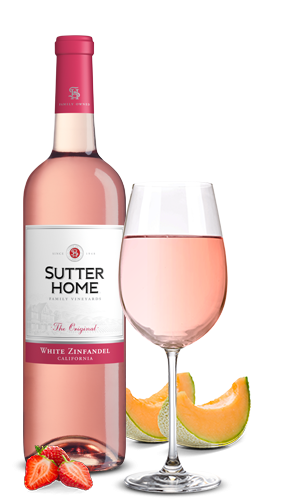
white-zinfandel-details_0_0As for the first, I leave it to the reader’s objective opinion, since I am Master and ordering you to read the article as part of my ‘S’ role.  But for the second one, Priddle suggests two wines which are so clichéd and overused and rubber-stamped as being dull that if I gave you three guess and you couldn’t come up with them, I’d assume that you are probably somebody who actually needs Drink Me’s input.

For the rest of us, White Zinfandel and Pinot Grigio were indeed listed as numbers one and two, although Professor Priddle felt it necessarily to specify California White Zinfandel so as not to offend any of the zero wineries producing White Zin outside California.

Likewise, Veneto is called out so that the stellar Pinot Grigios of Barefoot Cellars don’t get inadvertently grouped with dull wines.

So, seriously— what Priddle is saying is that White Zin and Pinot Grigio are boring, but only the boring ones, not the other ones; that’s the consummate Drink Me news-flash. That’s the keen, mouth-watering wine journalism running amok through these features.

Next thing you know, they’ll tell us that some Bordeaux is reasonably priced… again.

But, really, I would have allowed all this to slide, because I really don’t read Drink Me, even to cure my insomnia, my gonorrhea or my final-stage, acute sarcasticoma. But the third Priddlean choice for dullsville wine so defies my concept of propriety that I must step in and wall the motherfucker up in in the catacombs of wine journalism.

Poe_Botas_AmontilladoAmontillado.

Yes, old Rob, never profound, now veers into the profane by disrespecting the classic, wonderful, darkish Sherry that holds ground between tart Fino and rich Oloroso, fortified and oxidized delicately in porous casks, served chilled as a sensational, nutty aperitif.  Although the name Amontillado may be sometimes misused commercially, Priddle—henceforth referred to as ‘The Jester of Journalism’—makes no such distinction, as he did with ‘California’ White Zin and ‘Veneto’ Pinot Grigio, but indicts all Amontillado under his blatheringly boring banner of boringness.

Well, I’ll tell you something, my dear Robunato.  I think you are full of shite.  But fear not, I am willing to provide evidence:

I have just received a pipe of what passes for Amontillado, although I believe I may have paid more than it is worth.  You were off masquerading as a wine journalist and watering mouths, eyeing heat and advising and could not be found. I feared losing a bargain, yet I think I may have been imposed upon.  It is your trusty palate that I lacked, your keen judgement.

Rob Priddle

Rob Priddle

Come with me to the vaults.  Over there, into the depth of the recess, while your journalism bells jingle—the termination of the feeble light may not enable us to see, but therein lies… the Amontillado.

Drink, while I render you all the little attentions in my power.

What’s that?  The intoxication of your sense of humor has now worn off?  No problem.  I will write to your employer and make your excuses.  I will blame this infernal cold.  The weight of the ancestors.  Your cough.  Ugh, ugh, ugh, ugh, ugh. They will understand… after all, this is Amontillado.

And now I must positively leave you. In pace requiescat!

Posted in GENERAL | Tagged , | Leave a comment

‘Old’ is Merely a State of Vine

I just got back from a month in Oldvinelandia, and therefore I know more about old vine wines than anybody else in the contiguous solar system.

Willard_scottWhat do I know about old vines?  For starters, I know there’s no such thing.  You’re only as old as you feel. No standard exists for old vine wines that’s sanctioned by either the law or popular consensus; ‘old’ is merely a state of vine.  People who have hundred twenty year old vines scoff at the Century Club.  And the Century Club sniggers and point at those whose ‘old’ vines are only seventy-five.  Those folks turn their nose up at the Golden Anniversary vines, and these people say that vines under fifty years old aren’t old vines at all, while nearly everybody with vines over thirty years old slaps ‘Old Vine’ on their labels.

I had this near-genius idea in Lodi, which I am hereby donating to the Lodi Wine Commission, free of charge:  When a block of vines at Soucie Vineyard turns a hundred this year, I suggest somebody in PR haul old Willard Scott out of pasture and do a photo op where he wishes them a happy hundredth birthday.  I mean, how much could the dude command for a gig these days?  Fifty bucks and a box of Quick Oats?

bob rossIn theory, the older the vine gets, the better the wine it can produce.  As the argument goes, the deeper the root structure of a vine, the more happy little Bob Ross minerals it scavenges along the downward trajectory.  In  a perfect universe, the business end of the plant produces fewer and smaller berries which contain concentrated levels of all those alpha-numerical, multi-lettered compounds that end with ‘zine’ or ‘tyl’ and make Chardonnay taste like mango.

great vjneNot all vines are willing to cooperate, of course, and ‘The Great Vine’ at Hampton Court Palace in England (variety Shiva Grossa), transplanted under the direction of Lancelot Capability Brown to its current site in 1769, produced the largest crop in its history in 2001.  More compliant is the a Žametovka vine in Maribor, Slovenia, which makes The Great Vine look like a spring chicken: It’s four hundred years old and produces about a hundred pounds of grapes a year, which are made into wine and sold in tiny, souvenir bottles.

In Lodi, the lion’s share of the ‘old vines’ are Zinfandel, but if you look hard, you can find Cinsaut at Bechthold Vineyards that is 127 years old, 107-year-old Carignan tended by Jean Rauser at Rauser Vineyard and  octogenarian Petite Sirah and Alicante Bouschet at Steve Borra’s Church Block vineyard.

Carignan, my wayward son.

Carignan, my wayward son.

The extra time the venerable vines bring to the fermenting vat seems to offer intense perfume—not odor, not aroma, but a sort of ‘roided redolence that is explosive and appealing and sets the tone for deep, sappy fruit-centered sweetness in the body.  Old vine wines are often identifiable by the concentration of succulence, the focus of flamboyance.  And know who agrees with me?  The very capable Turley Wine Cellars winemaker Tegan Passalacqua, who says of Old Vine Cinsault:

“It makes a red wine that is not heavy, not high in alcohol, but rather, light and refreshing. Some say, as a grape, Cinsault makes a simple wine, but we do whole cluster fermentation, which adds a lot of complexity.  It reminds me of crus Beaujolais in some ways – it has structure, but also high drinkability, and its aromatics are intoxicating, extremely perfumed.”

And that got me thinking.  You rarely see ‘Vieilles Vignes’—meaning ‘old vines’ attached to Beaujolais; it’s usually stuck on labels from further south—Languedoc, the Rhône, Provence.  But, by chance, a few days after my Lodi layabout, somebody turned me on to Charly Thévenet, wunderkind of Régnié, son of ‘Gang of Four’ Morgon producer Jean-Paul Thévenet.

grain & granit regnieThévenet Jr. is also a son of the ‘natural viniculture’ movement that enjoyed a renaissance in Beaujolais during the 1980s, when a handful of vintners returned to traditional winemaking techniques, refusing to use synthetic herbicides or pesticides, trying to avoid both sulfur dioxide and chaptalization.  Older vines were key to the movement, and it also is the source for Charly Thévenet’s Grain & Granit, Régnié, 2014 ($26)—Gamay vines that are more than eighty years old.

Régnié is minute—only a single square mile high up the mountains, where vineyards (old or young) balance precipitously on slopes a thousand feet above sea level.  Like the wine, the granite of these slopes is pinkish and laden with minerals.

Charly Thévenet

Charly Thévenet

The 2014 vintage was wet and windy through the summer, but at the end,  shaped up beautifully; Beaujolais experienced a stellar harvest with controlled acidity and extremely ripe fruit.  The wine is a lavish extravaganza, and how much of it is due solely to the age of the vines, I can’t say.

I can say that I do not recall having nosed a Beaujolais that rang the rafters quite as resoundingly.  Not saying that I absolutely fell in love with the experience (just as well—only 500 cases were made), but I will say that the level of exaggeration is unheard of in the appellation—the perfume was near bath-oil in concentration; it could have been hanging as a grape-shaped deodorizer from a rearview mirror.  The mouth was velvet flowers; grapey raised to the power of three, but juicy with auxiliaries like red licorice, spring berries—strawberry and raspberries, bright acid and a pleasant dose of grape tannin at the end.

Minstrels singing dat ol' vine song...

Minstrels singing dat ol’ vine song…

My Beaujolais boner (perhaps prejudicially) is for the slightly less melodramatic wines from vines with less gravitas.  For the Gang of Four’s gang of heirs, however, a cult is built around Vieilles Vignes; a faith, a credo, a winemaker’s Weltanschauung…

“Gimme dat ol’ vine religion, gimme dat ol’ vine religion—it was good enough for Foillard, it was good enough for Chauvet, it was good enough for Breton, and it’s good enough for me.” 


Posted in Beaujolais, Gamay | Tagged , | Leave a comment