English Wine: A Convenient Truth

Among the reefs upon which English culture has traditionally foundered are the following: Oral hygiene, naming food (spotted dick, bubble and squeak, blood pudding…  Seriously?), failing to be suitably deferential to Americans for kicking arse in 1776, then winning World War II for them, spelling ‘color’ with a ‘u’, shit with an ‘e’ and soccer with an ‘f’…

…And making wine.

Yet, lo and behold, at a sold-out London Wine Fair this coming weekend (October 29th) four English wines will strut their stuff among the 600 international wines, plenty from lesser known wineries like Sula in India.

How is this possible in England—a country where it rains 365 days a year (people sunbathe only on Feb 29, once every four years), where beer is the omnipresent bevvie of choice and where, during a sort of renaissance of vine planting in the ‘80’s, more than one in three of the new wineries tossed in the towel within a decade?

I believe that Al Gore can clue you in—maybe catch him aboard his private Gulfstream as he travels the world lecturing on how to live a carbon-neutral lifestyle:

Global warming.

It’s nothing new.  The first climactic blow to English viticulture occurred during the 800’s when a mini ice-age put the chill of destiny into the hearts of Romano-Britons and killed the vines they’d spent a thousand years installing.  By 1086 the industry had recovered a bit, with forty-six wineries listed in a survey of landowners commissioned by William the Conqueror; apparently, English vineyards could be found from modern-day Somerset and as far north as East Anglia.  Over the next five hundred years, the number of wineries grew to nearly one hundred fifty, mostly cultivated by monks and falling under the auspices of the church.  Henry VIII put a kibosh on all that, of course, by abolishing monasteries, and in subsequent centuries, the British wine industry faded to near extinction.

All in all, the English proved to be better at importing continental wine—Claret from Bordeaux, hock from Germany, sherry from Spain and madeira from Sicily—than they did at maintaining their own winegrowing community.

That is, until we humanoids started leaving carbon footprints bigger than those of the Jolly Not-So-Green Giant.  Figure that Burgundy is about three hundred miles south of London; over the six months that Burgundian grapes are active, the average temperature is a shade over 70°F—in Kent, one of the primo growing spots for vines in England, average temps have now crept above 64°F.  Kent, in fact, set a British record in 2003, recording temperatures of over 100°F—a historical first.

And, despite the inconvenient untruth mentioned above concerning the amount of rainfall England gets (that was a wee bit o’ John Bull bull), sunshine is not really an issue to sub-London vintners.  England’s South Coast receives as much as 1700 hours of sunlight during the growing season, while vines require about 1500 hours to remain viable.

One day, if temperatures continue to rise, the Kingdom appears poised to snag a throne on the world’s wine stage.  For now, maybe not: In the course of a decade, England can expect four atrocious vintages, four average vintages and only two good ones.

Clearly, there’s both a learning curve and a weather curve still required.

In the meantime, Brittania waits impatiently,  engines revved (more CO2 for the atmosphere, mate) doing what it can to hurry things along…

If Life Hands You Lemons, Make Seyval Blanc

So one man’s Day After Tomorrow is another man’s VinExpo Britain 2050, but as it stands, most cépages nobles have opted to exercise a contract rider stating that they won’t perform in the U.K. until it can provide dressing rooms as slick as those of the Côte-d’Or.  And these are the rock star varietals, the label-names that put coin in the coffer:  cabernet sauvignon, chardonnay, merlot, shiraz, sauvignon blanc—you name it, the Brits can’t quite grow it.  So, as the English wine industry becomes more sophisticated, many vineyards have opted to plant such ingénues as are willing to give the country the benefit of the doubt.  That includes Seyval Blanc, Bacchus, Huxelrebe and Phoenix.

Seyval on the vine.

Seyval is an early-ripening French hybrid built to withstand cool temperatures and truncated growing seasons; besides England, it shows up frequently in Finger Lakes (New York) vineyards.  Characterized by a mouthwatering acidity and a backbone of minerality, it has flavors comparable to those of basic white Burgundies: pear, apple, lemon and melon.

Developed in the Palatinate in 1933 as part of the German plan to create a blonde and vigorous Master Grape, Bacchus—named for the degenerate god of one-for-the-road—is a cross between the powerhouse varietals riesling, sylvaner and müller-thurgau.  In the Fatherland, it tends to produce flabby wines without much character, but in England, where temperatures are cooler, the grape retains enough acidity to be quite lovely.  Flavors are distinctively herbal: leaf, meadow shrubs, honeysuckle with a bit of grapefruit in the background.

The totalitarian-looking 'Institute for Grape Breeding' was designed by Albert Speer in 1927

Huxelrebe is another German ex-pat, developed in 1927 in the very Third Reich-sounding Institute for Grape Breeding as a high-yield, high-must early ripener chiefly used a blending grape.  Which is how England treats it, frequently stirring it into the pot alongside bacchus and seyval.  On its own, it’s a sort of sauvignon blanc lite with delicate overtones of  gooseberry, grass and green apple.

Finally, Phoenix, yet another Aryan offering—although in Germany, a scant 120 acres are currently being cultivated.  It’s a cross between bacchus and villard blanc, and produces a chalky, mineral-tinged wine that, like huxelrebe, is gently reminiscent of sauvignon blanc, but without the breeding of a truly fine one.

"Nay, Charles, you shan't be my tampon. Nay, neigh, neighhhh. Say, do you happen to have a lump of sugar?"

The UK Vineyards Association: How Hoity-Toity Is it…?

Her Royal Highness The Duchess of Cornwall is the president, that’s how hoity-toity it is.  Equine-looking Camilla, second wife of Charles, Prince of Wales, home-wrecker extraordinaire and poster princess for why you don’t want your phone hacked took over the position from Lord Montagu of Beaulieu in July, becoming the figurehead of the UK wine industry.  ‘Figurehead’, of course, is stodgy Brit for ‘I haven’t got the slightest clue as to what I’m doing here, but I’ll gladly accept photo ops at the vineyards’.

As the only organization recognized by the government as representing the English and Welsh wine industry, The UKVA regulates Britain’s place-of-origin pedigree via categories equivalent to France’s AOC, America’s AVA and Italy’s DOC.  The Protected Designation of Origin (PDO) and the slightly less restrictive Protected Geographical Indication (PGI) also makes rules for permissible label designs, cultivar specifics, alcohol levels and sweetening/de-acidification practices.

Also, each June, they run the English & Welsh Wine of the Year Competition, which offers a pretty good cross-section of who’s doing what, where and how.  In terms of ‘how good’, one would expect that the awards themselves would be a pretty good indicator considering that the six judges are all Masters of Wine—enology’s equivalent to  an Sc.D. degree—but something here doesn’t quite settle in the duodenum.  Of 274 wines entered this year, 252 took home medals or mentions, and for those of you still languishing in remedial math, that’s 90%.  With all that’s been said, here and in dozens of articles elsewhere regarding the struggles and challenges of growing quality grapes in Britian (strides have been made, granted), the idea that 90% of contest submissions would warrant shiny metal or kind kudos is about as credible as Neville Chamberlain waving that ‘Peace In Our Time’ agreement the day before the Nazis invaded Sudetenland.

“We were immensely impressed with the number of entries and the overall quality this year, which is why so many went on to win an award,” said Susan McCraith, the competition’s chairman.

Look, Susan, this may be a speck presumptuous, but isn’t the whole idea of a competition to winnow the fair from the bad, the good from the fair, then the great from the good?  If, as you suggest, they’re all great, aren’t you supposed to tap into your considerable wine knowledge and bionic palate to extract the genuinely sublime from the great?  If everybody wins, nobody wins.

From a slightly different angle, the 'Institute for Grape Breeding' actually looks like half a grape.

Nevertheless, a few of the tippity-top winners included The Jack Ward Trophy (Best Commercial Production from the 2010 vintage) to New Hall Vineyard Bacchus 2010;  The Wine Guild Trophy (Commercial Production, Any Other Year) to Sandhurst Bacchus Dry 2008; the coveted The Gore-Browne Trophy (Wine of the Year) to Ridgeview Grosvenor Blanc de Blancs 2000The Waitrose Rosé Trophy to Giffords Hall Rosé 2009.  A new category for dessert wines, dubbed The Stefanowicz Trophy, went to Astley Vineyard Late Harvest 2009, produced from 100% Siegerrebe, which is—you guessed it—another Dr. Moreau-Josef Mengele high-must mutt developed at the Institute For Grape Breeding.

One thing you notice looking at the complete list of winners (http://www.englishwineproducers.com/competitionresultsUKVA2011.htm) is that the same vineyards keep showing up again and again, so one supposes that these are the guys who’ve figured out how to make the enology’s equivalent of the Special Olympics work for them, not against them.

Alphabetically, these include:

Astley Vineyards: Michael and Betty Bache established Astley in the 70’s and it sits upon free-draining red sandstone kept temperate by the River Severn.  Winemaker Martin Fowke produces a variety of styles from kerner, madeleine angevine, late-harvest siegerrebe and phoenix, and 97% of them have won awards since 1996.

Biddenden Vineyards: The oldest winery in the Southeast, the scant 22 acres of vines produce a variety of cultivars.  50% of the land is planted to ortega with the remainder divided between huxelrebe, bacchus, schönburger and reichensteiner with reds being made up of dornfelder, gamay and pinot noir.

Sam Lindo

Camel Valley: Situated in a distinctly camel-free zone halfway between the Atlantic and Channel coasts, the mildish Cornish climate helps produce wonderful whites from bacchus, seyval and even a bit of chardonnay while reds are primarily pinot noir and dornfelder.  All, under the directorship of Sam and Bob Lindo, have won awards, but none so prestigious as the second-place they took in the World Sparkling Wine Championships in Verona, bested only by Bollinger.

Chapel Down Winery:  Kent is considered the Garden of England, and not ‘garden’ in the sense of a grotty, microscopic backyard in the row houses of Coronation Street, but a real live, fertile and brimming with verdure garden.  Here, above a chalk seam typified by the North and South Downs of Kent, is the setting that winemaker Owen Elias plies his trade, producing a decorated portfolio of still and sparkling wines.  Attached to the estate is a superlative restaurant run by Michelin-starred chef Richard Phillips, making this one of the top destination wineries in the Commonwealth.

Denbies Wine Estate:  A whopper by British standards, Denbies is one of the largest privately owned vineyards in Northern Europe, and in top vintages can approach a half million bottles—10% of all output from this tight little isle.  The state-of-the-art facility in the hilariously named town of Dorking in Surrey, produces both still and sparkling wines, predominantly from a no-surprises line-up: Seyval, reichensteiner, müller-thurgau, bacchus, ortega, chardonnay and pinot noir.

Nyetimber Limited: For owner Eric Heerema, the 100 Years War never really ended and he battles on, still determined win it.  At least, he wants to out-Champagne Champagne.  The estate was founded in 1986 by an American couple who noted the geological similarities between this West Sussex property and the Champagne region; they reasoned that they could produce a wine to rival the great bubblies of France.  The estate has changed hands several times, but not one of these hands has lost touch with the mission.  The UKVA voted them Best Wine of the Year thrice running (’03 – ’05) and the shelf-load of trophies, gold medals and ‘Best of Class’ awards proves that the ultimate goal may be in sight.

Ridgeview Wine Estate:  So named because it nestles on a low limestone ridge sloping towards the South Downs in Sussex, the winery enjoys a rare growing-season climate—both dry and hot.  This allows them to fully ripen chardonnay, pinot noir and pinot meunier along with ten other French clones to ensure variety in blending.  It should be no surprise, therefore, that winemakers Mike and Simon Roberts specialize in méthode champenoise sparklers—and they’re nailing it:  In June, Cavendish 2009 was awarded Best Sparkling Wine in the 23rd Thesis Wine Competition.

Three Choirs Vineyard:  The average size of a Napa vineyard is 150 acres; at 80 acres, Three Choirs is one of the biggest vineyards in England.  To further level set, within the Three Choirs microclimate, less rain falls than in Napa: 20 inches a year compared to 24 for Napa.  Sheltered by the Malverns and the Brecon Beacons, the land is ideal for most of the English standby grapes; in the red category, experimental plantings in rondo, regent and triomphe are producing favorable results.

So, Back To The London Wine Fair…

You’ll likely be reading this after the fair is over, but no matter—there aren’t any tickets left and you couldn’t have gone anyway (frowny-face emoticon, which I would never, under any circumstances, actually incorporate into my writing).  But for those lucky enough to score an entry, it promises to be a whirligig day filled with tastings, break-out master classes, tastings, a wine walk and more tastings from the 55 tables manned by some of the most influential wine merchants in the country.

According to the Wine Gang, a quintet made up of the U.K.’s most respected wine critics,  “This is Britain’s brightest, best and most fun wine event and is a fabulous chance to plan your wine drinking for Christmas and beyond.”

The Wine Gang: Somewhat less intimidating than the Crips

As mentioned previously, four English wines will flex muscles against multinational heavyweights like Bodegas Marqués de Vargas, 2006; Domaine de la Fond Moiroux Moulin-à-Vent, 2009 and Sula Vineyards Chenin Blanc, 2010.

As follows, the English entries:

Chapel Down Bacchus, 2010; Camel Valley Atlantic Dry, 2010; Bloomsbury Cuvée Merret Ridgeview, 2009 and Armit, Gusbourne Blanc de Blancs, 2006.

Unlike a Premiere League soccer-with-an-‘f’ rivalry, there will be no home field advantage for British winemakers here, but like the Academy Awards, it’s an honor just to have a spot.  Everyone is here to have fun, get a bit tipsy and learn how to buy ‘smarter and drink better’—the Wine Gang’s motto.

Ultimately, whether or not the English actually take any medals probably doesn’t mean, well, shite.
Posted in ENGLAND | Tagged , , , , | Leave a comment

Hoary Antinori Does it Again. And Again… And…

A cardinal difference between the outlook of Italians and Americans is that in Italy, a hundred miles is a long way while in the USA, a hundred years is a long time.

I think the Antinori family will confirm this.

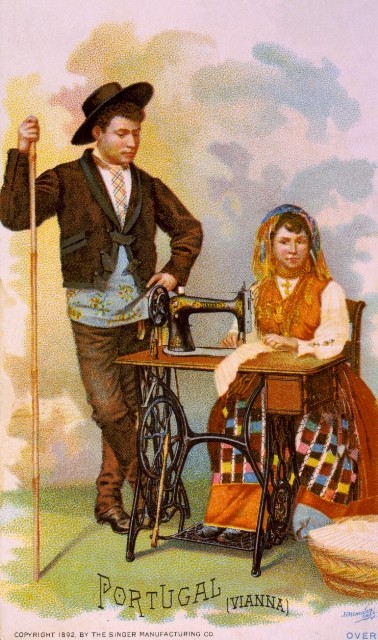
Portuguese people

These venerable Tuscans have been pumping out wine for twenty-six generations, since 1385, the year that Great25Nonno Giovanni di Piero Antinori became part of the Arte Fiorentina dei Vinattieri.  Here’s a few other things that also happened that year:

  • Richard II, who became King of England at the age of ten, invades Scotland.  Epic fail.
  • France’s Charles VI marries Isabeau of Bavaria.  Charles, who thought he was made out of glass and frequently forgot his own name, was called ‘Charles the Mad’.  Isabeau wasn’t too happy about it either.
  • Portugal becomes an independent nation, and the world has had to contend with Portuguese people ever since.
  • Jan van Eyck, the Flemish painter is born; Xu Da, Chinese military leader and co-founder of the Ming Dynasty, who was allergic to goose meat, dies after eating goose meat.  Another epic fail.

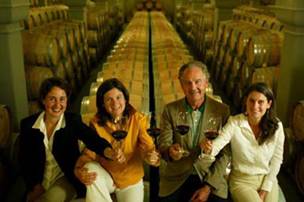
Marchese Piero and daughters, not King Lear.

A lot of Chianti has passed beneath the bridge since then, but the ancient clan still sports an Antinori at the tiller.  Marchese Piero Antinori is the winery’s current director, with plenty of support from his trio of lyrically-named daughters, Albiera, Allegra and Alessia.

The passion and predisposition that have driven the Marchesi Antinoris for these six centuries have secured them a spot as one of the world’s oldest and most distinguished wine families, but as Marchese Piero loves to remind us:

“Ancient roots play an important role in our philosophy, but they have never held back our spirit of innovation…”

That’s ‘innovation’ with a capital ‘C’, my friends:  Controversy has been at the heart of many of Piero’s decisions, and if the gleam in his eye appears to have a slight purplish tint, it’s probably cabernet sauvignon.  Italian DOC laws are stricter than anything Hammurabi scribbled down on his crankiest day ever, and if you are going to make, say, a Chianti Classico, the Consorzio Vino Chianti Classico grower’s union warns that you’d better not stray from legally mandated varietals—80% sangiovese, with an allowance of six other clones to make up the remaining 20%.  Flout these rules and you won’t just get your wrist slapped, you’ll get cold-cocked in the money clip.  You will not be permitted to wear the locality-defining black rooster on your bottle neck nor stamp your wine DOCG (Denominazione di Origine Controllata e Garantita)—Italy’s highest quality designation.  Screw with the Consorzio, even by a grape or two, and you may not be sleeping with the fish, but you’ll definitely be sleeping with vino di tavola—Italy’s lowest status designation—on your wine label.

Fallen Angel

Well, with Piero, it wasn’t just a grape or two, it was a quarter of the crop.   Back in the 60’s, Chianti Classico went through a major choke—a collapse of purpose more disgraceful than the 1995 California Angels’ late-August, 9-game wild card lead over the Rangers, following which, despite odds of 8000 to 1 that they’d miss the playoffs, they missed the playoffs.  You’ll have to ask S.I. editors about the Angels, but Marchese Piero Antinori can explain what happened in Tuscany:

“When the Chianti formula was created, the red wines were particularly harsh because the whole grape bunch was utilized, even stalks, and no one knew about malolactic fermentation. This made it necessary to use a percentage of white grapes—originally malvasia—to soften the wine. Then it proved convenient and useful to add white grapes all the time so the more productive and hardy trebbiano became the white grape of choice. Over time, Chianti came to be made with 30 percent trebbiano and this radically altered the nature of Chianti. By the late 1960s, it was lighter in color with a simple structure and, worse still, it was unsuitable for aging.”

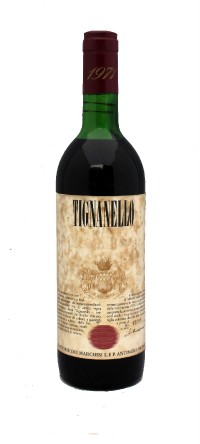
'71 Tignanello: You can still pick up a bottle for around $500

Inspired by a few local heretics like Azienda Agricola San Felice, Antinori began to radically reduce the amount of trebbiano in his Chianti, and in 1971, released Tignanello, a treb-free blend of sangiovese and cabernet sauvignon.  It proved over-the-top opulent; seductive and elegant with an essence that seemed almost intrinsically Italian—it became a cult wine icon virtually overnight.  But it strayed from from the prescribed production code, and thus, the Consorzio would not classify the wine as DOCG but instead condemned it to the lowest rung on the wine ladder, VdT—a designation that indicates nothing more than that the wine was made in Italy—it may be mass produced or cobbled together from bulk-market juice.

Piero’s rejoinder?  A very cultured nobleman’s paraphrase of the gutter yawp: “Andate tutti a fanculo!”

And they hadn’t seen anything yet.

Tignanello’s comprehensive success among consumers and critics galvanized Tuscany, and more producers began to release non-traditional blends, mostly using Bordeaux varietals—and far from sweating their demeaning VdT classification, they soon found that these remarkable, rich and often expensive wines were being referred to by the cognoscenti as ‘Super Tuscans’.

And as prices continued to skyrocket, other Tuscan enologists, still making clunky and sub-standard Chiantis, realized that a lot of the egg that they use for fining was winding up on their faces.

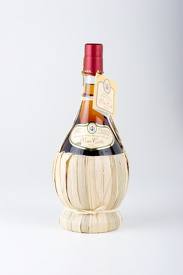
Fiascos were a fiasco

Antinori’s bold defiance of regulations and subsequent triumphs (Cervaro della Sala, Gualdo al Tasso, Solaia) ultimately inspired a Chianti overhaul, first of the psyche, then of the psystem.  Classico producers began to clean up their act and then to embark upon the long road of convincing patrons (Americans especially) that Chianti Classico was not to be confused with cheap red wine bottled in straw-covered fiascos and plunked down on checkered tablecloths in generic paisano restaurants.  As a vital part of the renaissance, Chianti Classico was able to break its ties with Chianti, of which it had previously been a mere sub-zone, and in 1996, was awarded its own autonomous DOCG with a new and rigorous production code.  Among the tenets was the complete elimination of white wine grapes beginning in vintage 2006.  Ultimately, the Consorzio blinked, and in an attempt to bring the Super Tuscan winemakers back into the fold, created a whole new class for them: Indicazione Geografica Tipica,  or IGT.  Of course, that came with a new bunch of restrictions, and some Tuscan vintners (and a few winemakers in Piedmont and Veneto also, as the damn-the-torpedoes trend spread) continue to do exactly what they want, and accept the declassified ranking with a certain offbeat pride.  Viva L’Italia!

Atlas Peak: Some tough rows to hoe.

An Altitude Attitude

Meanwhile, Marchese Piero Antinori was not looking back, but over the ocean toward California.  In 1985, doing a survey of available acres in Napa, he found a boulder-and-chaparral-strewn pocket above Foss Valley in a little-known, high-elevation appellation called Atlas Peak.  Unlike Napa’s other, dominant mountain AVA’s—Veeder, Howell, Spring and Diamond—Atlas Peak was at the periphery of most  of the wine world’s California dreamin’.  As the consensus went, it was too cold, too rocky and too scraggy for wine grapes.  One brave pioneer, Bill Hill, had managed a raise a handful of vines there, but that was about it.  Still, with six hundred years of wine instinct coursing through his veins, the Marchese recognized that the area was above the fog, had well-drained soil and good exposures; and best of all, it looked like Tuscany.  Obviously, based on his family history, he had no problems with long-term strategies, and at the time, he said, “When I saw this property, I must say I immediately fell in love.”

Atlas Peak Shrugged

Except that, for a long time after that, it looked like love’s labors lost.  Vineyard manager Glenn Salva now admits to some classic winemaking missteps: Planting the wrong clone of cabernet on the wrong slope, planting much more sangiovese than was supportable, market-wise, and then, to satisfy investors, going for large crop loads—high yields equated to high-acid sangiovese without much character.   Plus, the grapes were picked too soon, resulting in hard green wines—the antithesis of the (then) growing consumer taste for lush, heavily-extracted, fruit-focused reds.

Glenn Salva

“Were we bad farmers?” Salva asks, somewhat rhetorically.  “ In hindsight, yeah. But at the time, we didn’t know.”

By 2004, they’d worked the bulk of the issues through, but by then most of the original investors had bailed, including Christian Bizot of Bollinger and Whitbread, the British brewer and hotelier.  Antinori gutted it out, and finally, in 2007, released 2004 Antica Napa Valley Cabernet Sauvignon.  Which says ‘Atlas Peak AVA’ a grand total of no times on the label, just in case the appellation had become, like Chianti in the 60’s and 70’s, indelibly associated with sour, plonky wine.

Antinori says, “My feeling is that the appellation Atlas Peak has not really gained a reputation that can give an added value to the wine.”

A Leap of Faith

Another Napa concern, one that’s indelibly associated with unsour, non-plonky wine, is Stag’s Leap Wine Cellars (the winery whose cab kicked French derrière at the now-infamous 1976 ‘Judgment of Paris’). In 1995, Antinori send Richter-scale shock waves through a fairly jaded industry by teaming up with Washington’s biggest winery, Ste. Michelle Wine Estates, and buying it.  Despite the shivery-cool $185 million that exchanged hands, former Stag’s Leap major domo Warren Winiarski claimed that his only true interest in cashing out was if he could his sell to his old pal the Marchese.

Separated at birth: Dabney Coleman and Michael Mondavi

The Marchese, in the interim, has continued to tweak his properties.  Beside the streamlined, ranch-style, patently un-Tuscan house he built on a ridgeline called Cougar Rock, and beside Col Solare—the Washington cabernet joint venture with Ste. Michelle—he set Glenn Silva to the task of buying up all the Atlas Peak property that came up on the block—for which he occasionally competed with such Napanese luminaries as Jan Krupp (Stagecoach Vineyard), Kerner Rombauer, John Kongsgaard (who Eric Asimov of the NY Times claims ‘makes the best chardonnay in California) and Michael Mondavi.  Also, his massive plantings of sangiovese have not survived, 80 acres pared down to ten: Antinori readily admits that his dream of producing a California Tenute Marchese or Badia a Passignano had become a prolonged nightmare, and the vines are being replaced by cabernet and chardonnay.

It’s a painstaking process, without question.  Now well into his seventies, you’d think that the snail’s pace of establishing a new label from a new vineyard in a new appellation would give Antinori a touch of agita, but no—things will be ready when he says they’re ready, and he’ll be finished when he wants to be finished.  Try to rush him and he’ll call you some aristocratic version of the street-level dis, cetriolo.

After all, the Marchese has the patience and perspicuity of someone who, when he gazes into the rearview mirror, can see all the way back to the 14th century.  I have no doubt that when the angels come a-calling, he’ll have some nice, polite Italian invectives for them too.

Tasting Notes:

An Antinori Sampler:

Villa Antinori Bianco, Toscana IGT, 2010, around $14:  Excellent drainage and volcanic soil makes for a clean, nicely-weighted, firmly acidic white; built around the titanic Tuscan two, trebbiano and malvasia, it has 35% pinot bianco and 15% riesling blended in to lend structure.   The wine displays a nice core of minerality that’s shored up by grapefruit flavors, pear scents and an elusive depth that seemingly plumbs (to a surprising depth) fruit rinds, almonds and exotic flowers; orchids especially.  An excellent value wine, ideal for light fish dishes and chicken breast.

Antinori Villa Toscana Rosso IGT, 2007, about $18:  A stylish and extracted red for the price point, which, for all of Antinori’s flavor dividends, can at times be sort of stratospheric.  First released in 1928, Toscana Rosso was the first of the estate’s wine specifically bottled for aging, and it’s make up—55% sangiovese, 25% cabernet and 15% merlot with the remainder being syrah—does not fit the Chianti formula, so the wine has been wearing the IGT hallmark since 2001.  A lively ruby in color which has just begun to brick-out at the rim, the wine flaunts a persistent bouquet of dried black cherry, wood spice and  a hint of chocolate.  It’s rich, but remains soft and supple on the palate.  A value red to counteract the Bianco on Prince Spaghetti Day… Wednesday, wasn’t it, Anthony?

Antinori Chianti Classico, Pèppoli DOCG, 2008, around $22:  Sangiovese’s muscular frame bellies forward; batting clean-up is a scant 10% blend of merlot and syrah, and they’re all managed by a 14-month stay in small French barrels.  A gorgeous nose and an aggressive, if still tightly-knit body are the result of the estate’s unique northeast-facing exposure, and the microclimate of the small, heat-retaining valley packed with mineral-rich soils.  A bit austere and chewy—something that cellar age should see to.

The Badia

Antinori Badia a Passignano, Chianti Classico Reserva DOCG, 2006, around $50:  They’ve been making wine at the abbey Badia a Passignano for a thousand years, and in 1983, a vine from that distant era was discovered, alive.  The Badia has been a center for learning as well as winemaking—Galileo Galilee taught mathematics here in the 16th century. Situated a couple of miles south of Tenuta Tignanello in one of the prettiest, most productive areas of Tuscany, Antinori only purchased the land in 1987.  But this generous garnet gem—the only wine that the estate produces—represents its illustrious history as proudly as a  wellspring of modern technique—newer sangiovese clones, severe grape bunch selection and often, delayed and cluster harvests.  Supremely expressive, Badia shows an intense nose of raspberry and violet, a palate juicy with cherry and black currant with some smoke, anise, mineral and hazelnut in the background.  Should continue to mature and improve until the mid-teens.

Antinori Family Antica, Cabernet Sauvignon, Napa Valley, 2007, around $55:  It’s been nearly half a century since Marchese Piero first visited Napa, and now, his dream of making a Napa wine with his family’s imprimatur is no longer of the pipe variety.  First released in 2007, Antica has met with critical kudos, and has been reviewed as an amalgamation of Italian technique and California flavors  ‘Antica’, in fact, is a portmanteau combining ‘Antinori’ and ‘California’.  Fittingly, it’s also Italian for ‘ancient’, which is what Marchese Piero will be when ’08 Antica finally peaks in the wine cellar.  Not to say that it isn’t drinkable now, but the fruit/oak is has not yet melded into anything close to a seamless whole.  Obvious is rich black fruit, coffee, some foresty notes and a generally powerful sensory overload—something that Antinori was supposed to be eschewing in this label in favor of finesse and elegance.  In any case, it’s a wine that Californians should love provided it matures before their tastes change.

Col Solare, Cabernet Sauvignon, Columbia Valley, 2007, about $70: Dio santos, remember the days when even the best Washington wines were cheap? Even so, $70 is pushing the limit—you’ll find many more top-rated Washington reds priced below this figure than above it. Nonetheless, Col Solare—a joint venture between Antinori and Chateau Ste. Michelle—is a full-throttle cab intended to be an amalgamation of Italy and Washington taste and technique.  The first thousand cases released in 1995 contained a percentage of syrah, but these days, the Rhônish workhorse has been replaced by cabernet franc.  And yet, if you were bent on Bordeaux’s profile, $70 would put you in the saddle of a Chateau Leoville Poyferre 2004 (2nd Cru Classé), a Chateau Ferriere Margaux 2008 (3rd Cru Classé), a Smith Haut Lafite Blanc 2006 (Premiers Cru Classé) or a Château La Couspaude 2010 (Grand Cru Classé.  Which is not to suggest that Col Solare is not a remarkable sip; it is, without question.  It’s redolent of blackberry liqueur, cassis, cinnamon, nutmeg and mocha it shows a gorgeous, mouth-coating density and a finish that’s nearly willing to overstay its welcome.  But unless you tack on the Antinori legacy as a rider, the winery is too new to have much of a backstory, and frankly, it doesn’t rank all that highly in Washington wine ratings.  In 2010, the ’07 vintage came in 33rd on the Seattle Times list of the top 100 Washington wines, 32nd  in The Washington Wine Report and in the Top 25 Washington Reds by Northwest Wines, it didn’t even appear.  Consider that it’s still early days, though; building a loyal and vocal following is often a customer-by-customer struggle.  If you’ll recall, Leonetti founder Gary Figgins spent his first few years making wine in a horse’s tack room where he raised rabbits.

Tignanello, Toscana IGT, 2007, about $80:  Pure ‘wow’ factor; a thrilling lady-in-waiting since waiting is what you’ll need to do for at least another half decade—as it stands, drinking a 2007 Tig now is as inappropriate as dating Emma Watson—they’re too darn young.  Make no mistake, the dusty tannins, super-ripe plums, the licorice, rosemary and chocolate will meld and marry—the wine is destined to become a colossus.

But not yet, grasshopper—not yet.

Posted in Atlas Peak, Chianti | Tagged , , , , , | Leave a comment

Gold and Glory: Partida Tequila’s Personal Eldorado

Your garden variety Mexican-art-collecting, charity-focused California philanthropist  might resent  being compared to a predatory 15th century  Spanish Conquistador, but J. Gary Shansby is anything but boilerplate.  The San Francisco private equity investor, a 35-year veteran of consumer brand development for Famous Amos Cookies, Spic and Span, Vitamin Water, Mauna Loa Macadamias (and so on)  wanted to get his marketing mitts on some rare treasures from the heart of Mexican antiquity, and headed, Cortés-like, into the country’s rugged interior to search for a Lost City of Gold.

In Shansby’s case, however, El Dorado was sleepy, cobblestoned Amatitán, twenty miles north of Guadalajara, and the gold was ultra-premium añejo tequila.

Amazingly, the only known photo of Cortés was taken 300 years before the camera was invented

As a matter of fact, it was the Conquistadors themselves who invented tequila.  They were after a bit more authority than pulque—the Aztec’s low-oomph fermented maguey sap could provide, so around 1521 they began distilling it, thus creating North America’s first indigenous liquor.  In 1600, the Marquis of Altamira built a large-scale fabrica—tequila factory—in Jalisco and in the late 19th century, Don Cenobio Sauza, President of the Village of Tequila, began to export tequila to the United States.  For a long time, gringos considered it more of a curiosity than a serious spirit, and other than the lovely, if somewhat plebian cocktail the Margarita, (origin unknown—one story says it was invented in 1941 in Ensenada, Mexico and named after Margarita Henkel, the daughter of German ambassador, the first person to taste one), everything remained pretty much status quo until the early 1990’s, when premium tequila took the country by storm.

There’s Gold in Them Thar Sierra de las Balcones

And not only gold: Here’s a non sequitur, but one I had to read three or four times just to make sure I wasn’t suffering tequila-induced hallucinations:  In 2009, Mexican scientists discovered a method to produce synthetic diamonds from 80-proof (40% alcohol) tequila.

If you want more details, you’ll have to look it up.

J. Gary Shansby

Anyway, Shansby—who is not only founded TSG Consumer Partners (one of the oldest consumer product equity firms in the country) but who is also Professor of Marketing Strategy at U of C Berkeley—noted that tequila’s high-end sector has enjoyed double digit growth nearly every year of this decade in an overall business sector worth $3.6 billion.  Certainly, more than a few Wall Street eyebrows were raised when, in 2006, Brown-Forman purchased Herradura for  $776 million.  (Herradura, oddly, was first imported Stateside by Bing Crosby).  Michael Mondavi, co-founder of the Robert Mondavi Winery noted it too, which is why he sank bookoo bucks into ‘Partida’, Shansby’s nascent tequila concern.  The two of them, brand builders extraordinaire, knew how true tequila connoisseurs drool over any emphasis on tradition and heritage, so naturally, as ultra-premium market-makers, they drone on and on about it:

Mondavi: “Just like a fine wine, producing a great tequila takes passion, commitment and a love of the earth. Like the best wines in the world, premium tequila has a great heritage and a culture.”

Shansby: “We’ve managed every step of the production process for the Partida Tequila Elegante with painstaking care. We selected the very best blue agave – hand harvested when perfectly ripened…”

America’s self-styled ‘leading spirits expert’ (and huge Partida fan) Paul Pacul distills those Mad Men sound bites into layman English: “Partida is the best tequila that money can buy.”

Navin R. Johnson, ‘The Jerk’, sums it up even better: “Ah… it’s a profit deal.”

Sofia Partida

The Pith of the Partida Parable

Despite his CEOship and chairmanhood, the core of the Partida story is not Shansby, but Sofia Partida, a Newport Beach TV reporter and health club owner who had a hankering to rediscover her Jalisquilla roots—roots that happened to be delving into red volcanic soil from the nethers of a blue agave plant.  ‘Tequila’, as is legally defined by the General Declaration of Protection, must be made from blue agave alone—other types of agave, when distilled, make mezcal—and Partida’s uncle Enrique was then farming over 5000 acres in the lowlands of Amatitán, making the family the largest grower of blue agave in Jalisco.

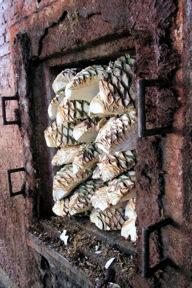
In what must have been a bolt of fortune cast down by Tepoztecal, the Aztec god of alcoholic merriment, Partida, who was bemoaning a lack of funds to get the family name on a tequila label, ran into J. Gary Shansby, who was bemoaning a lack of quality agave for his dream of manufacturing a high-end, estate-grown tequila, no matter whose name went on the label.  What suitable analogy is there; the day Abbott met Costello? They partnered up, with Shansby as major shareholder and marketing maven and Partida as part-owner and Brand Ambassador and they spent the next four years sniffing around destilerías, sussing out best practices, the newest technologies and the most antiquated traditions (that still made sense), testing terroirs and setting up blind tastings; first with La Academia Mexicana del Tequila, and then with Julio Bermejo, the official ambassador of Tequila in the United States.  Among many surprises, Shansby found that tequilas made using the old-school stone or clay ovens in which distillers have, for centuries, roasted the agave cores (called piñas because they look like pineapples) invariably finished behind the new wave of enlightened distilleries who are using stainless steel ovens to pressure-cook, rather than bake the piñas.  The reason?

“What I realized was that stone ovens generate smoke in the product and give it a slightly bitter, smoky taste,” says Shansby.  “Some people like that, but most Americans don’t.”

Americans, of course, were his target audience—they drink 80% of the tequila that Mexico exports, and if their preference was for a clean drink that tasted of agave instead of smoke, that’s precisely what Shansby would produce.  He jotted down the observation on his to-do list: ‘On the way home, stop at Autoclaves ‘Я’ Us’

And score one for modernity.

He also found that in the cask aging required for reposado tequila was approached  haphazardly by most of the area’s tequiladores, with ‘resting’ times ranging from two months to a  year.  Neither produced the sort of nuanced product that Shansby was after, so again, using trial and error, he settled upon a six month oak dormancy for Partida.  His choice of barrel wood was equally painstaking, culminating in his decision to go with Canadian white oak—the same stave-stuff that Jack Daniels uses.  White oak has a cell structure that resists leaking and also imparts a slight sweetness to whatever it contacts, whiskey, wine or tequila—not to mention the sort of interesting synergy in drawing the North American ‘big three’ together for a project.

Things that look like agave but are not related (top to bottom): Agave, aloe, yucky, yucca

Agave Maria

Agave, optimistically nicknamed named ‘the century plant’ (they live about fifteen years) looks like a cross between a yucca and an aloe, but is related to neither. Rather, it’s the woolly mammoth of the lily family.  Cultivated primarily in the shadow of the Tequila volcano, which last erupted a quarter million years ago, blue agave requires eight to ten years to attain the optimum sugar levels (a minimum of 24%) required to make super-premium tequila.  During the growing period, the plants are pruned, weeded, sprayed with pesticides and herbicides, but never irrigated—agave depends on Jalisco’s three month rainy season, roughly July through September, for water.

Long-nosed bat

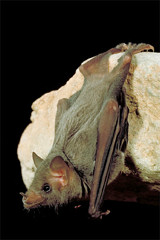
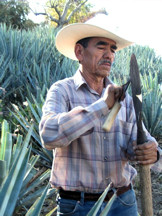
As the plant reaches maturity, it sends out a large, fibrous stalk called a quiote which is often steamed and eaten or dried and used as fence posts or fishing rods.  One cat in British Columbia even uses quiotes to make that emblematic Australian drone-tube, the didgeridoo—holy cross-cultural WTF, Batman.  (Speaking of bats, agave is pollinated by genus Leptonycteris, the long-nosed bat).  At that point, farm hands called jimadores cut the plant from its roots and remove the long sword-shaped leaves using razor-sharp pikes known as coas.

According to Shansby, “Each jimador makes his coa by hand and can harvest one piña in about 75 seconds.  It would take you and me an hour.”

That equates to nearly a ton of piñas per campesino per day; for the curious, a liter of tequila is the product of about fifteen pounds of agave.

Back at the destilería, the piñas are halved or quartered based on size—they range from 25 to about a hundred pounds.  Depending on the producer, one of three methods is then employed.  The so-called ‘artisanal’ process is pure old-hat, utilizing stone, mule-pulled crushers, wooden fermentation tanks and copper pot stills.  As in the Partida process, today’s generation of tequila makers are relying more and more on autoclaves and stainless fermentation tanks and stills.  A third, little-used technique uses a diffuser to extract the sugars  from the piñas and distill the fermented juice—called mosto—in column stills similar to those used for Armagnac, scotch and bourbon.  These days, as a younger generation takes over, number two is becoming the M.O. of choice.

And yet, despite such 21st century applications, a lot of superstition still surrounds tequila making—at a fabrica I visited outside the Jalisco town of Jesus Maria, for example, they were blasting the fermentation tanks with Beethoven symphonies in the belief that this made for a more elegant tequila.  The owner told me, “For an experiment, I tried playing rap music for one tank.  The tequila was awful.”

Neither Hagar nor his tequila brand qualify as premium

Fermentation takes around a week and yields a mosto that’s around 7% alcohol, roughly the same as strong beer.  Like Cognac, the product is then double-distilled in pot stills; the first distillation, a two-hour operation, produces a liquor that’s about 20% alcohol.  The second, which refines the tequila by removing unwanted aldehydes, results in a solution with an alcohol content of around 55%.  A few top-drawer tequilas (and Partida competitors) like Casadores’ Corzo and Cofraidia’s Casa Noble distill a third time, but as the Cognac cognoscente will assure you, a third go-round may produce a smoother, more refined liquor—with much of the character stripped away.

At this point, tequila faces the crossroads of its career: It will either be bottled as blanco or transferred to casks where it will ‘rest’ for a prescribed length of time to be sold as reposado, añejo or extra añejo.

Whatever the pedigree, all authentic, regulated tequilas display a government-issued NOM identifier; it applies to all processes and activities related to the supply of agave, production, bottling, marketing, information and business practices of the distillery.

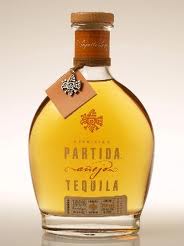
Currently, Partida produces four distinctive tequilas: Blanco (not aged), Reposado (aged six months), Añejo (aged 18 months) and Elegante Extra Añejo (aged 36 – 40 months).   Available in the 27 states that consume 80% of the tequila drunk in U.S., Shansby is compulsive about his product being identified as unadulterated Mexicano: Everything—the tequila, the bottle, the leather wrap, silver spirit-bird the crest–is hecho en México.

So reverential is Shansby toward the sub-border culture that it is rumored he once petitioned the Board of Directors at Spic and Span to change their name to Hispanic American and Span.

And he’s justifiably proud of the unprecedented success that Partida has enjoyed in a market that’s become inundated with tequilas (901 registered brands from 128 producers), each of which endlessly jockies for position:

“We’ve entered spirit competitions, and won them all. We’ve been rated as the best tequila in the world, one of the top five spirits on the planet; we’re the only tequila to have earned 100 points across our entire product line. We’re also one of the very few estate-grown tequilas on the market using no additives, no glycerin, no color except the hues imparted from barrel aging.…”

By combining market savvy, years of R&D, decades of personal expertise along with the venerable art of pavement-pounding, Shansby (and his team) have out-Pizarroed Pizarro—not only have they discovered a genuine Eldorado, a City of Gold, they found out that by  maintaining exceptional standards of quality and consistency, that gold winds up being stacked with stars.

Tasting Notes:

Partida Blanco, around $50:

An amazing complexity runs through the bouquet and the body, both subtle and distinct.  It’s reminiscent of mint, anise, newly-mown grass with a bit of citrus.  Like most lowland blancos, the profile leans toward herbal (mountain grown agave shows more fruit) with flowery notes, a pepper snap and delicate flavors of pineapple and apple, but mostly, fresh agave which resembles cooked yam.  This is a tequila that you can feel comfortable to use as a base for a mixed drink, but defer from a Margarita.  Try it with freshly squeezed juice—orange, pomegranate or grapefruit.

Partida Reposado, about $55:

Six months on Canadian oak leaves a golden tequila with hints of toast and vanilla, but allows the elusive and often fragile yamminess of agave to filter through.  Flavors of almond and brown sugar on the palate, also slightly oily orange peel.  A superior sipper, you are now beyond anything you’d dare mix.  A silky finish with a bit of walnut, honey and butterscotch.

Partida Añejo, around $60:  With three times the oak contact as the Reposado (a rarity even among the super-premiums), Partida Añejo has picked up the tone of burnished copper. It displays the finest characteristics of tequila tradition with a caramel-scented earthiness and a mellow nip of smoke behind the agave.  And despite the extended hibernation, the agave remains obvious—as it should—just behind the wood notes.  Enticingly rich, ultimately smooth and complex, there are undertones of baked apple, pear and wild flowers that lead into a finish that is as warm and satisfying as any like-priced Cognac.

Partida Elegante Extra Añejo, $350:

This particular gem, the star in Partida’s crown, was not included in the three pack I sampled, so any notes concerning its quality would be purely speculative.  Based on the other three, I am speculating awfully, awfully good.

The Tequila Family Tree

Gold—Any tequila labeled ‘gold’ is usually a gussied-up, non-premium mixto with caramel color and additives to make it look like something it ain’t.  Partida does NOT produce this breed of tequila.

Plata / Blanco—Premium tequila that sees no oak; it’s usually bottled shortly after distillation.  It tends to be clear and pure in flavor with a shivery sort of freshness through which the taste of agave shines.

Reposada—‘Reposada’ means rested, and in this case, the slumber takes place in oak casks for two to twelve months, lending it notes of hazelnut and vanilla.  Neither should overpower the agave flavors.

AñejoBarrel-aged between one to three years, añejo tequilas pick up deep, sweet tannins and become ambery and coppery in color.

Extra Añejo Only allowed as a classification since 2005, it represents tequilas that have been wood-aged for three years or more. It’s deeply flavored, nearly brown in color.

Posted in Tequila | Tagged , , , | Leave a comment

Heineken: Nineteen Emerging Designers Selected to Create Futuristic Concept Ashram

Amsterdam, 19th October 2011 – Heineken today announced that nineteen emerging designers have been chosen to co-create a pioneering ashram concept as part of Heineken’s Open Design Explorations Edition 1: The Spiritual Hermitage.

Esteemed designers working in the fields of fashion, interiors, yoga, penance and making really long pilgrimages to somewhere that will bore your skivvies off selected the up-and-coming talent, which they believe have the vision and talent to create an exciting prototype for future places of pretending to pray when you’re actually asleep.

The nineteen selected designers, who all showed they love solace, tranquility and Lord Krishna, now have the chance of this particular lifetime to create an ideal locus for sacrifice and Hindu instruction. They will form cross-discipline design teams and through open innovation will showcase progressive ideas about how to meditate while simultaneously thinking about those leaked nude photographs of Scarlett Johansson.

Alongside the designers, a number of handpicked rajguru, which literally translates to pedophile clergymen are providing personal insights from their own experiences in being defiled by emissary-demons of Ravana.

Their concepts will be brought to life by Heineken as a ‘Pop-Up Monastery’ and presented to the world at Milan’s prestigious design fair in April 2012.*

*(Hang on.  I had to use these really weird eye drops last night, and now that I am re-reading the above press release I am realizing that, in fact, these artsy fartsy design wankers are not creating a prototype ashram, but a prototype nightclub.  Geez, how totally embarrassing for me.  Mea maxima culpa.)


Posted in BEER | Tagged , , , | Leave a comment

Gustatory Gascony: France’s Hidden Heartland

Apparently, thanks to yet another mediocre film adaptation, there’s going to be a brief resurgence of interest in The Three Musketeers, so here’s a useless bit of trivia:  d’Artagnan was a real guy.

Charles de Batz de Castelmore d'Funny Moustache d'Artagnan

Charles Ogier de Batz de Castelmore, Comte d’Artagnan served Louis XIV as captain of the Musketeers of the Guard and died at the Siege of Maastricht in the Franco-Dutch War in 1673.  Ah, life’s ironies: Alexander Dumas’ fictionalized character is far better known than the genuine dude.

And speaking of that, Dumas should thank his stars he was born in Picardy.  Can you imagine being a twelve-year-old in Peoria with the name ‘dumb ass’?

The only relevance that little chestnut has to this piece is that the d’Artagnan en vérité was from Gascony, and so is the wine and eau de vie sampled below.  This happy hinterland to the south of Bordeaux, then inland to Toulouse, renowned for douceur de vivre (sweetness of life), produces some of the most interesting wines in France—many from varietals unknown beyond the region. Grapes like baroque, fer servadou, arrufiac for example—and it’s fair to say that some of them nearly vanished in post-World War II Gascony when soldiers returned to find their vineyards decimated and their caves in a chaos of neglect. Unable to afford restoration costs, many were sold a quick bill of goods by industrial hybrid mongers who promised them quick, high yields with little effort. And for the most part, they got that, at the expense of some of the unique contours of their culture.

Rustic Quintessence

Armagnac is the spirit (no pun), the heart and the soul of Gascony, and in fact, these hybrids proved good enough to produce a workable version of this venerable eau de vie—but in the end wound up being pricier than grapes that distillers could find elsewhere, beyond French borders.  A return to the ancestral varietals, with their lower yields but regional integrity, became an economic necessity, and ultimately saved some of these grapes from extinction.  Would that the Enawene Nawe of the Brazilian Amazon could be so lucky.

Speaking of Armagnac—and one could hardly consider Gascony without doing so—a few points for the level set:  With documented references to distillation dating back to the early 15th century, Armagnac is the oldest brandy made in France, and thus, it is Cognac’s big brother.

Brothers, homies, ultimate and unrelenting rivals—the Noel and Liam Gallagher of potables; Ray and Dave Davies, Cain and Abel.  Without question, the DNA is the same: Both Cognac and Armagnac are built upon an identical trio of grapes—ugni blanc, folle blanche and colombard—and on the surface, the most definable difference between the two is the production program.  The unique alambic armagnacais column still that’s used to create Armagnac is technology distinct from the pot stills used for Cognac (column stills, in fact, are outlawed in Cognac), and involve a process where wine is fed continuously into the still rather than Cognac’s ‘batch-by-batch’ method.  As a result, Armagnac is distilled a single time while Cognac is distilled twice.  This gives Armagnac an earthy edge that is almost invariably referred to as ‘rustic’, though the spirit’s most aggressive fusels are mellowed by prolonged aging in local Monlezun black oak.  The extra cask-time required to soften Armagnac adds subtle nuances to the liquor that simply aren’t present in Cognac—so, arguably, if a quest for complexity is your end game, Armagnac is the superior spirit.  Certainly, it’s cheaper.

Ultimately, the most telling difference between these squabbling siblings may be in the je ne sais quoi.  Since much less Armagnac is made, it has an aura of mystery about it that mass-produced Cognac—of which Americans drink thirty-five million bottles per year—can’t touch.  Most Americans have never, and will never taste an Armagnac and to those who have even heard of it, it remains a sort of an oddity at the periphery of booze consciousness.

But then again, Gascony in general is a bit of an enigma to Americans—probably because the Gascons don’t grow much merlot or chardonnay and food-wise, they’re known for foie gras—about as un-PC a comestible as exists these days.  And even if you can find folks who know that Gascony is a wine producing region, there are a lot of stutters and stammers when you ask them to list any of its sub regions or—beyond tannat—its principal varietals. To most wine geeks not on a Master Sommelier fast track, Madiran is the only familiar Gascon commune, but then if you toss in a question about Pacherenc du Vic-Bilh or Pacherenc du Vic-Bilh Sec—Madiran’s two white wine appellations—invariably, it’s deer-in-headlights time.

Even in France, Gascony is something of an anomaly.  The culture is more Catalan than Gallic, which is a polite way of saying that the people are outgoing, friendly and kind-hearted instead of being stuck-up, frosty and Parisian chic.  Stand in a hilltop church belfry and you can see the Pyrenees; listen to the tones of the old people and you’ll hear ‘Gascon’; a dialect with its roots in Basque. There’s no pretense to Paris lifestyle here; it’s the Hooterville of France, pays primeval, with tics and rhythms and chivalries unchanged since the Aquatanians were praying to the god of the pagus.

“We can export our wine, but we can’t export our life. We’re lucky we still have it—probably because we’re a bit far from everything,” said André Dubosc, head of Producteurs Plaimont, a wine cooperative in St. Mont.

St. Mont is a fourth appellation in Gascony; a tiny commune with a population of less than three hundred and about two thousand acres planted to vines.  The reds are primarily made from tannat and fer; the whites from arrufiac, gros manseng, petit manseng, courbu and clairette. Situated just north of Madiran, it might seem joined at the hip with that AOC, with the only significant difference in style and varietals between the two is that St. Mont legally allows (until 2020, anyway) a percentage of merlot in their reds.

Tursan is the fifth wine growing region of Gascony.  A VDQS since 1958, it’s even smaller than St. Mont with a scant twelve hundred acres under grape cultivation.  It’s situated southeast of Mont-de-Marsan, not far from the town of Condom (seriously) and builds reds around tannat, cabernet franc and cabernet sauvignon.  Whites may be as much as 90% baroque, a grape that grows nowhere else on the planet.  It’s a possible cross between folle blanche and sauvignon blanc, and the wine it hatches has a singular aromatic and flavor profile suggesting lemon, nuts and honey.

Beyond regions, there is an apéritif from the Côtes de Gascogne that has, since 1990, held its own appellation d’origine contrôlée status.  Floc de Gascogne is a fruity, fresh and flowery (floc means ‘flower bouquet’) blend of Armagnac and grape juice, white or red.  A curious concoction indeed, but not so curious as the gang that promotes it.  The Académie des Dames du Floc de Gascogne is the only all-female wine society in France, and as they venture out among the rabble to hawk hooch they wear black capes pinned with sprigs of the three essential fragrances of Armagnac: Plum, rose and violet. Their Musketeer-like motto is: ‘Les capes, les bouteilles, et en avant!’  ‘Capes, bottles and forward!’

It’s all terribly Grand Siècle.

André Dubosc

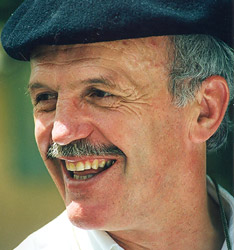
That’s Gascony, though—one foot in the seventeenth century and the other in the twenty-first.  A lot of the current innovations involve resurrecting the past: Replanting heirloom cultivars, for example.  But even more is the result of a most un-French open mindedness toward American enological techniques and a willingness—even an eagerness—to learn from them.  Whereas old-school French vintners tend to believe that they lead and the world follows, André Dubosc of Producteurs Plaimont, amazed to discover that certain California colombards—the same varietal that Gascons vinify ghostly thin and low-alcohol innocuous for Armagnac—were aromatic, full-bodied and brimming with fruit, vigor and aromatics.  Returning to St. Mont, he began using California vinification techniques on his colombard crop, including stainless steel tanks and temperature control in the cellar.

The results have been stunning, and Dubosc has been hailed as visionary in a beret.

And he may be key to a genuine grasp of this animated, dichotomic, arcane land:  As Armagnac is the liquid embodiment of Gascony, as foie gras is the culinary embodiment of Gascony, André Dubosc, with his peculiar blend of of humility and hubris, tradition and trajectory, ambition and nostalgia, may well be the mortal embodiment of Gascony.


Tasting Notes:

Colombelle, Côtes de Gascogne, Producteurs Plaimont, 2010, about $10:

Point guard for a renaissance of interest in the wines of Gascony, Colombelle is mostly colombard with 30% ugni blended in to smooth and temper and add some floral notes.  As might be predicted, the wine—which never sees oak—is crisp and leans toward lightness with notes of lime, grapefruit, pine, pear and mango with a bit of herb (tarragon) and a nice minerality on the finish.  Winemaker Christine Cabri goes on (and on) about ‘thiol’ aromatics unique to Gascony and I can’t quite get what she’s driving at.  Thiols are sulphur compounds usually associated with the smell of garlic, and neither seem to be obvious in Colombelle, nor would they be a plus if they were.  Li’l help?


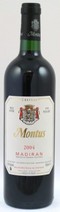
Chateau Montus, Brumont, Madiran, 2005, around $23:

As André Dubosc is to St. Mont,  Alain Brumont is to Madiran—credited with resurrecting its reputation.  As might be expected in someone with such a resume, Brumont is a perfectionist, although he may cross that subtle borderline between detail-focused and psychotic.  I mean, the guy vintage-dates his manure.  I’d call that ‘anal’ but it would be too obvious.  The wine is profound, and not for the faint of heart—it’s a freight train of tannins that does not take prisoners.  Mostly tannat with a bit of cabernet added to lighten up the program, it’s aged in new oak to create the sort of wine that is essentially undrinkable without cellar time—the 2005’s  are just beginning to straighten themselves up.  The wine shows strong earth notes, with woodspice, cloves and roasted coffee and the classic bois et sous-bois (forest and undergrowth); there’s a carnality about the midpalate which may be a touch of brett.  Brumont is a proponent of different barrels to accent different wines and even uses American oak for some; this one is sweet local Monlezun.  Compared to Bordeaux of similar quality, the price point for Montus is remarkable.


Domaine Berthoumieu Cuvée  Charles de Batz, Madiran, 2006, about $18:

Apparently, this wine is the archetype for heart-smart French reds; tannat skins contains the wine world’s highest concentration of procyanidin, a flavanoid nicknamed ‘Vitamin P’ which has been directly linked to cardiovascular health. Vitamin P increases at higher elevations (more ultraviolet light from the sun) and also, as vines age.  So, a mountain grown tannat from old vines is precisely the sort of bevvie you’d want in foie gras country.  Et voilà, Domaine Berthoumieu.  Charles de Batz, you’ll recall, was the real d’Artagnan, and indeed, this wine is produced in his honor.  It’s a brooding blockbuster, heavily extracted, loaded with ripe tannins, tingly acids, spicy black fruits and the savory dried herbes de Provence that typically show up in massive Rhônes—including thyme, oregano and lavender. The wine was made by Didier Barré—much-awarded sixth generation winemaker from a Domaine which has been owned by his clan since 1850.


Domaine de Pajot, Quatre Cépages, Gascogne Blanc, 2009, around $15

Nestling in Bas-Armagnac, much of Domaine de Pajot’s ugni and colombard harvest wines up with the domaine’s own Armagnac label slapped upon it.  The rest is devoted to Quatre Cépages (four varietals), with gros manseng and sauvignon blanc making up the rest of the quartet.  It is the Fab Four, a classic lineup for Gascony where winemakers claim that each of these grapes is a perfect complement to the others—the art is in proportions.  This is a particularly balanced example: The manseng brings perfumed mango and pineapple to the party, ugni offers white flowers and bracing acidity, sauvignon blanc is there for citrus and grassiness and colombard adds stone fruit (white peaches especially) and apple.  The spec sheet warns that Quatre Cépages must be served at 9°C, so be forewarned, ye insurrectionary ignorers of wine thermometers—I guarantee that these Gascon bastards can still blow the cobwebs off the guillotine.

Armagnac, Reserve Darroze, 10 ans d’âge:

In dated Armagnac, the label indicates the age of the youngest wine in the blend, and there are usually older vintages mixed in as well; this ten year Reserve also contains 12 and 13-year-old Armagnac. It has a nice brilliant amber glow with golden tints; the nose is youthful, showing fig, orange peel, prune and beeswax.  Palate is warm and toasty with dried apricot and honey and the finish is nice integrated with sweet oak and vanilla. Darroze, incidentally, is not an Armagnac producer—rather, they seek out and bottle from the top makers in Bas Armagnac.

Chateau de Laubade Floc de Gascogne Vin de Liqueur, around $23:

The producer claims to use a recipe from the 16th century, though why a product with two ingredients—liquor and grape juice—requires a recipe is anybody’s guess.  In any event, the apéritif is produced by blending free-run juice with Armagnac in closed vats, which settles between harvest and the end of winter.  The result, here, is a beautifully balanced SweeTart of a sweet heart—honeyed and crisp, offering zesty acidity with a foil of candied apples.  Grapey notes intertwine with citrus and violets and the liqueur has a freshness that must be a sort of synergy from the sum of components—neither the wines of Gascony nor the eau de vie can quite compare.  Unfortunately, the only liquid on the planet more unstable is  nitro-glycerin, and floc must be consumed soon after opening as it begins to degrade almost instantly.


The Unusual Suspects: A Lineup of Gascony’s Top Cultivars

RED:

Fer Servadou: Produces perfumed, rich red wines that taste of blackcurrant, raspberry and occasionally, rhubarb.

Tannat: The dominant red grape of the region, tannat produces wines of rustic astringency—big, bold, beautiful, but invariably requiring years of aging.

Cabernet Sauvignon: Unlike nearby Bordeaux, where cab is king, here it’s used primarily as a blending grape to talk some sense into tannat.  Like it’s extended family in the Medoc, predominant flavors are currant, blackberry and in warm vintages, mint.

Cabernet Franc: A blending grape used to offer the wine a bit of finesse. It is successful in Irouléguy, but in Saint-Mont, not so much.

Merlot:  In Saint-Mont, merlot produces soft and quick-to-mature Vin de Pays des Côtes de Gascogne.  Flavors include cherry and Damson plum.

WHITE:

Petit Manseng: This thick skinned grape is the versatile star of the manseng family, with the ability to produce intensely sweet dessert wines or dry table wine.  With extra hang-time, flavors range from pineapple and honey to gingerbread.  It may well be the next viognier once viognier gets tired of being the current viognier.

Gros Manseng: Similar in appearance to petit manseng, but heartier and less susceptible to the disease called ‘shatter’, which is brought on by the sort of excessive rainfall that occasionally plagues Gascony.  The resulting wine, however, has little of petit mansengs elegance, and whereas in very good years, and with proper vinification it can produce a respectable tipple, it currently lacks the potential to make a superlative product.

Petit Courbu: A blending grape used specifically to contribute minerality and body; the aromatics that come along for the ride are peach, honey and citrus.  Fat and generous as a stand alone, courbu puts in a cameo in both the dry wines and the sweet of Pacherenc du Vic-Bilh.

Arrufiac: This is one of the varietals that André Dubosc believes deserves to survive; hence, it’s a grape used to add structure to blends, but its distinctive gunflint nose make it instantly recognizable when it is used.

Baroque: A varietal that has no reality beyond Gascony—and even here, it is almost exclusively grown near Tursan.  Here’s another grape that had a deck chair on the Titanic of extinction, saved from oblivion by chef Michel Guérard, owner of the 3 star Michelin rated restaurant Les Prés d’Eugénie.  It produces a wine with a pronounced nutty character with notes of white pepper and pineapple

Colombard, Ugni Blanc and Folle Blanche: To come full circle, we’re back to the Three Musketeers—the trio of Armagnac grapes.  Or maybe it’s closer to My Three Sons.  Either way, ugni, when grown near the sea, develops excessive acidity—an Armagnac requirement.  Folle Blanche is the workhorse, providing vast yields of light fresh wine.  Colombard’s qualities more or less  mirror the other two, and some Armagnacs leave it out of the blend altogether.  For those that who insist on its inclusion, it may be a bit like Steve Douglas forcing Robby and Chip to take Ernie along when they go into town.

Posted in Gascony | Tagged , , , , | 1 Comment

Salads with Wine: Tossing Out Some New Ideas

I think we can all be pretty confident that Adam and Eve served wine in the Garden of Eden.  Otherwise, what kind of Paradise would it have been?

Eating ultra-fresh salad in the spring and early summer is often reminiscent of life in that primeval Garden, when young produce, designer vegetables (by the Ultimate Designer) and a cornucopia of color, flavor and nutrients are at their blessed best.

Greens and grapes can be—and should be—a match made in heaven, so long as couple of logical principals are kept in mind.

Foremost, since salad etiquette demands that you dress for dinner, you’ll find that any problems that arise from your salad/wine match-up usually begin with the dressing.  A basic vinaigrette, and all the fancy derivations thereof, start with a balanced emulsion two ingredients, one more inherently compatible to wine than the other.

The classic proportions are four parts oil to one part acid, and the problem is quickly apparent: when enjoying your salad days in Eden, the single, scariest serpent slithering through Shangri-la is vinegar.

Use the wrong vinegar, and you’ve just discovered the Antichrist.

Why?  A particularly devilish interpretation is that vinegar is simply screwed up wine: wine that’s strayed from the righteous path and gone bad.  Of course, vinegar visionaries will turn up their noses at such nonsense: of the two, they’ll tell you, wine is the one that’s alcohol-soused and intractably linked to women and song.  As far as they’re concerned, you can only improve a superlative wine by turning it into superlative vinegar, and vinegar can, of course, sell for more than the wine from which it’s made.  In order to achieve the end result of vinegar, a wine’s alcohol content must be transformed to acid by a secondary bacterial fermentation.

Turning alcohol into acid may seem like a negative metamorphosis—unless you’re still following the Grateful Dead in a microbus.

But when comes to matching wine with salad dressings, the interaction of flavors can make vinegar growl like Cinderella’s stepsisters, causing caustic, insufferably sour and really hard to please-type interchanges.  And on the other hand, a given wine may strike the vinegar as sappy, sweet and seriously immature.

Not to worry: to make sure everyone at the table gets along during family gatherings, you won’t need to turn any pumpkins into coaches.  Try using softer, well-aged, wood-mellowed vinegars like balsamic.  The best of the breed, of course, can be budget busters, costing well into three figures for a 3.4 ounce bottle, but less expensive versions will work nearly as well: just check the labels.  True balsamic vinegar can only be produced in the Italian regions of Modena and Reggio in Italy, and you should look for a minimum aging of about five years.

Likewise, rice vinegar keeps a lid on the bite, especially the milder and sweeter ‘red’ version (the white stuff is pretty close to regular vinegar, while black rice vinegar is similar in taste to balsamic).

Sherry vinegar—the Spanish counterpart to balsamic—carries nutty, toasty and essentially wine-friendly nuances based in it’s Jerez pedigree.  Equally, substituting lemon juice for a portion of your one-part-acid formula will not reduce the punch, but will add sensory citric notes to compliment those already present in many wines.

The root of the word salad is the Latin ‘sal’, for salt—the same derivation as for ‘salary’, stemming from days when Roman soldiers were paid with that precious condiment.  Nowadays, salty seasoning pays special dividends to salads, and a shivery, almost electrically charged Muscadet Sèvre et Maine from France’s Loire Valley often offers striking scents of brine behind the apple lemon flavors.  It’s an ideal match for seafood salads, particularly those made with oysters or clams.

The second essential ingredient in a salad’s dressing is oil.  Here, you have less worries of clashing with your wine choice and can spend a bit of time matching nuances of taste and particular styles.  If you’re a lover of oaky chardonnays, try using a nut oil like walnut or almond; and with a particularly fruity variety like Geyser Peak, an interesting choice is apricot oil, made from the fatty (but trans-fatty free) kernel inside the pit—the same product, interestingly, that’s used to make Amaretto.

Unlike vinegar, oil is a product that’s liable to spoilage, so particularly if you shell out for the big-ticket oils, store them in a cool dark environment.  Your wine cellar should do nicely.

Moving from palates to palettes, spring and summer salads present a wonderful opportunity for a chef to experiment with the multitude of colors available alongside of the produce plethora.  How much fun to match colors, as well as flavors, when pairing food and wine.

The following recipes have taken a special interest in combining colors as well as flavors to create top-of-the-season salads that are as visually stunning as they are delicious.

The Asparagus salad includes hemp seed as a paean to the aforementioned Dead and I’ve added a Waldorf for equally philosophical reasons:  Like we children of Adam and Eve have discovered to our sensory delight, one bad apple hasn’t spoiled the whole bunch.

WALDORF SALAD

  • 1 Granny Smith apple, 2 Fuji apples chopped, should total 2 cups
  • 1 cup chopped celery
  • 2 scallions, chopped
  • ½ cup dried cranberries
  • ½  cup walnut oil
  • 2 tablespoons sherry vinegar or white balsamic vinegar
  • ½  cup coarsely chopped walnuts
  • Mixed salad greens or lettuce

Prep: Toss all ingredients together in a serving bowl.

Serve with a lightly oaked chardonnay;  for example, Antonin Rodet Mâcon Villages, 2007 or Rombauer Chardonnay, 2007.

WHITE AND GREEN ASPARAGUNS TOMATO ARUGULA SALAD WITH CREAM  DIJON MUSTARD DRESSING AND TOASTED HEMP SEEDS

  • 16 white asparagus stems, peeled and blanched and cut into 2 inch pieces
  • 16 green asparagus stems, peeled and blanched and cut into 2 inch pieces
  • 8  heirloom tomatoes cut into wedges
  • 1 ½  cups arugula

 Dressing: 

  • 6 sun-dried tomatoes in oil.
  • 1 clove garlic
  • 3 T Low fat yogurt
  • 1 T Dijon mustard
  • ¼ cup balsamic vinegar
  • ¼ cup olive oil
  • 1 T water
  • ¼  cup toasted hemp seeds (available at adventurechef.com )

Combine dressing ingredients in blender, blend and add water as needed for dressing consistency.  Toss in bowl with arugula and asparagus; top with toasted hemp seeds.

Serve with full-bore sauvignon blanc like Cloudy Bay Sauvignon Blanc, 2008 or Château Sainte-Marie, 2008.

Posted in PAIRING WINE AND FOOD | Tagged , | 1 Comment

Here’s a Reason to Toast the Season: LPVA Wine Tour

‘Fess up: The expression ‘holiday tradition’ sort of gives me the willies.  It conjures up images of some calculated and obligatory family nightmare to which you drag yourself reluctantly, year after year after year, until the one year nobody gets on your case for not showing up because you’re dead.  Off-key carolers, frostbitten Easter egg hunts, drunks in green top hats, endless lines of floats and war vets marching through sub-Saharan heat, sugar-rushed sprogs in flimsy, overpriced costumes, believe me, I could go on…

I know; I’m the guy that The Grinch calls ‘Scrooge’, but for me, a holiday tradition is to wait until the relatives ring the doorbell, then lock myself in the bathroom with a fifth of Jack, headphones and a Faith No More CD.

LPVA Wine Tour

Then I found out about the Leelanau Peninsula Vintners Association ‘Toast the Season’ wine tour.  Okay, kids, now you’re talking—a wine tour is one holiday tradition I could wrap my head around.

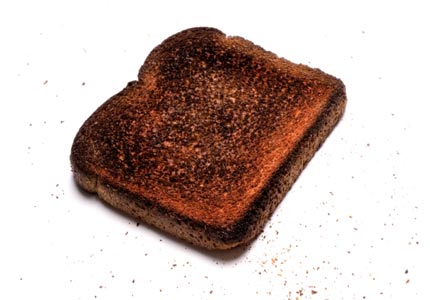
I even like the name.  See, to me, toast is not that breakfast slice of burnt Wonder Bread slathered in emulsified fat from a tub, but rather, a glass raised in bonhomie—which is why I drink first thing in the morning.   As long as there’s that kind of toast, the word ‘season’ does not have such miserable connotations.

The 2011 Toast the Season wine tour will happen over two consecutive weekends: November 5 & 6 or November 12 & 13.  It’s a self-guided tour and you  can visit up to eight wineries each day in any order you choose between the hours of 11:00 am to 5:00 pm Saturday, or noon to 5:00 pm Sunday.

Now, if all that doesn’t sound groovy enough, consider that the tour features a special wine and food pairing at each of the 19 Leelanau Peninsula member wineries. At your starting winery you will be given a commemorative glass, an LPVA holiday ornament, a souvenir wine key and a holiday gift bag featuring local food including fair trade coffee from Higher Grounds Trading Company of Traverse City, cocoa-coated chocolate covered almonds from Grocer’s Daughter Chocolate in Empire, and Michigan cherries from Cherry Republic in Glen Arbor—and guaranteed, no emulsified fat in a tub.

Here’s a smattering of what’s on the agenda:

Chateau de Leelanau will be serving the “World Famous Willies Chili” with Solem Farm Red.

L.Mawby will offer Nature’s Treat dried apples slices with Black Diamond aged white cheddar, paired with the L. Mawby Consort.

Ciccone Vineyards will feature an Italian Bruschetta with fresh ingredients straight from the garden paired with their 2009 Cabernet Franc.

Willow Vineyards will be serving up some naughty French Vanilla Pumpkin Squares with Caramel topping, paired with their Semi Sweet Gris.

Cherry Republic will pair a Gorgonzola, Pecan and Cherry Fondue using their delicious Cherry Bread and with their Great Hall Riesling.

Verterra is offering different food pairings with their Pinot Gris for each weekend: 1st weekend will be Char-Grilled Pizzetta with sun-dried tomato, fresh spinach, garlic, feta & mozzarella and the 2nd weekend will feature Santa Fe Sweet Corn Chowder.

Forty-Five North will be serving up carnitas tacos paired with their new 2010 Dry Riesling.

Hunting season begins on November 15th, so it is conceivable that one could head from the final day of Toast the Season directly to deer camp, thus having the ability to maintain a low-grade buzz for two entire weeks.

*

Tickets for Toast the Season are $50 per person or $75 per couple (couple ticket holders receive two glasses, pours and food at each winery, but only one gift bag and ornament).

Tickets are available online at http://www.lpwines.com/toast/.

Posted in Leelanau Peninsula, Michigan | Tagged | 1 Comment

The ‘I’ Generation: Everybody’s Favorite Letter

This is a rather odd piece, granted.  It involves an attempt by Siberian winemakers to produce Super Tuscans in a climate where it snows in July and the average temperature is minus forty.

Not really.  It’s really about Moscow’s recent announcement that they have begun construction of a full-scale, stone by stone model of the Roman Coliseum in Red Square.

Just kidding, it’s really about Russia having redesigned their hammer ‘n’ sickle flag to include the Mario Brothers.

Not.  It’s about Italian vodka.

Lapo

When you put a bunch of rich, famous people together in a room—people like Arrigo Cipriani (owner of Harry’s Bar of Venice), Lapo Elkann of FIAT family fame, Friulian distiller Marco Fantinel and Venetian entrepreneur Francesco Cosulich—and ask them to make some vodka, you can expect the results to be compelling.

I want to take a second to talk about these guys.  Well, not Lapo Elkann—I don’t have much to say about him, other than the absurdity of being named ‘Lapo’.  Or Cosulich, either.  These two are the money mokes, which makes them about as interesting as Newt Gingrich’s navel.  And yes, ‘Newt’ is even weirder than ‘Lapo’.

The Importance of Drinking Like Ernest

But Arrigo Cipriani is worth considering.  If you have never been to Harry’s in Venice, your life contains a hollow space, a bottomless sort of dysphoria of which you’re probably not even aware.  Let me, therefore, offer you a comprehensive literary portraiture of this landmark bar, an authentic visionary walk-through which will place you, in your mind’s eye, within the confines of this casual, but spiritually focused establishment.

Ready?  Set?  Well, screw it.  Like your mother used to say, “Go read a book.”  Ernest Hemingway’s In Harry’s Bar says it far better than I intended to.

'I'm just wild about Harry's'

What I will say is that Harry’s was a favorite not only of Hemingway, but also of Charlie Chaplin, Alfred Hitchcock, Truman Capote, Orson Welles, Baron Philippe de Rothschild, Princess Aspasia of Greece, Aristotle Onassis, Barbara Hutton, Peggy Guggenheim, and Woody Allen.  And when I say ‘favorite’, I don’t mean, like your favorite flavor at Ben and Jerry’s—for this crew, it was a sort of lump in the throat, sniffly, Lassie coming home in that childhood tearjerker movie kind of favorite.  Harry’s is the birthplace of the bellini (a blend of  Prosecco and peach purée, which is not only a sensationally refreshing drink but excellent alliteration), and, oddly enough, carpaccio.  It is, nonetheless the 10:1 martini, served in stemless stemware, about which people rave.
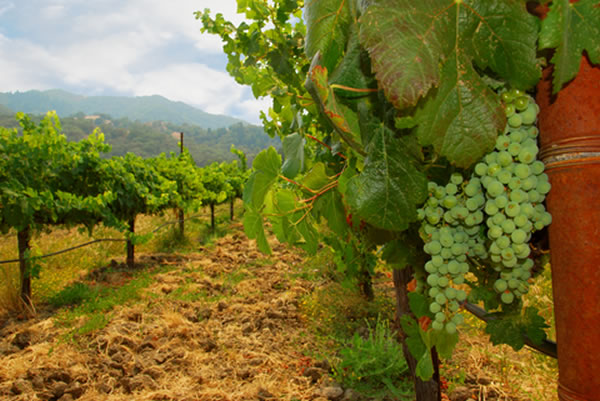
Another thing I will say is that when Harry’s is busy—and it is always busy—the itsy-bitsy dining room is ear-poppingly loud, but the one time they tried to move the kitchen upstairs to reduce that end of the noise, everybody complained so much that they ultimately moved it back to where it was.  Noise is as much a part of Harry’s ambience as the butterscotch wood trim and the horrific tariff—$20 for a bowl of minestrone, for instance.

“There’s just something very striking and pungent about Harry’s,” writes author Jan Morris.

Arrigo

Since 1931, there has always been a Cipriani at Harry’s helm.  Arrigo’s father, Giuseppe, a bartender at Venice’s Hotel Europa, was able to open it after a wealthy patron (named Harry) paid back a small loan Giuseppe once made him, many, many times over.

These days, Arrigo holds court within the cramped landmark, but does not lord over it.  His presence is perpetual, but quiet and dignified; he keeps an unobtrusive but watchful eye over everything.  Now in his seventies, he pays due homage to Giuseppe, saying: “My father taught me everything because he invented everything.  Truly, I think I am one of his inventions.  When I was born, just one year after Harry’s Bar opened, my life’s work was already cut out for me.”

In Distill of the Night

For Marco Fantinel, his life was also decided early, and it didn’t involve vodka.

In 1969, Marco’s old man Mario Fantinel, a hotelier and restaurateur in Ravascletto, Carnia, bought vineyards in the Dolegna Collio commune of Friuli-Venezia-Giulia near the Slovenian border.  His intention was to produce top drawer wines for his rapaciously upscale hotel clientele.

Mario’s sons took an even more fervid tact, buying up tract after tract of primo Collio vineyard.  Then they began to open wine bars; first one, in San Daniele del Friuli, and later, bars in Udine, Rome, Cortina d’Ampezzo, etc.—there’s something like twenty-six now, but more open all the time.  In part, these wine bars are a conduit for the two million bottles of wine the family produces per year.

Marco

For a lot of waste-not-want-not Italian vintners, a production sideline is grappa, and that’s where distiller Marco—a third generation Fantinel—enters the immagine. In 2006, the ludicrously ambitious Fantinels launched the Suprema Grappa line, offering premium estate picolit, ramandolo, tocai and refosco grappas, said to embody ‘the pinnacle of Friulian grappa style’.  What that means is sort of ambiguous, but the golds and double golds these grappas took at the 2009 San Francisco World Spirits Competition are not.

“It is nice to be rewarded for our hard work in the vineyards and now in the distillery,” says Marco in classic understatement.

Papa

So, on to the vodka.

That conte brings us back to Harry’s Bar.  And Papa Hemingway.  And Giuseppe Cipriani.  Together, these two rogues would spend hours sipping a local, farm-distilled vodka while exchanging tall tales and short spiels, and one of the stories that Giuseppe came up with involved a twelfth century Venetian alchemist called il Bianco (the White One) who one day announced at the village tavern that he had discovered ‘the elixir of long life’. Soon enough, lords, rulers, artists and churchmen began to come from all over Italy to give the elixir a shot.  The fact that none of them are still around is probably enough evidence to conclude that the alchemist was actually selling snake oil.

Now, this is not a story on the quality level of, say, Old Man And The Sea, but for some reason, it grabbed Hemingway by the infarcted heart, and he is said to have leapt to his feet and cried out, “An absurd vision, as absurd as the idea of Italian vodka!”

So, the lampadina switched on in Giuseppe’s skull, and in 1934, with Hemingway as an advisor, a batch of I Spirit Vodka was distilled.

Ratchet forward seventy-seven years.  The original I Spirit has long since ceased production, but in Harry’s Bar—possibly over something farm distilled—Arrigo Cipriani and Lapo Elkann brainstormed the idea of reviving the singular beast known as Italian vodka, and, enlisting the talents of Marco Fantinel and possibly, a few euros from Francesco Cosulich, I Spirit was reborn.

And a singular beast it is: It’s actually more of a fusion of vodka and grappa, made by five-times distilling both grains and Friulian grapes.  As spirit specialists will tell you, the more times you distill a liquor, the more pure it becomes, and I Spirit is as a clear as any non-polluted Venetian stream.  A certain floral nuance arises, no doubt from the grapes, that make I Spirit unlike anything you’ve ever tried before in the vodka category.  It’s benign but not bland, mellow but not meek and shows elegant notes of lemon, lime and almonds.

Of course, like anything with origins in Harry’s Bar, it isn’t cheap: $35 for a 750 ml., and I’ve found it online for as much as forty.

Of course, I Spirit is in a whole different league than say, Grey Goose or Stoli.  It’s not a mixing vodka, not a martini base, not even something you want to pour over ice—better to keep a bottle in your freezer.

My suggestion?  Grab a copy of The Moveable Feast and read it with a snifter of the singular beast.

Posted in Vodka | Tagged , , , , , | 1 Comment

Leading Women of Italian Wine Unite for a Worthy Cause

Don’t you love it when wine people do things other than promote themselves?  And when they do good other things, it’s for some reason other than to garner publicity to promote themselves?

An example? 

On Wednesday evening, October 19, 2011 at New York City’s Metropolitan Pavilion, Vinitaly, the Ambassador of Italian wines, will hold a  fundraiser to benefit the American Cancer Society.  This happens via a consumer wine tasting honoring Italian women wine producers.

Stevie Kim

Okay, so that’s a little self-promo, but Italian women wine producers are a pretty cool bunch, and in general, better looking than their American counterparts, so they get a pass. Anyway, last year’s event raised $40,000 for the American Cancer Society.

According to Stevie Kim, General Coordinator of Vinitaly International and Senior Advisor to Giovanni Mantovani, CEO of Veronafiere, gathering this elite group of women was easy:

“This commitment is based on friendship and a network of mutual support.”

Some other random quotes:

Marlilisa Allegrini

Marilisa Allegrini of Allegrini in the Veneto: “The American Cancer Society constitutes a perfect example of how, by working together in a well-organized team effort, the very best results can be achieved to make the lives of thousands of cancer sufferers and their helpers better via practical and moral support, as well as underpinning on-going research. Allegrini has its largest customer base in the USA and sees its support of the American Cancer Society as a way of giving back to a much-loved people in the name of an extremely well-deserving cause.”

Cristina Mariani-May

Cristina Mariani-May, family proprietor and co-CEO of Banfi Vintners, America’s leading wine importer, and the award-winning Castello Banfi vineyard estate in Montalcino, Tuscany:

“Having lost far too many colleagues and family members to cancer, we feel a deeply personal motivation to support the American Cancer Society in meaningful ways. Vinitaly In The World’s tribute to Italian Women in Wine provides an ideal forum for that.”

Because they’re such a righteous lot, let me do a bit of promotion on their behalf:

Vinitaly is the largest wine fair in the world with over 4,000 participating producers. Vinitaly also includes education in its mission. A component of the Vinitaly World Tour is to help Italian wine producers learn about the markets they visit. During the 2011 tour, Vinitaly will educate producers about the US market while sharing the latest developments in the world of Italian wine with press, importers, distributors, retailers, restaurateurs and sommeliers in the United States.

And further, about the American Cancer Society:

The American Cancer Society combines an unyielding passion with nearly a century of experience to save lives and end suffering from cancer. As a global grassroots force of more than three million volunteers, the society fights for every birthday threatened by every cancer in every community. They save lives by helping people stay well by preventing cancer or detecting it early; helping people get well by being there for them during and after a cancer diagnosis; by finding cures through investment in groundbreaking discovery; and by fighting back by rallying lawmakers to pass laws to defeat cancer and by rallying communities worldwide to join the fight. As the nation’s largest non-governmental investor in cancer research, contributing more than $3.4 billion, the society turns what they know about cancer into what they do. As a result, more than 11 million people in America who have had cancer and countless more who have avoided it will be celebrating birthdays this year.

To learn more or to get help: 1-800-227-2345 or visit cancer.org.

Okay, so I am promotioned out.  If you are in New York on October 19, show up at the tasting, please, and if not, throw a couple bucks at the Cancer Society.

For Christ’s sake, the life you save may be mine.

Posted in GENERAL | Tagged , | Leave a comment

Hallowine and Spirits: What To Serve the Sots on Spook Night

Trick or trink, smell my dink, give me something good to drink…

When  it comes to suggesting Halloween hooch, wine writers can take one of two paths:

One is to recommend all the customary cornballs classics like PoiZin (by Armida Winery), Trueblood (Napa Valley), Ghost Block (Yountville), Vampire wines (Paso Robles), and of course, anything from that spooky Left Bank appellation, Graves.

The other path is to get it right—the real monster deal.  If I was writing this article, it might go something like this:

Though Drac himself vould likely stick to sangria, Jonathan Harker, having just arrived from vine-free England, might be more inclined to experiment with the local wines—especially if he’d known that one day, renowned wine author Tom Stevenson would say, “Of all the wine growing regions of Romania, Transylvania is perhaps the most exciting.”  They’re primarily whites: Târnave, Alba, Sebeş-Apold, Aiud and Lechinţa. Though many of the tiny Transylvanian vineyards disappeared in the wake of post World War II Communist collectivization, it appears that in the modern era, such garden-vines are reanimating themselves.

For Van Helsing, we will reserve a bottle of that odd Dutch liqueur Parfait d’Amour, a purple concoction with a curaçao base and flavored with rose petals, vanilla and almonds.

Igor, of course, gets fermented fly juice.

*

Just back from Tibet, acclaimed and wealthy British botanist Wilfred Glendon would probably tuck into a snifter of London No. 1, among only a clawful of gins actually brewed in London.  In line with the classic gins of yesteryear, featured in the recipe are juniper, coriander and angelica, but unmentioned on the label is the secret ingredient: mariphasa.  Va-va voom.  Once Glendon’s shaggy makeover is complete, the only direction for him is toward Sangre de Toro, Miguel Torres’ blood-red flagship.  Made from Garnacha and Cariñena, its bold temperament but soft mouthfeel make it an ideal compliment to any meal—even the girl next door.

*

For The Mummy, choices are somewhat limited—too bad, since after four thousand years in a sarcophagus, one builds up a pretty mean thirst.  Prior to his death (the first one), Imhotep no doubt drank beer—it was the ancient Egyptian’s most important beverage, and in this case, it put the ‘high’ in priest.  According to hieroglyphs it was called hqt  and probably came in at around four percent alcohol—it would have been thick, sweet and without carbonation.  The Egyptians had wine as well, known as yrp, but it was expensive and consumed only by the rich—in fact, in 2006, traces of it were found in King Tutankhamen’s tomb.  Anyway, the yrp is gone and it ain’t coming back.  For our thoroughly modern mummified Millie, however, all is not quite lost.  These days, Egyptians make a limited amount of wine near Alexandria—per year, about half a million gallons of Omar Khayyam (a very dry red), Cru des Ptolémées (a dry white) and Rubis d’Egypt (rosé).  A few rehydrating swigs of any of the above and Imhotep’s wrinkles should vanish quicker than if he’d used Porcelana.

*

Far more fortunate is Victor Frankenstein.  His castle nestles in the cliffs of Darmstadt, Hesse—a 2-wood’s drive from the Rhein River. Rheinhessen is the largest of 13 German high-quality Prädikatswein wine regions, and so, Dr. Vic would have access to a wide variety of styles, from the simplistic Liebfraumilch to the beautiful, sweet, botrytised wines of Gunderloch.

Captain Walton would have had to limit himself to whatever he kept in his cabin cupboard, probably brandy, madeira or rum.

For now, we’ll keep the monster dry, since anything we give him simply pours out of the holes in his neck, but he says it’s cool—he doesn’t drink anyway.

So, that’s path two, kids; the genuine ghastly gig—though if you didn’t get anything useful out of it, feel free to go back to path one.

Posted in GENERAL | Tagged , , | 1 Comment