News Flash: Red Wine Is Good For You And Guess What? I Couldn’t Care Less

Other than my father, who is a sensible, conservative Swiss fellow who drinks only in moderation, I grew up in a family of sloppy, out-of-control lushes.  We drank together, we drank alone.  We drank to forget, we drank to remember; we drank to remember, then promptly forgot what it was we just remembered; we drank to forget but instead, remembered other things we’d like to forget.

Personally, I tend to wake up half an hour before God, so it’s not unusual for me to pour moscato over my cornflakes, but as a pre-schooler, I was alone in the ill-advised habit of drinking first thing in the morning.

Mainly because everyone else slept in past noon.

In any case, right or wrong, we drank to our health, but safe to say the only thing we did not drink for was our health.

60 Minutes = 252 Months

Dear Morley,  it’s safer to be Rather; unless you’d rather be Safer.

Ever since that infamous French Paradox segment on 60 Minutes aired back in 1991, I have read endless affirmations of the show’s central premise: That drinking a glass or two of red wine a day is beneficial to one’s physical as well as emotional well being.  The basis of the paradox was that, for reasons then TBD, French people suffer a lower incidence of coronary heart disease than Americans despite their higher intake of saturated fats.

Although not satisfactorily explained, it was concluded—mostly by red wine makers who promptly began to lobby the FDA for the right to label their product ‘health food’—that the sole difference between the French and American lifestyle was the former’s consumption of more red wine.

Drunk Hungarian Santa. Is nothing sacred any more?

Never mind the fact that Andrew Mente; Lawrence de Koning; Harry S. Shannon; Sonia S. Anand, authors of ‘A Systematic Review of the Evidence Supporting a Causal Link Between Dietary Factors and Coronary Heart Disease’ (2009) concluded that there is insufficient evidence to establish a correlation between Big Macs and big heart attacks, and never mind that the French really don’t drink that much more wine than we do while the Czechs, Hungarians, Germans and Croatians all drink more wine than either one of us and croak of coronaries at a rate higher than both of us.

And most of all, never mind the fact that in the typical French diet, the following factors seem salubriously superior to the way we stuff our American gobs:

  • The French get up to 80% of their fat intake from dairy and vegetable sources, including whole milk, cheese and yogurt.
  • The French eat more fish than we do.
  • The French eat less sugar than we do.
  • The French tend not to snack between meals and despite the misnomer ‘french fries’, try wandering the aisles of a supermarket in Lyons and you’ll be amazed at how little hyper-processed, poisonous garbage you’ll find on the shelves.

Note that in the above list, there is no mention of wine.

“Finish Your Merlot, Son; There Are Children Going to Bed Sober in Africa”
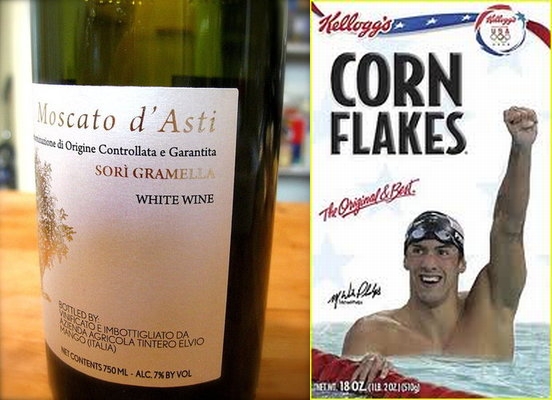
Once we begin to slither and slabber down that slippery slope of slackness, pretending that our individual consumption of alcohol has anything to do with our health, especially when The Centers for Disease Control and Prevention lists moscato ‘n’ Kellogg’s abuse as the third leading cause of preventable death in the United States after tobacco and—you guessed it—poor eating habits, we are behaving as textbookly optimistic Americans.

Listen up, people: Optimism has no place in any serious, deliberate, contemplative overview of reality.

Most recently, the NY Daily News published a piece entitled ‘Six Good Reasons To Toast Your Health With Wine’ which alienated me with its first two words:

‘Oenophiles, rejoice…’

Michele Bachmann: Francophile

I hate the word ‘oenophile’.  In the first place, it’s pronounced ‘eenophile’, so why is there a superfluous ‘o’ instead of an extra ‘e’?  Li’l help here, Merriam-Webster?  Secondly, I am not, and never have been an oenophile.  If a pedophile is attracted to little kids and a homophile is attracted to members of his/her own sex and if a Francophile is attracted to Hebrew National Kosher Hotdogs, then it follows that an oenophile is sexually attracted to wine bottles.  I defy the most die-hard oenophile to try that on for size without getting stuck and having make a life-altering trip to Beaumont Emergency Room.

But, reading further in the article, it lists (as promised) six so-called health benefits to slugging red wine, which I will give below and promptly rebut—being a dyed-in-the-wool rebutophile.

1. Protect your brain: Evidently, older women who drank one or more drinks per day, every day, scored better than teetotalers on memory tests.  The explanation given was that wine helps prevent clots, reduce blood vessel inflammation, raise HDL (good cholesterol) which unclogs arteries.
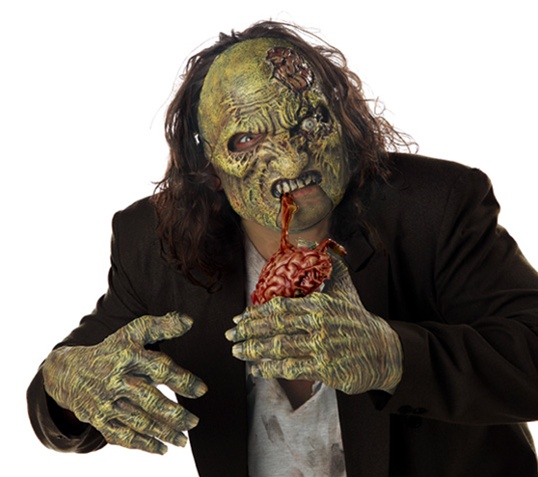
Rebuttal: Protect your brain? Seriously?  The zombie apocalypse started and I missed the memo?  And what’s more, did we not grow up with the absolute conviction that drinking drink kills brain cells rather than protecting them?  And about those morning-after migraines…

No, researchers, I think you need to go back to the babbling board: Protecting the brain is the provenance of the skull, Omega-3-rich fish flesh and Fusion In-Mold, ErgoDial fit system bike helmets.  Not shiraz.

2. Zap the fat – Purdue University eggheads claim that there’s a compound in red wine, blueberries, and passion fruit that blocks immature fat cells’ ability to develop and grow. Studies find that people who drink wine daily have a lower body mass than those who indulge occasionally.

‘Never, ever have I drunk wine to elevate my testosterone levels. Never.’

Rebuttal: Wine is largely composed of what fat people who want to be not fat people call empty calories; a glass of wine equals around 100 calories—same as a jumbo egg, only without the 8 grams of life-sustaining, muscle-building, hair-on-back-growing protein.  Plus, wine’s inherent ability to lower inhibitions will cause you to order double-cheese meat lover’s pizza at midnight and eat the entire thing yourself.  No, people, I think we need a sanity check on this one: If you convince fat people that wine is the ticket to weight-loss, you are going to end up with a bunch of drunken buffarillas wandering around; is this what you really, truly want?

I mean, isn’t Rosie O’Donnell scary enough sober?

3. Good for your gut:  A Spanish study found that the polyphenol content in red wine can promote the activity of healthy and beneficial bacteria in the human plumbing system, combating such icky disorders as celiac disease and irritable bowel syndrome.

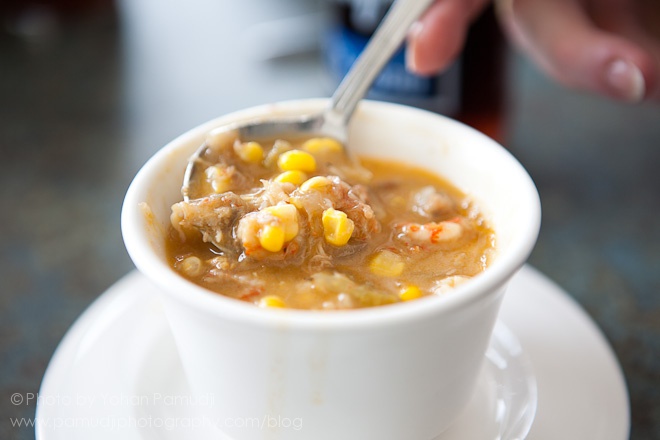
Sopa de ojos

Rebuttal:  A Spanish study?  Is that Spanish as in Spain—the land that Britain’s Halifax Research Centre determined was where travelers are most likely to contract food poisoning?  Where they eat sopa de ojos (eye soup), pasta con pies y pelo (pasta with feet and hair) and algodon con sal (salted cotton candy?)

Protect the gut?  I’m getting sick to my stomach even thinking about it.

4. Protect the ovaries: Australian researchers found that the antioxidants and phytoestrogens in a single glass of wine a day seemed to reduce the risk of ovarian cancer by as much as 50 percent.

Rebuttal:  I drink three or four bottles of wine a day and have managed to reduce my risk of ovarian cancer to 0%.

5. Build better bones:  Apparently, women who drink have higher bone mass than those who do not drink.  Alcohol, one study postulates, boosts estrogen levels, slowing the body’s tendency to self-destruct as it ages.

Rebuttal:  So, along with my better bones, my elevated estrogen offers me decreased libido, erectile dysfunction, shrinking bollocks, moobs and loss of hard-won chest hair, which should make my new moobs even more prominent.  Before you know it, I will start renting romantic comedies starring Jennifer Aniston, going out for brunch at Neiman Marcus, buying piña colada-scented candles and, every twelve seconds texting my girlfriends who I will actually like, not hate (like my current friends), but will bad-mouth anyway.

And not to put too fine a point on it, but other studies have shown that increased estrogen production raises tumor progression in women with, or at high risk for, estrogen-positive breast cancer.

6. Safeguard against Type 2 diabetes:  According to a 10-year Harvard Medical School study, one or two glasses of wine per day were found to decrease risks of developing Type 2 diabetes by as much as 40%.

Rebuttal: On the other hand, if you consume more calories each day than you burn, triglyceride levels go up—particularly when these calories are from dietary sources high in simple carbohydrates and alcohol.

Like wine.  High triglyceride levels in the blood can contribute to a condition called diabetic dyslipidemia, and may lead to… you got it, Type 2 diabetes.  Not only that, but very high triglycerides—in the range of 1000 mg/dl—have been associated with memory loss (see #1 above) and abdominal pain (see # 3 above).

Your humble narrator in search of an honest drink.

The point of all this is not to talk anyone out of drinking copious oceans of wine so long as they are not driving, working, calling friends at 2 AM, speaking to random strangers in the mall or attending child custody hearings.

Whenever I read these bestselling bundles of baseless bull ballyhooing the health benefits of demon rum, I am—as Ombudsman for the Outspoken—reminded of Matthew Henry’s famous Presbyterian proverb:

‘There are none so blind as those who will not see double…’

…and, like Diogenes of Sinope, I am thereupon forced to pick up my lantern and go off in search of an honest man with a hip flask.

Posted in GENERAL | Tagged , , , | 6 Comments

A Bit Of Gloss For The Schloss Sauce: 800 Vintages And Going Strong!

Is Schloss Vollrads the world’s oldest winery?  Arguably so.  Sure, they’ve found the leavings of winemaking operations in Armenian caves dating back sixty centuries; there are Mesopotamian developments even older.  Egyptian texts attest that wine was popular among the New Kingdom upper crust and buried vessels have been found in the Abydos desert that indicate that the Pharaohs were sticklers for temperature control.

And dried leavings in the tomb of King Tut suggest that he was a red wine sort of man/god.

But these guys are all dust.  Dusty, dead and irrelevant, capisci?  Hell, if you can’t draw a current Wine Spectator point rating, you simply don’t count.  I know, because I interviewed Shanken and he told me so.

Schloss Vollrads

Schloss Vollrads, however—the Rajah of Rheingau—has earned scores in virtually every issue of virtually every wine magazine that has ever covered the Weinbaugebiete, and most of its scores have been pretty damn respectable.  And in 2012, the 800th consecutive vintage was released from this venerable estate (perched on the collective site of Honigberg between Johannisberg, Winkel, Mittelheim and Erbach), suggesting that some celebration is in order to accompany the bragging rights that the oldest continuing operating winery in the world has earned.

Holy Roman Reich, Batman…

Otto IV

So, shall we take a stroll down memory lane?  Back to 1211, around the time that Genghis Khan was flipping stones and killing anything he found underneath—but before the Black Plague, before the Magna Carta, before the infamous Children’s Crusade (20,000 German kids set off to liberate Jerusalem; nearly all were sold into slavery instead… doh!), before iPhones, before Pretty Little Liars.  

The Kingdom of Germany was then a part of the Holy Roman Empire; in fact, it was its center.  In 1211, Otto IV was running the show—he was appointed Holy Roman Emperor in 1209 and deposed six years later.

Meanwhile, in a manor house over on the Rhine named after the Lords of Winkel (later Vollradus in Winkela (Knights of Vollrad), the Archbishop of Mainz was upgrading the estate’s formerly ill-tended, Roman-planted vineyards, and in 2011, the first documented sale of his new, improved wine to the Victor Monastery in Mainz is recorded.

Thus, an eight hundred year pedigree, nearly as long as The Mousetrap has played the West End.

Rules of Riesling

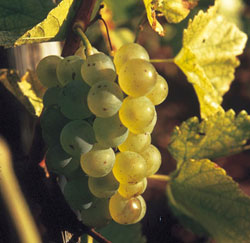
Ripening riesling

I can find no reference to the varietals that the Archbishop might have grown, but these days, Schloss Vollrads is obsessively, compulsively, dogmatically riesling, and has been for a long time.  In 1814, Johann Wolfgang von Goethe, the bosche bard, the Mephistophelean meter maker stopped by the castle for a sip or two of Spätlese and vowed he’d sell his soul to the devil for a third.

The current spread is about two hundred acres, from which is drawn the gamut of German wine styles, Kabinett to Eiswein and a full bandwidth in between.  As wine enthusiasts know, but neophytes may not, German wine is classified by levels of ripeness—sweetness levels at harvest (not necessarily when the wine is bottled).  When all things Deutsch are equal, sweeter wines are generally considered more desirable because they tend to represent longer—read ‘better—growing seasons.

Schloss boss Dr. Rowald Hepp believes (with some justification) that riesling is the most sophisticated and elegant white grape variety grown on this, the third rock from the sun.

Before I comment on that assertion, however, a brief word on the use of the term ‘Doctor’ in Germany, because Germans are a bit funny about it, like they are about other things, despite being voted the least funny nation on earth in a recent global poll and Mark Twain’s classic observation, ‘A German joke is no laughing matter’. *

*Typical German joke: ‘Plants are said to grow very well if you speak kindly to them, which is why I sometimes go into the garden and insult the weeds.’  (Cymbal-crash)

Two doctorates: A paradox?

Although the Germans are patently punctilious about the precepts of propriety, tacking ‘Dr.’ onto the name of a winemaker does not necessarily connote a doctoral degree; it can be bestowed as an honorific upon any individual with any advanced degree and occasionally, simply as a term of respect for success outside of University.  Equally quaint is the protocol of addressing, say, Mr. Horst, should he actually earn two legitimate doctorates as Dr. Dr. Horst, and if he should earn three as Dr. Dr. Dr. Horst.

But Back To Vollrads…

Rowald Hepp: What’s up, Doc?

According to Doc Hepp, the soil structure beneath Schloss vines has been recognized as singular from the 1st Century—six individual soil layers containing loess-loam, gravel, slate and quartzite make up the rich brown Rheingau earth.

He maintains, “Riesling is the grape that makes the most out of this sort of growing condition; it reflects its terroir—the minerality in the soil and the climate very well.  The resulting wine shows the single most important quality of a world-class riesling: Balance.”

Dr. Hepp goes on the point out that most wine drinkers—and indeed, most wine writers—consider riesling ‘balance’ to be shrewd symmetry between acidity and residual sugar, which, of course, is vital.  But Hepp suggests that to him, even more essential equity exists between riesling’s exclusive character—specific fruits and aromatics—and minerality from the soil along with balance between alcohol and extract.

When these three factors are in harmony, he states without equivocation, riesling is ‘the perfect wine grape.’

If You Were Stranded On A Desert Island With Only One Wine…

Young riesling, very young Proust, too young Spencer

I stand with the Doc.  Riesling is to me a varietal that offers all things to all people, except possibly third-stage alcoholics as the octane level tends to be somewhat low: Riesling and high APV really don’t get along.

Oh, and by the way?  If I was stranded on a desert island with only one book?  In Search of Lost Time, Marcel Proust: 4000 pages long, covering seven volumes.  Should kill some time while the Professor builds a raft out of coconuts, spit and palm fronds.

And if I was stranded on a desert island with only one person, living or dead, who would it be?  Definitely the living one.

And for the record, if I was stranded on a desert island with only one cast member from Pretty Little Liars?

Spencer, no question.


Tasting Notes:

Schloss Vollrads Qualitätswein, 2011, around $18:  Straw yellow with sour fruits—green apples, lime and grapefruit on the nose, and moderately full, dry body with juicy melon, peach and honeysuckle notes.  A top-flight food wine with shellfish, ham or mild cheese.

Schloss Vollrads Kabinett, 2011, around $23: Lacy and delicate, the wine shows apricot and lime in the nose, an explosion of fruit on the palate along with pine, slate and a piquant spiciness.

Schloss Vollrads Spätlese Trocken, 2011, around $30: Emphatically assertive and precise, the wine has the depth of fruit of a full-on sweet Spätlese with all the associated white pepper, green apple, apricot aromas, mineral and smoke but wrapped in a more entrée-friendly package.  In fact, it would be difficult to find a meal that it wouldn’t compliment.  Part of a new generation of German wines, tending a bit more toward dryness.

Schloss Vollrads Spätlese, 2011, around $30: A gust of honey is settled by racy acids; pear, Golden Delicious apple, Key lime and passion fruit appear in the bouquet and carry through as flavors.  Spätlese means ‘late harvest’, so the wine’s sugars are all natural—in fact, by German law, they must be.  Long and lingering, the wine finishes with a bracing shot of damp stone—‘petrichor’ to wine writers with big vocabularies

Posted in GERMANY, Riesling | Tagged , , , , | 2 Comments

A Smattering of Silly Scat From Michigan’s NWS Show, 2012

(NWS = ‘National Wine & Spirits instead of ‘Not Work Safe’—which is the only reason I showed up, damn it.)

You should see the johns at St. John’s

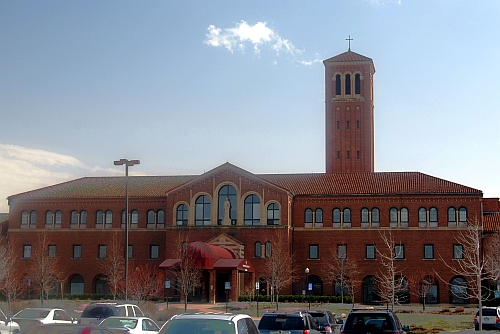
Within the hallowed halls of St. John’s in Plymouth, where wannabe priests once learned their trade, where awe-inspiring interpretations of early Umbrian architecture—complete with Botticino marble statues, beautiful stained glass windows, polychrome wood ceiling and large-scale mosaic and marble inlays in the polished floor—front an elegant, upscale hotel and five acclaimed gourmet restaurants, sixty-one wineries and distributors gathered on September 12, 2012 to offer Michigan’s grandest tasting exhibition of the year, making full use of the inn’s quartet of elegant ballrooms.

What a place to snicker at the spit buckets and get blotto for free.

Potentially, no wine writer’s overwrought, floral description of such a gala would do it justice without at least a cursory mention of the wines, would it?  Heretofore, as I do my best to interpret my loopy notes, I will offer a vague and incomplete overview of a tiny portion of what I can remember sampling:

GUNDLACH-BUNDSCHU

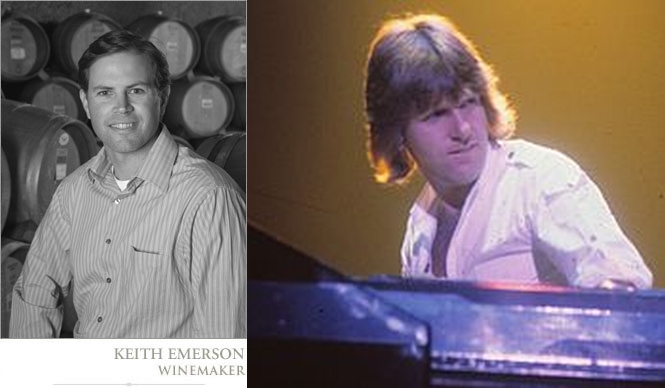
Keith Emerson and Keith Emerson

We loved ELP, of course; Nice was nice and had we been V.I.P.s in the day, we might actually have gotten backstage during a V.I.P. concert.  In all, I think we can agree that Keith Emerson is the most technically suave keyboard player ever to hurl a Hammond organ across a rock stage.

But, who knew he could make wine?

Ha, ha, ha; those be jokes, folks.  I’m sure we’ve all had the disheartening experience of Googling our own names and discovering (in my case) that I am not ‘the’ Chris Kassel; I’m ‘a’ Chris Kassel.  Likewise, poor Keith Emerson, Gundlach-Bunschu’s winemaker, must get awfully tired of tossers like yours truly asking him if his night-harvested gewurtztraminer (90 points, WE) is a good match for brain salad.

Left: My old buddy Darryl. Did I say ‘old’?  And how.
Right: Cate Cullen

My dear old buddy Darryl Vennard was riding eloquent point for the winery at the show, and walked me through Emerson’s vintage vin valise, including crisp, malo-free, Chablis-styled chardonnay (2010), supremely concentrated merlot (2008) and the chocolate/coffee/blackberry scented cabernet sauvignon from the family’s 150-year-old Rhinefarm Estate Vineyard on the slopes of the Mayacamas mountains.  Great stuff.

And by the way, I looked up the winery online and found that indeed, they are ‘the’ Gundlach-Bundschu, not ‘a’ Gundlach-Bundschu.

Go figure.

PENINSULA CELLARS

Foreground: John Kroupa
Background: Aluminum siding

For a Michigan wine and spirits show, Michigan was woefully underrepresented; I could find only two Michigan wineries among the hordes of French, German and Californian wares-hawkers.  One of them was Peninsula Cellars; a remarkably consistent winery located in Old Mission on the 45th parallel—the precise midway point between the North Pole and the Equator.  Owner/Winemaker John Kroupa—too modest to mention his name on his own website—introduced me to a selection of PC whites, including 2011 Pinot Grigio, which some comatose zombie in the NWS proofreading department lists in the brochure as being ‘48% merlot’.
Not; in fact, it is a moderately rich, green-apple scented grigio with a sluice of peach and mineral midway through and a re-focus on apple at the end.

The 2011 tri-vineyard Riesling showed well through the palate, but was a bit restrained on the nose.  The 2011 Chardonnay was likewise a bit cold and light bouquet-wise, but shivery-crisp, oak-free and packed with the tropical fruit notes that have come to characterize Michigan chardonnay.

The PC prima donna, however, is the Late Harvest Riesling, 2011—rich and nectar-like with flavors ranging from orange marmalade to baked almonds, everything sewed together with wildflower honey.

JACKSON-TRIGGS

Much as I love Peninsula Cellars Late Harvest Riesling, with Jackson-Triggs Vidal Ice Wine, it’s more than a basic burst of emotion—it’s a carnal, drawn-out flesh-fest for which I am prepared to tack some Purgatory time on to my post-death plans simply to drink some.  Have you ever had a straight vidal, even from Niagara, where it is the single most reliable hybrid?  Pretty ‘meh’, right?  Vidal was created in the thermonuclear furnaces of the Big Bang for one purpose and one purpose alone—to hang on the vine until Christmas, to be frozen, thawed, frozen thawed until basically raisinated.  Beside the concentrated oomph of apricot and peach, Jackson-Triggs’ version shows myriad fruits from lands where they get no frost at all: Papaya, mango, passion fruit.  Caramel and honey are all infused alongside the tropicality, and though the wine doesn’t come cheap, it’s worth every Canadian dime.  And anyway, remember, ye Purgatory-bound… You can’t take it with you.

ST. JULIAN

Every single one of my label suggestions (above) for ‘Cock Of The Walk’ were summarily rejected by both the winery and the Alcohol Trade Bureau

The pride of Paw Paw, the venerable veteran of vinous vocations in Lake Michigan Shore, St. Julian (née, The Italian Wine Company; re-named when Mussolini climbed aboard Hitler’s gravy train, which is rumored to have run on time) has been producing wines in Southwest Michigan since 1934.  They still make the best sherry anywhere outside Sherry (in my opinion), but are always experimenting around with purchased grapes—some results bearing better fruits of success than others.  I love Cock of the Walk, though I’d be mortified ask for it in a family blind pig: It’s a blend of the cab brothers, sauvignon and franc, merlot and a handful of happy hybrids like chancellor, foch, deChaunac and a pair of lesser-known grapes called zweigelt and rougeon.  At ten dollars a bottle, it’s a Michigan red with a whole lot of complexity.  Sweet Nancie is also a great under-ten sparkling wine; named after winemaker Nancie Corum-Oxley.  Exotic, crisp and budget-friendly, the wine is made from traminette, an oft misunderstood hybrid that produces some scrumptious gewurtztraminer-like wines along Lake Michigan’s shore.

I’m less enamored with the winery’s financial flagship, Blue Heron, a semi-sweet blend of Riesling, Vidal and Seyval, but at 40,000 cases per year, it’s Michigan’s top selling wine, so what do I know?

CHATEAU CHANTAL

I dig these guys and the brochure said they had a booth, but I wandered the floor for two hours and never found them.  I feel jilted.  Cheap, even.  What gives, Chantalopoids?  Am I visually impaired?  It can’t be the drink, because then I’d see two of you, not none of you.

QUINTESSENTIAL

The genuine Renae Hirsch is in color; I asked her.

I’m not a mega-fan of wines with silly names except as a springboard to shameless mockery, but occasionally there are some examples that blend the marketing schtick with a genuine quality product. Dead Letter Office Shiraz, ’08 is one.  The Trial Of John Monfort Cabernet Sauvignon, 07 is another, both from Henry’s Drive Vignerons in Australia.  The former is ripe, extracted and supple, and imparted with dark berries, black pepper, cocoa and smoky oak—doubtless the result of the serious barrique regimen.  The latter is sourced from a single vineyard in Padthaway; the vines are a dozen years old and the wine sees 16 months of oak—63% American, the rest French.  The wine (from vintner Renae Hirsch) offers an array of mature aromatics, tobacco to cedar to leather, but maintains a fresh core of Bing cherry to keep things lively.

DOURTHE

A couple of the selections here were a good indicator of the essential breeding of many merlot-heavy, right bank Bordeaux… Much more accessible in their youths than the cabernet-cored wines from Médoc.  A fine and affordable example is Château Pey La Tour ’09, the non-reserve offering from the estate.  Made with young vines and limited wood, the wine is liquid velvet, part of fruit-forward silken-on-the-tongue qualities originate in a long, warm ’09 growing season, which give the stuff a juicy, plum-like viscosity that rolls, rather than washes across the tongue.  Sorry, California, Washington and Australia; when it comes to merlot, I’m still stuck in France.

I can’t read this shit. Can you read this shit?

*

There were more wines of course, more circuits, more samples.  But I have run out of patience in trying to decipher what I wrote down, so for now, it’s back to the drinking board.

Posted in GENERAL | Tagged , , , , , | 1 Comment

St. Émilion Classification 2012: Vive la Meticulous, Compulsive, Anal-Retentive France

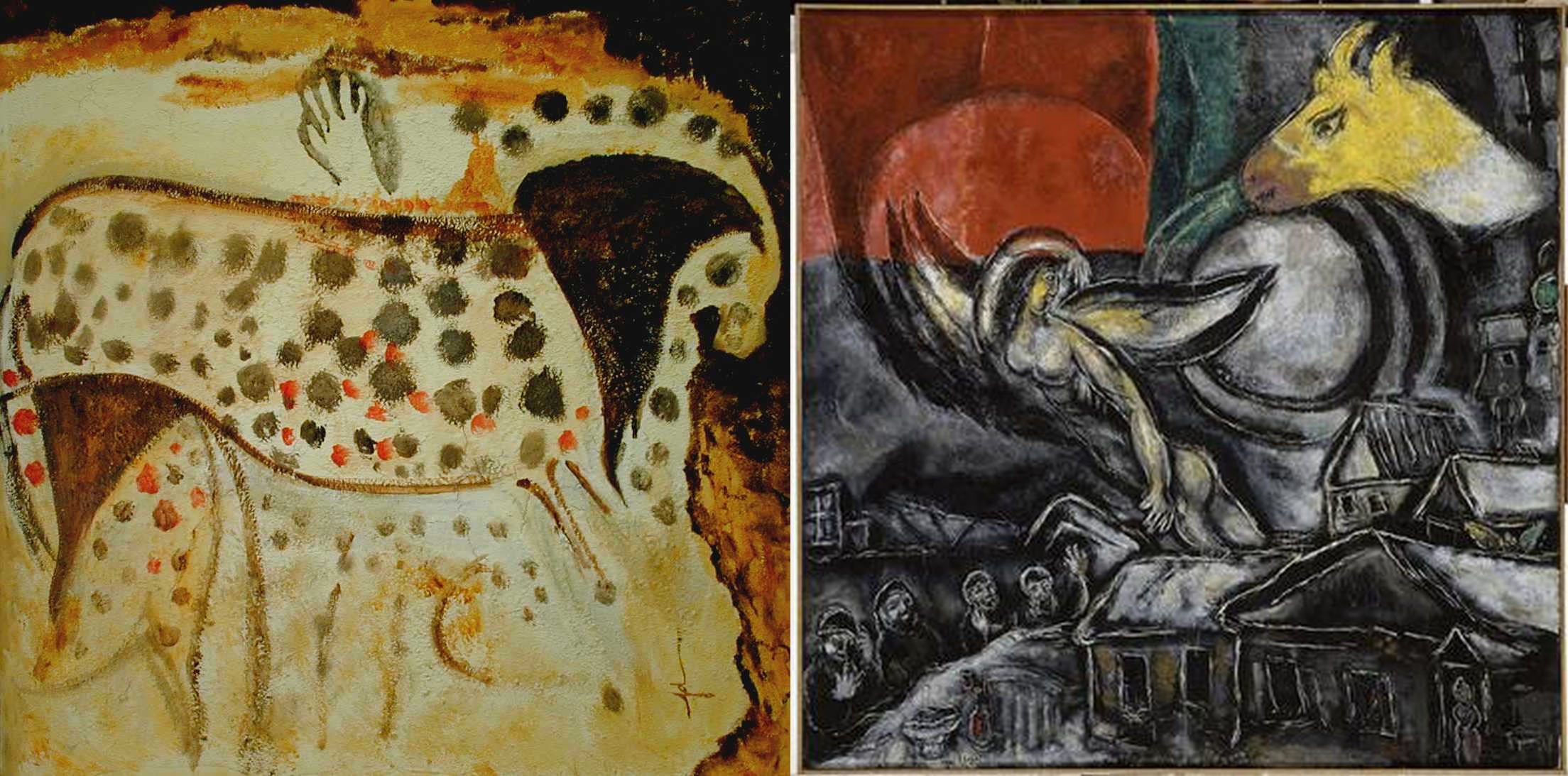
Alley Oop / Chagall. You’ve come a long way, baby.

I adore French cuisine. I am enamored of French history.  I love the sensuous roll of la langue française across the tongue—especially when it is accompanied by the crisp silk of a Cave des Vignerons de Buxy Chablis.  I dig French jazz (Stéphane Grappelli,  Christian Vander, Jacques Loussier’s Bach); I cream all over the philosophy of Liberté, égalité, fraternité; I love French wine, French countryside, French couture, French art, from the caves of Pech Merle to the halls of the Musée National d’Art Moderne.

French people, on the other hand, make me laugh—occasionally until I soil myself.

And nowhere are the chortles more chuff as when the Institut national de l’origine et de la qualité (INAO)—the French organization charged with regulating French agricultural products with Protected Designations of Origin—starts getting all serious and scholarly about their wine classifications.

Yes, I am speaking of the recent re-re-re-re-re-re-classification (the sixth since 1955) of the Premier grands crus classés and Grands crus classés of St. Émilion—those thirteen thousand acres on the right bank of the Dordogne that represent about a sixth of Bordeaux’s total vineyards.

You can’t always get what you want.  Unless you’re Baron Philippe: 1902 – 1988

Even borderline enophiles are familiar with the 1855 Bordeaux Classification, which covered Médoc and Graves, and ranked them in importance based on reputation and trading price—then, the most reliable indicator of quality.  There were five categories into which a château might fall, First Growth to Fifth, and those fortunate enough to make the cut enjoy that status today: There have only been two changes made to the list in 157 years.  The first occurred a year after the fact, when Cantemerle was added as a Cinquième Cru, and the second in 1973 when a lifetime of lobbying by loudmouth liege lord Philippe de Rothschild saw Château Mouton Rothschild elevated from a Second Growth to a Premier Cru.

Otherwise the list is, and likely will remain, immutable.


St. Émilion

A century after the original Médoc/Graves classification, St. Émilion’s Syndicat Viticole convinced the INAO to take the lead in classifying the merlot-heavy appellation, which includes such luminaries as Château Ausone, Château Cheval Blanc and Château Figeac.  The 1855 exercise was used as a rough template for St. Émilion’s 1955 classification with two important differences: Instead of five levels of excellence, St. Émilion only recognizes two, and more importantly, the list itself is re-evaluated and rewritten every decade or so.

Alexis Lichine, 1913 -1989

Clearly, advances in technology, ownership swaps and vineyard divisions probably make the 1855 Classification obsolete—a modern revision is consummation devoutly wished by such weisenheimer wine windbags as Robert Parker Jr., Bernard and Henri Enjalbert (authors of L’histoire de la Vigne & Du Vin), Clive Coates (MW) and David Peppercorn (MW).  And devoutly past-tense wished by the late Russian sauce scribe Alexis Lichine, who sat on a 1960 revision panel (epic fail) and wound up publishing his own unofficial classification system.

And yet, like virtually every single opinionated statement made in our litigious era, the value of classification stagnation was demonstrated to all of Bordeaux following the release of the 2006 St. Émilion re-do when four of the estates whose status was revised downward—La Tour du Pin Figeac, Cadet Bon, Guadet and Château de la Marzelle—sued.  The legal claim was that some of the voting panel members had vested interests in Bordeaux wineries, and that may be true, but of course, like any lawsuit, bookoo bucks lie at ground zero, and any demotion will undoubtedly cost the estate dough, just as losing a Michelin star does for a restaurant.

Demote.  That’s what strikes me as so irresistibly funny.  You demote a fourth grader to the third grade; you demote a corrupt major to a recalcitrant captain.  You demote a maître d’ to a waiter and a waiter to a busboy and a busboy to a dishwasher and a dishwasher to a honey dipper.

But a three-hundred-year-old château with the hangover of history, the gravitas of glory days and the amour-propre of avowed ancestry?  Demoted by a silly panel of self-important, ethics-challenged judges, like a high school quarterback demoted to third string because he threw an interception or two?  I mean, ‘demoting’ an institution like Pin Figeac is a little like marching down the sacred corridors of Musée du Louvre and demoting the Mona Lisa to the status of primitive folk art.

I’d sue their sniveling little French derrières too.

Good Career Move

And anyway, it worked.  They blinked.  Having offered an apology, the INAO has promised to pump up their standards and work toward more transparent judging and more consistency throughout the process.  Last week, the Wine Council released St. Émilion Classification 2012. 

And, can you guess it?  Two new Premiers Grands Crus Classés A estates were added (for the first time ever): Château Pavie and Château Angélus, while the ‘plaintiff’ estates—indeed, all the demoted châteaux from 2006 this time passed the jury’s rigorous blind taste test… except La Tour du Pin Figeac!

Jeff Leve

That seemed to have taken a few folks by surprise, including Decanter editor Stephen Brook.  No doubt it also surprised respected critic Jeff Leve of Wine Talk Forum, who rated the last three Pin Figeac vintages 91, 92, 91 points respectively.

Regardless, pending ratification by the French Ministry of Agriculture, the 2012 St. Émilion Classification lists 18 Premiers Grands Crus Classés and 64 Grands Crus Classés, the most estates so honored since 1969.

The cynical among you might suppose that the lawsuits shook up some folks on the judging committee, but spin doctor Director of the Saint Émilion Wine Council Franck Binard finds not come-uppance but vindication:

“A number of chateaux were rejected in 2006, and this must have been an electro-shock to them – the quality we see now is a result of improved standards. It shows the force of the classification – that winemakers are encouraged to do their very best, and that St. Émilion is a modern appellation where nothing is set in stone – anything is possible for those who work hard.”

Whatever, Franck…

I’d guess that the chances that the jury’s effusive generosity in 2012  were not the result of political pressure to be somewhere in the neighborhood of one in an émilion, but no matter:  Personally, the re-re-re-re-re-revision means little to my world beyond an eye-rolling punch line, like some of the absurd antics pulled in Médoc—where, for example, estates ignored in 1855 were later granted the status of Cru Bourgeois, invented in 1932, revised in 2003, banned in 2007, reinstated in 2010.  This is stuff we are supposed to take seriously?

Liberté, égalité, fraternité, obsessive-compulsivité, anal-retentivité: 

Vive la Résistance.

(That would be me).


Posted in FRANCE, Saint-Émilion | Tagged , , , , | 3 Comments

Coke or Pepi?

From that bizarre German grape called lemberger to Barefoot Wines to Frog’s Piss Red to Vin de Merde, I am not sure that I trust the mental stability of folks who name their wine after stuff that smells really, really bad.

Cat’s Pee On A Gooseberry Bush, Big Ass Chardonnay, Fat Bastard

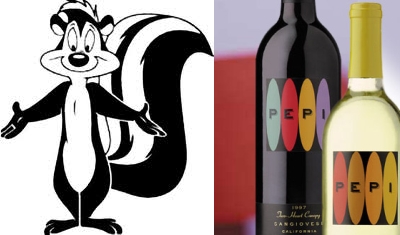
And then there’s Pepi, with it’s inevitable association with Pepi Le Pew, that horny little skunk who wanders around Paris in search of impressionable, boffable felines.

Chateau Vomit-Rothschild is one thing, I suppose, and Bodega Diapero the same thing, but Pepi is a legitimate and respected California winery who have been turning out balanced, crisp and transcendentally cheap white wines for forty years.

Now, I know that wine publicists prefer ‘inexpensive’ or ‘value’ over ‘cheap’, but I am not in the business of wanking wine publicists.  When you can buy a 92 point (California State Fair Wine Competition) sauvignon blanc for $8?  Brah, that ain’t inexpensive, that’s cheap.

Papa Pepi

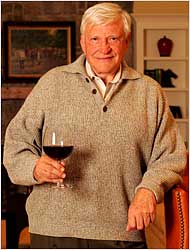
Robert Pepi

Robert Pepi, the nominal begetter of the brand, is a second generation Napa winemaker.  Like many top vintners of his generation, he is the son of a visionary; his father purchased prime Napa real estate in the mid-sixties and planted grapes—noteably sangiovese clones from the Biondi-Santi estate in Brunello di Montalcino—a varietal which he can genuinely said to have pioneered in California.  For the next thirty years, the Robert Pepi Winery continued to improve the quality of Napa sangiovese while finding equal endowment with sauvignon blanc, which Pepi refers to as ‘his favorite wine’.

Among the innovations which has arisen from the forty vintages that Pepi has tucked beneath his belt is the ‘two-hearted’ trellis system which sees the vines split horizontally, then criss-crossed.  Difficult to explain, but suffice to say, examples can be seen throughout Napa wine country.

Jess Jackson, resident billionaire

In 1994, eager to pursue a globetrotting career as a wine consultant, he sold the winery to Jess Jackson of Kendall-Jackson and apparently, never looked back.  He began to lease vineyards and purchase grapes, and as general manager of Stimson Lane’s California operation, he produced a Conn Creek cabernet that received the highest Wine Spectator ratings of any of the Washington-based estate collection’s labels.

He says, “Consulting has given me success, freedom, and the ability to work with exceptional vineyards and craft wines of which I am very proud. From time to time while traveling the back roads of California and Argentina, tending to my clients’ vineyards, I see vineyards that do not fit into my clients’ needs, but that excite me with their potential for quality wines. These vineyards were the impetus for starting my own label…”

That label wound up being Eponymous, an exclusively red-wine house which pulls grapes from some of Napa’s top vineyards.  Current releases include cabernet sauvignon and cab franc from McAllister Vineyard near the Mt. Vedeer ridge.  These are 90+ point wines according to scores of publications including the Spectator, Wine Enthusiast, QRW and Wine News.

…All of Which Makes For A Good Story

…but has nothing to do with the wines I am reviewing.

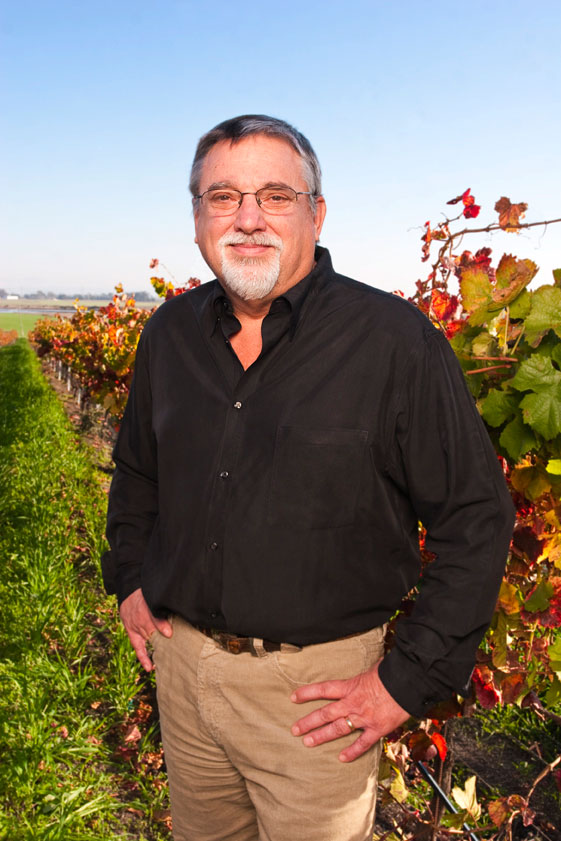
Mark Rasmussen, resident non-billionaire

Those wines, labeled ‘Pepi’, have zero connection to anyone named Pepi, but are the vestige of the original winery, and, as stated earlier, are solid, somewhat non-aggressive bouquet of whites—prices kept low by drawing fruit from some of California’s less-sexy regions like Clarksburg and Lake County.  Produced by local boy Mark Rasmussen, the wines have a lot to offer the budget drinker: Affordability, extended fruit, crisp spine and a flash/splash logo.

Everything, in fact, but a catchy slogan.

So I’ve borrowed a few defunct taglines from one of America’s most beloved blends of trimethylxanthine, high fructose corn syrup and fake brown stuff and have placed them below—an inducement free of charge, Pepi people.

You’re welcome.

  • Come Alive, You’re in the Pepi Generation.
  • You’ve Got a Lot to Live, and Pepi’s Got a Lot to Give.
  • Yeh hai youngistaan meri jaan.  (Hindi, meaning,  ‘May our beloved leaders drink so much Pepi that they forget how to launch a nuclear strike against our neighbors.’)
  • Pode ser bom, pode ser muito bom, pode ser Pepsi. (Brazilian Portuguese, meaning: ‘I wonder how many grape vines we can plant if we raze the entire Mato Grosso.’)
  • Badal Do Zamana. (Urdu, meaning ‘When I drink sufficient Pepi, I do not mind so much that I have not had a square meal since 1983.’)

Tasting Notes:

Pepi Sauvignon Blanc, California, 2011, around $9:  A lean, bracing wine that shows some of the glories of Robert Pepi’s wines from the 80’s and 90’s; the palate is loaded with melon, grapefruit and lime while a slightly flinty edge fans out over the finish.

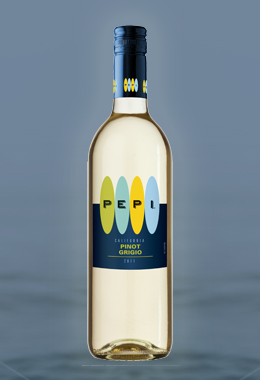
Pepi Pinot Grigio, California, 2011, about $9: A floral, mineral-inflected nose with notes of pear and Fuji apple. The fresh, clean fragrances is followed by a light wine with steely character and a brief, but succulent finish.

Pepi Chenin Chenin Blanc-Viognier, California, 2011, about $9:  Phantom sweetness; the wine gives the impression of more than .48% residual sugar, the result of luscious stone fruit (apricot and peach) and a potent honeysuckle undercurrent.  The blend is judicious—66% chenin, 34% viognier—a proportional breakdown that is sufficiently marvelous that I’m surprised it isn’t used more.  It is true synergy, where the total is more than a sum of its parts.

Pepi Chardonnay, California, 2011, around $9:  A little something for everyone, malolactic, sur lie aging, French and American oak.  For the price, a serviceable chardonnay with crisp green apple scents, lemon curd and creamy vanilla; not to heavy or complex, but nimble complement to lighter fare.

Posted in CALIFORNIA | Tagged , , , | Leave a comment

Doused With The Divining Rod

Some Sorcerers do boast they have a Rod,

Gather’d with Vowes and Sacrifice,

And borne about will strangely nod

Mankind is sure that Rod divine,

For to the Wealthiest ever they incline.

– Samuel Sheppard, 1651

Miss Divine also had a rod.

Waters and Divine

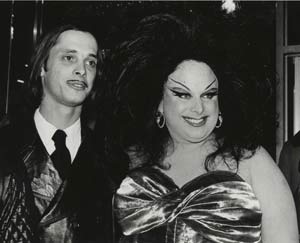
Of course, if you are old enough to remember Divine, you already knew that.  And if you’re not? …More than that you don’t want to know.  Otherwise, for dog shits and grins, the coprophiliac drag queen star of Pink Flamingos was one of John Waters’ earliest accomplices—a shining bug-lamp in the filmmaker’s twisted mondo trasho of left field eccentrics.*

* An odd and interesting footnote to the story is that Waters did not discover Divine; Divine (a rich kid with doting, overly-generous parents) discovered Waters (then, an unknown filmmaker on the fringe of Baltimore’s most bizarre bedlamites).

In any case, after thirteen movies, the Confederacy of Nances came to an end with the single worst film in the John Waters portfolio: Hairspray, following which, Divine had the good sense to die.

Groused After Being Soused with the Dowse

By virtue of being called Kassel, I am allowed to laugh at anything that happens anywhere called Kassel.  So, if they decide to hold a divining rod test In Kassel, Germany, run by something called the Gesellschaft zur Wissenschaftlichen Untersuchung von Parawissenschaften, I can, by the most basic of natural law, laugh my kass off.

Bubba and his dowsing stick

In fact, the 2004 test, during which 30 divine rodders attempted to find water flowing through plastic PVC pipe buried a couple feet underground—for which the dowsers predicted 100% success—wound up disproving the whole notion that people can use non-scientific equipment to locate ground water, gems or gravesites.

Turns out, these hot rods may not be so hot after all.

Tell It To Marc Mondavi…

Mondavi, a third generation winemaker and son of Peter Mondavi Jr., is considered to be among California’s top dowsers.  And although (for reasons unknown) Mondavi prefers the feminine-sounding term ‘water witch’, I have it on good authority that he is not a drag queen.

(For the record, I need not worry about offending Mr. Mondavi with the above remark, because I have already done so by maligning his moonlighting job as a dowser). 

Marc and his divining rods

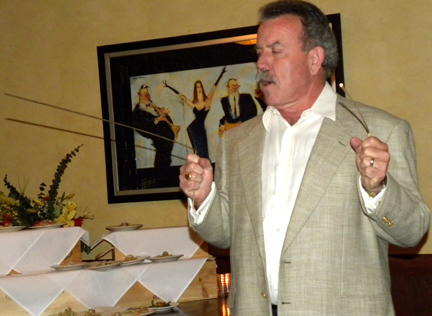
Obviously, along with that portion of California who is occult-obsessed, Mondavi is fascinated with such subjects, and is firm believer in his own divine abilities.  He rests upon his laurels, saying, “I have been water witching since I was just a teenager. It usually catches people a bit off guard the first time they see it, but my track record speaks for itself.”

For the uninitiated, water witching is a technique primarily used to locate ground water, but is also used to find gemstones and oil. Naturally, I am curious as to Mondavi’s track record on these other items, because I am assuming that if it was as good as his water finding, he’d long since be retired.

Dowsing with the 4th Army in Vietnam

Dowsing relies on an apparatus known as a divining rod.  Said rod can be a Y-shaped stick, or alternately, a pair of L-shaped dowels; the usual methodology of a dowser is to hold the rods extended outward and to walk slowly across the terrain.  When a subterranean water source (or a petroleum deposit or a cache of plutonium—in Vietnam, dowsing was used to locate enemy tunnels and in Norway, it has been used to locate avalanche victims) is discovered, the divining rod supposedly dips down sharply.

True believers suggest that it has to do with some cockamamie ‘emanations’ from the subject of interest—emanations which, as far as I know, have basis only in the well-respected pseudo-pscience of alchemy.

So, My Initial Question for Dowsing Devotees Is:

With so many potential materials emanating divinable energies, how does the rod know specifically that you are looking for water?  Imagine your disappointment if you went in search of an underground well, spent the time and effort to dig for it, and found instead, a diamond mine.

Now, I have no doubt whatsoever that Marc Mondavi is convinced that he is a first magnitude water witch, and that he believes that the several controlled studies—including the one undertaken in Kassel, Germany—which have concluded that dowser success-rate is no more than chance, are somehow flawed. However, I don’t know how Mondavi explains by what principal the phenomenon itself works—although some clue may be found in his statement: “Some may think that my talent is more supernatural than normal.”

I’m not among them:

I think it his dowsing skills are perfectly explainable in natural terms.  Mondavi, a third generation Californian, grew up in the vineyards and has a keen understanding of viticulture.  Knowing where precisely to plant grapes is not a supernatural talent; it requires years of learning about topography and soil structures, all the while developing practical geological knowledge.  Especially in areas where water is scarce—most of California—an experienced agriculturist has a pretty good instinct of where it can be found simply by scanning the terrain.  Different species of flowers, grasses, shrubs and trees—even different types of rocks—are found in areas directly above a water source.

And the Divining Rod Dip? 

My planchette points to ‘No’

Even easier to explain. Anyone who’s ever worked a Ouija board understands the curious psychological effect known as ‘ideomotor action’ wherein a person moves muscles unconsciously.  For example, if the question is asked, ‘What is dowsing?’ and Ouija spells out ‘A crock of shite’ and everyone around the board swears they didn’t move the planchette?   In fact, everyone did.   As a reformed coke-head who hasn’t touched a line in more than twenty years, my body still does an inadvertent shudder every time I smell a specific chemically odor.

The sense is that very slight muscle tensions in Mondavi’s hands during dowsing more than likely are the cause of the rod’s downward lurch.  He’s already sussed out the spot—even subconsciously—based on his knowledge of telltale surface signs.

I am ultimately not sure what Mondavi’s ‘success’ percentage is, but I imagine that if divining were a genuine phenomenon, it would have to be 100%.

The Divining Rod Wines: Bewitching Bevvie in a Bottle

That said, a fifth of Mondavi chardonnay from the Santa Lucia Highlands or an Alexander Valley cab is the kind of magic I can wrap my psyche around.  Both the family pedigree and the sensational quality of the grapes make Marc Mondavi’s new label—The Divining Rod—a steal at $17; one worth seeking out with or without the use of a Y-shaped stick.

The Divining Rod Chardonnay, 2010, shows the multi-layered tropical characteristics of a cool-weather chard, including mango, pineapple and bright citrus shored up by rich and lovely notes of spiced vanilla and butterscotch.  According to Mondavi, “This is a wine not only for food, but on its own, with great company.”

That may be, Marc, although I must say, I equally enjoy drinking wine with people I can’t stand—it makes them so much easier to deal with.

Beware; the proper fate of all heretics, infidels and dowsers.

The Divining Rod Cabernet Sauvignon, 2010 displays the full-on ripeness of Alexander Valley with a focus on smooth black fruits with light notes of tobacco, cedar and silky, lightly applied tannins.  For this one, Marc Mondavi’s comment is: “This cab is, I dare to say, divine.”

Cute, Marc; tres cute.  You should consider a career in stand-up if the witchcraft thing doesn’t work out. It may not be as occult or mystical, but I guarantee that there is less chance of getting burned at the stake.

Posted in Cab/Merlot, CALIFORNIA, Chardonnay | Tagged , , , , | 3 Comments

Beware That Bottle Of Romani-Contée: It May Be A Knock-Off

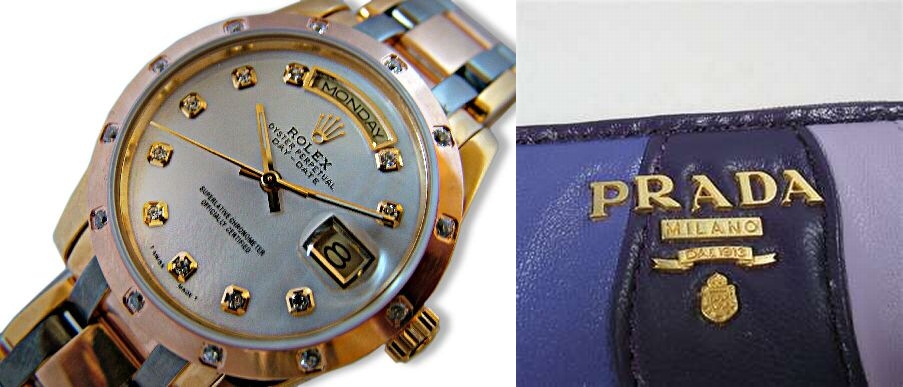
It’s a side of human nature which we may not be proud of, but which we all possess.  That side that causes us inexpressible delight when our wealthy brother-in-law shows off his brand new luxury watch and we inform him that the word ‘Rolex’ only has one ‘x’.

And then tell his wife that most people buy their Prada handbags at Neiman Marcus, not from Nigerian men hanging out on the Fisher Freeway overpass at Eastern Market.

Naturally, as a commodity susceptible to knock-offs, wine is far easier to fake than a watch or a purse.  In fact, it is so easy that I am grateful that it’s primarily done with wines that I couldn’t afford anyway.  With apparel and accessories, the best of the counterfeiters spend considerable time and effort to recreate the original in all its fashion detail, but with wine, it is often simply a matter of pouring cheaper wine into empty bottles that once contained the real stuff.

Of course, that presumes that you can find empty bottles of ’61 Lafite Rothschild to play with; easier said than done, as you can imagine—in part because auction houses like London’s Christie’s now smash their empty bottles with a hammer to prevent them from entering the black market.

Christie’s has more reason than most to be squirrely—twenty years ago they were at the unwitting center of one of the most outrageous cases of wine fraud in history.  Then-director Michael Broadbent, who to this day maintains his ‘expertise’ in rare and collectible wines, sat down with such luminaries as Jancis Robinson and Robert Parker Jr. to a series of high-profile tastings offered by wine collector Hardy Rodenstock.  These included samples from the 18th and 19th centuries, wines purported to bear Thomas Jefferson’s personal engraving, and the extravagant culmination of the gatherings, a vertical tasting of 125 vintages of Château d’Yquem.

There’s a Koch Sucker Born Every Minute – P.T. Barnum

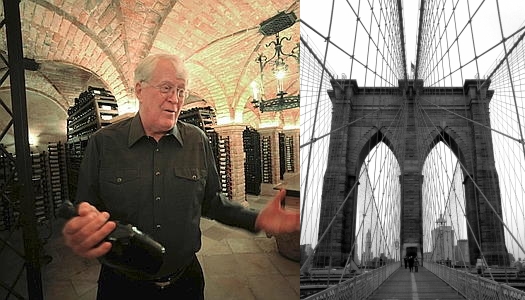
Bill Koch and his latest purchase, the Brooklyn Bridge

It was the Jefferson bottles that got him.  Having sold four of them to businessman Bill Koch, Rodenstock stopped returning phone calls when Koch asked for provenance beyond Broadbent’s Christie’s authentification.  So he tried the Thomas Jefferson Foundation at Monticello, who not only snickered at the suggestion that these bottles had ever been in Jefferson’s possession, they pointed out that the engraving ‘Th. J.’ had been done by an electric dentist’s drill.

Carbon-14 testing dated the bottles to 1962.

Dear Auctioneers, I Have a Bottle of Charles Shaw Merlot Signed by Napoleon: $500 k and It’s Yours

Rudy, Rudy, Rudy…

More recently (in March), another Hosebag-Formerly-Known-As-Collector called Rudy Kurniawan was arrested and indicted for selling fraudulent  Domaine de la Romanée-Conti (also to Bill Koch, our favorite sad-sack slurp sucker, earning Kurniawan the nickname ‘Dr. Conti’).

The wine was sold with the blessing of certain whizbangs at  Acker Merrall & Condit of New York.  I am not sure what is wrong with these highbrow wine-appraiseing lushes, but apparently Kurniawan was also able to consign several lots of Clos St. Denis from Domaine Ponsot from vintages prior to any recorded production of Ponsot wines from that vineyard.

Not that the Christie’s is totally off the hook: In 2007, Rudy baby entrusted several magnums of 1982 Château Le Pin to them, and they wound up on the auction catalog’s cover.  Bad luck for Kurniawan—Le Pin themselves happened to notice details in the photograph that didn’t quite jibe, and informed Christie’s that the bottles were fakes.

Turned out to be the tip of a Titanic-quality iceberg: When the FBI raided Kurniawan’s penthouse, they found an ocean of cheap Napa plonk along with notes indicating that it was intended to be re-bottled as vintage Bordeaux; he also had the basic tools of the fraud trade, including corks, labels and appellation stamps.  The discovery sort put the kibosh on his original statement of innocence when he insisted, “Hey, I try my best to get it right, but it’s Burgundy, and sometimes shit happens.”

That’s right, Dr. Conti—shit happens.  Sometimes spontaneously, and sometimes you have to give it a little nudge, right?

Icing on the cake?  Dr. Conti winds up being an illegal alien; he was deported in 2003 and chose to ignore the order.

The Illustrious History of Illusion

Pliny, Pliny, Pliny…

The shenanigans of Rodenstock and Kurniawan are hardly the stuff of high-tech modernity; wines have been faked since Pliny the Elder began ragging about Roman rip-offs in the year 50.  Falernian was the fraud of choice back then; despite limited production of the prestigious potable, the taverns never seemed to run out.

Through the Middle Ages, the proliferation of alchemy—chemistry’s godfather—found obscure chemicals with which to fake top wines of the day, but woe the ‘wine doctor’ who was busted:  The penalty, frequently, was death.

It wasn’t until the European phylloxera epidemic of the mid-nineteenth century that the counterfeit trade really began to cash in; so devastated were the vines of Europe that a prohibition-style drought resulted, allowing the less-than-scrupulous to adulterate or falsify bottles of wine, some even putting American labrusca wine into French bottles—ironically, at that time, our own phylloxera-resistant wine industry was flourishing.

The European upside of these scandals, of course, was the development of Appellation d’Origin Controlée, meant to designate, control and protect the geography and the quality of wines in the future.

‘Show Me the Downey’

These days, we rely in part on the expertise of Magnum P.I.s like Maureen Downey of Chai Consulting, a self-styled, home-schooled pro on Domaine d’Erzâtz, Volnay-nay, Château Scamensac and Pseudossicaia. 

Maureen Downey, Wine Detective

Over the ten years she’s been sleuthing, she lists as the primary offenders (in order) Château Petrus; 1961 Bordeaux first growths; 1982 Lafite; Château Lafleur; Sassicaia; large-format bottles of pre- 1985 Domaine de la Romanée-Conti and Henri Jayer Burgundies.

“There’s a lot of dubious wine out there,” she claims, “And I don’t sugar-coat it if I find fakes.”

Finding a wine with a sugar-coating would indeed be a sign of a crock hock, although ‘salting’ is a technique she sees frequently—scattering a few fakes among a case of mostly real wine.  “I look for label consistency,” she says in explaining how she winnows out the rotten apples from such lots.  “Are all the paper elements on a bottle of a similar age? The combination of a new-looking label with a battered capsule would be suspicious.”

Ironically, Downey’s fascination with bogus bottlings began with a series of questions from Hardy Rodenstock that she received as a wine appraiser at Morrell’s auction department: “He kept faxing questions about glue, tiny numbers on the labels, punt marks on magnums of 1945 Gruaud-Larose he wanted to bid on…”

It got her thinking about the sort of minutiae that appears on a wine label—particularly a prestigious one—and how they might be faked.

My Personal Gift To You, the Reader…

If you think that you have been scammed in the purchase of a bottle of wine, whether at auction, online or at your neighborhood wine store, most of my personal tips point to the relative lack of SpellCheck on label printing machines:

As a result, phonetic spellings of French words like ‘Lafeet’ and ‘Ho-Brion’ are pretty much dead giveaways that you have yourself a faux château.

Posted in GENERAL | Tagged , , , , | 3 Comments

Chinese People Are Really, Really Tiny; Pass It On

Don’t get me wrong; I’m a smallish dude.  Not Chinese small, maybe—the average height of a Chinese person is 5’4”—but trust me, I was never the first kid with a finger pointed at him at the start of a pick-up game of basketball.

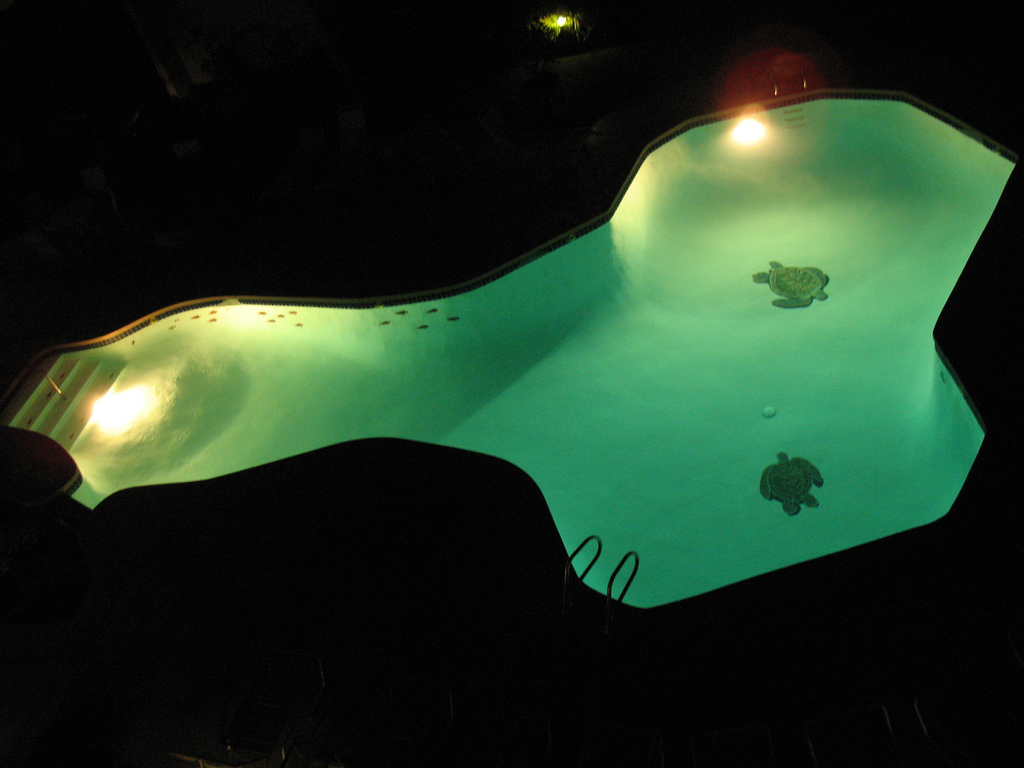
Are you not envious of my swimming pool?

As a result, I have been accused—by business adversaries, professional nemeses and close relatives—of occasionally ‘over-compensating’ for my relative lack of freakish, something-went-wrong-in-the-womb height through my insistence on dating only Hollywood supermodel ingénues, of maintaining my bantam but balletic bod in a state of Adonis-like perfection, of refusing to do any but most exclusive and expensive designer drugs and of having an Olympic-sized pool the shape of a giant penis.

Maybe they’re right.  I come from rather delicate stock, after all.  We Kassels are an intellectual force before we’re bare-knuckle stand-down Irishmen: I think all four of my adult daughters together wouldn’t tip three hundred pounds on a scale.

But, Enough About Me.  Let’s Talk About Chinese People

Anyone who has been following the evolution of the fine wine market in China—anyone who, like me, has sat back and watched in bemused horror as this Asian leviathan suddenly glommed on to the taste of pricey Bordeaux and as a result, as with a Made-in-Dong Guan Wet/Dry Shop-Vac,  began a systematic slurp of southwest France, lapping up lakes of Latour, basins of Batailley, seas of Segur—and not only the wine, but entire chateaux and surrounding vineyards… In the last three years alone, the Chinese have purchased five chateaux, including Pomerol’s Château de Viaud by the Commie cereal conglomerate COFCO in 2011.

So much for tradition in tradition-bound Bordeaux, eh?

And it gets worse, at least for lovers of the essential francité of the appellation, which may be something of a myth (although mythology is one of the things we love about French wine):  Not only will the Chinese control the entire vine-to-bottle production chain of their new chateaux, but every glass they make will wind up in China.

Voracious they are, too: In 2010, the combined China/Hong Kong wine market guzzled 33.5 million bottles of Bordeaux worth half a billion dollars.

And the Bordelaise?  They’re loving it, of course.  Over the past few years, a lot of them suffered the slings and arrows of outrageous economy; and with a challenged 2011 vintage and commercial buyers demanding a 50% reduction in the wholesale prices of prestigious Grand Crus (which trickle down to the other crus), a lot of vignerons are reading the handwriting on the wall and putting up ‘for sale’ signs.

Yao

And naturally, if you are looking to sell and have found an eager buyer, you don’t care about race, color, creed, the fact that his country practices female infanticide and arbitrarily detains and often tortures people for exercising their rights to freedom of association, religion and expression, or that he is 5’4” tall.*


* An average that Yao Ming skewed to begin with: If it wasn’t for him, the mean height of a Chinese person would be 2’6”.

According to Georges Haushalter, president of the Bordeaux Wine Council:

“First, the English, Dutch, Irish came. The Japanese came twenty years ago. It’s logical that the Chinese arrive today.”

Why it’s ‘logical’ I don’t know, but it sure the heck is factual, and not only that but the new chateau owners are redoing the old-school labels to suit Chinese tastes and forgoing the traditional network of brokers and merchants.

Now, it is fair to say that the typical Asian Bordeaux consumer is not the $0.64 per hour Dong Guan Shop Vac assembly line worker, but one of the fortune-flaunting haut monde robber barons—many of whom became wealthy on the backs of these hourly pogues.  Like the winners of our own Industrial Revolution, these first generation millionaires and billionaires all got rich at about the same time, and often try to outdo each other in stupidly ostentatious displays of prosperity.

Canine version of James Holmes

Can you, for example, think of a case of conspicuous consumption more crass than the teenage daughter of a wealthy Chongqing family who spend the equivalent of $600,000 on a Tibetan Mastiff, then ordered a convoy of thirty Mercedes Benzes to pick up the ugly mutt at the airport?

Or, can you come up with an instance of Bordeaux one-upmanship more ridiculous than Zhang Yuchen’s Beijing Chateau Zhang Laffitte, a duplicate of Château Maisons-Laffitte, French architect François Mansart’s 1650 landmark on the Seine—only with an upgrade: Zhang added a manicured sculpture garden, two wings and a moat, copying the palace at Fontainebleau.  “It cost me $50 million,” he said. “But that’s because we made so many improvements compared with the original.”

Perhaps I Can Come Up With Something Dopier…

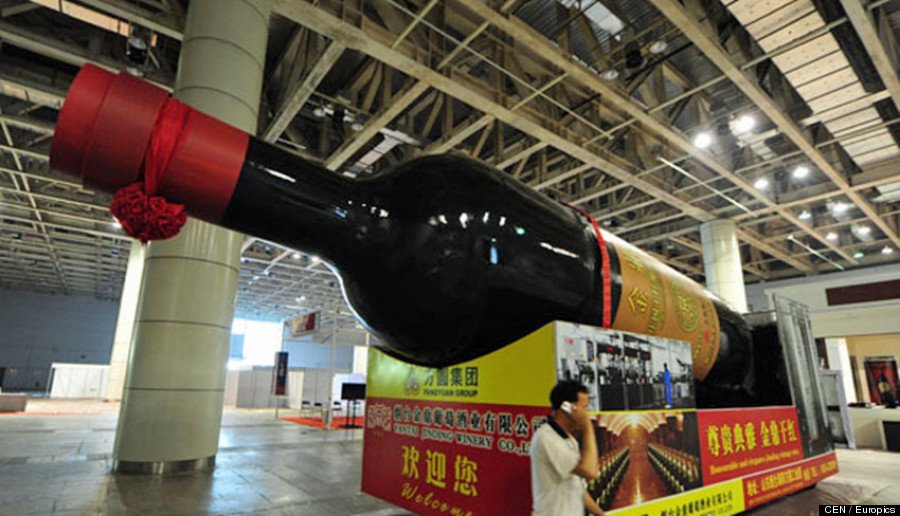
Chinese person depicted at actual size.

As the picture to the left depicts, the featured attraction at the Sixth Yantai International Wine Expo is the world’s biggest Bordeaux-shaped wine bottle—the sort of thing I would covet if I were a few dozen inches shorter.

It is 30 feet long, eight feet wide and weighs three tons.  God knows what it’s filled with.

But the fact that Chinese names often have phallic connotations just makes the whole crazy scenario all the funnier.  The article from which I stole this photograph is authored by someone named Wang; the wine bottle was made by Jinding and the expo is held in Shandong.  Nearby cities are Donghai and Jizhou.

“My wang is bigger than your dingdong.”  How much more obvious can you make it, China?

Dancing Fitzgeralds

According to Fitzgerald, ‘The rich are different.’

No shit, F. Scott.   They are reassuringly arrogant, besotted with ego, ineffably condescending, spectacularly patronizing, and in the case of China’s newly-emerging, status-conscious nouveau-riche, they fit very comfortably into the palm of your hand.

Posted in CHINA | Tagged , | 2 Comments

Anatomy Of A Hangover And What To Do About It

B.F. Skinner and Principal Skinner

In the previous century, when I was at university as a psych major, B.F. Skinner was all the rage, and my Operant Conditioning and Behavior Analysis class focused on the relative non-efficiency of negative reinforcement.  It stressed that ‘punishment’ changes behavior only temporarily and presents many detrimental side effects.

I wrote my course thesis on proof positive: Hangovers.

For those of you who chose to study something totally boring like corporate law, electrical engineering or diseases-of-the-rich, Skinner postulates—in the most colorful language possible; rich in descriptive, near-Dickensian detail—that ‘a negative reinforcer increases or maintains the frequency of the behavior that terminates the negative reinforce; behaviors are causal factors that are influenced by the consequences’.

Talk about an edge-of-your-seat page-turner.

Señor Vestigio Resaca de la Cruda

Anyway, having established that essential frame of reference, we shall move quickly to a description of a textbook hangover with Señor Vestigio Resaca de la Cruda, your Guide to the Known, the Unknown and the Should Have Known:

You lie upon the picnic table, the hood of your car, the roof—anywhere inappropriate—and a sour, sick, intrusive stimulus begins to seep through the dried mucus that cakes your eyelids.

That, my poor benighted soul, is called daylight.

Likewise, the high-pitched squeal currently grating upon your tympanic membranes.  It’s not the failing brake pads on your neighbor’s ’87 Aerostar; it isn’t your cat with its tail somehow caught in the screen door; it’s not a leftover World War II Aggregat-4 missile hurdling toward your backyard: It’s the lark singing at Heaven’s gate.

My boy, you have a hangover.

Get up if you can.  Slowly, but you had better do it soon. You can’t?  Because an airbag has detonated inside your lateral hypothalamus?  Because you’ve been strapped to an electric chair and spoon fed kitty litter?  Because every dendrite in your nervous system has been attached to miniature jumper cables and the engine revved to max?

Well, I warned you.  Wham!  See that?  The entire multi-episodic Norse-quality saga of last night just downloaded in a huge dump from the fogs of your subterranean unconscious into the fully cognizant Nightmare of Now.

You, sir, are not a lucky man.  In fact, you are cursed.  Most drunks are allowed to forget—you, on the other hand recall everything in precise, excruciating detail.

Yes, you made sloppy, explicit sexual advances to the bartender, who is not only your best friend’s wife, but also your sister.  Yes, you sold your mother’s priceless collection of Florence Ceramics and bought pizza.  Yes, you saw a homeless guy, felt sorry for him and gave him your iPhone.  Yes, you drunk-dialed your way through nearly all your important relationships—now all formerly important relationships.  Yes, the trunk of your car is full of traffic cones and street signs.

If there is any ray of light more direct than the solar laser beam that is currently burrowing into your retina, son, it is the fact that as ashamed as you are of last night’s shenanigans—oh yes, you also mistook your girlfriend’s parent’s wicker memento storage bin for the toilet and urinated in it—you would be ashamed of anything you’d done, no matter how noble, selfless and heroic it appeared to the rest of the world. 

Lenny Skudnik

That’s a peculiar side effect of morning-after detoxification, my lad: the crash and burn of complete and unrelievable dysphoria without regard to circumstance. For example (speaking of crash and burn), Lenny Skudnik, the Michigan boy who dove into the Potomac River in January, 1982 to save random victims of downed Air Florida Flight 90…  Had he been drunk—and really, what other condition would cause a rational human being to dive into a frozen river in the middle of winter and swim after total strangers—even he probably woke up the next morning feeling like a total pencil-penised, marble-yarbled, woefully inadequate wanker…

…a description that, of course, more closely fits you, my dear boy.


But All Is Not Lost

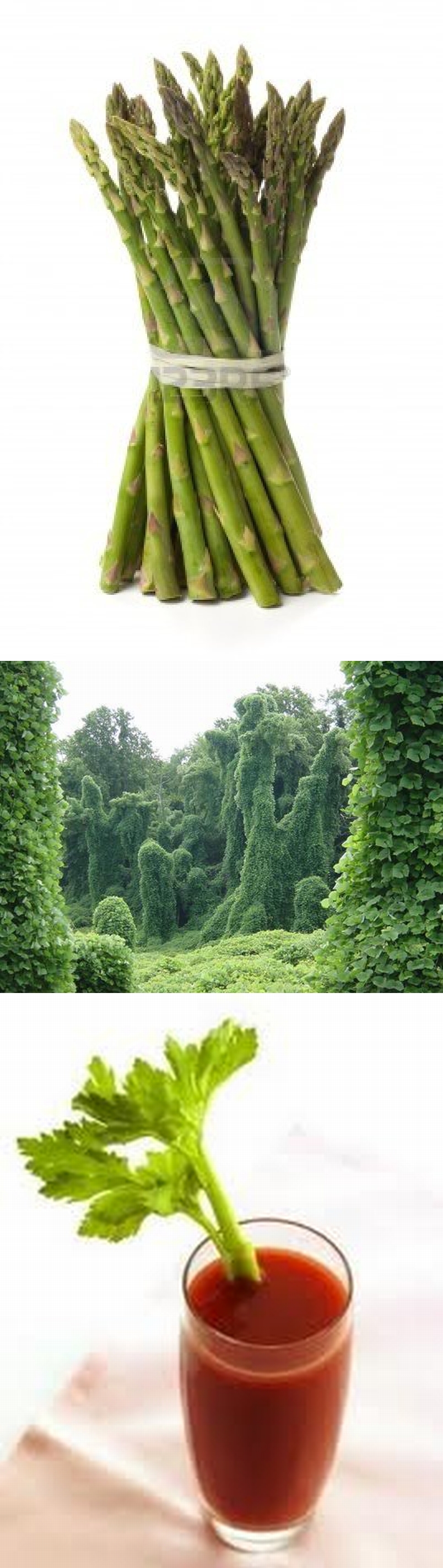
Forget the colloquial folk remedies—the mashed asparagus, the kudzu, the fried tomato juice—the mere grossness of these concoctions may cause you to upchuck any unassimilated booze in your belly, but are ultimately worthless in counteracting the chemical imbalances, the hypoglycemia, the congener impurities, the glutamine rebound and the absolute conviction that you are a jerk-off.

Even hair-of-the-dog, which this columnist swears by—but merely as an excuse to drink more—is only somewhat effective.  According to research and clinical trials carried out at Johns Hopkins Hospital, and subsequently approved by the FDA, from a physiological/psychological  standpoint, this is the way it works:

If you slam an ice-cold beer immediately upon waking up, you fool your hangover into thinking you have not yet stopped drinking.  By the time your hangover realizes it’s been jobbed, it’s too late.

Of course, once you finish that beer, you want another, then another, and there’s where the whole theory falls apart.

In any case, every year some trendy new hangover remedy hits the market—we’ve been over-promised remarkable results from such products as  HangoverBuster, Alcohol-X and Chaser Plus, each of which wound up being its own breed of rip-off.

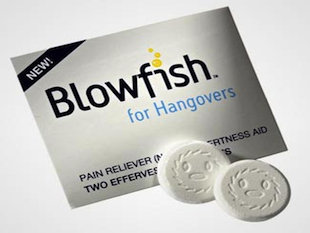
But recently, tablets sold under the brand ‘Blowfish’ hit the market, and according to Blowfish inventor Brenna Haysom, President of Rally Labs, the pills are a medicine born of personal necessity—she’d tried the pharmacopeia of so-called cures before coming up with her own unique formula.

“I was a hangover sufferer,” she admits. “I worked hard in finance, many times into the weekend, and I needed to function well the next day while still enjoying my free time.”

What makes Blowfish different?  Well, for one thing, it has been approved by the FDA for over-the-counter sales—remarkable at first glance, since the FDA has never before approved a hangover cure, most of which boast one or more unregulated herbs as the ‘secret ingredient’.

At second glance, however, it winds up being a big yawn.  Turns out that the FDA approved Blowfish because all the ingredients in it were common, every day stuff you keep in your house; stuff you would have taken for your hangover anyway.

Essentially, Blowfish is made from high doses of aspirin and caffeine packed in effervescent tablets that dissolve in water.

“After a lot of trial and error,” Haysom claims, ‘I realized that I was on to something: a reliable, effective hangover cure.”

Whatever, Brenna; but I suppose it makes sense considering that your last big pharmaceutical hit—those pills you guaranteed would make you lose weight while you slept—turned out to be extremely potent sleeping pills.  You woke up after a week and found out that you had, indeed, shed a few pounds.

Despite the new scam, we’ll offer Ms. Haysom, gratis, a freebie advertising campaign tagline:

‘Take Blowfish So You Don’t Blowchunks’

Yummy yup’ik

As for you, Hangover Boy, get off your ass.  I want you to sign a solemn pledge to never, ever, ever, never again allow a drop of beer, wine, booze, not even so much as a single piece of Yup’ik—Eskimo fermented whitefish heads—to cross your lips.

At least, until lunch.

Posted in GENERAL | Tagged , , , | Leave a comment

A Boyd In The Hand Is Worth Two Anheuser-Busch

Entaksi

If I was a chef (which I’m not, but I bet this conjecture is close to the mark) and one week I over-ordered, say, lobster, prime rib and maybe Macedonian weasel cheese, here’s what I’d do:  I’d purée them all in a giant Cuisinart, make a bisque, invent an esoteric name like ‘Entaksi’ or ‘Imekala’, serve it to top guests on a busy Saturday night, then wait for the accolades about my aggressive creativity to roll in.

That’s what I used to think of winemakers who made strange varietal blends, using grapes with opposing characteristics, different brix and individual responses to things like malolactic and oak-aging.  I figured that they somehow wound up with extra blocks of various grapes and just tossed them all together in the stockpot and hoped that the resulting wine would make them appear iconoclastic geniuses on the edge of the New World cut—which it rarely did.

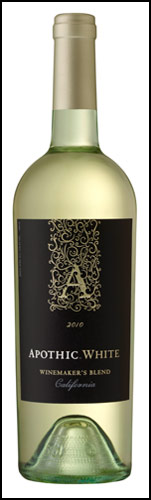
So, when a sample of Boyd Morrison’s ‘Apothic’ arrived via NAFTA (North American Free Tipple Alliance—a trade bloc open only to wine writers) and I saw that it was a blend of chardonnay, riesling and moscato, my first reaction was to roll my eyes and squish out a ‘sheesh’, especially since he only made 400 cases of it and still sells it for only fourteen bucks.

Sounded like a textbook case of, “What do we do with these hectares of chardonnay, riesling and moscato we were supposed to pick on September 17, but couldn’t because the Mexicans were all hung over?”

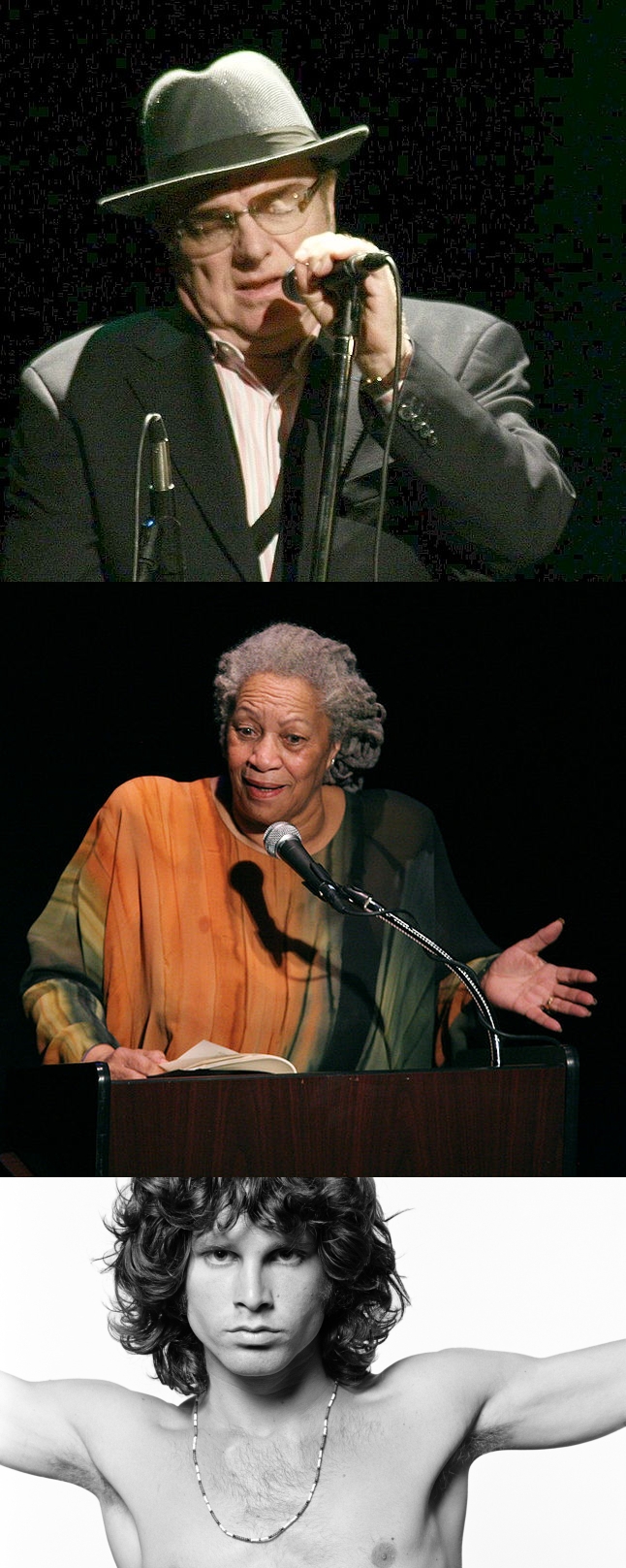
Not, mind you, that I don’t trust the winemaker’s judgment.  Boyd Morrison is to wine what Van Morrison is to transcendental live jazz/blues fusion; as Toni Morrison is to maudlin, over-the-top black woman brain-dumps; as Jim Morrison is to lizard kingdoms.

Well, perhaps that is a slight exaggeration.  Were I to shame the devil by telling the truth, I’d have to admit that I don’t have the slightest clue who Boyd Morrison is.  He is a riddle wrapped in a mystery inside a fermentation carboy.

And it’s not for my lack of trying.  As a professional critic, I may embrace few of journalism’s most essential mandates (i.e.; I take eons to get to the point, I embrace unnecessary words, I rarely fact-check and if I end with a bang, it’s merely the sound of me imploding my Dell Pentium), but I do try to do a modicum of research about a wine’s genesis before I write about it.

Usually, that’s child’s play, because most enologists are ego-tipsy, and once the heavy lifting is done and they’ve got nothing to do but drink, they love doing interviews and posing for photo ops and they pass out biographies as eagerly as that bee-costumed schmuck at the florist shop passes out 10% off coupons.

Not So Boyd Morrison

Uncovering background dope on Boyd Morrison wound up being tougher than discovering the identity of a random Special Ops commando.  As buffs of the beast know, wine websites usually cream all over their winemaker, but Apothic’s neither has a tab on him, nor any photographs of him, and even more cryptically, in discussing Apothic’s origins, offers this sentence:

‘In late 2005, a Master Winemaker envisioned an epic wine that would combine Old World blending traditions with a markedly New World style. Thus began the path that led his protégé, winemaker Boyd Morrison, to create Apothic…’

Further copy mentions the mysterious ‘Master Winemaker’ several more times, but never once identifies him by name.

Strangest of all was the conversation I had with the winery itself.  They were extremely accommodating and friendly—too friendly, perhaps.  They insisted that they were gathering my requested biographical information as we spake; that it would be to me within the hour.

Michel Chapoutier

That hour passed, then another and another and twelve more…

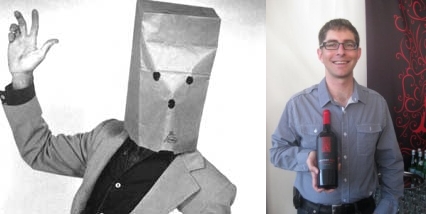
Ultimately, taking the bull by the horns, I found a brief film clip of Boyd being interviewed at Joe Canal’s Woodbridge liquor store.  At least, it was someone claiming to be Boyd Morrison.  This individual was extremely clean-cut, nicely coiffed, wearing what looked like a pair of Skechers designer glasses—not at all resembling the loping, slovenly, unshaven protohumans I usually encounter when I ask to meet the winemaker.

Who are you, and what have you done with Boyd Morrison?

If this is indeed Boyd Morrison, he looks more like the kind of fellow who wants to discuss Jesus and your immortal soul when you answer the door at ten o’clock Saturday morning.


Ah, But The Wine…

So, as I began to say before I got all sidetracked by Boyd watching, when I uncorked the wine, I expected this arcane alloy to go the route of most last-minute desperation blends, which generally hit the palate sort of wrongly—flabby, unbalanced and lacking finesse—kind of like my Entaksi bisque.

In fact, my Apothic epiphany was profound and my surprise could not have been more pleasant.  Apothic is obviously a well-planned and intentional blend of expertly-chosen grapes; it rolls across the tongue in a series of juicy, sweet fruit layers—and the fruits are sufficiently well-defined that even a first-year tasting student should be able to assign each to the varietal from whence it sprang.  The moscato kicks in honey and probably a bit of rose; the riesling brings peach and apricot to the party while chardonnay’s ripe apple notes are obvious.  The wine retains 2.58 g/110 ml residual sugar, but a nice acid spine (3.36 pH for geeks), partly the result of picking the grapes at night, when acids are highest—as  the intensity of the fruit notes are partly the result of a later-than-usual harvest in 2011, but also due to centrifugal racking.

How do I know all this?  A little Boyd told me, via viticulture notes, which he signed in such an obtuse manner as to further compound the mystery…

…Except That:

Will the real Boyd Morrison please stand up?

I think I’ve figured it out.

The wine’s website insists that ‘Apothic’ was named for an alchemistic place called the Apotheca, wherein 13th century vintners stored their most coveted concoctions.

Fie on that, I say, because if that were the case, why not call the wine ‘Apotheca’?

No, that’s what mystery writers refer to as a red herring.  A quick reference check with the most valuable site on the web, Urban Dictionary, will tell you what ‘apothic’ really means.  And I quote:

‘Generally used to describe a dull, boring, or depressed person.’

So that’s it.  Boyd’s not a spy, not a cipher; he is a wet blanket, a soporific stuffed shirt, a nudge—probably too introverted to want any publicity.

Dude!  No worries!  We can’t all be gregarious, clubby, Big Men On Campuses like yours truly!

The game plan going forward?  I’m sure you’re too shy to make suggestions, Boyd, so let me take the driver’s seat here:

You make the wine and I’ll make the headlines.

*

Apothic White Winemaker’s Blend, California, 2011, around $14.


Posted in CALIFORNIA, Chardonnay, Moscato, Riesling | Tagged , | Leave a comment