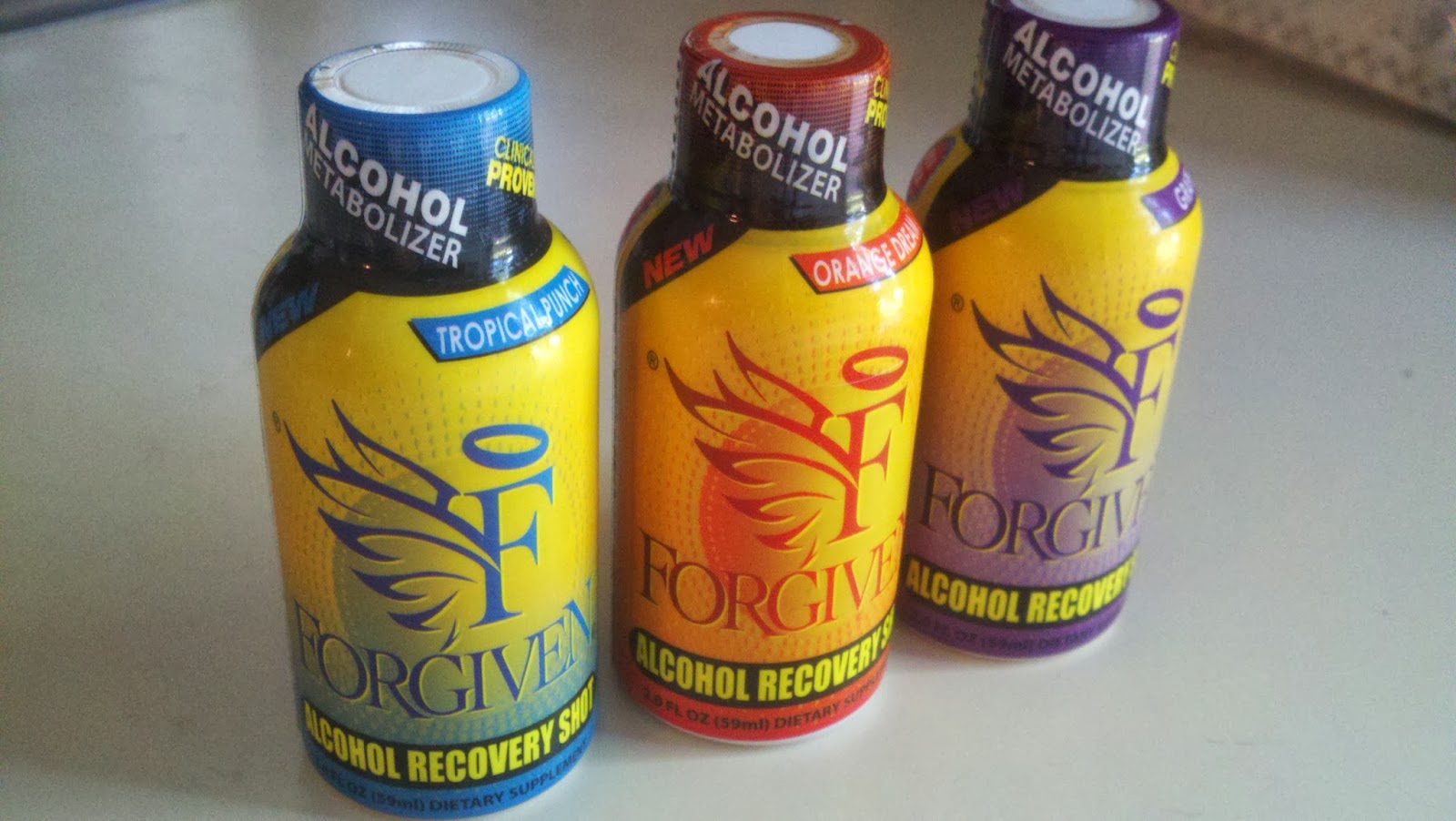
Can ‘Forgiven’ Be Forgiven For Stalking Me Until I Wrote This Review?

I love, love, love customer product  testimonials.

“This shit really works!!! I swear by it!!! I can drink all night… Take forgiven… Drink 2 bottles of water before bed… And feel totally refreshed in the morning at work!!!!” says Nichole Dawn January of Peculiar Senior High.

Nichole Dawn January

Nichole Dawn January

But even more than customer product testimonials, I love girls like Nichole who drink all night while renouncing morals, common sense and capital letters, then still have time to go to bed and get up for work.  Oh, and I love that her alma mater is ‘Peculiar Senior High’.

See, I stalked out sought out girls like Nichole in my own senior high school with the OCD of a UFOologist searching for flying saucers without obvious strings, David Janssen looking for that one-armed psychopath or Diogenes the Cynic looking for an honest man.

Karma is as Karma Does…

forgivenLast month, I received a box of vials containing ‘Forgiven Alcohol Metabolizer’, a product which apparently, really, truly works.  By ‘really, truly works’, of course I mean, it does so according to the customer testimonials, the Forgiven blog and the persistent follow-up emails from the Forgiven reps appearing every morning in my inbox like magical fairy rings in the moonlight, whereof the ewe not bites.

Clearly, they don’t read this column.

NewellandRogersI have written about packaged hangover cures in the past—every time Mr. McFeely speedily delivered my liver one, in fact—because I am a  kinder, gentler wine writer who likes to acknowledge free gifts with free press time, even if I proceed to totally make merry over said product like I have with every previous freebie hangover cure with the kind of regularity found in Ex-Lax customer testimonials.

This time, I figured that I would allow discretion to be the better part of valor; that is, until the emails became a nuisance, and I, a world-weary wine writer—one of Agnew’s nattering nabobs of negativism—finally tossed in the towel.

Ergo:

Drink, Drink and Make Merry

Tari Topolski

Tari Topolski

Billing itself as the ‘world’s first and only alcohol metabolizer’, Forgiven’s proprietary formula has been ‘proven’ effective via a 2012 clinical study undertaken by Tari D. Topolski, PhD.   Now, this is an interesting conclusion, because I know from my crack-shot research team that Stanley Goldfarb, PhD— a nephrologist at the University of Pennsylvania’s Perelman School of Medicine—claims that, “There’s nothing you do to remove the alcohol byproducts from the system. They have to be metabolized by your liver, which takes time. There’s no evidence that anything is better than waiting.”

His sentiment is echoed by brethren sawbones Dr. Michael Oshinsky, a neuroscientist at Thomas Jefferson University, who adds,  “Alcohol is a pretty good poison.”

So, I vetted Dr. Tari, currently working as a ‘User Experience Researcher ‘ at Microsoft, and came up with a couple other clinical trials she’d been involved in:

“2(3x – 7) + 4 (3 x + 2) = 6 (5 x + 9 ) + 3 = ??”

‘How Do Adolescents With Facial Differences Compare With Other Adolescents?’, which the abstract indicates is a study of how teenagers—drunk or sober—react to other  teenagers with supremely fucked-up faces, like those with extra eyes, misshapen craniums, deformed schnozzles or chartreuse-colored skin.  Not sure if any merry-making goes on when kids see John Merrick in Algebra II because I was too cheap to purchase the entire study, but if I was a betting man, I would lay money that the study was undertaken at Peculiar Senior High.

‘Economic Evaluation of Aquatic Exercise for Persons with Osteoarthritis’, which sounded so boring I didn’t even bother with the abstract, but which I assume is a study about how much money you can make selling pool memberships to old people.

So, apparently, Tari is a genuine doctor after all; right up there with Seuss, Pepper and Phil.

Such scientific proof certainly bolsters Nichole’s earnest, if drink-fueled affidavit , and the  accompanying Forgiven literature promises ‘No Complex Directions!’

Earlier formula rejected by Forgiven executives

Earlier formula rejected by Forgiven executives

Now this is important, because Forgiven is meant to be taken by drunk people, not hung-over people, so complex directions—like if the stuff had to be poured into a spoon, heated over a candle, drawn into a syringe and jacked directly into a vein—it could lead to spillage.  Also, drunk people see double, and if they tried to read complex directions, they would see the directions twice and potentially overdose.

On the downside however, people do not drink to avoid getting drunk, which is exactly what drinking a shot of Forgiven is supposed to do for you; by ‘metabolize’, braniacs like Dr. Teri mean an enzyme-catalyzed chemical reaction which actually helps the body eliminate the booze.  Once the liver has done its God-given duty and cleared your deck of unwelcome euphoria  and replaced it with teeth-gnashing agony, it is too late.

In order for Forgiven to work, you need to take it just after finishing your last drink—the same philosophy under which the Peculiar High School glee club sells prosthetic fingers for deformed bulimics in Algebra II to ram down their throats just after meals, not the following day.

Cogito ergo sum:

Does Forgiven really, truly work?  I do not know.  Along with Nichole’s customer product testimonial, the Forgiven web site has a whole page dedicated to the dangers of alcohol abuse.

I quote:  “When you consume too much alcohol, the body cannot clear the toxins from your system and as the acetaldehyde builds up, a person goes from being a sappy drunk to a mean drunk and dizziness and nausea set in and it is all downhill from there…”

Me, third from left, in drag.

Me, third from left, in drag.

This frightened me so much that I swore off demon rum forever.  I signed the pledge, and somehow, went from being a sappy drunk to being a mean teetotaler.

So, I can expect no more freebies from Forgiven, nor need of any, and hence, no more emails from their aggressive sales team, who are to be forgiven for having failed to be careful for what they wished for.

Posted in GENERAL | Tagged | Leave a comment

Scrawny Scribes Scrawl Scraggy Screeds—Steve Heimoff Screwed

Nice people don’t realize it, but when they try to get all acerbic and mean, they sound lame.  And do you know why they don’t realize it?  Because they’re nice, that’s why.  A nice person being mean is like a Chinese person trying to pronounce the letter ‘L’ or a dog trying to meeow—their systems are simply not hard-wired to accommodate it.

Sentenced to 30 days in the electric chair.

Sentenced to 30 days in the electric chair.

Chinese people, of course, are wise enough to spell ‘chop suey’ without any alveolar lateral approximants, and when a dog is approached by a Chinese chef, he does not whine ‘Please let meeowt of here’, he barks hysterically.

Nice people do not always use the same highly-advised insight, and, far from making themselves seem less geeky (like Justin Bieber dissing Bill Clinton while pissing in a mop bucket) it raises their geek quotient exponentially.

Case In Point: 

grimleyOn Facebook, there have been a recent slew of anti-Obama posts by Pat Sajak.  Pat Sajak!  I know, right?  When Pat Sajak tries to be anything but an unfunny Midwestern douchebag with a MILFY co-host, you know that inmates have taken over the asylum.  Pat Sajak is not funny by intention, Pat Sajak is funny by proxy.  Ed Grimley’s classic Sajak stalking is comedy on it’s A-Game;  Pat Sajak trying to milk guffaws from smart people by mocking the President of the United States is not.  If he is trying to change his mass-appeal from dweebish to  droll, Steve Urkel to George Carlin, it comes across as sad, like when the loser in high school shows up one day wearing a Hollister hoodie and Gucci loafers.   You hurt for the dude and glance down rather than have to deal with his flop sweat.

Case In Other Point:

L.: Heimoff R.: Peptic ulcer

L.: Heimoff
R.: Peptic ulcer

Vinography’s Alder Yarrow decided to play with his dong in public yesterday by publishing a rambling, misspelled, personal diatribe against poor old Steve Heimoff—Wine Enthusiast’s West Coast editor.   And why?  Because Steve is a self-important, middle-aged nerd who likes to brag about getting tattoos, as if this somehow gives him ‘street cred’ instead of making him look like a desperate, inane wallflower?  That would be funny, campy material!  But no—it’s because Steve Heimoff recently questioned the role of ‘social media’ in wine writing, a topic about as interesting as an infected peptic ulcer.

hol_69537_02_prod1Seriously, can you imagine a sillier topic to get your baby-blue Hollister Beach Boxer panties in a twist over?  And actually waste the time writing about?

I can:  Last week, the Canadian dollar lost .08% against the Vietnamese dong—and even then, an article would at least highlight the fact that the Vietnamese call their main currency ‘dong’ and be worth a mercy chuckle.

Yarrow then goes on to play with Joe Robert’s dong, giggling with schoolboy naughtiness over that particular cutesykins critic’s column on the same dorky, boring subject, quoting him with devilish glee:

“…if people can have a social media relationship with a f*cking bag of candy, don’t you think they can have one with a premium wine brand…?”

which Alder thinks is ‘hysterical and spot on’, but cannot bring himself to actually write out the word ‘fucking’ because he’s such a nice guy.

'Show us your dugs!'

‘Show us your dugs!’

Yes, Alder Yarrow is a nice guy.  That comes across loud and clear.  He even looks like a nice guy, all clean-cut and curley-haired and smiley-faced; he’s always mooning on about his beautiful family, saying how pretty the sky looks that day, how ‘culture all but oozes out of the cracks between the cobblestones of Vienna’ and how lucky he is to have a job sucking Jancis Robinson’s right teat—not for a sexual thrill, of course, because that wouldn’t be nice, but a professional teat suck, thus enabling him to imbibe the milk of human kindness and nourish his nice guyhood.

Now, you might question why I am writing a column on a column on a column and write your own column, and you would be justified if you did, but you would also be missing the key ingredient in the recipe:

I’m not a nice guy.  I’m a total prick.   I don’t give a shit whether or not you agree with my views on Alder Yarrow, on pinot noir, on social media in wine bloggery, on cobblestones in Vienna or on Steve Heimoff’s anchor tattoo which reads ‘Hey, Ma!  I got a gob!’  because I’m a bastard asshat f*cktard.

Clipboard alderAnd so, when in the course of my mental misadventures I gnaw upon the bones of these witless wankers, it does not seem weird or out of place; it seems like the natural order of the universe.  When Yarrow and Sajak do it, it seems like something’s gone wrong with the earth’s magnetosphere.  I am the predator and they are the sniveling vegans in my carnivorous world, and believe me, brothers and sisters, it is fabulous and funny at the top of the food chain.

And the best part of all?  If you dare to think that this piece is not funny, you may be assured  that I will shake my head at your sad, humor-impaired worldview and presume that you have offered yourself to the schlachthaus, lamb to the slaughter, as a dull, droll-free noob.

You will have revealed yourself as a ‘nice guy’ and I will say a novena for your soul.

Posted in GENERAL | Tagged , , , , , | 3 Comments

Paso Robles Wine Country: Bo Barry And The Dark Side Of The Moon

(This piece is an excerpt from ‘A Rite Of Paso: Paso Robles Wine Country’ to be released December 1, 2013 by Intoxicology Press, LLC.)

Ol’ Bo Barry wants his city back, and brother, is he determined to get it—and ol’ Bo doesn’t care how vocal he has to get about it.

Both Bo, but not our Bo

Both Bo, but not our Bo

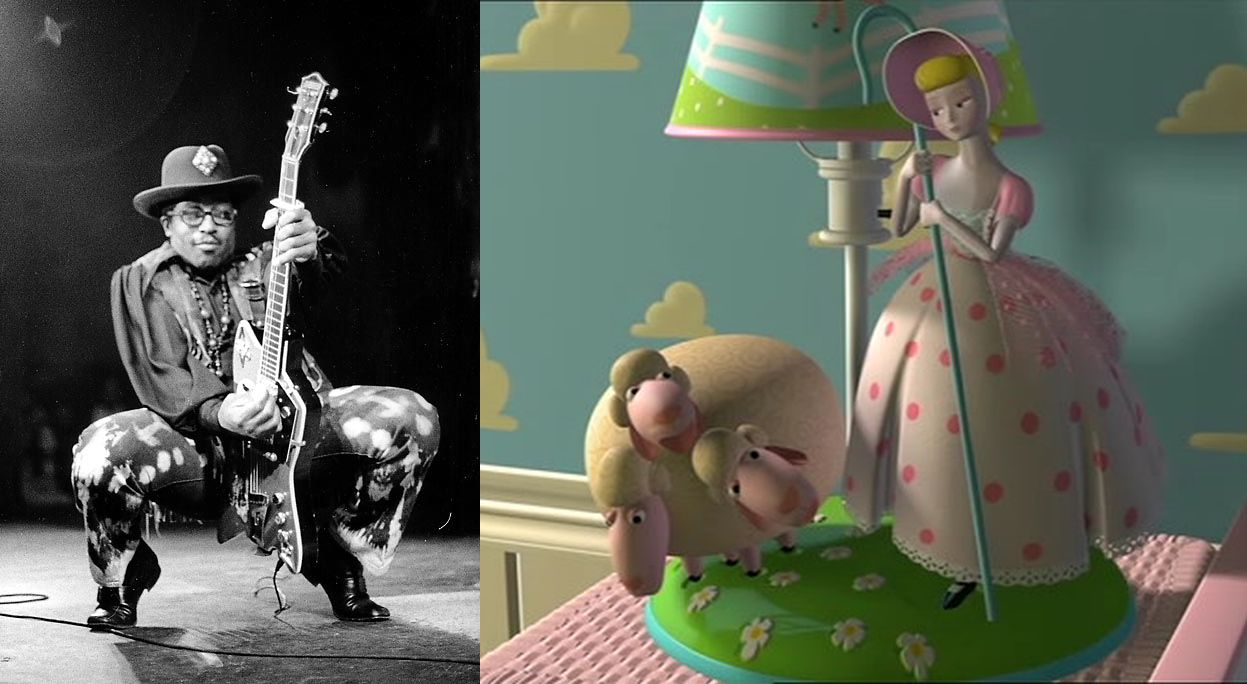
I call him ‘ol’ Bo’ despite the fact that he’s fit and 32. I have no idea what his real name is, and maybe that’s it. But to me, ‘Bo’ sounds like an old person’s handle—Bo Diddley, Bo Schembechler.  Bo Jackson is over the hill and Bo Derek’s cornrows have turned gun-metal gray.

And don’t get me started on Bo Peep—she can’t keep track of sheep, let alone her age.

Speaking of Peep ‘n’ sheep, Bo Barry is as dyed-in-the-wool Paso Roblan as anyone in town; other than a few years in Florida, he has pretty much always lived here.   His mother ran a day care in the center of town and throughout his early years, he was exposed to a broad sector of the local rug rats, many from working class homes and grounded in the sort of keepin’-it-real worldview that Bo idealizes to this day.

Justin and Deborah Baldwin

Justin and Deborah Baldwin

The year he was born (1981) was the same year that Justin and Deborah Baldwin founded Justin Winery, and Justin’s 2010 purchase by an L.A.-based billionaire may be a metaphor for the Paso Robles wine industry’s unbridled growth over the intervening decades.  When Bo was a baby, there were only eight wineries in Paso; it was not yet an officially recognized AVA and the ‘heritage’ grape was zinfandel—fat and happy in the blazing heat of San Luis Obispo county.   Baldwin and a few others pioneers like Gary Eberle and Robert Hall thought the microclimate perfect for a Bordeaux-style blend, and within a decade, Tablas Creek visionary Robert Haas and his partners, the Beaucastel brothers  Jean-Pierre and François Perrin were planting Rhône  varietals in the arid, high-elevations.  They were outsiders, but they were able to adapt to the indigenous culture; to contribute to it, to enhance it, to fuse with it: They were to the community what merlot is to cabernet sauvignon.  In short, they were as respectful to their new neighbors as the were to their new geology.

Then, the rest of the world got the memo.

“All of the sudden, the wine business exploded,” Bo remembers, and not fondly.   “Great for the city’s economy, great for them.  But instead of becoming part of Paso Robles—a real storybook small town, where people were always there for you, where cops stopped to help you change your tire, where  we didn’t need curfews—Paso Robles sort of became part of them and their culture.  As a community, we became overrun with egos.  With arrogance and a sort of rich-kid attitude. ”

untitledHe points to the loss of the West Coast Kustoms Car Show, which had hauled cash and cars from all over the world into downtown Paso for thirty years, as a watershed moment.  “The wineries didn’t like the cruise and the show; they complained about the noise, the trash—claimed there was gang vandalism, people urinating on lawns and so on.  I remember it being family-oriented, rockabilly bands, something we looked forward to as kids.”

People show off their tattoos during tattoo expo in BudapestTo hear him tell it, the city fathers—ultimately, the folks responsible for deep-sixing the lead sleds, hot rods and nifty fifties festival—are all in the pockets of the wineries.  And,  since the three day Memorial Day throw down was not necessarily wine oriented—rod freaks tend to be more a Bud Lite crowd—it had to go, along with the other loud and lusty local lollapalooza, the Tattoo Expo.   It drew ten thousand people to downtown Paso every year, he insists, until the ‘think drink, not ink’ dinks dumped it down the sink.

“It was a monster hit in its first year,” he declares.  “Upwards of ten thousand people showed up   As a concert promoter, those are unheard of numbers for an event with no major bands headlining.”

409037_185040211603526_1905270282_nBo is indeed a concert promoter—according to his business card he is Creative Director of MCC (Music of the Central Coast) and CEO of Blitz Entertainment Group (BEG).   His business plan involves developing, packaging, booking and promoting the homegrown talent until the Central California music scene is as juggernaut an enterprise as the wine scene.

ClipboardggIt sounds like a tall order, but there is a sort of unstoppable quality about Bo Barry; he’s like those beanstalk beans that Jack threw outside his window—plant a seed in his brain (in this case, ‘What’s wrong with Paso Robles these days?), then run like hell, because he will talk without pause for as long as you’ll let him—until the cows come home, literally.  Because the Paso he pines for was populated by a lot of cattle people, and he shakes his head at least a couple of his friends, ranch kids, who used to tug on Durango shit-kicker boots and who now slip into $500 Gucci sneakers.  He reserves the same sort of shuddering scorn for local girls he grew up around who now work in winery tasting rooms or serve wine at fancy dinners and who—in his opinion—are putting on airs.

And Bo has laser vision when it comes to bullshit:  “This isn’t Hollywood and we shouldn’t want to be Hollywood.  This isn’t even Napa.  Paso Robles is a sleepy little cow town with remarkable vineyard soil, that’s all.  I knew these girls when they were eating corndogs at the California Mid-State Fair, when they had friends of all kinds, African American, Hispanic, whatever.  Now—and I hate to say it—they look down on hard-working, blue collar Mexicans.  I’ve seen them give me dirty looks when they see me with my black brothers.  Like, I know who you are, girls—I grew up with you.  That made-up glamor and so-called class and rudeness ain’t you.  It ain’t in you, because you weren’t raised like that.”

And to the guys in Guccis:  “Dudes, you’re cowboys.  You look like a bunch of hip-hop thugs.  You are supposed to handle these kind of things with dignity.”

Bo Barry

Bo Barry

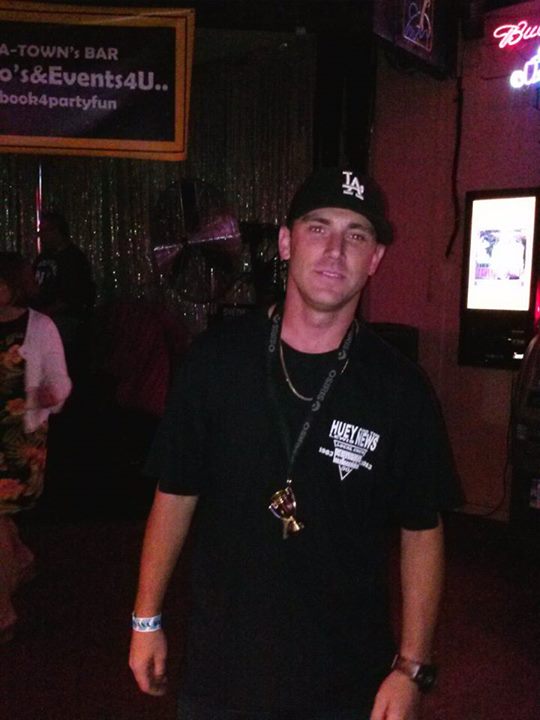
Bo looks like Eminem, and part of that is calculated—the backward Dodgers cap, the oversized  t-shirt, the close-cropped brown hair—but most of it is not.  Like Slim Shady, Bo Barry looks out at the world with a sort of steely, half-quizzical glare, neither threatening nor particularly friendly.  And, like Marshall, he is far smarter than his persona radiates and fiercely focused to a point where speaking to him can be a bit off-putting.  If I was a betting (and stock-buying) man, I’d invest in MCC—if he has half the drive and moxie in that endeavor as he did in my interview, it’ll be a hit.  Like all successful entrepreneurs, it’s not necessarily the self-confidence he feels, it’s the self-confidence he telegraphs.  He contacted me three times after our interview to mention other non-wine events that used to be part of Paso’s heritage but have been killed by (in his opinion) the bought-and-sold city council:

“We had the Amgen Tour of California bike race, too.  Lance Armstrong was here along with all those low-flying helicopters and news vans like you see on TV.  It’s gone, too, for some undisclosed reason.   But, we know the pattern already, so we didn’t need a reason.

And later:  “Oh yeah,  I almost forgot about the Digital Film Festival; it brought superstars like Clint Eastwood and Gary Busey to town.  Five days of events.  Benford Standley was the organizer; he’d arrange for a lot of permits and everything and they still jerked him around.”

Okay, so admittedly, Bo Barry may be infected with the ‘conspiracy theory’ bug that has essentially replaced democracy as the motivating factor driving American politics.  He is extraordinarily worried about radiation from Japan, the imminent declaration of martial law, and he believes that organic cooked vegetables can heal cavities.  To his credit, he is equally amenable to admitting he’s wrong when I send him interesting Snopes links about these topics.

Then and now: Bad, but not this bad

Then and now: Bad, but not this bad

Over the years, I’ve noticed an innate paranoia that seems to be part of the id-package of children raised in single parent households without a lot a cash.  Some of these kids are hell-bent on proving that they have little to offer the planet, and others are equally determined to explode from status quo and kick the planet’s ass.  Bo is of the latter breed.  He posted a question to his Facebook friends on Paso’s  decline, Mayberry to metropolis, Main Street to mean streets, and within an hour, he got dozens of replies from Paso contemporaries who were in full agreement.  The advent of a drug culture, even among elementary school kids, watered-down morals, an uptick in racism and crime and a general feeling of disquiet is there now that was never there before.

beanstalkHow much of this is directly related to the wine industry is debatable;  Bo’s sincerity about bringing back Paso’s Norman Rockwell charm is not.  And somehow, I trust that, even if he doesn’t succeed, he’s going to die trying.

Just as I trust that when he gets to the top of his beanstalk, he’s going to discover that he was the Giant all along.

Posted in CALIFORNIA, GENERAL, Paso Robles | Tagged , | 3 Comments

Re: Re:Find: A Re:Markable Find

(This piece, as well as the last two columns posted, are excerpts from ‘A Rite Of Paso: Paso Robles Wine Country’ to be released December 1, 2013 by Intoxicology Press, LLC.)

If Alex Trebek posed the answer, ‘The smartest guy in Paso Robles’, what would your question be?

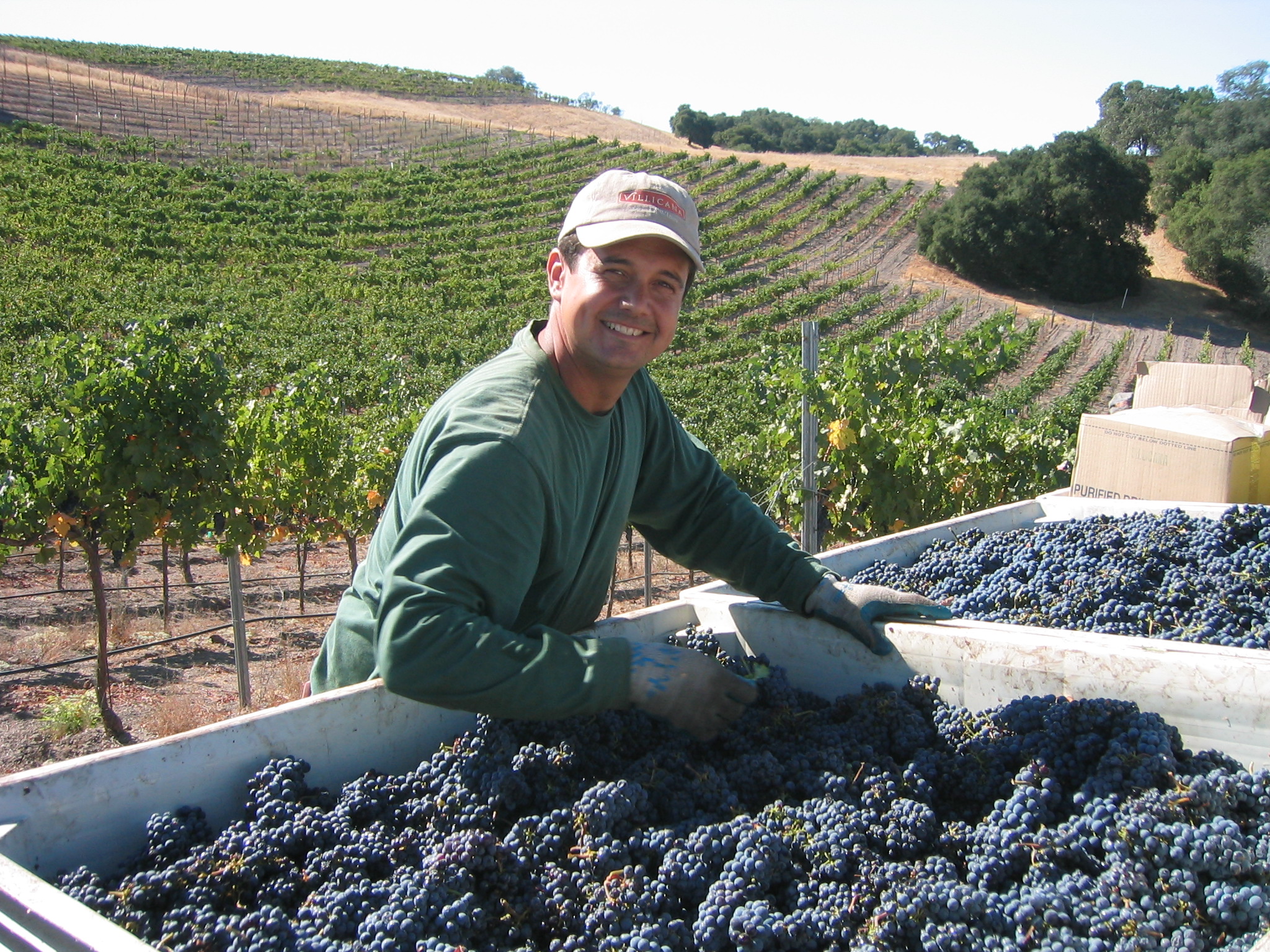
108024005The more I think about it, the more I figure that mine would be:  ‘Who is Alex Villicana?’

Some Rhône-focused winemakers use a Spanish technique wherein they bleed juice from the vat after crushing the grapes and allow the leftovers to macerate with double the volume of skins, thus concentrating available phenolics.  The loanword used is paso doble—Spanish for ‘double pass’—and the extra juice is considered superfluous and usually dumped.

Suppose you walked into the brainstorming session at the winery—in this case, I promised not to name names—and said, ‘Not only have I figured out how we can avoid pouring out all that watery, thin juice down the drain, I found a schmuck who is willing to pay real money for it.’ 

5Robert-ChesebroughWould you be the smartest guy in Paso?  Nope.  You’d be the schmuck who sells your thin, watery gold to the smartest guy in Paso: Alex Villicana.

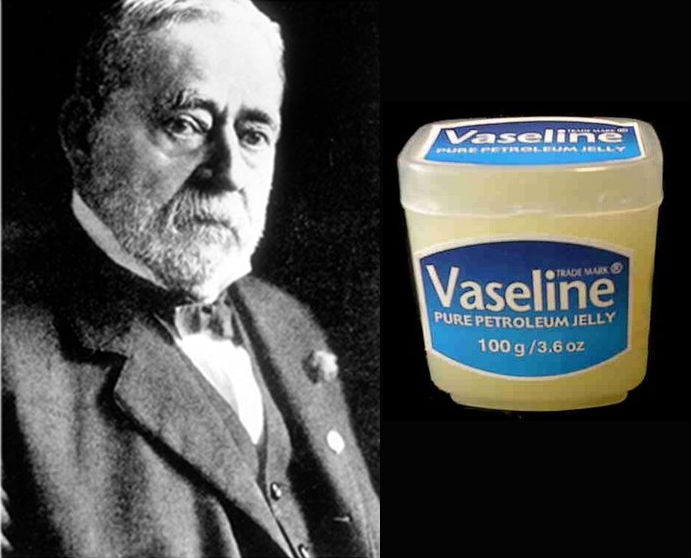
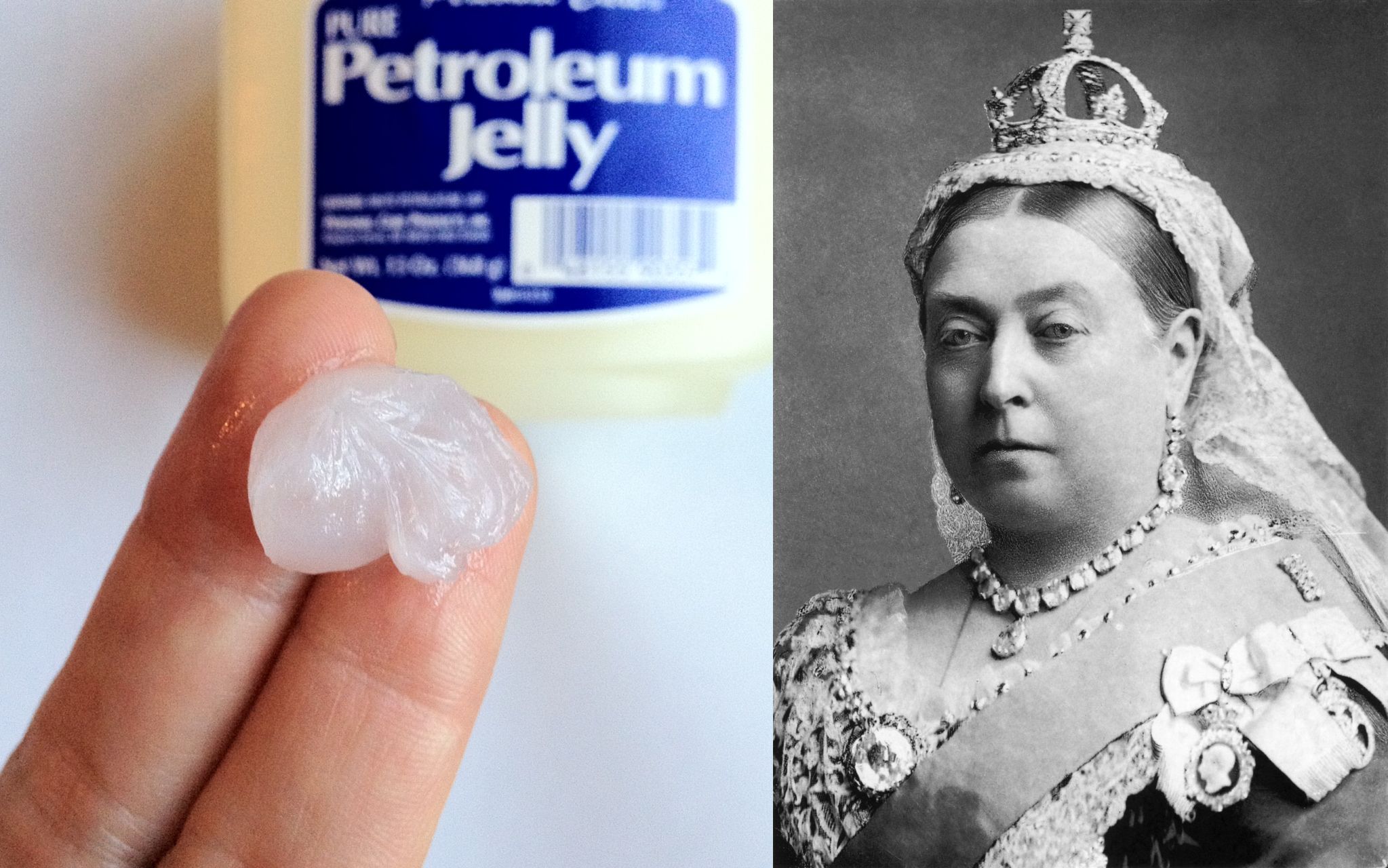
No rational businessman likes to waste product, which is where petroleum jelly comes from: It’s essentially the waxy residue that occasionally has to be removed from oil rig pumps.  And was simply trashed until 1873, when Sir Robert Chesebrough refined it and renamed it Vaseline.

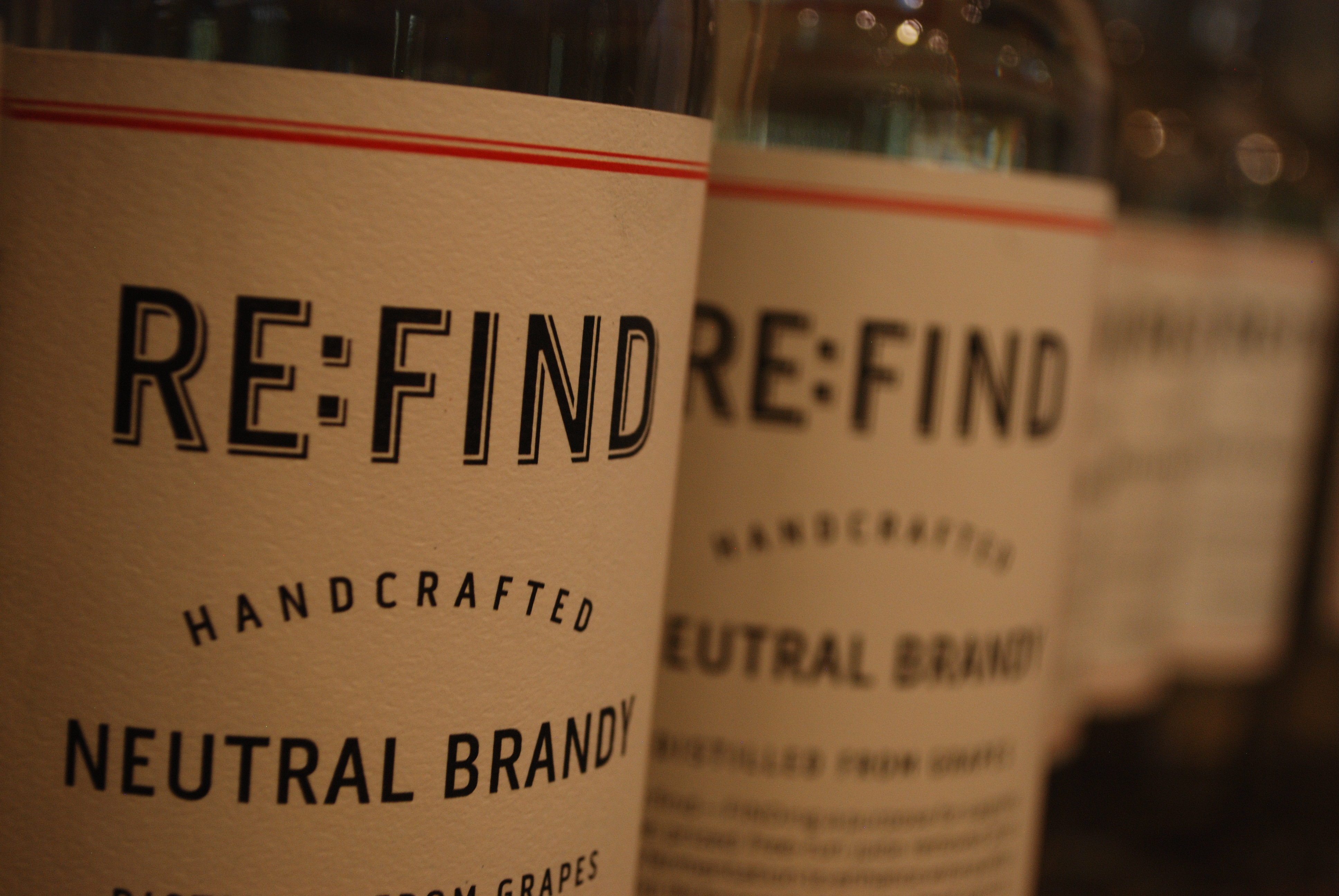
Ah, That Word: Refined.  Or, Re:Find.

Since opening the doors to  13-acre, 1800-case Villicana Winery in 1993, such cavalier wine wastage rankled Alex Villicana.  I mean, it stuck in his craw like a slivver of French oak.  He says, “The free-run juice can be made into saignée rosé, but not very good saignée rosé; if you’re going to make a pink wine, you grow, pick and vinify for that.  Sugars are too high in our bled juice, and the wine winds up pretty flat.  I don’t want my name on that.”

Clipboard vaselineStill, pouring it into the  irrigation reservoir is not an appealing alternative—it smells yucky and attracts fruit flies.  Why it  took nearly a quarter century to figure out that you could make moonshine out of it may be another Jeopardy answer, but it did.  In any case, Re:Find Distillery opened two years ago, and has been a success nearly worthy of the knighthood that Robert Chesebrough received in 1883 (upon which Queen Victoria extolled his product’s usefulness, claiming that she ‘used Vaseline every day’).

That’s a quote I will not touch, except to say that a few shots of Re: Find might have greased her skids even better.

CALI 028The first year, Villicana turned a thousand gallons of surplus saignèe into 200 cases of liquor, and knew he was onto something big when he sold out immediately.  So, the following vintage he began to nose around comrade crushers to see if they could be convinced to sell them their garbage at a premium price.

Rhetorical question, evidently.  Last year, when the brainchild was barely into its Terrible Twos, Villacana peaked at ten thousand gallons of what has been described as  ‘amazingly alluring’ by the Tasting Panel magazine and went for the gold in Martha Stewart’s 2013 Audience Choice awards.

First, a few re:marks on Re:Find’s rou:tine.

Clipboard jwThe fact that our word ‘alcohol’ is derived from the Arabic  كحل (al-kuḥl) and first distilled by Islamic chemists—a faith that bans its consumption—is perhaps not as ironic as the fact that the first ‘mandatory’ Pledge of Allegiance legal challenge came  from a Christian denomination: Jehovah’s Witnesses.  In any case, distillation involves heating a fermented liquid to a point above the volatility of its alcohol content (172 °F) but below the 212 ° required to vaporize its water content.  The cooled, re-condensed steam contains ethanol—the stuff that makes us dance on bar tables, streak football games, sing karaoke and propose to people we just met—along with other lower-boiling-point impurities like methanol and acetone.

Because both of these undesirables evaporate at a temperature even lower than alcohol, they end up as the first drops in the collection vessel.  The wise distiller throws these away; the unwise distiller has a seeing eye dog—as little as 10 milliliters of methanol can cause blindness.  These are called the ‘heads’ of distillation.  The ‘tails’ are the heavier fusel oils like butanol (paint thinner) and the absurdly named furfurol, which causes an explosive free-for-all if allowed to get too hot.

Traces of each remain, so, if the liquid is put through the process again, a more pure—and hence, smoother— eau-de-vie emerges.  The theory is, by the time you have done this an infinite number of times, you are left with a substance that is, by definition, perfect—pure ethanol without taste, color or odor.

AristotleThe concept of perfection, of course, is unachievable;  in his treatise Metaphysics, Aristotle described it as ‘that which is so good that nothing of the kind could be better’, which is why distillers keep on keepin’ on. Funny thing is, the imperfections that don’t kill you—called congeners—are what give grog its persona; strip them all away and you are left with what the United States Alcohol and Tobacco Tax Bureau defines as ‘a neutral spirit distilled from any material so treated as to be without distinctive character, aroma, or taste’.

In other words, vodka.

A key misconception about vodka is that it is necessarily Russian or Polish in origin; that it made from grain or root veggies—and that each brand has its own identity beyond marketing schtick.  Note that the TTB specifies that vodka qua vodka (more Aristotlese)  should have nothing within it’s essence that detracts from its neutrality.  If it is not intentionally flavored, one ideal vodka should taste exactly like any other ideal vodka, which is to say, like nothing at all.  As such, it can be made from anything… rye, potatoes, beets,  lawn clippings…

Or Paso Robles Saignée.

Alex in the vineyardWith the sun on a downward arc, lighting the late September hillside with glints of gold and russet, Alex Villicana looks simultaneously relaxed and hyperkinetic.  He’s a handsome guy in the sort way that gets instant approval from the girl next door’s mom; he’s a marathon runner and it shows.  He waves a hand toward the slope, where the vines are in process of summer sayonara.  His harvest has been in for a week, the grapes crushed and fermented (primarily grenache, mourvedre and syrah), and the first step of distilling—he calls it the stripping run—has begun.

“One distinct benefit of grape vodka,” he says, “is  the compound glycerol which is produced during the fermentation. It forms the ‘legs’ in a wine glass and has a sweet, viscous quality that gives liquor uniquely smooth, soft characteristics.”

Grappa

Grappa

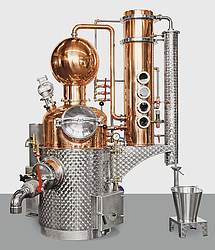
This is true grape brandy, and cannot be confused with the kerosene-like grappa distilled in Italian farmhouses.  Grappa is not made from grape juice but from grape pomace—the leavings of a winemaking operation—and distilled dry by employing steam via  a bain-marie-type gizmo.  Villicana does it the way they do it in Bavaria, with a Holstein copper vertical still.  This is a sparkling spire of form-follows-function engineering; a beautiful thing to behold.  Yet, though  the elixir that dribbles from the business end is truly magnificent, it does not  get passing grades on the TBB’s vodka exam:  It’s anything but neutral.   Bubbling throughout the spirit’s intoxicating infrastructure are fleeting floral flavors and a rich, almost oily  concentration of citrus and vanilla as well as the striking scent of…wait for it… lawn clippings.

Gentle and gentile at the same time.

holstein stillAnd then there are the cucumbers.  Seasonally,  Villicana will infuse his vodka—Russian for ‘water of life’, BTW— with various organic delights, and on the day I stopped in, it was ripe cucumbers, which was an effortless indulgence; a sweet, unalloyed triumph .  He’s got artisan gin as well, and the macerated blend of  coriander, orange peel, lavendar, grains of paradise(an African spice related to ginger) and orris root is a velvet wash across the tongue.

To figure out how to make such a silken purse out of saignée sow’s ear requires a new breed of radical, an auspex on the advance-guard of the alcohol army.

How cutting-edge is Villicana’s Re:Find?  Put it this way: If the Double Jeopardy! clue is ‘As of September, 2013, the only craft distillery in the entire Paso Robles AVA’—consider yourself a shoe-in for the cash.

Posted in LIQUOR, Paso Robles, Vodka | Tagged , , | 2 Comments

Brady’s Bunches: Robert Hall Winery

If another 6.5 magnitude earthquake hits Paso Robles like the one that collapsed the city’s landmark clock tower in 2003—and it will—you’d be challenged to find yourself in a better situation than touring the 19,000 square foot cavern under Robert Hall Winery.

Pouring cave concrete

Pouring cave concrete

The 4000 barrel cave is equipped with a series of swamp coolers for humidity and temperature control, keeping it at wine-ideal  55 – 60° F.  Designed by Robert Hall himself and mined by Nick Pokrajac  of nearby Templeton, the caverns—completed in 2001—were dug using the cut and fill technique conventionally used in hard-rock ore extraction.  The caves can accommodate  289 guests and/or earthquake refugees, considering it was engineered to withstand a quake of 8.5 on the Richter scale—somewhat more powerful than the one that leveled San Francisco in 1906.

Robert Hall

Robert Hall

Robert Hall’s three-hundred acre estate on Paso’s east side began in concept in the 1970s when a trip to the Rhône Valley convinced the Minnesota entrepreneur and horse-breeder that the winery good life might be a better introduction to his autumn years.   I will not say  his ‘retirement’ because if I did I might wind up like Fortunato, walled up in one of the cellar niches: Robert Hall is hardly ready for the ice floe.  He works his own vineyards tirelessly even today and can as often be seen shadowing the cellar rats or lording over the tasting room.  And when he isn’t there, he’s likely globe-hopping, schmoozing, promoting product—which is one of the reasons why his wines can be found in virtually every state.

Prior to breaking vineyard ground in 1995, Hall and his wife Margaret wandered California appellations to find the right soil and climate for his pet varietals from Rhône, and like a few before him and many since, discovered it in Paso Robles.  That year, he purchased Home Ranch in the rolling hills above the Estrella Plain, and later, Terrace Vineyard overlooking the Estrella River, Bench Vineyard, where the estates most intense reds are grown, and the 18-acre Brady Vineyard, planted to cabernet sauvignon and cabernet franc and named for Don Brady’s family, Robert Hall’s winemaker.  More on Don in a sec.

ROB056 RPC6.aiRobert Hall’s goal for the winery’s production was around 100,000 cases—a target which he has not yet hit, although producing wine for other wineries with the additional capacity is a good way to keep the crew busy and cover the cost of goods.  Half of Hall’s acres are planted to cabernet sauvignon, but he’s planted thirteen on his beloved ‘Rhône’ varietals and five traditional grapes of Oporto which are blended to make Robert Hall Vintage Port; 2009 is the current release.

In the on-site laboratory, one Hall hallmark is here marked:  The focus is on color monitoring and quantifiable tannin measurement, which plays as vital a role in vinification decisions as sugar and acid levels.  This is down to Don Brady’s technical background, reaped in the laboratories and llanos of Texas where he learned his craft.

Don Brady

Don Brady

Brady was  born in Navisota, Texas and won a horticultural degree from Texas Tech.  As a budding winemaker, he could not have picked a better time or state in which to study: The University of Texas owns  over a million acres of land in the western half of the state and they have never quite figured out what to do with it beyond oil leases.  They tried fruit orchards, they tried eucalyptus groves, and with some of the run-off cash from the oil, they tried grape vines.  Enter Don, who at Texas Tech was a benefactor of some of the shared wealth.

At this time, as in many states  following Prohibition, the Texas wine industry was finally in the process of re-invent itself.   It’s an interesting history, for sure, and I’m sure that even most Texans would be surprised to know that their state has more native Vitis grape vine species than any other region on earth and that Franciscans were making wine near El Paso a hundred years before California missionaries planted their first vine.   Small wonder that Brady’s agricultural department was chomping at the bit to establish data and figure out why the gigantic, ideal high desert was not producing more quality wine—less, in fact, than even miniscule Sancerre.  In the mid-Eighties, Brady reminisces about working the vineyards by day and running sample tests in a basement chemistry lab by night.  That sort of fast-paced, candle-at-both-ends  learning curve saw him pick up a lot of information quickly and led him to his first industry job at Llano Estacado winery, which he helped steer from a 13,000 case winery to a production of more than 80,000 cases annually.

Brady was in on a similar ground-floor growth explosion at his next post at Ste. Genevieve Wines in Bakersfield, Texas.  This was near his family’s home in Fort Stockton, and he says wistfully, “I always wanted to return to my roots, and to my great chagrin, I got my wish.”

Brady's bunches

Brady’s bunches

It was not necessarily his wife Kasi’s  fondest wish.  She’d also grown up there, and insists that having spent twenty years trying to get out of West Texas, she was not eager to spend the rest of Don’s working life festering there.  So, even after having been awarded the Texas Wine and Grape Growers Association’s highest honor, the ‘1991 Louis F. Qualia Award’ for outstanding contributions and leadership in the Texas wine, by 1999 he sensed that it was time to shift gears and move to the epicenter of the American wine industry, California.

And two years later, that’s where Robert Hall found him; Senior winemaker at Delicato Family Vineyards, where he was bouncing back and forth between Modesto and King City.   By that point, Don was getting a bit weary of long commutes and producing wine in Big Box bulk—even good stuff.

A single walk through the vineyards with Robert convinced both of them that they’d  seen the future, and it was now, and not only that, it was gonna to be (as the Texans say) walkin’ in tall cotton.

“I wanted to grow with a vertically-integrated winery—the appellation, the vineyards  and people with the will and ability to develop signature, house-styles; the best wines that Paso Robles could produce.”

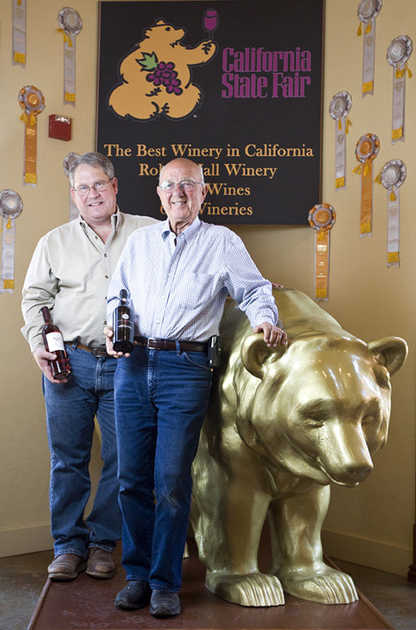
Don and Robert and Golden Bear

Don and Robert and Golden Bear

He found vintner’s Valhalla, his lone star, among the alluvial soils and uplifted seabed of several of Paso Robles’ ‘bubbles’—areas where climatic influence from the Pacific and  soil composition, whose value may be determined by mountain run-off and the kaleidoscopic arrangement of solids and pores—a world away from the plains of Texas, where the vagaries of nature can wipe out one crop in three and a quarter of counties still have dry laws on the books.

These days, Brady’s sugar-poppin’ palate-pleasers may be more Beach Boys than Lyle Lovett, less Texas T black gold than Forty-Niner nugget gold, but his colloquialisms damn sho’ ain’t, and listening to his gentle, lilting Abilene drawl is half the fun in chatting with him.  His ‘fine wine’ become his ‘fahhn wahhn’, choosing a vineyard site becomes ‘fahhndin’ the rahht abode’ and when his corkscrew doesn’t work, it’s  ‘womperjawed’.  Which detracts nothing from the technical alchemy in his constant data-mining in the winery lab and profound understanding of the art of his gig winemaking from root to Riedel.  I would not hesitate to say that Don Brady is among the sharpest tools in the wine science shed to be found anywhere in the United—straahk that—the ‘YOO-nahted States’.

In terms of bringing in the bling, Brady has also proved his medal mettle.  Personally, his acclaim includes being the 2001 recipient of the International Wine and Spirits ‘Wine of America’  award, and was recognized by the Paso Robles Wine Country Alliance (in partnership with the Independent Grape Growers of Paso Robles and San Luis Obispo Vintners Association) as Winemaker of the Year in 2006.  His wares have done as swimmingly, but reached truly remarkable heights in 2010 at the State Commercial Wine Competition, which considers itself the oldest and most prestigiously judged wine competition in North America.  Faced with a pool of more than six hundred competing wineries and three thousand entries, Robert Hall took home so many individual awards–five Best of Class (South Central Coast Appellation) honors, three gold and seven silver medals—that it was named ‘Golden State  Winery 2010’, the first time that in the competition’s history that a Paso Robles winery—or even a winery from the greater Central Coast AVA— had  been so honored.

Robert Hall Winery

Robert Hall Winery

And like that dude who was so impressed with his Remington shaver that he bought the company, Don Brady was so wowed by his new digs that he bought the farm.  Eighteen acres of prime cabernet country on a sweet spot on the first bench above the Estrella river, where the soils are sandy and open.  Besides his cabernet sauvignon, which he maintains is Paso Robles’ destiny grape both as a commercial cash cow and horticultural gem (“It reflects Paso Robles and amounts to more than half of what do here”), he is hugely high on petite sirah, for which the his land seems ideally suited.  He admits that it can be a hand-sell among those who confuse it with Robert Hall Winery’s other primo cultivar, syrah, but once sampled,  it is hard to forget.   Blackstrap black, both bright and brooding, Brady has overcome two of the grape’s failings in other single-varietal versions: He’s tamed the tannins and avoided an overt  prunishness that comes from grapes picked too ripe.  Fair to say, there is nothing petite about Brady’s petite sirah beyond the name.

Hammer of the gods

Hammer of the gods

‘Hammer of the Gods’ is an well-worn descriptor used by locals to describe a truly remarkable wine, and here in Paso this can mean anything from in-your-face to over-the-top.  Don Brady’s concoctions may be, on occasion, a little of the first but are rarely the second.  He believes that his primary objective is ‘to not screw anything up’.  His wines whisper loudly; his winemaking philosophy is a ‘quest for the good; an extension of the stewardship that begins in the vineyard.’  As a result, there is an appealing elegance to his product—a transcendent sense of balance to the myriad minutes and infinite incidentals that go into a superb glass of wine.

There’s grace to his grape, and  that, oddly, is down to his Texas touch.

Posted in CALIFORNIA, Paso Robles | Tagged , | Leave a comment

This Nutcracker’s Sweet: Jutta Thoerner, Manzanita Manor Organics

I wound up writing about Paso Robles wine country instead of any other wine country partly because when I mentioned it to a friend, he asked, “Is that in Texas?”

CALI 006Not only that, but I seriously didn’t even know how to pronounce it; I said ‘Paso’ with an ‘ah’ and Robles with an ‘ace’.

Beside, it offered perfect fundamentals for my scope:  Promise, past and pioneers with pizzazz, many of whom were still alive and interviewable.   I loved the idea that the appellation is hovering between old school and new wave, ingenuity and institutions, and I was curious if in real time, the balance is tilting on the tightrope and about to pull a Karl Wallenda, landing on one side or the other, or if the current crop of vintners are eager to preserve Paso’s delicate twoness.

And I was intrigued to discover that my idealized Roblan, with textbook texture and an eye on the rearview, both outside of and directed by history, was not in the vineyard but in the walnut grove.

 Nuts to Diamond

18165Jutta Thoerner is proud of her nuts, and justifiable so.  They are small, thick-skinned beauties, able to withstand the tribulations of dry-farming while scrabbling into the kitchens of a wider audience.

In fact, when it comes to their caretaker, the nut doesn’t fall far from the tree.

Since purchasing two hundred acres in the Adelaida Foothills in 1992, Jutta—and her partner Cynthia—forged a mission statement that has not fluctuated a whit:  “We wanted to obtain organic certification; we wanted to be able to sell walnuts retail, not wholesale.  We did not intend to, and never have, employed fungicides, pesticides, synthetic fertilizer or hormones on the farm.  Ever.”

Name your Biblical plague.

Name your Biblical plague.

And they were willing to embrace all the associated headaches:  As we tour the orchard, Jutta crooks her thumb at a National Geographic-quality live trap in a small clearing between orchards.  “Wild boar,” she indicates.  “Not as big a problem as squirrels,” she maintains, “but when one shows up, you better believe he can eat more than a squirrel.”

Ground squirrels, the Biblical plague of Central California produce growers, are rife in this part of western Paso, and Jutta points out a neighbor’s walnut farm on a hillside above Adelaida Road.  “For a number of reasons, he failed to set traps this year.  The squirrels took over, it was like watching the frogs overrunning Egypt—it was creepy to watch from here; the whole ground looked like it was moving.  Last year, he harvest 25,000 pounds of walnuts.  This year?  Zero.”

coyote11A single squirrel, she tells me, can eat $50 in nuts per season.   That cannot be in any rational farmer’s business plan, of course, so for abatement, she relies on traps, traps and more traps.  And esurient coyote.  Like Steve Thompson of Twin Coyote Winery, she shakes her head in muddlement at local farmers who kill them.  “Why not just shoot yourself in the foot and save ammunition?”

Yet to Jutta, even more frustrating than these raptorial ranchers and rapacious rodents are consumers who neither understand nor care about the effort required to earn and maintain an ‘organic’ certification in California.

More than once, in the course of the interview, the wry, grey-haired fireplug made sure I understood that that was the message she wanted to get out there.

Under Title 21 of the 1990 Farm Bill, in order to label your product ‘organic’, you have to comply with principles and authority of the Organic Foods Production Act, primarily insuring your use of materials and practices that enhance the ecological balance of natural systems and that integrate the parts of the farming system into an ecological whole.

organicIn abbreviated form—something at which the USDA does not excel —organic farming is based on an agro-philosophy that calls for maintaining healthy, living soils; the primary focus is feeding the planet, not the plant.  Do that right, the theory goes, and the plant will take it from there.  This includes managing the property without pesticides or synthetic fertilizer, relying on compost, organic manures (animal and ‘green’) and avoiding excess tillage.  Whereas there are specific federal standards and guidelines for the production of certified organic crops, the overreaching rationality of organic farming  often extends to a social conscience as well and it is fair to say that organic farming  owes as much to moral commitment as to physical compliance.

The bureaucracy, of course, doesn’t care who you voted for.  The bureaucracy cares—demands—that you keep careful records, including historical documentation of farm practices while undergoing routine checks by government-approved inspectors.  They’ll show up at random and sniff around the farm, the farm records and your farming practices.  Extra care is taken to ensure that you have not used irradiation, sewage sludge, synthetic fertilizers, prohibited pesticides and genetically modified organisms; nutrient sources are given a microscope by the Organic Materials Review Institute to ensure standards compliance.

CALI 021As you might imagine, for a two hundred acre farm with a hundred acre of walnut trees primarily managed by two women with day jobs, the paperwork alone required to cling to that precious seal is daunting.

And it’s not like they’re raking in the dough along with the walnuts.  On the contrary, their prices often follow a market dominated by mass-produced, heavily irrigated walnuts from the Central Valley which have been bred for numbers, not nuances.

She shares scare-stories about techniques used in the quantity-is-king commercial walnut industry, which are often bleached for appearance and fumigated with fungicide.   Major growers often harvest walnuts before they are ripe and in order to ‘cook out’ the rubbery texture and ‘green’ flavors of these nuts (and extend the shelf life), they may be heated to extremely high temperatures, destroying much of the buttery sumptuousness that is telltale in walnuts that have followed nature’s timetable.   By contrast, Jutta’s nuts are never dried at temperatures above 85°F—often lower than the ambient air.

Also, in order to maximize output, commercial growers also plant trees in huddled masses  ten to fifteen feet apart.  Optimum spacing for organically dry-farmed, low-yielding walnut trees is about thirty feet—and harvests are reduced accordingly.

“Organic farming is not about doing business as usual,” Jutta explains.  “We see higher production and labor cost, which makes operating the farm challenging. But we are hopeful that raised awareness will lead to increased demand and, over time, support organic products at prices that are recognized as appropriate for the value received.”

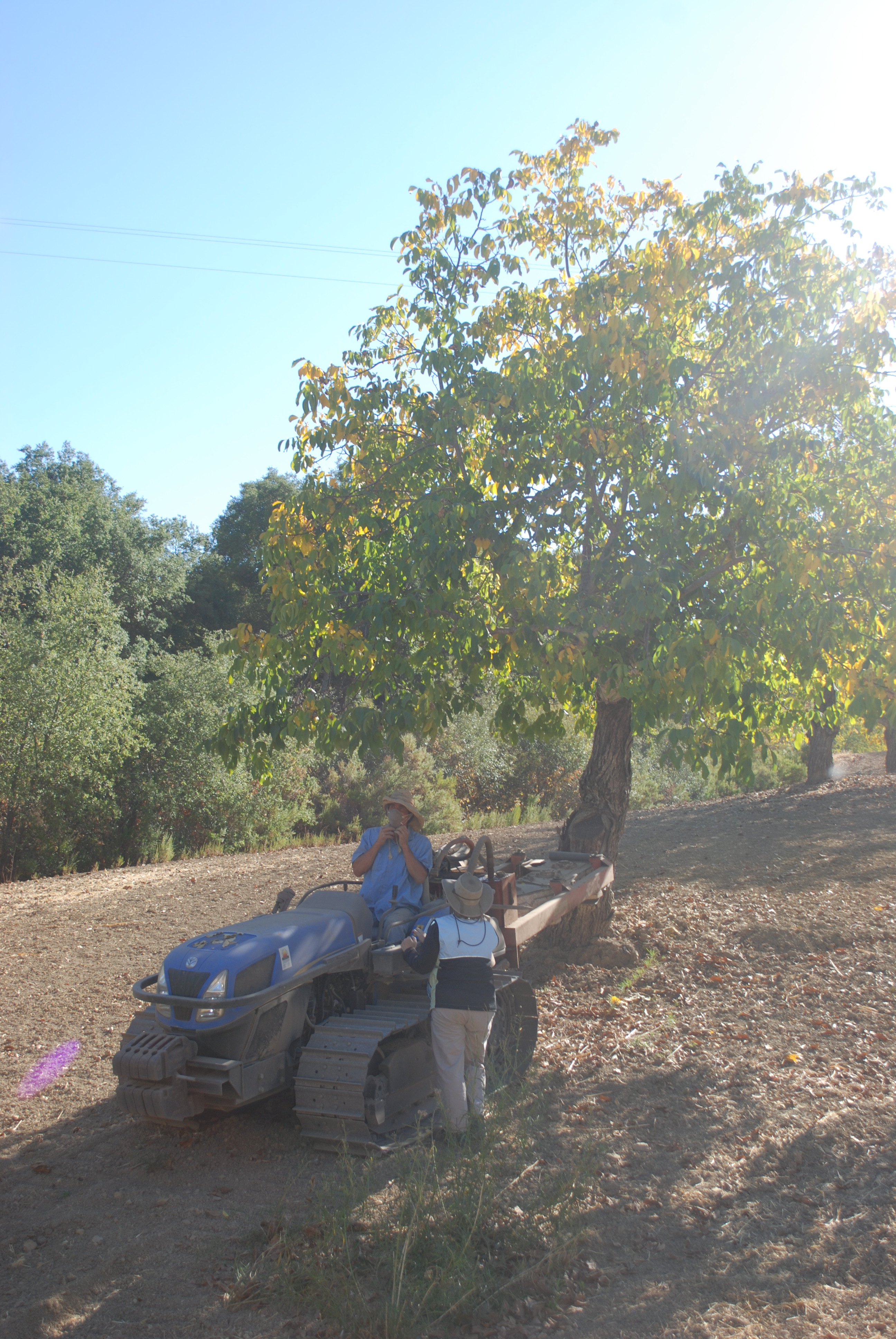
CALI 018John steers his tractor to a likely target—a walnut tree that is heavy with fruit and ready to drop.  This is neighborly synergism at its finest; John owns the tractor, Jutta owns the tree shaker.

Re-bar thin, with a Mr. Green Jeans affability that’s revealed when he removes his dust mask for the photo op, John extends the shaker’s boom arms around the tree trunk in a horticulture hug and locks it in; the apparatus is equipped with eccentric weights, and it’s brief moment of glory, makes the tree look like a wet dog drying off.  The entire enterprise, shuddering, convulsive and remarkable, takes about four seconds; roughly the same duration as the 2003 San Simeon earthquake.

And the nuts—nearly all of them—drop to the ground.

Now comes the human touch, pain in the ass though it may be.   Since the nuts must be gathered within a few hours of harvest—twenty-four at the most, otherwise they can fall prey to pest infestation, discoloration or mold—a hired crew is required to do what Jutta admits is ‘horrible, back-breaking work’.  The only thing harder, she says, is picking strawberries.

walnut_husker7333_120728

Mechanized sweepers are used by the big boys in Central Valley, but Jutta has had bad experiences them; along with the nuts, they suck up a lot of sticks and stones, which can indeed break your bones—or at least, the bones of your husker.  And husking is next critical step in preparing walnuts for market.   The one used at Manzanita is a set-piece from a Historical Society exhibit.  Seventy years old, jury-rigged with baling wire, louder than a shuttle launch, the gas-powered monstrosity winds up being very efficient at remove the bitter green husk from the nut in a very simple tumbling operation through something that looks like a big, cylindrical cheese grater.  From there, the nuts are slowly dried, and thus, are made ready for the masses.

At one time, Jutta was one step beyond these masses; before she’d streamlined her process and did the math, she sold her walnuts wholesale, where commercial processors would do some of the dirty work, including hulling and drying.  Problem is, industrial-level producers couldn’t care less whether the nuts are dry-farmed or raised without synthetic crap, and an organic crop winds up in the warehouse along with everybody else’s.   And they pay the same rate regardless, sometimes as little as a dollar a pound, at which price the whole dry-farm experiment becomes not only illogical but impossible.

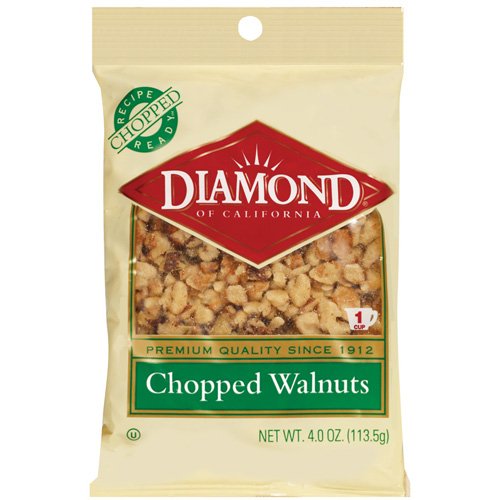
Jutta may be nuts, but she’s not crazy.  To her, this was a case where Diamond was not a girl’s best friend.

'Get thee behind me...'

‘Get thee behind me…’

But if Diamond is the enemy, that’s ‘enemy’ with an asterisk, and the century old company deserves kudos, certainly.  Founded in 1912 by a cooperative of Californian walnut growers, Diamond became the first nut company to advertise nationally, the first nut company to recognize the potential of television commercials and, in fact, their  Super Bowl XLI spot featuring Robert Goulet was ranked as that event’s number one ad by Advertising Age and resulted in a 68% sales increase for the brand.

Clearly, Diamond of California has worked just as hard for their portion of patrons as Jutta has for hers.

Like her nuts, Jutta’s audience may be smaller, but it is far more rapt.  Why?  And why walnuts?

In part because walnuts have been heralded as a near-perfect food since Alley Oop was king of the forest; they predate the last ice age as a nutrition-dense staple of the human diet, and by 5000 BCE, evidence shows that they were being cultivated by Neolithic people in the Mediterranean.  With the rise of Rome, they became an indispensible trade commodity, and amphorae filled with walnut residue have been salvaged from sunken Roman ships.   Beside being delicious, the kernels were used extensively as medicine, said to cure everything from baldness to upset stomachs.

And speaking of the Romans and their painful abdomens, the next time you refer to your testicles (providing you have them) as your nuts, thank Jupiter, king of the Roman pantheon.  The scientific classification is Juglans regia, Latin for ‘The King’s Gonads’.  The Greeks apparently though that a walnut looked more like a head, but I simply refuse to go there.

walnutAs a food source, walnuts are high in protein and fiber and possess a unique fatty acid profile, and compared to other commercially produced nuts like hazelnuts and almonds, have a higher concentration of free antioxidants and antioxidants bound to fiber.  Ironically, black walnuts—to which Manzanita Farms was originally planted—offer more of all the above, and in better ratios.  But they are notoriously hard to process:  According to Jutta, “You have to take a sledge hammer to them to get them open.”

So she replanted with heirloom English walnut trees like Franquette and Hartley, known to bear nuts with exceptional and distinctive flavors, nuances like butterscotch and a sort of creamy sweetness that lingers in the aftertaste.  In this, and in the stress-factor of cultivating in rough soil without irrigation, there are plenty of parallels to winemaking and wine tasting.

English Walnuts are fairly easy to grow provided you have time—a tree requires seven years or so from seed to set, and after that may produce two tons of nuts per acre each year for upwards of half a century.  With dry-farming’s requisite tree spacing, Jutta may only see a half ton per acre, but all the taste and health plusses are mustered within the meat, and so far do they surpass what is available at the grocery store that you’ll need to swallow some to swallow their superiority.

She’s not out-fashioned by technology, she’s elevated by purity of mission—and by the majesty of the endgame.  If California is regarded as growing the world’s top-quality walnut (99%  of the commercial US supply;  three-quarters of global trade) and if Manzanita Manor produces the finest walnuts in California, a first-year student of transitive relations can write the equation.

Posted in CALIFORNIA | Tagged , , , , | Leave a comment

Bryan Ulbrich Puts His Best Foot Forward—The Left One

white albumReally sensational music made by really phenomenal musicians allows us to overlook really dopey band names, right?  Which is why we can listen to The White Album without rolling our eyes.

Really sensational wine made by really phenomenal winemakers enjoys  similar dumb name  immunity.

Yes, I know the Left Foot Charley Winery & Tasting Room story.  Do you ?

club footWebsite verbatim:

‘As a child Bryan  [Ulbrich] was an impulsive kid with an inward leaning left foot. This combined with the unencumbered enthusiasm to run before thinking cause him to trip and eat a lot of earth in his day. The nickname grew out of family parties…’

So, my read is this:

LeftFootCharley_LOGOBryan Ulbrich’s family, perhaps under the excessive  influence of the very substance Bryan  chose to pursue as his life’s work, collectively decided to mock poor, unencumbered, physically deformed li’l Bryan by giving him a funny ‘gimp’ nickname, but—possibly suffering from the memory dysfunction that sometimes accompanies extreme, party-fueled inebriation—forgot that his name was ‘Bryan’, not ‘Charlie’, then just as promptly forgot how to spell Charlie.

Am I Close?  No Matter…

Yeah, it really makes no difference to me—no more than pointing out that if the Fab Four were  that intent on stealing Buddy Holly’s entomological band-naming theme,  then making an obnoxious pun out of it, they could have just as easily wound up as ‘The Rock & Roly-Poly Pill Bugs’.

Peg Leg! Peg Leg!

Ulbrich is beloved throughout the Michigan wine community, so I hope I take nothing away from his communal belovedry by gently pulling his leg (the good one), poking fun of his eponymous winery’s non-eponymous name.  It’s cute; really it is, and it’s not like he called the place Spazzy Clubfoot’s Crippley Winery & Handicapped Tasting Room.

He does call it an ‘Urban Winery’, however, touting  it as a ‘concept’.

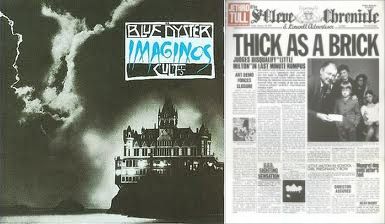
Clipboard thickAgain with the band similes, but ‘concept wines’  tend to be as annoying as ‘concept albums’—unless, of course, they are brilliant.  Hence, Blue Oyster Cult’s Imaginos is unilaterally annoying and Jethro Tull’s Thick As A Brick is ironically brilliant.

And hence, just as Muscedere Vineyards’ biodynamic, witching-hour, crap-filled-cowhorn is an annoying  concept, Ulbrich’s urban winery is brilliant.

So, Where’s The Concept?

L.: Bryan Ulbrich R.: Kenneth Bianchi

L.: Bryan Ulbrich
R.: Kenneth Bianchi

Let’s travel back in time, shall we?  And visit a younger, though  post life-of-the-party, unencumbered, dirt-eating Charley.  In 2004, Bryan  postponed a vacation to rescue a local vineyard that had fallen on hard horticultural habits thanks to a new owner who had about as much business growing wine grapes as The Hillside Strangler has dating my daughter.  Apparently, vital things like canopy management had been neglected and powdery mildew was threatening the harvest, and even with his best efforts, Bryan was only able to salvage a small crop of riesling.

That led to a eureka moment which is best elucidated by plagiarizing more words from his website:

‘Throughout Northern Michigan there are numerous small vineyards owned and farmed by individuals who do not have wineries. The grapes were often sent to giant blends. Many of these viticulturists are excellent farmers and deserve to see their work turned into wine.

And my read is this:

Bryan Ulbrich doesn’t feel like growing grapes.
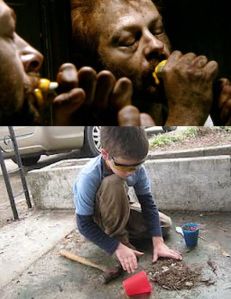
T.: Van Gogh as a man B.: Da Vinci as a boy

T.: Van Gogh as a man
B.: Da Vinci as a boy

And that’s copacetic, of course: Van Gogh is no less celebrated because he ate his paints instead of making them from scratch like DaVinci did.

Furthermore:

‘Left Foot Charley has teamed up with Northern Michigan’s best 18 growers to produce wines that display the range of aroma and flavor found among the glacially tilled hills of our appellations.  Each vineyard sells only to LFC…’

That one loses me, of course, because if Michigan’s eighteen best growers sell exclusively to Left Foot Charley, that means that the other hundred winemakers in Michigan use substandard fruit from bottom-feeding growers ranked  nineteenth or lower.

Well, when I called him to the carpet (hoping he didn’t trip over it with his inward-turning left foot and sue me), instead of disclaiming the statement or issuing  a retraction, Ulbrich shrugged—or at least, I surmise he shrugged since we were on the phone, but I swear to you, there was a shrug in his voice:

‘Everybody has their own idea of ‘best’.  These vineyards represent mine.’

Bryan Ulbrich

Bryan Ulbrich

Again, such braggadocio would sound as pompous as a poncey prince on public parade, except that really, Bryan is giving far more credit to fastidious farming than fermentation finaglery , even though—as we all know—a challenged cellar hack could make plonk from Montrachet fruit.

So in the end, what Bryan Ulbrich brings to the party (besides his deformed foot) is, in fact, a concept.

Can Anybody Tell Me What Wine Is Really All About, Charley Ulbrich?

We’ll begin with Left Foot Charley Pinot Gris, ‘Tale Feather Vineyard’, Old Mission Peninsula, 2011, about $18:

Or rather, let’s start with pinot gris.  Known as Fromenteau in its Burgundian birthplace, pinot gris is a bastard stepchild of pinot noir; other than color, it is nearly identical in appearance, although the Medieval mutation that created the blue-grey hue and added ‘gris’ to the name also brought a whole new flavor spectrum to the palate.  But more on that in a janky jiffy.

Larry Mawby

Larry Mawby

Pinot gris never really flourished in Burgundy, but spread eastward in search of happier planting grounds.   In Germany,  Ruländer was originally made from wild-growing pinot gris, and in Hungary, Cistercian monks planted the vines on the slopes of Badacsony and called it Szürkebarát.  Like Gewürztraminer and Muscat, pinot gris reaches a peculiar and specific majesty in the small (40,000 vineyard acres total) appellation of Alsace, where it accounts for around 15% of all vines.

In Michigan, pinot gris has been an experiment in progress since it was first installed by Leelanau’s Larry Mawby in 1981 after Myron Redford of Oregon’s Amity vineyard sent him cuttings; those vines, now three decades into it, are still producing.  But Larry never intended pinot gris to be a stand-alone variety, and notes that its contribution to his salubrious, celebrious sparkling wines offered a distinct ‘roundess’ of flavor that balances the pinot noir and chardonnay.    Even now, most Michigan growers with acres to pinot gris dabble rather than devote.

Gary Wilson

Gary and Theresa Wilson

Bryan Ulbrich devotes.  His gris comes from the west slope of ‘Tale Feathers Vineyard’—(which is indeed the correct spelling; I asked) on an elevated hill overlooking Power Island.  Grown by Gary and Theresa Wilson, the sandy, loamy, two-acre site is groovy gris ground, and the breeze from the bay sharpens the acids while judicious leaf manipulation draw in enough sunshine to sweeten the pot.  “I was impressed that Theresa and Gary decided to plant this somewhat exotic grape, “says Bryan.  “Plenty of farmers would have gone another way and planted a less exotic grape that might have had more face recognition, but would not have achieved greatness.”

Bryan’s 2011 gris raises the bar on what this grape can do in Northern Michigan; it shows a big, sweet nose of honey, melon, baked pear and lemon and delivers equal fullness and fruit across the palate, adding mango marks to the mélange, finishing with genuinely memorable intensity.

The bad news?  He’s all out.  The good news? He’s just released Vintage 2012, which I have not tried, but which Bryan assures me duplicates the flavor profile and may be even more rich than the one I tucked into.

Left Foot Charlie Pinot Blanc, ‘Island View Vineyard’, Old Mission Peninsula, 2012, around $12:

Margrit and Werner Keuhnis

Margrit and Werner Keuhnis

A 9-iron drive from Tale Feathers Vineyard is Werner and Margrit Keuhnis’s ‘Island View Vineyard’, on the eastern side of the same hill.  The couple is Swiss, and according to Ulbrich, “The vineyard  looks Swiss, too: By which I mean, it’s perfect.”

To which a true Käser would reply, ‘Not perfect yet…”

The Island View (same island) vineyard covers an acre, and when Werner took charge in 2000, it had been through several non-Swiss hands who left it in dire need of some TLC.  Werner takes note of each vine’s wish list and hand delivers: The vineyard is dry-farmed and has not seen a grain of synthetic fertilizer since his tenure began. Keuhnis is  from Bryan’s school of canopy management: The leaves must be pruned so that sufficient sunshine is allowed to reach the clusters; without it, sugars are not able to develop to optimum.  The vineyard faces inland, and is blessed with a thick layer of nutrient-rich, water-retaining loam.  The resulting wine is dry and medium-bodied; it exhibits well-defined pinot blanc aromatics of lightly-toasted almond,  green apple and quince, nice, moderate mid-palate with a bit of peach and lychee.  The acid did not appear to be exactly where it should be, and Bryan confirmed that vintage was warm and fermentation stopped early, so the titrable acid in the final wine was a little low compared to residual sugar.  Still, his fermentation technique is straightforward and he does not fine with agents or use yeast strains that produce a lot of esters.  The result is non-manipulated wine that reflect what the vintage, as well as the grape, has to offer without being shoved into a costume.

Left Foot Charley Riesling, ‘Seventh Hill Vineyard’, Old Mission Peninsula, 2011, around $11:

As it is in Germany, riesling was intended to be the lynchpin of the Michigan wine industry, owing of course, to the similarity in climate.  Where the Germans rely on steeply sloped river banks, we have hillsides and Grand Traverse Bay.  In both locations, grade and water allow grapes to flourish in a climate where they’d otherwise die during the first January deep-freeze.  That said, I have always struggled to find a Michigan riesling which might truly claim equality with the great German estates of  Rüdesheimer, Johannisberg and Winkel.  This may in part be because a common misconception of German riesling is that all are styled like the wines of Rheingau—big, concentrated, long-palate wines that brim with apricot, guava and spiciness.   Wines from Lake Michigan Shore, particularly further south, can at least lay claim to a version of a climate that can snag these tasting notes; Old Mission Peninsula cannot.  Bryan Ulbrich wisely opts to take his cue not from nonpareil Schloss Vollrads, Kloster Eberbach, Schloss Johannisberg and Künstler, but from the crisper, elegant and often more perfumed wines of the chillier German wine region, the Mosel.
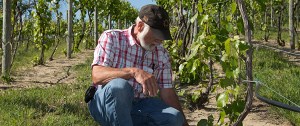
Tom Scheuerman

Tom Scheuerman

Good move.  Seventh Hill Vineyard is in Old Mission’s far north, probably beyond the range of the fat ripening and long hang-time that Rheingau riesling enjoys.  Tom and Linda Scheuerman farm the five acre site, formerly a cherry orchard, where a southern face creates a solar array ideal for making grape sugar while it can; a 17 g/L residual sugar offsets 2011’sa racy acidity.  Soils are gravelly and sandy, equaling drainage—one of riesling’s requisite contract riders.  And the wine exploits such canny care and clever conception to the max: It is beautifully expressive; light and lovely, with damp stone and key lime scents on the nose, a precisely focused palate showing a core of minerality sprinkled with crisp citrus, pine, green apple and that unmistakable riesling signet,  goût petrol.

signAll three of these selections show Bryan’s golden touch with golden wines; a lightness of being.

And that’s what wine is all about, Charley Ulbrich, Charlie Brown, Choo-Choo Charlie, or whatever  friggin Charlie you happen to be, unless you’re that douche Charlie Trotter, in which case, you do not need to know.

So, Start Off On The Right Foot: Drop In Before the Other Shoe Drops

Still more verbatim verbiage:
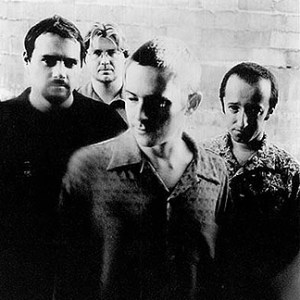
'Left Foot Bryan Epstein: The Fifth Roly-Poly Pill Bug’

‘Left Foot Bryan Epstein: The Fifth Roly-Poly Pill Bug’

‘Traverse City may be out of reach for many of you but for those with the gumption to find it, seek out this winery. They have plenty of flavor to share.’

What the plug fails to mention is that I will be performing in the gimp-friendly, wheelchair accessible LFC Tasting Room, Monday through Wednesdays,  from 3:00 AM to 4:00 AM in months without an R, E or Y in them with my new concept band, ‘Left Foot Bryan Epstein: The Fifth Roly-Poly Pill Bug’—we may suck, but we still have a better band name than ‘Toad The Wet Sprocket’.

Posted in Uncategorized | Leave a comment

Fitting A Square Bottle Into An A-Hole

ClipboardTomorrow night, when we are gluing ourselves to our television sets with the remains of Mr. Ed and watching the 65th Annual Emmy Awards, a quiet revolution will be taking place.

That’s when Truett-Hurst Inc. will release their much ballyhooed (by them) square wine bottle.

Retro-chic

Retro-chic?

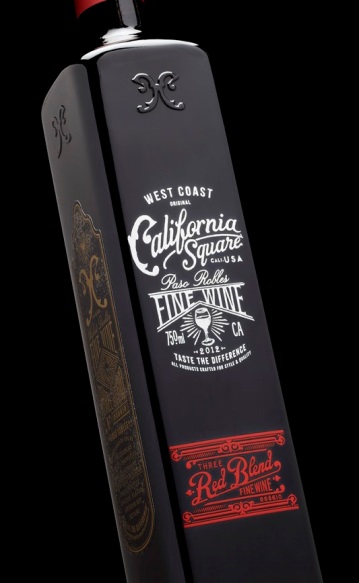
In a selfie promo, the Sonoma-based wine marketing company recently announced that an entire line of California Square Wines will be launched at the W Hotel in Hollywood and passed out gratis to panhandling celebrities.

In a supernova of Madison Avenue oxymoronography, bottle designer Kevin Shaw calls the vessel ‘retro-chic’.

Becky baby.

Becky

This is but one of the wine world’s oxymorons.  For example, Becky Suriano, stunning propritoratrix of Wine Me? custom-painted wine goblets, will gladly tackle a hand-blown glass if you want her to.  Hand-blown, of course, being an oxymoron—a comment for which Ms. Suriano undoubtedly considers me the regular kind of moron.

Hawaiian pinot noir is another oxymoron, despite Volcano Winery claiming they make one, then claiming they’re sold out despite listing it at a retail price of $24 per bottle.  Hell, Volcano Winery; if I was all out, I’d sell it for $50.

J. Lohr ‘White Riesling’ is the opposite of an oxymoron, whatever that is—an oxypoindexter or something.

But oxy schmoxy, Shaw’s retro-chic bottle is pretty cool to gaze upon; reminiscent of the decanters that sit upon the mahogany sideboard in the parlors of rich people.  And equally, to the squared-off leather cases into which rich people slip their bottle-shaped bottle.

aaronAnd speaking of rich people, here is Aaron Paul at last year’s W Hotel free-to-celebrities Emmy gathering show off his new non-chic round Aquaswiss wrist-watch before accepting his Grammy for Best Supporting Actor in Breaking Bad, whereupon, he became even richer.

And speaking of Breaking Bad, the only reason I am even going to watch the Emmys is to see how f**ked up the kid who plays Walt’s kid is in real life, even though that is a mean and rather a-holeish reason to watch.

And Speaking of Truett-Hurst’s Much Praised (By Them) Square Wine Bottle, Perhaps I Should Be…

Dolan and Hurst, or Hurst and Dolan

Dolan and Hurst, or Hurst and Dolan

Not much else to say, though—except that the wine is the brainchild of a couple of braniac wine people, formerly of Fetzer: Paul Dolan and Phil Hurst.  They partnered up in a Dry Creek Valley, 26-acre vineyard and created a biodynamic winery specializing in (what they call) super-premium and ultra-premium wines.  I am not sure what the difference between the two is, but I promise that neither appears to be an oxymoron.  Nor does Truett-Hurst, even though I am equally not sure why the winery is not called Dolan-Hurst.

And Have an A-1 Day…

So that’s it until Emmy time, kids.  Be there or be square.


Posted in GENERAL | Tagged , , , , | Leave a comment

Is Chris Kassel Gooder Than Jamie Goode? For Me To Know And You To Find Out

555597_10153228388455442_946345302_nSaw a plug for The Goode Wine Guide, Jamie Goode’s three part tutorial on wine ‘…from Britain to Bulgaria’, and it occurred to me that the lucky star under which the limey Londonese lecturer wound up with a name like ‘Goode’ is the same star that went all supernova and spattered space sputum all over my name.

You see, my birth name is Shite.

Of course, when I look at a map of Europe, which most Americans can’t even find on a map, it strikes me that I too could write a tutorialer-type guide to wines from Britian to Bulgaria; easy peasy considering that to get from London to Polvdiv as the crow drinks, the only countries you need pass through are Belgium, Germany, Slovenia, Croatia, Bosnia-Herzegovina and Serbia, and let’s be real, kids—how bloody hard could it be to write a primer on Herzegovinian Žilavka considering that nobody has ever heard of it?

Naturally, the only drawback is my stupid name, because who is going to line up to pay real money for ‘The Shite Wine Guide’?

Kassel chanting from 'The Shite Wine Guide'

Kassel chanting from ‘The Shite Wine Guide’

(On the off chance that you are wondering, my nom de plume ‘Kassel’ is a sort of Stockholm Syndromesque attempt to distance myself from my Hassidic heritage and to develop a manly Germanic identity; a traumatic bonding with the Master Race who drove my grandparents Lipshitz and Bat Shitva Shite from the Hesse-Kassel ghetto in 1942, a meggillah on tsain iz ois putzel, ‘God watches over fools and lab rats’…)

Well, it is not all about real money, is it?  I know a dude on Dequindre who will launder any bogus bills you care to throw my way.

Ergo:

‘The Shite Wine Guide: From Britain To Bulgaria’

Clipboard loserBritain:  Always ready to exploit any Achilles heel anywhere on the planet (i.e.; conquering India, temper tantrum over the Falklands, ‘Beatlemania’), England now fancies itself a credible wine region thanks to end-of-the-world global warming.  Tell you what, Inselaffers:  First make a red wine reddier than your coats at Lexington and a white wine whitier than your flag at Yorktown, then get back to me.

Diktus und Jasmientje

Diktus und Jasmientje

Belgium:  Flemish wine is a bigger oxymoron than Flemish literature, graphic novels and  Diktus und Jasmientje Go to der Kindergarten notwithstanding.  In a land where the tallest mountain is below sea level and it rains 366 days annually even when it is not Leap Year, it is understandable that their only exportable wine is made from fermented mussel shells.

Germany:  Ah, Aryan ancestors, primal fire, columns, banners ‘n’ searchlights: Führer befiehl, wir folgen dir!  But stick to riesling, because everything else you make sucks, including world war.

Austria:  Part of Germany, so shut up.  Oh, yeah; grüner veltliner: Woo frickin hoo.

Slovenia:  The slavering Slavs of Slovenia slithered into winemaking long before the French, Italians or the Germans, and the names of the twin vine-vaunting valleys of Sava and Drava dance from the tongue easier than the wines: Try pronouncing Cviček, Rdeča Zlahtnina or Ljutomer-Ormož after a bucketful of Dišeči Traminec.

Croatia:  Another old, old, old wine country who has had more than 2,500 years to come up with names than a funky white boy from northwest Detroit could pronounce.  And what did they wind up with?  Bogdanuša mladinka.  Crljenak kaštelanski.  Grk.  Croat wine naming wonks, I am good with ‘Dequindre’ but I don’t know where to go with ‘grk’ other the sound I make after a night of binge drinking while choking to death on my own throw-up.

Bosnia-Herzegovina:  Wines from war zones have their own unique charm, from Bekaa’s Musar to snake wine from Saigon.  B-H is no exception.  The country is mostly mountains, with the wines coming primarily from the extreme south, near Dalmatia, where you need to keep an eye out for large packs of spotted Disney dogs.

Dusan Jelic

Dusan Jelic

Serbia:  I like Dusan Jelic, who is from Belgrade, so I will not mention all the crap that comes down in his part of the world, only his silken, lovely, consistently 150 point wines which you should immediately go out and buy with any counterfeit money you have left over after ordering The Shite Wine Guide.  There, Dusan.  You owe me.

Bulgaria:  And finally, the end of the road.  Bulgarianese wines, mostly grown in five regions which sound more like Star Trek bad alien races than wine appellations.  In fact, I am pretty sure that I remember watching the Earth-Danubian War of 2056, the Sub-Balkan Conflict during the 127th episode of Star Trek: Voyager, and I would bet my bottom counterfeit dollar than Khan was a Thracian.

There it is, plonk puppies; learn anything?  Didn’t think so, but I did warn you.  My guide was conceived in shite and unto shite it shall return,  es iz nit geshtoygen un nit gefloygen, ‘May your cured Nova suffer no relapses’.

Here's looking at you, Ian.

Here’s looking at you, Ian.

Anyway, if you want to actually learn something about wine, better you should go to a maestro, not a maelstrom-monger like moi:  For four hundred dollars, Ian Blackburn will turn you into ‘well educated member of the wine society of Southern California  and a Junior Wine Executive (JWE)’ in four short weeks.  Corkbuzz Wine Studio offers multiple courses taught by ‘top-tier industry professionals’, and the International Culinary Institute of New York offers a $10,000 ‘Total Immersion Sommelier Training’ where everything is provided but the requisite skin-diving equipment.

And of course, there’s good ol’ Jamie Goode, who  has a PhD in biology, while all I have is a methyl red pH balance of 1.2 due to my excessively ascerbic wit, acid reflux disease and violent flashbacks from all the LSD I dropped while Jamie was going to plant school.

Posted in GENERAL | Tagged , , , | 4 Comments

Double Down On The Trésor: Baby Needs A New Pair Of Shoes

Ferrari-Carano has always been a ballin bling-bling operation—the reasons for which were said by Edgar Allen Poe a century before either Ferrari or Carano were born:

When madness takes your stash of cash,

And dumps it down the Lotto,

You may regret you did not get

Your ass to Eldorado.

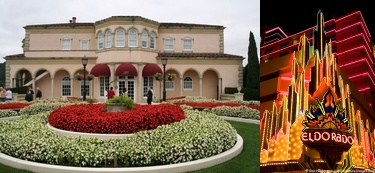
Clipboard houseThe magnificent Ferrari-Carano estate, nestled in the bucolic hills above Sonoma’s Dry Creek Valley and covering five luxuriant acres of garden and another 1400 of vineyard, is truly, the house that Jack built.  And by Jack, of course I mean Jack ‘Everyman’ Jones—as in ‘Gambling Jones’, who frequents Eldorado Casino in downtown Reno and goes double down before going belly up.

Don't make a maniac out of me; put your head on my shoulder.

Don’t make a maniac out of me; put your head on my shoulder.

Gaming is a noble, well-regulated and perfectly legal enterprise, and during Reno, Nevada’s 1970’s , the Carano family wanted in on the ground floor.  Eldorado Hotel & Casino remains one of the most celebrated dice dens in the dominion, and the Wiki entry states with authority that Paul Anka once performed in the Eldorado showroom.

Yeah, bitches: That Paul Anka.

So, in the deeply held, universal psychological desire to ‘turn the tables’ on the house, it is no small gratification to know that starting a winery is a far bigger gamble than hoping the dealer busts—although, in fact, both involve wagering money on something with an uncertain outcome with the primary intent of winning additional money.

And As Usual, The House Wins…

Top: Ferrari Bottom: Carano

Top: Ferrari
Bottom: Carano

From the outset, Don and Rhonda Carano had a long-term vision for their Dry Creek winery, and by the time they found themselves in a position to purchase vineyard land in California, the casino takings were prodigious.  As a result, they wound up with the cream of the cultivatable crop—19 vineyards scattered across Sonoma, Napa and Mendocino.  In addition, they hired the best, securing top winemaking and cooperage talent.  As a result, Ferrari-Carano has maintained a reputation for reliable wines created an identifiable and consistent style throughout most vintages.

As a genre, I was turned on to dry-fermented, barrel-aged fumé blanc not by Robert Mondavi (who invented it), but by Ferrari-Carano.  This was back in the ‘90s, when I had begun my journey from jugs to jeroboams, and this accessible, imminently intricate lace of creamy citrus, tropical fruit and nearly ineffable scent of damp, cut grass drew me in from the first sip.  In the intervening years, plenty of Mondavi ventures have left me chilly—and not in a cellar-temp sort of way—while Ferrari-Carano has clung to the old-school formula of playing to strengths.

As such, when Melissa Rush walked me through a tasting of the winery’s latest releases, one immediately rose to the top of the drink chain:

Ferrari-Carano Trésor, Sonoma County, 2010, around $25

Cars,_GirondeUnlike Burgundy, which is very single variety focused, Bordeaux ballyhoos blends.  Six grapes are legally permitted in Bordeaux red wines, but finding carménère in one is about as rare as being dealt a royal flush.  For the most part, the Big Five are cabernet sauvignon (for intensity and depth of flavor), merlot (adds suppleness and mouthfeel), cabernet franc (used for its bright aromatics), malbec (for color and tannin) and petite verdot (said to ‘stiffin’ the mid-palate); generally, vignerons blend these grapes in this order, although merlot may dominate wines made in the Right Bank appellations.

When an American winemaker concocts a potpourri of this pentamerous posse, it is for the same reason as the French do it: To balance the strengths of each variety against the weaknesses of the others.  But the regional identity, natural parameters and even the consumer focus of a California cabernet-based wines creates a difference to Bordeaux blends that is broad as the ocean between them—and this should be celebrated.

And so, Ferrari-Carano’s five-card stud is not a Médoc mimeograph, but a Sonoma sampler: A completely different beast.

Why? 

For starters, Central California (including Napa and Sonoma) is a southerly growing region compared to Bordeaux; it is moderately hot and dry with fertile, alluvial soils and fairly predictable weather patterns, at least in the apples to apples head-to-head.  As a result, Bordeaux grapes ripen over a cooler, shorter season and may wind up sharply acidic and, occasionally thin.  California wine country can, frankly, raise to fabulous fruition pretty much anything the vintner cares to plant, and the red wines end up jammier, plummier—even stewier—and in general, more approachable when young that Bordeaux.

That might be a fair summation of Trésor, too, which in past vintages has been pulled from different appellations depending on a number of seasonal factors.

If I was a betting man and wanted to wager on Ferrari-Carano futures, the notes on my DRF racing form might look like this:

2005: Sonoma County.  Long hang time, cool vintage; malbec picked first, cabernet sauvignon last in a dry season that allowed for maximum ripening.  69% Cabernet Sauvignon, 10% Malbec, 8% Cabernet Franc, 7% Merlot, 6% Petit Verdot.

2006:  Alexander Valley.  Wet winter and spring led to excellent results in the winery’s dry-farmed mountain vines in low-vigor soil.  Cabernet sauvignon a particularly magnificent grape this vintage.  79% Cabernet Sauvignon, 9% Malbec, 5% Merlot, 5% Petit Verdot, 2% Cabernet Franc.

Petit Verdot on the hoof

Petit Verdot on the hoof

2007:  Alexander Valley.  Dry season without drama; an early start to harvest and again, cabernet sauvignon becoming the star of the pull.  84% Cabernet Sauvignon, 6% Petit Verdot, 4% Malbec, 4% Merlot, 2% Cabernet Franc.

2008:  Mountain Vineyards.  Challenging vintage preceded by a dry winter, frost-ridden spring and a long, mid-season drought.   67% Cabernet Sauvignon, 12% Petit Verdot, 11% Cabernet Franc, 10% Malbec.

2009:  Sonoma County.  Big rains in October delayed harvest until mid-November, when mild weather allowed for a long hang time, equating to concentrated flavors and softer tannins.  76% Cabernet Sauvignon, 8% Merlot, 8% Petit Verdot, 6% Malbec, 2% Cabernet Franc.

Which Brings Us to the Kentucky Derby:

bottle2010:  Alexander Valley.  A decent vintage with October rains followed by a long dry spell that lasted through harvest.

The wine that Melissa provided showed protracted, palate-staining power up front, with creamy blackberry jam, deep accents of cedar, cassis, mocha and cherry cordial on the nose and tongue.  Soft, rounded tannins complement the fruit.

76% Cabernet Sauvignon, 8% Merlot, 8% Petit Verdot, 6% Malbec, 2% Cabernet Franc;  45% new French oak, 55% older French oak.

Gentlemen, place your bets…

Posted in CALIFORNIA, Sonoma | Tagged , , , | 1 Comment