Six Achingly Bold Wine Predictions For 2015

Jeane_DixonEvery year at this time I channel the ectospasm of Jean Dixon, who gives me access to a smattering of trade journal wine headlines that will appear throughout the upcoming year. 

Use this information with wisdom and circumspection, my children, because it is entrusted to few.

‘Low Alcohol Wine Reaches Final Nadir‘
Practical Winery & Vineyard, January, 2015:

Frē, the ethanol-less wine from Sutter Home, should have been the final nail in the coffin of the lower-alcohol wine movement, but a couple of doctoral students at Brigham Young University have come up with something even more insidious: A wine containing cobaine—a killjoy molecule named after Kurt ‘Headless In Seattle’ Cobain, which actually enters the hippocampus and robs the body of serotonin, dopamine, gamma-aminobutyric acid and other neurotransmitters responsible for making life seem worth living.

Biff McQueeferson

Biff McQueeferson

“Far from offering the soft, uplifting, wholly Satanic buzz of normal wine, a single glass of our product leaves you with the physiological and emotional fallout of a four-day bender without forcing you to undergo that silly, life’s-a-bubble phase of inebriation,” says inventor and LDS Church History Major Biff McQueeferson.

The wine is called Carrē (after the teetotaling psychopath Carrie Nation) and will be on the market in time to ruin everybody’s weekend.

‘Millennials Embrace Dried Wine’
Food & Wine, March, 2015:

Fahrblunget Shaygetz

Fahrblunget Shaygetz

“Millennials are storming the wine market and they want adventure and demand more innovation from the industry,” says Fahrblunget Shaygetz, CEO of Ferklempt Wines in Gorxheimertalhausen, Germany.  “That’s why we came up with ‘Sweet, Dry ‘n’ Dried’, a product line that offers estate wines in a dehydrated format which can be snorted off a toilet seat.” She added, “We discourage smoking it for health reasons.”

Snorting wine hygenically

Snorting wine hygenically

The new-wave of dried wine descriptors include ‘Mucous membrane-ruputuringly dusty,’ and ‘Chronic nosebleed followed by light notes of nasal gangrene.’

“Historically, wine has been marketed to older generations and came with a huge pretense,” says Maria Conchita Consuela Repomuceno y Gomez, owner of Sea Donkey Brands.“But this generation is blowing all of that out of the water. They don’t care about the pretentiousness of a wine, its pedigree or its history—what they want, what they really, really want, is something that can be ingested nasally.”

‘Natural Wine Found To Contain Leprosy’
New York Times, June 20, 2015

Adhémar Laizoraclevonbontrain

Adhémar Laizoraclevonbontrain

When it comes to the Emperor’s new clothes, ‘natural’ wine (as opposed to unnatural wines like Pétrus and Châteauneuf-du-Pape) has been shedding garments quicker than Gypsy Rose Lee in her prime, but the coup de grâce may have finally come with l’Ecole d’Anciens Elèves’ isolation of infectious Mycobacterium leprae in over six dozen bottles of wines that wear the ‘natural’ label.  According Adhémar Laizoraclevonbontrain of the the academy’s research department, “Refusing ze use of preservatives, vitamins, enzymes allows the proliferation of ze funny little bugs wizzin ze wine, including zose related to ritualized impurity.”

Joe Walsh

Joe Walsh

Leprosy, of course, is the Biblical scourge that presented the Living Incarnate, Our Lord Jesus Christ, Lamb of God, Son of Man, with his most opportunistic photo-op miracle-working moments, but today—lovers of natural wine take note—it is fully treatable, leaving the infected with after-effects no worse than a  complexion like Joe Walsh’s.

Laizoraclevonbontrain was very quick to point out that no ebola virus was discovered in the natural wines, putting to rest a rumor that had spread in wine circles quicker than pus on a griddle: “Zat was E. coli,” she assured us.

‘Chinese Discover Red Bean Wine’
winebusiness.com, August 4, 2015

“We’ve come full circle!”

Chin Fat, journalist

Chin Fat, journalist

That’s how drink journalist Chin Fat of the People’s Wine Daily describes China’s recent move toward a thousand-year-old chinkabilly brew made from indigenous adzuki beans.

“It couldn’t have come at a better time for us, either,” Chin noted. “We Chinese have already purchased all of Bordeaux and most of Burgundy, but there still isn’t enough red wine to satisfy the thirteen billion chorks with corks. We’ve search in our ancestors vaults amd have discovered that the ancient Chinese secret isn’t Calgon, but shōzu pútáoji.

VaChina, a wine importer based in Beijing, carries several brands of shōzu pútáoji, which critics have described as tasting like a cross between raw sewage, yellow soybean paste and fermented descending colons.

Adzuki, of course, is a loan word from Ebonics and is a mispronunciation of ‘dookie’.

‘Pinche Pendejo Introduces Fruity Pebbles-Flavored Moscato’
The Gray Market Report, October 13, 2015

Mindful of the unprecedented popularity of Moscato among the young, the hip and the non-Caucasian, Málaga-based importer Pinche Pendejo has introduced a line of ghetto Moscato in various flavors mimicking the sugar bomb cereals that we buy our kids to shut them up.  “We know that marketing wine to a younger generation involves making them comfortable with the taste,” says sales director Nacho Nacimiento.  “So we opted against the costly alternative of education and decided to make wine in flavors they already knew and craved.”

pebblesThe first of those offerings is Fruity Pebbles Moscato, released through a select group of inner-city liquor stores, where a random sampling of tasting notes has included, “Molar crumblingly cloying, with fresh notes of niacinamide, pyridoxine hydrochloride, toasty zinc oxide and ample layers of ripe unnecessary sweetener. Rich, concentrated and filled with depth of artificiality, this special wine offers beautiful impurity and imbalance while coating your palate with hydrogenated vegetable oil and sensations similar to an untreated dental abscess.”

Buoyed by such success, Pinche is poised to release Cap’n Crunch Cabernet, Golden Grahams Grenache and Count Chocula Băbească Neagră by early next year.

‘Homeless Protest To Remove Poison From Ethanol’
Wine Spectator, December 3, 2015

exxon-mobil_Logo1As we all know, the largest single expense in the daily life of the homeless is alcohol, and the single cheapest source of bulk alcohol is the ethanol pump at the gas station. That’s why the recent WikiLeaks exposé showing that ExxonMobil intentionally adds paraquat—a pesticide used by Monsanto in the eradication of non-GMO cornfields—to ethanol intended for car fuel in order to discourage poor people from consuming it is drawing such condemnation from the homeless.

Speaking on condition of anonymity, DeMarcus G. Demeter of sidewalk outside 23 West 116th Street, New York, said, “Alcohol is a right, not a privilege. This is a conspiracy perpetrated by big business in Temperance Movement uniforms.”

'Drunk Lives Matter'

‘Drunk Lives Matter’

Other cities have recently seen mass demonstrations by the domestically challenged, including a march on the White House led by legendary alcoholic David’s Hasselhoff, where the chant du jour was, “Drunk lives matter.”

In other cities, police in riot gear have dispersed the crowds of thirsty, sober homeless people by dousing them with Thunderbird from high-powered fire-engine hoses.

Contacted by Ouija Board, President John F. Kennedy, who asked not to be identified, said, “Those who make peaceful imbibing impossible make violent imbibing inevitable.”

Posted in GENERAL | Tagged | 1 Comment

New Year’s Soul-Search: 3 People Who Are Bigger Losers Than You

…Or me.

shoplifting-pic-dr-906736505At this contemplative season of the year, when we add up our lives on our brand-new shoplifted Wolfram Mathematica 9 calculators, many of us heave sighs of resignation. We are not wealthy, we have not won Heisman Trophies or solved the Birch and Swinnerton-Dyer conjecture; we have not immortalized our handprints in front of Grauman’s Chinese Theater nor hacked Emma Watson’s cell phone photos; not only have we not run any four minute miles, the only perfect innings we’ve pitched is while scamming on drunk chicks who are (frankly) barely 5.5s, even at two AM in the Corktown Tavern.

Dipshit Richter Scale

Dipshit Richter Scale

That’s why we would all do our egos a solid by reminding ourselves that however wretched our existence may seem and even though we may wake up in cold sweat in the middle of the night remembering stupid things we’ve said, even decades ago, there are a handful of people darkening the paths of our shared humanity who carry within them shames of such magnitude that the Dipshit Richter Scale simply can’t keep up.

To name but a few:


If a Tree Falls in the Forest, Can Don Currey Hear You Laughing at Him?

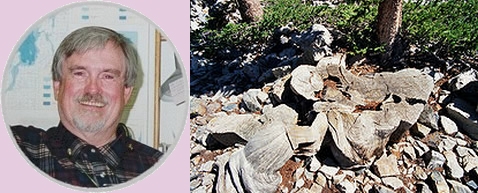
Donald Rusk Currey loved his Planet Earth. Widely respected for his research into primordial Lake Bonneville, a large body of water that once covered most of what is now Utah, his colleagues referred to him as a paleolimnologist and a geoarchaeologist and a geochronoloist, rarely citing the degree which perhaps best sums up his most memorable moment: Epic dumbassologist.

L.: Donald Rusk Currey R.: Festering corpse of WPN-114

L.: Donald Rusk Currey
R.: Festering corpse of WPN-114

In 1964, as a graduate student at the University of North Carolina, Currey was on a field trip to the White Mountains of California studying climate dynamics using an approach that involves boring out tree rings and counting them.  On a wooded peak in the Snake Ridge he discovered a population of Bristlecone Pines that seemed to be much older than research indicated they should be. So, he began taking core samples to find out—a technique that does not in general prove fatal to trees. Currey focused his attention on one particularly old pine which he dubbed WPN-114, and it proved such a recalcitrant patient that he broke not one, but two very expensive carbide steel increment borers while trying to obtain overlapping cores.

So, like a good little conservationist, he simply cut the fucker down.

Back at the lab, counting the rings from the section he chainsawed off, he discovered to his horror that he had killed the oldest tree ever discovered on earth. Not only that, but shortly thereafter some braniac biologist informed him that WPN-114 was not only the oldest tree, it was also the oldest living organism ever discovered on earth.

Phhhht.  All in a day’s work; huh, douchenozzle?

Although Currey went on to have a career in academia, he was never able to outshine that monumental doh! moment with all of his stuffy published tripe about geomorphology combined.

Somebody Forgot to Put on his Thinking Capa…

The best thing about cinema in 1944 was that when Cary Grant flubbed a line, you simply did another take. The best thing about war in 1944 was that when something went haywire during a photo shoot, you couldn’t.

Capa wore this expression of disgust for the rest of his life.

Capa wore this expression of disgust for the rest of his life.

Robert Capa was a war correspondent who embedded himself before embedding was in vogue.  No, it was in Life.  That’s who Capa worked for when he stormed ashore at Omaha Beach with the first wave of American troops, braving relentless fire from German troops inside the bunkers of the Atlantikwall. Attached to the 16th Regiment of the 1st Infantry Division, Capa used two Contax II cameras to capture more than a hundred real-time images of the beach assault before returning to London with four rolls of film.  There, a fifteen-year-old jagoff in Life Magazine’s photo lab promptly cranked the heater up past critical mass and fried nearly all of Capa’s pictures—only eleven remained even somewhat visible, and those were blurred and surreal.  The kid’s name was Dennis Banks, and ironically, he is not this story’s biggest loser: That would be Larry Burrows.

See, Larry—another teenager who worked for the magazine—was initially, and for a long time afterwards, blamed for the utter FUBAR dickweed fail that melted Capa’s priceless images.  Never fully vindicated, Burrows nonetheless went on to become a respected war correspondent, dying in the line of duty in Vietnam in 1971.

Dennis Banks, on the other hand, continued his losing streak by purchasing the top five hundred feet of Mount St. Helen’s in 1979.

The Planet’s Priciest Puddle

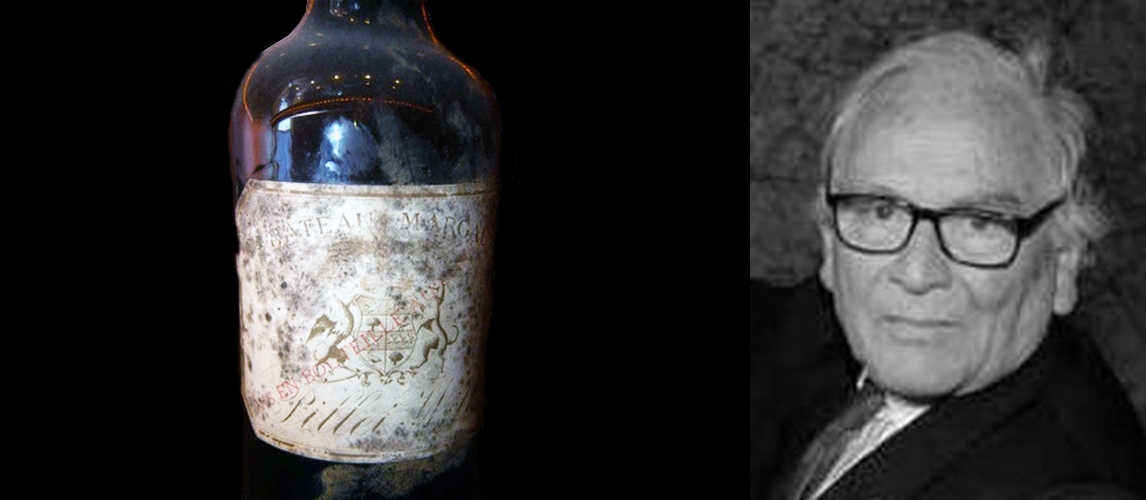
We all know that Thomas Jefferson, besides being a miscegenatist deeply committed to slavery, was the closest thing we’ve had to a wino president. Fewer folks know that some of the wine from his lauded cellar—which was probably paid for by taxpayers—is still around, and when they go up for auction, they command jawbreaking bids.

L.: 1787 Margaux R. Butterfingers Sokolin

L.: 1787 Margaux
R. Butterfingers Sokolin

One such wine was the 1787 Château Margaux (inscribed with Jefferson’s John Hancock) that had been discovered in Paris in 1985—it was owned by a French firm and consigned to Manhattan wine merchant William Sokolin. Sokolin was attending a tony black-tie Bordeaux dinner at the Four Seasons when it occurred to him how much attention he could draw to himself if he rushed home to get the bottle, which he had carefully stowed away in a refrigerated safe.  Sokolin had once (he claims) played in the Brooklyn Dodgers farm system and apparently had a hard-on for Rusty Staub, who was also at the dinner. Hurrying back to show off the bottle, he accidentally smashed it against a table edge—likely, other adult beverages were also involved.

Thus, the loser in the story is the insurance company who then paid out a quarter million dollars for the world’s most expensive carpet stain—Scotch Guard not included.

Posted in GENERAL | 3 Comments

L’Enfant Jésus: Good to the Beaune

Everything about Burgundy is eternal; nothing about Burgundy is predictable.

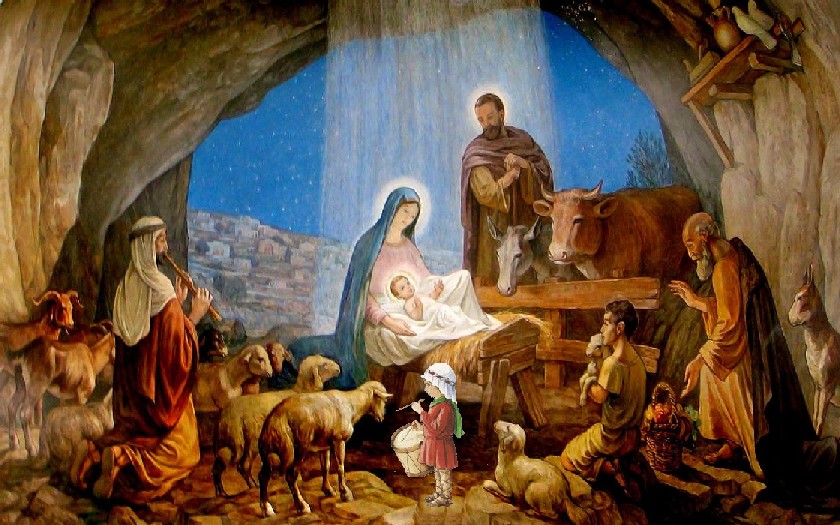
Except for one thing: The Little Drummer Boy could not have afforded L’Enfant Jésus.

'Two Buck Chuck for the bucket-banger.'

‘Two Buck Chuck for the bucket-banger.’

When I was a fledgling fan of French phantasmagora, I used to use the mnemonic Beaune—pronouced ‘bone’—to remind me that the stunning wines of Burgundy’s Côte de Beaune were white as a bone, whereas the great wines of the Côte de Nuits (nuit means night, which is dark) are primarily red. But as I said, nothing about Burgundy is predictable, and so the wine that fits into the obligatory category of a Christmas wine is both red and Beaune.

There are, of course, a number of stellar red wines from the northern part of Côte de Beaune, and the town itself—ground zero for much of Burgundy’s wine trade—is an appellation whose wines are predominately so.  And by red, it is understood to mean, wine pressed from Pinot Noir—the flagship variety in the commune. They are distinctive, delightful wines, leaner and racier than the heavier reds from neighboring Pommard and less domineering than the wines of Corton to the north.

Les Grèves

Les Grèves

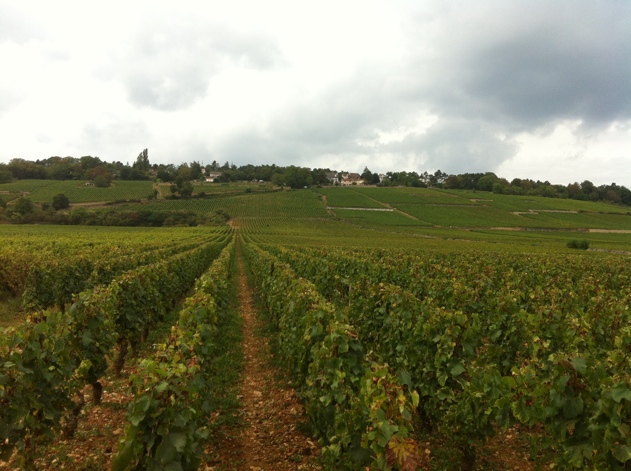
Les Grèves is a hallowed vineyard in northern Beaune, a Premier Cru climat considered one of the best in the appellation. Despite ‘Beaune’ being pronounced ‘bone’, Les Grèves does not mean ‘grave’ but ‘gravel’; it is the high proportion of small stones in the plot that gives the land it’s characteristic drainage as well as a root-warming, subterranean rockpile. Maison Bouchard Père et Fils owns a handful of these acres, and from them, Vigne de L’Enfant Jésus has been produced since 1791.

It’s a delicately scented, scarlet wine, luminous in the glass with a concentrated perfume of tangy red cherry and currant with a wash of  spice. There’s a fragility in the nose that becomes elevated in the mouth; the wine is fleshy and freshly acidic, supported by a framework of velvety fruit and sumptuous tannin.  2012’s weather conditions limited the yields in Beaune, resulting in smaller grapes with suberb focus, and this carries through the wine’s finish, which is long and lavish.

ringoAt a hundred plus per bottle, this is not a wine for drinking from a dirty paper bag in the park, but would do fine paired with a clean, contemplative fire in the hearth.  At Christmas, especially—although the only little drummer boy I can think of under whose pay grade it falls is named Starr.  You know, the like one shining in the East?

Posted in Burgundy, FRANCE | Tagged , , | Leave a comment

Château Palmer: Margaux Your Own Way

If you find the Bordeaux Classification of 1855 irrelevant, confusing, frustrating or all the above, rest assured: You are in good company.

The snit of owner Baron Philippe de Rothschild over Mouton’s second-rate status led to decades of lobbying, resulting in the only change of note to the original listing: In 1973, Château Mouton Rothschild was elevated to premier cru.

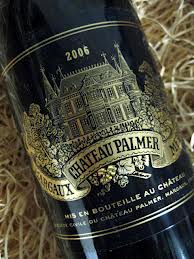
labelWhen it comes to Château Palmer, a troisièmes cru vineyard in the Margaux appellation, you will note that no bronze medal is displayed on the label, not even a whisper of the Les Grands Crus classés designation. I’m not party to Palmer label decisions, of course, but part of the pique may be the fact that the only other Margaux with which most wine drinkers are familiar—Château Margaux—has been lording their gold medal in the classification sweepstakes for a hundred sixty years.

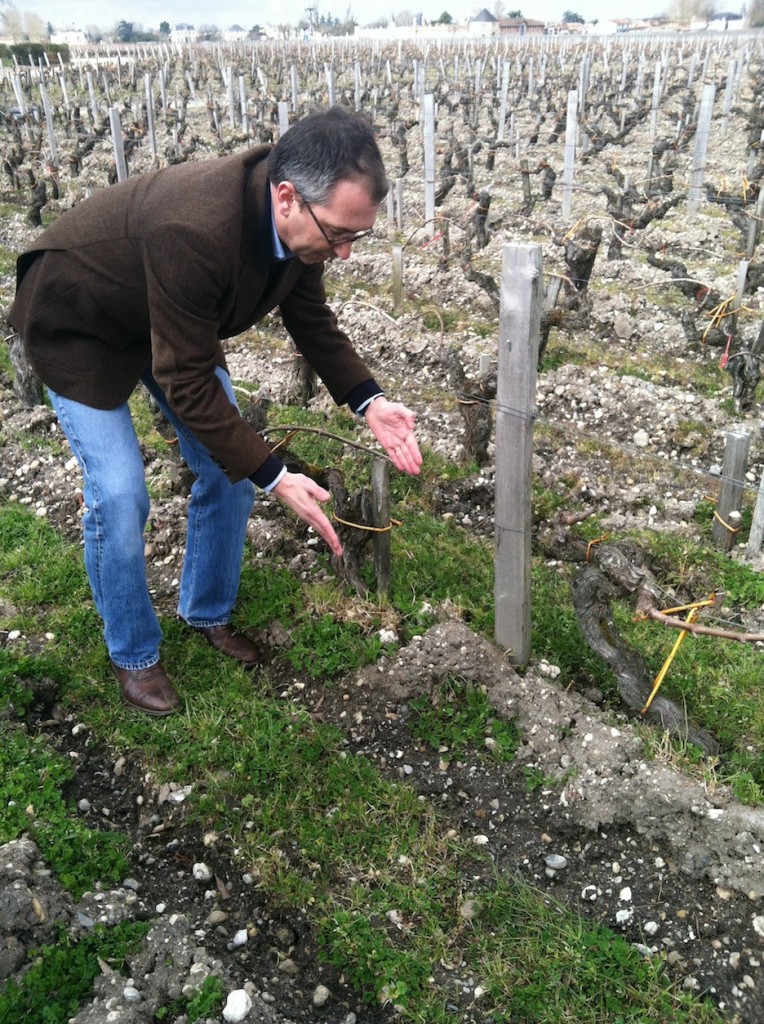
Jean-Louise Carbonnier, who blinked at the moment of exposure.  His eyes are a lovely shade of blue.

Jean-Louis Carbonnier blinked at the moment of exposure. His eyes are a lovely shade of blue.

“We’re a unique estate in our approach to marketing, perhaps,” admits Château Palmer, director of the brand in the United States.  “Our new generation of winemaking is leaning toward biodynamics, and our push is toward reminding American consumers, who have come to love Cabernet Sauvignon and Merlot blends, where that blend originates.”

This answered one question I had when I said down to a Palmer vertical tasting last week:  Why would a winery that makes around ten thousand cases per year—on the small end of boutique, which can sell its entire production in a tasting room—need a brand ambassador in Manhattan, let alone decide to dispatch one to Detroit to push product.  It would be the equivalent of Rosenblum Cellars opening an office in the 6th arrondissement and sending someone to Normandy to sell old-vine Zin.

Palmer does, to her credit, command several hundred dollars a bottle, and produces a second, less expensive label (not a ‘second wine’; often denoting a lesser quality along with the price—Palmer has separate vineyards for a wine with a distinct philosophy) but more on that in a moment.

Foremost, Carbonnier sees his role as one of an educator, and the promotion goes along for the ride: As one of the most respected names in the Médoc, his mission is to remind you and me that a wine can enjoy a noble heritage and still look to the future through the lens of innovation.

First, the heritage:

Château Palmer

Château Palmer

Palmer has been around nearly since the outset, having been part of the ancient Château d’Issan estate, divided in 1748 with the hectares now called Palmer, then among vineyards held by the Gascq family. These wines, no longer attached to the noble name d’Issan, were of such remarkable quality that they became staples in court of Versailles under Louis XV. Even so, financial troubles plagued the estate nearly from the beginning; in 1814, the widow of the last Gascq heir sold the property to English socialite Charles Palmer, who had retired from the military to invest in land. His TLC raised the reputation of the château considerably, and by 1830, Palmer was spoken of with the same reverence as Châteaux Margaux and Beychevelle.  But Palmer also had money troubles, and in 1843, he sold the estate for centimes on the franc.  Another ownership happened in 1853, two years before the famed (or infamous, depending) 1855 Exposition Universelle de Paris, when industry brokers ranked the wines according to reputation and trading price, then a direct reflection on quality. At the time, Palmer vineyards were in the throes of a outbreak of powdery mildew, a fungal disease that severely compromises a vine’s output. Thus, the classification could not have come at a worse time for the estate, and may have been the cause of Palmer’s relegation to third class status, while Château Margaux was pretty much handed the keys to the kingdom.

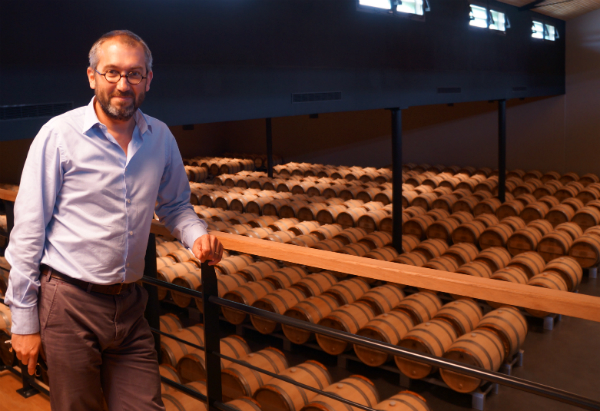
Thomas Duroux

Thomas Duroux

In any case, fast forward through the first half of the 20th century, a a big war and a big Depression and several more hands in the Palmer pie. In 1938, the château was sold to a syndicate of  the Sichel, Ginestet, Mialhe and Mähler-Besse families, who formed the Société Civile de Château Palmer—a name which does appear on the label. In 2004, management of the estate was undertaken by Tenuta Dell’Ornellaia’s winemaker Thomas Duroux, and this brings us to the second half of the Palmer equation: Innovation.

Under the directorship of Duroux—34 years old when he took over—the holding began a gentle but inexorable stroll into the new century. Fearful of the old scourge of powdery mildew, the estate had been reluctant to leap into organic farming, but Duroux has not only seen the vineyards go organic, they are now 100% biodynamic. So far so good.

Duroux insists that his duty is one of a caretaker, and sees biodynamics as a philosophy as strongly rooted in preserving the health of the legendary soils—Palmer’s 130 acres boast 16 unique types—as in appealing to the consumer’s growing allegiance to green farming.

alter egoThe decision to drop the ‘La Réserve de Général’ line, which until the ‘90s was wine made from cuvee not selected for use in the Grand vin, was another dramatic paradigm shift for the estate. Alter Ego de Palmer is drawn from the same quality terroir as Château Palmer herself, focusing on wines more easily accessible when young and more consistent during troubling vintages, primarily by revising techniques to produce a wine more immediately appealing to consumers as well as one which commands a more reasonable price tag. Even from a stellar vintage like 2009, Alter Ego sells for around $90 a bottle, whereas Château Palmer fetches upward of $400. There’s less of the latter now, too: Alter Ego now accounts for around 40% of the estate’s primary acreage.

Consistency in product is a goal which Bordeaux had traditionally found elusive, both to their benefit and otherwise, and even—or especially—in the top estates, vintage and quality seem inseparable.

“Massive wines from spectacular years are the Bordeaux that the critics love to talk about,” says Jean-Louis Carbonnier, “But finesse and elegance rather than potency and size are the trademarks of Palmer. We use an unusually high percentage of Merlot, equaling velvety wines with phenomenal aromatics and a lush, but refined palate. But in general, gigantic Bordeaux is the exception, not the rule. Most estates can make great wine in a great vintage; the challenge is making good wine in an awful vintage.”

Duroux getting all biodynamicky.

Duroux getting all biodynamic.

It was these wine we tasted; no sense in tooting the trumpets of 2000, 2005 or 2009—those horns have been blasted by those with deeper pockets and deeper cellars, and that’s where most of them (many purchased en primeur) are already stored.

We tasted a few of the ‘challenging’ vintages, where the objective is to produce charming wines if not stunning wines; character-driven wines if not powerhouse wines—wines with less flesh and more finesse, drawing focus on bright red fruit flavors rather than the brooding blackberry jams of warmer years; wines that are super without needing to be superlative.

And for the most part, I think that Palmer does just that.

Château Palmer, 2006

2006This was a season with brutal temperature variations; June and July were hot and arid while August turned wet and cool and the best the doyens can say is that the vintage was ‘interesting’, although some have claimed that it’s among the best values in First Growths.

The 2006 Palmer opens with a blast of plum and violets with a dusting of spice on the nose; this is due, in part, to the quality of the Merlot, which is planted on terroir usually reserved for Cabernet Sauvignon. The tannins are broad-shouldered and puckery and have not yet settled in; the wine can use more age to allow the silken qualities most prized in Margaux wines in general, and Palmer in particular, can rise to the surface.

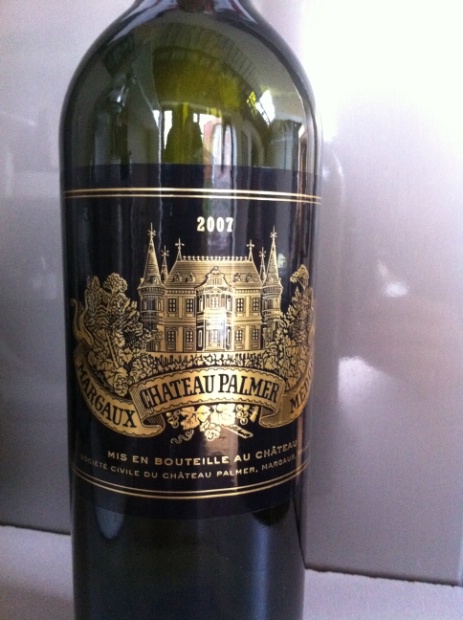
Château Palmer, 2007

2007For growers in the Médoc, 2007 start out bad and got worse—and just as the wineries were about to throw in the towel, September cleared up and became balmy, turning what would have been a Biblical-quality disaster into a Children’s Bible ‘meh’. Even so, the white wines, making up around 11% of Bordeaux’s output, were far superior than the reds. The cloud’s silver (not gold) lining was that the wines are early-maturing and about ready to drink now.

Palmer’s 2007 is light in both hue and aromatics, showing a delicate mingling of black cherry, cassis and fresh flowers on the nose and a rather tucked-in softness in the mouth. Flavors center on bright rather than brooding, but the sensuous velvety feel that is the hallmark of the brand is fully unveiled. It’s a lovely, unassuming wine that is ready for the dinner table tonight.

Château Palmer, 2011

Merlot at Palmer

Merlot at Palmer

Pro reports call 2011 ‘one of the most difficult growing seasons in recent history’, alluding to an early bud-break, a summery April and a hot, dry May that led to a premature flowering of the vines.  Near-drought conditions in June were accompanied by a heat spike, making the first half of the year the hottest in six decades. Adding insult to injury, the following month proved to the be the coldest July in thirty years. If grapes can be confused, the vineyards of Château Palmer showed it.

Harvest at Palmer was the smallest since 1961, one of history’s legendary vintages.  But the magic of that year was not replicated; the output at Palmer was around half of what’s normal, and the wine remains sheathed in a barrel of tannins. But underlying the wood is a solid core of cedar, current, mocha and refined, elegant floral spice—everything shored-up by mouthwatering acidity. Too young to Tango, the wine has gobs of potential, and could likely be nurtured into a remarkable selection.

Alter Ego de Palmer, 2011

Silken and sweet, the wine is somewhat gentle on the nose, showing tart cherry and raspberry with an underflow that suggests tobacco leaf and integrated chocolate notes.  It’s mouthfilling and briefly luscious, with a fairly rapid drop-off point, but offers a framework of the Palmer trademark at a fraction of the cost.

Posted in Burgundy, FRANCE | Tagged , , | Leave a comment

Santa Rita’s Coming To Town

Santa Rita—among Chile’s most beatified producers—has stuffed my stocking with an quartet of wines that should make the naughtiest holiday party a little bit nicer.

And ideally, the other way around.

Chilean vineyards

Chilean vineyards

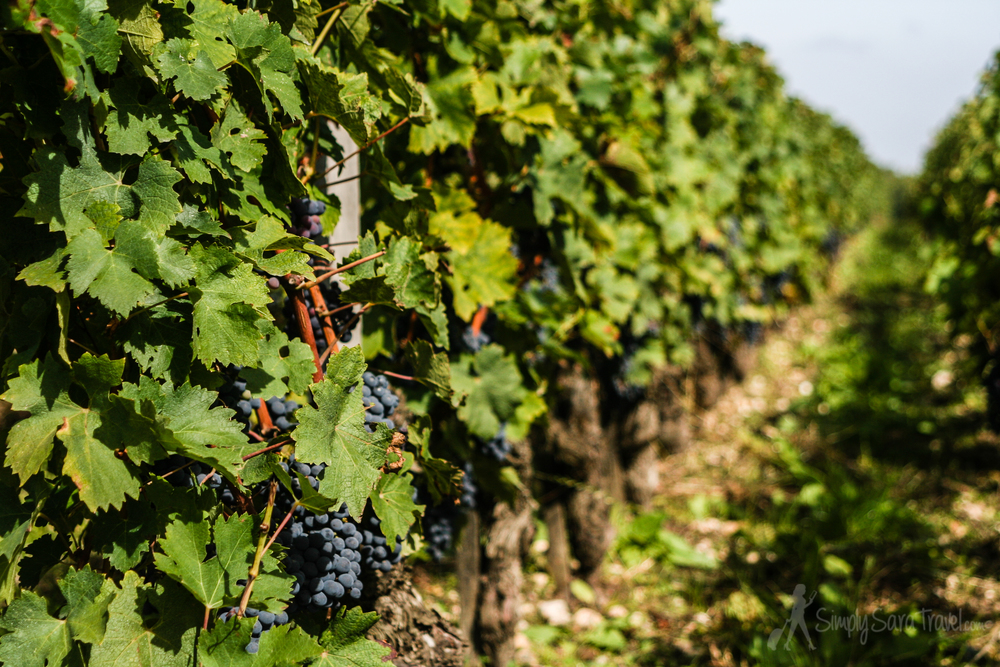
Chile’s history of wine production dates to the 16th century when colonists under the Spanish crown of Castile introduced European grape varieties to the fertile plains between the Patagonian ice fields and the the Atacama Desert and found a viticultural paradise superior to anything Europe could offer. Topping the wish list of every vine is a consistent and benevolent climate and Chile—where natural borders combine with sunny summers and cool winters, where a mosaic of well-drained soils are easily irrigated from Andean melt water, where the relatively isolation of its coordinates have allowed it to remain phylloxera-free, even while the rest of the world was ravaged by the vine-killing root louse—has it to spare.

Pisco

Pisco

What Chile lacked for most of its viticultural history is fairly basic: A cohesive marketing plan. During the Spanish rule, Chileans were required to import most of their wine from Spain, and at several points, the Spanish monarchy, enraged at the continued proliferation of excellent local wines despite the mandate, ordered Chilean vines uprooted—an order that the people ignored as heartily. Wineries continued to flourish, and when the industry was damaged by a 1641 edict banning the import of Chilean wine into Spain, the people shrugged, continued to drink it themselves and distilled the surplus into Pisco.

Pais

Pais

Another break with the motherland has been the relative scarcity of Spanish varietals in Chile; in the early days, plantings were predominately ‘the black grape’ known as Pais and a Madeira-like dessert wine made from Muscatel. By the mid-1800s, Bordeaux, with her elegant châteaux and muscular wines, was seen as a business model by wealthy chilenos, who believed that the je ne sais quoi of Bordeaux’s aura could be transplanted along with the Cabernet, Merlot—and noteably, Carménère—rootstocks. What grew up instead, along with the self-rooting vines, was an entirely new aura—one that blends tradition with aristocracy with a certain untouchable Latino sabor—and produces wines as unique and succulent as any in the world.

I Want My Maipo

Santa Rita

Santa Rita

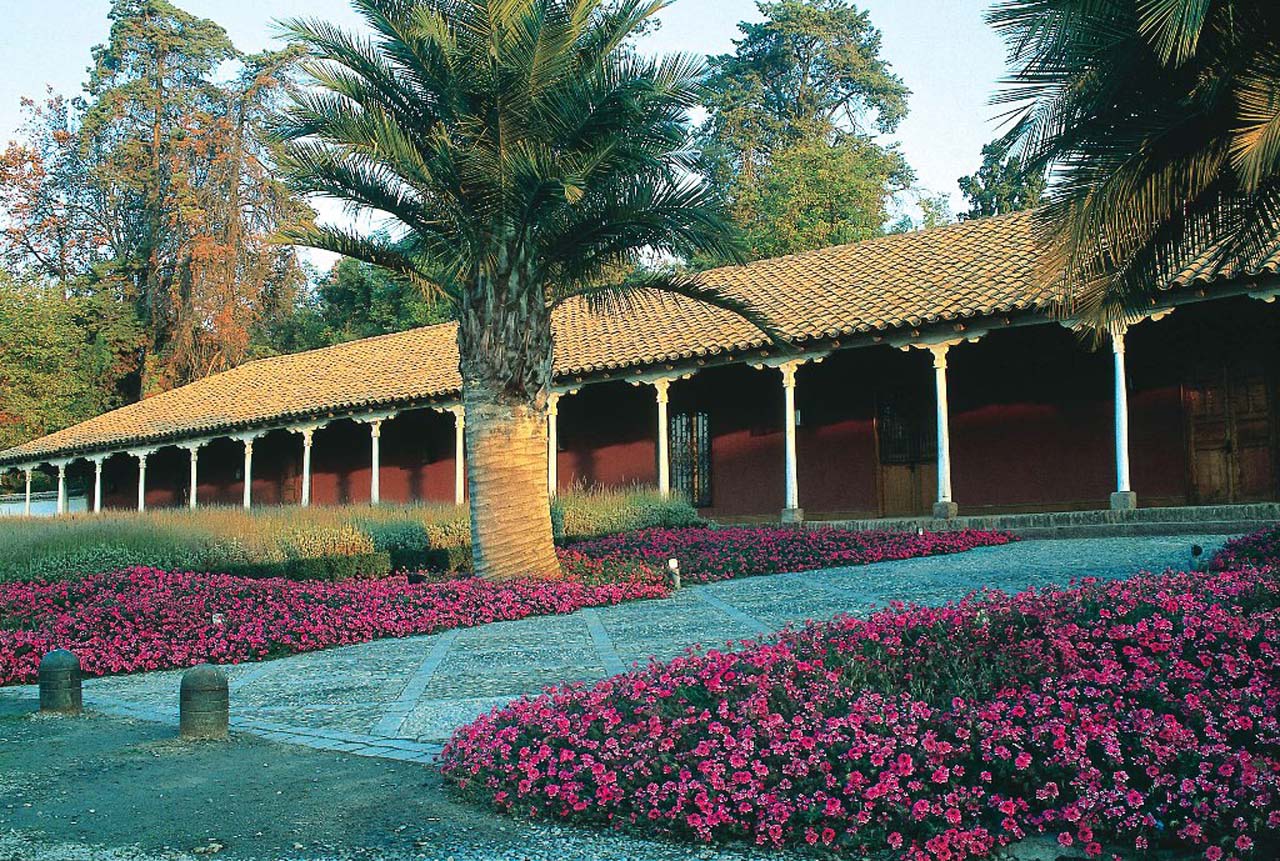
Santa Rita joined the procession in 1880 when Domingo Fernandez set up shop in the Maipo Valley. The winery grew over the next century, focusing on Bordeaux grapes and expanding its landholdings into all the top Chilean appellations, including Casablanca, Parel, Apalta, Lyda and Limari. Purchased in 1980 by Ricardo Claro, Santa Rita was named 2008’s ‘Winery of the Year’ by Wine & Spirits Magazine, honored not only for its consistently top-flight portfolio, but for the range of superlatives at every price point.

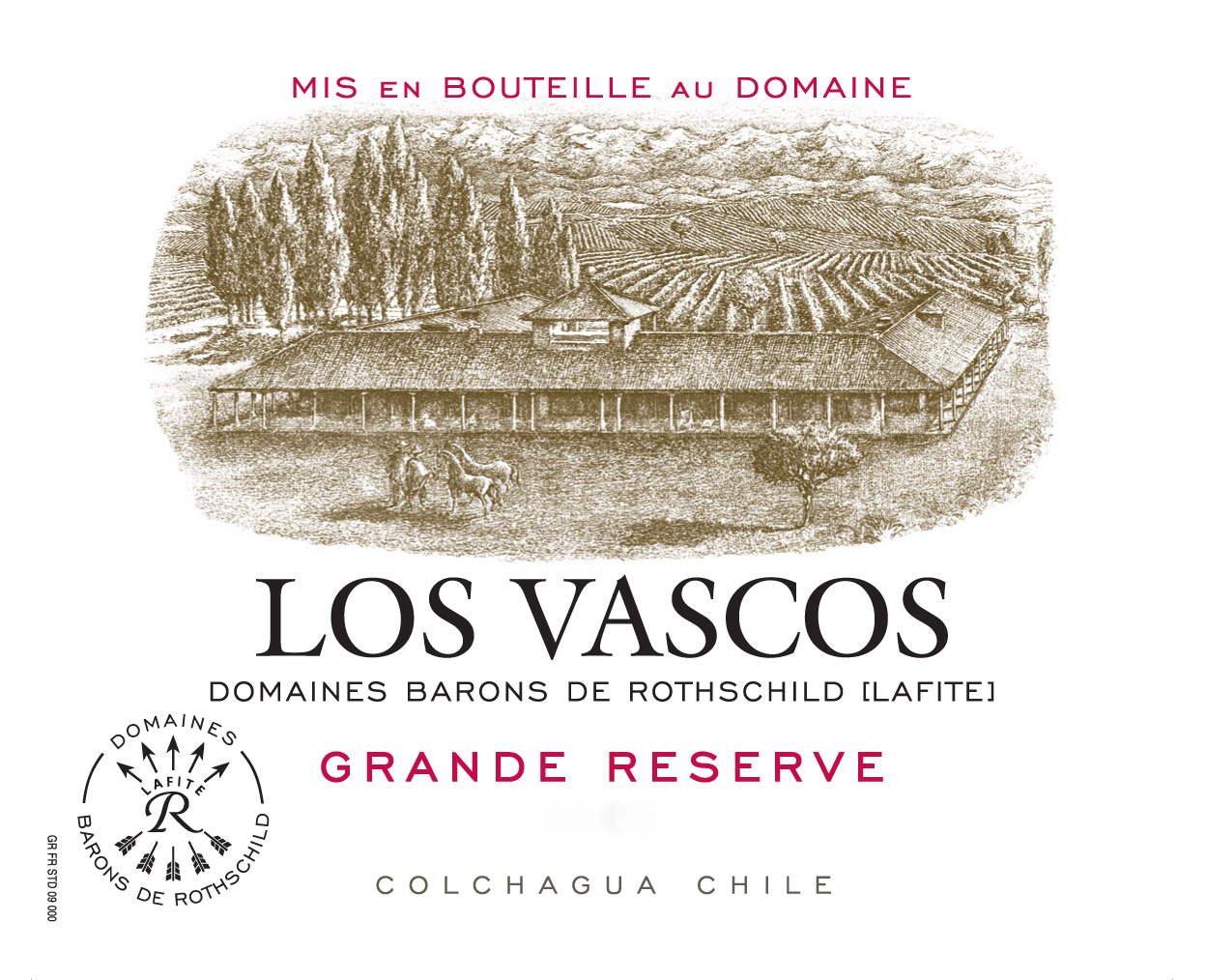
los vascos labelIndeed, Chile has been lauded for the affordability of its wine selection; relatively inexpensive land and labor has allowed many wineries to produce strikingly delicious wines for prices low enough to raise eyebrows, first in suspicion, then in delight. Los Vascos—Les Domaines Barons de Rothschild’s venture into Colchagua—has routinely released Bordeaux-quality blends for under ten dollars a bottle. This may be as big a bane as it is a blessing—the price-bar for Chilean wine is set so low that most Americans sniff at the idea of paying a high two-figures for an exuberant Chilean wine of a quality that may outstrip a like-priced Bordeaux (where fifty or sixty dollars a bottle is about entry-level for a decent taste of the appellation).

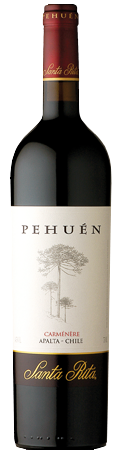
Of the bottles that showed up in my wish list this year, one (Pehuén Carménère, 2007) retails for around seventy dollars and one (Triple C, 2010) for forty. The whites, a Chardonnay and a very Graves-tasting Sauvignon Blanc, are around $18 a bottle. These are, to a glass, superb examples of the ‘ultra-premium’ wines that Chile is capable of producing—a category that Santa Rita tends to dominate.

pehuen bottleEach represents a niche in the upscale Chilean market: Carménère taken to the next level; a pampered a Bordeaux blend from the Big Three of Chile’s ‘C’-word varieties, Cabernet Sauvignon, Cabernet Franc and Carménère; a mineral-laden Sauvignon Blanc styled after whites from the gravelly Left Bank of the Garonne; and finally, a Burgundian Chardonnay that undergoes a bâtonnage regimen similar to the ones used by top houses in order to encourage reductive (as opposed to oxidative) reactions in the barrel.

And, trust me on this, boys and girls: Whether you’re naughty or nice, there’s not a poutable potable among them.

sbSanta Rita Medalla Real Sauvignon Blanc, 2012

Classy and grassy, the wine’s nose is filled with multiple layers of fresh hay, grapefruit, cool stones and a touch of mint.  Almond notes that are typical of white Bordeaux are restrained, but appear more pronounced in the foreground of the palate and again on the finish, accompanied by grapefruit pith, pear, green apple and a core of mineral.

Santa Rita Medalla Real Chardonnay, 2012

An aroma of lemon butter and creamy apple compote intermingles with light fresh flowers; the flavor foundation is a blazing spine of acid, and on it, green apple, citrus, and subdued oak spice to finish.

Tightly controlled yields—two tons per acre—add to the concentration of flavors.

triple cSanta Rita Triple C, 2010

Brooding black ink in the glass, scents rise reminiscent of eucalyptus and dusty blackberry with a bit of black pepper; the fruit held a bit in check, still sheathed in a tight tannic package, but opens slowly in the glass, showing bitter chocolate, more black fruit, tobacco leaf and some sweet vanilla. Wine finishes long with puckery wood sensations and bright, elevating acidity.

The wine, though advertising three varieties, in fact contains only trace levels of Carménère; it’s primarily Cabernet Franc with 30% Cabernet Sauvignon.

Santa Rita Pehuén, 2007

Carménère

Carménère

A bouquet of subtle, elegant, almost subterranean power; peppery spice flashes across ripe blueberry core and buds with complexity when the glass is allowed an hour to open and aerate. The wine is still wound a little tight; fruit—from vineyards planted in 1938—remains somewhat masked by oak, likely a result of the malo stage in pure French oak followed by 18 months en barrique—this may require a couple more years to settle in, but doesn’t hide the superb concentration of flavors and dimensions to rival some of the top estates in Bordeaux. The palate actually grows in intensity, finishing with a impression of brightness, richness and precision.


Posted in CHILE | Tagged , , | Leave a comment

Repaying The Piper: Napa Vintage, 2011

Sean Piper has been remarkably supportive of my personal amble through the alleys of annoying wine disquisition, and today, it’s payback time.

Sean Piper holding something

Sean Piper holding something

See, in the spirit of a genuine anti-journalist, I operate this column on a purist catechism of quid pro quo: You scratch my Back-To-Back Mega Millions card, I scratch and sniff Emilia Clarke’s bicycle seat.

Or something like that; I’ll have to consult my anti-ethics manual.

In any case, Sean, publisher of Wine Consumer Magazine, has just filled a bucket from his list by launching his own wine label—Napa Vintage, Howell Mountain Cabernet Sauvignon, 2011.  It’s a small step in a larger leap; ultimately, he plans to release Napa Vintage wines from each of the appellation’s unique subregions, and, like his ‘Howell Mountain’, his intention is that these wines will benchmark the organoleptic profile representative of that specific district—Mt. Vedeer, Rutherford, Oakville, et al.

And Sean knows whereof he drinks, too—he grew up in south Napa and spent his formative years scratching and sniffing Napanese wine labels whenever an ingénue’s Schwinn seat was unavailable.

“I first had the idea for a series of limited-release Napa wines meant to reflect the signature flavors of a given sub-appellation in 2003,” he says. “But, since I’m not a winemaker, I have to be content—for now—to be visionary. It has essentially taken this much time to begin partnerships with growers and float ideas by some of the winemakers I admire.”

Mark Capalongan

Mark Capalongan

Foremost on this list is Mark Capalongan. Mark, with his wife Sandy, owns Big Dog Winery in Milpitas—an area known more for datacenters than decanters. But Mark’s approach to winemaking, which involves producing estate wines from his five acres of vineyard along with rich, full-bore reds from purchased grapes, was just what Sean was after.  Going forward, he intends to apprentice with Mark and learn his vinting chops while producing future wines at Big Dog using fruit they’ll obtain on the market.

For the maiden voyage—Napa Vintage Howell Mountain, 2011—he stamped his label on pre-made wine from the hallowed cellar of Jac Cole.

A couple of Coles

A couple of Coles

And for you trivia trollops, that’s not the Jack Cole from that silly flick Sideways—basically an American Pie sequel for adolescent adults who have switched from cheap beer to expensive wine. No, it’s the ‘k’-free Cole from Spring Mountain, whose 2010 ‘Elivette’ Cabernet hauled in Decanter Magazine’s Regional Trophy Gold as Best of Show in 2013.

“Jac fit all my criteria,” Sean says. “Thirty years of experience and a genuine understanding of the terroirs he worked with. To me, the wine I bottled as Napa Vintage 2011 has pure Howell Mountain character—it’s what Howell Mountain ‘tastes’ like.”

I find the concept itself enthralling (learning appellation-defining archetypes via a single bottle), but quid pro quo schmid schpro schmo; I suppose if I didn’t find the wine to be equally so, I would have to admit as much and let the friendship chips fall wherever. My journalistic standards may be low, but they still exist.

bottleBut, gratefully, the wine is wonderful. It opens with a bright whiff of very red fruit, not the brooding, jammy blackberry stew that occasionally sidles from a glass of colossal California Cab. That’s due in part to mountain-grown fruit—Howell Mountain vineyards exist at a minimum of 1,400 feet—which provides a cooler climate and less juggernaut ripening than vines see on the valley floor. Slower veraison, and frequently, longer hang times allow the development of vital chemical compounds that peak early in warmer areas. Such high-elevation wines often show fruit dominated by cherry notes, giving Napa Vintage 2011 an almost Pinot Noir-like bouquet, but which is underscored by an unctuous substratum of mocha to bring the variety back into focus. Sean himself swears he can pick up scents of maple in the aroma, and although this eludes me, I’d sign off on a slight caramel scent which may be a manifestation of the same tasting note.

The wine then settles into a meaty palate with pronounced acidity and tannins which are perfectly integrated into the body. Again, many heavily-oaked Napa Cabs are still in a neonatal stage after four years, and may show tannin layers that seem to surround the wine without yet melding into it. Like Buddhists who are in the world but not of it, such tannins need cellar time to figure out what they want to be when they grow up  Admittedly, my sensory preferences run toward Sean’s style from the outset—lots of fresh fruit flavors and restrained wood, making for a drink that is both easy to enjoy and repast for reflection.

Howell Mountain

Howell Mountain

In general, 2011 was a  tough go in Napa, with a wet spring extending into mid-June, generally cooler temperatures through the summer and a return of the rain in mid-October. Howell Mountain, which allows for longer hang-times anyway, enjoyed  a prolonged Indian summer that provided needed ripening time.  So the fact that Napa Vintage 2011 displayed such rich layers is testimony to both field and cellar, and is an auspicious start for the label.

In my world, Sean Piper has come up with an idea that’s gold in them Napa hills.  If he can extend the Midas touch to other Napa appellations (and beyond—he’s dreaming of a Sonoma Vintage line as well), I promise to be waiting at the bottom of the rainbow with my empty pot.

Posted in Napa | Tagged , , | 1 Comment

MBTB Tasting Room, The Sequel

I’ve lived in Michigan my whole life and I quite like it here. However, I don’t much like our flag. In the first place, it depicts two bipedal ruminants—an elk and a moose—neither of which are actually bipedal ruminants, but both of which are actually gigantic quadrupedal rodents with hooves. Such a symbol makes PETA-pumping animal activists go all warm and gushy until they notice that the smaller image between them is a dude with a rifle.

michiganCompounding this is the fact that, although flags should be made of bright colors and soul-stirring emblems like rising suns or a crosses cramponnée, they should never contain words, because who can read words on something that by its nature is meant to be waving in the wind fifty feet overhead? Yet the Michigan flag not only contains a bunch of words, they’re written a strange, alien tongue that looks like somebody inserted that awful ipsem lorum dummy text while trying to think up a genuine motto. Between squinting and hemming and hawing, by the time you give up on trying to read our flag, the Michigan National Anthem is over.

But I digress. This story begins with the reasons that I never display the Michigan flag  and ends with a couple of kids I know have been waving it vigorously since they launched their website in 2009.

Shannon and Cortney Casey

Shannon and Cortney Casey

I say ‘kids’, although Cortney Casey raises her eyes when I suggest that she’s prime ‘hipster’ age, assuring me that at 34, she’s too old to be one. Not that I thought she was a hipster in the first place; if I did, I wouldn’t be waving her flag, I’d be burning it on the steps of the Michigan Capitol building.

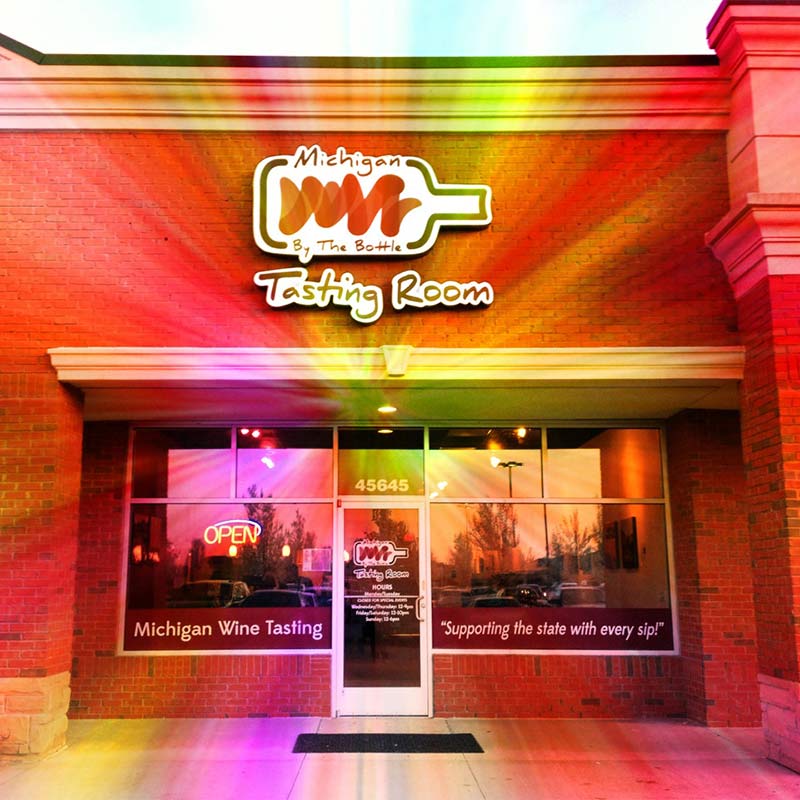
Along with her husband Shannon, Cortney first ran the notion of an all-Michigan wine tasting room up Shelby Township’s flagpole to see who’d salute—and the response was overwhelmingly patriotic.  So, this year, they’ve grown their retail family to two, opening a second tasting room on Woodward and Webster,at the cusp of Royal Oak and Birmingham.

The business model that has proven so successful for them involves partnering with various Michigan wineries and providing tasting flights of select, home-grown wines, accompanied—if it suits your druthers—with ‘small plates’ of Michigan-made cheeses and chocolates.

1The couple have proven themselves ample taste-smiths over the years with their popular Michigan By The Bottle podcasts, and have arranged the flight menu in easy-to-digest wine categories like ‘Oaked Dry Whites’ and ‘Fruit-Forward Reds’ along with brief notes so that neophytes can have a logical experience among the styles they prefer while geeks can have a discerning one, hopefully discovering gems among styles they don’t. My wish list might include a section reserved specifically for hybrids; a category of grape that has not only formed the backbone of a sustainable wine industry in Michigan, but which has arguably come as far in the past couple decades as has vinifera.

Cornel Olivier

Cornel Olivier

Among the outstanding selections to be found on the list are 2 Lads’ Cabernet Franc; a luscious, cassis-dribbling beauty with gentle tannins and genuine varietal character by winemaker Cornel Olivier. Chateau Aeronautique’s Pinot Gris is a heady, appley and pearish mouthful; a benchmark for what this cool variety can do with Michigan TLC.  I’m also a huge fan of Chateau de Leelanau’s Cherry Wine—a Balaton-based fruit wine that raises the bar on this oft-maligned bevvie.

An all-Michigan tasting room as conceived of by the Caseys is a concept with legs as remarkable as those in a glass of Sandhill Crane Sur Lie Chardonnay, and I anticipate the Royal Oak location will be as successful as the first.  And, will hopefully lead to a third outlet, which I am currently in negotiations with them to have opened up in my living room.

Run that one up the flagpole, Caseys, and I’ll guarantee a dawn-to-dusk salute.

Posted in Fruit Wines, Michigan, MIDWEST | Tagged , , | 1 Comment

Merry Meursault And A Châteauneuf Christmas

Christmas is for the young; so it was with perfect propriety that I sat with eternally young wine merchant Elie Boudt over a couple of French classics as re-interpreted by a new generation of winemaker.

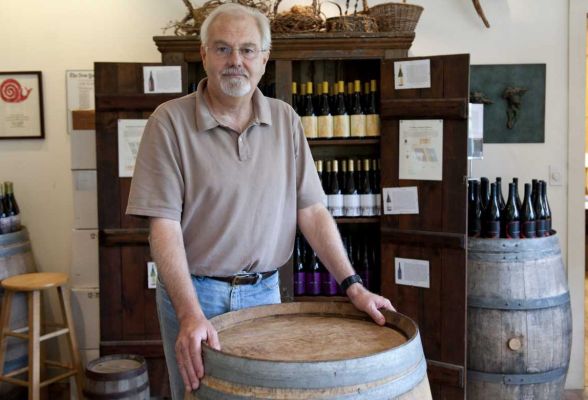
Elie Boudt

Elie Boudt

The techniques employed were not an overhaul of soul, but a redefined focus on the specifics that have affixed these names to the panoply of paradigms.

First, Meursault; the Henry VIII of Burgundy: White, fat, impassioned and acidic. Meursault is an old line Côte de Beaune aristocrat, nurtured by the hard Comblanchian limestone that resurfacing here after having burrowed beneath the red wines districts of Nuits-Saint-Georges. The monks of Cîteaux recognized these chalky soils as a white wine wonderland as early as 1098; a little red is produced in Meursault, but it is often used in adjacent Volnay under the climat Volnay Santenots.  No, Meursault is white power in a Burgundy bottle—although the appellation contains no Grand Cru vineyards, that’s mostly wine politics; some of the Premier Cru labels can rival the best of the hyphenated Montrachets.

Domaine Michel Caillot Meursault, 2010, around $50

Michel Caillot

Michel Caillot

Domaine Caillot is one such propriété. Founded in 1961 by Roger Caillot and covering approximately 32 acres, vine age averages around 40 years. Michel Caillot took over the reins from his father in the nineties and has nudged the estate into modern, eco-friendly practices. He considers himself of the non-interventionalist school of winemaking, relying on indigenous yeasts and minimalist—if any—sulphur introduction, but a trademark bâtonnage, through which the lees (deposits of dead yeast at the bottom of the aging vessel) are regularly stirred into the wine, give it its characteristic, Rubinesque heft.  Caillot consistently allows this lees-time for two full years, although he transfers the wine to stainless tanks at the midway point, thus preserving the fresh-fruit backbone.

label meursaultThe wine opens with an intense aroma of yeasty bread dough; the scent dissipates, replaced by whiffs of spice. I note ginger, but Elie—who grew up in a Moroccan spice-trading family—suggests jasmine, and that is spectacularly accurate. There’s an appealing fattiness in the mouth, punctuated by a shaft of acid and a base of minerality that fills sensory crevices; for lovers of thick, oak-dominated Napa Chardonnays, this wine is a reminder that the grape is capable of producing buttery-plump and forcefully explosive flavors on its own merits.

Domaine La Barouche Châteauneuf-du-Pape ‘Signature’, 2011, around $70

Julien Barrot

Julien Barrot

2002 was to Southern Rhône was 1929 was Wall Street—a Biblical-grade bust. Poor flowering was followed by savage hail, subsequent rot and decimated yields capped by torrential rains in September. That disastrous vintage was Julien Barrot’s first; that was the year he went to work at Domaine La Barroche. It was a family affair; his great-something grandfather bought the La Barocche acres in the village de Châteauneuf du Pape in 1703, but the property had been known primarily as a custom crush facilitator with a couple of presses that would move between estates. Julien’s father, Christian Barrot, cites the wine crisis of the 1970s, when the focus of the industry had switched to high yields and low prices to his decision to take the road less traveled: He began to nurture his plots, vineyard by vineyard, until he began to understand what a truly world class terroir he sat upon. He sold most of his wine to prestigious estates in the north, but bottled a small portion himself under the label Lou Destré D’Antan, which means ‘The Winepress of Days Gone By’ in Provençal in honor of the family tradition.

pae bottleHis children have taken these traditions and turned La Barocche into a consistently producer of estate-bottled Châteauneuf-du-Pape—at least, since 2002.  Julien represents the new generation of winemaker in this consecrated commune in southeast France, both open to experimentation and beholden to historical praxis.  It’s a narrow rope to walk, but Julien proves his agility unquestionably in ‘Signature’ 2011.

The wine shows a majestic nose of fresh blackberry jam with an appealing touch of menthol; deep, ample and warming with a jaunty, full-bore  cherry/berry palate underscored with botanicals like lavender and garrigue. Tannins are soft, but still a bit youthful; they coat the mouth and form a framework of wood that should meld seamlessly into the fruit in coming years.

Both wines are a nice nod to the special quality of season; somewhat pricey at a time when we’re known to splurge; ardent, alive, accessible, forward-thinking while remaining true to the spiritual roots of their lineage.

Posted in Burgundy, FRANCE, Rhône | Tagged , , , | 1 Comment

Christmas: The Alternate Endings

Although I wear the social face of an altruistic wine scholar while living a public existence of citizenship, leadership and responsibility (using life skills I learned at the 4-H Club—‘Heart, Hands, Health and Heroin’), the truth of the matter is that privately, I am quite misanthropic.

Especially around Christmastime.  At any season, of course, I find a ‘happy ending’ that does not involve a Thai masseuse to be a metastic melanoma  on the butt cheek of reality, but—much as the portly gentlemen with credentials assured Mr. Scrooge regarding the poor, ‘it is a time, of all others, when want is keenly felt’—so in the weeks leading up to the world’s perennial feel-good anticlimax, we are subjected to a plethora of smiley-face classics designed to mask the fact that the rest of the year is a steaming pile of cholera dookie.

Thus, as a public service intended to keep us all firmly grounded in real-time honesty, I will tackle and rewrite as many of these Yuletide abominations  as I can before the combined tug of delirium tremens, withdrawal symptoms and unmedicated catatonic schizophrenia forces me back into writing about wine.

How The Grinch Stole Christmas

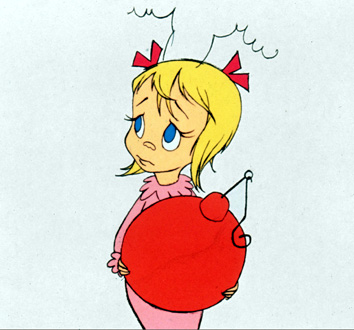
grinch_santa[1]

“They’re just waking up! I know just what they’ll do!

“Their mouths will hang open a minute or two

“The all the Whos down in Who-ville will all cry BOO-HOO!”

“That’s a noise,” grinned the Grinch, “That I simply must hear!”

So he paused. And the Grinch put a hand to his ear.

And he did hear a sound rising over the snow.

It started in low. Then it started to grow…

riotsAll the Whos had awoken, and finding their loss,

Declined their Who coffee, Who brushes, Who floss,

They took to the streets which were  normally quiet,

And like Ferguson’s outraged, they launched a Who riot.

They tore up the Who stores, trashed other Whos’ cars,

They robbed from Who strip malls, they burned down Who bars,

They beat up non-Who folks and mainlined Who-meth,

cindyPoor Cindy Lou Who was thus trampled to death.

Then they all lit Who torches and stormed up the hill,

They found the Grinch trembling;  frightened and still.

They lit him on fire and  salvaged their feast,

Finding Grinch meat quite scrumptious—as good as roast beast.

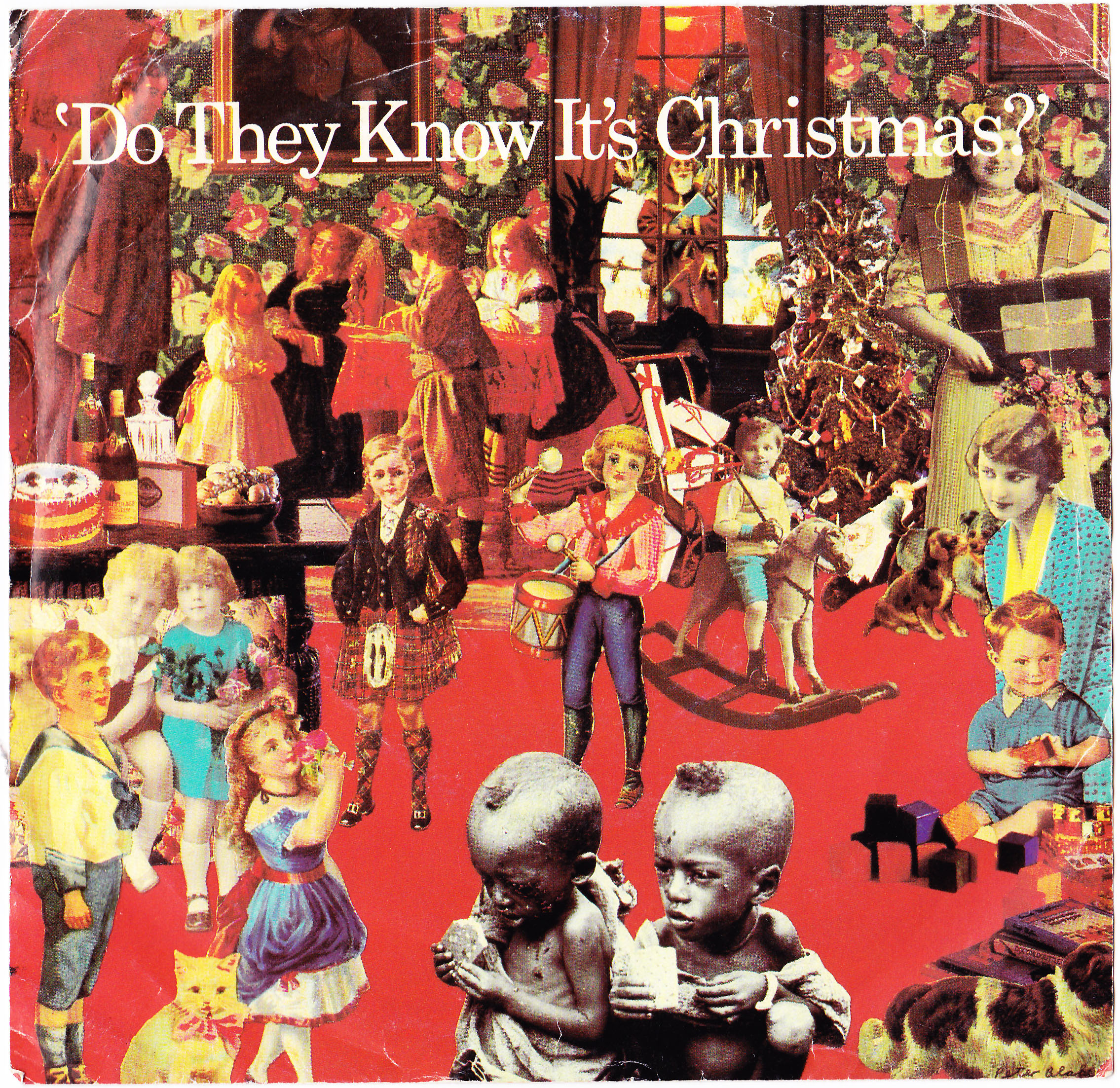
“Do They Know It’s Christmas?”

Band-Aid- KIDS[Bono:]
Well tonight thank God it’s them instead of you.

[Will Young & Jamelia:]
And there won’t be snow in Africa this Christmastime.

[Rest of world:]
What about on top of Mt. Kilimanjaro, you blithering douchenozzles?

[Ms Dynamite & Beverly Knight:]
Where nothing ever grows,
No rain nor rivers flow

[Rest of world:]
For Christ’s sake, get a map: The Nile is the longest river in the world.

[Group of ten and Joss Stone:]
Do they know it’s Christmastime at all?

[Rest of world:]
Considering that  47% of the African population is Muslim, accounting for 1/4 of the world’s Muslim population, even if they did know it was Christmas it wouldn’t have the slightest relevance in their daily lives, would it?

[Joss Stone & Justin Hawkins:]
Do they know it’s Christmastime at all?

[Rest of world:]
Shut up, now. Shut up, shut up, shut the fuck up… ♫

A Christmas Carol

…Really, for a man who had been out of practice for so many years, it was a splendid laugh, a most illustrious laugh. The father of a long, long line of brilliant laughs!

“I don’t know what day of the month it is!” said Scrooge. “I don’t know how long I’ve been among the Spirits. I don’t know anything. I’m quite a baby. Never mind. I don’t care. I’d rather be a baby. Hallo! Whoop! Hallo here!”

He was checked in his transports by the churches ringing out the lustiest peals he had ever heard. Clash, clang, hammer, ding, dong, bell. Bell, dong, ding, hammer, clang, clash! Oh, glorious, glorious!

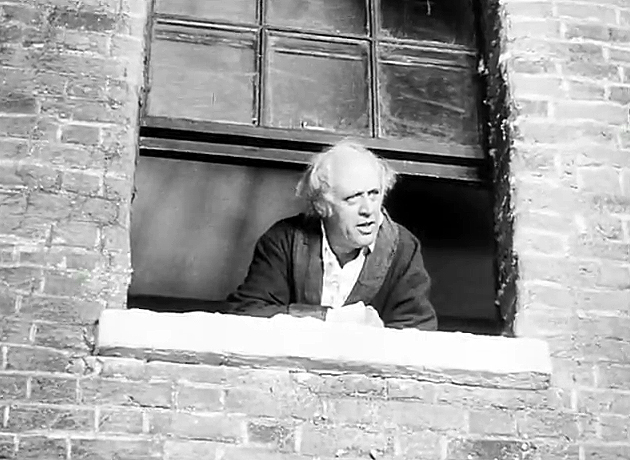
a-christmas-carol-1951-window-4Running to the window, he opened it, and put out his stirring, cold cold, piping for the blood to dance to; Golden sunlight; Heavenly sky; sweet fresh air; merry bells. Oh, glorious. Glorious!

“What’s to-day?” cried Scrooge, calling downward to a boy in Sunday clothes.

“To-day?” replied the boy. “Why, Easter Sunday.”

“Easter?!” said Scrooge to himself. “The Spirits have kept me insensate until…?”

Suddenly, the white-clothed attendant took hold of his arm in a tight, tight grasp and cried in his irritated bark, “Back to bed, you old cramp-bone.”

“Where… where am I?” cried Scrooge.

bedlam“Why, the  hospital for the insane—St. Mary of Bethlehem; Bedlam, you nutter.  You were committed in December when you woke up babbling like a loon about ghosts and fezziwigs.”

“Call my solicitors instantly,” Scrooge demanded, puffing  up his chest in a pique.

“Ain’t none left,” the attendant chuckled.  “Not since they repossessed your home for unpaid taxes and Cratchett bought your business for a penny on a pound.  You’re destitute, you foul-smelling  old batty fang.  Hurry up and die so Nurse and I can use the bed for our afternoon nanty narking ; ain’t she got the jammiest bits o’ jam, now?”

Scrooge died at once, dead as a door-nail, and it was always said of him, never a man alive so lived the Total Asshole Principal and thus deserved to die penniless and in mental turmoil!

And so, may it truly be said of all of us, as Tiny Tim observed…

But never mind; Tiny Tim died too.

“White Power Christmas”  (from the Broadway hit Rosewood: The Musical)

burning crossI’m dreaming of a white Christmas,

Just like the ones we used to know.

Where the schools refused ‘em, and stores abused ‘em,

And there were towns they couldn’t go.

I’m dreaming of a white Christmas,

With every wooden cross I light.

May your pale-skinned buddies unite,

And may all your Christmases be white.


A Charlie  Brown Christmas

Charlie returns to auditorium, places tree on piano.

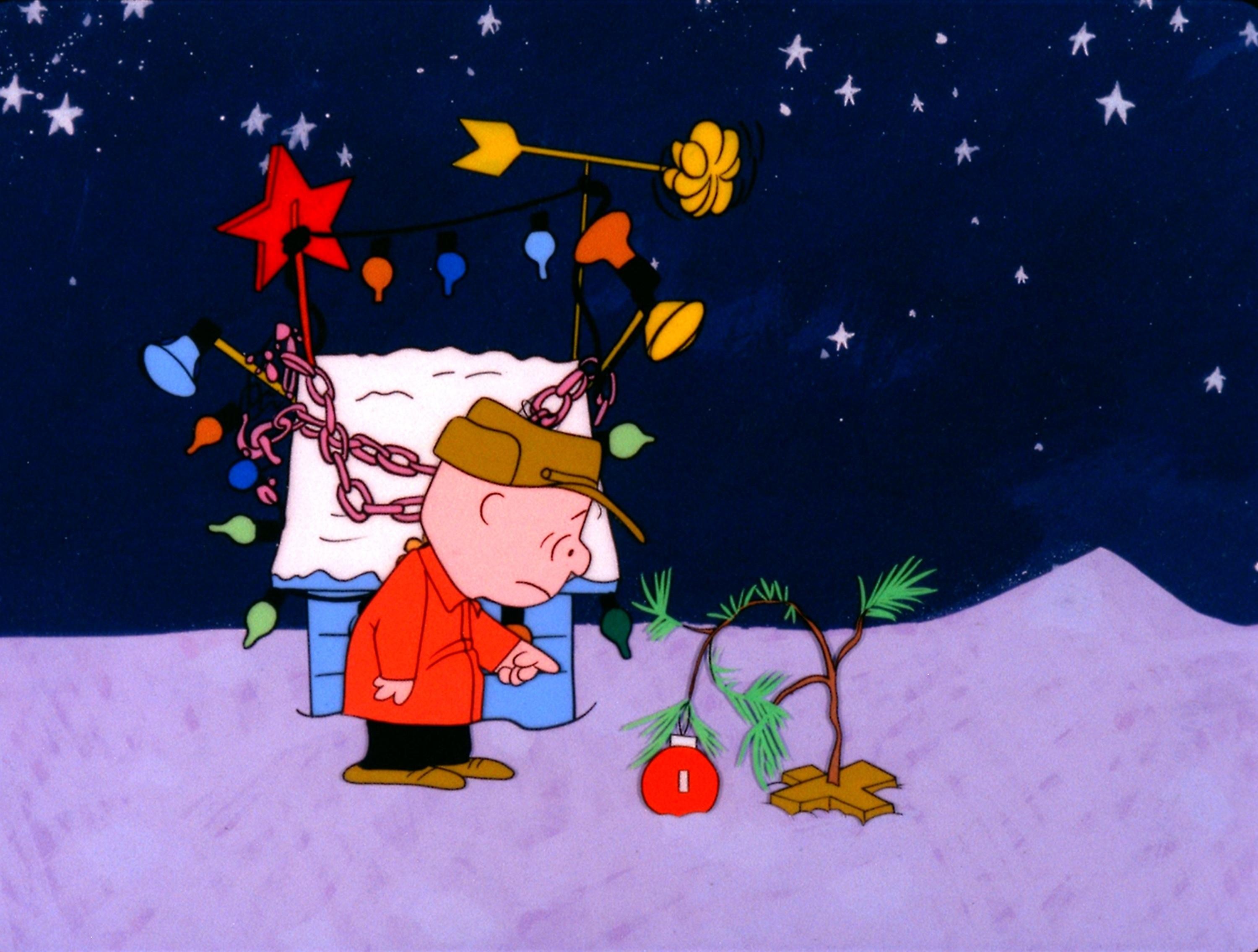
CHARLIE BROWN TRIES TO PERK UP THE FORLORN LITTLE CHRISTMAS TREECharlie: I’m back!

Children gather around piano.

Violet: Boy, are you stupid Charlie Brown. You were supposed to get a good tree. Can’t you even tell a good tree from a poor tree?

Patti: (sighs) You’re hopeless Charlie Brown.

Lucy: You’ve been dumb before, but this time you bit it.

Children laugh, exit. Charlie is alone by piano.

Linus approaches.

Charlie: I guess you were right Linus; I shouldn’t have picked

this little tree. Everything I do turns into a disaster. I guess

I don’t really know what Christmas is about. Isn’t there anyone

who understands what Christmas is all about?

Linus: Sure, I can tell you what Christmas is all about.

linusLinus goes to center stage, spotlight.

Linus:  A couple of minutes before you came in, Pig Pen drew a semi-automatic pistol  and forced us into the auditorium to listen to a manifesto.  It went like this:

“Dear Peanuts Gang:  After a lifetime of being mocked for my poor hygiene and given a name by Charles Schultz as offensive as if he’d named  Franklin ‘Bicycle Tire Lips’, I have gathered you all here to let you know that I have been diagnosed with ebola and that the dust cloud that I emanate every couple steps is filled with the active virus.  Thus, you all have been infected.  Your body’s collagen will soon turn to mush as your skin layers liquefy while blood clots thicken your bloodstreams, causing internal and external hemorrhaging and you all die in slow agony.  Merry Christmas.”

pig penThis is what Christmas is all about,  Charlie Brown:  Togetherness.  We have voluntarily quarantined ourselves within the auditorium and will die as we lived: As an irritating group of parentless larvae with a dog who talks in thought bubbles.  Fortunately, we have Lucy here to help us through the worst of it, although she has raised her psychiatric fee to $500 a second.

Lucy enters.

Lucy-van-pelt-1-Lucy:  Afraid of blood clots?  If so, you have coagulatophobia.  What about fear of tiny white blisters and red spots on the surface of the skin that can tear off with just a small amount of pressure?  You have Epidermatitiaherpetiformiphobia.  Scared of bleeding from the eyeballs?  That’s subconjunctival haemorrhagophobia…

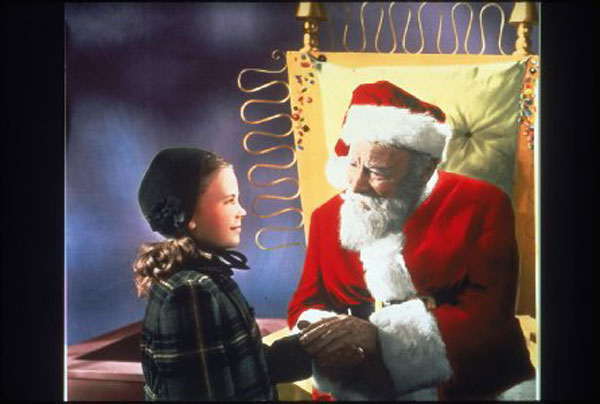
Miracle on 34th Street (Original screen treatment)

cagneyKris Kringle (Edmund Gwenn) is indignant to find that the person (Mickey Rooney) assigned to play Santa in the annual Macy’s Thanksgiving Day Parade is intoxicated. When he complains to event director Dortmund Walker (James Cagney), he learns that the drunk Santa is actually Walker’s favorite nephew, Slobbery Sluíreachadh. Fearing bad publicity if Kringle should go public, Walker (a member of the Irish syndicate), has Kris Kringle murdered and hung on the hundred-foot Norway Spruce in Rockefeller Center with a stake of holly through his heart.

'My Santa, what roving hands you have.'

‘My Santa, what big roving hands you have.’

Slobbery Sluíreachadh remains as Santa, but touches Walker’s second grade daughter Susan (Natalie Wood) inappropriately while she is sitting on his lap, and Walker has him publicly boiled in pudding.

Later, at a formal hearing before New York Supreme Court Judge Henry X. Harper (Gene Lockhart), Walker confesses to both murders, but Harper’s political adviser, Charlie Halloran (William Frawley), warns him that convicting the well-connected gangster would be disastrous for his upcoming reelection bid. Harper buys time by deciding to hear evidence before ruling.  During that hearing, a mail sorter (Jack Albertson) delivers to the court 21 bags of letters from Leprechauns asking for clemency, and in the spirit of the season, Walker is acquitted.

Of course, since (unbeknownst to anyone) the real Santa Claus has already been murdered, Christmas never arrives that year, nor in any following year, and in a flash forward, the film ends with the holiday finally being declared officially extinct in 1984.

(A sequel involving the subsequent war between the Leprechauns and the orphaned Elves was filmed by David Lean in 1959, but never released.)


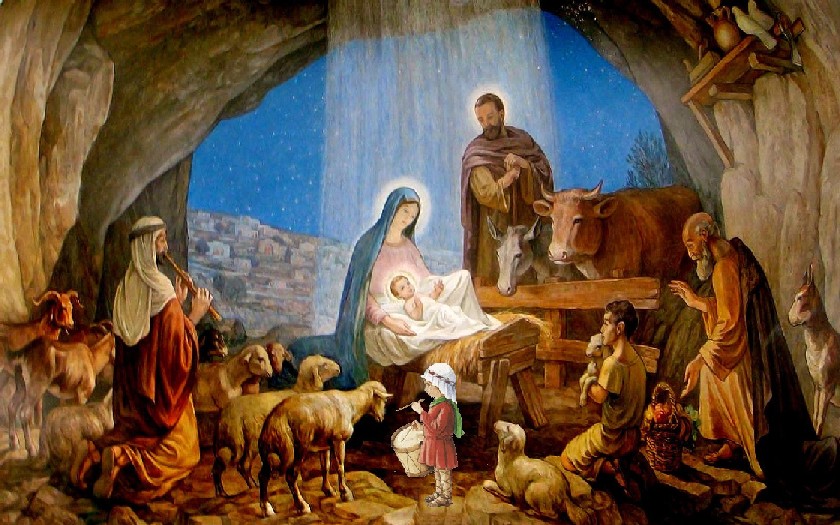
“The Little Drummer Boy”

Nativity-Scene1Baby Jésu, pah rum pah pum pum
I am a poor boy too, pah rum pah pum pum
I have no gift to bring, pah rum pah pum pum
That’s fit to give our King. pah rum pah pum
Shall I play for you, pah rum pah pum pum
On my drum?

Mary called security, pah rum pah pum pum…

The Bible (Matthew 2:1-12)

And when he had gathered all the chief priests and scribes of the people together, Herod  demanded of them where Christ should be born.

And they said unto him, In Bethlehem of Judea: for thus it is written by the prophet,

'Whaddya mean he told ME to bring the myrrh??  He told YOU to bring the myrrh, dickhead!'

‘Whaddya mean he told ME to bring the myrrh?? He told YOU to bring the myrrh, dickhead!’

Then Herod, when he had privily called the wise men, inquired of them diligently what time the star appeared. And he sent them to Bethlehem, and said, Go and search diligently for the young child; and when ye have found him, bring gold, and frankincense and myrrh.

 When they had heard the king, they departed; and, lo, the star, which they saw in the east went before them, till they halted to ready their treasures and Balthazar was seen to bear only the skins of animals.

 When the other Magi saw this, they were sore displeased, for Balthazar had misheard Herod, thinking he said fur instead of myrrh.

Yet however wise, not one of the Magi  knew the nature of this substance myrrh, nor was its availability known to them, and they were many weeks in search of it throughout the Judea, and when they found some at last, the Star in the East was long extinguished and  all the world perished unsaved.

Verily, Three Men of the Orient: Close, but no rubber cigar.  Amen  [The End]

Posted in GENERAL | Leave a comment

Lee Lutes: Putting the ‘Star’ in Black Star

You don’t need a degree in finance to know a gold mine when you see it, but Lee Lutes has one anyway. And by gold mine, I don’t mean cash flow that cascades at the expense of ideology, but a brass ring grab in the heart of wine country where a vintage can be as big a disaster as it can be a godsend—and coming up with the prize.

Lee Lutes

Lee Lutes

If there can be a ‘perfect storm’ in nature, perhaps there can be a ‘perfect convergence’ in human nature, which seems to be case when Lutes was approached by Don Coe and Kerm Campbell to become a managing partner in Black Star Farms.  Coe had the class, the pockets and sauce savvy—he was once the president of Hiram Walker—while Campbell’s rap sheet included being the CEO The Prince Group and the president of Herman Miller; but as a grape grower, he also had good old Michigan dirt beneath his fingernails. In 1997, they had purchased a sprawling, 120-acre horse farm on Leelanau’s east coast and laid the groundwork for a stellar winery in the center of an appellation that was just beginning to find its stride. Key to success was engaging the right winemaking partner, and in Lee Lutes, all the stars seemed to have aligned.

Lee was a local kid then at Peninsula Cellars; a winemaker who understood the value of hybrids as well as the nuances of blends, but—having lived in Australia and trained in Italy—he also had a deep and abiding love for vinifera, especially red wine grapes.

“My fondest earliest memories are filled with Australian Riesling,” he says; “sitting outside in a vineyard in Yalumba, my folks sipping wine with friends while I marveled at the beauty of the surroundings. That image has stayed with me throughout my life, and possibly, directed it.”

'When E.F. Hutton speaks, it's on the advice of their attorneys'

‘When E.F. Hutton speaks, it’s on the advice of their attorneys’

His folks had moved to Sydney, then Adelaide, to pursue teaching opportunities, ultimately moving back to the United States and settling in Traverse City for the same reason. By then, Lee was ten, and spent his teen years in Northern Michigan, waiting tables and banking proceeds to pursue that finance degree at MSU.  “I went to work for E.F. Hutton directly out of college, but I never forgot those beautiful Australian afternoons. By the time of 1987 crash, I’d learned enough about brokerage to realize that the guy I was working for was a crook, so, like my parents did, I hauled off and moved back to Australia. I spent the next few months doing a grand walkabout, meeting viticultural types and hanging out in vineyards.”

Larry Perrine

Larry Perrine

But love beckoned, and within a year he was back, following his girlfriend (now wife) Terry to New York where she was a student. After a brief stint with importer Neil Rosenthal—quickly concluding that peddling wine on the streets on Manhattan was not a career for a 23-year-old noob from the Midwest—he went to work at Union Square Café, then among the top wine restaurants in the world. Danny Meyer taught him retail lessons that he retains today; meanwhile he was able to pick up some cellar-rat hours at Long Island’s Gristina Vineyards. At the time, Gristina’s winemaker was Larry Perrine—now at Channing Daughters—and from his mentorship, Lee credits having helped train his wine palate.

Dolcetto di Ovada

Dolcetto di Ovada

After a tour of Europe, culminating in five days at VinItaly, he met winemaker Elisabetta Currado, whose father was a Piemontese pioneer, among the first bottle wines with a single vineyard designation.  She took on Lee as ‘her jolly’ (his term) which has no ‘pool boy’ connotations; (Terry was there) but what she called her assistant.

Like Australia’s, his memories of the Italian wine country are steeped in sunny nostalgia: “Nobody could replicate that kind experience,” he says.  “It was my stroke of luck to end up making wine in Northern Italy, with room and board supplied and a stipend to boot.  $300 a month wasn’t a lot, but nobody starves in Italy.  I learned about lesser know DOCs like Dolcetto di Ovada, and varietals like Arneis, at which the Currados excelled.”

Warren Raftshol

Warren Raftshol

In 1992, Northern Italy suffered one of the wettest vintages in viticultural history, with Biblical-quality rains at harvest. He and Terry returned to Traverse City, only to find one of the wettest vintages in history.  Fortunately, he was hired by Bill Skolnik at Leelanau Cellars and dove into the Michigan wine scene headfirst, blown away by the ability of local grower Warren Raftshol to succeed with European grapes in Leelanau:  “Raftshol Red [a field blend done at Leelanau Cellars] was the first wine I can recall that gave people a solid idea of what vinifera could do up here. I was as impressed as everybody else.”

Black Star Farms

Black Star Farms

Fast forward to 1998, when it was Don Coe and Kerm Campbell’s turn to be impressed: With Lee’s skill in the cellar—and the feeling was mutual. In them, he found partners with a wine vision directed by quality and stoked with a significant investment. An invaluable part of the Black Star business plan was adopting a co-op mentality, where a number of wine grape growers would have a financial interest in the company and—the theory went—have a bigger stake in growing quality fruit.  Says Lee, “The idea was unique for Leelanau, but it was a sound principal: If you can give me fruit good enough to make a twenty dollar bottle of wine instead of a fifteen dollar bottle of wine, everybody benefits. Don and Kerm own 63% of the business; the rest is divided up between growers and myself.  No decision is made without the core group’s approval.”

Don Coe

Don Coe

Success of the plan seems most obvious in the fact that although Black Star Farms is by no means the biggest wine producer in the appellation, it is arguably the most diverse and among the most talked about.  Here, there is a premium placed on innovation (the short-lived, on-site cheese-making operation, for one) and evolution is constant. It is rare to wander into one the three tasting rooms and not find something new, eclectic and frequently puzzling: Distilled mead is an example.

Coe’s Hiram Walker tenure made him the head cheerleader for an on-premise distillery, and—with Lutes as the distiller—has seen the release of a number of beautifully precise, award-devouring eaux de vie (fruit brandies) from nearly all from the locally-grown standards; cherries, apples, apricots. Distilled mead is a new one; part of the diversified face that Black Star Farms likes to put on its ‘argritainment’ variety show, making customers eager to find out what’s making a premier performance on any given visit.

As for the future, Lee Lutes—with a perfectly straight face—points  to a couple of grape cultivars that should have most wine people raising their eyebrows: Marquette and Gamay.

Gamay

Gamay

Gamay is the bellwether grape of Beaujolais, but it has struggled to make a statement in most other wine regions.  In the Loire Valley, it is often blended with Cabernet Franc, although in Ontario’s Niagara Peninsula, as a stand-alone, it has reached heights that some consider on par with Cru Beaujolais. In Northern Michigan, Chateau Grand Traverse’s Gamay Noir has been a light, tart, plum-flavored winner for decades, but few other local producers have relied on it.  Lee Lutes has five acres planted and plans for more: He loves it for its versatility as well as its fidelity.

“In warm vintages, I have no doubt that we can produce serious Gamay. It’s a prolific grape, tough through the winter, and even in years where it doesn’t entirely ripen it doesn’t produce green or vegetative flavors. And in wet years, its relatively thick skins can withstand a lot of abuse. With Pinot Noir, thin skin and cluster compactness turn it into a gerbils-on-the-vine; mushy and virtually impossible to work with.  Gamay is durable—the integrity of the fruit holds together beautifully after rain.”

Marquette

Marquette

And then there’s Marquette. Marquette is a fairly new hybrid, introduced by the University of Minnesota in 2006; it’s related to both Frontenac and Pinot Noir and is not only extremely cold hardy and disease resistent, but unlike most red wine hybrids, it has a strong vinifera profile, similar in flavor (blackberry, cherry, black pepper) to Malbec. And it ripens consistently in northern climates, with high sugar and moderate acidity.

“As a blending grape, Marquette will be viticultural gold. To produce reliable red wines every vintage in Northern Michigan it makes no sense to rely entirely on vinifera; the yield for the classic reds in 2014 is abysmal. And if my decades up here have shown me anything about weather patterns, winters like the last one come in cycles, sometimes four years in a row. We need we need to grow a backbone of red grapes that will ripen regardless of the season; Marquette is impervious to most temperatures we can throw at it; supposedly, to minus thirty.  Time will tell.

He concludes: “But that is the amazing part of being a winemaker on the frontier of the arctic—we adapt.  The negative side, of course, is that every vintage is a question mark.  The positive side, the one I love, is that the dynamics are always alive, always a new challenge to tackle.”


Posted in Michigan, Old Mission Peninsula | Leave a comment