I May Not Know My ABCs, But I Know My XYZins

The marketing department at XYZin leaves me a little confused, but that’s okay—so does elementary school math.

(In fact, I remember getting the equation ‘2 + 2’ wrong, although Sister Beatrice, my First Grade teacher, was decent about it.  I answered ‘3.99999’ and she assured me, “You’re close, Chris.  Real close…”)

So, when I noticed a bottle of XYZin with a huge ’10’ on the label ballyhooing XYZin’s ten-year-old grape vines, my puzzlement can at least be put into perspective.

Ten is the one after 9, right?
The thing is, in elementary school winemaking, I remember learning that once you plant a grape vine, it takes about five years before you can realize a bare-bones harvest.  And, of all the varietals on the planet, zinfandel is the one most frequently associated with the testimonial ‘Old Vines’ on the label.

According to David Gates, vice president of the zincredible Ridge Vineyard, who’ve been zinfandel pros since 1964:

“Zinfandel vines should be fifty years old.  Or older…”

His boss, Ridge winemaker and CEO Paul Draper, maintains that zinfandel vines don’t even mature until they’re fifteen.

Old Vines are Gnarly, Dude…

In California, especially north-central Sonoma and Amador County in the Sierra Foothills, plenty of supremely old zinfandel vines exist, some well beyond their Willard Scott hundredth-birthday kudos.  That’s because cabernet and chardonnay are the new kids on the block; zinfandel was planted by Italian immigrants who came to Sonoma County in the 1800s after the Gold Rush.  Such heirloom vines are prized because, unlike their callow counterparts producing high yields with somewhat simple fruit, world-weary, post-menopausal zinfandel pops out low yields of small berry clusters jammed with concentrated sugars and subtle, secondary undertones like graphite, licorice and slate.

In contrast, pubescent zinfandel displays all the subtlety, gravitas and sophistication of Justin Bieber.

So Why Advertise It…?

A quick flip to the XYZin website clarified things, although I was further poleaxed by their tagline, ‘Wines with a Sense of Place and a Place in Time’.  Say wha…?

Turns out that the good folks at Geyser Peak are behind ‘10’ as part of their XYZin ‘Vine Age’ series; bottlings intended track the evolution in zinfandel’s flavor profile as the vines grow up, then old.  Now that’s an idea worthy of sitting up and taking notice.  Also in the series are self-explanatory ‘50’ and ‘100’ zinfandels, available at age-appropriate price-ponts—‘50’ goes for around $35, and ‘100’ sells for $45.

Although I haven’t had the chance to dip into the older, posher versions yet, the concept itself is as clever as it is unique—a zin win/win.

Ondine Chattan, Zin Master

So, just when all was revealed and my head cleared, another odd XYZin statement reared from the web page.  No, not winemaker Ondine Chattan’s food-pairing suggestion for her XYZin 100: Shrimp with Grits.

Now, maybe I’m just a frostbitten Midwest meathead, but I do confess that this delightful-sounding morsel has never once graced my table.  And if it did, would it occur to me to match it with a massive high-alcohol, hundred-year-old zinfandel?

Not in a hundred years.

But that wasn’t the assertion I’m referring to.  It’s this:

‘Although these vines exude classic Zinfandel characteristics, it’s rare for a single vineyard to embody everything we look for in the final blend…’  

Maybe I nodded off during that elementary school winemaking lecture on ‘sense of place’, but XYZin didn’t, since they used in their jingle.  Single vineyard wines are the very embodiment of terroir—a metaphor for ‘sense of place’—and big momma Geyser Peak, like most wineries, is always slapping vineyard names on their labels and commanding top dollar for it.  Vineyard designated wines are generally better than their generic counterparts, if only because blendings can mask shortcomings—and single-source wines with shortcomings are generally relegated to generic-counterpart status.

Speaking of Terroir, Ready For Another XYZinger?

 ‘We believe that the history of a vineyard is as much a part of the terroir as are climate, soil, clones and the age of its vines’. 

Stop already.  Terroir is not the result of history; history is the result of terroir.

But I’m just nitpicking words here; the wine itself is fine.  Better than fine.  Once opened and allowed to mellow, XYZin 10  is a juicy, spicy mouthful with plenty of grit—a powerful pour; hardly a shrimp.  Ondine Chattan, who is gorgeous and not much older than her baby vines (she’s thirty), confesses a lifelong obsession with hard science and subjective aesthetics.  To prove it, she earned a Masters degree in Enology while me, I need a calculator to work out 7 X 5.

Not only that, but she’s a former Ridge Vineyards winemaker. So, if Ondine Chattan wants to pour zinfandel directly over her shrimp ‘n’ grits and use a straw, she’s got the street cred to do it.

Anyway, Back to First Grade (Which Might Not Be Such a Bad Idea)…

“Okay, Chris, I’m giving you four apples…” went my subsequent remedial first grade math nun.  “Think about this before you answer it: How many apples do you have?”

Damn.

Of course, it so took me so long to do the calculation that by the time I was done, I had already taken a bite out of one—so this time, 3.9999 wound up being correct.

Tasting Notes:

XYZin Zinfandel, 10 Year Old Vines, California, 2007, about $15:  Cardamom and cracked pepper spice up the nose while the palate is ripe with crisp summery fruits like Bing cherry and Damson plum along with briery backwoods ones like huckleberry and blackberry.  The finish is long with smoke, chocolate and vanilla notes from the triumvirate of oak: American, French and Hungarian.
Posted in CALIFORNIA, Zinfandel | Tagged , , , | 1 Comment

Waugh Cellars: Six Degrees of Vinification

Ryan Waugh is the kind of winemaker who believes that 90% of a finished  wine happens inside the vineyard, and he insists that the three thousand cases of wine he made in 2009 prove him out.

He’s  also believes that 100% of appendix attacks happen inside the vineyard, and a single case is all the proof he needs.

Last year, on the final harvest day for his flagship cab, Six Degrees, he called his wife complaining of mysterious, horrendous gut cramps.  Crystal Waugh’s initial impulse was to panic; mine would have been to say, “Geez, Ryan, if you don’t recognize the symptoms of appendicitis, maybe it’s better you  went into wine instead of internal medicine…”

Trading superior vina cavas for vino cava superioridad…

His parents may not agree.   Ten years ago, Waugh had a biochemistry degree from Santa Clara University, had passed his MCAT exam with flying colors and was only a dorm-room deposit away from med school when a ’76 Stag’s Leap Lot 2 intervened.

A friend’s dad shared a bottle with him, and from that point forth, the only flying colors Ryan Waugh saw were cabernet red, chardonnay yellow and maybe a bit of riesling white to round out the spectrum.

“Saying that the Stag’s Leap changed my life puts  it mildly,” he claims of the epiphanal chugalug.

How good was it? Keep in mind that 1976—the year on that bottle—was also the year that Stag’s Leap won the so-called ‘Judgment of Paris’ competition, beating some highfalutin hyphenated First Growths and becoming California’s shot-heard-round-the-wine-world.  That one was vintage 1973.  Three years later, according to Wine Advocate, Napa had an even better growing season.

“I just fell in love with what wine could do, what it could be, so I went out immediately and began to look for work in a winery.”

Savannah Chanelle in the Santa Cruz Mountains hired him, and there, under the tutelage of  Michael McNeil he learned as much about the philosophy of grapes as well as the farming and vinification.

Talk about your rakehell turn.   In a few short months, Waugh abandoned visions of puking toddlers, diseased spleens and appendectomies other than his own and relinquished an antiseptic career in operating rooms for the musty cellars of Northern California.

That was a decade ago.

The Six Degrees of Separation?

So today, we’re inside the Grapevine, a pretty little cosmo Novi wine bar, and Waugh pours a glass of his inky-purple Six Degrees 2006, second vintage of his flagship wine which hails, in the uppermost reaches of the Mayacamas Mountains, from two scant acres—appendix acres, you’ll recall.

As far as I can decipher it, ‘Six Degrees’ is not named for the desperate units of distance you’d place between yourself and Kevin Bacon’s rock band, but rather, the degrees of physical separation between planet earth and a wine drinker—in other words, the soil, the vines, the grapes, the barrel, the bottle and finally, you—or Kevin Bacon in case he just dropped over to push his new CD.

The cabernet is the culmination of Ryan Waugh’s California Dreamin’ and possibly, his answer to Warren Winiarski’s evocative, smoky 1976 gem.   Six Degrees’ alluring nose is ripe with black fruits, extraordinarily precocious and elegant , filled with rich, formidable tannins that are polished enough for drinking tonight, but which will have improved immeasurably a decade from now.   And at $85, it’s a relative steal, considering that Waugh only produced 380 cases—by coincidence, the same as the number of people who saw Kevin Bacon’s last movie.

Six Degrees is such a soul-warmer that I’m confident that Waugh’s folks still tell the mah jongg circle that their son practices internal medicine.

Waugh: What is it Good For…?

…Absolutely something, including a whole slew of new releases.  And,  as long as I had the expansive, self-confident Ryan nailed down to a Grapevine booth,  I persuaded him to uncork a few of them.

Further details are given below, since, unlike the winemaker, this column tends to be overloaded with appendixes.


Appendix One:  Waugh Cellars Riesling, Santa Barbara, 2008, about $31: What’s wrong with this picture? Riesling is a cool weather grape and Santa Barbara is hot weather central.  ‘Carpenteria’ is the secret, according to Waugh—it’s got its own little Rhinish microclimate,  plus the vineyard is  ‘two miles from Oprah’s house’.  Oprah, by the way, is ‘so what?’ spelled backwards.  Luckily, the wine is pure ‘what’; fat and fruity like Oprah, but revealing more depth and breeding.  A nose of apricot, white peaches and spicy pear leads to a mid-palate of pure personality—chamomile and verbena along with a wonderful finish filled with mineral-laced stone fruit.

Appendix Two: Waugh Cellars Chardonnay, Russian Rivers, 2008, about $23: An entrancing nose of Asian pear and fresh pineapple; full-bodied with remarkable concentration, butterscotch, green apple, mango notes and a rich texture kept in focus by racy acidity.

Appendix Three: Waugh Cellars Zinfandel, Dry Creek, 2005, about $23: The purity of fruit forming the core of Ryan Waugh’s style is nowhere more evident than in this wine from zin’s favorite Sonoma hangout.  Elegant, ripe and round, it shows off a panoply of zinfandel’s prized flavors—brambly raspberry, rich, smoky blackberry and great depth of earth, anise, cedar and cranberry.

Appendix Four:  Where To Buy:  Retail-wise, Waugh is only available in three states; Texas, Ohio and Michigan (lucky us), your best bet is to get in good with Crystal Waugh via the website: www.waughcellars.com

Posted in CALIFORNIA | Tagged , , , , , | Leave a comment

Michigan Meritage Merits Mention

The term ‘meritage’?

Not.

First, if you’re going to invent a word, why make it one you have to teach everyone how to pronounce?  Second, if you’re going to combine two words to make a third, why use two words that have nothing to do with the product you’re trying to represent;  in this case, a blend of Bordeaux varietals?

‘Meritage’ is a combination of merit and heritage.  Woo hoo! What do either one have to do with cabernet, merlot or the south of France?

‘Fess Up Time

Okay, so  that’s just sour grapes—pun intended.  I couldn’t care less if they call the stuff  ‘meritage’ or ‘schmeritage’ or  ‘panda vomit’; I’m still smarting because in 1988, when the term was ramrodded into  our lexicon, all fifteen of my entries to the Bordeaux Blend Naming Contest were rejected unilaterally by the soon-to-be-called Meritage Association.

And I still maintain that my worst entry was better than the one they ended up with.

You be the judge:

Like, my first thought was, how about a combo of yummy and buzzYuzz.  Who couldn’t pronounce that?

Or a combo of all five potential meritage grapes—cabernet, merlot, petit verdot, malbec and cab franc?  ‘Merlabmalfrancpet’.   Sound it out, moron—or put in some hyphens if you’re that mentally challenged.

Or my favorite, an acronym for ‘If you spill any on those white pants you will never get the stain out’,  ‘Iysaotwpywngtso’, which I thought sort of had a Native American ring to it; a Western feel, very ‘California’.

Screw ‘em

Anyway,  I was railroaded by the judges, so now we’re stuck with ‘meritage’.  And for a long time, we were stuck with meritage from California alone, since in order to call your wine ‘meritage’ you have to pay the Meritage Association real money, a buck per case,  and not everybody leap-frogged onto that particular bandwagon.

Why should they when they call their wine ‘claret’ for free?

But once it became reasonably clear that despite our best intentions, the name wasn’t going to go away, the meritage roster  began to expand until even here in frozen, funky, forgotten and forlorn Michigan, a few well-respected suckers anted up the per-case tariff:  to wit: Cherry Creek Cellars, Fenn Valley Vineyards , Leelanau Wine Cellars, Lemon Creek Winery and St. Julian Wine Company.

'Shou' symbol, meaning 'longevity, from Wyncroft

Still, the bulk of Michigan wineries  dabbling in the dynamics of the Bordeaux blend have chosen to go the thrifty route and coin their own  handle—and thus continue to handle their own coin.  Domaine Berrien uses ‘Crown of Cab’, since they consider it the ‘crown jewel ‘of their portfolio.  Pentemere’s goes by ‘Le Griffon’ for reasons known only to the untamed savages of Boondockia; i.e., Tecumseh.  Wyncroft Cellars calls theirs’ ‘Shou’—Chinese for ‘longevity’ which the wine indeed displays.  Accurately, if somewhat less imaginatively, Raftshol’s label reads simply ‘Red’.

Frustratingly, not one has yet expressed interest in signing up for ‘Yuzz’, even at my bargain per-case  rate.

So here’s an overview of Michigan’s generic meritage heritage—in all, a remarkable muster for a state that was once told it was too cold to make decent white wine, let alone red.   I’ve coined a handle for the naysayers, but unfortunately, my editors won’t let me print it in a family wine column.  

Tasting Notes (in no particular order):

  1. Shawn Walters

    2005 LEELANAU WINE CELLARS, ‘MERITAGE’, LP, about $22:  Perhaps the bargain of the bunch; winemaker Shawn Walters has captured more nuances of top-shelf California meritages than I would have thought possible in the Great White North; chocolate, deep berry notes and a smokiness that raises the bar for Michigan reds, even as you’re closing the bar with a glass of red in your hand.

  2. 2005 LONE OAK ‘VIN DU ROI’, MICHIGAN, around $25:  An initial smokiness slips from the glass, quickly replaced by scents of blueberry and cassis.  Moderately tannic with a spice box array of flavors and an interesting hint of freshly popped corn, Lone Oak’s ‘wine of the king’ is a bit less than regal—somewhat thin through the middle and sliding to a finger-snap finish.
  3. 2007 DOMAINE BERRIEN, ‘CROWN OF CAB’, LMS, around $25  The winery considers this the coronet of its catalog; it contains all five Bordeaux varietals.  24 months on oak lends nice tobacco and vanilla scents to first-impressions, but an essential core of fruitiness is missing.  A one-dimensional wine without much depth but free of major flaws, it is an acceptable every-day table wine.
  4. 2005 LEMON CREEK WINERY, ‘MERITAGE’, around $22:  The Lemon family has been a Berrien County fixture for 150 years.  They  haven’t figured out how to grow lemons yet, but brother, do they grow grapes.  Lightweight but smooth, this vanilla-tinged claret shows characteristics of the big three:  cabernet (juicy blackberry and a bit of mint), merlot (Damson plum and pie cherries) , cab franc (cassis and violets) in a simple but satisfying package.
  5. 2007 RAFTSHOL ‘CLARET’, LP, about $12: A solid entry from this former dairy; beautifully balanced and long-lived blend named for the traditional ‘claret’ cabernet duo, sauvignon and franc.  Though a bit restrained on the nose, the wine is lively nonetheless, showing both sweet and tart cherry notes and a certain gravitas—Raftshol was one of the first wineries in Northern Michigan to plant red vinifera varietals, and the experiment is now paying dividends.
  6. 2007 RAFTSHOL ‘RED’, LP, about $12:  Exhibiting generous aromas of black cherry and raspberry, the wine’s best feature may be its silky texture which wraps itself around a solid core of tobacco, black currant and licorice.  A nicely balanced selection which offers notable sophistication at the price and a wealth of sharp, cool-climate fruit flavors.
  7. 2005 ST. JULIEN, BRAGANINI, RESERVE MERITAGE, MICHIGAN, about $30: Marred by a slightly vegetable overtone, the fruit tones are overworked, hollow and dilute and concealed behind grainy tannins.  In general, a wine that enters the race but does not quite cross the finish line.
  8. 2006 WYNCROFT ‘SHOU’, AVONLEA VINEYARD, LMS, about $45: Pronounced ‘show’ and named after the Chinese symbol for ‘longevity’, Wyncroft’s flagship wine is a pretty, Pauillac-styled blend of cabernet (80%) and cab franc with a touch of merlot.  Well-integrated tannins  balance the blackberry and black currant palate; there’s a touch of jalapeno and a slightly hot finish.
  9. NV (2005-2006) PENTAMERE ‘LE GRIFFON’, MICHIGAN, about $32:  A classic Bordeaux-styled blend with blackberry and pepper in the nose, a cool, green-herbed mid-palate with some fruit, predominately Morrello cherry and plum.  A middle Michigan winery  (in Tecumseh , south west of Ann Arbor) has produced a work in progress which still needs a bit of cellar time to settle into itself.
  10. 2007 FENN VALLEY, ‘MERITAGE’, LMS, about $20:  Cassis, coffee and blueberries are wrapped up in a silky blanket; a food-friendly wine showing delicious acidity, a nice mineral lift and very few rough edges.  Fruity and refreshing; voluptuous, pretty with a good finishing clarity and no bite.  2008 vintage to be released in June, 2010.
  11.  NV (2007) TABOR HILL ‘RED ARROW RED’, (LMS), around $20: A textbook ‘breakfast’ red boasting toast and coffee aromas, though at the expense of fruit.  Light berry notes do not entirely rescue this somewhat heavy-handed selection which is chunky and a bit simplistic.
Posted in Cab/Merlot, Michigan | Tagged , , , , , , , , | Leave a comment

Foie Gras and Wine: Silence of the Geese

Few marriages made in food/wine heaven—that is, those magical matches that simultaneously compliment and contrast, fuse complex flavors while maintaining component individuality, satisfying every gastronmic whim while leaving you craving just a bit more—are better suited to one another than pâté de foie gras with Sauternes.

This is, in fact, Sommelier 101.  It has to do with the balance of fats and acids, the succession of sweetness and savoriness; an otherworldy mouthfeel as these two luxuriously bourgeoise treats mingle when sampled together.

But be advised: if you try it, James Bond will never speak to you again.

007: A LICENSE TO BORE

By James Bond, of course, I don’t mean the real James Bond—he’s cool—I mean Roger Moore.  And by Roger Moore, I mean that ancient, washed-up, wrinkled-up loudmouth who has not made a relevant film since Jimmy Carter was in office, and whose biggest career high since Octopussy was a voice-over as Santa in the UNICEF cartoon The Fly Who Loved Me.

Yet, for reasons known only to those who can’t admit when it’s over valiantly troupe on, Moore has seen fit to shout loudly to anybody willing to listen that if they eat even a nibble of foie gras, he will stop talking to them forever.

Frankly, to me this sounds less like a problem and more like a solution.

The mummy and the mommy

Recently, from the hallowed halls of obscurity, the wooden-faced, yellow-toothed Moore rambled: “I refuse to speak to old friends who, even when they know how foie gras is produced, are prepared to overlook the suffering for self-gratification. My wife Kristina feels just the same… no creature deserves to be treated as these birds are for our delectation.”

Not sure what ‘delectation’ is, but I am glad he brought up ‘wife’ and ‘deserving to be treated’ in the same sentence, since he dumped his first one, Doorn Wan Steyn for singer/senior-citizen Dorothy Squires, then dumped Squires for Luisa Mattioli, then dumped Mattioli for multi-millionaire Kristina ‘Kiki’ Tholstrup.

Sound like there are a few ex-wives who don’t particularly care if Moore speaks to them again and will hopefully go purchase bargeloads of foie gras and blow liver-breath directly at his sealed lips during alimony hearings.

LESS IS MOORE, BUT…

Now, to his point, they do torture geese in the production of foie gras.  Foie gras means ‘fat liver’ after all, not ‘buff birdie’.

In the ‘gavage’ method, trapped geese are forcefed corn through a tube jammed down their cuticle-lined esophagi until their livers nearly blow up—a technique not dissimilar to the way Moore’s fellow thespian Sally Struthers stumbled across her physique.  What neither PETA nor Moore will tell you is that most inhumane part of the treatment involves showing geese an endless loop of Bullseye! while French people stand around and bet which will explode first, their livers or their brains.

"D-d-d-d-delectation, folks!"

What  Moore also forgets to mention is that in dairy farming, cows undergo a lifelong process of forced impregnation using an instrument known as a ‘rape rack,’ while male calves used for veal production are castrated and forced to live in crates, while male chicks born to egg producers are often ground up as soon as they hatch and used for fertilizer, and that pigs, who are admittedly smarter than me and likely know what ‘delectation’ means, may undergo skinning alive.

Shall we even mention that they make cheese out of juice from sheep stomachs?  Or Jello from horse’s hooves?

P.S.:  WORST… BOND… EVER

Liver transplant recipient

Food, my children, can be ugly stuff.   If Roger Moore gives the silent treatment to everyone who does Jello shots or eats burgers or BLTs or Cheez Whiz or Egg McMuffins, he won’t have anybody left to talk to but his forty-third wife and his agent—who isn’t returning his calls anyway.  Okay, we should stop illegal mistreatment of our furry, fuzzy mealtime favorites, but within reason.  On Sunday, maybe say three extra Hail Marys for the geese.  Donate to Save The Waterfowl.  Goose your girlfriend.   Buy a Goose Gossage t-shirt.

I mean, if you eliminate foie gras from your special occasion menu, what are you left with?

Sauternes and liverwurst doesn’t have quite the same ring.

Posted in PAIRING WINE AND FOOD | Tagged , , , | Leave a comment

Cold (And Brother, Do I Mean Cold) Heaven Cellars: Defriend in Need is Defriend indeed.

What a revoltin’ development!

On Facebook, I’ve been ‘defriended ‘ by a California winemaker after I took exception to some silly-ass generalization she made about wine writers, which in the interest of journalistic trifling I would repeat verbatim except that evidently once you get defriended, you can’t refer back to old stuff.  I didn’t realize this.  What I do realize is that this Facebook concept of defriending is news to me.  According to her profile pic, this particular winemaker is a moderately attractive blonde woman, and technically, of course, I have been defriended by many moderately attractive blonde women, including one I married and had kids with.

Defriended, yes.  But  not quite so electronically.

So I am really not sure how offended to be.  Facebook defriending is a social phenomenon that screams twenty-first century nickel-diming, and year-wise, I am a bit more attuned to vintages like’61, ’89, ’95.

The entire extent of ‘2011’ that I need to know is:  Push the button and if it doesn’t work, call Comcast.

The winemaker in question also tried to further bruise my digital ego by suggesting that as a wine writer, she’s never heard of me.  I certainly would have accommodated this comment with a mea culpa of complete public self-excoriation, up to and including the wearing of a blonde hair-shirt, but the truth of the matter is, I have been writing about wine for twenty years and I haven’t heard of me either.

Oh, the ironic, post-modern humiliation of it all.

Morgan Clendeneneden

Touché, Morgan Clendenen.  

Nonetheless, I first made a magnanimous attempt to have Morgan send me a bottle of her wine to review.  By ‘magnanimous attempt’, of course, I mean I asked her to send me a bottle for free.  To which she responded that it was not her policy to send out free review bottles, which is probably why there’s bad blood between Cold Heaven and us terminally tight-wadded wine reviewers.

I understand her policy, however, and even though I wouldn’t dream of charging her for the glowing review I would subsequently write, I tried to find her wines at some—any—local wine shop, fully prepared to pay.   And tried, and tried, without success.  Why bother?  So I could be ethical and prove myself above this degrading diva and her disquieting defriending?

Or because I’m a petty-fogging, picayune punk intending to dis a new best defriend’s wine?

Neither.

It’s because Morgan refers to herself as the ‘Queen of Viognier’, and that is an intriguing title for anyone outside of northern Rhône to pin upon themselves.

Basically, I am not aware of anyone outside the seven small communes of Condrieu, just south of Côte-Rôtie, who has manifested a fully-realized grasp of this temperamental varietal—maybe because it’s the only legally permitted grape throughout the whole AOC, and maybe because they’ve been mollycoddling it since around 400 BC.  That gives the vignerons of Limony, Chavanay, Malleval, Saint-Michel-sur-Rhône, Saint-Pierre-de Boeuf, Vérin, and Condrieu a twenty-four hundred year head start over the Queen of Viognier, who’s been at it for fifteen.

Yves Cuilleron

Still, Clendenen’s reputation preceded her, and I read that she teamed up with Condrieu’s mechanic-turned superstar Yves Cuilleron to produce a 50/50 blend of his grapes and hers.  The results were said to be remarkable.  Clendenen is also known as a stickler for quality fruit—someone who has no interest in expanding her Cold Heaven label unless she gets it.  Most vintners do not have this luxury, of course, but the fact that she was married to Jim Clendenen of Au Bon Climat (among Robert Parker’s short list of ‘Best Wineries in the World’; producer of more than 30,000 cases annually) may have allowed her a certain, shall we say, ‘freedom’ worth its weight in gold-tinted viognier.  Some folks are born great; others have greatness thrust into them.

So What’s the Defriending All About?

Glad you asked.  In an unfortunate stroke of really bad luck, when I was writing about Clendenen’s disparaging remarks concerning my hallowed profession, I hit the wrong key on my keyboard and referred to her as the ‘Queer of Viognier’  to which she took untoward umbrage.  Well, excu-u-u-use me.  Why bitch slap me?  Go after SpellCheck, and specifically, the Urban Dictionary version.

Little yours truly

So, since I am unable to come up with a bottle of Cold Heaven by hook or crook, legally or otherwise, this column—which was supposed to be about the state of the art in Central Coast viognier, winds up instead being a chilled white whine about the state of the art in petty defriending—and more specifically, about the defriending of little yours truly—an arthritic, plain-looking, middle-aged black woman with a Jim Jones fetish (a Jones jones, you might say) by a high-powered and super-aggressive woman from California—and not just any high-powered and super-aggressive woman from California… but by the Queef of Viognier herself.

Oh, the humanity.  The humanity!

Posted in Central Coast, Viognier | Tagged , , , , , | Leave a comment

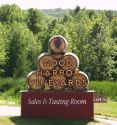
Good Harbor Vineyards and the Dialectics of Cherry Wine

Erroneously credited with inventing Play-Doh

Plato, Third Century, BC: “Nothing more valuable than wine was ever granted mankind by God. Now, wanna argue about it…?”

(Okay, this is Plato paraphrased—he didn’t tack on the argue part.  But I’m sure he would have; the crusty old pedophile pedagogue loved a good dust-up.)

Noah Webster, 1828: “Wine = The fermented juice of GRAPES used as a beverage.”

1. Everything is transient:

Cherries are to Traverse City what slot machines are to Las Vegas—lifeblood.  But when a community’s lifeblood starts sapping its life force, it’s time for a rethink.  According to Good Harbor winemaker Sam Simpson, the cherry industry has had a rough decade.  Battered by weather woes and oppressive GAP certification requirements, the growers remain far down a food chain overlorded by cherry packers and cherry distributors.

Simpson believes that over the next ten years, you won’t see as many Traverse City cherry tree replants.

Sam Simpson

“You get thirty to thirty-five years worth of production from a typical cherry tree,” he says.  “There was a big push to expand in the Seventies and Eighties; those trees are currently running out of steam.  The only farms I see gung-ho these days are big cooperatives—thanks to economies of scale—and very small operations where the owner has a day job and works the orchards on his own time without necessarily accounting for what that’s worth.  For mid-sized companies, it makes sense to plant the land to something more profitable—or sell up.”

He should know.  He’s the scion of three generations of Traverse City cherry farmers; running a Leelanau winery was the dream of his grandfather and the brainchild of his father, the late lamented Bruce Simpson, and now, it’s become Sam’s passion—but so are his cherries.  Also, he’s a MSU finance major. Personally, if I owned a farm in upstate Michigan, that’s who I’d want counting my beans even if they were grapes or cherries—if only to pass along the scary P&Ls when it snows in mid-July.

Debbie and Taylor Simpson

2. Everything is made out of contradictions:

“The market up here is evolving,” says Simpson, who along with his mother Debbie and sister Taylor, are steering Good Harbor toward this Darwinian dynamic—in part by raising the perception bar on cherry wine.

“Before cherries, potatoes were the agricultural ‘thing’ up here.  A lot of the potato fields were re-planted to cherries, and before today’s cherry farmers are priced out of business they’ll either figure out how to market cherry wine or rip out the trees and plant grapes.”

Of course, if they’d fermented the friggin potatoes to begin with, this whole mess might have been avoided.   As it is, the Traverse City area grows 70% of the tart cherries in the USA and the TC Cherry Festival is in its 84th season; it would be a shame if anything upset the cherry cart, especially something as obnoxious as USDA red tape.

For Sam, the answer is simple: Make more cherry wine.

“The more we can produce, the better. If we eliminate having to wholesale fruit at market price, we better control our destiny.  Any time you can take a given product and create value-add like estate bottled wine, you’re ahead of the game.”

Spoken like a true numbers-cruncher.  So, when he switches hats and becomes an agriculturalist again, he blends in Balaton and Morello cherries—darker and denser than pie-perfect Montmorency cherries—and allows for more hang-time (up to three weeks longer) so that the four blocks of orchard he devotes to wine cherries can develop the right brix levels required for producing a product that not only stands up to the vinifera reds of the area, but is a better match for certain roast pork and venison dishes.

Is it far-fetched, this idea of cherry wine becoming accepted by the cocky cognoscenti?

Maybe, but when handled by a deft vintner like Sam Simpson, maybe not.  To my palate, Sam’s cherry wine is a phenomenon: Bone-dry, crisply acidic with a beautifully rounded mouthfeel.  It offers a spice strata that’s nearly as complex as a vin brulé or an English mulled wine, only without the mulling.  Clove, cinnamon, nutmeg, they’re all there.  According to Taylor Simpson, “It’s like a piece of cherry pie in a glass.”

Best, it shows no dismay over its origins; rather, it celebrates being cherry wine.

But is it wine wine?

3. Gradual changes lead to turning points:

The problem is not that cherry wine tastes like cherries: that’s a common enough descriptor for cabernet or merlot, nor that it’s redolent of pie spices, which show up in the nose of most top pinot noirs.  Rather—if we’re honest here—cherry wine has the potential for some major boorish associations.  Tommy James and the Shondels swig it with total strangers; Jermaine Stewart guzzles it as a substitute for sloppy sex; George Thorogood howls about it in the same breath as hot peppers and ooh-hoo-hooeee; and when Van Morrison gets loaded along the Cyprus Avenue train tracks, believe me, it ain’t on ‘89 Beaucastel Hommage a Jacques.

Moi?  When I was sixteen, I used to buy this syrupy 8% crap for a buck ninety-nine (Boone’s Farm Wild Cherry, if memory serves) from Bill’s Party Store on Orchard Lake Road—they sold it to me without blinking an eye, and trust me, when I was sixteen I didn’t even look sixteen much less twenty-one.

So it’s going to take a mighty PR campaign from the likes of the Simpsons to change the notion that cherry wine is anything more than a low-priced, lowbrow dally-in-the-alley plonk, and the fact that they sells it for a mere $7.50 a bottle—it’s worth gobs more—may be hurting the cause more than helping it.

4. Negation of the negation

Hegel's Triad

Unless you are in need of sleep, folks like Engels and his near-anagram Hegel who use phrases like ‘negation of the negation’ are downers.  And in this case, however the negation negates the negatory, good buddy, Sam Simpson will always run up against the final wall of resistance.  According to the FDA, he can’t just call his product ‘wine’ and hope that its very cherry-ness suggests the obvious.  He must by law classify it as a ‘Class 5’—a fruit wine made with something other than grapes, and so state in prominent letters on the label.

That, in short, was the dialectics of cherry wine.  Now, Here’s the resolution:

I’m a wine writer, not a philosopher, but I do profess my undying love Good Harbor cherry wine, so in the search for a denominator common enough to put the ‘is it wine/not wine’ argument to rest once and for all, I have stumbled (one too many Good Harbor Marechal Foch Rosés, no doubt) over  the answer.

That is:

If you heat any alcoholic beverage—no matter if it’s made from grapes or cherries—to 1032 degrees kelvin, the symmetries of ten-dimensional superstring appear, the geometry of time distorts and both substances become so identical that even Noah Webster couldn’t tell them apart. 

Voila!

Of course, you, being smarter than I, have already guessed the inherent fallacy in such a methodological solution:

Simultaneously, a rip will form in the space-fabric of the Good Harbor tasting room (34 S. Manitou Trail, Lake Leelanau 49653; 231-256-7165), a wormhole will appear between the Fishtown White and the Moonstruck Brut and you and me will wind up exactly where we began—so we’ll have to start over.

Won’t that be fun?

Debbie and Taylor have agreed to have the glasses ready.

* Sam Simpson won’t divulge his full name.  “Sam’s fine,” he says, and I respect that.  But secretly I hope it’s Samson.  Samson Simpson is a name worthy of, well, The Simpsons.

Posted in Fruit Wines, Leelanau Peninsula | Tagged , , , , | Leave a comment

Wines of India: Zin and zen

The tasting room is pure California.  Dominated by a blue mosaic balcony bar with a panoramic view of rolling vineyards, the open floor space is gently lit by suspended wine bottle lamps, flanked with backlit cases in wood-paneled walls and a picture window which reveals the pristine bottling area. A small boutique area offers t-shirts, stemware and ice buckets emblazoned with the winery’s logo:  Sula Vineyards.

The two thousand square foot room was in fact designed by West Coast architects Andy Hope and Laurel Roth.  The wine that is produced and bottled here, however, is anything but.  Sula Vineyards, which produced more than two million bottles in 2007, is one of the largest producers of wine in India.

Yeah, India.  According to Sula founder Rajeev Samant, “For us, it’s an industry whose time has come. With more education and more affluence and good jobs available right out of college for today’s young professionals, it’s very natural for them to drink more wine.”

India now boasts about fifty vineyards, mostly centered in the western state of Maharashtra, where Sula owns three hundred acres in the Gangapur and Dindori districts of the Nashik region, an area which produces ninety percent ofIndia’s table grapes.  With the growing profitability of wine grapes, generally noble varieties like Zinfandel, Chenin Blanc, Sauvignon Blanc, Cabernet Sauvignon and Shiraz, more and more contract farmers are making the switch.  The climate is comfortably cool, the soil well-drained, and there’s a focus on focus is on sustainable agriculture utilizing a minimum of chemicals.

Despite religious taboos against alcohol consumption and old-school resistance to anything but whiskey (a hangover, if you will, from colonial days), at least some of wine’s growing popularity in India can be ascribed to the influence of Bollywood, the colloquial term for India’s film and television industry.  Recent releases have portrayed wine drinking as both sophisticated and acceptable, even for women—who have traditionally been teetotalers throughout India.  Bollywood is centered in Mumbai, Maharashtra’s capital.  The result is an Indian wine market that last year hit $100 million and has been growing by 25% annually since 2003.  Domestically, sales have surpassed a million cases.  Beside Sula, both Grover and Chateau Indage wines can be found outside the Indian sub-continent in increasing numbers, mostly in London, Dubai and Singapore.

Chateau Indage

And how’s the wine?   Admittedly, it still has a way to go, and that many Indian wines tend to be flabby, sweet and simple—a complaint not uncommon when a wine industry is going through birthing pangs.  The search for ‘terroir’ identity and national character in a wine can take many vintages, but at least one expert—Tom Stenson of Sotheby’s World Wine Encyclopedia—has sung some recent  praises, claiming that the sparkling wines of Chateau Indage has “a technical level of production as high as in Champagne itself.”

That’s a pretty good nod.  And when it comes to growth, sheer numbers are in India’s favor: with census figures hovering around one billion, if a mere four percent of India’s citizens develops a taste for wine, that’s nearly forty million individuals—roughly the population of California.

Posted in INDIA | Tagged , , , | Leave a comment

Millennial Wine Drinkers Come of Age

"Did you get my text?"

The other day I received an email talking up wine to Generation Y—a.k.a., Millennials, a.k.a. Echo Boomers, a.k.a. the MTV Generation, a.k.a. etc.  Apparently, along the way, while I had my nose in a snifter, Gen Y metamorphosed from being annoying babies in the checkout lane to being annoying morsels at the wine bar who can’t even be ogled since people born while you were in high school are technically young enough to be your children.

I was reminded of traveling; when people ask: ‘Where are you from?’  I usually say, “’From really near Windsor,’ because when I say, ‘From Detroit’, there’s an awkward silence as they scramble for words, followed by the same look I suppose they’d have given someone staggering out of Hiroshima in August, 1945.

I remember one guy from Napa who stammered, “Oh.  Gee.  Well, I guess everybody has to be from somewhere…”

Likewise, Young Adults Born Between the Mid-Seventies and Y2K:

Gee, I guess everybody had to be born some year.

From my stuck-up cultural eyrie, I’m figuring that all the mid-Seventies had to offer was disco and a revival of the Fifties.  The Eighties was nothing but Ronald Reagan—when ‘trickle down theory’ meant that rich people urinated on the heads of working stiffs. And the Nineties?  Crack cocaine, wine coolers, Sally Jessie Raphael and unwatchable Saturday Night Live.

Honest to Pete, from these didactic wastelands come the torch-carriers, those brave young turks who no longer have to fear nuclear annihilation in the Cold War and have re-routed their collective angst to the potential for a zombie apocalypse.  These are the souls who must carry wine appreciation into the future…

 Scary thought? 

In an era where tap water comes from the store instead of the tap; where  you can buy vodka in double espresso flavor, and a meal’s worth of wine buys you a DWI, that pathway is not only thorny but lined with state troopers.  Still, thanks to web sites like www.pardonthatvine.com, wine writers like Jessica Yadegaran and crazy contests like NextGen Wine Competition for Millennial Wine Drinkers, the 70 million or so babies-of-the-baby-boomers are being taken by the hand and led gently away from Long Island ice tea and into Long Island syrah.

In fact, it’s the very PR folks at NextGen Wine Competition who’ve been bombarding me with emails— the cyber-generation’s equivalent of stalking, but that’s okay: if I have to be stalked by winos, I’d prefer they were nubile and market-savvy.

The contest is aimed at a bull’s eye: the competitive spirit of a group of young people mostly working ordinary jobs while requiring extraordinary technical accessories, like iPhones and multi-disc automotive CD changers for their entertainment-focused lifestyle. So, if you are, like, a winemaker who’s under thirty-five and have an extra $85 worth of disposable income, you might wanna send it, along with your entry, to info@nextgenwinecomp.info.  A double blind tasting by a jury of your peers (literally; they’re mostly your age and include winemakers, sommeliers, wine writers and wine consultants) will determine medal winners and pass out prizes, which will included a listing on iPhone’s Gold Medal Wines app—which, no doubt, you have already subscribed to.  Results will be given (or sold, more likely) to marketers eager to figure out exactly what kind of wine you’re making, purchasing and drinking in between all that Red Bull and Jones Soda, especially since your buying clout will soon rival that of my generation.

So do I feel old or what?…

Kids today, okay, I finally get it.  But look around the checkout lanes these days, would you?  All these mollycoddled, whining, snot-nosed Generation Z babies…  Madonna mia; they dress like bums, they have no respect for their elders and their music…?  Call that music??  That’s not music, it’s just a bunch of noise.

And worst of all, they are way too young for wine.

Posted in GENERAL | Tagged , | Leave a comment

Premium Sake: Occident Waiting To Happen

Shigeru Yamada

Shigeru Yamada stands behind his array of designer sakes with a demure, otherworldly expression that seems to conceal, in a glance, all the profound mysteries of the Orient.

Then, the inimical owner of Novi’s Cherry Blossom Restaurant smiles and opens up and shares the wisdom and insight of his innermost meditations:

Chris Kassel is your garden-variety white boy and everything he knows about sake is wrong.  

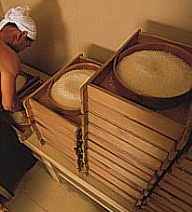
Koji fungus

Okay, then; Yamada begins by kick starting my pronunciation. ‘Sake’ is pronounced sah-KAY, not SAH-kee, and it refers to alcoholic beverages in general, not just the stuff we call sake; in Japan, that’s known as nihonshu.  He moves on to methodology: Sake (as I will continue to call it anyway) is not rice wine but a complex brew that’s closer to beer, but with one important difference: In production, the unique koji fungus buddies up with the yeast in the starch-to glucose-to alcohol conversion, and results in a brew than can be close to 20% alcohol.

And finally, Yamada corrects my view on the taste factor—the biggest revelation of them all!

It turns out that sake doesn’t sucky.

Like most naïve yanks, I have in the past ponied up to sushi bars to sip warm—even hot sake from silly little cups, which is generally how they serve the cheap, low-end plonk that’s often woody-tasting and fortified with distilled alcohol.  Heat, like extreme cold, disguises flaws in a lousy sake, but may aggravate others, like intrusive potency and shuddery dryness, making yucky sake ickier.

My uninformed sake verdict?  Dōmo arigatō but no dōmo arigatō.

Koji baskets

Yamada scoffs, setting up a horizontal tasting from his dizzying array of elegantly packaged sakes, one from each of the top six classifications known collectively as tokutei meishoshu, or ‘special designation’ sakes.  He promises, then proves that well-made and lightly chilled sake is a sublime creation; brewing technology and new strains of sake rice as well as improved technique have made it so.  Indeed, the line-up was fragrant, floral, delightfully refreshing, clear as ice and not only an ideal sushi accompaniment, but the only one.

These days, for this caucasian homeboy, it’s konnichiwa the good stuff.

For Goodness Sake

Which brings us to Terlato Wines.

A while back, owner William A. Terlato announced a plan to market three premium sakes under the ‘shimizu-no-mai’ brand.  Short on capital letters but long on exclusivity, the trio is brewed by famed toji Noboru Minagawa at the historic Akita Shurui Seizoh brewery in Japan.

Says Terlato, “The shimizu-no-mai products uphold ancient tradition while producing sakes that can be enjoyed by expert and aficionado alike.”

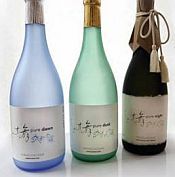
Rather than pester Terlato on how an expert differs from an aficionado, I’ll suggest that his three, new, equally capital-letters-challenged sakes, ‘pure dawn’, ‘pure dusk’ and ‘pure night’ offer a lot more than pure hype.  Priced like boutique wines, between thirty-four and a hundred dollars a bottle, each reflects a distinct and fully intended flavor profile meant to express regional preferences and local food-style pairability.

Terlato expects a dynamic market for these brews, and based on the samples I tried, he’s probably right on the not-insignificant money.  Drink people, especially inAmerica, are easily jaded, and may well latch onto sake once they’re convinced of its role beyond Japanese cuisine.  For example, sake compliments many Western seafood dishes—poached lobster especially—better than wine.

As for me, no longer a sake lackey, I’m now on board the Tokyo bullet train to nirvana.  In fact, yesterday I bought a Costco-portion of Uncle Ben’s Converted Rice, then mail-ordered twenty-five grams of koji fungus from www.kagi.com

I’ve got a yen to home brew a batch, and I guess that makes me even more of a convert than the rice.

TASTING NOTES:

Notes on notes:  Evaluating sake is unlike wine tasting on a number of fronts; whereas a few of the sensory points (bouquet and finish) are similar, with sake you look for more elements tied into the elusive fifth ‘basic taste’ called umami—a Japanese loanword which may be translated (loosely) as savory or meaty.  In sake, a subtle but essential earthiness is sought after and prized; ‘presence’ is a descriptor that is akin to, but not identical to ‘body’ or richness’.  ‘Impact’ is another sake term without an exact wine translation; it refers to the sensation a given sake makes between aroma and first taste.

pure dawn’, shimizu-no-mai, Junmai Ginjo, about $34 ($14, ½ bottle):  Delicate honey and cantaloupe on the nose; a racy and electrifying mid-palate with a refreshing sweet/dry balance diffused by a very soft bitterness at the finish.

‘pure dusk’, shimizu-no-mai, Junmai Daiginjo, about $40 ($16, ½ bottle): A striking, cherry-touched tone of sweetness at the outset dispersing into a full-body, slightly grainy and focused rice flavor, finishing with an elegance that’s clean, but persistent.

‘pure night’, shimizu-no-mai, Junmai Daiginjo, about $100:  Intense milling and painstaking method result in this premium pinnacle: lychee, pineapple and honeysuckled lace a feather-light, but complex and layered sake.

Posted in Sake | Tagged , , , , , , , | 1 Comment

Tudor Wines: Dan Is Now The Bubble Boy

“You can take my identity, my pension, my Black Amex card, my blue suede shoes, but keep those mitts off of my pinot noir.”

There’s Some Bull In The China Shops

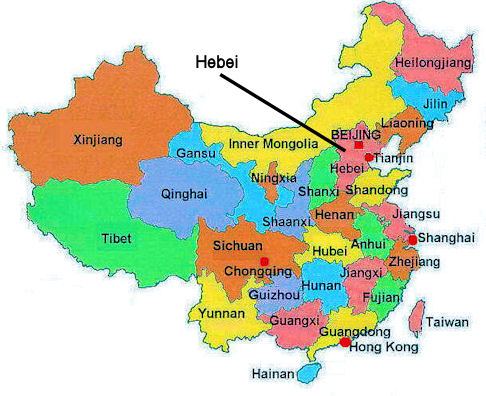
Earlier this year, a scandal was uncovered by Chinese officials wherein wines, both imported and domestic, were found to have been chemically altered and bottled as a premium product—many using real labels.  Some of these wines turned out to be only 20% fermented grape juice with the bulk being made of sugar, carcinogenic chemicals and food coloring; a handful from the central province of Hebei—an area dubbed ‘China’s Bordeaux’—contained no wine at all.

You may ask yourself:  Since it’s a proven fact that Chinese people are smarter than us in every single aspect of life except for Cash Cab and interactive sports trivia games, why would they plunk down top yuan for counterfeit wine?  And not be able to tell the difference?

Fish lips

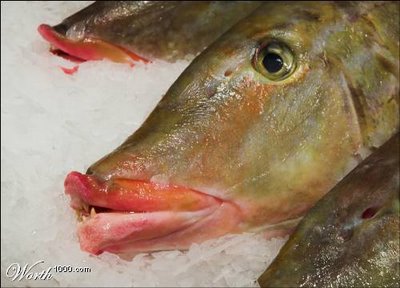
It may have something to do with a specific genetic irregularity within the Chinese palate that allows them to prepare, eat and enjoy such culinary aberrations as duck’s feet marinated in blood, cow’s lung, goose stomachs, fish lips with celery, goat’s tendons in wheat noodles, monkey’s head, turtle casserole, pigeon brain and pickled deer penis.

Speaking of the latter, in these inflated times, I wonder how much it costs for a peck of pickled peckers?

Tiny Bubbles Tag The Wine

Dan poses with a Chinese main course

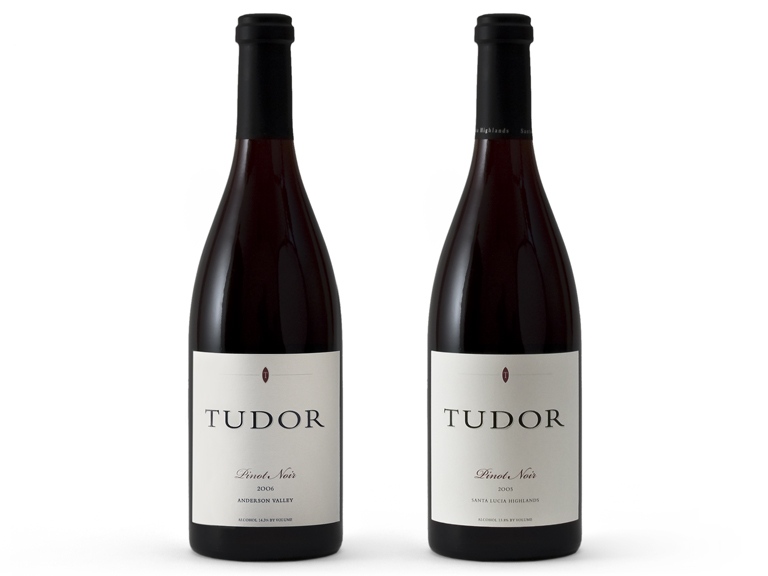
So, ever paranoid cautious, Dan Tudor—winemaker at the highly-rated Tudor winery, a Central Coast-based house specializing in 90 point-plus pinot noir drawn from top vineyards in the Santa Lucia Highlands and Anderson Valley—has opted to join his petrified concerned brethren at Chateau Montelena, Clos de la Roche, Canon la Gaffeliere and Louis Latour and employ a newfangled device called the Bubble Tag™.  Essentially, it’s an adhesive security label that contains random and unique patterns of bubbles impossible to duplicate, even by Prooftag, the company that produces them.

Bubble Tag

Each tag is associated with a bar code and recorded in a database, which the customer can cross-reference on line, supposedly ensuring the absolute authenticity of the wine within the bottle.  I have no idea how much this costs, nor any real idea how it works despite reading four articles on the subject, but I do know that 1) No bogus Tudor wine has ever been found and 2) the Bubble Tag™ is a French invention.

Bubble Boy

Nothing against the French, of course, despite their own gustatory grotesqueries (calf pancreas, blood pudding and garden slugs in garlic butter), but I tend to be wary of French invention based on their track record.

To wit:

  • Nicolas-Jacques Conté invented pencils in 1795, but the pencil sharpener was not invented until 1828 nor the eraser until 1839.
  • Louis Paul Cailletet invented something called a ‘manometer’ which could have no conceivable value to anyone but Ricky Martin.
  • Rudolf Diesel invented a stinky engine that runs on stinky fuel which now costs more than stink-free regular.
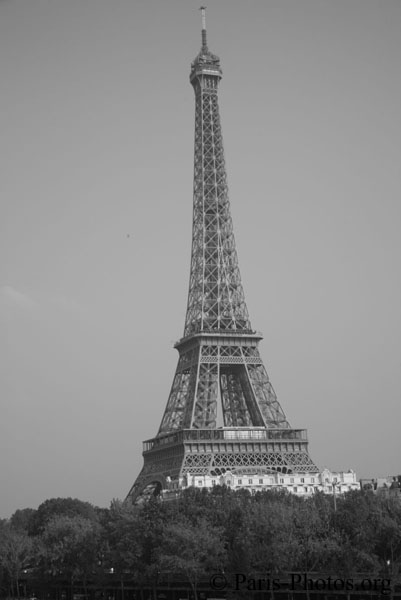
  • Gustave Eiffel invented the Eiffel Tower, which looks like an erect pickled deer penis.

Confucius Says:  Keep Deer Penis; Pass Pinot Noir  

Fittingly, the first of Dan Tudor’s tamper-proofed pinot noirs will be sent to China.  This is not in retaliation for the cancer wine, nor the hundreds of thousands of made-in-China polystyrene Barney toys labeled ‘Lalique Crystal’ that wound up in Niemen Marcus showcase windows.

Rather, I believe it is because Tudor pinot noirs, which sell here for between $40 and $50 a bottle, may fetch upward of $500 each in Asia.

For that kind of money, Dan rightly believes that customers should be guaranteed carcinogen-free wine direct from the Central Coast, not some laboratory in Changli county—not even if the counterfeiters are conscientious enough to change the labels from ‘Tudor’ to ‘Tumor’.

Meanwhile, the wines themselves—while possibly not worth ten times over retail—are still magnificent examples of Central Coast pinot noir.  They’re fabulously textured with superb fruit concentration, wisps of pepper and nicely integrated oak.  The focus is solidly Burgundian, with an emphasis on earth notes behind the fruit—like the great wines of the Côte de Nuits, Tudor’s pinots are very terroir-driven.  In fact, he returns to the word ‘terroir’ again and again on his web page as he describes his product.

I’d mention that he spells it wrong every time, too, but why burst his bubble?

Posted in Central Coast, Pinot Noir | Leave a comment