Forchini Vineyards: Papa’s Got a Brand New Bag


Fifty out of fifty States now produce wine, including Alaska, where moose blubber is used as a fining agent and the must is strainied through Sarah Palin’s brassiere.

Today, every continent has a winemaking tradition except Antarctica, but the geophysicists at McMurdo research station do have a year-round tradition of eating winesicles for breakfast, lunch and dinner.

In 1961, if President John F. Kennedy had maintained: “We will put a vintner on the moon by the end of this decade, and bring him home with a slight, nagging hangover,” by golly, it would have happened.

Who, you ask, would have been up to such a monumental task?  Jim Forchini, that’s who.

Jim Forchini as a boy: 'We will put a man on the roof by the end of nap time!'

Winemaking is Not Rocket Science

But nobody says a rocket scientist can’t make wine, right?  Jim Forchini, today a gnarled, bearded, tanned agriculturist from Sonoma, was in 1961 a fresh-faced young engineer hired by Pasadena’s Jet Propulsion Laboratory to help develop the nacent space industry on JFK’s marching orders.  That was a three year gig; in the meantime, in Sonoma, he bumped into a grape vine.

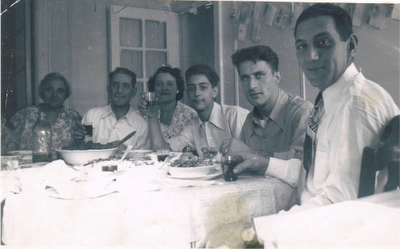
If it’s vaguely un-PC to a suggest an indelible connection between Italians and winemaking, so be it.  Says Jim:  “Growing up, we always had wine on the table.  It wasn’t an addition to our meals, it wasn’t a special occasion thing, it was part of our daily bread.”

So in 1963, still juggling rocket science, a Pasadena family and some vague race-memory recall, he purchased a small ranch in wine country with a small vineyard attached, and spent the next fifteen years dreaming of leaving second-stage boosters for second-stage fermentation.

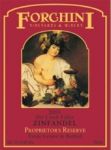
That finally happened in 1996—and though he candidly admits that back then, there was less competition—his first release, an estate-grown zinfandel, won a gold medal.  Today, he produces a sensational array of Dry Creek old-vine zins and cabs, miniscule amounts (79 cases) of Russian River chardonnay, and a beatifully spiced, black cherry-scented proprietor’s reserve pinot noir along with a slew of lyrically-named blends.

A tavola--'Passa da pasta, Asta.'

Food and Italians, Italians and Food…?

Inexpungibly linked.  No question.  I know, I know;  I’m digging my social grave deeper, but almost all of Forchini’s winemaking metaphors are food-related.  He’ll vividly portray a circle of little old ladies (little and old are his words, ye Arbiters of Ageism and Sizeism, not mine) making clam chowder.  “They’ll all use the same clams, the same milk, the same onions, but each chowder will be slightly different,” says Jim, his mouth watering—though it may have been the chardonnay. “ Each will reflect the chowder-maker as much as the ingredients.”

Likewise, he defends his somewhat iconoclastic method of fermenting a given grape blend all together in a single vat rather than following the traditional route of individual lot fermenting, where the blending is done at the end.

“When you’re making marinara, what do you do?  Sautee everything separately?  Garlic one pot, green peppers another, then mix them up when you’re done?  Of course not; you cook them together, you know instinctively that the flavors will mix and marry…”

Speaking of Marinara…

A lot of winemakers call their reasonably-priced, multi-grape red hodgepodges ‘spaghetti wines’, but I honestly don’t think I’ve had a better one than Forchini’s Papa Nonno, a zin/cab/carignane fusion that contains, like chianti, a bit of proprietary white wine as part of the recipe.

Why the superlative marinara affiliation?  Because the bloody stuff tastes like marinara, that’s why.  Remember the old Ragu commercial where the dude kept saying in Brooklynese: ‘It’s in there…’?  Strike me dead if I’m wrong, but grab a glass of Papa Nono.  Freshly snipped sprigs of oregano?  It’s in there.  Tomatoes?  They’re in there.  Basil, green vegetables, even a touch of fenocchio —badda-bing.  I’m going to pour this stuff over my pasta and drink Ragu directly out of the jar; what do you think of that, Emily Post?

Jim Forchini

I’m a Sucker for Tribute Wines

Winemakers tend to be passionate, poetic, from-the-heart type of people—which is why hardly any of them make money—so when one creates a special bottling for a special someone, my papillae perk up, expecting that a little extra TLC goes into the effort.  Papa Nonno was conceived to honor Pietro Bernacchi, Jim Forchini’s maternal grandfather, who immigrated to America in 1908.  Called ‘Papa’ by his parents and ‘Nonno’ by his siblings, Jim offers up this meaty, aromatic Tuscan-style blend, with a heartfelt tanti gratzie, to the heavens.

Or maybe it’s to the moon.  Either way, Papa Nonno would have been proud, and as a matter of fact, so would Papa JFK.

Posted in CALIFORNIA, Sonoma, Zinfandel | Tagged , , , | Leave a comment

Ravenswood: Better Living Through Joel Peterson’s Chemistry—Particularly C2H5OH

What Ravenswood should look like

First off, I love how Ravenswood rolls off the tongue; it conjures up Gothic images—remote, crumbling castles on windswept moors filled with persecuted virgins and hereditary curses.

The Ravenswood label, a cryptic crest displaying a trio of stylized ravens with claws interlocked plays right into this sinister medieval mindscape.

So what if the actual vineyard is in sunny Sonoma and run by a laid-back microchemist whose disposition is even sunnier that the blinding California cosmos?  As a tale-spinner, Joel Peterson is decidedly non-Goth—he’s far more ironic than Byronic, more into terroir than terror and his hereditary curse is not werewolvery, but test tubes and cyclotrons—both his parents were chemists, too.   In fact, by light of either a full moon or a full noon, Joel Peterson is such a downright engaging fellow that my first-time interview with him was more like a nosh with a dear old bud I hadn’t seen in years—that’s how comfortable he makes me feel.

What Ravenswood does look like

And when I say ‘old’, well, let’s say Peterson didn’t get his commission as the Godfather of Zin overnight, and certainly not due to a penchant for Ecto-Coolers and Juice Boxes. In fact, he harvested his first vintage of Ravenswood zinfandel before this particular curmudgeonly scribe was even old enough to drink.  As such, you can, without fear of reprisal, credit Joel Peterson as being one of the front-runners of today’s zinfandel revolution—and you can be sure that he will instantly reprise you anyway, reminding you that Sonoma winemakers were revolutionizing zin before he was old enough to drink; before, in fact, he was old enough to be born:  1935 Simi, 1937 Fountaingrove, 1941 Louis Martini were standout zins that first tapped into the long-term cellaring potential of this mysterious but long-established California grape.

Father may I?

By the time he was old enough to drink, legally anyway, Peterson already had a solid working knowledge of fine wine.  He explains: “My Dad was a student of the grape and an avid learner as well as a teacher—he used to organize meetings at our house for the San Francisco Wine Sampling Club, creating (like a good chemist) 18 primary flavors that the club would look for in wines.  From the age of ten on, I would join in.  Of course, there was always a spittoon handy, and afterwards, Dad would meticulously measure the contents of my glass and then, the contents of the spittoon, looking for the precise correlation.”

So there’s your family curse: a savvy dad whose day job (physical chemist in a lubricant lab) is measuring stuff.

1925 d'Yquem available online for a modest $5000

Joel’s mother (a nuclear chemist who worked on the Manhattan project) likewise became entranced with wine after having the unfathomable good fortune to drink a ‘45 Châteauneuf-du-Pape—a vintage that would have turned Carrie Nation into a raging wino.  Now, If any reader suggests that mom got bombed, I’m gonna take my corkscrew and go home.  Peterson also tells of a random case of assorted wines his folks picked up in ’51 that happened to include a 1947 Cheval Blanc and a ’25 d’Yquem.  Clearly, this was a kid destined for the wine world no matter how many Nobel prizes in immunology beckoned.  (In fact, he continued to microbiologize until 1992, when the winery finally became profitable and Robert Parker Jr. began to drool.)

Photos of Joel in the Sixties depict a potent-looking turk with long blonde hair who could have moonlighted as an Allman brother.  Gone full circle, today he looks like he could be Pete Seeger’s stand-in.

Separated at birth?

It was during this wild era—the late, great, section-eight Sixties and the squirrely, early Seventies—that he began his love affair with Sonoma zinfandel via such legendary bottlings as ’66 Mondavi, ’68 Corti and most especially, ’68 Swan.   Back then, Zinfandel was still very much a boutique wine, not extremely well known nor widely appreciated outside a tight circle of believers.  For example, in 1966,  Sonoma zinfandel grapes sold for under a hundred dollars a ton.  In 2010, that same ton will probably set you back three thousand dollars.  Peterson drank, thunk, and continued to work his career in medical research, nagged with a sense that his might be missing the lodestar of destiny.

A few years later he had his eureka moment, and it had nothing to do with finding a cure for hiccups or afflictions more dire; he realized that with his background in wine appreciation, strong opinions and obsessive focus on details, he might just have the stuff to become a winemaker himself.

In the parlance of the time, he tuned in, turned on, but did not drop out:  While continuing in the lab nights and weekends, he spend his days apprenticing with Joe Swan, the near-mythical Sonoma vintner who was in the vanguard of zinvocation, due in the main to his purchase of Russian River property that contained thirteen acres of what was, in 1967, already old-vine zinfandel.  Swan, in his turn, had been mentored by André Tchelistcheff, and the choppy vintage photo of Allman Brother Joel shows all three in the vineyard together.

Joe Swan’s last vintage was 1987; he passed away in ’89, aged and matured for sure, but too young for the final decant.

Says Joel: “From Joe I learned to pick grapes by taste and to farm for less fruit, not more.  That using wild yeast may be tricky, but makes for more interesting wine.  To ferment long and warm and age in French oak, techniques that Ravenswood still uses today.”

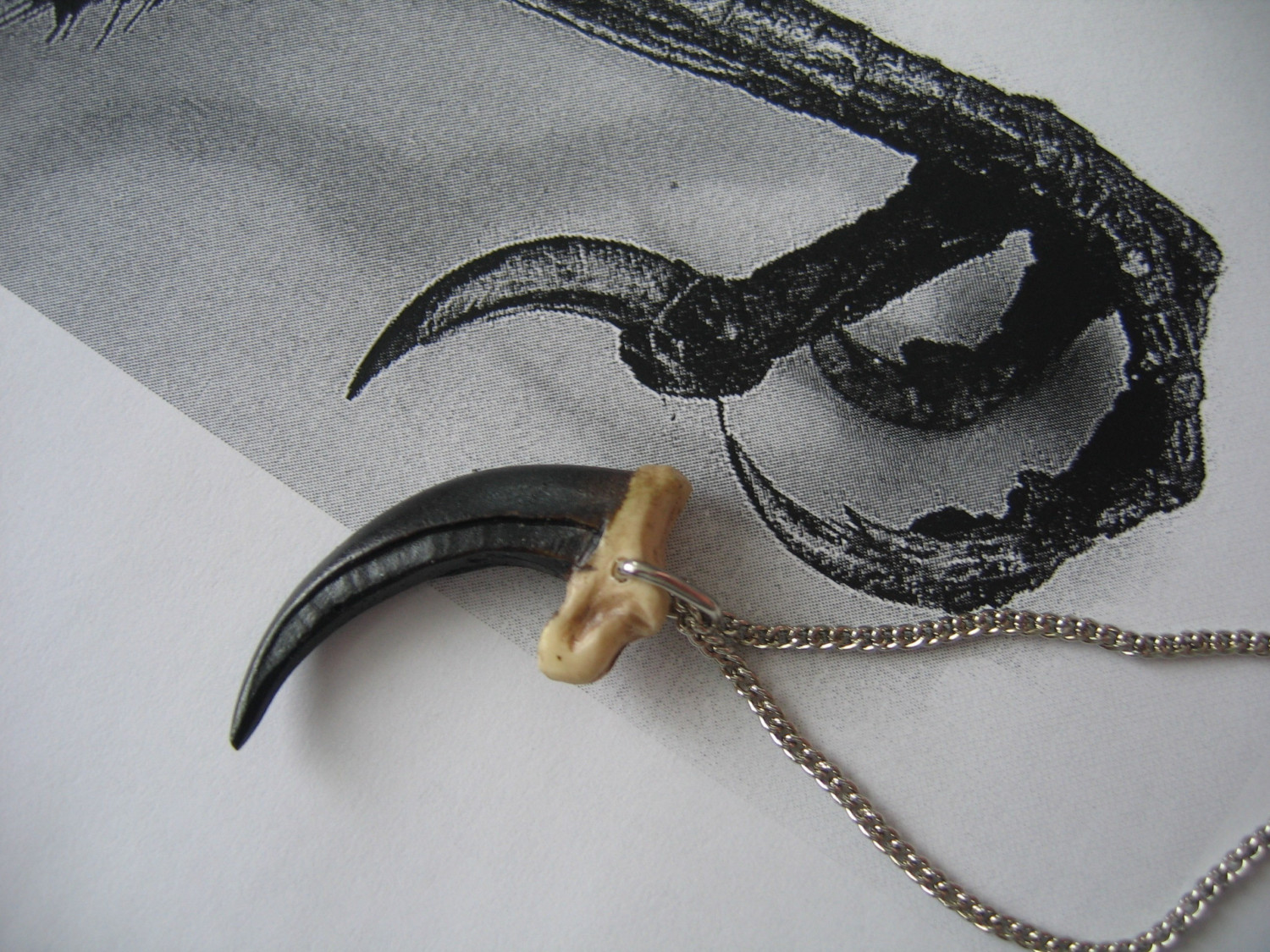
'Do ravens have... talons?'

Speaking of today…

In the intervening years, Peterson has blended lessons learned with the methodology that his science background demands, applying them alongside his gifted palate and partnering with Harvard MBA Reed Foster (wine made by smart guys—there’s the ticket), gradually rising to the top of the zinfandel drink chain.  There are numerous incarnations Ravenswood zinfandel,  a flock (Joel’s cutesy ornithological term, no doubt in keeping with the raven motif) of expressive Sonoma varietals of which only a talon-full are non-red.

As the Ravenswood’s rallying cry goes, Joel’s wines are unadulterated, unapologetic, unfussy, and above all, unwimpy.

“There are three sins of zin,” shares the Raven maven.  “Too much sugar, too much alcohol and too much wood.  With some of the earlier missteps, bogged down by enough oak to built a house, I’ve learned that with a grape this big, you use some restraint.  Ultimately, I make wine that please me.”

With Foster’s bean counting accountability, he’s placed his money where our mouths are.  These wines are as true to expressing the finesse and complexity of the zinfandel grape as any ever made, though Peterson, with his near schizoid blend of staggering confidence and refreshing humbleness, will say that the best is yet to come.  I hope that includes future interviews; for this one, I had half an hour and used four of those in succession.  His wit, wisdom and warmth drew me in as inexorably as a black hole or, for that matter, a black blend; in this case, the carignane, petite sirah and zinfandel that make up his iconic blend called, with the predictability of a high school science experiment, Icon.

So that why, above all, if you get a chance to rub shoulders with Peterson, that’s what you want to do.

Take my word for it, with this cat, the chemistry is always good.


Tasting notes:

Silly disclaimer:  It’s totally unfair and borderline unprofessional of me to group these Ravenswood collections in a lump note since it’s the characteristics of the individual vineyards and growing regions that make these wines unique unto themselves.   But here I go anyway—space constraints (the hereditary curse of columnists) forces me to, based on how long I droned on (and on) about Joel.

Ravenswood County Series, Sonoma, Napa and San Joaquin Counties, 2006/2007, about $17:  Paying homage to California counties rather than vineyards, this interesting agglomeration wanders through Sonoma County, on to Amador, Lodi and Mendocino where various expressions of chardonnay, carignane, merlot, cab franc and natch, zinfandel each put on a slightly different costume.  The wines are all balanced and fruit-friendly, displaying quality and consistency in technique if endless variation in profile.

Ravenswood Limited Series, California, 2007/2009, around $17 – $20:  Is ‘judiciously organized hodgepodge’ an oxymoron?  So be it—these wines break the Ravenswood mold and are available only to club members and occasionally, in the Ravenswood Shop.  They include some pet interests of winemaker Joel, two styles of gewürztraminer—Alsace dry and late harvest sweet—a zinfandel rosé  (he stamps it with the Italian ‘rosato’) and a moscato.

Ravenswood Single Vineyard Designates, Various Appellations, 2006/2007, about $ 35:  From vineyards whose names, like the vines, seem immortal—Teledeschi, Barricia, Belloni (reflecting zinfandel’s origins in Croatia and Italy?)—this bevy of beauties each reflect specific terroirs and subtleties too numerous to mention, much as I’d love to.  As a whole they are intensely fragrant, silky-

Posted in CALIFORNIA, Sonoma, Zinfandel | Tagged , , , | Leave a comment

Pitchers From Some Matchbook Men

There’s a  winery in the Dunnigan Hills AVA called Matchbook, which sounds more like a name for a singles networking site than a vineyard.

John Giguiere viewed without 'They Live' glasses

John Giguiere viewed with 'They Live' glasses

Actually, the truth behind the name is far more disturbing—and yes, Virginia, you can get more disturbing  than a singles networking site, though granted, not much.  Winemaker John Giguiere confesses to being a childhood pyromaniac with a track record that includes having lit his father’s Dunnigan Hills wheat fields on fire and, along with his brother Karl, firing incendiary devices that resulted in more than a couple of nasty run-ins with the local fire department.

“Everything that was around us we would burn up,” he said in a recent interview with the Sacramento Business Journal. “We had grass fires, we had rockets; we burned everything when we were kids.

The Giguiere brothers claim to have grown out of their sociopathology (you burn, you learn), though John seems quick enough to point out his fond memories of the ‘sense of power’ that lighting fires gave him.  I might have written off his pyro comment as a little dark PR humor to justify his burnt-paper wine label, but describing a ‘sense of power’ in destroying property?  Eegads, that’s a bit of a psychological red-flag to encounter in a press release about tempranillo.

I’m prone to think out loud, so forgive me.  But if I was making wine in a state which in the past decade has seen 35 million acres burned in half a million wildfires, I’m not sure I’d be confessing to being a reformed, if unrepentant arsonist.   Better Giguiere should have confessed to being the Zodiac killer—the big ‘Z’ only claimed seven lives while 31 people have died in California fires since 2001, including 19 in 2007 alone—ironically, the vintage of the tempranillo that Matchbook sent me.

I’m a wine writer, so I’ll try to stay on topic. 

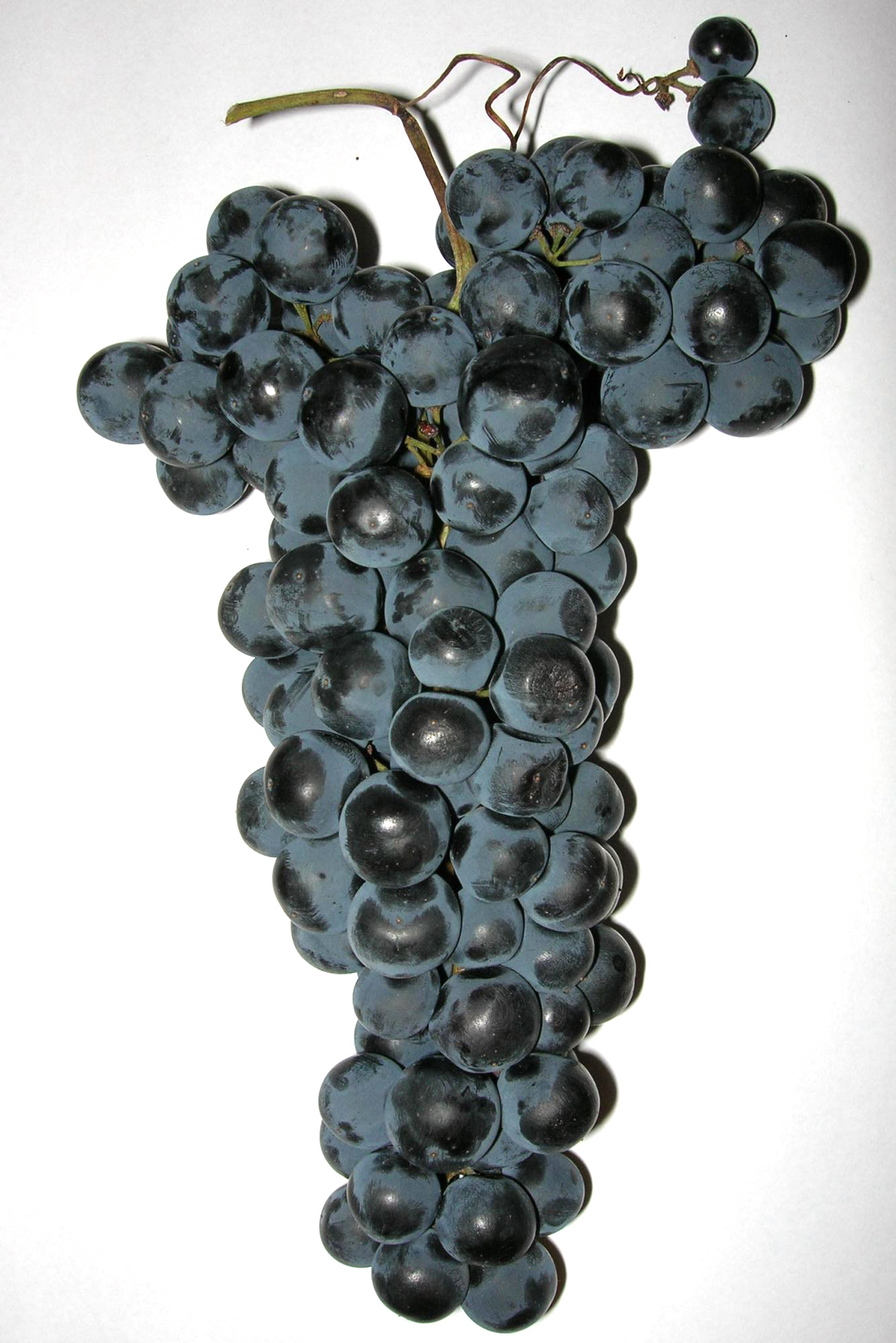
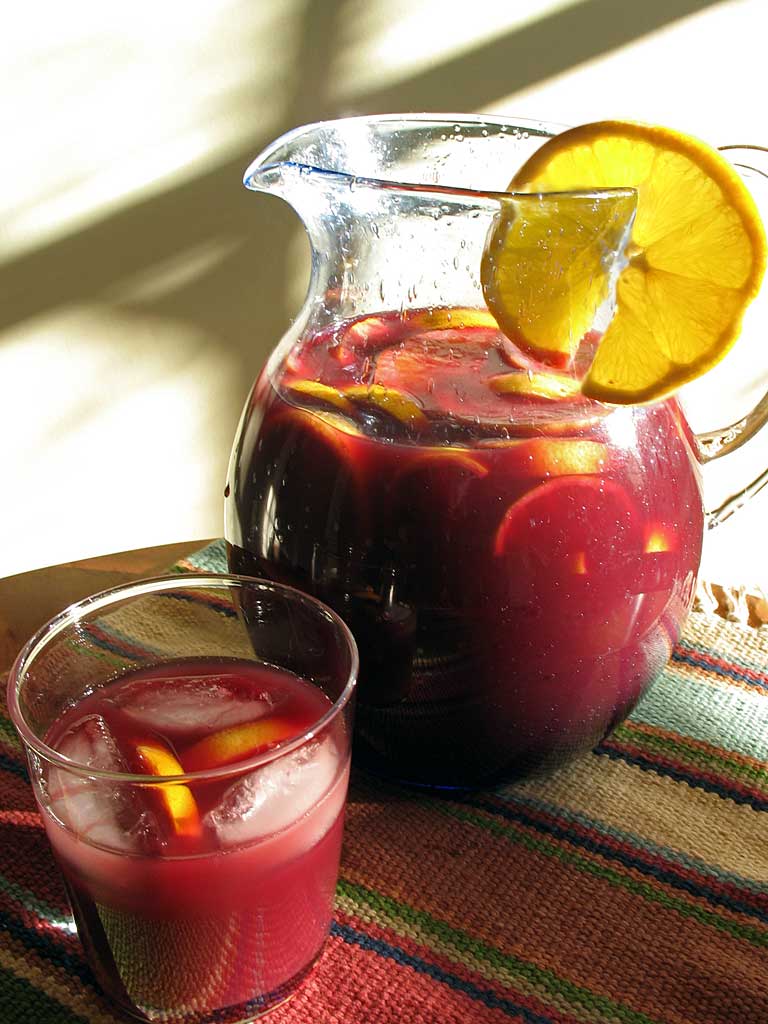
Anyway, tempranillo is a spicy, sexy grape native to Northern Spain; it puts the oomph in wines from Rioja and Ribera del Duero and is the key varietal in Port.  It does best in a cooler climate where it ripens early and can, if handled judiciously, produce wines of great depth and complexity.  It is also key to a fine sangria, which should not be confused with the half-assed sangrias that most of us have tried.  Made with fresh fruit juice, quality Rioja, a top-shelf brandy and sluiced over a hot summer afternoon, sangria can be the pitcher of perfection.

California tempranillo

Here in the States, along with its sister varietals grenache and graciano, tempranillo proves an ideal match for the weather patterns of northern Yolo county.  Certain parts of Yolo—Dunnigan Hills in particular—boast a Mediterranean climate similar to that in which tempranillo was born.  As in Spain, California tempranillo is moderate in alcohol, moderate in acidity and somewhat prone to oak intimidation.  In Spain, fruit flavors can be restrained in favor of herbaceousness, cigar-boxiness  and forest-flooriness; in California, the focus in on more user-friendly berry notes, especially strawberry, currant and blackberry.

Serendipity or intelligent design?

Secondary flavor notes of tempranillo are often described as wood smoke and scorched earth.

Toasted Head label viewed without 'They Live' glasses

Toasted Head label viewed with 'They Live' glasses

As such, Rioja-style reds are not only ideally suited to the unique Dunnigan Hills microclimate, but a perfect style to spark fire in the soul of John Giguiere and company.  ‘And company’ being the blockbuster winery R.H. Phillips, which he and Karl founded in 1984 and sold for $92 million in 2000.  So what if tempranillo is not the most widely distributed varietal in California?—this sort of scoot is what a wine writer with less self control than I might refer to as ‘money to burn’.  (At R.H. Phillips, he and Karl developed a brand called ‘Toasted Head’, but the less said about that the better.)

Matchbook makes for a killer sangria

Matchbook’s contribution to a small, but heated clan of Spanish grape fans in Northern California, which includes such pioneers as Coral Mustang and Barreto Cellars, is sensational; near the top of the heap.  The wine is alive with juicy fruit, and equally, with with an outstanding varietal earthiness, deep concentration and vibrancy that only small pockets of Sacramento Valley can offer.  Giguiere has apparently found the hot spot.

At around $15, Giguiere describes his ’07 tempranillo as ‘an affordable luxury’ and he’s not far off the mark.

Forget about Daddy’s wheat fields; with this sort of product at this sort of price point, Giguiere  should be able to set the world on fire.

Tasting Notes:

Matchbook Tempranillo, Dunnigan Hills, 2007, about $15: Simultaneously rustic and elegant, there’s licorice and blackberry up front quickly and seamlessly melding with chocolate and coffee bean flavors.  On the palate, spicy tobacco notes combine with truffle and leather, but especially,  bursts of ripe raspberries, dried cherries and plum.  The wine is firm and rounded; the tannins are integrated and the finish, though a trifle shorter than the big mouthfeel suggests, is all vanilla, hazelnut and toffee.

Posted in Central Valley, Tempraillo | Tagged , , , , , | Leave a comment

Nary a Jekel to heckle in Arroyo Seco

Heckle's on the right, duh. The other one's Bill.

Like the irrepressible Terrytoons magpie that shares a name with Salinas Valley wine pioneer Bill Jekel, the Arroyo Seco AVA is one odd bird.  Perched  inside a larger appellation, Monterey County (which in turn is a subzone of the sprawling Central Coast AVA), Arroyo Seco is right on the cusp of climactic schizophrenia.  The eastern and central areas are chilly by California wine-growing standards, subject to big morning fog and bigger afternoon winds, while the western portion dive-bombs into the Santa Lucia Mountains where it is protected from the Pacific, resulting in warmer day-to-day temperatures.

Jekel Vineyards in Arroyo Seco

As intuition might tell you, that makes Arroyo Seco’s right brain more suited to cool weather grapes like chardonnay and pinot noir—even riesling—while  left-brain Arroyo Seco is home to heat-hankering zinfandel as well as Bordeaux cultivars like cabernet and merlot.

Few California appellations can succeed in such a variety of varietals; far fewer using such limited floor space: less than twenty thousand acres total.

Bill Jekel was one of the first winemakers to recognize the potential in this identity-disordered appellation, planting his first grapes in 1972 and releasing a vintage five years later.  In fact, , he was one of  only a few Arroyo Seco vintners who based his initial plantings around the characteristic winds rather than sun and temperature alone, and managed from the outset to avoid some of the vegetal qualities  that still pop up in Salinas Valley reds, especially in the cabs.

Which is a good thing: At tastings, so distinct and delightful is the berry-rich, mocha and coconut profile of the cabernet sauvignon that Jekel has nowhere to Hyde.

This Jekyll is more looney-tunes than Terrytoons

So, back to the magpies…

Heckle and Jekel, though identical in appearance, displayed a split personality similar to Arroyo Seco’s, remember?   One droned on politely in an upper-crust British accent while the other spoke pure, cynical Brooklynese.  Which was which is anybody’s guess, though  Bill Jekel—who sold off his eponymous winery to Brown-Forman in 2005 (who again sold up, though keeping the brand name)—probably knows.

Despite the several hands which have been turned toward Jekel, it continues to produce reliable and price-attractive wines of considerable complexity, thanks in part to Arroyo Seco’s long growing season, dry microclimate and piss-poor soil, which generally results in deeper root structures—hence, more trace elements coming to the surface.  The whites tend to be nicely balanced with tropical fruit flavors and bright acidity; the reds boast open-knit personalities, easy to enjoy with somewhat restrained and gentle tannins.

And in case you’re wondering, either hue should stand up to magpie pie.

Tasting Notes:

Jekel Chardonnay, Arroyo Seco, Monterey, 2008, about $13: A clean, finesse-styled chardonnay with striking marigold, tangerine and green apple on the nose.  Dry and nicely proportioned, the wine shows a Mâcon-like minerality throughout  the palate, especially damp slate and chalk, and finishes with cream and  a dash of honey.

Jekel Merlot, Arroyo Seco, Monterey, 2007, about $15:  Sourced from a warm Arroyo Seco pocket (Sanctuary Vineyard) and allowed extended maceration , this dense, ruby-colored wine is concentrated with coffee bean and nice black things: black cherry, black olives and black plums.  Long in the palate and smooth with finely integrated tannins making for a slightly chewy merlot that suggests a bit of cellar potential.

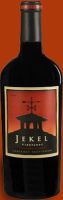
Jekel Cabernet Sauvignon, Arroyo Seco, Monterey, 2007, about $15: Love the near-eerie backlit label; love the wine, too.  Sweet and saturated, there’s cocoa and coconut behind the characteristic depth of focus.  The mid-palate shows an interesting spiciness, almost like mulled wine  along with a  jammy soft underbelly.  A postcard vintage in 2007 allowed extra hang-time for the grapes, and the result is ultra-rich, very ripe red, drinkable now through the mid-teens.

Posted in Arroyo Seco, CALIFORNIA, Central Coast | Tagged , , , , , , , | 1 Comment

Getting Sauced: Pairing Wine With the Mother Sauces

Besides extraordinary palates, what do George Escoffier, Antonin Carême, Julia Child, Paul Prudhomme and Masaharu Morimoto have in common?

They were all sauciers—which means they could make a mother of a sauce.

August Escoffier may have had a Napolean complex

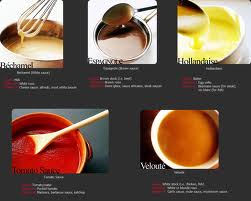
Mother sauces are at the foundation of classical French cuisine, and whether you believe that there’s four (allemande, based on stock with egg yolk and lemon juice, béchamel, based on flour and milk, espagnole, based on brown stock, and velouté, based on a light broth) or five (flip-flopping allemande for hollandaise and adding tomato sauce to the line-up) depends on whether you are a student of Carême or Escoffier.  Fair to point out that those modern French chefs who are not absolute partisans of nouvelle tend to follow the five-sauce schema of Escoffier.  For the sake of consistency, we’ll go with that interpretation, adding the somewhat generic sauce known as gravy.

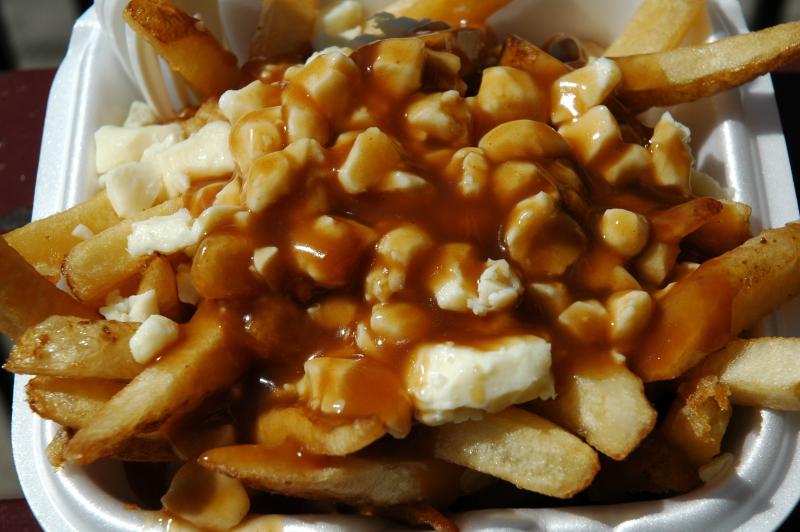
Poutine

Gravy appears to have originated across the channel, where the English have traditionally thickened meat stock with roux, corn starch or arrowroot and served it as an accompanied roasted meat.  Texans may hanker for redeye (sugar-sweetened ham gravy deglazed with coffee), Southerners for their biscuits and flour-and-cream ‘sawmill’ gravy and the Canadians swear by their poutine—french fries and gravy—and among Italian-Americans, marinara sauce is often referred to as ‘gravy’.

Clearly, gravy is the chameleon of sauces, wearing many colors, many faces.

As does wine.  As a result, the versatility of sauces and gravies, whether classical or innovative, make them exciting naturals to find appropriate pairings with wine—which again can be either classical match-ups or innovative inklings.

The Mother Sauces

Since sauce often defines the dish, it is a short path to understanding that the nature of the sauce, with its ingredients, liquids and thickeners, are key to finding the ideal wine partner.  With béchamel, the creamy milk, butter and dash of nutmeg are flavor-perfect (and oh-so-predictable) to serve with a malolactic chardonnay with buttered oak overtones, but you might also try a fresh, crisp rousanne, particularly if you’re saucing seafood.  Likewise, velouté, velvety, beige and rich, works well beside a lightly-oaked pinot noir, but I am recommending a soft-bodied merlot from Maipo (Chile), which produces elegant merlots fairly bursting with ripe fruit.  With espagnole, you get into roasted flavors and rich, cooked vegetable nuances.  Espagnole is certainly syrah-friendly, but if you’re willing to live a little, experiment with leathery and Damson plum-flavored charbono, an unusual Italian-style varietal grown mostly in Napa and Mendocino.   Hollandaise, with it yolky, buttery profile settles in well with a citrus-rich sauvignon blanc that can slice through its unctuousity like a lemon scalpel.  But if contrast is your game, try a sharp Alsace riesling, a vidal blanc (a lively, limey cousin to seyval blanc), or a perfumed viognier, which California’s Rhone Rangers have tackled with nerve.  With Escoffier’s self-explanatory tomato sauce, first and best impulse is to taut California’s recent plantings of the classic Tuscan red, sangiovese.  Staglin Family Vineyard produces one of the best, having chosen Napa’s Rutherford Bench as a site, and of equal importance, budwood from a Biondi Santi Brunello vineyard.

Texas redeye gravy

With gravy, coupling a specific wine can depend on several factors—most obviously, remaining true to whatever wine may have been incorporated into the sauce itself.  Many gravy recipes call for deglazing with wine, red or white, and it usually makes sense, gastronomically as well as economically, to stick with that.  For the others, remember some of the basic wine pairing rules of tongue.  Most sauces tend to be salty, and salt makes big tannic wines taste bitter, and if you’re serving fish, tannin, seen most often in age-worthy reds, can come back at you with a metallic twang.  Acidic wines send currents of spritz through cream gravies.

Jerry Delaney, Lone Star wine star

And, if some day, somehow, some way, you are required to find a wine to accompany a Texas redeye gravy, consider this:  The rose of Texas may be yellow, but the rosé is purty in pink.  With eleven international medals, Delaney Vineyard’s Texas blush is a blend of petit verdot and chardonnay, and makes a perfect foil for ham.

Contemporary chefs may further add and delete to the roster of mother sauces, including, perhaps, vinaigrette, aioli and demi glace, each of which have individual profiles that beg for a judicious and equally au courant wine wedding.

These are the sort of experimental touchés that makes food and wine pairing the real sweet science.  Believe me, Escoffier would agree.

Posted in PAIRING WINE AND FOOD, TEXAS | Tagged , , , , , , , , | Leave a comment

McKinley Springs: The Reputation is Spotless and the Wine’s a Hoot

If you like McKinley Springs chenin blanc, thank an owl.

Twenty years ago, Doug Rowell was settling into a comfortable career in forestry management when the infamous ‘Spotted Owl Incident’ butted in, putting a virtual halt to logging in Washington state, forcing Doug to do some serious soul—as well as job—searching.

Luckily for us, he wound up as a winemaker.

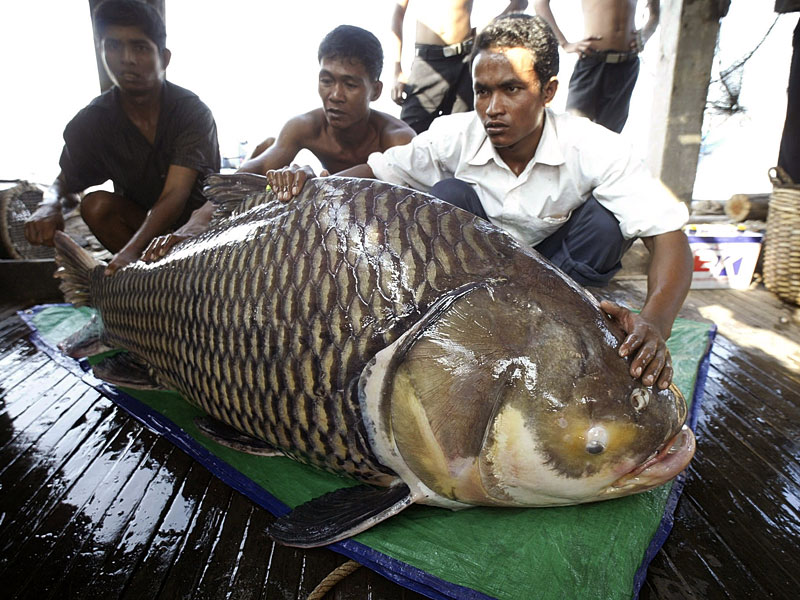
On the other hand, Asian carp do jobs that Americans refuse to do

Here in Michigan, we don’t have such tree hugging traditions, possibly because if you hugged one of our billion or so jack pines, you’d end up singing for the Detroit Tabernacle Boy’s Choir.  Nor do we have spotted owls, though if we did, we’d use them as an ingredient in pasties.  That’s just how it is.  Look at the Asian carp, a perfectly cool,  Darwin-approved species on which we are spending untold dollars from a non-existent budget to eliminate from our silly little lakes, which are way too cold to swim in anyway.

Among the more creative solutions to our carp ‘problem’  have been importing pelicans to eat them, using strobe lights and electric fences to scare them away and using rotenone to soundly piss them off.

Of course, wouldn’t you know that the EPA refused to consider my solution: telling Taiwanese men that Asian carp increase sexual prowess, then passing out fishing tackle.

Doug Rowell

But Back to Doug…

So, Doug Rowell may have initially missed his career boat, but he was clever enough to marry well.  Sandy Andrews, a pretty young wine grape heiress, took pity on the unemployed silviculturist, said ‘I do’ and did.  OK, so that’s an exaggeration.  Actually, Doug went to work for Sandy’s folks, Louise and Bob Andrews, renowned grape growers from southeast Washington whose grapes are purchased by the most prestigious winemakers in the Columbia Valley.

The couple met, fell in love, signed partnership papers along with the marriage certificate and opened McKinley Springs Winery in 2002.

James and Poppie Mantone

“I had no experience in winemaking at the time,” says Doug, a fireplug of a fellow so Irish-looking that if he wasn’t selling wine, he could be selling Lucky Charms.  “Sandy’s family were grape sellers, not vintners.  Around that time, we were fortunate to meet James and Poppie Mantone, owners of a boutique winery called Syncline.  They needed grapes and I needed an education, so it worked out perfectly—I still borrow James’ considerable talents as a consultant.  We barter and bargain, and after all these years, not a nickel has yet exchanged hands…”

Chenin Blanc

Now, here’s a grape with a resume as spotty as a strix occidentalis tailfeather—and more career up-and-downs than Doug Rowell.  Putting the verve in Vouvray and the clean in Steen, it’s also a grape on which we can blame most of California’s Fifties, Sixties and Seventies.  A lot of Columbia Valley growers simply tore out their chenin blocks in favor of trendier varietals (riesling, the other Washington workhorse varietal, has enjoyed a renaissance in recent years) but Doug chose a different route.

Where my mind is

If life hands you lemons, you make lemonade, then add a boatload of alcohol, right?  With careful vineyard management, yield reductions and all sorts of vintner gobbledygook like shoot length indicators and water monitoring sites, he’s managed to turn the insipid into the inspirational, the blah into the rah rah rah.  When meticulous technique combines with thirty-year-old vines and sur lees aging, the resulting chenin displays a luscious, musky cantaloupe profile with peach, mango and pineapple rounding out an unstoppably tropical cornucopia.

Doug’s personal tasting notes add ‘fresh rain’ to the flavor mix, a descriptor which I get—but as opposed to what, Doug?  The stuff sitting in the gutters I’m too lazy to clean?  When rain’s not fresh, it’s called water.

So Why Not Leave Well Enough Alone?

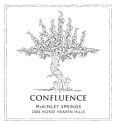
Because Doug is, by nature, never quite satisfied, never precisely there.  That’s a hallmark of any great American winemaker.  So he took some viognier, which an anonymous winery asked him to plant back in 1995, blended it with chenin, and came up with ‘Confluence’, adding honeysuckle, lavender and an elusive spiciness to the chenin’s incendiary fruit.

Meanwhile, having challenged and taken to the mat the pet varietals of both the Loire and Northern Rhone, Doug turned his attention to Piedmont.  Pulling barbera from among his two thousand vinous acres (more than some AVA’s have in total) he removes the skins after a short maceration and produces a cranberry/strawberry tinged barbera rosé.

Barbara Rose Collins: Smart as an Asian Carp and nearly as pretty

In Detroit we have our own version of barbera rosé—Barbara Rose Collins, one of the scariest people on the planet.

There are some similarities between the two, however.  Both are acidic, in-your-face assertive, without a trace of residual sweetness.  However, where McKinley Springs’ version is delicious and shows varietal integrity, Detroit’s version shows no integrity and is an embarrassment to the human species.

Horse Heaven Hills

The above wines all wear the stamp of Horse Heaven Hills AVA, one of the newer Columbia Valley sub-appellations.  That’s what I mean about environmentally sensitive Washington.  They have places called Horse Heaven; we have places called Bad Axe and Cement City.

The wines mentioned are only four of a sizeable portfolio of McKinley Springs selections; I’ve just isolated a few that are ideal for the season—light, lyrical wines for sipping outdoors on the deck before winter hits, to celebrate the changing seasons and the fact that Barbara Rose Collins is not standing for re-election.

Any of these wines, incidentally, would be spectacular served alongside barbecued spotted owl or grilled Asian carp.

Posted in Chenin Blanc, Horse Heaven Hills, Viognier, WASHINGTON | Tagged , , , , , , | 3 Comments

Villa Maria Estate, Hawke’s Bay: Croatian Knights and Warrior Princesses

Grotty media cynics may claim that Lucy Lawless is New Zealand’s worst natural disaster, but in fact, in 1931, a monster earthquake (Richter 7.8) hit Hawke’s Bay, wiping Napier—the region’s commercial nexus—off the map.  The death toll was in the hundreds, something that even Xena couldn’t fix—though to her credit, she did no looting and limited her pillaging to chakrams, corsets and magazines with lesbian subtexts.

One of the effects of the quake was a dramatic change in the local landscape, with the coastal areas being raised six feet, resulting in fifteen square miles of seabed waking up the following morning to find that it was dry land.  For expansion-eager Napier, it became the cloud’s silver lining.

All’s Well That Ends Well

Napier's Deco blows South Beach out of the tub

Napier was rebuilt almost entirely in the fad style of the times, and remains one of the world’s preeminent examples of Art Deco architecture—cooler by far than South Beach.  Local Maori place names are somewhat badass, too:  There’s Whakatane, Whakatiki, Whanganui as well as an unassuming hillside in the south of Hawke’s Bay that’s proven to be something of a stumbling block in the Royal Consolidated Annual Spelling Bee, held yearly in Auckland.  It’s called

Taumatawhakatangihangakoauauotamateaturipukakapikima- ungahoronukupokaiwhenuakitanatahu. 

Look it up in that Guinness book if you don’t believe me.

Zero connection to Hawke's Bay wine

Meanwhile, back in the ‘30s, a wine industry which began when 19th century Catholic missionaries planted sacramental grapes was foundering on the rocks of a temperance movement, economic policies which favored sheep over sherry, and a large number of agrarian British immigrants who preferred beer and whisky.  Incoming Dalmatians (the kind without tails or Disney contracts) made a pretty good go of it through the first few decades of the 20th century, but it wasn’t until the 1960’s, when Europe became rationally accessible to jet-age Down Underers that a true wine culture of wine appreciation began to develop.  And lo and behold, it turned out that for all those grog-glutted decades, the Kiwis had been sitting on top of some of the world’s most transcendent wine terroirs.

Sir George Fistonich

Around this time—1961 to be precise—a twenty-one-year-old, second-generation Croatian immigrant set up Villa Maria winery in Auckland, determined to see what a five-acre plot could produce.  George Fistonich claims to have winemaking in his blood, though what isn’t clear is the legally allowable percentage should he get pulled over.  Thanks in part to good fortune, Villa Maria grew in leaps, but mostly because Fistonich readily embraced revolutionary ideas, including screw cap technology (he was the first) and pricing grapes based on quality rather than quantity.  The innovation pay-off is obvious: Villa Maria has been New Zealand’s most awarded wine company for the past thirty years, and in recognition of George Fistonich’s contributions to New Zealand’s wine industry, he was knighted in 2009.

The Hawke’s Bay venture was intended to produce primarily red Bordeaux varietals, ideally from the Gimblett Gravels Winegrowing District.  This area, which now carries its own appellation, was once considered unsuited for anything other than dragstrips and warehouses (even the sheep rebelled: it takes three acres to feed a single one), but visionaries such as Sir George saw it’s stony, free-draining potential for supporting vines and Villa Maria is now the largest landowner in the AVA.

The latest release of Villa Maria’s ’08 Reserve Cabernet Sauvignon/Merlot (around $35) is indication that gambling on Gimblett Gravels was a clever move.  The 70/30 blend is typical of Bordeaux’s Left Bank, a trial-and-error success story that depends on small-berried cab grapes for structure and merlot for softer, fruitier elements.  Dry shingle-soil and maritime heat makes Gimblett Gravels an ideal environment for these varietals, and all of VM’s ‘Reserve’ blends originate here.  Ruby red and imbued with cola, mint, cassis and violets on the nose, with black cherry, stewed rhubarb, currant and tobacco on the palate, the wine is laced with nicely settled tannins and lingering notes of cedar.

It will not be confused with a 1er Cru, but with careful cellaring, it should improve for a decade.

For a bit less than half the price of the Reserve, Villa Maria flip-flops on varietal percentages to create a blend similar to those found on Bordeaux’s Right Bank—Pomerol and Saint-Émilion in particular.  The result is ’09 Private Bin Merlot/Cabernet Sauvignon (around $15), which draws grapes from vineyards across Hawke’s Bay, Gimblett Gravels among them.  Less high-toned than the Reserve, the wine displays a pronounced whiff of vanilla upon popping the cork which disperses to reveal merlot’s characteristic plum and raspberry aromas shaded by a touch of licorice.  The body is moderate and velvety, with notes of mocha, olives, black fruits and orange peel.  Fine-grained tannin and bright acidity pulls the structure together while a bite of American oak carries through to the end.

St. George and the Dragon

The winery produces a roster of other varietals as well, including some iconoclastic selections like single-vineyard verdelho and a hoppy, gooseberry-flavored arneis.

Sir George and the Flagon

These are wines that industry naysayers said could not be produced in New Zealand, but as easily as St. George slew the dragon, Sir George slew the critics.

…and in the end, having been cancelled in 2001, that’s a trick even Xena couldn’t pull off.

Posted in Cab/Merlot, Hawke's Bay | Tagged , , , | Leave a comment

Movers Need Shakers: In Search of the Perfect Martini

You’re all grown up now, so it’s okay to admit it: There were a few things your parents got right.  For one, the universe is not at atom in the brain of God or anything else you thought of when you were high, staying up really, really, really late is not that much fun, and sex is not only overrated, but after a certain point it actually becomes a obligatory nuisance.

And, at the end of a workday, an icy, bone-dry martini is about as close to nirvana as you’re gonna get.  

My own folks were little pockets of resistance during the ‘70’s, torchbearers of the world’s most sophisticated snort, holding their own throughout the martini’s Dark Ages, roughly 1965 – 1985.  During that span, the most noble of cocktail became passé—no, worse than passé, it became a metaphor for the indulgences of big business who piggybacked three martini lunches into a need for tax reform.

Lately, of course, the martini is enjoying a well-deserved, youthful renaissance, eagerly adopted by super-achievers of today. The steely clip of cocktail shakers, the effete tinkle of wide mouthed stemware can be heard resounding across the trendiest bars; throughout Urbania, the one genuinely adult libation so strong that it’s technically medicine (the drink, it’s said, that you can’t really begin to appreciate until you begin losing your hair) has again begun to reign fashionably supreme.

Evolving tastes have totally altered last generations recipe, however.  According to Sasha LeClerc of Royal Oak’s Goodnite Gracie, the standard old-school proportional recipe of 3:1 would elicit more shudders than sighs of satisfaction.  For some reason—ozone depletion, arguably—the recipe dries out every decade or so; currently, the standard acceptable martini is made Gobi-desert dry:  Say 8:1.  Order dry at Sasha’s bar, she is more than content to simply rinse the glass with vermouth and add the gin, which makes it more like 20:1

The origin of the species is lost in a straight-up sea of apocrypha.  Despite its association with rakish Brits, the martini (along with virtually every other classic cocktail) was an innovation of Americans.  The drabbest, least romantic—but most rational explanation for the drink’s name involves Martini & Rossi, a pair of Italians who produced the second ingredient of a bona fide martinis two essentials: dry vermouth, a wine-based aperitif.  Another possible source of the name can be found in the oft-quoted 1862 bartenders’ Koran, The Bon-Vivant’s Companion, or How To Mix Drinks, which defines ‘the Martinez’ as an ounce of gin, a wine glass of vermouth, a dash of bitters, two dashes of maraschino liqueur.  The proportional gin/vermouth flip-flop came later, as did the jettison of bitters and liqueur (a stroke of genius that must rank alongside booting Charles Manson out of the Beach Boys).

The martini had its first taste of popularity during Prohibition, when illegal bathtub gin required some kind of additive to smooth its harsh edge.  The cocktail quickly became a Jazz  Age symbol and in ensuring years found its way into twentieth century literature.  Dashiell Hammett may have drunk scotch, but his Thin Man character Nick Charles produced the consummate cocktail for his wife Nora by using a medicine dropper for the vermouth and a lot of gin for the glass.  In the classic comedy Auntie Mame, the title character eschewed olives, maintaining,  “they take up too much room in the glass.”  Mame also referred to her libido as ‘stirred, not shaken’  and demanded that her mid-afternoon tipple be mixed the same way.  By contrast, James ‘Let’s Slip Out Of These Wet Clothes And Into A Dry Martini’ Bond ordered his shaken, not stirred, and demanded an olive the size of a child’s fist, although according to Casino Royale, he liked his made with vodka, which technically makes it not a martini at all, but a Commie Cocktail.

Most bartenders disagree with that assessment, especially those working at the plethora of martini bars which have grown up in the Detroit area.  At Grosse Pointe’s Roberto’s, where seventy-five percent of the drinks made are martinis, a full ninety percent of those call for vodka.  A gin martini is an anachronism to the new breed of sippers.  Of course, that breed generally considers anything in the classic triangular-shaped glass a martini, and local bars vie with one another to come up with the widest variety of concoctions.

At Dearborn’s Double Olive Cocktail Lounge, 22 varieties of martini are ballyhooed (not one of them has gin as an ingredient), but all are clever:  the Dean Martini, for example, comes garnished with a Lucky Strike cigarette.  That, at least, resembles a classic martini; at Plymouth’s 336Main, the martini menu includes the Catch N’ Rays, made with coconut rum, banana liqueur and orange juice.  With his home in Jamaica, Ian Fleming might have approved but fair to say that if James Bond had a grave, he’d be rolling over in it.

Whatever the ingredients, however, martinis remain a status drink; the choice unwinder for the truly wound up, the preferred lubricant for those who dis the low-carb, new-Puritan morality.  It’s the ultimate sexy drink; one that makes you see double and think you’re single.  As for quantity, drink them with caution.  A short rule of thumb is that, like women’s breasts, one’s not enough and three is too many.

Any more than three and you’re likely to wake up in a strange city with a beard and a service revolver pointed at your head.

HOW TO MIX THE PERFECT MARTINI

Fill a stemmed (to keep warm fingers away), funnel shaped glass with ice water.  Let stand for at least five minutes.  Fill a cocktail shaker with ice, add four ounces of premium gin and one-half ounce Stock or Martini & Rossi dry vermouth.  Shake or stir for thirty seconds.  Drain ice water from glass.  Place in the bottom of the glass one (and only one) ace-quality, premium-reserve manzanilla cocktail olive, with or without pimento.  Strain martini into glass.

If you substitute a cocktail onion for the olive it’s called a Gibson.  If you burn a Torah while drinking it, it’s called a Mel Gibson.  If you drink three to forget your washed-up music career, it’s called a Debbie Gibson.  If you… oh, never mind.

Most people routinely order their martinis dry, but the wise mixologist will memorize the following distinctions:

DRY:  4:1  (The choice of Franklin D. Roosevelt, who couldn’t walk a straight line sober)

VERY DRY:  8:1 (The choice of F. Scott Fitzgerald, who married a lunatic and died young)

EXTREMELY DRY:  Add one eyedrop of vermouth to the shaker.

VERY EXTREMELY DRY:  Squeeze an atomizer of vermouth once into shaker.

BONE DRY:  Run a vermouth-wetted finger around the rim of the glass.

SUPERLATIVELY DRY:  Open a bottle vermouth, set it down on the windowsill and mix the drink on the other side of the room.

MAXED-OUT DRY:  Physically remove vermouth bottle from the premises.

TOTALLY SUPERLATIVELY MAXED-OUT DRY:  Legislate the letter ‘V’ out of the English language.

Posted in Gin, LIQUOR, Vodka | Tagged , , , , | Leave a comment

Rum, 2011: Yo Ho Ho And a Bottle of Matusalem Gran Reserve

Grog no more: Rum—like most spirits—has gone twenty-first century chichi.
Painkiller's night of the living dead drunk

Once the lowbrow libation of slaves and sailors, rebels and ‘Ricans, louches and lushes, rum’s current cache can be certified in downtown Panache-ville with the opening of yet another tiki bar—Painkiller on Essex, on the Lower East Side.  Painkiller’s cocktail menu leans heavily toward tony tipples and includes an infamous Zombie Punch containing three shades of rum and a hazy syrup called falernum (which we’ll get to in a sec).  If you’re heading north, figure there are eight more tiki bars to be stumbled through before you get to Central Park, and realize that Manhattan is in the midst of a tiki-boom.

And like the man says, if you can make it there, you’ll make it anywhere.

Would the Chinese have Called Him Co-rum-bus?

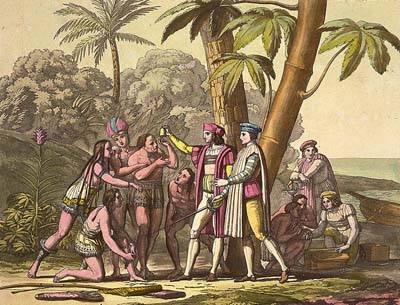
In fact, rum has been made just about anywhere. Malaysians were cranking out what they call ‘brum’ a thousand years before Rupert Holmes recorded that awful, awful Piña Colada song, and Marco Polo wrote about ‘sugar wine’ from Iran—likely a distillate of sugar-making leftovers… hence, rum.  But it wasn’t until the following century, when the original Cathay’s Clown went looking for China and tripped over the Bahamas that rum’s potential began to be understood by the West.  Seems that he’d been given some sugar cane cuttings by the governor of Gomera in the Canaries (whom he was also schtupping, but that’s another story) and these clones were the first to reach the New World.  Christopher Columbus, therefore, may be referred to not only as The Guido Who Missed His Mark By Half A Planet, but equally, as the Papa of the Piña Colada, the Daddy of the Daiquiri, the Sire of Spiced Rum and the Pater of Planter’s Punch.

Before these frilly fusions were so much as a gleam in your bartender’s eye, rum was guzzled neat or (especially on board ships, both rogue and Royal) with a squeeze of lime to ward off scurvy*, or with a tot of falernum—a heady mixer made with almond, cloves, nutmeg, allspice and more rum.

* Thus, the disparaging reference to Englishmen as ‘limeys’.

Guess What Kept Roger So Jolly?

Rum’s time-honored association with piracy is more than a Treasure Island sidebar, of course—buccaneering bad boys plying the waters of the Caribbean found the stuff easy to snag and often used it as currency when trading for slaves.  It was as essential to the value of their plunder as gold or Africans and was said to forestall—or foment—many a mutiny.  Jack Sparrow may confirm a lesser known fact—that is, that plenty of rum was distilled on board ship by the pirates themselves using molasses from the bottom of the syrup barrels.  This ‘fuddling’ was referred to in a 1651 Barbadian document as ‘hot, hellish and horrible’, likely on a gustatory par with Rupert Holmes’ Greatest Hits.  True to its quality, the potation (as well as the album) was called ‘kill devil.’ ‘demon water’ or ‘screech’.

Diluted for the Polluted

On the legit front, the British Navy started rationing rum to seamen in 1655, and soon thereafter, seeing his crew regularly three-sheets-to-the-wind and unable to set even one, Admiral Edward Vernon began to water it down.  His nickname was ‘Old Grog’ for the grogram cloak he wore, and as a result, diluted rum became known as ‘grog’.

Whereas the origin of ‘grog’ can be explained, we’re not so able to trace the roots of the word ‘rum’ itself.  Contenders include a truncated form of saccharum officinarum (Latin for sugar cane) or ‘rumbullion’ (British slang for ‘uproar’); others reference Dutch drinking glasses called rummers, the French word arôme, meaning ‘aroma’, a Romani word for ‘potent’—and, of course, there’s the Malaysian brum.  However it came about, since most pirates were illiterate, we can at least dispel the rumor that the original spelling was ‘Ahhhrrrrrrr – u- m’.

Under the barrel

In any case, the American Colonists spelled it with an $.  As the epicenter for New World coopery and lumbering and home to a population that consumed up to three gallons of rum per year each, first Staten Island, then Boston dove into the distillery business which soon became New England’s largest and most profitable business. (Tobacco and hemp were close seconds: BATF and DEA take note).  Demand for rum’s raw material, molasses, grew to such outlandish proportions that the slave trade burgeoned and led to an unprecedented triangular trade balance between Africa, America and the Caribbean.

Gimme Some Sugar Cane, Honey

Sugar, of course, is at the heart of it all; it was a crop grown universally throughout the West Indies, especially  owned by the sweet-tooth British, and a handful of Caribbean islands produced nearly all  the sugar consumed in Europe.

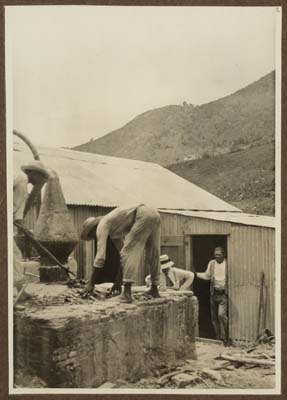
Rum factory in Coral Bay, 1919

Refining sugar was a labor intensive process, and during the eighteenth century, more than one million slaves were brought to Jamaica and Barbados alone.  Over that same period, sugar consumption in Britain rose from four pounds per person to eighteen, and by 1900 it had risen to one hundred pounds.  The primary by-product of the prolonged boiling process required to manufacture sugar was a thick, dark, sweet goop called molasses which plantation slaves found they could ferment, then distill.

Today, four hundred years later, though there are variations at individual distilleries, the rum-making process hasn’t changed much.  In brief, it goes like this:

Fermented molasses (called ‘wash’) contains approximately 6% alcohol—more than beer, less than wine.  The wash is heated in a sealed vessel (a ‘still’) to approximately 175°F, at which temperature alcohol evaporates but water does not.  Said alcohol is then re-condensed to a sharp-tasting, clear and colorless liquid that’s about 160 proof, or 80% alcohol.

That’s your raw white rum, and it sounds pretty simple to make, which in principal, it is.  The reality is that it’s not.  Distillation is a vastly complicated and often frustrating science/art, with endless trivial factors affecting the end result.  Success is usually unpredictable, a synergy between ken and kismet, savvy and serendipity, smart technique and dumb luck. In the islands, especially, superstition also plays a role.
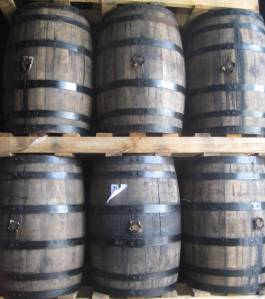
Once cooled, what happens to the raw white depends on the product requirements—there’s some technical jargon offered in the glossary.  Most whites are blended with other batches from the same distillery, and nearly all are cut with water to bring the ethanol down to a manageable 40 or 50 proof.  Golden rum results from maturing the original distillate in oak—mostly once-used bourbon barrels, while darker, heavier Jamaican rums come from combining molasses and oak-aged skimmings from the boiling vats.  The flavor nuances in these aggressive rums are partly the result of fermentation by wild yeasts rather than the cultured yeast used to inoculate lighter rums.  To suit often funky, but experimental tastes of the century’s new wave of rumbums, an increasing number of rums are being infused with herbs, spices, fruits and juices.

Such exotic variations on a basic theme often begins with a choice of which type of cane to grow, whether to distill in a pot or a column still and what strength the final product should be.  This is even before a master blender starts tossing in vanilla, nutmeg, allspice, mango, coconut, banana, chocolate, etc., etc., etc…

Does this make rum the most versatile spirit on the planet?  So say the rummies, and they’re no dummies.  At very least we all can agree that the sum of rum is never humdrum, never ho-hum.


RUM GLOSSARY

Age Statement – The number of years a spirit has been aged in wood; in the USA, the age statement must represent the youngest spirit in a blend.

Agricole (French) – Rhum agricole is rhum made from fresh cane juice, as opposed to rhum industriel, which is made from molasses.

Aguardiente (Spanish) – An all-purpose word used for strong, raw, unaged rum.

Alembic – (French) – A pot still, as opposed to a column or continuous still

Añejo – (Spanish) – Most añejo rums are aged for more than two years, though no law requires this and some may be colored with caramel to simulate age.

Babash – Moonshine rum, always local, usually illegal.

Beer – In world of rum, it’s fermented molasses

Cachaça – Low-alcohol Brazilian rum made from fresh sugar-cane juice, not molasses.  Pronounced ‘ka-sha-sha’.

Caramel – Sugar that has been cooked to produce a brown color and an assortment of complex flavors. Caramel is introduced to many aged rums to add depth to the taste.

Column Still – An alternative to the pot still that uses stacks of evaporators called columns. Typically, column stills will have two columns of different design that perform different functions in the distilling process.

Copper – Copper is accepted to produce the best spirits due to the interaction between the copper and acidic components in the fermented wine.

Demerara – The Demerara River runs through Guyana, and is the site of one of the first sugar/rum producing regions of South America.

Dock Rum – Rum aged in barrels at sea in the holds of ships, or in wharf warehouses.  Now comparatively rare.

Dunder – Fermented wash.
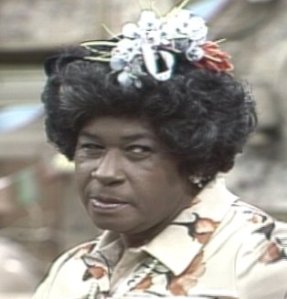
'Fred Sanford, the Bible says, 'You SHALL NOT get drunketh with wine.' Fred: 'Does it say anything about rum?'

Esters – Fred Sanford’s aunt.  Alternately, chemical compounds  responsible for fruit flavors in rum.

Falernum – Blend of rum, spices and sugar cane syrup first produced in Barbados. Generally used as a mixer.

High Wine – The first raw rum from the still, also called ‘heads’.  Alternately the last rum from the still goes by ‘low wine’.

Hosghead – A wooden barrel used in the 18th century to store sugar.

Houillage – (French) – Recasking, the annual ritual where rum from the same production year is used to fill other barrels of rum to replace the volume that has evaporated, which is known as the ‘angels’ share.’

Liming – Chilling on the porch with some rum and some neighbors.

Overproof – Distilled spirit bottled at more than 50% alcohol by volume, or 100 US proof.

Pot Still – The simplest type of still, consisting of a large pot-like bottom, where the fermented wash is heated, and topped with a gooseneck and condenser.

Proof – In the US, proof is twice the alcohol content measured in % Alcohol by Volume. 40% alcohol by volume is 80 proof.

Reserve – A term that should denote something special in the bottle, but has no legal precedence.

Retort – Closed vessel used to double-distill alcohol as an accessory to a pot still. Hot vapor enters the bottom of the retort and heats the liquid in the retort to vaporize the alcohol in the liquid.

Rhum – (French) – Rum. ‘Rhum’ is used to differentiate rums  of the French West Indies (rhum) and rums of the English-speaking islands (rum.)

Tafia – Cheap, generally unaged Island rum
 

The Ultimate Zombie: Makes you feel like Duane Jones just hit you in the brain with a pickaxe.

  • 1/2 ounce white rum
  • 1 1/2 ounces golden rum
  • 1 ounce dark rum
  • 1/2 ounce 151-proof rum
  • 1 ounce lime juice
  • 1 teaspoon pineapple juice
  • 1 teaspoon papaya juice
  • 1 teaspoon powdered sugar
  • ¼ ox. Falernum (buy it or make your own based on recipe given in the body of the story)
  • 1 cup cracked ice

Blend ingredients except for the 151 and pour into a 14-ounce glass. Float the 151 on top, garnish with mint and sip while awaiting the zombie apocalypse.  One per customer please…

*

Tasting Notes:

Brice and Karen Hoskin

Montanya Platino, about $25: Made in Silverton, Colorado by Karen and Brice Hoskin, Montanya Platino is produced from fresh sugar cane shipped in from Hawaii, crushed, fermented, then run through a copper pot still.  The work is rewarded—the rum is light but flavorful with a noteably pleasant whiff of coconut, due mostly to the coconut husks through which it’s filtered.  A bit of oak aging lends a very slight copper hue to the rum while adding depth; white current and fresh hay lead to a citrus-oil finish.

Fazenda Mae de Ouro Cachaça, about $25: Crystal clear with a silver sheen, the nose suggests kirsch, with cherry and a bit of alcohol bite.  It drinks smoothly, though, with nice rich notes of mowed grass, white flowers and a touch of dill.
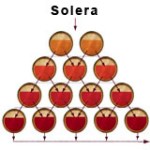
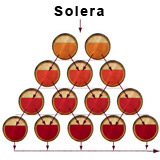
Solera system

Matusalem Gran Reserve, 18 Year, about $32: First produced in Cuba 130 years ago, Matusalem uses the solera system, like sherry, to produce a rum of exceptional structure and backbone.  Integrated with the toasty oak is mocha, espresso and hints of brown sugar.  A bargain at the price, this is a sipping rum to be sure.

Brugal 151 Blanco Overproof Republic, about $42:  No doubt about the kick—the alcohol smacks you from the outset.  It’s unaged, and contains elements of white chocolate, cucumber and peppercorn.  There’s a bit of mint and anise on the finish, but mostly fire.  A hard rum to drink neat.
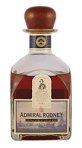
Admiral Rodney Extra Old St. Lucia Rum, about $60:  Brooding and deep for a mere child of eight, this rum hails from a tiny island just below Martinique and presents an initial bouquet of earth and cherries.  Warm and sweet on the palate, it finishes dry and smoky.

Angostura Single Barrel Reserve, about $80: Smooth as silk after five years in the puncheon; it resonates with sugary, bakery scents and flavors of coffee, roast peanuts and vanilla.  Medium bodied and rich with smoky oak carrying through to a bourgeoisie finish.

Raising the flag over Mount Gay

Mount Gay 1703, about $90:  Other than the fact that the rum-runners have taken a perfectly functional word like ‘gay’ and turned it into a liquor brand, this elegant copper-colored tipple is deep and velvety with notes of orange marmalade, allspice, smoke and bananas.  1703 commemorates the year that Mount Gay began operations in the Barbados.

Appleton Estate 21 Year Old, about $100:  A cognac tingle gives this rare blend of several aged rums a profile that seems to cry out for a roaring fire in the hearth, but try it on the back porch—it works just fine.  Mahogany in color, sweet with cocoa, intense, layered with warm nutmeg and orange.

Bacardi Reserva Limitada, about $100: Mellowed in lightly charred American white oak, this rum may be hard to find outside of the Caribbean, but if you should snag a fifth, you should find a beautifully constructed liquor loaded with banana, nutmeg, ginger and vanilla, finishing with spice and orange peel.

Posted in Rum | Leave a comment

Valpolicella: We’ll Have Fun, Fun, Fun Till Daddy Takes Our Wine Key Away

Poor Jack Berry faced the real devil in 1984

Some wines have names that are fun to say.  Not the Marylyn Merlot kind of agonizingly clever pun fun, nor Goats do Roam word-play fun, but bouncy domain names and springy varietals that roll off your tongue like one too many roofie.   Gewürztraminer, for example, is fun to say once you figure out how to say it.  Reichsgraf von Kesselstatt can be barked out with a morbid Prussian scowl, frightening your fellow tasters.  Frescobaldi dances in the mouth like saltimbocca. Yalumba sounds like a Zulu war cry, not a viognier.  And when you order Est! Est!! Est!!! you are obligated to change your pitch three times, like Jack Berry did when announcing jokers on the old game show The Joker’s Wild.

That’s the kind of fun I’m talking about.

On the other hand, Échezeaux is not particularly fun to say.  And if the truth is told, unless you have a nicely aged bottle from a decent vineyard, it’s not that much fun to drink either.

Do I digress?

Valpolicella is fun either way, to sip or to say; add an additional vowel—almost mandatory in Italian—and you end up with vali-polla-chella—a classic rumba beat.

Veneto, where Valpolicella comes from, is back in the ‘not fun’ category since most Americans will spontaneously place the accent on the second ‘e’, making it Ven-ee-toe, when in fact, the stress is on the first syllable—it should be VEN-ah-toe.

The grapes that make up this fruity, medium-weight red are fun again, since what you see is what you say: corvina, molinara, and rondinella.  Corvina is the workhorse of the trio, up to 70% of Valpolicella’s allowable content by law, and much of the quality of a given vintage of the wine can be assigned to how well the corvina harvest went—too high a yield that year or too chill an autumn results in aggravated grape acidity, and a wine that is sharp and not too much fun.  Molinara can be a problem child as well, with low color extraction, a bent toward oxidation and a similar risk of overt tartness.  Rondinella is somewhat neutral flavor-wise, but a good production grape and resistant to disease, so it kind of acts as Larry to Moe and Curly.

Al Jardine's head makes him look like a Talosian

You’d think the combination of these three stooges should produce some forgettable wines, and sometimes they do.  Robert Parker once referred to Valpolicella as that ‘insipid industrial garbage.’

A genuine Talosian

Apparently, like me, Parker prefers his industrial garbage to be sipid.

But does not our esteemed Wine Advocateeditor agree that when the stars align, when there’s a Classico or a Superiore tacked on to the name, when good grapes lend texture and delicacy, Valpolicella can fulfill five essential wine ‘f’s:  Fragrance, fruitiness and fun, fun, fun. 

If not, we can reserve one more ‘f’ word for Mr. Parker.

*

Featured wine:

Santi Valpolicella Superiore ‘Solane’, 2008, about $15: Like the eating-off-the-floor ‘five second rule’, ordinary Valpolicella carries a three year rule; after that, it tends to get a bit fruit-challenged.  Designation ‘superiore’ buys some extra bottle time—in fact, requires it since the ‘ripasso’ technique calls for the new wine to be re-fermented on the skins of a previous batch of Amarone—Valpolicella’s burly big brother—adding weight, aroma, tannin and ageability.  This particular selection, from Frederick Wildman and Sons, offers spicy and herbal overtones including sweet marjoram, cloves, vanilla and black pepper.  Almond flavors, expected in Valpolicella, are present and accounted for. Fruit tones range from dried orange to fresh Bing cherry, everything wrapped in wreathes of smokiness.  A wonderful, soft dinner wine to accompany rich veal dishes, game or pasta.

* Valpolicella means ‘valley of the cellars’.  Ever since those seventies TV commercials hawking Valpolicella (and Soave) for four bucks a bottle, we’ll append it to ‘sellers’.  Remember Bolla?  Too bad, kids:  It has tainted you for life.

Posted in ITALY | Tagged , , | Leave a comment