But, Will It Wash In Washington?

Damn straight it will.

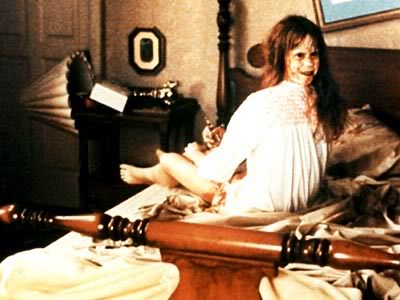
L.: Me R.: Me

L.: Me
R.: Me

Personally, I’ve been a cheerleader for the wines of Washington ever since I was old enough to wear a five-stripe pleated skirt.  Prolific parameters of production aside, the Washington wine industry is still in its relative infancy—the first premium commercial winery opened in 1962 under the somewhat humdrum handle Associated Vineyards, the brainchild of a bunch of college professors who made wine in their garage.  Rightly suspecting that the climate of Eastern Washington would prove ideal for vinifera varieties if properly irrigated, the group began making European-style wine under the guidance of Dr. Lloyd Woodburn.

So spectacular were the results that master mentor and skilled scribbler of screeds  Hugh Johnson paid homage to Associated Vineyards—which was to become the more familiar Columbia Winery—in his classic book ‘Vintage’, calling those first releases, ‘…A turning point in modern wine history.’

To Market, To Market, To Sell Our Merlot…
Washington wine advertisement

Washington wine advertisement

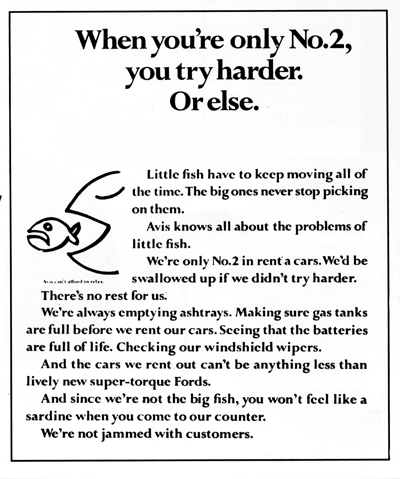
The old Avis tagline, ‘When You’re #2, You Try Harder’ may in part sum up how the Washington wine industry wound up number two—trailing only California in number of operating wineries and production of premium wine.  Interactive and integrating marketing has long been a backbone of Washington wines, and the media’s attempt to awaken the public to the value-per-fifth of these wines over nearly any other state has been a consummate success.
An anthropomorphic pink French person's heart takes a lickin', but keeps on tickin'

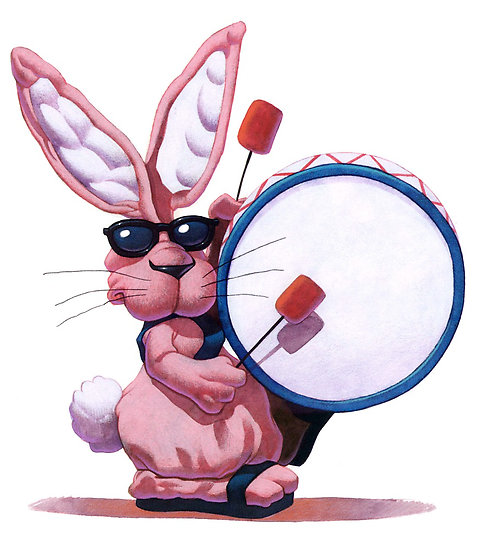
An anthropomorphic pink French person’s heart takes a lickin’, but keeps on tickin’…

The real push came following the 60 Minutes now-famous (or infamous, depending on your perspective) 1991 broadcast ,‘The French Paradox’, which tried to wrap our heads around the idea that French people, with a diet high in saturated fat, rarely succumb to coronary heart disease.  The postulation was that the French fondness red wine, which is high in the antioxidant ‘resveratrol’, was the X-factor, and true or false, red wine consumption in the United States increased 44% within a year.  Merlot—always a silky, soft, easy to love red wine for novices, rode point on the ruby revolution.  And Washington, which produces some of the world’s most luscious merlots, did not merely climb aboard the merlot bandwagon… they knocked the driver unconscious and commandeered it.  In the years following the broadcast, merlot plantings in Washington increased fivefold.

Home Again, Home Again, Trendy No Mo’…

So, while that fad was running its course, Washington winemakers were flexing their muscles and tugging on their thinking caps, trying to come up with merlot’s potential heir.  And true to form, yesterday’s experiments became today’s successor story.  ‘Experiment’ being the keyword in the sentence—a cornerstone of Washington’s nascent but burgeoning wine industry is a willingness to trial-and-error anything and everything.
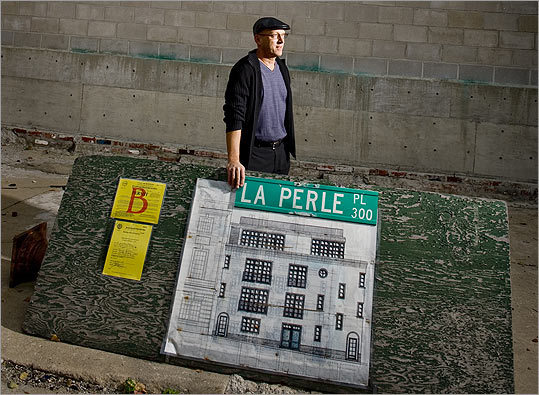
'I'll have whatever the pilot is having...'

‘I’ll have whatever the pilot is having…’

Which brings us around to Kaella Winery.  Dave Butner is a former Boeing employee who learn winemaking via the Boeing Employees Wine and Beermakers Club, of which we presume pilot George La Perle is a charter member. *

*Insider Boeing joke.  Look it up.

Empowered by a double gold medal he received in 2006 at the club’s annual competition, he upped his output and in 2008, went commercial.
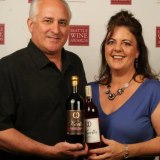
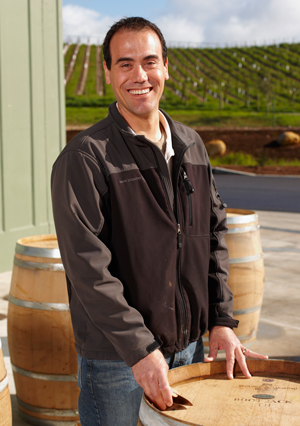
Jim and Nancy Butner

Dave and Nancy Butner

He called the winery ‘Kaella’ in honor of his beautiful daughters, Katie ‘n’ Ella, and considers it something of stroke of fortune that he did not have a son named Sam—otherwise, he might have had to name his business ‘Sam ‘n’ Ella’, which is not a real good FDA career move.
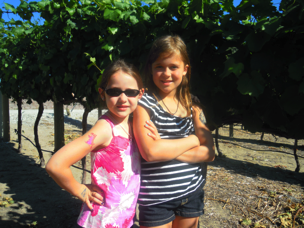
Kate 'n' Ella

Kate ‘n’ Ella

Kaella Winery is, as the name suggests, very much a family affair.  Dave’s wife Nancy is an official ‘super taster’ and gives each wine her stamp of approval before it hits the public palate.  Katie wears the proud title of Junior Punchdown Assistant and Grape Stomper, answering to her sister, the Senior Punchdown Assistant, who also lists as a hobby ‘geocahcing’—which I had to Google right after I Googled ‘George La Perle’.  (Spell check, Butners).

Anyway, Butner and Co.’s winery initially intrigued me because they produce some interesting blends—the kind that show the results that the ol’ thinking-cap can offer.  Recently sampled were a pair of sangioveses— a delicate and floral rosé and a full-bore red made in the Italian ripasso style.  More on that in a second.
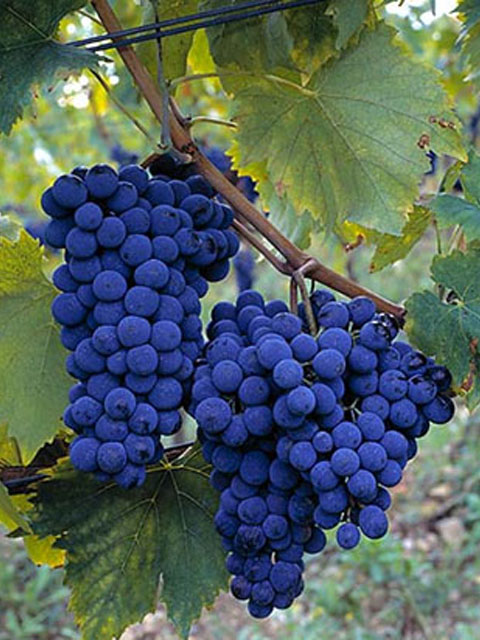
Sangiovese

Sangiovese

Finding a decent non-Tuscan sangiovese can be a tough challenge, even in Italy, where it reaches near-magnificence in Montalcino and Maremma, though maybe in Chianti, not so much.  North of Emilia-Romagna, it really doesn’t ripen well enough to produce the desirable cherry/mulberry notes beloved by fans of the varietal, and in southern Italy, it is nothing beyond a blending grape to pump up the acidity in montepulciano, nero d’avola and zinfandel’s kissing kin, primitivo.

In the New World, plantings have offered wines that slink between really awful and not-quite-so-awful, with a handful of exceptions from the Sierra Foothills and San Luis Obispo.  According to the Antinori aggregation (who ought to know), one ironic reason for the quality malfunction in California is that the sunlight is too intense for sangiovese.  Although there was a brief but profound uptick in sangiovese plantings in Napa and Sonoma following the so-called ‘Super Tuscan’ craze of the late 20th century, they have since been scaled back considerably.  Today, there are less than two thousand acres of sangiovese in California, in contrast to nearly fifty thousand acres of zinfadel—11% of all vineyard land.

But, Then There’s Eastern Washington…
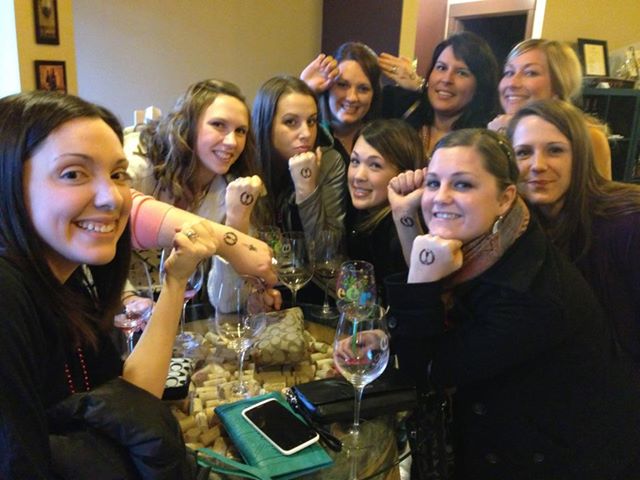
A gaggle of smokin' Kaella super tasters

A gaggle of smokin’ hot Kaella super tasters

…where some of the Tuscan stars align once more, providing a habitat for sangiovese with a growing season long enough to allow clusters to ripen, but cool enough at night to preserve their acidity.  Beside sangiovese, the Red Mountain vineyards of Vinagium, Gilbert, Stone Tree and Yakima Valley’s Lonesome Spring Ranch have had considerable success with a phalanx of Italian varieties, including nebbiolo, bravo rosso, barbera and dolcetto.

Kaella Vineyards sources their sangiovese from Red Mountain’s Ciel du Cheval, a forty-year-old vineyard known to produce hearty wines of depth,  complexity—and, perhaps the hallmark of sangiovese seductability—elegance.
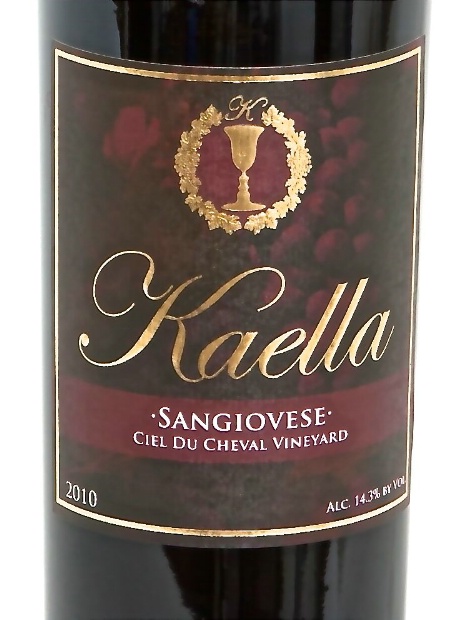
bottle sangioKaella’s 2010 Sangiovese, around $25, shows all above referenced qualities front and center, in part because Butner ‘double-skin’ ferments, augmenting the must with the skins removed from his Rosé of Sangiovese.  In Italy, this technique is known as ripasso (meaning, ‘re-passed’) and can result in some remarkably resonant flavors.  Indeed, in Butner’s, it does:  The wine is deep scarlet in color and shows a deep and potent soul; the nose recalls plum, mocha and cassis and it is confirmed with a balanced and well-structured red-fruit  palate.  Nuances of earth and foresty humus give Ciel du Cheval terroir a place among the Northwest’s best.
roseI am equally a fan of Butner’s 2012 Rosé of Sangiovese, around $17, which offers all the racy style standards—strawberry, watermelon and rhubarb flavors—packed inside a full-bodied and luscious body.  There are also notes of peach and orange rind and just enough residual sugar—1.9%—to keep the natural sangiovese acidity in balance.

Butner is a textbook ‘small’ producer, making around 500 cases annually.  That’s a bump up from his first release of 25 cases, but not by a whole lot.  These are the people we need to support in the industry, of course, provided they keep providing product of this power and glory.

So long as that happens, I’m a hella kinda Kaella fella.
Posted in Sangiovese, WASHINGTON | Leave a comment

Michael Green Decants His Dog; Pass It On

What’s the difference between wine writer Michael Green and moi?

I mean, other than his five-star education, superior working knowledge, pixie-like profile and ability to see dead people?

This: Michael Green proudly pronounces that he decants everything, while I assure you, severely and unequivocally, that I decant nothing.

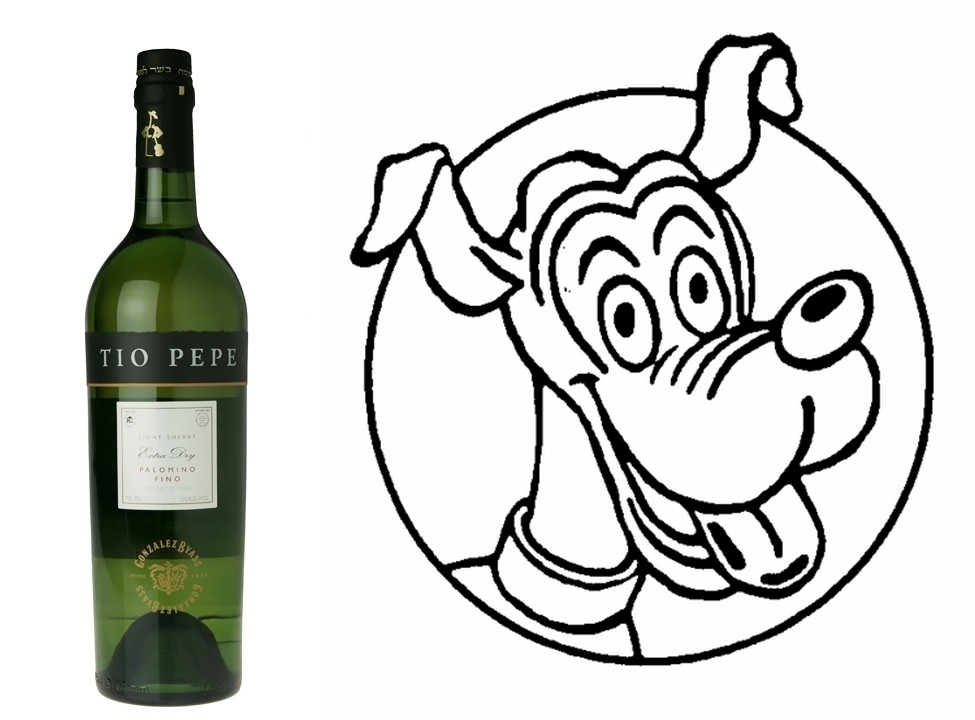
Fino and Fido

Fino and Fido

His reasons for decanting everything, including fino and Fido (who is, last I checked, an integral part of ‘everything’) and even champagne is simple:

He loves to decant stuff whether it’s stuff that needs decanting or not.

Actually, I do too, but at the core of things, I am a petty, puerile, passive-aggressive prick who has spent years waging a personal vendetta against Decanter Magazine for reasons I will relate shortly.

Not in my living room, young lady.

Not in my living room, young lady.

For now, suffice to say that as a result, anything that contains the words ‘decanter’, involves decanting, smacks of fluid filtration or rhymes with ‘glass receptacles used to separate sediment from the rest of the wine’ is verboten in my household on the same level as is turning your head 360°  while puking up split pea soup, which, like Michael, is green.

My esteemed colleague, who spent nineteen years with Gourmet Magazine, publishes a blog not unlike this one except that it makes sense.  Oh, and Michael Green never uses words like ‘fuck’ and ‘prick’ and ‘fibromuscular tubular tract leading from the opening of the vulva to the uterus’—at least, not in the same paragraph as he discusses decanting.  And in his latest piece, entitled ‘The Deal on Decanting’, he gets so horny over the subject that you are convinced that decanters exist on the same erotic plateau in his psyche as the aforementioned fibromuscular vajayjay.

As Green correctly points out in his article, people not currently involved in an ongoing blood feud with a British wine magazine tend to decant wine for one of two reasons:  First, to remove sediment from older wine and second, to aerate younger wines.

In general terms, the problem with this theory is that older wines may be too delicate to withstand a decant (Green points this out) and younger wines can aerate via the bottle-to-glass pour just as effectively (Green does not point this out).

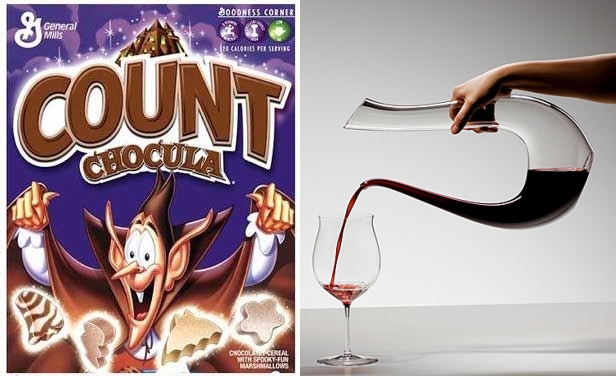
Clipboard choculaHe also adds a third, aesthetic reason for practicing the black art of decantology, and I quote: ‘…wine just looks it’s best in a beautiful decanter!’

reading boxWell, that’s a bit of a subjective call, don’t you think Mike?  Like most of us, I was one of those kids who dug reading the cereal box while eating cereal at breakfast, and today, I dig perusing the weasel words on a wine label when drinking wine—especially when I am drinking wine for breakfast.  Of course, that point becomes moot to someone like Michael who decants Count Chocula.

There are, of course, some complex economic considerations to contemplate as well.  One of Adam Smith’s basic economic formulae states:

equation


…where R = cost of wine,  D = cost of decanter and all the rest of the gobbledegook simply means that if your decanter costs more than your wine, in order to calculate wine value you have to divide the sum of all fixed expenses (defined to include all opportunity costs) by the sum of all variable expenses, or per unit variable cost times quantity; (per unit VC × Q), and as Smith indicates on pp. 962 (footnote) in Wealth of a Nation, should you use the lovely handmade Riedel Amadeo Lyra Decanter pictured above, a single glass of Woodbridge White Zinfandel will cost you $73.40.

Naturally, there is no ‘decanter depreciation’ to be figured into that equation since you are a clumsy oaf when you drink and will break it the first time you use it.

Back To Decanter Magazine

There is an old Mexican proverb that my Hispanic grandfather taught me right before he forced me to eat soup made out of cow stomachs:  ‘The horror continues after the cause is forgotten’.

This held true for the Hatfields and McCoys, the Montagues and the Capulets, the Corelones and the Tattaglias, the Toms and the Jerrys.  But for me and Decanter, not so much: You see,  I remember in precise, excruciating detail that cause of this one-sided hate fest.

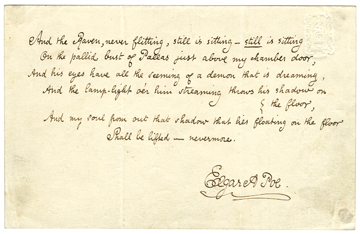
Poe writes, 'Dear Chris, I was blown away by your recent column on...'  etc.

Poe writes, ‘Dear Chris, I was blown away by your recent column on…’ etc.

Several years ago, Decanter commissioned a story from me, then decided it wasn’t good enough to print.  Considering that I have an entire wing of my home festooned with awards, trophies, letters from famous writers like Poe, Shelley, Wilde, Trollope and that dude that wrote the fake Hitler autobiography assuring me that I am the literary shite, the Aeschylus of the Age, Decanter’s snub stuck like a Count Chocula nugget in my craw.  It was the extirpation of an estimable ego, an evil the equivalent of my wearing a Sturmabteilung parade uniform to the synagogue—something I would never do, incidentally, not because I am particularly enamored of Yiddish culture, but because I refuse to listen to de Kantor.

But I will state for the record that in the ancient Hebraic context, it was considered the duty of the individual to avenge iniquity on behalf of God.  The one who personally punished the wrongdoer was given a special designation: go’el haddam, the blood-avenger or blood-redeemer (Book of Numbers 35: 19).

I am, and will hitherto be known as, Go’el Haddam.

Is that perfectly clear?

Back To ‘The Deal on Decanting’…

L.: Michael Green R.: Cuisses de grenouilles on the hoof.

L.: Michael Green
R.: Cuisses de grenouilles on the webbed hoof.

With buzz-killing wine writers ready to pounce upon the suggestion that decanting is anything other than an inordinately expensive metrosexual affectation—not the domain of keepin’-it-real street winos but of grandiose dog-and-pony show-offs who could probably get something printed in Decanter; and with a surfeit of  cerebrally-challenged scribes quite prepared to mock somebody’s name simply because they disagree with an innocuous position on fino/Fido/Veuve Cliquot filtration, my heart, soul, radix, bulb, crus , corpus and epithelium goes out to Michael.

In short, with folks like me on the planet, breathing your air and drinking your wine, it can’t be easy being Green.

*

http://michaelgreen.com/the-deal-on-decanting/


Posted in GENERAL | Tagged , , , | Leave a comment

I See Motown, I See France; I Just Bought ‘The Wedding Dance’

Early Detroit Thug Nation

Early Detroit Thug Nation

Although Detroit was founded as a New France fur trading post, the French themselves left us little by way of culture, and for that, we should probably be grateful.  But they did leave us a bunch of street names.  ‘Detroit’, of course, is derived from le détroit du Lac Érie, meaning ‘the strait of Lake Erie’ and referring to the Detroit River trade route.  You are on your own in translating Dequindre,  Gratiot and Charlevoix.

The French pulled out in 1760 and never looked back, but through the vagaries of fickle fate, foul fortune and a fellowship of felch-faced fiduciary  fuck-ups, our two communities have once more found common ground…

We’re broke.

And for roughly the same reason:  Through oversight and under-planning, we became uncompetitive in the world economy.  Both France and Detroit were bitch-slapped by the global recession that began in 2007, and are currently experiencing staggering stats in unemployment numbers.  And to add insult to injury, the political will to enforce painful fix-it measures was, in both places, singularly unforthcoming.

As a result, the state of Michigan has appointed an Emergency Financial Manager to take over Detroit’s entire elected government, untroubled by the dictates of a democracy.  And as must come as no great surprise to city-born cynics like myself, Kevyn Orr winds up being a bigger douchling than the chumps and choads who dragged the city into its own sewer system to begin with.

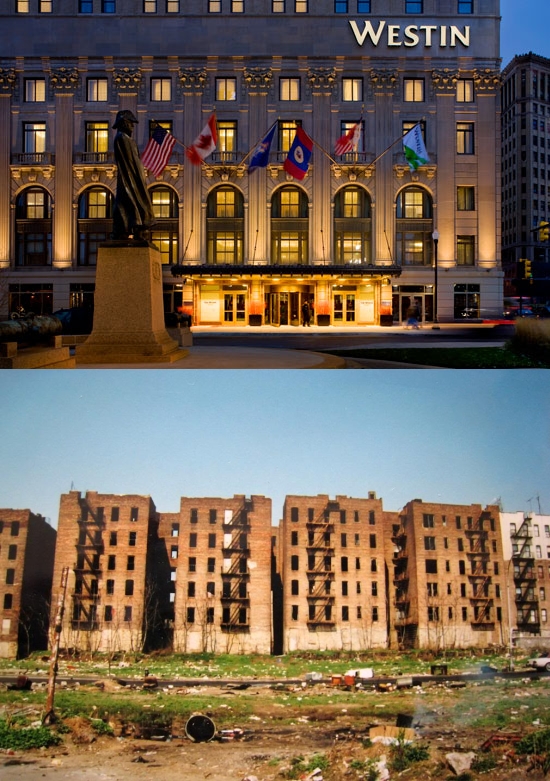
Top:  Exterior of Orr's Detroit residence. Bottom:  Exterior of Detroit residents who are forced to pay for it.

Top: Exterior of Orr’s Detroit residence.
Bottom: Exterior of Detroit residence of residents who are forced to pay for it.

To wit: While preaching austerity and sacrifice and budget cutting, Orr (who is not even from Detroit, but Fort Lauderdale) rides around in a private car with a driver and bodyguard, all underwritten by Detroit taxpayers.  Despite a yearly salary which rockets beyond $200,000, Orr lives in a luxury suite at the Book Cadillac Hotel which he does not pay for.

Who does?  Why, we do, of course.  And by ‘we’, I mean people like Officer Mike Bender, a recent  graduate of The Detroit Police Academy, a beat cop whose starting salary is $30,000.

Make no mistake, Kevyn Orr’s raison d’être is not to help us, not to reform us, not to salvage our culture and not to rehabilitate our lost souls.  He exists solely to recompense the banks in any way he can.  And the latest street word is that that Orr is considering selling off the Detroit Institute of Art’s multi-billion dollar priceless collection in order to pay down around $10 billion in unfunded pension liabilities.

Detroit in better days

Detroit in better days

Personally, I missed out on a prosperous Detroit by a couple of decades, and it is difficult to slither thorough the slums, dawdle in the drek or promenade past the Projects and imagine that the city was once one among the world’s premiere destination spots—at the forefront of the nation’s industrial fields and nicknamed ‘The Paris of the West’ for our Gilded Age architecture.  We were the first city in the world to pave a concrete road, the first city to broadcast a news report (WWJ, 1920), the first city to install traffic lights.  We played a key role in industrializing Earth, and—thanks to our readiness to convert automobile plants to tank and plane manufacturing—we were called ‘The Arsenal of Democracy’ and were instrumental in winning World War II.  Speaking of which, we were also the first city in the world to restore to its rightful owner, Alice Meyer, a work of art that had been looted by the Nazis: Claude Monet’s The Seine at Asnières.

That marvelous gesture was down to the DIA.

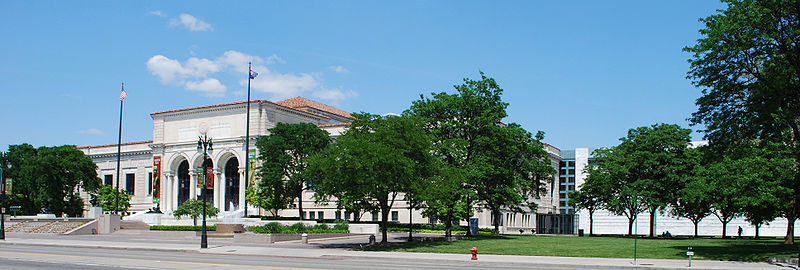
Detroit Institute of Art

Detroit Institute of Art

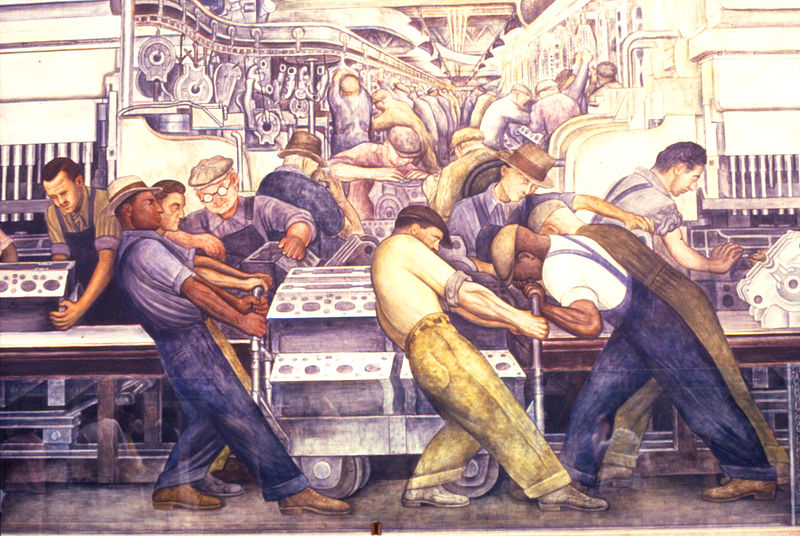
Housing one of the most significant art collections in the country, the Detroit Institute of Art is a remnant of our glory days.  The 700,000 square foot building contains over a hundred galleries, exhibiting Diego Rivera’s Detroit Industry frescoes and William Randolph Hearst’s medieval armor collection before you even enter the museum. Within, an amazing representation of American artists includes works by  John James Audubon, Mary Cassatt, Thomas Eakins, Winslow Homer, Georgia O’Keeffe, Frederic Remington, Paul Revere, Andy Warhol, William T. Williams, Andrew Wyeth, and James McNeill Whistler, and globally, offers works by Pieter Brueghel the Elder, Giovanni Bellini,  Claude Monet and Edgar Degas along with Old Masters Gerard ter Borch, Peter Paul Rubens, Albrecht Dürer and Rembrandt van Rijn. The self-portrait of Vincent van Gogh and The Window by Henri Matisse were the first paintings by these two artists to enter an American public collection.

Detail, Rivera fresco

Detail, Rivera fresco

‘Public’ is actually a misnomer in the above paragraph.  Unlike most city art collections, Detroit itself owns not only the DIA’s bricks and mortar but the artwork within.  As such, it has to be listed among the city’s comprehensive catalog of assets, and under our inevitable declaration of Chapter 9 bankruptcy, may be subject to a forced liquidation to satisfy our carnivorous creditors.  Kevyn Orc is currently having the works appraised to determine value.

Said garage sale would deplete Detroit’s amazing history beyond what could be recovered, leaving our cultural birthright up Kevyn’s Creek without an Orr.

A similar sell-off is happening right now in France, and it has plenty of Parisian people pissed, perplexed and petulant.

Thursday evening at the Palais de l’Élysée, the French White House and official residence of President François Gérard Georges Nicolas Hollande, the French Obama, more than a thousand bottles of prestigious wine went under the auction hammer as part of the French government’s cost-cutting initiative.  As a result, Hollande has been accused of ‘selling off France’s national heritage’.

As a Detroiter facing a similar heritage loss, I have a hard time telling the French to chill.

Nonetheless, ye fraternity of frantic Frogs; chill (48 °F for white people, 60°F for red people):  Apparently, only 10% of the Élysée cellar has been raided, which is a bit silly as it is expected to raise less than a half million dollars against a deficit of $13 billion, and most of that will be used to purchase more wine anyway, albeit from less noteworthy négociants.

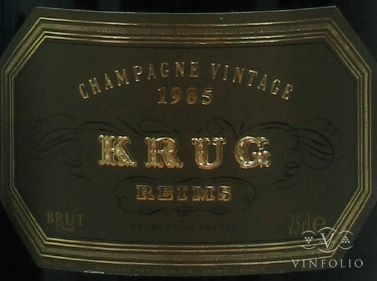
1985-frontSo, the bottle of Champagne Krug, vintage 1985 which went for 1200 euros ($1,624) will be swapped-out with 160 bottles of ten dollar Charles Krug California Champagne, vintage twenty minutes ago.

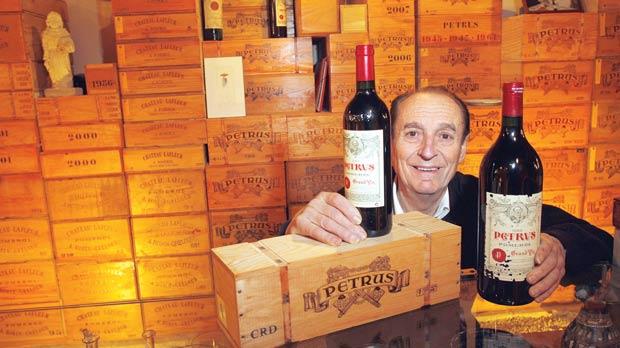
It’s enough to make a world-renowned wine collector fume.  And indeed,  world-renowned wine collector Michel-Jack Chasseuil is fuming:

Mike-Jack

Mike-Jack

“Even if they go for fantastic sums, it will be a derisory amount in terms of the national budget and when you think about what these wines represent in the eyes of the whole world.”

The above quote sort of sounds like Mssr. Chasseuil did not quite finish his sentence, which may be because his over-fuming and non-chilling left him speechless.

'Kevyn and Rickie, sittin' in a tree, d-e-r-b-i-n-g...'

‘Kevyn and Rickie, sittin’ in a tree, d-e-r-b-i-n-g…’

Nonetheless, his sentiments are echoed by those of us who may be forced to sit by as Kevyn Orr auctions off Motor City heirlooms:  Rodin’s The Thinker, Picasso’s Fruit, Carafe and Glass, Warhol’s Double Self Portrait.

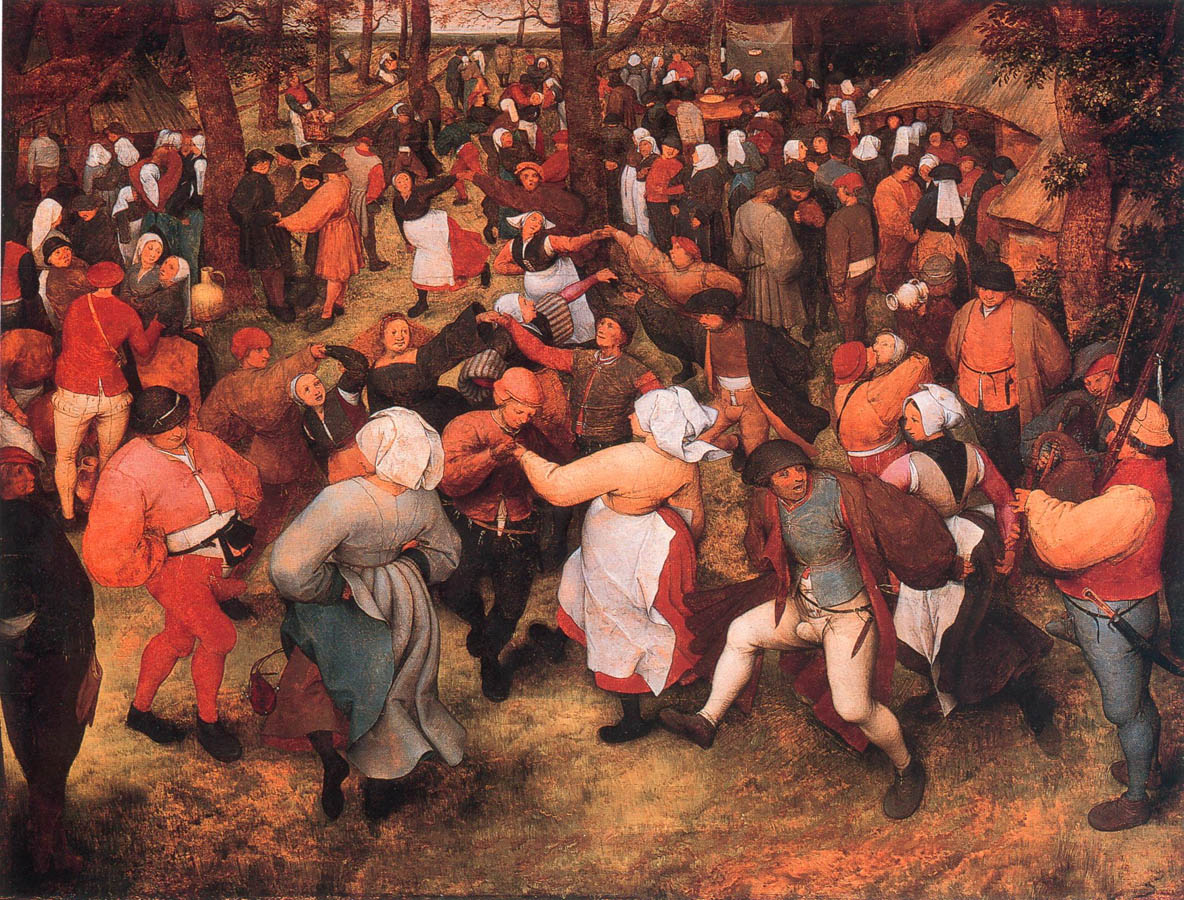
And, of course—as referenced by the scarehead—Pieter Brueghel the Elder’s ‘The Wedding Dance’.

'The Wedding Dance'

‘The Wedding Dance’

The $700-per-hour bankruptcy lawyer, who once had four liens placed against his million dollar Maryland home for unpaid taxes on child care, is prepared to ravage Detroit’s endowments as a form of financial fellatio performed for the pleasure of his Lord and Master, Governor Rick Snyder.

Not for nothing, I despise you and your cute, quirky misspelled name, ‘Kevyn’, you overpaid, beholden little prick.

And as for you Governor Snyder, much as you apparently hate Detroit, I assume you realize that the feeling—if not the Orr-gasm—is mutual.

Posted in FRANCE, GENERAL, Michigan | Tagged , , | Leave a comment

Mazel Tov, Asimov: Your Label Scheme Doth Make Me Scoff

‘If it says ‘enzyme, enzyme, enzyme’ on the label, label, label,

You should dump it  down the crapper while you’re able, able, able…’

– ‘70’s wine commercial from The Health and Red Tape Network, pre-cable, cable, cable

Eric Asimov is back in the saddle again, out where a friend is a friendly winery offering  full disclosure. Whoopi-ty-aye-oh to that, my brother!

big broAsimov, the iconic New York Times wine critic, is either inordinately passionate about government intervention in the wine industry or running out of column ideas.  Whatever the reason, he recently wrote yet another gripping piece on why wineries should be forced by Uncle Big Brother to list ingredients on their wine labels, much as manufacturers of bottled water and ground cinnamon are forced to do.

On the surface, of course, Asimov’s cause célèbre is a noble one, without blemishes.  And, as my condescending and patronizing detractors—and they are legion—love to tell me, ‘You should care what you put in your body, whether it is solid or liquid…’

Clipboard drugsDude, you are talking to someone who spent decades making sure I ingested items from each of the five essential drug groups every single day, so don’t give me grief about my personal physical self-interest.  My inner mechanisms are so pickled I get a yearly honorarium from Vlasic.

‘Consumers Deserve to Know!’

Do they?  Unfortunately, that is not necessarily how free enterprise works.  I refer to Laidlaw v. Organ, 15 U.S. 178 (1817), in a case decided by the United States Supreme Court that established caveat emptor as a rule of law in the United States.

‘Let the buyer beware’

I know, I know—and as Asimov groupie and Feiring Squad-described ‘Wine Yenta’ Alyson Careaga sagely points out (in the event that I am too thick to pick this up on my own and did not, in fact, ‘read the entire article to the end’):

‘Eric puts forth an idea to raise awareness and initiate a dialogue. That is his role and that is what he cares about most. A read through this entire article (to the end) for example sends to me the simple message: advocating for awareness.’

But, I did read it to the end, Alyson.  And more than once.  And this is the intended, initiated dialogue:

Ultimately, requiring winemakers to list ingredients on wine labels is not a particularly good way to ensure that consumers will make ‘correct’ decision on what they ingest.  Why?  Because for the most part, ingredient labels are bullshit, and are treated like bullshit by loophole-seeking, unscrupulous food and drink manufacturers.

Top: Guilt Box Bottom: Plastic bottles in landfill

Top: Guilt Box
Bottom: Plastic bottles in landfill

In fact, any FDA-required ingredient list winds up little more than a ‘feel good’ band-aid that reminds me a lot of those goddamn blue yuppie-guilt-boxes that guilty yuppies fill with plastic bottles and place curbside on garbage day, then pat themselves on the back as being ‘green’ when, in fact, the vast majority of plastics (93% according to the EPA) contain too many chemical additives to actually be recycled and wind up in the landfill anyway, and from there, become an ingredient not listed on local drinking water labels.  Not only that, but we are forced to inhale toxic exhaust from the gigantic, pollution-pumping diesel garbage trucks required to pick up the plastic recyclable bins filled with non-recyclable plastics to begin with.

Asimov’s ’idea’ also reminds me of Ronald Reagan’s ‘idea’—an idiotic and counter-productive ‘War on The Five Essential Daily Drugs’ campaign, which cost taxpayers millions of dollars and the FBI millions of man-hours and accomplished nothing other than sending a plethora of non-violent addicts to prison—who, incidentally, taxpayers also support.

As for wine labels, to those of you in Asimov’s camp: Take a momentary pause in your self-righteous ‘power to the people’ diatribe and gauge how successful requisite food ingredient labeling has actually been—and how ‘helpful’ they’ve proven to consumers claiming consummate concern about ‘what they are putting into their bodies.’

Let’s start with the trendy buzzwords and highlights slapped all over your typical food label.

‘All Natural’:  Meaningless, since it is not a term regulated by the Food and Drug Administration.

‘Contains Real Fruit Juice’: FDA requires one drop of fresh juice to be added to the high-fructose, artificial garbage drink to qualify for this horn-blowing gasconade.

‘Fat Free’: Pure marketing spin: Nearly all products so labeled  come from sources that are naturally fat free anyway.

‘No Trans Fat’:  Big whoop—such ballyhooed foods may be sopped in saturated fats that will leave you just as dead.

Juicy Juice   500‘Helps Support Immunity’: Juicy Juice, for example, wears this tag with pride since it contains docosahexaenoic acid, which has been proven to reduce symptoms of congestion, phlegm, vomiting and rashes in infants.  Unfortunately, a serving of Juicy Juice contains less DHA than you’ll find in a quarter teaspoon of fresh salmon. Likewise, Kashi ‘Heart to Heart’ oatmeal hypes the presence of green tea—an ingredient which has no known link to preventing heart disease or promoting healthy arteries.

‘Enriched’:  Impoverished, more like.  Translated, it means ‘processed’.

League of Liars

League of Liars

‘Made With Whole Grains’:  As with the fruit juice scam, a pinch of whole grain allows the product to thus label itself.

‘Smoked’:  Describes a flavor, not a preparation method—most foods so named are artificially imparted with smokiness via liquid products containing cancer-causing polycyclic aromatic hydrocarbons.

I can go on.  And on.  But, judge for yourself the inherent trouble with labels in the Center for Science in the Public Interest’s report.

http://www.cspinet.org/new/pdf/food_labeling_chaos_report.pdf

Clipboard ericSo, down to ‘ingredients’—the peculiar patch that Asimov wants to see affixed to each of the 3.5 billion bottles of wine produced in the United States every year, and is evidently willing to shell out the megabucks to ensure that said labels will be reviewed for accuracy and regulated scrupulously by the FDA and/or the Consumer Product Safety Commission.

Like that’s gonna happen.  And anyway, when the feds actually investigate a claim of mislabeling, it is rarely the result of their own pavement pounding, but nearly always arises from a complaint lodged by an outsider—more times than not, from a competitor of the ‘offending’ product whose motivation, you can be sure, has little to do with consumer protection.

'My wine contains fish bladders.'

‘My wine contains fish bladders.’

Now, setting aside the fact that the sixty or so allowable government-sanctioned winemaking additives (intended to promote fermentation, correct acid imbalance, tweak color or guard against spoilage, etc.) are nearly all entirely natural and certified as safe, here is a direct quote from the Asimov article:

‘Forget about the often poisonous chemicals used in the vineyards, which can leave residue on the grapes…’

monsanto skullBut, why in the world would I care about powdered tannin and forget about poisonous chemical residue, Eric?  I really couldn’t care less if my wine contains sulphur dioxide—a naturally occurring preservative that virtually all winemakers, including myself, add to their must.  Reading a label (like Bonny Doon’s) that lists ‘yeast’ as an additive is not singularly helpful since yeast is mandatory for grape juice to ferment.  However, if Monsanto is selling vineyard managers carcinogenic pesticides that may cause birth-defects in my offspring and it winds up as a component of my merlot—that I might want to know about.

But, of course, Asimov is right to say ‘fuggidabout it’, because Monsanto moguls have a cozy and unquestioning relationship with the federal government thanks to lobbying expenditures and they will never be forced to capitulate their bottom line just because a bunch of vocal wine geeks want ingredients listed on labels.

Recently, the House and Senate Appropriations Committee urged the FDA to take enforcement actions against false or misleading labels to maintain their integrity and to retain consumer confidence in label accuracy.  So far, The FDA has failed to implement a single one of their recommendations.

Why would we assume they will be more diligent in enforcing wine ingredient listings?  Especially considering that 100% of Americans eat food, while less than half drink wine?

We wouldn’t.  And yet, like the guilty yuppie carefully saving up landfill-bound Fiji bottles, Mr. Eric and Ms. Alyson would apparently ‘feel’ better reading a wine ingredient list of dubious accuracy.

Again, the idea of a massively informed, supernally aware consumer population is as fond a dream as a country without junkies, without unfunctional alcoholics, without bigots, without serial killers, without Nickelback.

And about as feasible.

Sure, Asimovo is boffo, and I’m a jerk-offo, but one thing I know for real:  You trust your lawyer, you trust your doctor, you trust your car mechanic, but by God, you must have faith in your winemaker.  Should you suspect that something is amiss at a certain winery—that they are adding crap to their product that you don’t want to stick in your system, don’t buy their wine.  You want labels on your wine bottles, cool: Stick to Bonny Doon, Shinn Estate, Ridge Vineyards and similar producers who voluntarily list ingredients.

I guarantee you that when other wineries see their market share eroding, they will judge it in their pecuniary interest to start stamping ingredients on their labels—without an untrustworthy, faithless and totally beholden Food and Drug Administration having to lift an interfering, regulatory finger.

That, my grasshopper, is how free enterprise really works.

Posted in GENERAL | Tagged , , | 1 Comment

Conspiracy Is A Theory Like Evolution Is A Theory, Krümel

In the enological discipline to which we have dedicated our professional lives,  a ‘theory’ is a rigorously tested statement of general principle that explains observable and recorded aspects of wine, wineries and winos.

In wine science, a theory stands until it is proven wrong.

Last known portrait of Argentenan politician Adolfo Hítlerez

Last known portrait of Argentenan politician Adolfo Hítlerez

Now, I will state for the record that I do not support  conspiracy theories on general principal, especially those relating to Nazis.  I do not believe that Hitler survived the bunker beat-down and died in Argentina in 1962, nor that the Third Reich invented exoatmospheric flying saucers of the Miethe and Schriever type, nor that das Führer was an avatar of the Hindu god Vishnu, nor that the carpet-chewing Teppichfresser had only one testicle and that other one resides in Albert Hall.

Nor that the Nazis buried billions of pounds of gold in the Auklands, nor that Hitler was using New Swabia, the German-claimed portion of Antarctica, to communicate with Hyperboreans, ethereal beings who he claimed were the ancestors of the Aryan race.

Clipboard wolfIn fact, I am a practical man of erudition and breeding, and the only reason that I do not have a Nobel prize on my mantelpiece is because the surströmming-scarfing Selection Committee was too obtuse—frankly, too stupid—to appreciate my academic research into Alice Feiring’s hit squad made up entirely of homosexuals who have been injected with wolf DNA and who target other, more talented wine writers like yours truly.

That’s not ‘conspiricism’, silly: That’s investigative journalism.

Achtung, Niner Wine Estates!  You Can Fool Some of the People Some of the Time, But…

FoNG recruiting poster

FoNG recruiting poster

So, that said, I hope you will take me in deadly earnest when I suggest that there are wineries operating in Southern California as we speak that are funded, controlled and entirely administered by Friends of New Germany, operating out of Berkeley.  This Neo-Nazi organization, which split from The Free Society of Teutonia following their 2004 sedition trial, was founded in the late sixties by J. Edwin ‘Nine’ (a reference to the symbolic significance of the numeral ‘9’—a refactorable number *—to the Nazi movement).  The avowed goal of ‘FoNG’ is to chemically brainwash America’s power elite via the addition of hypnotic pharmaceutical agents like LSD and benzodiazepine to the kinds of upscale wines that rich people drink.

* A refactorable number or tau number is an integer n that is divisible by the count of its divisors, or to put it algebraically, n is such that: tαυ (η) / η


Niner Wine Estates:  J’accuse!!

Last week—on the 73rd anniversary of Belgium’s ignominious surrender to the German Wehrmacht—I received a long, rambling press release manifesto from a total stranger named Jennifer ‘Bavarian’ Hamm, purporting to announce the award of the largely honorary title Oberster Richter des Kalifornien Volkes (Supreme Judge of the California People) to Niner Wine Estate vintner Patrick Muran.

In fact, I believe it to be a covert, encrypted message being sent to FoNG sympathizers, especially those who are fans of fermented grape products.  If you know the ‘code’ and have the open-minded perspicacity to ‘read between the lines’, you will easily see that Pat Muran is less interested in making a batch of Paso Robles grenache rosé than in destabilizing the American system of democracy and ultimately, in a militaristic nationalist mindset, seeking to create and glorify a Fourth Reich.

A ‘Theory’ Is Only as Good as its Empirical Evidence, Right?

Herr Muran at the Niner Chancellery

Herr Muran at the Niner Chancellery

Right.  So, I will bullet my reasons for accusing Herr Muran and the Niner Chancellery of trying to foment insurrection among the American people via mind-controlling wine while simultaneously spreading a white supremacist ideology and recruiting members for the local chapter of FoNG.

In the meantime, you may well ask why, if they are such Aryan-o-philes, Niner Estate does not have a Riesling, a Müller-Thurgau, a Spätburgunder, a Weißer or a Dunkelfelder in its wine portfolio?

Well, that would be just a little obvious, don’t you think?

Anyway, here we go.  Nine (in keeping with the ‘Niner’ motif) benchmarked facts.  Individually, they are compelling.  Taken as a whole, they are indisputable.

1)  The significance of the number nine.  (Try to follow me here): 

Kristallnacht occurred on November 9, 1938.

1938 x 9 =  17,442.

1 + 7 +4 +4 + 2 = 18. (18 was the Nazi code for Adolf Hitler. The number comes from the position of the letters in the alphabet: A = 1, H = 8)

18 = 3 x 6

666-mark-of-beast-Three sixes = 666, the ‘Number of the Beast’ per Book of Revelation 13:17-18, and the most widely recognized symbol of the Antichrist; i.e., Adolf Hitler.

Coincidence?  I think not.

2)  The visionary initiative of estate owner Richard ‘Niner’ (this has to be an alias, showing solidarity to FoNG founder J. Edwin ‘Nine’ whose followers were known as ‘niners’) is to ‘create world-class wines’.  How far removed is this from announcing a categorical wish to create a perfect race of wines that will dominate the world?  Not far at all, bubbie.

9-1-keith-jesperson3)  Speaking of weird monikers, do you know what the vineyard is called from which Niner Estates draws its pinot noir?  Jespersen.  Hmmm, where have we heard that name before?  Oh yes, serial killer Keith Hunter Jespersen, the ‘Happy Face Murderer’, who plagued California in the early nineties.

4)  And if that’s not bad enough, do you know what Niner Estates named its very first vineyard and olive grove?  Bootjack Ranch.  Seriously, Niners?  You think the average Joe and Jane Mixed-Breed American is so thick-headed that they can’t see that you merely juxtaposed the words in ‘jackboot’?  Who’s that kicking down my door, people?

5) ‘Muran’ is a mnemonic acronym in texting shorthand:  May U Reign Always, Nazism.

nazi-zombies6)  And speaking of Muran, prior to taking the Reichswehreid Oath of Allegiance in the White Christian Supremacist movement, the ‘winemaker’ had a prominent position at a small Santa Ynez producer called Blackjack Winery.  Now, who among you—except for the really old and out of touch—does not know that the ‘blackjack’ is the latest wonder-weapon in the Studio der Alptraume from the fan fiction classic ‘Nazi Zombies’.

Say What?  Ze Gun, She Smokes!!

Ninerdick and Ninerpam

Ninerdick and Ninerpam

…Even with all this proof, you are still not convinced that there is a subculture Aryan Nation faction who have infiltrated California wineries and are currently tainting consumer potables with diazepam, lorazepam, clonazepam, Spamapam and Ninerpam?  You probably said that about fluoridated water, too.  Call me paranoid if you want.  And I will call you ‘naïve’.

Here are the clinchers, ye of little faith:

Pat Muran's vision for the future Niner Estate.

Pat Muran’s vision for the future Niner Estate.

7)  Pat Muran’s vision for the future could have been lifted verbatim from Mein Kampf: “We are uniquely positioned as a vertically integrated company to control every aspect of winemaking.”  Buzzwords here?  ‘Control every aspect of…’  Merely substitute the word ‘Reich’ for company and ‘Lebensraum’ for ‘winemaking’, and you are right there on the Eastern Front, brother.

8)  A direct, unedited quote from Richard ‘Niner’: “With Patrick at the helm, the future for Niner Wine Estates looks brighter than ever. We couldn’t be more delighted to see him at the helm.”

helmsDon’t give me any crap about the ‘nautical’ connection between ‘helm’ and the dude who steers a boat.  You know, I know and Auntie Bonquawalaqweisha knows that ‘Niner’ is referring to the great horned helmet worn by medieval Teutonic Knights in the Orden der Brüder vom Deutschen Haus St. Mariens.

'Mom, dad, meet my prom date, Psyclon Nine.'

‘Mom, dad, meet my prom date, Psyclon Nine.’

9)  And finally, from the halls of California’s wine mecca San Francisco, comes the aggrotech/black metal band Psyclon Nine.  This is getting so transparent it is tedious.  Psyclon Nine happily admits that their name is a malapropism of Zyklon B, the poison employed during the Holocaust.  Really, boys?  I get the Psyclon part, but ‘Nine’ as a malaprop of ‘B’?  Not so you’d notice.  So, where did the nine come from?

I think we all know the answer to that one by now.

So, What Are We To Do?  Boycott the Product?

A roofie makes you goofy, and that's the troofy

A roofie makes you goofy, and that’s the troofy

No!  Never!  We can’t let on that we have sussed them out, otherwise they will simply reform under another name, like V-2 Vineyards or Cyanide Cellars.  What we should do is buy their products as use them as a legal form of Rohypnol.  Once chemically brainwashed, you should be able to convince any coyote-ugly barfly you scam upon that you are indeed, the Über-date.

Therefore, I will review a quartet of Niner winers just as though my head was still stuck in the sand—which is essentially how I review all wines anyway.

BTW, do you know how many German war criminals fled to South America after the war? According to recently released documents, 9,000—yet another time the number nine rears its head.

But you see, by mentioning that, I offer ten talking points instead of nine, thus breaking the cycle of neo-Nazi numerology forever.

Happy days are here again!

Tasting Notes:

Bootjack Ranch fieldhand in traditional costume

Bootjack Ranch fieldhand in traditional costume

Niner Wine Estates Sauvignon Blanc, Bootjack Ranch, Paso Robles, 2011, around $20:   ‘If you tell a big enough lie frequently enough, it will be believed.’  Lie, I believe, is the singular form of ‘lies’ upon which this rich, aromatic sauvignon blanc aged following a stint in neutral French oak.  A yield of less than a ton per acre makes for a super-concentrated wine redolent of lemon, pink grapefruit and Key lime mellowed by melon and ripe green apples.

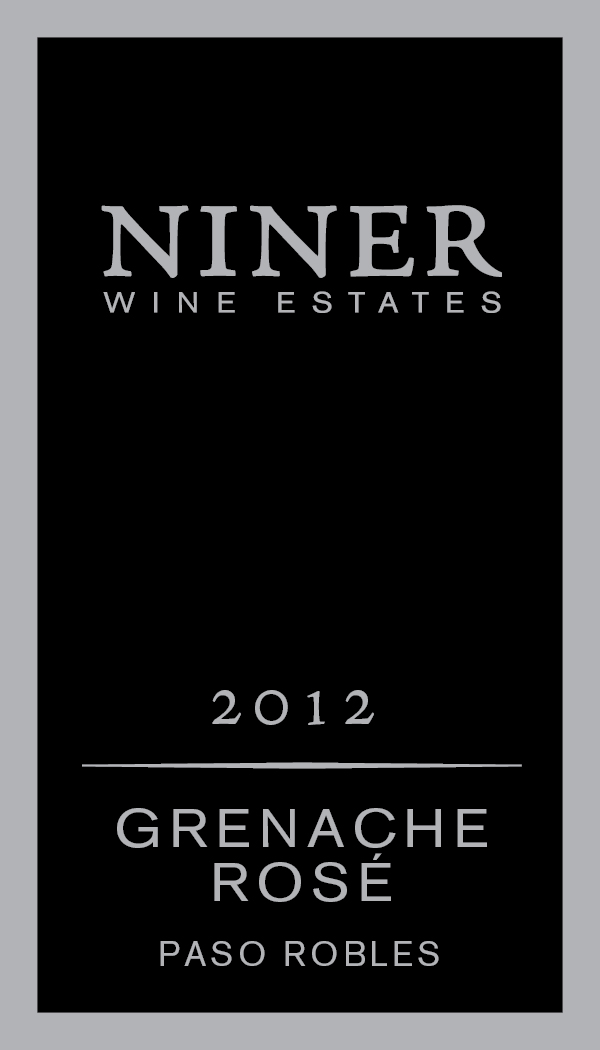
logoNiner Wine Estates Grenache Rosé, Paso Robles, 2012, about $20: ‘I can fight only for something that I love, love only what I respect, and respect only what I at least know.’  Well, I happen to love, respect and know rosé, and this one is a corker.  The nose is dominated by tart strawberry with a bit of watermelon in the rearview; the palate is clean, crisp and  Made from the scary-sounding, Mengele-approved ‘saignée  method’ in which juice is bled from the red fermenter before it has reached its final color.  This technique can also be used for turning brown eyes blue if you can get to them in time.

Niner tasting room

Niner tasting room

Niner Wine Estates Syrah, Bootjack Ranch, Paso Robles, 2010, around $25:  ‘The art of reading consists in remembering the essentials and forgetting non-essentials’.  Winemaking, too.  Paso Robles is a marvelous AVA for Rhône Ranger wines like syrah, and this one is dusty, delightful and delovely; inky, creamy and black-fruit-dominated with an aromatic cedary oak throughout. As a sequitur aside, the south of France remained a Free Zone during Nazi occupation, and even the Italians stopped their advance at the Rhône during their day in the sun: 1942 – 1943.

hist_us_20_cold_war_pic_better_dead_than_red_hollywood_1961Niner Wine Estates ‘Super Paso’ Red, Bootjack Ranch, Paso Robles, 2010, about $32: It would be Übergang rot in German, although any Hunnish red-blooded blueblood would rather be dead than red.  Super Paso does blend into the Master Blend ideology; this one has been a dream of Richard Niner’s since he planted the vineyard. Predominately sangiovese (69%), it is rounded and enlivened with malbec, carménère, syrah and petite sirah and winds up as a Nietzschean hyperkrasí—Greek for Super Wine.

Überdisclaimer:  Oh, lighten up people, it is all schtick, all in good, clean, all-American conspiratorial poor taste.  Niner Estate is not a neo-Nazi hornet’s nest and I for one, hope they wind up as a Tausendjähriges Reich and that Dick Niner is not a whiner—not even a minor whiner—and doesn’t give me a shiner, but instead, reigns supreme for a thousand years before the Final Judgment, of which I am exempt, being one of God’s favorites.

Posted in CALIFORNIA, Paso Robles | Tagged , , , , , | 2 Comments

Bung, Bung, Bung, Bung: Mr. Sandeman, Bring Me A Port

How best to celebrate World Sherry Day, Sunday, May 26th?

By writing about port, of course.

Sherry Schmerry, Quite Contrary…

…we know where your garden grows.  Spain, specifically Puerto de Santa María, Jerez and Sanlúcar de Barrameda.  Don’t get me wrong, I love sherry in all its oxidized, fortified, solerafied beauty, with its historical significance (a favorite of Christopher Columbus, William Shakespeare and Edgar Allen Poe) and more faces than Dr. Lao.
Moi, as it was in the beginning, is now...

Moi, as it was in the beginning, is now…

It’s just that I was born breech, and ever since, I have tended to do things bass ackward.  So today I write about port, and on World Port Day in January, 2014, I will write about sherry.  Or maybe I will write about Dutch warships since there is another World Port Day held annually in Rotterdam in commemoration not of the high-octane Portuguese potable, but of the place where big boats hide during storms.

Port Report

Before I delve in the meat and potatoes and tinta barroca, tinta cão, touriga francesa or any of the other hundred approved port grape varieties, I should probably step up to the copita and offer a very brief, woefully inadequate overview of the wine and her many styles.

Douro Valley

Douro Valley

Port is made exclusively in the Douro Valley in Portugal; it is generally a sweet, red wine reserved for dessert.  Like sherry, it is fortified, meaning that fermentation is halted before it’s done with the addition of a neutral spirit known as aguardiente.  This preserves the natural grape sugars and raises the subsequent wine’s alcohol-by-volume to around 19%.

Port comes in many styles, but these can be whittled down in category to two:

  • Wines aged in barrels, whose microscopic porosity allows for the passage in of air and out of evaporated port.  So, the resulting wine is slightly oxidized and more concentrated, resulting in an odd, but desirable viscosity.
  • Wines aged in airtight bottles, which leads to a much slower aging process and retains the bright purple color of youth until opened, whereupon these wines  will tend to be much less long-lived that their oak-aged cousins.

Here’s a bit more detail:

BARREL-AGED PORTS

tawny-port-1Tawny Port:  Tawnies begin life as ruby ports, then climb into an oak barrel for a minimum of two years, which imparts to their profile nice, nutty overtones.  Tawny ports are slightly oxidized, which accounts for their burnished brown-gold color, and are medium sweet to sweet wines.  Those that bear an official ‘age’ designation are blends of ports whose barrique-age averages 10, 20, 30 or 40 years.

Colheita:  A tawny port from a single vintage specified on the label.  Unlike ‘Vintage Port’, which sees about 18 months in oak, Colheita Ports may have been aged for up to 20 years.

Garrafeira: A rare incarnation that combines qualities both of oak aged and vintage Ports, the wine is highly regulated by the IVDP (Instituto dos Vinhos do Douro e Porto, Port’s legal advisory board).

BOTTLE-AGED PORTS

Ruby:  Ruby is the youngest, lightest and easiest to  understand of the myriad styles of the genre.  Characterized by fresh berry flavors, it is blended to the tastes of individual producers, but generally contains at least five of 48 allowable Port grapes.  Bright, stable, sassy and full-bodied, Ruby is the cheapest of the bottle-aged Ports.

Vintage Character Port:  Emphasis on ‘Character’.  Such Ports are richer that Rubies and must be approved by the IVDP’s tasting panel—the Câmara de Provadores.  They are considered to be the standard-bearers for a producer’s ‘house style’ and legally, they are now referred to as ‘Reserve’ Ports.

white portWhite Port: Formerly a winemaker’s afterthought, prominent shipper Ernest Cockburn once loudly opined that ‘the first duty of port is to be red.’  Thanks for that slice of brilliance, Ernie, and also for your nonsensical name—when I was a sommelier and somebody asked, ‘Do you have any Cockburns?’ I replied, ‘Only if I use sandpaper.’

Bouncy, lightweight and somewhat unsophisticated, white ports are made from a variety of white wine grapes, including esgana cão meaning ‘dog strangler’. They slip down nicely as an aperitif, lightly chilled and often mixed with tonic and/or Cointreau.  

Rosé Port: Silly but sincere, this is Port’s red-haired stepchild; a new category released by Pocas and Croft of the Taylor Fladgate Partnership.  Rosé Port is a bit of a joke, whose critical reception was something out of the demolition derby—in part because it isn’t particularly good.

Late-Bottled Vintage (LBV): Perhaps the least understood, and in ways, most palatable among the Ports, LBVs are the product of a single, but often ‘undeclared’ harvest; for the most part, they are ready to drink upon release.  They can be found in two styles—filtered, which require no decanting, and unfiltered, which do—but which, unlike filtered Ports, can improve with a few more years of bottle aging.  Meant to replicate some of the character of Vintage Ports, they are lighter, less complex, and certainly less expensive than the blockbusters from declared vintages, but the latter make up only about 2% of the regions output and can be priced into the low stratosphere.  Nonetheless, LBVs undergo rigorous organoleptic testing by the Câmara de Provadores before they’re awarded the coveted Selo de Garantia—Port’s equivalent of an Emmy.

OldCrustedPortCrusted: A wine that wants to be all things to all people at all times, Crusted Port is blended from the two or three vintages and cask matured without filtration, resulting in its casting off a scab-like ‘crust’ of sediment made of grape residue. These wines are dense, velvety and ripe, but have never been well-known or particularly popular and today, the category is nearly dead.

Vintage: Finally, the most venerable, concentrated and long-lasting of the Ports, from vintages ‘declared’ by conventional shippers only about three times per decade. They’re barrel-aged for a maximum of 2 ½  years before bottling to preserve the ruby color and fresh-berry flavors, but they require another ten to forty years in the bottle before they reach full maturity.  (Sensational wines from single vineyard sources in years not ‘declared’ are often sold as ‘Single Quinta’ Ports).

A Port in A Storm Still Should Be Warm

Although white port can benefit from a little chill, red ports should be served at room temperature—provided your room is around 65° F.  These wines are meant as a post-prandial snort, which sounds sexual but is not, and is often served alongside cheese, for which port has particular affinity for stilton.

Trending currently is stirring up cocktails in which port takes center stage.  I have sampled some dogs, but this one wound up being pretty intriguing:

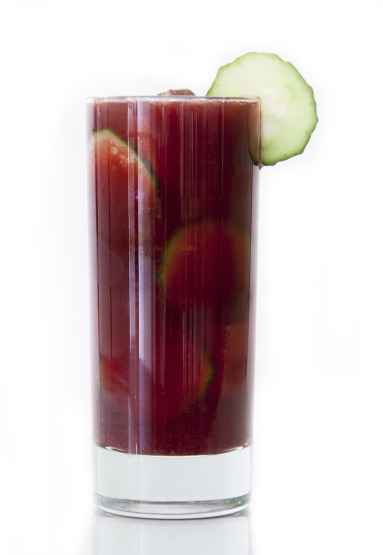
founder's fizzFounder’s Fizz

2 oz. Sandeman Founders Reserve Port
1/2 oz. Ballentine’s Blended Scotch Whisky
3/4 oz. blood orange juice
3/4 oz. sweet honey-cucumber water (diluted honey in warm water in a 1:6 ratio, add cucumber slices, steep until desired flavor is achieved, remove solids)
Cucumber slice, for garnish

Add all ingredients except garnish sparkling water—club soda, seltzer, whatever.  Pour bubbles over all.

Bung, Bung, Bung, Bung Bung, Bung, Bung, Bung, Bung, Bung, Bung, Mr. Sandeman, Turn On Your Beam, Mr. Sandeman, Please, Please Bring Us a Dream…

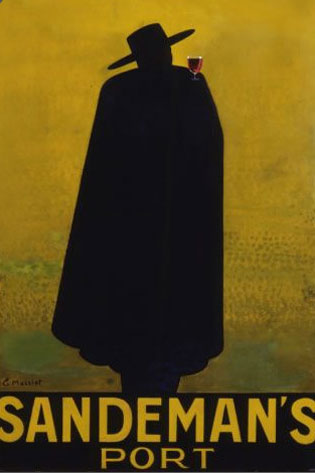
sandeman posterDream on, George Massiot Brown.  He’s the artist who designed the Sandeman label, among the coolest and most iconic logos for a wine I am aware of.  It exemplifies the brooding darkness and furtive depth found in all really good vintage ports.

Founded in 1790 by Scotsman George Sandeman, his ambitious constitution saw a quick growth in his wine business, and in 1805, he became the first in the trade to brand his casks—this, in an era when ‘brand’ names (the origin of that term) were virtually unknown. The brand was registered as a trademark in 1877, making it one of the oldest in the world.

George Sandeman

George Sandeman

Seven generations later, a new George Sandeman sits at the helm of the company.  He is a portoholic in the finest sense of the word, of course, but seems to have a particular affinity for his ‘Founder’s Reserve’—that, or he is trying to move it.  In any case, he brings it up a lot, mentioning that it is a perfect match for dark chocolate (it is) as well as artesian cheese, pecan pie and tiramisu.  It is, it is, it is.

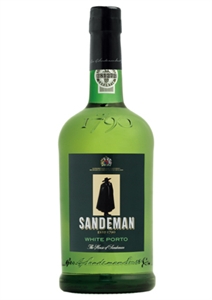
And, that’s what Mr. Sandeman (actually, Emily at the thomas collective) sent me; the bottle arrived yesterday, and that is really why I am writing about port on sherry day—although, if that bit of blasphemy sticks in your craw like a bung in a barrel, be assured that Sandeman is equally well known for a remarkable line of sherries.

Tasting Notes:

Sandeman’s Founders Reserve Porto, around $20:  Selected from the finest  lots of several vintages, then aged for five years, Founder’s Reserve is among the best value ports on the market.  Jammy and dense, filled with black cherry, blackberry and especially, passion fruit, the wine shores up the inherent sweetness with a bracing, balancing acidity.  Go for the Fizz if you are under thirty, but if you are all grown up, do it right: Bottle to copita to gullet.

Posted in Port, PORTUGAL | Tagged , | 4 Comments

‘Tis Ignoble; The Grape’s a Bluffer…

‘There is nothing noble in being superior to your fellow wines; true nobility is being superior to your former plonk.’

Ernest Hemingway, more or less.

Noble Grapes

Earlier today, I had a spirited discussion about the genuine translation and import of the term ‘noble grapes’, in part with some know-it-all whizbangs, a few die-hard douche-aches  and a handful of patronizing penises, some of whom—granted—know more about wine than anyone else on Mother Earth.  In their humble opinion.

Meanwhile, the aptly named ‘Wine Folly’ blog lists eighteen varietals that, in their humble opinion, bear the the title ‘noble’.  Not should bear it, not could bear it, but do bear it.

Interesting.  In my past eno edumacation, I learned that there were but six grapes truly considered ‘noble’ by vignoscenti: Sauvignon blanc, riesling, chardonnay for white wines; pinot noir, cabernet sauvignon and merlot for reds.

Charlie Frog Folly

Charlie Frog Folly

Criticism of this list arose because, with the exception of riesling, these are all grapes closely associated with Bordeaux and Burgundy, and thus the list is skewed with prejudice first toward France, then toward Germany—or, in Medieval-speak, under the edicts of Charlemagne, toward the Frankish/Hunnic varietals.

But that’s ultimately a crock of shite, isn’t it, since each of these grapes have reached heights of majesty elsewhere?  And that is one of the hallmark of a noble grape: The ability to produce wines of note outside of their native soil—or, that soil with which they have been historically identified.

I like six.  The eighteen not so much.

Here’s Why, in Allegory:

The Whitney made the cut

The Whitney made the cut

In a quondam reality, I did restaurant reviews for a local rag, and every year I was called upon to list the top hundred restaurants in Detroit.  You’d think that would be a fairly innocuous task, and do you know what?  You’d think wrong:  Listing the top ten restaurants was far easier.  Because, as in every city, the top ten restaurants in Detroit know exactly who they are.  On the other hand, every restaurant thinks they should be in the top hundred.  But, with over three hundred restaurants in competition, two-thirds could not make the cut.

Likewise, groveling before pinot noir and cabernet sauvignon, cabernet franc may concede its pedigree, in comparison, as being somewhat deficient, even with such exciting peppery, spicy examples as Château Cheval Blanc, Tenuta di Trinoro and Saumur’s Domaine Filliatreau on the cab franc resume.  But, when the six nobles are expanded to eighteen, cab franc would certainly expect a berth among the berries, especially with malbec and nebbiolo taking their bows.

Not so.  Plus, a direct quote from the Folly follies:

‘As grapes like zinfandel become more common, they earn the right to become International Varieties.’

The article uses ‘International Varieties’ and ‘Noble Grapes’ interchangeably; a consuetude I contradict for reasons I’ll offer.  But, the point is, even having made that statement about zinfandel, California’s lifeblood grape still does not make the Wine Folly list of eighteen.

‘International’: Incidents and Issues

By the definition of general consensus, an ‘international variety’ is a grape that is widely planted in most of the major wine producing regions and has widespread appeal and recognition.

king crownOkay, I will buy into that; but recognition among the rabble no more makes a varietal ‘noble’ than the notion that everyone named King should wear a crown.  Of course, we are crossing quickly from objective notes to subjective ones, but to me, the very term ‘noble’ constitutes something more than widespread consumer cognizance—in fact, it may connote the opposite.  A noble grape is one whose wines have breeding, character and status; a grape which can rise to the occasion with elegance and produce wines of note under a variety of circumstances.  Nobility in a grape is an x-factor certainly; a je ne sais quoi  (French for ‘can’t touch dat’), but like hard-core pornography and Justice Potter Stewart in Jacobellis v. Ohio (1964), I may not be able to define it, but I know it when I see it.  Or smell it, or taste it.

Good golly, Wine Folly: A Volley Internationale

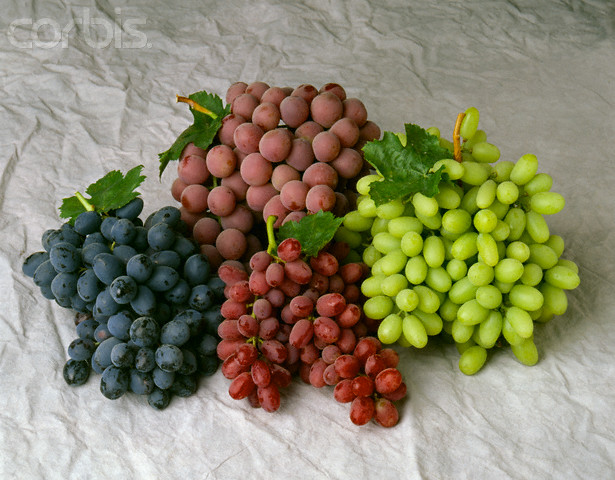
Four Varieties of Table GrapesSo, Wine Folly’s eighteen noble—or so-called ‘international’ varieties—are for reds the classic three: Merlot, pinot noir and cabernet sauvignon, rounded out by grenache, malbec, sangiovese, tempranillo, syrah and nebbiolo.  Whites are listed as (the big three), chardonnay, sauvignon blanc and riesling followed by sémillon, viognier, chenin blanc, moscato and gewurtztraminer.

J’avoue, Folly foolanos, I am not sure what drove this list—if you came up with it on your own or borrowed it from sources unaccredited—but either way, let me pose a couple of quick ones:

  • 'I don't get no redox.'

    ‘I don’t get no redox.’

    By your own definition (lifted verbatim from Wikipedia, BTW), in order to qualify as noble or international, a grape must be ‘widely planted in most of the major wine producing regions’.  So, perhaps your Board of Honchos could explain how nebbiolo—despite its lovely aromas of tar, truffles and tobacco—passes that smell test.  Under 200 acres of nebbiolo planted in California hardly constitutes ‘widespread’, and where, outside of a few pockets in the Piedmont, does nebbiolo produce great wines?

Again, cab franc—the Rodney Dangerfield of cultivars—feels like the bridesmaid that never gets asked.

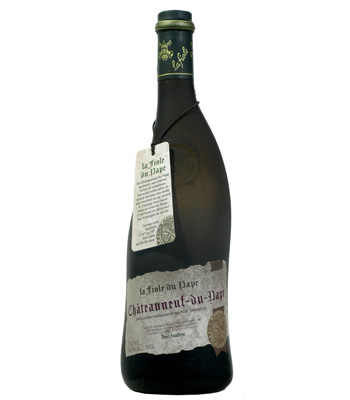
  • chateauneuf-du-pape…Especially when grenache walks down the aisle.  Grenache, seriously?  Noble?  Granted, as one of the world’s most ubiquitous red wine grapes it fulfills the ‘widely planted’ criterion, but the Wine Folly explicification requires equally that the grape has widespread appeal.  Now, out of a hundred consumers chosen at random from the cesspool of modernity, how many do you think could describe grenache in even the most abstract of terms?  My guess is that most of them would not even necessarily know that the wine is red.  And why is that?  Because grenache is almost always lacking in acid, tannin and color, and thus, serves as a blending grape far, far more often than as a stand-alone.  Even Châteauneuf-du-Pape, around 80% grenache, requires thirteen other grapes to chip in before it is willing to show its face.  Now, just because a grape requires a helping hand does not disqualify it from noble grape status; otherwise, the list could pretty much be whittled down to chardonnay and pinot noir.  Point is, for the most part, outside of Southern Rhône, grenache is not a grape that needs blending, it is the blending grape that shores up something else.
  • Not much I can say about the presence of pinot grigio among the cépages nobles and keep a straight face.  Because the third paradigm for nobility is an association with the highest quality of wine made at least somewhere between Venus and Mars.  Now, we all know that pinot gris is the same grape vinified with stylistic differences based on climate and attitude.  In fact, pinot grigio also goes by the names baratszinszoeloe, fromentot, spinovy hrozen, zelenak and everyone’s favorite nom de guerre, ouche.  But Wine Folly, or whoever came up with the eighteen nobles, is not talking about the rich, full-bodied, unctuous pinot gris of Alsace, Russian Rivers or Oregon; they are talking specifically about the rather forgettable grigio incarnations of Northern Italy.  We know this because, following the list, WF offers some descriptors, and covers pinot grigio like this: ‘Light and zesty high acid white wines…’ 

This is not a sketch of Zind-Humbrecht Pinot Gris Clos Windsbuhl.

  • Semillon

    Semillon

    Finally, sémillon.  Maybe.  Of course the sweet wines of Sauternes, Barsac and Cérons and Hunter Valley hit the mark as wines of prestige, influence and elegance.  Wines that undergo inexplicable alchemies with age.  But, like grenache, I can’t see  sémillon as a grape with ‘widespread appeal’.  The French don’t put the name of varietals of wine labels, so it is entirely possible—even likely—that most fans of Châteaux d’Yquem, Olivier, Suduiraut and La Tour-Blanche have no idea what they are drinking.  As for Australia, beyond Hunter Valley, sauvignon blanc rules the roost.

Hello, Dolly! Who’s Wine Folly?

Who knew?

Who knew?

It is a popular, Seattle-based website, I know that much.  Rick Bakas likes it and intends to share ‘every damn thing they post’ no matter if Wikipedia wrote it or not.  Big on self-promo and even bigger on ego—WF refers to its own features as ‘awesome’—the site contains an entire section where you can buy invaluable stuff like posters on how to clink wine glasses correctly and a lesson on ‘Wine Color’, where you learn that light-colored wine is ‘light-bodied’, medium-colored wine is ‘medium-bodied’ and full-colored wine is… oh, never mind.

Meanwhile, the blog’s war cry is:  ‘Reinventing how you learn about wine’.

I guess, considering that the piece from which I have been quoting refers to pinot noir as ‘the lightest red grape’.  As a lifelong fan of Côte de Nuits, Willamette Valley and Central Otago, I did not realize that these soaring, intense, hedonistic pinot noirs were light.

Consider my learning reinvented.

Madeline Morselette

Madeline Morselette

Wine Folly’s editor is sommelier and self-described ‘head hustler’ Madeline Puckette, who assumes responsibility for editing those paragraphs that Wikipedia has not already edited and for tracking down the geekiest wine facts in the world, such as: Gevrey-Chambertin Les Cazetiers 2005 is not brawny and rich with great density and explosive perfumed fruitiness.

It’s light.

Justin Hammack

Justin Hammack

Justin Hammack, entrepreneur, refers to himself as an Alpha Hamster, and do you know what?  Based on his photo, he could pass for one.  But he is not one, because hamsters are restricted to hamster wheels, and in his 27-word bio, Justin manages to wedge in information on the size of his car’s engine.  Busted!

And there is Rina Bussell, also of the healthy amour-propre, a sommelier who believes that her olfactory senses are superhuman because she can smell a watermelon in the kitchen from her bedroom.  That is so sweet, so endearing, and self-love so rare among young people these days that one simply does not have the heart to tell her that such sensory acuteness is table-stakes for wine pros.  So we won’t whisper so much as a word, agreed?

The Shadow knows... Or, maybe not.

The Shadow knows… Or, maybe not.

There’s a handful of other holly jolly Folly mollies, but my overall equilibrium-upset is reaching critical mass, so I will jump ahead and point out my favorite, faceless member of the Wine Folly Crew: ‘The Shadow’, who calls herself the resident  ‘Grammartologist’ and whose purpose on the blog, apparently, is to rewrite sentences to make them more accessible to me and you and a hamster named Boo.  Why do I dig the Shadow so much?  Because, in her role of translating big sommelier words to single-syllable words that Johnny Lunchbucket can grasp, she purposely peppers her bio with misspellings, and then challenges us to laugh.

Consider my sides duly split, Shadow.  I feel like I have been run over by the Turbo-2.0L hamster wheel of humor.

I’m 18 And I Like It

Why doesn't Rick spell it 'Bacchus'?

Why doesn’t Rick spell it ‘Bacchus’?

Hey, I really couldn’t give a hamster’s ass if you want to accept six, nine, eighteen or fifteen trillion noble grapes.  On the other hand, if you expect  me to accept them, I’d like a rational explanation of your precedence and principals, and why they are not universally applied to your list.  Beside cabernet franc, gamay could have appeared as easily as nebbiolo.  And petit sirah.  And zinfandel.

Personally, as a wine writer, am I not particularly interested in reinventing the way you learn about wine.  In fact, I like the old way of learning about wine: Sans wine blogs, especially mine.

But will I write another column tomorrow?  Will Rick Bakas? Will Wine Folly?

Prolly.

Posted in GENERAL | Tagged , , , , | 8 Comments

Absinthe of ‘Alice’

  • Bernard Black (proprietor of Black Books) referred to it as ‘the drink that makes you want to kill yourself.’
  • Oscar Wilde claimed, ‘After the first glass of absinthe you see things as you wish they were…’, by which he may or may not have meant, ‘that women had penises’, and when he wrote that the liquor was anise-flavored, he did not mistakenly spell it ‘anus’.
  • Johnny Galecki, the actor who played Rusty Griswold in Christmas Vacation, claims that he has but two vices: Sugary breakfast cereal and absinthe.
  • Lewis Carroll is said to have come up with ‘Through The Looking Glass’ following heavy bouts of absinthe and opium consumption.
  • And finally, when Choo Choo Charlie said, ‘It really rings my bell’, he wasn’t talking about absinthe—a potent, strange spirit which is, nonetheless, Good & Plenty flavored.
Brendan on the right

Brendan on the right

So, I recently had my clock cleaned by Brendan Edwards when I wrote—in my customary cocksure arrogance—that you can’t buy ‘real’ absinthe here in the States despite the lifting of the 95-year-old ban on the stuff in 2005.  Brendan informed me, ‘Not only is this the real deal in all its genteel appeal, but if you’re willing to wheel and deal, it’s a steal.’

Anyway, that was his spiel.

Swiss people become transparent when they trip.

Swiss people become transparent when they trip.

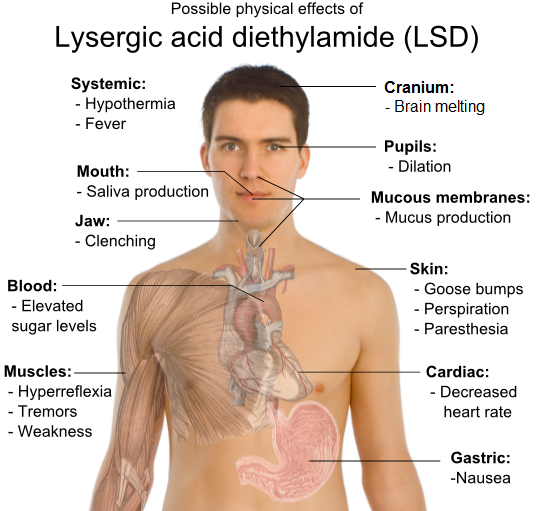
And apparently, according to Edwards, not only can you buy genuine, Lewis Carroll-approved absinthe here in the States, you can buy thujone-thick ‘Original Recipe’, still made in its birthplace, Val-de-Travers, Switzerland.  I happen to love the Swiss, not just because my father is one (born and bred twenty miles from absinthe-zero, actually), but because they also invented LSD.  Something a bit deeper to these cheese-chomping, Badi-bathing, cowbell-clanging watchmakers?  A penchant for psychotropic phantasmagoria ?

At any rate, Brendan then sent me a sample of ‘La Clandestine’ Absinthe Supérieure in its pretty blue package and label featuring a bare-breasted siren who—for some reason known only to those tripping on acid—is singing, ‘Charlotte…’  I’m sure there is a rational explanation for the image, but I don’t think I want to know what it is; I prefer the scene’s surreality.

The name ‘La Clandestine’, of course, refers to the fact that, despite being illegal since 1915, the Swiss never really stopped making absinthe—they just did it, like Bo and Luke Duke, on the sly.

Claude-Alain Bugnon

Claude-Alain Bugnon

Well, it turns out that the hooch-hatchers of Hazzard have their European parallel in people like Claude-Alain Bugnon, an oil refinery technician who had developed a fascination for the drinks enjoyed by his ancestors, and thus, stumbled over absinthe—as many of his ancestors probably stumbled after absinthe.  He began to home-distill in his basement and discovered that he had quite the penchant for lawbreaking.  His reputation spread (is that a good thing when you are producing illegal substances?) across Europe, and in 2006, when the Prohibition ended, Bugnon was the first distiller in town to go legit.  I will not comment on the persistent rumor that he replaced his basement still with a meth lab.

Bohemian Rhapsody

What I am happy to comment on is the product.

First, I really don’t like licorice.  There, I said it.  But I do like hallucinations and wanting to kill myself after one sip of anything, so I was game to go after the blue-bottled booze (often mistakenly called a ‘liqueur’—but there is no added sugar, so, no) with the fervent intensity of someone who missed the hippie movement by a few years.

L.: Hippie.  R.: Boho

L.: Hippie. R.: Boho

Rather than using the word ‘hippie’, however, I should have said ‘bohemian’. Historically, absinthe has been a societal ‘fringe’ drink, the drug-of-choice of many Parisian artists and writers—folks like Charles Baudelaire, Paul-Marie Verlaine, Henri de Toulouse-Lautrec, and a generation later, ex-pat Ernest Hemingway.  As such, it was considered gauche and uncouth by contemporary conservatives.

And thus, like marijuana in the fifties and sixties, that made it all the more attractive to those in the process of rejecting cultural norms to begin with.  Plus, the psychoactive angle, largely imaginary, gave the drink a bizarre sort of attraction to those who were looking to escape the mundane monotony of the workaday world of fin de siècle Europe.

Wormwood

Wormwood

Absinthe draws its multifarious flavors from botanicals like green anise and sweet fennel, but above all, from Artemisia absinthium, also known as wormwood.  It is the chemical substance thujone, contained within the flowers and leaves of wormwood, that was once thought to be the source of the absinthe’s alleged psychedelic undertow.  But, in modern days, research has shown that absinthe contains only trace amounts of thujone—far too little to have the slightest effect on the brain—and in fact, vermouth and Angostura bitters contains more thujone than absinthe, and sage contains more thujone than wormwood.

What’s the Source of Absinthe’s Raunchy, Radical, Rockin’ Reputation Then?

four pixFor starters, the stuff that Brendan Edwards sent me is 53% alcohol—106 proof—which makes Wild Turkey seem like Kool-Aid and Jack Daniels like Similac.  Doesn’t take too many shots of 106 proof liquor before you start seeing verdigris visions of mescalito dogs like Carlos Castañeda did.

And the version that the nineteenth century addicts drank had even more va-voom—the earliest absinthes were up to 74% alcohol.

And hence, the rituals, which were as much a part of the absinthe experience as the high itself.

l’heure verte

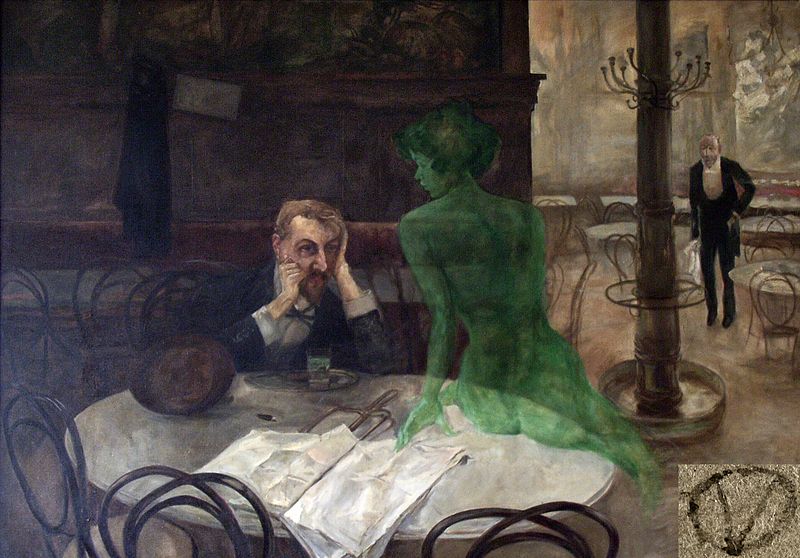
green fairyBy the mid 1800’s, absinthe’s Parisian popularity had grown to such an extent that 5:00 PM was nicknamed l’heure verte (‘the green hour’) in homage to absinthe’s nickname: la fée verte; ‘the green fairy’.  Although Bugnon’s ‘La Clandestine’ is crystal clear (until you cut it with water, at which point it turns milky white), traditional absinthe had a green tint, due mainly to the culinary herbs used in a process known as ‘maceration’, where the plants were soaked in cold spirits as a way to preserve their volatile essence.  Bugnon, on the other hand, believes in distilling after macerating, and color does not survive that process.  But, Bugnon’s method tends to remove bitterness from the liquor and adds complexity and smoothness.

absinthe-spoonAt all events, during green hour, the Belle Époque ‘preparation’ of absinthe required certain tchotchkes—notably, a small slotted spoon which was placed over the absinthe glass with a sugar cube in the middle.  Ice water was dribbled over the cube, and the sugar water evenly distributed through the liquor.  The resulting cloudiness is the result of certain chemical components that have poor water solubility; the French call the transformation the louche, meaning ‘opaque’.

Ironically—or not, depending—among the first delivery methods for LSD was on a sugar cube.

The Jolly Green Fairy

absitheadesCult and culture have the same basic etymology, and, since 2006, when absinthe went from bootleg to bourgeois, a hardcore gang of absinthophiles have gathered annually in Pontarlier, France to hold the equivalent of the absinthe Oscars: The Absinthiades.  Judged blind, Claude-Alain Bugnon’s various varieties of absinthe have consistently taken top honors: The Golden Spoon.

Lewis Carroll's favorite book.

Lewis Carroll’s favorite book.

Clearly, Bugnon leads the pack with his purist potable, where ‘hand-crafted is the buzzword (pun intended).  Everything, from botanical selection to small-batch distilling—even bottling and labeling—is done by Bugnon.

Oh, and a spoiler:  Reading further, I found out what the ‘Charlotte’ on the label means.  The recipe Bugnon uses is an old one from a local, well-known absinthe-maker named Charlotte Vaucher.

And here’s me thinking it was one of the spiders in his basement distillery.

Posted in Absinthe | Tagged , , | 4 Comments

Yo Ho Ho, And A Bottle Of Mosel

Like the wine, the captain of the Vliegend Hert went down with the ship.  Unlike the wine, the captain never came up again.

Background Check:

Wine keeperIn 1980, a shipwreck was discovered off the coast of Holland that contained thousands of gold and silver coins (whoo-hoo!) as well as several hundred bottles of Mosel wine that had been destined for then hoity-toidy  Indonesia (big whoop).  The Vliegend Hert went down in 1735, and most of the bottles were found broken.

But a handful were intact, and these go on sale in a couple weeks at the Veiling Sylvies Auction House in Antwerp.

So, What Do You Buy For the Guy Who Has Everything Except For a Bottle of Three-Hundred-Year-Old Oxidized Riesling?

How about some shipwreck wine?  If that sort of thing floats your boat, show up in Belgium on May 3, and prepare to shell out  between $2500 and $5000 for a pair (apparently, auctioneers don’t want to break up a set) of Davy Jones Reserve.  The bottles contain the original wine, but be forewarned if you are thinking of serving them at a Talk Like a Pirate theme dinner—auction house director Juris Scott had the opportunity to taste the pricey plonk and reports, ‘It was a difficult task to find anything else but a buttery smell and a very oxidized wine.  It did taste a little like wine, with some secondary acids and some bitter notes.’

Don’t oversell, Juris.

And On a Similar Note…

'Break time, Tom?'

‘Break time, Tom?’

And what do you give to a dude that has everything except a bottle of ‘yellow wine’ from the French Jura?  How about a bottle of ‘yellow wine’ from the French Jura, circa 1774—the same year that Thomas Jefferson was securing his fortune via slave labor?

Indeed, it is too late.  That bottle of wine went under the hammer for  $49,200 at Christie’s in Geneva last year.  Although, were I to sell a fifty grand bottle of wine, I think I would avoid hammering it.  Tends to taint the final product with glass shards.

Okay, that’s all.  Except that I am one of those people who feels obligated—obsessed even—to round out the word count.  So, let’s talk about the Dutch, shall we?  As a time-killer?

Dutch Treat?  No ‘Treat’ at All…

Certain races amuse me.  The Dutch are among them.  What’s up with  the Dutch?  Nothing personal, Dutch people, but shoes made out of wood?  How about brassieres made of yttrium?  Granny panties made of fusible lead alloys-like-pewter-or-similar-82-isotope radiation-and teenage boy-shields?

Intra-uterine devices made of Uranium-235?

I know, right?  Dutch people, please make sense for ten minutes.

All that bicycle riding?  Two words (one hyphenated, granted) for you:  Four-stroke engine.   It  works!  Ask Henry friggin’ Ford, my Nazi-loving homeboy.

Cows:  Yeah, we get it.  They make milk. And then, hamburgers.

Shoes:  Forget it, I already brought that one up.

Helaas, pindakaas: English translation:  ‘Oh well,  peanut butter’:  Of course, Dutch people.  Thomas Jefferson Carver, or whoever it was that invented peanut butter, figured that the peanut would save the world.  And it did!  We are still here, despite global warming, nuclear holocaust, white flight and similar species-ending nightmares.  We have prevailed, and we thank you from the bottom of our boogity-boogity shoot hearts.

lekkerf‘Lekker’:  Somehow relates to taste in whatever language these blonde, buff, blatantly beautiful Europeans choose to choke-on-their-own-tongues over.  Okay, alright already; you have to serve meals  at specific times.  Whatever.  Here in the real world  (the United States), we have a concept called ‘Breakfast All Day’.  Get with the program.

French Fries and Mayonnaise:  So, ick.  French fries aren’t really French.   Nor is French toast.  Or French kissing or French Guinea or French-chop-off-their-heads because-they wanted-cake—or Napolean.  But God, pus-colored-stuff on fried potatoes?  Ketchup, my dear Lowlander brethren.  Blood color; that works.

Thumbs In Dikes:  More power to ya.  Without estrogen on your fingernail, that is.

Whoa!  I Am Out of Time Already?

So, good on ya.

Doe-doei!

Posted in GENERAL | Tagged , , | Leave a comment

Baffled By Big, Bad Buffs? Bite Me, Barclay Brothers

Davy and Freddy

Davy and Freddy in their pretty purple cravats.

The Telegraph—a London-based  newspaper owned by David and Frederick Barclay—has published a sort of strange piece written by Jasper Copping suggesting that the average wine consumer is ‘baffled’ by the descriptors we stiff-necked, too-big-for-our-smarty-pants wine writers use to describe various wine qualities, and sagely points out that consumers are even more confused if we happen to be be writing in Xhosa, the Bantu ‘click’ language.

This is but a single chapter in his larger, Pulitzer-worthy series ‘Competitive Ignorance’ that does an in-depth study of consumer bafflement at technical terminology used in various professions, including neuroscience, observational astrophysics, linguistic psychology specializing in the Sapir–Whorf hypothesis and Bantu bat baiting.

Turns out that the ‘Q’ in John Q. Public may not stand for ‘quick on the uptake’ after all.

Jaspery

Jaspery

Copping lists several descriptions that Johnny Lunchbucket find particularly irksome, although in fact, in my two decades of wine writing, I have never once encountered any of them—terms that, frankly, baffle me too:  ‘Firm skeleton’, ‘old bones’ and ‘tongue spanking.’

But others are in common use, of course, by me as well as my colleagues-in-arms  and Barclay claims that in the survey, a high percentage of wine drinkers were mystified by phrases like ‘leathery’, ‘wet stone’ and ‘minerality’.  Had I an opportunity to lead these confused, confounded consumers gently toward a Funk & Wagnalls, I should have pointed out that in wine reviews, ‘leathery’ can be translated as ‘having the olfactory qualities of leather’, and that ‘wet stone’ means ‘having the olfactory qualities of wet stone’ and that minerality can be seen as ‘having the olfactory qualities of not-wet stone’.

joe-6-packSee that, Joe Sixpack?  Not so tough on the ol’ noggin after all, is it?

Apparently, the terms that Everyman (and Everywoman, evidently) found most useful are ‘fresh’, ‘zesty’ and ‘peachy’.  See, to me, these are Madison Avenue buzzwords, and not wine descriptions—even ‘peachy’, which I assume means ‘having the olfactory qualities of a peach’.  That said, why ‘peachy’ is a concept more graspable than ‘leathery’ I leave to my betters, unless of course these mystified masses are drinking  a steady regimen of Annie Green Springs Peach Crisp, which granted, rarely shows notes of saddle leather.

wet stoneBut, to the larger question:  Is Copping suggesting that critics dumb-down tasting notes to avoid making John and Jane Simple-Tastes uncomfortable?  Everything reduced to sunshine and lollipops, cherry and peach?  In the first place, I will guarantee that for every ‘wet stone’ you’ll find in your typical critique, there will be a three or four  fruit descriptors alongside it—unless, of course, the wine has no fruit left due to age or mismanagement.

As baffling as some of these terms are to those less interested in chemistry than in self-medication, many of the more subtle flavors that professionals pull from a glass of wine are non-subjective.  Butteriness, for example, is the result of the formation of diacetyl during secondary, or malolactic fermentation—diacetyl is the same compound that food chemists add to margarine to make it taste like butter.  Vanilla notes come from vanillic acid found in oak barrels, and when these barrels are toasted, the natural sugars in the oak sap caramelize, imparting the taste of coffee, cocoa and similar ‘roasted’ flavors to the wine.

ripe grapesHumans can taste or smell about 1800 individual flavors, and of these, grapes—among the most complex tasting foods in the world—contain 1100 of them.  They include the identical compounds that make an apple taste like an apple or a pineapple a pineapple—and yes, a peach a peach.  And as grapes ripen, these flavors change on a molecular level: There are a lot of citrus notes in young grapes, apple and pear in middle age, apricot and peach later on, and when fully—or even overly ripe—pineapple and coconut.  During harvest, grapes of all these levels will likely wind up in the primary fermenter, so chances are, an experienced taster may pick up on many of the subtle, individual flavors that appear in various stages of ripeness.

saddle leatherThe ‘darker’ notes that supposedly baffle the benighted may be related to small doses of brettanomyces, or brett—a strain of yeast that can appear in a wine before or after bottling.  In large doses, it is a wine—and sometimes winery—killer, but at smaller levels it may lend the kind of complexity to wine that has Jasper Copping’s test subjects scratching their heads.  Barnyard, bacon fat, smoke, and most notably leather, may all be signs of a brett infection.

 Curators at the Louvre worry that the oils in the painting appear to be breaking down more rapidly than in the past.


Curators at the Louvre worry that the oils in Mona Lisa appear to be breaking down more rapidly than in the past.

The point is, wine tasting notes may not necessarily be written to help a Piggly Wiggly shelf shopper know (as Copping writes)  ‘what the wine tastes like’ any more than ‘oil on a poplar wood panel with the subject  centered in a pyramid design as a modification of the classic Seated Madonna’ would help a hayseed from Hattiesburg understand what the Mona Lisa looks like.

But both could—learning to appreciate wine as a fine art as intense and marvelous as any other is a complicated process that requires practice, desire and resulting dedication.  There is a canonical maxim in psychology that says, ‘It may be stating the obvious, but it may not be obvious until it is stated.’  I can’t tell you how many novice, but earnest wine drinkers I have asked to identify what specific fruit they experience in glass of Marlborough sauvignon blanc, and they’ve replied—pun intended—that the elusive flavor is on ‘the tip of their tongue’, but just beyond their current reach and taste-associative expertise.  When I suggest, ‘Pink grapefruit?’, it’s all knee-slapping and ‘Day-um! That’s it!’

Next time, they will know what to look for.

Rather than sit around being baffled, I suggest that you puzzled proles actually think about terms like wet stone, leather and minerals when you pop the cork on a wine thus characterized, and not so much the zesty and fresh.

And if you couldn’t care less?  Bollocks to all y’all in that case: Let us highbrow upstart parvenu writers stick to our guns and you can finish off the Peach Crisp.

*

http://www.telegraph.co.uk/foodanddrink/wine/9992014/Baffled-by-wine-buffs-Youre-not-alone.html

Posted in GENERAL | Tagged , , | 4 Comments