Coppi From Colli: Footsteps of ‘The Champion of Champions’

To borrow a joke that can apply equally to quantum physics, Greek politics or the festering appeal of the Kardashians:

‘If you claim you understand the wines of the Piedmont, it’s because nobody ever explained them to you.’

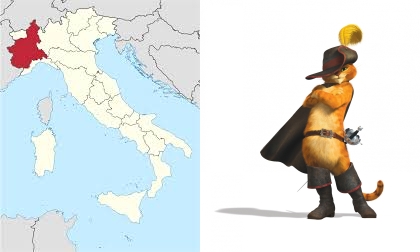
Clipboard mapLocation-wise, Piedmont—Piemonte in Italian—forms the left side of the fold-over on a Puss In Boot-style boot, and wine-wise, everything that Piedmont is known for is the polar opposite of everything else it’s known for.

Contrast Barolo (brooding, blackish ink filled with tannins and savagely dark flavors) with Asti Spumante (the lilting, lyrical libation that encapsulates the sweet sparkle of summer), then put either one against a Barbera d’Alba (a mid-palate powerball with tame tannins and aggressive acidity to bookend lush cherry fruit) and you’ll see what I mean.

In terms of taste, tradition and trajectory these wines strike you as being less from different appellations as from different galaxies.

As a result, it seems like there never a shortage of thing totally new Piemontese to discover: Wines I’ve never heard of made by winemakers I don’t know of using unfamiliar varietals, and often in wine zones (Piedmont has three dozen) that are completely unknown to me as well.

Blow all the brass Burgundian bugles or Bordelaise buccinas you want, but that’s something you simply can’t say about France’s heavy hitters.

So, it was with delight rather than surprise that I tried a couple of newbies at my favorite bodega last Saturday:

Vigne Marina Coppi from the far east of Piemonte in the DOC of Colli Tortonesi.

Colli Tortonesi

Colli Tortonesi

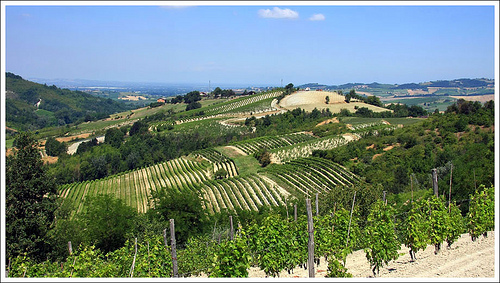
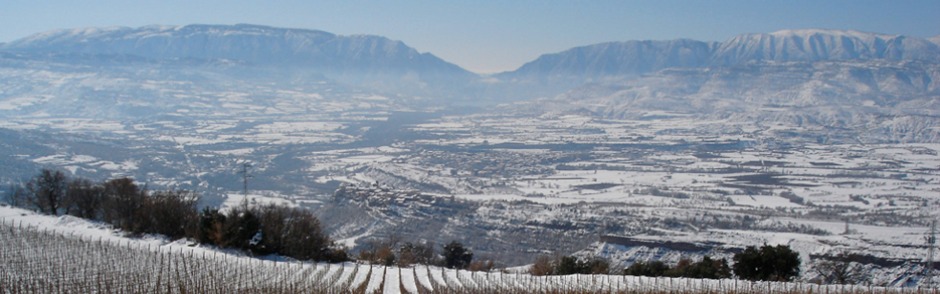
‘Colli’ is an Italian word meaning ‘hills’—file that for future reference—and in this case, it refers to undulated landscape of Alessandria province, extending from the Monferrato to the Oltrepò Pavese.  It’s a region that rarely made quality waves willing to wash ashore in Winetopia, being primarily known for simplistic sparkling wines made  from the Cortese grape and affordable Barbera and Dolcetto which hardly stood out from the Piemontese pack.

But as happens more and more frequently in such hinterland of wine regions, one winemaker decided to raise the bar and see what came out of the barrel.

Baby Champion

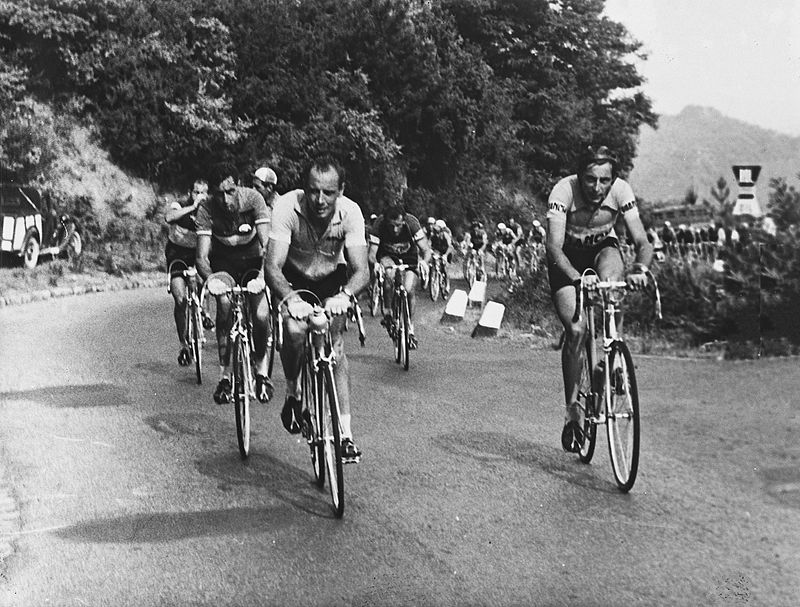
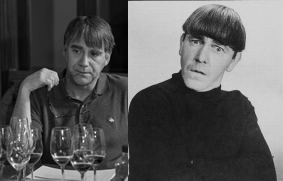
Fausto Coppi is on the right

Fausto Coppi is on the right

To Americans not obsessed with professional cycling, the name Fausto Coppi means little. But to Italians, he remains ‘Il Campionissimo’—the ‘Champion of Champions’, winner of Giro d’Italia five times (1940, 1947, 1949, 1952, 1953) the Tour de France twice (1949 and 1952) and the World Championship in 1953.

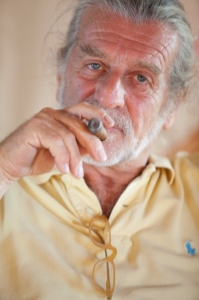
Coppi died young (of malaria), before his grandson Francesco was born, but twelve years ago, his grandson Francesco re-purchased a handful of acres that Fausto had once owned in the village of Castellani:

It became Vigne Marina Coppi, minuscule in size but massive in quality and innovation.

I was fortunate to stumble across a bottle of Vigne Marina Coppi ‘Marine’ ($40) 4,500 miles from Colli Tortonesi; fortunate because these rare regional masterpieces do not often stray far from home.  The wine is built around the local varietal Favorita, a grape that shares the same sort of genetic relationship to Vermentino as Francesco Coppi does to Fausto.

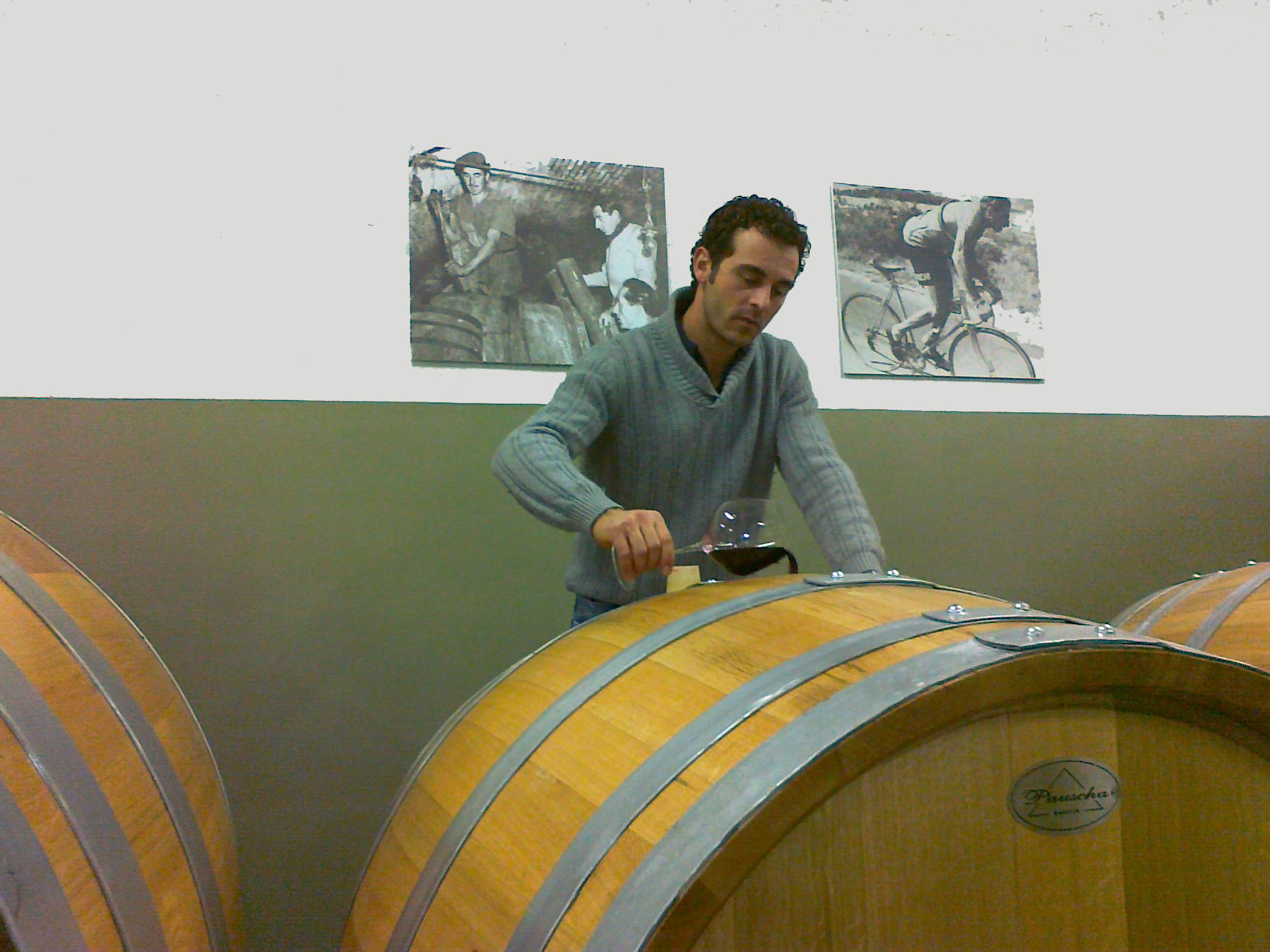
Francesco Coppi

Francesco Coppi

And as Vermentino can be an underrated wine, so may Francesco be considered an underrated champion when he works with Favorita.  He maximize the flavor profile in this somewhat simple grape by allowing an extended hang time, picking at late-harvest sugar levels, then fermenting dry.

The resulting wine is highly concentrated with a bouquet of dried wildflowers, with chamomile and sage as predominant features.  But the wine is called ‘Marine’, and there is, indeed, a briny quality to the aromatics—unusual to encounter in a land-locked appellation.  I’d say it is the power of suggestion and attribute it to the wine’s inherent minerality, but plenty of pros assure me that ‘minerality’ is also the power of suggestion, so I’m sticking with my ocean spray descriptor.  Additionally, the wine shows rich undertones of ripe pear and a peculiar dichotomy: Dry honey.

When reviewing a wine made from an unfamiliar grape, the nature vs. nurture balance is always in question.  Colli is organic and biodynamic, but in this far-flung region, nearly everyone is, certification or otherwise.

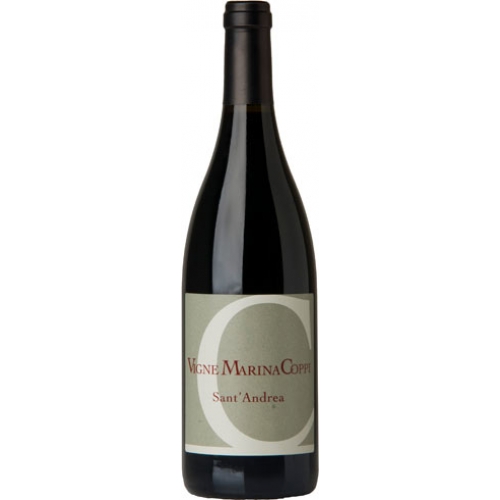
st andreaMore familiar, perhaps, but even scarcer is Vigne Marina Coppi ‘Sant’ Andrea’ ($28), a Barbera-based red which features a ten percent blend of Croatina—another indigenous variety that has some resemblance to the easy-drinking Dolcetto. In Gattinara and Ghemme, Croatina is often used to mellow the tannins of Nebbiolo, but when combined with Barbera in a similarly late-harvest style, Coppi produces a wine with deep grapey richness, fun and fresh but with a great sense of depth.

wheaties14n-1-webFor me, these wines from Coppi’s championship bloodline put Colli Tortonesi on  the map, but alas, with a scant eleven acres to work with, producing 1600 case annually, the availability question is essentially moot.

But at the very least, figure that we now have a ready answer if some dingbat asks what wine to serve with Wheaties.

Posted in ITALY | Tagged , , | Leave a comment

Wine and Chocolate: Life Imitates Really Shitty, Satirical Art

One of the first pieces I wrote for Intoxicology Report—and one which has, for the sheer idiocy of its premise, seen over 100,000 hits—was a piece on pairing wine with chili dogs.

Clipboard chili dogThe idea was that writing about such edgy but pointless wine pairings is a joke, so (for example), I paired a Zef’s Coney (Russell St.) with an $11,000 1945 Pétrus (Pomerol).

Satire, right?  Because no one would actually do it, correct?

And yet, whenever I look directly down satire’s throat, somewhere around the sigmoid colon, just above the anal canal, I see people who take themselves too seriously.

Enter the Master Sommelier…

Tim Howard and Moe Gaiser

Tim Howard and Moe Gaiser

Not all Master Sommeliers, of course, nor the associated Mistresses, also called Masters—or in the case of the deep South, Massah Sommeliers.  But one in particular: Tim Gaiser, MS, who wrote another in a series of ludicrously available articles about pairing wine and chocolate.

Tim takes it to the sort of extreme I did with the coney dog piece, only with a perfectly straight face.

His preppy postulation is that cheap chocolate can enjoy the magical synergy of point/counterpoint pairings when consumed with expensive Port. The fact that this has never before been explored may be a thorn in the paw of every alcoholic parent who lurked in the shrubbery while their Halloween-costumed kid rang the doorbell in the neighborhoods of rich people, but that’s neither here nor there.

Halloween is a scary time of year, so let’s take a closer look at some of Tim Gaiser’s self-generated scariness:

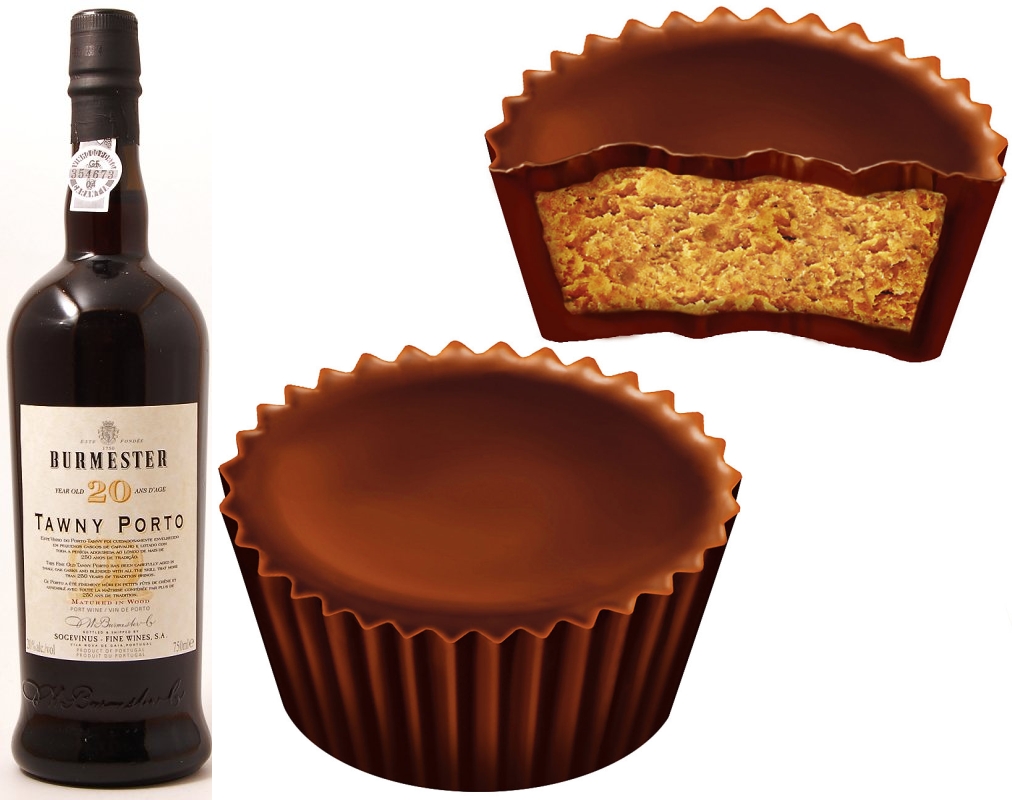
Clipboard resseHe pairs a Reese’s Peanut Butter Cup (41¢) with a Burmester 20 Year Old Tawny Port ($50), pointing out—in a stab at jocularity borrowed from a ‘80s television commercial—that ‘combining peanut butter and chocolate is one of mankind’s greatest achievements’, failing to note that combining corn syrup with a consistently beautiful Tawny made by a master blender is one of mankind’s worst.

*

Clipboard hersheyGaiser’s price gap is absorbed somewhat when Hershey’s Milk Chocolate Bar ($1.66) is paired with Barros 10-Year-Old ($20), which he refers to—with a touch of sommelier snobosity—as a ‘young Port’, knowing full well that to Mr. and Mrs. Mid-American Candy Bar Lover, a ten-year-old wine is as close to being young as, to a chocolatier, a Hershey’s bar is to being chocolate.

*

Clipboard kit katIt’s soon back to the price disparity, though, when a Kit Kat bar (88¢) finds itself linked to another twenty-year-old soulmate, Kopke 20-Year-Old White Port ($67).

But, although he likens the overly-sweet Kit Kat to the overly-sweet Hershey bar, he has switched Porto pigmentation, and now goes with a white; one described by Port pro Joe Manekin as ‘an elixir with a deep golden color; one whiff of the lovely, complex aromatics shows incredibly deep, nuanced, flavors and a wonderful texture that  will convince you that this awesome Port is a real eye opener.”

Of the Kit Kat bar, Cybele May of candyblog.com writes: “My usual way of eating a Kit Kat is to eat off both ends of a finger, then pry off the top layer of  chocolate with my teeth, then continue eating from the top down.”

You are clearly dealing with two different approaches to an esculent experience.

Tim Gaiser then moves on to some pricier bars like a Valrhona ‘Le Noir Extra Amer’, which Trader Joe’s sells for $2.69 per 3.5 ounce bar, but by then, the whole inane concept had left me wagging my melon like a Michael J. Fox Bobblehead.

Sogevinus compra Barros e KopkeAlthough the column was obviously sponsored by Grupo Sogevinus, the holding company that owns all of these Port labels, I am assuming that in the interests of journalistic integrity, Master Shill Sommelier Gaiser actually undertook a series of tasting experiments with the category winners before passing along his educated advice to us, an eager public with plastic jack-o-lanterns filled with Halloween candy and no idea which single-vintage Colheita to open next.

I, who have no journalistic integrity, was not required to actually open a thousand dollar bottle of Mouton Rothschild before determining that it’s the only rational wine to drink with a Lou’s Super Chili Dog with extra onions.

The Point, Of Course, Is…

Auguste Escoffier

Auguste Escoffier

Neither coney dogs nor Snickers bars need to be paired with anything, including—and maybe especially—wine. Guidelines suggesting otherwise, undertaken by the Gaisers of the world (and with an air of academic sincerity) is a syndrome of bloggery itself, where people are desperate to think of new ways to say absolutely nothing.

I don’t have the slightest doubt that some righteous twink somewhere actually did write a column about chili dogs and wine, and thought it was pithy and hip and as insightful as Gaiser probably figures his dopey pabulum about Port and PayDay bars is.

Old Mother Gaiser

Old Mother Gaiser

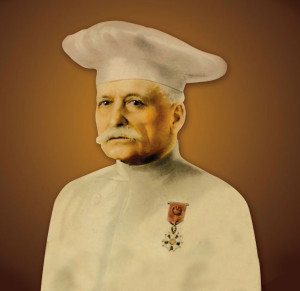
Wine and food pairings are silly enough on their own, and even so, everything worthwhile on the subject was covered by Auguste Escoffier in Le Guide Culinaire, 1903.

When contemporary writers find themselves reduced to matching wine with foods nobody would consider drinking wine with in the first place, you get the impression that not only is the idea cupboard bare, but that Old Mother Hubbard has been carted off to the Sunnydale Home for the Gustatorily Insane.

https://intoxreport.com/2011/09/01/wine-with-chili-dogs-a-match-made-in-purgatory-andor-detroit/

Posted in GENERAL | Tagged , , , | Leave a comment

This Is My 500th Column…

This is my five hundredth Intoxicology Report, representing nearly a million written words about wine, spirits, beer and people I don’t like.

Yessiree bob, I’m so full of me today it’s seeping out around the gaskets.

Are you as impressed with me as I am with me?  Probably not, but at least you can understand why I am so overwhelmed with positive Kasselian vibes and general Chris-osity that I cannot so much as conceive of a snarky wine column and instead will publish a Paula Deen recipe with some cute .gifs of pigs.

KRISPEY KREME DONUT PUDDING

giphyIngredients

1 can sweetened condensed milk

2 cans fruit cocktail

2 eggs, beaten

1 (9-ounce) box ground black people

24 Krispy Kreme donuts, cut into cubes

Directions

giphy (2)Preheat oven to 350 degrees F.

In a large mixing bowl, whisk together all ingredients. Add the donut cubes and toss until they have absorbed as much of the liquid as possible. Pour the mixture into a casserole dish and bake for 1 hour.

giphy (3)

Posted in GENERAL | Tagged | 2 Comments

Is Danny Meyer a Twat? …And Other Rhetorical Questions

Good news, Foodies—there’s a new buzz word you can latch on to!

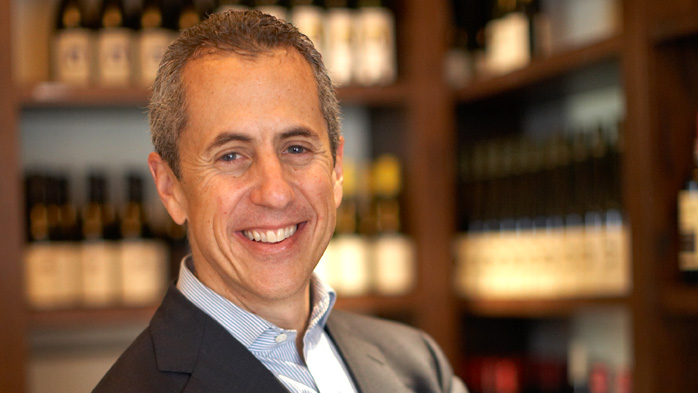
This one describes all fourteen of Danny Meyer’s New York-based restaurants, among them Gramercy Tavern, Blue Smoke, The Modern and Union Square Café.

Henceforth, they are twattorias.

This is the column I swore I wouldn’t write, because—truth be told—I couldn’t care less what Meyer and his self-described ‘beloved and celebrated’ embolus of ‘it’ dining rooms in New York are up to.

Entrance to the Holland Tunnel

Entrance to the Holland Tunnel

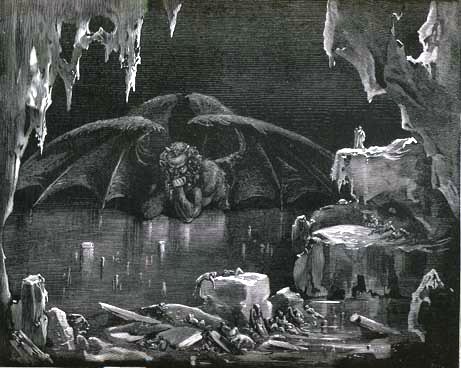
To me, they are irrelevantly and desperately trendy, and the ones I have visited have struck me as ‘worth it’ only in so far as anything conspicuous in Manhattan is worth it, since to get there you have to first cross the Hudson, which (not unlike the River Styx) has a sign above it reading, ‘Lasciate ogne spesa razionale, voi ch’intrate’—‘Abandon rational spending, ye who enter.’

Once that is entrenched in one’s psyche, spending $14 for fourteen cents worth of liquor makes perfect sense, because you are consuming it within the confines of a hipper-than-thou comfort zone, where front-of-the-house staffers are (in Danny Meyer’s words): ‘Diplomats in a much larger body politic; emissaries representing the face of an entire group of individuals.’

rodenbach-2011-vintage-oak-aged-ale-171x300I think I just upchucked a gratuity’s worth of $42 Rodenbach Sour Red Vintage Ale, but in the end, the mealy, ingratiating smarm is not my issue; that goes with the hospitality calling card.  It’s the business mantra we expect from all restrauteurs while understanding instinctively that is as workable in real-time as is law enforcement’s vow to ‘protect and serve’.

Why?  Because both public servers and public servants are drawn from the ranks of genuine human beings who occasionally bring personal baggage (and hangovers) to the workplace and perform their functions less as emissaries to a body politic and more as pissed-off wankers having a bad day.

abcSo be it; in the case of a waiter, the result may be a surly attitude and laggardly service; in the case of a cop, it may be tasering annoying folks to death who are otherwise innocent.

To deal with the rogue cops, We The People have invented 18 U.S.C. §§ 241, 242 which imprisons police officers who violate civil rights, and for the rogue waiters, we have invented tipping.

The value in both we hold to be self-evident.

Tipless Tapas

Oh Danny boy

Oh, Danny boy

But Danny Meyer has recently made waves—which were more like tsunamis—by boldly announcing that he is ‘eliminating tipping’ at all of his Union Square Hospitality Group eateries, for a whole bunch of reasons (which I’ll get to), but all of which can be distilled—like hyper-voguish Vago Elote Mezcal—into a single defining sentiment:

Meyer thinks his kitchen staff is worth more than he’s willing to pay them and he thinks his wait staff is worth less than you and me are willing to pay them.

Now, Danny Meyer has—by necessity—been forced to couch this notion in all sorts of altruistic wage-equality and vanguard-of-fairness language, and this has been lapped up by such advertising-dependent sycophants as The New York Post who is on record with a hyperbolic back-scratch article entitled ‘Why A No-Tip Policy Will Save American Dining.’

ushg-logo-footerFrankly, I wasn’t aware that American dining was up against extinction, but that’s fuel for a different conflagration. What I am aware of is that according to Business Insider, Danny Meyer’s shares in USHG are worth around $386 million, so if he chooses to pay line cooks a mere 25¢ more per hour than they can make at McDonald’s (and this is Manhattan, mind you) it’s not because the wolf’s at the door of profitability; it’s because Danny Meyer is a cheap fuck.

Again, that’s his business, not mine—if I wanted a job at USHG, I’d drop off an application. ¡Viva Empresa Libre!  Cheap, I get.  Grandiose and patronizing bullshit, not so much.

Let’s look at some of Meyer’s statements regarding the no-tip rule and try to reconcile them with reality:

“The gap between what the kitchen and dining room workers make has grown by leaps and bounds. In my 30 years in the business kitchen income has gone up no more than 25 percent. Meanwhile, dining room pay has gone up 200 percent.”

chart_minimum-wageWell, not by my math. 30 years ago, federal minimum wage was $3.35 an hour while today it is $7.50, but in New York, the minimum for fast food workers will soon be set at $15.  In 1985, server’s hourly wage was $2.13 per hour; today, it’s $5, soon to rise to $7.50.  Make Meyer’s figures work if you can—unless, of course, he is including in the word ‘pay’ both salary (his responsibility) and tip (my responsibility).

In which case, he may have a point.

But since a tip is based on a percentage of a total bill, if waiter tips have gone up 200%, so have Meyer’s menu prices, which is the money I hand over with the expectation that he is paying vendors and landlords and cooks fairly to begin with.

“We believe hospitality is a team sport, and that it takes an entire team to provide you with the experiences you have come to expect from us. Unfortunately, our cooks, reservationists and dishwashers aren’t able to share in our guests’ generosity, even though their contributions are just as vital to the outcome of your experience at one of our restaurants.”

Erin Moran squared

Erin Moran squared

Weird.  So, his solution is not only to remove the incentive for guests to be generous, but to actively discourage future displays of generosity. Erin Moran, USHG’s chief cultural officer (and not the Happy Days chick) explains: “The restaurants won’t prevent the leaving of cash tips, but we will do whatever we can to strongly dissuade them…”

Like what, Erin?  Scolding reminders throughout the meal?  Big Brother signs above the bar? Perhaps you could revive those cold, isolated, shame-inducing ‘Smoking Sections’ you used to squirrel away by the restrooms.  ‘Tipping or non-tipping section tonight, folks?’

“The American system of tipping is awkward for all parties involved.”

Huh?  Your grandmother catching you masturbating is awkward, Danny.  Mistakenly hitting ‘copy all’ on a private text is awkward.  Asking after the health of somebody you didn’t realize has died is awkward.

The Modern

The Modern

Tipping, on the other hand, is a nice little ritual that has developed between myself and my server through which I can offer personalized, unspoken feedback as to the quality of our interaction.

Why that should be more awkward than tracking down the floor manager and squealing on a sucky waiter is unclear to me. Unless, under the new rules, nobody is allowed to complain if they pay a significantly higher price for a service expectation that fails to materialize.

Ah, because pay extra they will:

The engine that drives the new Meyer concept is pricing, which will rise accordingly. In an interview with Eater’s Ryan Sutton, Meyer outlined his plan to launch his first tipless joint at The Modern, where each dish will become between 30% and 35% more expensive, to ‘right’—in Danny’s opinion—‘the labor of wrong’.

So, if I am understanding this correctly, I will pay 30% to 35% more to dine at an establishment that offers me a chance to avoid a 15% – 20% tip, which was discretionary anyway.

To you and me, Mr. and Mrs. Logical Diner-Outer, there is something distinctly un-right in this ‘righting of the labor of wrong’, making it seem even wronger.

abcBut to Danny Meyer—who can otherwise expect to lose up to $1.5 million in the tax credit available to restaurants who do not pay servers a straight salary—it makes business sense for us to absorb the financial fallout instead of him.

What it means is that at a Meyer restaurant, I am suddenly forced to subsidize what may be a mediocre service experience with no opportunity for recourse other than to whine like a little bitch to some entry-level maître d’ who I can’t even tip heavily for firing the incompetent schmuck who ruined my evening.

How exactly does any of this improve my dining experience? Especially if it costs me more than it would have had Meyer left well enough alone?

I know, I know—in a perfect world, all those shitty servers would be hunted down like lawn voles and liquidated. In the real world, however, top servers at top restaurants see boatloads of green—the very thing that makes Danny see red.  A hundred dollars for a four hour day shift is a minimal expectation for a decent waiter, and that comes out to $25 an hour, not the $10 or even $12 that Meyers will now pay them.
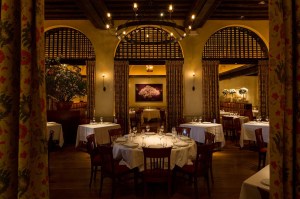
Gramercy Tavern

Gramercy Tavern

I have no doubt that USHG can find plenty of reasonably qualified individuals to sling plates of overpriced food at customers, but the true superstars of the service industry—the ones who can multitask and turn-and-burn and keep everybody happy—are rarities. Why in the world would they take such a drastic pay cut based on some fiction about righting a labor of wrong?  You’d sooner get white longshoreman to agree to accept half the salary of black longshoreman to make up for slavery.

And especially since most other top-shelf restaurants in Manhattan will (at least for now) adhere to the old system, wherein they can earn—via tips—a six figure salary.

And for the sake of argument, suppose a few of the truly stellar Meyer servers decide to stick around the ol’ twattoria? Figure that as the front-the-house manager, you’d want to hang on to them by any means necessary. Therefore, considering that all shifts will pay the same, which ones do you assign them in order to keep them happy?  Laid-back Monday afternoons with a handful of guests, or beyond-control, painfully difficult, stress-mad prime-time Saturday evenings?

Here’s a hint: You’d be forced to give them the shifts where you least needed their particular, hard-won skill sets, because I promise you, if they can get them, they will want their Friday and Saturday nights free.

As I said at the git, I did not initially intend to cover this topic because I discommode enough people in the wine biz without making extra enemies in the restaurant world.

But something lingered with me  like a latent case of botulism, and I finally figured out what it was, and thus, I felt driven to comment.

On October 14, the heralded New York Times ran the following headline (misspelling the subject’s name, BTW):

Tipping to Be Eliminated at Danny Meyers’s NYC Restaurants

And that’s what stuck in my craw like a pinbone from a clay-pot-roasted brook trout: The bald-faced arrogance of Danny Meyer announcing that he is eliminating something that was never mandatory, never demanded and never within his control to begin with.  Eliminating?  Tipping is not the bailiwick of a restaurant’s proprietor, its executive chef, its general manager or the guy who comes in early Saturday mornings to wash the windows—it is a private transaction between l’garçon et moi. Meyer’s insistence on interjecting his smarmy presence at my table is a presumption as unwelcome as if he sat down while the waiter was describing the specials and drank from my $14 cocktail.

Take it to the bank and deposit it along with your 400th million dollar, Danny:  If I want to slip the waiter a twenty for putting up with your condescending twattery, I would consider it unforgivably inhospitable if you or Joanie fucking Cunningham tried to get in my way.

Posted in GENERAL | Tagged , , | 4 Comments

Beam Me Aboard, Scotto

Paul Scotto

Paul Scotto

If the most exciting thing that’s happened to you in a motel room this year has been tasting cider with Paul Scotto, welcome to my world.

Nevertheless, I have raved about the family cidery— ‘Cider Brothers’, named for Paul and Michael Scotto—since I first discovered them last year, thanks to an aggressively well-orchestrated promo campaign.  Take my praise for what you will, but I assure you that, to the bone, I’m a Michigan boy convinced that we grow the best cider apples this side of Normandy, and yet, thanks to these cidery siblings, I have been forced to revise, if not dismiss, such provincialism:

The Scottos are from Lodi, California—a land I associate with a John Fogerty stuck more than William Tell sticking an apple on his kid’s head.

Still, Cider Brother’s William Tell Cider is sensational; loaded with delicacy and minerality within a refreshing, pure apple package, light on tannins, heavy on purity and depth.

Turn out that the Scotto biography is as complex as the Cider Scion’s cider—the family has been making wine in Lodi since the Sixties, and before that, selling it in crock jugs from a horse drawn pushcart in Brooklyn.

Anthony Dominic Scotto

Anthony Dominic Scotto

Anthony Dominic (January 13, 1927 – May 1, 2013), the patriarch of the current clan, passed away recently, but not before instilling in the fifth generation of vintners—sons Anthony, Dominic, and Gregory and daughters, Felicia Barbalinardo and Monica Chappell—the essentials of tradition.  In fact, the Scottos still produce Villa Armando, the brand that their elders once sold door to door in New York; it’s a ‘rustic red’, which, as you can imagine, means that it comes in gallon jugs that cost less than ten bucks and is not necessarily the bottle you’d bring to the dinner party unless you were dining with the contadinos in the barn.

Not that there is anything wrong with contadinos or their barns, but I probably wouldn’t have written an exemplary column about Scotto wine if that’s all they sent me.

Current crop of Scottos

Current crop of Scottos

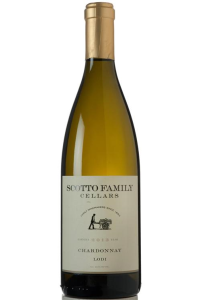
As it happens, they sent me a box of bottles of some really intriguing wines from  their Scotto Family Vineyards brand—three luscious, dark, full-bore red wines and their Lodi Chardonnay.

The quality at the price ratio alone make them noteworthy, but beyond that, these wines are exuberant, and like the family itself, powerful without being pretentious.  They are are extracted and concentrated, but not in the least out of balance, and probably the best value portfolio that I’ve encountered in ages.  A lot of vintners take fruit of this quality and add too many layers of oak—raising the price while making them inaccessible until that fruit, along with the wood tannins, have faded.

I’m aboard, Captain Cork.  And yeah, give me a cap and a cart and a t-shirt that says ‘I am not  Jehovah’s Witness and I Don’t Have a Warrant’ and absolutely I’ll volunteer to rekindle family tradition and hawk Scotto wines door to door.

Tasting Notes:

chardScotto Family Cellars, Chardonnay, Lodi, 213; $13:  My least favorite of the bunch, still wonderfully serviceable at the price.  Peach, honey and sweet lemon dominate the palate; it’s fairly simple and quick to fade away.

Scotto Family Cellars, Cabernet Sauvignon, Lodi, 2012; $14:  The nose is dark red cherry juice and toasty vanilla-oak; a lingering forest-like wildness carries through the palate and offers spice behind an essentially silken body.  The wine is long on the palate and the acids and tannins are well integrated; there’s a certain self-indulgent joy to be found in enjoying rich, fruit-centered wines that are neither heavy nor cloying nor masked with layers of oak.

Adding to the fascinating array of flavors here are the blending grapes: 18% Barbera and 4% Petite Verdot

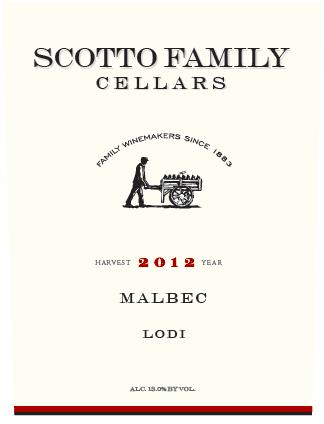
malbecScotto Family Cellars, Malbec, Lodi, 2012; $15:   Lodi seems to condense as much mulberry ink from Malbec as the most sun-ripe Mendoza version; it settles in the grape as a nearly impenetrably dark wine with smoke and baking chocolate on the nose and toasty, show-wine depth.  The aromatics are restrained and should develop with age—they’ve all dissolved into the vast mid-palate and the ripe  tannins are still massive.  A wine to keep for a couple years before opening.

Scotto Family Cellars, Old Vine Zinfandel, Lodi, 2011; $14:  A gorgeous slice of mixed-berry pie with dusty chocolate behind the fruit.  The bouquet is both creamy and sharp, and multitude of aromatics carry through to the palate, with a blend of blackberry, mocha and sweet tobacco tying the package together with a slightly bitter, but by no means unpleasant tang.

Posted in CALIFORNIA | Tagged , , , | 1 Comment

Stugots in Montalcino: Podere Le Ripi

Tuscans have testicles, no doubt about it.

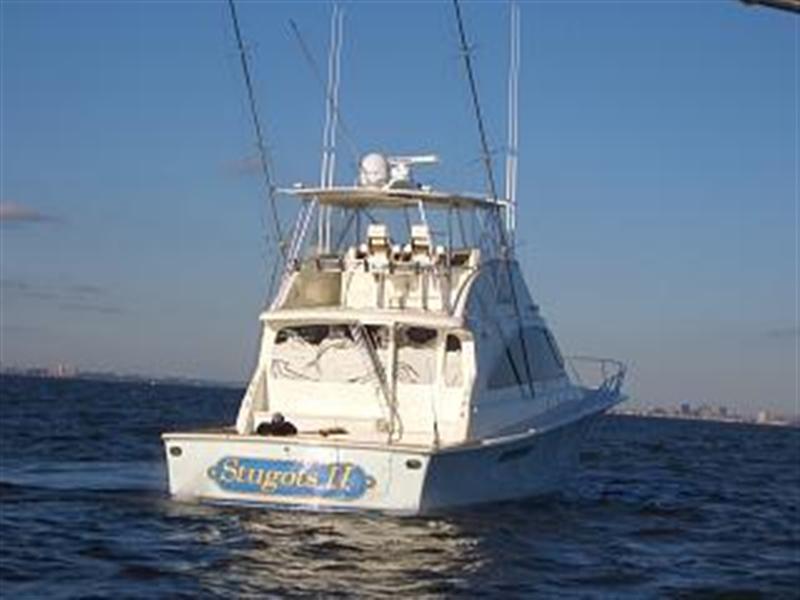
stugotsThink back on the early days of the so-called ‘Super Tuscans’ when a handful of vintners decided they could make better wines using grape varieties that the Denominazione di Origine Controllata did not allow; thus, they went ahead and added Cabernet and Merlot to their Sangiovese and shrugged off the government’s initial reluctance to designate their wines anything but the lowly Vino da Tavola.

In fact, the Tuscans not only accepted the insult, they made the me ne frego chin flick and sold their wine for exorbitant prices anyway.

Picture 013

Picture 013

On a somewhat smaller, but still hormone-sopped scale, last Friday I met with Marco Stevanoni, Export Manager for Podere Le Ripi—Montalcino’s coffee-financed, passion-fueled, iconoclast-run winery. The iconoclast is Francesco Illy, who, well-armed with the family fortune (Illycaffè, specializing in the production of espresso), bought 135 acres of sheep-grazing land in rural Tuscany where, in time, he figured he should produce some wine.

Ironically, for the sort of patient beauty that washes over this country—a languid slice of timelessness—Illy is a man who lives very much in the the now.  When he was told by Burgundians that a vine required a minimum of 35 years to produce truly magnificent wines (based primarily on root depth) Illy—already in his mid-fifties—didn’t want to wait.  So he launched a series of experiments with vine density, decreasing the space between his vines until he had planted the sardine can of viticulture, the most cramped vineyard in the world with more than 25,000 vines per acre.

Francesco Illy

Francesco Illy

To level set, in Burgundy—where the planting density is considered high—the average is 3600 vines per acre.  Most of Europe is content with about 2,500.

Illy’s goal in this outrageous experiment, which even his agriculture consultant thought was whackadoodle, was to force the vine roots to develop downward at a faster pace since in the over-crowded neighborhood, that’s the only place they’ll have to stretch their legs taproots.

And, in fact, a scant three years later, when he took a tape measure to the root system, Illy found that not only were they far deeper than they’d have been under less stressful conditions, they produced useable fruit in the second year; an almost unheard of bonus.

Every Silver Lining Has a Cloud

Of course, my question to Marco Stevanoni, Podere Le Ripi’s Export Manager, was: “If this idea is so revolutionary and the result so indisputable, why isn’t every enologo in Italy jumping on the high-density bandwagon?”

Balls-to-the-walls density

Balls-to-the-walls density

“Because,” Stevanoni replied, “Illy only gets 500 bottles per acre.  And he drinks a hundred of them himself.”

Leaving (by my math) four hundred of Bonsai Sangiovese for the rest of the contiguous solar system.

To level set once more, a single healthy vine should be able to produce, at a minimum, two bottles of wine—again, using my math, 25,000 vines, properly spaced, should result in 50,000 bottles; a hundred times more than he wound up with.

That’s some cloud; that’s some brace o’ bollocks.

Although, believe it or not, the nads displayed by this super Tuscan winemaker and his high-density trickle of Sangiovese, which goes for $162 a fifth and should probably sell for a lot more, is not the stugots that the title of this piece refers to:

Rather, those belong to Marco Stevanoni, who, after spending twenty minutes describing this avant-garde technique and raving about the unfathomably scrumptious results and generally tooting his Tuscan taskmaster’s trumpet, he informed me that there wasn’t enough to go around and I wouldn’t be getting a taste, but I should write about it anyway.

Now, that took stugots.

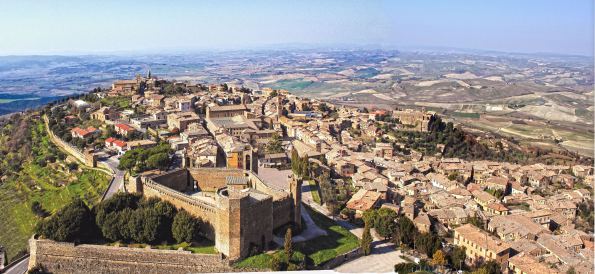
Montalcino

Montalcino

But write about it I shall, and no hard feelings—there was a quintet of lesser wines, mere mortals from other vineyards  with sensible vine spacing and roots systems not terrified into performing.

And you know what?  They weren’t bad at all—although, ironically, I thought the entry level was the best, and noteably so.  I probably wouldn’t have appreciated the golden child anyway.

And I have the balls to say so.

Tasting Notes:

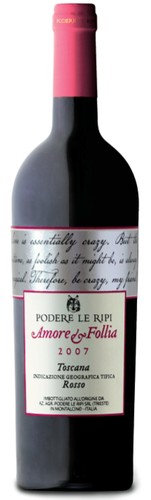
amore e follia-SPodere Le Ripi, ‘Amore e Follia’, 2007; $24:  Deliciously luscious and sweet, with all sorts of desserty flavors—dark chocolate and licorice and blackberry jam.  Huge fruit in the nose and a bright, albeit brief finish.  It’s a blend of Sangiovese, Syrah and Merlot, and the name, perhaps fittingly, means ‘Love and Insanity’.

Podere Le Ripi, ‘Amore e Magia’, 2009; $28:  Nice tannins, beautifully up front acids; a bit earthier and meatier than the predecessor, but 2009 was a vintage that drew out fuller flavors and tighter tannins in Tuscany and is probably just beginning to drink well.  ‘Love and Magic’ touches on the herbal side of Sangiovese that is a lovely foil for the fruit.

lupi sirenePodere Le Ripi, Brunello di Montalcino ‘Lupi e Sirene’, 2007; $58:  Let confusion over ‘Brunello’ be laid to rest: It’s a local term for Sangiovese Grosso, one of the ninety or so Sangiovese clones, and to qualify for the designation, the DOCG must be made with 100% Brunello grapes. It is, in fact, the only Tuscan wine that is not a blend. This one is a bit restrained on the nose, but intense in the mouth, with notes of cigar tobacco, bitter chocolate, espresso, dried ginger and black currant jelly.

Podere Le Ripi, Brunello di Montalcino Lupi e Sirene Riserva, 2008; $85:  Still in a futile search of that explosive aroma that the younger wines are so ready to yield; but to qualify as ‘Riserva’, the wine is required to age in oak (often Slavonian) for a minimum of two years and are released a year later than standard Brunello di Montalcinos, six years after harvest, and this may sap some of the savory.  What’s left is the ponderous complexity that connoisseurs of this style are after:  A chiseled, austere wine where the focus is on burnished autumnal flavors—smoke, forest undergrowth, cinnamon, toasty vanilla, menthol and just a hint of black cherry.

Stugots

Stugots

Podere Le Ripi, Brunello di Montalcino Lupi e Sirene Riserva, 2004:   Same wine, more mature; the extra hang-around time pretty much removes youthful vigor from the picture.  The wine is devoid of anything fresh and fun, and has settled into the fuddy-duddy great uncle and the family reunion who sits in the corner and smokes a cigar.  Of course, the uncle has many stories to tell, some more interesting than others. If you care to listen, this uncle is primarily about tobacco—the scents that waft from the glass make you think you are standing in a humidor.  There are acids aplenty despite the age, and the oak tannins have settled into an inky accommodation; there is no fruit whatsoever remaining in the flavors, however, and those presented are all sort of clubby, leathery and rather masculine—which may be an ideal close to a tale that began with a tribute to testosterone.

Posted in ITALY | Tagged , , | 2 Comments

Love Among the Rootstock: Castell d’Encus and the Art of the Backstory

I asked my buddy Elie for winemaker with a decent backstory, and he gave me Castell D’Encus and Mireia Taribó, who turns out to have a back-magnum opus, which is better than a backstory, better than a backrub, and lasts longer than either one.

Mireia Taribó

Mireia Taribó

Imagine a winemaker from Barcelona falling in love with the only Native American winemaker in the United States (who also happens to be a woman), flying to California to marry her, then getting stuck in a Twilight Zone of visa FUBARs and missing the next couple vintages in Spain.

That would be the introductory paragraph—the front-story grows from there.

I wedged myself in next to Mireia at a dinner she hosted at the hoary, venerable, stuffy old Birmingham Country Club, the precise kind of joint that Groucho wouldn’t join if they’d have him for a member.

Those of us from Detroit often manage to bounce between urban robberies to suburban snobberies with such dizzying frequency that it’s a wonder we don’t all have pneumonia from the climate change.

Anyway, Mireia was in town—when she should have been at Castell d’Encus schlepping grape crates—because of some ongoing difficulty with emigration, which I’d share in detail if I understood it.  Since she can’t be back in Catalan making wine, she is now the  Brand Ambassador for the estate owned by the remarkably eccentric Pyrenean enologist Raül Bobet.

Some words on Bobet before returning to the imposing, decaying majesty of the BCC:

Lagars

Lagars

Formerly the wine boss at Torres, Raül Bobet had a bucket list filled with passions, philosophies and personal perfectionism that he’d been exploring in a number of outside projects.  This includes Ferrer Bobet in the slat-filled soils of the Priorat, and a high-altitude experiment on a mountaintop above Tremp in the central Pyrenees.  There, on the grounds of an Eleventh Century monastery, he discovered outdoor, fully-exposed rock fermenters, essentially chambers gouged from living stone.  They are called ‘lagars’ and are cut primarily from silica, which is key because they do not change the pH of the grape must. Turns out that the fact that Bobet could ferment a portion of the harvest outside in rock only added to his obsession with ecology, his commitment for the natural and his penchant for the peculiar.

It figured prominently in his decision, in 2002, to purchase the estate.

There's cold in them that hills...

There’s cold in them that hills…

Castell D’Encus is in God’s country—literally.  His ninety-five acres of vineyards, planted in 2004,  are among the highest in Spain, at elevations averaging more than three thousand feet.  Bobet has a fascination with cool climate grapes, especially Riesling, which most growers in Spain wouldn’t even consider let alone focus upon.  Bobet’s respect for indigenous grapes is clear, but hardly overstated: He grows Albariño and Garnacha, but his main focus is on Riesling and Pinot Noir, with acres of Bordeaux grapes, white and red, and, surprisingly, Syrah.

Why I express surprise at the Syrah will be revealed directly, but meanwhile, the soils of Castell D’Encus are calcareous and clay-loam with low organic content, and beneath a continental climate, the vineyards enjoy extreme temperatures between day and night, which would generally result in shivery acids and ripe fruit.  Ideal Riesling conditions, in other words.

Raul Bobet and his fermenters

Raul Bobet and his fermenters

With the nose of chemist (Bobet is a UC Davis grad with a doctorate in enology) and the tongue of a poet, he claims, “I consider the triangle formed by the climate, soil and grape variety as a matrix that includes many other parameters we desire to discover; it has been the engine that has brought us where we are, in a sort of challenge, to fit the different variables that can go into the style of freshness that we seek in our wines , but with complexity and a stamp of personality.”—which is pretty much what every winemaker says, only in fewer words.

It means ‘We work with what we’ve got, but we make what we’ve got into what it is.’

Mireia Taribó came into the picture at Castell D’Encus in 2008, fresh from Escola Mercè Rossell i Domènech where she’d earned her Master’s degree in viticulture and enology.   She took full responsibility for at least two vintages as Dr. Bobet had his logs in many fires, including work for a biotech company; she’d completed apprenticeships at J. Lohr in Paso Robles and Raïmat in Lleida, but she had not worked at ground level (pun intended) with vines so young.  These, she learned, require the dedication of a wet nurse:

“When they are young, vines grow like children—they need constant attention.”

As a result, she found that 90% of her time as a winemaker was spent in the vineyards, employing the various Bobet-learned techniques for plant density, pruning, foliage management and the thousand incidentals that combine with terroir to accentuate the positives in  Castell D’Encus’ wine.

kitaHer life changed trajectory when she met Tara Gomez at J. Lohr, although she didn’t know it yet.  Gomez is now at Kitá, owned by the Santa Ynez Band of Chumash Indians—the tribe to which she belongs.  By all accounts, beside being the only Native American winemaker of any gender, she’s a phenomenal one:  In January of this year, she took home two Double Gold medals at the 2015 San Francisco Chronicle Wine Competition: 2012 Pinot Noir, Hilliard Bruce Vineyard and 2012 Cabernet Sauvignon, Camp 4 Vineyard.  Not only did Kitá not have a national profile before this, 2012 was the first vintage the tribe even produced wine.  I can imagine the synergy these two might tap into should they decide to work on a wine project together: All’s fair in love and enology.

Thank God I’m a Country Club

Meanwhile, back in Birmingham, amid the undulating greenness of the greens and the blustery blueness of the blood, Mireia Taribó poured a number of wines, which I will pepper with accompanying notes.

taleia2013 Taleia ($21): This is a traditional Bordelaise blend of Sauvignon Blanc and Sémillon, but would not be mistaken for one.  The wine is fat, but sharp on the palate, imbued with cold-climate acids that probably could use another year to settle in.  But that’s fine: The wine has sufficient structure to gain complexity over that span.  Light stone fruit notes interplay with leesy richness and a mineral backbone.

2012 Ekam ($26) : Groundbreaking wine, no doubt.  It is clearly Riesling, with Mosel-like clarity and an undertow of citrus, lemon especially, and nascent notes that are often described as ‘petrol’, but the wine does not show a lot of depth of complexity yet, which I would attribute to the relative youth of the vines.  Riesling is one of those grapes that improves immeasurably as the plant itself matures.

acusp2012 Acusp ($38):  A cool climate and well-drained soil are table stakes for good Pinot Noir, after which, proper canopy management and cellar technique separate the good from the great.  Acusp is a beautiful Pinot, very fragrant with a nose of wild raspberry and red cherry, moderately rich and quite tart.  There is barrel spice and vanilla in the background, but the crisp red fruit notes dominate.  A wine I’d like to try again in a decade, then try one from vines that have had that additional decade to evolve.

2012 Quest ($32) :   Cool climate Cabernet resonates a bit differently; this one showcases some of a red fruits that a typical Bordeaux blend might display as blacker and sweeter.  This wine displays pomegranate and cherry on the nose, backed by a palate filled with white pepper and perhaps some cola, tea leaves and menthol.  It is a vibrant and expressive wine with a fine tannic structure.

2011 Thalarn ($33):  This was the wonder wine in my book—a book that suggests that Syrah will not truly speak its mind at this elevation.  Even the relatively cool, mistral-influenced vineyards of Côte-Rôtie sit, for the most part, at under a thousand feet—these vines are three times that.  And the wine has a distinct amount of meat on the bones, with near soulful density to the fruit; the wine shows dark cassis, bright acid, rich and silken tannins.

weddingThalarn would have stolen the show if it wasn’t for witty, charming, self-confident and fascinating Mireia Taribó, who, in the dusty, stuffy confines of the Birmingham Country Club finds herself equidistant from her two loves, Catalunya and Tara Gomez, but manages to pull off the

I’m probably a bit of a prick for secretly hoping that the visa snafu draggles out for a while longer, because I’d love to see her stick around long enough to play with some Santa Ynez fruit.

Posted in Calatayud, SPAIN | Tagged , , , , , | 1 Comment

Swashbuckle Up: It’s Gonna Be a Bourdy Ride

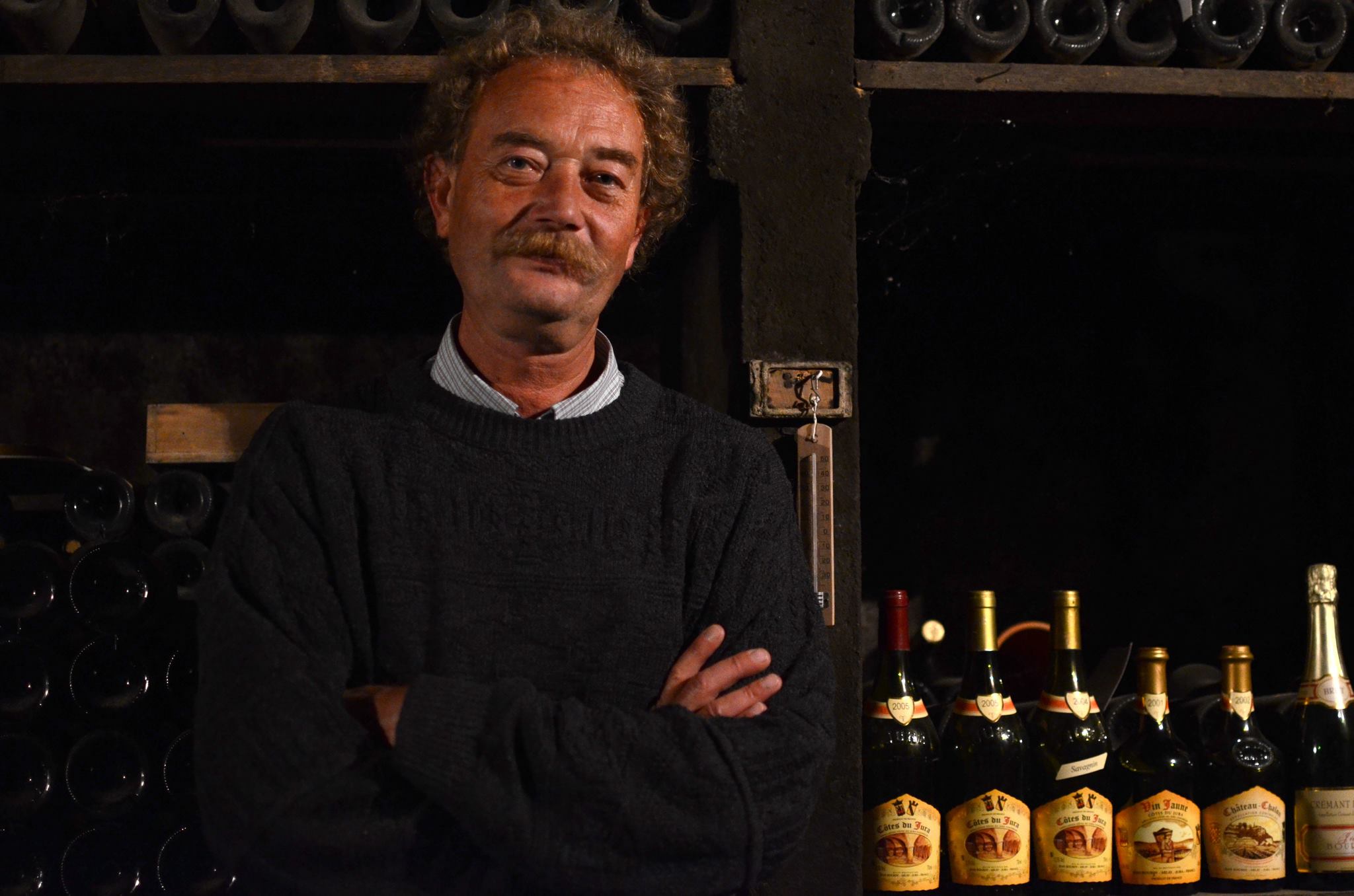
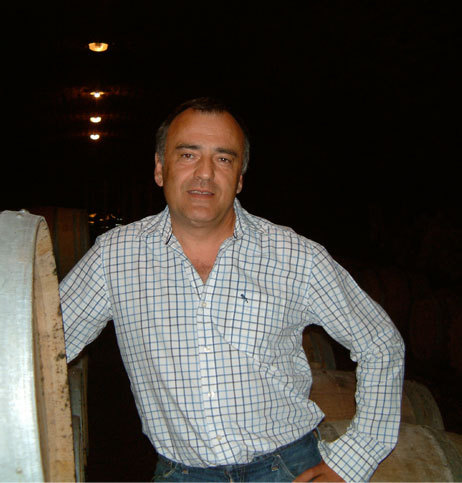
Before you discuss Chardonnay with Jean-François Bourdy, take a moment to stand back, exhale, and simply admire the visage.

Jean-François Bourdy

Jean-François Bourdy

He is an imposing and potent-looking gentleman whose shirt is open a button or two lower than necessary; his eyes are blue as river ice and they dart like dragonflies.  His hair is blond and curly (not permed—I asked) and his yellow moustache curls up into points like Dali’s.  He looks, for all the world, like one of the Musketeers in comfortable repose, a working man who retains the nobility of his race.

He is Athos in Twenty Years After, or I’m a monkey’s  uncle.

800px-Leloir_Musketeers2The family Bourdy has been a fixture in the French Jura for as long as the Jura has had fixtures; within seconds of moving the conversation from wonder to wine, he informs me that the his people have been vignerons in the region since 1475, when Columbus was still sailing toy boats in the bathtub.

When I ask him if he was born in the Jura, he says, in his rolling French brogue, “Son, I am the Jura.”

And so, to end up with an even rudimentary understanding of this fascinating hinterland in Franc’s multi-faced wine regions, you have to start with people like Jean-François Bourdy—people who are so confident of the superiority of what they produce that any question about technique, terroir-interpretation and subsequent expression is as often as not dismissed with a summary: “Because we have been doing so for five hundred years,”—as though the question is so incontestably rhetorical that the response defies further exploration.

And, much as I appreciate those who experiment, those who seek to improve, those who are open to new ideas, equally must I respect those who remain true to their function.  And if the wines I tasted are not always my ideal, they are (I believe) a true portrait of the Jurassian mindset, and hence, wineset.

No Country for Young Men

Paalen, 'Hidden Land'

Paalen, ‘Hidden Land’

In his classic satire on modern art The Painted Word, Tom Wolfe postulates that without a concept, some art would not exist.

Or, verbatim: “Without a theory to go with it, I can’t see a painting.”

He was joking, of course.  Or was he?  In fact, to blind-taste one of Jean-François Bourdy’s Chardonnays, you would not guess the varietal—it is done in classic Jura fashion, spending five years in a neutral barrel with very little topping-off, allowing a certain amount of air contact.  This is the goal, and it produces a white wine quite unlike the Chardonnays  from Burgundy, two hours to the west.  If you are expecting a steely, apple-rich or buttery Chardonnay, you will be disappointed.  This is Jura white wine, and that is theory you need to buy into in order to genuinely appreciate it.  Like the works of Wolfgang Robert Paalen, you may have to understand ‘viewer-dependant possibility space’ before you can like them.

white logoCaves Jean Bourdy Côtes du Jura ‘Blanc’, 2009, (around $30):  The wine is soft and rich, showing mature notes of roasted almonds, citrus peel, butterscotch and a slight tinge of pleasant oxidation, but most of the typical pineapple and green apple flavors one finds in Burgundian Chardonnay have been sopped up by the wood.  Bourdy insists that the wine requires hours to fully open up after it’s long wood nap, and indeed, a bit of melony freshness emerged after that, but if it is not love at first sight, it is very much a wine to grasp.

redLikewise the red. Unlike most white-to-red wine progressions,  Jean Caves Bourdy Côtes du Jura ‘Rouge’, 2010, (around $30), is served at a tasting before the white (and five degrees cooler); it is a blend of the local grape Poulsard along with equal parts Trousseau and Pinot Noir and, like the Chardonnay, is aged for around four years in old oak.  But the fruit itself seems to have had less intensity going in, and more acidity, and as such, produces a sharp but delicate wine that focuses on a trail-mix of earthy flavors—dried apricots, walnuts and dried cranberries, with some rhubarb and cherry emerging as the wine aerates.

Both white and reds from Jean Bourdy are, as he explains it, “Essential food wines.  We enjoy cuisine and wine together, and both are made for pleasure: You enjoy them, but you do not necessarily need always  to speak about them.”

Which is why I expressly avoid recommending a plate of Jurassic pork.

Vin Jaune—Now That You Talk About

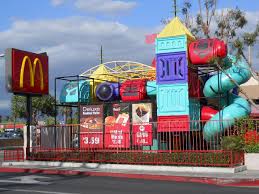
abcLike any self respecting Jurassian, Jean-François introduces his Blanc and Rouge as curtain raisers, along with a lovely, if essentially neutral Crémant du Jura made from slightly under ripe Chardonnay and a strange Appellation d’Origine Contrôlée known as ‘Macvin’.  Since it is a blend of late-harvest grape juice and the local liquor known as marc, it makes no sense that they don’t call it ‘Marcvin’, since Macvin sounds like something that requires Golden Arches and a McPlayground.  But nobody was asking for my two cents when they were naming stuff, so I report only that, although my on-site notes suggest that it tastes like a blend of cinnamon, prune juice and mercurochrome, I assure you that it is a delightfully blend of the three, a sweet apéritif that Bourdy assures me is exemplary alongside Le Bleu, the local blue cheese.  Incidentally, Le Blue also has its own AOC.

Viole atop Vin Jaune

Viole atop Vin Jaune

It is, of course, Le Yellow that produces Jura’s most prominent waves—it is the quintessential Jurassian answer to fino Sherry.

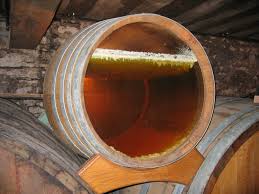
Like Sherry, it is a product of white wine that is aged in barrels for many years, beneath a protective layer of protective mold, know in Spain as flor and in Jura as voile.

But here, the similarity ends.  Unlike Sherry, there is no solera system (Google that if you don’t know what it means):  Vin Jaune sits in its lone cask for six years, and three months minimum, during which it develops deep, resonant flavors that resemble—in some strange, nearly indefinable way—the scent of curry powder.  I say ‘nearly’, because the odor is the result of the appearance of  sotolon, a lactone compound that appears in developing Vin Jaune.  That chemical can also be found in curry powder.

Château-Chalon

Château-Chalon

Also, in Sherry, there are a number of allowable grape varieties, whereas in Jura, there is only one: Savagnin.  It’s a grape that grows nowhere else in France to any measurable extent, but in the Jura, it thrives on the blue marl solid, and is used exclusively in the most famous Vin Jaunes, those of of Château-Chalon and L’Étoile.  In a table wine, it is somewhat ‘meh’, but it ripens late, which concentrates sugars, and is resistant to rot.

And in Vin Jaune, Savagnin becomes one of those incredible personalities within the wine pantheon that sears an indelible mark on your memory.

Even the bottle is unique—a stubby, 620 ml ‘clavelin’, sized to account for the wine that evaporates from each liter during aging.

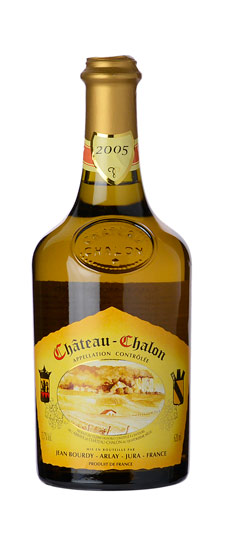
bott'eCaves Jean Bourdy ‘Vin Jaune’, Château-Chalon, 2005 (around $110) is a wine so striking on the nose that it defies comparison; it has qualities that resemble Fino, no doubt—the sort of elegant, burnished walnut earthiness that liquefies autumn and slips it into a glass.  But the core runs far deeper.  Curry notes are there if you look for them, and requisite hints of oxidization, but luscious citrus peel, toasted nuts, fresh yeast, fresh mushroom, dried fruit.  More remarkable than the nuance, though, is Vin Jaune’s ability to spread them out like a smorgasbord, then shuffle the deck so that flavors emerge, recede, change, then emerge once again.  Sound unlikely?  Among the most startling of Vin Jaune’s many faces is its palate length.  Whereas most wines, even those superbly made, peter out within sixty seconds or so, Vin Jaune does not fade entirely for two or three minutes.

And that isn’t even the diva of the performance.  That spotlight is reserved the Bourdy ‘Vin Jaune’ 1947, which if you could find it (you probably can’t) would set you back around $700.  I’m doled out a thimbleful, and even at that Lilliputian lick, it proves its point.  It is every bit as lively as the 2005 with additional layers of silken spice, most notably a dusty saffron note that suits the color of the wine and the wine’s name, which is, of course, ‘Yellow Wine’.

This gem is the living embodiment of the concept—so unusual in its depth and breadth that the wine never becomes an afterthought.

Nor in the realm of the physical, should it: Jean-François assures me that within the library of wines a Caves Bourdy, there are Vin Jaunes that are still feisty and developing after two centuries.

Demeter-certified: Tous pour un et un pour tous

Demeter-certified: Tous pour un et un pour tous

He holds to the notion that there are three wines in the world that rank so highly that the others are, in their own way, the true afterthoughts:  Pétrus, Romanée-Conti and Vin Jaune.

Far be it from me to argue about the Franco-centric-ness of this declaration; I don’t have the stuff to challenge a Musketeer.

That said, however, the genuine Athos hailed from Pyrénées-Atlantiques, a long way from Jura, and was named Armand de Sillègue d’Athos d’Autevielle.

There is more Demeter than Dumas about Jean-François Bourdy, so I guess you can call me Uncle Grape Ape after all.

Posted in FRANCE | Tagged , , , | Leave a comment

Gevrey-Chambertin and the Hangover of Guy Accad

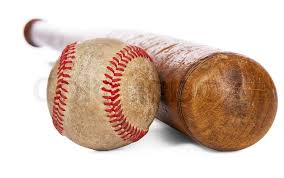
A bat and a ball cost a dollar and ten cents in total. The bat costs a dollar more than the ball. How much does the ball cost?

batOn the surface, the question seems easy.  That’s the way our brains are wired—the information is there, we just need to collate it, fill in the one bit of information that’s missing: The cost of the ball.

If you got the answer right, and quickly, congrats.  You’re smarter than half of the Princeton and U of M grads who did not.

Writing about Burgundy takes on a similar aura.  On the surface, there are only two grapes to worry about: Pinot Noir and Chardonnay, both with recognizable benchmarks in, say, Chambertin and Montrachet.  It isn’t large—far smaller than Bordeaux or Napa, and it is filled with with interlocking, but very coherent details.

On the surface, writing about Burgundy seems easy.  Then you actually try to do it.

Accad is My Witness…

I bring this up because yesterday I tasted an interesting Gevrey-Chambertin: Dominque Gallois ‘Combe Aux Moines’ 2012.

Dominque Gallois

Dominque Gallois

The wine hails from the northernmost commune in the great Côte de Nuits, which contains 26 Premiers Cru climats (Combe Aux Moines is one of them) and eight Grands Crus—the highest level of classification of AOC wines from Burgundy.

Combe aux Moines is situated just north of Combe de Lavaux, next to Les Cazetiers, giving you an idea of how quickly terroirs can change in the region.  The soils of Combe au Moine are rocky, with a layer of marl offering scant fertility; this makes the vines relatively weak and leads to the production of tiny, but intensely-concentrated grapes.  This, in part, lays the foundation of the characteristic ‘masculinity’; Gevrey-Chambering is said to be among muscular reds in Burgundy.

Indeed, the wine I tried was full of dark fruits—blackberry and cassis shored up with a bit of licorice and smoke.  Oddly, although the wine was somewhat shallow in the mouth, the palate persisted for a remarkable period—minutes long, leaving a certain touch of appealing bitterness behind.

This profile is, apparently, something of a hallmark of the breed, to which I claim no expertise.  Still, there was something about the weight and texture that struck me as distinctly ‘un-Burgundian’.

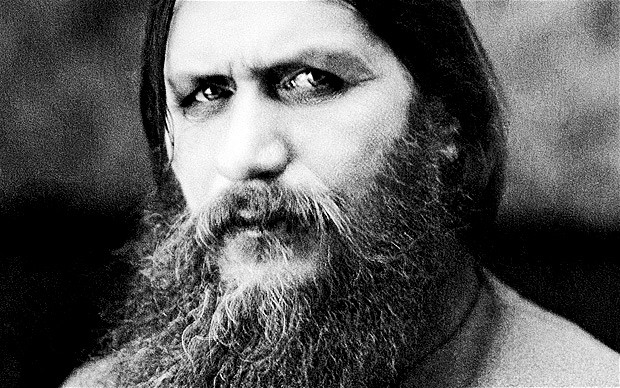
I can't find a photo of Guy Accad, so here's one of Rasputin

I can’t find a photo of Guy Accad, so here’s one of Rasputin

That’s when the name of Guy Accad came up.  And with the sort of baffled mix of disgust and respect with which a student of the House of Romanov might bring up Grigori Rasputin.   The wine’s character, it was suggested, might be the residual effect of vinification techniques that Accad left in his wake.

In the Cliff’s Notes version, Guy Accad was a Lebanese/Burgundian enologist/ wine consultant who introduced such controversial techniques to the industry that Burgundy from the mid 1980s through the early 1990s is often said to come from the ‘Accad Era’.  Among his early disciples were Comte Senard and the Chateau du Clos Vougeot and Jean Grivot.

According to Etienne Grivot, Jean’s son:  “Accad was incompetent as a communicator, rude and ungainly as an individual, but a genius when it came to soil analysis and what was needed to regenerate the life therein: How to persuade the vines to get the maximum out of their environment.”

Accad also also had definite views on vinification—most prominent  was his advocacy of long periods of cold-maceration, with sulfite added to the must to prevent the onset of spontaneous fermentation.  In the early days of Burgundy, when the harvest was not completed until mid-October, cold weather often served the same effect, and the maceration period prior to vinification allowed maximum extraction of color and flavor from the grape skins.

cold soakThe science behind the cold-soak is the belief that anthocyanins extracted from the skins will form color stabilizing bonds with other phenolic compounds before more bitter tannic compounds are extracted; the risk, other than the fact that some contamination yeasts may sulphur resistent and take over, is that these wines adopt a winemaker’s  personality and do not adequately reflect terroir.

And in Burgundy, of course, terroir is the towering tycoon—any man who tries to usurp terroir’s defining role in the region may be viewed as an interloper to God’s ordination and ultimately be denounced.  That’s what happened to Rasputin, and also to Accad—he was famously fired from a number of consultancy positions after his initial brush with notoriety, and I can’t find many references as to what he is up to these days—or even if he’s alive.  Like the Mad Monk of Moscow, he may—for all I know—have wound up in some river.

Can't find one of Stuart Niemtzow either, so here's another Rasputin

Can’t find one of Stuart Niemtzow either, so here’s another Rasputin

But he has a few lasting fans, including Stuart Niemtzow of WineBerzerkers, who claims that Accad-method Grivots and Senards, especially Senard Corton ‘Clos du Roi’ 1988, are still drinking sensationally well.

He hints at ‘xenophobic motivations’ behind the Lebanese Accad exile from Burgundy.

How much actual maceration time was allowed pre-fermentation in the Dominque Gallois ‘Combe Aux Moines’ I have been unable to determine, but the rich, almost Cabernet-color and dark-fruit nose makes me suspect that there is some lingering Accad influence in the vinification.

In any case, the wine retails for around $90.

And the baseball, if I’ve held your interest this long, costs a nickel.

label

Posted in Burgundy | 1 Comment

Aurelio’s Goose Lays Golden Eggs

Finding balmy, extracted South America in shivery, high acid Finger Lakes is a treat; getting a dose of genuine insight into this sprawling and largely misunderstood wine continent?  Priceless.

Jen O'Flanagan

Jen O’Flanagan

Wouldn’t have happened without an Irish lass from Brooklyn, either—Jen O’Flanagan of Feast Public Relations, who introduced me to Aurelio Montes—along with his export manager Matias Barros—in the lounge at the Corning Radisson.

As it happens, I was in Finger Lakes trying to avoid the Wine Blogger Conference, but I was at the Radisson to listen to a WBC presentation that (gratefully) had nothing to do with wine blogging.  Rather, it was a overview of Montes’ juggernaut wine experiences in both Chile and Argentina.  In Santiago, of course, the Montes family perches upon a rarified Andean peak of preeminence, Viña Montes being the brainchild of his winemaker father Aurelio Sr.  In 1987, along with a trio of investors, the elder Montes is credited with laying the foundations for the country’s high-quality wine industry.  Prior to then, the country’s output had been pretty much limited to mediocre juice produced from massive plantings of Pais and Muscatel—the latter described by wine writing pioneer André Jullien as ‘a potion of rhubarb and senna’.

Nonetheless, among its many remarkable geographical realities, Chile managed to dodge the phylloxera bullet and allows vines to be planted on their original rootstocks, something that Montes claims shows ‘a truer expression of the grape.’

The elements for growing superb wine in Chile were there all along: Isolated from the rest of the world by natural barriers, there are neither insects nor mildew to affect the vines, and the desert-dry climate, adjusted via  meltwater irrigation, sees almost 330 sunny days each year.

Viña Montes

Viña Montes

It just required a visionary like Montes first to recognize it, then to prove it.  Without a family fortune to back him up, and having landed with partners that brought everything to the party but a cash flow (Douglas Murray was the exporting whiz, Alfredo Vidaurre knew accounting while Pedro Grand was the agriculture and equipment guru), Montes had to rely on the superiority of his product.

And indeed, Alpha Cabernet Sauvignon, the first premium product that flowed from his winery (under the Discover Wines label) was every bit of that.  It not only put the Montes name on the eno-map, but essentially the entire country, whose bar was thus appropriately raised.

Like any son worth his grape-stained stompers, Aurelio Jr. followed in his father’s footsteps; he is the winemaker at Kaiken Wines, which aspires to equal every drop of quality that Viña Montes has squeezed from the Chilean terroir with one important difference:

It’s not in Chile.

“My father came to Mendoza in 2001, and shortly became convinced of the Argentinian potential.  Not by the climate alone, but by the people—the viticulture, the traditions, the passions.”

No Tears for Argentina

mapIf you imagine Atlas astride the Andes, he’d have one foot in Santiago and the other in Mendoza, with a hundred miles of mountain tickling his taint.  From a winemakers perspective, you’d think that the growing regions adjacent to these cities would be flip sides of a coin, and in some ways, you’d be right.

Mendozan wine country lies in the eastern shadow of the Andes, specifically, Mount Aconcagua, and is semi-arid, receiving around eight inches of rain annually—on par with Phoenix.  Most vineyards are planted at high elevations—3500 feet is not unheard of—and for the most part, the focus is on red wines: Sumptuous Malbec, of course, has dominated the world market for Argentinian wines so effectively that the grape’s original home in Southwest France has alter red its PR accordingly—the parent learning from the child.

But, there are differences as well, and that’s where the true intrigue begins.

_DSC8826If I was prone to stereotype, I could say that where Chile looks to tradition and elegance in the bottle, Argentina tends toward youthful exuberance.  Were it no more complicated than that, I could easily draw the requisite parallels in which young Aurelio Montes came to Argentina to ply his trade while the elder Montes, now 66, remained in Chile.

Of course, the world doesn’t tie itself up in so neat a bow for us journalists, and the wines of Chile can display the vigor of youth as readily as Mendoza’s, while Argentina wine takes the rough and tumble signature grape of Cahors and offers it breeding and the title of an aristocrat.

Aurelio himself remains, like Atlas, with a foot in each country.

Aurelio Montes

Aurelio Montes

“The pace of life in Mendoza took some getting used to,” he smiles.  “In Chile, we tend to be very precise, very punctual people.  We operate on clocks.  Chile is like Switzerland—very organized; the people work very hard, they pay their taxes, but can be a bit boring. In Argentina, people are far more relaxed, and perhaps more passionate in daily life.”

If that shows in their wine, it may be in the way that Chile—spearheaded by the Montes family and several foreign investors, including the Rothschild (Viña Los Vascos)—built up a reputation by calculated degrees, and how Argentina did not.  In fact, the single varietal that today studs the crown was an afterthought a generation ago.  Less than an afterthought, in fact—at one point during the 1990’s, in an attempt to address a faltering economy, growers ripped out thousands of acres of Malbec in order to plant more profitable jug wine grapes like Criolla and Cereza, or more fashionable varietals like Cabernet Sauvignon.

But, according to Aurelio, whereas Chile’s terroir is ideal for Cab, Argentina’s is really better suited for Malbec—far better, perhaps, than Cahors, where Malbec can be somewhat crude and angular, especially when young.   “In Argentina,” he says,  “Our soil is mainly sand and rocks, often very poor. This is important because Malbec and Torrontés are very vigorous varieties, so with poor soil they  produce smaller clusters and smaller berries, and that means higher quality.”

In contrast, he adds, “In Chile, the soil has more clay and the weather is colder, so Merlot and Cabernet feel very comfortable.”

torrotntes lebaelI was able to take the theory on a road test with the lineup Montes presented: In fact, the Kaiken Torrontés 2014 ($15) outpaces its price while easily living up to its name— Torrontés is a derivation of the Spanish word for ‘torrent’.  A gush of fresh peach, orange and ripe cantaloupe pours from the glass; the wine is miles deep and gobs luscious with brilliant acidity.  This is a grape which shares Malbec’s affinity for an Argentinian clime—outside of the country, it is virtually unknown, and where planted in Chile, often forms a foundation for Pisco (Chilean brandy), not wine.

kaken malbecKaiken ‘Ultra’ Malbec 2012 ($25) is a beautiful example of the richness, power and elegance this grape achieves in the foothills of the Eastern Andes; the wine is layered with blackberry, plum, mocha and an appealing herbalness—not green flavors, but savory notes of rosemary and white pepper.  Acids are in line, and so are tannins: The wine’s balance is as much the result of technique as terroir.

When Aurelio turns his hand to Cabernet, the result almost makes him drink his words.  The varietal which he claims prefers the heavier, more fertile soils on the far side of the mountain range shows sensational structure and complexity in Kaiken ‘Ultra’ Cabernet Sauvignon 2012 ($25).  Underpinnings of oak make this a somewhat more austere presentation than the Malbec, but the fruit/spice foundation is nicely reminiscent of Pomerol, with earth, smoke and tobacco notes behind the cassis and black cherry.

Double Gold: Aurelios, Sr. and Jr.

Double Gold: Aurelios, Sr. and Jr.

A contrast of these unique, wonderful flavors with wines produced by his father in Chile will have to await another column.  As a name, ‘Viña Montes’ is self-explanatory, but ‘Kaiken’ may not be:  It is a Mapuche Indian word for a species of South American goose said to be the only bird capable of flying across the Andes, able to crest mountains more than four miles high on a six-foot wingspan.

goose-golden-eggFair to say that Aurelio Jr. has made his mark in laid-back Argentina with all the fire and fury of his native land while finding expression in grapes that have flourished under his watch. Where plenty of other investors have either cooked their own geese or laid an egg,  Aurelio’s Mendozan output has, so far, been pure gold.

No wonder that the first two letters of his name are ‘Au’.

Posted in ARGENTINA, CHILE | Leave a comment