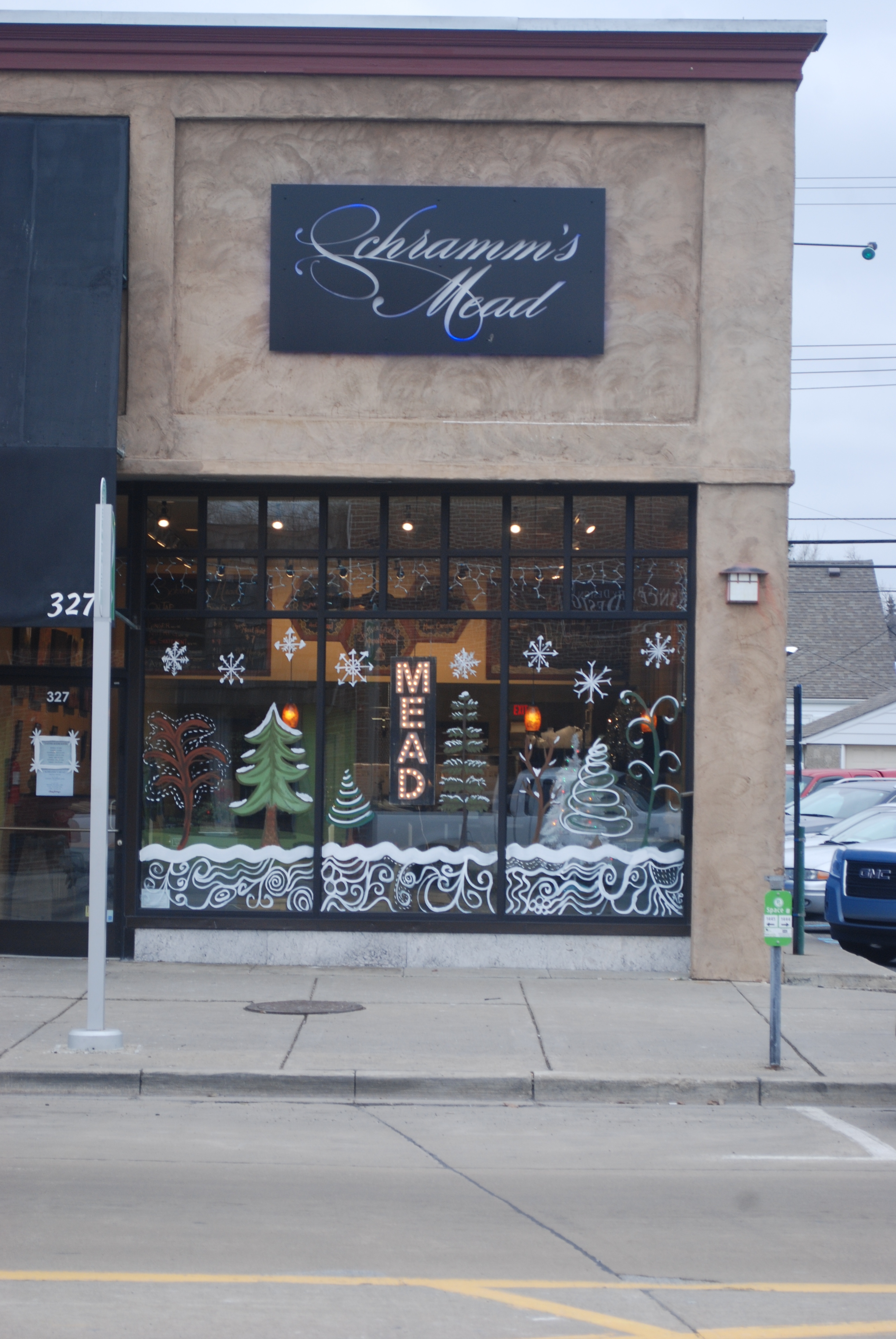
Ken Schramm: A Friend With Mead is a Friend Indeed

EXTERIORWalk through the door of Schramm’s Mead and you’ll likely encounter two kinds of individual: Those who have no idea what mead is and those who know who the American Homebrewers Association named 1984’s ‘Meadmaker of the Year’.

I’m guessing that the former category includes most of the walk-in trade visiting the comfy, street side meadery on W. 9 Mile in Ferndale, MI, and I’m confident that the latter is restricted to a single dude, Ken Schramm.

Schramm, who has operated the place since 2013, learned to master the art of turning ambrosia (honey) into alcoholic ambrosia (mead) from Bill Pfeiffer, considered by many to be the the best meadmaker (as well as the best home brewer) the state of Michigan has ever produced.

For the record, Pfeiffer passed in early May, 2000—just as the bees were beginning to stir in their hives.

Ken Schramm in his native habitat

Ken Schramm in his native habitat

Although finding the majesty behind meadmaking took decades, Ken Schramm discovered the groundwork techniques when his brother bought him a book about basement brewing in the 1980s.  At the time, his career path was in television—he was a production supervisor for the Pistons for many years, and in fact, a nice chunk of our interview involved a primer course in why Detroit is home to an industry-envied gang of sports producers whose talents often outstrip the teams they’re filming.

These twin passions may seem random, but in fact, both require a certain meticulous mindset.  Those who have it know it and may make Emmy-winning television and kick-ass mead, while those who don’t often mock it as overtly anal and requiring an eyeroll-level of detail-sweating.  I’m in the latter category; and, in consequence, I’m not sure which end of a camera you’re supposed to look through while my homemade mead sucks: And I’ve been keeping bees in the backyard for a generation.

Fair to say that in the hour I spent with Ken Schramm I learned a little about video production and a whole lot about what’s been going wrong with my mead.

The Good, The Bad and The Rip-off

graduateHere’s how it happened:

Ken Schramm draped an avuncular arm over my shoulder and took me for a stroll by the pool, saying, “Chris, Chris, I want to say one word to you.  Just one word:  Nitrogen.”

It was a lot like ‘The Graduate’, only without the sex.

It turns out that if you intend to make decent wine out of honey,  it has a different bucket list needs than grapes, and the primary thing you have to do is boost the nitrogen level.  Without it, the all-important primary fermentation results in stressed yeast, and some of the undesirable flavors produced (and evident in my mead) are burnt rubber and rubbing alcohol.

The simple addition of Diammonium Phosphate in this critical, opening volley of meadmaking takes care of that.

As referenced in the section heading, my mead is bad, but since I’m not licensed to sell it, no harm, no foul.  No rip-off; mine is merely a learning curve.

I will, however—with malice aforethought—contrast my tasting of Ken Schramm’s meads, which are intrinsically, objectively and immediately delicious, with a very bad experience I recently had with another local product.

mcbwThis one suckered me with the back-story:

Motor City Brewing Works claims they discovered a barrel of mead they’d forgotten about, which had been been aging like a dusty cask of Amontillado for lo, these seven year.  They bottled it in 5 oz. portions, one of which I purchased at a local beer store, quite intrigued and prepared to learn what honey wine does when, like Fortunato’s bones, in pace it requiescats.

What I paid ten bucks for was a mouthful of stank, totally oxidized, and not in a stable, vintage Amontillado sort of way.

Now, I get the whole caveat emptor concept, and my concern is not for my sawbuck, but for yours: If this is the first experience you have with mead, it will likely be your last.

I love this logo. Pun central.  Look closely and you'll see Ken's bar bee.

I love this logo. Pun central. Look closely and you’ll see Ken’s bar bee.

Schramm’s Mead is the beacon on the horizon when most meads flounder in the sea of mediocrity like mine, or are sucked into a maelstrom of unintended pollution like MCBW’s.

Ken understands this—and has, in fact, invested a huge portion of his nest egg—into doing it the right way.

The mead mantra, as it is in all things consumable, is that your end product is never better than the ingredients that make it up.  To produce good mead, you need good honey, and to produce great mead, the raw stuff needs to perch upon the same plateau of exultation.  These days, thanks in part to the phenomenon known as ‘colony collapse disorder’, the bottom has dropped from under the apiary industry, and honey ain’t cheap.

As a result, for the same five ounces of Schramm’s mead, your tariff will push double digits, but that’s  because unlike MCBW, Schramm’s is no scam.  He begins with superb honey purchased in bulk, a lot of it from the orange groves in California, and dilutes it to what wine people recognize as 40 degrees Brix.  That allows fermentation to a suitable level of alcohol-by-volume—around 14%—while maintaining what wine people also know as ‘residual sugar’.  In a dessert wine, a high level of RS is a consummation devoutly to be wished; it acts a preservative and, when suitably balanced with acid, does not come across as cloying or undrinkably sweet.

Ah, but the acidity: Another fundamental difference between honey and grapes rears its head.  According to Ken, “The naturally-occurring acids in honey are gluconic, whereas grape acids are primarily tartaric, malic and citric.  Since organic acids interact with other compounds to equal flavor, understanding gluconic acids is—especially for wine lovers—something basic to measuring mead quality.”

Bee in the Now

PORTRAITTeaching the uninitiated to understand mead is part of Ken’s mission du passion, and one of the reasons he does not currently offer a dry mead is because—as is mirrored the appreciation progression of most wine drinkers who begin by liking sweet wines and graduate to dry wines—it takes a unique breed of meadist to love this style.  In in the meantime, he needs to keep his doors open and bills paid.

He does, however, offer lusciously sweet meads in which fresh, high-quality fruits and spices have macerated throughout fermentation, and these are some remarkable beverages indeed.

‘Ginger’ is a delightfully spicy, bracingly acidic mead with a bit of heat on the palate.  He uses quality ginger, citing the adage about making a silk purse from a sow’s ear, but has future plans to seek out the ne plus ultra of the world’s ginger supply, which he believes originates in Jamaica and Hawaii.  Alas, he is unable to buy it in bulk, peeled and pre-crushed—an operation so labor intensive that it would place his bottom-line on life support.

As it is, if he’d have run the business plan—opening an upscale meadery a mile from Detroit—on Shark Tank, they’d have fed him to the piranhas.

menu‘Apple Crisp’ is so creamy that I asked Ken if it had gone through the secondary fermentation known as malolactic, in which malic acid is transformed into the lactic acid found in cream. It’s a winemaker trick to soothe overtly acidic wines, but often requires a nudge from the vintner; Ken is, for the most part, a non-interventionalist.  The quality I noted, along with the potpourri medley that smells like your grandmother’s linen chest, is the result of the apple/spice blend he relies upon.

‘Blackberry’ represents Schramm’s foray into ‘red wine’, primarily because it is made from fresh blackberries sourced from Willamette Valley in Oregon, also ground zero for phenomenal American Pinot Noir.  The mead is touch with tannins, which are inherent in the seeds of the blackberries—the hefty tannins in barrel-aged wine is often the work of often astringent vanillin in oak; anthocyanins in fruit seeds and stems is an entirely different, and much more tamable beast.  This mead is juicy and sweet, both ponderous and pretty.
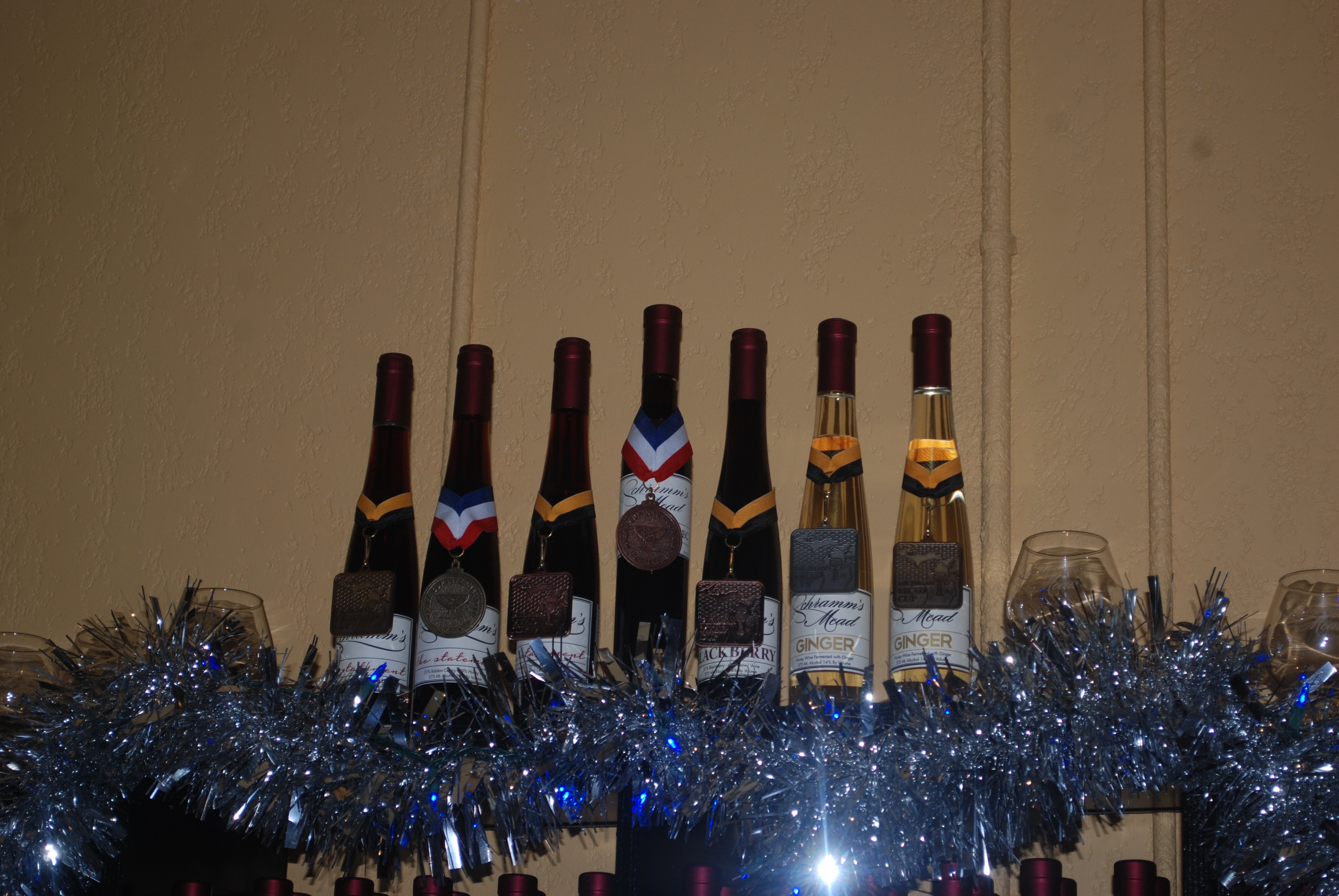
awards‘The Statement’ makes no statement as to the sort of fruit it features, but I will: Balaton cherries from Traverse City.  I wrote a whole chapter about the cherry doc (Amy Iezzoni) to whom Michigan owes the introduction of this superb wine cherry, which reaches sweetness levels unheard of in tart cherries, and retains the titratable acids unheard of in black cherries.

This is my favorite of the bunch, balanced and scrumptious, and Ken tells me he has an even better one aging at home.

Finally, ‘Black Raspberry’ packs such a olfactory wallop that it’s served in a brandy snifter.  Indeed, it is true to both the subtle notes in black raspberries and honey, and contains such a pronounced level of the anthocyanins mentioned above that it is a mead that will require some aging before these tannins mellow out.
Honey on spoon

And therein lies an overcomable issue in the nascent national mead industry: Like all controlled substances, mead falls under the legal jurisdiction of the TTB and it is beholden to federal regulations.  As of now, Schramm cannot list a vintage date on his mead labels, because the jackboots in Washington have not figured out how to verify the data.  When they do, this is the sort of mead that will become prized for the year it was produced.

In any case, there’s your free, introductory course in meadology.  Now, go and make yourself useful…

Meading of the Minds

That means that when you stop by Schramm’s Mead, you’ll have zero excuse for being among the mead moronic and should be able to taste with shrewdness and perspicacity.

Although gentlemen, please be advised to check your ‘buzz’ puns at the door.

 

Posted in MEAD | Tagged , , | 1 Comment

When Chefs Go Rogue: Tesar Tasers Tony B.

Jimmy+Carter+Playboy+1976I’m old enough to remember when Jimmy Carter almost deep-sixed his 1976 presidential bid by telling Playboy magazine that he ‘lusted after women in his heart’.

In those days, a pious Christian family-man simply did not make those sorts of admissions, especially while running for president. And even though we all lust after people in our hearts—even those of us without hearts like Dick Cheney or the Tin Man—back then, gut-level honesty from presidential candidates was neither appreciated nor understood.

You can easily see how far the pendulum has swung in the other direction: Today, a presidential candidate essentially announces that he hates all Muslims and immigrants and ugly women and he’s his party’s front-runner.

Oo-ee-oo I look just like Buddy Holly; Oh-oh, and you're Mary Tyler Moore... ♫

‘Oo-ee-oo I look just like Buddy Holly;
Oh-oh, and you’re Mary Tyler Moore… ‘♫

So the idea that Chef John Tesar’s recent, borderline insane tirade in Playboy magazine would hurt his professional reputation is open to debate.  In course of that brief, rambling interview, he manages to skewer not only the city that hosts his restaurants (Dallas), critics who don’t like his restaurants (Leslie Brenner), Southern people in general (“We smile in your face and then when you leave the room we just talk shit about you”), but his far-more-accomplished colleagues (“Anthony Bourdain is one of the shittiest chefs that ever lived”).

It’s a brave new world, baby, and we all take innate pleasure in watching people like John Tesar undergo self-orchestrated psychological meltdowns on a public forum.

On the other hand, since Playboy is basically irrelevant in  the 21st century—especially since they stopped including centerfolds that our hearts could lust after—and Tesar was never particularly relevant in any century, and since the old marketing mantra ‘any publicity is good publicity’ is bullshit to begin with (let me know the next time Bill Cosby sells out a venue or Charlie Sheen lands a job), anybody who connects the dots and thinks this sort of interview is a sound business strategy must be from some parallel PR universe.

Gnatalie MacLean

Gnatalie MacLean

Now, if you happen to follow this column, I know what you’re thinking:

I expend a lot of virtual ink making merry over the foibles and failings and general fuck-upperies of my colleagues, and over the past twelve months I have probably made as many enemies as friends.  On the surface, the gap between what Tesar said about Tony Bourdain and my contention that my more-accomplished colleague Natalie MacLean is one of the shittiest wine writers that ever lived, may seem miniscule.

So, Here’s The Difference, All Y’all:

abcIntoxicology Report is sheer schtick—it’s fundamentally a satirical site in which I wedge a little wine knowledge into a stand-up routine.  I may be less vitriolic in person, but I lust after readers in my heart, and the basic, ground-level truth is that when I write a piece in which I ridicule the pomp and circumstance surrounding the wine industry, my daily hit count goes through the roof.  If instead I write about the discovery of a small-production, inexpensive Riesling from the central Pyrenees and check my stats, I’m Jared Fogle offering career advice at a Harvard commencement ceremony.

It Ain’t What It Ain’t, and That’s All It Never Can Be

I’m not selling a commodity in which quality and personal integrity is a particular goal—in fact, Intoxicology Report is, by intent and execution, the precise opposite of such business ventures.  It’s neither for sale to readers nor advertisers, and it doesn’t depend upon the financial munificence of customers to succeed.

My PayPal account remains equally empty if you love what I write or hate it.

‘’Rs’ Яn’t Us…

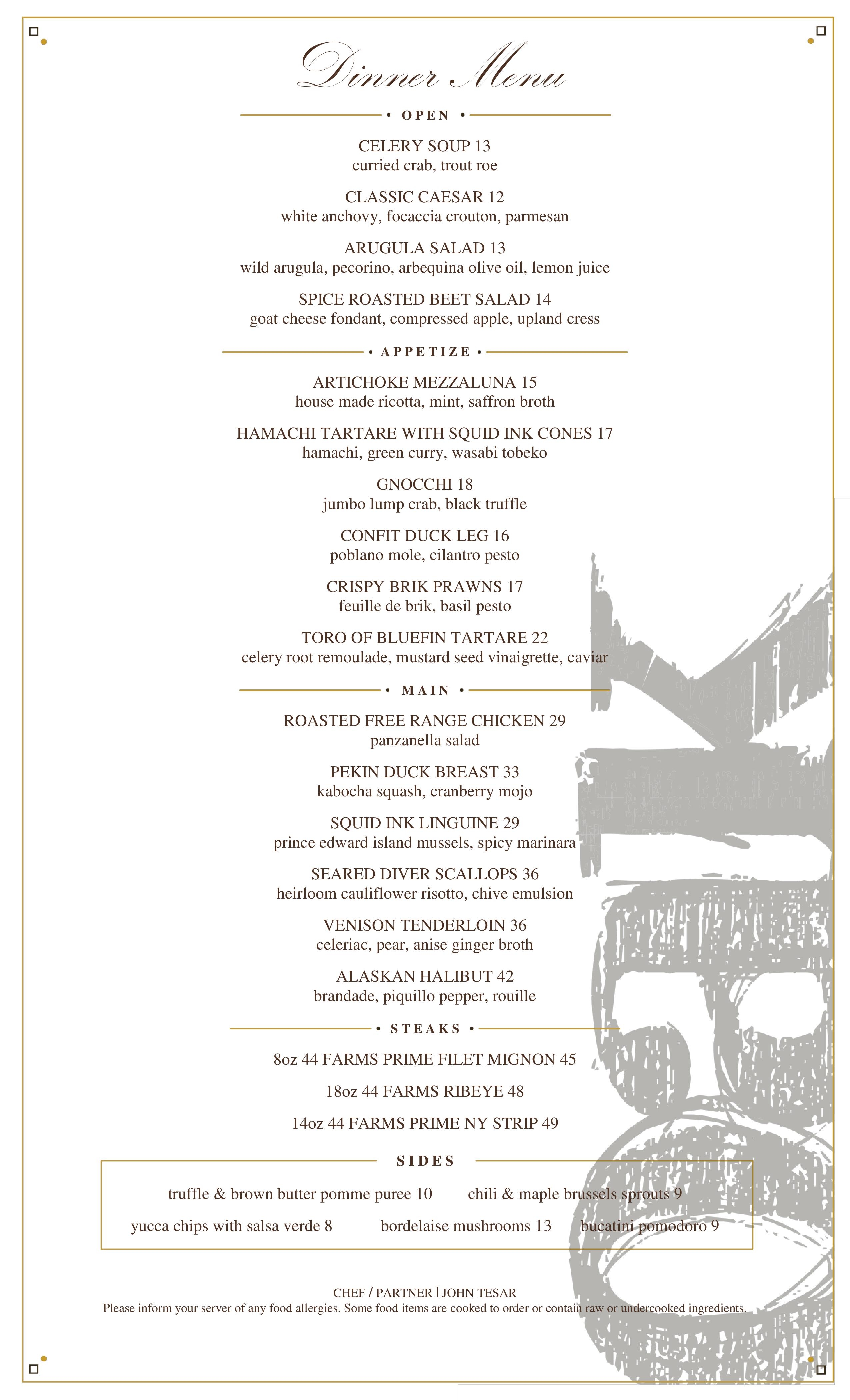
dinner-menu-However, a restaurateur—whose particular pecuniary pursuit is placing posteriors in pews—should at least consider that being a public prick doesn’t necessarily translate into salivating patrons lining up at his dining room’s doors.  In other words, whereas I am happy to read Tesar’s vitriol online for free, I am not in the least tempted to thereupon drop $80 an inch for 240-day dry-aged steak at Knife or $22 for raw tuna, which his Oak menu lists under the ‘R’-free category ‘Appetize’.

Had Tesar spent a single paragraph of his rare Playboy interview opportunity explaining to me why I should want tohow a chef can influence the prominence of certain beef flavors by altering temperature and humidity in the aging environment, and not why Anthony Bourdain (with whom he cooked at the Supper Club) is ‘dragged around by his dick by his wife’—I might be.

Playboy magazine, however, is not the least bit interested in John Tesar’s culinary techniques, as is obvious by the questions posed by the self-described ‘resident hangover specialist’ Alyson Sheppard, who probably fancies herself lust-worthy in some parallel Playboy universe.  She was interested in scoring headline fodder, not plugging Tesar’s endeavors, and knowing that the anger-prone chef needs very little nudging to trash great swaths of humanity in a single bound, she fulfilled her mission.

What’s sort of sad is that Chef John Tesar missed a chance to sell his talent and instead took Playboy’s click-bait hook, line and sinker—to the same sort of personal peril as one of the Alaskan halibuts he slathers with ‘brandade’ and ‘rouille’ and wants to sell me for $42.

Ah, well. Not my flying circus, is it?

Into the New Year with hope, drugs and rock ‘n’ roll.


Posted in GENERAL | Tagged , , | 1 Comment

Like We All Haven’t Done That, #682

An Open Letter to Josseleen Elida Lopez:

Don’t let the bastards get you down, sugar-hips: We’ve all outlived these kinds of moral meltdowns.

Josseleen Elida Lopez

Josseleen Elida Lopez

I’m referring to your recent 15 minutes of fame where your 15% blood alcohol level will likely net you 15 months in county lock-up.

During your brush with notoriety—as you’d probably remember if it wasn’t for that occupational hazard known as ‘blacking out’—you showed up at your favorite Wal-Mart with a slight methamphetamine glow and spent the next quarter hour tooling around in a motorized shopping cart devouring sushi and donuts and rotisserie chicken while swilling wine.

Now, it is fair to say that your choice of beverage makes your tale of particular interest to the readers of Intoxicology Report, which is, of course, a column about getting intoxicated on wine.

In fairness to them, however—at least those of them with what we in the trade refer to as ‘a good palate’—the total bill you racked up during your soirée was a whopping $32.36.

sushiSo, beginning with the premise that, following your shopping excursion, you had no intention of paying for anything anyway, let’s examine how you handled yourself.

First, according to the police report, you consumed ‘a box of sushi from the shelf’.  Now, I am not sure how they handle raw fish in Florida where your crime took place, but here in Michigan one would be hard pressed to find sushi in a box on a shelf.  That said, if what you actually did was eat a container of sushi from a cooler, I would assume that modestly, that would run a paying customer around ten dollars.

mini muffinsAdditionally, you ate a cinnamon roll and a mini-muffin. Based on my Google research, this extravagance was probably worth a total of six bucks, because even if you only ate one of each, once you open a package, it is somewhat difficult to sell the unconsumed remainder.

Stick with me here, snicker-doodle.

Let us now turn our attention to the rotisserie chicken.  At my local Kroger outlet, such fragrant delicacies are quite reasonably priced at $6.99, and although I have never consumed one ‘in store’, the smell that wafts from the appropriately-vented package  is so enticing that I have been sorely tempted to do so—and more than once. As the non-Caucasians say, Josseleen baby: ‘I feel ya.’

rotisserie chickenThe report is careful to point out that you consumed ‘the majority of’ the bird, which may or may not be an attempt to maximize your liability, although I think you would have been hung just as highly upon the gallows of justice had you consumed naught but a lone rotisseried gizzard.

Don’t confuse that with legal advice, however, because I am not licensed to offer it.  Neither is my pal Niagara Detroit, who nonetheless advises you to go with the ‘Well, EXCUSE ME for living…’ defense.

To tally  your comestibles, therefore, we are at $22.99.  Leaving you with $9.27 to account for the wine.

Here is where we start to have a problem, inamorata.

The original Wal-Mart still stands in Knob Lick, Arkansas

The original Wal-Mart still stands in Knob Lick, Arkansas

According to an article that appeared in U.S. Business entitled ‘Wal-Mart Turns Attention to Upscale Shoppers’, the pustulant hillbilly general-store-on-androgenic anabolics has ‘overcome its rural roots and downscale image to attract affluent shoppers.’

The piece goes on to say, ‘…the nation’s largest retailer is opening new stores this week with an expanded selection of high-end electronics, more fine jewelry, hundreds of types of wine ranging up to $500 a bottle, and even a sushi bar.’

So there you have it.  When I free-associate the concept of Wal-mart with food, I come up with Vienna Sausages, Funyuns, Velveeta Cheese—the only cheese you can heat without it getting all weird—and Steak-Umms long before I do sushi. So the fact that you, Ms. Elida Lopez, were able to do a personal honing radar lock on raw flying-fish eggs and tuna belly within your allotted fifteen minutes of fame indicates to me that you were in one of the upper-scalier Wal-Marts.

Am I wrong?

Thus, if you had the option of shoplifting a $500 bottle of 2003 Screaming Eagle Napa Valley Cabernet Sauvignon or a sub-ten dollar bottle of Vendange Sweet Moscato (both of which are the same size, BTW—25.3605 fluid ounces) , and chose to travel the budget-basement route for no conceivable reason than you don’t know shit from shinola about  wine, then, alas, after all the high-fiving and thumbs-upping I had planned in honor of your wild and wooly Wal-Mart whirl, I come to a single inescapable conclusion:

You are not as bright as your biography indicates.

Love, Funny Uncle Chris


Posted in GENERAL | Tagged | 1 Comment

Dreaming of a Black Plague Christmas? Here’s the Ticket…

As you can well imagine, Christmas traditions are very important at the Kassel homestead.  As such, all the bad little Kasselites found fossilized carbon in their stockings this year and the bad little wine patriarch—moi—ended up with vinegar.

But not just any vinegar mind you: Four Thieves vinegar.  This concoction, prepared by my daughter Erica—who is an anthropologist and does all sorts of research into particularly macabre periods of human history—had significant import during the 14th century.

black death nose coneIn medieval times, Four Thieves vinegar was used as a homeopathic weapon against the Bubonic plague.

There are as many recipes for Four Thieves vinegar as there are Black Death victims too stubborn to trust this magical elixir, but it a fair statement that every single one of us alive today owes our very existence to distant relatives who either filled their nose cones with the pungent fluid, drank it in shot glasses, rubbed it behind their ears like Chanel No. 5 or never came in contact with the plague to begin with.

vinegarErica’s recipe is adapted from the one that has been hanging on  the walls of the Museum of Paris since 1937.  It is as follows:

Take three pints of strong white wine vinegar, add a handful of each of wormwood, meadowsweet, wild marjoram and sage, fifty cloves, two ounces of campanula roots, two ounces of angelic, rosemary and horehound and three large measures of champhor. Place the mixture in a container for fifteen days, strain and express then bottle. Use by rubbing it on the hands, ears and temples from time to time when approaching a plague victim.

Normally, such a life-sustaining gift from an offspring would rank somewhere between a kidney donation and a personal Papal blessing from the  Elemosineria Apostolica, but as we all know, Bubonic plague today can be cured with antibiotics.  Thus, contracting it—then promptly being cured of it—is high on my bucket list of accomplishments I have planned for the upcoming calendar year.
I may now embrace Erica without fear of contracting bubonic plague

I embrace Erica without fear of contracting bubonic plague

But, I have now made a solemn vow to my daughter that in between intentionally infecting myself with Yersinia pestis coccobacillum and rushing myself to the emergency room at Henry Ford Hospital, I will first try her touching, heart-felt, lovingly-given home remedy.  As a family, we Kassels are big into the Cure Local movement, and are—to a felon—do-it-yourself types.

I have agreed to wait until the first blackish tumor appears in my groin and I begin vomiting blood before tossing in the pus-drenched towel and dialing 911.

Of course, I have little doubt that this will be necessary. They couldn’t hang it in the Museum of Paris if it wasn’t true, could they?

Keeping the ‘E’ in ‘ChipotlE’

chipotle-ranch-saladAt very least, Four Thieves vinegar is delicious and makes a marvelous acidic counterpoint to the oil in any homeopathic, plague-busting salad dressing.

And by coincidence, I have just discovered a recipe for ‘Chipotle’s Ranch Salad with Handmade Guacamole and Tortilla Strips’ hanging on the wall of the Museum of Food Poisoning, so by sheer topical coincidence, we shall also discover if Four Thieves vinegar is likewise a remedy for the dreaded E. Coli Plague of 2015.

Onward and upward, droogies and Kasselinis.

Posted in GENERAL | Tagged , | 1 Comment

I’m The Bluto of SommDay School

Mea Maxima Culpa: On occasion, I pick on Master Sommeliers.  That happens to be cold-ass reality; I’m in the wine game for the lolz, not for the respect or the badges or the profits.

steve martinAnd my issue—if you can legitimately call it that, which you probably can’t—is that the whole mysterious aura of wine supremacy surrounding the Court of the Master Sommeliers funnels down to what Navin ‘The Jerk’ Johnson discovers in his eureka moment:  It’s ‘a profit game’.

Not only that, but the entire mystique is largely self-generated and self-perpetuating anyway, and the Masterhood—the top honor the Court bestows upon the wine world’s equivalent of gamer nerds seeking the ultimate level in Super Mario Maker (currently held by someone named Bananasaurus Rex; ‘nuff said?)—is generally billed among wannabes as ‘the consummation devoutly to be wished’.

marioTruth is, that bill that winds up being staggeringly high, and a lot of the payout—although by no means all of it—lands in the pocket of the Court and their derivative businesses.  The rest is the small fortune you will need to spend on wine tasting to have even a snowball’s chance of passing the MS exam.

Putting The $ Back in Chri$tma$

gaiserI bring this up in the season of pacem mittere in terram et in hominibus bonae voluntatis because over the last few days, my inbox has been bombarded with emails from the Napa Valley Wine Academy giving me the hard-sell on an opportunity to attend SommDay School.

SommDay School. How cute is that?

What my (or yours, if that’s what you’re giving me for X-Mo) three hundred dollars buys is a chance to learn the following tricks-of-the-trade, which the ad is careful to assure me ‘are not as clear-cut as you’d think’:

  • The attitude, demeanor and professional behavior of the Sommelier
  • Communication skills: speaking and listening with confidence
  • Service basics: mise en place and more
  • Champagne service
  • Decanting red wine
  • Food and wine pairing basics
  • Wine list construction basics
  • Dealing with customer service challenges
Getting Gaiserized is like getting Martinized, but more formidable.

Getting Gaiserized is like getting Martinized, but more formidable.

What another few hundred bucks buys me is the plane ticket to Napa I’ll need to attend the January 13 class, where Master Sommelier Tim Gaiser presides over seven what-I-am-guessing-will-be excruciatingly dull hours.

The advertisement refers to Gaiser as ‘formidable’.

Formidable? Oh, for Christ’s sake.

Wake Me When It’s Over…

Forget for a moment that I will happily teach you all of these things for free if you are willing to hitchhike to Detroit and don’t mind the smell of dried, illegal herbery on my breath.  Your other alternative is to spend at least as much as SommDay School costs on a computer, whereupon you can look all this stuff up gratis.

Of course, that presumes you don’t already have a computer and really find value-add in standing in the rarefied presence of a real live Ph.D. (a dorktorate, according to the Sommelier Glossary).

In which case, vaya con Dios, suckers.

The SommScouts of America

boy scoutNow I am going to make an analogy which will only be grokked by those among you who were Boy Scouts in the day when it was actually cool to be one, which would be the mid 1970s in Michigan, anyway.  I joined the Boy Scouts because I loved being outdoors, loved camping, loved shooting rifles and bows, loved a chance to get away from my parents and sleep outside over long, delicious weekends.

It was a little like the Army, only you could quit whenever you wanted without going to jail or getting executed, and they didn’t encourage you to kill kids from other Scout troops.

As I recall, rules were few, and you didn’t need to attend $300 Scoutday School to learn them—they were, in fact, as clear-cut as you’d think.  What I do recall was the sheer unbridled joy behind the concept: The physical exertion, the comradery and above all, the freedom to unleash a little pent-up boydom in a relatively adult-free environment.

Like the Court of Master Sommeliers, there were various strata of Scoutery.  If you were so inclined, you advanced from Tenderfoot to Second Class, to First Class, to Heart, to Life, and then—if you were the sort of anal individual who likes to set ridiculously lofty goals—Eagle Scout.

The problem you encountered along the way was pretty close to that involving Master Sommeliership, and that’s why the analogy works:

badgesAs you ‘advanced’ in the Boy Scout hierarchy, the fun diminished in lock-step with the laurels.  The focus was on progressively more difficult achievements and more arcane rote, such as going on idiotically long hikes and learning ludicrously useless knot-tying skills which might have served you if your career goals including being a pirate on the Jolly Roger, but in real-time life, were of no worth whatsoever.  The quest suddenly became less about boyish liberty and more about the opposite: Rigid and controlled knowledge acquisition—some esoteric, some practical—but mostly the same level of bullshit they were meanwhile drilling into our heads in school, which you could not quit anytime you wanted.

The Eagle Scouts of that world, on their feverish and endless dragon-chase for merit badges, were the Master Sommeliers of this one: People who take inordinate satisfaction in memorizing a shitload of idiotic minutiae simply to pin a badge on themselves.

And somewhere along the way, the undisciplined fun and purity of the scenario, be it wine or wilderness, is replaced by academics.

I have no doubt that it sneaks up on you too—one merit badge is too many and a hundred is not enough.

blutoTo Each His Own, And To Own Her Each…

Some of my best friends are Master Sommeliers, and everybody finds their own path to excellence based on personal standards.  No argument here.  But I can say without fear of contradiction that for me, in the Court of Master Sommeliers I am much more comfortable in the role of court jester.

Ite, missa est.

Posted in GENERAL | Tagged , , | Leave a comment

Château de Maltroye and Why I Don’t Write Wine Books Like Hugh Johnson

Someone whose palate I respect poured a wine saying, “This is what California Chardonnay wants to be when it grows up.”

Behind such a statement I can find many points with which to agree, but in general, although the idea that anyone can do anything as long as they put their mind to it may be good parental advice to a kid struggling with pre-calculus, in the world of botany, a simpler adage applies:

It is what it is.

signThe palmary palate person poured a 2014 Chassagne-Montrachet from Château de Maltroye, a domaine which—in its own words—‘encapsulates the vagaries of Chassagne,  much of it unwritten.’

Of the non-vagaries in California Chardonnay, much has been written, some of it accurate, some not, most of it (though not all) relatively complimentary.  When you consider the words written by the truly great wine writers of our time—Hugh Johnson, Oz Clarke, Jancis Robinson (none of whom are Californians)—much solid interpretation can be found, both of grape and ground and resulting wine character.

One thing that none of them can deny, however (nor can you), is that more Californians claim to make Chardonnay in a ‘Burgundian style’ than Burgundians who claim (at least in public) to make Chardonnay in a Sonoman or Napanese style.

Remember, Poseur is a French Word…

California will never be France, and in every sense, shouldn’t try.  New world wines have, or should have, an entirely different way of approaching the classic flavors of Chardonnay, and that—in the simplest of psychology vs. physiology debates—is both the result of nature and nurture.  Which is why, for the most part, the rules governing the way Chardonnay is done in Burgundy is overseen by Appellation d’Origine Contrôlée regulations, written specifically to avoid generic tastes.

Old vine Chardonnay

Old vine Chardonnay

Not that there are not generic Burgundies, of course; there are plenty of them and these are principals in the abstract. But too often in California, the attempt to duplicate the mysterious splendor of lieu-dit is done by assigning wines specific vineyards names, then elevating the concept of ‘vineyard designated’ wines to some rarified stratum where they really don’t belong.  Time is on the side of the French, who have had many centuries to develop the concept; California Chardonnay producers (with a few exceptions) are dealing in decades.

And the simple truth remains that for the most part, a specific vineyard name on a New World bottle is in no way a guarantee of quality.  On the contrary, many of these wines would be better if they were blends.  The branding might suffer, but the wines would not; very few growing sites on Mama Geo can produce wines of absolute distinction, and for any number of reasons—geology and climate foremost—an awful lot of them landed in the narrow strip of land that is Burgundy.

Like Darwin, we are dealing in tendencies rather than absolute rules of thumb.  Or in this case, tongue.

Château de Maltroye Chassagne-Montrachet

The château at Maltroye

The château at Maltroye

Château de Maltroye is unusual from the very first glance; virtually every Bordeaux begins its name with the word ‘Château’ but few do in Burgundy. That’s both truth and tradition; like the direct English translation of poseur is ‘trying to act like something one ain’t’, château means ‘castle’.  Due to its climate and proximity to the sea, the Médoc especially has always been a destination land of wealth and distinction.  As a result, there are many meticulously preserved manor houses from the days of yore.

That cannot be said in mid-country Burgundy, and in fact, the immaculate 18th century château at the Clos Maltroye is one of only a very few in the region.  Other than the headquarters of Jadot and Bouchard Père, it would be difficult to name another.

And in any case, Burgundians are more interested in showing off the fruits of the vine, and less the pedigree of their nerve centers.  That’s why Château de Maltroye is careful to (and legally obliged to) label some wines as Grand crus, others as 1er cru and the rest as Villages.

Since that is a descending level of quality, the fairest contrast between a like-priced California Chardonnay ($55) is with the Château de Maltroye’s basic white Villages offering.

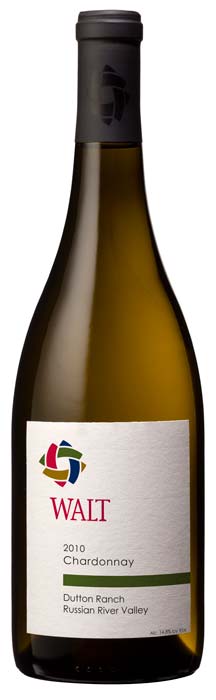
waltFor this price in California, I am buying a bottle of Cakebread Cellars Reserve Chardonnay from Carneros or a WALT ‘Dutton Ranch’ from the Russian River Valley—big, fat, in-your-face wines full of oak and butterscotch. At this end of the scale, California tends to provide Chardonnay making statements that are the social media equivalent of writing in all capital letters.

Some people legitimately like this style of wine; others are bullied into thinking they’re supposed to like it.  I have no beef with the first faction—with the other, I suggest that a red Bourgogne might go better with beef.

And In the Other Corner, Wearing the Hard-To-Pronounce French Trunks…

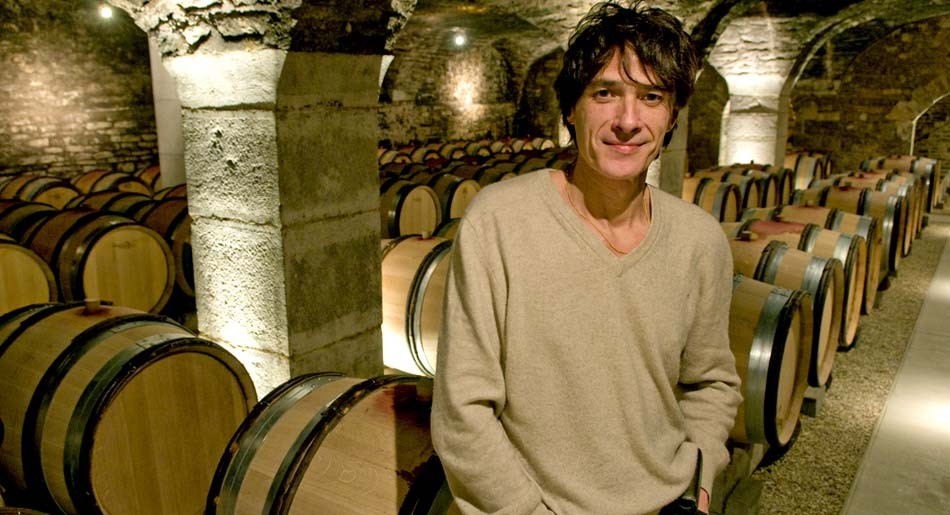
Montoye winmaker Jean-Pierre Cournet

Montoye winmaker Jean-Pierre Cournet

The damp-pavement minerality in the Château de Maltroye (mahl-twah) was so striking that at first, I thought it might be the glass itself—it has happened  in the past that glasses washed in certain municipal waters dry with a particular calcium residue that shows up when you first nose a wine.  So I sniffed out a perfectly clean glass, and tried again.  The same aroma, known as ‘petrichor’, was dominant, and the man with the bottle said that this particular aroma was a signature of the estate, and asked me to allow the wine a moment of respiration.  Et voilà, literally in the length of time it took me to carry the glass from one end of the counter to the other (to avoid some lilies that, for some reason, the tasting room displays) the wine exploded with an effusion of fruit and soft, buttery lusciousness—a transformation as quick and remarkable as dipping a litmus strip into a glass of lemon juice.

Typical walled clos in Chassagne-Montrachet

Typical walled clos in Chassagne-Montrachet

Along with the fruit, malic-acid creaminess and toasted almond richness were the discernible vagaries of Chassagne that the domaine mentions, which by wine writers are often encapsulated with the single, unsatisfying word, ‘complexity’.  When so many layers appear in a wine that describing them becomes an exercise in poetry florid enough to come across as ludicrous, they remain—as the domain also points out—unwritten.  Like Supreme Court Justice Potter Stewart’s definition of obscenity, you may not be able to define complexity—or minerality for that matter—but you know it when you see it.

To me, these are the subtle notes that bespeak the centuries of Burgundian excellence, a wash of nuance, a bright shadow of flavors that are at once nutty, fruity and rocky; the quietness of the expression is the key, not the bombast that can be found in top California Chardonnay estates across the ocean.  No amount of ‘growing up’ will change the essential geology of Sonoma unless it somehow involves the San Andreas fault.

Alas (or not, depending on your preference) my prose leans towards an American level of boisterousness, while Johnson, Clarke and Robinson seem capable of phrasing passages with less noise and more import.

Hugh Johnson

Hugh Johnson

They’re who I’d like to be when I grow up.

Unfortunately, most of the factors that underscore the differences between French wine and California wine are about the very thing that both celebrate, terroir, leading to an inescapable conclusion:

You work with what you’ve got and try to make the most of it.

Which, in conclusion, is why I will never write wine books like Hugh Johnson.

Posted in Burgundy, FRANCE | Tagged , , , | Leave a comment

8° Plato: What the Brewhaha is All About

I just love that new bar smell.

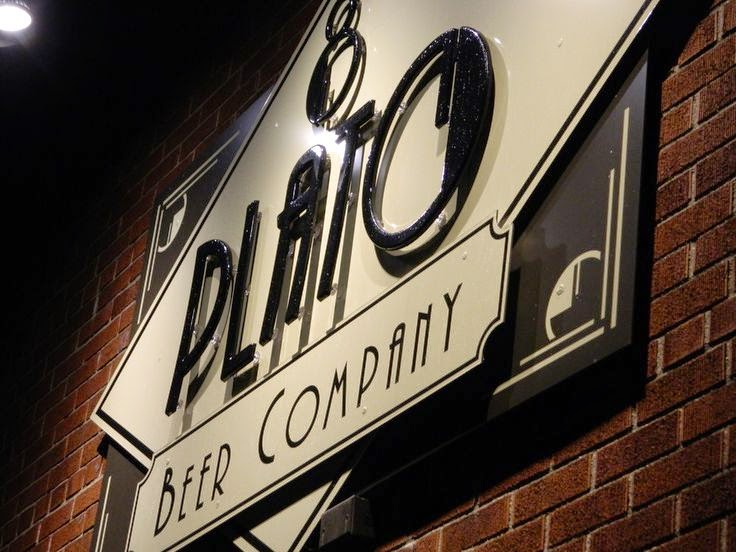
signFrankly, I don’t particularly object to that old bar smell either—the ones where the stale beer mingles with wet cardboard and overflowing toilets from a septic backup and  indelible redolence of generations of barflies, mostly because I cut my alcoholic teeth in those kinds of dives.

It just so happens that 8° Plato doesn’t look, smell, or feel anything like that.  Know what does?  The Old Miami, which is just down the street on Cass in Midtown Detroit.

On the other hand, at 8° Plato, the smell of new paint and fresh beer along with an overall bouquet of sweet Cass Corridor renaissance is most invigorating.  Of course, along with the re-animated storefronts, we’re now supposed to call it ‘Midtown Detroit’ instead of the Cass Corridor, so I suppose, for the sake of supporting this neat little spot, I shall.  The Old Miami is totemically Cass Corridor,  just as 8° Plato is solidly Midtown, and happens to be the best gin join to open its doors in a long, long time.

SHELVESNot that 8° Plato sells gin.  Or wine, unless you count mead, which I don’t.  It sells craft beer and craft cider, hundreds of varieties if each.  Like it’s mothership in Ferndale (which opened in 2011), it is by far the most complete collection of small-batch, under-the-radar artisan beers and ciders to be found in Michigan, and potentially, in the Midwest.  The Ferndale outlet sells 8000 cases of craft beer a year, and hundreds of kegs of the same; the 8° Plato Detroit lists nearly a thousand labels.

They take this stuff very seriously; mash and cider is no joke, even though the owner’s name is Costello and was a stand-up comic for 25 years.

Scott Costello Ain’t Your Granddad’s Lou

In reality, Brigid and Tim are in color, guaranteed.

In reality, Brigid and Tim are in color, guaranteed.

Scott’s partner in  business and life is Bridgid Beaubien, who has a Ph.D. and is not Scott’s straight man, although she’s straight.  She’s a professor at Eastern Michigan University and shares Scott’s love for the obscure sorts of malt beverages they traffic in.  Beers like Belgoo Looper from Belgoober and Strutter from Bitter Old Fecker—stuff that you don’t have to be a stand-up comic to love, although it helps.

Speaking of which, throughout Tim’s quarter century of sucking up guffaws and facing down heckles, I assumed he met many yucksters, and I asked him to toss out the name of a real unknown comic—one without a paper bag over his/her head—that he rates as far funnier than most of the top names in the biz.

He came up with Tim Cavanaugh without missing a beat, so I YouTubled him and you should too.

But, Back to Brew…

Before

Before

So, I knew Tim from years back when I stopped into the original 8° Plato in Ferndale, and I think at the time I tried to write a story about him then, but too many Dana Plato jokes kept surfacing in my prose, and even a former comedian doesn’t need that kind of press.

After.  That's 'cold beer', not 'old beer'.

After. That’s ‘cold beer’, not ‘old beer’.

Not this time, promise:  Although the store is at the far end of the Cass Corridor hip strip that suddenly includes such ‘it’ destinations as La Feria Tapas and Jack White’s vinyl-pressing studio, it’s a skip and a jump from the under-construction hockey stadium.  Although Costello looked at a number of other Downtown spots before settling on this one, I believe he’s hit pay dirt, because if there’s one thing Wingnuts love even more than hockey, it’s beer.

What Does 8° Plato Detroit Have That 8° Plato Ferndale Doesn’t?

Taps and more taps, and although bugle taps may be a good way to finalize the day, the sixteen draft beers at 8° Plato should get you there in style. The selection changes regularly, so the five I tried may not even be available by the time you get there, but here goes anyway:

(I warn you in advance, though, some of these brews are upwards of eleven percent ABV, so they are not for the faint of liver.)

Jolly Pumpkin Pincha-Diskos:  A Saison from Dexter, MI, the nose is rich with tropical fruit, mango especially, and—as suits a Saison pale ale—strikingly sour.

Blake’s Wayward Winter: A vanilla-and-elderberry-infused cider from Armada, MI, the bevvie is suitably fruity with the apple tones still loud beneath the berry and a lingering vanilla.  It is, in short, precisely what it purports to be.

Kuhnenn DRIPA:  The word ‘Dripa’ is an acronym for ‘double rice IPA’, which is itself an acronym for India Pale Ale, which is not from India at all, but from the intersection of Chicago and Mound in Warren.  A strikingly deep, sun-yellow, papaya-scented ale, the brew has remarkable length ending in distinct notes of pink grapefruit.

Perrin Lil’ Griz:  Charcoal and brown sugar dominate the bouquet, and for good reason: This malty American brown ale was aged in bourbon barrels.  Strong, dark and handsome, this is a beer than will loosen the tongue as it rolls over it.

Sierra Nevada Narwhal:  A hoppy, blackish Imperial Stout loaded with espresso and licorice notes; the right beer to end with, the wrong beer to begin with if you’re doing a tasting.  The palate length alone is worth writing a ballad about—it will follow you home and stick in your memory like an earworm.

8° WTF?

I have no idea why 8° Plato is called 8° Plato; I didn’t ask, and if the web site explains it, it isn’t on the ‘About Us’ page.  As for simply asking, I’d rather ask a stand-up comic if he knows any good knock-knock jokes.

Photo stolen from the Free Press

Photo stolen from the Free Press

It’s Christmas week, and all the requisites are in place if you visit over the next few days—the wreathes, the Christmas music loop, the obligatory hipsterjack stereotypical craft-beer lovers in their plaid shirts, buzz-cuts and bushy beards—guys who look like they should be knocking down forests but still cross their legs when they sit.

For them—and like any modern metropolis, Detroit has plenty, no question about it—finding a hangout like this is as rare as finding a Bud Lite at 8° Plato.

In my opinion, it’s guys like Tim Costello and women like Brigid Beaubien who will be Detroit’s ultimate salvation—building tiny oases like 8° Plato amid the urban desert, small pockets of cool that are far more appealing than the deepest pockets of Mike Ilitch or Dan Gilbert.

Posted in BEER | Tagged , | Leave a comment

Norton: Walking Off to Look for America

Let’s lay our cards on the table from the start:

Tegan Passalacqua

Tegan Passalacqua

I’m zowie about Zinfandel.  I dig the rich, meaty Ravenswood lineup whose bar Joel Peterson has raised so high that to leap over it, you’d have to be fitted with bionic limbs.  I go nuts for the subtle majesty of Randle Johnson’s portfolio, where he works with multiple growers to produce Zinfandels that showcase the fruit, the fluff and the finesse. I’m enamored with the deep, dry Zins of Dry Creek, of Paso Robles, of the Mayacamas Mountains and Napa Valley. I’ve had a single vineyard Russian River méthode champenoise Zinfandel from Harvest Moon that sparkles like the stars in that same sultry autumn sky.

And—so that you can get head start on the fires you’ll need when you burn me at the stake—I happen to love the head-trained, dry-farmed Estate White Zinfandel made by Tegan Passalacqua of Turley Wine Cellars, which is as far from your grandmother’s bottle of Beringer as Thunderbird is from Soaring Eagle.

That Said…

Zin on the vine

Zin on the vine

I love Zinfandel, but what I love less is the marketing declaration that Zinfandel is ‘America’s Grape’.  I understand what they mean, of course, and I’ve used that tagline myself. The United States has been producing Zinfandel longer and better than any other wine locale on the globe—it proved an ideal grape for the climate and soil of California, far happier in the hot, dryish Left Coast terroir than the one offered by its motherland, Croatia.  In fact, when it was first planted a decade before the Civil War and a couple of years after the Golden territory became a Golden State, it was understood to produce not only outstanding wine but luscious, much-coveted raisins.

I mention Croatia and the marketing hook ‘America’s Grape’ because both become indispensible components in what follows. Before DNA fingerprinting became a tool for enologists as well as forensic detectives, Zinfandel’s origins were pretty much a mystery. For all of the 19th century and most of the 20th, it was not known that Zinfandel might have its genuine roots many miles away and many centuries removed from those early California plantings.

patty dukeCertainly, at the time, nobody else was growing a grape they called Zinfandel, and when it was discovered that the variety is genetically indistinguishable from Croatia’s Crljenak Kaštelanski, the few remaining vineyards where the vines were still planted in Eastern Europe were not producing commercial quantities of wine.  The Apuglia variety Primitivo, also an extremely close (perhaps Patty Duke identical) cousin to Zinfandel, is not claimed as a native variety even by Puglians. It too, found its way to the sunny climate of Italy’s boot heel via Croatia.

Certainly, the wine we call Zinfandel is, even its many costumes and many guises, so different from Primitivo that U.S. regulations require  that Zinfandel and Primitivo be identified separately.

So Begins Yet Another Search for America…

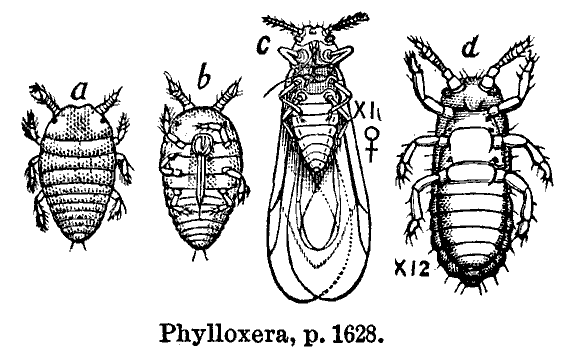
phylloxeraThe search for a real American grape is not difficult; in fact, if it wasn’t for the rootstock of the American vine Vitis labrusca, chances are there would be very little potable wine from Croatia, Puglia or anywhere else other than a few small, isolated pockets of the globe unaffected by the evil little aphid known as phylloxera. The Great French Wine Blight, as it became known (roughly 1866-1888), began around the time that Californians were first beginning to heap laurels upon Zinfandel.  Hitchhiking to the United States to Europe via steamships bearing American vines, the blight destroyed more than 40% of French vineyards over a fifteen-year period, and not unlike the Black Plague in the 14th century, pretty much ruined the European’s 19th century wine economy.  Daktulosphaira vitifoliae, which is what people who like Latin words call phylloxera, also thumbed its little aphid nose at most pesticides and chemicals then in use.

Charles Valentine Riley

Charles Valentine Riley

Phylloxera may have been  an unwelcome American import, but it was discovered that Vitis labrusca—the native North American grape species (as opposed to Vitis vinifera, the European equivalent) which includes the varieties  Catawba, Concord and Delaware—were genetically resistant to phylloxera, which is why the vines sent to Europe, along with the aphids, were perfectly healthy.  So, at the eleventh hour, with wine Armageddon upon us, Missouri’s state entomologist Charles Valentine Riley confirmed a French theory that if you grafted Vitis vinifera—the species that includes Cabernet Sauvignon, Chardonnay, Merlot, Syrah et al.—onto Vitis labrusca rootstock, the entire vine could avoid the appetite of aphids altogether and still produce marvelous, European-style wine.

And that’s how they handled it, thus saving the continent’s wine industry in the purplish equivalent of Hands Across The Water.

Virtually every wine you drink today, no matter its place of origin (other than a few isolated spots in Chile and Greece), has American root stock nestling below the soil.

Labrusca is not Lambrusco: It’s Worse

manischewitz_wineThe problem with wine made directly from Vitis labrusca, though, is that it sucks.  Wines made from Concord—often Kosher wines from a major New York winery whose name I will not give other than to say that it is long as any Latin biological nomenclature and just as hard to spell—usually has  so much corn sugar added that it is like drinking soda pop with a shot of vodka, unfit for most discerning wine palates.  Without the sweetness, an inherent Vitis labrusca quality known by the silly term ‘foxiness’  is almost overpowering.  I call the word ‘silly’ because it is has practically nothing to do with foxes.  Rather, it’s a smell that resembles the foul, semi-viscous pheromones that most mammals, including foxes, secrete from glands located near the spot where the moon don’t shine.

And that’s probably overselling it.  It’s also called ‘musk’ and you squish some of it out of your armpits whenever you forget the Brut. Get the picture?

So the search for a real good American wine grape?  That’s as difficult as finding a tan at an albino convention.

There is, however, another species of native North American grape called Vitis aestivalis. It began as a wild vine growing in the Eastern United States and Southern Ontario.  There are few species of it still around, and one of them goes by a name even sillier than foxiness or Daktulosphaira vitifoliae: ‘Bland’.

Dr. Norton in his native habitat

Dr. Norton in his native habitat

By far, the most commercially available Vitis aestivalis is Norton, named after the Virginia doctor called Daniel Norton who first began to sell cuttings from his vineyard in the early 19th century.

Descendants of those vines are what are today grown and bottled, primarily in Virginia and Missouri, where it is the state’s official grape.

Is Norton the wine world’s next Syrah or Zinfandel?  I don’t think so.  Is it likely to become the ‘it’ grape among wine cognoscenti constantly on the outlook for a new flavor-of-the-month?  Not in my opinion.

But is Norton capable of producing a wine that an entire roomful of wine cognoscenti might be easily fooled into thinking was a Syrah or Zinfandel?

Without the slightest shred of doubt.

Norton in all her pre-crush spendor

Norton in all her pre-crush spendor

Is Norton, therefore, worth writing an entire book about? Walking arm in arm through the vineyards of some of the top Norton growers in the United States? Boarding a Greyhound in Pittsburgh or hitchhiking from Saginaw or renting a Enterprise in Southfield Michigan and heading off to look for America’s genuine, born-in-the-USA, heritage grape, one without a foot in either Croatia or Puglia?

From what I have sampled so far—from Texas to California, and especially from Missouri and Virginia—I think it is.

And that, my friends, is precisely what I am about to do.


Posted in Uncategorized | Tagged , , , | 8 Comments

Why Some Wines Are Better Off Young and Some Men Better Off Old… ish

Simply saying that some wines are meant to be consumed young is just as easy as saying that some wines improve with a few years—or decades—of cellar aging.

Words are easy; the depth of their meaning and the profundity of their significance can only be truly understood in the flesh—or as it is known to enologists, the outer, inner and septal.

Andrew Jefford

Andrew Jefford

Learning to know when a wine is over the top and when it is under the bottom is something that takes a lot of years of tasting notes.  That’s why I tend to trust the palates of the wine world’s elders, whether they are internationally respected wine journalists like Andrew Jefford or middle-aged hacks from Detroit like yours truly; we tend to corral our experiences, and the best among us can explain in comprehensible language why we all taste the same things and why we all taste different things.

I have no idea who this is.

I have no idea who this is.

Like to Andy and me, the changes that happen to wine as it ages occur on a molecular level, and the chemistry is overwhelmingly complex. Like all malleable things, animate and otherwise, stuff evolves—sometimes for the better, sometimes not.

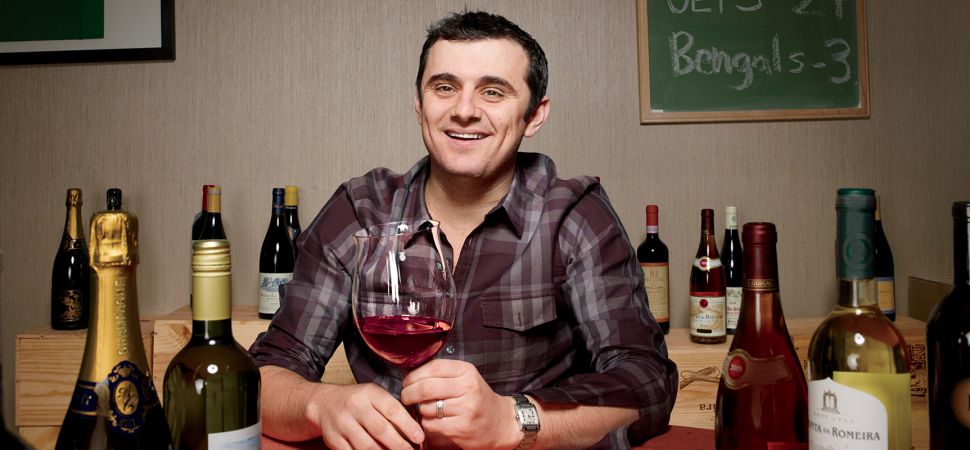
Here, if I had absolutely no class, I’d bring up Vaynerchuk, but I won’t.

A well-made white wine from a top estate, regardless of whether that winery is in the new world or the old one, is meant to be consumed when the acids and sugars are suspended in an ideal balance.  Those released when the acids are too aggressive may seem unpleasantly sharp on the tongue and should probably hang around in a cool, dark basement until the tartaric and malic acids mellow, but before they turn into acetic—i.e. vinegar.  Of course, those wineries with reputations to uphold frequently wait until a certain amount of bottle aging has happened before releasing them; that’s why you might find a ‘new’ bottle of 2011 Château d’Yquem on today’s wine shop shelf.

They are, in fact, like the producers of most Bordeaux, covering their assess in case you open their wines too young and dislike them.  Trust me, it is more financially expedient for them to release the wines earlier, because inventory costs may be translated into financial losses.  But losing your faith in their brand is a loss that is frequently unrecoverable, and thus, for them the wait is worth it.

Clipboard bottlesTannins in a wine, generally red, play an equal role in preserving fluids long enough for the requisite interactions to occur; it is a natural preservative which acts much as added sulfites do to prevent rogue bacteria from spoiling even the finest of crafted wines; most good red wines that have the potential to become great red wines have ample tannins and sufficient fruit flavors to back them up.  That’s why when the tannins settle down and assimilate within the wine, adding structure and texture, there needs to be sufficient depth of fruit flavor initially to outlive this critical period of evolution.  Consumed too early, tannic red wines come across as harsh, bitter and not particularly enjoyable. This is pricey old-school Bordeaux  or Châteauneuf-du-Pape as opposed to cheap new-school shelf-stackers from Australia.

I mention this because I know a fantastic restaurant that is closing in a week, and they are selling off their equally phenomenal wine cellar.

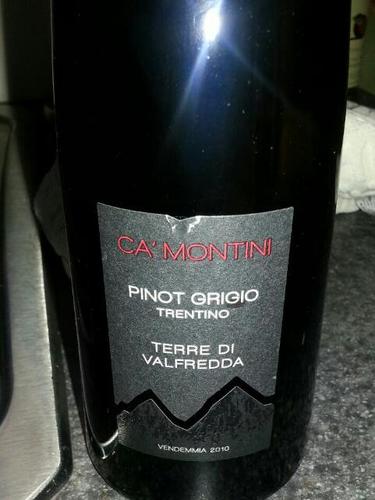
dyquemI was helping with that chore and I came upon a bottle they had forgotten about—a Ca’ Montini ‘Terre di Valfredda’ Pinot Grigio from Trentino, vintage 2010.  They were going to toss it out due to age, but since I know it has been stored in an ideal cellar setting, horizontally, alongside some of the classic d’Yquem mentioned earlier, I figured that any deterioration of the wine itself could be blamed on the wine itself.

Pinot Grigio from a decent house like Ca’ Montini is a wine that critics tend to love.  Winemaker Riccardo Cotarella’s single vineyard ‘Terre di Valfredda’ is among the top 10 most highly rated Trentino wines by a whole slew of critics.  I never tried this one within the allotted time when such wines are usually optimal; a year or two from the date of release.  But at the time, various wine writers described it as showing ‘minerality, oyster shells, almond skins and perhaps some subliminal Nashi pear’.

Considering I have no idea what a Nashi pear is, I have to assume an extreme level of subliminality; I can assure you, no pear of any stripe remains today.

And none of this ‘can I use it for cooking wine’ balderdash, please.  Next time that thought occurs to you, suppose your significant other just said, “This loaf of bread is moldy.  Should we use it for toast instead of sandwiches?”

Therein will lie your answer.

fat jennyRiccardo Cotarella never intended his wine to be tasted like this, and on my grandmother’s side, Montini is my family name.  We do not want to be represented by this bottle any more than smoke-alicious Jennifer Love Hewitt wants to be seen like the photo to the left.  But, it is what it is.  Jenny dropped the tonnage, but I am afraid that this bottle of Cotarella-Ade is beyond recovery, and not from lack of proper storage.  It just overstayed its welcome in the wonderful world of wine, sadly, undrunk.

The nose is lemony, but like the lemon you find in a baggie in the rear of the fridge a month after you put it there.  The wine gives off an aroma of slightly spoiled fruit, which, in essence it is.  There is no vinegar smells, not much obvious oxidation in the nose although the wine itself has gone from pale gold to a sort of goldenrod orange in color.  The palate is flat and slightly viscous, without particular flavor or bite.  All of which is to be expected.

ca montiniIn a restaurant, I wouldn’t necessarily send this back as spoiled, but I wouldn’t drink it either.  I’d chalk it up to experience and mention to the waiter that the wine is clearly past its sell-by date, and although it may be in some sense ‘fit for human consumption’, it isn’t fit for customer consumption.

Then, like the good, oldish, father figure I am, I would suggest that the staff drink it themselves after work—after all, as good, oldish fathers everywhere are fond of saying:

 “Don’t waste wine, damn it!  There are little children going to bed sober in China.”

Posted in ITALY | Tagged , | 3 Comments

‘The Jinx Fragment’—Unnatural Detroit, Naturally

I’ve intentionally kept Intoxicology Report ad-free for five years because I don’t want my opinions or your support to be in any way beholden. 

My books, however, I sorta do want to sell (!)

In my halcyon days, when I used to number drug dealers among my coterie, I learned two of life’s fundamental lessons:

  1. If you give away the first hit and people like it, they will come back for more and the second time around, they will actually give you money for it. And if they like it even more, they will keep coming back until they are foaming at the mouth; they will call you in the middle of the night and knock on your door if you don’t answer your phone.
  2. Drugs are bad for you.

‘The Jinx Fragment’: The First One’s Free

jinx_final_flatSo, using that same life lesson, but applying it to something that is actually good for you—reading a book—I have released the first chapter of my Detroit-based novel ‘The Jinx Fragment’ free of charge, online, at thejinxfragment.com

After that, at a fee of $3 dollars per chapter, I will release the chapters once per week for 20 weeks until the story is all told.  Then I will publish ‘The Jinx Fragment’ in a hardcover format.  In the meantime, the lifeblood of the story is author/reader interaction, and there are plenty of places on the website where you and I can discuss the story as it unfolds and as the plots twists and meanders through the grime and grit of downtown Detroit.  You can discuss it among yourselves, too.

Those who read and like Chapter One—and trust that I didn’t fuck the rest of it up—have the option of buying in bulk—an all-in-one purchase at $20 for all 20 chapters—saving you a considerable sum over the long haul.  Even so, you will still get only one chapter per week as they are released, so there will be no spoilers.  You’ll get a voucher that will allow you to download the chapters as they are released.  But you will also be able to purchase the print copy at a discount and will automatically receive a thank-you ‘Jinx Fragment’ poster signed by me and the illustrator, my son Jesse.

Each chapter, and the print version of the book, will also be illustrated by Jesse, who has a supernatural gift of his own.

Unnatural Detroit, Naturally…

‘The Jinx Fragment’  is, in fact, a supernatural story set amid the decay and decadence of Detroit, borrowing elements from classic horror stories and placing them in the hands of a couple of inner-city teenagers. It was written for young people like them, but also for the sort of young dude I was and who you might have been too—the kind who loves to read, who loves characters and words and otherworlds where the supernatural becomes natural.

I still dig these kinds of books today, and I’m betting a lot of you do too.

There are plenty of brutal truths about Detroit in ‘The Jinx Fragment’, but they are not glorified.  Rather, the glory presented  is found in hope and transcendental power, which is what will save Detroit in the end, and will become (I hope) the last life lesson that any of us needs to learn.


Excerpt from ‘The Jinx Fragment—Chapter 1: Casket Sharp

jinxch1“…Overhead, as the moon quivered in the gauzy purple sky, another man suddenly strode into the fray.

Young G was the first to see him—the exaggerated steps, the loping gait, the arms swinging with confident, feminine flourishes. The man was dressed in a white dress suit with the front part of the coat cut away; in back, tapered white tails fell nearly to the ground. His neck was done up in starched wing collars and white bowtie; his face was the color of dried plaster, his hair was shimmery with pomade, combed straight back and decked with almond blossoms; energetic tendrils fell to the middle of his back. His beard, also greasy with hair gel and even blacker, was absurdly trimmed into a tapered slash-shape reaching from his left ear, through his lips, and ending below his right ear.

jinx_final_flatHe was dressed, as the poor folk in these urban interstices liked to joke, ‘casket sharp’—the way you looked after the undertaker finishes with you…”

Posted in GENERAL | Tagged , , , | 1 Comment