The Middle Loire: White Soul, Red Heart, Pink Whatever

Thanks to a confluence of sauvignon blanc, melon de bourgogne and chenin blanc, the soul of the Loire Valley runs whiter than Willie Nelson’s rump.

But the heart of the region—Chinon—is red.  Boiled lobster red; red as Christian wrath; redder than Nicklas Lidström’s jersey; redder than a horny baboon on a Saturday night.

On the Loire’s left bank, directly in the center of the appellation, surrounded by a virtual Posse Comitatus of caucasian-colored juice, Chinon defiantly raises its red flag. Nearly 95% of all Chinon is brilliantly red, aggressively red, incontrovertibly red, and wonderful domaines like Couly-Dutheil, Bernard Baudry and François Chidaine produce red wines of great decadence, beauty and depth.  These are blood-rousing wines saturated with iron-tinged summer berries and often touched with elusive herbal notes like mint, tobacco and green peppercorn.  Equally, violet and anise are descriptors that pop up regularly in Chinon tasting notes.

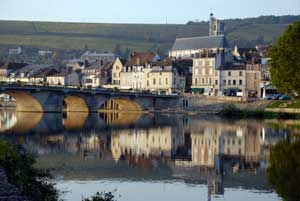
That’s down to cabernet franc, Chinon’s rock star.  By law, 10% cabernet sauvignon is permitted in the wines, and you’ll find pockets of gamay throughout the region, but nearly all the idiosyncratic Chinonois denominators that fans gleefully sniff around for come from the small-berried cab franc, an early-ripening varietal perfectly suited for the cool inland climate of the Middle Loire.  The area’s unique terroir contributes immeasurably to the grape’s age-worthy performance as well. The soils are mostly alluvial sand, with clay underscored by tuffeau—a strange sedimentary limestone that’s only a little heavier than water.  Nearby Bourgueil makes similar wine with similar strengths.

Locally, cabernet franc is called Breton—nicknamed for a tough local clan, the le Bretons.

François Rabelais

Another moniker inevitably associated with Chinon is François Rabelais.  If, perchance, you are not a student of French Renaissance literature, you may not have heard of him.  He’s worth a web search, though: the 15th Century iconoclast Rabelais was in many ways the father of fantasy, satire and all things grotesque; subjects dear to the hearts of most thinking cynics like you and me.  You may or may not agree, but in my book, any writer banned by the Vatican while owning a winery (Clos de l’Echo) gets an uncontested seal of approval.

White Power

Despite Chinon’s red badge of courage, its neighbors are mostly white, or shades thereof.  Among them, some live in trailer parks—off-vintage chenin blanc produces Mohave dry wines that taste like sulphuric acid smells.  Some live in little pink houses— Cabernet d’Anjou is an extraordinarily long-lived rosé—and at least one, Vouvray, lives in a big stankin château overlooking the meandering Loire river.

Vouvray is most definitely the Laird of the Middle Loire, producing spectacular, age-worthy  wines that range from crisply dry to skull-crumblingly sweet; some sparkle (look for ‘mousseux’ on the label), some just sit there and smell good.  It’s here, to the east of Chinon, that the apogee of chenin blanc is reached, especially in heat-stroke years.  As in all of northern France, in Vouvray, vintage is everything.  This is the outpost of winemaking, nearly the fringe of where grape cultivation is even possible.  But when the stars align and the greenhouse effect blooms, Vouvray is a remarkable beast.  The drier version offers a gripping minerality (there’s so much tuffeau here that wine is aged in caves hewn from it) backed by concentrated tangerine peel, cantaloupe and Bosc pear flavors while the sweeter Vouvrays—many nudged along by botrytis—are honeyed and hallowed warhorses capable of living for a hundred years, through several generations of cellar masters.   True Vouvray zealots—and they are legion in France, though not so active here in the States—will always place the quality level of, say, a century-old Huët le Haut-Lieu over that of the storied Sauternes Château d’Yquem.

Compulsive Touraine: The Felix Unger of the Loire

Touraine Syndrome: Cross-Channel Branding

Microsoft Word, Ralph Lauren, Type ‘E’ mothers—you know who I mean: Moms and monopolies who can’t seem to ‘filter’, who insist on being everything to everybody.  That’s Touraine, sitting east of Vouvray, where frenetic tradition produces red wine, white wine, pink wine, sparkling wine, and not only that, but where vignerons can’t even settle on a chic varietal.  Regulation permits cab franc, malbec, pinot noir, cabernet sauvignon—even gamay (which tend to suck in Touraine, as they do everywhere on the planet outside of Beaujolais).  The list of allowable whites is equally long, and includes chardonnay along with a local grape called menu pineau.  The wines are good, not great, but the photo ops are great, not good: Most of the Loire’s most admired and picturesque grand châteaux dot the Touraine countryside.

Ain’t No Cure for the Saumur-Time Blues…

…Except for the Saumur-time reds and whites.  Or for that matter, the pinks from nearby Anjou.  These two regions, to Chinon’s cartographical left, are often mentioned in the same alcohol-soused breath.  They form a neat little triangular farewell to this surface-scratch of the Middle Loire.
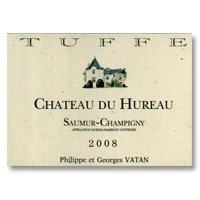
Here, it’s a return to basics:  First, the reds are mostly cabernet franc, at which the sub-appellation of Saumur-Champigny excels, especially those of Château du Hureau.  Saumur-without-the-hyphen dabbles in red wine,  but is most celebrated for its chenin-based mousseux, the best of which are found in the sub-appellation Crémant de Loire.

Anjou—Saumur’s blushing bride—is synonymous with rosé, and these discreet, sweet, salmon-colored jewels are made from cab franc and the indigenous fickle-but-high-yielding grolleau noir.  But that’s only half the story.  The other fifty percent of Anjou production is decisively non-pink, and a particular nod goes to the mineral-rich whites of Savennières (notably those of biodynamic winemaker Nicolas Joly) and the dessert wines of Coteaux du Layon, especially Bonnezeaux and Quarts de Chaume.
And by all means, don’t overlook Anjou-Villages, an appellation created in 1987 to showcase the area’s unique, shimmering, fleshy reds.  Grown in shale and gravel, these cabernet franc/cabernet sauvignon-based wines possess a savor unique to the AOC, showing nuances of iris, leather and licorice.

In fact, why not spend the upcoming summer sampling every single thing that the Middle Loire has in the shop window?  Touraine to Anjou, east to west, start to finish?  You’re guaranteed a remarkable, multi-hued, G-force-filled rollercoaster ride of highs and lows and peaks and valleys during which you’ll find yourself in the pink like white on rice, eyes sparkling while you paint the town red.

Of course, then when your French lit teacher asks what you did over summer vacation, you’ll have to reply: “I really don’t remember.”


Posted in Cabernet Franc, Chenin Blanc | Tagged , , , , , , , | Leave a comment

Torres Can Go Green So Long as the Tempranillo Stays Red

For the most part, winemakers are a responsible lot.  They have to be; as stewards of a substance that causes great joy (you and me) and great sorrow (all those victims of cirrhosis, car wrecks, alcohol-fueled felonies) they’ve got to be constantly en garde, adding asterisks—metaphorical and literal—to every label, magazine ad or Super Bowl commercial .

How to drink responsibly in 2011

‘Drink responsibly’ they chide, but what it really boils down to is: The only way to guarantee that innocent bystanders remain risk-free when you consume alcohol is to put yourself in a straight jacket, chain yourself to a ceiling joist and suck it through a straw.

Since that won’t happen, winemakers are left with an inevitable guilt complex, and lots of them do the next best thing:

They go green.

The initial irony, of course, is that it is hard to find a multi-billion dollar industry that is so  green to begin with.  Wine at its essence—the vineyard—demands it.  Unlike corn, soybeans, mung beans and other agricultural products, grapes don’t necessarily benefit from chemical fertilizers; a stressed vine makes good wine.  That’s a treatise of itself, but essentially, the more grape roots have to search for nutrients, the more trace elements they pick up.  Hence, a struggling vine has a better chance to produce a complex, multi-dimensional wine, something for the Holy Grail.

Meanwhile, people aren’t looking for complex, multi-dimensional corn flakes.

So, to win top prize in the wearin’ o’ the green,  winemakers tend to focus on stuff they can brag about, like controlling the COemissions which are natural byproducts of winemaking, putting out extra-big Blue Boxes filled with empty Fiji bottles and littering the vineyard with insect traps baited with sex pheromones secreted by females to trap the males and thereby stop reproduction—an aggressive technique that can be summated in a single word: Eeeew.

Lex Luthor, American, only steals GREEN money

Cashing In On Catastrophe

Wasn’t there some old Superman movie where Lex Luthor bought up a bunch of Nevada desert so that when California slid into the ocean he’d own the new West Coast?  Of course, he’d probably have made more money selling breast-stroke lessons to illegals, who would then have to swim all the way to Oregon to find jobs.

Miguel A. Torres

Anyway, in a not-dissimilar move, Miguel Torres, President of  Bodegas Torres has planted three hundred acres of pinot noir grapes three thousand feet up, in the Spanish Pyrenees, anticipating that global warming will ultimately make this currently inhospitable terrain viable vineyard country, part of Europe’s  new ‘wine belt’, which appears to be moving north at a rate of 25 miles per decade.  He anticipates that Rioja may ultimately become too hot to support vines and is making some pre-emptive strikes.  (Although, who is planting pinot noir in Rioja in the first place?)

Good one, Mike; you are a genuine visionary, a real ‘if-life-hands-you-lemons type’ of thinker.  Never mind that five to 10% of rural Africa may starve to death in the wake of the rising mercury; just so long as us survivors can count on an unlimited supply of Bodega Torres tempranillo.

God should send you an Ice Age instead.

The Color of Money.  Real Money, That Is

Good ol’ American greenbacks: The stuff that makes the world go round, the stuff with which Bernie Madoff made off.  That wacky, self-invented Euro, that with which Bodega Torres trades, comes in more colors than a sack of Skittles.  Who could keep track?  And all that ink?  That’s gotta be bad for Mother Nature.

Just kidding!  It’s All In Fun!  Actually, Torres Rocks Green!

Bodega Torres has, in fact, proven a long-term commitment to both a sustainable environment and a sustainable PR campaign, winning the prestigious ‘2010’s Green Company of the Year’ award given out by the equally prestigious European drink rag ‘Drink’.   The jury rewarded the winery for improving its systems and procedures to reduce its carbon footprint, minimizing the impact it has on its surroundings and promoting ecological awareness, both among its workers and also among its clients and consumers.  Among the initiatives that impressed the panel were Torres’s promotion of a massive wind park, the launching  of a macro-project to utilize their biomass (whatever that means), a 2020 goal of reducing their CO2 output by 20%, and a program whereby the contents of the spittoons in their tasting room is recycled to thirsty Africans.

The panel was impressed, but I can’t speak for the Torres Board of Directors.  Not sure how Miguel explained the purchase of three hundred frostbitten acres in the Pyrenees in anticipation of Global Warming, then the outlay of millions more to prevent that very disaster from coming down.

I am assuming that the words ‘hedge’ and ‘bet’ were used.

*

To learn more about Bodega Torres’s ecological projects, check out:

http://www.torresgreen.com

Posted in Rioja, SPAIN | Tagged , , , , , , , , | Leave a comment

Michigan’s Rieslings: Quality on Ice

Among the endless ‘doh’ moments experienced by Michigan’s frost-bitten, hard-scrabble winemakers is that the grape they grow best, riesling, accounts for less than two percent of retail wine sales nationwide. Consumer ignorance is perfectly excusable since riesling is vinified in a variety of styles, from bone-dry to semi-dry to dessert-style sweet wines crowned by highly-touted riesling ice wines.

Ed O'Keefe

According to Sean O’Keefe, who along with his brother Ed was among the leaders in the establishment of a global federation of riesling producers known grandiosely as the “International Riesling Foundation’, points out, “This range of sweetness levels can make it challenging for folks to identify riesling’s character. The work within the Foundation, led by respected wine writer Dan Berger, is meant to help consumers find the styles they are seeking when they shop.”

O’Keefe, of Chateau Grand Traverse winery, is among a slew of such Michigan vintners being recognized for the quality of their rieslings.

Following are notes taken from a cross-section of these, tasted blind and in no particular order.

Dry/Semi Dry:

2010 Dry Riesling, Brys Estate, OMP, around $20:  A classic cool-climate riesling nose of wet stone and peach leads into a lively palate filled with evergreen and citrus; the acidity is well-balanced, the wine is silken on the tongue with a long finish touched with lemon zest. 

2008 Dry Riesling, Pentamere, No Appellation Listed (Michigan/Ontario grapes), about $18:  Pineapple and ripe apricot dominate the nose, but the flavors themselves underperform a bit; the palate is warm, with an apple/ almond on the finish reminiscent of a dry Reinhessen riesling.

Wine people say 'petrol', not 'gasoline'. Any questions?

2009 Braganini Reserve Riesling, St. Julian, Michigan, around $15:  A pleasant but not particularly lush offering; petrol and mineral driven rather than fruity; also, there’s a hint of barrel-like flavors unexpected in the varietal.   Simple overall, but not necessarily flawed.

2010 Arcturos Dry Riesling, Black Star Farms, OMP, about $15:  A bright, lively honeysuckle nose saturated with apple skins and white peach; quite complex and opulent throughout; big, bold and nicely balanced with apricot and peach notes and a refreshing pettiance as an added bonus.  A good ‘go-to’ wine for difficult food pairings.

2009 Dry Riesling, Chateau Grand Traverse, OMP, around $12.50: Tart and well-defined with vibrant green apple and lime in the bouquet;  beautifully balanced and exotic in the mouth with pine needles opening to tropical pineapple and lemon mousse.

Adam Satchwell of Shady Lane

2008 Dry Riesling, ‘Estate’, Shady Lane, LP, about $15:  A brooding riesling tinged with dusky sulphur and earth notes; the wine requires a few minutes of air time to revive itself, whereupon it shows some nice grapefruit and a moderately long finish.

2007 Riesling, Gill’s Pier, LP:  Nice tropical notes on the nose along with hints of beeswax and petrol; simple and markedly one-dimensional mid-palate with a little honey and papaya through mid-palate and a quick, if surprisingly supple finish.

2010 Riesling ‘Old Orchard Vineyard, Left Foot Charley, Leelanau, about  $16:  A light but lovely nose of honey and hay; juicy red apple on the palate with a bit of petrol playing in the background. Mouthfeel is lush with some lime acidity to balance the sweetness.

Ice Wine (Prices given are for .375 ml, or half-bottles)

Black Star Farms ‘A Capella’ Riesling Ice Wine, OMP, 2008, $92.50: It was good enough for Obama to serve at the White House and good enough to take Gold as Best Dessert Wine at the 2011 Michigan Wine & Spirits Competition, so it’s good enough for you.  Ripe apricots, peaches, pineapple, exotic flowers, and subtle spices (cardamom?) make for such an ethereal delicious wine that you might just forget about the price tag.

Brys Estate ‘Dry Ice’, OMP, 2008, about $ 75: Layered with bracingly bright notes of grapefruit, apricot, pineapple and passion fruit Coenraad Stassen’s frosty ferment has proven a winner in the past, and literally, having taken home a medal in the prestigious 2010 International Wine & Spirits Competition held in London, England.  Called ‘Dry Ice’ because of its relatively high alcohol content of (13.9%) and lower-than-most residual sugar content (6.8%), the wine should age beautifully over the next two to five years.

Chateau Grand Traverse Riesling Ice Wine, OMP, about $70:  Aromas of ripe peach jam lead into a sweet palate front-loaded with fresh tropical fruit, honey and hints of white pepper followed by an eruption of pineapple, apricot, floral honey and guava. Lemon drops, oak and Bartlett pear linger on the finish.  

Posted in Michigan, Riesling | Tagged , , , , , , , , | Leave a comment

The Upper Loire: How White Was My Valley?

How white?

Apartheid white.  Pillsbury Doughboy white. University of Mississippi, pre-1962 before-the-fire-hoses white.  White enough to say to Johnny Winter, ‘Nice tan, dude’…

I’m talking about the wine.

Upper Loire's lovely Gatinais, known as the Garden of Paris.

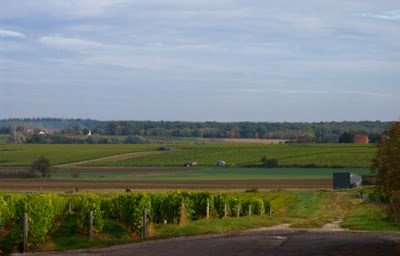
The wild Loire is the longest river in France, and the associated winemaking areas are vast.  Originating in the deep south, virtually in the Rhône appellation, it scrambles up through Orléans (Jeanne d’Arc-ville) and hooks over toward Tours in the country’s heartland.  It’s here, in central France, in the northeastern limit of the Loire Valley, that the anointed whites of the Upper Loire are born.

During the Middle Ages, these wines were more highly prized than those of Bordeaux or Burgundy—though on the other hand, contemporary 13th Century whizbangs also thought the Black Plague was spread by cats, killed them all, then found out that the Plague was actually spread by rats, whose numbers increased geometrically without any cats.  So their judgment may be called into some question—the survivors anyway.

Nonetheless, these vivid, crisp, hauntingly aromatic and almost supernaturally focused whites are arguably the pinnacle of their particular varietal, which in the case of the region’s two most revered names, is sauvignon blanc.

100% sauvignon blanc, too, merci beaucoup—none of this Bordelaisean nonsense with the semillon and the muscadelle and the ugni (emphasis: ‘ugh’) blanc.

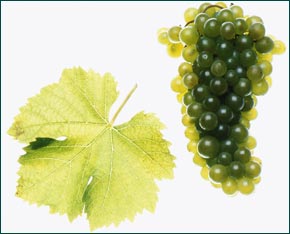
Sauvignon Blanc, from 'Kassel's Field Guide To Indentifying Non-Poisonous Wine Grapes'

And the names?

On the Loire’s right bank, punching through silex—a peculiar, pulverized soil made of powdery flint above a base of clay and limestone—is the commune of Pouilly Fumé, known for a singular pale wine whose elusive aromatics suggest musk, smoke and damp-stone minerality.  The profile is so unique that Robert Mondavi attempted his own version in the late 1960’s, meaning to drag himself from the whirlpool of mediocre, overtly sweet sauvignon blancs then dominating the California wine market.  Dubbed ‘Fumé Blanc’, it was (and is) a textured, elegant, smoky and nuanced wine, and was, in some ways, the house upon which Mondavi quality was built.

Debauched King

In the Loire, the history of Pouilly Fumé is a soupçon more colorful than the wines; the largest holding, in the hands of families Comte Lafond and Ladoucette, was purchased from the bastard daughter of debauched Louis XV, while the vineyards themselves have undergone several scorched-earth blitzkriegs, including their total destruction in the 9th Century by Charles the Bald—a guy who was probably about as fun as his name suggests.


Sancerre’s Sincere Sauvigons

Meanwhile, on rocky hills on the opposite bank of the Loire, the sixteen villages of Sancerre AOC glance over at Pouilly Fumé with a sort of supercilious smirk.  Here, the wines are more finessed, showing less minerality and more fruit, less smoke and more herbs-in-flower aromas and tastes.  Of course, such a generality is gross—in fact, Sancerre is comprised of a varied geology, and wines from individual terroirs express one-of-a-kind characteristics.  To the east, flinty soils produce wines of almost steel-like elegance and austerity; the central vineyards are chalky and the wines are more floral and delicate and almost Chablis-like; in the gravelly northwest, Sancerre tends to reflect an array of unusual fruits, many exotic—passion fruit, quince and lychee.  All three plead a pretty respectable case that, Marlborough, Willamette and Graves notwithstanding, the Upper Loire is sauvignon blanc’s purest sanctuary.

In ways, throughout Loire’s culture, purity is the hallmark, and the folks who live here are reputed to have the purest of all French accents—despite being assured that, no, Peter Sellers in the Pink Panther did.  Loire’s goat cheese (which, like the wines, have its own Appellation d’Origine Contrôlée) reaches such heights as coagulated ruminant casein can.

And as a wine-tourist destination, it’s hard to beat: The thousand chateaux, medieval cathedrals and pastoral countryside scenes are heartbreakingly beautiful—and that’s before you visit the vineyards.

Seeing red

Hillbilly vampires

Now, if I suggested that no red wine whatsoever comes from the Upper Loire, my bad; pinot noir is grown on select sites throughout the region, though in less-than-perfect vintages it tends to be pale, acidic and almost embarrassing with an odd rhubarb and blood profile; perfectly acceptable if you happen to be a hillbilly vampire.

Nonetheless, with a recommendation to first investigate the vintage, I humbly backtrack and point out a handful of drinkable red Sancerres from de Ladoucette, Cotat, Château de Tracy and Crochet.

Call it white flight?

Tasting Notes:

(The following represent rationally affordable, reasonably available examples from both communes.  By no means are these the best, but they are extremely typical of the similarities and differences between the two, and both are solid, well-made Upper Loire sauvignon blancs)

View from Les Berthiers

Domaine Berthiers, Pouilly Fumé , 2009, about $27:  Maturated on the lees without malolactic fermentation, the cream and crispness that characterize this wine are the pure, natural expressions of the fruit—exactly what you’d hope for in a Pouilly Fumé   Hazelnut, wood smoke, dust and orange on the nose; an oily, almost sappy richness in the body; beyond the mouthfeel, apricot, pear and orange predominate with nuts and honey on the finish.

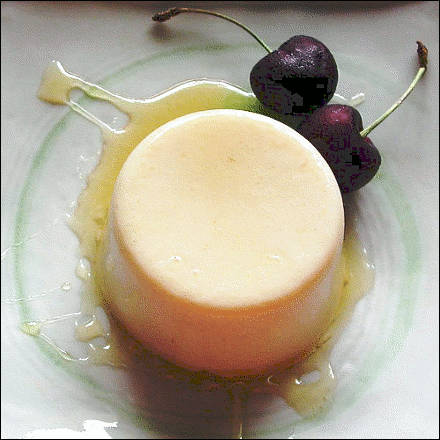
Panna Cotta, not Patient Cotta

Terra Cotta, not Patient Cotta

Domaine Patient Cotta, Sancerre Vielle Vignes, 2009, about $27:  Laser-sharp and exuberant, saturated with minerals, fruit and flowers.  The wine’s nose pulls all elements together: Wild white flowers, damp crushed stones and grapefruit mix and mingle, exploding on the palate with lime zest, lychee and a serious dried-herb grassiness; even a distant echo of brine.  Likely the result of old-vine deep-roots, the finish is long and complex.  It’s the flint that lingers longest on the finish—almost too long.


Posted in Loire, Sauvignon Blanc | Tagged , , , , , , | 4 Comments

Twisted Wines for Twisted Times

I know this guy named Delicato, and he’s every bit of that—a soft-spoken type of dude  who wouldn’t swat a fruit fly.

The name ‘Indelicato’ strikes me as a bit more, well, twisted.

Chris and Jay Indelicato are perfectly normal looking gentlemen

Perhaps that’s the reason for the ‘Twisted’ tag attached to Chris and Jay Indelicato’s recently released roster of low-end, easy-drinking wines produced by DFV Wines of Manteca (Spanish for ‘lard’), California.  Wine Enthusiast’s  2007 ‘Winery of the Year’, DFV was founded in 1924 by Chris and Jay’s grandfather, Gasparé Indelicato.  It has for eighty-five years been a solid producer of reasonably priced wines, many of which end up as shelf stockers at your local Piggly Wiggly.  This is not a dis by any means—Lord knows, Piggly Wigglers need to drink and Central Valley is Tom Joad country, primarily interested in Thompson seedless grapes, so any winemaker not growing french friggin colombard to make generic chablis by the barge-load must be commended for focusing on a better class of vinifera.

Tom Joad, however, is scary-looking.

Back To Twisted

Dee Snyder would be scary-looking if he wasn't such a putz

As the genuine story goes, the name refers to the label’s first release in 2007 of old vine zinfandel, which as a biological specimen is indeed gnarled and knurled and deformed and twisted.

I buy into that.  Still, to me ‘twisted’ conjures up images of tacky Ashley Judd in that overcooked 2004 potboiler, or Keith ‘Don’t Pronounce It Like It’s Perspiration’ Sweat, or dystonia, the neurological disorder that turns peoples’ limbs into pretzels.

Or even Dee Snyder.

Prime source for Manteca lard

But wine?  Not so much.

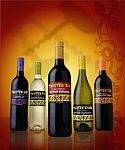
And anyway, in the end, Twisted is anything but twisted.  It’s predicable value wine: loopy and spritzy with a splashy label and no pretentions to become anything else. Nothing for the cellar, unless you plan to barbecue down there with your buddies tonight.  Retailing for under eight dollars, Twisted marketing shtick insists that the brand was ‘born out of a desire to challenge the norm’ then presents a portfolio of chardonnay, pinot grigio merlot and cabernet sauvignon—probably the least normality-challenging line-up on the planet.

Are they playing with our minds over there in Manteca?

If so, that’s a bit twisted, sister.

TASTING NOTES: (Wines all retail for around eight bucks)

Twisted Pinot Grigio, 2009:  Not the least bit indelicate: Lightly effervescent, lightly touched gardenia and jasmine, some pear, melon, lemon blossom and perhaps a bit of ginger. 

Twisted Chardonnay, 2009: Crisp and lightweight, with a mix of yellow and green apple, melon and light toast notes along with some tropical flavors; mango and pineapple especially.

Twisted Merlot, 2009:  Round, but slightly bitter; soft, with cherry, cocoa and ripe pepper.

Old vines

Twisted Old Vine Zinfandel, 2010:  Juicy with brambleberry jam; nicely layered with damson plum, spice, and licorice.

Twisted Cabernet Sauvignon, 2009:  Lack real cab character, it’s nonetheless a rather easy-drinking wine with black cherry, and a little oak parch on the tongue.


Posted in Central Valley | Tagged , , , | 1 Comment

Château de Campuget’s Vivacious Viognier

How about a little role playing?  Let’s say you’re a savvy bevvy marketer trying to get a leg up on the next big wine fad.  Let’s say you want to go about this by waxing overly poetic about a specific wine grape, intending to give it a nudge from the status of ‘almost totally unknown’ to ‘up-and-comer’ with the goal of making it the ‘it’ grape of its generation.

With over two thousand varieties of vitas vinifera to choose from, do you:

  1. Pick a varietal that no one can spell, let alone pronounce?
  2. Choose a grape so low-yielding and hard to grow that the only place it’s ever produced truly world-class wine is inside about forty acres in France?
  3. Go with a varietal with such a perfumed nose and exotic taste that many folks are immediately turned off by it?  And are pole-axed when trying to match it to food? 
  4. All of the above.
  5. None of the above. 

Maybe the last one, huh?

Hillside vineyard at Château-Grillet

Unless It’s Viognier…

In which case, it’s number four, hands down.  Viognier, a strange little grape hailing from a tiny slice southern France, has required a dedicated gang of Condrieu-ophiles to chant its praises to an American congregation. Consider first that world’s most famous viognier, Château-Grillet, relies on vines with an average age of forty years.  Then consider that forty years ago, the sum total of California acres planted to viognier was zero.  It’s little wonder that most domestic viogniers produced thus far have been cloying, alcoholic and overpriced.  Most, not all; it’s changing in part because the viognier vines are aging and winemakers are getting a handle on the varietal’s quirks and qualms.

But to really experience the essence of this grape’s ambition, it’s best to begin at the beginning: the Rhône Valley.

Certainly, I’d steer you first toward the mystique, panache and bling-bling—Château Grillet—but at $100 a bottle, it’s a bit dear for experimentation.  Instead, I’m pushing an old winery harvesting middle-aged vines in a new appellation.

Quaint and beautiful, Château de Campuget has been producing wines in Costières de Nîmes since 1640—much longer than Costières de Nîmes knew it was  Costières de Nîmes.  Formerly called Costières de Gard, the region changed its name shortly after achieving AOC status in 1986, around the same time it became attached to the Rhône, having previously been part of Languedoc.

That’s a story in itself, kids; I mean, you can lie about your winemaker’s pedigree, lie about the source of your grapes, lie about the sulfites you use—but how do you lie about where you’re located?

Fact is, the region lies directly between Languedoc and Rhône, and it was determined in 1989 that due to terroir, the wines were more typical of the latter; thus, le changement.

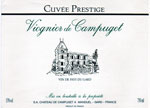
Château de Campuget Cuvée Prestige Viognier

Delphine Crouzet

This sumptuous sip is the handiwork of winemaker Delphine Crouzet, who sees her viognier harvested at its mid-September peak, then vinifies the juice in oak for six months prior to bottling. It may here be confessed that Château Grillet sees eighteen months of oak which, in fact, robs the grape of some of its characteristic vitality. Crouzet’s fruit bomb faces no such criticism, showing gobs of varietal integrity; fully scented with springtime fragrance—cherry blossoms, honeysuckle and orange marmalade—yet retaining a crisp acidity, firm minerality and a youthful, tropical backbone. And meanwhile costing about a fifth of what Grillet can fetch.

You hate to call anything this unctuous and juicy an ‘entry level’ wine, but if you happen to be a viognier virgin, Crouzet’s vibrant vin is a wonderful way to pop your cherry blossom.

Tasting Notes:

Château de Campuget Cuvée Prestige Viognier, Costières de Nîmes, 2010, about $15:  A penetrating bouquet of blooming acacia, honeysuckle and leading to layers of flavor; papaya, melon, peach and apricot.  Buttressed by racy acidity, the wine is a palate cleanser from first taste to its dry and opulent finish.

*

Franck-Lin Dalle even looks a bit like Ben, don't you think?

About the winery:  Château de Campuget is managed by Jean-Lin Dalle, assisted by his son Franck-Lin—named after Benjamin Franklin.  It’s nice to know that Americans are not universally despised in France, and that some French people, are, in fact, still star-struck over Poor Richard’s last European tour in 1785.

Posted in Costières de Nîmes, Rhône, Viognier | Tagged , , , , | 3 Comments

Meat-Free Wines Especially For Vegans

I’ve been asked what kind of wine to serve with fish, but never until now what kind of fish gets added to wine.

Fish bladders

The question came from a ‘vegan,’ that odd genus of vegetarian so extreme in their commitment that they won’t even eat animal crackers.  They won’t eat honey because it exploits bees or use shampoo containing eggs because it exploits chickens, and they sure the heck won’t drink wine that’s been filtered using fish bladders.

It’s a remarkable set of ethics, since refusing to eat fish puts vegans on a slightly higher moral plateau than Jesus Christ.

Therefore, my initial impulse is:  Cool, more wine for me to wash down my kitten burgers.

But it’s worth considering on the level of ‘things that make you go huh?’.  As consumers, we demand crystal clear wine, and nearly every time the slightest hint of opacity passes beneath a judge’s captious eye, points evaporate.

To achieve this pristine state, wine undergoes process called ‘fining’ during which suspended particles—generally bits of grape skin, leaf or yeast cells—are removed.  For a humble homeboy like me, it’s done by letting my cellar-made wine sit until the solids have precipitated to the bottom of the carboy, then racking off the top.  Commercially, it’s often done by adding substances with higher specific gravities than the wine, which then attract proteins and suspended solids as they sink so that everything winds up in a removable clump at the bottom of the barrel.  And quickly, too—which is why it’s a more business-savvy technique than mine.

Extracting beluga caviar requires a crack team of highly-trained gynocologists

Over the years, most fining agents have been egregiously ‘non-vegan’: Ox blood, egg whites, milk casein, horse gelatin and the bladders of the same happy pregnant sturgeons whose bellies are ripped open so that rich people can enjoy beluga caviar.

Admittedly, even to a carnivore, the ‘ick’ factor in this list runs high—and I don’t mean white-spot parasites from the aquarium.

Fortunately for those vegans seeking to replace animal proteins with alcohol, there are wines on the market that righteously avoid using any critter products whatsoever in their fining processes, substituting vegan-friendly alternatives like seaweed and aluminum silicate.  Drink these wines and the only bladder you’ll need worry about is your own.

I’d rustle up some vegans and offer to celebrate these finds over a shot of Wild Turkey, but I think I know where that conversation would end up.

The following selections are guaranteed to contain no animal-derived products. What’s more, these wineries produce ONLY vegan wines.

Drink up, vegans; I’ll be fine (pun intended).  I’ve found that beer goes pretty well with kitten, too.

Tasting Notes:

Wrights Gewurztraminer, Terrace Vineyard, Gisbourne, New Zealand, 2010, around   $25:  Soft evergreen and rose petal on the nose, rich lychee palate, medium finish with nice acidity.  Serve with tofurky.

I believe this is Brian Fitzpatrick, not St. Francis of Assisi

Fitzpatrick Sangre de Montana Rosé, California, 2010, around $10:  Don’t get your knickers in a knot, vegans; mountain blood is safe.  A nice, dry pink ‘world wine’ wherein  Irish winemakers make French-style rosé using Italian cultivars—sangiovese, zinfandel, nebbiollo and barbera.  They must be vegans, these Irish; didn’t a million die in some potato famine rather than switch to bacon cheeseburgers?  Serve with leftover tofurky (and there’ll be plenty of that).

Organic Wineworks Zenful Zinfandel, California, 2007, around $13: Brambly and spicy; a nice, bargain-priced red offering mouthfuls of juicy blackberry and plum and a clean, nutty finish.  Serve with tofurky jurky.

Frey Organic Dessertage Port, North Coast, 2002, about $35: It’s also sulfite-free, ye migraine-sufferers—this  stab at a port-style wine is a luscious, viscous delight, gorgeous with deep blackberry and dark cherry notes; thick and well-balanced with acidity and a brandy spike at the end.  Serve with tofutti.

Posted in GENERAL | Tagged , , , , | Leave a comment

Ting Tang, Walla Walla Malbec

Even if the wine’s not your cup of cab, just saying the name out loud is a kind of David Seville hangover.

As for the rest, the fact that Walla Walla Valley and malbec got together in the first place should come as no surprise in a world where Julia Roberts marries Lyle Lovett and Marilyn Monroe marries Joe DiMaggio.   And the grape/ appellation match-up promises to be a longer-lasting duet than either one.

Walla Walla is a wine region in southeastern Washington state; a subset of the heralded Columbia Valley.  The double dubya moniker was purloined from the local Walla Walla Indian tribe in 1847, shortly after Christ-mongering missionaries Marcus and Naricissa (a high-maintenance name if ever there was one) Whitman were murdered by unconvinced Walla Walla tribesmen.  Today, lauded vineyards L’Ecole 41, Woodward Canyon and Leonetti Cellar have Walla Walla addresses along with a hundred other up-and-comers like Spring Valley Vineyards, Waterbrook Winery, Reininger Winery and Forgeron Cellars.

And especially, Seven Hills Winery.

The AVA itself is susceptible to once-per-decade, crop-destroying deep-freezes that even a witchdoctor couldn’t put right; otherwise, the valley soil is blessed with volcanic ash, sand and silt deposits from the last Big Chill and sits on a latitude which make it ideal for growing Southern France varietals.

Grilled chipmunk is said to taste just like grilled muskrat.

Traditionally, malbec is a Bordeaux workhorse that is frequently blended with cabernet sauvignon and merlot to  bring edgy tannin, concentrated color and plum-like richness to the party.  The farther south you go in France, the more respect malbec gets, and by the time you hit Cahors, it’s the dominant grape and has upgraded its name to auxerrois or côt.  Here, it is chiefly responsible for the area’s renowned ‘black wines’ which by law must contain 70% malbec and are said to be the classic accompaniment to grilled chipmunk.  Hey, look it up.

In the New World, malbec has found its cushiest home in Argentina, especially in the Mendoza region, where it has become the number one planting.

As it happens, Walla Walla shares Mendoza’s sunshine profile as well as its ultra-cool winters and a melt water irrigation scheme which allows the grape to ripen properly and hold on to an acidic backbone which is the ultimate charm of this varietal.

Seven Hills vineyards

Seven Hills Winery was founded in 1988 by Casey and Vicky McClellan—part of the Walla Walla Big Bang when the valley was realizing just what it was capable of .  As one of the region’s oldest wine properties, Seven Hills has been instrumental in defining the AVA’s viticultural character.  Casey, who left a career in pharmaceuticals to make wine following a bike tour of Europe, maintains, “I learned about terroir at ten miles an hour.”

Vickey has meanwhile seen to the business end of the operation, shoring up customer relations and the ‘consumer experience’ (she designed Seven Hill’s tasting room) as well as helping to found the Walla Walla Valley Wine Alliance—an organization dedicated to building recognition for the indigenous wines…

…ensuring that Walla Walla keeps the vin in Alvin.


Tasting Notes:

Seven Hills Winery Malbec, Walla Walla Valley, 2006, about $28:  Nobody shares the stage with this virile, 100% malbec, 100% Walla Walla offering.  An assertive mouthful with curry spices, blackberry cobbler and dusty earth notes balanced by silky tannins and acidity.  Eighteen months in Hungarian oak gives it a nice mellow toastiness along with a black pepper and vanilla finish.

Available:  info@sevenhillswinery.com

Not available:  Walla-Mart


Posted in Malbec, Walla Walla | Tagged , , , , , , , , , | Leave a comment

Hard Cider: Normande-licious

Last year at this time I was in Normandy where I developed a fixation for hard cider that rivals my fixation on Audrey Tautou.  Difference is, one can be done at home and the other probably could be done at home, so long as your home is Versailles.

Normandy, host of the 1944 D-Day invasion, is in northern France, and this century, now that the Germans have promised to behave themselves, it’s apple country all the way.  Beside the artisan apple brandy called Calvados and a world-renowned arsenal of apple-based sauces and desserts, it’s home to a unique barrel-aged, almost Champagne-like product called cidreCidre, or cider (no real need to add the ‘hard’—in France, alcohol content is a given) can be found in various strengths and sweetness levels throughout the region with terminology identical to Champagne’s:  Doux, Demi-sec and Brut.

In general, cider has a kick similar to beer, and it’s because of the designer beer revolution here in American that most of us have even heard of it.

Duke William might have a shot at Audrey Tautou.

Strongbow and Woodpecker are the familiar brand names to U.S. consumers, with the latter now producing cider here, albeit from an Old World recipe.

Unfortunately, that particular Old World is Great Britain, not France, and whereas our English cousins have cornered the market on genuinely funny sitcoms and tooth decay, in most things culinary they’ve been lagging behind the Normans basically since 1066 when Duke William tried his best to sort them out.  As a rule, U.K.cider tends to be less acidic, less fruity and less tannic than French cidre—all subjective flavor failings due, perhaps, to a lack of a British winemaking tradition.  No doubt there’s small-time British producers making wonderful ciders that never float across the pond.

But back to Normandy.  Having cranked out the great stuff since the Middle Ages, Norman cider makers know that the key to a top-shelf product is blending apples, mostly kinds unknown to Johnny Appleseed; varieties like dabinette, frequin rouge and muscadet de dieppe.

Cider apples are generally troll-ugly, bitter and inedible.  Up to seventy percent of cider content is fruit we wouldn’t throw at a rabid pitbull; about twenty percent of the rest is added for sweetess and another ten percent for acidity.  None are what we refer to as ‘eating apples’, Jonathans and Macintoshes et al.—virtually all that’s available here.

So, when I get to the do-it-yourself part, understand that we’re going for a vague approximation of Norman cider, not the real deal.  Like dating Audrey Meadows instead of Audrey Tautou.

HARVEST HOME-BREW

By mid-October, Michigan mills are pumping out fresh cider by the lake-load, but however delicious, consuming unfermented cider is like eating cookie dough—really good, but not quite done yet. Making drinkable hard cider is so easy it’s silly—easier than winemaking and easier than beer.

As in all fermented DIY projects, cleanliness is the first and most crucial step, so rinse everything in a weak bleach solution, or a sulphur-based sterilizer.  All equipment is available on line, or at my favorite outlet, Wine Barrel Plus in Livonia(734-522-WINE): www.winebarrel.com

The general equipment you’ll need is covered in my article about home brewing beer; also, the secondary fermentation step, through which the cider will get its fizz, is identical to beer making and is covered in that piece, so I won’t repeat it here.

Refer to:  http://www.examiner.com/x-5111-Detroit-Wine-Examiner~y2009m5d11-Beer-making-So-easy-even-a-tenyearold-can-do-it?cid=exrss-Detroit-Wine-Examiner

I buy five gallons of cider during the peak of the season, pour it into a five gallon, preferably new or really clean plastic bucket, and add the following:

5 t.  yeast nutrient

3 T grape tannin

1 5 oz. bag of oak chips

1 package Champagne yeast, dissolved in warm water with a little sugar

The bucket gets covered, and sits near a heat duct until a vigorous fermentation starts, usually within 24 hours.  I then move the bucket to a slightly cooler area and allow to ferment for a week (no longer), stirring twice a day with a big spoon until the primary fermentation slows down.  Then, I transfer it into a five gallon carboy, putting the oak chips in by hand—this will simulate some oak taste if you don’t own a barrel, and cap it with an air lock.

After a month, I bottle.  See the beer making article on how to prime and cap the bottles.  You don’t have to prime if you want to drink ‘still’ cider; it won’t effect the taste or punch.  Heck, you don’t even have to bottle if you figure you a

This is not Audrey Tautou. This is Audrey Meadows.

nd your lunatic buddies can down five gallons of cidre before it spoils—a couple days once you let air into the carboy.

Whatever you do, the result is a multi-layered, scrumptious beer alternative, and if you start it this weekend, it will be ready by Christmas.

So I’ve cut a few corners compared to those lovely but anal-retentive Normans—neither do I pretend what I’ll be drinking under the misteltoe compares to Etienne Dupont Cidre Bouché Brut de Normandie 2007. 

When it comes to homemade cidre, I cheat.  With Audrey Tautou, never.

Posted in CIDER | Tagged , , , , , | 2 Comments

Revolutionary Russian Wines: The Cold War Warms Up To Cellar Temp

You and What…  Oh, THAT Army.

The Russian Empire has twice been saved by the sheer illogic of her enemies—first in 1812, when Napoleon sent a quarter million French-speaking lemmings toward Moscow (and off the cliff they promptly went), and again in 1941, when the Master Race found itself racing back to the Master with the Bolsheviks snapping at their heels.

With all those near-misses, you would think that the Russians would put a premium on logic.  But you’d think wrong, at least when it comes to alcohol consumption—or such has been my experience.

Which came first, Dumbo or the egg?

In the brief weeks I spent in Russia, I turned down more alcohol than I normally consume in a year, mostly to the head-shaking and eye-rolling of my kind but compulsive Soviet hosts.  Six, seven, eight shots of vodka was the after-dinner norm; multiple toasts saw that number rise exponentially, and many was the time I stumbled downstairs the following morning with a head the size of Red Square and found that the Russians were still at it—although by then they’d switched to sweeter stuff, like buffalo grass-flavored Żubrówka.  Granted, these may have been exceptional circumstances—somehow, in between hangovers, the Soviets have managed to beat us into space, invent the Fabergé egg, build thousands of strategic nuclear warheads and learn how to read and write in Russian (try that with a brainful of slivyanka).

Plus, any nation that manages to scare the bejeebers out of evangelical conservatives can’t be all bad.

Masque of the Red Death

Nonetheless, alcoholism has been the Great Bear’s bugbear almost since day one.  Blame interminable winters, a cultural shrug dating to the tenth century and the Duma’s tacit approval of over-indulgence in order to increase tax revenues.  Various attempts to curb the thirst have failed as soundly as our own Eighteenth Amendment, and in fact, drink consumption has risen threefold over the past twenty years, now accounting for more than half of Russian deaths.  It’s like a paraphrase of Mark Twain’s old saw about the weather: “Everybody talks about those perma-snockered Russkies, but nobody does anything about ‘em.”

"Please everyone, a big nazdaróvye to the Russian wine industry!"

Until Now?

 So, back to the column’s leitmotif—Soviet logic—and an article I recently stumbled across in the online Moscow News.  It seems that Russian president Dmitry Medvedev, but one in a long line of Federation leaders to take a stab at soberizing his constituency, has suggested a promotion of Russian wine as the solution to alcoholism, stating (with a straight face), “Russia’s drinking problems are due to other drinks.”

Like most of you, I am all for the promotion of wine—writing about it, reading about it, thinking about it, bathing in it and—if your ‘I Can Handle It’ dues are paid up in full, for drinking it.  At tastings, of course, we swirl, sniff, sip and gack mouthfuls into gross spittoons, and realistically, in these early sanctimonious years of the twenty-first century, a glass or two of wine is all you can consume without risking your career on a DUI.

But bonafide, chronic alcoholics, of which Russia is said to have more than two million, find it a bit tough to stop after two, or five, or twenty—and the honest ones will tell you that it doesn’t matter if it’s wine, slivyanka, Sterno strained through cheesecloth or self-administered moonshine enemas.  So, the idea that you can ‘wean’ drunks off the hard stuff by introducing them to soft stuff is about as ludicrous as thinking you could put SAMs in Cuba and we wouldn’t blink.  Better you should try curing heroin addicts by feeding them government-funded methadone—another bright idea that accounts for nearly four thousand American deaths a year.

(Ironically, methadone as opiate replacement therapy is illegal in Russia since health official do not believe it works.  They recommend instead, complete abstinence.)

Painting the Town Red

All that said, just as the numbers of Slavic sots is increasing, the Soviet wine industry has begun to focus on a higher quality of abusable substance, slowly moving away from the super-sweet stuff that accounts for more than three-quarters of all wine sold in Russia.  French/Russian joint ventures like Chateau Le Grand Vostok are now producing drier wines from Bordeaux varietals along with native cultivars like saperavi, rkatsiteli and golubok.  Ilya Grekov, who heads up sales at Le Grand Vostok, believes that the Russian love affair with vodka is a direct result of the lousy wines of the past.

Says Grekov, “I’ve got a friend who is a very intelligent, well-educated and successful person – but [until now] he couldn’t find any dry Russian wines at all.”

Abrau Durso is another quality house; it specializes in sparkling wine, which it has been producing since 1896; about 15% are made under méthode champenoise strictures with the remainder using the charmat process.  Unwilling to totally relinquish the sweet-tooth demographic, Abrau Durso also makes a sugary sparkler called Yublileynaya (Jubilee) and a red version (no pun) tagged Velvet Season.

Between the Black Sea and the Azov Sea on the Taman Peninsula is the region’s largest winery, Fangoria; it produces more than five million gallons of wine per year, including high-quality dry wines under the Cru Lermont label. They also bottle an odd, Baba Yaga-approved concoction called Cherny Leker (Black Healer)—a blend of cabernet sauvignon, saperavi and ranniy magarach together with an assortment of herbs.

Gai-Kodzor Vineyards was established in 2006 at the foothills of the Caucasus Mountains—the range that gave white people their name—and has become known as an outstanding producer of Alsace-style gewürztraminer and muscat along with Rhône-like roussanne, viognier, merlot/grenache and syrah.

Other Russian wineries on the fast-track to success are Karakezidi, Lenina, Mirny and Sauk-Dure.  As output increases and quality improves, more and more of these wines should filter their way to us in the West, and I, for one, am all for rolling out the Red carpet.

Posted in RUSSIA | Tagged , , | Leave a comment