The Importance of the GI

I received a press release yesterday containing what’s probably the single most irrelevant piece of news I will encounter all year:

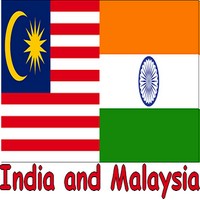
‘India and Malaysia Recognize Cognac as a Protected Geographical Indication’

The release goes on to point out, almost orgasmically, that the Bureau National Interprofessionnel du Cognac (BNIC) has finally achieved recognition by both countries as a GI.

Is this not the poster child for ‘meh’?

Maybe, maybe not.  In any event, it winds up being an interesting segue into the overall significance of legally protected Geographical Indications—essentially, certifications of origin for an item contained simply within its name.  GIs are similar to trademarks and apply to food as well as wine and spirits.

The most familiar example of this is ‘Champagne’. Sparkling wine from the small province of Champagne, a hundred miles east of Paris, has strikingly different characteristics than those from Guerneville, California.  But whereas most sparkling wine producers have dropped the word ‘champagne’ from their labels, Korbel has opted to leave it on, citing a ‘semi-generic’ provision under U.S. law.

Other semi-generic memory tweakers are Gallo’s Hearty Burgundy, which, in 1972, Los Angeles wine critic Robert Balzer called “the best wine value in the country today.” (As it happens, Hearty Burgundy is still around.)

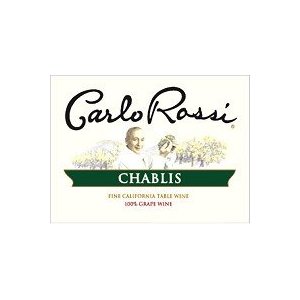
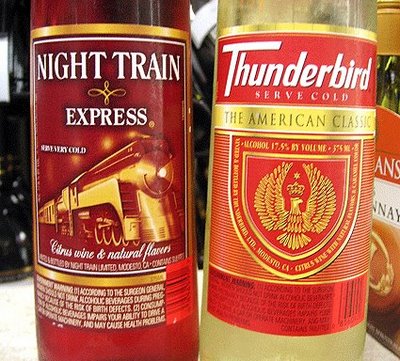
So is Carlo Rossi Chablis, which most people will never confuse with real stuff if only because it’s eight bucks for a 1.5 liter jug.

At least sauterne had the decency to drop the original’s final ‘s’. Like, what’s wrong with Carlo Rossi Chabli, anyway?

Apparently Cognac has a similar problem, which I did not know.  What the India/Malaysia agreement amounts to is that the registrations confirm a legal foundation upon which the BNIC can contest misuse of the term Cognac in these countries.

Another reason why the agreement was so vital to the BNIC is that, surprisingly enough, Malaysia is the third largest Cognac consumer in the world.  France itself comes in at number five.

Who knew?  And more importantly, who would want those mad Malays drinking Korbel brandy and thinking it’s Cognac?

Total output of 2010 Uganda banana wine

Okay, so the next time I’m snickering at a press release, like the one I just received headlined ‘Uganda Produces Less Banana Wine Than Usual’, I’ll remind myself of this inexcusable boner and kick myself in the faux pas.

For further information, please contact:

Jean-Louis Carbonnier, Cognac USA / c/o Carbonnier Communications

Tel : 212-216-9671 / Email : cognac@carbonniercommunications.com

Posted in GENERAL | Tagged , , | Leave a comment

Who Chooses The Wines For Official White House State Dinners?

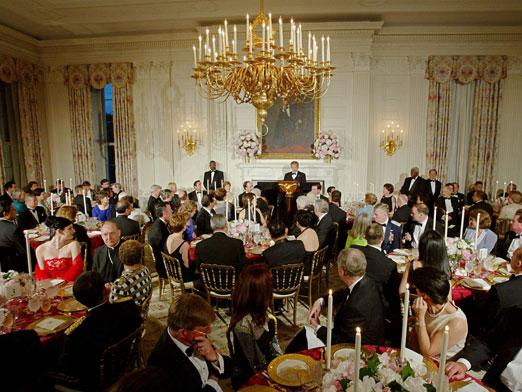
State Dinners are affairs of such overwhelming pageantry that I, for one, can easily overlook the fact that although you and I pay for them, you and I are never invited to them.

This latter truism is borne out by the fact that one of us would surely make some monumental political gaffe, not really understanding the official protocol of smooching the butts of visiting dignitaries in order to insure that they do not drop nuclear bombs on us.

State Dinner for Fidel Castro

State Dinners have been aristocratic levees since the early nineteenth century.  Once white-tie, they’re now black-tie affairs hosted by the President of the United States in the State Dining Room.  They follow a day of pomp and fanfare, much of it overseen by honor guards and color guards in full dress uniform, proving to guest officials that our army is as tough as theirs, if a bit gayer looking.

The dinner itself is the climax of the day’s ceremonies—generally a four or five course culinary extravaganza.

Chief of Protocol Capricia Penavic Marshall looks like a wax alien

Planning and Execution

Nicolas Sarkozy looks like a werewolf

Planning these menus, including appropriate wine pairings, is a task of such proportions that three White House staffers are required to carry it off.  First, Chief of Protocol Capricia Penavic Marshall makes certain that no blatant blunders occur, such as serving frog legs to French President Nicolas Sarkozy, bacon-wrapped pork noisettes made from pigs slaughtered by neo-Nazis to Israeli President Shimon Peres or human flesh to Ugandan Head of State Yoweri Kaguta Museveni.

Next, White House Chief Usher coordinates each menu item with White House Executive Chef.  The current Chief Usher is an Jamaican-born woman named Angella Reid—Ms. Penavic Marshall and she thus makes certain that all dishes contain marijuana.

How the Wines Are Chosen

The wines that this trio pick to pair with each course are not selected strictly for food compatibility.  Certain international courtesy codes are followed, taking into consideration the guest of honor’s religious affiliation, cultural traditions and dietary habits.  And since only American wines are served, this can sometimes be a tough call. One classic faux pas occurred when a California sparkling wine was served to a French diplomat—a wine labeled ‘Champagne’.

Occasionally, the President himself will make suggestions for wine.  Gerald Ford, for example, had a bias for Michigan wines and would request that they accompany at least one course.

Hu Jintao doesn’t look particularly human either

Typical State Dinner Menu

A representative example of a State Dinner menu is that of President Obama’s recent honor of Hu Jintao, President of the People’s Republic of China:

D’Anjou Pear Salad with Farmstead Goat Cheese
Fennel, black walnuts and white balsamic

Poached Maine Lobster, Orange Glazed Carrots and Black Trumpet Mushrooms with Dumul Chardonnay, ‘Russian River’, 2008.

Dry aged Rib Eye with Buttermilk Crisp Onions
Double Stuffed Potatoes and Creamed Spinach with Quilceda Creek Cabernet Sauvignon, 2005.

Old Fashioned Apple Pie with Vanilla Ice Cream with Poet’s Leap Riesling ‘Botrytis’, 2008.


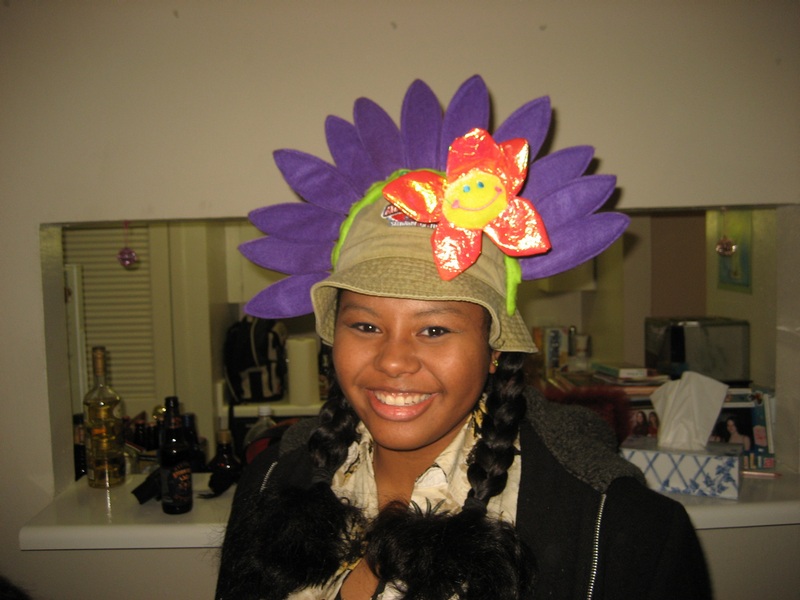
Prime Minister Alhaji Sir Abubakar Tafawa Balewa enjoying her silly hat, for which she tipped over 1000 Nigerian kobos

An Odd But Beloved Tradition

Although State Dinners are extremely formal functions, and include decorous receiving lines and ceremonious lectern speeches during which United States Marine Band violinists disperse throughout the room, there is one odd, traditional ritual little known outside of White House staffers—one which visiting heads of state often find puzzling:

During meal service, a mentally-challenged midget known as the ‘Silly Hat Kid’ goes from table to table and cuts out silly hats from construction paper.  Each guest is then required to wear his or her silly hat for the remainder of the meal.  If they take it off, they’re shot by the color guard. Everyone is expected to tip handsomely for the hats, and if they cannot or refuse to do so, the ‘Silly Hat Kid’ exposes his genitals to the table until the offending guest returns to his hotel room to fetch some cash.

Jeffersonian Gorging

Likely  the most aggressively generous State Dinner President was Thomas Jefferson, although ironically, they were not held for foreign diplomats, but rather used as a power technique among Congressmen for political ends.

The closest thing to a wino President we have ever had, Jefferson had vaults constructed below the east colonnade to hold his sizable wine collection. He is said to have spent more than $11,000 on wine during his two terms as President; a sum that in today’s economy would equal $175,000.

The importance of wine to State Dinners cannot be underestimated—yet another reason not to elect that teetotalin’ Mormon weenie Mitt Romney.

Posted in GENERAL | Tagged , , | 1 Comment

Larry Mawby’s Sparkling ‘Detroit’: Feel Our Pagne

If you were born south of Eight Mile or spent your formative years in Motown, you’re pretty versed in Detroit history—and, with a high school drop-out rate cresting 70%, it’s probably not something you  learned during  Fourth Hour.

You know it instinctively.

For Those That Don’t: Here’s How Detroit Was Invented…

One day, a bunch of space cadets from Juarez, Caracas, New Orleans and Kinshasa got together and said, ‘We have nothing against crime or corruption, desolation or poverty, but couldn’t we relocate to somewhere a whole lot colder??’

Siberia without turf wars

The Rest, As They Say, Is…

Sorry, Detroit civic boosters:  We denizens of this frostbitten heartache—Siberia with turf wars—don’t celebrate our hometown, we tolerate it.  Love it?  Maybe like you’d love a dysfunctional, violent, self-destructive child.   I get that; blood is blood after all…  I just don’t want to see mine running down my Made In Detroit t-shirt when I go downtown to watch fireworks.

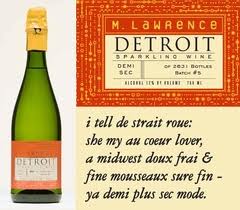
So, maybe you should approach Larry Mawby’s latest release, a sparkling wine dubbed Detroit, with a textbook case of mixed emotions.  First, Larry Mawby crafts the best sparkling wine that’s ever come out of Michigan.  Second, Larry Mawby is a funny, engaging, whipsaw-sharp and horrendously talented winemaker.  He’s among a handful of culinary characters in the state with celebrity status—someone who actually gets recognized and pestered by fans at restaurants .

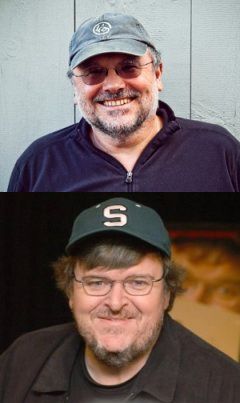
(Thinking out loud, though, I wonder how many of them have confused the grizzly, bearded, cap-wearing star with his doppelganger Michael Moore?)

Third, Larry Mawby lives so far from Detroit that if he was going to live any farther away and remain in Michigan, he’d have to rent scuba gear.

Three Decades of Dosage…

Mawby is from Grand Rapids; at least, he’s from a family of apple farmers with orchards near that flat, god-fearing community, and he was raised with the pastoral passions of a agriculturalist.  He knew from the outset that his destiny was not in Honeycrisps and Jonagolds, but in chardonnay and pinot noir.  He’s also got a congenital head for numbers and was able to recognize that one of the most popular wine styles on the planet—sparkling—had not yet found its niche in the nascent north.  This was back in ’73, before the current wine renaissance had begun.

“Nobody up here was really sure what the market would allow,” he says, perched in his cluttered, cozy office in Sutton’s Bay.  “Nobody quite knew what our limitations were, if any.  I focused on sparkling wine because I love it, not because I thought it was the smartest marketing decision.  That said, the climate is perfect for Champagne wine grapes, but above all, I wanted to make the kind of wine that I like to drink.”

Typical wine award

Apparently, other folks like to drink it, too—Mawby took top sparkling wine honors in the prestigious 2008 Jefferson Cup Invitational for his vintage ‘Mille’, and in 1998, Wine Enthusiast magazine ranked him on the short list of great American winemakers .

In fact, Mawby has found such success with his eponymous bubblies that’s it’s been eleven years since he made anything else.  So specialized has be become that he contracts out his talent and equipment, bringing in wine from other vintners and giving it the ol’ Mawby sparkle before they slap their own label on it.

Who?  Because most of it receives the ‘bulk method’ process, which is less expensive, less time-consuming and results in an arguably less refined product than the bottle-fermented méthode champenoise  that he reserves for the L. Mawby brand, he declines to name names.

“Once I realized where my direction was leading, I invested in a lot of pretty specialized equipment,” he says, “more than would make sense for other wineries where the focus was on still wine.  When I use the traditional Champagne method for my L. Mawby wines, I am looking for a certain varietal character and yeasty overtone; with the M. Mawby line, I’m dealing with a different game plan where tank fermentation is ideal.”

Back to Tank-Fermented Detroit…

Flavor profiles are key to every wine that Mawby bottles, and ‘Detroit’ came about in part as a experiment.  He had long wanted to try this ‘kind’ of bubbly—aromatic and juicy with forward fruit, a bit of residual sugar in it and enough acidity to balance it and offer a clean finish.

Typical 'cloying' Detroit-style wines

“I hate cloying wines,” Larry says with a face scrunch as excruciatingly real as any thirteen-year-old’s.

A blend of riesling, traminette (a hybrid of a hybrid) and cayuga (a laboratory varietal which excels in cold climates) provided him with the taste target he was aiming for.

That was the goal; not a specific name.  But along the way, someone suggested that this was precisely the sort of product that would go over well in Detroit, where Champagne may be a component of some weird gangsta mystique or a high life reminder of our 1920’s heyday as the Paris of the Midwest, but where today, in any case, bone-dry doesn’t sell.

Now, Here’s The Irony:

On one hand, as a wine, Detroit is the antithesis of its namesake—it’s everything that a major metropolis should be, but Detroit is not: Sweet, classy, fun and energetic.  On the other hand, Detroit the city has a certain undeniable emotional resonance, a sort of intrinsic grandeur evident in the Gilded Age architecture as well as the core of quality, if siege-weary individuals trying to put the broken clockwork right.  Detroit the wine is vinified to sugar levels that the French call demi-sec,  which in literal translation is exactly how we Detroiters view our legacy:

Bittersweet.

Dom

Seen in a non-facetious light, Detroit’s history bears at least one striking similarity to that of sparkling wine.  As Dom Perignon noted, Champagne’s northerly climate prevents the complete fermentation of wine in the autumn, so in the spring, the yeasts wake up and go back to work.

This re-invigorated spunk, the heart and soul of Champagne, was referred to by Dom Perignon as ‘new life.’

For Detroit, such a metaphor is better than the cornball image of a phoenix rising from ashes—with its inescapable connotation of Devil’s Night vandalism, blocks of burned-out buildings and the charcoal shells littering neighborhoods that must produce the next generation of  leaders.

Not Dom

‘New life’ is precisely what the doctor—even our most infamous one, Jack ‘Dr. Death’ Kevorkian—ordered.

If such a rebirth worked for the great cellarmaster of Hautvillers Abbey, maybe it can work for us.

Tasting Notes:

M. Mawby ‘Detroit’, NV, about $15:  An open-knit palate pleaser, no questions asked.  Marked by ripe peach and orange blossom aromas, the fine bubbles—not champenoise  fine—tingle up an almost unctuously textured mouthfeel; spiced apricot (nutmeg especially), baked apple and honey flavors extend cleanly into a layered finish.  Lovely  wine to light up any Detroit summer.  Except 1967, of course.  Or 1943.  Or 1863, come to that.  Never mind.  Anyway, if Wally Maurer of Domaine Berrien gets to be a Rhone Ranger,  Larry Mawby gets to be Michigan’s preeminent Mousseketeer.

Writing Notes: 

Larry Mawby is also among the most literary of Michigan’s winemakers, with poetry on his labels (some grapey groaners, granted;  like ‘freeing time’s bouquet’ and ‘our tongue lies wrapped in mystery’)  but his regular contributions to Michigan Wine Country are gems.  Start with ‘Why Grapes Grow Here’ and work through the lot:

http://www.lmawby.com/index.php?route=/enjoy/writings/why-grapes-grow-here

Posted in Leelanau Peninsula, Michigan, MIDWEST | Tagged , , | Leave a comment

Dry Creek Zinfandel: Make a Dashe for the valley

Dashe Cellars says that they knew in advance that their stellar, 2007 vintage, Dry Creek zinfandels would ‘make themselves’.  Good news for Dashe;  not so much for the migrants who will now have to be trucked into Oregon to find a job.

Kidding, kidding.  Zinfandel is that kind of wine—you can make with the jokes and nobody thinks it’s a mortal zin. Zin is fun, whether it’s wearing a dark and dry business suit, a casual, pink and off-dry costume or a multi-hued, molar-crumbling, sugarific Mardi Gras get-up.
The inky-purple, pretty in pink or shades-of-both giggle juice is responsible for ten percent of all wine grapes grown in California, and was the most widely planted wine varietal until 1998.  But nowhere in the state has zinfandel found a home-base better than Sonoma’s Dry Creek Valley.

That’s because Dry Creek Valley zins ripen with the same aggression as those grown in nearby Paso Robles and Lodi, but being in a river valley near the coast, Dry Creek’s warm days are tempered by cool evenings—imperitive for maintaining grape acidity.  The need for an acidic balance to palate-friendly sweetness cannot be understated—liken it to the refreshment difference between sugar water and lemonade—all you are really doing is adjusting the pH.

Speaking of science, DNA profilers have said that zinfandel is genetically identical to Croatia’s crljenak kaštelanski grape—that or they mixed it up with samples from Slobodan Milošević’s mother, who had the same name.

Again With The Jokes? 

The Italian boot-heel grape primitivo is also listed as having zinfandel’s genetic footprint, but new studies suggest that primitivo may have migrated to Italy via Croatia—and both may have been born in prehistoric Greece.

Whatever the genealogy, zinfandel is unquestionably America’s wine—and you won’t find the name on any off-shore label that I’m aware of, though there are plantings in South Africa and Australia.  It’s Gold Rush wine, the favorite of the real Forty-niners, the stuff that made Clementine fall into foaming brine and not come up.  In those days it was high-octane, unsophisticated grog—as befit the folks who swilled it.

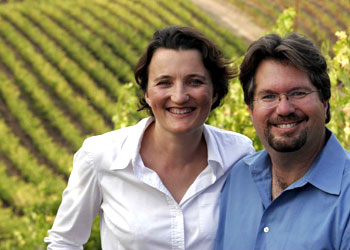
Anne and Mike Dashe

Not so the wines of Dashe Cellars, who have been turning out sleek, elegant, award-winning zinfandels since 1996.  The Dashe endeavor was the brainchild of enologists Michael and Anne Dashe, who were married the same year as they founded the Cellars.  Wineries begun by hardscrabble winemakers have a charm that somehow outstrips those started by thirsty, ego-driven San Francisco businessmen, don’t you agree?

The Dashes’ approach to zinfandel has remained uniquely plot-focused; they have partnered with some top Dry Creek zinfandel vineyards like Louvau, Bella and the Shaddick where the vines are old and the yields are low.  This results in concentrated wines of complexity and subtlety.  The Dashes’ artisan-obsession extends to barrel-making (they use only nearby family coopers) and technique (small-lot fermentation and indigenous years).  More than most other grapes, zinfandel requires clever management, especially at harvest time, because it tends to ripen unevenly; often it’s a hands-on style like Anne and Michael’s that’s the difference between boom or bust.

Everything, in fact, about Dashe Cellars makes sense except the label, which depicts a monkey riding on a fish.  Okay, so married couples must be permitted their inside jokes.

One thing that’s not a joke is the consistent quality of Dashe zins; the late harvest bottlings, which requires an additional month of ‘hang time’ on the vine to concentrate sugars, is reminiscent of a jammy, miles-deep vintage Port.  The experimental L’Enfant Terrible is a bantam-weight, all-organic zinfandel that relies less on sulfites and more on natural acidity to preserve quality.  L’Enfant Terrible is Beaujolais-esque; the style may not be to every zin lovers tastes—better pop a cork and find out.

The 2007 vintage may have made itself, but I’ll be damned if I going to let it drink itself.

Tasting Notes:

Dashe Zinfandel, Dry Creek Valley, 2007, about $25:  Intense in Dry Creek’s inimical, India ink sort of way.  Fully concentrated with blackberry and black cherry notes, clove on the nose and chocolate on the finish.

Dashe Late Harvest Zinfandel, Lily Hill Vineyard, 2007, about $28:  Sweet but balanced with acidity; blackberry and cassis-centered, luscious and spicy, a great foil for black fruit desserts.

Dashe L’Enfant Terrible, McFadden Farms, Potter Valley, 2007, about $26:  Unfined, unfiltered, mostly un-oaked and totally un-adorned with the monkey-fish trademark, the Dashe’s rebel child is more Cru Beaujolais than sledgehammer zin.  Spicy black cherry notes and a low alcohol lightness.

Posted in Dry Creek, Zinfandel | 1 Comment

I’ve Done the Mead Deed. Yes, Indeed.

What do honey mead and Margaret Mead have in common?

They’re both interesting, but nothing you’d let near your lips.

Or so I thought until I honeyed up to a home-mead batch that I did after getting sick of passing out free honey to fair-weather friends at the end of every bee season.  I have raised bees for years, and I’ve made wine and beer for even longer, but it never occurred to me to combine hobbies and cop a buzz from the buzz.

Claude Lévi-Strauss (1908 – 2009)

‘Mead In China’…

Turns out the stuff has a long history, too. Longer than wine, longer than beer, longer than dungarees: According to Claude Lévi-Strauss (1908 – 2009), another anthropologist who did not, as it happens, invent blue jeans but based on his age probably invented mead, considers the drink to be  ‘the marker of the passage from nature to culture.’

Based on some vessels found in Northern China, Lévi-Strauss dates mead’s origin to around 7000 BC, but it may be even older than that—anyway, mead pops up with regularity in the Rigveda, Pliny’s Naturalis Historia, Beowulf and plenty of other books during which you fell asleep in high school.*

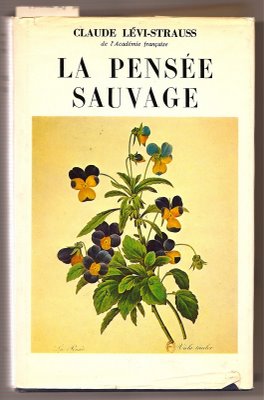
* Nonsequitur:  Lévi-Strauss’s most important book (during which you also fell asleep), is called La Pensée Sauvage, translated into English either as ‘The Savage Mind’ or ‘Wild Pansies’

Okay, then…

…Back To Mead  

Essentially, mead is fermented honey, with various flavorings like black currants,  cinnamon, apples—even chili peppers—lending various names to the final product

There’s ‘braggot’ which contains hops, ‘morat’ made with mulberries, ‘mulsum’ which Muslims should no doubt avoid, lemony ‘sima’ from Finland and of course, there’s ‘iQhilika’ made by those cwazy click-language Xhosia from South Africa.

For mine, I mixed three parts water to one part honey,  which gave me a starting Brix of of about 25° (I’m not sure how calibrated my brewing refractometer is, but it tasted right), then tossed in some yeast starter and tartaric acid to give it some bite . And BTW,  if this ‘shop talk’ bores you, you probably should have stayed awake during How To Make Your Own Alcohol Out Of Things You Can Find Laying Around The House class.  It was right after Honors French, and you can go back to sleep now.

To that, I added a pack of brewer’s yeast, poured it into a carboy, and let it rock.  Rock indeed.   So, while I spent a month trying to get through the first chapter of BEE-owulf , it mellowed and aged, and wound up being a lovely tipple.

Tasting Note:

Chris’s Mead spec sheet: Aged in stainless glass for 2 months – no oak, no malolactic,  Bee pieces in the final product = 11 %.  Aged in stainless steel tanksfor 2 months – no oak, no malolactic.  Shows wonderful honey notes intermixed with traces of honey; palate shows honey and honey.  The wine reveals nice a backbone of honey, followed by honey, honey and honey. Tastes like honey.

Okay, so it’s fermented honey.

Posted in CALIFORNIA, Michigan, MIDWEST | Tagged , | Leave a comment

Silverado Vineyards: A Gold Prize for the Mother Lode

Brownie points if you knew that silver mining once rivaled winemaking in Napa County, and that Robert Louis Stevenson wrote a novel called The Silverado Squatters about the same trail that lent its name to Silverado Vineyards.

Jackson Brownie points if you can say ‘Silverado’ without singing it to the tune of ‘Desperado’.

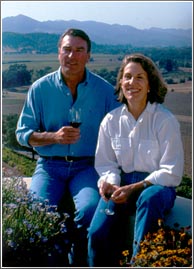
For three decades now, Silverado Vineyards has been hand-crafting solid, better-than-serviceable (and many, world class) wines from a knoll above the Silverado Trail in the heart of the Stags Leap District—one of the smallest but most highly regarded AVAs in California.  It’s down to location (loam and clay sediments from the Napa River and volcanic soil deposits left over from erosion of the Vaca Mountains), grapes (from seven family-owned vineyards), but mostly to the dedication of Silverado squatters Ron and Diane Miller.  The couple fell in love with the area in the nineteen seventies and decided that the winery they wanted to own would produce top end Stags Leap wines at a fair price—in 1976, recall, Stag’s Leap Wine Cellars Cabernet Sauvignon took top red wine nods at the Judgment of Paris wine tasting, beating out classified Bordeaux estates, so the area was under a pretty intense microscope at the time.  Ron, a former Los Angeles Ram and later, creator of Touchstone Pictures, was used to a certain caché of success in life, and was not about to ride point at a Mickey Mouse operation.

Ron and Diane Miller

When I mention Mickey Mouse, of course, I am in no way looking for a clever segue into the fact that Diane Miller is Walt Disney’s daughter.  It was old Walt, however, who sweet-talked his son-in-law off the gridiron and into the boardroom—Ron was president and CEO of Walt Disney Productions for four years before being ousted in favor of Michael Eisner.  Wine lovers, perhaps, may spend the next minute in silent prayer.

Another guy at Silverado with an upwardly mobile career path is winemaker Jon Emmerich.  Having begun as a lowly lab tech, he paused at each rung on the juice-soused ladder as Assistant Winemaker, then Associate Winemaker, before seizing the top spot.  Meanwhile, he managed to squeeze not only grapes but a formal degree program into his ambitious schedule.  According to Jon,UniversityofCalifornia Davisoffers a BS in Fermentation Science—if Bluto had known, college might have turned out way differently for him.

Emmerich’s resume includes the aforementioned Stags Leap Wine Cellars as well as Sebastiani Vineyards, so he knows from both quality and quantity.

As a result, Silverado remains a Stags Leap lodestar, continuing to mine technique and style while producing reliable wines vintage after vintage.  Sitting on the terrace with a valley-wide, enjoying a Silverado Vaca Mountain High, I’d rather think about that than what the Disney-pedigreed Millers might be doing otherwise… Haunted Mansion II.

Tasting Notes:

Silverado Sauvignon Blanc, Miller Ranch, Single Vineyard, 2009, about $ 22:  Brilliantine greenish gold color; luscious peach and honeysuckle on the nose along with a hint of juniper and chamomile.  Ripe and full on the palate thanks to a small amount of semillon.  An ‘all things to all people’ sauvignon blanc.

Silverado Chardonnay, Carneros, 2009, about $ 25:  A youthful spritz clings to this nicely rounded, citrus-and-apple-profiled wine, with nicely integrated oak adding vanilla to the undertones.  A perfect example of middle-roadNapa chardonnay, nearly flawless if somewhat single-dimensional.

Silverado Merlot, Napa Valley, 2006, about $30:  Earthy and herbal in a good way, the luscious blackberry jam scents and flavors you expect in a merlot are there but the wine is wrapped in pleasant mineral package.

Silverado Sangiovese, Napa Valley, 2007, about $ 30 :  Faintly floral with violet notes and plenty of varietal integrity, including strawberry, cherry and red currant spiced up by cinnamon and thyme.  Moderate natural acidity, characteristic of the grape, keeps the wine bright and food-friendly.

Silverado Cabernet Sauvignon, Napa Valley 2007, about $ 45:  Cola, damp soil, cedar and green olives cover the non-fruit scents and tastes that animate this full, rich, beautifully-crafted red; plum, cherry, raspberry notes cover the rest.

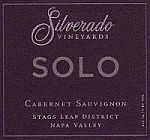
Silverado ‘Solo’, Stags Leap District, 2007, about $ 90:  Called ‘Solo’ because it is 100% cab—a gutsy move that proves itself out in an inky, intense wine jam-packed with black fruits and guilty-pleasure guzzles like cocoa and cherry cola and unusual nuances like pimento, ginger and green peppercorn.  A pinnacle of the SLD cabernet experience, the wine will continue to evolve and deepen for decades.

Posted in CALIFORNIA, Napa | Tagged , | Leave a comment

Rutherford Dust Never Sleeps

God. (Photo courtesy Pope Benedict XVI)

‘Dust you are, and to dust shall you return.’  – Genesis 3:19

Open letter to God:  In the meantime, can we borrow some to make Rutherford cabernet?

And although Robert Mondavi and Louis Martini might disagree (in spirit, of course, since nowadays, they’re spirits) when I say God, I don’t mean André Tchelistcheff.

The same Tchelistcheff, Beaulieu Vineyard’s larger-than-life winemaker for thirty years, who once declared:

 “It takes Rutherford dust to grow great cabernet..”

André Tchelistcheff. Despite the face and accent, he is different from Bela Lugosi.

Star Dust

As a fellow wine weasel, you should remember Tchelistcheff’s name whether or not you can pronounce it, since he’s credited with having defined the style that we now recognize as Napa Valley cab: Big-bellied fruit-bombs; exotic, spicy; generally denser and sweeter than their Bordeaux counterparts which had hitherto been the world’s benchmark.

In 1938, Tchelistcheff teamed up with Georges de Latour, who’d been crushing grapes in Napa since the nineteenth century.

And That’s When The Real History of New World Wine Began… 

Tchelistcheff has been called The Godfather of Cab, the Dean of American Enologists and Андрей Челищев (that’s Russian–I don’t know what it means either) , so it’s odd to consider that his glory years as a winemaker were probably the dullest ones of his life.  Born to Muscovite aristocrats in 1901, his family became outlaws under the Bolsheviks, who burned their ancestral seat and hanged their hunting hounds; in retaliation, Tchelistcheff joined the anti-Communist White Army during the Russian Civil War and was machine-gunned on some forsaken Crimean battlefield and left for dead.  He recovered and went to wine school,Add an Image but somehow, yummy cab does not appear to be the highlight of his resume.

But Unto Dust I Will Return…

In 1994, at the cellar age of 92, Tchelistcheff departed for the celestial tasting room (I’d say he bit the dust if I was that kinda rude), leaving behind legion of Rutherfordophiles—especially, a gang of oddball, righteous cab crusaders called the Rutherford Dust Society.  Among their action-items for the ‘09/’10 engineering calendar is a massive restoration project centered on 4.5 miles of the Napa River as it wends through the heart of the Rutherford AVA.

Despite the bureaucracy inherent in enterprises relying on boards of directors, subcommittees and regulatory reviews, the Rutherford Dust Restoration Team (RDRT or ‘our dirt’—how cute is that??!) is moving ahead full-steam.  According to Project Director Dr. Lisa Micheli: “Working with Rutherford growers and vintners on this project has been a terrific experience! They understand the need to give and take when working with natural systems. Over 18 acres of productive vineyard has been generously re-dedicated to the river corridor to enhance its ecological health. This is a gift of a living river for future generations.”

The course of that re-dedication requires the bulldozing and removal of many, many truckloads of… you guessed it: Rutherford dust.  And tons of the foo-foo flakes responsible for Tchelistcheff’s treasured terroir—rootstock-candy for every Rutherford multi-digit cab you can name—Caymus, Frog’s Leap, Niebaum Coppola, Quintessa—are being offered to you, the aspiring winemaker living on deficient dust for the remarkably low price of… zero.

How can this be?  How can Gretchen Hayes soliciting dust-bunny-wannabes to come ‘n’ get it, as much as you want while supplies last?  I don’t pretend to know the inner workings of the dirt cartels, but I do know that I’m always seeing billboards reading ‘Fill Dirt Wanted’ or ‘Fill Dirt Available’ and wondering why these factions can’t figure out how to get together without all the visual pollution.

What I can shed some light on, however, is the operative, ground-level question:

What’s in This Magic Powder, Anyway?

If I said ‘sediments from the Franciscan Assemblage’, you might want a bit more; so, the Rutherford AVA is a narrow band of alluvial soil stretching from St. Helena to Yountville, and it’s primarily built of gravel, loam and sand loaded with volcanic deposits and dead fish fossils, which all combine to create the right mix of fertility, drainage and soil chemistry to nature/nurture grape vines.  Above the ground, climatic conditions make the appellation ideal for cabernet in particular, and the entire ecosystem is, therefore, among the world’s preeminent sites for this noble varietal.

Now, as I mentioned, I’m no economist, but I am aware of terms like ‘loess leader’, wherein you get some schmuck with a semi to come haul away your free dirt and hope he leaves with a few bottles of cab, too.

But I think they are missing the Good Ship Capitalism on this one.  I’ve been to the Jordan River and I’ve been to Lourdes, and in both places I prayed my toochis off while bathing in the sacred soup—and though I am still waiting for Nelly Furtado to call me for that night on the town, I left both spots with a five-dollar flagon of holy water, which I proudly display to this day.

Dixie Cup stemware for fine wines

'I Sink, Therefore I am'

So, I think Dixie Cups full of Rutherford Dust sold at roadside stands up and down the St. Helena highway would be a sure-fire tourist draw, and the proceeds could be used to build a massive statue like that giant Jesus in Monroe, Ohio—only this one to honor the late, great André Tchelistcheff.

And consider this: if you happen to believe all that Biblical fiddle-dee-dee about ‘unto dust you will return’, you might just have a little snort of old André right there in your souvenir flask.

Posted in Cab/Merlot, CALIFORNIA, Napa | Tagged , , | 1 Comment

Whitehaven Winery: Kiwi Kwality Kontinues Unkompromised

Some facts you may not know about New Zealand:

  • It was the last large land mass discovered on earth, making it, for all intents, our planet’s youngest country.
  • New Zealand is the only nation on earth to have three official anthems: God Save The Queen, God Defend New Zealand and Please Don’t Eat The Kiwis.
  • The flightless kiwi is not, as previously reported, the avian equivalent of a swamp rat, but a shy, hairy, nocturnal little furball; the avian equivalent of a tarantula.
  • One down, eight to go.

    There are nine sheep to every human in New Zealand, offering Auckland horndogs a better scoring chance than someone from Hollywood.

  • They make some wicked sauvignon blanc in Marlborough.

Whitehaven Wine Company: Shareholders and Sharecroppers Share the Stash

As Detroit punks without the slightest sensitivity to the ravages of reality, we used to joke about white havens:  Dearborn was one—Mayor Hubbard was put on trial for conspiracy to violate human rights based on his housing policies—and Hamtramck was another, although we were equally shameless when speaking of the lily-white Poles.  Embarrassing, cruel and childish attitudes; the fact that we were children is not a sufficient excuse.  Better that ‘white haven’ should hereafter be associated only with the unique and gorgeous wines of Whitehaven Winery in Marlborough, New Zealand.

Sue and Greg White

Back in the mid-Nineties, Greg and Sue White pulled a classic Oliver and Lisa Douglas bait’n’switch, abandoning careers in financial markets for the rural lifestyle of Marlborough, where, without the interference of Mr. Haney and Arnold the Pig, they had considerable success.

In fact, their first significant vintage was 1995, and it

Greg and Sue White with better lighting.

was a boom;  they picked up a double gold medal for their riesling and a 5-star rating for their sauvignon blanc.

To augment this remarkable achievement, you must take into consideration that for the rest of Marlborough, ’95 was a bust—the most difficult vintage in the region’s history.

Do What Simon Sez…

Sue White is the first to suggest that those early-days bragging rights go primarily to their winemaker, Simon Waghorn, who has, in turn, modestly credited the quality of the grapes he used.  In truth, all parties involved deserve credit.  For his part, Waghorn came on board with his pedigree papers intact.  Previously senior winemaker at Corbans Winery (among the oldest in New Zealand; now owned by Montana Wines, which I mention only so I can mention Montana’s founder, Ivan Yukitch.  I love this name—every time I hear it, I want to respond, ‘Then scratch it already, dude.’)  Anyway, in the years that followed, Waghorn took multiple shimmering prizes in every metallic hue available and excelled in both whites wines and reds, pinot gris to pinot noir.  Additional ribbons went to Whitehaven for gewurtz, chardonnay, riesling and of course, the flagship wine of Marlborough, sauvignon blanc.

Marlborough and Scooby: Separated at birth?

Just a Word on This Particular Pas de Deux…

Like the mawkish love story of Jerez and Pedro Ximénez, Chablis and chardonnay,  Beaujolais and gamay, sauvignon blanc has found an archetypal anchorage in this paradisiacal region of the South Island, a map of which resembles (to me) a rear view of Scooby Doo’s head.

Amid stunning visuals, Marlborough (and in particular, the Wairau Valley) possesses a microclimate unique to the island—it’s one of New Zealand’s sunniest and driest areas, with marked day/night temperature fluctuations.  Here, sauvignon enjoys the pampering it craves the most: A long, slow ripening period balanced between daytime heat (to develop sugars and flavors) and an after-hours chill (to retain acids).  Viticulture centers on the stony, sandy valley soils which perch above layers of free-draining shingles, reducing the vigor of the vines, and as a result, concentrating the flavors of the grapes that do develop.  Lots of sunshine and protracted hang time is key for the varietal to overcome a tendency toward ‘cat box’ aromatics which can be intriguing or off-putting depending on their intensity.  Sniff this in a sauvignon blanc and be the first taster at your table to identify a short, cloudy growing season.

The conditions under which Marlborough’s sauvignon blanc thrives are also ideal for fussy, demanding pinot noir—Whitehaven’s other pet varietal.  Though most of the NZ pinot buzz has centered on Central Otego lately—for all the right reasons—Marlborough cranks out a pretty mean interpretation, too.  The scale of pinot plantings increases every year (it’s the most widely planted red on the island, and in Marlborough, accounts for about half the acreage of sauvignon blanc), producing wines characterized by big color extractions, bright, acidic fruit profiles and a restrained sort of earthiness—something that’s traditionally been sought out in this grape.

It’s still early days for pinot in NZ, and the wines improve yearly in most areas where they’re taken seriously.

 ‘I’m Cravin’ Whitehaven’  (Go Ahead PR People, Use THAT Tagline Sans Commission…)

For a boutique winery producing such a nice variety of artisan wines with such distinct regional character, the web site reads like a SEC report, making statements like ‘Whitehaven has grown well beyond the original expectations of its shareholders’ and describing Greg and Sue not as owners, proprietors or impassioned winos but as ‘majority shareholders’.

Alas, it turns out that the site is badly in need of an update—halfway through this piece, I learned that Greg White passed away in 2007 after a valiant struggle with cancer, that Sue is now at the Whitehaven helm and that Waghorn has run off to do this own thing at Astrolabe Winery.  The new cook and chief bottle washer (in the case of wineries, this isn’t a metaphor) is Sam Smail, a name that might have been lifted from the pages of Lord of the Rings, filmed, of course, not far from Whitehaven’s acreage.  Working at a Smail’s pace—which in this case means ‘quickly’—Sam has established a consistency of style in Whitehaven sauvignon blanc while pushing the limits of experimentation (he’s a degreed chemist) with other varietals in the winery’s portfolio.

Speaking of PR campaigns, apparently Marlborough Country is best experienced without nicotine after all—who knew?  As kids, we’d never heard of it, and gratefully so—with all those funny, spiky little birds, people named ‘Yukitch’ and the potential for multiple Saturday night I Love Ewe experiences, I suppose we’d have had a field day.

 Tasting Notes:

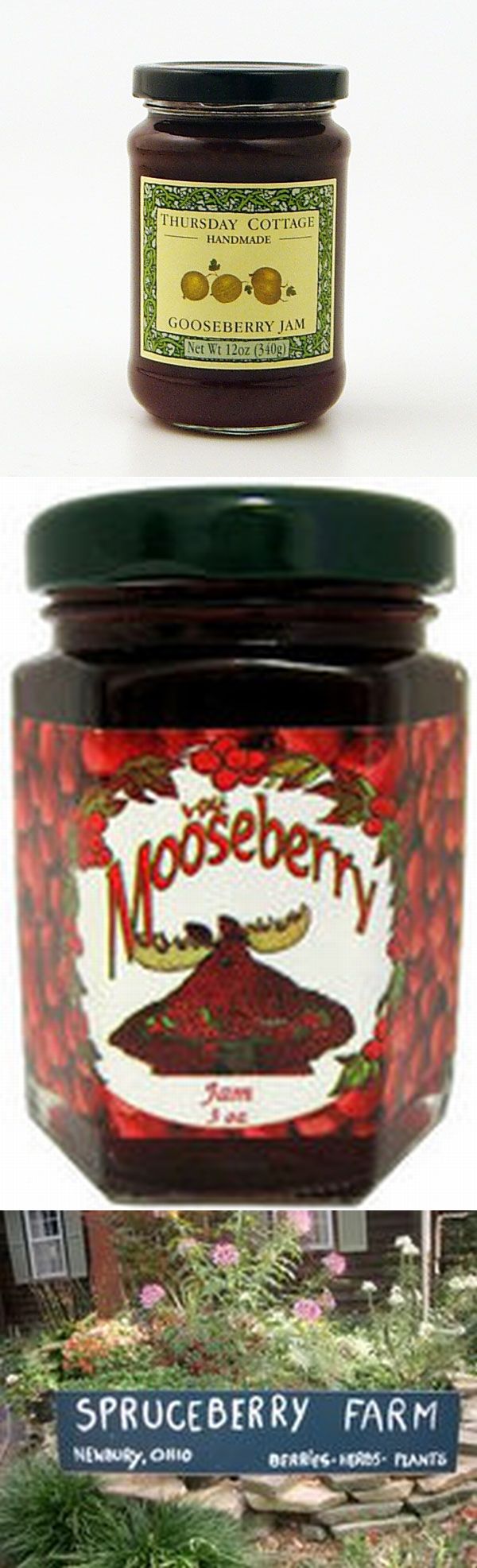
Notes on Tasting Notes:  When reading reviews of New Zealand SBs, especially from native critics, you see the wine regularly ballyhooed as tasting like gooseberries, which leads me to wonder: If they like gooseberries so much, why don’t they just make gooseberry wine and call it a day?  Maybe they do.  Me, I wouldn’t know a gooseberry from a mooseberry,  a spruceberry or a calabooseberry and beseech anybody from Down Under to please send me a gooseberry so I can find out what the heck you’re talking about.   

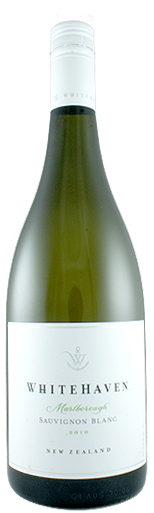
Whitehaven Sauvignon Blanc, Marlborough, 20010*, about $23:  Kiwi fruit is another common descriptor for regional sauvignon blancs, and despite the twee coincidence (both with the bird and the fact that another name for kiwi fruit is ‘Chinese gooseberry), that I can see.  To me, this is a textbook specimen of varietal identity; strongly herbaceous upfront, leafy and mineral laden at midpoint and leading into grapefruit and melon flavors that linger though near-viscous palate sensations and finish with sparks of jalapeño in the aftertaste.

Whitehaven Pinot Noir, Marlborough, 2008*, around $23:  Luscious, ample and lively, explosive with silky cherry notes, strawberries and a nice, supple pungency.  Fruit weight is good, there is juicy plum and licorice around midway through the tasting experience; flavors are moderately intense, not overwhelming—the wine is better characterized as ‘charming’ rather than ‘aggressive’.

* Remember when dealing with Southern Hemisphere vintages that they’re essentially half a year older than ours; they harvest in what to us is springtime.  Those kwazy kiwis hung the moon upside down, too.

Posted in Marlborough, NEW ZEALAND, Pinot Noir, Sauvignon Blanc | Tagged , , , | Leave a comment

Michigan Wine: The Stats Are Stellar, Suckers

Controversy has surrounded wine competitions for years, and as the landscape changes, things aren’t getting any better.

Brent Marris: Tsk, tsk, tsk

For example, in 2006, Wither Hills winemaker Brent Marris was accused of creating special blends for competitions while his lesser wine ended up on supermarket shelves—even though both carried identical labels.   The following year, Steven Spurrier, organizer of the Paris Wine Tasting of 1976 (where California ruled and France drooled), acknowledged that he tallied the winners by ‘adding the judges marks and dividing this by nine’.  Although statistically, this wouldn’t make the slightest difference, would it?

Perhaps most telling is the Journal of Wine Economics analysis written by winemaker, scientist and statistician Robert Hodgson.  He concludes that if the 84% of gold medal winners in one prestigious taste-off take no medals at others of equal prestige, the probability of winning a gold medal is influenced by chance alone.

Toasted tiff

Perfect…

…since there’s nothing I like for breakfast more than a bowlful of bickering followed by a plate of scrambled squabbles and a side of toasted tiff.

Wine competitions are odd creatures, wherein you need to be almost maniacally on your A-game if you intend to seriously pass value judgment on a substance that by its nature affects your value judgments.  An awful lot depends on what wine you scored just before the wine you’re scoring now, how fatigued your palate is, and whether or not the moon is in the seventh house.

Why do we do it?  Because we care.  Why do we care? Because we’re wine experts.  Why are we wine experts?  Because we found a way to not pay for the wine we drink.

I am not a statistician or a scientist, nor even a particularly competent wine expert, but I think that I can pretty much sum up the value of wine competitions: They exist primarily as a marketing tool for wine shops and distributors, since for them, ‘gold’ means gold.

Until Michigan Wines Start Winning…

In which case, for wine consumers, wine writers, wine scientists, wine statiticians and bleary bystanders, competitions are the only credible tool available.

So, Here’s Why I Wrote This Column:

Sean O'Keefe experiments with different -shaped Riedel tulips

Throughout 2011, Michigan wineries have been nailing it.  Talk about an A Game? In January, Chateau Grand Traverse won a Best of Class award at the San Francisco Chronicle Wine Competition for their 2009 Lot 49 Riesling, icing on the cake for winemaker Sean O’Keefe who earned five other awards at the event.  Now into its third decade of superlative squeezing, Chateau Grand Traverse produces eighteen wines from four Northern Michigan vineyards sprawling across more than 120 acres.  The winning wine is lovely, too: fragrant with pear, peach and light honey notes, full and dry on the palate and warm on the finish.  O’Keefe recommends keeping a bottle or two around to see how it ages, and I’m in his corner.  As long as I’m not in his cellar, we’re good for the long haul.

San Berdoo’s Pacific Rim Wine Competition wound up with a tie for Best Gewurztraminer: Tabor Hill Winery, in Buchanan, for their 2009, and Chateau Fontaine, on the Leelanau Peninsula, for their 2010. (Chateau Fontaine went on to win Grand Champion honors as Best White Wine of the competition).  Both wines show characteristic perfume—delicate peach and apricot—while managing to avoid characteristic bitterness on the finish.  Nobody likes a tie, but in this case, the recommendation is to buy one of each and tie one on.

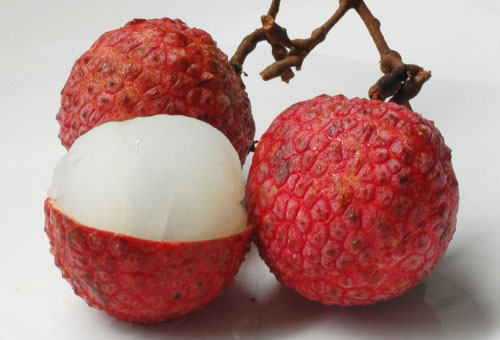
'I'm a lychee. So now you know.'

Tabor Hill, the first winery in the Midwest to try its hand at vitis vinifera, has, ever since, been raising the bar even as we are closing it.  Hence, no surprise that it pulled down several other top awards this year, including Best White Wine at the International Eastern Wine Competition, held in Corning, N.Y., for their 2010 Traminette.  Traminette a cross between the hardy hybrid Joannes Seyve  and less hardy gewürztraminer and typically produces wines with a taste profile suggesting lychee, lime, lemon, and grapefruit along with some spicy green tea.

Equally significant to Michigan wine fans, Fennville’s Fenn Valley Vineyards won Best of Class Riesling at the above competition, and this was out of a whopping 1,400 entries.  Founded by Bill Welsch in the early ‘70’s, Fenn Valley Vineyards was among the first in Michigan to take cues from our odd West Coast ‘lake effect’ which allows certain varietals to proliferate through rough Midwestern winters.  Riesling is high on the list of local success stories, and this one is an easy-going, honeysuckle-scented wine ripe with peach, candied lemon, green apples and pears with a pronounced mineral finish.

Left Foot Charley's Bryan Ulbrich in the tasting room

I may not be able to define a ‘Sweepstakes’ award, but I can claim that one was won by Traverse City’s Left Foot Charley (housed in a formal mental asylum) at the Long Beach Grand Cru Wine Competition for their 2010 Pinot Blanc, Island View Vineyard.  Left Foot Charley is a relatively new winery experimenting with relatively new (for Michigan) cultivars like pinot blanc, and the proof of the power is in the pour: The 2010 pinot blanc is a fruit-driven gem with Bosc pear, mandarin orange and pineapple flavors intermingled with an unctuous mouthfeel.  It’s a tremendously versatile food wine as well, with personal recommendations ranging from Thai spice to Cordon Bleu cream.

Additionally, with more than 3,000 entries from 15 countries, the 2011 Indy International Wine Competition, held in Indianapolis in August, awarded Best Vidal to Sandhill Crane Vineyards in Jackson, while Lemon Creek Winery in Berrien Springs won Best Chancellor and Leelanau Cellars on the Leelanau Peninsula won Best Flavored Port.

Such slews of strokes should silence cynics, ¿ sí?  In the past, Michigan’s reputation as a world-class wine source has been questioned as venomously as the value of wine competitions themselves—and some of it has been justified.  But, as techniques improve and lessons are learned, we’ve grown from challenged to champs, and it’s high time we got off that short bus.

Posted in GENERAL, Michigan, MIDWEST | Tagged , , , , , , | 1 Comment

Robert Mondavi and 9/11: A Connection?

First, the good news:

Riedel now makes a glass specifically for egg whites

Egg white is a fining agent used in Burgundy to clarify wine.  Although other products work equally well, albumen is particularly prized because lots of Cordon Bleu recipes call for egg yolks, and that leaves the country with a surplus of homeless egg whites looking for a resting spot.  At the bottom of a wine vat?  Voila!

Meanwhile,  the French really need to consider ending blind jury tastings, because the egg they need for their wine keeps ending up on their faces.

Everybody in the wine world is familiar with the earth shattering ‘Judgment of Paris’ where, in 1976, a pair of virtually unknown Napa wines (Chateau Montelena chardonnay and Stag’s Leap Wine Cellars cabernet) bested France’s top estates.  Less press is given to the  Grand Jury Européen 1997, an equally prestigious tasting held in Bordeaux where more than 70% of the entries were French and 100% of the judges were European.  Twenty-seven chardonnays competed—among them, a who’s who of Grand Cru Burgundies from the region’s most acclaimed producers.  Three vintages were sampled—1989, 1992 and 1994—and in the end, the judges awarded top honors to Robert Mondavi Reserve Chardonnay.

Robert The Great (1913 – 2008)

Something in the Water…?

The late Robert Mondavi (1913 – 2008) is to American wine evolution what Bob Dylan is to American pop music evolution—Templar Grand Master, professor emeritus, king of the hill.  The fact that both are from miniscule Hibbing, Minnesota lands near the top of the list of things that make you go huh?

Robert The Okay (1941 - )

From the outset, Mondavi—who broke from his father Cesare and his brother Peter during the early days of their California winemaking ventures—had a mission, and that mission was a mission; at least, a mission-styled winery that would produce wines to rival the world’s best.

And here’s a guy who truly deserves to be standing on a flight deck in front of a sign reading ‘Mission Accomplished’.   Spearheaded by Mondavi Fumé Blanc—which established a sauvignon culture in the United States—and pinnacled by Opus One, a joint venture with Château Mouton Rothschild’s Baron Philippe de Rothschild, Mondavi wines have reached stratospheres of quality that other California winemakers dream of.

I had the honor of standing in Robert Mondavi’s shadow a couple of times over the years, and by shadow I mean shadow: Mondavi was a vividly handsome, supernally tall man whose presence, even in his final years, was daunting.  His sons, Tim and Michael, shared the elder Mondavi’s ‘look’  if not always his outlook.

Tim and Mike Mondavi

Robert was vocal about the boys’ early focus on Mondavi’s associated cash-cow brands Woodbridge and  Coastal.  He saw it, rightly, as ‘trading down’ a cachet that he’d built from the ground—literally—up.

The 1997 award notwithstanding, Mondavi’s decision to go public four years earlier was, in fact, the beginning of the end.   Once Robert himself lost control of his company’s direction, the winery began to crank out oenological oceans; seas of Safeway staples; generic gushers of grape.  Its ultimate fate was, in many ways, inevitable.

The Fall of the House of Gusher

Now, the less-than-good-news:

To feed the plonk-line, the company went capital-crazy, investing millions in new vineyards  while the shareholders happily lapped up the twenty percent growth rate that sustained Mondavi throughout the remainder of the Nineties, even in the face of the winery’s astronomical 28% overhead.  Still, the premium line continued to hold its own as the Opus One reputation solidified.

Then, Along Came 9/11.

Along with premium everything and luxury anything, the collapse of the Twin Towers was a metaphor for the disintegration of many window-dressing brands in virtually every industry out there.  Mondavi’s woes were hardly unique, but when Constellation Brands offered the board a billion-with-a-b-and-then-point-three, there was not a lot of discussion—the company was in process of imploding anyway, with Robert’s son Mike ousted as board chairman and bookoo bickering over corporate direction.

Shareholders took a grand total of twelve minutes to say ‘I do’.

Thus, Mondavi  the Legacy, co-creator of America’s first ultra-premium wine, became but another blip in Constellation’s  $ 3.7 billion galaxy.

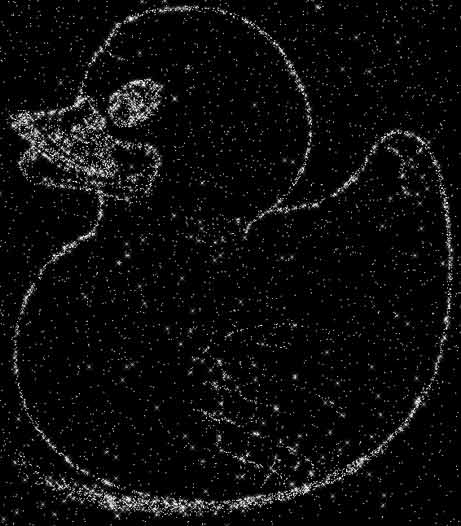
Rare consellation: Orion's rubber duckie

Apt name.  What is a constellation?  A collection of unrelated, unassociated points of light that appear to have cohesion only from a disinterested distance; in reality, the components have nothing in common and may fizzle out, self-destruct, or go supernova independent of one another.

The final humiliation for Robert Mondavi may in fact have been that the fortune that bought his name and reputation was forged from a label that represents the antithesis of his philosophy; one of Constellation’s lodestar brands, Wild Irish Rose.

Ouch.

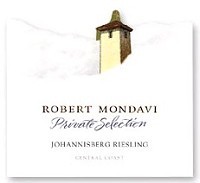
All that said, I have tucked into four of the newest releases from the Robert Mondavi Private Selection label and can report that although these are not handcrafted gems from the juice-stained extremities of an old world master, they are well-made, middle of the road supermarket varietals, neither outstanding, but absolutely drinkable.

They are boardroom wines with every bottle’s drop calculated to the final molecule.  The flavor notes are chosen by consumer polls and the PR is maddeningly contrived.  But translating the hokum is relatively easy, because wine cartel marketing tricks are about as transparent as those of a second-string birthday magician on a three-day bender.

  • When you see ‘Robert Mondavi Private Selection’ on the label, you read: ‘Somebody other than Robert Mondavi  selected these wines via committee in a quest for maximum profit’.
  • When you see ‘Created to celebrate the diversity of California’s wine growing regions,’ you read: ‘It’s a lot cheaper to buy bulk wine from all over California than to buy from a recognized AVA, or God forbid, an individual vineyard.’
  • When you see ‘Suggested retail price $11’ you read: ‘We have struggled and argued and hemmed and hawed before we came up with a price that represents the absolute top dollar our Board of Directors figure you’d be willing to fork over for this product, adding meaningless words like ‘Private Selection’ and ‘exceptionally balanced’ (you can’t be exceptionally balanced, wordsmiths—you’re either balanced or you’re not—ask Karl Wallenda) and designing a label with baroque script to make it appear that you are buying a wine that’s worth more than $11 instead of a wine that’s probably worth a couple bucks less.’

But that’s okay, I know how the game works and so does Wall Street.

Downtown Hibbing

And the penultimate salesman Robert Mondavi knew it too—and made $400 million, secure in the knowledge.

And as his fellow Hibbingite Robert Zimmerman so eloquently quoth:

‘All the truth in the world adds up to one big lie’.


Tasting Notes:

Robert Mondavi Private Selection Riesling, 2009, about $11:  Even the best of the boutique Central Coast rieslings are also-rans compared to  those of Germany and Alsace; they’re like listening to a bar band covering Led Zeppelin—the chord changes are right, but the soul is missing.  This competent but lightweight wine offers tart yellow peach, honeysuckle, Meyer lemon and a generally steely profile.

Robert Mondavi Private Selection  Sauvignon Blanc, 2009, about $11: Clean and grassy, crisp and tickled with a bit of grapefruit and lime, it’s a fine entry-level sauvignon blanc, but not one that stacks up to the classically Fumé   Blanc on which Mondavi made his first big gamble.  Mostly sourced from chilly Monterey, the wine is pungent and somewhat acidic, citrusy but without the tropical flair that many have come to expect with this grape.

Robert Mondavi Private Selection Zinfandel, 2008, about $11:  The best of the four; California’s native son is both prodigal and a prodigious producer, and this one shows textbook bramble fruits, especially blackberry, along with some toasty spice, earth and coconut on the nose—likely the result of the Paso Robles fruit.  An assertive wine and an excellent value.

Robert Mondavi Private Selection Syrah, 2009, about $11:  Also a winner, especially at the price point.  Nice spicy black fruits, buoyant with sweet oak and grippy tannins; the wine is creamy enough to counteract the cool-weather acids, and the finish is juicy, velvety and long-lived.  Some odd stats on the spec sheet though.  The grapes are 99%  Monterey and 1% Paso Robles.  The varietal composition is 99% syrah and 1% merlot.  Something is going on with those crazy, lone percentages… something big, something dark … but I can’t for the life of me figure out what.

Posted in CALIFORNIA, Riesling, Sauvignon Blanc, Syrah/Shiraz, Zinfandel | Tagged , , , | Leave a comment