Darryl Is A Camel Jockey; Pass It On


Clipboard whack
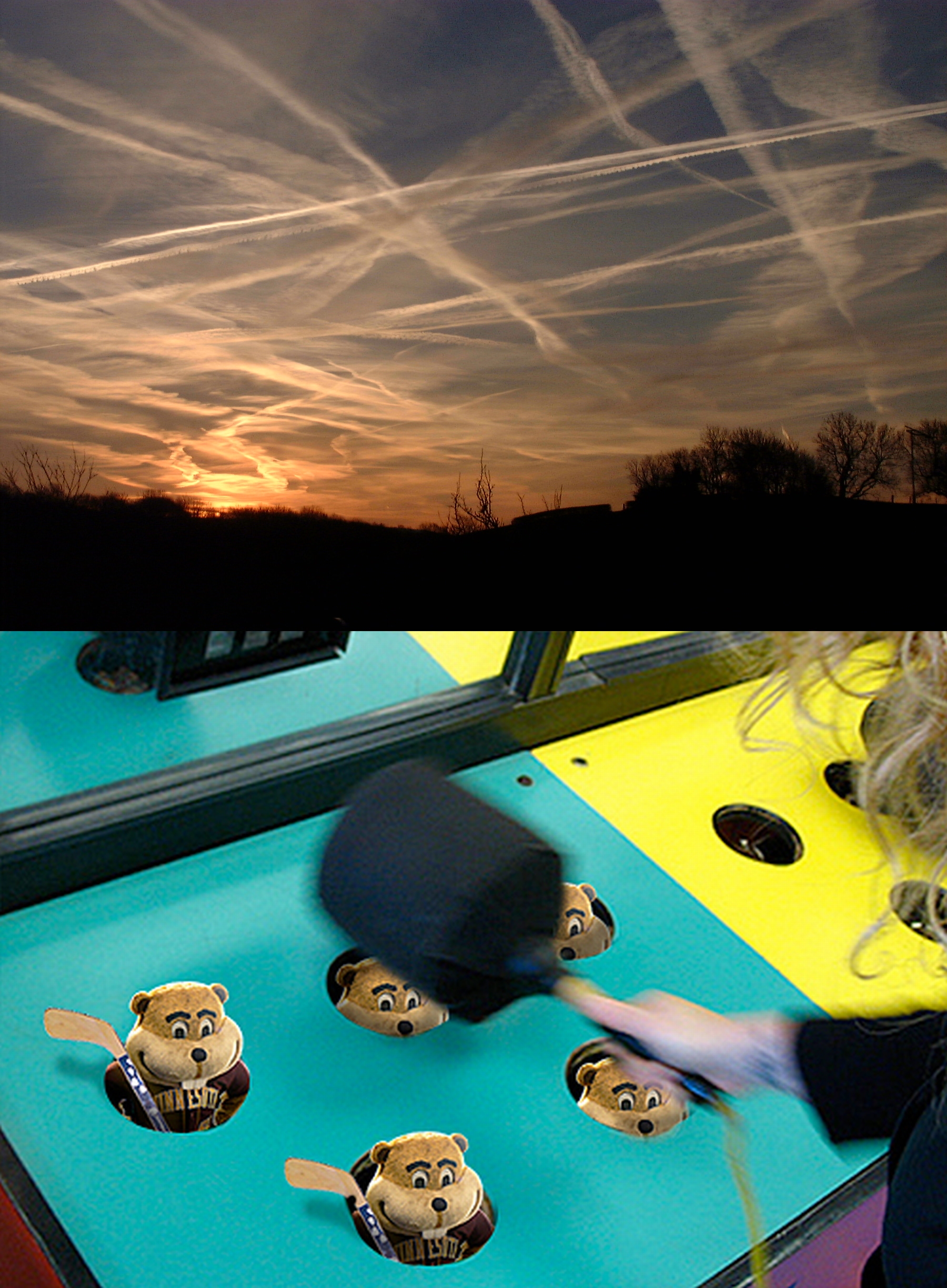
If you’ve been in the wine business since the mid-nineteenth century like Darryl and me, your majestical roof—your brave overhanging firmament—probably resembles the sky above Selfridge Air Base during pilot training week.  Lots of criss-crossing contrails with comrades in arms, right?  People you knew in past lives keep popping up like those Whack-a-Gopher rodents at the Ionia County State Fair, any number of whom you would like to crack in the skull with a mallet?

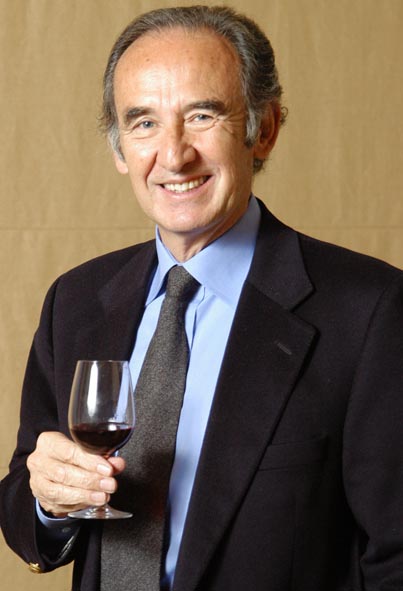
No mallet for Darryl, though.  Our paths have bisected along so many memorable byways over the centuries that our recent Gundlach Bundschu tasting wound up being more an excuse to get blissfully blotto at 11 AM (me more than him: He’s in silk tie and designer suit; I’m in do-rag and sweats) than to work.

Indeed, we scrambled our A-10 Thunderbolts of reflection and reminiscence.

Still, unlike the end-game of those sixty Thunderbolts deployed to Iraq in 2003, ours did indeed wind up—somehow, some way—as mission accomplished.

So First, the Wares:  
'There's pluperfect verbs in them that hills...'

‘There’s pluperfect verbs in them thar hills…’

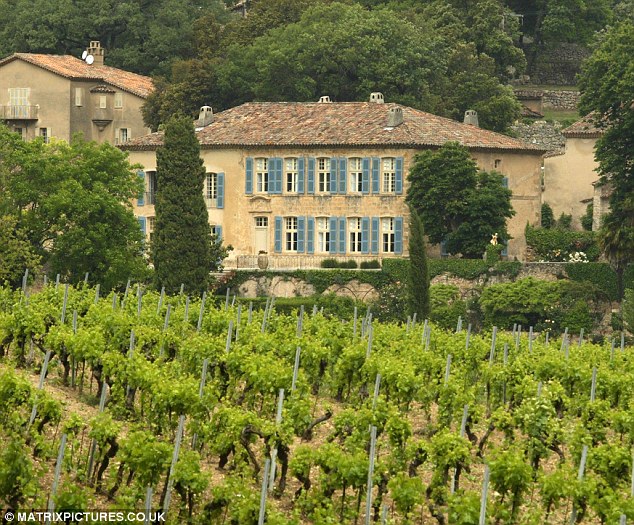
Gundlach Bundschu is the oldest family-owned winery in California, which should be obvious to anyone who tries to pronounce ‘Gundlach Bundschu’.  Clearly, these vineyards were established before the discovery of English caused the great California Linguistic Rush of 1849—coincidentally, the same year that I became a sommelier and Darryl became a wine rep.

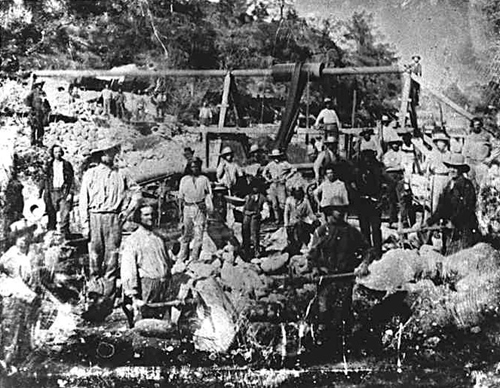
Following a bizarre journey from Bavaria to California, during which he shipwrecked in Africa and somehow wound up in Brazil,  Jacob Gundlach finally made the Left Coast where he picked up some 400 acres of primo Sonoma grapeland (which he christened ‘Rhinefarm’) and then went home to fetch his childhood squeeze, Ava.

The following year, he planted 60,000 vinifera vines on Rhinefarm; at this time, there were only twelve wineries in all of Sonoma County tending a grand total of 27,000 vines.

No surprise that ‘Gundlach’ is German for ‘jumping into battle’.

By the time he released his first estate bottling in 1861, he’d been making wine and brandy from locally purchased grapes for nearly a decade; within another ten years, production had risen to 150,000 cases, and he understood that it was time to bring someone on board familiar with finance.

Charles and Francisca, sittin' in a tree, p-e-d-o-i-n-g

Charles and Francisca, sittin’ in a tree, p-e-d-o-i-n-g

That someone was Charles Bundschu, a member of the local German enclave.  And old Charles knew a good thing when he saw it, so to braze the bonding, the randy old bean counter married Jake and Ava’s daughter Francisca, who—if you do the math—couldn’t have been more than 15 at the time.

The couple soon went all high-society, joining the ranks of San Francisco glitterati and forging a Gundlach Bundschu reputation as benefactors of the arts that is still in play today.

Jacob passed away in 1894 and Charles took over; a role for which he figured he might at least tag his surname onto the winery’s.  Thus, the first vintage of Gundlach Bundschu was released the following season.

By the turn of the century, thirty years of canny viticulture and clever marketing had elevated Gundlach Bundschu to the top of the California drink chain; they were distributing a quarter million cases of wine every year in a global market.  Charles Bundschu, who in his spare time was a poet of international fame, formed the highly successful ‘Bacchus Club’, celebrating two of life’s most important amenities: Wine and literature.

Then the Shoe Dropped…

On April 18, 1906 at 5:12 AM, the deadliest earthquake in American history hit San Francisco.  More than three thousand people died, nearly twenty time as many as were killed in America’s second deadliest quake. *

* (Alaska, 1964)

Post-quake blues

Post-quake blues

Having been built on Second and Bryant in what is now San Francisco’s Soma District, the Gundlach Bundschu winery was pretty much demolished; the fires that followed the quake destroyed three family homes and more than a million gallons of wine.  To avoid complete ruin, Gundlach Bundschu reinvented itself as a modest estate winery, and that survival-mode desperation allowed the family to eke out a bare-bones living.  But the shock proved more than Charles Bundschu could manage: He died within a few years of the disaster, and his sons Carl and Walter picked up the reins.

Almost immediately, this brace of brilliant Bundschu boys managed to maneuver the estate back to sunshine and lollipops, and in 1915, only nine years after the quake, they entered their wines in the Panama Pacific International Exhibition and took 19 awards—including Grand Prize.

And then the other shoe dropped: Prohibition.

Walter B. has a she, who demands so-bri-ety

Walter B. has a she, who demands so-bri-ety

Lips That Touch Riesling Will Never Touch Mine

Even Walter Bundschu’s wife supported the 18th Amendment, and that was the straw that broke the camel’s back.  By the time it was repealed fourteen years later, of the 800 California wineries, only 140 were still in business.

Gundlach Bundschu was not among them: And the winery windows remained shuttered for five decades.

Speaking of Camel’s Backs…

Thank you very much, Anti-Defamation League; I am fully aware that my Muslim brethren consider the term ‘camel jockey’—as used in this story’s scarehead—to be an unambiguously pejorative ethnic slur.  I suppose they have a meter running, too, waiting for an explanation before Radio Tehran announces a fatwā demanding my execution.

Well, Islamic world, wine writing is a man’s life, and all man I be: I will explain myself when I am damn good and ready.

Chris Guest (right) concedes defeat in Leelanau’s annual Thunder Thighs contest.

Chris Guest (right) concedes defeat in Leelanau’s annual Thunder Thighs contest.

Meanwhile—although in my drink-damaged dotage the details might have deteriorated a dash—I believe that I first met Darryl Vennard at the Seven Lakes Vineyard, then the only estate-bottling winery in Oakland County, Michigan.  He had been hired by Chris Guest, Seven Lakes’ proprietor, from Michigan State’s enology laboratory, where Darryl was finishing up a science credit needed for his utterly un-wine-related major in European Literature.

But as it happens, the relationship worked, because Chris Guest is a winemaker by profession (he now crushes and consults in the Leelanau and Old Mission  peninsulas) but a dramatist both by design and DNA—his sister Judith wrote the paradigm-shifter Ordinary People and his uncle was Edgar Guest, Michigan’s only Poet Laureate.

I’d guess (pun) that at the time, the three of us would rather have been scribbling scat in our Moleskine journals and discussing why otherwise sane and sensible Jane Eyre gives in to unexplained outbursts of superstition while drinking wine that somebody else made and critiqued. Still, if life hands you botrytised vignoles…

I'm just mad about Madeline...

I’m just mad about Madeline…

I mention botrytised vignoles because discovering that it was  infecting Guest’s late-harvest vignoles was Darryl’s proudest moment at Seven Lakes:  His training under G. Stanley Howell, MSU professor (now emeritus) of enology had paid off; he recognized the fungus by its faint strawberry hue.  The resulting wine was so lovely that it was picked up by sommelier (now MS) Madeline Triffon and featured on the tony London Chop House’s acclaimed wine list—an unheard-of honor for a Michigan wine.

European Lit boy made good: When I worked at Seven Lakes, the only thing I discovered was Chris Guest’s stash of experimental rosé, and I spent the entire harvest with a low-grade buzz.

From Boscs to Bovines and Back to Bundschu Barrels

Jim Bundschu

Jim Bundschu

For fifty years following Prohibition, the Gundlach Bundschu family raised pears and cattle, making wine only for home consumption. But by 1970, the market for wine grapes had improved to an extent that Jim Bundschu, grandson of Charles, convinced his father Towle that the former winery needed to retrieve the towel they’d thrown into the ring.  Towle agreed with a single condition: That they replant using proven phylloxera-resistent St. George rootstock rather than the then-in-vogue AXR-1.  Towle wound up being a visionary: A decade later, in the Eighties, AXR1 succumbed to root louse and caused untold financial and agricultural damage throughout California wine country.

The first modern-era, estate-bottled Gundlach Bundschu was 1973’s zinfandel, and throughout the 80’s and 90’s, the winery produced upwards of 70,000 cases annually—far below their turn-of-the-century heyday, but with the lower grape yields and resultant higher quality demanded by resuscitated winery, still quite respectable.

Family resemblance: Give Jeff a fake beard and you've go a 'sperated at birth'.

Jake and Jeff family resemblance?  Give Jeff a beard and he could play Jake in a mini-series.

That number was slashed in half in 2001 when the family opted to eliminate all non-estate wines from their portfolio and focus exclusively on fruit from Rhinefarm.  According to Jeff Bundschu, Charles Bundschu’s great-great grandson,  “Quality is how we’re going to make it — quality of wine and quality of life.  The family business is based on this philosophy: Make sure you do what you love when you’re doing it, because you never know when it’s going to change.”

Towle May Have Been Right About the AXR-1, but Muslims Don’t Drink Wine and They Don’t Like ‘Towle Head’ Any More Than ‘Camel Jockey’

Not quite yet, Mujahidin/Hezbollah jackholes; I’m getting to it.  First, as we follow the arrow of Gundlach Bundschu’s timeline, so we must with Darryl Vennard.  He was plucked from the bowels of Seven Lakes by a local distributor who needed someone to help market and sell Gundlach Bundschu wines to the local market—in part, no doubt, because it was hard to pronounce.

grenadeThe story goes that a disgruntled Jim Bundschu had earlier stormed into the distributor’s head office where he’d taken a hand grenade from his briefcase, pulled the pin and laid it on the president’s desk, saying, ‘Okay; time to make a decision…’

Darryl, who actually likes to say ‘Gundlach Bundschu’, ended up being that decision.  Through his business prowess, he put Gundlach Bundschu on the Michigan map, wound up as a highly regarded representative in what is probably the most unusual rakehell turn for a professor of European Lit wannabe ever conceived.  So pleased was the Bundschu bunch with the results that years later, they brought him on board as Regional Rep for the Midwest, or something like that, and moved him to St. Louis.  All I know is that he bops back into town from time to time, and we are able to share tea, crumpets and red pop while I listen to his bizarre, demented ramblings—the last of which I will share in a minute.

But first…

Emerson, Lake Sonoma and Palmer Creek Road

A kindle of Keiths; an eloquence of Emersons

A kindle of Keiths; an eloquence of Emersons

In 2009, a winemaker named Keith Emerson—who doesn’t know from ‘Chopsticks’ on the keyboards—was brought on board the Gundlach Bundschu dreadnought to make wines that ‘tell each vineyard’s story’.  They were vineyards he’d seen before: Earlier in his career, he’d been an associate winemaker at Gundlach Bundschu and states, “I know the estate and I believe in its potential to produce stellar wines.  Working with Jeff and the team, I find myself extremely motivated.”

King_Biscuit_ManAnd indeed, stellar wines he has made; since his tenure began, the winery has hauled down consistent scores in the nineties, including the scrumptious 2011 gewurtztraminer which is multi-functional as a food wine:  It goes particularly well with King Biscuits and Brain Salad.

‘And Again I Say Unto You, It is Easier for a Camel to Go Through the Eye of a Needle Than For a Drunken Teenager to Enter into the Detroit Zoo After Dark…’    – Mark 10:25
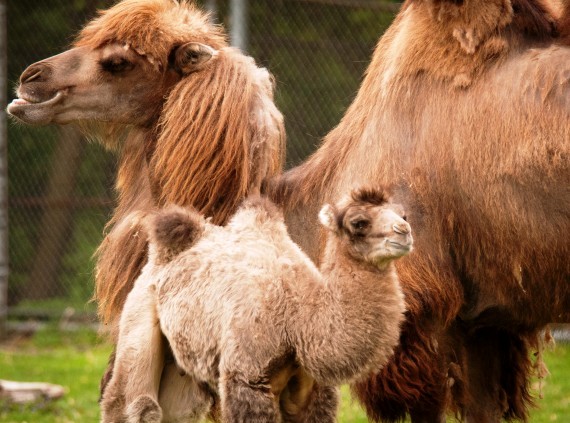
Baby Bactrian, too young to ride, at Detroit Zoo

Baby Bactrian, too young to ride, at Detroit Zoo

Unless you’re Darryl Vennard.  When we were idiotically younger dudes, Darryl lived in Pleasant Ridge and I lived in Huntington Woods and we had the Detroit Zoo in between us.  Although the camel habitat was on my side, that did not stop a peculiar plastered person (whose name I’d share, but I haven’t heard back from his parole officer yet—but, let’s say it rhymes with ‘Schmarryl’) from vaulting the eight-foot stone wall, dodging surveillance cameras and security officers while crossing the park, then breaking into the dromedary digs.

Darryl, over a barrel, soon to under a table

Darryl, over a barrel, soon to be under a table

And riding camels.

He claims to have done it a hundred times or more, which may be the product of a moonshine-manumitted tongue—or even a forked one—but it is a blue-ribbon story for sure and has naught to do with any anti-Arab attitudes or Muslim malevolence.

Anyway, Darryl is French/German.

Hear that, Grand Ayatollah Seyyed Ali Hosseini Khamenei?  No offense intended.  Now, please excuse me while I go feed and water Salman Rushdie who has been hiding in my wine cellar since 1988.

*

Tasting Notes:

Gundlach Bundschu Chardonnay, Sonoma Coast, 2010, about $27:  An excellent example of cool-climate California chard: Lemon zest and apple peel on the nose, rich and sharp on the tongue—no malolactic overtones, but plenty of true fruit acidity shining through.  Pear and citrus on the palate, with a slightly abrupt finish.
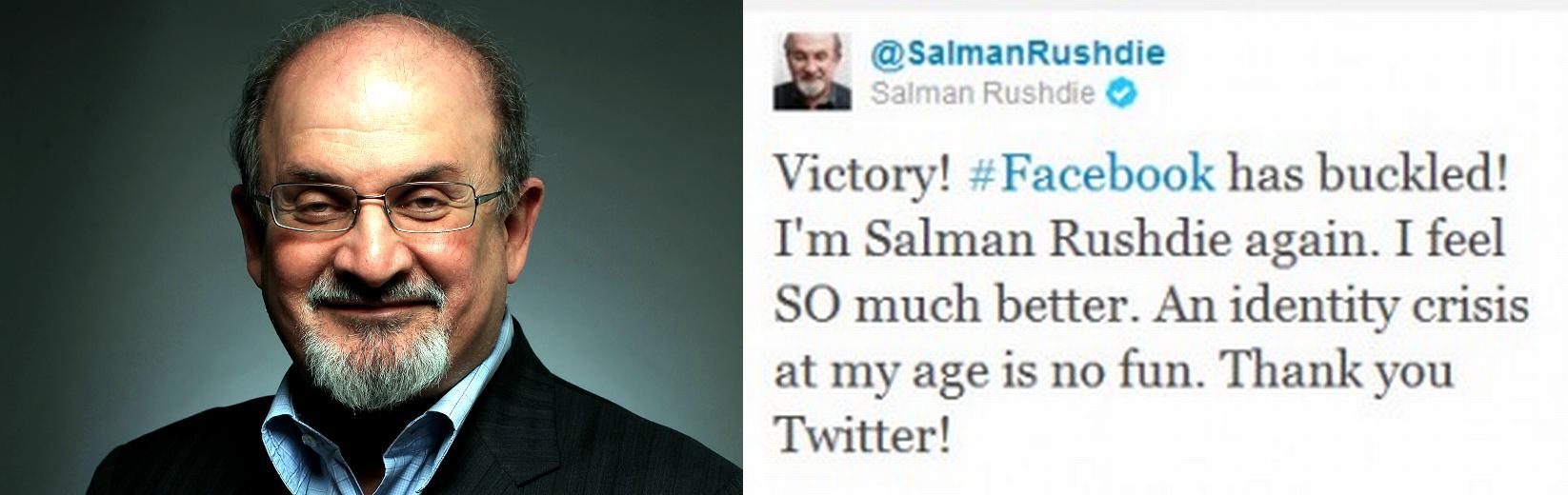
Sorry, Salman baby; a pair of horns and you DO look like Satan.

Sorry, Salman baby; a pair of horns and you DO look like Satan.

Gundlach Bundschu Cabernet Sauvignon, Sonoma Valley, 2009, about $35:  Sappy and sweet-smelling, with deep scents of blackberry preserves, succulent herbs and eucalyptus.  Round, fruity and opulent, although midway through you are spanked with Whack-A-Gopher mallet (this time made of Limousin oak)—the wine clearly needs another five years in the cellar alongside Salman Rushdie.

Gundlach Bundschu Pinot Noir, Sonoma Coast, 2010, about $35: Gigantic, fully extracted bouquet—I think I would have missed that it was pinot noir in a blind tasting.  The flavors are pretty true to form however, but the dominant fruits are plum and blueberry, with cherry—generally a hallmark of the varietal—putting in but a cameo near the end.  It’s a lovely, integrated finish with coffee, hazelnut and brown spice.

mt cuveeGundlach Bundschu Mountain Cuvée, Sonoma County, 2010 about $24: The posh label, along with a soft, sophisticated mouthfeel belies the fact that this wine might elsewhere be considered a mishmash of grapes picked on the final vineyard sweep: It’s a blend of cabernet sauvignon, merlot, cab franc, zinfandel, syrah, malbec and petit verdot—in other words, if it’s purple and grows on a vine? Like Prego maintains, ‘It’s in there.’  The fact that each varietal is individually pressed and tailored to a specific phenolic profile, and blended only after fermentation, is likely what saves this wine from being a congeries of confusion.  Instead, it is rich, red and raucous, jammed with jam and milk chocolate.

Posted in CALIFORNIA, Sonoma | Tagged , , , , , | 1 Comment

When It Says Lobby, Lobby, Lobby On The Label, Label, Label…

…you know that common sense is off the table, table, table.

I once was lost, but now I'm busted.

I once was lost, but now I’m busted.

At one time—before I accepted Jesus as my Lord and personal savior—I was somewhat judgmental.  I know, I know; you’re all like, huh?  You??!  But it’s perfectly true, people.  And one of the things I used to judge rather relentlessly was ‘professions that are so intellect-inhibitingly dull that one develops narcolepsy simply by saying their names’.

Exempli gratia:

Flagman on a road construction site, where you stand in the same place for ten hours turning your sign from ‘Slow’ to ‘Stop’; Nighttime Security Guard in a bank where nobody ever tries to tunnel in and blow up the safe like they do in the movies; Meijer Greeter, where you spend your whole shift saying nothing to anyone except ‘Welcome, welcome, welcome, welcome…’; M&M Quality Control Technician, in which your career is spent rejecting candy without an off-set little imprinted ‘M’  on it.

Oh, yes: And being a research analyst at a major university like my homegirl Elizabeth—a slightly less well-paid version of being an actuarial scientist in a discipline that applies statistical methods to assess risk, and requires stifling, stilted expertise in probability, mathematics, financial economics and computer programming while relying upon deterministic models in the construction of tables and premiums.

Say good night, Gracie.

'I dream of typing 12 in cell  B1 with the seriously red hair...'  ♫ ♬

‘I dream of typing 12 in cell B1 with the seriously red hair…’ ♫ ♬

On the other hand, my Elizabeth is perfectly charming and non-boring in person (even though she claims to dream in Excel spreadsheets), and even yours truly must confess a perverse fascination for certain statistics: Those involving really horrible things, like the number of people murdered with ball-peen hammers last year, how long a chicken might survive after being decapitated, annual deaths from alcohol-related beriberi and the number of M&Ms transported to the etching machine per hour… and expressly not involving stuff like stochastic systems or the application of compound interest.

So this morning, while poring through a particular, comparative,  non-boring histogram, I came across a set of singular stats that sowed a seed of sentience in my cingulate sulcus, thus spawning the subsequent sobering screed.

Stats, as follows:

  • Americans who died from prescription drugs in 2012: 14,130.
  • Americans who died from alcohol abuse in 2012: 24,518.
  • Americans who died in automobile accidents in 2012: 30,737
  • Americans who died from medical malpractice in 2012: 183,690.
  • Americans who died from obesity-related issues in 2012: 289,182.
  • Americans who died from tobacco use in 2012: 329,694
  • People who have died from marijuana use throughout the 5000 years of recorded human experience:  0.

That is correct, grasshopper. Nary a one. Not a single death has ever been officially (or otherwise) linked to an overdose of the ol’ baby bhang.

Never say never: Dude has 12,000 more to go, then he's toast, not toasted

Never say never: Dude has 12,000 more to go, then he’s toast, not toasted

And the reason why is pretty clear, too: According to numbers posted by our own beloved Department of Justice and equally smooch-worthy Drug Enforcement Administration, in order to induce death, a midnight toker would have to inhale 1,500 lbs. of pot within fifteen minutes.

The same study points out that dinkie dow is far safer than many of the foods we consume, even those grown biodynamically.  As an example, ten organic potatoes eaten raw can produce a toxic effect in humans, whereas it is physically impossible to eat enough griffa to kill ya.

Furthermore, the value of chronic as a therapeutic tool is off the charts.  Repeating the startling stat that, in five thousand years of bong-pulling there has never been a credible medical report suggesting that ganja has caused a single death, the ‘miracle drug’ called aspirin can be attributed to about five hundred deaths every year.

Clipboard asprLike most medicines, acetylsalicylic acid is often evaluated via an ‘LD50’ ratio, which indicates at what dosage 50% of test animals will die from drug-induced toxicity.  Aspirin has an LD50 of 1:20, meaning that if the prescribed adult dose is two tablets, should you take 20 times that— forty pills—make sure your will is up to date, because there’s a 50/50 chance that some probate attorney will need it.

Valium is worse: It comes in at 1:10, so at ten times the recommended dosage, things will go south quickly, and the 50% of you who don’t croak outright will likely suffer internal damage.

Even table salt can take you down.  An LD50 of 1:33 means that if you swallow about a cupful at one sitting, 33 times Morton Salt’s daily allowance of 6 grams, it’s sayonara to half of all y’all salt-suckin’ suckers.

Marijuana, however (in its natural form), is one of the safest therapeutic drugs ever tripped over (pun) by the medical community.  With an  LD50 of 1:30,000, you would have to have to smoke 30,000 joints in quick succession before tetrahydrocannabinol built up in your system to the point where you would consider texting Father O’Malley for extreme unction.

Refer back to the list of stats above for a sec.  Despite the fact that I now state the obvious, in Washington, it evidently isn’t obvious until it is stated—and usually, not even then:

'Will the seantor from North Dakota please state her name?  No, ma'am, that's not a trick question.'

‘Will the senator from North Dakota please state her name? No, ma’am, that’s not a trick question.’

Does everyone in Congress weigh in on the two-digit, drool-and-simper side of the Stanford–Binet Scale?

Or is it, perhaps, something a bit more sinister?

Number of Senators Named Bob Johnson Who Received $12,000 From Tobacco Lobbyists, Then Killed Legislation That Would Have Given Oklahoma Cities and Towns the Right To Enact Anti-Tobacco Laws:  1


We don’t smoke marijuana in Muskogee;

We don’t take our trips unless they’re free.

We don’t burn our bridges down on Main Street;

We support the death stick in-dus-try.

Bob Johnson, State Senate with apologies to Merle Haggard

*

Another stat for your highbrow consideration:

  • Americans named Bob Johnson: 25,874

With that many Bob Johnsons flitting about, it’s no wonder that his folks gave him the unusual, but perfectly appropriate middle name of ‘Faustus’.

Because, outside of a handful of conspiracy theorists in Mobile, Alabama, a coven of Satan worshippers in Duluth, Minnesota, an S-B-Scale-two-digit, drooling-and-simpering spastic in the Psikhushka Psychiatric Prison Hospital in Volgograd, nobody but me—and now, by proxy, you—know that King Solomon, in his Torahtic pseudepigraphical Testament, classified the nefarious Nabobs of Nicotine among the hierarchy of demons.

Here is but an excerpt from that mystical opus:

Philip Morris Co. can be found between Asmodeus (primary antagonist in the Book of Tobit) and Astaroth, Prince of Thrones.

R.J. Reynolds Tobacco Co. appears below Carnivean, Prince of Powers and above Rosier, Second in the Order of Dominions.

Quite fittingly, you can find Brown & Williamson Tobacco Corp. wedged between Mammon, Lord of Greed and Belphegor, Prince of Who Gives A Shit If You Get Emphysema; Buy More Lucky Strikes.

If I smoke Newport, will Ibecome as fly as this dashiki-wearing Afro-American?

If I smoke Newport and say ‘ain’t’, will I become as fly as this dashiki-wearing Afro-American?

Bringing up the rear, just as the Lorillard Tobacco Co. gives it to smokers up the rear in the form of rectal cancer, the Greensboro, NC, publicly-traded disease factory—maker of Newport, the brand to which I used to be addicted before I realized how much quicker it was to jump off the Penobscot Building—is the middle-man between Beelzebub , Prince of the Seraphim, Second in Command to Lucifer and Senator Joe McCarthy, who has been given honorary demon status as the succubus of Hades bad-boy Ba’al Zabul. *

* (This is a fact, however: Lorillard Tobacco Co. is a member of the  National Black Soul Chamber of Commerce).

Anyway, considering that cigarettes kill more Americans than AIDS, heroin, alcohol, vehicular accidents, homicide, suicide and M&Ms combined, this quartet of corporate cankers could not have found a better home, especially since they appear to be so enamored of smoke.

How About a Little Fire, Scare Tactics?

Awaiting their own Hellish assignment among the malignant monsters of mythology are the League of Cambions known as lobbyists.  For reference, a cambion is the product of an unholy union between a demon and a human—Caliban, son of the witch Sycorax in The Tempest was one.

A litter of lobbyists

A litter of lobbyists

As further reference, a tobacco lobbyist is an ‘activist’ hired by Big Tobacco to patrol Capitol Hill and schmooze members of Congress with every manner of highly-regulated bribe intended to flatter, entertain, enrich and otherwise strong-arm them to vote with their egos, which are generally more evolved than their brains.

How much does the average cancer cook from North Carolina or Virginia spend to advance their agenda in what they euphemistically call ‘tobacco issues’??  Per legislative day, around $100,000 is spread like rancid oleo throughout Washington to convince lawmakers that the freedom to kill Americans via their product is a birthright, and that anything short of total capitulation on the part of Congress will guarantee that the tobacco industry’s re-election support will go up in smoke.

Of course, they obscure the truth in literal smoke and figurative mirrors:  It’s not just West Wing’s President Bartlet who has clever, if disingenuous speech writers.  According to David Tovar, a Philip Morris spokesman, “We monitor lots of bills.  Historically, we anticipate that Congress will look to fund some of their pet programs with tobacco taxes.”

...Spent $100 billion over 8 years lobbying Congress.

…Spent $100 billion over 8 years lobbying Congress.

In other words, Tovar feels perfectly justified in pushing and blackmailing and payola-izing the FDA to take over the regulation of cigarette production, because of the big four tobacco giants, Philip Morris is the only one with deep enough pockets to meet government standards.

This didn’t sit well with the competition, of course, but they did find common ground later when they persuaded Congress to significantly reduce the amount of government money earmarked for a lawsuit alleging that cigarette-makers conspired for decades to keep the risks of smoking from the public.

In Big Tobacco’s tunnel vision it’s quid pro quo; only their quid is painful and expensive death from lung cancer, while Congressional quo is a steady flow of re-election funding.

Talk About Your Wacky Tobacky…

Meanwhile, the tobacco companies continue to recruit former members of Congress as exorbitantly overpaid lobbyists.  Overpaid because, by their own admission, a lot of them do no lobbying at all, even though they cash their retainer checks anyway.

'Rufus' rhymes with 'doofus'.  Pass it on.

‘Rufus’ rhymes with ‘doofus’. Pass it on.

Rufus Edmisten, North Carolina’s former Attorney General and Secretary of State and current Philip Morris lobbyist, is among them.

“I register every  year, just in case,” Edmisten claims.  “I consider myself a ‘general resource’ for Philip Morris.”

Ouch.

‘For the wages of sin is death, but the gift of God is eternal life in Christ Jesus our Lord.’  – Romans 6:23

Number of Times Per Hour That the Name of Jesus Christ is Uttered in a Non-Swearing Context: 3,000,000

As a matter of fact, Jesus and me have our own little quid pro quo going on.  When He and his seraphim were lobbying me to sell them my soul, they traded my eternal devotion and proselytizing-through-a-wine-blog loyalty for a little personal, preternatural clairvoyance.  Therefore, I know exactly what you are thinking:

Does marijuana have any lobbyists in D.C.?

Allen St. Pierre, the Rajah of Reefer

Allen St. Pierre, the Rajah of Reefer

Indeed they do, Junior!  Ever since discussion about legalizing boo boo bama became less taboo boo bama, the National Organization for the Reform of Marijuana Laws has been actively courting legislators—at the request of the legislators themselves, who clearly have dollar signs in their eyes.

“These were folks who wouldn’t take a call five years ago and now they are calling us and telling us to get up there with our PAC money,” said Allen St. Pierre, executive director of NORML. “For those of us who have been at this for the past 20 years, it has been nice to see the worm turn.” *

* ‘See the worm turn’??  Never heard that one before.  I wonder what he’s been smoking.

There’s Light at the End of the Tunnel Vision…

In November, 2012, Capitol Hill released the following statement:

The green is always grassier...

The green is always grassier…

“The ground has shifted and we now see members of Congress wanting to regulate cannabis like alcohol. Our activity on the federal level is no longer just about medical marijuana.”

With luck, logic and lots of (legitimate) lobbyist loot, I think we’ll live long enough to see a complete overhaul of the federal drug policy, including controls on over-incarceration, racial disparity and financial conservation.

This is a good thing—a consummation devoutly to be wished.

Oh, and for any of you who fired-up a doobster during the course of this interminable diatribe and are now thinking about M&Ms again?  I am sure this has been bugging you throughout your stoic read, so…

  • The good, the bad and the 'M'-less

    The good, the bad and the ‘M’-less

    Number of M&Ms transported to the etching machine per hour: 2,600,000.

  • Number of M&Ms that are manufactured every day: 100,000,000.
  • Number of those M&Ms that bored quality technicians reject because they are not stamped with a little ‘M’:  Zero: Due to the minor variations in shape, the company feels that it impossible to guarantee an ‘M’ on every single piece of candy.

Good night, Gracie.

Posted in Uncategorized | Tagged , , | 3 Comments

Calling All Vegans: Unfriend In Need!

Illustration of the facebook thumb up hand sign. Isolated on white.You guys probably know more about Facebook protocol than me, so tell me this: After you ‘unfriend’ somebody, is it customary to send them twelve (count ‘em) private messages in which you refer to your new best unfriend—in this case, me—as, among other things, a douche?

My business card.

My business card.

I had this peculiar experience with a peculiar homie—a fellow Detroiter and a vegan who ‘unfriended’ me in part because I eat meat.  And hunt.  And own guns, which I use to hunt, not to murder school children and their principals, even if they happen to be vegans.  I do not, as it happens, own a handgun or an assault rifle; I own several shotguns and .22s, some historical pieces from various wars and a Remington Model 74 30.06.

Even so, my opinion on an assault weapon ‘ban’ is uncomplicated, even when unloaded upon an unsympathetic unfriend:

The Second Amendment—as ratified by the States and authenticated by Thomas Jefferson—is all of 27 words long, and does not strike me as being particularly ambiguous:

A well regulated militia being necessary to the security of a free state, the right of the people to keep and bear arms shall not be infringed.

Barack Obama telling me that I can own some rifles, but not all rifles  is the same thing as him telling me that I can practice some religions, but not Islam.

What About All That ‘Well Regulated Militia’ Stuff Then?

This:  During Colonial times, every able-bodied male was required to be a member of the militia.  It was America’s first deep-dive into a system of conscripted duty and no man was exempt without good cause.  And the purpose of said militia had nothing to do with hunting ringneck pheasants and whitetail deer, of course—it had to do with scaring off liberty-usurpers, whether or not they adhered to a way of living that sought to exclude, as far as possible and practicable, all forms of exploitation of, and cruelty to, animals for food, clothing and any other purpose.

Clipboard 2Actually, vegans (and their above mission statement) weren’t invented until 1944; the same year that the 17th SS Panzergrenadier Division murdered 129 civilians at Maillé, France; the same year that 800 Romani children were systematically gassed at Auschwitz; the same year that The Adventures of Ozzie and Harriet debuted on CBS radio.

That year, the term ‘vegan’ was coined by an English carpenter named Donald Watson (1910 – 2005) after dairyban, vitan, benevore, sanivore, beaumangeur and beaucoup d’hypocrites were rejected by his fledgling fraternity of flesh-free fanatics who had recently vamoosed from the Vegetarian Society of Britain.

Despite the fact that in the meantime, the Nazis were unleashing V-2 ballistic missiles on West London and making a moonscape of Norwich, Leslie Cross of the Leicester Vegetarian Society had his priorities straight: He expressed his outrage in the July issue of The Vegetarian Messenger that vegetarians were continuing to  consume cow’s milk despite the obvious fact that drinking cow’s milk exploits cows.

'Have some soy milk, sir.'

‘Have some soy milk, sir.  Beans cannot be exploited.”

My gut tells me that Leslie—who was 29 years old in 1944—should have been on the front lines with his peers fighting for the survival of Great Britain, not vegetating in the East Midlands  ruminating about cow secretions. However, it is entirely possible that he’d been able to pull the wool (figuratively, of course, because wool exploits sheep) over the eyes of the draft board since his parents were so ashamed of him turning up his nose at a good, wholesome Samworth Brothers Sausage Pie that they refused to give him a boy’s name.

Likewise, Donald Watson was 34 in 1944—a prime and perfectly eligible age for someone to defend their fatherland.  But I suppose if you won’t eat honey because it is abusive to bee colonies or wear silk because it is an imposition on silk worms, you can hardly be expected to shoot at German people who never did anything to you except kill your compatriots and try to steal your country.  Incidentally, by some accounts, Adolf Hitler was also a vegetarian—among history’s most curious ironies.

With Unfriends Like That, Who Needs Enemas?

So, back to Facebook.  I know that my rather outspoken disdain for vegans—and hypocrites in general—makes me more enemies than friends, but a guy’s gotta do what…  You know how it goes.

3/5 of a man no longer.

3/5 of a man no longer. 4/5 and counting.

The straw that broke the exploited camel’s back for my name-calling unfriend was when I corrected a rather silly update he’d posted, which said, in part, ‘150 years ago, if you had called for the abolition of slavery, they’d have called you nuts,’ or something like that—I can’t reference the original because I am unfriended.  Anyway, I pointed out that, coincidentally enough, 150 years ago this year, on January 1, 1863, the Emancipation Proclamation was signed, more or less invalidating his ‘150-years-ago’ claim.

Brother, did that piss him off.  He accused me of ‘nitpicking’—something I would never do since it exploits baby head lice.

It got worse when I asked him who the phantom ‘they’ in the post referred to, and he said it referred to me.  Moi.  Yours truly. Chrissy Baby.  Which means, in my interpretation, that he is calling me a pro-slavery racist.  I am not sure about you, but I really don’t mind being called ‘douche’, but I sort of draw a line at ‘racist’.

There will be zooplankton blood.

There will be zooplankton blood.

In the past, he and me had been around the block on the subject of veganism:  I maintain that there are some innate paradoxes in the vegan philosophical viewpoint, not the least of which is that if you are truly committed to a lifestyle that excludes the use of any animal by-products, you are not allowed to drive, fly or walk on asphalt since fossil fuel and petroleum are made from dead zooplankton, and—not to make too fine a point of it—the word ‘zooplankton’ comes from the Greek planktos (πλαγκτός), meaning ‘wanderer’ and zoon (ζῴον), meaning…?  Ready…?

‘Animal’.

Lips That Touch Animal By-Products… Are Sealed. 

By ‘sealed’, I assure vegans everywhere that I am not seeking to exploit the kind of seal that clap their flippers and go ‘ort ort ort’, but rather—as much as I would love to name names here and let the cat out of the bag (exploitative of cats, certainly)—there is a certain ethical obligation that we journalists have—a set of self-regulating rules referred to by professionals such as myself as ‘limitation of harm’.  In a vegan-friendly nutshell,  our discretion is required when we consider sharing the names of people, even unfriends, who are 1) the victim of a particularly heinous crime; 2) minor children; 3) whistle-blowers or 4) vegans who one is exploiting as column fodder.

The codes and canons of journalistic ethics are intended, of course, to guide us through conflicts of interest, moral dilemmas, the rights of…

Oh, hell; who am I kidding?  I’m not a journalist.  I’m a douche, right?  His name is Brent Maxwell.

Vegans Are Keen on Quinoa

Quinoa, up close and personal

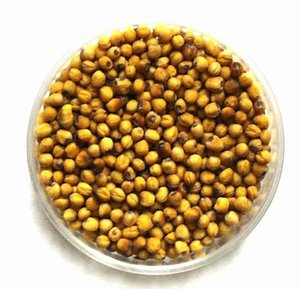
Quinoa, up close and personal

Of course they are.  So dull must the typical meat-free, egg-free, dairy-free, logic-free diet be that vegans are always looking for some exotic, edible gimcrack to liven things up.  Avocados, for example, are so popular in this lifestyle that great swaths of South American rainforest have been razed so that farmers can plant more avocado trees and cash in.

Quinoa first came to national notice a couple of decades ago as an unpronounceable Peruvian ‘wonder grain’ (it’s a seed, though, not a grain).  From the giddy-up (sorry, horse non-exploiters) quinoa seemed ideally suited for the vegan diet as it is unusually high in protein (up to 18%—three times higher than cow secretion juice) and contains a potpourri of essential amino acids that many vegans require, but don’t necessarily get.

year of qConsidered sacred by the ancient Incas and developed into spaceman chow by NASA, the Food and Agriculture Organization of the United Nations likewise creams all over it (that would be natural almond and cashew MimicCreme©, of course) and has declared 2013 ‘International Year of Quinoa’. The FAO even sponsors a Facebook page dedicated to quinoa which you can join without fear of being unfriended so long as you do not mention your gun collection.

Me, I can’t join, because the most popular Peruvian variety is called quinoa negro, and I’m a racist.

And that is all well and good, so it is with great regret that I, in this, the Year of Quinoa, must share with vegans everywhere that quinoa winds up being but another nail in the coffin of your holistic hypocrisy.

'Up, down, turn around, pick a bale of quinoa...'

‘Up, down, turn around, pick a bale of quinoa…’

Without statistics to back me up, I would venture to guess that there are very few poor vegans, unless they are forced to adopt that deeply-philosophical, earth-embracing  lifestyle because they don’t have enough money to buy a Big Mac.  For the most part, third world cultures consume about a third of the animal products that Americans do, and about a quarter of the dairy.  According to the National Institute for Health, by 2020, these developing nations will wolf down 107 million tons more meat and 177 million tons more milk than they do today, dwarfing our own predicted increases of 19 tons of meat and 32 tons of milk.  So, if there is some moral imperative to being a vegan, Guinea-Bissau, Senegal, Chad, Tuvalu et al. better get while the gittin’s good.

Ah, but what happens when the price of a healthful, traditional meat alternative like quinoa rises beyond what the very folks who have grown it, relied upon it, and consumed it for millennia can afford?  What if, based on quinoa’s newly-found star-status among vegans, vegetarians and the occasional metrosexual, it becomes a global commodity and the pesos-per-peck price rises accordingly, until it is too expensive for quinoa farmers to afford for themselves, and a Big Mac actually winds up being cheaper?

They eat Big Macs, that’s what.

Veganism excludes no sentient being–animal or human– from its commitment to compassionate, gentle benevolence. To show tender regard for the suffering of animals, yet treat humans with callous contempt, is a disheartening contradiction of Vegan principles’.

– Stanley M. Sapon, Ph.D, Veganologist

bob's red millI like the ‘callous contempt’ part, because that is exactly how the frequently subsistence-level human beings who raise quinoa in Peru or Bolivia are being treated.  Quinoa prices have tripled in the last ten years, and vegans who sanctimoniously shell out ten dollars for a pound of meatless Bob’s Red Mill Whole Grain Quinoa are apparently failing to connect the dots:  When the market price for nutrient-dense Ecuadorian quinoa reaches a level where it makes no economic sense to eat it instead of sell it, farmers will switch to something else.  What else?  The very stuff that vegans despise: Imported junk food, Coca Cola and the odd guinea pig or two.

How much self-righteous smuggery does your garden-variety quinoa-cramming vegan go to sleep with each night, knowing that his/her veganism is pretty much forcing quinoa farmers to abandon theirs?

You tell me, Paul McFrigginCartney.

¿Cómo Se Llama?  Translation:  ‘What’s Your Llama’s name?’

As the avocado orchards are to Mato Grosso, so are quinoa fields to the traditional grazing areas of Peruvian llamas.  In the rapid quest for more cash-cow (sorry, bovine apologists) quinoa plantations, the llama herds are being removed in favor of the health-food monoculture—and this is happening in one of the most fragile ecosystems on the planet, where llama crap is vital for the structure and fertility of the soil.

napolean and llamaMeanwhile, South American governments are doling out tractors and similar fossil-fuel-guzzling farm vehicles to assist quinoa growers meet the sudden new Western demand, further wreaking havoc upon the environment.  All this so that vegans may look down their noses at us muscle-munching, flesh-feasting, blood-bolting carnivores while they enjoy their kale and quinoa salads?

(By the way, the llama’s name is Tina.  And don’t forget to vote for Pedro).

Let He Who Is Without Sin Castrate The First St. Bernard

Now, in this column I have doubtlessly wrung out the vegan-bashing sponge (synthetic urethane, of course; not porifera-exploiting natural sponge), but I can’t resist sharing a true story about this other vegan I know and his talking dog.

No animals were harmed in the taking of this picture.  Except the dog.

No animals were harmed in the taking of this picture. Except the dog.

You see, unless grandfathered in from before the vegan became a vegan, a vegan can’t own a pet, because ownership of a pet exploits pets.  Vegans are, however, fully in favor of neutering pets in order to prevent more pets from being born following canine sessions of heavy petting.

So, while this dude was out the room, his dog turned to me and said, “He loves me.  He gives me vegan dog food.  He believes that animal life is a phenomenon to be treasured, revered and respected; he acknowledges the intrinsic legitimacy of all life and rejects any hierarchy of acceptable suffering among sentient creatures.

He cut my balls off.”

According to Brent Maxwell, this makes him man’s best unfriend.

Posted in GENERAL | Tagged , , | 3 Comments

Barack Buggers Big Beer: Bravo!

When it comes to learning new words, I am pretty much on the fence.  Like, I vacillate.  It would seem that my inbred, Leonardo-level lust for learning—the product of a nearly bionic brain and a four-digit IQ (not to brag, but I can recite pi from memory for nine hours straight without once repeating a single digit)—is somewhat offset by my paranoia that, should I admit to ‘not knowing a word’, somebody somewhere might think me less than a superhuman, supremely seraphic savant.
Bless me, Father, for I have sinned; it has been twenty minutes since my last confession:

That is precisely why I make up words with irritating regularity:  I am too proud to use a Thesaurus and too sniffy to ask a colleague for help.

The Exception Proves The Rule

However, in reading a post by Australian wine writer David Brookes, I came across a word with which I was not familiar: ‘Duopoly’—which right off the bat sounds like an oxymoron because ‘duo’ means two and poly means either a green bird in search of a yellow cracker or ‘more than two’.

David Brookes

David Brookes

Of course, on the surface it is not unusual to read something written by an Australian and utter a throaty little WTF?, because they are always coming up with words you never heard of.  Words like budgie smugglers (men’s bathing suits), dinkum (true), fossick (to search for something) and barrack (not Obama).

But duopoly, apparently, is not Australian slang for a bi-sexual parrot, but has direct relevance to the beer industry, and here in the United States especially, where 80% of the beer is sold by one of two Bunyanesque breweries: MillerCoors and Anheuser-Busch.

In economics, the term ‘duopoly’ refers to this kind of market, where two producers of a single homogenous product (beer) have dominant control.  When this situation arises, the pair of players either 1) assume the production levels of the other and produce to match, or 2) in a price vs. quantity war, assume that if one firm lowers price, the other one will not follow suit—otherwise, prices ultimately drop below the cost of each unit, so nobody wants to sell anything because they lose money every time they do.

Nash 'n' Crowe

Nash ‘n’ Crowe

When both congolmerates use identical logic, they find they have nothing to gain by unilaterally changing strategies, so the market winds up teetering in a Nash-equilibrium.

The Nash-equilibrium, by the way, was named for the paranoid schizophrenic John Nash as portrayed by Russell Crowe in the 2001 flick ‘A Beautiful Mind’.

Enough With The Boring Before You Start Snoring… 

Seriously, people; because right here, right now, we all have ringside seats to a genuine, consequential, cuthroat beer war between MillerCoors and Anheuser-Busch, and a war should be many awful things, but it should not boring.  It should be bloodthirsty and violent, filled with split skulls, spilled brains, eyeballs popping out of heads, acquisitions and mergers, entrails pouring into the sand, limbs being severed from bodies while us spectators thumbs-down everything with one hand while clutching a growler of Bell’s Two Hearted Ale in the other because we are snobs and don’t like either brand.

hatfieldsFrankly, MillerCoors vs. Anheuser-Busch makes the Hatfields vs. McCoys look like Dick and Jane playing tag on an elemetary school reading poster, and for years, they were allowed to tear competing labels off ‘rival’ bottles from around the world and slap them on their own greasy, greedy foreheads.  Like most corporations, they are black holes, hungry for every neighboring galaxy.

I really can’t say that it all the fault of George Bush’s administration, because that would be unfair, short-sighted and somewhat iniquitous:  Acutally, there were two George Bush administrations.

Try this:

It’s All the Fault of the George W. Bush Administration

Clipboard logosYou see, Uncle W. and Anti Trust never did get along, and between 2001 and 2009 (Bush II’s reign of terror), with antitrust laws treated as an uneccessary nuisance that hindered capitalism, the beer industry went through a period of juggernaut consolodation that reached its apogee in 2008 when Anheuser-Busch was purchased by Belgium-based InBev and the merger between MillerCoors and London’s behemoth brewer SABMiller, which had purchased the Miller Brewing Company in 2002, thus effectively taking control of these iconic American beers out of American hands and into the hands of limeys and phlegms Flems.

Why Is This a Bad Thing?

A rhetorical question, natch.  But, trust me on this (as opposed to antitrusting me), friends and lovers: It is a very bad thing—almost as bad as that hubristic, pathologically-chummy Texan, whose pseudopopulist accent is a fingernail upon the chalkboard of the soul, returning  to his home state to score top tee-times and watch executions while our American boys and girls (literally) that he deployed to the Middle East are still getting their shit blown away by pissed-off terrorists.

  • It is a bad thing because, with the concentration of corporate power resulting from these mega-mergers, the MillerCoors/Aneheuser-Busch sphere of influence was shifted offshore.  Thus, American shareholders are challenged to attend annual meetings and generate support for shareholder resolutions.
  • It’s a bad thing because the power of ‘The Duopoly’ (henceforth referred to as the Double-Douche Deuce) is suddenly so all-consuming that distributors pretty find their nuts nailed to the brewpub dart board.  They have no choice but to comply with preposterous, and potentially illegal concessions (like agreeing to sell only their brands) or risk having their contracts pulled.
  • It’s a bad thing because it puts Congress in a strait-jacket: Every time an alcohol tax increase is proposed there are threats of brewery shut-downs and job losses.
  • It’s a bad thing because these greedy, gargantuan, geminate Godzillas are able to spend tens of millions of dollars lobbying the Federal Trade Commission, the Department of Commerce, the White House, the World Trade Organization and state legislatures, and thereby influence you-and-me-affecting policies.

stoutI mean, do you honestly think it is us who are enjoying the benefits of an aggressive beer lobby holding down taxes and fighting fee increases?   Don’t make me laugh—I might choke on my Gritty McDuff’s Black Fly Stout.  According to a 2012 study by the American Antitrust Institute, since the mergers were green-lighted by Bush-the-Tush—and, incidentally, much faster than is usual in such heavily-regulated processes—beer prices have risen faster than the Consumer Price Index, even as ABInBev/SABMiller’s share prices, revenues, profits and dividends have increased dramatically.

Now, as a final affront to us bleary-eyed, teary-eyed brothers in brew, Anheuser-Busch InBev has announced that it intends to pay $20.1 billion to buy the 50%  stake in Grupo Modelo of Mexico that it does not already own, thus further pulling the rug from beneath that wholesome, healthy, root-of-free-enterprise and supply-and-demand battle cry:

Competition.

Barack to the Rescue?

Fair to say, the current administration has a slightly more consumer-friendly view of antitrust policies.  Already scuttled? AT&T’s 2011 offer to buy T-Mobile USA and 3M’s purchase of a rival that would have given it an 80 percent market share in office supplies. Now, under Obama’s direction, the Justice Department has filed suit to prevent the ABInBev purchase of Grupo Modelo, maker of Corona and currently the third largest beer company in the country.

The regulatory suit makes a compelling case: Modelo has traditionally competed with the Brewery Brace by keeping the price of Corona stable, even as the big two raised theirs; a textbook example of the Bertrand duopoly model, and the perfect incentive for consumers to transfer Bud Lite loyalty to Corona—and why not?  Both suck equally.

But, it’s a sure bet that Corona’s cost-competitive edge will disappear if the purchase is approved.

sam adams logoThus far, the response from ABInBev has been weaker than lukewarm O’Douls: The company has  the arrogance and audacity to cite the success of Samuel Adams as proof that the ‘little guy’ still has a fighting chance in American beer wars.

Odd that Sam Adams should have been their choice for reference, because—ignoring the fact that Sam Adams is largely contract brewed in numerous facilities, some owned by ABInBev and others by SABMiller, and likewise ignoring the fact that even at well over a million barrels per year (craft/specialty beer industry average = 15,000 barrels per year)—Sam Adams still only accounts for about 1% of U.S. beer sales.

In fact, outside the duopoly, two other breweries, Heinekin and Modelo, represent another ten percent of the market, putting 90% of American beer sales into the hands of four conglomerates, all of them controlled from foreign terroir. 

mickeysWhen you figure that the entire craft brew market is less than 6% of total beer sales in the United States, ABInBev’s argument doesn’t pass the smell test.  In fact, it reminds me of a skunked Big Mouth Mickey’s from those callow, drink-drenched days of boyhood.

And now, by golly, the rumor-that-will-not-die (probably because it’s true) is that the AB/Modelo deal is merely a template to see how the regulatory authorities would react to the perfect storm of antitrust challenges—a final free-market fusion of forty-ounce forces, like something out of an Isaac Asimov sci-fi novel—the merger of AbInBev and SABMiller, creating a mothership of a monopoly.  That appears to be the direction in which both companies would like to head, and with feud history in mind, it’s hardly out of the question: Recall that Roseanna McCoy wound up married to Johnson Hatfield.

Could the unthinkable happen?  Never say never.

Instead, say precisely what a wordmithing, wallaby-worshipping wine writer like David Brookes would say:

“Fair suck of the sav, mate…?!?”
 

Posted in BEER | Tagged , , , , , | 1 Comment

Must-Serve Wines For The Oscars! Yes, I’m Kidding

Kwami in bas-couture

Kwami in bas-couture

During the hard time I served as Detroit Free Press wine critic, I worked for a screw editor who had been plucked from the paper’s Fashion Page. Why she was offered—or accepted—a position as Food Page Editor is a mystery best left to the Motor City brain trust, who, I remind you, twice elected as mayor con-man-turned-convict-turned-ex-con-soon-to-turn-con-again Kwami Kilpatrick, who is currently on trial for racketeering, extortion, bribery, mail fraud, and so on…

In any event, this particular editor knew nothing about food, let alone wine, but she was eager to succeed, I’ll give her that: She was always assigning me silly stories she’d thought up while paging through Flaunt Magazine in her office.  Among the most excruciating charge she’d yearly lay upon my table was to write a feature about wines that somehow, some way, related to the Oscars and could be tangibly linked to Best Picture, Best Actor, Best Actress, etc.

Which meant that I had to go see all these random, awful, mind-numbing films first.

Well, sir; I have paid my debt to society, and no longer have to sweat content, composition or deadlines for such blimpy bales of babbling baloney, do I?  So long as I report to my parolo officer in Barolo, I’m good to go solo.

Right?

Ah, Perhaps Not…

Because, when I really stop to think about it, the assignment could have been fun.  A challenge even.  What held the idea’s head under water in a sort of Free Press water boarding exercise was that the fact that my fashionista editorette had the funny-bone of a deaf Cistercian monk with Down’s Syndrome, and any time I strayed from the path of somber, sober, spiritless scribology, she got confused and pissed off.

L.: Tituba.  R.: Homo Erectus

L.: Tituba. R.: Homo Erectus

For me—someone who still snickers during The Crucible every time they say ‘Tituba’ and who claims Viagra-related hearing loss whenever anyone mentions ‘Homo Erectus’ and makes them repeat it several times in succession—having to write like a real journalist was emotional pain on the level of execution ad bestias: Being eaten alive by lions in the Colosseum while Roman emperors cheer.

But now that the cuffs of culture have been cast aside—the manacles of maturity, the ankle-bracelet of accountability, the shackles of sheepish schlepping—I thought that I might just give the idea another shot.

Ergo:

Wines To Drink While Watching Full-Length Versions of The Academy Awards ‘Best Picture’ Nominees…

Amour

I imagine Anne feels good.  Very good.

Anne feels good

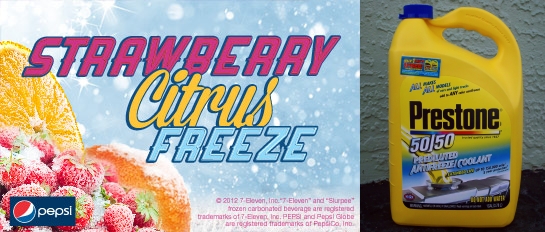
Synopsis:  Every season has its slew of ‘feel-good’ films starring such feel-up worthy stars as Ellen Page, Anne Hathaway and Drew Barrymore.  And, as a single counterbalance to them all, you have Amour, the most depressing tome to hit the silver screen since Night of The Living Dead.  The story of Georges, a retired music teacher taking care of his wife through the indignities of a slow, agonizing death, is really sort of hard to take.  As a viewer, it’s all you can do to refrain from drowning yourself in a Double Gulp Strawberry Citrus Freeze.

Clipboard antiWine:  Rüster Auslese, Late Harvest Riesling, Austria, 1983, price immaterial:  This classic dessert wine contains diethylene glycol meant to boost sweetness.  Otherwise, diethylene glycol is used as antifreeze.

Diethylene glycol is colorless, odorless, hygroscopic—and extremely poisonous.  Although the scandal surrounding its addition to Austrian wines virtually killed the country’s wine exporting business along with the country, if you can find a bottle in someone’s cellar, you are advised that antifreeze is a quicker and less messy death than drowning yourself in Strawberry Citrus Freeze.

*

Argo

Synopsis:  The Academy Awards are, of course, little more than a massive, collective Hollywood circle jerk, and Argo spanks the monkey within the monkey, crediting Tinsel Town with saving the lives of  six Americans during the 1979 Tehran hostage crises.  Despite surprisingly good performances by Ben Affleck both before and behind the camera, the purportedly ‘true’ story of Argo is actually incredibly fluffed up: It was, in fact, the CIA, The Canadian government and an indie film company—not Hollywood—who  saved the day.

Wine:  Fre Moscato, California, 2011, around $6:  Tehran is a few hundred miles from the Governorate of Muscat, where moscato originates, but more to the point, Fre makes a version that is Islam-endorsed and Koran cordial—i.e.; non-alcoholic.

*

Beasts of the Southern Wild

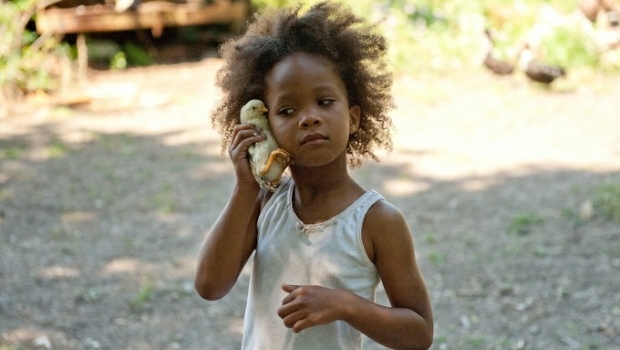
Hushpuppy pretending that a chicken is an iPhone.

Hushpuppy pretending that a chicken is an iPhone.

Synopsis:  A wake-up call for happy six-year-olds who think that life is anything but a relentless daisy-chain of abject misery.  Beasts follows the downward trajectory of li’l cutie-pie Hushpuppy (even her name makes you want to take big bites out of her) as her bayou community is flooded and she, along with her ailing father, are forced to flee; numerous rather disparate sequences follow.  Beautifully filmed—staggeringly so—and strongly acted, Beasts of the Southern Wild is, unfortunately, without a boatload of focus.

Law offices of Casa de Sue

Law offices of Casa de Sue

Wine:  Casa de Sue, LaLouisiane Muscadine, Louisiana, about $10:  Juicy and Delicious (the name of the play from which the film was adapted) or unctuous and awful, depending on your palate—but chilled, it may soothe the hot temper of Big Daddy Wink.  Anyway, after the devastation of the storm, buck-bloated bayou burghers made a beeline to their barrister’s billet—also known as ‘Casa de Sue’.

*

Django Unchained

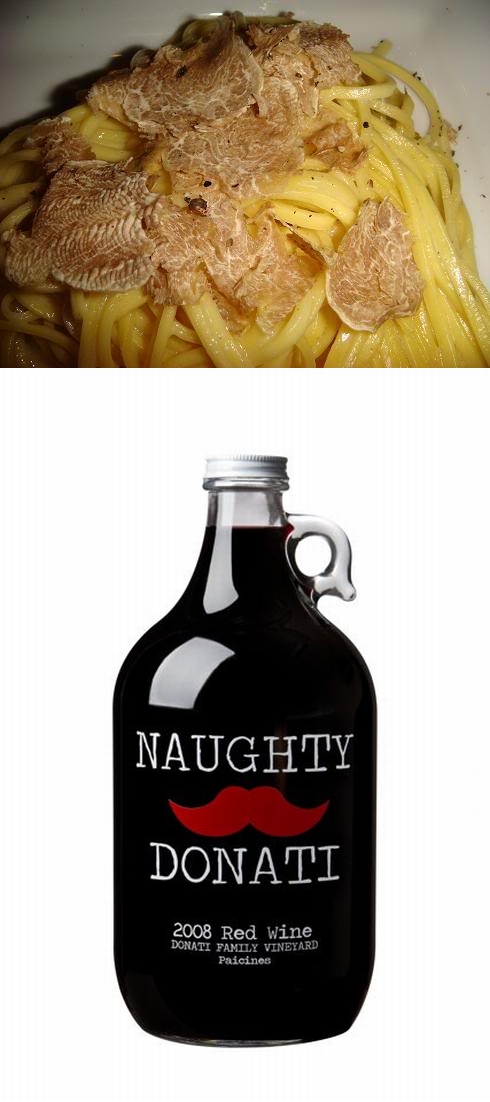
Top: Tagliolini with truffles and lobster slivers.Bottom: Jug

Top: Tagliolini with truffles and lobster slivers.
Bottom: Jug

Synopsis:  As far as I know, there have only been three Djangos in the history of humanity: The two-fingered French guitarist; the lead character in thirty-one spaghetti Westerns filmed between 1966 and 1972; and now, Jamie Foxx in Quentin Tarantino’s Django Unchained.  Only three is not surprising considering that ‘django’ is an obscure gypsy word meaning ‘I awake’, which may be good gypsy, but is bad English.  Anyway, this typically atypical Tarantino flick is better classified as a housemade tagliolini with truffles and lobster slivers Western; the higher as we raise the cinematographical bar, the quicker this strange genius vaults it.

Wine:  Naughty Donati Jug Red, 2010, about $35:  An ideal spaghetti red, this wine is big, brawny and bargain-basement: Ideal cowboy wine.  Their mission tagline reads, ‘Feeling a little Naughty?  Bring a pair of sweet jugs to your next party!’  Now, if that isn’t cowboy humor, I don’t know what is.

*

Les Misérables

Victor Hugo

Victor Hugo

Synopsis: As sumptuous and extravagant as you may find Les Miz, after the 1935 Frederic March/Charles Laughton music-less version, this was a film that really didn’t need to be made—any more than Steve Martin needed to ‘remake’ Pink Panther.  I guarantee that the idea of scoring the classic tale of OCD, shattered dreams, unrequited love and bread would have puzzled our boy Victor Hugo, since in attempting to liven up the wonderful story and make it relevant, Tom Hooper actually manages to make it boring and irrelevant.  Who doesn’t help?  In order: Hugh Jackman, Russell Crow, Helena Bonham Carter and Borat.

Wine:  Cakebread Cellars, Vin de Porche Rosé  (90% syrah, 7% zin, 3% primitivo), 2011, around $15:  Five years after Marie Antoinette fictitiously uttered, ‘Let them eat cake,’ fictitious Jean Valjean stole a loaf of bread to feed his starving sister and was sentenced to 19 years in prison.  His release in 1815 is where both book and film begin.  1815 was also an important date for dead Marie, as that is the year her corpse was exhumed and given a Christian burial in the necropolis of French Kings at the Basilica of St Denis.

*

Life of Pi

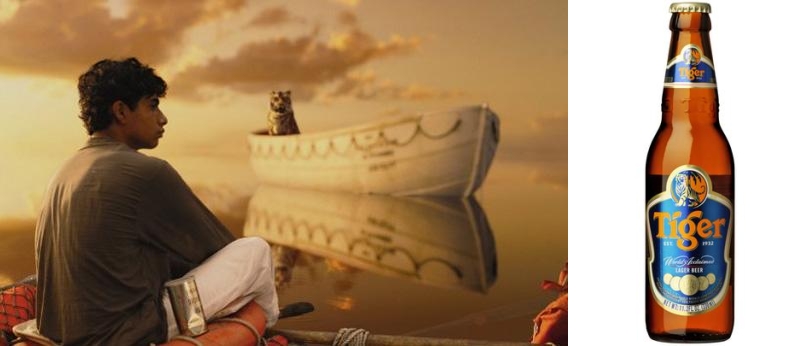
Clipboard piSynopsis:  How can a film that mostly takes place at sea be groundbreaking?  Ask the publicists, who tout this flick as such.  In fact, this strange, dream-like fable about a boy stranded in a lifeboat with a Bengal tiger has a plot perhaps slightly less credible than 2005’s Fantastic Four, though with notably better actors.  At once hardcore and hallucinogenic, Ang Lee’s transcendent story is lovely and magical, and in ways, more surreal than Terry Gilliam’s Brazil.

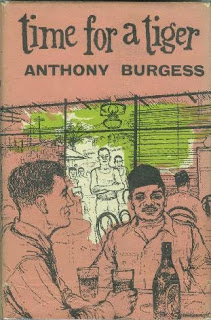
burgess, anthony time for a tigerBeer:  Brewed in Singapore since 1932, Tiger Beer is the flagship brand of Asia Pacific Breweries. It first came to American attention during the Vietnam War when it was lovingly referred to as ‘Tiger Piss’.  Anthony Burgess (‘A Clockwork Orange’) named his first novel after their slogan, ‘Time For A Tiger’, and asked Tiger Beer management if they’d be willing to send him a souvenir clock with those words imprinted on it.  They declined.  Later, when he became famous, they relented, and Burgess sent them a terse note: “Too late.  I’m a gin man, now.”
*

Lincoln

L.: Lincoln. R.: Lincoln

L.: Lincoln. R.: Lincoln

Synopsis: Warning!  Spoiler alert!:  In the end, not only does John Wilkes Booth kill Abraham Lincoln, but this is supposedly a true story where every single other character to appear during the course of the film is also dead.

Bourbon:  Angel’s Envy bourbon, made by master distiller Lincoln Henderson, is a close to a perfect Kentucky whiskey as I have found at a reasonable (for the quality) price.  At around $45 per fifth, Angel’s Envy is a burly, brawny paradigm, containing every nuance that bourbon buffs crave—maple, orange, vanilla and pepper.

Silver Linings Playbook

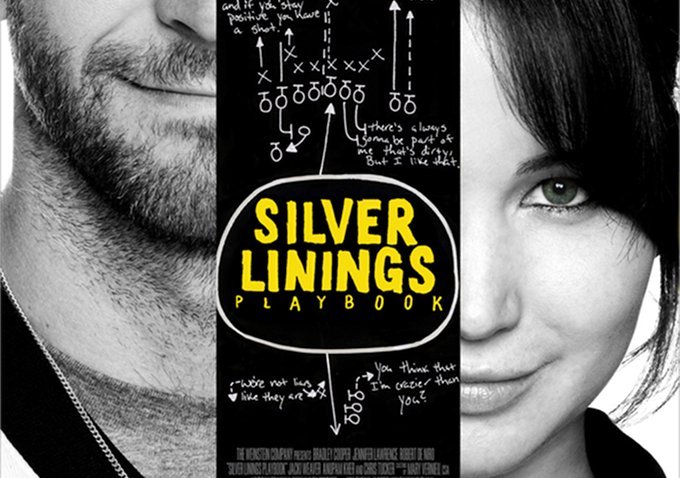
silver-linings-playbookSynopsis: Brad Cooper turns into a phenomenal performance as a bi-polar ex-mental patient attempting to reconstruct his life, but the serio-comic film tends to use his affliction as an excuse to put him into some really dingy situations—almost as if director David O. Russell is making a joke of the disorder.  The requisite chick interest is also a screwball, and the love-among-the-Lithium that develops along predictable arc seems contrived and implausible.  Anyway, forced by a court order to move back in with his parents, the upbeat, off-beat titled movie makes a wonderful case for remaining mono-polar.

polar_passportWine (s): Buy Polar Passports for Seneca Lake Wine Trail!—$12 for a Polar Passport; $24 for bi-Polar Passports.  Said passports will allow you to tour the beautiful, rugged Seneca Country in New York’s Finger Lakes District during the winter, when owners, winemakers and vineyard managers are more likely to be in the tasting room.  Can’t miss vineyards include Fox Run, Billsboro, Atwater, Damiani Cellars and Red Newt.

Seneca Lake Wine Trail

2 North Franklin Street

Watkins Glen, NY 14891
607.535.8080
877.536.2717

*

Zero Dark Thirty

Clipboard abuSynopsis: Like many aphotic, uncomfortable films, Zero Dark Thirty plays better to the film literati than to John and Jane Flag-Waving Mid-America—graphic scenes of the U.S. military torturing detainees is not necessarily what they want to watch while popping Milk Duds.  Although it claims to be be based on ‘actual events’, it is not entirely clear how many aspects of the story—the hunt for Osama bin Laden by zealous CIA field agent Maya—are accurately portrayed.  But Jessica Chastain turns in such a powerhouse performance as Maya that this viewer really didn’t care.

And anyway, as in Lincoln, the outcome is preordained.

Wine:  Dalla Valle ‘Maya’, Napa Valley, 2007, around $456:  The jewel in the Dalla Valle crown, this cabernet franc-based proprietary red is pricey, but hell, soldier, you just blew Osama bin Laden’s entrails to Turkmenistan, so live the bitch up!

Posted in GENERAL | Tagged | Leave a comment

Trinkets And Tchotchkes And Geegaws And Swag…

..and still the young lady remains on the rag.

Whether between the heads of sovereign states, business associates, troglodyte tribes in the tropics or horny men expecting quid pro blowjob reciprocation, the tradition of gift-giving is firmly entrenched in human society as a means of ensuring communal cohesion, collective camaraderie, consistent commonality and cocksure copulation.

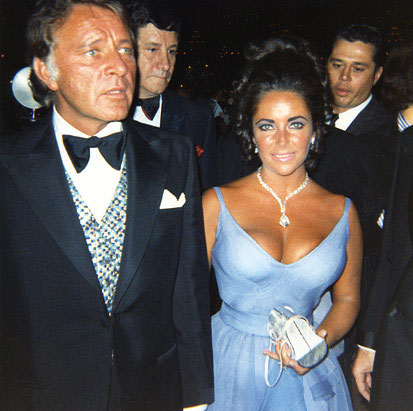
taylorValue is in the eye of the receiver, too.  I can’t imagine that Liz Taylor was any more moved by the $8 million diamond that Richard Burton gave her on her 40th birthday than I was with the signed, laminated ‘Happy Father’s Day’ plate my daughter Julia gave me in 2003 when she was four—backwards ‘J’ and all.

I still use it whenever I do homemade sliders.

That said, it is certainly the unwritten understanding by suitor and suited alike that within the arc of one’s increasing income, the gifts must become more extravagant, both as a means of ensuring open-ended loyalty from the gifted, and equally, to splash news of your astonishing net worth to friends and neighbors without passing out photocopies of your 2012 tax return.

And what to my Wondering eyes should appear...?

And what to my Wondering eyes should appear…?

For example, three years ago on the occasion of Stevie Wonder’s 60th birthday, his long-time friend and manager Keith Harris presented the Saginaw soul soloist with the ultimate in bling accessories:  A pair of platinum, sapphire-studded prosthetic eyeballs designed by Sheils Jewelers of Australia, under warranty for one million years and rumored to be worth $450,000 each—thus answering the age old quandary ‘What do you give to a guy who has everything except ghetto ocular reconstruction?’

Care To See a Copy of My 2012 Tax Return?

Well, I’d like to show it to you, too, especially since in May of last year Intoxicology Report was purchased by MediaNews Group (backed by the Hearst Corporation) for an obscene, almost prurient amount of cash—an amount that I would happily reveal to you if it wasn’t for the goddamned unilateral non-disclosure agreement they made me sign.

But, I checked with my legal team, and they assure me that whereas I can’t be all specific about the zillions of dollars in my personal portfolio, I would be within the statutes of the Hearst contract to describe in detail the date I had last Saturday night and let you put the puzzle pieces together yourself.

Ergo, Hence and Thusly:

Anyway, I always thought it was sort of pervie when a dude bought a woman a sexy dress, handed it to her and said, ‘Here, wear this tonight’, because it takes a lot of the coyness out of your ultimate end game, which is not a rousing game of Uno.  And yet, when I became independently, salaciously, almost lewdly wealthy, I realized that this is exactly the sort of pervie dude I am.

So what?  The rich don’t need to be coy—they just need to be rich.

A non-Kennedy models 'the dress'.

A non-Kennedy models ‘the dress’.

So, my date—who going forward I will refer to simply as Bonquawalaqweisha, because quite frankly, she’s a Kennedy and doesn’t want anyone to find out she’s dating a man whose grandfather was a Mexican national—agreed to wear the little black Chloe and Reese cocktail dress I bought her.  What makes it special is that the bodice of the dress is adorned with 190 gems from the firm’s ‘Three-Carat Round Diamond Collection’, while the sleeves and back are decorated with 24 precious stones each.

As for me—admittedly without a lot of natural ‘fashion sense’—nonetheless also opted to dress ‘to the nines’.  And literally, too:  I wore the Zvezda-manufactured Soyuz 9 space suit I purchased at The Stanislavovich Rozhdestvenskij Space History Sale for twenty million rubles—worth every kopek, too, since it was worn by cosmonaut Andrian Nikolayev during his record-breaking Soyuz 9 space walk.

Cedriquze Carmelontae

Cedriquze Carmelontae

My personal valet—who I will henceforth refer to as Cedriquze Carmelontae since he doesn’t want his peers to know that he works for someone who once, while on trial for felony possession, tried to sell drugs to the jury—thought the gold-plated welding shield on my space helmet was a little ‘affected’ looking.  Well, screw him: Rich people don’t have to listen to valets, and if we play our cards right, we don’t even have to pay them.

Joël and Lizzie

Joël and Lizzie

Rather than take Bonquawalaqweisha to your standard clip-joint like The French Laundry or Urasawa, I flew her to the billion dollar Taj Arabia in Dubai and hired Vegas Super-Chef Joël Robuchon—who has more Michelin stars than Elisabeth Jagger has armpit hairs—to whip us up some exclusive, upscale sliders.

In the Meantime, We Began with Cocktails…

Heffernan reaches the home stretch with 'The Winston'...

Heffernan reaches the home stretch with ‘The Winston’…

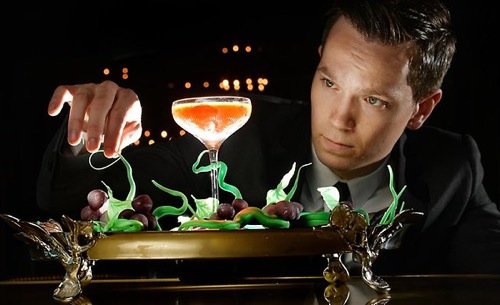
I had also lured Australian mixologist Joel Heffernan from his luxury lounge, Crown’s Club 23, for the two days required to prepare us a couple of ‘Winstons’.  Named for that fat cigar-insufflating drunk who won World War II, a ‘Winston’ is concocted from an ounce of 1858 Croizet cognac, Grand Mariner Quintessence, Chartreuse Vieillissement Exceptionnellement Prolonge, and a dash of ground bone from St. Augustine’s left femur.

Heffernan presented the drinks with chocolate nutmeg dust, essence of poppy seed and roses, hints of coconut, passion-flower and distilled, purified ox urine.  Just one drink each, mind you, because rich people don’t need to get their dates drunk, they just need to be hung like a Hebrew National.  And be rich.

Joël Robuchon’s Restaurant Is Not As Well Known As White Castle…

…But I do give  Gault Millau’s ‘Chef of the Century’ credit for figuring out how to screw up a perfectly serviceable, grandiosely greasy mighty-whitey one-bitey.

At least he served me on my Happy Father’s Day plate.

Before and after

Before and after

But, pointedly, rather than using traditional slider beef, which comes from Equatorial African cattle which are generally infected with hoof-and-mouth-disease, he prepared the amuse-bouche using a special breed of Nagano Snow Monkey fed exclusively on rice, maize and dried llama meat.  Nor could he leave the onions alone, either.  Only rare, Ecuadorian Azure Mist ‘Cebollas de Llullaillaco’ would do, and only those he commissioned Porto midfielder Cristian ‘The Onion’ Rodriguez to pick, the pompous twit.

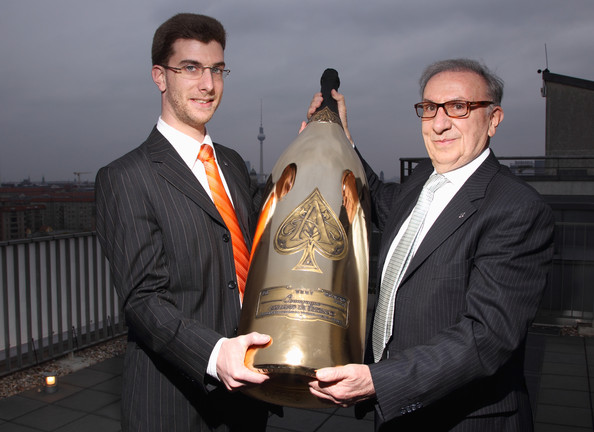
most_expensive_champagne_lc9keAnyway, being a Kennedy, Bonquawalaqweisha was less interested in the food than the drink, and of course, we enjoyed her favorite: A gilded, 15 liter Nebuchadnezzar of Armand de Brignac Champagne, which, thanks to the  homage paid it by rapper Jay-Z, has become a real ace among spades.

After That?

Mince pie time!  But not just any mince pie, thank you very much. This one was first designed on a computer and made with 50-year-old Angostura Legacy Rum, bound with holy water from Lourdes and sweetened with ambergris sugar that comes from secretions of sperm whales.  Finally, the confectionary was entirely cloaked in edible gold leaf.

Taj Arabia

Taj Arabia

Since I had rented the Taj Arabia for the whole evening, there was no reason to rush off and risk a DUI in my supercharged 1936 Bugatti 57SC Atlantic; rather, I was able to enjoy a nightcap or three.  Being, at heart, a street kid from Detroit, I toned it down a couple of octaves and went with a fifth of 190° grain alcohol—albeit in a ‘bush-league’ flavor: Whiskey Mango Fox-Tit.
The evening concluded as it began, as this column will end where it began, alpha and omega:  With a gift from me to Bonquawalaqweisha, who—as I may have mentioned—is a Boston Brahmin from Clan Kennedy, and who therefore has a sexual appetite far beyond my trifling white boy libido to satisfy, and especially not after a punch bowl full of Whiskey Mango Fox-Tit.

This pocket rocket cost more than Apollo 7

This pocket rocket cost more than Apollo 7

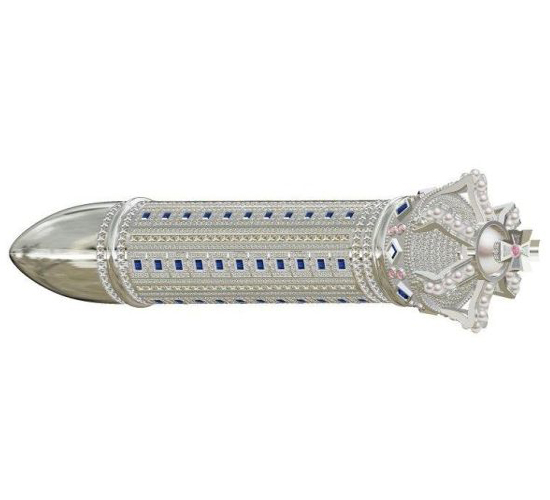
No worries, though: I was able to present my randy little minx with a custom-designed Pearl Royal vibrator by jeweler Colin Burn cast in solid platinum and embellished with more than a thousand pink and white sapphires, diamonds and pearls.

Think of me when you deploy, my million dollar baby.

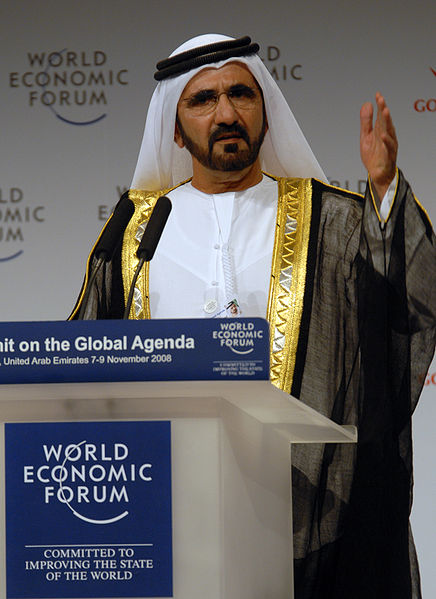
As for me, I will be in the back performing my obligatory (if rather bloody and grotesque) rich-guy ritual, sacrificing one of Constitutional Monarch Sheikh Mohammed bin Rashid Al Maktoum’s 23 children to my God—who I will simply call La’sharitiavuana since He really doesn’t like to admit that I worship Him.

One down, 22 to go

One down, 22 to go

But really, such a consecrated offering is much more than a groveling act of propitiation and appeasement intended to prevent the sun from exploding.  It can truly be viewed, now as in pre-Columbian Tenochtitlan, as a reciprocal endowment; a return gift to the Deity for all the light, grace, Kennedys and greenbacks he has bestowed upon me.

*

‘And Christian Kassel, he also brought of the firstlings of the heathen flock and of the flesh of the blood and fat thereof. And La’sharitiavuana had respect unto Christian and to his offering.’  – Genesis 4: 3-5

Posted in GENERAL | Tagged , | 1 Comment

Grape Seeds: Oil Make Something Of Ya Yet!

L. to R.: Matt Roloff, herd of pastrami, King Canute

L. to R.: Matt Roloff, herd of pastrami, King Canute

Nearly everyone on earth knows that there is no such thing as a Leprechaun that isn’t actually that wee oaf Matt Roloff mugging about in a green top hat on St. Paddy’s Day; likewise, most folks understand that there is no creature called a pastrami and that King Canute did not command the tide to reverse in a fit of delusional arrogance, but instead to prove to his privy council that we all must bend to forces beyond our control: Duh.

However, hardly anyone knows that canola oil is not made from a canola plant.

‘Canola’ is, in fact, Canadian reductionary politics; it is an abbreviation for ‘CANadian Oil, Low Acid’.

Rapeseed

Rapeseed

But why not call a spade a spade?  Because spades find it insulting, that’s why.  And because, in this case, on the day that they were naming stuff, the dude in charge of Brassica napus L. apparently snuck one too many snorts of Canadian rye and decided to call it ‘rape’.  Canola oil is a derivative of processed rapeseed, and it is generally understood that the term ‘Canola Oil’ was created as a way to avoid the obvious connotations of calling your product ‘Rape Oil’.

Now, if they can only come up with a replacement name for Peruvian Vehicular Homicide Oil and Monégasque Kiddie Porn Oil, we will have entered a brave, new world of political correctness.

What Does The Above Have To Do With Grapeseed Oil?

Nothing, except that rapeseed and grapeseed rhyme, and I have poetry inside my soul, my brothers and sisters.

Last week, the good folks at Napa’s Castello di Amorosa sent me a bottle of their latest waste-not-want-not innovation: Extra Virgin Cold Pressed Sangiovese Grapeseed Oil. 

Grapeseed oil

Grapeseed oil

Made for Castello di Amorosa by Salute Santé, a Napa-based division of Food & Vine, Inc., a pretty good case can be made that grapeseed oil is the healthiest oil on the market.  That pronouncement is made simply by stacking up stats against its nearest competitor, the imperious sexual-assault-seed oil from Western Canada.  Try it, and you’ll see that they are barely in the same league.

And in the same side-by-side comparison, olive oil is still playing pee-wee t-ball with Uncle Dad on the grade-school playground.

First, a word on what we are supposed to like and what we are supposed to avoid in choosing a cooking oil, followed by a mano y mano percentage comparison.

AMC's Saturated Fatty Acid = Bad fat: Primarily found in animal products, this fat is often solid at room temperature.  The white stuff that clots on the surface of your homemade stock when it cools down?  That’s saturated fat.  Chemists who haven’t yet discovered how to make blue methamphetamine and still work with food science will blather on about chains of carbon atoms saturated with hydrogen atoms until you realize that you actually do need to smoke a little meth to remain awake.  Suffice to say, this stuff—found in meat, butter and mostly in tropical oils from coconuts, palm kernels and cocoa beans—increases LDL (low-density lipoprotein) cholesterol and can kill you via heart disease.

Corn: 13%

Olive: 14%

Canola: 8%

Grapeseed: 9%

Say, Bill.  Why the long face?

Say, Bill. Why the long face?

Mono-Unsaturated Fatty Acids = Pretty good fat: If he were here, Bill Nye would sit you down and explain that mono-unsaturated fats have a single double bond (not an oxymoron, actually) in the fatty acid chain, allowing for a higher melting point than sister poly; chilled, they are semi-solid.  Monos are said to reduce LDL cholesterol while increasing the high-density version—a consummation devoutly to be wished.  Downside is that it is believed that mono fats may be linked to breast cancer when certain of the body’s enzymes start misbehaving; also, it is possible that mono-unsaturated fats may promote resistance to insulin.  This fat family is found lurking inside nuts and seeds, and especially in high-fat fruits like olives and avocados.

Corn: 27%

Olive: 78%

Canola: 59%

Grapeseed: 9%

omega1Omega 6 Linoleac Acid = Somewhat bad fat: A charter member of the polyunsaturated fat family, Omega six—also written as ω−6 (ω is a baby  Ω)—has a lipid number of 18:2(n-6), which you didn’t know, and to be effective, Omega six relies upon conversion to n-6 eicosanoids, then binding to receptors found in every tissue of the body, which you really didn’t know, and is also released by cockroaches upon their deaths to warn other cockroaches not to enter the area, which you really, really didn’t know.  Anyway, in quantities balanced with ω−3, with an optimal level being 2:1, this double-bond-in-the-n-6 molecule proves beneficial for brain function and the prevention of cardiovascular disease.  Vital to understand is that when the ratio is out of whack—and in most unhealthy American diets it is—the effects are not only counteracted, they are reversed, so that Omega six becomes associated with arthritis, inflammation, and cancer.

Found in high amounts in poultry and eggs, four major food oils are responsible for the bulk of the Omega six in our diets: Palm, soybean, canola and sunflower.

Corn: 58%

Olive: 8%

Canola: 11%

Grapeseed: 76%

1027-GrumbacherPaintPolyunsaturated Fatty Acid = Good fat: Logic would tell you that if the monos have a single double-bond within their chemical backbone, the polys have more than one—and logic would tell you correctly.  Such oils tend to dry and harden upon exposure to air, which is why you squeeze, rather than pour oil paint from the Grumbacher tube.  In terms of health, this fat is fundamental in supplying energy for the muscles, heart and other organs; it is believed to reduce low-density cholesterol levels (a good thing) while raising the high-density levels (a better thing). It is a vital dietary component for pregnant women as it critical to fetal development; it is also positively associated with cognitive and behavioral performance, thus proving out the old axiom that fish is brain food: Polyunsaturated fats can be found in high concentrations in fatty fish like salmon, mackerel, trout and sardines.  In terms of food oil, grapeseed leads the fishing expedition, while much-heralded olive and canola oils are barely relegated to the status of also-rans.

Corn: 60%

Olive: 8%

Canola: 3%

Grapeseed: 76%

Smoke point!!

Smoke point!!

Smoke Point:  For cooks—even unhealthy ones—among grapeseed oil’s biggest advantages is the extremely high temperatures it can reach before it hits smoke point—the point at which a cooking oil begins to break down and produce smoke.  The moment that happens, flavor and nutritional value begin to degrade, so in deep-fry applications, smoke point dictates precisely what you can accomplish with a particular oil.

Here are some common smoke points:

Butter:  250 ° F

Corn: 410 ° F

Olive: 280 ° F

Canola: 400 ° F

Grapeseed: 485 ° F

Pass the grapeseed oil, STAT.

Pass the grapeseed oil, STAT.

No real need to mention trans fat among polite society, is there?  I mean, it’s created in the lab by adding hydrogen to vegetable oil, and we all pretty much agree than this is the kind of diabolical, artery-clogging, heart-disease inspiring, inflammation inciting, cholesterol-concocting provender that Satan devours when he stops by for tea ‘n’ crumpets—(using his left hand exclusively)—as narrated in the Hadiths on the authority of Jabir b. Abdullah.

In any case, I have no information about how much trans fat grapeseed oil contains, but I am betting that it ain’t much.

Then the Other Shoe Drops…

As the health and functional pluses mount in favor of grapeseed oil, you knew there just had to be some reason why you wouldn’t be using it going forward, didn’t you.  That’s life—and life sucks the whopping whale weenie.

Clipboard eggAnd here it is: The stuff is expensive. How expensive? Parmagiani Bugatti diamond-studded wristwatch expensive. 1929 supercharged Blower Bentley single-seater expensive.  Fill a Fabergé egg, c. 1897, with Terra Nera ‘Kopi Luwak’ coffee beans, see what you can get for it at Sotheby and you will get a vague idea of how much they charge for grapeseed oil.

Not That They Can’t Justify It…

Figure that a ton of pressed grapes is about ¼ pomace—pomace being everything about a grape that isn’t grape juice.  From this, you can harvest 68 lbs. of grape seeds that, when processed, yields three liters of oil.

The oil sent me by Castello di Amorosa was pressed from 100% sangiovese seed, and in 2011, if you wanted to purchase a ton of California sangiovese grapes, you had to shell out $800.

Granted, the seeds and pomace are by-catch, but still, that’s a $266 cash outlay for each liter of grapeseed oil in raw material alone; then you have to figure in the state-of-the-art equipment, which CdA stresses is ‘Engineered in Germany’—like if the Germans are so good, how did they manage to lose two wars in succession?—and the Food & Vine people indicate that the oil is pressed under a newly patented process especially designed for grapeseeds, allowing the oil to flow at temperatures less than 98.6ºF and into settle tanks without filtering out biologically active substances—and from there into special, light protective glass bottles.

So, assuming that I pay about thirty dollars for three liters of good (not great) quality cold-pressed extra virgin olive oil, equating (obviously) to a penny per milliliter,  the 100 ml. bottle of Castello di Amorosa cold-pressed extra virgin grapeseed oil, which sells for $10, is ten times as expensive.

The leftover pomace, by the way, is dried into ‘press cakes’ and used to make grape flour.  Nothing wasted.  Good God, these Castello di Amorosans are like the Inuit with their caribou.

And speaking of the castle dwellers, I believe they greased my palm with the oil less to see a review about that, but as incentive to do an in-depth review of the wines they also shipped.  I’ll give it my best shot!:

Yum.

Other than that, alas, I am out of column inches.

Tasting Notes:

...Or three for $29.90.  Use that dime as a down payment on your Fabergé egg

…Or three for $29.90. Use that dime as a down payment on your Fabergé egg.

Castello di Amorosa Extra Virgin Cold Pressed Sangiovese Grapeseed Oil, around $10 (100ml.):   You could probably guzzle a growler of olive oil and not identify the taste of olives, but this oil is so unmistakably grape-based that you can smell the fruit from a yard away.  The taste is even more pronounced: I rolled around a quarter ounce in my mouth, and it was grappa made manifest.  Despite its pronounced and commendable loyalty to species, the oil is light and buttery with faint overtone of walnuts.  The oil makers and oil hawkers keep pushing the high smoke point, but frankly it wouldn’t occur to me to cook with this delicate ambrosia—not yet anyhow.  The most outrageous thing I have done up to now is dip in a crusty chunk of Ciabatta and drizzle some over baby spinach leaves.  Anything else is a bit heretical for my [substantial] money.

*

http://www.grapeseedoil.com/about_main.php

Posted in CALIFORNIA, GENERAL, Napa | Tagged , | Leave a comment

Celebrity Wine Is Truly The Pitts

Can make me look like this, José Eber?

Can make me look like this, José Eber?

Truth be told, my Intoxicology Report editors don’t like me—not one little bit.  They don’t like my literary style, my superiority complex or my cute Lucy Ball poodle do—in short, they don’t like the cut of my jib.  They are always telling me that their site is essentially a humor site, not a wine-education site, and that my columns are too scholarly, too filled with dull enological trivia and pedantic discussions of subjects like volatile sulfur compounds in wine—specifically, mercaptans (a.k.a., ‘thiol’).

They claim that whenever I try to ‘yuk it up’ with columns like Just Desserts (dessert wines, of course!) and Que Syrah, Syrah (you can figure that one out, silly!) my sense of hilarity comes across as sort of—in their words—‘forced’.

Hey!  Personally, I thought my jokes were pretty good.

Saccharomyces cerevisiae... like you didn't know.

Saccharomyces cerevisiae… like you didn’t know.

Anyway, even though Intox Report was founded in 1909 by my great grandfather,  in order to keep my lucrative writing gig, I had to sign a new contract with blog lawyers stating that, for three weeks, six days of each month I could write about the multidimensional scalings that are used to quantify sensory data at wine tastings, direct causal connections between brain cancer and specific varietals and the physiological and evolutionary response of saccharomyces cerevisiae to challenging environments.

But for my sins, one day every month, Article Four, Section One states that I have to write about the subject I despise above all others:

Celebrity wine.

Well, my brethren—today’s the day.

There is Nothing Cutesy, Nothing Clever, Nothing ‘Fun’ About the Term Brangelina

Ewwww

Ewwww…

…Nor is there anything even vaguely endearing about this super-flaky ‘supercouple’, and certainly nothing amusing about them—not even the fact they they are peeps with Marc Perrin, fifth generation family winemaker at Château de Beaucastel in Châteauneuf-du-Pape.

I suppose it is more kooky than comical that rugged-yet-debonair Brad and bicycle-tire-lipped, daddy-dissing Angelina own a thousand acres of prime vineyard in Provence and certainly more than ironic considering that former mental-patient Jolie likes to ‘French’ kiss her older brother on national television.

One Humdinger Over the Line, Sweet Jésu…

However, because they are twisted, idiotic people, the Intoxicology Report board of directors find it hilarious that Brad and Angie have begun to adopt Provençal orphans, who have promptly murdered all their African children, just like the French did to the Algerians in 1957.

kidsMy uppity-ups wanted to make certain I mentioned this scandal in my column.  But I’m not going there.

Instead, I will maintain a laser focus on the topic at hand: Miraval, the Jolie/Pitt and Perrin rosé set for release in a few weeks.

The story behind Miraval is a metaphor for ‘the problem’—not only with celebrity wine, but with celebrities themselves.  As it goes, after having lived in sin on the estate since 2008, Brad and Angelina bought Château Miraval from American Tom Bove in 2012 after their lease expired, at a reported sale price of $60 million USD.  This may seem extravagant, but for Jésu’s sake, the place is surrounded by a moat; it has thirty-five rooms, a chapel and an immense wine cellar built in 1850 by the inventor of reinforced concrete.

floyd the wallPrior to the purchase, the property was known not so much for the wine, but for the estate’s onsite Studio Miraval where Pink Floyd recorded ‘The Wall’ in 1979.  In fact, the Miraval rosé bearing the Jolie/Pitt rubric was previously called ‘Pink Floyd’, and since French wine cognoscenti tend not to make purchases based on painful puns, the decision to change the name was probably a wise one.

The issue is that, other than ego, there is no conceivable reason why Brad and Angelina should be stamping their names on Miraval.

Château Miraval

Château Miraval

First, it really can’t be a money-making venture, so the big-gun Fight Club/ Lara Croft endorsement is not a financial shot-in-the-arm.  Bear with me through the math: Figure that the old-vine cinsault from which Miraval is made probably yields less than two tons per acre.  With 128 acres of vine, if it all went into rosé  (it doesn’t—there is a white and a couple of reds to follow), that equates to about 35,000 gallons of wine, or, 175,000 bottles.  Currently, ‘Pink Floyd’ sells for $20 per bottle, so, at the same price, we have a gross return of $3.5 million if nobody is looking for a case discount and if Jowly Pitt and Lippy Jolie are willing to hand-sell the wine from a fruit stand in front of the estate—otherwise, of course, the entire distribution chain, down to the lowly retailer, gets their pound of flesh.  And that $3.5 million figure is obviously pre-overhead fixed ‘n’ variable operating costs, including packaging, field labor, management, winemakers, clerical, cellar/receiving/refrigeration equipment, taxes and fees…

Et cetera.  I’m no accountant, but I can’t see Miraval finishing a fiscal cycle in the black any time soon.

Second, putting your name on a product you really had no genuine hands-on input in the creation of is just a trifle jerk-offish, don’t you think?  Like if the dipshit duo bought the copyright for The Wizard of Oz, and the next time you watched it, the titles read ‘Starring Brad Pitt and Angelina Jolie’.

How Much Input Did P/J Have in the Creation of Miraval?

Marc Perrin

Marc Perrin

So glad you asked.  According to the wine’s genuine architect, Marc Perrin: ‘They were present at the blending sessions…’

Poor, dear, star-struck Marc: So, by that rationale, if Brad were to invite you to visit him on the set of Inglourious Basterds II, you would expect to see your name up on the marquee.

Perrin goes on to say that, ‘The Jolie/Pitts want to ensure they are making the best Provence wines they can. They are re-looking at everything, from the installations in the winery—where we have already switched to stainless steel tanks—to reworking the labels across the range of wines.’

Well, he does make some points here, not all of them stellar.

‘They’ are making the best Provence wines they can, Monsieur?  Yeah, by not making it at all and letting you make it.  As for ‘switching’ to stainless steel,  what did you use before?  I mean, who barrel-ferments rosé?

MiravalI will concede on the label thing; as seen in the photo to the left, the artwork and bottle-shape are sensational.  Not sure what that has to do with wine quality, but it is a pleasant place to start.

Rumor has it—and I’m a total sucker for celebrity rumors, aren’t you?—that Brad and Angelina plan to serve Miraval at their upcoming nuptials, although nobody knows when, precisely, that will happen.  An imminent wedding is also said to be the reason for the ‘hyphenated Jolie-Pitt’ name on the Miraval label.  Further, their lawyer has announced a prenup agreement, the province of most megastar lovebirds.

But as to why they are bothering to get married at all, Encino attorney Goldie Schon, APLC gives us some much-needed insight.

(You are advised to hold on to your digestive tract before reading further, and it couldn’t hurt to have some Emetrol handy, just in case):

“The reason they are getting married is because of their children. Their children are growing up and they are becoming more knowledgeable of what mommies and daddies are supposed to be.”

Angie's dorm room

Angie’s dorm room

Well, I am sure that the lesson will be of untold value to this poor, profitable, privileged progeny:  Mommies and daddies are supposed to be tabloid superheroes who want the world to believe that they are everything to everyone, and who have done so well amid the smoke-and-mirrors of Hollywood that they can sell photographs of you children for $14 million dollars then commission Madame Tussauds to do wax sculptures of you; mommies are supposed to list Resnick Neuropsychiatric Hospital as their alma mater, and are supposed to live with daddies in 35-room mansions with moats and chapels while making great gobs of wine in the cellar; and finally, mommies and daddies are supposed to wait until you kids start shaving or menstruating before they get married.

I know my folks are a lot like that.  At least, the wine in the cellar part.

Posted in GENERAL, Provence | Tagged , , , | 5 Comments

Few In Mendoza Are Mendozing

Mendoza, Argentina is a land of loveliness and lore, enoturismo and earthquakes, fiestas and Fernando Fader (1882-1935): The first post-impressionist painter in South America.

Meltwater irrigation

Meltwater irrigation

The area surrounding Mendoza is also the largest wine producing region in Latin America.  With an ambiance nearly ideal for wine grapes, there are few seasonal temperature swings and most vines are planted at sun-sodden elevations that are among the world’s highest.  The only natural drawback to these vineyards is a climate where it rains, on average, only two days a year with a total accumulation of around eight inches.  But that’s an engineering eye-roller, and Mendozan wine country has been irrigated with Andes meltwater since the 19th century.

In Maipú and Luján—the two main departments of Mendoza’s wine producing areas—the most widely planted grape is cereza, a varietal indigenous to Spain and brought to Argentina by Spanish settlers, possibly as early as the 1700’s.  Cereza is Spanish for ‘cherry’, and the pink-skinned grape produces a prodigious payoff, although often of questionable quality.

Criolla, a.k.a. ‘mission’ (because it was often grown at Spanish missions as a base for sacramental wine) is the second varietal that forms the backbone of the Mendozan wine industry.  And like cereza, the wine that results from criolla often lacks breeding and character, and is far more suited for a jug than a bottle.

Malbec vines, with Andes in background

Malbec vines, with Andes in background

Malbec, of course, would be the king of the jungle if Mendoza had jungles.  Sultan of the semi-arid desert, then.  A bit late to the banquet, malbec was introduced to Argentina in 1868 by Frenchman Miguel Pouget, hired by the Mendoza’s Governor Domingo Sarmiento (who later became president) to do something about all that flabby cereza. Pouget imported 120 varietals and planted them in what he called a ‘test farm’, the Quinta Normal.  Of them, malbec—an under-producer in the damp climate of Southern France where it is subject to a smorgasbord of sick, from frost to mildew to coulure (a metabolic condition that prevents grapes from setting)—was the most successful.  In fact, malbec was so grateful to put down new roots in hot, dry Argentina, where none of the French climatic conditions are an issue, that it proliferated with an ease that was almost embarrassing.

Gascón and Ón and Ón and…

The reason I brought up Señor Fedar in the first sentence is that despite never being directly involved in the wine trade, he was born in Bordeaux and likely had it running through his veins.

Bodegas Escorihuela Gascón: As it was in the beginning, is now...

Bodegas Escorihuela Gascón: As it was in the beginning, is now…

But more to the point, Fedar’s family emigrated to Mendoza in 1884—a significant date because it was the year that Bodegas Escorihuela Gascón was established.  Its founder, Don Miguel Gascón, a 23-year-old wanna-be entrepreneur from Aragon, Spain had hit the streets of Argentina four years earlier without a peso in his pocket.  Like many a self-made muchacho, Gascón’s ingenuity, hard work and single-minded goals led to the next phase of the story.

With the completion of the national railroad in 1883, the opportunity to open a winery in previously-inaccessible Mendoza presented itself, and  Gascón purchased 42 acres of arable, high-elevation land in an area where the peaks of the Andes held the rains from the Atlantic at bay but provided irrigation via melting snow.

La Mazamorra by Fernando Fader

‘La Mazamorra’ by Fernando Fader

Here, many thousands of feet above sea level, there is less filtration from the atmosphere, and mechanisms are triggered that thicken grape skins and create more phenolics and esters.  Chilly nights fix acidity while warm days build sugars; wine color is clearly more intense and the wine itself more concentrated, due in part to a long, slow growing season.  Not only that, but the dry, sandy soil where Gascón planted is inhospitable to phylloxera.

Malbec, nearly banned in Bordeaux, had found its Shangri-La.

As had Don Miguel.  He built a winery in the center of town in the same spot it can be found today, and for the next hundred years, Familia Gascón forged a reputation for elegance, finesse, color and class—much like the paintings of Fernando Fader.

Nicolas Catena

Nicolas Catena

Today, Gascón is owned by the extended Familia Catena—a group of investors led by renowned Argentine winemaker Nicolas Catena (winner of Wine Spectator’s 2012 Distinguished Service Award) who purchased the holdings in 1993 with the intention of preserving, celebrating, and where required, improving the historical winery, the oldest in Mendoza.

So, no tears for Argentina, my friends.  They are at the top of their game.

Tasting Notes:

bottleDon Miguel Gascón Colosal Red Blend, Mendoza, 2011, around $15:  Although Gascón was the first winery in Argentina to produce a 100% malbec, this particular blend balances the somewhat fierce tannins that the varietal may kick out with bonarda (the most widely planted red wine grape in Mendoza), syrah and cabernet sauvignon.  Each varietal was cold-soaked for a few days to maximize flavor extraction and fermented separately for a week prior to blending.  The wine then saw 15 months on oak.

The result is a violet-colored wine of considerable depth, with blackberry jam and coffee on the nose.  The mouthfeel is strikingly textured—malolactic smooth and creamy, while flavors range from malbec’s quintessential Damson plum and sweet spice settling among bonarda’s leathery notes. There’s chocolate behind cherry along with touch of coconut, and soft, round, approachable tannins leading to a velvety wrap-up.

A compelling bevvie for the bucks.


Posted in ARGENTINA | Tagged , , , , | Leave a comment

Spa Vs. Spa

Did you know that ‘spa’ is an acronym for  ‘self-indulgent pretentious ass-wipe’?

spy vs spyIf you didn’t, you should read this column more often, because that’s the kind of arcane crap you are always learning around here.

Anyway, if the word ‘spa’ makes me simultaneously chuckle and shudder, can you imagine what words like ‘exfoliation’, ‘masque’ and ‘full body polish’ do?

By the way, when you chuckle and shudder simultaneously, you ‘chudder’.  See, again you learn something.

cucumberWhen I think of the archetypal spa-goer, I imagine someone with a narcissistic complex so out of control that they see nothing bizarre about pampering themselves with therapeutics that are almost tribal in their oddness: For example, having all the skin cells scraped from one’s epidermis; having one’s entire body rubbed down with sea salt, sugar and coffee; allowing one’s face to be covered in mud while wearing cucumbers over the eyes.


And all this while little children are going to bed hungry in Gary, Indiana.

But then, when you think about it, me drinking nineteen bottles of wine in two days, then missing work is sort of self-pampering too, isn’t it?  And allowing one’s liver to disintegrate while murdering brain cells and courting stomach cancer?  How tribal is that?  And all the while, little children are going to bed sober in Gary, Indiana.

Yours truly in Hazelton formal wear

Yours truly in Hazelton formal wear

So, when I received a press release entitled Spas Have Alcohol-Related Treatments on Tap, I naturally assumed it was a sort of combination Château Élan Spa and Hazelton Rehab Center where they massage you through your detoxification treatment.

And I was intrigued, because usually those kind of places have you scrubbing out toilets in a strait jacket and going to idiotic group therapy sessions where you nod sympathetically at the horror stories of others while secretly chuddering, ‘Wow; a bigger loser than me.’

But Then I Read Further, and Brother, Could I Have Been Wronger…?

Turns out that the release was about a new tribalish trend in the spa-o-sphere wherein alcoholic beverages are included in the therapy itself—externally, not internally.

Poor Allie

Poor Allie

According to Allie Hembree, Public Relations Manager for the International SPA Association, “By incorporating different types of spirits into their treatments, spas around the world are allowing you to still indulge, but save the calories for another day…”

Poor Allie wrote me a very nice letter asking me if the subject might interest me, which it did, but not quite in the way she intended.  Poor Allie now thinks of me sort of like the town of Columbine thinks of Dylan Klibold.

Anyway, if the entire concept is still a little foggy to you, nineteen bottles of wine should clarify things.  Too over the top?  Bloody lightweight…

Alright, then: Here are a handful of cuts from various spas summarizing their new, therapeutic and creative approach to wasting perfectly good grog:

The Lodge at Woodloch, Hawley, PA: Partnering with Dogfish Head Craft Brewery, the Royal Revival includes a body exfoliation using hops, barley and honey followed by a beer bath.

Clipboard dogSomehow, I can’t look at ‘body exfoliation’ without thinking ‘body exhumation’.  And I can’t look at ‘Dogfish Head’ without thinking about, well, dogfish heads. And for that matter, I can’t think of having honey rubbed on my body without imagining that ancient Persian torture where they covered the victim in honey and allowed ants and flies to eat him alive.

But, that’s just me.

Nina Kaczorowski’s breasts

Nina Kaczorowski’s breasts

The Spa at Griffin Gate, Lexington, KY: The Bourbon Bubbler starts with a full body polish incorporating Kentucky Bourbon, ginger, and pecans and finishes with a rinse and an application of Shea butter.

Not only that but I can’t look at ‘body polish’ without thinking of Nina Kaczorowski’s breasts.  Or shea butter without thinking about black people hawking chunks of it on the bridge overpass in Downtown Detroit’s Eastern Market.  I bought some once and put it on toast.  Big mistake.

Rocco Forte Augustine Hotel, Praha, Czech Republic: The St. Thomas Beer Ritual utilizes a bit of history by incorporating a secret Augustinian monk beer exfoliation recipe that promotes detoxification and hydration, complete with a massage.

There’s that magic word, detoxification.  I knew it: The buggers are slipping in a little rehab with the massage.

Kelly’s Spa at the Mission Inn, Riverside, CA: The Kelly’s Fountain of Youth Signature Body Treatment refreshes your skin with an antioxidant Chardonnay wine bubble bath, and a Chardonnay wine grape seed body polish. The experience is complete with a massage and paraffin treatment.

Unoaked, okay.  Barrel fermented, cool.  But  what in the world is an antioxidant chardonnay?  And I don’t even want to go down the paraffin treatment thought association, because I am sure it involves pouring hot wax on the most sensitive areas of the body.  I’m paying how much for this again?

Château Élan

Château Élan

Château Élan, Braselton, GA: The Château Winery Ritual infuses the body with the anti-oxidant power of grape seeds during a wine bath, followed with a body scrub and mud wrap.

Mud wraps are meant to encourage weight loss, but keep in mind that the reason it works is because you perspire away great gobs of water, and—according to the FDA—rapid and excessive fluid loss is dangerous because it can bring on severe dehydration and upset the balance of important electrolytes in the body.

The Spa at Silverado Resort, Napa, CA: The Chardonnay Sugar Scrub blends in Chardonnay, Shea butter and six natural oils to exfoliate and nourish the skin, healing even the driest of skin.

Not sure which ‘natural oils’ are used in Silverado skin nourishing treatments, but here are six that occur to me: Hog sweat, decaying adipose tissue from corpses, crude petroleum, Popeye’s anorexic girlfriend, secretions from pre-orbital glands in musk oxen during mating season and WD-40.

Masque of the Red Death

Masque of the Red Death

I suppose I sort of rained on the spa parade, huh?  Well, nobody listens to me anyway.  I’m lucky if I can get people to chudder.

*

If the idea of a booze massage still interests you, here is who you can contact:


Allie Hembree         

Public Relations Manager

International SPA Association

859-425-5072

allie.hembree@ispastaff.com

Posted in GENERAL | Tagged | Leave a comment