Earth Day, 2013: Mirth First, Earth Second. Booyah!

Personally, I am a sucker for Earth Day.  Especially compared to other inane holidays such as Talk Like a Pirate Day, Christmas Day and whatever that one is where we celebrate veterans who had the good sense not to get killed for Memorial Day—I forget what that one’s called.

earth-image-smAnyway, I am especially enamored of Earth Day and our national Earth Day traditions—as firmly entrenched in American culture as slaughtering Thanksgiving turkeys and grilling pureed, artificially-colored animal stomachs, snouts, lips and spleens jammed into pig intestines on July 4th.  They are evidence of a genuine commitment to stemming the tide of environmental disaster currently enveloping Spaceship Earth.

To name but a few of Earth Day ‘Commandments’:

  1. Mow not thy lawn; let the grass grow freely, as God intended.
  2. Likewise, allow Mother Nature to thrive for her own sake, not for the exploitive avarice of mankind.  In other words, eat neither of the lima bean nor the brussels sprout; nor of the turnip nor the eggplant; nor of the parsnip nor the beet; nor okra nor especially not Oprah, because how gross is that?  For everything there may be a season, except for that.
  3. On this day, you may with clear conscience call people in irreversible comas ‘vegetables’.
  4. Smoke all the dope you want, because that shit has already been picked.  But sow the seeds in some vacant lot so that thou may replenish what thou have taken.

Et cetera.

Ira Einhorn, Earth Day, 1970

Ira Einhorn, Earth Day, 1970

So, yeah, Earth Day is the shiz!  You know, of course, that it was founded in Philly in 1970, in part by Ira Einhorn—that fat fuck who killed his gorgeous girlfriend, then kept her in his closet in a suitcase until fluids from her rotting flesh began to dribble into the apartment of downstairs neighbors, who previously had nothing to complain about but loud music.  I mean, say what you want about murder sucking and all that, but composting your girlfriend?  Earth First genius.

Hats off to Ira, I say.  And hats off to John McConnell, to Edmund Muskox, to Denis Hayes, to Secretary General U Thant despite his idiotic name, to that Beatle who looks like Angela Lansbury, and while we are at it, hats off to PETA, because if it wasn’t for Lebanese bread we would have to eat hummus with our bare hands—a concept only slightly less repulsive than Oprah munching.

Jaden 'I'm Even Dorkier Than This In Person' Smith

Jaden ‘I’m Even Dorkier Than This In Person’ Smith

This year—Earth Day 2013—each of more than one billion people will be celebrating the largest secular holiday on the planet in their own inimitable fashion. Some will be planting trees, then hugging them; others may be found conducting various recycling programs and picking up roadside trash (not hookers, silly); non-agoraphobics in Washington, DC may join hundreds of thousands of angry but gentle eco-activists on the National Mall.  Meanwhile, Jaden Smith, son of Will Smith and Jada Pinkett Smith—actor, musician and spoiled little shit—will be lending his voice in support of Earth Day Network’s The Canopy Project!, making it obvious that everyone The Canopy Project! really wanted gave them a thumbs down.

And verily, Earth Day is truly a global event. In Gabon, there will be a talking drum chain; in Russia, they will dance in the streets without energy-wasting streetlights while secretly paying homage to Lenin and his philosophy. In Germany, they will cavort around the may pole; in Poland, they will cavort around the german pole. In Canada, they will do whatever it is that Canadians generally do—which I suspect is not much.

Biafra Medical clinic in Mabaitoti - Owerri.Of course, there will always be kill-joy spoil-sport buzz-killers like Ethan Annabelle Koch of The World Health Organization who reminds us that on last year’s Earth Day, 16,438 children starved to death.

You know what I have to say to that, Ethan, you oozing puddle of poozle sap?

Name one of ‘em.

Where Will You Be on Earth Day, 2013?

Presumably, you’ll be a busy as a bee’s beaver with some ‘green’ activity, like turning off lights, pouring common, chemical-based household products down the sewer while switching to natural stuff like vinegar and cat urine, bringing your own bag to the grocery store and otherwise amputating great chunks of your carbon ‘foot’ in order to reduce your carbon ‘footprint’.

Shoot to kill, Jesse

Shoot to kill, Jesse

Ha ha ha! Actually, I couldn’t give a flying foo fighter’s badonkadonk what you’re doing on Earth Day—go set Yellowstone on fire with a propane torch for all I care.  Walk around your neighborhood and turn on everyone’s water spigots, then go home and set the thermostat to five hundred.  Fertilize, fertilize, fertilize. Harpoon Willy as he leaps the rock pile, screaming, ‘Take that you blenching bag of blistering blubber.’

Because do you know where I will be on Earth Day, 2013?  I will be in Paso Robles, California, at the 7th Annual Earth Day Food & Wine Festival.

Now We’re Whistlin’ Earth Day

Bring it, bitch

Bring it, bitch

Screw all this eco-friendly horse-caca anyway, know what I mean?  The earth blows the universal gonad, and we all know it.  It is too hot in the summer, too cold in the winter, and unless you live in a minute parcel of real estate in Faulconbridge, Australia or somewhere in the Canary Islands, you will spend your entire life trying to find reasons not to have to go outside.  Save the earth, my ass.  Save the tornadoes, save the avalanches, the tsunamis, the floods, the droughts, the ebola outbreaks, the volcano eruptions, the earthquakes, the out of control wildfires?

Save that goddamn meteor hurling at us at 100,000 miles per hour; that’s what I say.

And frankly, I want my SUV, I want my incandescent light bulbs, I want my hormone-laden porterhouse steaks; I don’t want to re-use anything and I certainly don’t want to have to bring ‘my own bags’ to the grocery store and look like a complete douchenozzle. Above all, I do not want one of those blue, yuppie-guilt-recycling buckets sitting in front of my house on trash day—about the lamest gesture of ‘I care, people’ that I’ve ever encountered on this unsalvageable hunk of dirt and swamp-slime.

Justin Smith trying to get laid.

Justin Smith trying to get laid.

Naw, they have it right in Paso Robles at the 7th Annual Earth Day Food & Wine Festival.  Their name, of course, is as blatant a front as ‘Genco Pura Olive Oil’ in The Godfather, because the real agenda is selling $600 per person tickets to a luncheon at James Berry Vineyard, where winemaker Justin Smith will graciously get us all plastered on his award-winning wines, followed by a three-course meal consisting of Morro Creek Avocado Custard & Egg Yolk and Crab Toast, followed by Cattle Grass Fed Beef Carpaccio, Porcini Mushroom Ragout, Truffled Vinaigrette, Arugula, Pozo Tomme, Hazelnuts and finishing with a Grilled Apricot & Almond Tart.

This, while the rest of you neo-hippie jackholes are gagging on your sprouts and flax seeds.

Best part of the whole afternoon?  The meal is served ‘al fresco’, which I believe is Italian for ‘inside a nice, air-conditioned dining room.’

But Seriously, People. Who’s Zoomin’ Who?

200448318-001The event sounds cool, even $600 per person, but an attempt to link it to Earth Day?  On any rational level whatsoever? While simultaneously, kids in the real world are gathering garbage from highway berms, cleaning up parks and rivers, planting things, learning to compost, learning to recycle, learning to give a shit about things far removed from the vacuousness of Robert Parker Jr. ‘100 point’ wines?

Jesucristo, even I’m not that cynical.

*

Lyrics for the Earth Day Anthem; set to ‘Ode to Joy’

Joyful joyful, we adore our Earth with all our carnal thrusts,
Simple sex with nature that all join into a paradise.
Now we must resolve to kertang her,
Give her our wanks throughout all time.
Reach out gentle hands and touch,
We make her squeal with perfect lust.
Now we must resolve to jiffy-stiffy her,
Give her our puds throughout all time.
With our gentle hand and touch,
We make her scream with perfect scromps.

Posted in GENERAL | Tagged | 2 Comments

Hempiatris: Wine, Wódka and Bong

As a fellow who (sans shame) looks stuff up on Wikipedia, then pretends he already knew it—or worse, made it up himself—I will hitherto explain the above, crackerjack scarehead:

A ‘hendiatris’ (from the Greek: ἓν διὰ τριῶν, hèn dià triôn, ‘one through three’) is a figure of speech used for emphasis, in which three words are used to express a single idea.

Not only did I already know that, but I also made it up.

Petraeus And Crocker Testify Before Senate On State Of Iraq WarHowever, as all but the most pinheaded, Binet Scale single-digiting, accidentally-Supergluing-hand-to-forehead among you have noted, I did not use the word ‘hendiatris’ in my skanky screamer, but ‘hempiatris’, which I guarantee that you will not find in Wikipedia, because indeed, I made that beeotch up.

We Will Sell No Wine Before We’re Done Serving Time

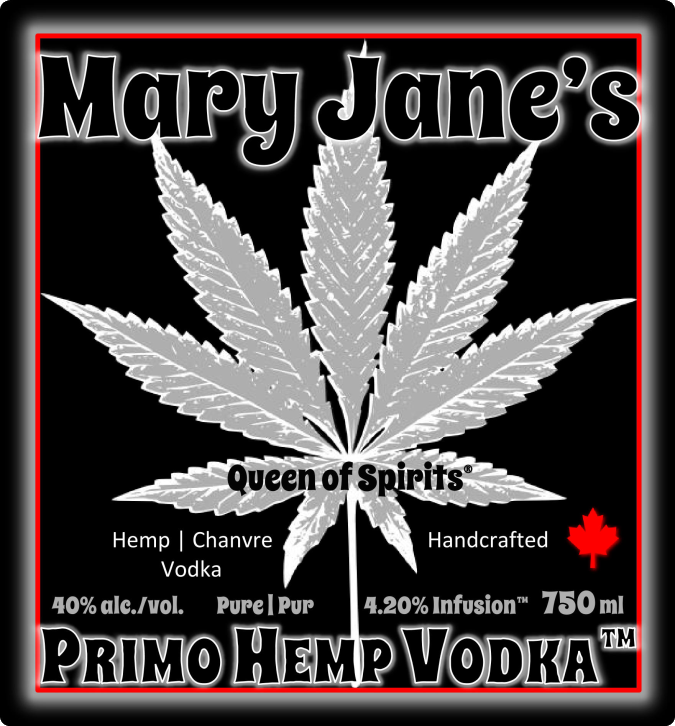
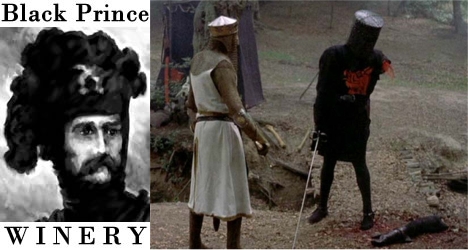
ClipboardSo, these Ontario oddballs—a descriptor which naturally could cover most of Canada—have come up with something they are hawking as Mary Jane’s Magical Hemp Wine, which the winemaker describes, in the biggest understatement since the Black Knight called his severed arm ‘a flesh wound’, as being ‘herbaceous’.

Speaking of the Black Knight—or in this case, the Black Prince—I confess to more than my usual benightedness over Mary Jane’s Magical Hemp Wine, a product of Black Prince Winery of Prince Edward County, Ontario, because I can find no real information on it.  Is it hemp infused grape wine?  Is it fermented pot juice?  Is it even legal here in the States if you have neither glaucoma nor cancer?  I could always call the winery of course, but I am not sure that this rural little municipality on the eastern end of Lake Ontario, just west of the St. Lawrence River, is even aware that such a thing as telephonic communication exists.  For sure, it is wine country—and happens to be Canada’s newest designated viticultural area.

But, perhaps the wave of the future is maricultural areas.  If I had one, I’d put in my parliamentary vote in favor of.  I do appreciate PR spokesman Scott Collier’s claim that the hemp is added ‘to round out and soften the acidity and tannins in the wine…’

Yeah, right.

Mary Jane Does a Hemp Vodka, Too

vodka logoWell, see, this does make a little more sense, since herb-infused vodka has been around since those pixilated potato-poaching Poles invented it in the 8th century.  Back in the day, the most popular addition was buffalo grass, and the resulting beverage was called zubrówka.  Buffalo grass-infused vodka is still available, and is really pretty good.

So, if grass is grass is grass, hemp would be a logical extension of the principal.  Mary Jane Primo Hemp Vodka is produced in Kelowna, BC by Urban Distillery, who has this to say about it:

“Uh, I forgot the question. Again.”

Odd Spokesman for the Product?

Cyrus and Cyrus, at your cervix

Cyrus and Cyrus, at your cervix.

Both the wine and the wódka are being fronted by the fictional character Cyrus from the Showcase series Trailer Park Boys.  Cyrus, played by Bernard Robichaud, is a high school dropout-cum-drug dealer who who enjoys waving his Beretta 92 around, terrorizing the residents of the trailer park.

If this is the face that Mary Jane wants to present for its products, that’s their business, of course.

But I guess I’m a bit lost at the concept of having a non-existent spokesperson who only about fifty people without Canadian accents have even heard of.  I mean, if the image you want to project to potential customers is one of hard-line, violent loserdom, why not canvass Ontario’s Kingston Pen, listed Number Three on David Wallechinsky’s 10 Toughest Prisons in North America (The Book of Lists)?  With its cramped cells, rats in the toilet, steel trays, tin cups and the silent system, I guarantee you could find a real live Kingston thug to pitch for you.

But these are wiser folks than I, and I suppose if I had to get simultaneously high and drunk every time I drank my own stuff whether or not I wanted to, such ideas might grow on me, too.

Biggest issue then would be remembering to write them down.

Posted in CANADA, GENERAL | Tagged , | Leave a comment

Brown-Bagging With Petite Sirah

I’ve known Stillman Brown since he was knee high to an ass-hopper; by which I mean, before he decided he was straight.

encyclopedia-brown-boy-detectiveSee, I can make stupid jokes like that about Stillman Brown (no relation to Encyclopedia, Ford  Madox or Charlie), not because he is as thick-skinned as his syrah and not because he simply grins and bears it; not because he is used to it and not because he is slightly ‘challenged’ and appreciates any attention given him by someone like me who, with all candor, is not named Brown and has won three consecutive Nobel prizes in hootchology.

But rather, it’s because I know that he knows that I know that at the  core of the connection, Stillman is a hell of a winemaker.

Ladies and Gentlemen of the Jury, I Present Exhibit A: Stillman Petite Sirah, Paso Robles, 2011, about $50:

Doris and Boris Day

Doris and Boris Day

Sirah/syrah comes from a parallel universe in which Doris Day was never born; it is a sort of Prince and the Pauper blend.  Whereas the grape names are similar, there is likely no genetic connection between them.  Petite Sirah is the pauper—rustically tannic and bumpkinly sweet, while Syrah is the Prince—although not listed among the six French ‘noble grape’ varieties, syrah produces wines of great depth and elegance.  Together, blended correctly (as this one is), they produce a wine that reveals the best of both worlds:  Dusky yet bright, filled with fruit, spice and a sensuous sort of carnality.  Generally these wines require some age time and always, air time after the bottle is opened.

stillman_mainEven so, Stillman Brown claims that his father, Stillman Brown (no relation to Joe E., Helen Gurley or Alton) still has to explain his son’s wine to friends.  Of course, what he likely means is that he has to explain his son’s wine labels to friends—evidence is his apparent joy and relief at this label: Quite handsome—even genteel—and without a single outrageous pun.

Michigan wolverine jerky

Michigan wolverine jerky

Stillman, however, is not to be forgiven for his insulting and mean-spirited tasting notes in which he makes fun of wolverine jerky.  The wolverine is our Michigan State Weasel, and wolverine jerky is our Michigan State Sliced Marinated Dried Mustelid Flesh.

Exhibit B, Your Honor: Stillman ‘Deep Purple’ Petite Sirah, Paso Robles, NV, around $50: 

Stillman mugging for the camera

Stillman mugs for the camera

Keeping Stillman Brown away from mid-Seventies band puns after a few labels is like trying to keep Lindsay Lohan away from eight-balls after a few interventions.  Thus, the excruciatingly  painfully named ‘Deep Purple’ conjures up less ‘the color purple’ and more ‘hair, heavy metal and hard rocks’—shit you probably don’t want to find in your petite sirah.

Nonetheless, the wine itself (another sirah/syrah) makes everything bad and cutesy go away:  It is a genuine grownup gem:  Clean and shiny with purplish/blue reflexes and ripped with tannic muscle.  Behind the black currant, blueberry and blackberry notes lies a layered infrastructure of coffee and charcoal with hints of camphor.  The tannins are so big that without a bit of age, they may clash with your heart, but say ‘yes’ and kiss the wine anyway.

Damn, now he’s got me doing it.

Exhibit C, Your Majesty: Chateau d’Abalone, Viognier, Paso Robles, 2012, around $40:

Viognier on the vine.

Viognier on the vine.

So, as a moderator to the big’ns, Stillman Brown tosses in a lyrical and textured viognier—another riveting, ravishing (if recurrently recondite) Rhône reputable.  Under Stillman’s scrutiny, the varietal releases the whole enchilada of fruit and flowers—honeysuckle and apricot primarily, with sweet licorice, peach and lychee in mid-palate and ginger to linger.  (BTW, even though they should, those last two words don’t rhyme.  Go figure.)

So, to conclude my case, even though case-wise, Stillman Brown produces but a trickle, in my opinion, he is making some of the most stunningly complex wines in Paso Robles.

And I would have no reason to brown nose (no relation to H. Rap, Cleveland or that dude whose body lies moldering in the grave), now would I?

Peg leg, peg leg!

Posted in Paso Robles | Tagged , | Leave a comment

Whan That Aprille With His Photo Ops Sweet…

(Apologies, Chaucer).

Newsflash, March 21, 2013:

LANSING — Governor Rick Snyder has declared April as ‘Michigan Wine Month’ to honor Michigan’s wide selection of quality wines and the wine industry’s significant contribution to the economy…

Billy Bad Boy

Billy Bad Boy

I was sent this press release by Karel Bush, a woman who I love and respect even though she is beholden to state politics via the Michigan Grape and Wine Industry Council and has to send it.

In fact, she has sent it every year since the Battle of Hastings, when William the Conqueror became King of England.

Caligula riding Father Incitatus

Caligula riding Father Incitatus

Which gives you a slight idea of why I don’t throw ticker tape parades when I receive it: The Governor always ‘declares’ April ‘Michigan Wine Month’, so it is about as newsworthy as when the Governor declares May ‘Michigan Brown Bat, ‘The Other White Meat’ Month’ like he has done every year since Caligula started diddling his sisters and appointing his horses as priests.

By the way, I am using the masculine pronoun ‘he’ in the above sentence because I am too cranky to think in terms of ‘gender-neutral’ and too lazy to write ‘he and/or she’—although, for the record, in everything else I will always use four words when one will do—as I have done every year since Christ was critiquing the carpentry work done on His cross.

Beauty and the Patootie

Beauty and the Patootie

Indeed, our last governor was a woman, and one I sort of dug; not necessarily for her politics, but because, other than a pre-cancerous mole on her cheek, she was sort of hot.  Current Governor Rick Snyder is the antithesis of hot.  He is a sniveling, smarmy, geeky, preppy, career politician—and worse, he is an unnerving ‘high achiever’ who could probably sell Marlboros to a hospice.  And believe me, there is nothing that pisses off an unnerving low achiever like me (who couldn’t sell dope to a junkie) more than somebody who earns three college degrees by the age of 23 and was, in 2012, considered for the Vice Presidency of the United States.

Plus, his name rhymes with ‘spider’.  Enough said?

But all that’s personal, and I like to think of myself as someone who sees ‘The Big Picture’.  Not the gihugical picture of George W. Bush’s wanker that hangs over Snyder’s desk, but whether or not his economic policies actually help Michigan’s wine industry.

I’m in the ‘not’ camp.

Wake up, Flo!  Time to go to sleep!

Wake up, Flo! Time to go to sleep!

Like most multi-millionaire Republicans, Snyder has never met a big business tax cut or special interest group’s special interests he didn’t like.  In December, for example, during the State Legislature’s frenzied lame duck session, Snyder officially made Michigan a right-to-work state despite twelve thousand proletarian protestors screaming outside his office.  What they knew, Snyder certainly knew and probably better: Eight of the 10 states with the highest poverty rates are right-to-work.  The legislation was a cave-in to union-hating mega-corporations of a magnitude not seen since Florence Nightingale discovered the joys of smoking opium.

Meanwhile, most Michigan small business owners oppose expanding Medicaid coverage as proposed by Governor Snyder in his recent budget address.

vineyardsWe don’t have any Ernest and Julios here in Michigan; the vast majority of our wineries produce less than five thousand cases annually, so any legislation that favors big over small—and let’s be honest, Lilliputian—business interests does not seem to warrant the pats-on-the-back credit that Governor Snyder is absorbing for his obligatory, stupid ‘Wine Month’ proclamation.

From my admittedly limited eyrie, I see that the steady increases in sales of Michigan  wine are happening in spite of—not because of—Governor Snyder.

Now, Some Good News for We Michiganistani…

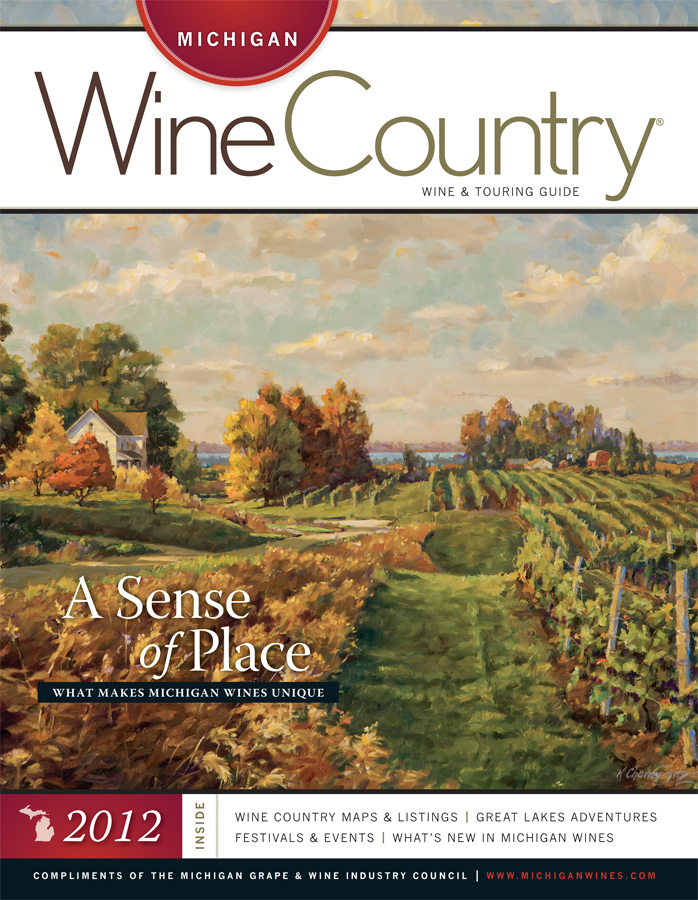
wine coverIn 2012, in-state sales of Michigan wine rose more than 6% while total wine sales increased a mere 1%. Michigan wine sales have outpaced total wine sales over the past 10 years, doubling Michigan wineries’ market share to 6.5 %.

Eleven new Michigan wineries opened in 2012, bringing the state total to 101.  How cool is that?  Ask the million visitors that descend upon Michigan winery tasting room every year.

And how valuable is that?  At last count, Michigan’s wine and grape industries contribute more than $800 million to the state’s economy annually.

You want a back to pat?  Try a few folks who really have the industry’s back:

Shannon and Cortney Casey

Shannon and Cortney Casey

Try Cortney and Shannon Casey’s, whose Michigan By The Bottle blog and podcasts focus entirely on Michigan wines and whose newly opened Michigan By The Bottle Tasting Room in Shelby Township does the same—only in a somewhat more lip-smacking manner.

Try John Lossia of Merchant’s Fine Wine’s, whose selection of Michigan wines is, I believe, the finest in the state.

Try Karel Bush’s, whose ceaseless promotion of Michigan wine continues through rain and sleet and gloom of night.  Sort of like the US Postal Service, only without the disgruntled mass murderers.

Sacred Heart of Jesus

Sacred Heart of Jesus.  Eeeeew.

Try the collective backs of Walter Brys (Brys Estate Vineyard & Winery), Jeff Lemon (Lemon Creek Winery) and Martin Lagina (Villa Mari) who sit on the The Michigan Grape and Wine Industry Council Board to represent winery interests.

But, for the love of the Sacred Heart of Jesus, not the back of he whose poll numbers have tanked to such a hilarious nadir that in hypothetical reelection contests, every proposed Democrat tested—even ones who those canvassed had never heard of—showed a better chance of winning.

That’s right: Governor Rhymes With Spider.

Posted in GENERAL, Michigan, MIDWEST | Tagged | Leave a comment

Le Beaujolais Oldveau Est Arrivé

I happen to like Beaujolais Nouveau.

Clipboard gayAnd I often get called a panty-waisted momma’s boy eunuch, without taste, testosterone or a grasp of life’s finer pleasures.

Not because I like Beaujolais Nouveau, of course, but because I also like that effeminate and estrogen-engrossed effervescent effluvia, Diet Vernor’s Ginger Ale—a.k.a, Liquid Gay.

Now, I understand that flippant use of the word ‘gay’ is rued by the same Conan O’Brian-watching, James Taylor-listening-to, lily-white Americans who also rue calling their streets ‘rues’. The French—those amphibian-appendage-amputating fleur-de-lis—have no such qualms.  They call their streets rues without batting an oeil while using the word ‘gay’ as flippantly as they damn well please.  I mean, for example, take ‘Gay Paree’.  (Really, French People??).

Cheret_MoulinRouge_ParisCancanOr the Moulin Rouge, established during the Gay Nineties.  Located in Paris on Rue de Clichy, the Moulin Rouge was home of the raucous revue called the can-can, which may or may not have been a ‘gay thing’—but any time you are so in love with cans you have to use the word twice in a single word, you are suspect.

Whatever, boys.

Whatever, boys.

The Moulin Rouge was also the home-away-from-home of pint-sized Parisien painter Henri de Toulouse-Lautrec, who may or may not have been gay—but any time your best friend is Oscar Wilde, you’re suspect.

Anyway, the French not only have a Moulin Rouge, they also have a Moulin-à-Vent; arguably the most noteworthy of the ten Crus of Beaujolais.

Which is a circuitous rue to getting this column back on track.

Moulin-à-Reinvent

You gotta love the soil of Moulin-à-Vent: It comes from the Hercynian fold that took place during the Paleozoic era, about 250 million years ago!

And as if that tidbit isn’t fascinating enough, folks, said soil is also so toxic that it virtually (but not quite) kills off the gamay vines.

And that’s why their wine is so good.

That is the sort of idiocy paradox that makes the subject of wine so interesting.  As most people know, poor soils make good wines (https://intoxreport.com/2013/03/08/enough-with-the-shite-slinging-lets-dish-some-dirt-instead/), but this little patch of Beaujolais, sharing a border with Chénas to the north and Fleurie to the west, has really taken things to extremes.

screen-shot-2012-09-16-at-1-33-22-pmThe culprit (or hero) is manganese.  As a reference to those of you who weren’t chemistry majors—or were, but opted for a career in methamphetamines and are now either dead or brain-fried—manganese is an element often associated with  neurological disorders, impaired motor skills and something really lovely called necrosis of the mucous membrane.  It is a vital additive to gasoline and indispensable to the manufacture of disposable batteries.

'How does he smell?''Awful'

‘How does he smell?’
‘Awful’

Since grape vines have no noses to necrosisize and generally require few motor skills, what manganesy soil does in Moulin-à-Vent is stunt plant growth and limit crop yields.  This is a good thing: The smaller grapes are intense and concentrated and—another anomaly—the nose from wines produced by these no-nose vines is by far the most pronounced in Beaujolais, with distinct notes of iris, violets, spice and cherry.

It is the opinion of most wine know-it-alls enologists that the wines of Moulin-à-Vent are the best expression of gamay to be found anywhere in the civilized world—and California too. In fact, (here’s a word that even jerkoffs who claim to know more about wine than me, and do, but shouldn’t brag about it about it, because it’s impolite Master Sommeliers may have to look up) the wines of Moulin-à-Vent are said to ‘pinote’, meaning that they become more like pinot noir, especially as they age.

And that’s another rarity in Beaujolais:  Moulin-à-Vent is frequently barrel-aged. If you find the phrase ‘fûts de chêne’ on your Moulin-à-Vent label, you have one of these buggers and should cellar it for about six years—from there, they may cellar for another decade.  This is in contrast to Beaujolais Nouveau, which peaks on the third Friday of November.

These Windmill Crackers Sho Nuff Know Dey Bidness

Moulin-a-ventmill

Moulin-a-ventmill

Although the appellation ‘Moulin-à-Vent’ has only been around since 1925, there have been wines grown here since the land was called Gaul and de Gaulle wasn’t even a tremor in his old man’s de gaulsack.

The Romans first started growing vines here in the 1st century—a landmark date to be sure, although maybe not as much as the 15th century, when a windmill was built atop a hill overlooking the town of Romaneche-Thorins.

Moulin_Rouge with windmillThis iconic windmill has become as enduring an emblem to the folks of Moulin-à-Vent as the giant red windmill atop the Moulin Rouge is to all those can-can-copulating Gay Pareesians.

Ha!  And I’ll bet my sweet bippy that you didn’t in 250 million years think I be able find the same circuitous rue to getting this column back off track.

Tasting Notes:

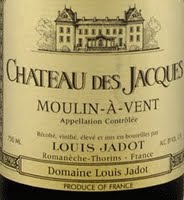
jadot moulin labelLouis Jadot Moulin-à-Vent Château des Jacques, 2009, about $17:  An oak-driven nose, with vanilla and caramel; also a nice whiff of blackberry.  Earthy and herbal with full black cherry on the palate and a finish that hangs around like a stalker.  The wine is still a little tight; a probably needs a few more cellar years.

Potel-Aviron Moulin-a-Vent Vieilles Vignes, 2008, around $17:  Shows intense color, between garnet and ruby.  Fleshy, while displaying archetypal aromas of violets—the tannins remain in the background while full cherry and subtle spice stand front and center.  An appealing, long finish.

drouhin labelJoseph Drouhin Moulin-a-Vent, 2010, around $20:  Highly concentrated wine; deep purple with well-marked but velvety tannins.  Floral on the nose, fresh, juicy and fruity on the tongue, showing a well-ripened cherry, bright blackberry and damson character.  Lovely selection, well worth the dough.

Georges Dubouef Domaine de la Tour du Bief Moulin-a-Vent, 2009, about $18: Ripe strawberry and tart cherry aromas flesh out this serious, structured wine.  There’s a viscous and  grapey palate with sweet fruitiness but also. a strongly expressive character.

Posted in Beaujolais, Gamay, Gamay | Tagged , , | 2 Comments

Enough With The Shite Slinging—Let’s Dish Some Dirt Instead

‘Those who can, do; those who can’t, teach; those who can neither do nor teach become wine critics.’

Lugh is my co-pilot

Lugh is my co-pilot

I often send petitions of thanks to the Irish god Lugh that I did not pursue a career in winemaking, because sure as Lugh made little green shamrocks, I would have failed.  As a gardening geek, I have O but not so much the CD—I tend to throw seeds anywhere I feel like throwing them and simply wait to see what happens.

As a viticulturist, you can’t really get away with that—some vines grow better, some worse, in specific spots.  That’s due to a number of factors—hillside exposure, sunlight, adequate moisture from rain or run-off, proper air and water drainage—and each varietal has its bucket list of personal needs.  But even when all the stars have aligned, results may in fact be un-stellar.

That leaves a grumbling gleaner of grapes with another consideration:  Dirt.

Rooting Out the Problems…

‘Vineyard soil is the unseen dankness where the vineroots suck…’

– Hugh ‘Maybe I’m Not So Smart After All’ Johnson

hugh johnson _The ground geology of a given vineyard begins with bedrock and ends with soil, with a whole lot of terraforming going on in between.  In brief, the parent material and the mineralogy which results lays a coal-and-ice foundation for that overused—and often misused—word ‘terroir’; the way that the French describe ‘a sense of the place’.

Nobody questions that wine absorbs specific chemical nutrients from subsoils weathered from specific types of bedrock—or that twelve of the sixteen essential elements required by wine grapes come from the ground.

How these elements ultimately inspire flavors in your wine glass is a science with somewhat less authority.  That soil affects grape quality is not arguable, with depth, pH, salinity and particle size all playing a role in producing healthy fruit.  But how much of that translates into aromatics, and by default, flavor, divides wine scholars into separate camps.

Rare image of Chris Kassel during a prison riot.

Rare image of moi, le auteur, during a prison riot.

Me, being a wino, not a scholaro, can give both sides their dues.  Both sides make perfect sense to me—which is why I never get picked for jury duty.  Prosecutor makes his case, I thrust out my down-turned thumb and shout, ‘Fry the mofo!’; then the Defense has their shot and I immediately scream, ‘Attica!  Attica!’

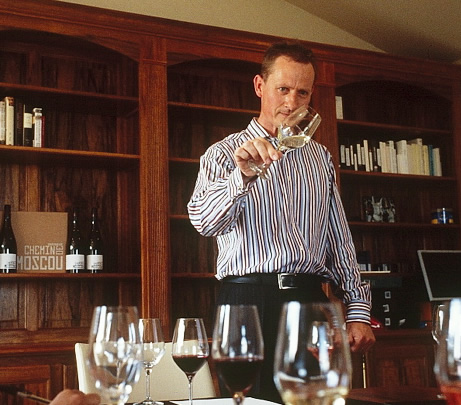
In other words, I am a pushover.

Before we get into the debate, here is an ABC aperçu of the world’s most significant wine grape soils:

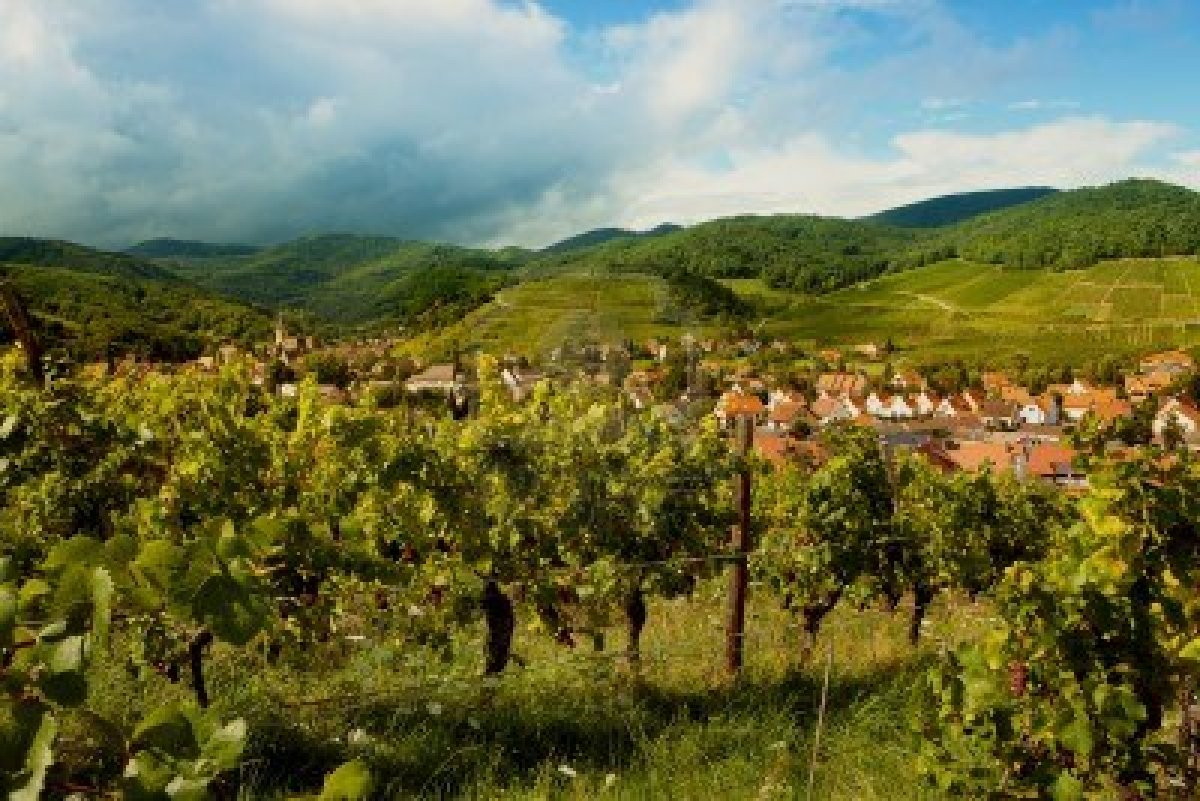
Alluvial: Generally found in valleys and at the base of hills, these soils contain a lot of organic material (alluvium) deposited from running rivers; such soils are extremely fertile and generally layered, since different current speeds cause different deposit conditions.  Most of the soils in Alsace are alluvial, although a distinction is seen in individual vineyards based on their elevation.

If Mt. St. Helen Keller erupted and nobody but Helen Keller was around, would it make a sound?

If Mt. St. Helen Keller erupted and nobody but Helen Keller was around, would it make a sound?

Basalt: Volcanic soil, high in trace elements like calcium, iron, and magnesium; they readily absorb heat and generally generally have a high cation (positively-charged ion) exchange capability, enhancing the vine’s ability to absorb nutrients.  Basaltic soils can be found in Sicily, Santorini, Israel’s Golan Heights, the Deccan Plateau of India, southeastern Australia and the U.S. Pacific Northwest.

Calcareous:  Whereas purely alkaline soils with a  pH > 8.5 offer poor structure and an inhospitable agricultural environment, the presence of plant-accessible calcium carbonate—the the principal chemical component of limestone—offers balance to acidic soils and improves water retention in droughts and water drainage in floods, making it one of the most highly sought after soils in the wine world.  Indeed, although it is rare in California (some exists in the west side of Paso Robles), the great vineyards of Champagne, Chablis, the Loire, southern Rhône and Bordeaux’s Saint-Emilion are rich in limestone.

chalkChalk:  The roots of a grape vine cannot penetrate solid limestone, but chalky soils are made of porous limestone; such soils are prized for their drainage, not necessarily for their fertility—most need the addition of organic matter to grow world-class grapes.  Pure chalk soils are rare, and tend to produce wines that are high in acid.  You find them in areas of Champagne, Jerez (Spain’s Sherry country) and especially Cognac, where the wine is too sour to drink, but distills into the iconic brandy.

Granite:  Prized for its quartz content (up to 60%), granitic soils are well-drained and seem to lend a quality of freshness, beguiling juiciness and bright acidity to wines in which they’re grown.  Sound like Beaujolais?  It should; the southernmost appellation of Burgundy contains some of the most concentrated granite soils on earth, especially in the area producing Cru Beaujolais.  Other granite hot-spots are Germany’s Rhône Valley, where riesling thrives, Portugal’s Douro region and especially in Mendoza, Argentina where it contributes to malbec’s wild ‘n’ crazy success.

Gravel:  Pebble soil appreciated for its ability to drain and renounced for a lack of alluvial sediments.  In Bordeaux, on the left bank of the Garonne river, gravel soils reach a sort of viticulturist Valhalla: In fact, the appellation ‘Graves’ is named for its magical gravel.  The result of deposits from Ice Age glaciers, the soil also contains a high proportion of white quartz to keep the wines acidic and fresh-tasting.

R.: Mullet. L.: Mullet

L.: Mullet.  R.: Mullet

Joe Dirt: Unnaturally occurring soil made of Green Kleen Sweeping Compound, fireworks residue and organic substrates (e.g. mullet sperm) that are formed under mop-waterlogged conditions. These soils contain glass cleaner (predominantly Windex) which reacts with oxygen to form sulfuric acid that is used to to wash blue jeans.

Loam:  A mix of clay, sand and silt in varying proportions, loam soils are porous when the proportion of sand is high, and super-fertile when then advantage goes to clay, although these moisture-retaining versions are tough to plow.  Nearly all of the world’s vineyards contain a proportion of loam, lending texture and organic nutrition to the vineyard.

Alsace

Alsace

Sandstone: A warm and easy-draining soil made of tiny particles of sedimentary rock from the Triassic Era; it’s characteristic porosity requires irrigation of the part of vineyard managers, but they are rewarded with a soil that is inhospitable to phylloxera.  Wines grown in sandstone reach amazing heights in Alsace, where they are credited with aiding and abetting that region’s intensely floral wine bouquets.

Slate:  Formed when shale and clay are subjected to strong geothermic pressures, slate is an invaluable component in the soils of Germany’s chilly Mosel region: It warms quickly and retains heat throughout the night.

Tufa: A cousin to limestone, tufa is formed through a chemical reaction when carbonate minerals precipitates within ambient water sources.  Over time, calcareous bedrock breaks down into a marvelously friable, finely-textured soil.  In Loire, tufa is able to transform chenin blanc—a rather forgettable grape elsewhere—into transcendent, age-worthy wines.

Dirt Doesn’t Hurt, But Does It Really Re-Assert, or Just Play Curt?

It depends who you ask and who you are.

And among folks who label themselves ‘wine people’, the controversy rages like the subject of global warming, gay marriage and whether it was Oswald or George Bush, Sr. who shot JFK.

I can tell you in advance which side you support if you admit to me honestly which of these two geek profiles best fits your psycho-dynamics…

Kangaroo ejectamenta

Kangaroo ejectamenta

1)  I am a Professor of Geology at Harvard University who did under-graduate work on the soil substrates underlying the world’s top vineyards.  I am grounded in earth science, but have a keen sense of humor, as evidenced by that ‘ground/earth’ joke I just made.  Five years ago, I went to Australia on a National Science Foundation post-doctoral fellowship to study the geological impact of kangaroo ejectamenta (shit) throughout Penfold’s shiraz vineyards, particularly those used to make Grange.

Despite my nerdy credentials, I am gregarious and well-liked by my colleagues, especially those of a feminine persuasion.  When ‘rock’ hard, my penis is nine inches long, which converts to 228.6 millimeters.

I have concluded, and so published in The Journal Of The Geological Society of America, the following:

‘Chemicals taken up by the vine cannot register as minerality in the finished wines and geology has no effect on the detectable flavors in wine.  Whatever sense of ‘minerality’ you detect, it is likely the result of a lack of fruitiness, not the the vineyard’s soil composition…’

 Or…

2)  I am a hopeless dweeb without friends who believes that the U.S. Government is hiding alien corpses in Building 84 at Roswell; I am awkward around human beings, but I do not possess the intelligence to fill my social oblivion with high-tech pursuits like robotics or knitting.  I have a made-up girlfriend that I ‘say things to’ on Facebook.  I am afraid of all grown-ups except for Randall Grahm, because I sense that we are birds of a feather.  I believe anything he says.  Such like:

Clipboard nerd‘Carignan, when bottled early, surtout en Stelvin, has a tendency to express a sort of stoniness—this is a manifestation of the phenomenon of minerality, especially in virtue of the age of the vines.’

To bolster his theory, Grahm performed a nerdly experiment in which he put rocks into full barrels of wine to see if mineral flavor and aromas would be communicated.  His conclusion: ‘The stones had some effect on the wine, adding far more complexity and greater persistence to the palate.’

So there you have it: I have no doubt you side with the Professor, because nobody sane admits to siding with Randall, even if you like Bonny Doon.

But that isn’t even the point.  The point is that in any methodical experiment meant to prove/disprove a hypothesis, it is not the observation (in this case, Pouilly-Fumé that tastes like gunflint or slate flavors in Dr. Loosen’s riesling) that is important: It is the principle behind the observation.  Without a demonstrable viticultural theory as to why the phenomenon occurs, you may as well discount the tasting notes as the product of pre-conception, imagination, and/or copycat, limited-skill tasters.

According to Professor Alex Maltman, a geologist at Aberystwyth University in Wales, the notion that minerals absorbed from the soil make their way into the stemware, thus giving it local flavor is ‘a beguiling and simple idea that wine journalists love, but it not only isn’t true, it couldn’t be true: While wines may vary in the levels of dissolved mineral elements, the variations aren’t related to the levels of those elements in vineyard soil. More importantly, the concentration of minerals in wine is below the threshold of human taste and smell.’

Maybe so, Maltmilk, you patronizing poindexter—but mangez some marsupial merde anyway.  I myself am a wine (anti-) journalist who does not love this beguiling and simple idea, and in fact, I am in the process of trying to blow it out of the tub.

And not for nothing?  Instead of dirt, I would rather be writing about government conspiracies, UFOs and the fact that Welsh is the most absurd language on earth.  I mean, really, Professor Maltliquor? Aberystwyth?  On the banks of the Ystwyth?  Near the towns of Llanbadarn Fawr, Penparcau and Comins Coch?

Closing Remarks…

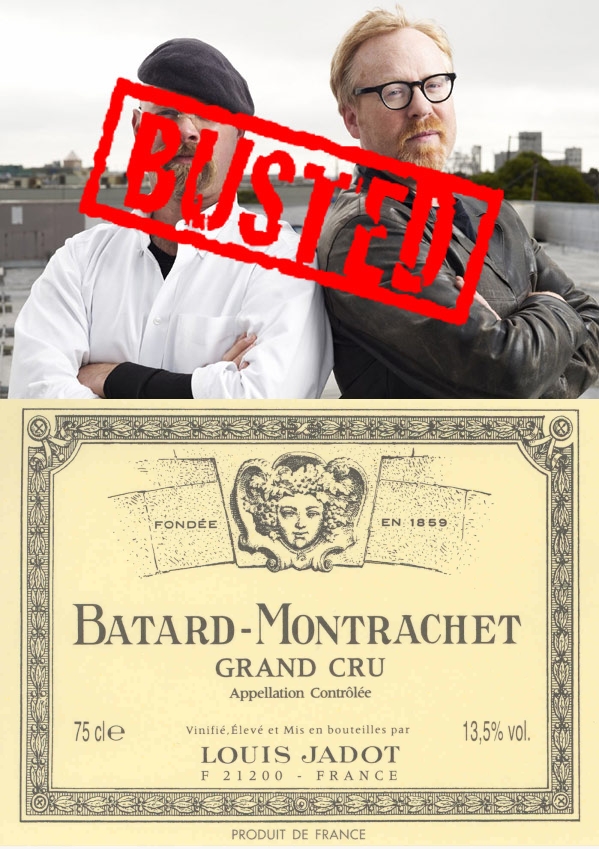
Clipboard bustedIn any event, over a large number of iterations, the conclusion at which we have arrived: There is no explanation or predictive power for the null hypothesis that a specific terroir can be identified by taste and smell alone, and therefore, all old assumptions must be discounted.

Onward and upward, then; better living through chemistry; praise the Lord, you bastards: Pass the Bâtard-Montrachet.

Posted in GENERAL | Tagged , , | 2 Comments

Master-Level Wine Webinar? We’ll Burn That Bridge When We Come To It

I just received a ‘last call’ e-card from the French saying ‘Wish you were here! —and for what you will pay for the Sud de France Master-Level Webinar Program, you might as well be.’

french wine society logoThe deal is this: For a modest huge fee (four hundred bones), The  French Wine Society has invited me to purchase an on-line ‘webinar’ which will teach me everything I wanted to know about Languedoc-Roussillon but was afraid to Google Languedoc-Roussillon and learn for free.

The webinar—and by the way, why am I always getting dinged for making up words, but the FWS isn’t?—consists of fourteen live ‘thematic’ lectures on L-R delivered by industry poobahs—a couple of whom I really like.

But this ‘last call’ nonsense is indicative of the fact that this is the third plea for participation that has infiltrated my inbox from these peculiar, persistent people. Evidently, the webinar wizards think I am simply dragging my webbed feet.

As If… 

Matthew Stubbs, doing what he lubbs.

Matthew Stubbs, doing what he lubbs.

But, everybody has to earn a living, right?  So, if you have already earned yours and want to shell some of it out to the French Wine Society, be my guest.  Upon receipt of payment, you will be able to log into the nine webinars taught by Headmaster of Wine Matthew Stubbs, who will inveigle you with such delightfully-designated disquisitions as Fifty Shades of Grès and Between a Rock and a Hard Place: Languedoc AOCs in which you will first learn how to say Languedoc-Roussillon; then, how to interpret what ‘work address’ means when listed on Master Stubbs’ profile page (‘Gayda’ is not the French pronunciation of gay-dar); then, a bit about alliteration (core curriculum; granite, gneiss, galets; Picpoul de Pinet), and then Matt will walk you through the 2600 years of history and mystery that surrounds France’s oft-misunderstood underbelly, as he, in the process, promises not to stubb his webbed toe.

Andrew Jefford

Andrew Jefford

Once you have thoroughly analyzed and absorbed these astute annotations, you may move on to the five ‘distinguished guest lecturers’ who will proceed to pad your perimeter purview with presentations like Cultural Languedoc-Roussillon and Tradition and Transition (I find alliteration sort of annoying, don’t you?) and trust me, this pentamerous passel of preachers are far from pikers.  Two are Masters of Wine and one, Dominique Laporte, was named ‘Best Sommelier in France‘.

Another is Andrew Lloyd Webfoot Andrew Jefford—poet, editor and webinarian.  

In fact, it was his presence on the panel that gave me cold webbed feet about even publishing this particular piece.

Did somebody say 'James Suckling'?

Did somebody say ‘James Suckling’?

Why?

Because, unlike most influential wine writers, ninety percent of whom are so stunningly dull (you know who you are) that the mere whisper of their names sends me into catatonic stupors requiring hospitalization and intra-nasal applications of tetrahydrocannabinol, Andrew Jefford is on record extolling the virtues of humor and irreverence in wine writing, and himself displays considerable unpretentiousness, humility and  self-effacement in his weblog.

See, that’s exactly like me except for the unpretentious, humble and self-effacing part.

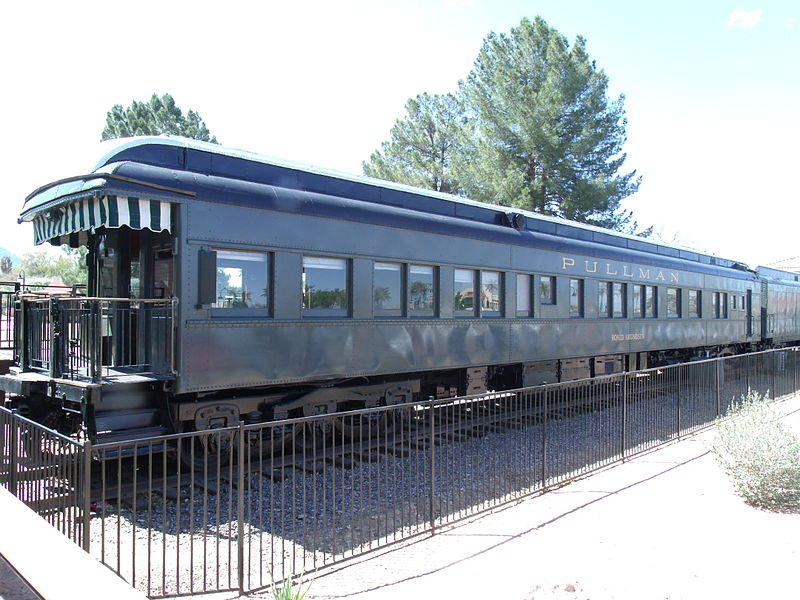
My pretty purple Pullman

My pretty purple Pullman

Ultimately, it is journalism’s jihadists like Jefford who I need to keep on board my pretty purple Pullman—detrailing the dude who is leading the charge of change in the industry and who understands that dusty, dry, overly-tannic wine writing is an anachronism—does not serve my interests.

Burning That Bridge Would be Catastrophic…

On the other hand, being less than candid when covering crap like the Sud de France Master-Level Webinar Program does not serve the interests of the 8.002% of readers who admit to actually reading what I post.

Stubby, my boy; talk about your rock and hard place…

So, that said, let me sincerely urge those of you who already own the Boardwalks and Park Places, complete with hotels (and whichever of the railroads has Pullman coaches) on the Monopoly board of life to do the following:

Web-register for the webinar before you dot another ‘t’ (http://www.frenchwinesociety.org/index.php)  and absorb all the trifling Languedoc-Roussillon trivia you can.

monopoly1And when your turn comes to interact with Mr. Jefford in the Q and A portion of the lecture?  Please put a good word in for those of us skirmishing, scrabbling scribes who are scamming single green houses on sad, carignan-colored State Avenue.

Do that for me, my friends, and I would be extasubet.

No, FWS weboholics, I did not invent that last word: Look it up in your Funk & Websters.

Posted in GENERAL, Languedoc-Roussillon | Tagged , , , , | 2 Comments

Assorted Smart-Asseries From The Wonderful World Of Wine

As most of you know, in 2003 I was booted from the doctoral program at UC Davis for attempting to sell crack cocaine to all four members of the Supervisory Committee, for trying to finance my sixth semester with Monopoly money and for ending my dissertation, ‘Plotting Silting Efficiency Data In Various Applications While Solving Filtration Problems Through Microbiological Detection, Pressure Relationships and Cross-Flow Systems’ with the (I thought) innocuous phrase, ‘And then I woke up.’

walter_white_nakedEver since, I have wandered the byways of enology in a sort of psychogenic fugue state—a rare mental disorder characterized by dissociative personal-identity amnesia and delirium.  Historically—other than mine—famous fugue states include Lydia’s in season two of Teen Wolf and when that Breaking Bad dude showed up naked in the supermarket.

Don't mean jack

Jack

In any case, I tend to slip in and out of frontotemporal dementia as suits my mood and inclination.  When out, I write in my usual mature and competent style—columns embodying the results of significant introspection and research.  When in, I ramble on and on in vignettes, like Kerouac did in that awful, aimless On The Road—and wind producing work as pointless and inglourious as stepping in front of a bus.

Well, friends and lovers, I am in a dissociative fugue state right now, and so, here are some brief bobbles on the wine world that are not worth getting all sane over:

Praise the Lord and Pass the Psychotropics: It Was All A Misunderstanding!

i want you to stay soberHollywood’s Jeff Wagner Agency was kind enough to inform me that today, March 5, is ‘National Abstinence Day’ and that we all should spend it soberly and sedately in zennish meditation.  But, see, my medications make me woozy sometimes, and it turns out that Jeff was actually informing me that today is ‘National Absinthe Day’, where we express our gratitude that America has seen fit to finally legalize this strange, emerald-color Victorian liqueur which causes the user to commit suicide, imagine he’s a werewolf or go to the supermarket naked.  Woo-hoo!

Only problem is, unlike the stuff you buy in the Czech Republic, the crap that’s legal in the United States contains no thujone—which is the only reason to drink absinthe in the first place.  Otherwise, might as well have a shot of Sambuca, which is anise-flavored and has coffee beans in it; absinthe, if you’ve ever had the misfortune, is closer to being anus-flavored.

*

Wine is Purple, Not Syruple

The Fort Knox of sticky brown stuff.

The Fort Knox of sticky brown goo.

We all know that when it comes to maple syrup, Canada isn’t playing with a full deck of euchre cards: For instance, as the United States keeps a stock of oil buried in salt caverns in case of a geopolitical emergency, Québéc has warehouses full of surplus syruple.  But, I always imagined that Michigandalfs were a bit brighter than that:  Look how many of us moved out of Detroit when everything turned to shite.

But now Sandhill Crane Vineyards in Jackson, MI has announced a limited release ‘maple syrup wine’ called Sugar Snow, failing to understand that even its most generous and encompassing interpretation, wine is no more a product of tree juice than it is of bee vomit: Those are better referred to as ‘brew’ and likely predate agriculture.

*

Another Sloppy Misread on My Part—Mea Robert Culpa

Last month, the New England Journal of Medicine released a study that re-proves what has already been proven over many millennia in laboratories both clinical and social: The Mediterranean Diet is good for you.

Said diet, of course, is characterized by a high intake of olive oil, nuts, veggies, fruits, shellfish… and wine.

What stuck in my crawfish was first, my mistaken read that the seven allowable glasses of wine were per day instead of per week (per meal would have been closer to my health regimen), and second is that the diet recommends the consumption of one liter of olive oil each week.  When you figure that you get a bit less than seven glasses of wine from a liter, that means you would be consuming like amounts of pure fat and wine every week, far exceeding the FDA’s allowance of about 2 cups of all fats per week.

Not sure I could sign up to that in good conscience; could you?

*

Kosher Karmel Kornball

Adam Montefiore

Adam Montefiore

Adam Montefiore, wine director at Carmel Winery, Israel’s largest wine producer, said recently, “Jews came to this land, made the desert bloom, started planting vineyards, making wine, and in doing so began reclaiming their heritage and reviving this ancient wine producing region.”

No problem with that statement.  But for some reason, Tzora Vineyards general manager Uri Ran decided to chirp up with a sarcastic sound-bite of his own, no doubt intending to draw attention to his flea-sized winery in the Judean Hills:  “The first time Robert Parker of The Wine Advocate tasted Israeli wines was 2008. So what, before that Parker didn’t know there was a country called Israel that makes quality wine?”

Considering that the Advocate has been hosting yearly wine tastings devoted exclusively to Israeli wines since 2007, I’d say this comment is in breach of the 9th Commandment.

*

Seeing Red Over Red Chinese Drinking All the Red

The CEO of the world’s second largest wine company is licking his chops over record profits ($53 million) over the first half of the company’s fiscal year.

Top: Davie D.Bottom: Piggly W.

Top: Davie D.
Bottom: Piggly W.

David Dearie of Australia’s Treasury Wine Estates explained to CNBC that the Asian market was largely responsible for the 30% increase in sales of this ‘recession-proof’ commodity:  “What we’re seeing is the Asian consumer, particularly China, really enjoying their red wine.”

No, Davy dearest, not their red wine.  By any sense of Aussie ethics and moral integrity,  they are really enjoying our red wine.  We were supporting you brown-eyed mullets—buying your wine and  loving it—long before those strange little left-handed bowlers who use a wrist-spin action started buying up all the Penfolds and Wolf Blass—which, not for nothing, they can’t pronounce anyway—all I can find at my local Piggly Wiggly is Lindeman’s and Rosemount—which they can’t pronounce either.  Come on, Treasury; what happened to customer loyalty?  Americans were buying Grange and Platinum Label when the don’t-call-me-Oriental faction were still ganbei-ing over rotgut sorghum moonshine and raping political prisoners.

*

And Now For Some Good News:

February 9 and 10, 2013, in St. Charles, MO, the 28th Annual Midwest Grape Conference and Trade Show saw its doors darkened, rafters rung and agenda cheered by over 1600 attendees, making it the premier wine industry event in the Midwest.

'I'm not a snob.  I just play one on TV!'

‘I’m not a snob. I just play one on TV!’

Keynote speaker was Tim Hanni, who bills himself as ‘The Wine Anti-Snob’ but still tacks the rather snobbish-sounding title of Master of Wine * after his name.  You and I both know that a really humble dude would call himself a Workhouse of Wine or a Vassal of Vino or even a Skivvy of Scuppernong—the word ‘Master’ has too many negative connotations, particularly among non-Caucasians like me who refer to Tim as Massa ob Wine; yessa, we damn sho’ nuff do.

Besides, Tim, when you brag about being an ‘anti-snob’, it is like you are saying that you are somehow better than us snobs.  And brother, you don’t get any snobbier than that.

* Tim also goes by the cutesy web-page title of The Swami of Umami, a.k.a. to us bluegum golliwogging cracker-nots as  De Swami ob Yo’ Mammy.

Posted in GENERAL | 4 Comments

‘Zin Zone’, Zabaco And Zsa Zsa Gabor

Clipboard zebraThe letter ‘z’ is a bit off-kilter, wouldn’t you say?  It lurks in the rear of the classroom, rarely raising its crooked hand, and when called upon by the teacher to answer a question, ‘z’ frequently bullies ‘x’ into doing the talking.  If the letter ‘z’ contributes anything at all to our mother tongue, it’s to jump start conceptual aberrations like ‘zebra’ (a horse in a prison uniform) or ‘zeppelin’ (a bad idea from the git-go) or ‘zorilla’ (a skunk-like polecat that marks its territory with feces and the anal emission of fumes).

‘Z’ is like the ex-planet Pluto—not really ‘one of us’.  In fact, it is only by a stroke of serendipity that the letter remains in the English language at all.  In 2006, the International Alphabetonomical Union (IAU) voted on a resolution creating an official definition of ‘grapheme’, which is as follows:

  • A letter must be valuable to words that really matter; words like beer, Comcast and schtupp—not crap words like zyzzyvas (a destructive South American weevil) and ziggurat (what’s wrong with ‘pyramid’, Babylonians??)
  • A letter must have a place in phonology beyond the sound a bee makes just before it stings you.
  • A letter must be massive enough to be a sphere by its own gravitational force, and more specifically, a letter’s own gravity should pull it into a shape of hydrostatic equilibrium.
The Dozing Dean of Disabilities

The Dozing Dean of Disabilities

The only thing that saved ‘z’ from total annihilation was that the vote is required by IAU statute to be unanimous and it fell one vote short.  Stephen Hawking, Ph.D, Companions of Honour, Most Excellent Order of British Mushmouths, Fellows of The Royal Society of Gimps had nodded out during the debate, and when asked for his ‘aye’ responded, ‘Zzzzzzz,’’ which the Union took as a ‘nay’.

And That’s A Good Thing For Zsa Zsa and Zabaco Zinfandel

Zsa squared / Sirhan squared

Zsa squared / Sirhan squared

I have this theory that the overwhelming sense of sanity exuded by the Budapestian GILF (Great-Grandmother I’d Like To Flay) Zsa Zsa Gabor is the result of her parents being so proud of her that they named her twice; a single Zsa just didn’t do her beauty, talent and ambition justice.  No doubt, Sirhan Sirhan’s folks felt like this too.

But, what do Zsa Zsa Gabor and Rancho Zabaco Zinfandel have in common other than an affinity for dwarf letters, you ask with your patronizing, supercilious smirk?

I’ll tell you what, Señor Zilchy Zorilla:  Both are Eastern European by derivation, and both came to California in 1843.

Zabaco vines

Zabaco vines

As the Rancho Z story goes, in 1843 the teenage son of a Spanish soldier was given one of the first Mexican land grants in Sonoma County: 17,000 acres in Dry Creek Valley in the heart of what is now referred to the ‘Zin Zone’. *  That land—with some of the original outbuildings still standing—makes up a portion of Rancho Zabaco.

* The Zin Zone came by its alliterative autonym because the appellations it encompasses—Amador, Sonoma County, Paso Robles, etc.—produce 80% of California’s annual zinfandel harvest

Zasu Zitts

Zasu Zitts III

As the Zsa Zsa Gabor story goes, the slutty Slavic superstar left her twenty-seventh husband Frédéric Zippy von Zeitgeist to begin an illicit affair with the great-great-granddaughter of silent movie star Zasu Zitts.  When Zsa² was asked why, if she’s actually gay, she expressed such terror of lesbians when she was sentenced to serve jail time in 1989 for slapping a cop, she replied, “Dahling, I didn’t say I was afraid of ‘lesbians’, I said I was afraid of ‘thespians’.”

Cinnamon Boy Makes Good

Eric Cinnamon

Eric:  I have never cinnamon with so much talent.

Does winemaker Eric Cinnamon have any such theatrical trepidation?  Thyme will tell, although in the grand scheme of things, it does nutmeg any difference: The Sacramento native, who was mint to make world-class zinfandels, has been kicking anise in the Zin Zone for a while now, and in Sonoma is considered something of a sage.

In a recent interview with Jeff Siegel, the Wine Cur, Eric explained,  “With winemaking, there is no mysterious science or alchemy; as a winemaker, my job is to preserve the flavors and aromas that exist in the beautiful grapes we are lucky enough to grow out in Sonoma County.  My vision for Rancho Zabaco Heritage Vine zinfandel is a wine full of black fruit—blackberry, black cherry, along with soft, subtle tannins that we can deliver at a great value…”

zsa zsa in wheel chairA zinger of an interview, Jeff—and kudos for avoiding overusing the letter ‘z’.  But good as it was, it lacked a certain je ne sais quoi that those of us versed in the mysterious science of humor alchemy just sort of ‘get’.

But Zsa Zsa?  God bless that ninety-six year old bag of Bozgor bones! Despite the profusion of zeds trailing behind her Hoveround, she’s one of us!  She gets it!

Here’s a quick * quorum of quotes from the Queen of Quotable Quips:

* (‘Q’ is another funky, pestilent and unnecessary letter, but that’s another column…)

‘Macho does not prove mucho.’  – Zsa Zsa Gabor

‘I’m a great housekeeper. I get divorced. I keep the house.’Zsa Zsa Gabor

‘I call everyone ‘Darling’ because I can’t remember their names.’  – Zsa Zsa Gabor

‘A man in love is incomplete until he has married. Then he’s finished.’  – Zsa Zsa Gabor

 ‘How many husbands have I had? You mean apart from my own?’  – Zsa Zsa Gabor

*

Ziggy Eschliman

Ziggy Eschliman

(Final element that may be uttered in isolation with semantic or pragmatic content in a sentence on the grapheme ‘z’:  As it relates to wine writing, only one individual receives a papal ‘z’ dispensation from moi—the Pope of Punditry:

Ziggy Eschliman.

Why?  Because she’s pretty cool and I’m the Pope of Punditry and I say so, that’s why.  Now, zip it up and zip it out, you bunch of zikes and zirf-heads; I have some zoot to zazzle.)

*

bottle glassTasting Note:

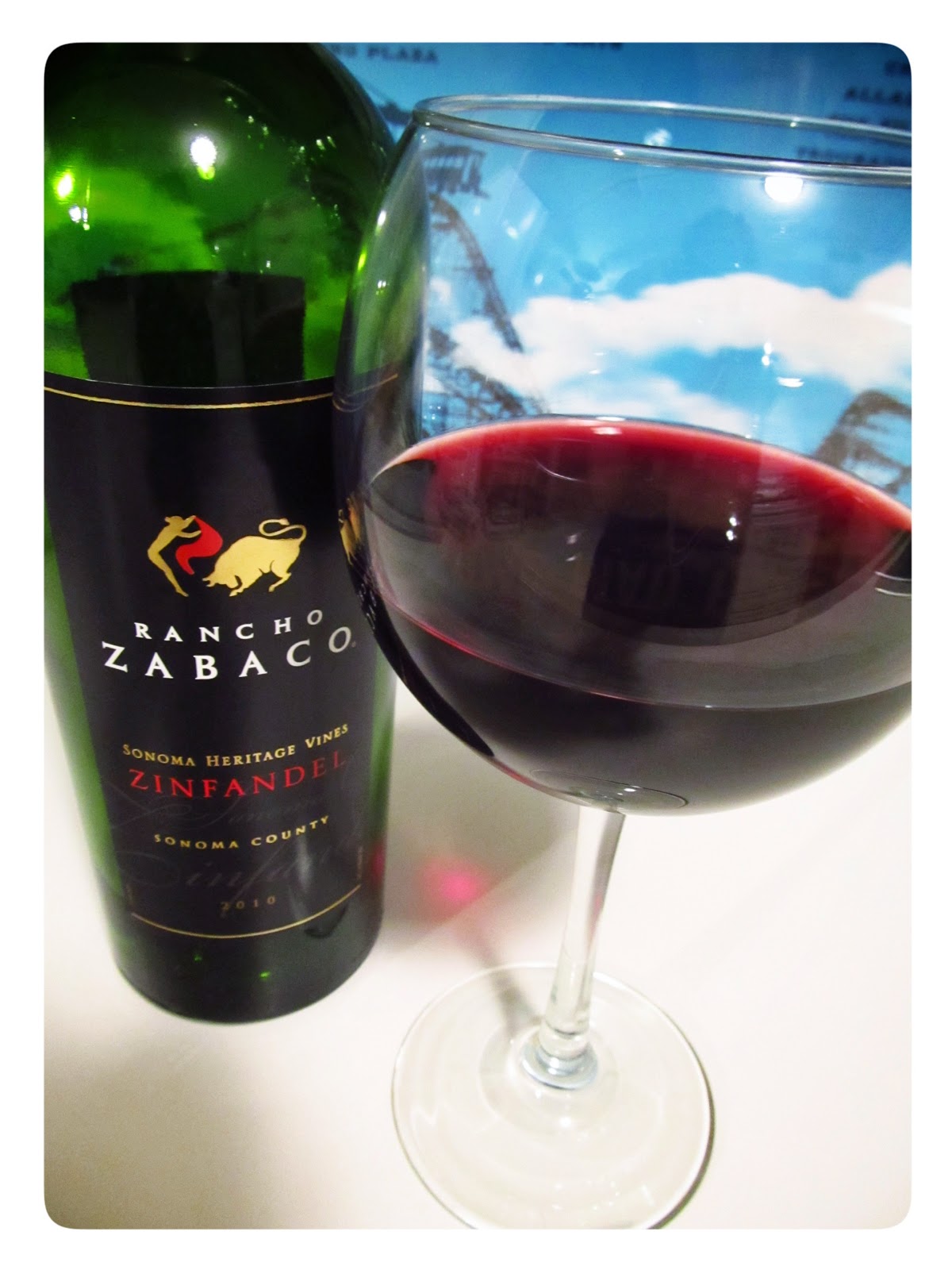
Rancho Zabaco Zinfandel, Sonoma Heritage Vines, Sonoma County, 2011, about $13:  Inky and brooding to look upon, but bright and brisk to taste.   Aromas of blueberry syrup, black cherries dipped in chocolate, vanilla and some elusive Indian spice—not cinnamon (apologies, Eric), perhaps cardamom.  In any case, it’s a youthful, fruit-focused zin with touches of caramel and vanilla; silky in the mouth and a moderately long finish.  A beautiful wine for the price.

Posted in Dry Creek, Zinfandel | Tagged , , , , , | 3 Comments

Eenie, Meenie, Santorini: Wines To Serve With Prawn Linguini

L.: Olympians.  R.: Zombies

L.: Olympians. R.: Zombies

120 miles southwest of mainland Greece there is a wisp of an island upon which mighty things have happened, are happening, and—the Twelve Olympians willing—will continue to happen long after you and I are riding point during the zombie apocalypse.

Although its official name is Thira, most of the world has referred to it as ‘Santorini’ since the third century AD when Fourth Crusade snatched it the Byzantine Empire and re-named it in honor of  St. Irene—a non-Olympian for sure.

santorini_geography from air

Stem to stern, Santorini is all of 35 square miles in size—roughly the same as Manhattan.  But unlike the Big Apple, whose population density is around 70,000 per square mile the Big Assyrtiko Grape spreads them a bit thinner at 400/ sq. mi., and the fifteen thousand people who call the Cycladean archipelago home boast a heritage that has survived earthquakes, volcanoes, droughts, pissed-off Christians and collapsing Minoan ruins, and are riding out the current Greek economic implosion with steeze and swagger.  Among the most popular tourist destinations on the planet (voted the world’s ‘best’ island by Travel + Leisure magazine in 2011) Santorini continues to float upon a cash-flow bubble while the rest of the country watches salaries and pensions fade into an Ionian sunset.

And one of the reason is Santorini’s unique, volcanic wine.

Greco-Roman Style

Marco Sanudo

Marco Sanudo

Wine has been a cultural backbone in Santorini for as long as history has been recorded, but it wasn’t until the Italians stuck their boot into the barrel that things began to heat up.  One of the Fourth Crusade’s leaders was a wealthy Venetian called Marco Sanudo, and he wound up in control of the Cyclades following the decision of the Holy Warriors to forego Jerusalem and sack Constantinople instead.  They did; they won; they took over the territorial portfolio.

Nephew of Venetian doge Enrico Dandolo, Sanudo was named first Duke of the Duchy of the Archipelago, and under his influence, the wines of Santorini began to be exported throughout the ancient world.

Like most of the world’s great wines, Santorini’s are the product of poor soil and a Mediterranean climate characterized by warm temperatures, low rainfall but high humidity during the growing season. During the Duke’s era, they proved to be unusually high in sugar and alcohol and as such  were particularly suited for long sea voyages.  So valued were they that, as Mick Jagger’s Start-Up girl could make a grown man cry and a dead man (intransitive verb meaning ‘to splooge’), Santorini’s wine could make a Muslim man millions—despite the Koran’s edict forbidding trading in alcohol.

Jagger and Jihad

Jagger and Jihad

Blaming the island’s lousy geography, which made other cash crops impractical, the Ottoman Turks—who captured the region in 1579—encouraged the wine industry, and in fact, when the Russian Orthodox Church made Santorini the official producer of Eucharistic wine, the Turks kept the pipeline flowing freely even though they were at war with Russia more years than not.

AAA: Indigenous Insurance, Baby…

Euphemus

Euphemus

Three ancient varietals are Santorini’s workhorse grapes: The triple ‘A’ gang of assyrtiko, athiri and aidani has been producing quality white wine essentially since Santorini was created by Poseidon’s son Euphemus as a place to hide his pregnant girlfriend.  Although they can now be found planted throughout Greece, nowhere does the  trio produce wines of such depth and complexity—due mainly to the unique Cycladean terroir. *

* French etymology notwithstanding, the Greeks invented ‘terroir’ as a selling point by stamping amphorae with the seal of their region of origin; different regions soon established individual reputations based on quality.

Assyrtiko

Assyrtiko

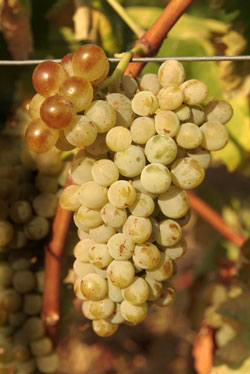
Assyrtiko is the premiere white grape of Santorini, prized for its productivity and versatility.  Not only did it first find life in Santorini, it has reached heights in this barren, river-free, shield-volcano complex that far outstrip the quality of assyrtiko grown on the mainland.  This the result of the easy-draining ash that makes of up the island’s soil; it’s called ‘aspa’ and not only is it rich in trace minerals, but its porosity seems to make Santorini vineyards impervious to the old enological enemy phylloxera.  As a result, you’ll find no grafted rootstock on Santorini, and some of the assyrtiko vines have been producing wine for three centuries.  Over the course of time, assyrtiko has developed certain unique characteristics found only here; most notably, when grown amid the black pumice and clay-free sand, the grape displays an extraordinary ability to maintain a natural equilibrium between acid and sugar, even when fully ripe.  Equally, the fog that envelops the island during the night—a consequence of the active volcano and sea water—is absorbed by the soil and transferred to the vine roots, giving these wines an intriguing note of brine, making it a sublime match for local seafood dishes.

Especially prawn linguini.

Athiri

Athiri

The lineage of athiri on Santorini may date back even further than assyrtiko; in fact, it is named for the island’s classical cognomen Thēra.  Vinified alone, athiri does not reach assyrtiko’s Olympian heights; it tends to work best as a blending grapes to temper the high acidity and alcohol of assyrtiko, especially in the production of vinsanto (about which more will be said directly).  It is in nearby Rhodes that the grape has found an ideal host habitat, and there it is used to produce not only a delicate, lemon-scented, highly-regarded single varietal wine, but Greece’s only Méthode Champenoise.

Snorting jasmine, faerie-style

Snorting jasmine, faerie-style

The last member of the Thira Three, aidani sports a profile somewhere between assyrtiko and athiri with moderate acidity and middling alcohol; it is also, often a component of vinsanto.   In blends, it lends aromatics to wines that might be otherwise light on the nose, especially the kind of floral scents associated with muscat (jasmine and honeysuckle) and the tropical fruit tones often seen in California chardonnay.

Vinsanto, on the other hand, has been the most widely celebrated and distributed of Santorini’s wines for thousands of years.  Don’t be guiled by the guidos—the Italians talk a good game when it comes to vinsanto, but any claim to them having invented it can be dispelled soon enough: Vinsanto is a contraction of ‘Vino di Santorini’.  Beside, in production methods, style and substance, both the Venetian version and the Tuscan translation are different beasts entirely.

Italian grapes drying

Italian grapes drying

For starters, Italians dry their chosen varietals—trebbiano and malvasia—on mats; indoors, in attics or under staircases, generally in darkness, while the Greeks spread their late-harvested assyrtiko (et al.) on hillsides outdoors and rely upon the benevolence of Apollo Helios to turn them into raisins—a much quicker process that gives vinsanto (as opposed to the two-word ‘vin santo’) its characteristic volatility.

Assyrtiko drying and St. Apollo, who dries them.

Assyrtiko drying and St. Apollo, who dries them.

The Italian incarnation is dubbed ‘Holy Wine’ because it is produced exclusively in the week preceding Easter, and it may be as dry and oxidized as oloroso sherry.  Greek vinsanto is naturally sweet, although it is a bit disingenuous to label it ‘dessert wine’ since the pronounced acidity makes it suitable for most courses.

In 2002, EU legislation found that there was sufficient evidence to prove vinsanto’s Santorini provenance and ruled that this Greek island was the only appellation in Europe able to label its sweet, sun-dried wines as such.

The Italians would have to settle for ‘vin santo’ or ‘vino santo’ or pound sand down a bingo-bongo bung-hole.

A couple other concepts round out Santorini’s remarkable and venerable wine traditions:

Making  brousko on Santorini

Making brousko on Santorini

Mezzo, a less cloying version of vinsanto, is made from partially raisined assyrtiko grapes—and obviously, without the sugar stasis, the wine tends to be overtly acidic and not really a Western palate-pleaser.

Brousko may date from the island’s Venetian occupation, but it is suitably up-to-date with its color-blind view of the world—it can be red, white or pink.  The word ‘brousko’ refers to a method more than a specific wine: To produce it, local grapes are held in bins for several days, then crushed by hand, which means foot and fermented with skins, stems and seeds included.  Brousko has mostly fallen from grace on Santorini, where free-run juice is now nearly de rigueur, and although it can still be found in isolated pockets around the island, it is not exported.

Cáilín álainn

Cáilín álainn

(The following wines were sampled through the courtesy of a distinctly non-Hellenic cailín beag I met when I ran the ‘Guess Your Name’ booth at the State Fair.  I will say that she is so overwhelmingly Irish-looking that I instantly guessed ‘Jen O’Flanagan’ and, you know what?

She didn’t win the six-foot stuffed Scooby Doo.  I did.)

Tasting Notes:

Hatzidakis Dry White, Santorini, 2010, about $20:  Surprisingly full-bodied, this blend of the tried ‘n’ true triumvirate (assyrtiko, athiri and aidani for those who have been nodding out) offers a full range of lemon and lime flavors rounded out with some chalky brine, unripe peach, honeysuckle and a vibrant, bracing bite of acidity.

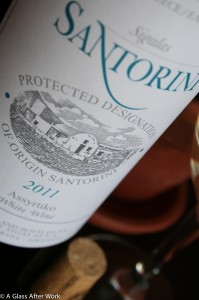
2011-Domaine-Sigalas-Assyrtiko-199x300Domaine Sigalas Assyrtiko, Santorini, 2011, around $20:  Sharp and shivery, the wine exhibits a nose that is predominately citrus—lemon peel in particular with whiffs of peach and pomelo.  Dryza-bone but with contrasting notes of honey and saltiness; a sensational mealtime bevvie (see recipe) with high-toned minerality and a bit of oak on the finish.

San Torini Vinsanto, Santorini, 2005, about $35 (500ml.):  Textbook vinsanto, only with so many footnotes and citations that you’ll spend a lot of wonderful time working out the coppery-red complexities.  There’s fig, espresso, kirsch and hazelnut in the nose, coffee and toffee mid-palate, everything drizzled with honey and lemon.  It would sit well with a caramel-based dessert, but I tried it with pumpkin soup and it proved to be a perfect pairing.

*

Garlic Prawn Linguini

  • 1 lb. linguine
  • 2 tbsp. butter
  • 3 tbsp Santorini Assyrtiko
  • 1 tbsp. Parmesan cheese
  • 3 cloves garlic, minced
  • small handful chopped fresh parsley
  • salt and freshly ground black pepper to taste
  • 1 ¼ lbs. fresh prawns, peeled and deveined

Prep:

prawn1. Bring a large pot of lightly salted water to a boil. Add pasta and cook for 8 to 10 minutes or until al dente; drain.

2. In a frying pan, melt butter over medium low heat; add wine, cheese, garlic, parsley and salt and pepper to taste. Simmer over low heat for 3 to 5 minutes, stirring frequently.

3. Increase heat to medium high and add prawns to pan; cook for 3 to 4 minutes or until prawns begins to turn pink. Do not overcook.

4. Divide pasta into portions and spoon sauce and prawns on top; garnish with Parmesan cheese and fresh parsley.

Posted in GREECE | Tagged , , , , , | 2 Comments