Idiart Savant

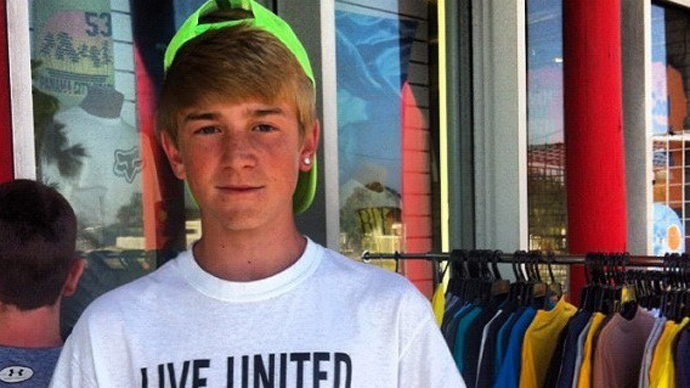
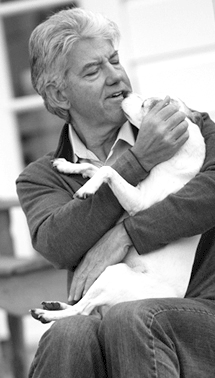
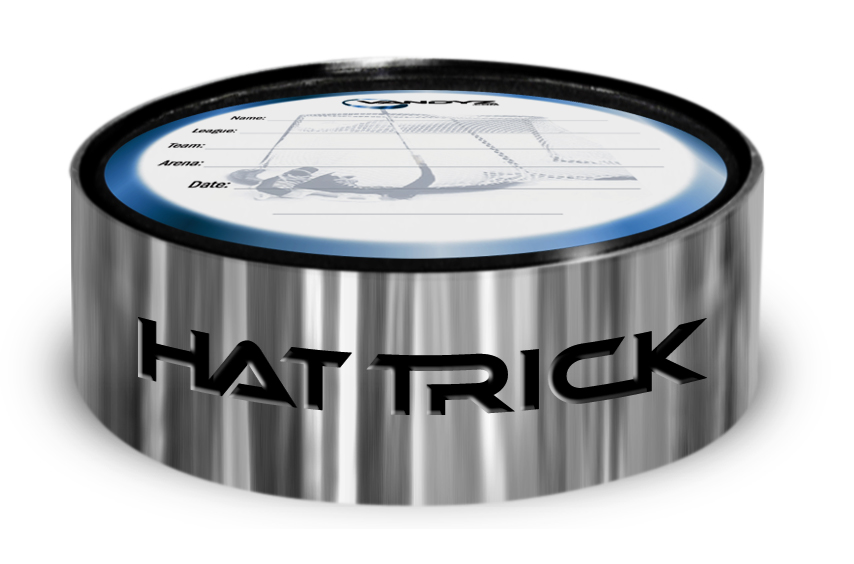
Nicolas Idiart has one of those strikingly handsome, masculine faces that makes even straight guys sit up and take notice, then recalculate our own sad position on that irrelevant ladder of total relevance, realizing that we’ve just moved down another rung.

Nicolas Idiart

Nicolas Idiart

Plus, he can make wine like a BAMF, pinning down the bare-bones magnificence of three of my favorite grapes from one of my favorite wine regions, Loire.  Blatantly obviously within the quartet of Idiart wines I tasted was a solid understanding of Loire terroirs, pure as the driven terre blanche and no need for manscaping, Grecian Formula 2 or whatever else it is we lower-rung metrosexuals do for attention.

Idiart is the youngest graduate of Bordeaux’s prestigious Ecole du Vin at Blanquefort, and today, only thirty-three years old, he has assembled an imposing résumé that includes winemaking in New Zealand and Australia, wine sales in the United States and now, his own artisan portfolio under the Maison Nicolas Idiart imprint.  I tinkled glassware with him yesterday afternoon, and was suitably blown away by his clean, expressive Loire lineup—as pure a portfolio of unadorned, revelatory wines from this often-overlooked sliver of northwestern France as has lightened my doors in years.

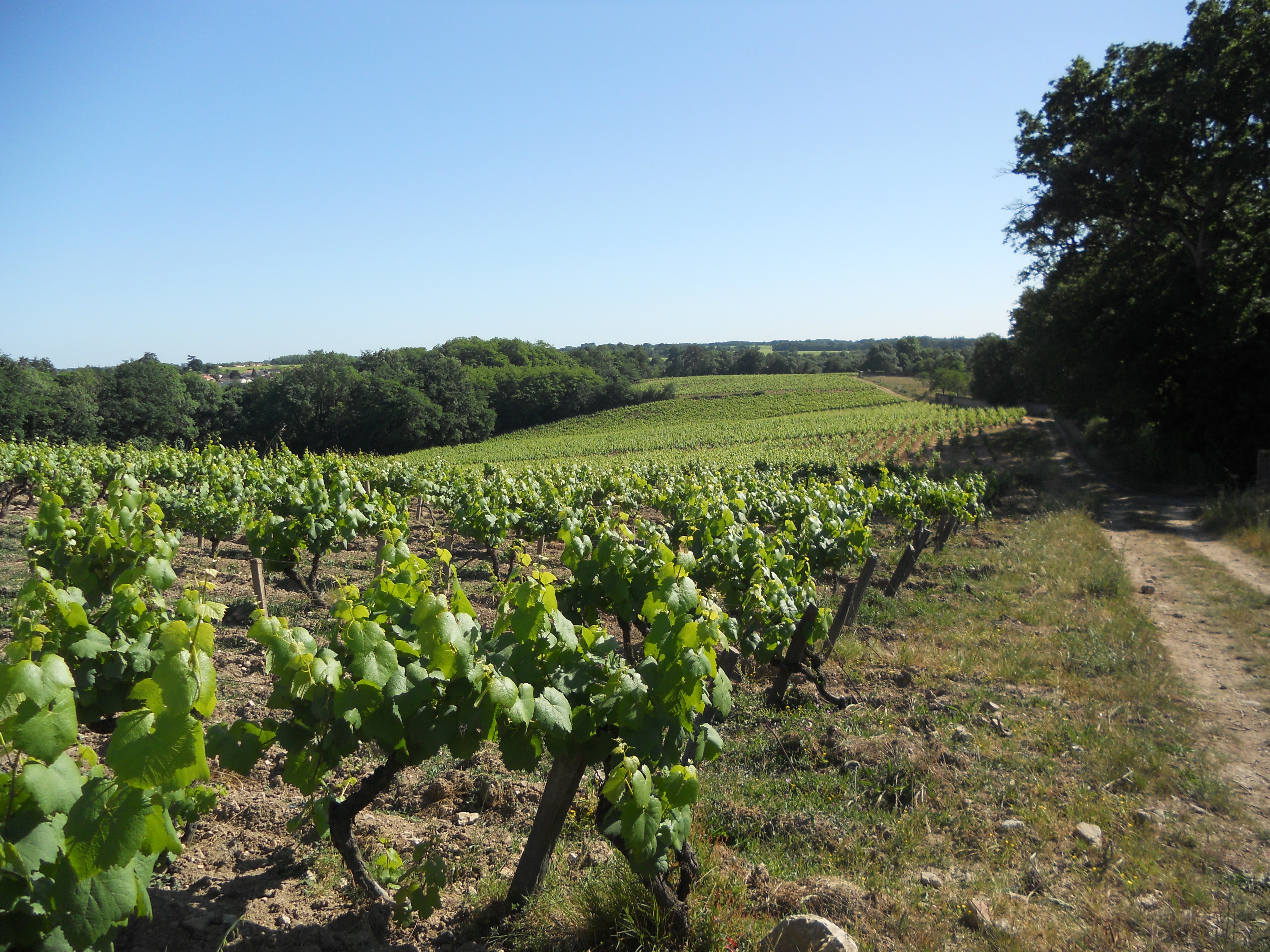
Muscadet vineyard

Muscadet vineyard

Maison Nicolas Idiart Muscadet-Sèvre et Maine Sur Lie, 2013, around $15:  Green-tinted and grand, flinty and filled with finesse; the wine shows crisp lemony alacrity, a touch of salinity, a little peach and a lot of cleansing damp stone throughout.  That may in part be down to the mica schist upon which the melon de Bourgogne vines thrive; Muscadet may come from any of several, ancient, many-layered soils, and this one produces a distinct minerality that cleanses the palate and shivers the timbers.

Maison Nicolas Idiart Sauvignon Blanc, 2013, around $14:  A sumptuous, affordable introduction to Loire’s adroitness with sauvignon blanc, the second of the three white wine grapes that make up the bulk of its planted acreage—or hectarage, or whatever.  The wine is from Touraine, and from juice that was either free-flow or from the first pressing, leading to a lot of grapefruit sweetness in the bouquet and palate and not so much of the herbaceous grassiness that may dominate in this variety.  Having made singular wines from this grape in New Zealand, he learned that much of the overblown headiness in those classic Marlborough blockbusters tends to fade in a year or two, he chooses a brighter, more restrained fermentation, which develops an undercurrent of citrus and gooseberry flavors.

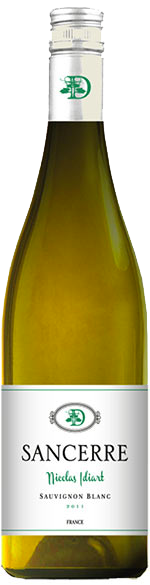
sancerreMaison Nicolas Idiart Sancerre, 2013, around $28:  Sancerre—a village in Loire’s eastern half and opposite Pouilly-Fumé along the river—is home to one of the world’s classic interpretations of sauvignon blanc.  Idiart refers to his as ‘porcelain-like’ and I can find no better descriptor.  Planted on dry, chalky caillote, the wine is both delicate and full; pristine with clear notes of lemon, a slightly smokiness and a grapefruit rind in the lengthy finish.  There’s not a trace of oxidation, (to which the grape juice is susceptible) and which sometimes makes these wines (from lesser producers) take on notes of canned peas; rather, the clarity and precision of purpose is astonishing.

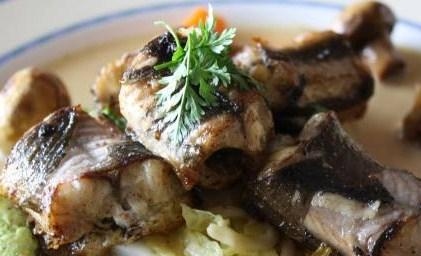
Matelote d’Anguilles.

Matelote d’Anguilles.

Maison Nicolas Idiart Pinot Noir, 2013, around $14:  If you’ve got fourteen bucks to spend on pinot noir and choose to spend it on some thin, mass-produced, bitter pinot that is—more than likely—25% not pinot noir, the inmates have already taken over the asylum.  Idiart’s pinot is light and wonderfully refreshing, showing all the nuanced angles of a decent Burgundy—black cherries, earth and an intriguing meatiness—if none of the brooding depth.  It’s a wine that calls out for seafood; ideally, fresh Loire River eel stewed in red wine—the local favorite called Matelote d’Anguilles.


Posted in Loire | Tagged , , , , | Leave a comment

Rudy Kurniawan: Orange Is The New Burgundy

L. Rudy R. Howdy-Doody

L. Rudy
R. Howdy-Doody

On Thursday, August 7, 2014, Rudy Kurniawan was sentenced to ten years in prison for selling counterfeit wine to rich people, who did not notice that the wine inside the fancy bottles they bought was fake because they did not buy it to drink it, they bought it to sell it to other richer people for even more money.

Total damage was estimated to be in the neighborhood of $30 million.

Lesson learned, kiddo?  Do not fuck with rich people’s money.

Rich drunk jizz stain, Ethan Couch.

Rich drunk jizz-stain Ethan Couch.

I say that while pointing out another high-profile 2014 case involving rich people; namely, affluenza-victim Ethan Couch, a rich Texas teen who got plastered on stolen (but non-counterfeit) Wal-Mart beer and—sans driver’s license—drove a Ford 350 into a stalled vehicle, which was rammed into another vehicle, which crashed into another vehicle, and when the dust had cleared, four people lay dead, none of them named Couch.

For that lapse of judgment, the poor little rich boy also received ten years…

Of probation.

Rudy, Rudy, Rudy…

Mrs. Kurniawan has been reduced to smoking old stogies she has found.  Fat, but not too big around.

Mrs. Kurniawan has been reduced to smoking old stogies she has found.  Short, but not too big around.

Well, nobody is shedding tears for Kurniawan, not even those close enough to him to be able to pronounce his name, not even his mother, who used to be a rich person until Rudy spent $40 million of the family shekels on wine.  That might have been okay, except that rather than enjoy it, he figured out how to make fake labels, fake cork stamps and fake bottle waxings and now owes $30 million in restitution on top of the $20 million the feds seized.  You don’t need to be an investment banker to figure out that even if some dolt buys Rudy’s cellar at face value, this leaves the Kurniawan klan with a net loss of ten mil.  Ouch; I’m sure Mrs. K. hasn’t been so broody or moody since Rudy made a doody inside his prep school suity.

His dense defense, by the way, begged for leniency because he ripped off rich people instead of poor people.  Talk about a lawyer who just… doesn’t… get it.

If it looks like a Koch, smells like a Koch...

If it looks like a Koch, smells like a Koch…

Among the wealthy investors scammed by the 37-year-old Indonesian-Chinese con man was billionaire William Koch—the non-political Koch Brother—who admits to having been hoodwinked for $2.1 million in fake Kurniawan wine, including a bogus 1949 Chateau Lafleur and an ersatz 1947 Chateau Petrus.

Since then, smarting from his dumbness, Koch claims to have spent $25 million investigating fraudulent wine.

$25 million?  You don’t need to be a commodity trader to figure out that even if he is reimbursed, this leaves Koch with a net loss of $22.9 million.

Calling Koch a sucker would be too obvious?

An open letter to rich people: 

Due diligence is worth its weight in Clos St. Denis Cuvée Très Vieilles Vignes, especially from vintages where they actually produced it.

Love, Your Life Coach; Hell, Norway. 

Among Rudy’s more infamous noose-tightening screw-ups included trying to auction bottles of Domaine Ponsot Clos Saint-Denis from the 1940s when the winery didn’t start producing from the appellation until 1982.  He did it again in 2006, consigning six bottles of Georges Roumier Bonnes Mares 1923, a year before the Chambolle-Musigny domaine was founded.

Adding insult to injury, he consigned so many cases of diddled Domaine de la Romanée-Conti (unbeknownst to the diddlees) that he became known as ‘Dr. Conti’.

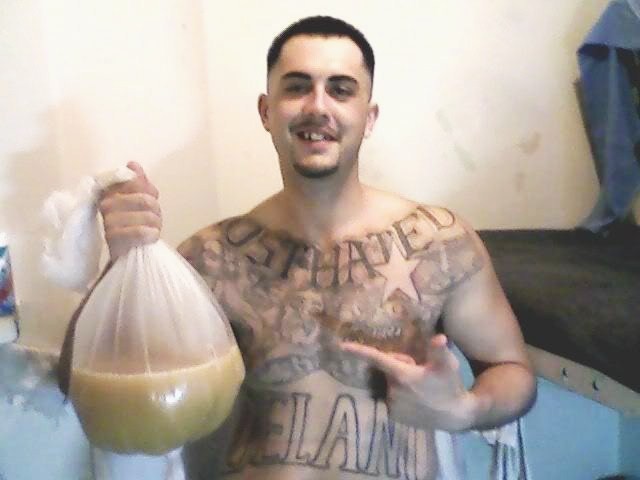
‘Pruno, Here I Come…’

Rude boy awaiting Rudy's arrival.

Pruno-proud rude boy awaiting Rudy’s arrival.

All of which resulted in snooty Rudy consigning his beauty bootie to the penal tutti-frutti, where his first rudy awakening will be to discover that, whereas prisons have an Aryan Nation clique, a Black Power crew, a La Raza and even a Vietnamese syndicate, there are, alas, no Indonesian Chinese gangs he can join.

However, there is light at the end of his decade-long, protection-free tunnel.  He may find that his mastery of mixology can be useful in concocting that most sought after of hoosegow hootch, pruno, generally made with stuff you find laying around the commissary—ketchup, candy and fruit cocktail juice fermented with the yeast from squished-up pieces of bread.

"Call this punishment??"

“Call this punishment??”

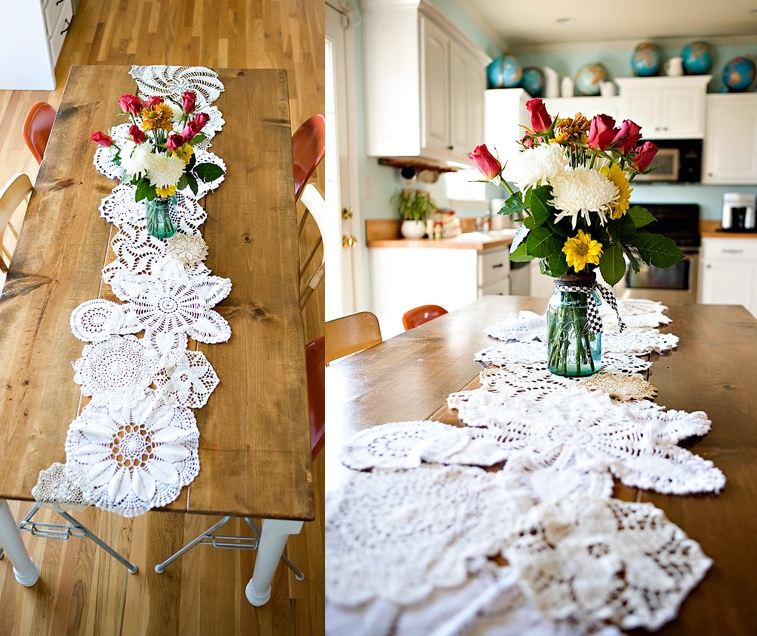
Since, as Dr. Conti will no doubt discover, this beverage is as good as Blue Chip stocks in the gen pop black market, his ability to fake real pruno should make him as valued a prison commodity as Martha Stewart was with her do-it-yourself cell phones made from Q-Tips, twist-ties and those prison-issued maximum security doilies that Tea Party conservatives are always bitching about.

Since a standard substitute used in counterfeit pruno is botulism-flavored vomit, I have no doubt that anyone with Kurniawan’s think-on-his-feet inventiveness will have no problem finding a niche in the ol’ bastille.

Unless, of course, his breeding gets the better of him and he accidentally labels it ‘Pruneaux’.

Posted in GENERAL | Tagged , , | Leave a comment

The Hoopes Scoop: Elegance In Oakville

I’ll spare you the ‘jumping through hoops’ groaner: No need.  The wine is above such puerile puns, the label notwithstanding.

prodigyHoopes Family Vineyard reminds me of one of those prodigy kids who realizes she was born with an extraordinary gift—athletics, math, violinity, whatever—and runs with it.  Does not stumble, succumb to fame, dip into the drug stash or lose sight of focus, but develops said talent in logical, almost pre-ordained steps all the way up the ladder.

I say ‘she’ because, in 2014, Hoopes is very much an estrogen-drenched operation, but I’ll get to that.

That's Spencer Hoopes upper left.

That’s Spencer Hoopes upper left.

A decade before Oakville became a federally recognized AVA, Spencer Hoopes—a farmer with a name like a farmer in a Steinbeck novel—bought ten acres of land in the Napa River bench land and set out to grow what then, as now, was the region’s cash cow—cabernet sauvignon.

He wasn’t alone in his choice of cultivar of course, but his choice of grafting stock was somewhat unusual.  He planted on St. George rootstock, known to be low yielding but hearty—a risk that paid off when phylloxera—the Black Plague of viticulture—dropped in, and many of his neighbors lost their vines.  His survived, and most of them are still producing, making them among the oldest cabernet vines in Oakville.

In 1993, the AVA was approved as a two-mile-wide swath of Napa Valley rising to about 600 feet in elevation up the bases of the Vaca and Mayacamas Mountains.  It’s fair to say that the concentration of top cabernet producers here is startling: Oakville is home to Opus One, Far Niente, Heitz Martha’s Vineyard along with about fifty other, mostly boutique-sized producers of California’s most sought after cabernets.

liparita v block 09Hoopes spent seventeen years selling premium cabernet grapes to nearly all the big-name window-dressers in Oakville and Yountville, but finally decided to release his own label in 1999.  Six years later he upped the ante by reviving the Liparita name, a century-old winery which had pioneered appellation-specific Napa wines.  Press has been steady and phenomenal for both brands, and can they justly claim bragging rights to being reminiscent of (according to Anthony Dias Blue) Screaming Eagle—a wine that retails for ten times as much.

In 2013, Spencer Hoopes turned the managerial reins of the winery to his daughter Lindsay, and is the front-of-the-house estrogen I alluded to earlier; back-of-the-house is winemaker Anne Vawter, and apparently, under-the-table are a couple of female rescue dogs.  Dogs being a welcome winery mascot, as the label clearly indicates.

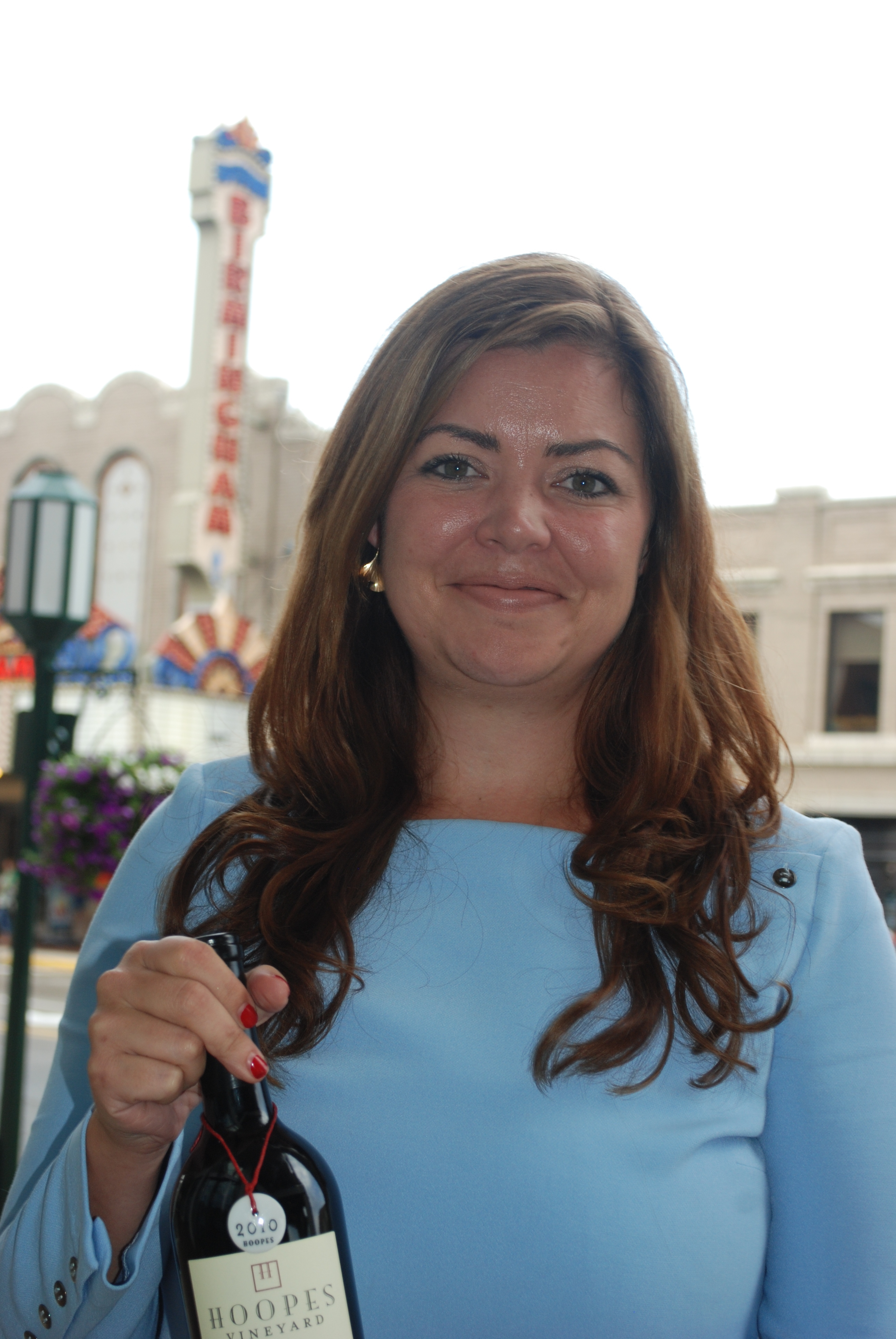
Lindsay Hoopes in B'ham.

Lindsay Hoopes in B’ham.

I was fortune enough to meet Lindsay in downtown Birmingham for a tasting of current releases. She is forceful and funny, and appears poised to launch the label into a new era:  “We’re making the transition to a more elegant, less extracted style which shows off the unique fruit we’re capable of growing.  We’ve always been somewhat old school in our vineyard—we keep our rows 12 feet apart without traditional trellising.  Plus, our location is such that when the Napa River floods, we get new deposits of topsoil every year; with that kind of fertility and old vines we can harvest at five tons an acre.  That allows us to keep our wines affordable while showcasing the inherent elegance of our cab; soft acids, great fruit projecting unique minerality.”

And—humor me, s’il vous plaît —I’d say that Screaming Eagle-ish cab at Oakville Ranch prices is worth two round hoops and a holler squared.

Tasting Notes (Other than the 2012, these wines were made by Anne Vawter’s predecessor, Jason Fisher):

Hoopes ‘Hoopla’ Chardonnay, 2012, about $20:  This is the kind of chardonnay that drives Francophiles bonkers:  It is clean and totally unoaked, rich with syrupy pear notes and natural butter held aloft by steely acidity; in-your-face without smacking you in the kisser.  Lees aging rounds out the variety’s fundamental creaminess without resorting to ponderousness of some Napa oak-fermented, oak-aged chards.

Okay, so the label is a year off.

Okay, so the label is a year off.

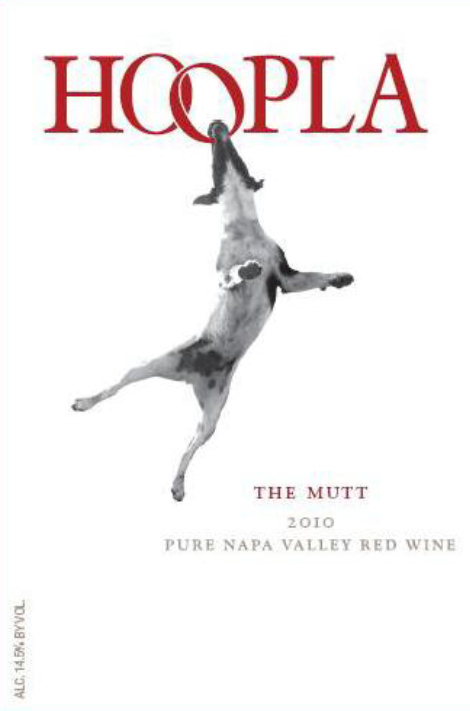
Hoopes ‘Hoopla—‘The Mutt’ (Red), 2011, around $30:  A huge, berry-scented mouthful; a blend of mostly cab, with merlot and petit sirah in supporting roles.  Silky but crisp with wild blackberry and currant, the wine shows ripe fruit and ripe tannins and is a bargain at the price point—more so than the name, cute as it may be, might suggest.

Liparita Cabernet Sauvignon, Oakville, 2010, around $60:  The ghost is smoking hot and very much alive—rattling the chains, even.  A big, beautiful wallop of bright red fruit, bracing acidity, pure tannins and a heart that reflects the richness that only optimally ripe cab can show.

Liparita Cabernet Sauvignon V-Block, Yountville, 2010, about $60:  Terroir laid bare:  Same grape, same winemaker, totally different flavor profile with a much more pronounced minerality, and whether that’s ultimately down to soil of succinic acid is immaterial: It’s there.  The fruit feels softer in the mouth and the tannins move forward, settling under the upper lip, leaving the impression of a finely structured wine a few years away from total balance.  But, with other subtle flavors that should emerge with age, that is a plus.

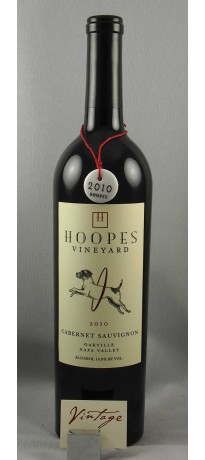
bottleHoopes Vineyard Cabernet Sauvignon, Oakville, 2010, around $65:  No need for comparison to iconic superlatives; it lessens the fact that the wine is benchmark to begin with.  Elegant indeed; aromas of smoky plum, spicy blackberry and Bing cherry up front; cedar, mocha and a touch of wild spice finding space in the rear. Unusual for its depth of fruit as well as the fact that unlike nearly all other cabs on the market, this is not a blend, but purely the product a single varietal. This is a vineyard that implicitly—and with justification—trusts its cab.


* Notes On Other People’s Notes:

(In doing my due diligence I noticed the following contrasting notes, which struck me as noteworthy enough to note with additional notes):


Jason Fisher

Jason Fisher

Winemaker’s Notes:  ‘The aromas from the glass are cherry, anise and dark chocolate. The initial taste sensations are classic Hoopes Cabernet, including cedar, tobacco, allspice and black fruits. This 2009 vintage reminds winemaker Jason Fisher of the great 1999 vintage – long, lush and shows integration of time and balance.

Like how the winemaker refers to himself in the third person, but not sure how a wine can, upon release, show the integration of time.

These are 92 point nails, WE.  Sorry.

These are 92 point nails, WE. Sorry.

Wine Enthusiast Notes:  “The tannins are tough as nails on this 100% Cabernet, so even though it has a beautiful core of blackberries and cassis, it isn’t drinkable now. Such is the purity of the structure that the wine should easily hold its own for 10–12 years, throwing sediment and gathering mellow sweetness. Cellar Selection”  92 Points,  Wine Enthusiast.

Hang on, WE.  How does an ‘undrinkable’ wine merit a 92? How does a review that begins with ‘The tannins are tough as nails’ end up with a mindblowing number the score column?  I get it, the wine should age well, but seriously, that is a wait-‘n’-see game, isn’t it?  Awarding 92 points to a wine that isn’t yet, but might someday be worth 92 point, is sort of an invalidation of the scale’s usefulness to begin with.


Posted in Cab/Merlot, CALIFORNIA, Napa, Oakville | Tagged , , , | 1 Comment

Adam Satchwell: Cracking The Lychee Nut

This may come as a surprise to those of you who have seen me strip naked in a restaurant to attract the attention of a laggardly server or wear a ‘Kill White People’ hoodie to a Klan rally or hire the bouncer at The Boom Boom Room to eject Jared Leto so I can move in on his date, but I tend to be a shy person.

Clipboard vert maeAs such, in a strategy recognized by shrinks as ‘compensation theory’, I tend to fall in love with big blowsy broads—the kind with personalities that dominate whatever room they’re in, thus challenge my Biblically-ordained virility and dominance—man-eaters like Mae West or Katy Perry or Lizzie Borden.

Ditto goes for wine.  Those dames I mentioned are way out of my league anyway; for them, I don’t even represent sloppy twelfths.  So, when I need a wine escort and have to ‘pay for it’, I want one with some meat on her bones; one with an oily, perfumed, often overbearing attitude; a soul sweet enough to crumble your molars but muscular enough to pulverize your spine.  And that’s when I booty-call my old Fräulein, The She-Wolf of Strasbourg, The Ballbuster of Bergheim, the white-wine-made-from-red-grapes-because-red-wine-is-made-from-purple-grapes, her Grand Ducal Highness, Lady Gewürztraminer.

And no, she doesn’t put out on a first date.

Nobody In Michigan Knows This Better Than Adam Satchwell…

How about the fifth date, Adam?  Apparently, based on my snort of Adam Satchwell’s 2012 gewürztraminer, five’s the charm.

adamAdam, of course, is the dude who puts the shady in Shady Lanes, one of Leelanau’s old guard wine folks and top producers of cool-climate vininfera.  He came to chilly Grand Traverse wine country in 2000 and has played an integral role in developing the area’s reputation from a frosty peninsula to world-class wine country.

As the recent ‘City of Riesling’ weekend proved, Northern Michigan has earned a spotlight on the world’s stage as a producer of elegant, nuanced and age-worthy rieslings that can make waves among the oceans of wine produced at the grape’s ground zero, Germany.

It would stand to reason (at least in my mind) that we should be able to create equally compelling wine from the mutated Alsatian traminer love child.

Gewürztraminer biding it's time.

Gewürztraminer biding it’s time.

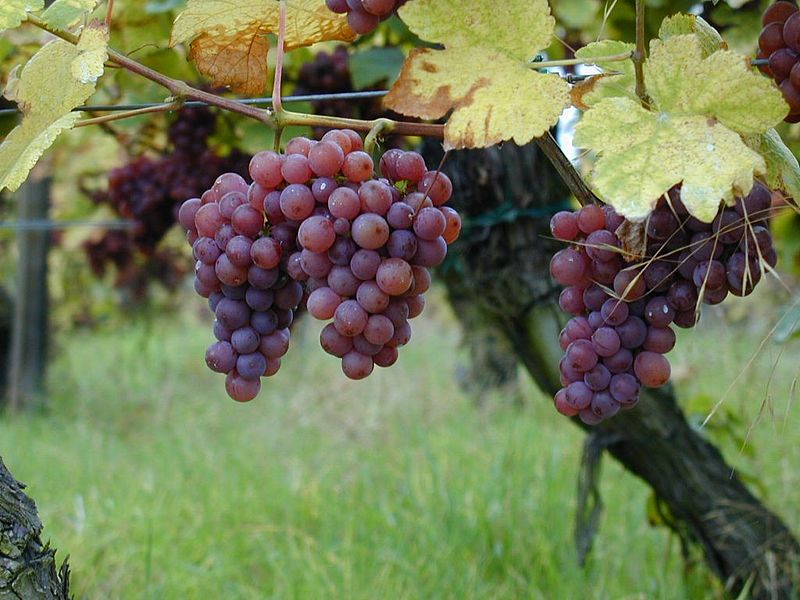
And yet, for the very reasons I overblew in the opening, gewürz is not everybody’s cup of porch pounder.  At its voluptuous prime, it makes a wine that is filled with aromas and flavors unlike any other; it shows big notes of sweet tangerine, oily, intense floral bouquets (which is why they are called ‘bouquets’)—roses, primarily—grapefruit, and above all, lychee nut, with which it shares a very distinct monoterpene called cis-rose oxide.

Which, to digress, is an interesting chemistry lesson for wine tasters.  Nearly all the scents you pull from a snifter and identify as pineapple or apple or peach—or lychee or rose—are, in fact, the very same chemicals that make those fruits smell and taste like they do.  Mother Nature doles out her cornucopia with a certain, delightful frugality.

jennifer-lopez-buttIn any case, gewürztraminer is to wine what Jennifer Lopez’s badonkadonk is to pulchritutidy; brobdingnagian, bountiful, beautiful—but not to every waif-cravin’ heroin-chic-lovin’ boy’s taste.  Plus, it is hard to pronounce.  As a result, there’s no ready market for it, and it has been an ongoing pet experiment among a few Northern Michigan winemakers, but one which had not, in my various samplings, yet climbed out of the test tube and come to life.

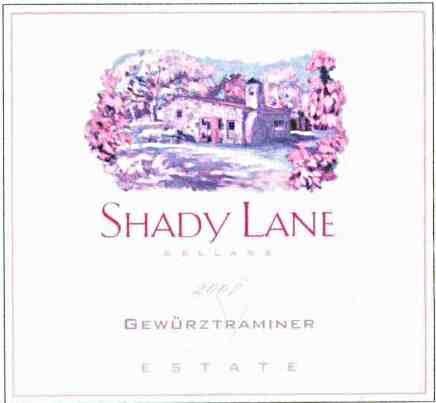
And then I tried Shady Lane Gewürztraminer, 2012, and on came the Super Arc klieg lights, center stage.  Superb; concentrated, with potent perfume showing sweet mandarin orange, pronounced rose petals, exotic tropical fruits and in the mouth, the pure and clean lycheeness of lychee—nothing else tastes like this.  I concluded that for whatever combination of reasons—clones, climate, cleverness and/or a cluster of clues finally clicking—this wine is living proof that the nut’s been cracked: Gewürztraminer has found a unique home among the peninsula and may ultimate muscle her way to a starring role.

“It was a long journey and several years,” Satchwell admits.  “There are a lot of inherent pitfalls with this grape.  Bitterness, high pH and especially, balance: With the multitude of unique aromatics and flavors inside gewürztraminer, there’s a danger of over expression of one component at the expense of another.”

Clone 1 and Clone 2

Clone 1 and Clone 2

Luck and wisdom served him from the outset, however, when he chose to plant the two (then) available clones of the cultivar—called, like those goofy little Cat In The Hat sidekicks, ‘One’ and ‘Two’.  “I planted in 2004, and the first harvest, in 2007, I vinified bone dry.  I liked it, and so did about two other people.  It was parental pride mostly—the wine was prey to all the dangers I was worried about; the phenolics were out of whack.  It showed promise, but needed work.”

2008 was not the year either; the fruit didn’t set, the crop was dismal and he wound up purchasing grapes from a neighboring vineyard.  In 2009 nature was a tad more cooperative and he finished the wine at about 1% residual sugar, allowing some of the subtle, sweet citrus and gingerbread flavors—showing vine maturity—to surface.

label2010 and 2011’s wine came across as excessively floral, however, with the rose-oil terpenes running a bit amuck (as you might expect of One and Two).  He spoke to growers in Alsace, re-thought his canopy management, and voilà—2012 produced a wine where every contrasting odorizers and flavonoids decided to settle down, take their seats and listen to the professor.  They only speak in turns, and then dutifully and only when called upon.

Is Adam Satchwell’s 2012 Shady Lane Gewürztraminer the equal of those from the Grand Crus of Domaine René Muré, Willm, Zind-Humbrecht or Pierre Frick?  Not hardly.  But these great estates have been breaking the sandstone and schist for hundreds of years through many generations.  Adam’s taking notes along with the class.

Clipboard joe“One thing I noticed in 2012—for the first time since planting—the berries from each of the two clones showed a remarkable difference: In Clone One, the classic rose notes dominated, while in Clone Two, it was the lychee flavors.  This can only be down to vine age.  In the early and mid-fermentation process, the must threw off new, odd scents of banana and the waxy wrappers from Bazooka Joe bubblegum, but these turned out to be ‘precursor’ scents and settled into a nice, rounded spice.”

The learning curve is remarkable, and although last winter was the most severe test of the appellation’s ability to recover from a really savage season, Satchwell’s vineyards—including the frost-susceptible gewürz—were down, but not for the count.  And neither were the winemakers.

Of course, I’d expect no less from Adam Satchwell—a persevering pioneer on this plucky, polar promontory.

Posted in Gewurztraminer, Michigan, MIDWEST | Tagged , , , | Leave a comment

Turning On The Pigott Spigot In The ‘City Of Riesling’

cherries photoFor a place that bills itself as the City of Riesling, Traverse City spends a lot of time sleeping with the enemy.  For example, browse the tree-lined heart of the shopping district and look for chocolate covered grapes at Riesling Republic; try to find riesling-flavored balsamic vinegar at Fustini’s or riesling fudge at Murdick’s.  Guess what?  You’ll strike out.  Go on a quest for riesling popcorn, dried riesling, riesling sorbet, riesling milkshakes?  Zero.  Nor is there is a sportswear shop called Riesling Hill Boutique or a Riesling Cone ice cream parlor.  In the window of the camera shop, that silly smiley-face icon—which everybody knows is, by birth, bile-yellow—has not been transformed into a gentle seafoam riesling green, but into blood-colored—and dare I say Commie-approved—red.

Young Charles Edward Stuart L_tcm4-563619Sorry whoever thought of the poetic nickname ‘City of Riesling’ for Traverse City; the merchants, whistle-stopping politicians and founding fathers aren’t buying into it.  To them, TC will always be Metropolis of Montmorency, Port Prunus Cerasus, Cherryville U.S.A., and as a result, riesling is the Bonny Prince Charlie of fruit: An ignominious pretender.

None of which matters to Mr. Riesling himself, although clearly, it should.  To Stuart Pigott, revered as the world’s foremost expert on riesling—the grape that puts the fine wine in the Rhine, the pizzazz in the Alsazz and the thumbs up in Finger Lakes—life is just a bowl of cherries.
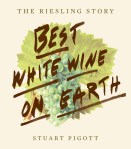
bookOn Saturday evening, I fetched Pigott from the TC landing strip—which is not, lest you doubt the sincerity of my opening lament, called Riesling Capital Airport—and deposited him with his sponsor Amanda Danielson of The Franklin.  Pigott was in town to host a screening of his film ‘WATCH YOUR BACK: The Riesling Movie’ and star in a Horizon Book signing of his new book. ‘Best White Wine On Earth’—which, surprisingly, in his studied opinion, is not made from la méthode saignée juice from local cherries.

Anyway, Pigott is hardly an unknown author—he has written a slew of wine books—and is a columnist for the Frankfurter Allgemeine Zeitung, which he claims is Germany’s equivalent of The New York Times.  Even so, I fear that your average happy-go-lucky, Traverse-City-vacationing, up-from-Grand-Rapids yuckster likely reads neither one, and I can say from experience that there is no sadder circumstance on earth for a writer than sitting in a bookstore hoping someone wants an autograph.

Strike that.  I just thought of a circumstance on earth sadder than that for a writer, but I’ll save it for later.

Bonnie Prince Stuart and bonnier Princess Amanda.

Bonnie Prince Stuart and bonnier Princess Amanda.

Long before any book signings or movie screenings, I had the opportunity to interview Stuart Pigott and to tap into his vast riesling knowledge by employing méthode saignée to his brain pan.  And also to tease him about his sports coat—mostly because, based on his fluency in German I assumed he was German, and when I was looking for him in the airport I singled him out by employing a generally foolproof method of identifying a Berlin journalist amid a maelstrom of Midwesterners: An Aryan fashion statement.  Indeed, the loudest, red plaid jacket in the crowd turned out to be worn by Stuart Pigott and I was forthwith shocked to discover that Pigott is, in fact, British.
Riesling-flavored heroin

Riesling-flavored heroin

Even so, that shock was no match for Amanda’s expression when I cracked wise-ass about his hemorrhage-colored tartan during the interview—I don’t imagine her jaw would have dropped quicker if I had announced that I was actually a drug journalist in town to score some riesling-flavored heroin.

In any case, the social awkwardness faded like a snort of unleaded premium in a Trockenbeerenauslese, and Stuart Pigott proceeded to school me mightily in why he believes that riesling is a superior wine grape to say, scuppernong or muscadine.
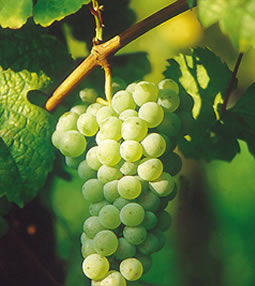
Riesling-flavored riesling

Riesling-flavored riesling

For starters, he insists, unadorned and unbastardized by corporate mad men, riesling simply produces a better-tasting wine—a wine simultaneously refreshing in its simplicity and (when done correctly) nearly unplumbable in its profoundness.  Having already telegraphed disdain for couture, Pigott rails against the recent fashionability of certain varietals, especially sauvignon blanc and moscato, which he sees being industrialized to mass-produce uninteresting, homogenous ‘identikit’ wines.  Chardonnay, of course, is the poster child for trendy tipples, and is specially reserved—no pun, winos—for a proper prescription of Pigott pique.  He has invented the subcategory ‘Bullshit Chardonnay’ to describe wines that mask the grape’s inherent blandness by the addition of concentrated juice from other, more gooder-smelling grapes.

A Pope costume is even funnier than a German person costume

A Pope costume is even funnier than a German person costume

As The Pope of Riesling (Pigott’s other sobriquet) points out, not only is riesling the most pleasantly perfumed of grapes, the most adroit of grapes and the most food-friendly of grapes, it remains the most affordable in terms of a price/quality balance.  Although you can bust a billfold for the really aristocratic stuff, the amount of remarkable riesling available for under twenty dollars puts it into a whole different value grid than, perhaps, the rarified swank of lone-variety Burgundies or those expensive and exclusive 100% syrah Rhônes.

Another fact that impresses Pigott is the relatively recent American excitement over his pet cultivar.  Riesling, he says (quoting Nielsen data), has been the fasting growing varietal in the United States for five years running.

“The status of wine overall in America fascinates,” he maintains.  “It isn’t one of iconic items that most Americans identify with themselves, their nationality, although the growth of wine’s U.S. popularity is so exponential that you are now the biggest wine consumer in the world.”

Describing America’s headlong foray into riesling, Pope Pigott I coins a gung-ho marketing hook—‘The United States of Riesling’—to identify a prime production belt that arcs from Finger Lakes in New York through Northern Michigan and to the Pacific Rim, especially Washington’s Columbia Valley.

“The production of sensational riesling has tracked the appreciation of wine overall, and America now boasts rieslings that are serious competition to those from the grape’s European homeland.”

The Caliph of Phuck and corporate sponsors.

The Caliph of Phuck and un-American corporate sponsors.

Pigott, a.k.a, The Ambassador of Auslese, met Sean O’Keefe—perhaps the area’s most vocal riesling supporter—at Riesling Rendezvous 2000 in Seattle and was moderately impressed, if not blown out of the tub, by what the twin peninsulas of Leelanau and Old Mission were bottling.  And it was O’Keefe, along with Amanda Danielson, who organized this past riesling-centered weekend in Traverse City, hauling The Rajah of Riesling in from the Big Apple (where Pigott now resides) and setting him up in the adorable Bijou on the Bay theater to screen his documentary, which is, let’s be honest, not exactly Cannes material, but certainly a fun and educational opportunity to watch Paul ‘Mr. Terroir’ Grieco say ‘fuck’ and ‘shit’ like a giddy tenth-grader in wine venues across the USA.

No matter the movie; the intro saved the day: Pigott is entertaining as a public speaker and his witty stage banter was worth the price of admission, and it can be fairly reported that he drops the f-bomb only when necessary, and thence, with all the erudition and charm of a genteel English gentleman.

A true journalist never sweats.  He 'afterglows'.

A true journalist never sweats. He ‘afterglows’.

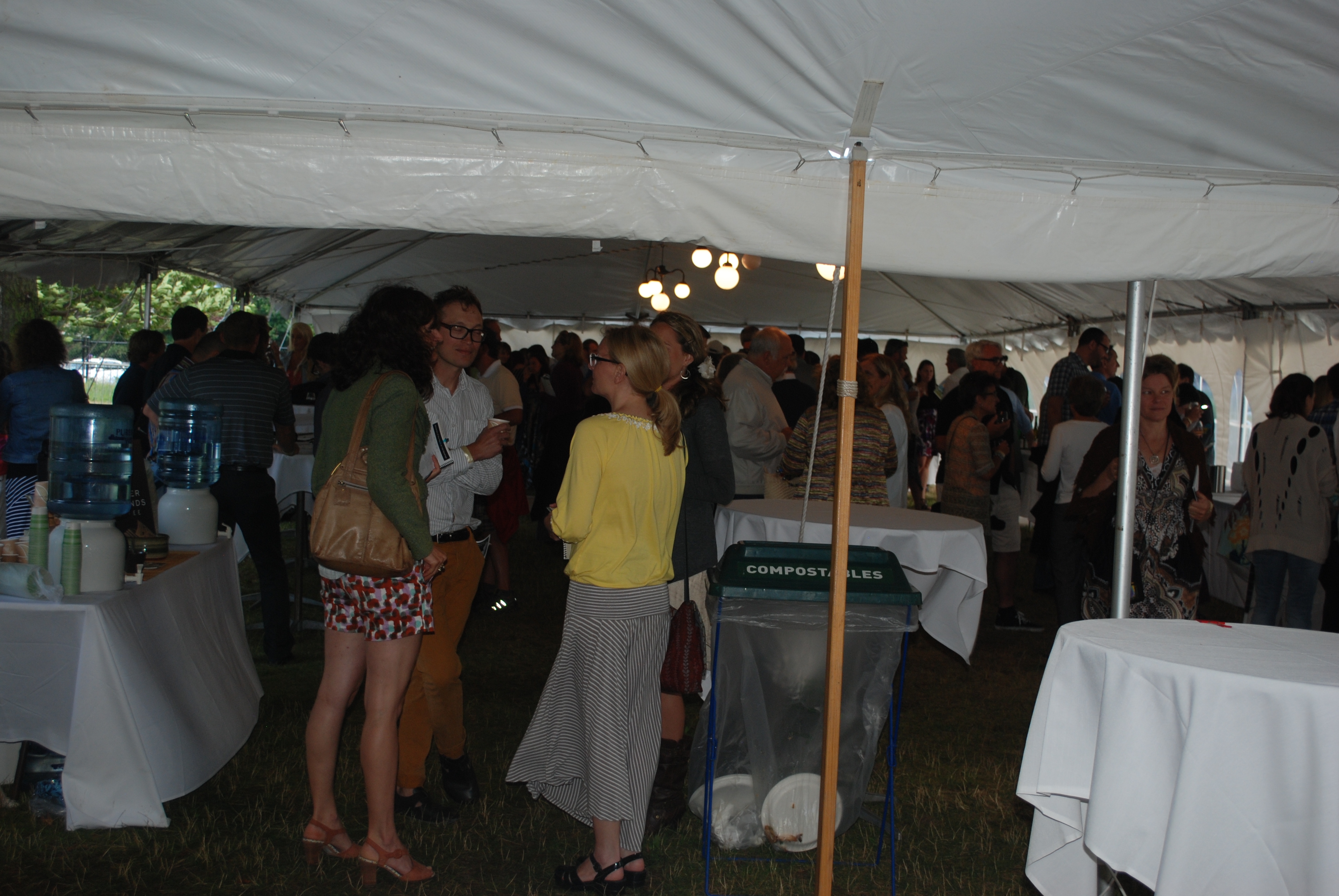
In any event, it was the other event, the afterglow in a broad tent overlooking the broad bay where one hundred rieslings from around the globe were presented, that was the bacchanalian clambake we’d all been drooling for.  And, let it be said via moi—not always the biggest champion of Michigan rieslings when contrasted on a world stage, finding them frequently too elementary and too immediate—that the samples I tried on Sunday evening proved to me that the state is most assuredly in contemporary contention.  The universal exception, as always, were wines from the classic estates of the Rhine, Nahe and the Mosel, whose spectacular selections remain undisputed evidence of the ultimate supremacy of German riesling.   Sweet or dry, the examples here exhibited a profundity that I can only describe in metaphor: It’s like the bottom of the tasting glass dropped out to reveal a hidden kingdom of peregrine flavors, some obvious and some subtle, and you are left with a sudden, shimmering revelation that you’ve confronted an actual landscape rather than a facsimile.

As it happens, although 100 wines were offered, sanity restricted me to fewer, and the following brief descriptions are a handful of those that stood out.

And please don’t say it: Yes, they were cherry-picked.
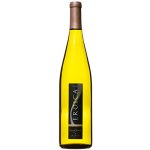
Wine awards-wine bottles, silos & opener; Nov'11Chateau Ste. Michelle ‘Eroica’, Columbia Valley, 2012:  The first five vintages of this wine made the Wine Spectator Top 100 list, and it remains a benchmark for West Coast riesling.  Bright and peachy, the nascent alpha-numerical terpenes that give riesling a peculiar—and I think, delightful—je ne sais quoi overtone of latex—are there, along with a well-rounded stab of acidity.
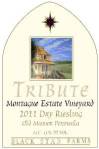
tribute mainBlack Star Farms ‘Tribute’, OMP, 2011:  The titular ‘tribute’ is to the 56-acre Montague Estate Vineyard on the Old Mission Peninsula, and the wine shows a soft profile; a precise, detailed and clearly focused blend of grapefruit, lime zest, apricot and clean stone.

Strub Niersteiner Paterberg Spätlese, Rheinhessen, 2013:  A mouth coating  explosion of peach jam and lemony tea, the wine slides effortlessly to a crisp and juicy finish.

kesselstatReichsgraf von Kesselstatt Piesporter Goldtröpfchen Kabinett, Mosel, 2009:  Arguably the most famous vineyard in the Mosel, this five-year-old beauty is just starting to release the intensified aromas of age, including kerosene and honey-rich apricot cream.  The sophistication and scope of this relatively inexpensive riesling is a tough act to follow.
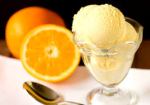
sherbO’Mission, OMP, 2013:  An example of a light, friendly riesling meant to be drunk virtually the same day as it is bottled.  An orange sherbet nose and a sweet, Juicy Fruit body, the wine is shored up by Old Mission acidity but doesn’t reach any heights of iconography—nor does it wanna.

Pacific Rim, Yakima, 2013:  A Pigott favorite, the wine displays moderate spice—especially mint and tarragon—and a wallop of stone fruit.

Sean O'Keefe has a crush on riesling.

Sean O’Keefe has a crush on riesling.

Chateau Grand Traverse Lot 49, Molly Devine, 2013:  One of the few Michigan rieslings that aspires to, and achieves, consistent heights of intensity.  This is not a CVS riesling, and as such, must be approached with the understanding that some of the most sought-after riesling aromatics (specifically, the 32-letter terpene abbreviated as TDN) take time to develop.  When consumed young, these specifically-crafted wines may show as somewhat uninteresting; CGT winemaker Sean O’Keefe has sufficient balls to produce such an interpretation, and as expected, although chomping at the bit to express itself, the 2013 only hints at its potential.

Smith-Madrone, Spring Mountain, 2013: I consider this the top California riesling, but that is hardly a huge leap—most California vineyards are too low in elevation and too warm for the grape to make any enological noise.  Even so, the 2013 is not yet showing well on the nose, but has a beautiful green apple and vanilla cream profile with a lovely, rich mouthfeel.
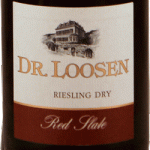
loosenLoosen ‘Red Slate’, Mosel, 2012: Another German superlative; the elusive descriptor ‘minerality’ is like Potter Stewart’s famous quote about pornography: ‘I may not be able to define it, but I know it when I see it’. Or in this case, taste it.  The slate soils of Erden and Ürzig in the Middle Mosel impart a dense, muscular, mouthwatering sense of stones and clean soil to the wine, dominating, but not masking an herbal headiness and a creamy spiciness.

Konstantin Frank, Finger Lakes, 2012: My top pick for American rieslings at the tasting, this wine is German in all but appellation, drawing in the unique smokiness, salinity and scents of rainwashed slate of Das Vaterland. The Godfather of New York riesling, Frank first realized that it was the rootstock, not the climate, that accounted for the failure of riesling in Finger Lakes, and his family has been producing award-winners since 1962.

Adam Satchwell

Adam Satchwell

Shady Lane Cellars, 2012:  Adam Satchwell nails it with his floral, semi-dry riesling which dances with minerality while providing a rich, creamy wine which makes a concerted effort to restrain the stone fruit profile in favor of more exotic aromatics.  Satchwell is somewhat unique as a California winemaker who came here, tried to avoid the riesling bug, and then was bitten via a series of ah-ha moments.

horizon booksI saved Satchwell’s riesling for last, because in his own tasting notes, the Archbishop of Auslese himself states (emphatically) that this is the best wine that Adam has ever made.  And congratulates him!  Which is great press for Shady Lane, except for the part when Pigott maintains ‘surprise’ in the quality of the bevvie.  Now, hang on a sec—surprise??  Isn’t he in town to help celebrate Traverse City’s newfound position as City of Riesling?  Isn’t he sitting at a card table in Horizon signing books, winning friends and influencing drinkers?  Why surprise?  Is he surprised at my surprise at his surprise?

Anyway, that brings us around full circle to the saddest circumstance on Planet Riesling—or any other planet in the contiguous solar system—for a writer, and it is not trying to sell books to tourists.  No, my dearest droogies, it is the snub suffered by your humble narrator in trying to give—not sell, pawn or haggle a trade for—a copy of his own small sortie into scrolldom (‘A Rite Of Paso’, 2013) to Mr. Riesling, the Pope of Potables, the Prince of Piesporter, the Gerent of Johannisberger—Stuart Pigott.

HAT_TRICK_PUCKThree times, mind you, I handed him a copy of my book and never once did the gesture of bonhomie amongst those of us who find ourselves as lonely fellows upon this haunted wayside of scribal wilderness wind up with him actually putting a copy inside his goddamn valise, or whatever it is that British German New Yorkers call that silly man-purse.

Thrice!  I don’t know what they call three-in-a-row in the City of Riesling, but I know what we call it in the Motor City:  A hat trick.

Yours truly

Yours truly

And that, my sympathetic sycophants, is the saddest circumstance a writer could face:  It was the literary equivalent of standing on Cass and Selden in a hot little zebra-print mini with a man-purse filled with riesling-flavored crack, unable to give it away.

Ouch, but at least I get it:  I have no sobriquet!  No pseudonym, no nom du plume, no cutesy nickname that would truly elevate me to the status of Potentate of Plonk; no titular tag to suggest a future beyond airport errand boy!

Since then, I have petitioned for the crown ‘Pope of Cherries’ and have been told that I am under consideration for ‘Pope of the Pits’.



Posted in Leelanau Peninsula, Michigan, MIDWEST, Old Mission Peninsula | Tagged , , , | 3 Comments

Dandelion Wine Daughters Forever

Dandelion_wineWhen I was eleven, my father handed me a book by Ray Bradbury called Dandelion Wine and asked me to read it.  These were the days when kids read books and didn’t consider it an affront on their texting time; these were days when if your folks asked you to do something, you did it.  Not only was the book about a boy my age, so astonished was I by the prose—the lyrical constructions, the singularity of the imaginings, the sheer magic percolating between the covers—that I determined I would find a way to write like that once I’d banked enough life experience to actually have something to say.

That same summer, I sent Ray Bradbury a childish but heartfelt fan letter, and my sincerity must have been clear because he took the time to write me back, and with such interest and encouragement that it was obvious that he not only read my note, but thought about it before responding.

gun gambleTwice a lifetime later, when I was 22, I published a silly novel.  In the intervening years I’d read the masters and studied the legends, Thackeray to Tolstoy, and had concluded that to write like that, you needed to be born with as much intellect as heart. Which, evidently, I wasn’t: I’ve read what Charles Dickens wrote when he was twenty-two.

07bradbury2-span-articleLargeIn any case, my book may have been silly, but it was driven by instinct and mood and seasonal sensuality and I knew which author I’d learned that from—and it wasn’t Ayn Rand.  So I sent Bradbury a copy of the book, thanking him for stylistic direction and the security that writers can be nostalgic and  visionary without paradox, and again, I received a long, handwritten letter promising me that my ridiculous cowboy paperback would occupy a permanent spot on his bookshelf with my note tucked between the pages.

In 2012, Bradbury’s star finally spent its energy, but like the ones that died in the distance before any of us were born, his light will be visible to me for the rest of my life.  Thanks, Mr. Bradbury.  To me, your death was more than sad—it was monumental.


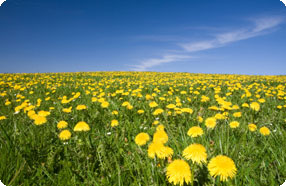
fieldDandelionsA year or so after reading Dandelion Wine—and everything else  Bradbury that I could get my hands on in the meantime—I set out to… wait for it… make wine from dandelions.  I was too young to drink it, of course, but the project seemed wholesome nonetheless.  I was fortunate to have parents who understood that the value in creating is not necessarily in the final product, but in the learning trek required to get there, and this wisdom held doubly true considering the first batch was undrinkable even to them, despite the fact—or maybe because of it—that they were wine lovers.  So I tried again the next year, and the year after that, and gradually figured out how to make a potable plonk, but one that was extremely prone to oxidization.

I was still making it when I started having kids; the last time, I enlisted my oldest daughter Erica—then four or five years old—to help with the unfathomable drudgery of picking hundreds and hundreds of dandelion flowers.  Those were the days that you could force slave labor onto your kids and not worry about the neighbors called Protective Services.  As soon as she turned eleven, I turned her on to a copy of Dandelion Wine, which I hope meant as much to her as it did to me.

Anyway, Erica is now thirty-one, the delight of my life, the jewel in my crown, the apple of my pie-eye, and this year (without mentioning it) she made wine from dandelions picked from one of the endless open lots in downtown Detroit.  And allowed me to sample it with some trepidation, because I (moi??) tend to be somewhat anal about wine quality.

glassI am overjoyed to pronounce her first batch the best dandelion wine I have ever tasted, far better than anything I ever cribbed together.  Balanced, filled with beautiful citrus notes, but many subtle floral notes like jasmine and apple blossom and a light, but distinct dandelion bite.  Somehow, through some strange osmosis, she learned from mistakes made before she was an eye glint; I like to live in the fantasy that this is a way that Ray Bradbury can speak to us softly but distinctly through generations.

A bunch of Haight-Ashbury hippies usurped the catchphrase ‘Summer of Love’ a whole lot of years ago and it’s time to take it back.  Because, under the spell of quiet times, simple thoughts, measured wants and the gentle potency of touchable, tasteable, useable literature, they all sort of end up that way.

Don’t they?

And of all the life experience I’ve banked since age eleven, that still seems to be the only one worth writing about.


Posted in Uncategorized | 3 Comments

The Wine Goddess: Seventh Heaven Or 7-11?

The other day, one of my West Coast wine buddies brought up The Wine Goddess; not in terms of her skill as a wine writer nor her eno-acumen, but regarding the size of her jahoobies—her neener nay-nays, her wopbopaloobops, or, for those of you with a more technical vocabulary, her mammatocumuluses.

They are, apparently, quite transcendently magnificent.

snakeoilAlthough I have no objection to tit-for-tat tata-talkage among healthy, horny manchilds, in this case I had no particular reference point for said brace of bristols, and thus, was unable to weigh in my studied assessment (pun noted).  So I went to The Wine Goddess web site and was somewhat nonplussed to find no simulacrum of splazoingas, no photos of flapdoodles, no pictures of pushmatahas, but instead, a veritable convenience store of Wine Goddess knick-knackery, tchotchkes, baubles—or for those of you with a more cynical vocabulary, snake oil.

imagesAnd in that hallowed moment I did have an epiphany, brethren and sistren, and one that did not involve the pre-incarnate Christ, the shekinah glory, Gabriel with his flaming sword or those naked selfies of Scarlett Johansson that were immediately removed from the web but not before I could download them, praise be to my personal savior, Jesus.

No, this was instead, an apocryphal revelation as to what I have been doing wrong in my wine blog  for all these years:

I Haven’t Been Maximizing My Maximus.

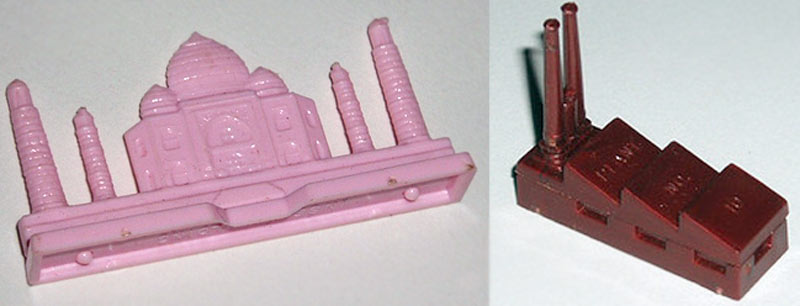
tajCase in point:  Go to my website with your pockets overflowing with discretionary spending cash and what can you buy?  Some old book on Paso Robles I wrote while in the throes of alcohol withdrawal.  That’s it.  No bracelet charms in the shape of Bacchus, no plush lush toys to dangle from your key chain, no Cracker Jack miniature of the Château at Haut Brion, no Disney yarmulkes with mouse ears and your name sewn on back.

In short, no souvenirs.

Yarmulke, rear and front view.

Yarmulke, rear and front view.

On the other hand, go to the Wine Goddess’s site, et voilà: A giant flea market where you can impulse buy all sorts of fancy-schmancy geegaws.  You can order small lot wines (so-called ‘hand-tilled gems’), or you can sign up for pricey (if ‘celebrated’) seminars, buy greeting cards by the carton, gift boxes of Scharfenburger chocolate goodies and yarmulkes that not only have mouse ears, but also thick Hassidic glasses and those giant Groucho Marx noses blacklisted by the Jewish Anti-Defamation League.

wg_logoBetter yet, everything  is emblazoned with the Wine Goddess logo, which (by the way) is Venus from the Botticelli painting and displays but a single, unmagnificent, areola-free dinglebobber which isn’t even in the right place, anatomy-wise.

But that’s marketing, baby.  What I am doing on my wine blog—and let’s be honest, for the most part what I’m doing isn’t even writing about wine—is stagnating and missing opportunities.

All That Changes Now, Loyal, Long-Suffering Sycophants…

My logo.

My anatomically correct logo.

So, in the spirit of Wine Goddessery and Eno-Immortality and Supreme Beingosity, I am hereby offering the following mementos of my passage through this blogosphere, the Mecca-like pilgrimage that I shall (gratefully) make but once.

Everything, of course, is heavily stamped with my trademarked logotype, which (by the way) is proportionately correct, anatomy-wise.


unique-homeless-signIntoxicology Report Homeless Person Sign, $12.95 or two for $30:  Hand-printed by yours truly to reflect your particular set (or a made-up set, which I offer at no additional charge) of unfortunate, life-altering mishaps you may (or may not) have suffered. Words are strategically misspelled to indicate that although you are trying your best in this vale of tears and sin, you’re just not bright enough to make it work. Guaranteed to elicit sympathy, pity, guffaws and generous handouts from suckers.

chinIntoxicology Report Prosthetic Tongue, $18,000:  What do you give to the wine lover who has everything—except a tongue long enough to lap up Screaming Eagle from the glass of the poindexter standing behind you at a fancy dinner party?  This.


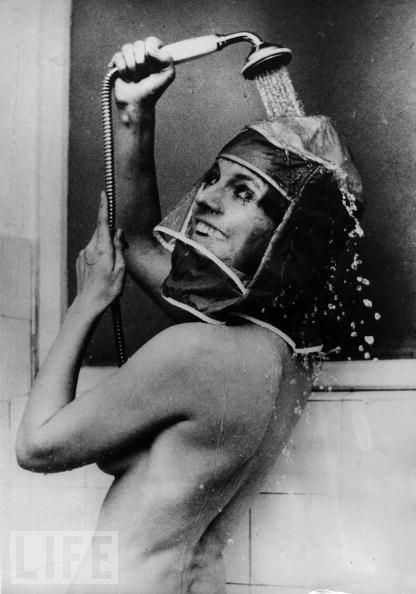
beekeepingIntoxicology Report Beekeeper’s Shower Cap, $35:  Who am I?  I’m the guy who finds a niche and fills it, that’s who.  In this case, my target demographic are those avid hipster honey addicts involved in the growing ‘fad’ of keeping hives in the shower stall.  Now you can practice the gentle art of apiculture while simultaneously maintaining proper hygiene and not worry that you will get stung anywhere other than the 90% of your body that is still exposed.

Choice is obvious.

Choice is obvious.

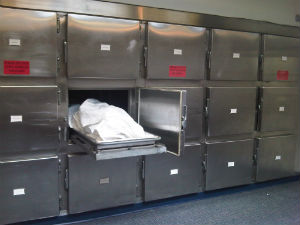
Intoxicology Report Coffin, $75,000:  Move it on over, Gene Simmons—your fifteen decades of fame is up.  If Kiss can offer a custom casket to the die-hard fan, why not moi?  And what makes my coffin worth ‘just a few pennies more’? Simple: It’s fitted with a mechanism to prevent premature burial or allow the occupant to signal that they have been buried alive.  I may not have as many fans as the Kiss Army, but at these prices, I only need one.  Besides, believe you me, if you are accidentally pronounced dead when you are not quite there yet, you’ll be glad you shelled out the extra fortune.


That’s  just a sample, readers.  I will gladly sell you the right to comment below at a mere $1.00 per word.  If you like what you see; if you ‘like where I’m going with this’, my entire line of Kustom Kassel accessories and designer useless souvenirs is available in the Intoxicology Report Fall Catalog 2014.

Best of all (valid until Labor Day), I am offering a 15% discount to any reader who sends me a picture of The Wine Goddess’s squatchie tishomingos—preferably without the Johansson censor star.

* Thanks to Steve McConnell.  It’s easier than thinking…

Posted in GENERAL | Tagged , , | Leave a comment

Elie Speaketh Truth

Call me a good-ol’-boy, a peckerwood throwback, a retro-Aryan Nation dingaling—but in Detroit, my favorite African American wine pro in is a white dude.

Born into to a family of North African spice merchants, Elie Boudt cut his vending teeth early: By thirteen, his father had established him in a remote Libyan outpost without electricity or running water where he  waited for the weekly Friday market, sought out the best harrarat, bzaar, cayenne pepper or whatever the nomadic spice sellers had on hand, then sent them back to the family store in Morocco.  When college-time came, his folks wanted him to study in America, and they agreed that Kalamazoo College not only offered a marvelous program for exchange students, but espoused the sort of Midwestern hard-work ethics that the Boudt family stood by.  Elie came to America to study medicine but stayed—via as series of fortuitous encounters with Michigan retailers, including the legendary Brothers Jonna—to study wine.

Elie keeps all Champagne a minimum of one year prior to sale.   And yeah, he asks for disgorgement dates.

Elie keeps all Champagne a minimum of one year prior to sale. And yeah, he asks for disgorgement dates

Ask No Questions, Hear No Elies

I’ve known Elie for twenty years, and his relationship with wine is unique—a different sort of devotion than nestles inside any of the other wine people I’ve known for twenty years.  It’s more than love, deeper than intellect, stronger than passion, although all of these hyperbolic emotions play their role.  Elie approaches wine like a Science Fair poindexter might a cool bug inside a jar—with none of the cruelty, of course, but with all of the unbridled, child-like, gut-level awe.

B'ham Parking:  Sure sign that you've arrived.

B’ham Parking and dual entrances: A sure sign that you’ve arrived.


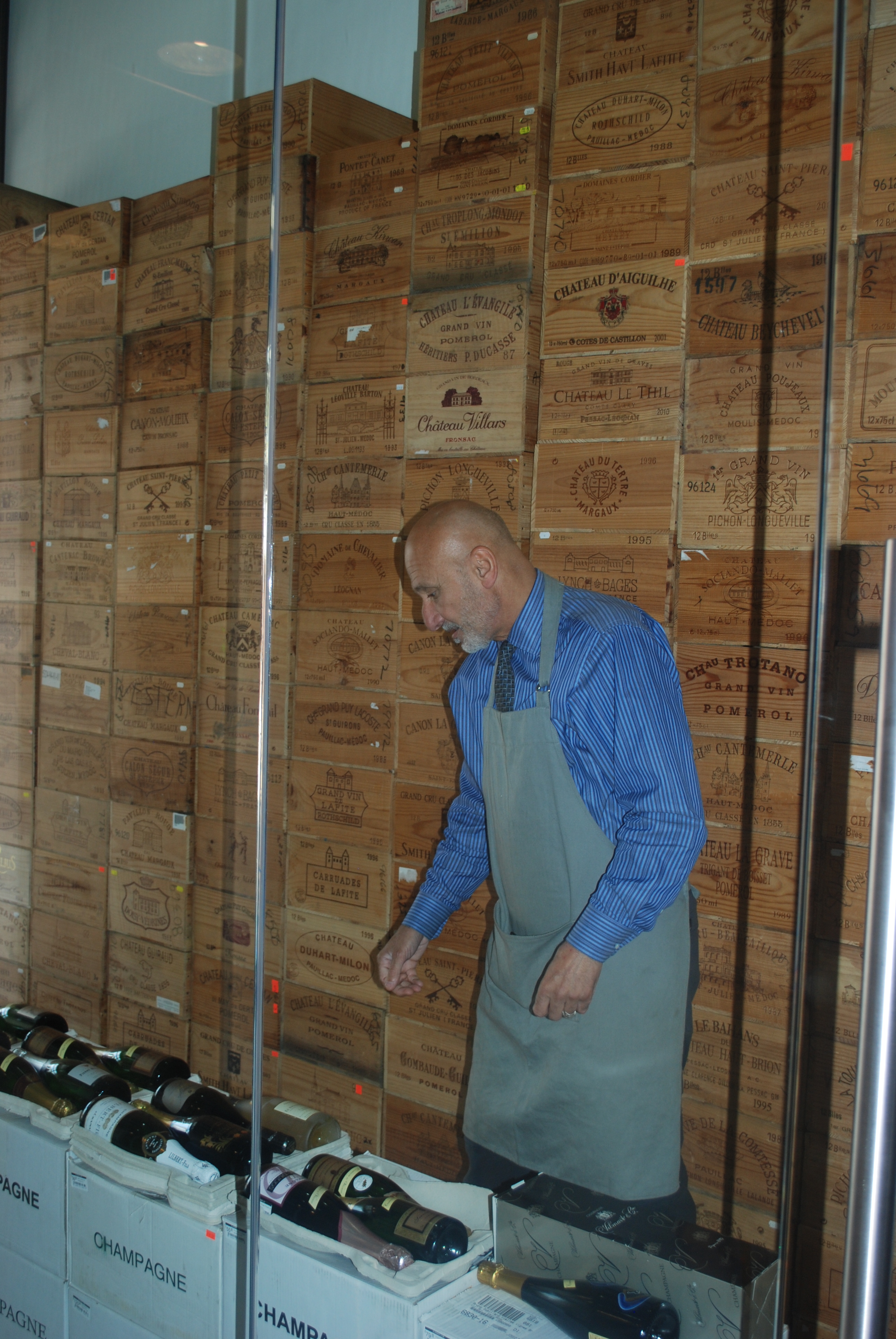
In June, he opened Elie Wine Co. on 14 Mile in Birmingham, an expanded version of Elie Wine Co. in Royal Oak, which has closed.  Closed because there couldn’t be two Elies, and hence, there couldn’t be two wine stores.  Elie is not merely the pilot of his establishment; he’s the diva (he won’t admit it), and if he’s not center stage, walking you through obscure, tiny Denominación de Origen gems with case production in the hundreds, or explaining to you why 1982 Petrus is worth six grand (whether you intend to brown bag today or not)—the shop is La Travieta without the brindisi.

The Towne Club case is worth more than the Haut Brion case

The Towne Club case is worth more than the Haut Brion case.

Elie specializes in wines from Burgundy, Bordeaux and Spain, and he buys stock almost exclusively from vintages that reflect the best that a given appellation can offer. Wander the aisles and you’ll see a boatload of 2005 Côte de Nuits and 2000 Médocs; 2007s, not so much.  As a result, although Elie carries a few wine with price tags sub-$20, three digits are far more common.

“I bring in what needs to be brought in,” Elie states emphatically. “These wines are an editorial statement as much as an aesthetic statement.  They represent what a given producer is capable of when all stars align.”

When asked if his customers are necessarily looking for two hundred dollar wines when they step across his threshold, he responds with a grin—sly homage to his salesmanship—“Not always, but that’s what they buy.”

Elie Through His Teeth

Elie moves about his two-thousand-square-foot store with pride and animation, somewhat hunched over, clapping his hands enthusiastically as we pass a particularly selection that he wants me to note—or better yet, to try.  He reminds me of a Dickensian bookseller in Piccadilly, gently presenting rare, antique, first-edition masterpieces.  In that regard, he comes across as much a museum curator as a wine seller.

But that’s not to say that his wines are mummies—far from it.  “The ideal wine cellar,” he says, “whether in a retail outlet or in your basement, is alive.  I don’t want any bones in my collection.  Vintages change, wines should move, and if I have more Burgundies this year, I might have more Bordeaux next.  Or maybe Italian—I don’t currently stock Italian wines, but I’m not suicidal.  If there’s a demand for it, I will carry it, but with the same search for harmony and balance in choosing the right wines for the store. The wines I sell have to reflect the essence of their place—they are a passport, if you will.  Some are pricey, I know.  But if you want to really learn what Pauillac can offer, the commune’s narrative, you’ll probably wind up spending a minimum of $60 for a bottle.”

(On the other hand, that’s Bordeaux, not Lodi. If your bucket list includes seeing Tibet, the plane ticket will cost more than a ticket to Chicago.   But I digress).

Window dressers aside, whenever I get a chance to tap into Elie’s expertise, I like to taste wines that rep a specific interest of mine—and his—indigenous varieties, the older and more esoteric the better.  And best of all, unusual grapes produced by tiny producers.

As such, Elie laid out an impressive array, which I will cover in brief:

Alemany i Corrio, Principia Mathematica, 2012, around $35, from Penedès, is produced by hubbie and wife enologists Irene Alemany and Laurent Corrió in a winery no bigger in size—literally—than Elie Wine Co.’s floorspace.  They specialize in merlot, cabernet sauvignon and cariñera, but this one is made with 100% xarel-lo, a variety traditionally used in cava.  Here vinified still and dry, the grape produces an intensely aromatic, mouth-coating wine filled with tropical fruit notes, especially pineapple and lychee.  A delighful, summer-sapid wine.

Pirita Blanco, Arribes, 2012, about $25, from a new D.O. (2007), Arribes, on the Spanish border with Portugal.  Unusual not only for the varietals, the appellation and the fact that the vineyard literally shimmers with pyrite—fool’s gold—the wine is made by an Englishwoman called Charlotte Allen.  A blend of three local grapes, puesta en cruz, malvasia and godello, the wine is lyrically light, peach-flavored, firmly acidic and very slightly oxidized—not a flaw when offered in judicious doses as it is here.

Pésico, Nicolas Marcos, 2011, about $39:   Carrasquín, mencía, verdejo tinto and albarín tinto make a crisp, ink-black blend from Asturia; a wild wine filled with rugged woodsy flavors of blackberry and currant, countrified, indeed, but the opulence that crowns it transforms it into the Oberon of coastal Spanish wines.

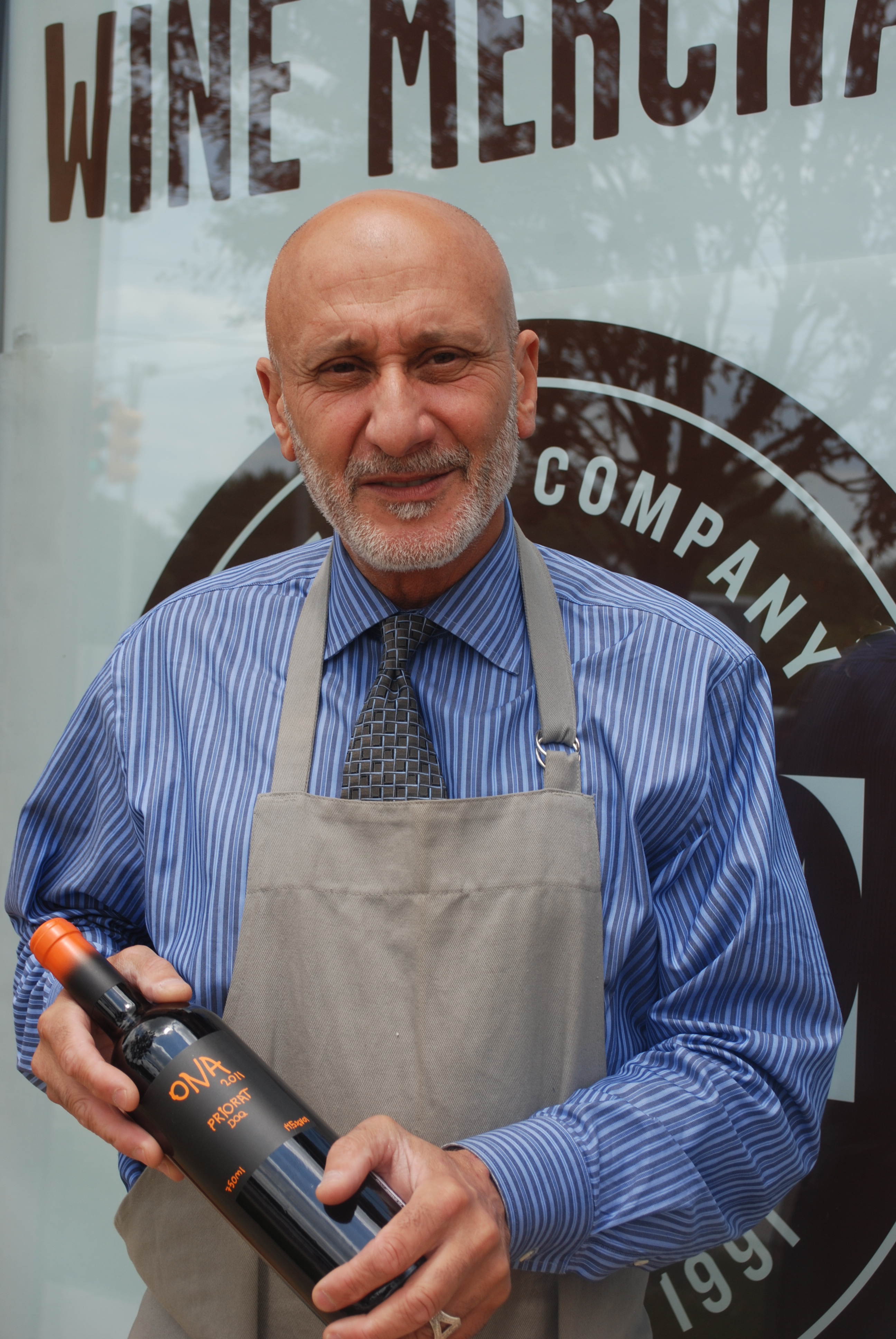
ELIE ONAOna,  Priorat, 2011, around $20: Elie has a perfectly delightful and beautiful wife called Núria Garrote i Esteve and a five-year-old daughter Ona—who’d tasted better wine by the time she was twenty-one minutes old than most people do in their entire, miserable, wine-challenged lives.  That’s because (with baby doc’s blessing), Elie touched her lips with gauze dipped in ’98 Haut Brion as soon as she left the birthing-room table, thus making her the first baby in history to get an Apgar score of 300.

And now she has a wine named after her and you don’t.  Ona, from Cellar Cecilio’s winemaker Blai Ferré Just, is a warm-bath blend of typical Spanish grapes with atypical Catalonian spellings; garnatxa and carinyena.  I doubt there’s any Haut Brion leftovers from her twenty-one-minute-old splurge, but—although only 180 cases of Ona were made—I have high hopes that a bottle will remain to touch Ona’s lips when hits her twenty-first birthday.

Elie’s Head Doth Wears the Crown

Bertrand Devillard

Bertrand Devillard

Meanwhile, scarcely twenty-one minutes into his new digs, Elie is reeling in global praise. Bertrand Devillard, proprietor of Château de Chamirey in Mercurey and Domaine des Perdrix in Nuits-Saint-Georges, refers to it as, “The most innovative wine store I’ve ever seen and the best Burgundy collection in the United States.”

One of the issues facing Elie is that these kudos came from a European, not a Detroitopean.  I would assume that such estate wines and specifically prized vintages could be found fairly easily in San Francisco or Manhattan, and certainly in Paris, but here in the Paris of the Midwest—along with the wellspring of scholarship that is Elie Boudt—such outlets are scarce as chin hair on a choir boy.  As a result, Elie expresses a bit of frustration that so many of his customers are out-of-staters.  To illustrate the point, in the hour I spent perusing and palaverating and partaking, a NFL scout from an East Coast team (whose name I promised I wouldn’t give) dropped in, dropped over and dropped a couple grand on a cellar cache.

thinkerBeing my usual puerile cheap-laugh self, I opened with a little white Elie—there are plenty of African American wine pros in Detroit that I admire, including Chuck Jackson Jr. and Dichondra Johnson and the whole Mahogany Tasters gang (who I probably owe another column to and you need to check out)—but in the meantime, within the treasure trove of local wine lore, institutions like Elie Wine Co. must be put on a pedestal, flooded with custom and protected like that naked dude in front of the DIA.

Posted in GENERAL, Uncategorized | Tagged , , | 1 Comment

So You Wanna Be A Wine Hack…?

Us

Us

I’m worried about you, gentle reader.  Yes, you; the happy-go-lucky, earnest, lapdog-like wine aficionado who stumbled across this web site looking for practical advice on ‘Top Syrahs Under $20’.  Joke’s on you, by the way:  I learned very early in my pretend-career as a wine expert to always put ‘Top Syrahs Under $20’ in my internet search engine tags no matter what topic I am writing about.

In any case, I know exactly what you are up to.  I know this because on the same page as I enter ‘search engine tags’ (‘Pretty Little Liars uncensored sex tape’ is pretty effective, too) I can also track the number of hits that an individual column receives, and I actually read your hate mail, and every time I get all catty and rude and trash other wine writers or silly wine ideas, I suddenly get a million shares and ‘likes’ and comments.

Clipboard helenAnd every time I actually write about top syrahs under twenty dollars?  Zero, zip, śūnya, nulla.  It’s like the Helen Keller cut of Silence Of The Lambs.

And when I really go out on an intellectual limb and write something like ‘You’re A Good Manic, Stillman Brown’—which, let’s face it, modesty aside, is pretty much the Toccata and Fugue in D minor of wine writing—I’m lucky if I can get Stillman Brown to read it.

That’s the bad news.  The good news is that I’d rather have readers than friends, and life is too short for empathy, discretion or tact, so here you go, on an expensive sterling platter with gadrooned borders:  Complete mockery of a ludicrous article I just read on Buzzfeed called…

‘11 Wine Hacks Every Twentysomething Should Know’

Feel free to read it first to see if I’m going off-base here.

http://www.buzzfeed.com/h2/fbca/bordeauxwines/wine-hacks-every-twentysomething-should-know


Gentle Critique, Starting With The Title…

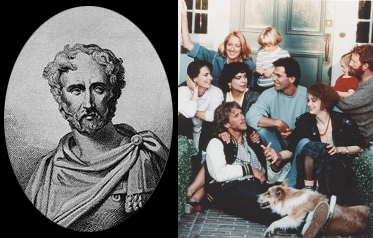
Clipboard plinyI have no intention of looking up the word ‘wine hack’ to see if it has a meaning other than the one I am familiar with:  Which is, wine bloggers struggling for column inches, word counts and unique perspective about a subject that Pliny the Elder pretty much exhausted in 70 AD.  Why?  Because I am assuming that, based on some of the ‘hacks’ the article mentions, the piece was written by a European, and for all I know, you honkey-crackers across the pond have your own version of Urban Dictionary.  So be it—but in that case, why use the all-American run-on buzzword ‘twentysomething’, which we invented to tag team that perfectly awful sitcom ‘Thirtysomething’? 

Say, Europe:  Don’t use our airspace, our territorial waters or our catchphrases, okay?  If you need a word to describe your mewling, simpering youth, ‘Eurodouchenozzles’ is quite adequate, thank you.

Anyway, if you wasted the time actually reading the article, you will see that it is a list of eleven wine ‘tips’ that should (apparently) be in the mental bag-o-tricks of this particular generation.

I’ll lay them out in order and add commentary only where I feel it is absolutely required:


1. Filter cork pieces out of wine by pouring it through a coffee filter first.

Dear twentysomethings: Other than violating the inviolable maxim that you never, ever use coffee paraphernalia with wine, a larger truth looms: If you are so inept with a wine key that you are pulverizing corks, you probably want to consider switching to screw caps, bag-in-the-boxes or beer.

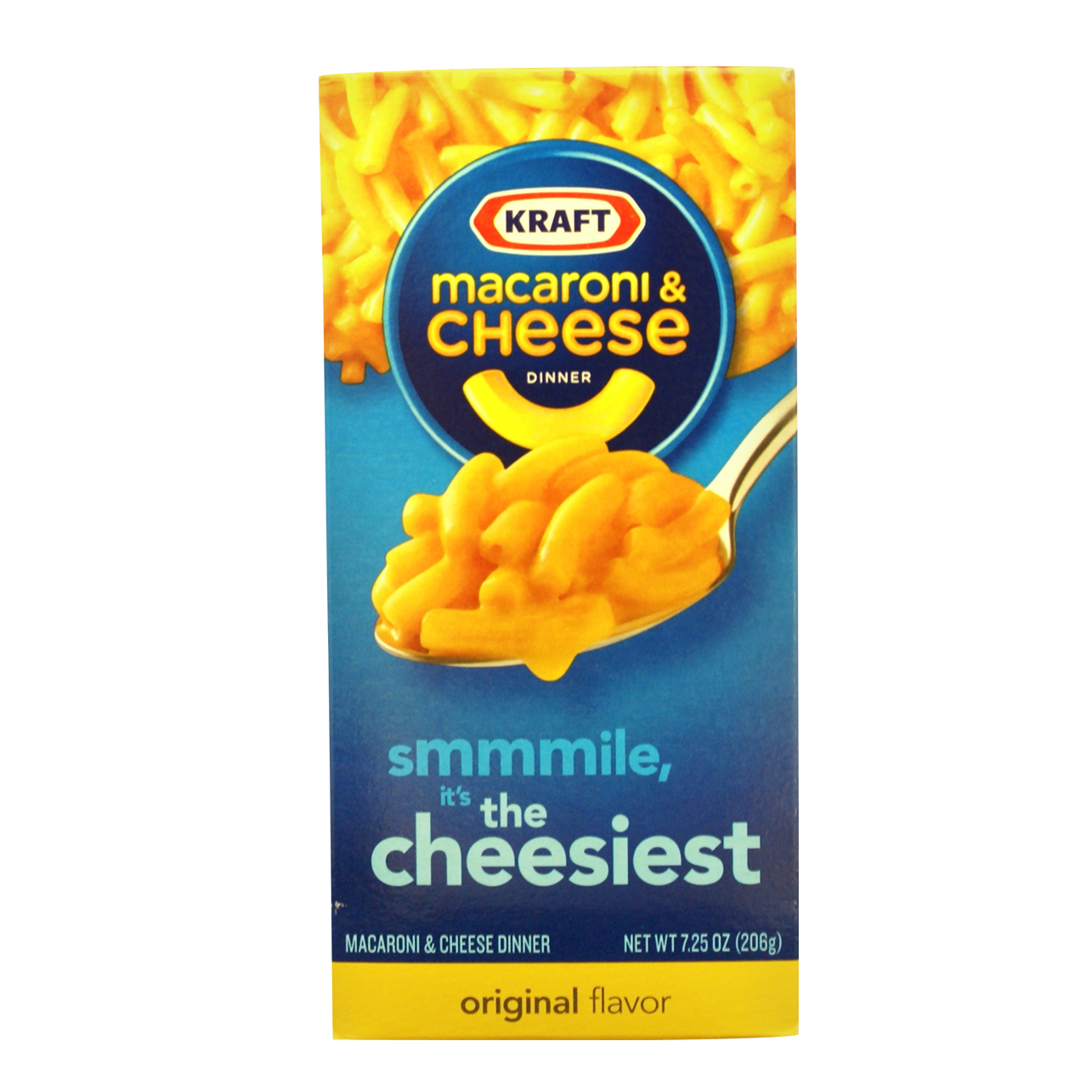
original-kraft-macaroni-and-cheese2. A lot of cheeses are better paired with white wines, not reds.

This is the first indication that this piece was written by a European.  A few snooty San Franciscans and Manhattanites aside, cheese is an American afterthought—something you put on a burger, on a Ritz cracker, in a obligatory bring-to-family-pot-lucks casserole or over a pot of desperation macaroni in college.  The color of the wine you serve with it, which you can’t afford anyway, is irrelevant.

3. Don’t have a corkscrew? A hammer and nail — or a screw, screwdriver, and a pair of pliers — could help you out.

Good one, twentysomethings.  You have already demonstrated your childlike inability to handle a corkscrew, so might as well use some dangerous alternative tool to force your way inside an adult beverage, huh?  Although, I’d like a demonstration of the hammer-and-nail technique, which, unless you are threatening to nail your sommelier’s tongue to the table unless he opens your wine, seems unlikely to do more than make a huge mess.

Room for one more?

Room for one more?

4. Keep your white wine cool without diluting it by throwing in a few frozen grapes.

Seriously?  Need I?  Okay, then, twentysomethings:  If you have an apparatus to freeze grapes, you already have a way to keep your white wine cool.

5. When hosting a party, put out rubber bracelets for people to put around their glasses to prevent confusion.

rubber roomIf you are throwing parties with guests who are so confused that they can’t keep track of their wine glasses, chances are they won’t be able to read the bracelets, and, in any case, don’t really care whose glasses they end up with.  Next stop for you: The rubber room, and whatever bracelet you receive upon admittance.

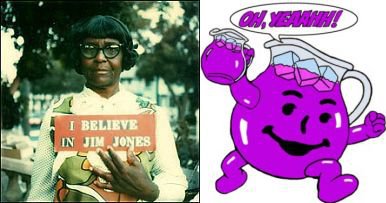
HEY KOOLAID AND I LOVE JIM JONES6. Neutralize red wine stains with table salt and white wine.

I see a level of insanity in pouring out white wine after you’ve Exxon Valdez’d the red wine, but I’d be curious if anybody could explain the scientific principal—other than placebo psychosomatics—behind this, because it makes no sense.  An interwebs search indicates that salt is ‘also good for Kool-aid stains’, but since you’d have to drink the Koolaid before you’d believe it could work, the technique fails on impact.

7. Need to chill your wine in a hurry? Wrap a linen towel around it and place it in the freezer for 15 minutes.

I’ll sign off on this one, twentysomethings.  And add to it:  If you need to roast your wine in a hurry, put it under the broiler for 15 minutes.

boone8. If you (somehow) have leftover white wine, add a splash to a simple pasta dish to add some depth to the flavor.

There’s a unique concept, huh?  Adding wine to a sauce to improve the flavor.  Must say, Buzzfeed, you are a trailblazer on a par with Dan’l Boone.  Can’t wait for your piece on what to do with the leftover salt after you sop up the red wine.

9. If you have leftover red, save it to make amazing desserts like a blueberry red wine sorbet.

Of course, once you’ve bought the blueberries and the sorbet maker, you’re probably ready for more wine.  That said, the blueberries will make a delightful sorbet even without the wine you just drank.

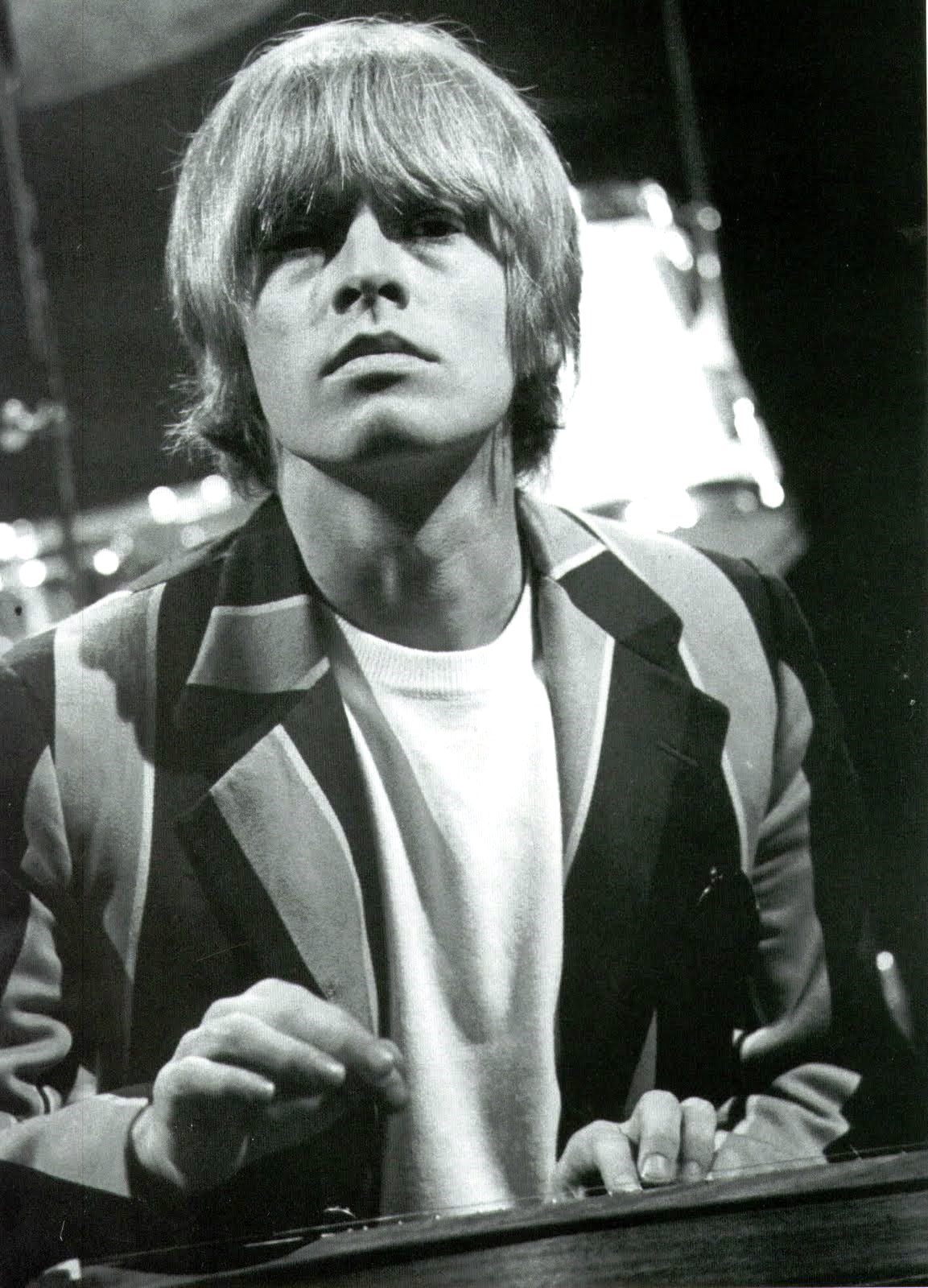
brian3310. If you’re packing a bottle of wine for a trip, insert it into a pool floatie to protect it.

A pool floatie?  You mean, like Brian Jones?

11. Or get a special wine carrier for your bicycle so you can travel in style with your favorite bottle.

Hey, windmill-wankers; how about a sippy-cup filled with Château Branaire-Ducru for the rear deck?

Hey, windmill-wankers; how about a sippy-cup filled with Château Branaire-Ducru for the rear deck?

Final nod to the strange lifestyle in Europe, where twentysomethings apparently ride bicycles that are not carbon-fiber-framed off-road monsters that do not accommodate ‘wine carriers’.

Here in the land of the brave and home of the free, or however that song goes, we require four-stroke, many-cylindered engines to travel in anything that could vaguely be defined as ‘style’.

However, I will happily look into marketing a chic wine-glass holder for your training wheels if you like, twentysomethings.

*

That’s it, kind and patient readers.  Let the nastygrams fly; I could use the hit-count.  A free cheap syrah to whoever eviscerates me first.


Posted in GENERAL, Uncategorized | Tagged , | 6 Comments

Strong Words

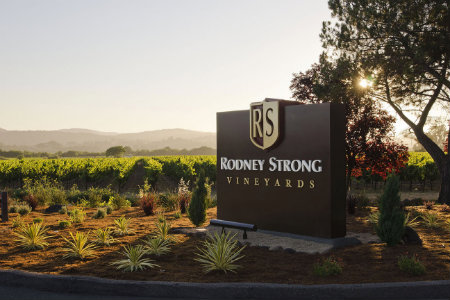
Rodney-Strong-SignRodney Strong keeps sending me wine and I keep drinking it and enjoying it.  But I don’t keep writing about it, because in my inimitable sense of self-importance, I figure that there are only so many times a year that I can write about a given winery without sounding like they are sending me free wine to write about.  Not only that, but my nasty little secret is that I don’t write a wine column because I want to spread the Grape Gospel to all creation, but because I have this Freudian fixation on really bad puns and word alliteration OCD and this sort of hobby is therapeutic.   Oh, and I’m an alcoholic who prefers not to pay for product if it is creatively avoidable.

On the other hand, I can only come up with some many idiomatic twists on the word ‘strong’ and none on ‘Rodney’, so I have to limit my output accordingly.

Two things occur to me:  First, as an honorable man, I should repay the kindness of these strangers—at least periodically—with a thumbs-up pat-on-the-back shot-in-the-arm, even if it means going out on a limb.  Second, without the occasional positive feedback, this sauce sluice might close down down permanently, and we can’t have that.

You see, at nearly a million cases per year, I need Rodney more than Rodney needs me.

Ergo, a revisit to a lifeblood donator who is, despite my ignoring them eleven months out of the year, still going strong.

Strong, No Bull

popupWith apologies to Erich Segal, what can you say about a winery that was founded by a ballet dancer who died?  And then was purchased by Guinness, who as winemakers make a killer stout, then re-purchased by a Stanford MBA, who as a businessman makes a killer bottle of wine?

You can say Wine Enthusiast’s 2013 American Winery Of The Year and everything else sort of falls into place.
For years, the Rodney Strong I knew occupied a place as drinkable corporate wine, good for a house pour in the sort of restaurant where people order by varietal and price rather than winery and vintage.  They were, for the most part, true to purpose—the merlot was plummy, the chardonnay buttery, the cab blackberry-y—and they were produced with an obvious eye toward flaw-avoidance rather than character development.

Tom Klein looks more like a winemaker than an MBA anyway.

Tom Klein looks more like a winemaker than an MBA anyway.

Then, in 1989, along came Tom Klein and his resume, which included a lot of business management but very little enology.  Proof positive that passion may trump experience.  Not always, of course, but in this case, Tom knew what he was after:  Sonoma varietals that expressed the nuances of individual vineyards and could be specifically identified as such.  And if restaurants wanted to buy into the new philosophy, more power to them: The financial commitment that Tom made was in the millions, and Rick Sayre, the  winemaker, was convinced to stay aboard.  Not that he would have jumped ship in any case: He recognized that the winemaking winds had shifted in his favor and that, with Klein at the helm, all the art he’d learned under the direction of Andre Tchelistcheff in the ‘70s would finally pay off.

And has.  Of special renown are his handcrafted Alexander’s Crown Vineyard Cabernet Sauvignon and Chalk Hill Vineyard Chardonnay, which have pulled down awards across the globe.

Despite a powerhouse output of over 800,000 cases annually (some of which has ended up on my doorstep via UPS), the upper-end selections remains individualistic and delicious, while the brand name remains one of the strongest in the business.

Tasting Notes:

(The R.S. portfolio includes so many wines in various price strata that I am restricting myself to a handful from the Estate selections: Wines from Strong vineyards in Alexander Valley, Russian River Valley, Sonoma Coast and Chalk Hill AVAs and retailing for between $25 and $30.)

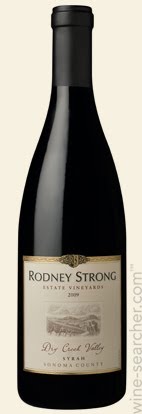
syrahRodney Strong Vineyards, Estate Syrah, Dry Creek Valley, 2010, around $30:  Dry Creek Valley and the Northern Rhône share a similar climate, allowing this Hermitage superstar to shine in Sonoma; the wine is powerful and concentrated, showing rich chocolate notes, coffee and blackberry with a solid backbone of tannin.  Tertiary notes are licorice, black pepper and a snuffle of truffle.

Rodney Strong Vineyards, Estate Malbec, Dry Creek Valley, 2010, around $30:  A game-changer for California malbec, especially considering the season in Dry Creek was challenged throughout. Fleshy, redolent, robust and ripe, this wine shows saturated notes of plum jam, sweet cedar, spice with deep, developed layers of juicy berry.  Long on the palate, finishing with vanilla and light tobacco.

rieslingRodney Strong Vineyards, Estate Chardonnay, Sonoma Coast,  2012, around $25:  First aromatics are ripe pear, guava and pineapple, but as the wine opens up it shows rich cantaloupe and honeysuckle.  Creamy fruit is balanced by bright acidity and judicious, not overwhelming, oak notes.

Rodney Strong Vineyards, Estate Riesling, Russian River Valley, 2013, around $25:  Not my favorite of the bunch, but a respectable entry into the field.  Some classic notes including green apple, lemon-lime, honey and a hint of clove, but overall a fairly simple wine.  At the price point, better rieslings available.

pinotRodney Strong Vineyards, Estate Pinot Noir, Russian River Valley, 2012, about $25:   Best of the bunch IMHO; beautifully defined wine with a lusciousness that is pure pinot hedonism.  Lovely rose-petal and candied cherry aromas meld into a firmly-structured mouthfeel, elegant, but retaining enough rusticity to remind you that you are drinking real pinot noir—one cultivated with a love of varietal integrity.

Rodney Strong Vineyards, Estate Zinfandel, Knotty Vines,  2010, about $25:  A nearly ideal growing season for Sonoma zinfandel—long, hot and dry.  The grapes clearly developed full phenolic ripeness, and the wine is an impressively extracted blockbuster, filled with smoky blackberry and raspberry flavors and buoyed by acidity.  An almost savagely delicious zin that is both bold and balanced and shows its heritage without excuses.


Posted in CALIFORNIA, Dry Creek | Tagged , , | Leave a comment