Pas de Bor-deux: Dollar for Dollar

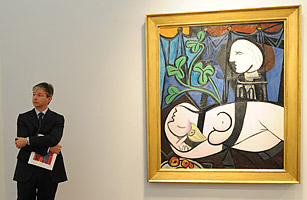
picasso_paintingI’m not here to argue whether or not Picasso’s Nude, Green Leaves and Bust is worth a hundred million dollars, which is what it sold for at Christie’s a few years ago, because I grew up in household of people who sold art for a living.

An early lesson my father taught me about the value of art is that something is worth exactly what somebody else is willing to pay for it.

Likewise wine.  Along with a fluid, you are buying a lot of history and frequently some real estate; an acre of Napa vineyard may run you upwards of a quarter million dollars whereas I know people who can set you up in Paso for equally rich vineyard for under $50 k.

You’ve got Burgundy subdivided into so many lieux-dits through so many generations that you might be buying rows of vines rather than acres.

Clipboard winesBut the piece is on Bordeaux, so let’s return to the Picasso analogy.  Neither am I here to suggest that bottle of  Barton & Guestier Red is worth ten dollars, or a bottle of Château Lafite Rothschild ’82 is not worth $3000.

If it is or if it ain’t is up to you and your bank balance.

That said, I have been tasting wines for a number of generations now, and if you put two glasses of Bordeaux in front of me, side by side, with no label information given, and you tell me that one sells for twice what the other one sells for, I am confident enough in my gustaoception and olfacoception skill set to tell you which one sells in the three digits range and which one doesn’t.

And if I can’t, I am also confident enough in my patriarchal curmudgeonry  to tell you to stick with the cheaper option, whichever it may be.

Point is, I couldn’t tell.

So, I am going to offer two sets of tasting notes, and at the end I am going to tell you what two wines I am writing about, but not which is which.  Nor will I tell you which one sells for $80 and which sells for $150.  If you love your Bordeaux, you won’t need to be told because you’ll already know, and if you don’t love your Bordeaux, you probably won’t even care since you will not be shelling out the eighty to begin with.

Here goes, and let the oak chips fall where they may:


Wine #1:  A big nose, but the fruit holds itself in tightly, as if with reins—it seems to want to explode, but doesn’t quite get there.  I pick up some boysenberry notes, but mostly dry, dusty earth with some chocolate in the subterranean levels.  Large in the mouth, but it doesn’t deliver any massive wallops of sensations, which would be fine if there was sufficient subtleness to account for the diminutive lushness.  This I failed to find.  It is a drinkable and noble mouthful of Bordeaux, unquestionable in its pedigree, but lacking any pomp or circumstance.  The balance and the finish are there, and the wine presents itself well, but does not ring any rafters in the Château.


blind bag 2Wine #2:  A nose of equal restraint; there is cassis deep within an almost roasted minerality, like charcoal briquettes.  The wine opens with a half hour in the glass and becomes richer, but no further fruit flavors develop—more cocoa and coffee, perhaps, but the currants grow no more current.  A nice silky mouthfeel, with tempered acidity and tannins that play nicely against them, but nothing outstanding beyond a textural template—the sensory highs are muted, even with aeration.  The finish is noteworthy in its length, which plays on the back of the tongue for a number of minutes, but all this means in a wine you are drinking with a meal is that you need to wait a number of minutes between bites, which may probably not be viewed as a plus.

Envelope, Please…

The two wines were Château Gloria, 2009 and Château  Saint-Pierre, 2010, both from St. Julien on the Left Bank of the Gironde estuary, considered by many wine pros as the world’s epicenter for Cabernet Sauvignon-based wine.
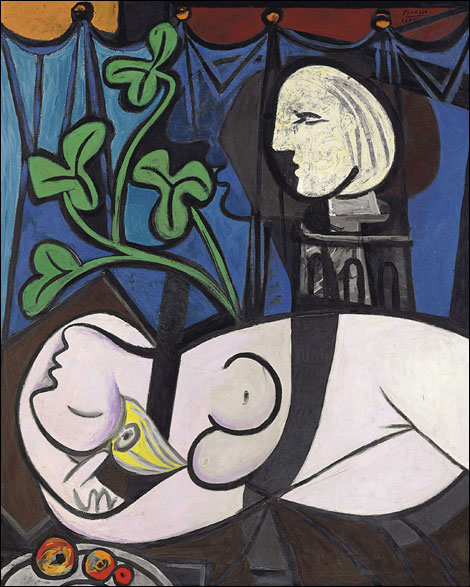
paintingSo as not to end on too sour a note, I will also offer viewing notes on Picasso’s hundred million dollar Nude, Green Leaves and Bust:

Okay, I’m confused; is the bust in the title supposed to be the statue or the tits?  Or is the randy old painter playing a joke on me; if so, it’s no funnier than the one played on him since this painting didn’t turn into a nine figure investment until he’d been dead for forty years.  Ya can’t take it with you, can ya, Pablito?  The leaves are green, delivered as promised, but look rather angular and tight.  A few hours in the sun would allow for them to open a bit.  There is an echo of the statue in the blue background, which is an interesting touch, but there is a notable lack of balance in the nipples, one being far nipplier than the other.

If it’s me, I’m taking the hundred million and buying Bordeaux.


Posted in GENERAL | Leave a comment

Screw Blue: Have a Rosé Christmas Without Me

santaEvery year I swear I won’t write any Christmas wine stories, and every year I write a bunch of Christmas wine stories.  In the traditional view of things, lying makes me a bad little boy and takes me off Santa’s ‘A’ List.

Whatever, Fatso.  I don’t want you knowing when I’m sleeping anyway—what if I have morning wood?

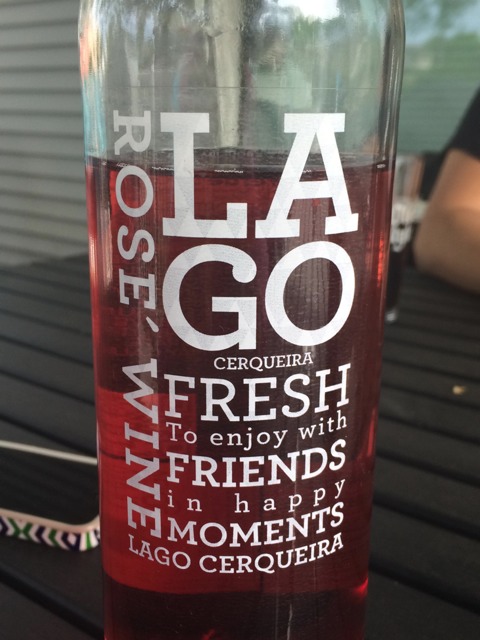
Anyway, I stumbled upon a cool little rosé today that turned out, despite having a screw cap and no Champagne cage, to be quite effervescent.  In fact, poured into a sparkling wine flute, with its frothy mousse, it looks very much like Santa’s hat upside down.  If you invert it to see if you can make it look like Santa’s hat right side up, it will spill all over your Yuletide frippery and spoil the occasion, so word up, homies.

Lago Cerqueira, from Portugal’s Douro region is technically a Vinho Verde, which despite meaning ‘green wine’, simply means that the wine is young ; it has nothing to do with color.  Vinho Verde can be white, red, or in this case, pink.  We call a novice in any endeavor a ‘greenhorn’ for the same reason: Not because they are Wicked Witch color, but because, like novice peppers, green things sometimes ripen into red things.

labelSince green and red are colors that symbolize the season, let’s make it clear that Lago Cerqueira Rosé, like most Vinho Verde, is not supposed to mature into anything other than what it is.  A youthful, basic, inexpensive porch-pounder (or in this case, hearth pounder) meant to be consumed  soon after bottling—a wine that can be appreciated for the aspect of the subject that is crucially missing from most highly-promoted wines: Quality-level fun.

And for the price tag (around $10) Lago Cerqueira Rosé certainly has enough to offer.  It is fruity and frizzante, mostly cherry and citrus flavors, with pink grapefruit being the most isolatable note.  It’s full and tart on the palate, but it is not supposed to be a sparkling wine—thus, the fizz fades fast.

But no worries—at ten bucks a bottle and ten percent alcohol, the wine will disappear before the bubbles do.


Posted in PORTUGAL | Tagged , , | Leave a comment

Ed Can Be the Bosse of Me

Not much separated Brother Rice from Marian.

Not much separates Brother Rice from Marian High School.

I’ve known Ed Bosse for so long I used to have a crush on his sister in high school. Seriously; I was at an all-boys Catholic school and I used to sit in the rear row of Brother Garcia’s Spanish class and  catch an occasional glimpse of her outside the all-girls school next door.

As a good little altar boy I’ll say that she put the ‘holy’ in ‘shit’ and then say no more.

So, I’ve run into Ed a number of times in the intervening growing-up years; he was a top notch wine guy at a muster of Detroit-area restaurants and has always understood and promoted the graceful accessibility of wine and never cozied up to that faction of wine geek who learns more from books than from stemware.

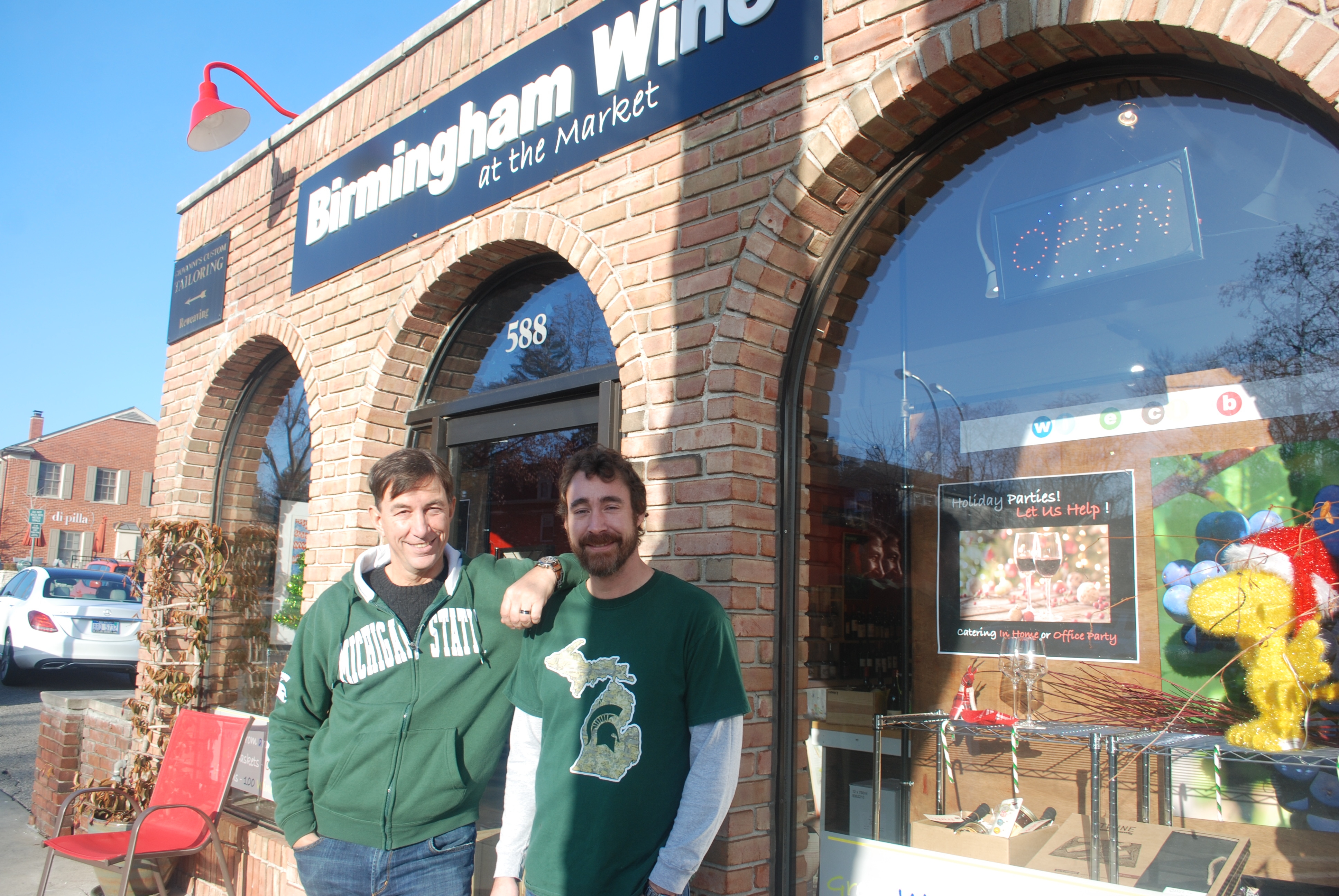
winezillaBut Ed is a wine geek, make no mistake about it: He’s been a wine steward and a wine rep (as well as an advertising exec and an elementary school teacher) and has owned a series of local wine stores for decades, from the pop-up style Winezilla in Ferndale to his current venture, Birmingham Wine, which is exactly where you’d think it is so long as you are thinking Michigan and not Alabama.

These days, Ed despises anything that smacks of wine label-bullying, and he admits that the exterior of his store may be more austere than he’d like it to be, but he’s bound by certain code restrictions.

“I see people walking by Birmingham Wine on a daily basis with an expression that says, ‘Wine stores intimidate me’.  If I can get them across my threshold, they discover a whole different vibe, one where wine is an adventure and never represented by some salesman  interested in showing off wine knowledge rather than learning exactly what a customer is looking for.”

Ed Bosse (l) and Andrew Sjolander (r) in front of the store on the day of Big 10 Championship game

Ed Bosse (l) and Andrew Sjolander (r) in front of the store on the day of Big 10 Championship game

In fact, in the hour or so I hung around the place, a woman came in looking for a ‘sweet girly wine’ and walked out with a smile and a bottle of Chambre d’Amour from Lionel Osmin et Cie, which Ed described to her as tasting like ‘grapefruit sprinkled with sugar’.

Speaking of analogies,  on my best day ever I couldn’t have come up with a better one than Ed quotes one of his now-loyal customer as having said: “Hell, these days I’m intimidated to order a cup of coffee at Starbucks.  Imagine the shakes I get when I walk into a wine shop.”

Not only is Ed’s store and staff designed and trained to phase out the intimidation factor, the layout of the place is simple, logical, and (to use a phrase Ed probably over-employed in his advertising career) ‘user-friendly’.  To the right is a wall with a sign that reads, ‘Everyday Wine; $15 or Less’ and to the left is a sign that reads, ‘Cellar Wine; $30 and Over’  In the middle is everything else, along with a table set up for impromptu tastings. In the rear is a couch that reminds me of one of those comfy coffee klatches from the Seventies where you could sit and shoot the breeze.

Which is exactly where Ed and me rapped our way through this interview.

“The new wave of restaurants, locally and nationally, are changing the way wine is understood, appreciated and consumed,” he says.

Selden Standard

Selden Standard

I ask him to name names and Ed immediately comes up with Selden Standard, among the vanguard of reasonably priced yet upscale restaurants that offer innovative dishes that are as far from Detroit’s plethora of steak houses as I was from taking his sister to the senior prom.

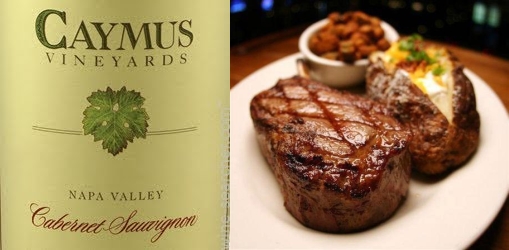
Ed says, “The hardest truth for a lot of stock brokers, lawyers and other well-heeled professionals to learn is that the wines they’ve been told by the Spectator and the Advocate are ‘great’—the Cakebreads and the Caymuses—really don’t taste right with the experimental style of small plate offerings that represent both the trend and the creativity among contemporary chefs.”

Clipboard steakAnd what does Cakebread and Caymus go well with?  You got it:  That big, bloody, thick, prime-cut slab of American Wagyu that, when you tally it up at the end, you realize you just spent $90 for the steak, $14 for the Caesar salad, $8 for the baked potato and probably a few more for the ice in your glass of water.  Oh, and $150 for the Caymus.

“The type of pioneer restaurant that encourages culinary gymnastics is our ally,” Ed maintains.  “In other words, restaurants that serve real food:  Selden Standard, Wright & Company, Toast here in Birmingham.  When you have a meal with multiple courses composed of subtle ingredients, nothing comes across more awkward than a heavy, oak-filled Cabernet.  Countless small producers from wonderful regions—wines not subject to the bullying tactics of the big Napa houses—are far more appropriate and delicious with this style of dining—let alone being more reasonably priced.”

biscardoAnd he’s absolutely right.  Most of the wines at Birmingham Wine are from limited-production wineries and priced within the sweet spot for consumer pricing, around $20.  For the sheer popular demand of such labels in tony Birmingham, Michigan—one of the most affluent cities in the United States—he offers  a handful of wines with tags running northward of $200—Opus and Dominus, et al.  But I can assure you, in the time I spent just nosing around and observing, I never saw a single patron steered toward them.  Customers were more likely to walk in eager for recommendations and walk out with multiple bottles of stuff like Nicola Biscardo Corvina Rosso, priced at $18.  These were people that, almost invariably,  Ed referred to by their first name.

This one's for you, boss.

This one’s for you, boss.

“We’re sort of the Drucker’s of Birmingham,” he says, referring to Sam’s Hooterville general store.  “We have a corner shop mentality.  People come here to chat with us as much as to buy wine, and some of the folks who have discovered fun and spectacular wines below $20—customers that could afford to buy whatever they wanted—have assured me that they were relieved to finally have the handcuffs off.  A lot of people in this area have been hypnotized by producers, by magazines, by tasting clubs, into the thinking that the more they spend, the better the wine.”

Again, we need more people like Ed in the wine world. When I was a kid, I didn’t much care for bossy people.  Then I caught a glimpse of his sister and started listening to Springsteen, and things changed.

Changing attitudes is the core of Birmingham Wine’s philosophy, and although I never thought of Sam Drucker as the dominatrix type, as far as I’m concerned, Ed can be the Bosse of me.


Posted in GENERAL | Tagged , , | Leave a comment

Thursdays With Maury

Many years ago I pledged a troth never to write a Thanksgiving wine column unless one of two things happened:  Either I thought of a really bad pun or I found a really good wine.

Merveille des merveilles, this year it’s both.

Povich-Free Appellation: The Maury Story

Clipboard vertMaury sits at the extreme top of the Pyrénées-Orientales department, which sits at the extreme bottom of Roussillon on the French Coast.  The region is as much Spanish as it is French, and as much Catalan as it is Spanish, which makes it a general cluster-bleep of contrasting cultures that somehow manages to upchuck some remarkable fluids.

Maury is a vin doux naturel—a phenomenon that, as far as wine history is concerned, originated the the south of France.  It’s made by arresting the fermentation process of a given juice somewhere in the middle, when many of the natural grape sugars remain. The mechanism behind the technique was discovered in the 13th century by Arnau de Vilanova, a director of the University of Montpellier. Called mutage, it involves  the addition of neutral grape spirits to the must to kill hungry yeast cells in the middle of the fermentation process.

Arnau de Vilanova

Arnau de Vilanova

One technique of mutage sur grain occurs before fermentation has begun, and results in vin de liqueur—essentially a grape juice cocktail. Maury is referred to as vin doux naturel because the brandy is added after the maceration period and the pressing, and although everyone’s tastes vary, to me this additional alcoholic soak time results in additional layers of complexity. Other, perhaps more celebrated mutage wines are Port and Banyuls, neither of which quite scratches the itch like Maury, although it may be difficult to find.

Mas Amiel ‘20’ Maury ($45)  comes from the largest private cellar in the appellation; the story behind it is as wonderful as the wine:  In 1816, a local bishop bet the property in a game of cards and promptly lost to a dude named Amiel.

Jamie interviews people so we don't have to.

Jamie Goode  interviews people so we don’t have to.

Now, I would think that this sort of tale is apocryphal, primarily because they speak a lot of Spanish in Maury and, of course, mas means ‘more and miel means honey—a perfect moniker for a sweet dessert wine—but my buddy Jamie Goode assures me that the story is true, and he does his homework. Which is why he is called Goode and I am called Lazy.

Anyway, in 1999, frozen-food magnate Olivier Decelle purchased the estate, noting that other people with even deeper pockets than his had passed on it, assuming that the place needed too much work.  Decelle claims (in a quote that will live on in quoteability) that the hot, rocky, nearly forbidding property found a peculiar place in his heart:

Olivier Decelle

Olivier Decelle

“When you are in love you are irrational. I bought it out of love.”

Rational or otherwise, Decelle developed the viticulture in the schist-soils on his 420 acres to include dry wines among the traditional vin doux naturel, actually applying for special permission from the INAO—the French organization charged with regulating French agricultural products with Protected Designations of Origin—to deviate from the Maury standard, which is sweet wine  made primarily from Grenache, with allowable additions of Grenache blanc, Grenache gris, Macabeu Malvoisie du Roussillon, Syrah and  Muscat.

labelHe secured that permission and I couldn’t care less, because it is the traditional sweet Maury that I’m writing about.

This wine is luscious in a way that only a truly exquisitely dessert wine can be.  It combines a beautiful chocolate-cherry aroma with wild notes of blackberry, sugared orange peel and sweet raisins; the savory quality are rich with roasted nuts and black pepper. The wine—though unabashedly sweet—maintains a lightness of expression that may be lost in dessert wines of similar residual sugars.  It may be a natural with nearly anything you serve to finish your holiday meal, but as with most ethereal vin doux naturels, Mas Amiel Maury really requires no chaperone.

By all means, enjoy a glass as a stand-alone, and when you’re done with that one, pour Maury.

Posted in FRANCE, Languedoc-Roussillon | Tagged , , | Leave a comment

#StealThisWineColumn

Later today I’m going to participate in a hashtag wine tasting, which is a unique marketing gimmick that gets a whole lot of wine people on Twitter and Instagram talking about a given product at a given cyber-location on a given hour of a given day.

Stephen McConnell

Stephen McConnell

According to my buddy Stephen McConnell, this results in ‘a nonstop spewing of cock-gagging platitudes’.

These hashtag discussions begin with some PR firm sending out a bunch of theme wines (in this case, Chilean Carmenère) to wine writers —folks who may or may not accept reproductive appendages into various orifi and/or gag upon them thereafter—and we instantly become a clamorous clot of cloying clowns, each posting our individual tasting notes and interacting with one another in the ether reality.

Although I find these hashtag conversations neither annoying nor particularly enlightening or fun, I do take profound moral exception to Stephen’s next comment.  Not the one about how we are a ‘wine-blogger circle-jerk of inbred douche-fuckery who couldn’t POSSIBLY get any more egregious’ because that’s probably true.

No, I object to his suggestion that we are doing it for the free wine.

Rage Against The Grid

atealEver since I read Abbie Hoffman’s magnum opus ‘Steal This Book’, I realized that nobody in America ever has to pay for anything ever.  (Incidentally, the Wikipedia entry for Hoffman’s  pièce de résistance reads: ‘The book sold more than a quarter of a million copies between April and November 1971; it is unknown how many more copies were stolen.’)

 ‘Steal This Book’ was a hippie counter-culture precursor to today’s hipster ‘living off the grid’ revolution, in which a strange breed of humanoid builds a self-sustaining home without a municipal water supply, sewer, natural gas or electricity and thus attempts to live a healthier life while leaving a smaller environmental footprint.

In Hoffman’s alternate universe, you simply steal the shit you want.

In fact, ‘Steal This Book’ is twelve chapters of childish tripe, bad puns, silly expletives and outrageous assertions.  You know, kind of like McConnell’s anti-hashtag-tastings  tirade.  But—and this is directed to my fellow bloggerinos who may in fact be snorting and snuffling and rooting around for free wine—the Hoffman passage nearest to your cold heart will be Chapter 8, Part 1: ‘Shoplifting’.

Abbie getting flabby while remaining blabby

Abbie getting flabby while remaining blabby

In it, the Abbster points out (in so many words) that simply heisting a bottle of wine from your favorite liquor store is much easier than actually having to write a blog about it.

Here are some of his pointers and my notes on their particular relevancy:

“The best time to shoplift is on a rainy, cold day during a busy shopping season.”  In other words, today.

“Undercover pigs are expensive so stores are usually understaffed.” Steal wine from that nice, helpful boutique wine shoppe owner, not Costco.

“One method is to use a hidden belt attached to the inside of your coat or pants, specially designed with hooks or clothespins to which items can be discretely attached. You should practice before a mirror until you get good at it.”  Sounds like simply writing the fucking wine column would be easier.

“ In the team method, one or more partners distract the sales clerks while the other steals. There are all sorts of theater skits possible. One person can act drunk or better still appear to be having an epileptic fit. Two people can start a fight with each other.”  I think we all can name a specific wine blogger we’d pair up with for this technique, can’t we?

“By taking only a single item, you can prevent a bust if caught by acting like a dizzy klepto socialite getting kicks or use the “Oh-gee-I-forgot-to-pay” routine.”  Golden.  Needs no further input from me.

Consequences…

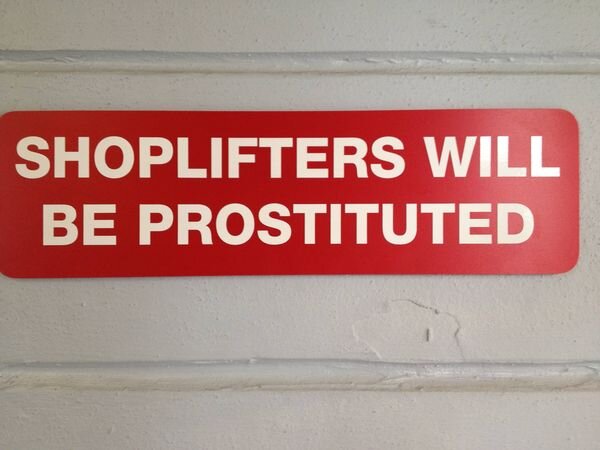
shopliftersOf course, your first reaction to all this might be, ‘But what if I get arrested??’  I already thought of that.  And I concluded that if you are someone who spends an inordinate amount  of time drinking wine, whether it is gratis, stolen or obtained through fair exchange in the free enterprise system, then spends even more time writing notes about what you just drank and then actually publishes a web site so that other people can read about what you thought about what you just drank, well, my friend, you are too out of touch with reality to be capable of actually holding a genuine job in the real world anyway.  So who cares if you wind up with a police record?

#CarmenereDay

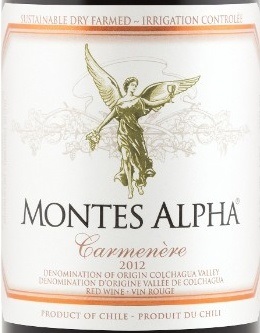
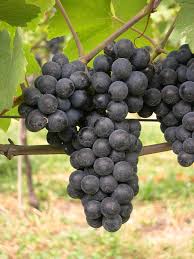
So, I will join the hashtag convo to ‘celebrate’ Carmenère Day, 2015.  And I did indeed receive four bottles of wine—Lapostolle Cuvée Alexandre, Maquis, Montes Alpha and Los Vascos.

montes alphaAlso inside the UPS package was a party hat which I am apparently supposed to wear while drinking the wine and throwing the silver confetti they likewise included while celebrating Carmenère Day all alone, by myself, in the dark, sitting in front of my computer typing comments directed at strangers on the internet.

This, of course, will make me feel like the poor schmuck who dies alone in his hoarder apartment and is discovered, half-eaten by  cats, when the neighbors finally call to complain about the smell.

But I’ll do it anyway.  Why?  Not because I want free wine; like most wine writers, I already have a closet full of free wine I haven’t even begun to think about.  No, I am doing it because I support the industry, because I believe in innovative marketing techniques and because I am as interested in comparing notes with other #winelovers in virtual reality as I am inside tasting rooms.

But most of all, I am doing it because I am trying to get at least one of these producers to add my name to the list of wine journalists they fly down to South America once or twice a year to experience the magic first hand.

That’s right, beeotches (you especially Stephen):  I want a free trip to Chile and can’t figure out how to shoplift one.


Posted in CHILE | Tagged , , , , | Leave a comment

A Nero Hero: Frecciarossa ‘Giorgio Odero’

neroEver been suckered into one of those multi-paged, data-mining websites where you learn, for example, why ’10 Things You Learned in History Class Are Totally Wrong’?

Of course you have.  And, like me, you probably got to about #4 before the annoyance factor of incessant in-your-face advertisements and endless waits for the next page to load overcame your need to become any smarter.

Fortunately, very early on the list is: ‘Nero Never Fiddled While Rome Burned’.

That may be true, but even the smartypants web administrator probably didn’t know that while Nero was doing something other than fiddling, four hundred miles north of Domus Aurea, in Lombardy winemakers were fiddling around with Pinot Nero.

Pinot Nero

Pinot Nero

The grape which has been revered and bemoaned, celebrated and savaged, bragged about as brilliant or branded as brutal (depending on the ground and the grower) happens to display more personality in  half-assed versions than most varietals—its Burgundian sister Chardonnay included—do in their finest.  It a tough vine to cultivate, susceptible to fan leaf, leaf roll, and downy mildew—all of which sounds sort of poetic and gentle but is devastating to vineyards.

As Jancis Robinson puts it: “The Pinot Noir grower’s lot is not an easy one.”

That does not stop the Northern Italians, especially those from the Oltrepò Pavese, from digging in their heels and producing more Pinot Noir (French for ‘Pinot Nero’) than anybody else in Italy.  Of course, the bulk of it ends up  as a component of sparkling wine, for which the region is justly noted.  Italians refer to the French méthode champenoise as método classico and in Oltrepò Pavese are composed primarily of Pinot Nero with up to a 30% blend of Chardonnay, Pinot Bianco and Pinot Grigio.

But a few plucky performers in Oltrepò Pavese use Pinot Nero as a stand-alone, and although some of the brooding bravado of Premier Cru Burgundies doesn’t put in an appearance, the Pinot Nero from this region can be fascinating and exceptional in its own right—and more rationally priced than any top shelf Burgundy.

One such example is Frecciarossa ‘Giorgio Odero’ Pinot Nero, Oltrepò Pavese, 2010, selling for around $35—essentially what you’d pay for a generic, catch-all Bourgogne Rouge Pinot Noir from a respected Domaine like Robert Groffier or Ponsot.

Americans without an OCD-level fascination with boutique wines from somewhat obscure Italian zones may have heard of neither Cuvée Giorgio Odero nor Oltrepò Pavese, but those who know a lot about both praise this release to the rafters. Gambero Rosso—a magazine, not a person—has consistently given this wine their highest rating while Decanter Wine Awards hung a silver medal around the neck of the 2009 vintage.

Oltrepò Pavese

Oltrepò Pavese

The wine originates on eight clay-heavy acres situated about 500 feet up in the Apennine foothills.  Here, the climate is relatively mild with warm, dry summers late summer and a season that allows slow ripening—one of the contract riders that Pinot Nero destined for table wine demands.

The Odero wine story begins at the end of World War I, when Mario Odero—a native of Genoa—purchased an 86-acre  estate near the Lombardan town of Casteggio.  Along with his son Giorgio (1901-1983), he established the winery as one of the most important wine producers of post-war Italy, becoming the official wine of the viceroys of India and the Italian royal family.

Margherita Radici Odero—The New Generation

Margherita Radici Odero, now at the helm

Margherita Radici Odero, now at the helm

Personally, I like a Pinot Noir that makes no pretense to being a brooding, smoky, truffly Earth Momma—‘Giorgio Odero’ rises above the loam and sits at the picnic table.  It’s a silken sip that would be lovely served at a slight chill; even at five years old it retains the exuberance of youth with bright aromas of pomegranate, cola—even sassafras—and a backbone of tart cherry to remind you of the pedigree.  It is fairly light in color, pale and growing slightly orange with age, but clings to the freshness associated with a younger wine while maturing with slight hints of black tea and licorice.

Although Margherita Radici Odero only produces about a thousand cases of this wine a year, she’s clearly stumbled over a formula that’s not worth fiddling around with.

If Rome is burning with anything, it’s envy.


Posted in ITALY | Tagged , , | 2 Comments

Fitou Be Tied: Domaine Les Mille Vignes

The thousand vines of Domaine Les Mille Vignes may be metaphorical, but the thousand points of light that light up my tongue when I drink the wine is very real indeed.

First, Fitou is first: The first Languedoc red wine to achieve AOC status.

Second, Fitou is often thought of a secondary wine in comparison to its sister appellation Corbières—Languedoc-Roussillon largest AOC—responsible for nearly 50% of the region’s prodigious output which size-wise is nearly three times larger than Bordeaux.

Third, I just tried a trio of Fitou reds that convinced me that any attempt by Corbières to swallow it’s much smaller companion should be met with the sort of resistance that the French Underground displayed in World War II.

‘Le Vent Qui vent à Travers la Montagne Me Rendra Fou…’

Jacques Guérin

Jacques Guérin

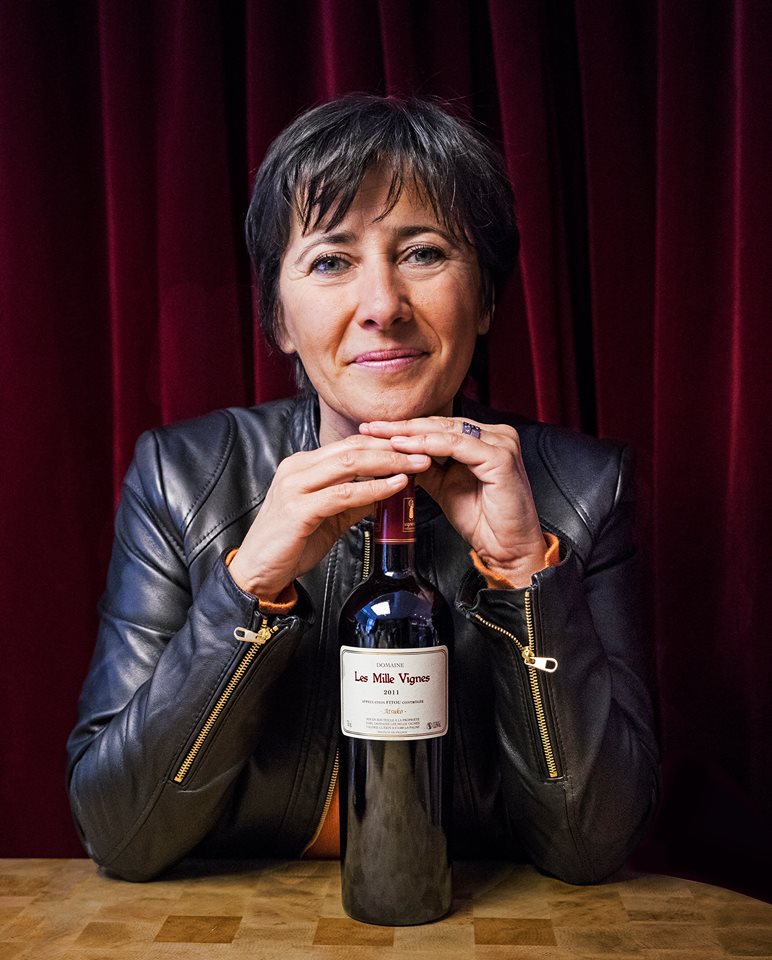
Domaine Les Mille Vignes was founded by former enology professor Jacques Guérin in 1979 and named for the multitude of old vines established on the thirty acres he purchased near La Palme, primarily in Fitou but also extending into Rivesaltes and Muscat de Rivesaltes.

One of the defining characteristics of the terroir Guérin and his winemaking daughter Valérie inherited with the property is the tramontane, a fierce wind that blows down from the northwest, accelerating as it passes between the Pyrenees and the Massif Central.  So relentless is the wind that it said to drive some people bonkers:  Victor Hugo paid the tramontane tribute in his poem ‘Gastibelza’: In English, the section heading means, “The wind coming over the mountain will drive me mad…”

Victor Hugo

Victor Hugo

In Mr. Hugo’s case, the drive may have been even shorter than the drive from La Palme to the Gulf of Lion in the Mediterranean Sea.  The combined forces of water and wind wreak havoc and harmony among the vineyards located here, and the flavors of brine and garrigue—the coastal herbs that include both sage and lavender, are present in varying degrees in the wines.

Valérie Guérin, who ‘took over the fields’ in 2000, says, “I am continuing the quality requirement my father requires; creating wines that are non-standard.”

Domaine Les Mille Vignes

Domaine Les Mille Vignes

I’ll drink to that, and specifically, I’ll drink Guérin’s Cadette, Atsuko and Violette; Fitou bottling where the ‘non-standard’ is in overdrive.  In general, wines from Fitou come across as countrified—rustic blends that have not, traditionally, aspired to tremendous heights of quality or price.  The wines of Domaine Les Mille Vignes reflect both the splendor that can be achieved with low yields and a focus on organics, and the costs inevitably associated with them.  Far from the ten dollar bottle of blue tag Fitou in the grocery cart in the wine section, Guérin’s top wines sell for the equivalent of a Super Second Bordeaux.

That said, and if you are prepared for the investment and if you are fittin’ to tie one on, Fitou is fit to tie on the ribbon.

How many bottles of Domaine Les Mille Vignes do you think it took to dredge up that drone of dreadful drivel?

Three, at least:

Tasting Notes:

Wrong vintage, so crucify me

Wrong vintage, so crucify me

Domaine Les Mille Vignes ‘Cadette’, Fitou, 2012 ($46):  An equal blend of Grenache, Carignan and Mourvèdre, the wine has a distinct iodine scent that is reminiscent of a briny breeze on the seashore; it is unusual to whiff in a red wine, but there you have it.  There is a foundation of minerality and flavors I associate with chicory—leafy and somewhat bitter.  The wine is broad on the palate but finishes somewhat abruptly.

Valérie Guérin

Valérie Guérin

Domaine Les Mille Vignes ‘Atsuko’, Fitou, 2013 ($79): 100% Grenache, the wine reflects the intensity of 75-year-old vines; the soils are sandier in this plot of vineyard and the wine is a yeasty slice of blueberry pie, all fruit and warm toasted crust.  The voluminous, velvety mouthfeel is peppered with a bit of spice toward the middle and a long, new-oak finish seems a bit too young for true balance.  The structure is solid enough that it would be well worth cellaring for another year to see those tannins settle down.

Domaine Les Mille Vignes ‘Les Vendangeurs de la Violette’, Fitou 2011: ($90): A sensory-surrounding masterpiece filled with bright raspberry jam, much livelier than the gamey, overly-reductive Mourvèdres sometimes encountered in nearby Bandol.  The wine is a bit harder on the palate than Atsuko, but offers notes that remind me of dried cherries over oatmeal—the warm-toast qualities of all three of these wines are among their signature ‘non-standard’ profiles.


Posted in FRANCE | Tagged , , , | 2 Comments

Inglorious Bâterd: Leave the Millennials Alone

Jason Jacobeit

Jason Jacobeit

“So many Millennials are interested more in the narrative of the wine rather than the wine,” said Jason Jacobeit, the 29-year-old head sommelier of Bâtard restaurant in New York. “A lot of mediocre wine is being sold on the basis of a story.”

Even though I just stole the opening paragraph of Lettie Teague’s piece in the Wall Street Journal—‘How Millennials Are Changing Wine’—I couldn’t resist: The irony is enough to make Alanis Morissette cream her skinny jeans.

Bâtard restaurant is named for Bâtard wine, and who among us is so dull-witted that when we learn that bâtard is French for ‘bastard’ doesn’t want to learn the story behind that?

How you say, médiocre?

How you say, médiocre?

Now, I am not saying that in general Bâtard-Montrachet is mediocre wine, but by golly, some vintages certainly are: Jancis Robinson—one of the few wine voices I consistently admire—gave 2011 the Parker-scale equivalent of 87.5, or solidly within the range of mediocrity. I promise you that this wine sold well nevertheless, and based on a number of premises that all involve narratives.

Foremost is the fact that Bâtard is not Montrachet. Just as I usurped Tarantino’s film for my title and Lettie’s opening paragraph for my lede, so the 27-acre AOC within the communes of Puligny-Montrachet and Chassagne-Montrachet—neither of which are genuine Montrachet either—Bâtard usurped the name of its more famous, non-bastard brother, Le Montrachet.

In other words, although Bâtard produced wines that are not as rarefied and pricey as the 43,000 or so bottles of Le Montrachet, they surgically attached the name to their own via a hyphen in order to bask in a little reflected glory.

In short, they opted for the story over the substance.

Drew and the bastard

Drew and the bastard

Bâtard restaurant—the Tribeca throne from which Jason Jacobeit lops off the tastebuds of Millennials—was so named because [Yellow Tail] Grill or Gallo Hearty Burgundy Bistro did not adequately symbolize the standard-of-excellence that Drew Nieporent was aiming for; naming it after Bâtard-Montrachet, which averages $500 a bottle, did.

But that’s not to say that Nieporent has any more of an obligation to uphold Bâtard-Montrachet’s reputation than Hearty Burgundy has to uphold Burgundy’s.  I could change my name to Jancis Robinson Kassel and you can bet I’d still be writing the same old tripe.

Nieporent is opting for the story in the hopes of living up to the substance.

Without a Story, It’s So Much Grape Juice

So, on to the pointless dig at Millennials:

I guarantee that Jason Jacobeit—who at 29 is smack dab in the middle of Gen Y—sells plenty of wine based on the story, especially the four labels of Bâtard-Montrachet he carries on his wine list—more than all nine of Nieporent’s other restaurants combined.  A detailed history may not be what the average diner willing to shell out $1150 for a bottle of LeFlaive Bâtard 2009 is after, but if the guest wants to know why it’s called ‘Bastard-Montrachet’ and not ‘Skanky Ho-Montrachet’, I imagine a head sommelier would want to be handy with the Cliff’s Notes explanation.

Bâtard's wine list

Bâtard’s wine list

From a wine writer’s perspective, the story about the story is a different story. I assume that most wine-conscious Millennials find a free, anecdote-filled (if mediocre) wine blog like this one a better bargain than an expensive, anecdote-less bottle of  Bâtard 2011, and I will, with all confidence, suggest that the story behind Lord Puligny’s bastard kid having a vineyard named after him is much more interesting that the 87.5 points I might (as Jancis Robinson’s doppelganger) give the wine.

What does Jason Jacobeit expect me to write about?  My opinion of a wine’s substance is of limited interest, even to me.  To adopt some sort of role as swill sensei to Gens X, Y and Zed, I better bring more to the table than tasting notes.  Look, into every life, some wine-flavored rain must fall, and nearly all of it is going to be mediocre.

I hope Jacobeit is not suggesting that young people are drinking $20 Bourgogne instead of $1200 Grand Cru because they prefer it.

Parsons Projecting…

Taylor ain't too swift?

Taylor ain’t too swift?

The Teague piece goes on to quote another borderline-Millennial somm, Taylor Parsons of République in Los Angeles. He attributes ‘gaps’ in Millennial wine knowledge to their incessant search for ‘the next cool thing’.

“We get tons of requests for Slovenian Chardonnay,” he says by way of example.

Forgive me for playing the credibility card here, Taylor, but really?  Tons of requests for Slovenian Chardonnay? In the first place, who measures requests by the weight, and second, say that one request tips the scale at two pounds—that means you have personally received one thousand requests for Slovenian Chardonnay, and yet your wine list (which I just Googled) contains exactly zero.

If I own ‘République’, the first thing I do is get rid of the uppity accent in my name and next, fire your beverage-directing ass for not providing my guests with what they want.

And what’s wrong with poor Slovenian Chardonnay anyway?  I recall it was the generation before mine, not after, that discovered you could make pretty goddamn decent wine in Napa and that your Chianti was better if you blended in Cabernet Sauvignon instead of Malvasía.

Clipboard rippleYou’d think that any wine pro in an industry of changing tastes would listen carefully rather than ridicule carelessly people who are passionate enough to ask for something that’s not on the menu.

From the standpoint of a narrative, to me (a scribe) the wine itself—lofty, luscious, lyrical and, on occasion, mediocre—is far less riveting than the men and women who live it, create it, engulf it.

Those are the stories that I want to share with any of you Millennials, Perennials or Quadranscentennials who are willing to listen. And if you young whippersnappers have stories of your own—like if you mix Slovenian Chardonnay with Harlem Ripple and get Slovarlem Chardonipple—I hope you will beat a path to my doorway.

…Just stay the f**k off the lawn, you little bastards.

Posted in GENERAL | Tagged , , , , , | 1 Comment

Château Fueillet: Torrette Syndrome

firstI have spontaneous respect for wineries who export wines when they don’t have to; when they develop an international fan base when it makes no business because they simply produce too little wine for this to be a strategy with dividends.

They’re like little Evel Knievals without any rationale beyond their battle cry:  “Look at me and see what I can do!”

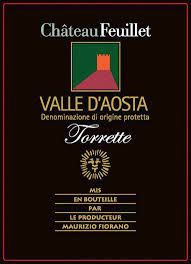
That’s my impression of Château Fueillet of Torrette—a tiny domaine in a tiny town just outside tiny Valle d’Aosta, a scarcely-discussed DOC wedged so far into northwest Italy that if you go any farther north you’re in southwest Switzerland.

If Fences Make Good Neighbors, What Do Alps Make?

Valle d'Aosta

Valle d’Aosta

Aosta exists in a triad of wine traditions reflecting its relationship with both France and Switzerland.  The output, however, is almost ludicrously small—wine pro Todd Abrams points out that Barefoot Cellars sells more wine in a year than the entire region combined, while the Valle d’Aosta DOC itself produces only 36,000 cases annually, making it similar in output to a single top estate in Bordeaux.

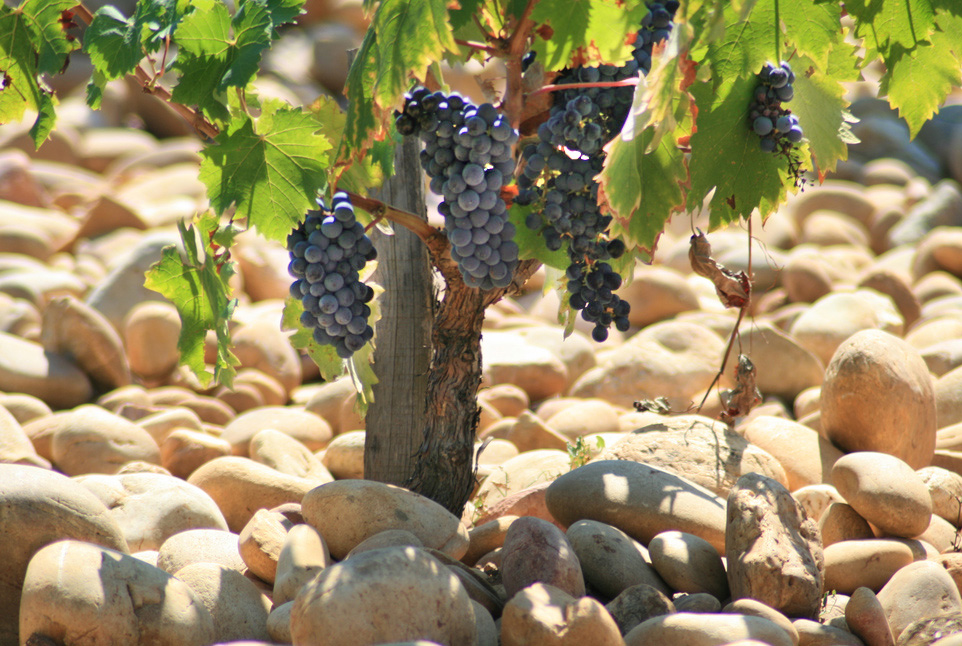
What they make is fascinating, though. Despite vineyards at average elevations higher than nearly anywhere in Europe, the climate is remarkably hot and dry, leading to extended hang times and harvests that may extend beyond October. Again, contrast this to Barefootlandia, where nearly all the grapes are in long before fall has even begun.

The indigenous grapes in Valle d’Aosta are part of a whirring cosmos of unfamiliarity as well.  Their imports we know—Gamay, Nebbiolo, Malvasia—but the home team is the one I find most seductive.

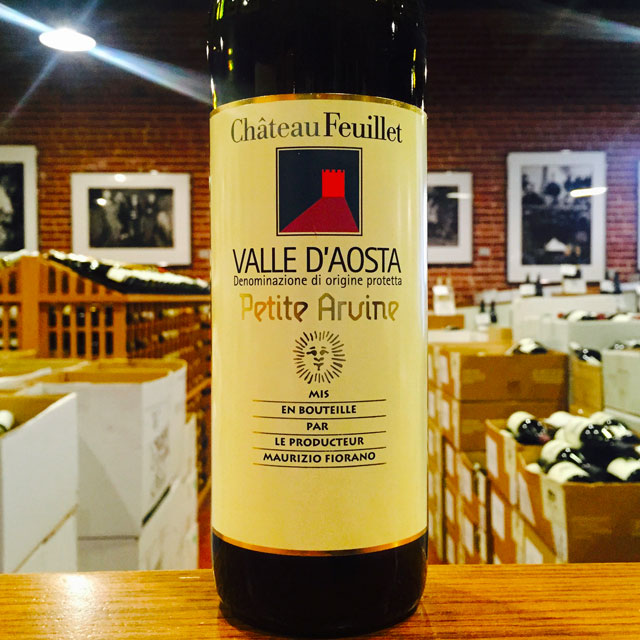
petite arvineFirst,  Château Fueillet Petite Arvine, 2014 ($31).  A late harvest grape, Petite Arvine is well suited to the long, dry climate of d’Aosta. It tends to be low-acid, but the diurnal shifts here are so extreme that what acids exist remain throughout the ripening cycle. Sugars and flavors concentrate, and the result is a rich, balanced nectar that suggests all sorts of apple incarnations, from slightly oxidized core to Jolly Rancher candy.  Behind that is an array of flower tones and an underscore of crushed stone minerality.

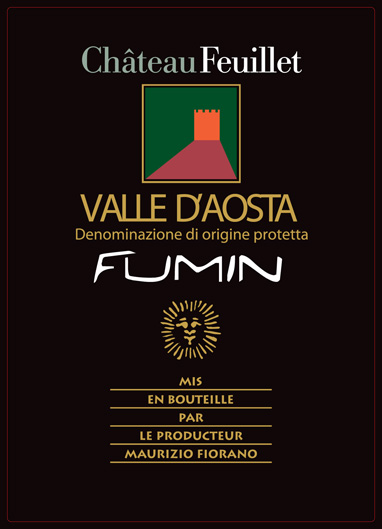
FronteFuminUSAChâteau Fueillet Fumin, 2014 ($35) contains 10% Syrah, but showcases Fumin—a red grape native of Aosta and, as far as I know, grown nowhere else. If this wine is representative of Fumin’s profile, the  obscurity is a shame: It’s bright with sweet red berries, the pleasant side of jammy. The tannins here are equally ripe, and are predominately of the sort you associate with grapes allowed to remain on the vine for as long after véraison as possible, equaling big velvet potency in the mouth. The wine also employs a few technical sleights of hand: Maceration may last 20 days, and after nine months in barriques, the wine returns to stainless steel tanks for a settling period before bottling and is not released until eighteen months from harvest.

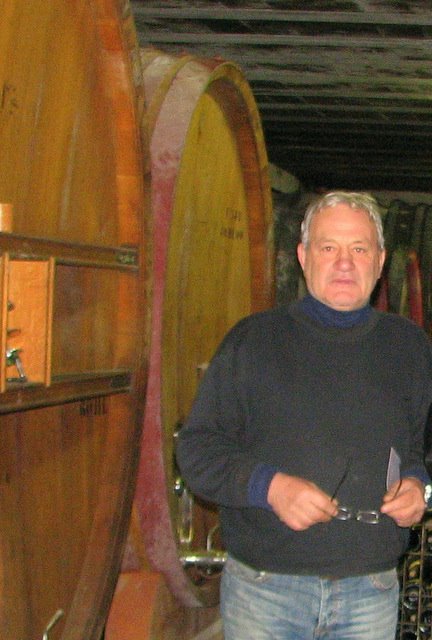
Maurizio Fiorano

Maurizio Fiorano

The winemaker responsible for these gems is Maurizio Fiorano, a surveyor turned enologo when he began to cultivate the five thousand square meters his wife inherited. As mentioned earlier in this piece, when we are talking small in Valle d’Aosta, we mean it: Since 1998 he has increased his vineyards nearly tenfold, yet still speaks of them in terms of square meters rather than hectares or acres.  And when he showed up at the mammoth VinItaly expo to show off his first vintage, he only brought along four bottles.

Despite doing small, Fiorano thinks big: A global marketplace is not necessarily on his bucket list, but a wish for global recognition is sloshing over the sides.  And, having discovered his wines in an equally tiny wine store (like a treasure in a curiosity shop) I can confirm that the bucket on Maurizio Fiorano’s list is filled with some remarkably stalwart juice.

Posted in ITALY | Tagged , , | Leave a comment

Domaine du Pegau: The World’s Best Jug Wine?

Pegaü  is an old French word meaning ‘jug’—specifically, a fourteenth century terracotta jug discovered in the Palais des Papes in Avignon.

That, of course, makes Domaine du Pegau the most exclusive jug wine in the world.

Paul Féraud

Paul Féraud

As for pronunciation, DdP may also be the most mispronounced wine name in the world: Even Pegau winemakers Paul Féraud and his daughter Laurence disagree. The original word has an umlaut (in French, a tréma) over the ‘u’, making it Peh-GOW; Domaine de Pegau uses no tréma, making it ‘Pay-GO.

Regardless of pronunciation, the Féraud family has been making wine in the lauded commune of Châteauneuf-du-Pape in Southern Rhône since 1670.

Although the Domaine itself was not officially named until 1987, Laurence Féraud confirmed that the Pegau style originated many centuries ago:

Laurence Feraud

Laurence Feraud

“We have always made powerful wines with elegance and sophistication. We look for complexity both in the grapes and their treatment, and we achieve this by choosing the correct soils for our varietals and the barriques in which we age them. Wine in a barrel is like money in the bank, always earning interest.”

Laurence credits her palate to nature as much as nurture, believing that taste is a genetic inclination. Indeed, with a pedigree that reaches back centuries, it is hard to disagree. Still, her personal wine resumé began early: She tells tales of being assigned to check the wine level in foudres (600 liter barrels) when she was five.

“My grandmother Elvira was the winemaker—my grandfather was more of an intellectual; he tended the vineyards, along with my father when he became old enough. In 1964, the family decided to bottle 2000 annually under the name Domaine Féraud while the rest went into foudres and was sold to merchants.”

Then as now, the Férauds grow primarily Grenache, Syrah and Mourvedre, among the the eighteen grapes permitted Châteauneuf-du-Pape, including a few white varieties.

Laurence points out that her only biodynamically certified vineyard plot grows only white grapes.

Rocky terroir of Châteauneuf-du-Pape

Rocky terroir of Châteauneuf-du-Pape

As a winemaker, Laurence Féraud favors the rich licorice qualities her fruit exudes, based in part on the red clay soils that make up the terroir.  Various other soils, including the famous galets roulés stone, impart notes of white pepper, the herbal quality known as garrigue and a nice undertone of leather and roasted meat.

These are qualities which has seen Domaine du Pegau ranked among the top three labels in the appellation since its inception.  These days, Laurence Féraud is passing along family traditions to her son Maxim, insuring that it will remain a force in CdP for yet another generation.

Tasting Notes:

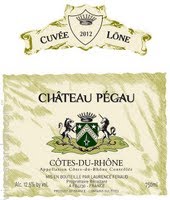
cuvee loneChâteau Pegau Côtes du Rhône Blanc, ‘Cuvée Lône’, 2014 ($18):  Leesy and floral, with a sight touch of oxidation; the wine shows more mineral than fruit, although there is some latent peach notes on the amazingly long palate. 40% Clairette, 30% Bourboulenc, 20% Grenache Blanc and 10% Ugni Blanc, for the blend-curious.

Domaine du Pegau Châteauneuf-du-Pape Blanc, 2014 ($42 ): A better selection for fruit lovers, this wine is a juicy—albeit pricey—tropical paradise, with a flamboyant nose of pineapple, mango and ripe pear.  The blend here is weighed heavily in favor of Grenache Blanc and produces a deep, refreshing package with lovely, fresh aromatics and bracing acidity.

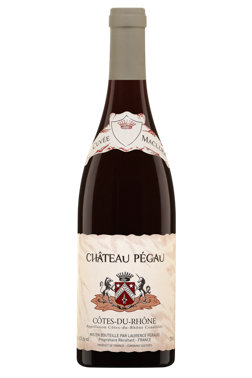
cotes du rhone redChâteau Pegau Côtes du Rhône Rouge, ‘Cuvée Maclura’, 2012 ($18):  The concentrated raspberry quality of this wine, made primarily from Grenache, is so intense that I was prepared to pick seeds out of my teeth after a sip.  Cassis comes into play as well, and a firm tannic undertow that lingers on the palate with a slight bitterness.  According to Laurence, since this wine is aged in vats, the tannins are primarily from the stems and seeds with which the grapes were macerated for ten days.  A beautifully luscious Côtes du Rhône.

Château Pegau Côtes du Rhône Villages, ‘Cuvée Setier’, 2012 ($25):  The fruit notes are darker here, with mulberry and black currant predominant.  This is the somewhat wilder cousin to the Maclura, heavier, fiercer, with pepper tones and untamed tannins.  Needs some time to mellow, but provides a lurid glimpse into what Villages level in this AOC can do.

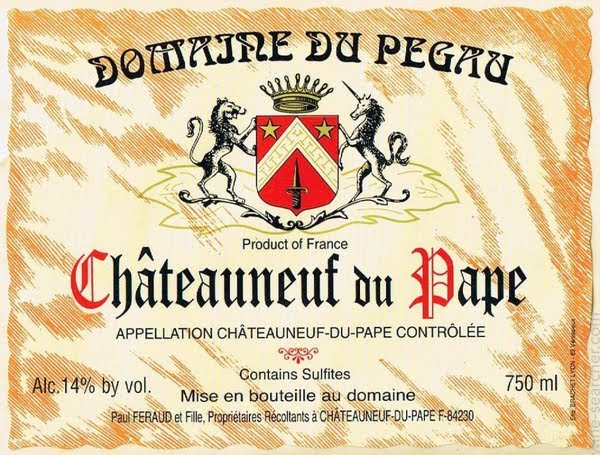
chat pape labelDomaine du Pegau Châteauneuf-du-Pape, ‘Cuvée Réservée, 2012 ($79):  A blockbuster, with layers of varietal flavors that seem to isolate themselves before blending together in a massive, earthy mouthful that suggests a judicious dose of brett.  A spicy pepper bite behind roasted meat, barnyard straw, black cherry and tight tannin backbone.

Domaine du Pegau Châteauneuf-du-Pape, ‘Cuvée Laurence’, 2011 ($79):  More to my personal tastes, this wine maintains the huge and brightly acidic profile both in aroma and palate, but the earthy tones are now established outside the barn, with mushroom and wild herbs shoring up sweet red fruit and the elusive licorice flavor that is the pride of Laurence Féraud.


Posted in FRANCE, Rhône | Tagged | Leave a comment