Robert Oatley Winery: Will the Canes Mutiny?

North of Mudgee, in between Putta Bucca and Buckaroo, just below Budgee Budgee and near the Wooloomooloo vineyard, they’ve got a bunch of old grape vines piled up.

The burning of which I would not have had the slightest interest in writing about except that with all those outrageous Aussie names to play with, how could anyone resist?  Giving directions to the Burning of the Canes is like rattling off the cast from Jungle Book.

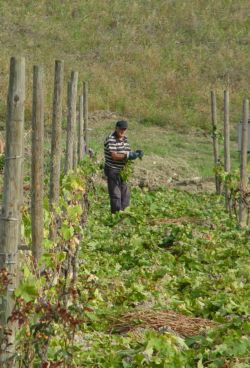
Said cane burning was celebrated last month by the gang from Robert Oatley Vineyards, who are pretty much single-handedly keeping this odd, ancient ritual alive.  Oatley claims that it’s a pagan-era celebration of the end of winter and the beginning of a new grape growing season—equally, a nod to the hard work performed by the migrant-level workforce who prune and cull all through the season.

As a custom, is supposed to have originated in France, where it would logically be celebrated in February or March, but as far as I know, nobody in France has burned anything more substantial than Joan of Arc since Charlemagne was in charge and the annual cane burn is now associated almost exclusively with Robert Oatley—which means that in topsy-turvy Oz, it happens in August, when winter ends in his half of the earth.

If I am wrong about this, and there are any snooty French pagans out there regularly setting fire to their vineyards, please let me have it with both barrels.  Oh, and while we’re talking about both barrels, you’re welcome for Omaha Beach.

Of course, like any self-respecting barbarian wingding, all the solemnity, mythology and symbolism involved in the Burning of the Canes is merely an excuse to get together, drink copious amounts of local wine and gluttonize.  That is precisely the way it went down when culinary guru—another heathen term—Pete Evans inveigled a few hundred hungry pyros with a grand feast held inside Mudgee’s oldest winery, Craigmoor.
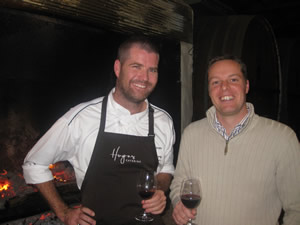
Describing the festivities, Sandy Oatley (son of Robert) offered the following boring comments, somewhat unworthy of a drunken pagan:

“Viticulturists are the unsung heroes of winemaking.  While burning of the canes is a rare practice here in Australia, we enjoy the chance to acknowledge the exceptional work done in the vineyard across the seasons. It’s also a great opportunity to celebrate our efforts with friends and fellow wine lovers.”

Fortunately, his wines are less snooze inspiring.  His dad is the former owner of Rosemount—arguably the most recognized and successful family-owned winery on the continent.  As Rosemount’s helmsman, Patriarch Bob pioneered user-friendly, affordable wines first throughout Australia, and then, the world.  A chardonnay/semillon blend was his first big hit, which he called ‘pinot riesling’ for reasons known only to a country that celebrates Christmas in the summer.  This was quickly followed by his rollicking reds; theHunterValleyfruit bombs which now have a permanent spot on finer grocery store shelves for their scrumptious low-priced reliability.  If somehow, some way, you had to crown a Shiraz King, it would be Robert Oatley.

So if he wants to call his semillon riesling, he’s welcome to do it; if he wants to congregate and consummate and conflagrate and toss some shrimp on the Wooloomooloo cane-stoked barbie, more power to him—better prawns than the Maid of Orleans.
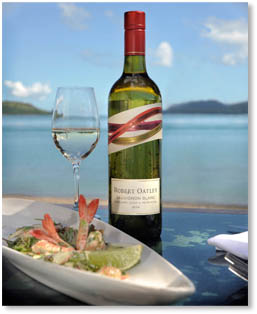
 

Tasting Notes:

 Robert Oatley Sauvignon Blanc, Margaret River & Pemberton, 2008, about $16:  Stellar vintages tend to produce sauvignon blancs that are juicy with pineapple and mango rather than the thin-vintage ‘grassy’ style.   2008 was such a year.  And this is such a wine.

Robert Oatley Chardonnay, Mudgee, 2008, about $16:   Wooloomooloo grapes! So who cares that an early harvest led to higher-than-normal acidity?  The cool weather shows in a crispness of style reflected in citrusy underpinnings, especially lemon and orange peel.

Robert Oatley Shiraz, Frankland River & Mudgee,  2007, about $17:   The blend of brambly, rustic wine grapes from Mudgee and the lighter, fine-grained Frankland grapes makes a nice coupling, with floral and spice notes balancing a full-bore chocolate and blackberry backbone.

Robert Oatley Cabernet/Merlot, Margaret River & Mudgee, 2008, about $18: Mudgee merlot’s trademark is ripe tobacco leaf, and this is a great foil to theMargaretRiver cabernet grapes with characteristic bell pepper, graphite, chocolate and blueberry.  Dollar for dollar, this one is hard to beat.

Posted in AUSTRALIA | Leave a comment

Grape Meets Grill: A Primer for Pairing BBQ and Wine

In the beginning—or shortly thereafter—there was man, an open hearth, a deer haunch and a skinful of some insanely gratifying juice made from crushed grapes growing wild along the Tigris river.

Primordial party time for the Mesopotamian player.

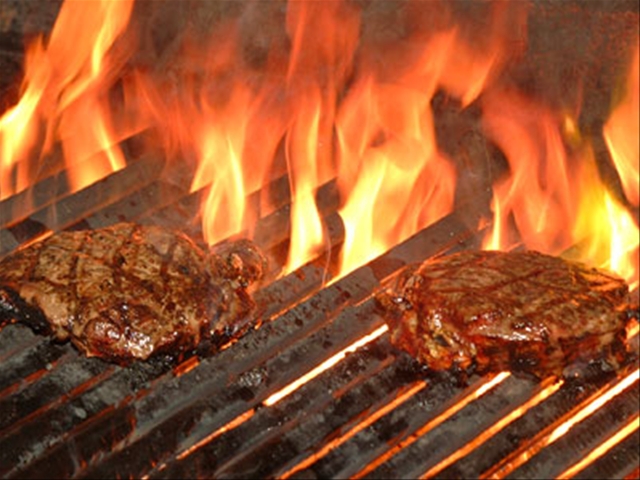
The rapport between wine and wood-grilled meat is a cornerstone of gastronomic history; a reminder that the more things change, the more they remain the same.  Our techniques have been refined, but not by much.  Short of a manicured backyard, a Ducane 7200, a corkscrew and a ‘Kiss the Chef’ barbecue apron, the prehistoric great-something grandfather of today’s weekend grill jockey operated under the same overriding ideology:  At the close of the day, there are few combinations more elemental and enjoyable than a smoke-soaked steak and a sip of soul-stimulating wine served outdoors amid a circle of like-minded barbarians.

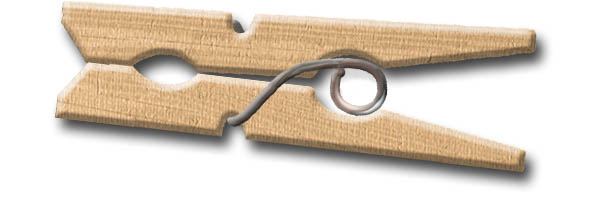
Philistine philosophies aside, there’s science behind the sensuality.  Two words:  acids and tannins.  Charred meat, including fish and fowl, can take on certain bitter overtones due to unregulated heat zones within the grill, and these can be meliorated with a newish, richly tannic wine.  Tannins, of course, are those chewy chemicals released when the seeds and stems of grapes are crushed along with the fruit, or leeched from wooden aging barrels.  They act as a preservative (‘tanning’ an animal hide utilizes tannins to prevent decomposition), and when young and raw, they can result in a mouthfeel that’s akin to gnawing on a clothes pin.  Alone, aggressively tannic wines can hit your palate like a tactile tsunami.  But an odd pas de deux arises when the bitterness of blackened meat meets the astringency of immature tannins, softening both to manageable levels.

Likewise, the fat which often remains behind on even a well-cooked cut of meat can be tamed by a wine’s pH, and the rarer you go, the more you are going to require a companion beverage that has a lightning-bolt of acidity and plenty of puckery tannins.  Proteins and fats bind with tannins, and as a result, fruit notes inherent—but often muted—in a tannic wine, are enhanced. Presumably, a glass of lemonade mixed with sawdust would serve as well, but I’ll stick to a junior Bordeaux, a fledgling Nebiollo, or a full-throttle Zinfandel.

Which brings us to varietals.  While it’s true that the easiest partnership with grilled red meat may be ripe ’n’ raw reds—which tend to pack in more tannins that whites—there’s enough exceptions to toss out generalities.  Fleshy chardonnays where the oak is in overdrive are perfectly appropriate to serve alongside simple grilled meats, and serious sauvignon blancs—whose very root (sauvage) means ‘wild’, can wrestle with most multi-flavored barbecue slathers.

Anyway, pairing wine with wood-grilled meat is less about adhering to rules and more about shedding the skin and relaxing.  Of course, the evolution of wine, from catch-as-catch-can plonk fermented from rogue yeasts to the refined flavors of our time, has largely been a story of laws and regulations.  But isn’t it a huge breath of fresh air—whether from the outback, the backwoods or the backyard—to lay back, damn decorum, and do what today, as in 6000 BC, comes naturally?

A few textbook grill wines:

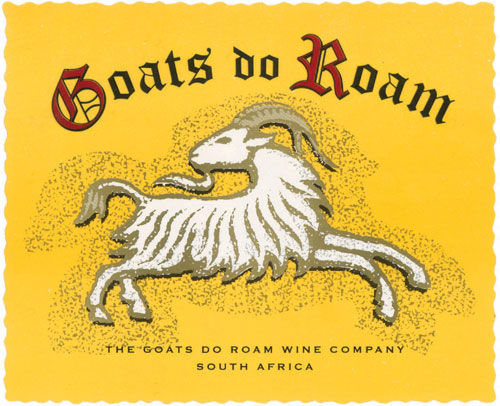
Fairview Goats do Roam, around $10: Like its model, Côtes-du-Rhône, this fruity, easy-drinking South African red is a blend of several grapes. It’s a terrific partner to all kinds of smoky meats.

Rosenblum Zinfandel, about $13: Zinfandel isAmerica’s best red wine, and the Rosenblum is a superb all-purpose, all-occasion specimen. The fruit is dense and dark with classic blackberry and raspberry flavors. Great with all things grilled. Matches up especially well with hot marinades or barbecue sauces.

Beringer “Founder’s Reserve” Pinot Noir, about $12: Light, chillable reds are hard to come by. This pinot noir is bright and fresh with good concentration and flavors. A little lighter, and it could be like the Vin Gris above. Grilled marinated portabello mushrooms with scallions are a great match.


Posted in PAIRING WINE AND FOOD | Leave a comment

Laughably Ludicrous Liquor Laws from the Land of Liberty

If you happen to be a French person, there is absolutely no down side to believing that Americans exist solely for your amusement.  It takes some of the sting out of having gone from world domination in the eighteenth century to being an irrelevant member of the G8 with naked pictures of your First Lady available on eBay in the twenty-first.

Therefore, while you (with some justification) insist on maintaining your superiority on at least one global front—matters related to getting snookered—feel free to do that nasally Pepé Le Pew laugh over our painfully American, stuck-in-Prohibition mentality, which has these embarrassing drinking laws on the books:


In Missouri, if your kid takes out the trash which contains an empty wine bottle, he/she can be charged with possession.  Have they no logic lobbyists in Jefferson City?  Meanwhile, while touring the ‘Show Me’ state, show me somebody in St. Louis drinking beer from a bucket and I’ll show you jailbait.

One out of five states refuses to allow liquor sales on election day, but has no trouble if we spend every other day drinking to get over who we just elected.

If you get a DUI in New Jersey, you’re prohibited from owning personalized license plate for three years.  Word to the wise: Once that period is up, don’t apply for SHTFCED.

Speaking of DUI, in Virginia you can be charged with a DUI as a drunk passenger.  Spot quiz: Yes or no, does that confuse the ‘designated driver’ concept?

In New Hampshire, you cannot be served an alcoholic drink unless you are sitting down, but nothing specifically prevents you from being served if you’re lying down.

In Maryland, your humble reporter would be unlikely to pass that state’s stringent requirements concerning wine writers. Not only are they restricted to three bottles per brand of product samples, but they must first be certified as experts by an agency of the state.

In Indiana, it is illegal for liquor stores to sell cold soft drinks, but room-temperature soft drinks are OK.  In Connecticut, you can’t sell beer after 8 PM.  Hardly anybody lets you sell booze on Christmas, which is an ACLU lawsuit-worthy slap-in-the-face to us alcoholic atheists.

In California, no alcoholic beverages may be displayed within 5 feet of a cash register if the store sells both alcohol and motor fuel.

In Fairbanks, Alaska, it’s illegal to serve liquor to a moose, and in Ohio, though not specifically forbidden to serve liquor to a fish, it is expressly against the law to get a fish drunk.

In Iowa it’s illegal to run a bar tab.

In Indiana, you can be incarcerated for carrying a drink from the bar (where you bought it) to your table (which is what you’ve been sitting at the bar waiting for).

Did someone say ‘bar’?  Bars in North Dakota are forbidden to serve beer and pretzels at the same time.  Nebraska bars may not sell beer except when simultaneously brewing a kettle of soup.

At least nobody mentioned ‘saloon’, especially in New York where it is verboten to call your saloon a saloon.  Which is why restaurateur Michael O’Neal’s saloon is named O’Neal’s Balloon.

In Kentucky, if you give someone a bottle of beer as a gift, you can go to jail for five years; roughly the same length of time it takes a newborn Kentuckian to reach legal marriageable age.

Texas state law, which prohibits taking more than three sips of beer while standing, makes it illegal to sell alcohol after midnight on Sunday, but allows the sale of alcohol at ‘any time’ on Monday—Texans, apparently, being confused as to when Monday officially begins.

Ah, Texas, land of superlatives, where executing prisoners is not only legal, but practically a state sport—a while back they killed three prisoners in one day.  (Not sure what that’s called in Houston, but I know what we call it in Detroit—a hat trick). Anyway, they’re responsible for the best liquor law of all:

The entire Encyclopedia Britannica is banned in Texas because it contains a recipe for making beer.

Laugh on, French people.  I’ll be in my padded wine cellar if you need me.


Posted in GENERAL | Leave a comment

Greek Wine: A Luscious Legacy

That the world of Greek wine has seen its share of woe and wonder, slumps and slights, triumphs and transformations should come as no surprise:  the Greek wine industry is more than six thousand years old.

As the cradle of civilization and many of the amenities that keep us civil,Greece can claim a vine culture that extends to prehistory.  Such pedigree has allowed the multi-faced wine regions (there are nine—seven on the mainland and two among the islands) to experiment, and ultimately perfect unique and individual styles.

Traditionally, wine was the chief trade-driver throughout Greece, and doubtless played a central role in the sophisticated economy of Minoan culture, which pre-dates the earliest records of European history.  Like all things tied to the fickleness of trade, Greek wine as a commodity enjoyed highs and lows throughout the ages, but the first truly dark age probably dates to the 1400’s, when the Ottoman invaders levied burdensome taxes on the business and drove winemaking traditions behind the cloistered walls of Orthodox monasteries.  For centuries after that, Greek winemaking was relegated to towns and villages and remained largely unregulated.  Add to that the ravages of disease (phylloxera especially) and the displacement of grapes in favor of more profitable produce like red currants, and the entire winemaking industry in Greece nearly ground to a halt.

Winemakers, by their nature, rarely sit still, and over the past twenty years, the pressures of elevating standards brought on by an international rediscovery of the virtues of wine have caused many to rethink the traditions of six thousand years.  In Epirus, for example, in the mountainous northwest, many of the native varietals like bekari and vlachiko were replanted in the Sixties with more fashionable grapes like cabernet sauvignon and merlot, previously unknown in the region.  In Thraki, in the northeast, familiar (to Americans) varietals like chardonnay and sauvignon blanc are often seen growing alongside rhoditis and zoumiatis in a tantalizing blend of old and new.

A similar dichotomy can now be found in the other recognized wine regions, along with techniques upgraded by modern Greek winemakers, many of whom study in Bordeaux and Burgundy.  In thePeloponnesus, home to the renowned malvasia trade of the Middle Ages, modern methods are revolutionizing everything, especially among the top producers. Nemea, one of the Peloponnesus’ appellations, is considered by some to be Greece’s most important zone, and home to some of its most well-known winemakers—George Skouras, aDijongraduate, among them.  Dr. Dimitris Katsarós has made similar inroads among the flat plains of Thessalía (in south-centralGreece), making Bordeaux-style reds of cabernet sauvignon and merlot which satisfy not only commercial objectives, but his own high standards.

In rugged Macedonia (within the Naousa appellation especially) the more traditional grape variety xynómavro rules, and here, produces red wine upon which the international reputation of Greek wine depends.  Credit, to some extent, the influence of the Boutaris firm for the continued success of this hard-to-pronounce, but sensational, velvety wine, reminiscent of Burgundy’s best.

Central Greece holds a reputation (for good or for ill) as the stronghold of retsina, the pine-scented white wine vinified from the savatianó variety which is the poster child for ‘acquired tastes.’  The addition of pine sap to wine is a centuries-old tradition; it originated as a preservative to help exports survive long sea voyages.  Rhoditis, asyrtiko and athiri are grapes which also call Central Greece home.  Although red wine production is limited here, cabernet sauvignon is growing in popularity as the cultivar of choice.  The island groups, the Ionian and the Aegean, are worlds unto themselves, with traditions unique in the world, including the crawling vines of Parosand the wreathing vines of Santorini.  Many of these vineyards contend with volcanic soil, unyielding winds, and the ravages of salt water—obstacles they’ve been overcoming since prehistory.

A rich enological history and the pressures of high standards brought on by the current revolution in the wine industry have promised to keep Greece in a continual state of evolution, and like the ancient gods on Olympus, for Greek winemakers, the sky’s the limit.

Tasting notes:

Kourtaki Retsina, about $7:  Greek wine notes aren’t complete without a sip of bizarro-world retsina, whose characteristic taste does not hint of pine sap—it is pine sap.  Dry and piquant, it’s the poster child for ‘acquired taste’, born of an age when they sealed wine barrels with pine resin.  We’re only grateful they never heard of Superglue.

Achaia Clauss Mavrodaphne, around $12:  As unique as it is Greek; a syrupy red dessert wine filled with a surprising array of chocolate, cherry, earthy mushroom, baked apple and caramel notes.

Boutari Moschofilero, Mantinia, about $13:  Thank the folks at Boutari for introducing moschofilero to the States; get past the pronunciation (mosko-fee-la-ro) and wrap your tongue around rose-petal, peach and melon flavors in this silvery, exotic and bargain-priced iconoclast.

Costa Lazardis Amethystos Drama, Santorini, about $15Greek Geek note: Some Santorini vines are 300 years old and are not grafted onto American rootstock because phylloxera never made it this far. Meanwhile, this aromatic blend of asyrtiko, sauvignon blanc and semillon is a wash of minerality (the result of volcanic soil) and smoky pear, lemon and grapefruit flavors.  Try it with hummus.

Boutari Xinomavro, Naousa, about $18: A Macedonian mouthful that’s now beginning the lose the iodine-red blush of a young xynómavro.   Decanter called this ‘Homer’s wine’ with no reference to Simpson.  Beautifully acidic, rich with pronounced tomato tones and sweet spices.

Domaine Skouras Megas Oenos, around $28: An elegant blend , primarily aghiorgitiko enriched by cabernet; very smoky and barbecue friendly with overtones of black cherry, plum and truffles.  Aged in tightly-grained Alliers oak barrels from central France, giving the wine a nice chewy finish.

Posted in GREECE | Leave a comment

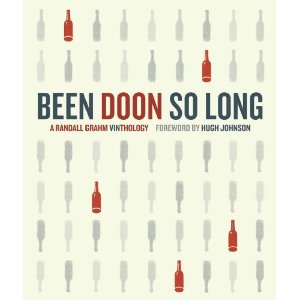
‘Been Doon So Long’: A Bonny Good Read

When I was a young turk just discovering that unlike the jug of Gallo that my mother hid under the sink, wine isn’t universally sold by the tanker-load, I tripped across a intriguing red with a baffling and irreverent name—Cigar Volante.

If you don’t know the story behind ‘Flying Cigar’, it’s worth a Google moment.

From that single bottle I was turned on not only to the alchemy of Rhône varietals, but also the notion that wine could be as fun to market as it is to drink.

When I finally met the winemaker , Randall Grahm, during a last-century whistle-stop tour, I made sure to get my picture taken alongside him, and that I still display proudly.  Can’t necessarily call him a mentor because I have no winery, but I could say that Cigar Volante was my abecedary—just the kind of word that Grahm, as accomplished a wordsmith as he is a vintner, would appreciate.

It stands to reason that this visionary artisan, this philosophizing philistine, this star-gazing scribe whose floral wines are always accompanied by florid prose, would sooner or later put together a collection of his literary vignettes.

‘Vignette’, as Grahm certainly appreciates, is French for ‘little vine’.

Now, Doon to the Book…

As a winemaker-cum-James-Beard-Award-Winning-celebrity, Randall Grahm belongs to his own frenetic  Four-H club: Honesty, humor, humility and hella punster.  Some might tack on a fifth ‘H’ for ‘hubris’, as, throughout Been Doon So Long he rails against the banality of consumer darlings like chardonnay and merlot (insulting potential customers), the myopia of wine critics (insulting potential judges), the boringness of Bordeaux (insulting his colleagues) and the bureaucratic sniveling of the BATF (insulting the folks who control his license to swill).  But having gone from iconoclast to icon, having stayed the course through disastrous vintages, experimental wines gone seriously wrong, the loss of an entire vineyard to a bacterial disease introduced by insects (which he somehow refrains from referring to as ‘doon-buggies’) and having almost single-handedly (and in the nick of time) nudged California winedom from the glare of self-importance to the glow of self-awareness, his opinions—couched in yucks and Yoda-quality insights—are a remarkable treatise worth the eight, ten, twelve weeks it might take you to get through it.

Which is a good thing; the book is coffee-table heavy, and doesn’t require—or even suggest—that you read it all in one sitting.  Like a case of Muscat Vin de Glacière, it’s best enjoyed in increments, sip by sip.

Been Doon So Long (University of California Press, 2009) is chronicle of Grahm’s journey from journeyman to a seasoned winemaker, much of it adapted from his legendary newsletter and told in a variety of genres while he wears various literary hats, including a Sam Spade Trilby cocked over one eye.  He creates , for example, a fictional character called Spenser, Wine Dick who tackles a Marlowe-worthy case.  Grahm’s apology-free obsession with the obscure allows him to parody Cervantes and John Kennedy Toole in a single story title, to nail importer Robert Kacher to a cross (made of new French oak, no doubt) in a J.D. Salinger mock-up, to remake A Clockwork Orange as A Clockwork Orange Muscat (one of his pet varietals) complete with slang from the droogies, here referred to as dreggies, in reference (one supposes) to the leavings at the bottom of the barrel.

The most ambitious parody may be Grahm’s Dante’s Inferno send-up, in which the overblown epic becomes Da Vino Comedy: The Vinferno.  Composed in grueling tercets and canticas—a verse scheme identical to the original—Grahm waxes on for page after page about his favorite theme: himself.  If brevity is the soul of wit, it might follow that a lack thereof is the soul of sh*t, except that the piece winds up jam-packed with clever word-plays, wine world zeitgeist (references to the flick Sideways, for example)  and an astonishing fidelity to the classic.  Plus, no spot quiz Monday morning, first hour.

Grahm considers Vinferno to the centerpiece of the book; it’s moral center.  Maybe so.  A word to the wise, though: keep a Merriam-Webster’s handy.

Been Doon So Long a long-winded delight, filled with as many footnotes as phrases, as many puns as pomace; Grahm turns  out brain-twisters like ‘sanguinary, syringadenous and lachrymal fluids’ without turning a literary shade of claret.  This is not to be taken as stylistic criticism, especially since I myself am frequently asked about my alma mater, the Why Use One Word When Three Will Do Finishing School.

Also worth the price of admission is s a wonderful foreword by esteemed wine writer Hugh Johnson (who, with respect to his gravitas, has a name that should have long ago been usurped by a male porn star), filled with Johnson’s own poetic buoyancy (‘anoraks of absurdity; snobs in their snootiness’).

If anything about Been Doon So Long earns a thumbs doon (other than his endless use of the word ‘doon’), it’s a single oversight: Alex Gross, who did a series of marvelous illustrations that are peppered throughout the pages, gets no byline, even on the inside cover, but only a miniscule liner note thanking him for permission to reprint, so potentially  they weren’t done for Grahm specifically.  But I sort of doubt that.

Other than that, as an outstanding opus, a rambunctious read, a cacophonous compendium,  I am completely doon with it.

(Oh, my God,  see?—now he’s got me doon it too.)

**

BEEN DOON SO LONG: A RANDALL GRAHM VINTHOLOGY (University of California Press, 2009)\

http://www.amazon.com/Been-Doon-So-Long-Vinthology/dp/0520259564\

http://www.beendoonsolong.com/

Posted in GENERAL | Leave a comment

Drunk Driving: What kind of Wine goes with the Constitution?

Was 1984 a vintage year?  Just ask George Orwell.

To clarify (prior to any need for clarification), I have never had a DUI or any alcohol-related driving offense, although—hand before God—I once rear-ended a drunk while perfectly sober, augmenting an odd statistic: Drunk driving accidents that are the sober guy’s fault.

The polemics of drunk driving are equally weird, since there’s no real argument: In this day and age, with all our hyperlinked awareness, there is no excuse for endangering yourself or others by taking the driver’s seat when plastered.  I get it—though as a nonsequitur,  three drinks will put you over the top in most states unless  you happen to weigh six hundred pounds or read War and Peace between cocktails.

My issue is not with the law; it’s with the law’s enforcement.

Hypothetically, say, a drunken priest gets pulled over and claims to have consumed nothing but water, and when the officer says, “I clearly smell wine on your breath,” Father Patrick replies: “Sweet Jesus—He’s done it again.”

How much do you want to bet that the good Reverend gets off with a warning?

Nothing against cops, mind you.  If I’m in serious trouble, I don’t call a Gallo brother.  But the fact of the matter is, DUI charges, like most driving infractions, tend to be discretionary on the part of the over-pulling officer.  Granted, playing god in such circumstances may be one of the few perks associated with a woefully underpaid job that I am far too much of a wussy to do myself, and there’s as many reasons for letting you off the hook as there are reasons for getting behind the wheel to begin with, but most of them are silly.

That’s not even my point.

Let’s say Father Paddy doesn’t get let off the hook.  Let’s say he get a stopped in a police roadblock screening randomly for fools such as he.  Knowing something about the Fourth Amendment, he insists that police officers had no probable cause to stop him and the need to have one is a Constitutional guarantee.

Isn’t it?  Well, suppose that like me, Father Patrick is from Michigan, where the State Supreme Court maintained (Sitz versus Michigan, 1990) that indeed, the Fourth Amendment does not permit such roadblocks.  Only to have the United States Supreme Court rule 5 to 4 that of all potential circumstances, DUI is a Constitutional exception.

Again, please, only in Americanese?  A Constitutional exception??

If Father Patrick was, say, from South Dakota, he might be well-advised to take the breathalyzer test and forget about his Fifth Amendment right against self-incrimination.  Or to call an attorney or have Miranda read him or even, to remain silent when asked how much he’d consumed.  Regarding  Neville versus South Dakota, 1983, the United States Supreme Court ruled that there is a DUI Fifth Amendment exception as well.  Now, I have read the 108 words of the Fifth Amendment 108 times, and I can’t find it.  Can you?:

No person shall be held to answer for a capital, or otherwise infamous crime, unless on a presentment or indictment of a Grand Jury, except in cases arising in the land or naval forces, or in the Militia, when in actual service in time of War or public danger; nor shall any person be subject for the same offense to be twice put in jeopardy of life or limb; nor shall be compelled in any criminal case to be a witness against himself, nor be deprived of life, liberty, or property, without due process of law; nor shall private property be taken for public use, without just compensation.

Even so, you can’t fight city hall, so the moral of the story, I suppose is,  ‘If you drink a fifth, don’t plead the Fifth’…

Okay, so, as I do not intend to get hammered and hit the freeway any time soon, neither do I intend to get hammered by MADD hate mail.  Bless you, ladies; I know the stats because I looked them up:  Drunk driving fatalities have dropped steadily in most states thanks in part to your efforts and in part to a $13 million ad campaign pointing out the dangers of drunk driving.  If it wasn’t for the auto industry, which (being a Detroiter) I support absolutely, I’d propose an Amendment making driving illegal; then the stat would drop to zero .

The Amish have been saying it for years: Don’t drink or drive.

MADD, like Father Patrick, is doing God’s work.  However, despite nickel slogans (literally), it’s in the Constitution that we better trust.

As for the question in the title, what kind of wine goes with that hallowed document, that’s easy.  Thomas Jefferson, the closest thing we have had to a wino president, toasted its signing with Malmsey.   I think I know what he’d have said about these insidious erosions of some very basic American rights:

“It’s enough to drive a guy to drink.”

Posted in GENERAL | Leave a comment

The Wheel Deal: Cognac’s on a Roll

Everybody talks about reinventing the wheel like it’s a bad thing.  What if you tossed in a tot of Hennessey XO mid-spoke?

That’s what the cognac cognoscenti did during the Second International Cognac Summit, which sounds a lot more fun than any other string of words that has ‘Summit’ at the end of it.

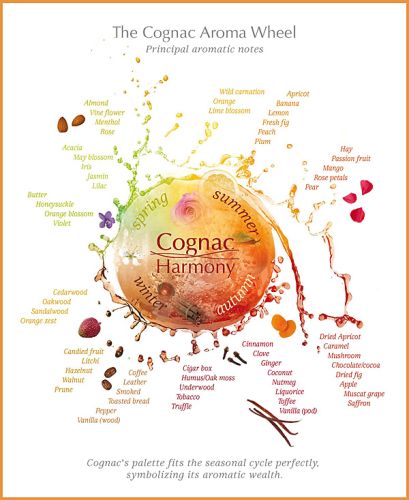
According to the Bureau National Interprofessionnel du Cognac, after four days of intensive tasting and discussion by 50 top international sommeliers, cellar masters, spirits specialists and spirits writers, the result is not, as you might guess, the mother of all headaches and a liver that looks like a spaghetti colander, but the Cognac Aroma Wheel.

Drum roll sil vous plait?  On second thought, pull down the shades and be really, really quiet.  If it’s not the wheel spinning, it must be the room.

Jean Lenoir, creator of ‘Le Nez du Vin’—the world’s ultimate wine education kit—led daily workshops during theSummit, which were designed to research and describe the aromatic make-up ofCognac.  Over 100 Cognacs were tasted and nearly five thousand tasting notes compiled and analyzed—the final list revealed 63 separate Cognac aromas.

Of these, the five principle aromas that characterize Cognac were found to be vanilla, prune, caramel, orange and apricot.

Considering that by law, the only fruit allowed in Cognac is grapes, there was some pretty creative consumption going on back in those brandy bunkers.

Frazzled by Science

Ah, but there’s method behind the insufferability; isolating and recording aromatics is a good way of identifying and remembering what’s been tasted, whether you’re dealing with Cognac, gewürztraminer or Hawaiian Kona.

The science is as pure as the spirit.  For instance, in Cognac (a compact area in southwestern France subdivided into six regions, each yielding spirits with different textures and aging capabilities) consider that soil type, grape varietal and additive proportions each contribute to the overall sensations in the final product.  Most Cognac novices don’t realize how the styles of this legendary tipple differ from distiller to distiller, ranging from fresh and light to rich and deep.

Flavors counteract and modify each other, so each Cognac house is responsible for duplicating its own recognizable and unique profile with every bottle it releases.  It’s part of the brand loyalty mystique, and one of the reason that the Cognac Wheel can be a useful tool for a consumer actually interested in learning something beyond how many Nuprin it takes to cure a hangover.  Unlike wine, which may change markedly in each vintage,Cognac distillers strive for an identical product year after year.  When you detect almonds, orange peel and cedarwood in a ten-year-old Chateau Montifaud Cognac V.S.O.P. in 2009, in a perfect (and immortal) world, you should be able to pick up the identical volatile phenols in a space age snifter of the same brandy in 2099.

V.S.O.P. incidentally, stands for Very Special Old Pale—not, as erroneously reported in an earlier column, Very Shamelessly Over Priced.

Now a Note on Tasting Notes

Tasting, which is 80% smelling, does not exist independently of the taster.  It’s not a quantifiable phenomenon like musical sound waves, where a C sharp is always a C friggin sharp whether your name is Mozart or Madonna.  A ‘tasting note’ is merely a comparative yardstick where the key factor is subjectivity, and inevitably tied in with the taster’s preconceptions and personality.

Or is it?

In fact, floral, nut, fruit and spice scents, saturated flavors—even  mouthfeel—are the cumulative result of chemical compounds, and if you have more cash and equipment than tasting talent, you can isolate the ‘why’ behind the ‘what’.  Of the previously listed ‘top five’ scent characteristics of Cognac, the vanilla likely comes from oak barrels or a permitted additive called boisé (essentially, boiled wood chip juice); apricot and orange scents are familiar to tasters who’ve evaluated wines from the key grapes that make up Cognac—ugni blanc, folle blanche and colombard.  Prune qualities are common in Cognac, probably an offshoot of the ‘Maillard Reaction’ which darkens dried fruit and is also an integral part of the barrel-making process. The caramel bouquet is more controversial: although caramel itself is an allowable additive in Cognac, consummate connoisseurs will tell you it is added strictly for color and does not affect the taste.  To me, if something that contains caramel smells like caramel and tastes like caramel, I’m going to figure it’s a done deal before I go looking for maltol, cyclotene or dihydromaltol in barrel-toasting by-products.

Then again, not being a consummate connoisseur of anything but painful puns and awful alliterations, I’d probably be wrong.

Of course, the above gobbledygook pivots on an individual taster’s talent for picking up the most subtle phenols rising from the liquor glass and not confusing or prejudging them, so after all that, we’re back in Subjectivity-ville.

Incidentally, I, your unesteemed and undecorated columnist, was conspicuously not invited to the Bureau National Interprofessionnel du Cognac’s Second International Cognac Summit, nor asked to lend my cute, almost Bambi-esque nose to the Cognac Aroma Wheel decision-making process.

Note that my Xanax-level good nature allows me to report on it nonetheless.

I will, however, be even more magnanimous in covering the First International Wild Irish Rose Summit, which I have just been asked to chair.

***

The Cognac Aroma Wheel can be downloaded at: http://bit.lycognacwheel

Posted in Cognac | Leave a comment

Zinfully Delicious: Big House Cardinal Zin

For some reason, zinfandel is the only grape varietal that really lends itself to excruciatingly lousy puns.

I mean, what do you do with gewürztraminer?  Petit verdot? Aghiorghitiko?  Chardonnay, maybe, if you pull a Fred Sanford, mix it with Ripple and call it ‘chardonipple’.

However, with zinfandel, winemakers can’t seem control their basest of instincts: the uncontrollable notion that the way to a consumer’s wallet heart is through his funny bone.  Thus, you end up with such groaners as ‘Zin Your Face’, ‘7 Deadly Zins’, ‘Zen of Zin’, ‘Inzinerator’…

And the latest offering from the Big House line: Cardinal Zin.

Ouch.

Formerly a stand-alone brand (with a gag-name like ‘Cardinal Zin’, chances are you would generally find yourself standing alone), CZ was recently picked up by Big House to round out a portfolio that did not include a zinfandel.  Winemaker (a.k.a. ‘The Warden’ in yet another Big House criminally cute jail-centric joke) Georgetta Dane uses such alliterations as fervent, fecund and frenzied to describe her wine; also, the puzzling descriptor ‘forbidden flavors’.  What, it tastes like black tar heroin?  Dane waterboards her grapes in cold-soak tanks, ferments them cool and runs them through the malolactic gauntlet before a lock-down in oak.  (See, Big House is not the only entity that can do prison humor).

The grapes (80% zin, 10% mourvedre, 8% carignane, 2% petite sirah, 0% convict-made pruno) are sourced from all over California, giving the wine a generic appellation, but allowing Dane to draw from numerous vineyards and some of the oldest vines in the state.  Hence, the trademarked byline ‘Beastly Old Vines’.

The result is a rich, peppery wine with soft tannins, a bit of toast and vanilla and a full palate of berry flavors—blackberry especially.  At ten bucks a bottle it’s a steal—your average inmate can afford one after a mere three days worth of license plates.

Other Big House offerings include Unchained Chardonnay, The Usual Suspects Cabernet Sauvignon, The Birdman Pinot Grigio and The Slammer Syrah.

As a house rule, these wines are solid bargains, well-crafted, easy on the nose, gentle on the tongue and quite reliable, although clearly, whoever named them should be locked up.

Big House, Cardinal Zin, Beastly Old Vines, 2009, about $10

Posted in Zinfandel | 1 Comment

Palatal Paradise: Pairing California Wine with Food

Wine Country Food—a trio of words that conjures up an image of everything that’s right with the world.

It’s a world filled with freshness: backyard flavors at their seasonal tip-top washed down with just-poured sips ofCalifornia’s finest nectars.  And (it must be said) it’s also the LeftCoast’s take on a mentality that’s grown up with the fad popularity of regional cuisine.  Clever marketing has made the concept of ‘wine country food’ on a par with such American standbys as Cajun and Southwestern cuisine.

Still, canny Californians have always made a habit of avoiding the rules.  Some wine country chefs embrace the idea of ‘wine country food’ as a culinary philosophy; others refuse to be pigeonholed.  What’s clear, however, is that throughout California, the very best cooking is done using locally grown, ultra-fresh, hand-raised products, and these have become far more diversified over the generations as various ethnic populations have moved in, passed through, or hung around to nurture their own American dream, planting, encouraging and harvesting items indigenous to their homelands.  Arguably, in the aggregate, the wealth of available edibles—from seafood to livestock to farmer’s market produce—is better in California than anywhere else in the world.

A single overriding concept appears to animate the best of the wine country chefs.  That is:  Let the integrity of the ingredients dictate all. 

Wine country is, quite simply, a paradise for the palate.

When you tack on the casual elegance and relaxed refinement of wine country’s roster of superb, cutting-edge establishments (Madrona Manor, Carlton Hotel, Calistoga Ranch. Hotel Healdsburg; all first among equals) you’ll find that these slices of fertile hillsides, resplendent with vineyards and pastures and multicolored fields, has in many ways redefined American cuisine.

Chef Jeffery Madura is among those at the forefront of the wine country movement, especially in its 21st century interpretation.  And rightly so; he’s the executive chef for John Ash & Company; one of Sonoma’s top restaurants.  Ash, of course, is the visionary chef whose book From the Earth to the Table (Dutton 1996), effectively put upon the map the notion that wine country lent itself to such a vital, important, and unique a regional cuisine that it deserved it’s own placemat on the world’s culinary table.  The internationally renowned Ash comments: “Wine country cuisine came very naturally, it has always been about great local seasonal foods with an eye to its connection to wine.”

Of late, Ash has handed a major portion of his day-to-day culinary baton over to Madura, whose eloquent passion for gastronomy in general—and wine country cuisine in specific—peppers his every conversation.

Says Madura:  “Chefs in Northern California tend to be a little spoiled.  Here, you can find microclimates to raise anything, from world-class grapes, to cattle, to an unbelievable bounty of heirloom produce. Napa set the original standard for superb wine in this country; below that you have Marin county, a sensational agricultural base.  And of course, there’s the ocean with its array of seafood.  Here in Sonoma, we’re the center of the diamond. Sonoma gives clarity and brilliance to what wine country is all about.”

Madura is equally passionate about the flesh-and-blood side of the industry—the farmers and the fishermen—and has strong moral feelings about ethical and sustainable food issues.    At John Ash & Co., the emphasis is both upon products that keep the locals employed and humanely raised products.  Madura also brings to the table a sound foundational knowledge of wine, and is fascinated with the nuances of matching a menu item to a specific varietal.

“Recently,” he shares, “we served a sweet potato ravioli alongside Iron Horse Russian River Pinot Noir.  I added a little curry in order to transfer flavors back and forth, food to wine, and both tasted better.  I love food, but my primary goal as a wine country chef is to bring out the best qualities in a given wine, even if I have to change my recipes to enhance the wine.  I’ll add textures, acids, crunchiness; whatever it takes to balance and improve the food/wine equation.

Equally passionate about food and wine is Chef Richard Dickson of the Harvest Café at Napa Valley Marriott Hotel & Spa—though he’s a little less sold on the whole idea that ‘wine country food’ is a specific and definable commodity.

He says, “The term ‘wine country cuisine’ has always sounded a little limiting to me; I try to do things with a bit more of an eclectic edge. California cooking is all about freedom.”

And when Chef Richard speaks, you listen; physically, he’s a somewhat intimidating presence.  Not many chefs entered the profession via professional football, but Dickson found his true calling only after having been drafted (and ultimately cut) by the Seattle Seahawks.  His ability on the gridiron was matched by his prowess in the kitchen, and his forward trajectory in the restaurant business took him from a dishwasher to a head chef within a couple of months.  It helped, no doubt, that his family was in the wine and farming business (Star Hill grapes are part of his folks agricultural spread), and he brings to his kitchen an innate sense of what’s growing on.  He’ll interact with farmers, agents, and producers countless times a week to get the penultimate of fresh ingredients and match them with the perfect wine.

And that’s the essence of wine country cuisine, isn’t it?  The synergy and interaction of culinary riches, glass and plate, grub and grape, field and four fingers of, say, Ferrari Carano?

Succeed at that, and you have a marriage made in wine country.


For information on touring California wine country:  http://www.WineCountryTours.org


Posted in PAIRING WINE AND FOOD | Leave a comment

Calvados: The Apple of My High

Wherever mankind blazed his imperialist trail, booze soon followed.  Using whatever was fermentable, findable or farmable, liquor has been distilled by thirsty barbarians since the 2nd millennium B.C., taking any guise that propriety demanded: medicine, holy elixir, even fuel.  But at the close of the day, the consumption thereof was the end game.

Sobriety hangs out in celibacy’s dark corner as a profoundly unnatural, if sometimes prescribed state of the species.  Another couple of Apollo landings and we all know perfectly well there would have a been a still in the Sea of Tranquility gleefully cranking our moon juice from dust wine.

So it’s no wonder that  we can trace the age-worthy apple brandies of Northern France to at least 1554, when a fellow called de Gouberville wrote a treatise on cider distilling—a process that became necessary after various famines forced barley growers to turn their produce into edibles instead of drinkables.  Farmhouse versions of eau de vie de cidre, then called ‘calvados’ only colloquially,  have probably been made since Charlemagne’s time.

The wonder is that more Americans haven’t heard of it—it’s that good, that unique, that chic in modern Parisian cafés.  If Eve sold her soul for a single apple, it boggles the mind what she might have offered up for a shot of double-distilled Hors d’Age from the pays d’Auge appellation contrôlée.

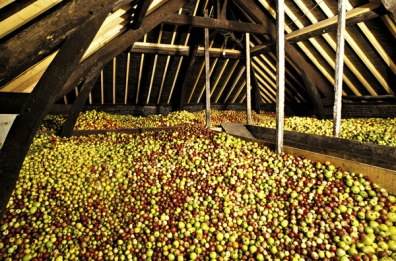
Calvados is Normandy’s answer to Cognac; an oak-aged, Big Brother-regulated spirit which lists numerous must-haves and must-bes among its legal imperatives.  For starters, to wear the Calvados label, the liquor must originate within the confines of the département of Calvados or smaller areas of Manche, Orme, Eure, and Seine-Maritime.  The truly top-shelf stuff comes from d’Auge, one of three AOC appellations which limit production to a specific geography, a certain distilling method and the length of time the brandy must sit around in barrels before it’s released.   Calvados must be made from specifically earmarked apple varieties (except for Domfrontais, which not only allows, but demands the inclusion of pears); up to two hundred types of apples are allowed, and most Calvados producers use a blend of many—ten being about the minimum and forty, seemingly, the average.  These include the sweet duret, the tart rambault, the bitter mettais—even the Flower of Kent, the apple that conked Newton on the head.  Some taste better than others, but safe to say that they are not the aesthetic specimens that show up in little Billy’s lunchbox—they are raised for oomph, not beauty. Says Claude Camut of Calvados Adrien Camut brand, “In Paris, they think it is funny we make such a marvelous spirit with such horrible-looking apples.”

Then again, Parisians laugh at Jerry Lewis movies.

Adhering to the season is more a matter of experience than governmental dictate.   Fruit intended for Calvados is harvested between September and December and undergoes an critical resting period in wooden crates before the January crush.  From there, the juice undergoes a fermentation period similar to wine; a minimum of six weeks on natural yeasts in which the sugar is converted to alcohol.  Whereupon it is distilled.   Essentially, this is a process in which the fermented cider is heated, and since alcohol evaporates at a lower temperature than water, so as long as you keep the heat below the boiling point, the resulting steam is mostly hooch.  The coiling copper tubes you see in comic-book stills are in fact a necessary component in the next step, when the vapor is condensed back into liquid, which is clear, harsh and eye-poppingly potent.  Many Calvados brands undergo a second distillation to refine the liquor; pays d’Auge requires it, calling for an alembic pot still rather than the column still used by the single distillers.

Apples mellowing in a Norman attic

It’s the careful aging in used oak barrels (new ones soak up too much flavor; at Busnell, barrels may be two hundred years old) that really defines the final product; wood is what makes Calvados out of applejack.  The more it sits, the more it mellows—the price tag becoming correspondingly less mellow along the way.  Entry-level Calvados has seen a minimum of two years aging; the equation is open-ended for the most expensive—when you see an ‘age’ on a Calvados label (four-year, six-year, eighteen-year), it refers to the youngest liquor in the bottle—they are all blends of warehoused spirits.  Most Calvados producers will tell you that the magic is in the mix; Calvados bearing a specific vintage year is more for consumers to whom that particular year might have significance: unlike grapes, apple harvests are pretty consistent.

You may find other liner notes, similar to what you’ll see on aCognacbottle: V.S.O.P., Extra, X.O. Napoléon, Hors d’Age and Age Inconnu may appear as ascending orders of cost and quality.  ‘Fermier’ is literally ‘farmhouse’ Calvados; when it appears on the label, it indicates a strict adherence to old-school technique—cider house rules if you will, with apologies to Mr. Irving.  There aren’t many farmhouse Calvados’s left (Calvadi?); Claude Camut calls himself a farmer-producer, while most of the rest now comes from four conglomerates—Boulard, Busnel, Père Magloire, and Gilbert.

Times they are a-changin, but the role that Calvados has played in Normandy’s story is not.  According to the historically irreproachable Astérix et les Normands, Calvados was the favorite drink of the Vikings, which may explain their war record since 1200.  James Bond sips it in On Her Majesty’s Secret Service, neither shaken nor stirred.  Canadians adore it, but explaining anything related to that frozen race is a whole different treatise.

If you’re a Calvados virgin, keep in mind that Normans traditionally down a tot between courses—as a digestif and often accompanied by apple-flavored granité .  If they can’t wait until the end of the meal for their Calvados, chances are the lifetime you’ve been waiting is seriously too long.

Posted in Miscellaneous | 1 Comment