Chablis: Chardonnay Never Had It So Good

Johnny's lunchbucket

It used to be cute to mispronounce ‘Chablis’;  to say it like Johnny Lunchbucket would if he didn’t happen to possess your enological erudition and snobbish grasp of French orthography, because it sort of made you sound ironic and clever at the same time—the single goal we all aspire to, especially if we’re half in the bag.

Cha-bliss.

Frankly (no pun), I always figured that the pogues were right in the first place and the emphasis should be placed on the ‘bliss’.
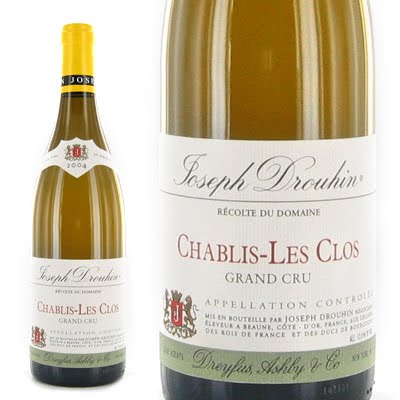
Chablis 'Les Clos', Drouhin

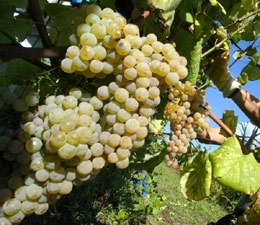
That’s because Chablis is the purest, most bracing, most refreshingly uncluttered incarnation of that noble, styling, now over-planted chardonnay grape, whose flaws and foibles (when grown in less-than-optimum terroir—which you can read as being anywhere other than northern Burgundy) are often submersed beneath seas of oak until you can’t see the varietal for the trees.

In Chablis, tradition (born of ego—mostly justified) has called for terroir to be paramount in their wine’s face-to-the-world.  When you hear wine described as cedary, buttery, vanilla-like or toasty, chances are the taster is defining qualities derived from the barrels used to ferment or mature the wine, not the grape.  Mineral notes, whether chalk, slate, schist or even silex (powdered silica) are the domain of the fruit itself, pulled from the soil in which the grapevine grows.

Pass the Chablis (Sophia Loren)

You’ll find that Chablis tasting notes usually contain some variation of ‘stony’; often goût de pierre à fusil—gunflint.   Chablis winemakers tend to be enamored of such soil-borne flavors (at 48 degrees latitude, chardonnay won’t ripen into the sort of tropical sumptuousness you find in Australian, Chilean or even Sonoman grapes) and as for oak, most Chablis vignerons believe that the only time in history that wood and stone ever collaborated well is when Ron Wood joined the Rolling Stones.

Which is not to say that no Chablis ever sees oak; the best certainly do.  It’s just that the whole approach to what oak is supposed to accomplish in a glass is viewed with a different pair of spectacles in this rocky, chilly, outpost.

One thing for sure; in Chablis, you don’t mask the flavor of your fruit; what you’re after is the cleanest line of expression available.  Any blemish, taint of mildew or imbalance in acidity rears an ugly head through unoaked wine—and it is tasty testimonial to the Chablis amour-propre that the district is willing to count on breeding, not masking, to show off their wares.

It’s like the star of the Emperor’s New Clothes if the Emperor, by some stroke of fortune, turned out to be Scarlett Johansson.

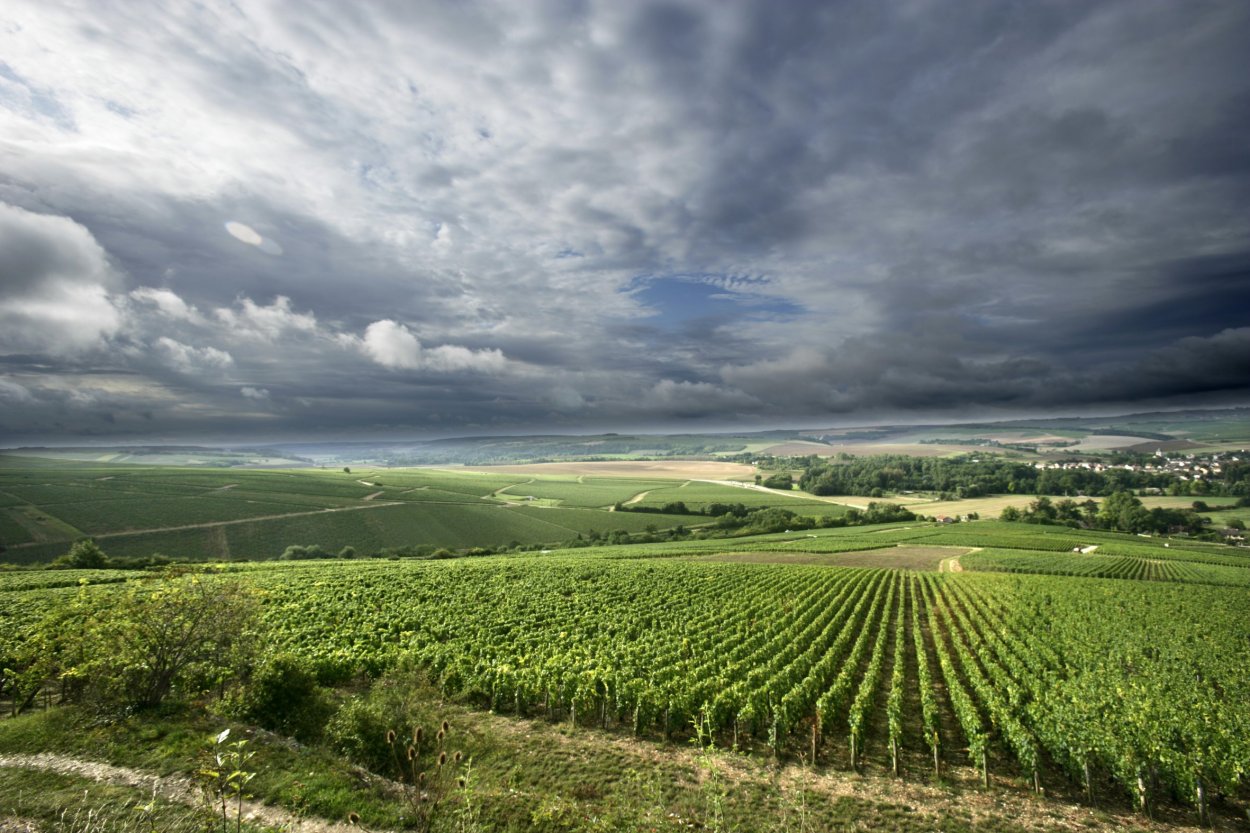
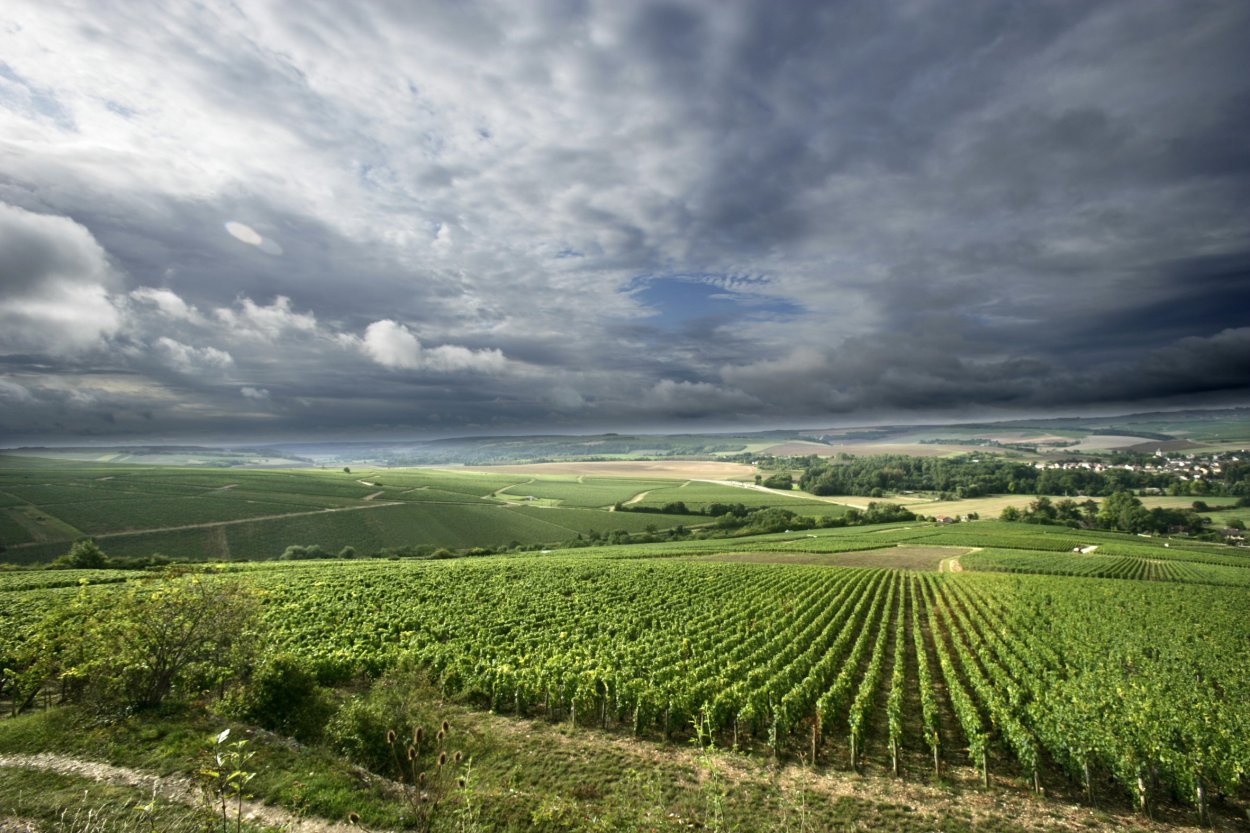
Geologically, Chablis is its own star, shining atop Burgundy’s Christmas tree.  The most northerly district in the region, Chablis is also in the middle of a kind of imaginary ocean like SpongeBob Squarepants—the kind of ocean where you can build campfires and plant grape vines but still enjoy eons of limestone and Kimmeridge Clay accumulation,  remnants of big waters that once deluged northern France.

The result is the four appellations d’origine contrôlée that subdivide Chablis, based on quality factors which nearly all come down to soil and slope and grape yields.

The largest of these, simply called Chablis, covers about sixteen thousand acres; the smallest, designated Grand Cru, is only a couple hundred acres in size and is limited to seven vineyards.  These are like the seven celestial Pleiades in Greek mythology if you tend to over think things; but their name on a Chablis bottle is tantamount to magic, and an expectation thereof:

Bougros, Les Preuses, Vaudésir, Grenouilles, Valmur, Les Clos and Blanchot. 

The Premier Cru  designation can be affixed to any of seventy-nine vineyards on both sides of the River Serein; the best occupy the right bank near the Grand Crus; the rest are southwest of the city of Chablis.

Petit Chablis is the new kid on the bloc and it accounts for mostly average, occasionally affordable wines from the Serein flatlands.  Only awarded an official designation in 1944, Petit’s promotion may well have been accompanied by cries of ‘There goes the neighborhood ’ but fortunately, the neighborhood has been around since Jurassic upheavals and isn’t going anywhere soon.

Otherwise, how we’d miss Chablis—if not the blue-collar rhyme scheme.

TASTING NOTES:

Jean-Marc Brocard, Domaine Sainte Claire Petit Chablis, 2007, about $16.50:  Simple and probably too much outlay for the inlay when you’re comparing petit for tat; still, sharp and shivery with wet stone and lemon, a bit of flower power but a quick drop-off at the end.

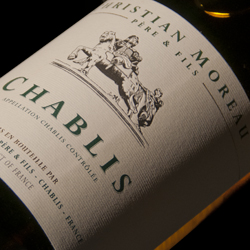
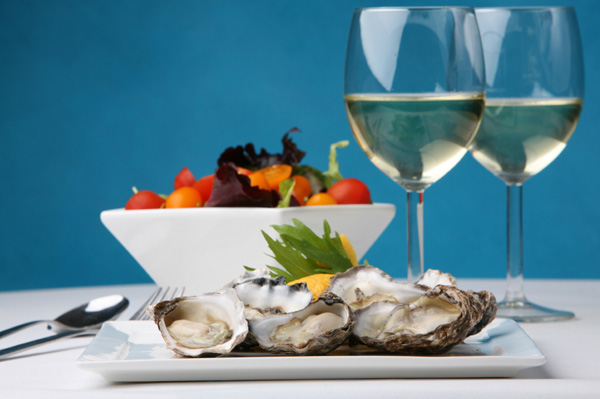
Domaine Christian Moreau Pere & Fils Chablis,  2006, about $25:  This Moreau clan is not the same one that cloned humans and hogs on that island;  Fabien Moreau, in fact, is as non-interventionist with DNA as he is with vinification.  From a sixth generation of organic winemakers, young Fabien has produced a pure green-apple and bitter almond chardonnay with an almost saline intensity,  making this a letter-perfect oyster wine; nicely nuanced with graphite, grapefruit and lemon.

Domaine Laroche, 1er Cru, ‘Vaillons’ Vieilles Vignes,  2005, around $40: You’ll blanche at the screw cap and drool over the juice; concentrated and  mineral-driven with natural sweetness, a touch of anise and lemon-peel balanced by smoke and earth.Vieilles Vignes’, incidentally, sounds fancier than it is—it means ‘old vines’ and, unlike the other key words on the label, has no legal definition.

Joseph Drouhin, Grand Cru, ‘Les Clos’, 2003, around $80:  So now you get the oak along with the calcite—a million marine invertebrates gave their lives so you could taste this one.  The wine is going strong and will age further; Bartlett pear and lily on the nose, pineapple and honey in the mid-palate, violet and candied lemon on the textured, creamy finish.  A wine of astonishing finesse. 

Posted in Burgundy, Chardonnay | Leave a comment

Uruguayan Wine: The Uru Guru Says ‘Tannat’

Recently, I climbed to the top of Uruguay’s highest peak (50 ft.) to consult with the Uruguayan Wine  Guru.  Here’s a snippet of what I learned:

For some reason, whether you’re a wine person, a map geek or a general global busy-body, Uruguay doesn’t seem to comman much notice.

No, it’s not the place where dictators eat people alive; that’s Uganda.  No, it isn’t the birthplace of the strangely-refreshing herbal whistle-wetter called tereré; that’s Paraguay.  And the Uruk-Hai?  They’re an advanced breed of Orc.

Desperately seeking Glinda

What is it then…?

Uruguay is a Matt Roloff-sized  Republic wedged between Brazil and Argentina almost as an afterthought, like a toddler that got jammed between two really fat people in the middle row of a jumbo jet.

Uruguay claims to be the fourth largest South American wine producer, though in a continent that only has twelve countries, why even bring it up?  It also boasts about having the 47th highest quality of life in the world.  You go, Uruguay!—however, just between us friends?  When my eleven-year-old came in 47th place at her gymnastics meet, we didn’t make a big whoop over it.

Better that you Urugundians should concentrate on business, primarily tannat, a grape so obscure that not only have most non-oenophiles never heard of it, they’ve never even heard of the AOC where it originates—Madiran, in the southwest of France.  Yet somehow, the Mini Me of the cuchillas has managed to make this grape—typically so high in tannin that it’s named after it—a personal rehabilitation project, much like Argentina did with malbec.  In Uruguay, tannat has reached new heights of splendor, which of course is a bit like saying that my daughter has improved her overall gymnastics standing to thirty-fifth place.

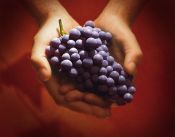
Still, Uruguayan tannat has plenty to recommend it:  it’s unique, scrumptious, inexpensive, higher in the antioxidant procyanidin than any other wine in the world, and plentiful—representing a third of all wine produced in Uruguay.

In  that case, why don’t we drink more of it…?

Well, even though there are three hundred wineries a day-trip away from Montevideo, one reason that we don’t see more of their tannat on our shelves is that those greedy, thirstyUruguayos don’t let much of it go; less than 5%, in fact.

Why? They need it, that’s why.  Annual per capita Uruguayan wine consumption is nearly nine gallons, three times that of your average American pick-up-a-sixer-of-Bud-on-the-way-home.

Forget the standard-of-living stats, Uruguay—there’s a figure to be proud of, especially in a country with less people than Minneapolis.

Tannat in the hand is worth two in the bush

The Uru guru says, you work with what you’ve got…

Uruguay’s success with tannat is due to the usual combination of terroir savoir-faire as well as the fact that for the most part, that’s what they started with—a Basque called Pascual Harriague brought vines from France in 1870 and found that it thrived in the flat, humid landscape. Uruguayan geography and soil is said to resemble that of Bordeaux’s fabled Entre Deux Mers—the right bank specifically, which is possible since they’re both the size of a postage stamp.

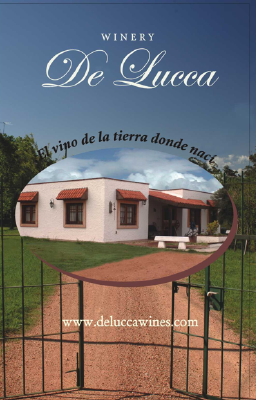
French tannat can be described as heavy, brooding, dark and ferocious; Uruguayan tannat is much less mouth-parching than its European doppelganger; it tends to be lighter bodied, more acidic and flecked with nuances of wood smoke, black pepper and spice.  Ranging in styles from Port-like to Beaujolais-like—as if you could find two more disparate wines—Uruguayan tannat, from top producers like Bodega de Lucca, focus on the chocolaty qualities of the grape, and when combined with a natural dustiness, the wines have an almost Nestlé’s Quick richness about them, unlike anything from Madiran.

Speaking of Madiran, avoid the confusion factor…

Near Madiran, there’s a Spanish wine region in the called Irouléguy that’s also producing bang-up tannats in the Uruguayan style—fruiter, more restrained with the chewing-on-a-popsicle-stick tannins—in fact, tannat often winds up as Irouléguyan rosé.

And if the similar name and identical mission-statement doesn’t sufficiently spin your head, consider that Irouléguyans also make a popular white from an equally obscure grape called petit manseng—which is likewise sown extensively in Uruguay, where it even pre-dates tannat.

And that’s enough to leave even the Uru guru saying, ‘¿¿Mande, mande come qué fue??’—castellano rioplatense for “WTF??”

Tasting notes:

Bodega de Lucca Tannat Reserva, 2009, around $14:  Director and winemaker Reinaldo de Lucca (known universally as as ‘El Tano’) may be the genuine Uru guru.  One of the country’s true wine luminaries, partly responsible for the Uruguayan tannat renaissance of the 1980’s, he prides himself on ecologically sound production, artisan methods and pure, expressive selections.  The ’09 Tannat Reserva is supple and voluptuous, offering sweet smells of blackberry and toast, flavors of cocoa, vanilla and cassis.  Tannins are indeed elevated, but perhaps from the barrel-ferment.  A beautiful accompaniment to grilled or barbecued beef, porterhouse or burger.  

*

To buy Uruguayan wine online:

http://www.uruguayanwines.com/uruguayanwines/application/uilayer/order.aspxuRUGUAYAN

Posted in URUGUAY | Leave a comment

Chablis: Chardonnay Never had It So Good

It used to be cute to mispronounce ‘Chablis’;  to say it like Johnny Lunchbucket would if he didn’t happen to possess your enological erudition and snobbish grasp of French orthography, because it sort of made you sound ironic and clever at the same time—the single goal we all aspire to.

 Cha-bliss. 

Frankly, I always figured that the pogues were right in the first place and the emphasis should be placed on the ‘bliss’.

Chablis Le Clos, Drouhin

That’s because Chablis is the purest, most bracing, most refreshingly uncluttered incarnation of that noble, styling, now over-planted chardonnay grape, whose flaws and foibles (when grown in less-than-optimum terroir—which you can read as being anywhere other than northern Burgundy) are often submersed beneath seas of oak until you can’t see the varietal for the trees.

In Chablis, tradition (born of ego—mostly justified) has called for terroir to be paramount in their wine’s face-to-the-world.  When you hear wine described as cedary, buttery, vanilla-like or toasty, chances are the taster is defining qualities derived from the barrels used to ferment or mature the wine, not the grape.  Mineral notes, whether chalk, slate, schist or even silex (powdered silica) are the domain of the fruit itself, pulled from the soil in which the grapevine grows.

Pass The Wine (Sophia Loren)

You’ll find that Chablis tasting notes usually contain some variation of ‘stony’; often goût de pierre à fusil—gunflint.   Chablis winemakers tend to be enamored of such soil-borne flavors (at 48 degrees latitude, chardonnay won’t ripen into the sort of tropical sumptuousness you find in Australia, Chile or even Sonoma grapes) and as for oak, most Chablis vignerons believe that the only time in history that wood and stone ever collaborated well is when Ron Wood joined the Rolling Stones.

Which is not to say that no Chablis ever sees oak; the best certainly do.  It’s just that the whole approach to what oak is supposed to accomplish in a glass is viewed with a different pair of spectacles in this rocky, chilly, outpost.

One thing for sure; in Chablis, you don’t mask the flavor of your fruit; what you’re after is the cleanest line of expression available.  Any blemish, taint of mildew or imbalance in acidity rears an ugly head through unoaked wine—and it is tasty testimonial to the Chablis amour-propre that the district is willing to count on breeding, not masking, to show off their wares.

It’s like the star of the Emperor’s New Clothes if the Emperor, by some stroke of fortune, turned out to be Scarlett Johansson.

Geologically, Chablis is its own star, shining atop Burgundy’s Christmas tree.  The most northerly district in the region, Chablis is also in the middle of a kind of imaginary ocean like SpongeBob Squarepants—the kind of ocean where you can build campfires and plant grape vines but still enjoy eons of limestone and Kimmeridge Clay accumulation,  remnants of big waters that once deluged northern France.

The result is the four appellations d’origine contrôlée that subdivide Chablis, based on quality factors which nearly all come down to soil and slope and grape yields.

The largest of these, simply called Chablis, covers about sixteen thousand acres; the smallest, designated Grand Cru, is only a couple hundred acres in size and is limited to seven vineyards.  These are like the seven celestial Pleiades in Greek mythology if you tend to over think things; but their name on a Chablis bottle is tantamount to magic, and an expectation thereof:

Bougros, Les Preuses, Vaudésir, Grenouilles, Valmur, Les Clos and Blanchot. 

The Premier Cru  designation can be affixed to any of seventy-nine vineyards on both sides of the River Serein; the best occupy the right bank near the Grand Crus; the rest are southwest of the city of Chablis.

Petit Chablis is the new kid on the bloc and it accounts for mostly average, occasionally affordable wines from the Serein flatlands.  Only awarded an official designation in 1944, Petit’s promotion may well have been accompanied by cries of ‘There goes the neighborhood ’ but fortunately, the neighborhood has been around since Jurassic upheavals and isn’t going anywhere soon.

Otherwise, how we’d miss Chablis—if not the blue-collar rhyme scheme.


TASTING NOTES:

Jean-Marc Brocard, Domaine Sainte Claire Petit Chablis, 2007, about $16.50:  Simple and probably too much outlay for the inlay when you’re comparing petit for tat; still, sharp and shivery with wet stone and lemon, a bit of flower power but a quick drop-off at the end.

Domaine Christian Moreau Pere & Fils Chablis,  2007, about $25:  This Moreau clan is not the same one that cloned humans and hogs on that island;  Fabien Moreau, in fact, is as non-interventionist with DNA as he is with vinification.  From a sixth generation of organic winemakers, young Fabien has produced a pure green-apple and bitter almond chardonnay with an almost saline intensity,  making this a letter-perfect oyster wine; nicely nuanced with graphite, grapefruit and lemon.

Domaine Laroche, 1er Cru, ‘Vaillons’ Vieilles Vignes,  2005, around $40: You’ll blanche at the screw cap and drool over the juice; concentrated and  mineral-driven with natural sweetness, a touch of anise and lemon-peel balanced by smoke and earth.Vieilles Vignes’, incidentally, sounds fancier than it is—it means ‘old vines’ and, unlike the other key words on the label, has no legal definition.

Joseph Drouhin, Grand Cru, ‘Les Clos’, 2004, around $70:  So now you get the oak along with the calcite—a million marine invertebrates gave their lives so you could taste this one.  The wine is going strong and will age further; Bartlett pear and lily on the nose, pineapple and honey in the mid-palate, violet and candied lemon on the textured, creamy finish.  A wine of astonishing finesse. 

 

Posted in Burgundy, Chardonnay | Leave a comment

Lebanese Wine: Man Your Bottle Stations

Driving into Bekaa is a war of emotions.  The heart of Lebanon’s agricultural acres and home to her millennia-old wine tradition is astonishingly varied—rural, severely beautiful, occasionally relaxing, but spackled with reminders that even here, surrounded by lush countryside, violence is never far from the surface.

Bekaa has been on the receiving end of Hizb’allah and Israeli temper tantrums for more than twenty years, and Israeli missiles have devastated much of the eastern and southern valley, where the hub of Hizb’allah military strength is concentrated.

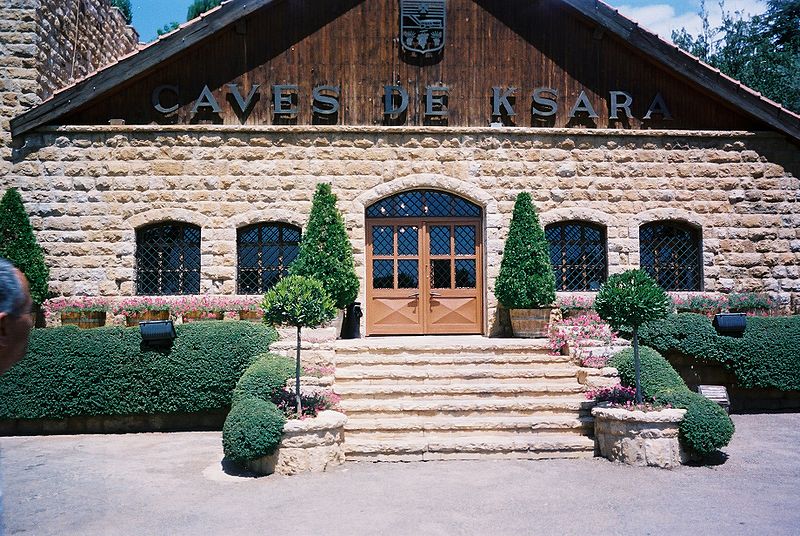
The damage I witnessed on the road between Beirut and Syria took the form of downed bridges, battered factories and buildings under re-construction from funds being received, at least in part, from Iran.  The human cost was less visible, mostly squirreled away inside tent cities thrown up between ruined structures and remained eerily out of sight until we arrived at the gates of Chateau Ksara, the oldest operating winery in the valley.

Out front, a legless gentlemen in wheelchair confronted us with the perpetual plea of the pauper’s: Something for nothing.  The human response, of course, is to imagine he’d given up enough already, whatever the cause.

James Palgé stands before Man's Best Friend. Note the dog, too

Actually, at Chateau Ksara at least, the past couple of years haven’t been half bad. In 2007, the winery celebrated 150 years of operation with a blowout party at Beirut’s opulent Bristol Hotel and another in London at the Temple Place.  England is now Ksara’s biggest customer and the pre-sumptuous-dinner vertical tasting included a 1957 Clos St. Alphonse, which, reports have it, was a bit long in the tooth.  In 2008, Ksara’s Chardonnay Cuvee du Pape 2007 took a gold medal at Vinagora, the International Wine Challenge in Budapest.  (No truth to the rumor that the du Pape was served in a pop glass). ’08, like ’07 was a stellar vintage, but as Ksara’s Château-Prieuré-Lichine-trained winemaker James Palgé maintains:  “There are no bad vintages in Lebanon: only good ones and better ones.”

There are, however, bad IAF helicopter raids, and when the scuds start sailing, you could do worse than have a set of Roman-era caverns snaking through your cellar.  The Caves de Ksara  have long offered safe haven for winery employees and neighbors during particularly nasty times.

According to managing director Charles Ghostine, it’s usually the migrant workers who hear about such attacks far enough in advance to flee, and it’s always a toss-up to see if they’ll come back in time to pick the harvest.

So, in a nutshell (inside a nut house), that’s the downside of Lebanese wine.  As a rule, they’re not widely distributed nor understood in the United States; currently, the country produces only about 6 million bottles a year, roughly on par with New Jersey. It’s logistics (Lebanon is, in fact, only half the size of New Jersey) and not for want of tradition—the Phoenicians began fermenting grape juice here nearly six thousand years ago, a full millennium ahead of Greece. By the time the Romans built their still-standing temple to wine god Bacchus in northern Bekaa, Lebanese winemaking was already an ancient art. Chrysippus, the Phoenician philosopher, is said to have died of laughter after getting his donkey drunk on Lebanese wine, and Cana (near Tyre) is the site of Jesus’ water-into-wine miracle.

Yves Morard

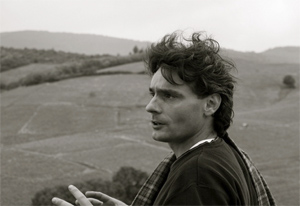
Throughout the Middle Ages, Bekaa wines were among the most expensive in the world, due in part to a terroir that’s almost mystically suited to the stuff. Soggy winters, arid summers, cool nights and misty mornings enrich brick-red clays and chalky soils—a situation which keeps winemakers like Cave Kouroum’s Yves Morard committed to Lebanon despite the occasional inconvenience of being kidnapped by enemies. “They thought I was a spy,” Morard says of his two-week ordeal at the hands of Israeli soldiers in 1982. “I had to explain intricate details of winemaking to prove who I was.”

Morard, like most Bekaa producers, favors Bordeaux and Rhone varietals in producing age-worthy red wines, particularly cabernet sauvignon, carignan, grenache, cinsault. For westerners, chardonnay is perhaps the most recognizable of Bekaa’s whites, and fittingly so: it was born here, an ancestral clone of the much-planted obaideh. Marweh is another native, semillon-like and a favorite blending varietal at Chateau Musar, arguably Lebanon’s best known winery. Established by Gaston Hochar in 1930, Musar is renowned for its grand vin blend of concrete-fermented reds which require a minimum of ten years aging.

Tagline suggestion for Ksara Winery: 'Stay Safer With Zafer'

Nobody in Bekaa knows if they’ve got ten minutes let alone ten years, but optimism and resilience are the strongest suite among the Lebanese: backbone is their backbone. According to Chateau Ksara chairman Zafer Chaoui, “Bekaa is kind to those who have faith, and it is through this faith, both in our wines and in Lebanon, we seek to perpetuate and build on the legacy of our forebears.”


Tasting Notes:

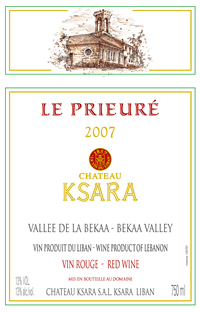
Ksara Prieuré, Bekaa Valley, 2007, about $8:  A powder keg of cinsault, cabernet and syrah loaded with jammy fruit and spices.  A bargain if you can hunt one down.

Massaya Classic Red, Bekaa Valley, 2006, about $12:  Rhone-like rusticity; meaty and charged with wood smoke, graphite, tart plum and mint.  A dynamite choice for barbecues.

Château Kefraya Blanc de Blanc, Bekaa Valley, 2008, about $21:   Explodes on the tongue with pineapple, pear, peach and white rose petal; quick finish.

Château Musar Proprietary Blend, Bekaa Valley, 1991, about $90: Slightly oxidized, leading to a mahogany brown color, but still booming with leather (brett?), tobacco and earth scents (more brett?); velvety in the mouth and sweet on the finish, which goes on longer than a NATO peace summit.

‘Ksarak,’ Arak, about $ 22:  A classic anise-flavored liquor primarily associated with the Middle East, kissing cousins to ouzo and raki. This one is more refined than most, distilled  in pot stills then matured for two years in clay jars to soften it up a bit.  Good try, but it’s still a rocket-fuel kick to the solar plexus—an experimental sip for most Americans; probably the only cocktail it can be used for is a Molotov.

Posted in LEBANON | Leave a comment

Don’t Worry—No Hurry For This Fleurie

I am going to digress before I even begin:  If Frederick Wildman ever opens up a branch in Sarawak, I’m going to apply just so that my business cards can say ‘Wildman of Borneo.’

Who?

Wildman & Sons Ltd. Is a New York-based importer of wines and spirits that’s been putting the ‘happy’ in happy hour since 1934.  President and CEO Richard Cacciato calls it ‘the biggest little wine company in America’ by which he probably means, “We’re a gigantic conglomerate schlepping a Saragasso Sea worth of wine and we intend to get bigger and bigger until we take over the planet—but we don’t want you to stop thinking of us as your corner bodega.”

The thing is, he’s going about it just right.  Take Potel-Aviron Fleurie 2009.  In Beaujolais, they are so hidebound that you have to pull a permit just to plant a grape seed and the Wine Authorities can  strip the ‘Beaujolais’ name from an eminent producer simply because they find a particular vintage ‘atypical’—like they did with Domaine des Terres Dorées Beaujolais l’ Ancienne, 2007.

Tasted like ‘mushrooms’ they said.  “Taste this,’ would have been the only acceptable response.

In real life, Stephane Aviron is in color

So the emergence of a new and exciting Beaujolais producer like Potel-Aviron is a story in itself, and the fact that the team of Nicolas Potel and Stephane Aviron have established themselves as Cru Beaujolais superstars after only a handful of vintages is remarkable.

Whose Cru Do You Do?

‘Cru’ is a term which in Beaujolais can be loosely translated as ‘not crap’.  French wine critic François Mauss refers to cerrtain non-Cru Beaujolais as vin de merde, which likely requires no translation.

The northern hills of the region are spackled with vineyards that have a high proportion of sand in their soils, in a composition which is perfectly suited for the gamay grape.  Note that nowhere else on earth does gamay do quite as well, and it isn’t for want of trying, even here.  In fact, the Duke of Burgundy once banned gamay from the region as being ‘a bad and disloyal plant’.  Well, gamay is going strong and the Duke’s pushing up grape vines in some church yard.

Ten zones wear specific ‘cru’ labels, and Fleurie is one of them.

Okay, it’s ‘grandma’ wine, but kind of like Michelle Pfeiffer is a grandma actress.  Enough said? Like her, Fleurie wines tend to be soft, silky, seductive, elegant and perfumed, bearing a distinct aromatic resemblance to their flowery name. Fleurie may not be a ‘guy’ wine in the strict sense of the word, and even though the region has some nice masculine granite in the soil, it’s pink granite, so there you go.  In any case, Fleurie requires a few years in the bottle to come into its own, and the 2007 is just starting to open up.

Who’s Who in This Cru

The son of Gérard Potel of  Domaine de la Pousse d’Or (which we incorrigable yanks might translate as House of the Golden Unmentionable P-Word), youngish winemaker Nicolas Potel is no stranger to Burgundy.  In fact,  he’s the former negociant with a domain that bears his name—from which the money fellows ousted him a couple years back. They booted the man, but they couldn’t touch his reputation, built in the main from a mastery of pinot noir—seen especially his Vosne 1er Crus and especially his Chambertin or Bonnes-Mares.

As for his partner,  Stephane Aviron is a Beaujolais boy, born and bred, and his family, who has been making wine here for years, is known for their fragile-free Cru Beaujolais.

Together they suitably impressed the picky palates at Wildman to take on the label and we benefit by the lyrical results, a blend of older vines offering gamy gravitas along with they spunky fruits of youth that’s typical of Beaujolais.

Tasting Notes:

Potel-Aviron Fleurie, Vieilles Vignes, 2009, about $18:  Nary a trace of a mushroom here; this is a vivid-red cranberry and cherry driven Beaujolais with some light, vital tannins working behind the scenes to flesh out the scene.  Musky herbs, mineral and violet/iris notes prevail in the nose—the medium-body wine carries through to a rich, refreshing, if somewhat short-lived finish.

Posted in Beaujolais, Gamay | Leave a comment

Cloudline Pinot Gris: Send in the (Mutant) Clones

Pop quiz, class: When is a pinot grigio not a pinot grigio?

Answer: When it’s a pinot gris.

In Italy, where the workhorse grape of Veneto and Friuli is generally vinified as clean, green and routine, the result is a simplistic table wine meant for early consumption.

In France, the same grape—said to be a mutant clone of pinot noir and here, called pinot gris—takes on a whole different personality.   In Alsace especially, it produces a velvety, pear-scented wine with a remarkable spice and a mineral grip backed by firm acidity ; in top vintages it develops a finish that’s almost oily in texture.

Still, the confusion that surrounds this grape is confusing, particularly to me, a wine writer of only moderate intelligence.  Are you all a bunch of mutant clones?

I’m Tokay, You’re Tokay

I mean, JesuCristo, class; it’s really pretty elementary:

Pinot gris has been known in Burgundy since the Middle Ages, except that they called it fromenteau, not pinot gris, and these days, in France, it’s mostly grown in Alsace, where it has traditionally not been called pinot gris but ‘tokay’, which should not be confused with the Hungarian wine called ‘tokay’, which they may or may not spell tokaji and which can only be made from six grape varietals, none of which are tokay.  Okay?

Duh.

Here in the States, pinot gris has found a particularly cozy stomping ground in Oregon, where, like the alluvial slopes and cones in Alsace, the soil is primarily volcanic ash and sedimentary seabed overlaid with gravel and silt.  Oregon’s maritime climate is somewhat unsuitable for California’s vanilla/chocolate cash cows chardonnay and cabernet, but it’s ideal for pinot gris.  Moderate summer temperatures, rising gradually and steadily from budburst to harvest, allow the varietal to ripen slowly and reach full maturity at the very end of Oregon’s somewhat brief growing season.

Even Oregon rainfall tends to cooperates with pinot gris, which prefers relatively dry feet.  If you believe urban legend, Oregon is relentlessly cloudy and wet; if you believe Willard Scott, Oregon’s Willamette Valley, wherein all of pinot gris’ planets align, gets less growing-season rainfall than Burgundy.

And speaking of Burgundy…

The name Drouhin is synonymous with Burgundian Premier and Grand Crus, so when you see it attached to an Oregonian winemaker’s calling card, you tend to think either coincidence or confederacy.  It’s closer to the latter;  Véronique Boss-Drouhin (alternately referred to as Drouhin-Boss, so there’s no telling who’s boss), referred to as the ‘guardian’ of the Joseph Drouhin style, has crafted wines at Drouhin’s Oregon concern, Domaine Drouhin Oregon, since the first vintage in 1988.

She’s also dipped her toes into Dreyfus, Ashby’s own label, Cloudline.  The legendary New York-based importer, which distributes Joseph Drouhin and DDO wines worldwide, has enlisted the palate of the beautiful, University of Dijon-trained winemaker to oversee production of their first venture into winemaking, meaning that she ensures that elegance, finesse, purity of Cloudline’s selections never waver.

Evidently, wet stones taste like pinot gris

Whereas DDO’s chardonnay and pinot noir may run from $40 into the upper sixties, Cloudline’s 2008 pinot gris is a bargain at $14, and that’s saying a mouthful.  Filled with Bosc pear, wet stone minerality and apple skin tartness, the wine’s grapes are sourced entirely from Willamette Valley and represent one of the least talked about, best value pinot gris on the market.

So I’m talking about it.  More vin d’Alsace than anything similarly-priced from the States, Cloudline is a heady introduction to what Oregon can accomplish with this sometimes problem child; one of the very few places on earth where the varietal approaches its potential.

Savor a sip; I’m confident that you’ll a-gris.

Tasting notes:

Cloudline Pinot Gris, Oregon, 2008, about $15:  Pears, peaches and honeysuckle dominate the nose and lead to a profile straight from the eastern slopes of the Vosges: mint, melon , mineral and a vat-load of minor eccentricities.  The wine is medium bodied, grassy and nicely acidic.  The label’s PR claims it as an ideal swallow after you’ve mowed the lawn—I say ‘during’ and damn the bald spots on the lower forty.  If you insist on waiting until supper, it can be successfully paired with most full-flavored seafoods and  Asian dishes, even those with a bit of heat.

Posted in OREGON, Pinot Gris | Leave a comment

Have Yourself a Códax Moment

One is ponderously dull, bleak with obscurity, difficult to follow and hard to enjoy; the other is light, lyrical and a snap to fall in love with.

What do Fyodor Dostoyevsky and albariño and have in common?

Only this: most Americans have heard of them, know that they’re supposed to like them and should give them a shot, but just keep putting it off.

Well, you’re on your own with Notes from the Underground, but I can help make your transition from, say, riesling or sauvignon blanc to albariño seamless, painless and guilt-free.

Two words: Martin Códax.  Okay, four: you need to tack on Rías Baixas to arrive at a true understanding of what albariño can offer.

Provided you’re not as geographically challenged as the average American twelfth-grader, find the Iberian Peninsula on a map and check out the lonely little outpost sitting just above Portugal.  That’s Galicia; a unique, autonomous Spanish community with its own President, its own language, and a culture that’s more Celtic than Latin (there’s an abundance of blondes here and Galician natives play a bagpipe clone called a gaita).

Poking into the Atlantic Ocean, serrated by coves and estuaries, is Rías Baixas—a smallish zone where all the Bacchanalian stars have aligned to produce Club Med for albariño.  A small, low yielding, thick-skinned grape, albariño is naturally resistant to maritime dampness and flourishes in the face of ocean breezes, picking up subtle nuances from the granitic subsoils on which nothing suitable for human consumption was meant to grow—except grapes.  And it’s even touch and go for them.  So nurture kicks in where nature defers; albariño is high-maintenance, and is generally grown using the ‘pergola system’ wherein the vines are trained to grow up and along six-foot high granite stakes, high above the soggy soil.

Albariño methodology is more labor-intensive than mapping out the compositional balance of Crime and Punishment, but when adhered to with the sort of possessiveness unique to winemakers and literary craftsmen, the wine can be sublime.

In fact, there is likely no better half-shell oyster wine on the planet, with the noted exception of muscadet from the western tip of the Loire Valley, which is albariño’s equal.  In both of these wines, there is a shivery acidity to balance the cream of stone fruit and mandarin orange, but in each is a faint, but unmistakable whiff of brine.  It may be illusion, the power of suggestion, like hearing the surf in a conch shell, but I don’t think so.  There is a mystical connection between the sea and grape vines that live out their considerable lives (some Rías Biaxas vines are well into their second century) in sight and smell of Neptune’s trident, and why shouldn’t that show up—even subtly—in the glass.

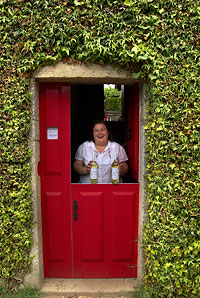
Bodegas Martin Códax was formed in 1986 by a covey of vintners, and like any good Galician winemaking enterprise, their focus was on the star pupil: albariño.  The winemaker responsible for the 2008  is Katia Álvarez, one of a number of women who are beginning to make a name for themselves in the male-dominated Rías Baixas wine world.

Come on, guys. Let's pout over reverse discrimination.

Another is Luisa Freire Plana, a winemaker at Bodega Santiago Ruiz, who’s got this to say about albariño:  “Some in the industry try to insult us by saying the albariño is a wine only for women, but I think it’s a wine that is too complex for some men.”

Which is insulting to men, right?  But hey, Luisa, I couldn’t care less so long as you keep cranking out the good stuff.  After fifteen minutes in a bucket of ice water (I’d use ocean water if I could get it), my bottle of Martin Códax Rías Biaxas albariño has picked up just the right chill and I’m going to settle in with a soupçon of sea mist in the snifter and a good long book.

I guarantee that this will make even The Brothers Karamazov palatable.

Tasting Notes:

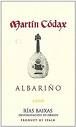
Martín Códax Rías Biaxas Albariño, 2010, about $14:  Prettier than Jessica Albariño in the glass; pale gold with emerald flecks and a startlingly assertive nose full of peach and melon.  There’s an intriguing herbal undertone as well, definitely thyme, nearly lavender. A full octave of sensations follows on the palate led by mandarin orange, apricot, kiwi and granny smith apples.  Most notable to the mouthfeel is the very slight effervescence, doing a danza de espada with the wine’s amazing acidity.  A combination of sur lies aging and malolactic fermentation adds a creamy depth which lingers along with the Galician minerality—characteristic of the breed.

Posted in BY VARIETAL, Rías Biaxas | Leave a comment

Should The Drinking Age Be Lowered to 18?

It’s nice to have extremely strong feelings on a subject you have no opinion on.

For example, for reasons known but to blog people, I am frequently asked whether I think the drinking age should be lowered to eighteen.  Why ask me? Simply because under the pretense of knowledge I write about alcohol—a subject which creates headlines, changes futures, alters fortunes and affects countless lives for better or worse?

Geez, I dunno.  At eighteen, I made decisions that benefitted only the Friend of the Court and bail bondspeople, and if today’s average punk thinks like I did, he should probably not be making post-midnight 7-11 pit stops.  At the same time, Dakota Fanning strikes me as a well-grounded young lady that could probably handle the odd martini.   I’ve seen the Nuremburg trials, and every time the prosecution speaks, I think gallows, and when Joachim von Ribbentrop’s counsel chimes in, it’s like, hey, lighten up, planet, everybody works for somebody.

So I’m clearly not the guy to ask.  But as long as I am asked, I will continue to soapbox with wishy-washy eloquence and indecisive gusto on what I think I think:

If an eighteen year old can take a bullet for his/her country, he/she should be able to take a shot with his/her friends: I’ll go one better.  No eighteen-year-old he/she should be taking bullets for anybody, they should all make nice and sip mint juleps on the veranda.

If you make drinking booze a crime for those under twenty-one, only criminals under twenty-one will drink booze: True dat, and no need for further embellishment.

China allows eighteen year olds to drink: The Chinese are rocketing ahead of us in every important aspect of international commerce like direct investment, GDP surpluses, population control via baby formula, chopstick exporting and leaded plastic Barney toy manufacture—so why should we let them increase the trade gap by allowing them three extra years to market alcohol to young people?   And anyway, isn’t continuing to permit such an economic imbalance a tacit admission that the Communists have already won?

We tried prohibition legislation to control irresponsible drinking during the 1920’s.: The result?  Al Capone and Bugs Moran.  People going blind from drinking bathtub gin.  The Great Depression. Silly shows like The Untouchables which are still in reruns.

An 18 year old has the right to get married, but not to drink at his/her wedding:  I’m on the fence with this one; only copious quantites of alcohol, legal or otherwise, would cause rational young people to consider marriage in the first place.

As long as it remains illegal, 18-year-olds will always view alcohol as ‘forbidden fruit’ and consume it anyway as a badge of rebellion against authority:  The only fruit that should be forbidden is stuff imported from China because it might contain lead or melamine.  And if the badge of rebellion is removed from alcohol teenagers will simply make do with Ghostface Killa and texting naked pictures of themselves.

Flaunting of the current laws is readily seen among university students and cannot be effectively controlled:  Like Bluto suggested, college students should be able to do anything they want.  Because they’re college students.

In Detroit, anyway, kids will stop driving to Canada to drink:  In Canada, the drinking age is 19, which makes even less sense that eighteen or twenty-one, but that’s between the Canadian people and whoever’s been in charge up there since that guy whose wife didn’t wear panties.  The more pressing question is why our good, all-American binge-drinking dollars should  be funneled across the Ambassador Bridge to those eh-saying syrup-slurpers—hardly a nation in need of more drinkers.

Note to Canada:  You don’t want to deal with our acid rain, don’t expect our Molson money.


Posted in GENERAL | Leave a comment

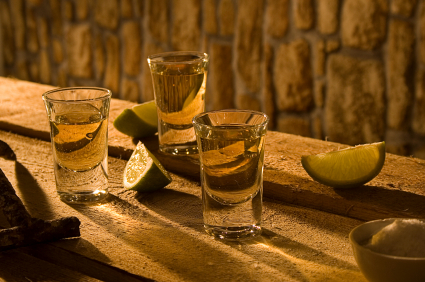
Tequila: Romancing the Stoned

Judging from recent media barrages, hired guns from the spirit world are revving up another campaign to raise tequila’s stature to that of malt scotch and XO cognac.

Buena suerte, compadres.

A textbook dapper bec fin

Isn’t cognac about dapper bec fins puffing Cohibas over snifters the size of bowling balls?  And malt scotch, isn’t that your tea time constitutional while poaching grouse on a bonnie highland brae?  Much as I love the artisan versions, I still free-associate tequila with skanky things crawling up your flesh when you wake up in some alley with a beard, no wallet and a police revolver pointed at your face.

I’m wrong?  Correct me, then.  José Cuervo, You Are A Friend of Mine…  Wasting Away in Margaritaville… Another Tequila Sunrise…  These are not the fond ditties of aristocracy, fraternity, jolly good cheer.  These are the swan songs of the terminally out-of-control.

First, some eugenic recapitulation.  Tequila is a distillate of blue agave, a thorny, drought-resistant scion of the lily—unrelated, despite common misconception, to the cactus family.  Growth is carefully restricted by governmental edict, soil, altitude, and climactic conditions to specific acreage in west central Mexico.  This is hot, unromantic terrain that sports little beside migrant shacks, agave plantations and road kill… which is everywhere, bloated dogs, stiff chickens, gas-bellied armadillos, all ripening together in the chigger-bitten desert sun.  Financially, times are rough and everything, including the distilleries, smells faintly corrupt.

If you’ve ever been to Ciudad Tequila, you know.  This is real life, not the slumbering Old Mexico of travel posters.  In Tequila city, you’re hard-pressed to find day-glo piñatas, mournful breaking trumpets, lashy, mango-lipped nubiles in dare-you-to mantillas; nothing beyond the Eden-blue sky is particularly picturesque.  The whole town is rigid, hushed and constipated: there are lots of cops with gun belts and lots of putrid energy from a burgeoning drug trade.  Here, the only thing even vaguely reminiscent of Zorro is the inevitable third-world food chain.  At the bottom, there are blank-faced day laborers raising families on like, twelve cents a decade.  At the peak, tachycardic Falcon Crest-like family feuds rage on endlessly.  Cuervo and Sauza are the two tequila biggies (Herradura is a distant third), and they slug it out across the generations.  Though the days of Hatfield/McCoy style shoot-outs are memories, everybody here accuses everybody of everything, from product tampering to genealogical impurity (i.e.: they call each other bastards).

Whether we’re talking about high-end, 100% agave tequila or cheaper blends (which can, by Mexican law, contain up to 49% neutral spirits) the distillation process begins with the harvest of the pulpy agave centers (called ‘pina’ for its resemblance to pineapples) and a slow cooking process through which starch is transformed into fermentable sugar.  The distillation itself is essentially the same for tequila as it is for any liquor, moonshine to Martel.  What’s unique is the reposado, a brief period of rest during which the raw spirit mellows, either in tanks or in barrels, to refine the mysterious agave flavor.  At this point, the stuff is sold as a reposado or further aged in wood to be released in a year or more as an anejo.

*

A Shooter-Glass of Tasting Notes:

  • CHINACO REPOSADO:  A light lemon-cream nose is complimented by marmalade flavors, a smooth, earthy and ultimately sharp conclusion.  A beautiful balance between oak and spice.
  • EL TESORO PLATA:  For purists especially; explosive, citrus-scented, ultimately pungent.  The freshest tasting of all the silver tequilas.
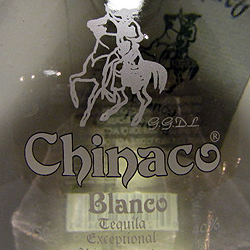
  • CHINACO BLANCO:  A fierce, peppery, full-bore tequila with cooling mint and lemon flavors, and ultimately, a lip-blistering finish.
  • SAUZA HORNITOS:  Keenly balanced, clean and highly perfumed.  The essential bite is left intact and the aftertaste is aggressive and spicy.
  • HERRADURA ANEJO:  Very aromatic, lots of oak-derived vanilla and caramel flavors blending well with a core of sharp, stalky fruit.
  • SAUZA TRES GENERATIONS:  Mature, robust with a nice blend of earthy artichoke flavors, caramel and delicately spiced oak.
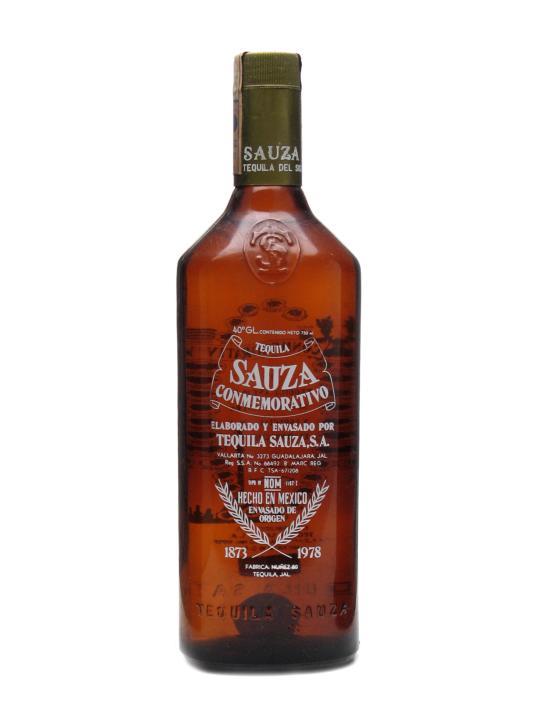
  • SAUZA COMMEMORATIVE:  Vague bourbon overtones somewhat confuse the agave guts.  Long on the throttle with a big-bang finish; a great blending tequila.

*

TEQUILA GLOSSARY

ANEJO:  Tequila aged one year or more.

BLANCO:  Unaged Tequila

BORRACHO:  Drunk

GOLD TEQUILA:  Unaged tequila artificially colored to appear old.

MAREADO:  A polite euphemism for ‘drunk’.

MEZCAL:  Generic term for  spirits distilled from agave.

NOM NUMBER:  All tequilas bottled in Mexico bear an identification number called the NOM.

REPOSADO:  Tequila aged two months to one year.

TEQUILA:  A twice-distilled blue agave spirit from specific areas in five Mexican states.

TENER UNA MERLUZA:  A verbal phrase meaning ‘drunk’.

*


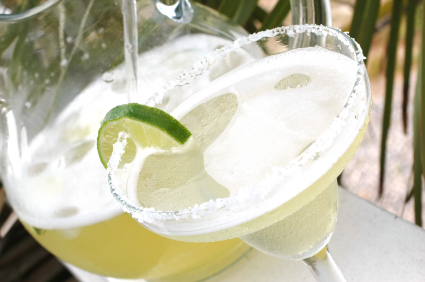
THE ULTIMATE MARGARITA 

(Naturally, purists consider the lowly margarita to be the most unpardonable of tequila blasphemies.  They are encouraged to skip this part.)

  • Bowl-shaped glass
  • Coarse salt for the glass rim
  • Cracked ice
  • Juice of one lime
  • ½ ounce Cointreau
  • ½ ounce Grand Marnier
  • 1 ½ ounce Sauza Conmemorotivo Tequila

(For an ultra-ultra margarita, add a splash of Damiana; a strange liqueur made from Mexican shrubs which you probably won’t be able to find anyway.)

Rub rim of glass with lime, dip in salt.  Add ingredients to a cocktail shaker, shake until frothy.

Posted in Tequila | Leave a comment

Sherry, Baby!

You wanna party?  I mean, hit a real six-day blowout rave, an around-the-clock thump riot that makes Mardi Gras look like the Jasper County Husking Bee?

Try April in Andalusia.

Overshadowed by impossibly romantic mountaintop villas, cresting expansive snow-white beaches, the annual Feria de Sevilla sandwiches sleepless tourists between noble scions, frantic gypsies and thousands of bohemian rurals for a week’s worth of food, flamenco and unbridled fun.  Insomnia is the rule of thumb; immoderation the shibboleth.  It is by far the best fest in the Euro west.  In Iberia, James Michener congratulates these reeling ravers like this:  “They’ve discovered… noise incarnate.”  The most popular drink at the fair is sherry.

Sherry is made almost exclusively from palomino grapes around the Andalusian town of Jerez, a tiny triangle of heat and chalk bordered by mountains, the Mediterranean and the Atlantic.  Noted authority Julian Jeffs explains, “Everything in Andalusia is exactly right: soil, climate, ferments and fruit.”

The true wonder of sherry is its stylistic versatility.  What’s arguably the world’s most sophisticated aperitif can be blended, refined, and otherwise metamorphosed by a producer’s sleight-of-hand into a round, full-bodied dinner companion or a full-bodied, hedonistically sweet dessert wine.  Sherries are as colorful as their personalities, ranging from the pale topaz tint of bone-dry Fino Sherry to the velvety chocolate-brown of dulcet Olorosos.  More on these in a minute.

Riesling you may quaff, zinfandel you may gulp, but sherry—particularly in its lightest incarnation, the racy, stimulating Fino—you sip.  Unlike most wine that originates in hot climates, sherry does not require food to be truly appreciated, though paradoxically, many strongly-flavored first-course items (notably olives, smoked fish and cream soups) howl for a natural, dry Manzanilla… and nothing else.  One of the world’s most perfect food/wine match-ups is well-chilled Fino and steamed prawns, though in a pinch, nearly any shrimp dish will show the same synergy.  Nutty, ripe-tasting Amontillado sets off delicate pâté to a turn, yet houses enough horsepower to weather the most aggressive spices.  On a meal’s posterior end, luscious sweetened sherry is an ideal comrade to cheese, pastry and anything containing walnuts.

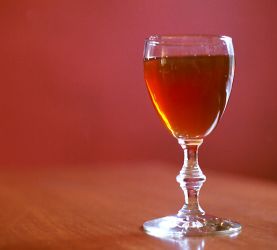
Sherry is best served cold (not icy) in a narrow bud-shaped glass known as a copita which should never be filled more than halfway to preserve the bouquet, and, when swirled, the shirtsleeves.  Though purists shun the practice, dry sherries are occasionally poured over ice with a splash of soda.  A classic cocktail on every barkeep’s back burner is the Cream Sherry Flip, a once-popular blend of whole egg, cream, sherry, sugar and nutmeg.

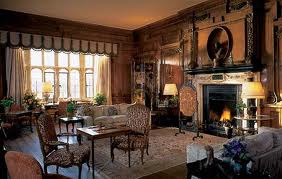
The ebb and flow of sherry’s popularity has tracked public tastes for as long as it’s been produced.  A generation ago, the industry itself nearly self-destructed when over-production led to plummeting prices and quality fluctuations.  Another culprit was the newwave of chardonnay/cabernet fanatics who associated sherry with stodgy merchant bankers and stuffy British drawing rooms.  Today, an increased sophistication among tipplers (especially here in the States), a surge of innovation from enterprising producers and perhaps, amid the laser-paced cyber jungle, a gentle reminder that sherry is, in fact, a link to civility, tranquility and order, has fueled a sherry rediscovery.

Stuffy British drawing room

According to sherry-pro John Marasco: “We’ve seen a remarkable upswing in sherry consumption among young people, especially with the drier wines like La Ina and the rarities like Palo Cortado.  Where Bordeaux and Burgundy is about complexity and depth, sherry is all about finesse.”

Much of sherry’s nomenclature (including the name—an anglicized version of Jerez) pays homage to its immense popularity among the British, who import far more than they leave to the Spanish.  Despite the often-confusing labels, there are actually only two types of sherry, Fino and Oloroso.  Outrageously, it’s the wine, not the winemaker, that decides what it will become.  Fino is born when an airborne yeast called flor forms spontaneously

Shari Belafonte has also matured and displays authority and breeding potential

on the surface of lightly fermented palomino juice and converts residual sugar to alcohol, resulting in a potent but extraordinarily elegant wine that’s frequently ready to drink without further aging.  Less-than-perfect Finos are set aside in casks within a criandera, or nursery, where they gradually mellow and darken.  When, due to climate or vineyard conditions, the flor fails to develop, the wine is fortified with brandy and becomes a full-bodied Oloroso.  Matured in wooden casks, Oloroso adopts authority and breeding over a period of years with the addition of concentrated wine made from the Pedro Ximenez grape—the basis of all sweet sherries.

Among the numerous sherry sub-species are Manzanilla (an oddly salty-tasting Fino made in a distinct region fifteen miles north ofJerez), Amontillado (a medium-bodied Fino that’s been oak-aged), and Cream (an amber-colored, sweetened, well-aged Oloroso).  Many popular sherries, including Harvey’s Bristol Cream and Dry Sack, are brand names with flavors so well known that no further descriptors are needed on the label.

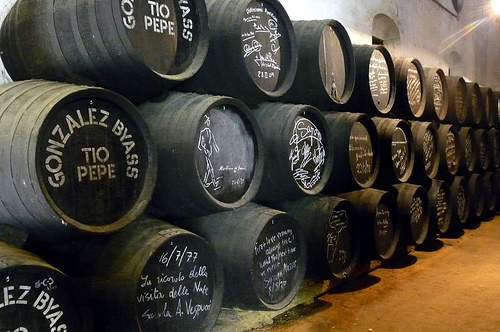
What makes sherry so unique?  The solera aging system is probably the single most dominant factor: it involves a series of casks arranged in tiers throughout the cellar, each filled with sherry of a different age.  Several times each year, a small amount of the oldest wine will be drawn from the first tier’s barrels and bottled.  The empty space within the casks are filled with slightly younger sherry from the second tier.  This void is likewise replaced with wine from the third tier, and so on until the final row is reached, whereupon new, unaged sherry is introduced.  This style of fractional blending produces the uniformity and consistency that is the hallmark of sherry (which, as a result, rarely carry a specific date of vintage).

Andalusians began making wine a thousand years before the birth of Christ; Falstaff called it ‘sack’ and drank ‘an intolerable deal’ of the stuff somewhere back in the gullet of the sixteenth century.  The colossal white-walled bodegas of Jerez wine barons still house soleras begun over a hundred years ago.  Among the oldest and most classic of beverages, it’s ironic that sherry has only recently begun to come of age.

TASTING NOTES, LOW TO MID-END SHERRY:

RENASANS PALE MEDIUM DRY, KWV, around $9:The exception to prove the rule, this South African sleeper has all the grace and depth of a topflight Jerez Amontillado at about half the cost.  A full-blown dinner companion, Renasans has the muscle to meet highly spiced entrees, the richness to compliment foie gras and the breeding to be taken alone as an aperitif.

AMONTILLADO, SAVORY & JAMES, around $10:  A plump, viscous, middleweight sherry, this Amontillado has a remarkably pronounced nose reminiscent of polished oak cabinetry and a deep, almost tarry mouth feel.  Serve with grilled fish, proscuitto and lobster.  Drink a cask and you’ll be ready for the crypt in Edgar Allen Poe’s story.

LA INA VERY DRY, PEDRO DOMEQ, around $13:  Fresh, vibrant, filled with light almond notes and a bracingly piquant finish; an ideal wine to serve with fresh shellfish and clear soups.

TIO PEPE FINO, GONZALEZ BYASS, around $15:  Tio Pepe exemplifies the strong yet delicate profile of a truly world-class dry sherry: pale golden in color, pungent in taste with a complex and lingering finish.  A perfect companion to strongly flavored hors d’oeuvres, especially Spanish tapas and smoked salmon.

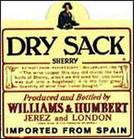
DRY SACK, WILLIAMS AND HUMBERT, around $16:  ‘Dry Sack’ is an appropriate name, since ‘sack’ is what the English have traditionally called sweet sherry and this is a medium-dry Amontillado.  It tastes of hazelnuts and figs and finishes with a pleasant bitterness; it pairs well with blue and hard cheeses, fruit salads and all types of bisques and chowders.

HARVEY’S BRISTOL CREAM, around $15:  This world-famous sherry is a rich, soft, nutty, pleasantly sweet wine that pairs wonderfully with nearly any dessert containing grapefruit or melon, and most ideally, with crème brulee.

Posted in Jerez | 1 Comment