Wine with Chili Dogs: A Match Made In Purgatory and/or Detroit

So the Swami walks into Lafayette Coney Island and says, ‘Make me one with everything’

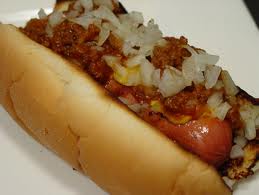
Before we delve into the painfully pedantic and mind-numbingly dull world of grape juice, I vote that we take a moment to consider something that is really close to all of our fat-clogged, oxygen-starved tickers: The Coney Island Hot Dog.

Detroit is rarely mentioned in the fogs of frankfurter folklore, so most people don’t realize that the Granddaddy of all Heart-Stupid Junk Foods has little connection to that filthy, eponymous Brooklyn peninsula, but instead is a Michigan original.  It was invented four generations ago by George Todoroff in a small restaurant opposite the train station in downtown Jackson, MI—a podunk town listed on maps only because it’s home to Jackson State Prison.

Characterized by its beanless chili sauce, the classic—and to purists, the only—incarnation is smothered in diced onion and yellow mustard.  The addition of anything else may be considered a form of Michigan blasphemy on par with buying a Toyota.
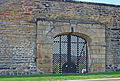
Jackson Prison, east gate

As may be expected, when Motown enters the story, there evolves an aggressive angle.  First-time visitors to Downtown Detroit often scratch their heads when they encounter a pair of massive, splashy, joined-at-the-hip coney island restaurants, Lafayette Coney Island and American Coney Island.  They’re even more surprised to find out that the same extended family owns each and that patron loyalties are so intense that it wouldn’t occur to regulars of one to set foot in the other.  The rivalry has roots in the 1920’s when Greek immigrant brothers Gust and William Keros opened American Coney, and almost immediately were at each other’s throats.  When the storefront next door opened up, William installed his own restaurant, Lafayette Coney, and for ninety years, each eatery has been vying for fidelity among Detroiters.

To a novice, the difference is negligible, but true frank freaks will argue minuscule points ad nauseum (sometimes literally)—Lafayette has a meatier chili, American’s is spicier; American’s hot dogs are more flavorful, but Lafayette’s dining room has a more authentic, yesteryear feel. Regardless of personal pledges of allegiance, both landmark joints have ensured that Detroit is arguably the destination spot for certified coney-sseurs.

The story’s final irony?  In Coney Island, New York, the sandwich is not called a coney island, but a ‘Michigan’.

You Can Lead A Horse To Water, But You Can’t Make It Into a Hot Dog…  Legally, Anyway.

The traditional accompaniment to the coney dog is flat Diet Coke in cheap plastic tumblers, hose/hydrant water served curbside, or massive quantities of 3.2% ballpark beer.  But to a chemical engineer using instrumental flavor analysis techniques, none of these beverages are particularly appropriate.  The complex interaction of volatile compounds found within a) the bun, b) the chili, c) the condiments and d) the frankfurter itself will inevitably overpower the savory partition coefficient of the Coke (especially as the aspartame begins to liquefy the tumbler’s polyolefin), the Ca2+ and Mg2+ ions contained in the multivalent cations of the street water, and as for the Miller Lite, forget it: Real men sneak Jack Daniels into the stadium.

Wine Not?

In point of fact, the following experiential approach brings this column around ‘full circle’ and indicates that the single most synergistic compliment to a ‘Detroit Coney With The Works’ is wine.

A typical reader reacts to ‘technical talk’

And not only that, but choosing the correct wine to wash your wiener down will raise the experience from hedonistically enjoyable to life-alteringly memorable.

What follows is both the ‘why’ and the ‘how’ behind the conceptual methodology used to prepare these tasting notes. It’s a technical but reliable overview of the human sensory process, including the mechanisms of flavor perception specifically geared toward the eno-gastronomic identities of several of the 350 local breeds of chili dog.

American Coney Island, Michigan Avenue: An exuberant and haunting menu rounds out the coneys with tuna salad and chicken wings, both of which are hard to eat beat.  Having edged out rival Lafayette in both Food Network and Travel Channel tastings, American celebrated its victory by mopping the bathroom almost six months in advance of schedule.
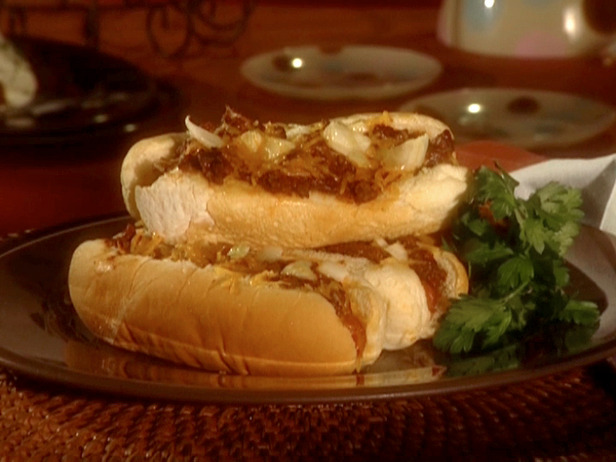
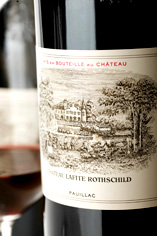
To Accompany: Chateau Mouton Rothschild, Pauillac, 2006, about $840:  Textbook representation of Pauillac’s feminine side, the ’06 Mouton offers beautiful black and blue fruits integrated with mocha and soft vanilla.  Additional notes of crushed rock, white blossoms, black currant, pain grille compliment the vintage’s outstanding ripeness.

*
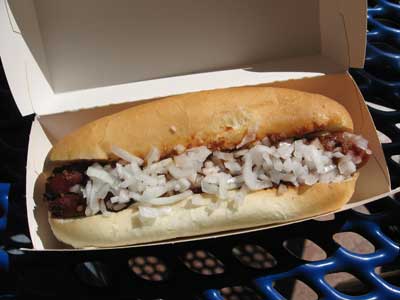
Lafayette Coney Island, Michigan Avenue: The quality may be mercurial, and food is occasionally served directly from unrefrigerated tubs beneath the counter, but in terms of ‘old-fashioned ambience’, this place has it all, including hot dogs which taste as though they were made in some previous century. Likewise, the chili is said to be left over from Pancho Villa’s chuck wagon.

To Accompany: Antinori Solaia, Tuscany, 2007, about $270:  A storied cabernet-based ‘Super Tuscan’, the wine’s acidic backbone gives it a uniquely Latin stylishness that settles in nicely with the spiciness of Lafayette’s signature chili.  In addition, the judicious use of new oak by Antinori vintners is kept in check by the bracing crispness of the wine, although the tannins are a bit hard to assess due to the extraordinary lushness of the fruit.

*

Casu Marzu

Oscar’s Coney Island, W. Chicago: Amid the taste hierarchy in the food pyramid, Oscar’s coney island hot dog ranks between Sardinian casu marzu, which contains cheese fly larvae, and Libby’s Potted Meat Food Product.  The chili, of course, is what it’s all about and what the 2:15 bar crowd comes to enjoy.

In fairness, ammonium sulfate shows up in the bun, not the hot dog

To Accompany: Chevalier-Montrachet, Bouchard et Fils, 2006, about $720:  White wine with a chili dog?? Fie on the rules, say I!  This supremely focused chardonnay has the muscle and grit to stand up to any chili dog, even one that has been forgotten under the heat lamp for three or four weeks.  Brimming with lime oil, stony green fruit and crushed rock, the wine shows what a truly talented winemaker can manage amid a challenging vintage, just as Oscar can take an amalgamation of castoreum (beaver anal glands), ammonium sulphite, coal tar, silicon dioxide (sand) and pig snouts and whip up a seductive coney island hot dog of exceptional quality.
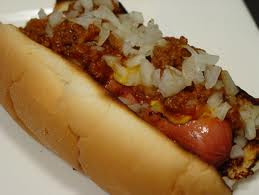
Zef’s Coney Island, Russell St.: The weenies are purchased directly from the wells of Dante’s Inferno, offering Zef’s a bit of literary credibility; the chili is sweet and sassy and the dogs are loaded with spices which may or may not be legal.  Best of all is your ultimate distillation of the ‘Detroit experience’: Listening to the grill cooks scream at each other in some really angry-sounding language.
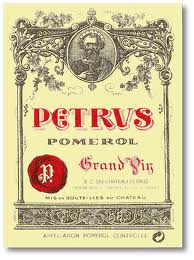
To Accompany: Château Pétrus, Pomerol, 1945, about $11,500:  Yes, the wine is legendary and priced to prove it, but some of the sticker shock should fade when you realize that you can get two of Zef’s coneys for under five dollars.  Pétrus’s inimitability is due in part to its exceptional terroir, which sits at the highest point in the appellation.  The ’45 was a celebration not only of VE Day, but of VFFWBTAOC Day (Victory For Future Wine Brokers Taking Advantage of Collectors Day).

*

Coney King Coney Island, West Fort St.: The sweet chili and savory intestine-stuffed pack of pig by-products appeals to our contrasting senses much like salt pork and hard tack—another magical culinary marriage.  The Coney ‘King’ may in fact be a deposed Duke from Iowa—home to more than 19 million wiener-bound hogs—but his output is pure ‘Motor City’.
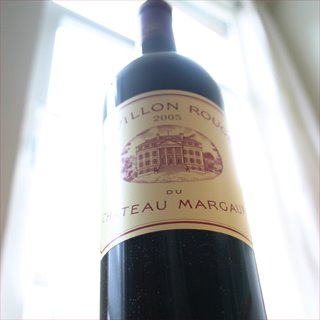
To Accompany: Château Margaux, Margaux, 2005, about $1400: The silkiest and most graceful of Bordeaux’s First Growths, this wine exhibits superb ripeness, texture and breeding shoring up a pedigreed personality containing explosive flavors of almond, plum, blackberry and spice box.  An uncanny equilibrium coats the mouth and concludes with a saturated and potent minerality.

*

Woodward Coney Island, Woodward Avenue:  Detroit’s best expression of the non-kosher hot dog, the sausages fairly ooze with some viscous amber liquid that appears to be inorganic in origin.  Equally, the toppings, chili to onions to mustard, contain unidentifiable flavonoids that prove, during mastication, a remarkably strong compliment to a Côte de Nuits Grand Cru Burgundy.  Nonetheless, we’re going with Night Train Express.

To Accompany: Night Train Express, about $2: Axl Rose may not know how to play an instrument, but he does know shitty wine.  Night Train Express is fortified to rigorous standards, resulting in a full-bodied and powerful plonk that balances street intensity with life threatening toxicity. Yet another stunning wine from E & J Gallo expressing classic, contrasting carcinogens when guzzled alongside an equally malignant Detroit ‘red hot’.

*

Pleasingly tubby

Lou’s Coney Island, Mack Avenue: Despite the Physicians Committee for Responsible Medicine’s recent billboard campaign likening hot dogs to cigarettes and declaring that eating one hot dog per day would increase the eater’s risk of cancer, Lou plugs forward, serving franks as plump and juicy as a pre-pubescent Miley Cyrus and chili as spicy as Chastity Bono before the sex change.

To Accompany:  Dominus Napa Proprietary Red, Napa, 2008, about $219:  A wine of great purity and richness; a Meritage-blend that percolates with smoke and coffee bean intermixed with black currant notes, blueberry and cedar and lingers on the palate through an extraordinarily long and voluptuous finish.

Posted in PAIRING WINE AND FOOD | Tagged , , , , , , | 1 Comment

No. 209: Kosher Gin For New Years Eve, 5772

How can you pass over a gin made for Passover?  Or the Jewish New Year, Rosh HaShana (September 29-30, 2011)?

Few goyim realize that on Rosh HaShana, a giant matzoh ball is dropped at Times Square

True or False:

  1. When Rick Blaine said, “Of all the gin joints in all the towns in all the world, she hadda walk into mine,” the Rabbi replied, “Gevalt, Bogie, have you got the wrong gin joint—this is a synagogue.”
  2. The reason Jesus changed water into wine was because gin can’t be made kosher.
  3. There is nothing wrong with Mogen David anyway unless you drink too much of it, and why would you do that?—you’ll ruin your health already.
  4. This columnist’s soul is beyond the realm of salvation.

If you answered true to any statement but the last one, bubbie—have I got the booze for you! Not only is it delicious, flavored with juniper, citrus and spices, but it manages to solve that age-old quandary:

What do you give a to guy (or goy) who has everything… except a kosher gin to drink at Rosh HaShana?

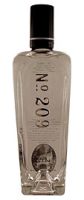
The brainchild of food and wine entrepreneur Leslie Rudd, No. 209 Gin bills itself as ‘the only certified kosher-for-Passover gin in the world’.  I think we can all agree as to the probability of that statement’s truth without a further Google search.

Despite my Catholic school education, I have, in my lifetime, attended a number of Seders, and unless the menfolk were sneaking off behind the symbolic woodshed between symbolic courses to do non-symbolic gin shooters without inviting me, my conclusion is elementary:  There was no gin!  Was this because traditionally, gin is made with grain-based spirits that are forbidden during the eight-day festival? Or because nobody particularly felt like drinking gin, the quintessential tipple of British upper crust, on a  biblically-mandated Jewish holiday?

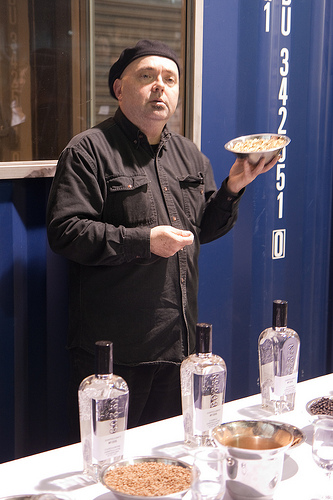
Arne Hillesland

Who cares?  Either way, Rudd saw a niche and filled it, hiring master distiller Arne Hillesland and associate winemaker Jonathan Hajdu of Covenant Wines to craft a unique recipe that adheres strictly to kosher dietary law—which among other tenets, assures that juniper berries are picked humanely.  Rudd’s overreaching philosophy, echoed by his daughter Samantha (who currently runs the show) suggests that micro-distilleries like No. 209 have a role to play in bringing innovative products, new ideas and fresh enthusiasm to the distilled spirits industry.

So, since you did so well on the first one, here’s another true/false quiz:

No. 209 is called No. 209 because…

  1. That’s where I rank ‘certified kosher-for-Passover gin’ on the list of ideas I’d have invested in (coming right after Campbell’s Cream of Tartar Soup).
  2. That’s the square footage of the distillery.
  3. It indicates that at 2:09 AM on a jet setter planet far removed from a poor wine column schlepper’s, that’s when the real fun begins.
  4. No. 209 was the federal distillery number granted to the original owner of Leslie Rudd’s Edge Hill winery in St. Helena.

Dead on, once again.  Number 4 is the only true statement.

Speaking of statements, didn’t Bogart also say, “The rest of the world is three drinks behind”?

Regardless of your faith, creed or religious observance, No. 209 is a great way to start catching up.

Tasting Notes:

No. 209 Gin, around $30: Silky smooth, bone dry and peppered with overtones of papaya, lime zest, licorice and coriander behind a traditional juniper core. Spicy, crisp and super-clean finish.
Posted in Gin | Tagged , , , | Leave a comment

Fin Vin: Serving Wine With Fish

Throughout the summer and fall, choose a seacoast, find a river bank with a fast riffle or slow eddy or plant yourself in the middle of a fresh water lake anywhere in the United States and chances are that there’s a fish harvest nearing peak season. From May to September, ripening as vigorously as that creamy avocado or succulent peach, fish—both shell and fin—are running… frequently for their lives.

For lovers of the lighter, racier drinks of summer and the healthy foods they compliment, there is no better marriage than wine with fish.

Taking no glory away from harvest-time produce, which nourishes the eye and body in equal measure, fruits and vegetables tend to be less wine-friendly than fish and may be better experienced in a judiciously cast supporting role. Either way, food at the peak of freshness, whether it swims, skitters or dangles from a branch, is the hallmark of history’s greatest cuisines.

"Are the salmon running, or is Sacajawea in heat again?"

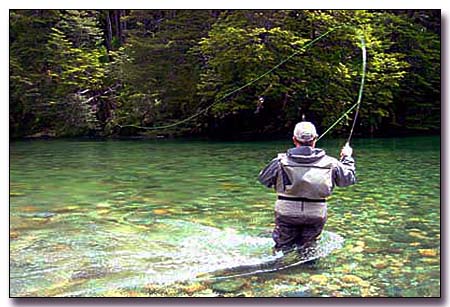
Fishing isn’t for everyone, but if you happen to be hooked on the sport, bull trout, rainbows and cutthroats can be had from mid June through late August, though there is no question that the Chinook is the king of angling. The largest and strongest of the Pacific salmon, Chinook were a favorite meal of Lewis and Clark and can weigh upwards of eighty pounds. Chinook flesh is prized for its oily texture and complex flavor, which leads to a quintessential fish-with-white-wine mythbuster: as regional foods and wines often have a natural affinity for each other, there’s no better sip with a fresh-from-the-salt Chinook than a low-tannin Oregon Pinot Noir. It’s seafood synergy at its best.

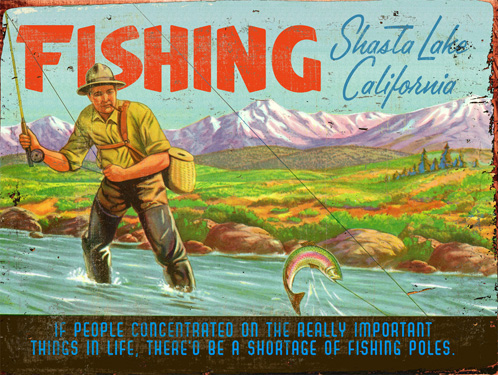
Meanwhile, northern California plays host to some of the most prolific trout streams in the west; the Upper Sacramento alone boasts nearly seven thousand trout per mile. As challenging as they are beautiful, emerald pools and pocket waters along Interstate 5 are home the native Shasta Rainbow—so highly regarded that it’s been stocked worldwide—while trophy browns abound. Equally appropriate for a roaring campfire as for a Five Diamond restaurant menu, trout is leaner, sweeter and more delicate than salmon, and is a wonderful foil for seductive, lesser-known white varietals like Semillon, Chenin Blanc, Viognier and especially, a young, lively Colombard.

Albacore (the only fish legally entitled to be called ‘white tuna’) are also an affordable Pacific coast treat available throughout the summer; albacore’s upscale cousin, yellowfin (also known as ahi) is richer, fattier and costlier, though tends to drop in price toward the end of the season when these migratory fish start running off Hawaii. The former pairs well with Pinot Blanc, the latter (especially if seared or blackened) is a classic match with a low-acid Syrah.

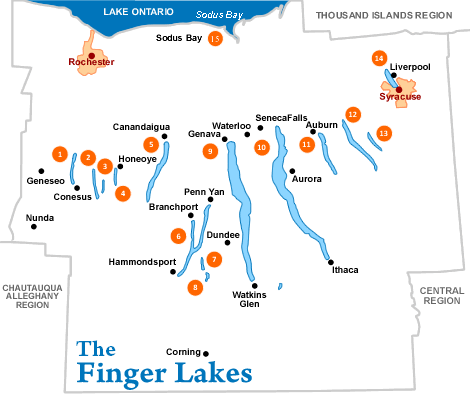
Now pull a rakehell turn and head cross-country, bringing along your heavy-duty, medium and ultra-lite fishing gear—you’ll have ample opportunity to explore fishing holes throughout the Midwest. By the time you hit New York’s Finger Lakes, you’ll be pumped to troll for walleye, perch and bass. Finger Lakes viticulture is rich in history and includes the oldest bonded winery in the United States, Pleasant Valley. Cool weather varietals predominate, of course, and crisp, mineral-laden Rieslings, multi-styled Gewürztraminers and notably, lightweight Pinot Noir—said here to be unusually high in the antioxidant resveratrol—are perfect balances for the nearby freshwater catches.

Farther east, the seaboard serves up plenty of shelled delicacies—the ‘other’ seafood. Though dwindling in numbers, lobsters still rule in New England, while on Long Island, Little Neck Bay produces the sensationally tender clam that bears it name—not to be confused with ‘golden littlenecks’, the tougher, if flavorful ocean quahog. Returning the name favor, The Big Apple, a.k.a.The Big Oyster (along with Ellis Island’s original moniker, Little Oyster Island) pays homage to the bivalve beds that once flourished in New York Harbor.  Currently polluted out of that locale, oysters can still be found up and down the East Coast, both wild and aquafarmed, differing dramatically from their West Coast cousins due to Atlantic tides, algae, and mineral content. Dreadful to look at—crooked, fused, muddy and covered in barnacles—salty-sweet oysters are a luxury taste that is flattered by a high-end sparkling wine.

"Word, Jed--technically I'm not seafood."

Heading west once again, in Washington State, black gold is not synonymous with Texas tea; it’s regional slang for mussels. And unlike Jed Clampett’s oil reserves, these chewy bivalves are as easy on the pocketbook as they are on the environment. At their tip-top throughout the summer months, mussels are often grown on ropes hanging beneath rafts throughout Puget Sound. Mussels, like the coldwater shrimp and the magnificent Dungeness crabs caught off the Pacific Northwest, would be well-matched with a homegrown local white; a Columbia Valley Riesling, for example, whose all-star cachet is currently enjoying a renaissance.

Meanwhile, experiment. Mix and match. If a particular seafood and wine doesn’t work for you, try another: Like the old adage promises, there are plenty of fish in the sea.


Some basic tips:

  • Dry, full-flavored gewürztraminer pairs nicely with fish prepared with cream sauces and spices.
  • Washington whites swim in synchronicity with cold-water lobster.
  • French Muscadet is an ideal match for raw seafood, especially oysters and clams.
  • Wines with notable acidity, whether white or red, cut through the oiliness of rich fish like salmon.

Tasting Notes You Can Take To The (River) Bank:

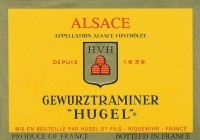
Hugel et Fils Gewürztraminer, ‘Hugel’, 2009, about $22: A solid, entry-level Alsatian gewürz with a characteristic rose-perfumed bouquet and an unguent mouthfeel; mango, lychee and lemon along with a spice-rack of oriental flavors.

Facelli Fumé Blanc, Columbia Valley, 2008, about $18: Great acidity, plenty of fruit, especially grapefruit, melon and Key lime; slightly herbaceous and acceptably long on the palate.

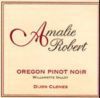
Amalie Robert Pinot Noir, Dijon Clones, Willamette Valley, 2008, about $40: Send in the clones; nothing Grey Poupony about ‘em. The rootstock comes from Burgundy, the wine from Oregon’s premiere AVA. This cherry-cinnamon blockbuster is coming into its own and will continue to evolve for years.

Chéreau Carré Château de Chasseloir, Muscadet Sèvre et Maine Sur Lie, Loire, 2010, about $12:  Chalky, vivid and almost salty, this unusually full muscadet is almost Burgundian in style; it will pair perfectly with oysters on the half shell and still hold its own with cream sauce.

Posted in PAIRING WINE AND FOOD | Tagged , , | 1 Comment

Sup a Cup of Cupcake; Leave the Lemon Chiffon for Grandma

In my best Seinfeld voice:  What’s the deal with all these cupcakes, anyway?

Fake Jerry is right.  Prior to the last few months, the only space cupcakes ever occupied in my brain was when I woke up in a panic one morning remembering  that I was supposed to have fifty of the high-fat, sugar-jammed little buggers frosted and ready to rock for an 8 AM elementary school bake sale. (And don’t preach ‘low-fat and heart-smart cupcakes’, Ellie Krieger—they make about as much sense as low-alcohol, heart-smart scotch).

Now, all the sudden, cupcakes are everywhere.  Cupcake Wars on Food Network featuring an A-list of celebrity cupcake makers;  Madonna passing out free cupcakes to launch her Material Girl line of ugly clothes;  Magnolia Bakery opening in LA with more press and fanfare than the opening of Eclipse;  Katie Holmes making news by having grasshopper flavored Isabelle’s Curly Cakes delivered to the set of her latest thespian debacle—that’s ‘news’ she’s making, folks—the same institution that hardly mentions four thousand dead American soldiers in the Middle East any more.

And Now, There’s Cupcake Vineyards…

There’s a stylized cupcake on the logo, a sinfully scrumptious-looking chocolate cupcake on the beauty shot, and a tagline to their latest varietal, sauvignon blanc, claiming that it’s ‘almost as good as Grandma’s lemon chiffon cupcakes…’   We guess by these endless cupcake references that there must be caché in linking yourself to a silly trend like gourmet cupcakes, even if there is no discernable reason for a vintner to do so.  Still, it could have been worse.  We could be drinking Venetian Blinds Style White Glasses viognier.  Or Crocs cabernet.

Winemaker Adam Richardson (not to be confused with that cute little cupcake Adam Rich from Eight is Enough who turned into a juvenile delinquent and by now is probably a senile delinquent) hails from Australia, where they undoubtedly have some precious slang word for ‘cupcake’ like ‘cuppies’.   Before becoming a winemaker, Richardson was an aviator with the Royal Navy, which is a little like being a sailor for the Royal Air force.  No wonder he changed professions, launching  the Cupcake brand in 2008, intending to produce rich, hand crafted wines saturated in flavor and complexity—wines that the ‘more is more’ consumer just can’t consume enough of.

So Far So Good:

According to Marketing Director Nicolas Tucker , “With the gourmet cupcake trend accelerating and cupcake boutiques opening up across the country, there is an opportunity for a wine that is crafted to invoke the feeling that you get when reward yourself.”

Nice words, interesting concept.  Problem is, Nicolas and Adam, isn’t that a lot to hang your Mad Men-era fedora on?—trends accelerate for only so long, then decelerate even quicker, which is, in fact, why Pet Rock Winery and Rubik’s Cube Vineyard went belly-up.  The product you guys are pumping out is, dollar for dollar, very good, too—much better than Grandma’s lemon chiffon cupcakes, which always had too much baking soda and tasted like sugared hummus.

The slew of awards won by the winery is proof that the opinion of Cupcake’s overall quality and value is not mine alone.  In ’09, they took gold in seven prestigious competitions (including Sommelier Challenge International, Critic’s Challenge International and both the LA and San Francisco International).  In ’10, they loaded down the mantle with 22 more gold and silver medals.  So far in 2011 the trend continues, and awards already snagged could fill a fifty gallon limousin barrel.  (Though Richardson claims to use only American oak).

Adam Richardson, winemaker

Part of the charm of the Cupcake portfolio is that, though the winery is based in Petaluma and known for boldly expressed  Central Coast varietals like chardonnay, cabernet and merlot, Richardson’s a Down Underer and well understands the sublimity of sauvignon blanc from Marlborough, New Zealand.  Without batting an eye, he’s slapped a Cupcake label up on a classic lime-zest and grapefruit version.  Likewise, a Mendoza malbec, a  Mosel riesling (in a pretty blue bottle, the same color as Grandma’s three week old lemon chiffon cupcakes), a Yakima dry riesling, a Barossa shiraz and a Trentino pinot grigio.  I doubt that Richardson himself made any of these foreign-born wines, but on the other hand, I don’t know that for a fact; his press doesn’t say.  What I do know is that at this price point—all the wines are around $12, with a pair of bubblies coming in at $15—they’re sweeter than the molar crumblers I skated in under the wire at my kid’s bake sale.

With such trend-bucking innovation, it would be a shame if, when the cupcake craze fades—and fade it will—the winery  ends up aligned with a ‘that’s so ten minutes ago’ moniker.

On the other hand, fear not, Adam and Nicolas—you have at least one sad sack wine writer working overtime for you, predicting where you should go from here.

Just maybe I have a handle on the next big wine trend.  

In my squirreliest Seinfeld impression:  Cupcake tops.

*

Cupcake Vineyards is part of the Underdog Wine Merchants portfolio of wines, a champion of interesting, sometimes misunderstood or under-appreciated wines and wine styles. In a word, they consider themselves the ‘underdogs’ of the wine world. Underdog works with both domestic and international winemakers to craft unique, esoteric wines and bring those gems to wine lovers. Underdog’s current portfolio of wines includes A●Mano, Angel Juice, Big House, Boho Vineyards, Cardinal Zin, Chateau Laroque, Helfrich, Herding Cats, Killer Juice, Montecillo, Now & Zen, Osborne, Pinot Evil and many others. For more information on brands and availability visit http://www.underdogwinemerchants.com.

Posted in CALIFORNIA, Central Coast | Tagged , , , , , | Leave a comment

Holy Trinity Wine: The Pope’s Got A Seat On High—And Another One Down Under

Barossa!

Just growling out the word is sort of a charge, like it could be the name of some Somali warlord hijacking vessels off the Horn of Africa, or a military operation to liberate fertile swaths of Uzbekistan so that our children can have enough Cream of Wheat to last through the middle of the twenty-third century, or the nom de guerre of a stogie-chomping contrarrevolucionario looking to become a new Banana Republic dictator.

On the other hand, it could be a valley where they make wine.

Less romantic? Unfortunately, this is a wine column, not a pirate column.

But then again, strike that: I’m glad this is a wine column, because I like pinots more than pirates,  and Barossa Valley is very romantic, thank you very much—with neither warlords or contras mucking up a pretty Australian afternoon.

Which brings us to the Holy Trinity

Barossa is in South Australia—specifically, it’s a valley formed by the North Para river, about a 1-wood’s drive from Adelaide—but the term ‘holy trinity’ originates in another wine region half a world away.

What's left of the Pope's pad at Avignon

The vintners of Southern Rhône have long relied on grenache, syrah and mourvedre—the Holy Trinity—to produce heady, high-alcohol wines like Châteauneuf-du-Pape, which is probably a lousy example since Châteauneuf may legally contain up to ten other varietals, though in ways, the rest are also-rans.

The climate in Southern Rhône is somewhat consistent with Barossa’s, though an overall assessment of either is risky due to elevation variations, sea breezes and numerous transverse valleys that produce a multitude of macro and microclimates.  As tenderfeet we’ll just say it tends to be hot and let the terroirologists sling their corrections as they will.

One thing’s for sure—dry, hot days are required for Holy Trinity grapes to fully ripen, with spells of nighttime coolness to keep the acidity from degrading.

Silesians behaving badly

Another thing’s for sure: these are not conditions you would expect Germanic winemakers to sink their tap-roots into, yet virtually every internet summation of Barossa mentions its unique Silesian pedigree—then, to prevent you from wandering off to Google ‘Silesian’, adds a parenthetical definition of Silesian: (German).

Sure enough, the earliest Barossan settlers were Germans fleeing persecution in Prussia, and when they got here, they tried planting riesling on the flat, hot, dry valley floor, which requires another parenthetical:

(You boneheads).

Grant Burge in a rare moment of quietude

Grant Burge Knows All This, By the Way 

A fifth-generation vigneron and winemaker, Burge is a walking Wikipedia on all things Barossa, so when he suggests that Holy Trinity represents a high-water mark among his wines, you understand that he means—but is too classy to say—that it’s likely one of the paramount selections in the whole Valley.

It’s hardly luck, though—this is a product a century in the making. The youngest vines harvested for Holy Trinity are fifty years old; the oldest, over one hundred, some of the oldest shiraz* plantings on the planet; Grant, who is considerably younger, has seen many harvests nonetheless, and raves about the 2006 vintage.

A mouthful, with its sumptuous textures, heady perfumes, glorious fruit and uncommon longevity (for a New World wine), is some indication of what he’s talking about.

Grant Burge Wines

133 years after his great-something grandfather immigrated from Wiltshire, England, Grant formed his winery along with his wife Helen.  They’ve recently brought their eldest son into the business as vineyard manager, making Toby the sixth generation of winemaking Burge.

And you know what that means, right?

With Holy Trinity now being helmed by father and son, there should soon be a job posting for the Holy Ghost.

Tasting Notes:

THE HOLY TRINITY, GSM, Barossa, 2006, about $42:  Magenta red, licorice-infused and oozing with personality, this brooding beauty shows a broad and expansive palate, plenty of black fruit, dried herb and an almost kirsch-like potency through the mid-palate.  Concentrated but harmonized tannins throughout lead to a saturated finish; like the Vatican, you may find that this wine is a pretty masculine undertaking.  It’s nice now, but should you latch on to a bottle and decide to cellar it, it should last longer than the Pope.

* It is distinctly possible that in 165 years of winemaking, not one Barossan has ever called shiraz ‘syrah’, mataro ‘mourvedre’, Silesians ‘Germans’ or called New Zealanders anything at all–unless they called first. 

Posted in AUSTRALIA, Barossa, Grenache, Mourvedre, Rhône, Syrah/Shiraz | Tagged , , , , , , , , | Leave a comment

Marlborough Country Minus The Lung Disease

These days, if you happen to be a Marlborough Man, you’d better sport a kiwi accent or risk falling afoul of the PC gestapo.  No worries, mate. I suppose that once having referred to New Zealand’s national bird as the avian equivalent of a sewer rat hasn’t pushed me to the top of any PC flagpoles either.

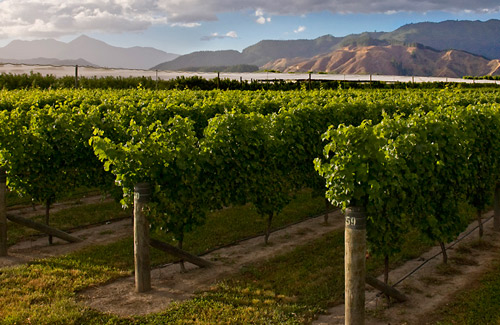
Marlborough—the one with an ‘ugh’ on the end—straddles New Zealand’s South Island like a pole-sitter, and though it’s the country’s largest grape growing region, it doesn’t offer much to the nine or ten people on the planet who still smoke.  But for a growing gang of sauvignon blanc addicts, it’s beginning to show signs of outranking King Bordeaux and Queen Loire.  Marlborough is home to 60% of New Zealand’s entire wine output and claims bragging rights to having introduced the rest of the world to the glories a whole new Valhalla for complex, exciting, concentrated wines.

Especially sauvignon blanc.

This grape, whose name means ‘savage white,’ has origins in southwestern France, not far from the Spanish border.  It’s a fairly forgiving varietal no matter where it is grown, but prospers best in a maritime climate.  It loves sun but not much heat, and requires a long growing season with cool nights to sprout its astral, un-kiwi-like wings; cool nights are key to preserving malic acid, which adds counterpoint and complexity to fruit sugars.  Herbaceous notes, which may remain masked when the grape is grown in depleted vineyards, bubble to surface in young, nitrogen-rich  soils.

Marlborough has all the above; thus, the decision to concentrate on sauvignon blanc (and to a lesser extent, like-minded pinot noir and chardonnay), according to Marlborough-born rocket scientist William Pickering, “isn’t rocket science.”

Marlborough vineyards

Still, when any wine reaches beyond basic quality quotients and tiptoes into the realm of the sublime, there are nuances of flavor, weight and evolution that nearly—but not quite—defy description.  In the case of Marlborough sauvignon blanc—nearly always identifiable in blind tastings—it’s a combination of electrifying citrus (inevitably grapefruit and often nectarine) and a subtle but unmistakable flintiness.

Thirty-five years ago, the reason that nobody spoke about Marlborough sauvignon blancs is that there weren’t any.  First cultivated in 1975, the rapidity with which these vines have stolen center stage is astonishing; for the past few years, Marlborough sauvignon blanc has consistently taken home the door prize at the International Wine for Oysters Competition.  Once start-up concerns, wineries like Hunters Wines, Cloudy Bay Vineyards, Saint Clair Estate Winery and Grove Mill are now household names; they have come of age by cutting edges, not corners—pioneering screw caps, for example, while exploiting centuries-old viticulture technique.

The result?  They’ve taken the yawn out of sauvignon.

Running neck and neck, and at times even surpassing traditional centers for sauvignon blanc like Bordeaux, Sancerre, Quincy and Pouilly-sur-Loire, the leadership role being settled into by Marlborough in 2011 is (with apologies to Philip Morris) a lot more than smoke and mirrors.


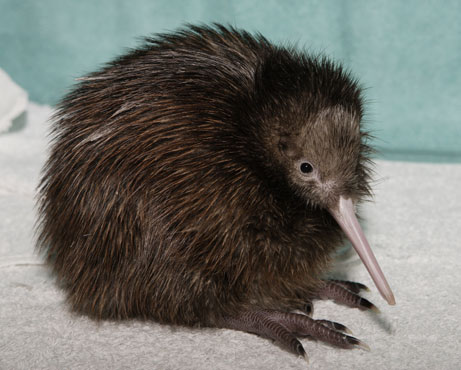
A wingless bird with hairy feathers

TASTING NOTES:

Hunters Wines Sauvignon Blanc, Marlborough, 2011, around $15: Minimal handling and anaerobic processing  of these Wairau grapes results in a crisp, gooseberry-laden mouthful with lots of sweet pineapple and ripe honeydew to balance the acidity.

Saint Clair Estate Winery Sauvignon Blanc Reserve, Marlborough, 2010, about $30:  Big, dense and well-balanced, yet still nicely crisp with lemon, grapefruit and honeysuckle; a perfect wine for grilled veggies and shrimp.

Grove Mill Sauvignon Blanc, Marlborough, 2010, about $16:  Mango, nectarine and grapefruit wrapped in a brambly sports coat; perfumed with pungent guava and a nice dusty mineral bite.

Cloudy Bay Sauvignon Blanc, Marlborough, 2010, about $40:  Pretentious price, potent peach and passion fruit on the palate; a full-blown sauvignon with all the components in place.  Mineral laden, herbaceous with fresh-cut grass and unmistakable kiwi—that, or the national bird/rodent wandered too close to the fermenting vat.  WS gave it a 92, for what that’s worth.

The Drain Commisioner's equivalent of a kiwi

Posted in Marlborough, NEW ZEALAND, Sauvignon Blanc | Tagged , , , , , , | Leave a comment

Sauvignon Blonde: The Wit Just Keeps Gettin’ Harder To Find

Marilyn Monroe wasn’t really blonde.

Oh, you already knew that?

Elvis at six

Okay, smarty pants; I suppose you also knew that Napoleon wasn’t really French, Cleopatra wasn’t really Egyptian, Hitler wasn’t German, Alexander wasn’t Greek and Stalin wasn’t Russian?   And even though Marilyn wasn’t a natural blonde?  Elvis was.  No?  Just look at pictures of the King when he was still a pauper.

Now that we’ve established that everything you know is wrong, we can all talk comfortably about wine.

What Could Be More Fun Than Naming a Mind-Altering Substance After a Celebrity Who O.D.’d on a Mind-Altering Substance?

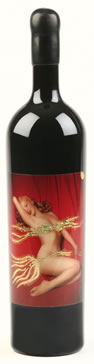
Back in 1981, two decades after a Nembutal wind blew out Norma Jeane’s candle, a handful of Napa wine buddies were slamming homemade merlot and twisting words, and one of them came up with the excruciatingly charming wine tag, ‘Marilyn Merlot’.  Like most drunken eureka moments, it probably sounded less hilarious with a hangover, but as a concept it wouldn’t die, and by 1985, the group was marketing a limited release Marilyn Merlot to the public.

Now, for the most part, serious wine aficionados are notoriously humor-impaired, and most approach their discipline (grape juice) with a gravitas that is not only overbearing and boring, but borderline frightening .  ‘Sober drunks’ is an oxymoron that strikes terror into the hearts of those of us who drink for the taste and the effects and consider all the esoteric flash-card words mere conversational bon mots  to fill dead air between wine flights.  So, back in the day, it was with almost perverse joy that I read the first highbrow, tentative, but mandatory reviews of Marilyn Merlot.

Because, like hearing Steve Martin rip through a banjo reel or Charo play Flamenco guitar—or even watching Marilyn Monroe upstage Don Murray and make William Inge’s Bus Stop—the inescapable fact is, despite all

Another blonde non-blonde

inherent incongruities, Steve’s a great banjoist, Charo’s an award-winning guitarist, Marilyn could genuinely act, and what was inside that campy Marilyn Merlot bottle was (and still is) a sensational wine.

(Oh, and BTW; Napoleon was Corsican, Cleopatra was Greek, Hitler was Austrian, Alexander was Macedonian and Stalin was from Georgia.  No, not Atlanta).

High Time For a New Pun…

'Happy birthday, Mr. Father Substitute'

So, ratchet your humor-o-meter forward to 2011.  With twenty-five vintages of Marilyn Merlot having been released (always on MM’s birthday, June 1), each of which sold out within months, the pun has grown a little stale, but the reviews remain strong and the basement brand has turned into a juggernaut concern. Still owned by original punsters Bob and Donna Holder, Marilyn Merlot is now crafted by winemaker John McKay, formerly of Charles Krug, Vichon, Merlion and Monticello, using grapes sourced from all over Napa Valley, including vineyards in Yountville, Oakville and Rutherford.  Based on a licensing contract with Marilyn’s estate which allows use of her name and images (except for the morgue shots), the lineup has expanded to include more listlessly-named offerings: Marilyn Cabernet (not funny);  also, a Beaujolais-style merlot meant to reflect the bouncy innocence of the starlet before she discovered chloral hydrate and the Kennedys called Norma Jeane (cute idea, but not ha-ha funny); Blonde de Noirs, a late disgorged sparkler that might elicit a miniscule grin, but the price tag—$37.50—immediately wipes it off.

The tariff  does reflect a growing phenomenon surrounding this particular cult wine: It has become a collector’s item beyond all reason. Said Bob Holder in a recent interview:

“Twelve-bottle sets of the 1985 through 1996 vintages sell for as much as $7,500, appreciating well beyond the levels of many first-growth Bordeaux.”

He is not referring to Brigitte Bordeaux.

So has success diminished the Holder’s capacity for wit?  Did all that bordough sap the satire and quell the quips? Will we be stuck with Velvet Collections instead of precious groaners? Must we look only to Randall Grahm or Charles Back for a chug-a-lug chuckle?

Until last year, the answer was a guarded yes.

‘Sauvignon Sorta Reddish-Brown’ Doesn’t Quite Roll Off the Tongue As Easily As, Say, a Sleeping Pill, But…

And then along came Sauvignon Blonde.  Not on quite on the wit plateau of Marilyn Merlot, not out of the whimsicality ball park, but a ground-rule double.  The wine, however, in its third vintage (’10), is a grand slam.  Sourced from Yountville fruit, it shows all the multi-tiered versatility of sauvignon blanc from this patchwork of microclimates, where temperatures are milder than in much of Napa and the soils range from sand to loam to clay.  Sauvignon Blonde’s aromatics are a sumptuous blend of tropical and citrus, with guava and grapefruit leading the charge.  Firm acidity braces up the body, and there is a nice steeliness and a lingering minerality that indicates a maturity of the vines.

The name becomes an instant afterthought; the long, almost silky finish, with notes of marzipan and kiwi fruit, does not.

And Anyway?  It Could Be Worse.  I Mean, Think About It:

If the idea of pun-naming varietal wines after dead famous people catches on, can you imagine what I might be reviewing next?

  • John Beluscheurebe
  • Cabernet Franc Sinatra
  • Chateau Margaux Hemingway
  • Janis Joptima
  • Michael Kendall Jackson
  • Heath Ledgerwürztraminer
  • Brittany Murphy-Goode
  • Jimi Hendurif
  • Mel Pinot Blanc
  • Keith Mugni

I think we should count our blessings over a soup tureen full of Sauvignon Blonde, don’t you?

Posted in CALIFORNIA, Sauvignon Blanc | Tagged , , , | 3 Comments

Michigan Pinot Noir: Progress of a Work in Progress

They’ve discovered dinosaur bones in the Arctic, so maybe producing decent red wine in Snowball Michigan isn’t so far fetched after all—maybe it’s merely acknowledgement of evolutionary precedent.

Old Mission Peninsula during bud-break

Okay, that’s an exaggeration.  Certain brave and ballsy Michigan vintners have been producing drinkable, even wonderful reds for the past decade, gradually discovering which slopes and soils offer them their best chance for success.  There’s some delectable cabernet francs, merlots—even Tony Ciccone’s dolcetto up in Sutton’s Bay—to show that with sufficient TLC (not a chemical additive), reds can hold their own even in the most unforgiving of climes.

But pinot noir?  Just ask Sideways hero Miles; he’ll tell you how fickle this grape is, how ornery it can be in the hands of amateurs, even back home in Burgundy where it lives.

Even so, this random sampling of Michigan pinot noir, tasted blind, offered a surprising array of styles and qualities.  In the interest of full disclosure, Michigan’s really childish stabs at pinot noir, of which there were more than a couple, are not reviewed here.

That said, those that made the final cut—though clearly not on Côte d’Or’s scale of the best of the best—proved to me (and my humble mea culpa) that Michigan pinot noir ranks a viniferous cut above the worst of Burgundy’s best.

Tasting Notes:


2008 Black Star Farms Pinot Noir ‘Arcturos’, Grand Traverse/Leelanau, about $28.:  A fleshy pinot noir with clove and vanilla cream dominating the nose and a mid-palate of strawberry, cherry and bit of bright acidity.  Light, but showing a long, luxurious pinot noir finish.
2010 Chateau Chantal Pinot Noir, OMP, about $15:  Young, but from a spectacular vintage.  Rich ruby in color with some pleasant minerality along with bubblegum and pecan on the nose.  Somewhat fruit-challenged at first, but opens up to a meaty mid-palate filled with cola, pie spice and Stella cherry.  Tannins need to settle in for another six months or so.

2008 St. Julian Braganini Reserve, Michiganm about $20:  Too light to be technically termed pinot noir, this wine is perhaps better off wearing the rosé label.  The nose is pleasant, with perfumed strawberry and orange peel, but the wine itself drops off from there and dies a quick death on the palate.

2007 Domaine Berrien Cellars Pinot Noir, LMS, about $15.50:  Foresty, broody and aromatic; the wine shows much better than the previous vintage.  Lots of Burgundian integrity in the profile—cigar-box and tart cherry mingle with cinnamon, toast and vanilla.  A bargain for the bucks.

Nothing shady goes on here, promise.

2007 Shady Lane Estate Pinot Noir, LP, about $23:  Firm, focused and juicy with expressive red fruit, especially red melon and cassis with a perfumed nose of violets and roses.   Polished tannins and a blackberry-accented finish; a beautiful example of Michigan pinot noir.

2009 Flat Rock Cellars Pinot Noir, Twenty Mile Bench, Niagara, Ontario, about $21:  Since these wines were tasted blind, an Ontario pinot noir was thrown in as a control subject.  This one proved to be filled with sweet currant and black cherry flavors that nestled in a leathery backbone.  Simple (but richly simple), the tannins seem to have sufficient age to fully integrate, and the vineyard’s commitment to low-yield cropping is evident in the wine’s concentration.

2008 Wyncroft Pinot Noir ‘Avonlea’, LMS, around $45:  Winemaker Jim Lester aims for a Pommard or Chambertin style pinot; something  masculine but nuanced, and he comes as close as he probably can with Lake Michigan Shore fruit.  This commercially viable pinot noir, but there are some phenolic acids present in the nose which come across as nail polish. (2009 vintage will be available any day now).

2007 Raftshol Pinot Noir, LP, around $12:  Almost  rosé-toned, this wine displays tart pink fruits up front, including grapefruit and wild strawberry.  The nose offers a quickly dissipating whiff of iodine and settles into a lightweight, rather thin wine with some of the positive and unique characteristics of a Côte de Beaune red.

The wrong two lads.

2008 Two Lads Pinot Noir, OMP, about $22:  An odd menthol nose blows off within a few seconds, leaving a chocolate-cherry palate which is pleasant but somewhat short lived.   The titular two, Cornel Oliver and Chris Baldyga, have offered a small-production (220 cases) pinot from young vines; it’s thin with a moderate finish punctuated by a slight alcohol bite.  This is a wine with good intentions made by a couple lads with massive talent, but the first vintage misses a bit on execution;  2009 is now available and is said to be much better.

Posted in Michigan, Pinot Noir | Tagged , , , , , , , , | Leave a comment

Ten Under Ten: Value Wines for Vicious Times

Eco-friendly, good.  Wallet-friendly, even gooder.  Just because the economy has sluiced down the global dumper is no reason to sign the temperance pledge; instead, you need merely adjust your drinking thinking.

For example, some of the world’s most intriguing wine values are currently pouring out of Iberia.  For those of you who slept through geography or never heard of James Michener, that’s Spain (where fifteen percent of all the vineyards on the planet are) and Portugal.

Meanwhile, Australia continues to churn out millions of gallons of wonderful, extroverted wine at claustrophobically low prices.  South Africa, Italy, Washington State and virtually every other wine region with abundant water and sunshine is producing value vin while they jockey for position on the table of bargain hunters.

For us, that makes it win/win for wine/wine.

Granted,  we may have to give up luxury items like food and shelter and alimony payments, but it makes no sense in foregoing necessities like shiraz, especially when there’s competitive utility pricing at every neighborhood bodega.

Bordeaux and Burgundy? …You might have to wait this one out.

We may have to stop trading up, but we don’t have to stop drinking up.

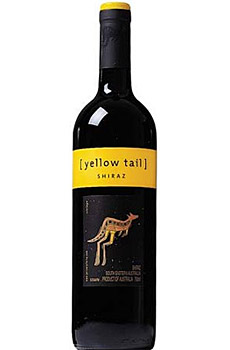
Yellow Tail Cabernet Sauvignon/Shiraz, around $6:  Along with the other seven varietals in the Yellow Tail group, it’s hard to beat this South Australian label for sheer, uncompromising value-oriented scrumptiousness.  Laid back tannins and ripe black currant, plum and earth tones abound.  Bright, suitably acidic: A drink-now red that can stand up to whatever you throw at it from the grill or barbecue.

Trebbiano d’Abruzzo, Lillà, Abruzzo, 2009, around $8:  From the foothills of the Majellas, this crystal-clear, light dry white is an ideal seafood wine.  Crisp citrus notes with a characteristic almond taste on the finish.  Lillà does a bargain-basement Montepulciano, too.

Savia Viva Blanco Clásico, Penedès 2010, around $8:  A vintage dated sparkling wine for eight bucks?   Nope, but it’s made from the traditional cava grapes—macabeo, parellada and xarel-lo—and when devoid of the yeasty musk of cava, produces a lovely and refreshing still wine resplendent with green apple and yellow plum flavors and a bit of macabeo herbalness.

Covey Run Merlot, Columbia Valley, 2009, around $10 –Beautiful bargain here—ripe cherry, plum and violet notes and a juicy mid-palate with hints of cinnamon and raspberry carrying through the light oak finish.

Voga Quattro, 2007, around $8: A grape goulash—merlot, cabernet, shiraz and pinot noir all hodgepodged together—surprised they didn’t toss in some marinara sauce and call it Cinque.  The bottle looks like it should contain hair conditioner, not wine, but the stuff itself is not bad, full of chocolate-cherry and bit of  mint and earth.
Santa Sara, J.P. Vinhos, 2008, around $8:  A juicy, licorice-tinged red from Portugal’s ‘golden plane’ Alentejo, known for full-bodied wine and a weird local dish made out of pork and clams.

Ecco Domani Pinot Grigio, 2009, around $9:  A little Trentino chardonnay adds a creamy edge to the steel-chill of pinot grigio; light with a touch of pineapple and Granny Smith apple and a quick but smooth finale.

Vinho Verde, Provam, 2010, around $9:  Provam is a cabal of Monção vintners devoted exclusively to Alvarinho and Trajadura whites.  This one is crisp, clean and bright, reminiscent of apricot and nectarine.  Vinho Verde means ‘green wine’, a reference to the lush Portuguese countryside, the youthfulness of the product, maybe even Margaret Hamilton’s complexion—anything but the wine color, which is nearly clear and yellow if it’s anything.

Minervois Rouge Marielle et Frédérique, La Tour Boisée, 2009, around $9: A lotta name for not much cash; this nicely supple blend of the Languedoc trio, grenache, carignan and cinsault offers up blackberry jam, plums and peppercorns and a tannin level we’d call ‘civilized’.

Freixenet Sparkling Cordon Negro Brut, around $10:  The quintessential wedding sparkler when the bride and groom are not only paying for everything themselves, but are broke.  A great value if you don’t mind overlarge bubbles; smooth and slightly creamy with baked bread and buttered brioche aromas surfacing amid grapefruit and green apple.


Posted in GENERAL | Tagged , , , , , , | Leave a comment

2011 San Francisco World Spirits Competition: The Best Booze in the Biosphere?

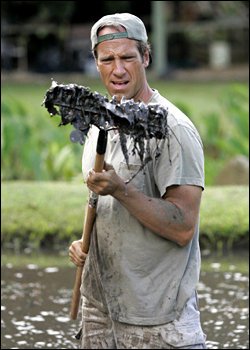
First, you mint a coin in honor of ‘Dirty Jobs’—that enchanting cable TV show that finds host Mike Rowe up to his neck in manure, leeches, cucarachas or bull semen in the Discovery Channel equivalent of a ‘Stay in School, Kids’ campaign.

Then you flip the coin over.

Now you have some concept of what the judges at the San Francisco World Spirits Competition contend with.

This year, for the annual judging, thirty-three of the world’s most prestigious hooch hounds spirits experts huddled at the Hotel Nikko to sample more than a thousand liquors entered in such categories as Best Reposado Tequila,  Best Cream Liqueur, Best Extra-Aged Rum, Best Gin and Best Shōchū.

Best Shōchū?  That race may have been neck and neck, but how many necks could there have been?

The boozearama heralded competition is founded, chaired and Executive Directored by one of my favorite wine writers, Anthony Dias Blue.

Blue holding white

In 2011, it celebrated its eleventh anniversary, making it the oldest and biggest spirits competition on the planet. Entries represented 61 countries and six out of the seven continents—only Antarctica was missing since distilled whale blubber didn’t make the final cut.

Ziggy like bubbles more than stardust

Surely, if judges had been picked by virtue of quantity consumed, yours truly would have been confirmed Chief Justice.  As it was, the judges’ judges were apparently more concerned with quality consumed—thus, folks like Master Mixologist Tony Abou-Ganim, Wine & Spirits Editor Jordan Mackay, radio host and Countess of Cocktails Ziggy Eschliman, Meridith May, editor of The Tasting Panel and ‘Tequila Master’ Julio Bermejo landed coveted berths on the crunk cruise.

Me, I was overlooked as a junkst judge for the eleventh consecutive competition and had to hear about the results over a cheap can of beer and AOL, leaving me a sadder man Budweiser.

On to the winners…

In the event that you are getting tired of Five O’Clock Vodka, so named because they began production of your bottle at five o’clock yesterday afternoon, the 11th Annual Spirits Competition recommends that you tuck into a fifth of Alberta Pure Vodka ($18), awarded Best Vodka.  Oddly enough, the hooch hails not from Mother Russia but from Canada—one more nail in the Commie coffin.

  • Best Gin is Sloane’s Dry Gin from Netherlands ($40).  Best Rum? Tøz White Gold Rum, St. Lucia ($26).  Best Single Malt Whiskey is Caol Ila from Islay, Scotland ($60) and Best Pisco, that urinary-sounding slug from Peru, was bestowed upon ORO Pisco Italia Mosto Verde.
  • $160 will buy you Best Calvados—Christian Drouin Calvados Pays d’Auge 1990, and if you have another $160 left on your Bridge Card and can still stand, you can stop by Skeeter’s Liquor and Check Cashing and pick up a fifth of Best Armanac: Chateau de Laubade Armagnac 1981.
  • Suntory was the bomb! Oh, sorry bout that.

    Among the more esoteric categories was ‘Best Other Whisky’.  Envelope, please…?  Suntory The Yamazaki 18 Year Old Single Malt Whisky  proving to the ‘Anything You Can Do, We Can Do Better’ Japanese that they might just have a point.

  • In another oddball category, Best Botanical Liqueur went to Luxardo Sambuca.  Luxardo was once the largest distillery in Italy until we blew it up during World War II.
  • Taking top honors as Distillery of the Year was Del Maguey of Mexico.  Importer of the Year was captured by Gemini Spirits & Wine of Chicago and Director’s Award was won by Pernod Ricard, New York.
  • Ah, yes.  Best Shōchū was awarded to Kai Young Coconut Shōchū from Vietnam—so now you know.

Overall, in 82 classification categories, 92 Double Gold Medals were awarded. Double Gold occurs when all judges on a panel agreed that the spirit was Gold, which immediately upgraded it to Double Gold status.

Sounds like the 11th Annual San Francisco World Spirits Competition was a smashing—if smashed—success.

BTW, it was quickly followed by the 11th annual San Francisco Aspirin and Over-The-Counter Analgesics Competition.

*

Complete results can be found at www.sfspiritscomp.com.

Posted in LIQUOR, Miscellaneous | Tagged , , , , , , , | Leave a comment