‘The Drumbeat Of Transparency’ And Other Examples Of Mismatched Synesthesia Among Wine Writers

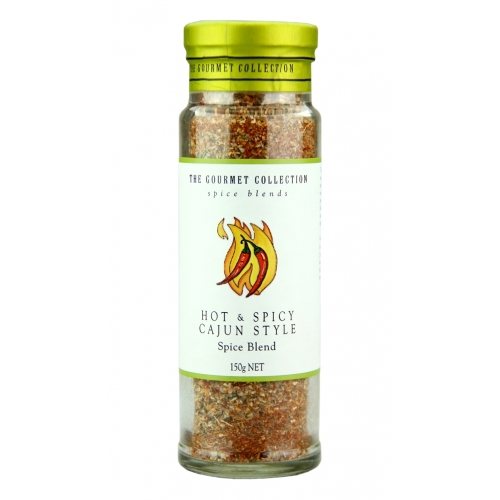
I am sitting here in the middle of the night reading the label on a jar of Gourmet Collection Cajun Style Spice Blend wearing an expression between bemused bewilderment and baffled miff, since apparently, in its inimitable wisdom, the FDA requires that the good folks at GC list the spice blend’s nutritional information on the bottle.

Which, you may be relieved to learn, is 0% fat, 0% carbs, 0% protein and 0% everything else.  Information which is, of course, 100% useless.

But now, at least, I can sleep—unless the drumbeat of transparency keeps me awake.

Unfashionable Literary Mismatches

Apparently, two different species. Go figure.

Before I go further, let me take a moment to discuss literary terms like mismatched synesthesia, chiasmus and bildungsroman.  They are, of course, part of an academic lexicon used by language scholars with a high tolerance for boredom to pigeonhole figures of speech, plot archetypes, literary genres as well as to shame ninth graders who don’t know the difference between a simile and a metaphor.  They don’t help you write better any more than knowing that the Latin binomial for a whitetail deer is Odocoileus virginianus helps you to hunt better—although should the DNR decide that your twelve-point buck is actually a Bos primigenius, you are probably in for a long night and will likely to be told to wake up and hear the coffee.

To which you will inform the underpaid and overworked conservation officer that he has just committed a faux pas of formality known to English professors as ‘mismatched synesthesia’—which is a specious conflation of the senses.

And you will find that there is nothing closer to the heart of a pissed-off DNR agent than having his grammar corrected by a smart-ass wine writer who’s just shot a Hereford bull.

BTW, ‘Moo’ is an onomatopoeia.

I’m Sure Randall Grahm Doesn’t Much Care For It Either

Were I to write, “I like Grahm crackers,” I would be guilty of two distinct literary indiscretions:  First, misspelling—because in this case the word is spelled ‘graham’.  And second, syntactical bullshit, because I actually hate graham crackers.

Randall Grahm: ‘If you listen carefully, you can hear transparent drumbeats.’

Whether or not Randall Grahm likes graham crackers is beyond the scope of this column, but the sentence ‘Is Grahm cracking up?’ is a fairly decent example of phrasal irony (‘cracking’ vs. ‘crackers’), euphemism—wherein I have substituted  the less offensive expression ‘cracking up’ for ‘losing his fucking mind’—and rhetorical understatement, because Randall Grahm has been slipping away in measurable increments ever since he started burying dung-filled cow horns in his vineyards and harvesting grapes based on phases of the moon—all with the intention of engaging non-physical beings and elemental forces to revitalize the soil structure.

These are, in fact, some of the less strange tenets of purist biodynamic agriculture—a singular subset of organic farming that stirs mysticism and cosmic spirituality into the dynamized dilution of composted cow shit sprayed over the grape vines every spring.

Steiner. Jeremy Irons is a shoe-in for the role, wouldn’t you say?

Essentially, most of this stuff comes from the writings of Rudolf Steiner, a philosopher, mystic and self-styled ‘esotericist’ from the early twentieth century.  Interestingly, he was also a literary critic who probably knew that if your daughter starts vomiting up green puke while her head spins around, an esotericist is not the guy you’re supposed to call.

Randall Grahm, proprietor and winemaker at Bonny Loon Doon Vineyard, refers to Steiner not as a mystic or an esotericist, but as a ‘polymath’, which is an even stranger literary term than esotericist, although it is an anagram of ‘psychopath’.

Personally, I’ll stick with the taxonomic binomial for Mr. Steiner, which is Wackadoodlus kooki.

Which is not to say that Randall Grahm does not make excellent wines.  Superb, even.  He does, and has so for years—even the years preceding his slow descent into madness.

Let’s Talk Foreshadowing

In case you spent your sophomore lit class in a stupor of hemp, hormones and horniness (alliteration) and forgot, foreshadowing is a device used by writers using hints or clues to suggest what will happen later in a piece.  Were you to re-read this column (as if), you would see that I opened with an apparently random reference to FDA ingredient labels.

Now, as mystics like Rudolf Steiner are wont to say, ‘All will be revealed.’

Five years ago, in a quest for publicity transparency, Randall Grahm opted to voluntarily list ingredients on his wine labels.  These include such non-esoteric items as tartaric acid and sulphur dioxide, ‘meh’ information really, since these are, respectively, an acid enhancer and a preservative which are not only table stakes throughout the industry, but also indispensable to any home winemaking operation.

It’s like listing ‘water’ as an ingredient in Evian.

But Grahm is being lauded for such a ‘brave and principled stand’ by respected critic Eric Asimov of the New York Times, who says, ‘I like to know what’s in my food.’

Well, to each his own and to own his each (chiasmus).
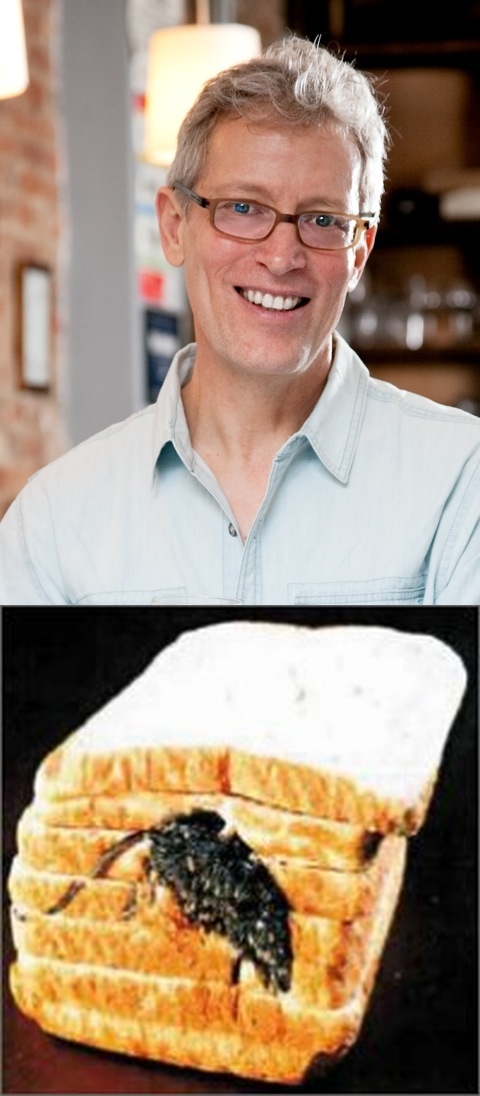
Frankly, Mr. Asimov, there are some things in our food that are best left unknown.

Me, I would just as soon not know that my ham and cheese sandwich contains extract from the inner mucosa of the fourth stomach of slaughtered unweaned calves, flesh from tormented pigs forced to live in their own cow-hornless feces and Exorcist-quality vomit, and that the FDA allows an average of one rodent hair and 75 insect parts per fifty grams of wheat flour, which commercial bakers are pointedly not required to list as an ingredient.

The only way I want to know what’s in my wine is if it is antifreeze like in Austrian wine, vintage 1985 or whatever chemical in MD 20/20 makes you see mice in your Bimbo.

In any case, Asimov applauds Randall for ‘taking a bold step in favor of ‘consumer transparency’, apparently foreshadowing a later Grahm quote about transparent drumbeats.

Just So There Is No Mistake…

Personally, I am in total brave and principled opposition to consumer transparency, especially when it involves one of those full-body backscatter X-ray scanners at airports.
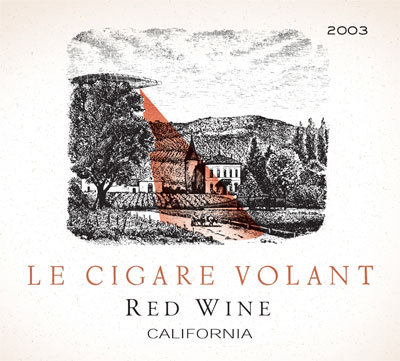
I am, however, all in favor of Randall’s luscious wine portfolio, especially the   Roussanne/Viognier, grenache-driven Clos de Gilroy and especially, the wine that put Grahm on the map, Le Cigar Volante, whose cryptic image of a flying saucer on the label was approved not only by the FDA, but likely, by Eric Asimov’s uncle Isaac.

So, since it’s all in good fun, I have no trouble yanking the chain (figurative circumlocution) of Grahm, who appreciates a good—or bad—turn of the phrase as well as any winemaker I’ve ever met.  So, if he wants to believe that transparent pixies are hovering over his vineyard warbling Damhsa Sna Crainn while he sprays microscopic crystals by moonlight, so be it.

One thing I’ll say about him: He’s committed.  Or perhaps, at the very least, he should be.

(…Examples of anastrophe, hyperbaton, euphemism, foreshadowing:  ‘To the nut house went he’).

Posted in GENERAL | Tagged , , | 1 Comment

What Wines Not To Serve For Columbus Day

Columbus Day is, of course, the annual goombah gala which has nothing really to do with Christopher Columbus and everything really to do with marching down Fifth Avenue surrounded by bands, floats and contingents while bragging about how goddamned happy you are to be Italian.

As a wiser fellow than I once said, “Thou doth protest too much, methinks.”

Equally in the mood to protest are an integer of indignant indigenous Indians who have spearheaded (pun intended) a move to eradicate any jollification of Columbus’s landing—which we all remember from third grade actually took place in the Bahamas (and into whose banks Columbus promptly pumped his doubloons)—and not in America.

The crunk behind the Cree and Crow (et alii) critique centers on the subsequent mistreatment and near obliteration of the New World’s native population, which as an argument is rhetorical: Ethnic cleansing, whether intentional or the result of European-introduced disease, killed more Native Americans than the combined death tolls of the Holocaust, Rwanda and the Armenian genocide.

A True and Worthy Cause, No Doubt…

…Except that, were we to use mistreatment of the chthonic commonwealth as a reason to eliminate our annual chance to pay homage to Rockwell’s Four Freedoms—Freedom from Work, Freedom from School,  Freedom from Junk Mail and Freedom from the Bond Market, we’d lose Christmas (Christian treatment of Muslims during the Crusades), Thanksgiving (annual massacre of more than 45 million displaced turkeys), Pearl Harbor Day (atomic bombs killed 200,000 Japanese civilians) and Arbor Day (mass destruction of Mato Grosso rainforest).

So, today, it is probably in our best interest to simply allow Italians to do their ‘thing’—up to and including allowing old ladies dressed in black to roll their nylons down to their ankles, perma-wrapping all the furniture in plastic, pinching kids on the cheek while stuffing money in their pockets, being surprised that the FDA recommends three meals a day instead of nine and refusing to admit what is blatantly obvious to the rest of us: On some level, each and every one of you relates to someone on The Sopranos.

All Right.  This One Time, Kay, I’ll Let You Ask Me About The Wine…

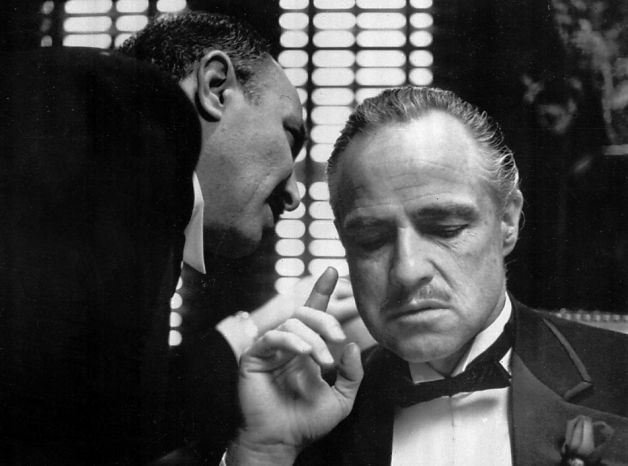
As we all know, Italians have this whopping hard-on for ‘respect’ (rispetto).  Remember mush-mouth Brando as Don Corleone, normally a pretty stand-up, water-off-a-duck’s-back kind of wise guy, getting all PMSed over some sorry-ass corpse poacher’s supposed insult:

“Bonasera, Bonasera. What have I ever done to make you treat me so disrespectfully?”

Therefore, I think that the least we could do is, if not drink Italian wine exclusively, at least avoid wines which may have connotations that the paisani would just as soon we didn’t bring up.

Imperium Sine Fine—‘Empire Without End’… Right Before It Ended

Trivia: The very first Columbus Day parade happened 13 centuries before his birth.

Italy—in the guise of the Roman Empire—once ruled most of the Western world, reaching its greatest expanse in 117 AD when it spanned two million square miles and covered what are, today, forty countries.

It’s been pretty much downhill for the Italians ever since, culminating in the ignominy of World War II, where they not only backed the wrong horse, but fell off that one before the second leg of the race.

What follows is a chronological list of Italian conflicts which, from calf to toe, Lo Stivale would probably like to forget:

Battle of Teutoburg Forest, (9 AD): Rome vs. Germania.

Uncharacteristically trusting, Germania’s Roman Governor Publius Quinctilius Varus consented to spread soldiers from his three legions across the countryside to help the locals, who promptly rose up and slaughtered them.  Doh!  Retaliation was equally disastrous, and rest of the army was soon defeated in Teutoburg Forest, south of the city of Osnabrück, resulting in 20,000 dead legionaries.

Wines to Avoid:  P. J. Valkenberg Dornfelder Qba, Rheinhessen; Schloss Vollrads Riesling Qualitatswein, Rheingau; Pfeffingen Ungsteiner Herrenberg Spatlese, Rheinpfalz; Huber Bombacher Sommerhalde R Trocken Spätburgunder.


The Battle of Waterloo, (1815):  France vs. Britain/Prussia.

Mini-Monarch, King of Italy, 1805.

Of course it counts, you nattering ninnies; stop fact-checking me and go drink some wine!  Napoleon was crowned King of Italy in 1805.  In any case, this final implosion of military leader and emperor Napoleon Bonaparte (1769-1821), fought on Belgian soil, followed his disastrous Russian campaign and resulted in the Little General abdicating and dying in exile.

Wines to Avoid: Camel Valley ‘Cornwall’ Pinot Noir Rosé Brut; Three Choirs Late Harvest, Gloucestershire; Astley Veritas, Worcestershire; Hardys Oomoo Chardonnay, South Australia. (Makes the list because South Australian wine industry begun around 1838 by immigrant Prussians).

First Italo-Ethiopian War, (1895 – 1896):  Italy vs. Ethiopia.

Tej tipplers, Ethiopia

Confident of local support that never materialized, the Italians—though boasting the smallest and least productive colonial empire in Africa—figured they could bitch-slap the Ethiopians into obeying a controversial treaty and wound up being handed their culos in a casserole.

Wines to Avoid:  ‘Tej’—Ethiopian honey wine, which you probably should be avoiding anyway.

The Battle of Guadalajara, (March 8–23, 1937):  Italy vs. Ejército Popular Republicano of Spain.

Franco and the Benito Bandito:  ‘Let’s call the whole thing off.’

Following his coup in 1936, Spanish Nationalist General Francisco Franco convinced magniloquent meatball Mussolini to offer up 7,000 men and a number of planes to help defeat dissenters and ensure that his ‘campaign against communism’ would succeed.  It failed and the Italian economy was wrecked in the process.

Wines to Avoid: Borsao Reserva, Campo de Borja, Zaragoza; Coma d’En Pou, Bàrbara Forés, Terra Alta; Condado de Haza Reserva, Ribera del Duero; El Vinculo Reserva, La Mancha


Greco-Italian War, (1940-1941):  Italy vs. Greece.

Trying to one-up Hitler—and marking the beginning of the Balkan campaign of World War II—the disdainful dipshit Duce blew it before he began,  endless rethinking invasion dates—once changing his mind five times in fifteen minutes.  Results were, of course, inevitable.  The woppish windbag may have made his trains run on time, but his troops wound up outrunning them anyway.

Wines to Avoid:  Boutari Grande Reserve; Sigalas Mavrotragano; Gaia Estate Assyrtiko; Estate Argyros Vinsanto

Multinational Force in Lebanon, (1982):  Italy vs. Lebanon.

Fabled vineyards of Bekaa Valley’s Chateau Musar.

Well, the Italians chipped in to some extent, which is more than can be said for most of Europe.  But, the final casualty tally probably speaks to the Italian fighting mettle, which hasn’t yet reached the peak performance of the Imperial Roman Army’s Praetorian Guard:

United States, 265; France, 89; Italy, 2.  (No truth to the rumor that the two Italians were killed when the weapons they threw away discharged accidentally).

Wines to Avoid: Chateau Musar, Cuvée White, Bekaa Valley; Domaine des Tourelles, Lebanon; Chateau St. Thomas, Bekaa Valley; Coteaux du Liban, Blanc du Clos, Zhale-Bekaa.

Posted in GENERAL, ITALY | Tagged , | 1 Comment

Duckhorn And Cover: Or, How To Survive The Red Wine Menace of 2012

October 7, 2012: ABC News has reported that new evidence links alcohol consumption with bowel cancer.

The findings from the European Prospective Investigation into Cancer and Nutrition (EPIC) suggest that people who drink one or two glasses of wine or beer a day increase their risk of developing the disease by about 10 per cent.

As a result, the Winemaker Association’s National Kickoff of Education, Responsibility and Sobriety (WANKERS) has announced a renewed attempt to beef-up health warnings on wine labels in order to discourage people from consuming the very product they represent.

*

What Can You, As An American, Do About The ‘New’ Red Menace?

Plenty! 

Chapter One: Responsibilities of American Citizenship:

There are many reasons to be concerned with developing our citizenship responsibilities.  Primarily, great principles do not survive the generations without being nurtured and kept vigorously alive.

Unless we understand the dictums upon which our American way of life is founded, the structure will crumble and our heritage of sobriety will perish.

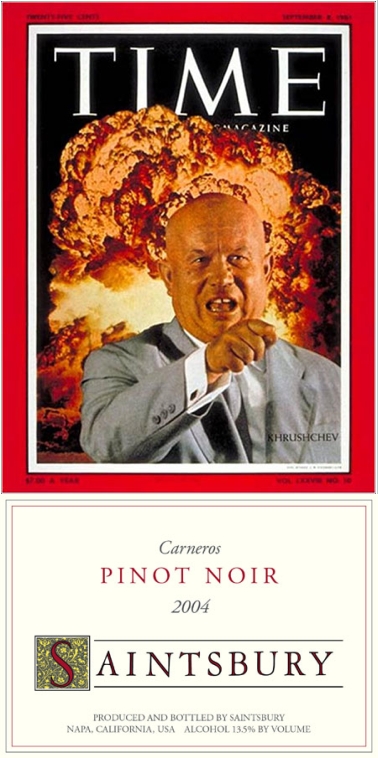
Nikita on wine: “We will Saintsbury you!!”

Chapter Two: We Are Living In An Era Marked By The Growth Of Wineism:

To a substantial degree, in one form or another, wineism has cast its shadow over most of the nations on earth.  As we speak—or in my case, write—America has been infiltrated by wine and beer propagandists dedicated to the establishment of a New Order.

The Wine Columnists among us are working for world dictatorship.  To accomplish this, their strategy is to undermine the ability of our people to go to their jobs because they are too hung-over.

The wineists among us are seeking to bring about a gradual change in our mealtime beverage selections by destroying the principle of drinking milk from America’s great Heartland, wholesome water from America’s pristine reservoirs and iced tea from little brown people in fucked-up foreign countries.

They seek to substitute difficult-to-pronounce alcoholic products from distant, idolatrous lands like France and California.

Non-sober school children, drunk– as usual– under the table.

Chapter Three:  Practical Lessons: Is America’s Heritage of Sobriety Worth Bothering About?:

Let’s see: With the viewpoint of self-interest, we know that beneath the Stars and Stripes we enjoy more temperance than any other people on earth except for the tea-leaf picking Indians, but they do not really count.  Our economic abundance and dynamic free-enterprise system, unchanged in the five thousand years that America has been a republic, is the direct and cumulative result of drinking Florida orange juice and Coca Cola.

Chapter Four: An Era of Wineist Expansion

Is THIS how you want to live, America?

Let’s put the full challenge in a few words: Most of the nations on earth have already succumbed to the agenda of the wineists, and now, America is a target.

In fact, our living standard, more than fifteen trillion times higher than that of an average tea-picking wog, make us the number one target of both boutique wineists and craft beerists.

If we permit our great system of abstemiousness, continence and moderation to disintegrate because of the apathy of our people, we shall lose not only our edge of world domination and ability to wage war on poor people, but our even brighter future.

What then must we do as citizens?

1. Understand the American system and what makes it ‘tick’: Sobriety.

2. Understand Wineism and its basic Godless philosophy; its professed goal of usurping America’s divine right to be called King of the World; its insidious tactics and its cunning strategies, like advertising and Wine Spectator.

3. Understand the ‘disguises’ of Wineism in such innocuous sounding products as coolers, spritzers and sangria.

4.  Understand Wineism’s propaganda techniques, such as claiming that wine is actually ‘good for you’ (as in 60 Minutes’ shameless coalition with socialist European people for The French Paradox) and does not cause bowel cancer.

The same class, now sober, prove that their hands do not shake

5. Take an interest in education.  This includes carefully reading wine labels.  Not today, or perhaps not tomorrow.  But as soon as the Federal Government mandates the silhouette image of a pregnant woman holding a glass with the universal red slash mark meaning ‘no’ across her bulging belly.

This will also carry a secondary label of a pregnant Indian woman without the slash mark above the phrase, ‘Tea-pickers need not abstain as there are already over a billion of you.’

6.  Strive for spiritual growth.  That means to constantly seek the principles of God’s truth, not, as the pagan infidels who have sought to usurp a perfectly good word like spirit and ‘change’ it to mean liquor–sort of like they did with ‘gay’.

Chapter Five: Totalitarianism or Teetotalitarianism? 

The choice is yours, America.

Is it too much to ask that we fulfill the obligations of citizenship?  If we think so, we should read again the history of the founding of this nation and consider the hardships faced by the people who made possible our great sobriety.  They felt that no challenge was too difficult if self-denial was at stake, and this was the spirit—no, not bourbon, you ass—that carried them forward.

Never forget that the Wineists, the Beerists, and now, the Anti-Labelists would like to see the American spirit extinguished.  If each of us will rise to the occasion, if every citizen, young and old, will accept the obligations of its citizenship, then Wineism and its followers will not prevail and America will march forward to her great destiny, which is essentially to own every oil reserve on the planet.

Nothing must stand in the way of the onward goose-step of sobriety.

Posted in GENERAL | Tagged , , | 3 Comments

Top Ten Reasons Why I Hate Top Ten Lists Followed By A Top Ten List of Ten Tenable Wines Under Ten Bucks

You may not know this, but there are, on earth, quite a few life-lacking lackeys who actually enjoy, and thus create, top ten lists.

Baldwins, we lose.

People like Alec Baldwin, who swore he’d leave the country if George W. Bush was elected, and even though most of us wished he’d said ‘planet’, this was at least a start; and yet, here he still is.

People like Rolling Stone writer David Fricke, whose actual last name, I suspect, is ‘Fucke’ and his editor is just being polite.

People like celebrity chef and former heroin addict Anthony Bourdain, who claims to be irritated by the overt commercialism of celebrity chefs, which is a little like Mike Tirico saying he’s irritated that people watch football.

Dave’s getting a little long in the gap tooth.

People like Dave Letterman and the fifteen groupies who still find him funny.

Now granted, every single one of these individuals has far more life that moi, your Living La Vida Low-Rent host, but that’s not the point.  The point is that top ten lists, by their very DNA, have serious credibility issues.

Here’s why:

10.  They are self-serving piles of ego fodder that can’t help but bore the Fruit of the Looms off anyone who does not have an unhealthy—nay, psychotic—interest in your private tastes.

9.  They set you up as the objective arbiter of a subjective subject.

8.  As you trickle down the list from ten to one, individual line items are supposed to get funnier, better, more value-focused, less value-focused or some other recognizable and progressive criterion—and it never happens.

7.  You know damn well that whoever wrote the list begins to second guess themselves—or worse, remember something they forgot to add—ten seconds after it’s too late to edit.

6.  They are too divisive and tend to piss off people who you not only admire, but who themselves are far more qualified to write the list but just didn’t think of it.

5.  They are a cheap way to fill up copy space.

4.  By the time the list writer gets to four, you know they are seriously running out of ideas.

3.  One cannot really ‘compress’ an aesthetic appreciation of the nuances inherent in art, music, wine into a mere notated ranking system. (See 4.)

2. They remind me of smug people, in whose ranks it is okay for me to be, but not anyone else.

(Sustained multiple-bounce sound on a percussion instrument…)

1.  Even if you are totally disinterested in the subject, you end up reading all ten, thus having even more irretrievable moments stolen from your short, miserable existence.

That Said…

…here are a baker’s-dozen-less-three ten buck chucks that, while unlikely to appear on the wine list at Commander’s Palace, will also not strip the paint off your ’65 Austin Healey or cause esophageal damage when you guzzle them:

10.  Altovinum Evodia, Calatayud, 2010: A fairly one-dimensional red with a slightly bitter undertone.  It made the cut simply because it is fairly typical of Spanish ten dollar garnacha—black cherry, green olives, smoke and some barnyard ‘n’ leather.

9. Wyndham Estate Bin 333 Pinot Noir, South Eastern Australia, 2008:  If you’re a fan of lighter, brighter pinots, Wyndam’s Bin 333 offers all the flavors we love in this varietal, albeit in a slightly watered-down version.  Pie spice, leafy-edged black cherry, sweet herbs?  Like that old Prego commercial, ‘they’re in there’.

8. Castle Rock Pinot Noir, Mendocino, 2009:  Despite the obvious typo, wherein they spell ‘Kassel’ with a ‘C’, this reliable pinot is nicely nosed with crunchy cherry and muddled mulberry; truffle and earth in the midpalate are lifted by minerals and acid.

Montepulciano on the hoof.

7.  Stella Montepulciano d’Abruzzo, (Italy), 2010:  From the heart of rough, rustic Abruzzo, Stella’s 100% Montepulciano is pristine and ruby-red, tinged with raspberry and licorice, bright in the mouth but rounding out to a softness characteristic of pricier versions.

6. Alice White Chardonnay, South Eastern Australia, 2009:  Finally, a basic Aussie wine without a kangaroo on the label.  Oh, hang on, there’s a huge one front and center.  Anyway, a functional wine, straw colored with vibrant greenish hues.  Lots of lemon on the nose, with a satisfying nuttiness playing against mango, pear and pineapple throughout.  Toasty, but a bit parching on the finish.

5. O. Fournier Urban Uco Torrontés, Cafayate, 2011:  Torrontés is a top white wine in Argentina, but you need to nail down precisely which torrontés one is discussing:  Five different grapes may wear the name.  All are characterized by a moscato nose, which is a beautiful synthesis of flowers and fruit, and these exuberant scents carry through the palate.  It’s a remarkably versatile wine, both subtle and explosive, and if you haven’t tried it, you must.

4. Jacob’s Creek Semillon/Chardonnay, Australia, 2009:  This is the kind of wine you know would be lovely as unfermented fruit juice.  A scrumptious blend of citrus and cantaloupe flavors, the wine is showy, framed with chardonnay’s tropical fruit to semillon’s unctuousness.  This is a blend that the French wouldn’t dream of, but when you stop and think about the billion wonderful things the French wouldn’t do, that particular notion becomes a ‘meh’ moment

3. Gnarly Head Old Vine Zinfandel, Lodi, 2010:   The name alone is worth the price of admission, but if you can find an old vine zin for this price, snap it up.  The richness, complexity and depth of fruit is really exceptional: Deep black fruit is offset by smoky chocolate and near-indefinable spice:  I’m going cinnamon.

2. Bogle Petite Sirah, California, 2009:  A luscious, inky, deep, almost Madiran-rich wine. Predominant fruits are blackberry and Damson plum; there are underlying notes of coffee and cedar.   Spicy finish, with nicely integrated tannins.

(Rapid succession of short paradiddles produced by beating a snare drum…)

1. Chateau Ste. Michelle Cabernet Sauvignon, Columbia Valley, 2009:  A 90 point (WE) wine for ten bucks?  Heavens to Murgatroyd—they said it couldn’t be done.  Cherry and cassis bouquet, concentrated plum compote in the mouth with splashes of vanilla and milk chocolate; light tobacco through midpalate and a solid finish with silky tannins.

Posted in GENERAL | Tagged | Leave a comment

Wines To Serve With The ‘Paleo Diet’

The history of dietary scamology is older than mankind; it began when the first primeval predatory invertebrate camouflaged itself to trick some doofus diatom into becoming dinner.

The history—the science, really—of human dietary scamology (a.k.a. ‘fad diets’) is a bit more recent and, in the case of those diets named after people, places or things, a lot more complex.

To Name But a Few:

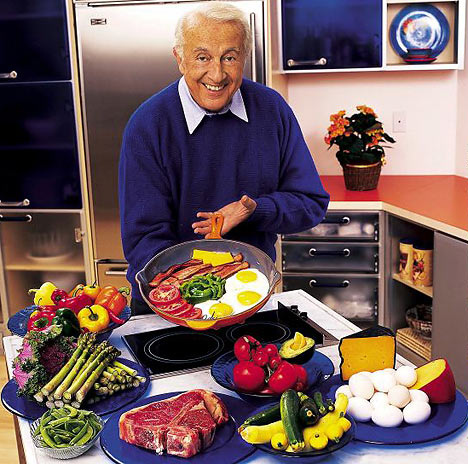
Dr. Eat Good himself

The Atkins Diet: Created by Dr. Robert Atkins in 1972, the premise behind the diet is that weight gain is caused by processed carbohydrates and insulin, not calories.  Therefore, the immediate appeal is that Atkins is suggesting that you can lose weight simply by eliminating candied brussels sprouts and kelp chips from your daily regimen and replacing them with cheese, steak, butter, bacon and burgers.

Unfortunately, a lot of Atkins’s research has been disproven and his clinic declared bankruptcy in 2005.  Just as well, since eating large amounts of saturated fats leads to heart disease and other nasty stuff.  Also, the diet is nearly impossible to maintain and gives you bad breath.

Incidentally, Dr. Atkins passed away at the age of 72—overly thin, overly stank-breathed and overly dead—at a time when the average lifespan of an American male was 76.5 years.

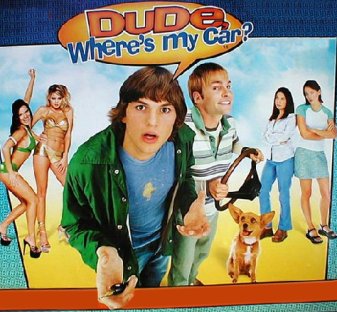
If you see only one movie this year, let it be ‘Dude, Where’s My Car’

The Hollywood Cookie Diet:  Another ludicrous diet with an obvious plus side: Cookies.  Only Tinseltown minds—the same ones that convinced us that Dude, Where’s My Car? is funny and that Tom Green can act—could make someone believe that eating four cookies a day is a viable nutritional program.  But that’s exactly what it offers:  Four cookies throughout the day followed by a ‘healthy dinner’.  On the same comedic level as Beverly Hills Ninja, The Hollywood Cookie Diet claims that it works because it is based on caloric restriction.

Well, no shit sherlock; you are essentially down to one meal a day, right?  In that case, have I got an even better diet for you.  It’s called The Ice Cube Diet.  Four ice cubes per day plus one cookie for dinner; weight loss is quick and brutal.  If you’re interested in marketing rights, Hollywood, have your girl call my girl.

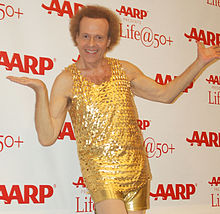
Ya gotta love him! Oh, hang on: No you don’t.

Richard Simmons’ Deal-A-Meal:  Not much to be said about this idiotic, overly-hyped, ludicrously complicated diet plan—where you have to transfer cards representing ‘portion points’ from one side of your wallet to the other every time you eat something and quit when all the cards are gone.

…Except for this:

It managed to turn Simmons from a pudgy, whiny, obnoxious little bitch into a skinny, whiny, obnoxious little bitch.

The South Beach Diet:  Another silly-ass program so convoluted that I don’t even feel like going into it; only to say that South Beach Diet weight loss is not caused by what you are ingesting, but by the stress caused by worrying about what ‘phase’ you are in.

The Sea Salt Diet:  My favorite: I see salt and I eat it.

Look at this pair of poozles. Enough said?

Veganism:  This isn’t a diet so much as a dickwad, hypocritical ‘animal rights’ lifestyle movement. Absolutely nothing containing animal or fish products can be eaten or worn by self-righteous ‘vegans’.  Unfortunately, unless said vegan lives on a self-sustaining, pesticide-free farm, stats show the following: Per acre of cropland under cultivation there are around 4.5 million insects; include springtails and mites in the figure and the number rises to 124 million. If only the impossibly low figure of 1% of these little lives are killed in a yearly (or more) Pesticide Holocaust, that’s 1.24 million horrible deaths per acre of vegetable farm.

Pass the burgers, poozles.

And Finally, The Latest and Greatest Blah-Blah-Blah Diet:

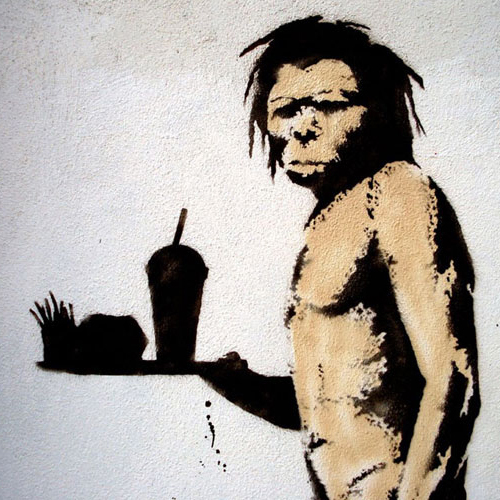
The Paleo Diet: This may well be the silliest one of all.  In case you haven’t yet been bombarded with hype by proponents of this strange way of eating—which has no conceivable raison d’être except that diet people are running out of ideas—is based on the nonsensical notion that Paleolithic people were healthier, taller, more muscular, agile and athletic than we are.

Now, if you actually believe this, you probably don’t need therapy so much as a mental trip to Lourdes, but here are a few stats:

  • Paleolithic humans rarely lived past forty; major cause of death was infectious diseases.
  • Infant mortality rates averaged 25%, and infanticide was not uncommon.
  • The average height of a Paleolithic guy was 5’5”.

Now, as for muscularity, agility and athleticism of Paleo people, I won’t dispute.

But, raise your hand if you genuinely believe that this had to do with the fact that they ate mastodon instead of McDonald’s and not to the fact that they actually had to hunt down the mastodons they ate instead of driving to Kroger (as you know goddamn well you’re going to do) to pick up all the allowable foods on the Paleo Diet.
Speaking of Which…

The foods that are permissible on the typical Paleo diet are as follows:

Early chicken

Eggs:  An odd egg, this one:  Because unless you are eating quail eggs or ostrich eggs exclusively, chicken eggs really shouldn’t be permitted since the Paleolithic era ended with the advent of agriculture in c. 10,000 BCE and chickens were not domesticated for another two thousand years.

Meat:  Beef, obviously, but like the chicken, cattle were not domesticated until 8000 BCE and most versions of the diet don’t allow dairy—so, go figure.  The pork tenderloin and baby back ribs you’ll probably be eating on your Paleo Diet didn’t show up on the Cro-Magnon sideboard, since pigs required yet another millennium to be raised in the back yard.  If you were truly true to your school, all you’d eat for meat is eland, dog, lizard, reindeer and cave bear—plus, woolly mammoth when you could get it.  (I checked at my local Kroger, and the manager said he hadn’t stocked mastodon since the spear was invented.)

Fish:  Shellfish is good, because you can gather it easily and eat it raw—during most of the Paleolithic era, man did not have fire.  With fin fish, the Paleo Diet would prefer that yours be wild, not farm-raised.

Fruits, Veggies, Nuts and Seeds:  Most are allowed, with the exception of green beans and peas.

Red flag items

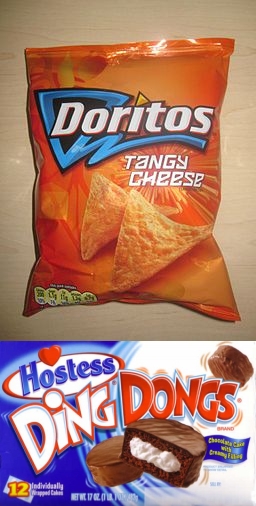
What’s not allowed is easier to list, since it includes essentially everything that came after agriculture:  Peanuts, sugars (and beverages sweetened with them), Doritos, dairy, non-plant oils, Hostess Ding Dongs, all grains—and that includes popcorn, pasta, Frosted Mini-Wheats and bread.

So, Is the Paleo Diet a Scam?

Let me put it this way: If you eat as outlined above, you’ll likely find your blood lipids improved; you’ll lose weight and lose pain from autoimmunity and find the signs and symptoms of insulin-resistant Type 2 diabetes not only reduced, but in some cases, reversed.

…So, in a Word: Yes.

Why?  Because most versions of the Paleo Diet discourage alcohol—and last I checked, that includes wine.

Now, if you are suggesting that early man did not drink wine, I’m gonna get all pissy and hold my breath until I turn blue.  Hell, wild animals get plastered on naturally fermented fruit that they’ve found; a study cited in Scientific American (July 28, 2008)  show that creatures in the Malaysian rainforest love to drink fermented palm nectar.

To quote the observing animal physiologist Frank Wiens, who noticed a ‘strange yeasty odor wafting from the palm’ along with a beer-like froth:  “This indicated that there might be alcohol involved…”

Sure enough, he measured, and the sap had an ABV of 3.8%—about beer level.

Drinking buddies!

So, if the tiny Malaysian pentailed treeshrew can have a botanical bartender, isn’t it silly to assume that naturally fermented products weren’t enjoyed by homo habilis and all the pie-eyed Paleolithic party-animals that followed?

Of course it’s silly.

But, choosing the right wine to go with roast glyptodon and cave bear burgers might tax the skill levels of the most anal sommelier, because we have no idea what it was that Fred Flintstone’s grandparents might have stumbled across in their hunter/gatherer lifestyle.

What I can say is that wine production goes back to 7000 BCE—same year as pig domestification, so if the Paleo Diet people can have their bacon tips and pork rillettes, my cavemen can have their vintage bilberry swamp juice.

Dude, Where’s My Career?

If it was grape swamp juice, however, it was probably species Vitis vinifera subspecies sylvestris, the ancestor to all modern wine grapes.

Since you won’t find that at Kroger either, go with the earliest modern varietal believed to have evolved: Muscat, which Pliny the Elder called ‘The Grape of the Bees’ just before his date with Vesuvius.

In any event, my own foray into nutritional therapy laid a quail/ostrich egg in Hollywood, and faded into the same sort of obscurity that Tom Green enjoys; neither of us had enough ‘pizarkle’—as the La La Land punani say.

Screw them: I offer it up without the slightest sense of self-contempt or contrition:

The Chris Kassel Diet:  If you want to gain weight, eat more.  If you want to lose weight, eat less.

And drink all the friggin wine you can hold.

Posted in GENERAL, Moscato | Tagged , , , , | 5 Comments

Vintage Cellars For Your Cellarable Vintages

The concept of a wine cellar sort of baffles me.

Current state of Kassel basement

Not because I don’t think it would be awesome to convert a corner of my cold, dank, subterranean arachnology museum into a temperate haven for comatose cabernet and reposing Rioja.

And not because the craftsmanship of a master carpenter wouldn’t diffuse notice from the fact that my sump pump has been overflowing for nine days.

And not because I’m adverse to the bragging rights inherent in talking about your wine cellar, indicating that you have sufficient shinplaster not only to build one, but to stock one.

No, the thing that baffles me is that there are people in this world with the stamina, discipline and self-control to simply ignore the wines they’ve just purchased for a decade or more; people who could actually make it to the basement holding a bottle of wine and not open it along the way.

Golfers may have their Palmer, football fans their Gipper.  My hero is the dude or dudette who can say, with certainty, that they will not be dead, incarcerated, or sporting a Five Year Alcoholic Anonymous pin when the lights finally go on for their case of 2007 Saint Prefert Collection Charles Giraud.

But, I am learning.  And the first, foremost and most critical financial lesson that any serious collector will share is that of the world’s annual output of 36 billion bottles, only a tiny fraction of them deserve the long-term spa-treatment of a wine cellar.

So, let’s say you are independently wealthy—the Lotto ticket came in, the rich uncle died or the former Finance Minister of Nigeria finally made good on the $2.2 million he promised you in that email: How do you separate the good from the bad and ugly?

And that would be the $2.2 million dollar question, because, in fact, nobody really, really knows.

What we do know is that for a wine to improve into a delightful dotage, it requires a certain balance of acid, fruit density, tannins and, when it applies, residual sugar.  This chemical cocktail provides the specifics that tend to make for ageable wine when present in at least three of the four elements.  But, with aging wine to masterful maturity, there are no sure bets, and some wines with only one or two of the requirements wind up being marvelous five, even ten years beyond vintage.

Rare, of course, is the wine that really improves to fifteen years, and rarer still are those that can improve to those legendary twenty, thirty—even fifty years past vintage.

And speaking of Vintage:

Build It and They Will Come… And Drink Up All Your DRC La Tâche

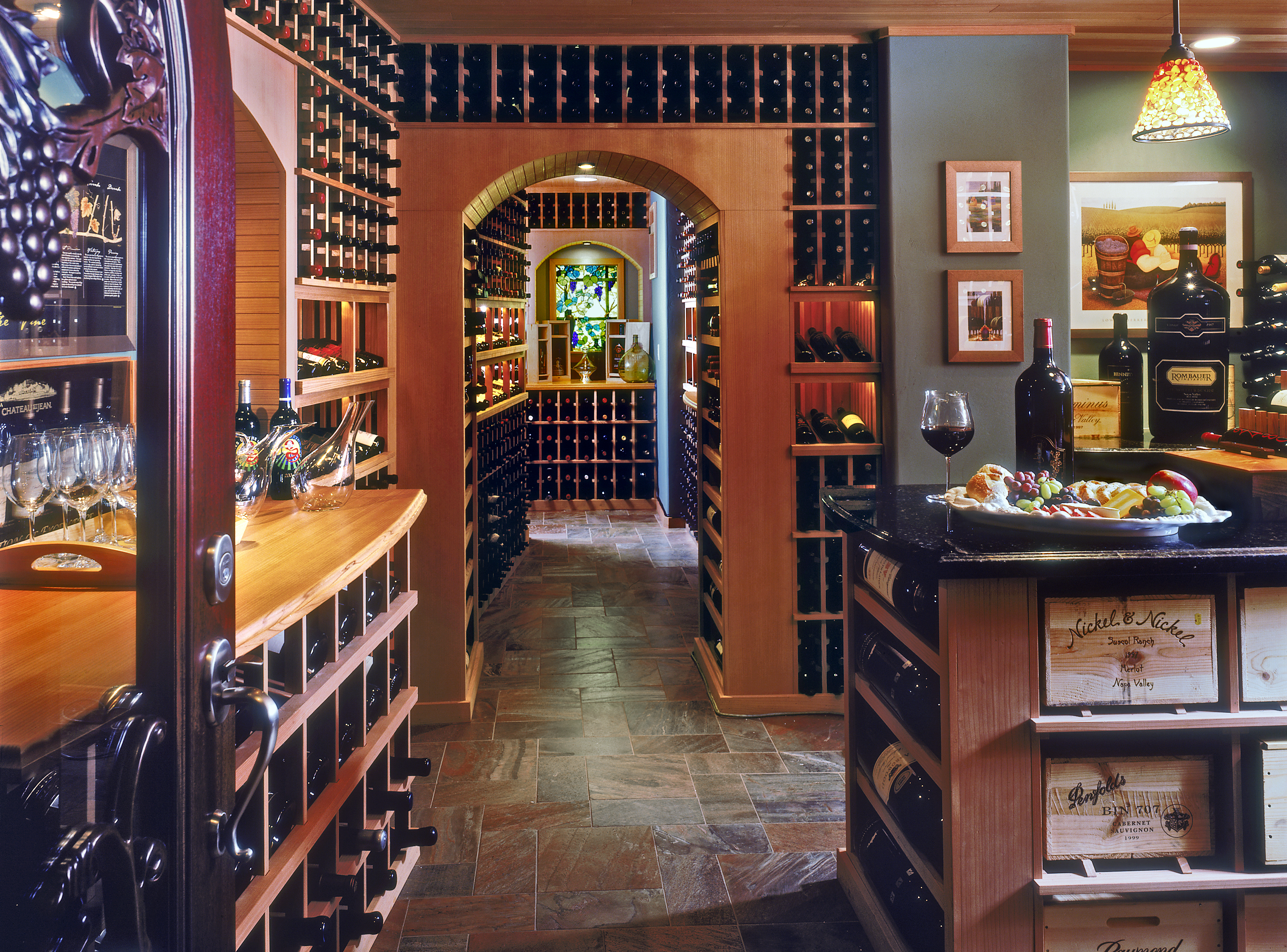
San Diego’s Vintage Cellars (http://www.vintagecellars.com/ )is among the top cellar sellers in the United States, known for its quality of workmanship, expertise in cellar management equipment and especially, for reasonable pricing.

Current state of Kassel wine cellar.

According to Vintage Cellar’s Custom Wine Cellar Specialist Jake Austad:  “We can turn your wine cellar dream in a custom cellar reality.  Tell us what your style, size and budget guidelines are, and we can design a custom cellar that will suit any space and lifestyle.  We insulate, seal and set up cooling; custom wine racks are our specialty, and we can design and construct a wine rack system to hold your bottles beautifully.”

Typically resplendent Vintage Cellar.

And how.  And how I’d love to have one.  As you can see, my personal wine cellar looks like Dorothy Gale’s tornado shelter.

Contrasting are some images of Vintage’s cellars from around the country.

“For the serious collector,” Austad continues, “nothing is more important that the safety and organization of the wine collection.  With cellar management systems and cellar monitoring, you can keep your collection safe and ensure that you can find the perfect bottle in minutes.”

Equally drool-worthy Vintage Cellar.

Good, because after waiting a decade or more for a baby wine to metamphorize into a grown-up Goliath, who wants to spend more than a couple of minutes locating it?

The art of cellar making is as intense as knowing the signs of a wine that can grow up to be a fine, upstanding citizen.  Until you’ve perfected that, let the buyer beware.  But, once you’ve nailed those skills down?

Let the cellar give care.

*

Check out Vintage at http://www.vintagecellars.com/wine-cellar-design/

Posted in GENERAL | Tagged , | Leave a comment

Cognac’s Corrupt Compromise—Converting Cultivated Caché To Criminal Cash

‘There will always be a kind of love story between myself and that odd, unpredictable collection of bourgeois chauvinists who call themselves la France.’

– James Baldwin, Negro

Jenny and a vajazzled vajayjay.

Based on the existence of a perennially popular Paris Hilton, a mystifyingly in-demand Tom Cruise, an actual Jennifer Love Hewitt poozle-artform called vajazzling and well-received hip-hop albums by Ron Artest and Kobe Bryan, you’d think that your average cynic would be entirely sheathed in scar tissue by now.

But it’s a mixed-up, muddled-up, shook-up world, Lola—and you’d think wrong.

You see, for every fatalistic sigh of resignation we breath, a fresh and fuming phoenix of fury foments whenever a legendary name dumbs itself down in the quest for a bottom-barrel bottom-line and worse—from a needless need for ‘street cred’ among weenies who are given way, way too much airplay to begin with.

No, I’m not talking about Rolls-Royce trading down from a $1.2 million special-edition Phantom to an online $19.95 doggie t-shirt.  Nor am I speaking of compelling in-house brand rivalries like Levis vs. Dockers or Sony vs. Aiwa.  Not even the second labels released by all the first growth Bordeaux.

I’m referring to the nouvelle tendance français to cater to a group of Americans who embrace—or pretend to embrace—a misogynistic, megalomaniacal, nefariously violent, bling-blaring lifestyle.

I’m talking about their thirst for thugs.

Vive la France; Mort aux Africains

Ever since Marie Antoinette quipped, ‘Let ‘em eat chicken feets and hog maw grits’ on the way to her photo op (topless, literally) with le guillotin, white French people have had an strange love/hate relationship with blacks.  Whereas they saw nothing squirrely about torturing black Algerians in the ’50s, nor the French Foreign Legion’s murdering black civilians in the Ivory Coast, nor in ‘Operation Turquoise’—a 1994 military action that assisted in the fully armed escape of the French-backed perpetrators of the Hutu-Tutsi genocide, the jazz-loving nation have also taken many African Americans under their protective wing, including Josephine Baker—whose trademark banana skirt can be seen as a precursor to vajazzling—former World War I military pilot Eugene Ballard, controversial poet Richard Wright and any number of authors attached to the Harlem Renaissance movement of the 1930’s.

Far from a being cultural mimicry of the Black Plague, of course, it is a textbook example of ‘Wigger Syndrome’…

First identified in 19th century minstrel shows, later in Al Jolson films and currently during Eminem concerts, ‘Wigger Syndrome’ is a social phenomenon known by scientists as allophilia—Greek for ‘love of the other’—and is a well-established French Paradox 2 that causes Parisian youth to sport powder-blue Nike track suit, drink sugary drinks named for colors, not flavors (purple, red, orange), eat chicken feets and hog maws while listening to Wiz Khalifa.

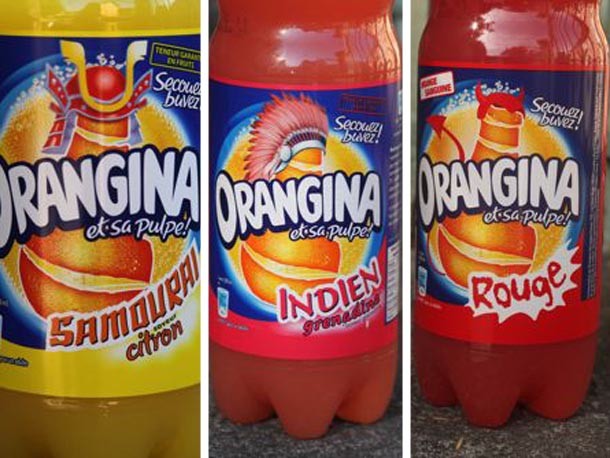
It is referred to as a ‘paradox’ because, alternately, you can find no black youths in New Orleans, Chicago, Gary or Detroit who wear berets and striped shirts while drinking Orangina Rouge, eating snails and poached veal pancreas while listening to Maurice Chevalier warbling ‘Dans la vie faut pas s’en faire’.

This disparity of pop affection is the urban equivalent of an economic trade imbalance, and if you ignore the inherent implications, you may be confusing David Ricardo’s principle of comparative advantage with Adam Smith’s principle of absolute advantage, specifically ignoring the latter.

Or, you may just be a dolt.  I know I am, because I have no idea what the stuff I just wrote means.

In any case, non-dolts include Cristal Champagne godfather Louis Roederer, who spent years exploiting hip-hop’s fascination with their iconic, clear, gold-foiled bottle—an image of conspicuous consumption and, in the case of most rappers, of class conquest.  As you recall, the bubbly bevvie had Jay Z barking, ‘You can’t roll a blunt to this one; You gotta, you gotta well, ya gotta light a J, You gotta puff a J on this one.  You can’t even drink Crist-OWL on this one; You gotta drink Crist-ALL…’ up until the time that Roederer hired a new managing dolt called Frédéric Rouzaud who dissed Jay-Z and his uppity tastes—at which point Jay Z called for an immediate Cristal boycott and switched to Ace of Spades—potentially, the only other Champagne he could pronounce.

Either way, Ace of Spades is also French, so the trade ledger remains this side of black.  No pun.

And Then There’s Cognac…

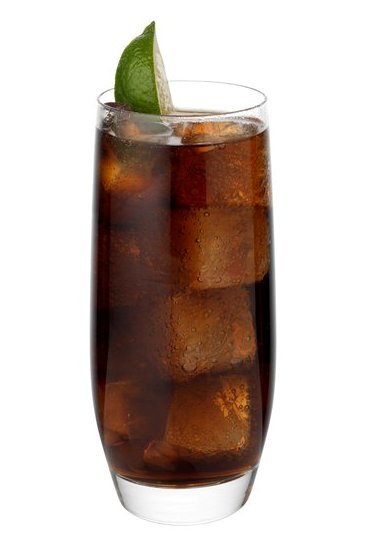
Bordeaux’s wonderful distillate is the other alcamahol d’affluence that has seized hip-hop’s snootiest snorters, and for years it was Hennessey, then it was Courvoisier, then it was Rémy  Martin, then it was upper-scalier XO (stands for X-tra Overpriced) versions of all three.  The rappers I know envision Cognac not so much as a classic tipple of sophistication, breeding and subtlety, but simply a drink that really successful, really rich, really old and really Caucasian dudes drink, and invariably, they add a note of vulgarity to the par-tay by mixing it with Coca Cola.  Then again, I don’t know anyone that can lay a claim to class.

Even so, as proven by French people’s ready, willing and ableness to sell fabled Châteaux to Chinese investors, Cognac producers are more than happy to promote their wares via thugs—few of whom have the slightest knowledge of or interest in the Appellation d’origine contrôlée’s long and storied history, and many of whom have police records longer than their left Armagnacs.

Strange bedfellows?  And how.

And Suddenly…

…All of the bungs have been pulled from the Limousin or Tronçais hogsheads; all pretense has been shed, and a new product has been foisted upon—and directly marketed to—the public (enemies) in a shamelessly corporate bid for a bigger body of brandy bux.

OG XO is being fronted by one of L.A. rap’s founding fathers, Ice Cube—an ideal spokesperson, because his thuggery is all imagery.   With no criminal record whatsoever, the former O’Shea Jackson—a Phoenix Institute of Technology architectural drafting student-turned-mock-mafioso, first hit the scene in 1987 with the seminal sub-genre act of gangsta rap called N.W.A. (Non-Wigger Attitude) and went on the have a successful spin-off career that included films, tv specials, a clothing line and four law-abiding mini-Cubes: Three sons and a daughter named ‘Kareema’, whose middle name, I was disappointed to learn, is not ‘Wheat’.

And Now He Has OG XO

Negro With Attitude Adjustment

For the record, OG stands for ‘Original Gangster’, which is where my lily-white honey-cracker agita begins.  Because there is no reason under the spherical-yellow-dwarf-consisting-of-hot-plasma-interwoven-with-magnetic-fields that any Cognac steeped in the lore of antiquity, with 3rd century Roman occupation origins and a history that is as filled with heroes, villains and charlatans as any Dumas novel, should pander to street kids in Bed-Stuy simply to feather the nest.

Except for one thing, also for the record: If you actually read the fine print, it turns out that Original Gangster isn’t a Cognac at all.  It’s brandy, which is under a whole lot fewer legal strictures than Cognac.

For starters, unlike Cognac’s varietal laws requiring that ugni blanc, colombard and folle blanche are the only grapes used, brandy can be made from Thompson Seedless if it strikes your fancy.  Brandy does not need to be aged in wood and can legally be colored with caramel to simulated oak extracts; Cognac does require oak aging—up to two years in barriques.  What’s more, Cognac must come from a very specific and authorized area; brandy does not even have to come from France, although Original Gangster claims a French pedigree.

Last, and most importantly, the label XO—which actually stands for ‘Extra Old’—designates a Cognac blend in which the youngest brandy is stored for at least six years but on average for upwards of 20.

For a brandy, XO is meaningless, since the law only applies to Cognac and Armagnac.  To use it without legal import is a scam worthy of the most disingenuous playa—it attempts to wedge OG into a category known as ‘veblen goods’—commodities for which people’s purchasing preference increases as the price goes up, as greater price confers greater status.

So after all that, how does the product itself rate?  I have no idea; I received no sample and I’m hardly going to shell out $90 for any brandy whose last name isn’t Norwood.

So, send me some already, Original Gangsters, wherever you are.  I’ll try it.  Send me some Coca Cola, too, and I’ll try it in its native habitat.

See, ultimately I think it’s just a scam meant to stroke some gangster egos; a French/African game as old as Josephine Baker, Eugene Ballard, Richard Wright and the Harlem Renaissance authors, all of whom were so soul-weary of being mistreated in the United States because of their race that they found France a refreshing, cleansing, edifying change of pace.

And let’s be honest.  What would I do if some Languedoc brandy maker released a bottle called ‘Original Maligned, Misunderstood, Whiney and Infantile Wine Critic XO’?

I’d become a friggin’ Frigger, that’s what I’d do.

Posted in BRANDY, Cognac | Tagged , , , , | Leave a comment

Airline Wine: Get High, But Keep It On The Down Low?

In a recent interview with CNN, my FB buddy Robert Joseph—Editor-at-Large of Meininger’s Wine Business International—makes an astonishing claim:

Robert Joseph

“Some of the finest wines in the world, some of the finest Bordeaux, actually, don’t taste good at high altitudes.”

He goes on to point out that non-classified peasant plonk—soft, fruity, often sweeter and generally less expensive wines from Chile or California may in fact taste better at 35,000 feet.  He recommends merlot and pinot noir in particular, suggesting that they may be more ‘fun’ to drink than cabernet sauvignon six miles above the vineyard.

Well, no doubt.  Cab is not necessarily a fun wine to drink to begin with.  Brooding, brilliant, brainy and broad, yes.  Fun, no.  And what self-loathing masochist finds it ‘fun’ to pronounce Château Pichon Longueville Comtesse de Lalande or Château Malescot St. Exupéry?

Fraunhofer-Institut für Bauphysik

But that’s not the point.  The point, according to recent studies undertaken by the Fraunhofer-Institut für Bauphysik—also not fun to pronounce—is that at high altitudes, our sense of taste is diminished by as much as 30%; the result of the body adapting to atmospheric pressures within the cabin.  This goes for our taste buds as well, a third of which go Novocain-numb at cruise altitude.

The study was meant to explain why some factor beyond cost, convenience and the notion that airlines really don’t give a flying f**k (pun intended) might explain why in-flight meals are so universally maligned.

See that, you trivial, truculent tray-traducing traveler: Turns out it’s not our food, it’s you!

With wine it’s even worse:  Cabin humidity is intentionally kept low to reduce the risk of fuselage corrosion; your sense of smell fades as a result.   And as any first-year wine tasting student can tell you, capturing vaporized, volatile aroma compounds makes up the lion’s share of wine appreciation since the tongue is capable of detecting only primary tastes.

Lose the nose, you’ve lost more than half the battle already.

United is offering a free trip to the war-torn third-world shithole of your choice if you can guess which Frost is Doug.

That makes life for folks like Doug Frost, who writes the wine list for United Airlines all the more challenging—even though he is both a Master of Wine and a Master Sommelier—formerly the highest titles to which a wine geek could aspire until last year’s inaugural ‘Master of ALL Masters of Wine’ program launched in my fruit cellar.

Of Doug, USA Today, gushes, “Frost likely knows as much as anyone in the world about how to make, market, serve and identify wines,” but Mr. Wine himself is honest about the trials and tribulations of finding selections that not only show sufficient intensity, flavor and character to suit our imploding high-altitude sensory systems, but wines which are stable enough to make it through the three to six months it may take for the bottle to make its maiden flight.

As such, he and his team choose the following year’s blends only after they’ve sampled them ‘on high’—and the wine passes the altitude taste test.

“In First Class, we need classic names and character,” Frost told Wineography last year. “In Business Class, we can step outside the classics to a degree, but throughout all classes of service, I need overt fruit more than anything.”

I will have to defer; if I had to accost Frost—even on cost—I’d be lost.

I’ll explain my personal United Airlines wine program directly.  But first, let me point out that I have noticed that the same ‘underperformance phenomenon’ carries through to in-flight movies as well.

For example, on my last 14-hour intercontinental voyage on United, I had plenty of time to spend watching films, and I chose only classics that I had previously not seen.

Viewing Notes:

Citizen Kane (1941): Totally boring with zero special effects except for that fakey mansion and some really chump-change makeup that, attempting to make the 25-year-old Welles look fifty, instead makes him look like an poorly-embalmed 25-year-old.  And Rosebud? Please: Obviously the sled was going to wind up being Rosebud; what did Orson take us for, microcephalic idiots?  Grade : C –

Lip service

Vertigo (1958): A morbid, mutant Hitchcock-and-bull box-office flop starring one-dimensional hack-tor Jimmy Stuart as a retired cop who is so afraid of heights he can’t stand up.  Populist showman Alfred H. should have stuck to bad TV; his attempt at a serious psychological study winds up more absurd than his lower lip.  And any movie that has Kim Novak naked in bed and fails to display her sizzling badonkadonk?  Fail.  Grade: D+

It’s A Wonderful Life (1942): That stuttering, stammering stupetard named Stuart again.  Sheesh.  This flick is bad enough in December; imagine it in August.  ‘It’s A Wonderful Reason To Get Hammered In The Bathroom Stall Instead Of Your Seat’.  Grade: D

La Règle du Jeu (1939):  The goddamn thing is in French; can you believe it??   For starters who wants to sit for hours in a thimble-sized seat drinking tasteless wine and eating awful food let alone having to listen to capricious, self-indulgent, humorless rich people yabbering about nothing—and, in a tongue that unless it’s front-and-center in a French Kiss with Sophie Marceau—grates upon the ear like nails on a blackboard.

France is the birthplace of the Marquis de Sade and this proves it.

Jokes, CGI monsters, huge bloody drawn-out battle scenes, naked babes, in that order; otherwise the film blows—those are my ‘Rules of the Game’.  Grade: D-

And yet, later I re-evaluated these films in my living room at sea level and awarded each and every one the coveted ‘two thumbs up’ along with five stars and a big ripe-from-the-vine tomato.  See, in the rarefied environment of the upper troposphere, that portion of your brain that judges, evaluates, assesses, appraises and otherwise scores artistic merit goes instantly numbnuts along with your nostrils.

Actually, it’s good thing they didn’t have airplanes back in 1855 when they were doing the Bordeaux Classification: Had they, Château Pichon Longueville Comtesse de Lalande and Château Malescot St. Exupéry would have ended up as a Quatre-Vingt-Dixième Cru, with less of a chance of winding up on Doug Frost’s hoity-toity First Class wine list than a frost-ball in Hell.

I can smuggle a Double Magnum of Château Malescot on board without puking.

But, no matter.  Since I perennially travel coach, I don’t drink from the wine list anyway.

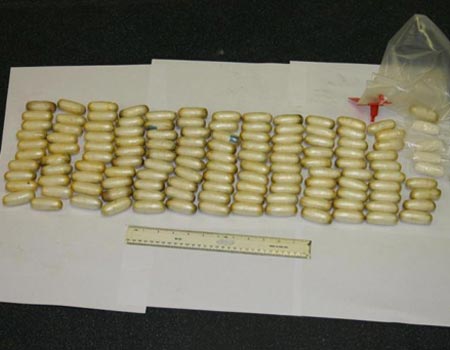
I have found that it is cheaper and only slightly less inconvenient to fill balloons with Château Malescot before I even leave for the airport, swallow them heroin-style and wait for them to reappear during the two hours I will sit on a United Airlines toilet waiting for ‘It’s A Wonderful Life’ to end.

Posted in GENERAL | Tagged , , , , | Leave a comment

Playboyz To Playmen: Is That A First Growth In Your Pocket Or Are You Just Happy To See Me?

My heart goes back to wander there,

And among the dreams of the days that were,

I find my lost youth again.

And the strange and beautiful song,

The groves are repeating it still:

“A boy’s will is the wind’s will,

And the thoughts of youth are long, long thoughts.

— Henry Wadsworth Longfellow, My Lost Youth (1919)


And, speaking of Wadsworth, wad shooting and general wa da fu (?),  I feel it fitting for us to pause here and consider our own spent adolescences; a time when we were in touch with ourselves at least once or twice a day—when we were always ready to lend ourselves a hand, when Hamlet’s ‘rub that lies therein’ lay therein a locked bathroom; when nothing was out of reach, yet everything was below-the-belt; when we stood firm and erect even though the winds of responsibility, respectability and reality were still a college degree away.

‘Take My Memory Back There, Lord; Sometimes I’m Overcome’ – Van Morrison, Brown Eyed Playgirl

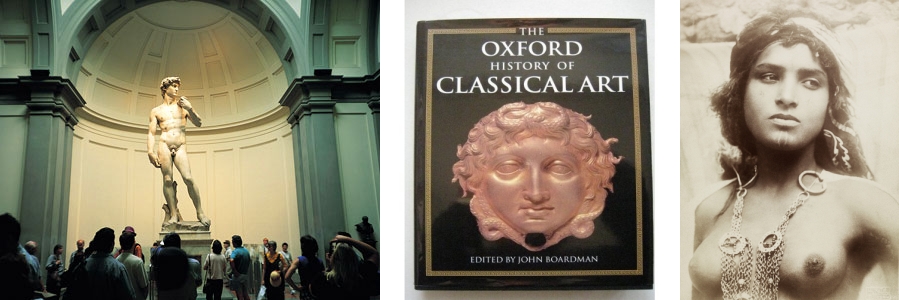
Ah, National Geographic whenever they visited topless tribes in North Africa; ah, Hiram’s Powers’ The Greek Slave (Michelangelo’s David if you were gay); ah, flipping through my father’s weighty copy of The Oxford History of Classical Art; ah, the day in sixth grade when Sam Stahl came to school with a copy of Vivre d’Abord, a French nudist magazine which had us all confused because the women had pubic hair.  Who knew?

But most of all—ah, pilfered pages from prehistoric Playboy.

Remember how people used to joke about reading Playboy for the articles, which was a little like saying you snorted cocaine for the smell?

King Tut

And, remember when Christie Hefner, then Playboy’s CEO and faced with plummeting stock, quipped,  “Most magazines don’t have a workable model; we realize media is changing and intend to refocus Playboy from an an adult magazine to a multi-media company offering a wide range of Playboy-branded apparel and lifestyle products…” which was corporate doublespeak for ‘Whoa! Porn on the internet is free’?

The irony of all that is that so mild, so innocuous, so milk toasty a stroke book Playboy was—even at its raunchiest—that these days, when depravity squared is but a mouse click away, the articles in Playboy are probably the only reason you would read it.

But Would You Drink Their Wine?

So, the real reason for all this schmaltzy nostalgia is not an attempt to revive childhood touchstones, but instead to do my part as a responsible, respectable, realistic grown-up wine writer to mention—then promptly ridicule—Playboy Enterprises, Inc.’s latest foray into diversification: an internet-based initiative that has less to do with the Sin of Onan than the Miracle of Canaan:

The Playboy Wine Club (www.playboywineclub.com) seeks to have you, the wine-drinking, Playboy-reading, doinker-doodling consumer take your hands out of your underwear long enough to place them inside the pocket in which you keep your wallet.

The wine club is a partnership between Playboy and Washington-based Barclay Wine Company and is offering American clubbers ‘exclusive deals, loyalty programs and opportunities to participate in wine experiences with special wine tours and tastings’ along with a quarterly full-case delivery of boutique wines known as the Playboy Wine Encounter.

Now, whether or not this is a good thing, I do not seek to pass judgment, but the press release indicates that all wines will be ‘curated’ by Playboy and upon this word I will cast an opinion:

Left: Christie Hefner
Right: First edition of Playboy, circa 1953 BC

‘Curate’ as a verb should not apply to wine, because it indicates old and dusty things like King Tut’s mummy or the Dead Sea Scrolls, and although old and dusty wine can be dandy, it is only dandy because you can dust it off, open it, and consume it.  ‘Curate’ should be reserved for museums or art shows and should only apply to things you cannot dust off and consume like putrefying Egyptian flesh or papyrus parchment.

In any case, I joined the Playboy Wine Club just to see what was going on, and to see if they had any vintage nude photos of Carmen Electra to gawk at.  Nix on the latter, but as to the former, I scrolled, dead sea-like, through the available wines and discovered that there were some distinctly interesting selections, like 2008 Granite Ridge Reserve Shiraz, 2009 Radford Dale Chenin Blanc and 2003 Empyrean Draco Meritage.

And yet, none are particularly value-priced for members and can be purchased online for the same price—even on Barclay’s web site—without joining any clubs.

Therefore, be forewarned, those of you tempted to join yet another source of unwanted Inbox spam:  About Playboy Wine Club’s ‘regular price’ column, which attempts to convince you that you are, in fact, getting a deal when you’re not?

It’s as lame as Playboy magazine’s attempt to convince you that Carmen Electra has no pubic hair.


Posted in GENERAL | Tagged , | 3 Comments

It’s Up To You, New Cork, New Cork

Spot quiz, class:

What do corks and Mork From Ork have in common?

  1. They have absolutely no relevancy to 2012’s brave new world.
  2. Both come from obscure lands on the periphery of anything that could even vaguely be called civilization.
  3. They were once successful in popular culture, then became totally ‘meh’ due to the availability of better alternatives, and are now enjoying a bit of a career revival.

It’s number three, of course—sentiments that apply not only to cork and Mork from Ork, but also to Bjork and Mickey Rourke.

Barking Up The Wrong Tree?

Elastic, nearly impermeable, inexpensive and readily available, you’d think that cork must enjoy as venerable and antiquated a wine history as glass bottles—invented by the Phoenicians around 1000 BC—but in fact, prior to the 17th century, most wine bottles were stoppered with everything except cork.  The Greeks poured a thin layer of olive oil over their amphorae, then sealed them with pitch; the Romans often used hand-turned wooden stoppers, the English ground glass to fit individual wine bottle necks while the French preferred oil-saturated rags.

You may or may not like it.

But by the time of Shakespeare, cork magic was beginning to settle over the wine industry, and a line from ‘As You Like It’ delivered by Rosalind to her cousin Celia, indicates the ‘trendiness’ of the new technology:

“I pray thee take thy cork out of thy mouth, that I may drink thy tidings.”

The Rain in Spain Is Mainly Thought A Bane

For those of you who thought that cork came from County Cork in Ireland, please log off immediately and return to your assigned ward; Nurse Ratched will be around with your meds directly.

For those that remain, of course, the once-massive cork industry is centered in the temperate plains of Spain and Portugal, where cork forests form an amazingly diverse ecosystem, providing a habitat for the world’s most critically endangered feline, the Iberian Lynx.

Portuguese extractors ply their trade.

The quercus suber, commonly called the cork oak, is an evergreen oak tree with such a finicky laundry list of agricultural requirements that it really only thrives in a few areas of southern Europe and northwest Africa.  Portugal leads the way, providing about 50% of the world’s cork, followed by Spain, Algeria and Morocco.  France, Tunisia and Italy contribute to the industry as well, albeit in lesser amounts.

It’s a particular, unusual version of the Mediterranean climate that suckers quercus into submission—not much rain, plenty of sunshine, mild winters and relatively high humidity.  Oddly, forest fires are no real issue, and in fact, the reason why the tree is so uniquely suited for wine bottle stoppers is that the bark is an evolutionary firewall.  Most trees die when the bark is removed, but quercus has two distinct layers—the living inner layer forms a base on which the outer layer, which is dead, exists, basically serving as insulation against the occasional fires that the parched conditions encourage.

Unlike other evergreens, who regenerate from seeds—basically starting over from scratch after a fire—a cork oak regrows much more rapidly, as the insulated branches themselves sprout, forging a path to quick recovery.

So You Want To Start a Cork Farm?

Better get cracking, then.  It takes about fifty years for an individual tree to mature to the point where its bark has sufficient cell density to be considered stopper-material; earlier harvests wind up as floor tiles, fishing rods, floats, acoustic insulation and—believe it or not—spacecraft heat shields.

Once that half century has passed, bottle-stopper cork is harvested every nine years, entirely by hand since the critical inner bark cannot be penetrated or else the jig is up.  Treated with dignity, a single cork tree can live to be two hundred and may provide 65,000 stoppers.

Tainted love.

So, with all the benefits arising from all natural, biodegradable, sustainable, job creating, eco-friendly cork, where is the issue?

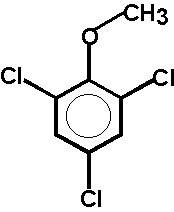
TCA, or 2,4,6-trichloroanisole in Chemspeak.

Taint Necessarily So…

TCA is a wine spoiler so virulent and off-putting that wines thus affected are, perhaps unfairly, referred to as being ‘corked’—likely because calling them ‘trichloroanisoled’ would be a bit too show-offy, and we all know that under no circumstances do wine geeks like to show-off.  Ever.

And yet, it has never been directly and definitively demonstrated that taint passes from a cork into the wine, or is an airborne fungus passing through a cork into the wine, but ultimately, it makes no difference. Nor that, whereas the cork industry maintains that cork taint affect between 0.7% – 1.2% of wines, the wine industry hold out for a much higher percentage, possibly as much as 10%.  In any event, once the scare was in, wineries began to search for alternate closures to lessen the bad PR, and thus were born several new industries—synthetic corks, aluminum screw caps, Alcoa’s glass and plastic Vino-Seal and pricey but efficient Zork corks—which sprang up to fill the void.

The massive hemorrhage of market share—based on public perception as much as reality—saw cork sales plummet in the first years of this decade, and insiders raised serious doubts that the industry had potential for long term survival.

Enter Science

So, now that all the Irish cork theorists have been subsumed back inside the Oregon State Hospital, I can bring out the folks in white coats without fear of general panic, right?

Over the past few years, scientists (hired by the cork industry, obviously) have been working diligently to improve both the quality of cork manufacturing and enact stricter protocol in certifying quality corks.  As such, it has been suggested that TCA may ultimately go the way of smallpox and be eradicated wholesale from the face of the planet.  As such, the industry has rebounded remarkably—a needed shot in the arm for Spain particularly, which is slogging through its second recession in three years.

As TCA becomes less and less of a concern, the benefits of a natural product should overrule the use of more non-biodegradable plastic and metal in wine stoppers.  At least, one can hope.

So, another spot quiz to demonstrate that you did not fall asleep during the second paragraph:

  1. What bird, later fried by Colonel Harlan Sanders, did Orkans like Mork evolve from?
  2. In what European cork-producing country where they speak French is ‘As You Like It’ set?
  3. When McMurphy imagines the World Series game, which pitcher whose name rhymes with Sandy Schmofax does he say is in trouble?

You are now Dr. Cork Dork. Congratulations.

Excellent, three for three.  I knew you’d never nod out on me, class.

You are now officially awarded membership in the Confrérie des Chevaliers du Cork Dorks and may proudly wear ornate robes that are duplicates of those worn by Doctors of Corkology in 17th century French mental institutions.

Posted in GENERAL | Tagged , , , | 1 Comment