Why Bomb Iraq When You Can Get Bombed on Arak?

There’s aragh, the sound you make when you skin your knee, and there’s ouzo, which is what drips from your infected skinned knee when you fail to treat it.  Both are also the names of some distant cousins of arak—a clear, colorless, licorice liquor from the Middle East.  Aragh is from Armenia; ouzo from Greece, where it’s sometimes used, ironically, for treating infected skinned knees.

Arak has been around for as long as skinned knees, too.  You’ll find that a lot of liquor claims a pedigree going back farther than writing, society or organized religion— a quick lesson in the priorities of humanity—but arak is the real deal.  It stands to reason that the Cradle of Civilization would also be the bassinet of booze, the hamper of hooch, so it’s no wonder that the word ‘alcohol’ derives from the Arabic al kohl—a distillation process invented by Muslim chemist Jabir ibn Hayyan to produce women’s cosmetics.

Of course, ibn Hayyan cared for women’s cosmetics about as much as the next guy, unless you’re standing beside Marilyn Manson, and the alembic still he built had a much more universal application: Happy Hour.  But since Muslims are not supposed to be nipping hard stuff, a more benign use for his brainchild had to be found; hence he used it to make kohl, a sort of prehistoric mascara.

Irony here, too, since most guys agree that on the Hot Girl Bell Curve, the more alcohol we consume, the less kohl they need.
But I digress.  Arak, like brandy, is made from wine; in this case, the fermented juice of indigenous Middle Eastern grapes.  In Lebanon, this is usually the white-skinned obeidi, which has a tendril somewhere on chardonnay’s family vine.  In Turkey and Iran, sultana is generally used—the same grape that makes Sunkist white raisins, but you’ll find that up to twenty varietals, including muscat and marwayh, may find their way into the primary fermentation process.

A rule of thumb for all distilled drinks is that the better the base, the better the booze.

Once fermented, it’s into the still, often Moorish and always copper, where it’s heated slowly and gently.  Ethanol’s magic is that it evaporates at a lower temperature than water, so if you can keep your heat source at the constant and correct temperature, the steam that rises can be condensed into pretty potent stuff, albeit; in the first go-round, filled with impurities.  A second distillation removes the bad crap and leaves what’s called, in French-friendly Lebanon, the coeur de chauffe; the heart of the matter.

If you’ve ever heard terms like ‘three times distilled’ or even ‘four times distilled’ applied to any liquor’s quality and wondered what it meant, wonder no more.  It gets cleaner and more pure with every round.
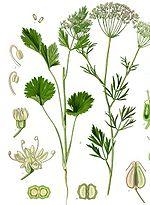
It’s somewhere between the first and the umpteenth distillation that the anise gets added—each maker has his own timetable for this, his own maceration methodology, his own favorite brand of anise seed.  Lebanon produces lot of arak, in part because it’s got a large Christian population that’s allowed to drink it.  Especially favored by Lebanese arak makers are seeds from the Syrian-controlled Mt. Hermon, mentioned several times in the Bible and part of the weirdly named Anti-Lebanon Mountains.  Lebanese anise growers speak of Mt. Hermon terroir with the same reverence that winemakers use with Bekaa vineyards.

Anise, by the way, is related to the carrot, which makes no sense at all, and also to caraway and fennel, which does.  It too gets a Biblical shout out—Matthew reports that the seeds were used to pay tithes.
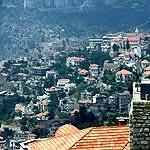
Beit-Chabab in the morning--the smell of anise-scented victory

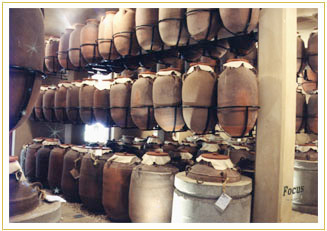
The next step in arak’s lifeline is the mellowing process, and that’s where it makes a rakehell turn from everybody else.  Connoisseurs claim that there’s a heavenly affinity between arak and clay, and when arak is sufficiently purified to the standards of the maker—whether a Bekaa Valley pro or your uncle Hassam in the garden shed—arak is transferred to clay pots where it becomes arak of ages.  But not just any clay pots.  Since antiquity, the best clay is reputed to come from near the mountain village of Beit-Chabab and the best pots from Beit-Chabab craftsmen.  Thus interred, the liquor goes through a slow growth and intermingling period wherein up to 15% evaporates, much of it brutal ethanol proofage, the loss of which is said to be ‘the price you pay’.

Even slightly de-alcoholized, arak still rocks and is generally cut with water and ice (in that order strictly), whereupon it metamorphosizes from a crystal clear liquid into a sort of a cloudy, semen-colored concoction  more in the realm of Mr. Science than Mr. Bartender.

But really good arak?  From a top distillery like  El Massaya, Chateau Khoury, Ksara or El Rami?
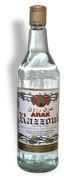
Quite remarkably refreshing; an aperitif perfectly suited to the blistering heat of the Levant. There’s a subtle but unmistakable fusion between grape scents and licorice; neither overpower the other nor scamper off to hide in the bomb shelter.

I could continue to wax metaphorically, but why?  Fellow Detroiter Bob Seger said it better than me a generation ago:

“I was strong as I could be, nothing ever got to me, like arak…”

Now do a shot and go buy that Chevy.

Posted in Miscellaneous | Leave a comment

Remember the Alamos!

Relax: the worst pun in the whole piece was disposed of in the headline; it’s down to business.  That is: Remembering Alamos is one thing; remembering the grape varietal is another.

¿Torrontes?

Over the past century, Argentina has gone from being an economic powerhouse (in the 1920’s it was the eighth richest nation on earth, with the 4th highest per capita GDP) to being so beat up by recessions, revolutions and coups d’état that in 2010 it was listed as an ‘emerging economy’ by the FTSE Global Equity Index.

Ouch.  And even so… ¿Torrontes?

The Argentine wine world has tracked the ups and downs of its own economy, having spent decades pumping out so much silly plonk that the bulk of it was considered unexportable. But that was fine; the poor perturbed Patagonians were gulping down 24 gallons of wine a year each.  And frankly, after the first dozen or so, you cease to care what you’re drinking.

Cry me a River--preferable the Paraná.

In such ungodly quantities, vino de mesa may in fact be at the core of Argentina’s decision to declare war on England (it was probably a bad move for us in 1776—guaranteed it was a bad move for them in 1982), or their absurd claim on Antarctica (you want it, you got it—now, shovel the driveway), or why they keep sniffling over Eva Peron.

Some of this emotion-eliciting, judgment-affecting, saber-rattling juice may in fact have been torrontes.

Top o’The Andes To Ye

When most people think of Argentine wine, myself included, the first thing that comes to mind is malbec and the second, Mendoza.  The latter (Argentina’s premiere wine-growing area, accounting for two-thirds of the country’s output) has managed to take the former (a Bordeaux also-ran) and turn it into ‘their’ grape; otherwise, the focus tends to be on cabernet sauvignon, tempranillo and chardonnay.

But torrontes?  This strange little varietal, origin unknown—likely right here in northern Argentina, or in Spain so long ago that it hardly counts—is pushing the envelope, reaching its level of potential several hundred miles north of Mendoza in the foothills of the Andes.  Torrontes loves—or at least tolerates—cold weather, and here you’ll find the highest vineyards in the world, six thousand feet above sea level, which is like planting grapes on the Space Station.

This northerly, high-altitude region is called Cafayate, whose name means either ‘box of water’ or ‘grave of sorrows’—either way, part of the whole Argentine tendency toward ‘things that make you go ¿que verracos pasa?

Torrontes, on the other hand, tends to make you go ‘yum’—brightly floral, with notes of jasmine and orange blossom, it has a profile that is reminiscent of viognier or the Greek grape assyrtiko, but displaying its own depth of character and a fuller body than the delicate aromatics suggest.

Pisco, the Chilean firewater, which is better than the urology-inspired name might suggest, is primarily torrontes, accounting for its striking, flowery smell—quite unlike the liquors we’re used to.

Mountain Man

Alamos Chief Winemaker Felipe Stahlschmidt is an avid mountaineer, which doesn’t hurt if you insist on planting your torrontes in the troposphere.

“The mountains create the terroir in our vineyards.” he says. “They keep the storms out of our valleys; their snows give us pure water; they make the winds that cool the vineyards. They are part of the nature of the place.”

Of his 2009 torrontes, Stahlschmidt notes the citrus and peach tones and balanced acidity; clearly, he, is pushing the varietal as the flagship white wine grape of Argentina—it’s gift to the world.

Still, with a history dating back before the Spanish Colonial era and having been introduced to Cafayate by the good, hard-drinking Jesuit fathers two centuries ago, torrontes is an ‘emerging’ grape like the Bolsa de Comercio de Buenos Aires is an up-and-coming stock exchange.

With quality taking increasing precedence over quantity, we can assume that the Argentine wine industry is supposed to be immortal.

Can we stop crying now?

Tasting Notes:

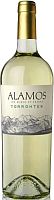
Alamos Torrontes, Cafayate, 2009, about $15:  Ultra-expressive, perfumed with honeysuckle and apricot, layered with waxy stone fruit, jasmine and steely mineral tastes.  Relatively low in alcohol and sharp with food-friendly acid. The wine is oak-free, seeing nothing but stainless steel, which preserves the freshness if not the wine itself, so drink young, be insouciant, go wild—but don’t declare war on anybody over anything, especially a pile of rocks in the South Atlantic.

Posted in ARGENTINA | 1 Comment

Absinthe Makes The Heart Grow Fonder

When it comes to free-associating the term ‘barely legal’, there are two kinds of people in the world: those who imagine Miley Cyrus’s eighteen birthday party and those who think about absinthe.

Long the realm of bohemian pre-rock rock stars—men like  Baudelaire, Poe and van Gogh and Oscar Wilde (to whom absinthe’s traditional sobriquet, ‘the Green Fairy’ may have had particular significance),   absinthe is booze with benefits.  A distillate which contains, among other herbs, a reputedly psychoactive drug called artemisia absinthium, a.k.a wormwood, the flavor is similar to ouzo, raki, Sambuca and Pernod—the latter of which is often used as an absinthe stand-in.  Essentially, wormwood adds only a slight, background hum, and absinthe, like these other liquors, draws it’s licorice taste from anise.

Anise, which has no psychoactive qualities, may nonetheless result in a similar Oscar Wilde punch line.

At any rate, the hallucinatory effects of the stuff are much exaggerated, and probably have as much to do with absinthe’s legendary kick, up to 74% pure hooch, which plays special havoc on the neurons.  Remember Otis, Mayberry’s town drunk, and his pink elephant sightings?  Nobody suggested that he was nipping anything but moonshine.

Absinthe With Malice

Still, i its inimical buzz-killing, soberer-than-thou sanctimoniousness, the United States Government saw fit to ban absinthe in 1912, and ever since, those of us in search of an alcoholic beverage with ‘just a little bit more’ have had to settle for Ny-Quil.   Until 2007 that is, when somebody somewhere slipped in legislation to bring partially-loaded absinthe (less than 10 parts-per-million of wormwood’s active ingredient thujone) back to realm of liquor-store purchasable.

That means you can stop reading about it and start slamming it; albeit, at these thujone levels, without much real chance of seeing elephants, writing classics, or slicing off your ear.

If you bring a bottle home, it behooves you to sample it correctly. Traditionally, absinthe is ritual-laden, often taken as an aperitif during a special early-evening ‘green hour’ in which glasses are lined up with a shot of absinthe at the bottom and a sugar cube suspended over the top.  Pricey, perforated absinthe strainers—a Parisian invention—are fun, but not necessary.  A toothpick-poked cube serves as well; the absinthe version of the McDonald coffee-stirrer coke spoon.  The point is to slowly pour ice water over the cube so that the absinthe is both sweetened (it’s bitter) and diluted (remember, it’s also mega-potent).  There are many variations on the theme, some calling for absinthe to be poured over the cube, some requiring ‘brouilleur’ devices to automatically drip the water, some for the whole concoction to be lit on fire with a match and others to play Hanna Montana CDs throughout.

Any wonder that absinthe is nicknamed ‘madness in a bottle’?

You’ll note that like it’s cousins ouzo and raki, when mixed with water absinthe turns into a viscous, milky-white fluid somewhat reminiscent of… well, be grateful that the Oscar Wilde humor was dispensed with earlier.  The Mr. Science transformation is the result of the ‘louche effect’, related to essential oils in the herbal maceration (which can also be blamed for absinthe’s weird green color); a micro-emulsion that is similar to what happens when you make mayonnaise from scratch.

However you tipple it, use grown-up caution in both the consumption and your behavior afterward.  Remember, when taken in great quantities, absinthe is reported to so alter one’s consciousness that Miley Cyrus does in fact appear attractive, particularly in her pilfered cell phone photos.

Absinthe marketers, vying for American demographics, are therefore urged to pass out complimentary ear plugs as the deal-sealer.

Posted in Miscellaneous | Leave a comment

2011 Michigan Wine and Spirits Competition Results

But first: More me time!

As summer fades and I reminisce about my illustrious career as a wine journalist, I find that over twenty years, I have racked up nearly a thousand exquisitely written columns.

Impressive, non?   I’d pat myself on the back if I wasn’t currently holding a drink called ‘Rudolph’s Nosebleed’ made with 120 proof Cruzan Rum—I really don’t like wine that much—while simultaneously photographing myself with my iPhone.

Over the years, I have managed to endear myself to nearly every vintner and distributor on the planet; I have fans in every rat-infested  crayere and cava in Europe; I am frequently quoted by Robert Parker Jr. (a different one, but who cares?) and if firebombing can be considered a sign of affection, plenty of PR firms love me, too.  I suppose it has something to do with my unique blend of sarcasm, sexual double-entendre, misspellings, blatant insults, factual butcheries and general disregard for anything that could be even vaguely considered journalistic integrity.

That’s why, earlier this month, when I was again passed over for a chance to sit on the judging panel for the 34th Annual Michigan Wine and Spirits Competition, I was more than a little miffed.

Nonetheless, with a certain soft spot in my vasospasming heart for Michigan wines, I feel that I am man enough to overlook this Amish-worthy shunning and report on the results anyway.

'They're g-g-g-g-grapes!'

Kellogg Hotel: A Sumptuous 160 Room Hostelry Named for Breakfast Cereal

I have often wondered why the financial backers of East Lansing’s Kellogg Hotel didn’t take the obvious architectural cue from South Dakota’s majestic Corn Palace and build the place entirely of Frosted Flakes, but nobody consulted me prior to breaking ground—another snub.  All I can say is, the Corn Palace gets Tanya Tucker while Kellogg Hotel gets Christopher Cook.

Cook is the superintendant of the Wine and Spirits Competition, which is a little like hiring Christopher Winemaker to superintend the James Beard Awards, but the dear soul knows as much about wine as anyone in Michigan, probably because he has imbibed more wine than anyone else in Michigan.  His staff of tasters includes sommeliers, authors, wine educators, general wine experts, high-ons who attempt to pass as general wine experts (see, that’s where I thought I would fit in) and Doug Frost, who is both a Master of Wine and a Master Sommelier—a little like being President of the United States and King of England simultaneously.

After a hard day of schlepping through wine-sodden trenches, this is what they came up with:

Best of Class Dry White: Chateau Fontaine, Dry White Riesling, 2010:  Appreciate that Dan and Lucie Matthies indicate the color of the riesling on the label, as the truly challenged tend to ignore the fact that bottles are clear and might otherwise mistake it for red riesling; either way, this is a softly fragrant, cleanly floral, delicately piney wine with plenty of varietal integrity—which is probably why it placed so high.  Peaches, lychee, honeysuckle and a touch of slate round out a well-structured and crisp mouthful.

Best of Class Dry Red: Fenn Valley Vineyards  ‘Capriccio’, Red Wine, NV:  God bless wine fanatic Bill Welsch who went into winemaking without a lick of experience—and thank the same God that his preoccupation wasn’t brain surgery or commercial DC-9 piloting.  One of the original paladins of ‘lake effect’, wherein (along a narrow band of shoreline) Northern Michigan growers can keep red vinifera vines alive, Welsch was at the forefront of Michigan wine production from the early 70’s until his death last year.  Capriccio remains a best seller; not a terribly complex wine, but well-made and fulfilling in a soft, fruity way.

Best of Class Sparkling Wine: L. Mawby, Crémant Classic:  Since he no longer employs standard Champagne varietals, I am not sure that this Crémant can be called ‘classic’, but Larry Mawby sure the heck can.  The wine is an estate grown sparkler constructed entirely from the complex, underrated hybrid vignoles, while Mawby himself—arguably among the best bubble builders in the United States (and inarguably the best that Michigan has ever known)—is himself underrated.  Big as a brown bear, unassuming as a koala, he sort of stealth-rambles through the tasting room toward his tiny office which is always in the state that New Orleans was the day after the hurricane, and yet, he manages to produce vintage after vintage of exquisite sparkling wine.  Son of a downstate apple farmer, he’s taken his agro-know how to the fermentation tanks with such success that he’s called upon to bubble-up wines from many other wineries throughout the state (who will remain unnamed for obvious reasons).

Best of Class Semi-Dry White (tie): Fenn Valley Vineyards Riesling, 2010; Tabor Hill, Gewurztraminer, 2010:  Nobody likes a tie except for boxing promoters; they leave you with a sort of ‘used’ feeling in your wallet as you await the rematch.  In any case, through necessity, I’ll go with the flow: In this corner, Fenn Valley Riesling is the Welsch family’s declaration that their whites are as good as the reds; tasting notes include honeydew melon, white peach, wet stone and hints of citrus. And in the other corner, Tabor Hill’s sugar-free, naturally sweet gewürztraminer is exceptionally aromatic—pink grapefruit, sweet mandarins, lychee and lemon, with a palate that takes forward the same overtones.  Nobody asked me, but I’ll break the tie anyway… Tabor Hill by a nose.

Best of Class Rosé: Forty-Five North, Rosé of Cabernet Franc, 2010:  For my dough, this wine has two things going for it:  One, in Michigan, cab franc is turning out to be a signature grape—the depth of fruit, mineral and identifiable terroir can, in good vintages, rival those of Chinon—and second, I am a rosé man (no, this is not an oxymoron) with a genuine passion for pink.  Forty-Five North (named after the winery’s latitude—Chinon’s, by the way, is 47°N) is a family-owned operation with winemaker Shawn Walters manning the bottle stations; his prize-winning blush is crisp, dry and redolent with strawberry jam, watermelon, cinnamon and peach blossom—far above the profile of your typical porch-pounder (except in case of emergency)—and for under twenty per bottle, worth every grossnickle.

Best of Class Dessert Wine: Black Star Farms, ‘A Capella’ Ice Wine, 2008:  To vintners, ice wine production is the equivalent of self-flagellation to the ascetics of the Middle Ages (‘A Capella’ means, in fact, ‘in the manner of the church’).  For monks, the reward of this extreme form of self-torture was a berth alongside the choir invisible; for masochists like Lee Lutes, Black Star’s top star, it’s a bottle of amber ambrosia, among the rarest types of wine in the world.  If you’re squeamish, proceed with caution: ice wine is made from frozen grapes harvested by hand, berry by berry, in the middle of an extremely cold winter night while us sane folk are wrapped in down comforters and dreaming about Keira Knightley.  Next, in order to extract a single drop of juice per grape, they’re crushed outdoors that same night; wearing a hair shirt in the process is considered optional.  Black Star’s riesling-based A Capella is a celestial thing, a thing of areté (there’s your next wine name, Lutes) which for a thousand bucks per case, it should be.

Best of Class Fruit Wine: Garden Bay Winery, Raspberry Wine:  Screw everybody else—John and Gloria Lucas, Garden Bay Winery proprietors like me. Of this I’m certain, because it’s hard to dislike somebody who drives all the way from Metro Detroit to the Upper Peninsula, avoiding all but the most down-home taverns, pasty shops, bars, lounges and mom’n’pop liquor stores simply to sit in a well-appointed tasting room on a beautiful Garden Bay golf course-cum-winery and drink free fruit wine (Bert Chandler, winemaker) and eat free homemade fudge (Gloria Lucas, fudgemaker).  I gushed over their wines then, and I gush now—these are among the best fruit wines anywhere, ever.  Cocky cognoscenti may turn up their noses at the notion of world-class blueberry wine, but once they turn those wee perky noses down into the snifter, they’re sold.  The Yoopers will find that, until global warming kicks it up a notch, quality grape wine is not in their crystal ball, but the pioneering spirit inherent in folks like the Lucas’s prove that they’ll make incredible do with what they’ve got.

Posted in Michigan, MIDWEST | Leave a comment

Brett Should Take A Tip From Brett: Retire

Off to pasture I go

Château Musar Rouge, Bekaa Valley, 1994, about $60 (Review by Broadbent):  Trademark Musar volatile acidity. Well integrated with good meaty and fruity aromas melting together.

Domaine du Pégaü Châteauneuf du Pape Cuvée Réservée, 1993, about $120 (Review by Parker Jr. who gave it 98 points): The 2003 is magical. The dense plum/purple color is joined by flamboyant aromas and flavors of roasted meats…

Bodegas Roda Roda Reserva, 2001, about $60 (Review by Wine Enthusiast Magazine who gave it 92 points):  A deep purple color veils a nose of oiled leather…

What do these reviews by some of the world’s most respected wine critics have in common?  They appear to extol as virtues what are, in a purely technical sense, flaws.

Knock the first one out of the way immediately, because it is just plain silly.  ‘Trademark Musar volatile acidity’?  Mr. Broadbent, please.  Volatile acidity, a.k.a. vinegar taint, is caused by spoilage bacteria within the wine, and it’s not supposed to be there.  If it is ‘trademark’, then something is seriously wrong at the winery—it’s like talking about Jack In The Box’s ‘trademark’ E. coli infections.  I’ve struggled through vertical flights of Musar and trust me, this can be some very odd wine.  As one of Lebanon’s more tenuously located wineries, Musar employees often work in wartime conditions, and couple of vintages were duds on account of Scuds—but Broadbent maintains that he ‘discovered’ Musar during the Bristol Wine Fair of 1967, so he tends to wax over-optimistically about it.  Okay, Mike, you like saddle sweat in your claret, you drink it.

In the above reviews, you’ll also find descriptors like ‘meaty’ and ‘oiled leather’, and if you look up these wines on line, and others from their neighborhoods, you’ll see terms like ‘smoked game’ and ‘bacon’ and ‘barnyard’ used as common characterizations.  Whether or not you crave such carnality in your cab is immaterial: Each should be a red-flag indicating the likely presence of brettanomyces.

‘Brett’ is a rogue fungus which thrives in the warm climats of Spain, Southern France, Italy and similar regions; it lives naturally on grape skins and it may show up, dormant, in old wine barrels (in Lebanon, we call these ‘sleeper cells’) and resurrect itself wherever these barrels are re-used.  Brett is said to have originated in Belgium’s Senne Valley, which makes it the third most unwelcome Flemish export after brussels sprouts and Jean-Claude Van Damme.

So common is it that all wines are said to contain some brett, but certain vineyards have nurtured it, adopting it as their ‘style’.  Among the most noteworthy is Château de Beaucastel, where the microbiology is highly controlled—and in fact, in low doses, brett does add a degree of rustic complexity to these wines.  Problem is, once it begins to spiral out of control, as it will in cellars less hygienic that Beaucastel’s, it can bring down the house.  Wine wherein the brett has usurped the crown takes on the unmistakable aroma of manure.

If you’re like me, you’ll think back on tastings where brett notes either leaped or crawled from the glass, and without a grasp on what this odd critter brings to a flavor profile, you may be a bit confused as to why such wines are often rated very highly (as seen in the above reviews).  It may be in part an Emperor’s New Clothes effect or it may be an acquired taste (the Greeks go ga-ga over retsina, a nearly undrinkable wine that has pine resin added to it, making it taste like a glass of Vick’s VapoRub diluted with turpentine), but if it isn’t a taste you care to acquire and brett flavors strike you as unpleasant (as they often do to fans of New World fruit bombs), you need to be true to your preferences and let them ring from the rafters.

Perhaps surprisingly, even the most tradition-bound moguls will ultimately listen—the USA now outstrips France in numbers of wine drinkers, and selling product is the ultimate goal.  Recent vintages of Château de Beaucastel show markedly less brett than in the past, and worldwide, the trend is toward wines considered more user-friendly.  You may mourn the passing of a signature style, but on the other hand, plenty of houses in Bordeaux, Rhône Valley, Rioja, Piedmont, et al.—while knowing better—grandly attributed their wine’s brettanomyces contamination to ‘terroir’.  This is a huge and unforgivable disservice, since brett is brett and tastes the same whether it comes from Bekaa, Barossa or Burgundy.  Thus, it is the antithesis of terroir.

Not to make too culturally-insignificant an analogy of it, over the past few years we’ve been bombarded with press coverage of another Brett who’d overstayed his welcome, and who finally had the good sense to scandalize himself into some distant pasture of (we can only hope) obscurity.

Would that the brettanomyces take note and do the same.

Posted in GENERAL | Leave a comment